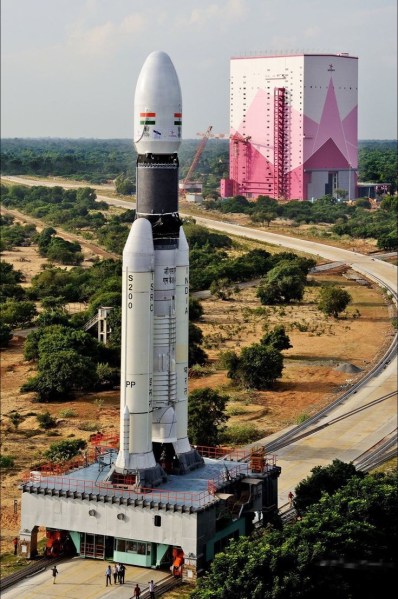
Navigation with Indian Constellation (NavIC), also called the Indian Regional Navigation Satellite System (IRNSS), is considered on par with US-based GPS, Russia’s Glonass and Galileo developed by Europe.
Making innovative applications to the entire community in the ocean-based services, especially for the underserved and unserved, the NavIC constellation is really going to create history, according to ISRO Chairman K Sivan.
By using receivers on the ground, IRNSS-1I will help in determining position and time accurately through signals in a space covering India.
Standard Positioning Service (SPS) and Restricted Service (RS), which are provided to all and authorised users respectively, are the services associated with IRNSS.
Indian Prime Minister Narendra Modi named the independent regional navigation satellite system developed by India as “NavIC” which offers services like terrestrial and marine navigation, disaster management, vehicle tracking and fleet management, a navigation aid for hikers and travellers, visual and voice navigation for drivers.
Built at a cost of $174 million, NavIC was originally approved in 2006 and became operational in 2018.
Consisting of eight satellites, NavIC is currently being used for providing emergency warning alerts to fishermen venturing into the deep sea where there is no terrestrial network connectivity and in public vehicle tracking in India.
In order to ensure the availability of NavIC signal in any part of the world, India’s satellite navigation draft policy in 2021 stated the government will work towards “expanding the coverage from regional to global.”
With the aim of removing dependence on foreign satellite systems for navigation service requirements, NavIC is conceived particularly for “strategic sectors.”
As per a report by brokerage and research firm Elara Capital, companies like Coforge, L&T Infotech (LTI) and Persistent Systems (PSYS) hiked salaries in double-digits in FY22. Reportedly, this is the maximum hike that they have given in 4 years.
The same hike trend is been observed among employees of all major IT companies such as Infosys, HCL, TCS and other big IT corporations, and it was seen as a good move considering the pandemic hit stagnant income of the employees and much more relief from the dark clouds of spiking inflation all around.
In FY22, the median wage rise was 2.4x five-year average wage increase for midcap Indian IT companies as acute supply-side strain necessitated roll-out of substantial salary hikes.
As compared to the previous four years, the employee growth has exceeded the median salary growth which implies faster fresher addition (pyramid flattening).
As demand for services such as cloud-computing, digital payment infrastructure, cybersecurity and cryptocurrency transactions surged, employers paid top compensation to lure skilled workers.
Further, Double digit salary hikes are here to stay for at least another year. The Salary Increase Survey report by AON says that Indian companies are expected to boost average salaries by at least 10.4% in 2023, a tad lower than the 10.6% given in 2022 so far.
The average salary hikes in percentage terms for 2022 is highest in India as compared with other big countries, including the USA, the UK and Japan, the report said.
Semiconductors are materials that have electrical conductivity between conductors generally metals and non-conductors or insulators. Due to their role in the fabrication of electronic devices, semiconductors are an important part of our lives. Anything that’s computerized or uses radio waves depends on semiconductors. Semiconductors are an essential component of electronic devices, enabling advances in communications, computing, healthcare, military systems, transportation, clean energy, and countless other applications.
The country responsible for the most semiconductors in the world is China, Taiwan, South Korea, and Japan. The Indian semiconductor market was valued at USD 27.2 billion in 2021 and is expected to grow at a healthy CAGR of nearly 19 percent to reach $64 billion in 2026. But none of these chips is manufactured in India so far.
A joint venture of the Indian conglomerate Vedanta and Taiwanese electronics manufacturing giant Foxconn signed a Memorandum of Understanding on September 14 2022 with the Gujarat government to set up a semiconductor and display manufacturing unit in the state. The project is worth around 20 billion USD. This upcoming facility will mark the beginning of chip manufacturing in India. This is also strategically important for India because it will reduce our dependence on other countries.
Out of the total investment of Rs 1,54,000 crore, Rs 94,000 crore will go into setting up the display manufacturing unit while Rs 60,000 crore will be invested for the semiconductor manufacturing facility, the official said in event of MoU. The FAB (fabrication facility) manufacturing unit in the state facility in Gujarat would create one lakh job opportunities.
As per the MoUs signed by both parties, the Gujarat government will facilitate the investor in obtaining necessary permissions and clearances from the state departments concerned. Among the subsidies and assistance under the state policy, Gujarat will provide additional capital assistance at 40 percent of the capital expenditure assistance extended by the Centre for the projects approved under the India Semiconductor Mission. One-time reimbursement of 100 percent stamp duty and registration fees paid to the government, fixed water tariff at Rs 12 per cubic meter for five years, and a capital subsidy of 50 percent for a desalination plant are the financial benefits under the new policy.
A massive shortage in the semiconductor supply chain last year affected many industries, including electronics and automotive. To cut dependence on imports from nations like Taiwan and China, the government brought a financial incentive scheme for manufacturing semiconductors in the country. Vedanata-Foxconn is one of the successful applicants for the Production Linked Incentive (PLI) scheme for semiconductors and is also a step towards achieving self-reliance in the semiconductor field for the country.
Railways, being a cleaner mode of transportation, not only helps automobile industry to quickly transport bulk volumes over long distances, but also gives opportunity to reduce their carbon footprint. Automobile traffic over Indian Railways has witnessed a tremendous growth during the recent past. This growth in automobile traffic has been the result of various initiatives viz. availability of specialized privately owned wagons. On the basis of the issues raised by the stakeholders in the automobile industry, including Society for Indian Automobiles Manufactures (SIAM), the Automobile Freight Train Operator (AFTO) policy has been liberalized from time to time. It allows automobile manufacturers to own their wagons specialized for their needs.
To accommodate SUV cars, new design of auto-carrier wagons is under finalization in RDSO in addition to existing BCACBM wagons.
To facilitate loading /unloading of automobiles, design-modification to the existing NMG wagons is also under execution (NMGH and NMGHS) based on the suggestions received from investors/logistics providers.
Also, for increasing short lead traffic, freight rate has been revised for NMG/BCCNR and BCACM wagons upto -1200 km. More terminals are being opened up for automobile traffic as per demands of the industry.
Presently, Indian Railway has a fleet of 90 NMG rakes. In addition, 43 BCACBM rakes have been inducted by approved Train Operators under AFTO scheme.
Number of rakes loaded
2019-20
1,599
2020-21
2,681
2021-22
3,344
2022-23 (till Aug)
2,206
Comparison with last year:
Number of rakes loaded
2021-22
2022-23
April
270
369
May
123
392
June
284
443
July
317
494
August
320
508
Therefore, volume of transportation of small passenger vehicles(cars) by railways has increased by 68% YoY during the first five months of the current FY.
Modal share in ‘domestic’ transportation of ‘passenger vehicles (cars)’*:
2013-14: 1.50%
2014-15: 2.08%
2015-16: 3.62%
2016-17: 4.13%
2017-18: 4.50%
2018-19: 7.06%
2019-20: 11.17%
2020-21: 14.71%
2021-22: 16.00%
* These are estimates based on transportation of cars only. Domestic traffic of 2-wheelers and commercial vehicles have not been taken into account.
Stress is a natural part of life, and like many things, it’s important to learn how to manage it. If you’re suffering from stress, here are some helpful tips for coping:
Find a hobby
If you’re looking for a way to manage stress and unwind, a hobby can be an excellent option. It doesn’t have to be something specific or intense; you could simply enjoy doing something that inspires you every day.
Whatever it is that makes your heart race with excitement, there’s probably an outlet for it in your life—if not now then at some point in the future. Taking up knitting or painting might seem like an odd choice when you’re stressed out by midterms and finals, but these activities can become routine sources of relaxation as well as hobbies!
When we were kids growing up, many of us were fond of playing sports: football or baseball games were favorite pastimes at our houses during the summer months because they gave us something physical (and occasionally competitive) to do together after school hours were over. Nowadays however there are plenty other ways for parents and kids alike alike enjoy getting involved together outside on weekends – whether through volunteering with community organizations like Habitat For Humanity; going camping together on family camping trips; taking part in organized activities such as dance lessons where everyone learns new moves together while having fun at once too 🙂
Build a daily routine
The first step to managing stress is building a daily routine. A morning routine, afternoon routine and evening routine are all good places to start.
Make sure you have your coffee (or tea) before 7:30 AM. This will help you get going in the morning and prevent late-night cram sessions later on in the day when you’re tired or distracted by something else that needs doing.
Get through at least one workout session per week—even if it’s just walking around campus for 30 minutes with friends or playing basketball with teammates after class! Exercise helps burn off energy so that mentally challenging tasks don’t seem insurmountable anymore; moreover, exercise has been shown to reduce anxiety levels as well as improve moods overall.* Go grocery shopping once per week rather than buying food from convenience stores because they tend to have higher prices than supermarkets do; however replacing fast food with healthy alternatives like salads instead of burgers will save money while still providing nutritious meals throughout each day.* Try not using social media sites like Facebook or Twitter too frequently either during lunch breaks at work because this causes users’ lives outside office hours become blurred together into one giant blur which makes everything seem more difficult than before since now there’s no separation between work life & personal life anymore.
Eat healthy food
Eating a balanced diet is key to managing stress. It helps you feel more energized and less tired, which can help you avoid getting sick or stressed out by hunger pangs. If possible, eat a healthy breakfast every morning—this will give you the energy boost that makes it easier for you to get through your day!
If eating junk food is something that stresses out your stomach (and let’s be honest here: who doesn’t love pizza?), try finding healthier snacks like fruit salad bites or even granola bars instead of sugary ones. The key here is moderation; no one should ever eat too much junk food because this will only make them feel worse afterwards.
Get in touch with your family
Stress is a normal part of life and as such, it’s important to find ways to manage your stress. One way you can do this is by talking with your family about how they can help.
Family members are a great source of support when it comes to helping you manage stress—and they may not even realize how much they’re helping! If you have parents or siblings who live nearby, consider asking them if they’d like some help managing their own lives and those around them. You could even offer up some of your time (or money) in exchange for their assistance so that everyone benefits from their efforts together.
Get enough sleep
Sleep is important for learning and memory.
It’s also linked to stress reduction.
Getting enough sleep can help reduce your stress levels, which will make you more productive at school or work.
Go for a walk
You can get away from the stress of school by going for a walk.
Go for a walk alone or with friends if you’d like, but don’t worry about being seen—the point of walking is just to move your body, not impress others. Listen to music while you walk (or listen in silence), and try to take in some fresh air too. Take your dog for a long walk around the neighborhood; they’ll love it! If possible, try walking at least 10,000 steps each day—that’s equivalent to running one mile per hour continuously for 30 minutes straight! When I was younger and had more energy than I do now as an adult who’s trying everything she can think of not only stay healthy but also keep fit at age 55+.
Listen to music
Music is a great way to relax and de-stress. You can listen to any music you like, but try not to choose something that’s too hard or fast. Music can also help you focus on what’s important in your life, which will help keep things in perspective when they get overwhelming.
Music can also help with sleep! I recommend listening before bed because it helps calm your mind enough so that it doesn’t keep tossing and turning at night because of all the stressors going through your head during the day (or even week).
Meditate
Meditating is a great way to relax and unwind. It can help you deal with stress, anxiety and depression, improve your memory and creativity, even slow down the aging process.
If you’re new to meditation or have never tried it before there are plenty of ways that beginners can begin:
Sit comfortably in a comfortable position (sitting or lying down).
Close your eyes if possible – this might help you focus better on what you are doing (most people choose not to cover their eyes).
Start by breathing normally through both nostrils for one minute without counting the breaths or trying anything else at first; this will help clear any thoughts from your mind so that when they come back again later on during meditation they won’t distract us from our task at hand which is meditating.
Talk to someone about your stressors
Talking to someone about your stressors is an important part of managing them. You can talk to your friends and family, but it’s also helpful to talk about the stressors with a therapist or counselor. If you feel comfortable talking about this issue with a doctor, go for it! The same goes for religious leaders, coaches and mentors who have experience dealing with similar issues in their own lives. And if none of these people are available yet, teachers are usually willing to listen when students come seeking guidance from them (or even just want advice on how they should handle their own problems).
Few more steps to encounter stress
Stress can be caused by a variety of factors including work-related issues, relationships with friends and family members or even just having too much on your plate at once. In order to manage stress effectively there are some steps that you can take:
Start taking breaks from time to time during the day (even if only for 5 minutes). This will help you relax and recharge so that when you return back into work mode again; everything feels fresh again.
Try getting outdoors more often during the day so that there’s less time spent indoors where all these feelings tend to accumulate over time because there isn’t much else going on besides watching TV shows while eating pizza as opposed being outside enjoying nature around us all… You get what I mean? 🙂
I hope this article has given you some useful tips for managing your stress. Remember that the best way to deal with a stressful situation is to stay calm and take action. Use our tips above and find something that helps you relax, like giving yourself time away from your responsibilities or getting some exercise – anything will do.
The Indian IT sector continues to charge ahead on its trajectory of growth and transformation, with SaaS (Software as a Service) setting the stage for the next wave of disruption, according to a study.
India is home to about 100-plus unicorns across different segments with an accelerated pace of entrepreneurship and is rapidly emerging as a hub for SaaS start-ups, cited the study by EY and CII, titled “India: The next global SaaS capital.”
Over 80 per cent of the SaaS promoters feel there is the need to build a robust talent pool, according to the EY-CII study. While the landscape is mainly driven by small and medium businesses with a focus on large enterprises, SaaS companies in the SMB market are structured very differently from those catering to the enterprise market.
“Macro-economic environment notwithstanding, the funding activity in the first two quarters of this year surpassed the funding activity in 2021 – which was a breakout year with over $4.3 bn in funding for SaaS start-ups,” said EY India.
According to other reports, the Indian SaaS market is expected to grow multi-fold by 2025, accounting for almost seven to ten per cent of the global SaaS market, from 2-4 per cent at present.
Led by Freshdesk and Zoho Corporation, India now has 18 SaaS unicorns as compared to one in 2018, with India being the third largest SaaS ecosystem globally, after the US and China. The number of SAAS companies in the country have more than doubled in 2021 as compared to 2019 and the funding too increased from $2.6 billion in 2019 to $6 billion in 2021.
According to the EY-CII report, SaaS providers are also doubling down on their customer acquisition, retention, and success strategies by upselling and cross selling to existing customers. The study also pointed towards the need for skill development in areas like product management and design to cater to the growing talent demand in the SaaS industry.
The first thing that comes to mind when we hear the term Artificial intelligence is, what exactly is AI? We see computers workaround for us all the time but we don’t truly understand what AI actually is and how it works, so read along to find out.
The purpose of Artificial intelligence is to give machines, especially computer systems the ability to simulate human intelligence processes. What is often referred to as AI is nothing more than machine learning when only one component among many others that AI has.
Python, java, etc. are some of the popular programming languages which are used to write machine learning algorithms that serve as the foundation to build specialized software and hardware required by AI to achieve specific goals it has been programmed to do.
Ai works by gathering large amounts of data, analyzing them to find patterns and correlations present, and subsequently using them to make predictions about the future as accurately as possible. For example, an image recognition tool can be fed millions of images to look for certain objects present in it. the perfect example of AI is the mars curiosity rover, as it is on an entirely different planet collecting samples analyzing them and sending the results back to earth.
Categories of AI
AI can be categorized in two ways i.e. weak or strong
Weak/narrow AI is usually designed and trained to complete a particular task for e.g. Apple’s Siri is a really good example of a software program that uses weak AI.
Strong AI also referred to as Artificial General Intelligence (AGI), is used to perform tasks that require cognitive abilities to do so. The tasks performed by them tend to be much more complex in nature. A really good example of software that utilizes a strong AI can be found in self-driving cars, hospital operating rooms, etc.
The four types of AI
There are mainly four types of AI which can range from intelligence systems that are task-specific and widely in use all around the world to sentient systems which have not yet been developed.
1) Reactive machines- they are the most basic type of artificial intelligence. It uses algorithms that enable it to give optimized output, which will be the same if the inputs are identical. For e.g. Chess-playing AIs are based on reactive AIs.
2) Limited memory AI- they are the type of AIs that have the ability to utilize past experiences to improve their future decisions but they can store limited amounts of data and have a relatively short length of memory. For e.g. self-driving cars are the best example of a machine that utilizes limited memory AI.
3) Theory of Mind AI- this type of AIs has social intelligence enabling them to understand human emotions. They will be able to understand human emotions and have the ability to predict behavior which can be extremely helpful in making a Chabot that could potentially have the ability to even fool humans into believing that the Ai was an actual human being. The only thing they lack is that they are not self-aware.
4) Self-aware AI- this is the future of artificial intelligence, these machines will have their own consciousness, sentiments, and will be self-aware and will be a lot like us humans in terms of emotions behavior patterns, etc. a lot of scientists believe that AI will never become self-aware or as one might say ‘Alive’.
Applications of Artificial intelligence
1) AI in healthcare
With the availability of large and complex data in healthcare implies that Artificial intelligence will be used to process and analyze it to help us in many ways. One of the most useful and common applications of AI will be in diagnosis and treatment recommendations. IBM Watson is one of the best-known healthcare AI software which can mine a patient’s data and data from other sources to formulate a hypothesis and it even gives it a confidence scoring scheme as well.
2) AI in business
AI is the best thing to happen for business owners because AI can help you automate the routine tasks which would normally take hours to do and it can do it with great accuracy too. Not only routine tasks but AI can also be used to analyze and interpret data which can be very useful for analyzing customer behavior to help you improve your marketing strategies and it is extremely cost efficient as well.
3) AI in finance
AI can be used by individuals to help manage their personal finances and can also be used by financial institutions to manage and analyze large amounts of data. These types of software can help to conduct fundamental and technical analyses on different companies and funds by automatically taking information from their balance sheets. these types of AI software are also capable of executing trades on the stock exchange on behalf of you and with greater accuracy and results as they remove the emotional aspect which would affect your trades if you execute them by yourself
4) AI in law
AI in law can help save hundreds of man hours which are spent sifting through documents and analyzing them manually for discrepancies by automating this process. This helps to make the entire process a lot more efficient, time-saving and improves customer service.
5) AI in manufacturing
In its early stages of development, AI was only being used to perform a single task and still required some form of human intervention at all stages of the production process but, with the recent advancement in technology, entire production lines can now be replaced by AI machines and the whole process can now be automated as the AI is now capable of multitasking. It can now produce and assemble the product all while performing quality checks on each and every product which was simply not possible earlier when the human workforce was used for everything.
The RBI discussion paper issued earlier this month said, UPI as a fund transfer system is like IMPS and therefore, it could be argued that the charges in UPI need to be similar to charges in IMPS for fund transfer transactions.
To clarify, Ministry of Finance quoted “UPI is a digital public good with immense convenience for the public and productivity gains for the economy. There is no consideration in government to levy any charges for UPI services,” the Ministry of Finance said in a statement.
The clarification came amid speculations that UPI transactions could be charged, as a discussion paper released by the Reserve Bank of India (RBI) on August 17 sought feedback related to the subject. “Charges for payment services should be reasonable and competitively determined for users while also providing optimal revenue stream for the intermediaries,” the central bank said in a release. The feedback received would be used to guide policies and intervention strategies.
In the context of UPI, the RBI, in the discussion paper, has questioned if UPI transactions are charged, they should be administered by the regulator, or whether they should be market determined. While clarifying it was not considering any service charge on UPI transactions, the finance ministry reiterated its support for the further adoption of the digital payments system.
YouTube marketing is a strategy that involves creating videos and uploading them on YouTube to promote a brand or a product and gain more exposure. It helps companies boost traffic, increase their customer base, and reach new audiences.
Since YouTube’s 22.8 billion visits a month make it the second most visited site in the world after Google, it’s able to bring many benefits to businesses nowadays. The platform isn’t just a famous entertaining channel but a powerful marketing tool, and companies can develop YouTube channels for advertising. YouTube channels help get more views from new geographic, promote a product or a company, build a large customer base, and increase a brand’s sales volume. YouTube is also a famous educational platform. Companies can achieve greater exposure, which expands their customer base. By making detailed tutorials, live streams, guides, and lessons, brands can rank higher on Google.
The platform can serve as one of the most effective marketing channels. Optimizing keywords in titles and creating tutorials, commentary, product reviews, Q&A, and video listicles allow businesses to achieve higher exposure and reach new audiences. Brands can’t predict who and when will access their videos. If the content contains the necessary keywords in the title and description, all people who look for information might stumble upon a certain video, stay on the channel, and buy the product it advertises. Besides, adding watermarks and company logos to videos enables businesses to improve brand awareness.
Benefits of YouTube marketing :
Heavy Traffic
YouTube is growing exponentially, with more than 5 billion videos consumed every single day. This is much more traffic than any other platform out there. Even if one don’t create many videos for own business, one can still easily reach an audience by advertising one’s content on other people’s videos. There is so much traffic on YouTube that it is guaranteed to find potential customers as long as you cater to their needs.
Higher Visibility on Google
By utilizing YouTube marketing, businesses are also increasing the online authority of their business. The more authoritative they are on Google, the higher their page will rank on the Google search engine result page.
Higher Conversion Rates
If a picture speaks a thousand words, a video makes up for a million words. Moreover, videos can evoke emotion more than any other form of content. They take your messages from static text to dynamic and engaging, and bring your business to life. They also help to build trust and authority among people in a unique way. This entertaining and engaging form of content has the power to increase your conversion rate by 80 percent.
Multiple Video Types Another crucial advantage of YouTube marketing is the different types of videos you can create to showcase your brand online. The most common types of videos on YouTube are explainer videos, sales videos, social media videos, presentation videos
Artificial intelligence (AI) refers to the simulation of human intelligence in machines that are programmed to think like humans and mimic their actions. The term may also be applied to any machine that exhibits traits associated with a human mind such as learning and problem-solving.
The ideal characteristic of artificial intelligence is its ability to rationalize and take actions that have the best chance of achieving a specific goal. When most people hear the term artificial intelligence, the first thing they usually think of is robots. That’s because big-budget films and novels weave stories about human-like machines that wreak havoc on Earth. But nothing could be further from the truth. Artificial intelligence is based on the principle that human intelligence can be defined in a way that a machine can easily mimic it and execute tasks, from the simplest to those that are even more complex. The goals of artificial intelligence include learning, reasoning, and perception.
Application of AI in different fields.
Personalized Online Shopping.
Personalizing users’ experience has become the latest pantheon for all the leading tech giants. Ecommerce stores aren’t behind either, and have been the biggest platforms to implement the personalization domain of AI.
Marketing.
One of the greatest artificial intelligence examples applications, Marketing, has been a key area for improvement and the latest trends in AI. With the growing advancement in AI, in the near future, it may be possible for consumers on the web to buy products by snapping a photo of it.
Social Media.
The most common use of AI in social media is for face verification and to detect facial features. AI in social media can be associated with big data and machine learning where deep learning is used to extract every minute detail from an image by using a bunch of deep neural networks. On the other hand, machine learning algorithms are used to design your feed based on your interests.
Agriculture.
The latest artificial intelligence applications in the form of image recognition identify possible defects in the crops through images captured by the user’s smartphone camera. Users are then provided with soil restoration techniques, tips, and other possible solutions to deal with the identified defects.
Video Games.
The gaming world is the best example of intelligent applications of artificial intelligence as it is at this platform where there are a lot of alterations in the purpose. AI is used for designing the game, developing the characters, and also frame the story to a certain extent.
Healthcare.
The Healthcare sector has been amongst the top adopters of AI technology. It boils down to the power of AI to crunch numbers fast and learn from historical data, which is critical in the healthcare industry. AI has taken a critical step in helping people with looking after patients as well. The automated bots and healthcare applications ensure proper medication and treatment of patients in the facilities.
Smart Homes.
The most advanced form of applications of artificial intelligence in the real-world are being implemented in homes, and are becoming smarter every day. Various devices like smart locks, smart switches, ect., are increasingly becoming compatible with various devices, and the application of smart homes is becoming more accessible to the general population every day.
Banks.
A lot of banks have already adopted AI-based systems or software to provide customer support and detect anomalies and credit card fraud. By tracing card usage and endpoint access, security specialists are more effectively preventing fraud. Organizations rely on AI to trace those steps by analyzing the behaviors of transactions.
Artificial intelligence (AI) refers to the simulation of human intelligence in machines that are programmed to think like humans and mimic their actions. The term may also be applied to any machine that exhibits traits associated with a human mind such as learning and problem-solving.
The ideal characteristic of artificial intelligence is its ability to rationalize and take actions that have the best chance of achieving a specific goal. When most people hear the term artificial intelligence, the first thing they usually think of is robots. That’s because big-budget films and novels weave stories about human-like machines that wreak havoc on Earth. But nothing could be further from the truth. Artificial intelligence is based on the principle that human intelligence can be defined in a way that a machine can easily mimic it and execute tasks, from the simplest to those that are even more complex. The goals of artificial intelligence include learning, reasoning, and perception.
Application of AI in different fields.
Personalized Online Shopping.
Personalizing users’ experience has become the latest pantheon for all the leading tech giants. Ecommerce stores aren’t behind either, and have been the biggest platforms to implement the personalization domain of AI.
Marketing.
One of the greatest artificial intelligence examples applications, Marketing, has been a key area for improvement and the latest trends in AI. With the growing advancement in AI, in the near future, it may be possible for consumers on the web to buy products by snapping a photo of it.
Social Media.
The most common use of AI in social media is for face verification and to detect facial features. AI in social media can be associated with big data and machine learning where deep learning is used to extract every minute detail from an image by using a bunch of deep neural networks. On the other hand, machine learning algorithms are used to design your feed based on your interests.
Agriculture.
The latest artificial intelligence applications in the form of image recognition identify possible defects in the crops through images captured by the user’s smartphone camera. Users are then provided with soil restoration techniques, tips, and other possible solutions to deal with the identified defects.
Video Games.
The gaming world is the best example of intelligent applications of artificial intelligence as it is at this platform where there are a lot of alterations in the purpose. AI is used for designing the game, developing the characters, and also frame the story to a certain extent.
Healthcare.
The Healthcare sector has been amongst the top adopters of AI technology. It boils down to the power of AI to crunch numbers fast and learn from historical data, which is critical in the healthcare industry. AI has taken a critical step in helping people with looking after patients as well. The automated bots and healthcare applications ensure proper medication and treatment of patients in the facilities.
Smart Homes.
The most advanced form of applications of artificial intelligence in the real-world are being implemented in homes, and are becoming smarter every day. Various devices like smart locks, smart switches, ect., are increasingly becoming compatible with various devices, and the application of smart homes is becoming more accessible to the general population every day.
Banks.
A lot of banks have already adopted AI-based systems or software to provide customer support and detect anomalies and credit card fraud. By tracing card usage and endpoint access, security specialists are more effectively preventing fraud. Organizations rely on AI to trace those steps by analyzing the behaviors of transactions.
Artificial Intelligence is the intelligence possessed by the machines under which they can perform various functions with human help. With the help of A.I, machines will be able to learn, solve problems, plan things, think, etc. Artificial Intelligence, for example, is the simulation of human intelligence by machines. In the field of technology, Artificial Intelligence is evolving rapidly day by day and it is believed that in the near future, artificial intelligence is going to change human life very drastically and will most probably end all the crises of the world by sorting out the major problems. Our life in this modern age depends largely on computers. It is almost impossible to think about life without computers. We need computers in everything that we use in our daily lives. So it becomes very important to make computers intelligent so that our lives become easy. Artificial Intelligence is the theory and development of computers, which imitates the human intelligence and senses, such as visual perception, speech recognition, decision-making, and translation between languages. Artificial Intelligence has brought a revolution in the world of technology
AI is widely used in the field of healthcare. Companies are attempting to develop technologies that will allow for rapid diagnosis. Artificial Intelligence would be able to operate on patients without the need for human oversight. Surgical procedures based on technology are already being performed.Artificial Intelligence would save a lot of our time. The use of robots would decrease human labour. For example, in industries robots are used which have saved a lot of human effort and time. In the field of education, AI has the potential to be very effective. It can bring innovative ways of teaching students with the help of which students will be able to learn the concepts better. Artificial intelligence is the future of innovative technology as we can use it in many fields. For example, it can be used in the Military sector, Industrial sector, Automobiles, etc.Artificial Intelligence will bring a huge revolution in the history of mankind. Human civilization will flourish by amplifying human intelligence with artificial intelligence, as long as we manage to keep the technology beneficial.
The greatest enemy of knowledge is not ignorance, it is the illusion of knowledge.
A US delegation of the premier National Science Foundation (NRF), currently on visit to India, today called on Union Minister of State (Independent Charge) Science & Technology; Minister of State (Independent Charge) Earth Sciences; MoS PMO, Personnel, Public Grievances, Pensions, Atomic Energy and Space, Dr Jitendra Singh and discussed bilateral collaboration between the two countries as well as the ways to carry this collaboration to the next level.
Dr. Kendra Sharp, Head, Office of International Science and Engineering (OISE), National Science Foundation (NSF) of USA, Brian Stone, Chief of Staff, NSF, USA, Dr. Bridget Turaga Program Director, Office of International Science and Engineering (OISE), NSF, Drew Schufletowski, Minister Counselor for Economic, Environment, Science and Technology Affairs, United States Embassy in India, William Harford Chief of Environment, Science, and Technology Unit, United States Embassy and Dr. Sethuraman Panchanathan Director, National Science Foundation of United States, among others, were part of the delegation joined the meeting.
During the delegation level talks, Dr Jitendra Singh said, both the sides have already identified the sectors and collaboration is on in areas like healthcare, technology, Space, earth and ocean science, energy, emerging technologies and cooperation in Science & Technology education. The Minister underlined that India and the United States have a long-standing connection and shared interest when it comes to scientific discovery and technological innovations and time has come to strengthen and leverage these connects for larger global good.
Director, National Science Foundation (NSF) of United States and head of the delegation Dr. Sethuraman Panchanathan assured Dr Jitendra Singh that the subjects identified in the two-day brainstorming session would be taken to logical conclusion. He also promised to open new avenues of cooperation in areas like Artificial Intelligence, Biotechnology, Geosciences and Astrophysics.
Dr Jitendra Singh said, Prime Minister Narendra Modi has always accorded highest priority to scientific pursuits and takes keen personal interest in each of the subjects. He said, since 2014, in every Independence Day speech, PM Modi has flagged key scientific challenges and projects like Cleanliness, Hydrogen Mission, Digital Health Care system, clean energy, net zero emission and Start-ups.
Dr Jitendra Singh told the NSF delegation that both sides must focus on meaningful, targeted, deliverable-driven R&D partnerships in technology areas such Quantum, Metaverse, Clean Energy Technologies, Cyber-Physical Systems, Advanced Materials and Communications Technologies. The Minister pointed out that the Indian Scientific diaspora is one of the world’s largest and powerful diaspora communities in shaping global discourse, particularly in the technological innovation landscape. He said, both the countries must explore avenues for the US and India to jointly identify, nurture, and promote deep-tech start-ups in areas of mutual interest.
Dr Jitendra Singh also sought the support of NSF for the proposed Integrated Data System. He said, data collection at present is being done by various institutions in different ways, but the Integrated Data System will go a long way in data analytics and associated benefits. The Minister said, the knowledge partnership with NSF-National Centre for Science and Engineering Statistics will be of great value addition in terms of long-term capacity development in this area.
Dr Jitendra Singh also called for scaling up the cooperation in the Space sector and mainly in emerging areas like management of space debris. He also recalled that the NASA-ISRO Synthetic Aperture Radar satellite is expected to be launched in 2023. The Minister said, Science and technology education partnership has been another dimension of the outreach—to establish linkages between American and Indian institutions and students. Education Roundtable held last year with participation of a number of STEM-focused universities.
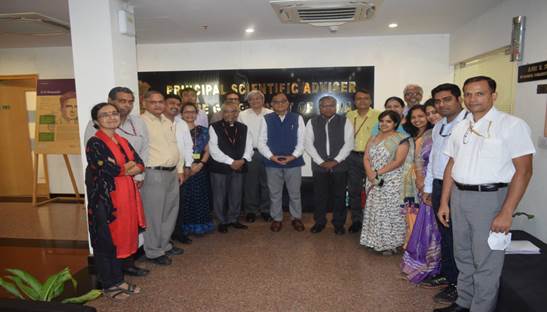
Prof. Ajay Kumar Sood, Principal Scientific Adviser (PSA) to the Government of India, Dr. Parvinder Maini, Scientific Secretary, Office of PSA, Dr. Preeti Banzal, Adviser, Office of PSA, Dr. Monoranjan Mohanty, Adviser, Office of PSA, Dr. Sindura Ganapathi, PSA Fellow, hri Shirish Panda, Scientist ‘D’, Office of PSA and Dr. B. Chagun Basha, Senior Specialist, Office of Principal Scientific Adviser to the Government of India joined the talks from Indian side.
Today India’s achievements are numerous and include a strong Democracy, higher Education, Nuclear power, stunning economic growth and revival of numerous aspects of traditional Wisdom. Owing to the talent and will of the countrymen, we can see that India has reached among the top countries of the world especially in science and technology and various other fields. India has the 44th rank in technology level among the world. Also, India is considered one of the top five countries in space exploration. India has become an important source of creative and fundamental scientific development and in all the perspectives around the world. All great scientific discoveries and technical achievements have improved the Indian economic situation in our country and have created many new approaches for the new generation to develop a technologically advanced environment. Much new scientific research and development is possible in the field of mathematics, architecture, chemistry, astronomy, medicine, metallurgy, natural philosophy, physics, agriculture, health care, pharmaceuticals, astrophysics, atomic energy, space technology, application, defence etc. The introduction of scientific research, ideas and techniques in the field of education has brought a huge change in the new generation at large and has given a variety of new and innovative opportunities to work in their own interests. Modern science in India has made people aware of their constant and hard efforts by scientists. India’s scientist is great, who has made scientific progress of the highest international calibre. Technical development in any area enhances the economy of any country. In order to improve the power of science and technology in India, the Government of India established the Council of Scientific and Industrial Research in 1942 and the Board of Scientific and Industrial Research in 1940. India has achieved so many achievements in the field of science and technology that every Indian is proud of his country. Let’s know all your achievements in detail.
•Atomic clock by ISRO: The atomic clock is an amazing technology developed by ISRO and it is used to measure precise location data in navigation satellites. Proudly, ISRO is one of the Few Space organisations in the world, those who have developed this amazing technology.
•Mars Orbiter Mission : Mars orbiter mission is a great success achieved by India in the field of science and technology. India is the only nation in the world to reach Mars in the first attempt. Indian space research organisation (ISRO) launched Mangalyaan on 5 November 2013 and it was placed into mars orbit on 24 September 2014. The cost of the project was 74 million US dollars which are cheaper than anything that others can achieve.
•Chandaryaan 2 Mission The moon landing of Chandrayaan 2’s Vikram lander is also a very special Indian technological achievement for India. Chandrayaan 2 mission marks India’s first lunar exploration mission and ISRO put lots of effort into making this mission a success. With this mission, India has emerged as the fourth country in the world to have hoisted its flag on the lunar surface. This achievement is a matter of great Honour for the nation.
•PARAM – India first Super Computer India’s first-ever super Computer named ‘Param’ is also a great achievement for India in science and technology. Param is designed and assembled by the Centre for the development of advanced computing in Pune. Today there are 11 supercomputers in India and they are used in the development of nuclear weapons and space programmes.
Even though India has only 140 researchers per 10 lakh population this has never been a shortcoming in the development of Science and Technology. We Indians must feel proud of our technological advancements and try to utilise them in the best manner possible.
Achievements of India in the field of Science and Technology
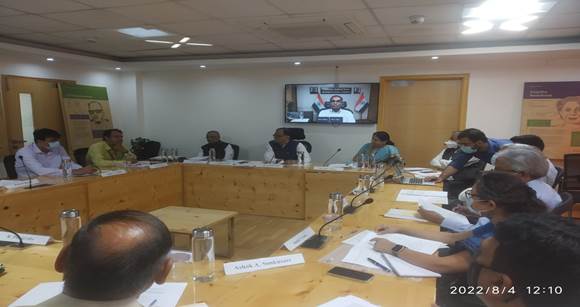
The first meeting of the National Advisory Committee of the NationalInitiative on Science, Technology and Innovation Statistics (NISTIS) discussed the way forward for the initiative.
It was decided that the Detailed Project Report (DPR) for the Centre for Science, Technology and Innovation Statistics will be prepared by the Project Monitoring Unit (PMU) at the Indian Institute of Science (IISc) Bengaluru.
Principal Scientific Adviser to the Government of India, Professor Ajay K Sood, who chaired the meeting, underlined the importance of the initiative and the urgent need to establish the centre to start focused work on it.
“Data is critical for knowledge-based decisions. While data is being collected by the different ministries, its centralised management is essential for taking critical decisions in the future,” he pointed out.
Secretary, Department of Science and Technology (DST), Dr Srivari Chandrasekhar, welcomed the initiative, highlighting the range of data that is already available with the department and emphasized the need to add to it.
Senior Adviser, DST, Dr Akhilesh Gupta, stressed on the need for a one-stop coordinated effort to bring the various efforts of accumulation of data and presented the tentative structure of the centre. He gave examples of international best practices of such efforts in USA and Japan.
Director Indian Institute of Science (IISc), Professor Govindan Rangarajan, elaborated on the functioning of the future centre at IISc.
Experts from scientific establishments discussed the governance, functioning and way forward for the center.




















 Eduindex
You must be logged in to post a comment.