What is the need for sustainability?

What does it Mean?

Sustainability is the ability to exist and develop without depleting natural resources for the future.

The United Nations defined sustainable development in the Brundtland Report as development that meets the needs of the present without compromising the ability of future generations to meet their own needs. It assumes that resources are finite, and so should be used conservatively and carefully to ensure that there is enough for future generations, without decreasing present quality of life. A sustainable society must be socially responsible, focussing on environmental protection and dynamic equilibrium in human and natural systems.

Why is Sustainability Important?

There are many benefits to sustainability, both short-term and long-term. We cannot maintain our Earth’s ecosystems or continue to function as we do if more sustainable choices are not made. If harmful processes are maintained with no change, it is likely that we will run out of fossil fuels, huge numbers of animal species will become extinct, and the atmosphere will be irreparably damaged. Clean air and nontoxic atmospheric conditions, growth of resources that can be relied upon, and water quality and cleanliness, are all benefits of sustainability.

What is Sustainability

What are the 3 Pillars of Sustainability?

The concept of sustainability is composed of three pillars: environmental, social and economic—also known informally as profits, planet, and people. These are in particular relevant to corporate sustainability, and efforts made by companies.

  1. Environmental protection is the most frequently discussed element. It is concerned with the reduction of carbon footprints, water usage, non-decomposable packaging, and wasteful processes as part of a supply chain. These processes can often be cost-effective, and financially useful as well as important for environmental sustainability.
  2. Social development is about treating employees fairly and ensuring responsible, ethical, and sustainable treatment of employees, stakeholders, and the community in which a business operates. This may be achieved through more responsive benefits, like better maternity and paternity benefits, flexible scheduling, and learning and development opportunities. For example, business should operate using sustainable labour, which involves fairly-paid, adult employees who can operate in a safe environment.
  3. Economic development is probably the simplest form of sustainability. To be economically sustainable, a business must be profitable and produce enough revenues to be continued into the future. The challenge with this form of sustainability is achieving an equilibrium. Rather than making money at any cost, companies should attempt to generate profit in accordance with other elements of sustainability.

Focussing on social and environmental sustainability in addition to economic performance is an approach frequently referred to as the Triple Bottom Line.

What are the Primary Goals?

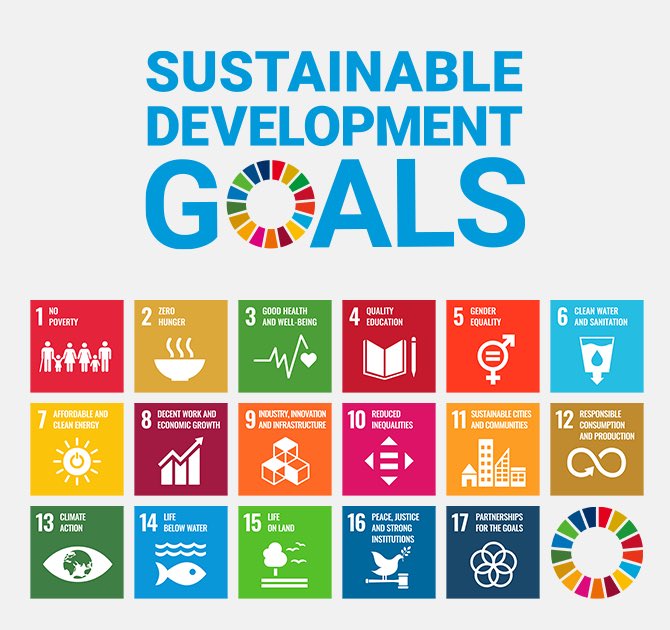
Recently, the UN issued The Sustainable Development Goals as its main aims for the successful achievement of a better and more sustainable future. They address global challenges to sustainability. The 17 Goals include sustainable economic growth, no poverty, zero hunger, clean water and sanitation, affordable and clean energy, and responsible consumption and production, and it is hoped that they will be reached by 2030.

How can it be Measured?

Sustainability is measured by assessing performance of the three main principles altogether, in particular a balanced treatment of all three. These three key principles of the Triple Bottom Line do not provide a measurement system of themselves, but recent methods of measuring sustainability have attempted to measure sustainability through them. Though no official universal measurement of sustainability exists, many organisations are developing industry-specific tools and practices to judge how social, environmental and economic principles function as part of a company.

How Does Sustainability Affect Business?

The Triple Bottom Line approach to operating a company is useful for businesses in a number of ways. Not only is it ethical and important to meet UN standards of environmental sustainability, it is also economical and allows a stronger business model. Additionally, sustainability enables an organisation to attract employees, shareholders and customers who are invested in the goals of sustainability and share these values. The impact of sustainability can therefore be positive for a business’ image as well as revenue.

Can it be Achieved?

In 2018, the EU Commission released six key transformations to be made. If properly implemented, these steps will allow better sustainability to be achieved by the current goal of 2050.

  1. Sustainable development is a societal challenge, not simply an environmental one – improvements of education and healthcare are therefore required to achieve higher income and better environmental decisions
  2. Responsible consumption and production, and the importance of doing more with fewer resources, are important to adopt a circular economy and reduce demand
  3. Decarbonisation of the energy industry, through clean energy resources and renewable processes, will be necessary to provide clean and affordable energy for all
  4. There should be food and clean water for all while protecting the biosphere and the oceans, which will require efficient and sustainable food systems, achievable through the increasing of agricultural productivity and reduction of meat consumption
  5. Smart cities: Settlement patterns should be transformed for the good of the population and the environment, which may be done through ‘smart’ infrastructure and internet connectivity
  6. A digital revolution in science, technology, and innovation would be required to support sustainable development, as it is hoped that the world will use the development of Information Technology to facilitate sustainability

The Future

With the climate crisis, there is a current movement towards sustainability as a more appealing priority for businesses, as people begin to live more sustainable lives. It is likely that, in the future, positive impact on climate over the whole value chain, improved impact on the environment, people, and atmosphere, and productive input on society, will be expectations for businesses. Companies will be held accountable for all aspects of industry, and any environmental damage or harmful emissions should be limited or removed from productive processes.

It is also expected that resources will be reused to suit the global increase in population in what is commonly referred to as a ‘circular economy’. This change would allow one person’s waste to be another’s resource, in a process that would greatly reduce waste and create a more efficient supply chain.

76th Session of UNGA

“Assembly of hope and resolutions”


United Nations General Assembly (UNGA) is the main deliberative, policymaking and representative organ of the United Nations (UN). Each 193 member state has equal power to vote, providing a unique forum for multilateral discussion of the International issue by comprising all the member states.


Each year in September the Assembly meets for regular sessions; thereafter as required. Through the dedicated agenda items or sub-items discussion of certain issues is done which leads to the adoption of resolutions. Amid covid-19 when all in-person meeting was not possible UNGA included virtual platforms to conduct meetings and other novel means to guarantee business continuity.


Abdulla Shahid of the Maldives opened the 76th session of the United Nations General Assembly on 14 September 2021 as he was sworn in as General Assembly President. Over 100 heads of state and government are expected to attend in person. The size of delegations allowed into the General Assembly Hall has been limited. Due to the global pandemic, UN Member States were encouraged to provide pre-recorded statements instead of travelling to UN Headquarters.

Pandemic is not the only problem the world is facing right now. The world has been facing the challenges such as Racism, intolerance, inequality, poverty, hunger, armed conflict, climate change and other ills for decades. General Assembly is an important opportunity for all to come together and work for the future that is different from today.


The theme for the 76th session is “Building Resilience through hope to recover from COVID-19, rebuild sustainably, respond to the needs of the planet, respect the rights of people, and revitalise the United Nations.”


SUSTAINABLE DEVELOPMENT GOALS (SDG)

Sustainable Development Goals are a call for action by all countries- poor, rich and middle-income – to promote prosperity while protecting the planet. It is also an outline for fighting poverty and hunger, achieving gender equality, confronting the climate crisis and much more, within the next ten years.


In unpredictable times, the SDGs show the way to advance towards a strong recovery from COVID-19 and a better future for all on a safe and healthy planet. Sustainable Development Goals are a global pact to create a future where nobody is left behind. These 17 goals were adopted by all countries at the United Nations in September 2015.


DECADE OF ACTION
In the aspect of human and planetary well being ‘Decade of action’ is a universal call to action to end poverty, to protect Earth and ensure all people enjoy peace and prosperity.
In September 2019, the secretary-general called on all sectors of society to mobilize for a decade of action on three levels:
Global action to secure greater leadership, more resources and smarter solutions for the Sustainable Development Goals;
local action implanting the needed transitions in the policies, budgets, institutions and regulatory frameworks of governments, cities and local authorities; and
people action, including by youth, civil society, the media, the private sector, unions, academia and other stakeholders, to generate an unstoppable movement pushing for the required transformations.


Progress is being made in several places but action to meet the Goals is not yet developing at speed that is required to meet the achievements. The Decade of Action calls for accelerating sustainable solutions to all the world’s biggest challenges — ranging from poverty and gender to climate change, inequality and closing the finance gap.


The pandemic became the unprecedented wake-up call that demanded urgency in actions and ambition. The progress that was planned and had been achieved for the decade of action got shaken in the very first five months of the pandemic, spreading the vary that then SGD moment is going off track.


Covid-19 began as a health crisis and quickly become a human and socio-economic crisis. It also urged everyone to see the importance of the preservation of the achieved progress.

“We need to turn the recovery into a real opportunity to do things right for the future.”
– UN Secretary-General António Guterres.


Some of the event highlights

• On 20 September the second SDG moment took place with leaders from over 30 countries addressing the theme ‘Plans, pathways and partners for Recovery and beyond.’ In inclusion of four focal topics Gender equality; Connectivity; Youth in Action; and Localising the SDGs.

• On 23 September, the first-ever food summit will take place completely virtually to mobilise the actionable commitments to transform food systems.

• On 24 September, the first global gathering on energy under UNGA auspices since the UN Conference on New and Renewable Sources of Energy in 1981, ‘High-level Dialogue on Energy’ will be commenced.

• On 28 September, the High-Level Event on Jobs and Social Protection for Poverty Elimination event will be conveyed virtually.


2021 remains a crucial year to bring back the balance with nature, take measures about the climate emergency, and get ahead of the pollution crisis while making sure that no one is left behind. The topics that have been discussed and are to be discussed in the 76th United Nations general assembly are a reminder of what must be done for the future so our dreams won’t be lost forever.
Only by being together, we can tackle the feeling of helplessness and hopelessness that many of us are currently feeling. As long as we are united we can make a difference for the sake of our planet and each other.


‘One person can hope for change and two can make it come true with the support of each other.’

Continue reading “76th Session of UNGA”

East Timor: Brief analysis of its history & independence.

East Timor or Timor-Leste is a tiny island country in Southeast Asia nestled between Australia and Indonesia.

For more than 300 years the territory of East Timor was ruled by Colonial Portugal (Portuguese Timor). They set up both commercial outposts and catholic missions. On 28 November 1975, Portugal withdrew from the island territory when the Revolutionary Front for an Independent East Timor had declared the territory’s independence. But this exit from East Timor was not at all smooth and this enraged bitter rivalry between various local groups. Just nine days later in December 1975 East Timor was invaded and occupied by the Indonesian military. Suharto, the Indonesian president at that time didn’t receive much resistance from the western countries due to the left-leaning stance of East Timor at that time (Cold war).  The Indonesian occupation was a brutal and violent period in East Timor’s history with various suppression tactics many people lost their lives during that period.

The following decades were highly violent with many conflicts between the separatist groups known as Fretilin and the Indonesian military. The military fought a continuous guerilla war with the rebels in the island’s interior mountains. There were numerous rights violations and over 100,000 people died under the occupations of Indonesia.

One of the most defining instances happened on November 12, 1991, when the Indonesian military shot and killed over 250 people who had come for the memorial procession in honor of Sebastio Gomez, a pro-independence supporter killed by the Indonesian military. The events occurred in the Santa Cruz Cemetery in Dili, East Timor’s capital. This tragedy is known as the Santa Cruz Massacre. The event gained international media attention. Although the Indonesian occupation did not cede until eight years later in 1999, the Santa Cruz massacre was a defining moment in the island nation’s quest for independence.

In 1998 president Suharto resigned from his position after more than 30 years in power due to growing pressure and protests against him from within the country. His replacement was open towards more open towards the autonomy of East Timor. International pressure for East Timor grew in 1998. During the downfall of the New Order government, as part of Reformasi, a referendum was held in East Timor to ask whether they wished to remain in Indonesia with increased autonomy or become independent. On August 30, 1999, about 78% of the population of East Timorese chose to remain independent.

Following the referendum, violence again erupted in East Timor as Indonesian-backed militias increased their activities across the country. In September UN peacekeeping let by Australia force took control of the situation but a lot of damage was already done. In 2002 Xanana Gusmão was elected as the first president after three years of transitional governance by the UN.

As of today, the country has been relatively stable but the economic conditions have not been improved. Indonesia’s Timor has fared comparatively better than East Timor. It was also discovered that Australia, a country that East Timor considered as their ally had spied on East Timor to gain leverage over negotiations on the exploitation of natural resources in the Timor Sea. On a positive note, the country has comparatively good relations with Indonesia now.

References:

Is the war in Afghanistan finally coming to an end?

Recently we witnessed the withdrawal of the final group of the troops of the United States from Afghanistan. A Taliban group is utilizing this situation over the past few years generating profit from these battlefield casualties and weaponry. The locals are now scared that the war might become more violent and claim more lives after the foreign troops have been evacuated. The States and its alliances will finally receive back the war material and troops that were placed in the east for over 20 years. It has also been saying the United States will still have control to defend the Afghans from the Taliban until the end of September. The Sates have the authority to plan strikes from the warplanes present in the outskirts of the war-torn nation.

The war initially began in 2001 with an intention of the States and its allies to drive out the Taliban and to deny Al-Qaeda a safe base for operations. After the initial objectives were successfully carried out a coalition was made with over 40 countries to eradicate terrorism from Afghanistan. The main reason behind the US invading the Afghans was Osama Bin Laden. The man, who was responsible for the attacks in September 2001, was living in hiding in Afghanistan with support from the Taliban. Followed by the attacks the States ask the Taliban to hand over the man accused in their case. The Taliban requested evidence supporting the crimes Bin Laden had committed, which the authorities refused to share.

On the night of 7th October 2001, the United States along with the United Kingdom launched an operation code-named Operation Enduring Freedom. Post the invasion from the west the Taliban and its allies were defeated. By the end of 2001, the Taliban no longer had control over the nation and the Al-Qaeda was almost deceased. The nation suffered for a while until a solid political reform was put into place. According to a report the number of casualties amounted to around 150,000 civilians who had to succumb to the conflicts between organizations.

Some argue that this war has made the nation suffer but on the other hand when we take a look into the healthcare of the nation the numbers are quite surprising. Since the start of the war, life expectancy has increased from 56 to 61. Also, the mortality has immensely decreased to about half of the initial rate. Now about 90% of the citizens reside in the cities and have access to clean drinking water and other basic amenities. But the sad part is the number of people that have been displaced due to this war. The United Nations estimated that over 8 million rushed out of the nation when the invasion began, of which around 5 million returned after the situation improved in the war-afflicted zone. But to date, over 2 million remain dispersed throughout the world and some live in the refugee camps located at borders.

Once, Donald Trump came into power things finally began to settle between the Taliban and the States, providing hope to the residents of the country. The current scenario as it lies; the war may be finally coming to an end. Biden recently ordered the Pentagon to evacuate its troops present in Afghanistan by the end of 2021. So to answer the question; the war is finally at its climax and the Afghan nationals can see a brighter future.

Universal Declaration of Human Rights (UDHR)

“The rights of every man are diminished when the rights of one man are threatened.”

John F. Kennedy

One week after World War II began, Herbert George Wells, wrote to the Times of London, with “What are we fighting for?” The science fiction writer answered his own questions with, “The Rights of Man.” On the February 5th publication of the Daily Herald in 1940, Wells published his own “Declaration of Rights.” This article was well received and was later turned into a book.

The United Nations (UN) was founded in 1945. The two main resolutions were; to prevent another world war and to attempt to make the world a better place for all the citizens of the world. The idea of the United Nations was suggested by the League of Nations, established in 1919 (post World War I). In 1878, Congress of Berlin was formed the same way the League of Nations was formed. Yet it wasn’t successful in avoiding World War I. UN was formed in hopes to rectify the shortcomings of the Congress of Berlin and the League of Nations.

On 10th December 1948, unanimously the General Assembly of the United Nations passed the Universal Declaration of Human Rights (UDHR). The 30 articles and sub-clauses of the UDHR promotes and the UN and Human Rights Commission (HRC), oversee that “everyone is entitled to all of the rights and freedoms set forth in this Declarations, without distinction of any kind such as race, colour, sex, language, religion, political or other opinion, national or social origin, property, birth or other status.”

The UDHR comprises the basic human rights every person deserves, like the civil and political right to life, free speech, privacy, seeking asylum, freedom from torture, right to education and so much more.

Below I list every Article of the UDHR and an explanation.

“Article 1: 

All human beings are born free and equal in dignity and rights. They are endowed with reason and conscience and should act towards one another in a spirit of brotherhood.”

Every person born into this world has equal worth and rights. Everyone should be kind and respectful of others.

“Article 2: 

Everyone is entitled to all the rights and freedoms set forth in this Declaration, without distinction of any kind, such as race, colour, sex, language, religion, political or other opinion, national or social origin, property, birth or other status. Furthermore, no distinction shall be made on the basis of the political, jurisdictional or international status of the country or territory to which a person belongs, whether it be independent, trust, non-self-governing or under any other limitation of sovereignty.”

No matter a person’s, race, colour, sex, or any other difference, everyone is entitled to all the rights listed in this Declaration.

“Article 3: 

Everyone has the right to life, liberty and security of person.”

Everyone has a right to live, freely and securely.

“Article 4: 

No one shall be held in slavery or servitude; slavery and the slave trade shall be prohibited in all their forms.”

No one can be enslaved or punished for being alive.

“Article 5: 

No one shall be subjected to torture or to cruel, inhuman or degrading treatment or punishment.”

No one deserves or should be tortured or subjected to cruelty, inhumanity, or degrading behavior.

“Article 6: 

Everyone has the right to recognition everywhere as a person before the law.”

Everyone in this world has the right to be recognized everywhere as a person.

“Article 7: 

All are equal before the law and are entitled without any discrimination to equal protection of the law. All are entitled to equal protection….”

Everyone is equal before the law and is entitled to impartiality. And if anyone faces discrimination, they deserve equal protection.

“Article 8: 

Everyone has the right to an effective remedy by the competent national tribunals for acts violating the fundamental rights granted him by the constitution or by law.”

Everyone has the right to legal support if and when needed/

“Article 9: 

No one shall be subjected to arbitrary arrest, detention or exile.”

No one, unless proven guilty, can be arrested or exiled.

“Article 10: 

Everyone is entitled in full equality to a fair and public hearing by an independent and impartial tribunal, in the determination of his rights and obligations and of any criminal charge against him.”

Everyone accused of a crime has a right to a fair and equal public trial. Subjective judgment is a violation of Human Rights.

“Article 11: 

(1) Everyone charged with a penal offence has the right to be presumed innocent until proved guilty according to law in a….”

Everyone accused of a crime has the right to be considered innocent until proven guilty.

“Article 12: 

No one shall be subjected to arbitrary interference with his privacy, family, home or correspondence, nor to attacks upon his honour and reputation. Everyone has the right to the protection of the law against such interference or attacks.”

No one has the right to enter another persons’ house, mail, or intrude without a good reason. We have a right to be protected if that happens.

“Article 13: 

(1) Everyone has the right to freedom of movement and residence within the borders of each state.

 (2) Everyone has the right to leave any country, including his own, and to return to his country.”

Everyone has the right to move around one’s home country and travel abroad with proper documents.

“Article 14: 

(1) Everyone has the right to seek and to enjoy in other countries asylum from persecution.

 (2) This right may not be invoked in the case of…..”

If a person is at risk of harm in one’s own country, one has the right to seek asylum in other nations.

“Article 15: 

(1) Everyone has the right to a nationality.

 (2) No one shall be arbitrarily deprived of his nationality nor denied the right to change his nationality.”

Everyone has a right to be a citizen of a country, and no one or government can deny that without a justifiable reason.

“Article 16: 

(1) Men and women of full age, without any limitation due to race, nationality or religion, have the right to marry and to found a family. They are entitled to equal rights as to marriage, during….”

Every one of the legal age has the right to marry and start a family without any limitation of any race, nationality, religion, or any other reason.

“Article 17: 

(1) Everyone has the right to own property alone as well as in association with others.

 (2) No one shall be arbitrarily deprived of his property.”

Everyone has the right to own a property, and anyone deprived of this right is a violation of Human Rights.

“Article 18: 

Everyone has the right to freedom of thought, conscience and religion; this right includes freedom to change his religion or belief, and freedom, either alone or in community with others and in public or private, to manifest his religion or belief in teaching, practice, worship and observance.”

Everyone has a right to their thoughts, beliefs, and religion. Anyone wishing to change their religion is entitled to do so.

“Article 19: 

Everyone has the right to freedom of opinion and expression; this right includes freedom to hold opinions without interference and to seek, receive and impart information and ideas through any media and regardless of frontiers.”

Everyone has the right to express their thoughts and opinions freely with anyone.

“Article 20: 

(1) Everyone has the right to freedom of peaceful assembly and association.

 (2) No one may be compelled to belong to an association.”

Everyone has the right to form groups and organize peaceful protests. Anyone denying a person or group of protesting peacefully is violating Human Rights.

“Article 21: 

(1) Everyone has the right to take part in the government of his country, directly or through freely chosen representatives……”

Everyone has the right to freely choose their political representative. Either by democracy or any other method. Any government or leader denying that right is violating Human Rights.

“Article 22: 

Everyone, as a member of society, has the right to social security and is entitled to realization, through national effort and international…..”

“The society we live in should help every person develop to their best ability through access to work, involvement in cultural activity, and the right to social welfare. Every person in society should have the freedom to develop their personality with the support of the resources available in that country.”

“Article 23: 

(1) Everyone has the right to work, to free choice of employment, to just and favourable conditions……”

Everyone has the right to work and freely choose any occupation. Unless the person is underqualified, no one can be denied the position.

“Article 24: 

Everyone has the right to rest and leisure, including reasonable limitation of working hours and periodic holidays with pay.”

Everyone has the right to work reasonable hours. Everyone holds the right to enjoy leisure time each week. Any overtime spent working needs to be compensated with additional holiday/vacation pay.

“Article 25: 

(1) Everyone has the right to a standard of living adequate for the health and well-being of himself and of his family, including food…..”

Everyone has the right to adequate food, clothing, housing, and healthcare. Everyone who is unable to work, or work adequately is entitled to benefits. Every disabled person is entitled to services and benefits to make life easier.

“Article 26: 

(1) Everyone has the right to education. Education shall be free, at least in the elementary and fundamental stages. Elementary education shall be compulsory. Technical and professional education shall be made…….”

Everyone has the right to educations and elementary and primary education should be free for all. Education every child receives should include these rights and fundamental freedoms. Every parent has the right to choose the right kind of education for their children.

“Article 27: 

(1) Everyone has the right freely to participate in the cultural life of the community, to enjoy the arts and to share in…..”

Everyone has the right to freely participate in the cultural activities of the community and also hold the right to reserve the copyright of one’s work.

“Article 28: 

Everyone is entitled to a social and international order in which the rights and freedoms set forth in this Declaration can be fully realized.”

Everyone has the right to live peacefully at the local, national, and international order that this Declaration provides.

“Article 29: 

(1) Everyone has duties to the community in which alone the free and full development of his personality is possible……”

“We have duties to the community we live in that should allow us to develop as fully as possible. The law should guarantee human rights and should allow everyone to enjoy the same mutual respect.”

“Article 30: 

Nothing in this Declaration may be interpreted as implying for any State, group or person any right to engage in any activity or to perform any act aimed at the destruction of any of the rights and freedoms set forth herein.”

No person, group, or government holds the right to deny or destroy the rights and freedoms allocated by this Declaration.

Many countries, governments, and influenced groups are violating these basic Human Rights. A few examples of this are listed below:

  • Landlords forcibly evicting tenants who are unable to pay rent amidst the COVID-19 pandemic.
  • The Indian government detaining peaceful protestors during the anti-NRC and anti-CAA protests in 2019-20.
  • Police Brutality in the form of custodial rapes, custodial torture, no-knock searches, wrongful imprisonment, denial of medical attention, excessive force, and more.
  • Dictator rulers are violating human rights.
  • Victims being denied justice.
  • Systematic- Racism and Discrimination against African-American citizens in America.
  • Chinese Political unjust towards Uighur Muslims.
  • Civil War zones in Syria, Yemen, and other countries.
  • Malnourished people being denied access to food and necessities,
  • Political prisoners” who spoke out against their government.

This is list can go on, so many people are being denied basic human rights.

United Nations and the use of forces

Article 1

Aim of Untied Nations charter is to maintain international peace and security and to that end to take effective collective measures for the prevention and removal of threats to the peace and for the suppression of acts of aggression or other breaches of the peace and to bring about by peaceful means.

Purpose of the United Nations are:-

1. To maintain international peace and security, and to that end: to take effective collective measures for the prevention and removal of threats to the peace, and for the suppression of acts of aggression or other breaches of the peace, and to bring about by peaceful means, and in conformity with the principles of justice and international law, adjustment or settlement of international disputes or situations which might lead to a breach of the peace;

2. To develop friendly relations among nations based on respect for the principle of equal rights and self-determination of peoples, and to take other appropriate measures to strengthen universal peace;

3. To achieve international cooperation in solving international problems of an economic, social, cultural, or humanitarian character, and in promoting and encouraging respect for human rights and for fundamental freedoms for all without distinction as to race, sex, language, or religion,

4. To be a center for harmonizing the actions of nations in the attainment of these common ends.

5. To develop friendly relations among nation based on respect for the principle of equal rights and self determination of people’s.

Article 2

The Organization and its Members, in pursuit of the Purposes stated in Article 1, shall act in accordance with the following Principles.

1. The Organization is based on the principle of the sovereign equality of all its Members.

2. All Members, in order to ensure to all of them the rights and benefits resulting from membership, shall fulfil in good faith the obligations assumed by them in accordance with the present Charter.

3. All Members shall settle their international disputes by peaceful means in such a manner that international peace and security, and justice, are not endangered.

4. All Members shall refrain in their international relations from the threat or use of force against the territorial integrity or political independence of any state, or in any other manner inconsistent with the Purposes of the United Nations.

5. All Members shall give the United Nations every assistance in any action it takes in accordance with the present Charter, and shall refrain from giving assistance to any state against which the United Nations is taking preventive or enforcement action.

6. The Organization shall ensure that states which are not Members of the United Nations act in accordance with these Principles so far as may be necessary for the maintenance of international peace and security.

7. Nothing contained in the present Charter shall authorize the United Nations to intervene in matters which are essentially within the domestic jurisdiction of any state or shall require the Members to submit such matters to settlement under the present Charter; but this principle shall not prejudice the application of enforcement measures under Chapter VII.

The charter of the United Nations establishes a fundamental distinction between legal and illegal resort to force. By this it has in a way revived in international law the old distinction between just and unjust war.

The preamble of the charter of the United Nations starts with the determination of the people’s of the United Nations to save succeeding generations from the scourge of war and their willingness to practice tolerance and live together in peace with one another as good neighbors and not use armed force except in the common interest.

The prohibition of the threat or use of force in international relations against the territorial integrity or political independence of any state.

The use of force is necessary if it’s not possible to maintain peace by talks like things going on in Syria Iraq. But it’s not possible world or human being alwasys devide in two sides one is favour and one in against as positive negative or heads and tails this is impossible to fix everything and take stance at one side.

Global Diplomacy: The United Nations.

  • The name “United Nations” appears true only in books but in reality it seems like a contest for nations to prove their dominance and power individually. The diplomacy comes off to be biased. The World today is owned by corporate and the UN follows through. The actual role of united nations should be to rise above the competition and work as ONE UNITED PLANET towards climate change, global pandemic, poverty and financial slavery.

Though it is non-arguable that UN has helped bring forward issues like Women Empowerment, Poverty, Health, Education, etc. on a global platform. The real question is, are these issues solved or they have been piled upon by newer issues day by day.

But on a positive note, the UN has made progress in its peace making strategies and providing financial and healthcare aids to the countries in need. If not for this organisation then there would have not been a diplomatic relationship between nations and war would be the ultimate solution to all inter-nation problems.

Just because a medicine has side-effects does not mean it cannot be used for treating the illness in hand. Similarly, it is easy for anybody to make war but only the united front can make peace and prosperity!

  • The UN came from the minds of some of the renowned politicians of the western countries. When the super power nations felt their security and peace was under threat they collaborated with like-minded ones against the equally powerful nations. Powerful only in military and vengeance and the greed to conquer. According to human psychology (basic), a man desires power more than water for thirst.

From all the glorifications I read about this organisation, UN rose from the ashes of the war like a phoenix bird. Very beautiful and powerful bird- a phoenix-their tears have healing powers. One can say that United Nations came into existence to act as the panacea to diseases like violence, death and fading humanity.

But is the origin really important to determine its worth in the present scenario is something to ponder upon. Today UN works for a cause which it was originally built upon; irrespective of its results, – promotion of peace with its symbol the white dove soaring high, its wings flapping, freeing itself from the shackles of slavery of power, money, greed and hate.

Born in times of desperate times it can be regarded as an invention by man in the time of dire need. As we all know – “NECESSITY IS THE MOTHER OF ALL INVENTIONS!”

  • The UN Security Council consists of 5 permanent members and 10 temporary members all with a right to vote however only the permanent five have the right to veto. The word itself suggests that the council was made to resolve the security concerns of nations and to make peace among them.

 Today, the Council responds to three types of situations:

  • (1) chemical, biological, radiological and nuclear weapons proliferation; (2) international conflict; and (3) intra-state conflict. More recently, the Council has also developed a (4) cross-cutting and (5) quasi-legislative agenda.

The above decisions and powers in the hands of the council sounds safe however it is not the situation in reality. There has to be an expansion of the members instead of giving all the authority in the hands of the few. This will help in avoidance of partiality or constant disagreement that has been happening since the council has been formed. Though it has never successfully managed to make any notable reforms , it is one of our best option to resolve the security threats and war like situations in many countries and their estranged borders.

  • Human rights are the rights we are all entitled to irrespective of the place of birth or the time of birth. The core of United Nations is built upon the protection and service towards human rights and its associated freedoms. However due to international politics and superpower nations greed to stay on top of others and world domination has endangered the human rights of developing and under developed nations. Human rights have become a selective freedom provided to only those who can afford it without any restrictions. In my country citizens think that they are not worthy of having human rights as they think only the rich and developed nations are fortunate enough to have human rights that too the basic one’s. In recent events of racism ad discrimination on the basis of colour and financial status, what is the united nations enforcing laws to stop the fights  to avail basic human rights. People have to come on streets and protest later developing into riots in order to practise their rights and enjoy the freedom of being born as a human on this planet.
  • The united nations in the past has failed in crisis management because of the disagreement between it’s member nations and security councils. Due to the interference of the security council the  situation was aggravated rather than being put out or quite down. Rather than focusing on the crisis at hand it focuses on the political relations of that country with the members of the united nations and then it takes the necessary actions that too not quick or decisive but slow and of poor quality. However by putting the past back the united nations can improve on its crisis management skills by being in constant touch with the country and states local administration and education people on a personal and more localised manner rather than representing it as a political agenda or foreign policy which puts the civilians in a mind-set of confusion and feeling of unsafe and non trustable environment.
  • Today a question arises on the future of the United Nations and will it still prevail in the modern world where people are becoming rather too aware and will want a more secular council, one which works one which provides solutions, one which is actually true to its purpose of being formed.
  • During the 2020 Global Pandemic the true face of UN is being put to test and how it acts now to maintain peace among nations will say a lot about its existence in the future or will it be left to be just pages in history textbooks.

Just wishing for once if we had leaders who cared about the upliftment of the entire nation and not just the name of their political agenda and parties. The world needs educated and selfless leaders and hopefully in the future with my generation in the front we will represent a better council than these old ways and barbaric wars.

Yemen is suffering the biggest humanitarian crisis and the world is silent

Yemen’s civil war is about to be eclipsed in a tragic manner. The fighting pits Iranian-backed Houthi rebels who took over the capital Sana’a and the north in 2015 against the Saudi- and UAE-backed, U.N.-recognized government of President Hadi. Another conflict pits the Hadi government against the Southern Transitional Council. Both are ongoing. Despite calls for ceasefires, the country remains sharply divided and now faces a potentially deadlier foe than the war—the COVID 19 pandemic.  

The U.N.’s head of humanitarian operations in Yemen, Lisa Grande, says that Yemen faces a worst-case scenario. The death toll from the pandemic could “exceed the combined toll of war, disease, and hunger over the last five years (in Yemen).” That could be over 230,000 deaths according to a U.N.-commissioned report from the University of Denver.

Right now Yemen is facing the biggest humanitarian crisis in last 100 years with over 24 million people in need of aid. They are currently fighting off an

CHOLERA OUTBREAK – cholera epidemic in Yemen is going on since 2016, and gets worse everyday due to lack of public health sectors and aid ,as well as saudi lef air strikes on water systems and food infrastructure.

FAMINE – The famine in yemen is said to become the worst one in 100 years and continues to get worse every day due to the poor funding and saudi intervention.

CORONAVIRUS (pandemic) -there aren’t many testing kits and hospitals aren’t equipped with treating it. Basic necessities like masks and gloves are also not available . Thus making the situation even worse. Its said that covid-19 can remove Yemen from the maps all over the world. As its impact is devastating on a country which has been wracked by civil war at same same time . Saudi Arabia with support of US,UK ,France has been bombing Yemen in order to get rid oh the “Houthi rebels, targeting public infrastructure,water systems , schools etc.

According to reports every 10 minutes a child dies in Yemen because the healthcare system has essentially been collapsed .

The U.N. termed Yemen the world’s worst humanitarian crisis before the pandemic. Some 80 percent of the population—24.1 million people—required humanitarian assistance, with half on the brink of starvation.They are among the most vulnerable to the pandemic. In the meantime, the U.N.’s lack of funds means half-rations for 8.5 million hungry Yemenis. Around 2 million children under 5 years old are suffering from acute malnutrition.

Today, more than 20 million Yemenis need humanitarian assistance, a number greater than the entire population of the state of New York.

The numbers are staggering: 20 million Yemenis are food insecure, 19 million do not have access to clean water and sanitation, and the worst cholera outbreak in modern history has claimed more than 2,500 lives. According to the United Nations, 10 million people in Yemen are one step away from famine.1

HOW TO HELP ?