Vaccination and COVID-19

How long has it been since we went to school met our friends or had a family dinner at some restaurant? Since March 2020, we have all been advised to stay home and sanitise ourselves in order to stay safe. Sanitizers and masks have been added to our daily use products, all because of one tiny yet dangerous virus Covid-19!

The world is now waiting anxiously for a vaccine against this dreaded virus. Researchers around the world are working round the clock to develop vaccines to combat the pandemic. Currently, more than 165 vaccines against the corona virus are under process and 27 vaccines are undergoing human trials. Vaccines typically require years of research and testing before reaching the clinic. Today, scientists all over the world are racing to produce a safe and effective vaccine by next year.
When did the efforts start

Efforts to make a successful Covid-19 vaccine began in January 2020 with the deciphering of the SARS-CoV -2 genome. The first vaccine safety trials in humans started in March but the road ahead remains uncertain. Some trials will fail and others may end without a clear result. But a few may succeed in stimulating the immune system to produce effective antibodies against the virus.

• India and vaccine against Covid-19

Like many other countries, India too is immersed in the efforts to develop successful vaccines to counter Covid-19. Thirty different Indian companies are trying to produce a vaccine to fight the infection. 7 out of these have received approval from the World Health Organization. These vaccines are in different stages of testing and clinical trials now.

COVAXIN

COVAXIN is developed by Hyderabad based Bharat Biotech International Limited in collaboration with ICMR and NIV, Pune. This is the first vaccine from India to get regulatory approval. The vaccine makes us an inactive version of a virus to spike up production of antibodies in the host body. It recently initiated Phase I and Phase II of clinical testing.

ZyCoV-D

ZyCoV-D is being developed by Zydus Cadila based in Ahmedabad. The Phase I trials of the vaccine have already begun. Extensive research was done regarding the same in collaboration with medical labs in Europe and US.
• Russia and vaccine against Covid-19

Russia is one of the countries worst affected by Covid-19. The country has been pushing extensively for a Covid-19 vaccine for quite some time now; Russia too is a part of the race to produce the world’s first Covid vaccine. It is possible that Russia would be ready with its first domestic corona virus vaccine soon. The clinical trials were conducted by the Gamaleya National Research centre of Epidemiology and microbiology. There seem to be no reports of side effects on the volunteers. All the participants showed immunity and the country is planning for the serial production of the vaccine by September. By the beginning of next year, Russia hopes to manufacture several million doses of corona virus vaccines per month.

• Oxford University’s efforts to develop a vaccine

The university of Oxford has partnered with AstraZeneca, a British-Swedish pharmaceutical company to develop an adenovirus vector vaccine to combat Covid-19. The vaccine prototype is currently in Phase III of testing. Trials of the vaccine developed by Oxford University show it can trigger an immune response. The vaccine which has so far been found to be safe and effective is expected to be made available for the masses by the end of 2020. This vaccine would also be the first such vaccine to have a large scale testing in India. The observatory data for this vaccine is expected to be available by November this year. The company has tied up with Pune based serum institute of India to mass produce the vaccine once the company gets required approvals and licensing from medical boards.
• Some methods used to make vaccines for Covid-19

Different scientists across the world try different techniques and formulas to develop vaccines. The Oxford researchers have put small sections of the corona virus genetic code into a harmless virus that infects chimpanzees. They appear to have developed a safe virus that looks enough like the corona virus to produce an immune system. Some other scientists have used pieces of raw genetic code, either DNA or RNA. When these are injected into the body it would start producing bits of viral proteins which the immune system can learn to fight. There is also work on corona virus vaccines called ‘plug and play’ vaccines. This method is new and less tested.
Thank you for reading. Have a nice day!🌼

COVID-19: Don’t expect effective vaccine in near future

In a joint statement, experts of the Indian Public Health Association (IPHA), Indian Association of Preventive and Social Medicine (IAPSM), and Indian Association of Epidemiologists (IAE) said, “Vaccines do not have any role in current ongoing coronavirus pandemic control in India. It must be assumed that an effective vaccine would not be available in near future. We must avoid false sense of hope that this panacea is just around the corner.”

India has crossed tally of 36,91,166 in total with nearly 7 lakh active cases and around 65288 deaths. After all the practices of lockdown, corona cases have yet not under control. India is doing 10lakhs tests per day. Around total of 4 crores test has been conducted till now.

According to a press statement, the health minister noted that India was “much ahead’ than other nations in tackling the highly infectious contagion. He said, “The COVID-19 will significantly come under control by the Deepavali this year. The leaders and common people effectively worked together to fight the pandemic.” The minister had inaugurated ‘Nation First’ webinar series organised by the Anathkumar Foundation.

Reports are stating that vaccine could be in use for general public around the last quarter of year 2020. Depending on the results, some companies say their vaccines could be greenlighted for use as soon as this year.

Now, a handful are starting or nearing the final stage of testing. Approximately 170 Covid-19 vaccines are in development around the world. According to the World Health Organization, each one promising to protect people from the deadly coronavirus and allow them to go back to work and school.

To date, just one coronavirus vaccine has been approved. Sputnik V – formerly known as Gam-COVID-Vac and developed by the Gamaleya Research Institute in Moscow – was approved by the Ministry of Health of the Russian Federation on 11 August. Experts have raised considerable concern about the vaccine’s safety and efficiency given it has not yet entered Phase 3 clinical trials.

Indian Council of Medical Research director general Balram Bhargava on Tuesday confirmed that the trials for the ‘Covishield’ vaccine, jointly developed by the University of Oxford and Astrazeneca plc, have begun. ICMR is the secondary sponsor to the phase 2 and 3 trial of around 1,600 patients.

Serum Institute, which is the world’s largest vaccine manufacturer by volume, had in June signed an agreement with British-Swedish multinational pharmaceutical company AstraZeneca to supply an additional 1 billion doses, principally for low- and middle-income countries.

As it is a contract manufacturer of the vaccine, the company had secured the Indian drug regulator’s approval to conduct a phase II and III trial as per regulations.

Screening and enrolment of participants in the trial is only done after getting approval from the ethics committee of the hospital. So far, seven hospitals, including BVDU, of the 17 sites have received ethics committee approval, according to the government’s clinical trial registry. As many of corona vaccines are in development across the world with promise of maximum effectiveness. But none of them is expected to be an anti-drug. Besides all of this, most of the vaccines are supposed to be a medicine of disease as a cure. But quality of them is still not confirmed.

Trudeau also said the government will invest C$126 million (72.3 million pounds) over two years to build a biomanufacturing facility at the Human Health Therapeutics Research Centre in Montreal capable of producing up to 2 million doses of a vaccine per month by next year. Canada reached an agreement in principle on Monday with both Novavax Inc and Johnson & Johnson for millions of doses of their experimental coronavirus vaccines, Prime Minister Justin Trudeau said. Canada`s two agreements follow separate deals with Pfizer Inc and Moderna Inc announced weeks ago and are the latest example of countries rushing to secure access to vaccines.

Coronavirus Latest News: Top 10

  1. AstraZeneca’s coronavirus vaccine reached Phase 3 clinical trials in the United States and is very close to get an approval. It could get launched before the November 3, 2020.
  2. The Institute of Medical Sciences and SUM Hospital, Bhuwaneshwar, is preparing for the second phase of the human clinical trial of ‘Covaxin’. There were zero side effects in the reports of first trials.
  3. The German scientists claim that they found that cancer drugs stop the growth of coronavirus. A total image of all correspondence channels of a human cell contaminated by coronavirus is recorded and observed for the first time. If these flagging pathways are interrupted and stopped, the virus can not duplicate and spread in the body anymore. Read the study here.
  4. Auckland, the largest city of New Zealand, successfully controls coronavirus spread and exits the lockdown.
  5. China has successfully controlled the transmission of coronavirus and did not find any new community spread reports of the coronavirus in the past few days. After Beijing and Shanghai, Wuhan reopens all the schools.
  6. Reopening of schools in the U.S. proves to record a lot more cases of coronavirus in the country when school children and staff are tested positive.
  7. Anti-mask protestors still on the rise in many parts of the U.S.
  8. Coronavirus protestors come out on the streets of Berlin in Germany, to fight for basic human rights.
  9. Peru, South America now has world’s highest coronavirus death rate.
  10. Japan plans to extend coronavirus loan for India to fight the pandemic.

How to Keep your Homes Virus-Free after Covid-19 Outbreak

Nobody was expecting to be one day locked in their homes and worrying about keeping the virus at bay. Untill the vaccines are out we have to take certain serious measures to ensure the safety of our family and loved one’s.

Is cleaning like we usually did enough? What can a common man do without the high tech protective gears?

Let us break down some steps which can be followed at home as a part of our daily routines to not only clean but also disinfect :

Food and it’s cleaning procedure:

Nowadays with online shopping of essentials, we must make sure that the vegetables and fruits are disinfected. We must transfer the eatables into a dish and wash off the container immediately. If it is a disposable container, throw it in the trash can which should have a lid. Remove and throw away outer cartons of cereal boxes. All unnecessary shrink wraps and plastic packaging must be disposed off. Beverage bottles and cans can be wiped with disinfectant. Fresh vegetables and fruits must be thoroughly rinsed under a running tap, preferably with warm water and salt and turmeric. Wash your hands with soap and water once you are done. One can also keep certain items in sunlight to naturally kill some germs under the Uv rays.

Washing clothes after returning home:

Warm water destroys germs. So, use the warmest water appropriate for the fabrics you are washing. Use a generous amount of detergent or soap along with disinfectant liquids likke Dettol/ Savlon. Allow the clothes to dry fully, either in the dryer or outside on a clothesline in the sun. All of the above steps are necessary to fully exterminate the virus. Remember to disinfect the laundry bag as well. And wash your hands with soap immediately afterwards.

Disinfect surfaces that are frequently touched:

Surface that are touched very frequently like door knobs, door edges, handrails, light switches, kitchen and living room surfaces, mobile phones, earphones, remote controls, wallets, toilet seats, taps, tables and chairs should be cleaned one a week or even more frequently.

If the surface is too grimy, you first want to clean it with soap and water. Use a clean piece of cloth or a kitchen sponge wipe. Then wipe the surface with a disinfectant wipe or a disinfectant solution that has at least 70% alcohol. You can also use bleach. One cup of bleach mixed with five gallons of water is suitable for non-wood surfaces. For wooden surfaces, a solution of white vinegar and water works well.

The disinfected surface needs to dry naturally. Do not quickly wipe it dry. Most disinfectants need to stay wet on a surface for at least a few minutes in order to be effective. We suggest using a wipeable waterproof cover for your phone. It will be easier to disinfect and there’ll be less chance of the disinfect damaging the device.

Cleaning of floors and walls of the House:

Even if you are not using a vacuum cleaner, you can manually sweep and mop the floor with disinfectant. Pay special attention to high-traffic zones like porches, hallways, lobbies, kitchens and corridors. You want to clean the floor in these places more thoroughly. Make this an everyday habit and if you go outside then twice a day is highly recommended.

What to do if you come home from outside:

When you come home from outside, you bring a lot of germs into the house on your clothes, shoes and bags. As soon as you enter the house, remove your shoes and overcoat at the door. Leave your bags in a corner and head straight to the bathroom. Wash your hands, face and other exposed parts with water and soap. Next, disinfect your bags and the things you have brought home. You can use wipes or simply wash them with soap water. You can also sun them out as heat is known to kill coronavirus.

These are some of the few things you can do to make sure you and your family stay safe and healthy through this pandemic.

Day to Day Sings & Symptons…DAY 1 to 22

Day to Day Signs and Symptoms of Coronavirus DAY TO DAY SYMPTOMS OF COVID-19 Before proceeding, please note that this general overview is compiled for initial self-assessment only and should vary for each individual. If you are not feeling well, you ought to immediately consult a medical man to possess an accurate diagnosis and proper treatment of COVID-19. The typical daily symptoms are concluded from the study of 138 patients at Zhongnan Hospital of Wuhan University and another study involving 135 patients from Jinyintan Hospital and 56 patients from Wuhan Pulmonary Hospital.

Update: China reports 1,287 confirmed cases of new coronavirus ...

These symptoms are broken down into:

DAY 1 to DAY 2 the start symptoms are almost like the cold with a light pharyngitis and neither having a fever nor feeling tired. Patients can still consume food and drink as was common .

DAY 3 The patient’s throats start to feel a touch painful. Body temperature reads at around 36.5° celsius. Although it’s uncommon, other symptoms like mild nausea, vomiting or mild diarrhea are possible to set in.

DAY 4 Throat pain becomes more serious. Other symptoms like feeling weak and joint pain start to manifest. The patient may show a temperature reading between 36.5° to 37° celsius.

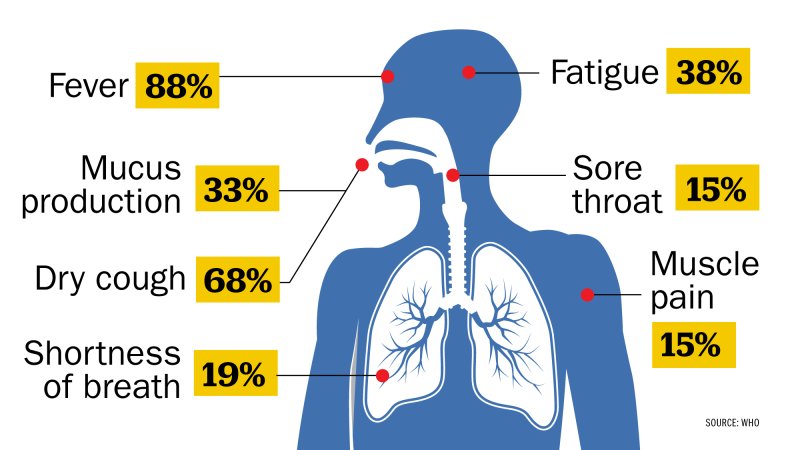
DAY 5 to DAY 6 Mild fever starts. The patients show a temperature reading above 37.2° celsius. The second most common symptom, dry cough, also appears. Dyspnea or breathing difficulty may occur occasionally. Most patients during this stage are easily feeling tired. Other symptoms remain about the same. These four symptoms are among the top five key indications of COVID-19 according to the final report of the initial outbreak conducted by the joint mission of China and WHO.

DAY 7 get more serious coughs and breathing difficulty. Fever can get higher up to 38° celsius. Patients may develop further headache and body pain or worsening diarrhea if there’s any. Many patients are admitted to the hospital at this stage.

DAY 8 to DAY 9 On the 8th day, the symptoms are likely to be worsened for the patient who has coexisting medical conditions. Severe shortness of breath becomes more frequent. Temperature reading goes well above 38°.

DAY 9 is that the average time when Sepsis starts to affect 40% of the patients.

DAY 10 to DAY 11 Doctors are ordering imaging tests like chest x-ray to capture the severity of respiratory distress in patients. Patients are having loss of appetite and should be facing abdominal pain. The condition also needs immediate treatment in ICU.

DAY 12 to DAY 14 For the survivors, the symptoms can be well-managed at this point. Fever tends to urge better and breathing difficulties may start to cease on day 13. But Some patients should be suffering from mild cough even after hospital discharge.

DAY 15 to DAY 16 Day 15 is the opposite condition for the rest of the minority patients. The fragile group must prepare for the possibility of acute cardiac injury or kidney injury.

DAY 17 to DAY 19 COVID-19 fatality cases happen at around day 18. Before the time, vulnerable patients may develop a secondary infection caused by a new pathogen in the lower respiratory tract. The severe condition may then lead to blood coagulation and ischemia.
DAY 20 to DAY 22 The surviving patients are recovered completely from the disease and are discharged from the hospital.

STAY HOME & STAY SAFE

Instagram Launches 'Stay Home' Story & Co-Watching Feature Amid ...

WHO : Astrazeneca leading in Covid-19 vaccine race, Moderna not far behind

The WHO is in talks with multiple Chinese manufacturers, including Sinovac, on potential vaccines

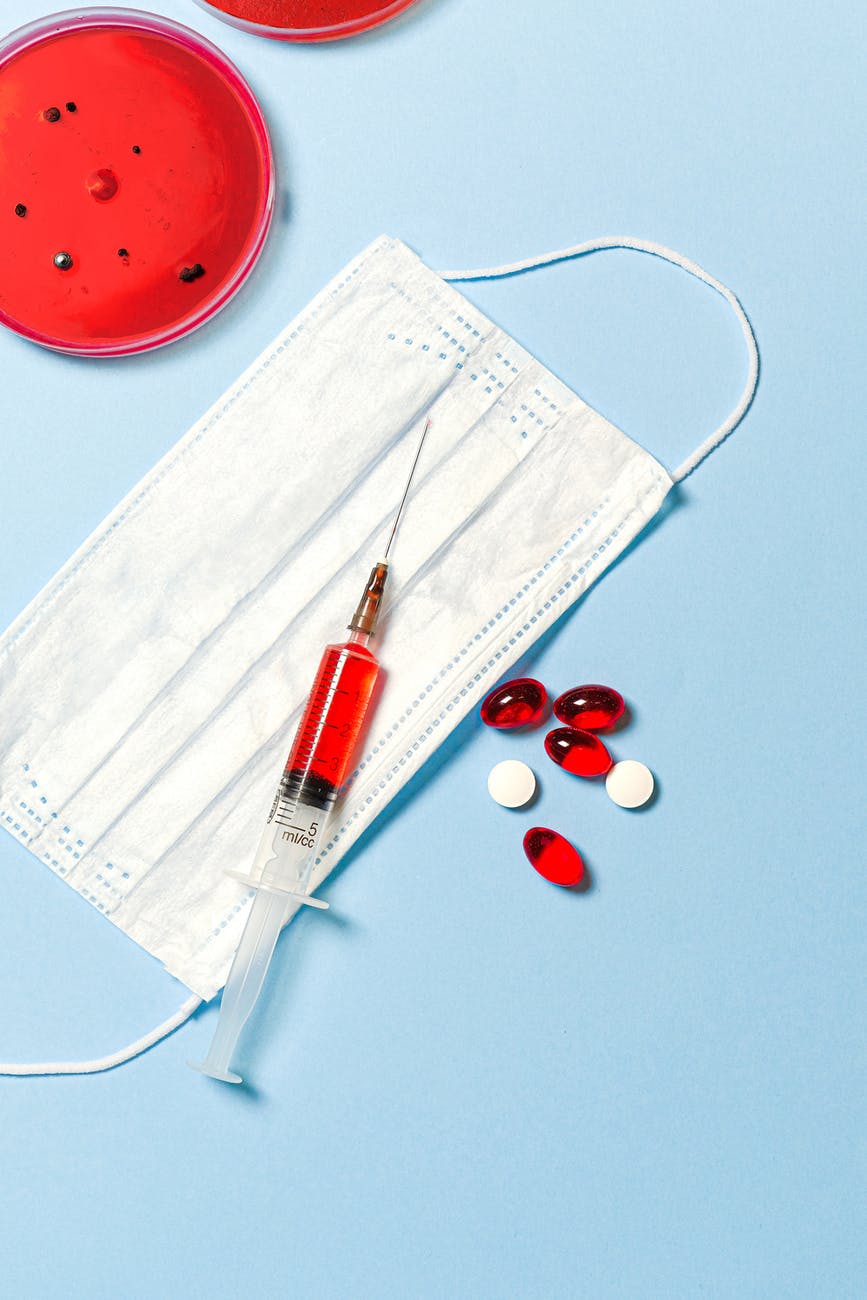
syringe and pills on blue background
Photo by Anna Shvets on Pexels.com

AstraZeneca’s experimental Covid-19 vaccine is probably the world’s leading candidate and most advanced in terms of development, the World Health Organization’s (WHO) chief scientist said on Friday.

The British drugmaker has already begun large-scale, mid-stage human trials of the vaccine, which was developed by researchers at University of Oxford.

This week, AstraZeneca signed its tenth supply-and-manufacturing deal.

“Certainly in terms of how advanced they are, the stage at which they are, they are I think probably the leading candidate,” WHO chief scientist Soumya Swaminathan told a news conference.

“So it’s possible they will have results quite early.”

Swaminathan said Moderna’s Covid-19 vaccine candidate was “not far behind” AstraZeneca’s, among more than 200 candidates, 15 of which have entered clinical trials.

ALSO READ: Coronavirus LIVE: Vaccine tests need over $30 bn in 12 months, says WHO

“We do know that Moderna’s vaccine is also going to go into phase three clinical trials, probably from the middle of July, and so that vaccine candidate is not far behind,” she said.

“But I think AstraZeneca certainly has a more global scope at the moment in terms of where they are doing and planning their vaccine trials.”

The WHO is in talks with multiple Chinese manufacturers, including Sinovac, on potential vaccines, as well as with Indian researchers, Swaminathan said.

She called for drugmakers to consider collaborating on Covid-19 vaccine trials, similar to the WHO’s ongoing Solidarity trial for drugs. A WHO-led coalition fighting the pandemic on Friday asked government and private sector donors to help raise $31.3 billion in the next 12 months to develop and deliver tests, treatments and vaccines for the disease. The initiative is called the ACT-Accelerator.

Andrew Witty, Special Envoy for the ACT-Accelerator, said it was important to consider a “portfolio of research efforts” for vaccines.

“It’s still very early days in this journey, we may be super lucky – which would be terrific – and have an early win,” Witty said. “Even if it takes 12 to 18 months that would be without precedent, the world’s fast development of vaccine.”


Coronil – Baba Ramdev’s Corona Cure or just a “Desi Nuska”

Yoga guru Ramdev’s company Patanjali yesterday launched the Coronil kit priced Rs 545, which he claims is a cure for coronavirus. The medicine kit will be available through the OrderMe app and in stores soon. Is it true? Here is all you need to know about this magical ‘cure’ for the respiratory disease.

Coronil: All You Need to Know About Ayurvedic Drug Which Claims to Cure Coronavirus Within a Week

Baba Ramdev’s Patanjali Ayurved on Tuesday launched ‘Coronil’, the first-ever clinically tested, evidence-based ayurvedic medicine for curing deadly coronavirus, which has killed more than 14,000 people across the country. While launching the medicine, Yoga Guru Ramdev claimed that 69 per cent of patients recovered within 3 days and 100 per cent in a week or 7 days.

Baba Ramdev’s Patanjali Ayurved on Tuesday launched ‘Coronil’, the first-ever clinically tested, evidence-based ayurvedic medicine for curing deadly coronavirus, which has killed more than 14,000 people across the country. While launching the medicine, Yoga Guru Ramdev claimed that 69 per cent of patients recovered within 3 days and 100 per cent in a week or 7 days. “The whole world has been waiting for someone to develop a medicine for coronavirus. Today, we are proud that we developed the first ayurvedic medicine for coronavirus. It has been named Coronil. We’ve prepared the first Ayurvedic-clinically controlled, research, evidence & trial based medicine for COVID19. We conducted a clinical case study and clinical controlled trial, and found 69% patients recovered in 3 days and 100% patients recovered in 7 days”, said Ramdev, while speaking to reporters about clinical trials.

WHAT IS CORONIL MADE OF?

During the launch, Ramdev said Ayurvedic elements are being used in the tablet. “There are more than 100 compounds used in the Coronil,” he said.He said that Coronil has been made from a combination of naturally occurring immunity-boosting substances such as Mulethi (liquorice), Giloy (moonseed), Tulsi (basil) and Ashwagandha (Indian ginseng).

HOW MUCH DOES IT COST?

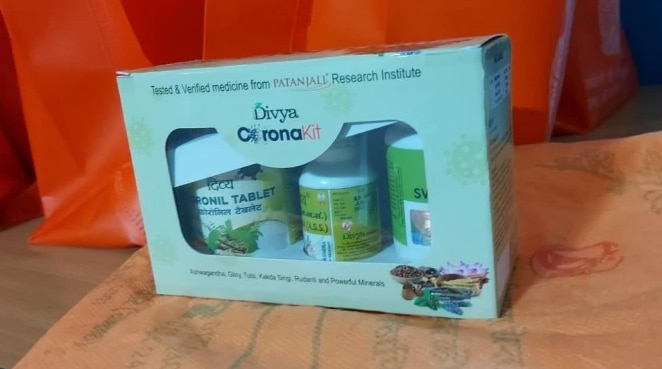
Patanjali has said that an entire kit is being made for consumers; the kit consists of Coronil as well as other immunity-boosting Ayurvedic medicines.The medicine comes as part of a kit which consists of tablets named Coronil and Swasari Vati, and oil called Anu Oil. The entire kit comes at Rs 600

Coronil dosage?

Panajali prescribes,”2-2 tablets should be consumed with hot water half an hour after meals. The above mentioned drug intake and quantity is suitable for people between 15 to 80 years of age. Half the amount of the above mentioned medicines can be used for children between the age of 6 to 14 years.”These are the written instructions on the pack. The other two medicines to be taken along with Coronil are ‘Shwasari’ which works on strengthening the respiratory system and cures the obvious symptoms of corona including cough, cold and fever and a nasal drop named ‘Anu Tel’ which helps build immunity, the firm said.

DOES IT REALLY WORK?

While Patanjali has claimed that it has conducted clinical trials to prove the effectiveness of Coronil, the full findings of the study are yet to be released.Moreover, no independent medical body has approved the use of Coronil as of yet.Patanjali claims those administered the medicine were fully cured and none died. Ramdev even claimed that 69 per cent of them recovered within 3 days.

“We’ve prepared the first Ayurvedic-clinically controlled, research evidence and trial-based medicine for Covid-19. We conducted a clinical case study and clinical-controlled trials and found that 69 patients recovered in 3 days and 100 per cent patients recovered in 7 days,” said Ramdev as he launched Patanjali’s Coronil tablet.

DOES CORONIL HAVE GOVERNMENT APPROVAL?

While Patanjali has made tall claims about the efficacy of Coronil, the ICMR and the Ayush Ministry have distanced themselves from commenting on the medicine.While Ayush Ministry officials claimed ICMR will speak on the medicine, the ICMR has said Ayurvedic medicines come under the jurisdiction of the Ayush Ministry and hence it should comment on it.Now, the Ayush Ministry has said that the Uttarakhand government has given clearance and licensing for the production of the medicine.

According to top sources in Patanjali, Coronil has received a license to be used as a medicine.”It contains salts and herbs prescribed by the Ayush Ministry. Allopaths call these salts anti-viral, whereas Ayurved knows them as immunity boosters,” the sources said.Later, the Ayush ministry said that it has taken cognizance of the news of Ayurvedic medicines developed for the treatment of Covid-19 by Patanjali Ayurved Ltd.”Facts of the claim and details of the stated scientific study are not known to the Ministry,” it said.

List of details

Patanjali Ayurved has been asked to provide, at the earliest, details of the name and composition of the medicines being claimed as successful in COVID-19 treatment; site(s)/ hospital(s) where the research study was conducted; the protocol, sample size, Institutional Ethics Committee clearance, Clinical Trials Registry-India (CTRI) registration, and results data of the study, and to stop advertising/publicising such claims till the issue had been duly examined.

Regulated by Act

“Also, the concerned Ayurvedic drug manufacturing company has been informed that such advertisements of drugs including Ayurvedic medicines are regulated under the provisions of the Drugs and Magic Remedies (Objectionable Advertisements) Act, 1954 and Rules thereunder and the directives issued by the Central Government in the wake of COVID outbreak. The Ministry had also issued a Gazette Notification on April 21, 2020 stating the requirements and the manner in which research studies on COVID-19 with Ayush interventions/medicines should be undertaken,’’ the Ministry said.

WHAT DO DOCTORS SAY?

Medical experts, however, were not convinced by Patanjali’s claims.Dr Ravi Shekhar Jha, Head of the department and senior consultant, Pulmonology, Fortis Escorts Hospital, Faridabad, said physiologically it is quite impossible that there is any medicine which can finish the viral load from the body in 5-7 days.”These claims can be very harmful because people, instead of taking actual medical help, may start rushing to these kinds of claims which have no proven clinical trial.

In the coming days, surely we’ll know whether Coronil is the cure or its just another “Desi Nuska”.

Desperately Seeking Cure: COVID-19 and the Race for Vaccine

“We are not talking about an immunity booster. We are talking about a cure.”

Yes, you read it right. One branded company has claimed a cure of the dreadful COVID-19 virus without any supportive statement from the Union Health Ministry and ICMR.

The Managing Director of Patanjali, Acharya Balkrishna claimed today that the Patanjali Ayurveda Limited has developed an Ayurveda medicine as a cure. It is, he pointed out, will be successful in curing patients within five to fourteen days. The company has also claimed that it has appointed a team of scientists who have done the stimulation first and identified the compounds which can fight the virus. It is also reported that the company has received “hundred per cent positive solution”. Patanjali is supposedly conducting controlled clinical trials at present and announcement is expected to be made next week more specifically about the evidence.

Baba Ramdev has also claimed that the consumption of Coronil has resulted in full recovery among the infected patients as they in later examinations have all received “negative” reports. The medicine, we are informed, is made of Ayurvedic components like Ashwagandha, Giloy, Tulsi and many more components. There is a definite dose by which it is to be taken twice daily, morning and evening.

Shripad Y Naik, the Union Minister of State in the Ministry of Ayurveda, Yoga and Naturopathy, has recently reported that India is currently working on four traditional medicine formulations. Recently the Maharashtra government has officially announced that the homeopathy medicine, Arsenic Album 30, may be taken as a prophylactic against the virus for an immunity booster.

But when it comes to hardcore scientific research in biotechnology and pharmaceutics the leading bio-tech and research teams of the world do not show any haste in claiming cure for coronavirus. There are lots of stages of intensive research and also the essential process of peer recognition for a vaccine to attain legitimacy. Reports suggest that more than hundred potential candidate vaccines are in the pipeline but only six of them are at present in preliminary testing stage. Oxford University researchers have already informed about making fair progress in research but they do want to go through a rigorous process before making the final claim.

The major pharmaceutical companies like Gilead Sciences, AstraZeneca, Pfizer, Moderna and many more are rushing and struggling to find a successful vaccine and some of them have claimed to have made some “impressive progress”. A vaccine normally takes years to develop and attain curable status. During this COVID-19 situation most researchers are hoping to achieve the same amount of work within few months with endless hours in the lab. Some of them think that a vaccine is likely to become available by mid-2021.

Pandemic invariably causes panic. Almost everybody wants to be the first to avail any possible cure to get rid of the fear of being infected by deadly infection. In such times various claims of ‘sure cure’ and ‘guaranteed prevention’ come to be publicised. The Union Health Department is making repeated announcements cautioning the public not to fall for rumours about any possible cure including self-medication, cow urine and many more. Specialised scientists are fighting hard to develop the potential cure for the virus. Unless anything is properly certified by appropriate authorities we need to be very careful. In innovating vaccines for such a dreaded virus the slow and steady wins the race.