Chakras

Have you ever attended a yoga session before? Have you ever heard about these chakras? 

If yes, that’s great. If not, that’s fine we are going to cover it in this article.

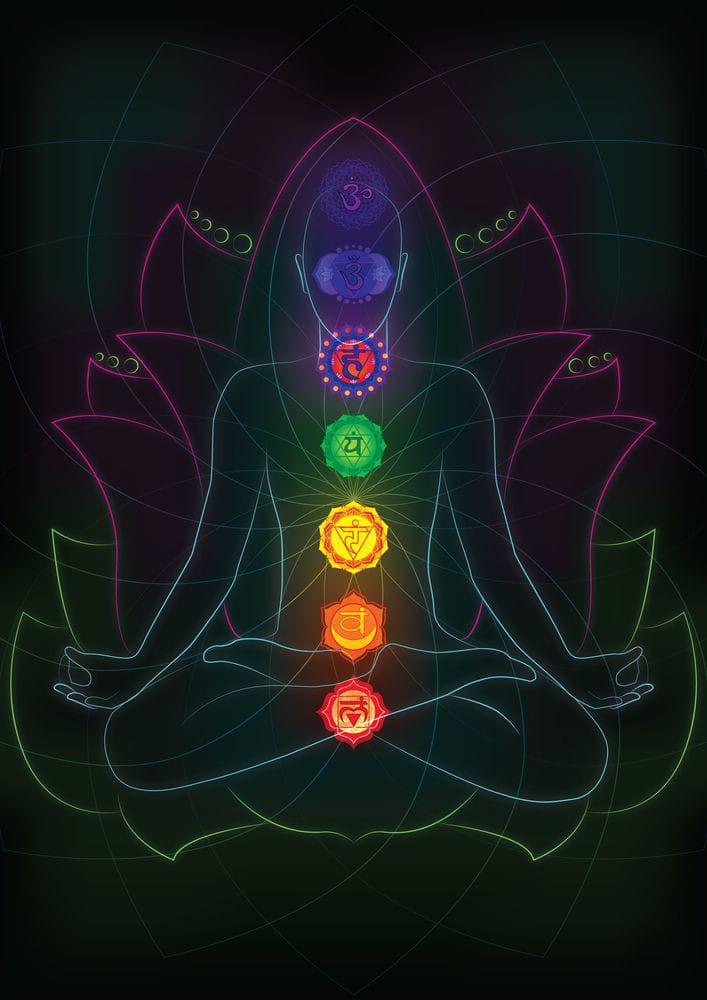
Chakra is a word that comes from Sanskrit, meaning wheel. There are seven wheels or chakras in a human body. Each is located in sequential order along our spinal cord. 
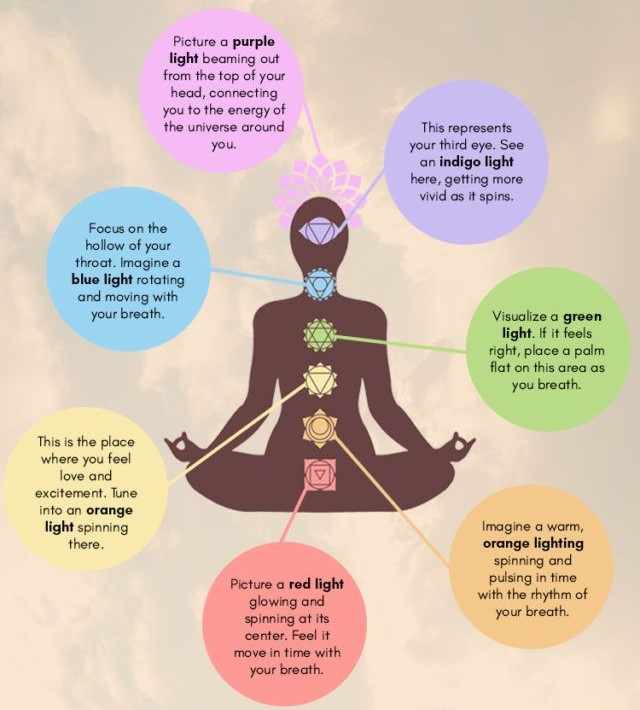
Activating these chakras are important to have a physical and emotional balance. If any of them is imbalanced it means that your chakras are blocked and there is a need to activate them.

But how do we do that? Before answering that question let’s learn about the position and significance of each chakra.

Okay, let’s start from the bottom.
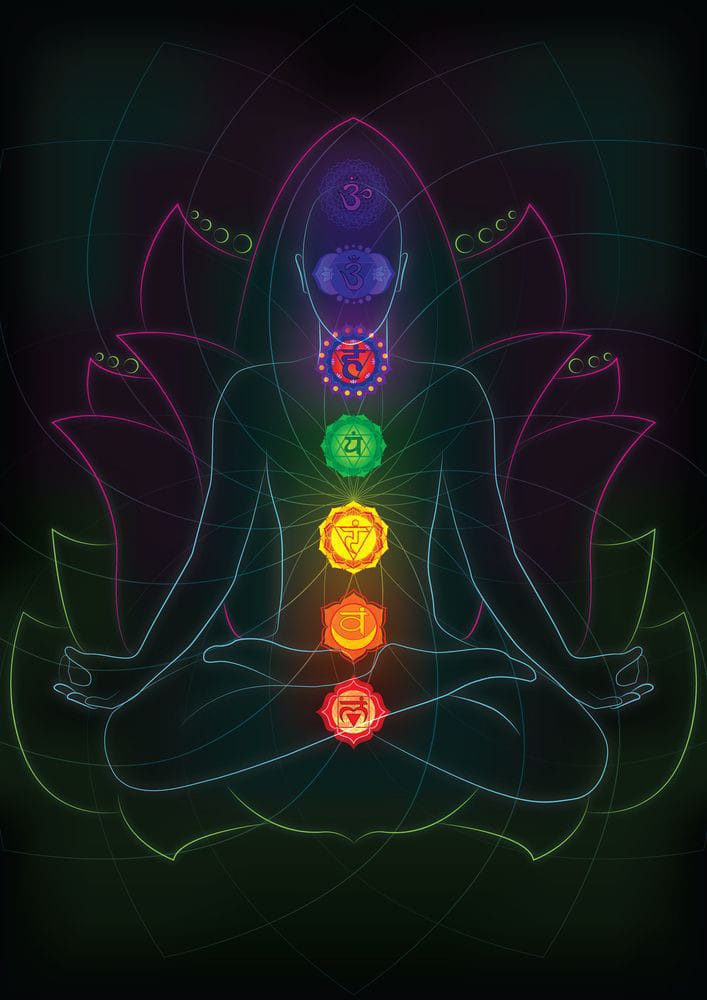
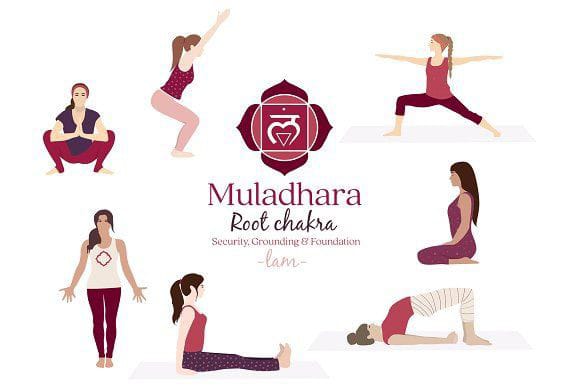
1. Root chakra- Muladhara: 

Color– Red

Represents– the Earth

It is located at the bottom of the spine. It provides a foundation for your life. Gives a sense of commitment, energy, vitality, and independence in life. Helps you to stay grounded. 

If this chakra is blocked. The consequences may be like this- anger, possessiveness, insecurity, fear, low self-esteem, etc.

How to activate/balance this chakra?

You can activate this chakra by performing yoga or meditation.

Hand Mudra
yoga poses

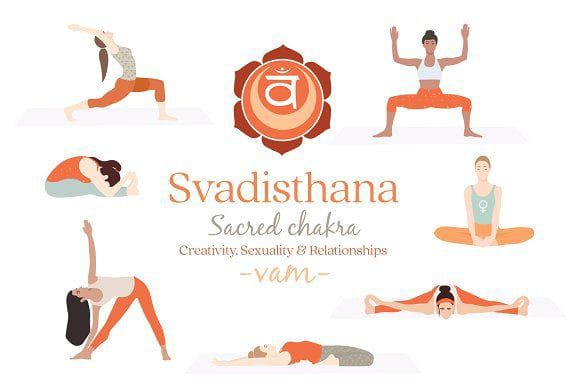
2. Sacral Chakra- Swadhisthana:

Color– Orange

Represents– Water

Located below the belly button.

This chakra deals with one’s creativity, emotional identity, desires, and pleasure. Gives a feeling of compassion, a good sense of humor, intuition, sense of belonging. 

If this chakra is blocked it gives a sense of shyness, guilt, irritation, lack of creativity, etc.

How to activate this chakra?

By following the mudras mentioned below you can balance the chakra.

Hand Mudra
yoga poses

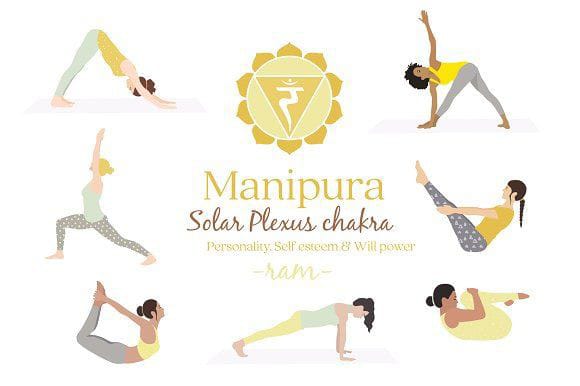
3. Solar plexus chakra- Manipura:

Color– yellow

Represents– Fire

Located in the stomach area. This chakra deals with the sense of belonging and mental understanding of emotions. This makes you feel energetic, confident, intelligent, focused, good digestion, and productive.

If this chakra is blocked you feel timid, depressed, judgmental, angry, and fear of rejection.

By following the mudras mentioned below you can balance the chakra

Hand Mudra
yoga poses

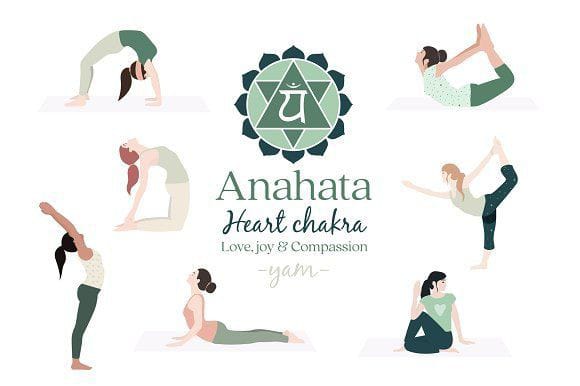
4. Heart Chakra- Anahata:

Color– green

Represents– Air

Located at the center of the chest. It reflects a person’s social identity and affection like love, trust, forgiveness, and wisdom. Makes you motivated, compassionate, emphasized, sense of completeness, friendliness, etc.

If this chakra is blocked you might feel difficulty in love, lack of hope and compassion, mood fluctuations, and feeling low.

By following the mudras mentioned below you can balance the chakra
Hand Mudra
yoga poses

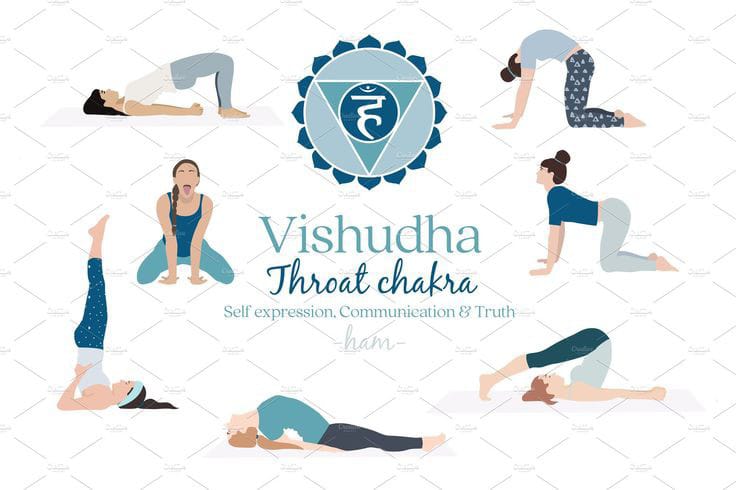
5. Throat chakra- Vishuddha: 

Color– Blue

Represents– Sound

It is located in your throat. Deals with creativity, effective communication skills, faith, expression, listening skills, and all.

If this chakra is blocked it may cause indecisiveness, weakening of willpower, lack of expressiveness, low level of creativity, and proneness to addiction.  

By following the mudras mentioned below you can balance the chakra

Hand Mudra
yoga poses

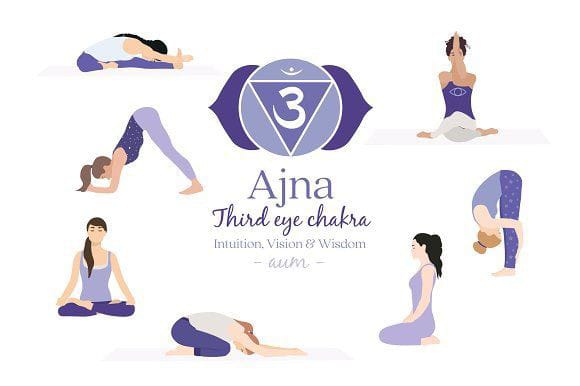
6. Third eye chakra- Ajna:

Color– Indigo

Represents– light

Located between the eyes. It is responsible for intuition, imagination, wisdom, self-awareness, insight, understanding, and reasoning. It gives clear thinking, a healthy imagination, strong intuition power, good concentration, and focus.

If this chakra is blocked it results in poor judgment, confusion, fear of truth, poor concentration, and addictions.

By following the mudras mentioned below you can balance the chakra
Hand Mudra
yoga poses

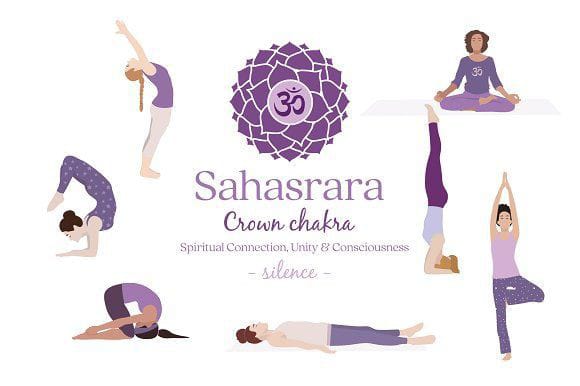
7. Crown chakra- sahasrara:

Color– Violet/white

Represents– Conscience

Located at the top of the body, the crown chakra is to maintain a spiritual connection and consciousness. Gives a feeling of oneness, open-mindedness, thoughtfulness, etc. 

If this chakra is blocked you feel a sense of fear, lack of purpose, lack of inspiration, disbelief in spiritual and devotional practices.

By following the mudras mentioned below you can balance the chakra

Hand Mudra
yoga poses

credits to the right owners of the pictures used.

sources: pinterest
Contributions of Raja Rammohan Roy

Raja Ram Mohan Roy is considered as the pioneer of modern Indian Renaissance for remarkable reforms brought in 18th and 19th century India. Among his efforts the abolition of Sati pratha was the most prominent his efforts were instrumental in eradicating the purdah system and child marriage.

Contributions:

Anti Sati campaign- started in 1818 with the citation from various texts that no religion sanctioned the burning alive of Windows. He also visited cremation ground, filed petitions to the government. His efforts brought about the  abolition of Sati in 1829, by the government declaring Sati a crime.

Women’s rights- He was a campaigner of women’s rights, condemned the general subjugation of women and misconceptions to form the basis of inferior status of women he attacked polygamy and wanted property rights for women and widow remarriage.

Modern Education- He supported David Hare’s effort to establish the Hindu College in 1817.  He established Vedanta college in 1825 where both Indian learning and western social and physical sciences were offered.

Freedom of press- He was a bold supporter of freedom of press and a pioneer of Indian Journalism. About journals like Mirat ul Akhbar in Persian and a Bengali weekly to educate and inform the public and represent their grievances before the government.

As a political activist- He demanded reduction in land revenue in export duties on Indian goods abroad. He vehemently demanded judicial equality between Indians and Europeans and that trial to be held by jury.

Founded Brahmo Samaj- He laid the foundation of Brahmo Samaj which discarded faith in divine Avatars, opposed the rigidity of caste system, believed in unity of all religions and focused mainly on prayers, meditation and reading of scriptures.

Hence, Raja Ram Mohan Roy has been rightly called the ‘father of modern India and father of Indian Renaissance’. There was hardly any aspect of nation building which he left untouched, he started with the Reform of Hindu religion but he also laid the foundation for reform of Indian society.

Ancient Education System In India

During ancient education, students live away from their parents, their education comprises of subjects like physical education, mental education, politics, economics, etc. They were shaped in a way that they can live in any condition considering how difficult the situation will be? 

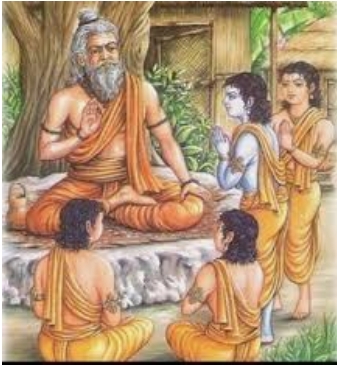
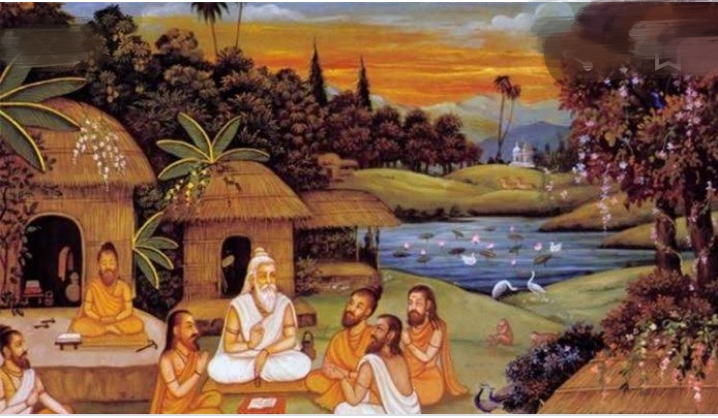
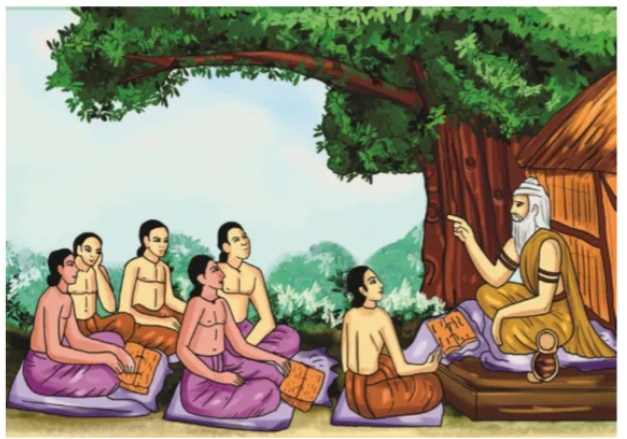
During the early period education was imparted by the teacher (Guru/Acharya) to the pupils who gathered around him and came to live in his house as members of his family. This was known as Gurukula system of eduation. The family of Guru functioned as a demostic school or an Ashram. During that period, the gurus and their shishyas (pupils) lived together helping each other in day-to-day life.

In ancient India, both formal and informal education existed. Indigenous education was imparted at home, in temples, patashalas, and gurukulas. Teaching was oral and students remembered and meditated upon what was taught in the Gurukulas. There were people in homes, villages and temples who guided young children in imbibing pious ways of life.

The medium of language during the Vedic system was Sanskrit. During those times the education was of Vedas, Brahmanas, Upnishads, and Dharmasutras. From the Rigveda onwards, our ancient education started with the objective of developing the students not only in the outer body but also on the inner body. The ancient education focused on imparting ethics like humility, truthfulness, discipline, self-reliance, and respecting all creations to the students. The education was mostly imparted in ashrams, gurukuls, temples, houses. Sometimes pujaris of the temples used to teach students. The education system of ancient India has some special features and uniqueness which was not found in any other ancient education system of the other countries. The education was mostly given in forests under the blue sky, which keeps the student’s mind fresh and alive.

The main objective of education was to equip the students with a good quality of education. The education mostly focused on the enrichment of culture, character, and personality, development, and cultivation of noble ideals. The objective was gaining the mental, physical, and intellectual personality of students, to make the students future-ready and survive in any situation.

In the Vedic system, a child started his education at the age of five. To mark this commencement, the Vidyarambhaceremony, which included worshiping Goddess Saraswati and learning alphabets for the first time, was conducted. Leaving home and starting to live with a teacher required the child to conduct another ceremony called Upanayana. Boys practiced this ceremony at different ages according to their castes (only children of the Brahmin, Kshatriya and Vaishya did so).

Education for women was quite important in ancient India. They were trained in housekeeping, as well as in dancing and music. Girls also had to conduct the Upanayana ceremony. Educated women were divided into two classes – Sadyodwahas, those who pursued their education just until they got married, and Brahmavadinis, those who never married and continued studying throughout their lives. Vedasand Vedangas were taught to women, too, but were limited to religious songs and poems necessary for rituals. Some notable Vedic and Upanishad women scholars were Apala, Indrani, Ghosha, Lopamudra, Gargi and Maitreyi.

Mastering one Veda took 12 years. Thus, depending on how many subjects the student wanted to learn, the study period varied accordingly. The education could go on for as long as 48 years.

In order to earn a livelihood, men needed to know an art form. As per the ancient Indian education system, there were about 64 art forms, including dance, music, jewel making, sculpture, agriculture, and medical sciences. To acquire vocational training in a particular art form, men were required to work as trainees under a master to gain expertise. They were taught without any cost, and food and boarding were also taken care of by the master.

Just as we have world renowned universities today, there were popular educational institutions here during the ancient times as well. Four of these institutions were quite prominent and known for different specializations. The University of Nalanda was famous for its Catholic and cosmopolitan character and its department of logic. Takshasila University, in an area what is now modern-day Pakistan, was well-known across the world for its medical school and was the chief learning centre in 6th century BC. What Nalanda University was to east India, Vallabhi was to west India. It was also a famous study center that specialized in subjects like law, medicine and economics, and had students attending from all parts of the country. Vikramshila was yet another esteemed institution, best known for Tantric Buddhism.

Vedas and Upanishads

The Vedas are the oldest religious texts of the Hindus. Vedas are regarded as the world’s oldest piece of literature. It is believed that the Veda have composed several thousands of years ago. They were written down by several seers known as “Rishis” in the Hindu tradition. The Vedas were composed in Sanskrit and contain hymns describing the glories of God. They include material, religious, and spiritual knowledge.

The term veda means “knowledge” in that they are thought to contain the fundamental knowledge relating to the underlying cause of, function of, and personal response to existence. They are considered among the oldest, religious works in the world. They are commonly referred to as “scripture”, which is accurate in that they can be defined as holy writ concerning the nature of the Divine. 

Unlike the scriptures of other religions, however, the Vedas are not thought to have been revealed to a certain person or persons at a specific historical moment; they are believed to have always existed and were apprehended by sages in deep meditative states at some point prior to c. 1500 BCE but precisely when is unknown. The Vedas existed in oral form and were passed down from master to student for generations until they were committed to writing between c. 1500 – c. 500 BCE (the so-called Vedic Period) in India. They were carefully preserved orally as masters would have students memorize them forwards and backwards with emphasis on exact pronunciation in order to keep what was originally heard intact.

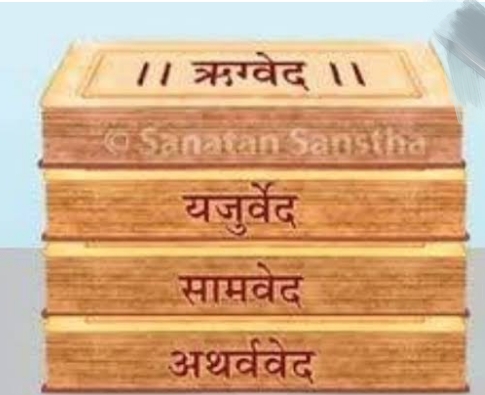
The Vedas are therefore regarded as Shruti in Hinduism meaning “what is heard” as contrasted with other texts designated Smritis (“what is remembered”), accounts of great heroes and their struggles in works such as the Mahabharat, Ramayan, and Bhagvat Gita (although some sects of Hinduism regard the Bhagavat Gita as Shruti). The texts which make up the Four Vedas are:

1. Rig Veda 2.Yajur Veda 3.Sama Veda 4.Atharva Veda

The Rig Veda is the oldest and the Sama Veda and Yajur Veda draw from it directly while the Atharva Veda takes a different course. All four, however, maintain the same vision, and the Upanishads for each of these address the themes and concepts expressed.

Each of these is further divided into types of text included within them:

  • Aranyakas – rituals, observances
  • Brahmanas – commentaries on said rituals
  • Samhitas – benedictions, prayers, mantras
  • Upanishads – philosophical narratives and dialogues

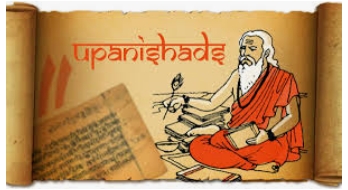
The Upanishads are an assortment of texts central to Hinduism that are recorded from oral traditions. They contain information regarding the philosophical principles and concepts of Hinduism, including karma (right action), brahman (ultimate reality), the atman (true Self or soul), moksha (liberation from the cycle of reincarnation) and Vedic doctrines that explain Self-realization through yoga and meditation practices. Upanishad is a Sanskrit word that translates in English to mean “sitting at the feet of” or “sitting down near.” This illustrates the position of receiving wisdom and guidance humbly from a teacher or guru.

The Upanishads are the best known and most often read of the Vedas because their discourse is presented in dialogue/narrative form and they were the first to be translated into other languages. The four Vedas, conversely, are considered the literal sounds of the Divine which, when recited or sung, recreate the primal vibrations of the universe. Accordingly, they are actually impossible to translate and what one reads in a translation should be understood as a paraphrase at best.

The word Upanishad is usually interpreted as “sitting down beside.” This Sanskrit word can be broken down into three parts and translated as “upa” meaning near, “ni” as down and “shad” as to sit. 

The 13 Upanishads are:

  • Brhadaranyaka Upanishad
  • Chandogya Upanishad
  • Taittiriya Upanishad
  • Aitereya Upanishad
  • Kausitaki Upanishad
  • Kena Upanishad
  • Katha Upanishad
  • Isha Upanishad
  • Svetasvatara Upanishad
  • Mundaka Upanishad
  • Prashna Upanishad
  • Maitri Upanishad
  • Mandukya Upanishad

Their origin and dating are considered unknown by some schools of thought but, generally, their composition is dated to between c. 800 – c. 500 BCE for the first six (Brhadaranyaka to Kena) with later dates for the last seven (Katha to Mandukya).

In these sacred texts, we see an internalization of the sacrifice and worship extolled in the Vedas and a deeper understanding and exploration of the internal world of mind and spirit. Composed over several centuries and in many volumes, the Upanishads reflect a strong need to express and communicate the deep mystical states and spiritual contemplations that the ancient yogis experienced.

According to tradition, there were over two hundred Upanishads, but there are only eleven “principal” Upanishads, as commented on by the ancient sage Shankara. The texts are written in a passionate poetic verse describing mystical states and spiritual concepts or in descriptive short stories and dialogues between historical figures.

The teachings of the Upanishads revolve around four primary spiritual themes. These four philosophical concepts are described in many different ways as they can be difficult to grasp. These main teachings are repeatedly reinforced in the texts of the eleven principal Upanishads.

  1. The first and most important is the realization that the ultimate, formless, and inconceivable Brahman (Godhead) is the same as Atman, as our internal soul. Brahman represents the entire universe, and the Atman is a little piece of that divine oneness that we contain inside us. This philosophical idea is summed up in the mantra Tat Tvam Asi (That Art Thou).
  2. The idea that the Atman is eternal, and becomes reborn over and over again is central to the concept of reincarnation that is taught in the Upanishads.
  3. This concept of rebirth is highly tied to the teachings of Karma: the future consequences of one’s current intentions, thoughts, behaviors, and actions.
  4. It is the accumulation of Karma that binds us to Samsara, the cycle of death and rebirth. To escape the endless cycle of Samsara requires one to attain enlightenment through the realization of Atman/Brahman. It is this state of Self realization that the majority of the Upanishads attempt to describe and encourage us to achieve through the yoga practices of meditation, mental discrimination, and mantra recitation.

 Spiritual concepts have exerted a profound influence on the development of Yoga, Hindu, and Indian philosophy. While the yogic practices taught in the Upanishads were primarily mediation based, these philosophical teachings will remain the core beliefs for all of the future developments in the many paths and practices of yoga.