The status of women in a family


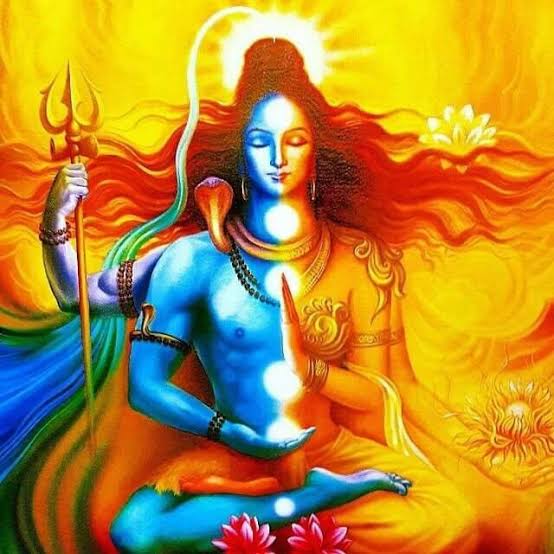
There is a popular concept in the Indian Mythology the Ardhanaarishwara – this word consists of 3 parts “Ardha” which refers to half. “Naari” for women and “Ishwara” for lord. A half male and half female figure, in which the male part depicts lord Shiva and the other half depicts Goddess Shakti, this makes it quite clear to understand that a male and a female has equal importance and power but, in contrast to this we have a society where male enjoys a supreme status than a female in the same household.

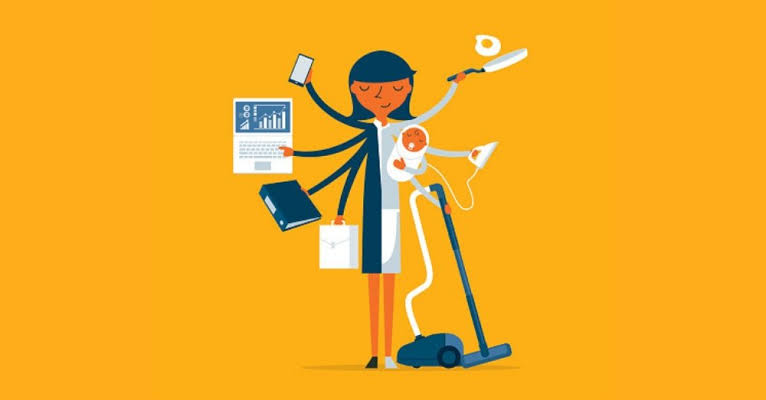
There are exceptional cases where a woman is given equal importance in a family as a result of which, most of the women specially those who belong to a backward area or uneducated background have to suffer a lot in her own family but this suffering which is named as the ‘destiny’ of a women creates a much bigger problem. The social norms accept male supremacy and this can be observed in our day-to-day life and practices which are followed since a long time for instance- male head of a family, in a typical household is common but, the drawback is when it comes to decision making and implementation of rules and laws. It ultimately reduces the power of a female they are not allowed to participate in the decision making and even if they are the final decision is in the hand of the head all the major decisions of the family will be taken by the head, rules will be framed by him. Moreover, the traditional role of a women as a housekeeper and the one who is solely responsible for the upbringing of children, serve the family etc has never let women look beyond house and family, this has killed the dreams and ambition of so many women, who could have achieved so much more in life.
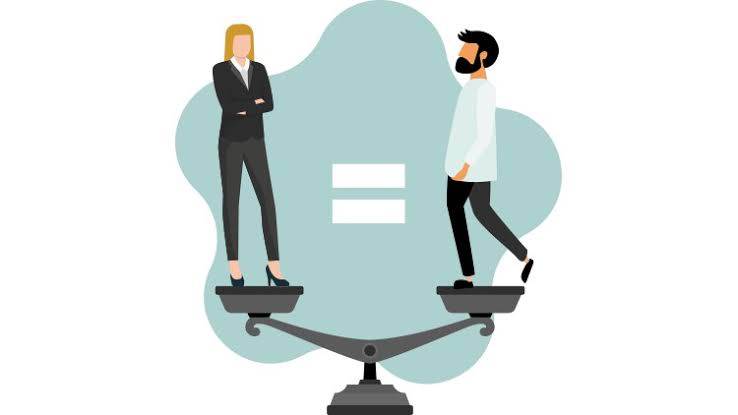
Similarly, there are so many incidences and rules which can highlight the fact that the society practices inequality, supremacy and discrimination in different forms and if all these problems exist how can we expect balance in a society.

Today, the situation is better than before a women can be seen in much appropriate roles not only at personal level but, professionally also they are self-build, independent and respected, they have come a long way to get accepted in the roles which were not supposed to be theirs. Theses days women are the sole bread earners in family and get equal participation in the decision making, they have done extraordinary progress to stand out and inspire other women to do the same. As great leaders like Swami Vivekananda have said that a woman is of uttermost importance in a society and the condition of a women in a society reflects the development of a society.


This brings us to the conclusion that, it is not only about supremacy or dominance of a particular gender but, a deep-rooted problem of the society which has many causes and can become an obstacle in the path of development in any country and if we can possibly eradicate such problems from the society. It will definitely benefit each and every one.

WOMEN AND SPORTS

In the field of games and sports, people do not acknowledge women’s sports to be at par with men’s sports .Right from the beginning of Olympic Games, the role of women in sports and games has been neglected. However, from the last decade of previous century , there is an increasing interest of women in sports both as participants and spectators. The provision of sports facilities to both women and men in sports shows a new trend. More people, than in the past, now want to see women on the playfields. However , few discriminations still persist in terms of salaries, cash awards, television time, etc. Indeed a lot of efforts have been taken vis-a`-vis women participation in sports and even greater steps are yet to be taken.

SPORTS PARTICIPATON OF WOMEN IN INDIA

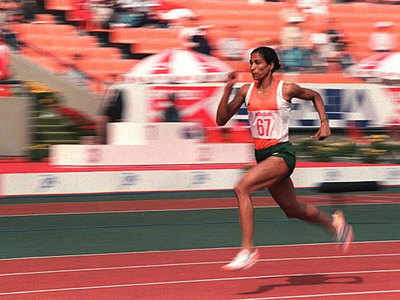
Here, we will discuss in detail women’s participations in the field of sports .As a matter of fact, women’s participation in sports has a long history . In ancient Olympics , women were not allowed to even watch sports competitions . Even in the first modern Olympic games which were held in 1896 in Athens , there was no participation of women .In fact , women started participating in the modern Olympic Games from 1900 onwards . They participated only in two sports events . In this Olympics , only twenty – two women participated . In 1904 Olympic Game , only six women participated in three events . With the passage of time , the number of women participants in Olympics increased and exactly after 100 years i.e., in 2000 Sydney Olympics , the number of women participants increased up to 4,096 . In this Olympics , a total of 10,500 sportspersons from 199 countries took part and out of which 38.2 per cent were women. This number of women participants was a record during that time . In 2008 Olympic Games , which were held in Beijing , a total of 10,700 sportspersons from 205 countries took part and out of which 4,637 were women whose percentage was 42.4 , whereas only 23 women of India participated in the London Olympics . In 2012 London Olympic Games , 10,960 sportsperson from 205 countries participated , out of which 4,862 were women whose percentage was more than ever before . For the first time women boxing was included in the Olympic program . In 2008 Olympics , 26 female sportsperson participated from India . Only four Indian women participated in the Olympics held in 1952 in athletics . Karnam Malleshwari became the first Indian Women to secure a bronze medal in weightlifting in Sydney Olympic Games in 2000 . In 2012 London Olympic Games , Sania Nehwal and MC Mary Kom added feather in the cap of India by securing one bronze medal each . Though PT Usha could not win any medal in the 1984 Olympic in 400 m hurdle race , yet her performance was remarkable and extraordinary . In fact , there is a long list of Indian woman sportsperson who have won various positions in the World Cups , Common Wealth Games, Asian Games ,SAF Games , etc.

Exploring Gender in Enid Blyton’s ‘Famous Five’

The Famous Five is a children’s adventure series written by the British author Enid Blyton. The first book The Five on a Treasure Island was published in the year (1942) after which 20 more books followed. With the sales totaling over a 100 million, it is considered to be an all-time best-seller in children’s literature. The series revolves around the lives of four children: Julian, Dick, Anne, Georgina (George), and her dog Timothy. Blyton’s portrayal of their carefree summers and adventures have always gained popularity among children. More often, Enid Blyton books are usually responsible for getting children interested in literature. Her use of simple language helps children easily understand the story. Her vibrant descriptions appeal to the readers in such a way that we long for adventures, matching the enthusiasm of the characters portrayed in her stories. Her storylines are intriguing and her peculiar way of dropping hints throughout the book which finally connects up as a shocking climax is always interesting.

“Far from being a set of fixed and stable values and roles assigned/imposed by society, gender is a performance or a role enacted by the individuals. This performance of gender is, of course, social in the sense that it is enacted, validated and accepted by the society.”

-Judith Butler (Gender Trouble)

In most cases, Blyton adheres to the dominant gender norms of her times; which is the Middle-class heteronormative British views which regulated the behaviour of women with respect to their appropriate domestic roles and activities for women like raising children and managing the household instead of careers. Blyton presents rather contradictory representation of gender roles. Mostly, she follows the dominant submissive roles of females but on the other hand, she also shows that there are alternatives where women have agency and freedom of choice. Her writing of ‘sexist’ characters are probably a result of suiting the story to the audiences of her time.

“Anne had a very happy morning. She arranged everything beautifully on the shelf… IT really was a splendid larder and dresser!… Then the little girl set to work to make the beds. She decided to make two nice big ones, one on each side of the cave.”

Five Run Away Together (1944)

Anne is described as someone who is shy and timid. She’s not as adventurous as her brothers Julian and Dick or like her cousin George. She does all the domestic chores and is often in charge their food and other domestic needs. She is referred to by her brothers as a “Very good little house keeper”. She likes playing ‘house’ and thus, voluntarily does all the chores during their quests and she likes doing it. And she is extremely happy when she’s praised for her work. She takes pride being referred to a good housekeeper. Despite being the youngest of the four, she is often portrayed as the nurturer and care-giver. She selflessly takes care of everyone’s needs and plays a mother-like figure to the rest of the group. George’s mother, Fanny is portrayed in a similar such way and serves as a role-model figure for Anne. It is a given that she’s the youngest and perhaps that’s one of the reasons why she is babied. But there’s a clear hint of patronisation when her brothers address her. Through Anne, Blyton firmly reinforces the typical female gender stereotype that women are supposed to be gentle, caring, nurturing and subservient housekeepers who are not fit for a career-based life.

“Don’t you simply hate being a girl?” asked George. 

“No, of course not,” said Anne. “You see – I like pretty frocks – and I love my dolls – and you can’t do that if you’re a boy.”

“Pooh! Fancy bothering about pretty frocks,” said George, in a scornful voice. “And dolls! Well you are a baby, that’s all I can say.”

 Anne felt offended.

-Five on a Treasure Island (1942)

Blyton was a career woman, so her portrayal of George can be seen as her personal resistance to the dominant gender stereotype of her time. Georgina prefers to be called George, and is good at everything that is traditionally masculine like climbing trees, swimming, rowing boat, drawing carriages etc. She tries very hard to not be ‘girly’ and dresses up like a ‘boy’. In anyway, she wishes to be a boy as she prefers being called ‘Master’ instead of miss, loves it when people mistake her for a boy etc. It is evident that boys were valued more in the society than girls. And her desperate need to imitate a man can be seen a cry for help in an overtly patriarchal society. She wants to be treated with the same respect and dignity that her male cousins enjoy and so, she feels that the only means to achieve that is by imitating a man. On a separate note, many readers have read into George’s tomboyishness as signs of gender dysphoria. (Gender dysphoria involves a conflict between a person’s physical gender and the gender with which he, she or they identify with.)  So, the idea of a tomboy fails to take into account the more contemporary idea of gender as a spectrum rather than a rigid binary. Considering the time that this was written in, it is unlikely that this is what Blyton meant. But nevertheless, it is empowering to interpret that perhaps George is a transman; a boy trapped in a girl’s body.

George despises any characteristic of weakness that is usually associated with women. She seeks power and respect while Anne is contented with whatever the society is willing to give her. There is an instance where George gives into something and the boys praise her for giving in gracefully or decently like a boy. At this, George becomes extremely happy for being identified as a boy and she feels that “She didn’t want to be petty and catty and bear malice as so many girls did.” This can be seen as a perfect example of gender hierarchy where having a “decent” behaviour is normal only for boys and that it’s an exception for girls. George is admired by the rest for being good at physical activities. She excels to the point that she even threatens the authority of the dominant male leader by being better. There are several instances where she’s better at swimming or rowing than the boys. This skilled behaviour empowers Anne and in those instances; she longs and hopes to be as skilled as George. George is a successful, independent girl who can do anything that a boy can do, and do it better. This can be seen as Blyton’s attempt at empowering little girls.

While Anne takes pride in fulfilling her duties as the default nurturing housekeeper, George is expected to help her out and engage in these domestic chores as well. And this internalised social norm creates a feeling of guilt within George while no such guilt exists in the minds of the boys. Now even if the boys do offer help, Anne dismisses it off as “No. That’s my job and George’s.” Anne is easily scared and is seen as a cry-baby. The group takes it for granted that she’s emotional and weak and is in need of protection. George on the other hand, suppresses all of her emotions in fear that it’d show her as a ‘girl’ which was considered inferior. She hates crying as crying is seen as something that only girls do – a sign of weakness if expressed by a boy. Aside from effecting George, this also imposes an unrealistic and unhealthy emotional and mental standard on the boys. For instance, Dick is shamed for crying or expressing any emotions that are not ‘manly’. This also reinforces toxic masculine traits on young boys.

George thus imitates traditional masculinity as an attempt to receive equal treatments. She over-compensates in this aspect to desperately hide any traces of being a girl. To an extent, it does grant her more privileges than the feminine Anne but this comes out as a positive reinforcement on her, and it proves the masculine authority over women of the time. Despite all her attempts, the fact remains that she is still ‘just a girl’ and that she only receives the freedom that her male peers allow her to enjoy. No matter how much she tries to imitate men, she’s still othered by them.

We see a contradictory portrayal of gender roles by Blyton. All the criticisms aside, we can also interpret this as her way of showing that girls can choose to be either Anne or George or a mix of both. Anne might have been typecast as the stereotypical girly girl, but even if it’s because of the inherent social norms, she loves it. She unapologetically takes pride in being herself and doing things that she enjoys, even if the others ridicule her and tease her for being ‘too weak’. On the other hand, even though it reinforces male superiority, George’s unique character proves that girls can do anything that boys can and actually be better at it. For the time that it was written in, it is clear that Blyton intended George’s character as someone who breaks away from tradition. Thus, we see that Blyton offers different perspectives on how girls can choose to be.

Reference Links:

Females in jobs(critical analysis)

How often do we see a woman on top official post? Women judges at the country courts?Women leaders of their countries?Female leads in movies?

You answer may be 1,10 or may be 100.

This proves exemptions cannot be treated as generalist examples.

Sustainable Goal by UN (goal-5)focuses   to Achieve gender equality and empower all women and girls..193 countries including India endorsed the goal.Still we witness a divide.

According to World Bank data (WB) women contributed 38.833% to the labor force in 2019.Less than 50%,not enough right? The same data shows that male labour force participation rate is 74.334%.

(As per ILO,Labour force participation rate is defined as the section of working population in the age group of 16-64 in the economy currently employed or seeking employment)

Where and why?

1.Judiciary

       Since Independence there have been only 8 female judges in the Supreme Court of India.While ,no Female CJI yet. High courts witness the same fate with 82 females as judges.In federal court of America,about 73% judges are male.UAE had their first female judge in 2019.Kenya recently appointed its first female Chief Justice

2. Films

There is a huge gender pay gal witnessed in film industry be it hollywood,bollywood.Many actors like Oscar winner Jennifer Lawrence,Emma watson have been vocal.National Award winner Priyanka Chopra said ,”Gender pay gap is a global problem”.

3. Private sector 

     Private sector particularly Service sector provides ample opportunity for women.Although they face problems as the employers want to avoid giving maternity benefits and leaves ,flexibility of night shifts ,transfers due to marriage etc.Women have proved their mettle by engaging in most challenging jobs in the modern times and broke the above myths.

4.Politics

 A 33% reservation for women in and legislative assembly and legislative council bill is still pending before the legislature. According to UN women Women serve as Heads of State or Government in only 22 countries, and 119 countries have never had a woman leader .

5.Education              

The literacy rate for females in India is 53.7% whereas in America it is 77%.No prizes for guessing,male literacy rate is higher in both the developing and developed country.

According to UIS data provided by UNESCO,only 30% women researchers in science.Still they have managed to fare well and won most noble prizes in physics,chemistry and medicine.

They are faced with societal,matrimonial,family pressure.Child marriage,trafficking undoubtedly illegal on paper but are still  practiced by villages.

6. Police

 According to data from Bureau of Police Research and Development (BPR&D) ,women constitute only 8.3% to the police personnel in India.It wasn’t until recently that women were allowed in territorial army.They are still not allowed in major combat roles.

Way forward:-

  1. Postive role of social media to spread awareness.
  2. Laying impetus on education,providing better research opportunities,creating more infrastructure in rural areas etc
  3. Employment generation for women,to make them better contributers in Country’s GDP.
  4. Support women entrepreneurs ,Shgs,make them aware about existing schemes and benefits.
  5. Increasing reservation of women wherever underrepresented,provision of training for required skills therein.
  6. Making workplace amicable by taking prompt action on their complaints.
  7. Creating avenues for her to explore,learn ,grow in any sector she desires.
  8. Ensuring no girl child suffers from child marriage,school drop outs,become victims of violence .
  9. Efforts to remove the taboo of menstrual cycle.

Dr.Ambedkar had once quoted,I measure the progress of any society by the condition of women in it.

Indeed ! Any country cannot flourish to it pinnacle by leaving the one gender behind.

Sexism in India

What is Sexism?

Sexism is defined as discrimination against a person solely on the basis of their sex or gender. This may lead to constraints on a certain gender in social, economic, cultural and political spheres. People tend to be prejudiced against women because they perceive them as inferior to men or believe that they should be prevented or oppressed from occupying the position they deserve in society. A product of society and its culture is gender roles which means assigning certain tasks or roles to genders which they are expected to fulfil. For instance, a widely popular gender role is that women belong inside households and the outer world is only for men. 

History of Sexism in India

For centuries, gender bias has been prevalent in India. From the earliest times, the Indian society has followed patriarchy, a system in which men are seen as superior and as authority figures whereas women are forced to take a backseat. In the Vedic period, any political rights that they earlier had were taken away and practices such as child marriage became popular. This started a long history of gendered bias against women marked by dislike towards the birth of daughters to such an extent that female infanticide and foeticide were and are in practice even today. The social structure developed in such a way that women came to be seen as assets that men had to protect. Men were taught that their duty was to protect their two possessions- ‘zan and zamin’, women and land. Moreover, Brahmanical texts which laid down the laws did not give women equal rights. Women were expected to devote their lives to their husband and children, whereas polygamy among men was not uncommon. Women did not possess the right to property or inheritance, the only wealth they could own was ‘stridhan’, the money they received as a gift at their wedding. Moreover, Manusmriti advised women to not be greedy and use this money after their husband’s permission. During the British rule as well, the social customs did not change. However, there was a rise in demand for women empowerment. It was in the post Independence era that positive changes were observed but equality has not yet been achieved. 

There remain many sexist issues that women have to overcome. Many female students still do not have access to education as reflected by the high elementary drop out rate and the low rate of women pursuing higher education. Apart from this, women are restricted by their families or taunted by society for wearing clothes that are not ‘acceptable’ whereas men feel free to urinate on the street or walk around in their underpants. 

The minimum age of marriage is not gender-neutral in our country. When women get married, they are burdened with the responsibility of taking care of a new family along with giving up their identity by changing their surname. 

Growing up in a society which places them on a pedestal, men often develop a feeling of entitlement over women. The bias towards men is clearly visible and we have to work till women are given equal status in the society. 

Let’s shatter the patriarchy together. 

WOMEN EMPOWERMENT IN CORPORATE SECTOR

If a woman can bring me into this Earth, if a woman can bear the labour of raising and guiding me, then certainly a woman can be my boss at work.

Times have indeed changed, and myths have been effaced where other than the ‘exotic’ not much came to mind when thought about Indian women. Indian women are becoming increasingly visible and thriving in the professional and public sphere.

Whether it is Barkha Dutt, who has become an idol for several journalists, Arundhati Roy, a Booker prize winner and a social activist, the industry bigwig and a magnate Indra Nooyi, or Kiran Mazumdar Shaw, who become the wealthiest Indian women after the initial public offering of her company Biocon, worth over $1.1 billion. All herald the advent of Indian professional woman.

During 1987-93, the role of women worldwide underwent a dramatic change. Women today share the podium with men in almost all fields, be it kitchen or office. They have now entrenched themselves as an integral part of the workforce.

After 1991, the increased role of the private sector and spurt in the number of MNCs facilitated a slow but definite rise in the number of women managers and entrepreneurs as against some abysmal figures two decades ago.

MNCs in the previous decade has witnessed quite a volatile environment with numerous challenges calling for the multitalented and experts. Many executives have emerged and are recognised by their expertise, organisational contribution and leadership despite these corporate vicissitudes. India has not by serendipity but by destiny witnessed the proliferation of women who have spurred and fostered growth in the economy and marked themselves as stellar performers. Women have time and again contrived to leave a good mark here.

I will not call it unfortunate rather consequential that we see only a handful of companies headed by women or women at the helm of strategic departments. Till the corner of the new century, women have not been welcomed to hold and glorify the top positions of a slew of corporate houses. Society had its stereotypes and biases against women in management where the male trains had higher perceived value than female traits. Innumerable myths had clouded this society and deemed women in control as anachronistic. Stymied with the straightjacket of envy and as a result male chauvinism, female employees confronted barriers while climbing up the corporate ladder. The perceived notion was that women are ruled by the heart and not head; they are more personal than professional/ the fallacious idea was deduced from their parallel profession, as an employee and as a mother.

Following are some of the myths perceived by society-

  1. Women switch jobs more frequently than men.
  2. They are not willing to travel extensively for the organisation.
  3. They fall apart in a crisis.
  4. They only work because their economic reasons force them to do so.
  5. They are too concerned with the social aspects of the jobs and cannot be entrusted with important matters

Furthermore, women have to deal with the complexities of a dual role as working women and mother. Unfortunately, they were thought of as less committed and tenacious. Lastly, they have inner battles as well likely mainly getting scupper by their apathy, which they need to fight and overcome by developing confidence, appropriate skills and attitude.

Male chauvinists, in particular, have denounced them with such shoddy treatment in mentoring, training and development at work, there was bound to be resentment. Fortuitously, our genial women didn’t resort to vandalism but charted their way into the corporate turf, competing for head to head with males. Today globally, women are the 10% senior managers in fortune 500 companies. Having said this, aspirations will never foil, and women are here to stay.

Today the beautiful part of women manager is that she is very good at juggling around tasks. One of their most persuasive skills is her ability at multitasking. Researchers have developed reports which state that women managers see things laterally, intuitively and differently. They can handle more contradictions, can tolerate more and can deliver much more than men. The reality is that women have a different value system, which they bring to the organisation. Management studies on gender initiatives have three findings:

  1. Some companies like female workers to be ‘boys’, wanting them to play golf, do things like men; they even commend them but sarcastically complement after doing a task efficiently- ‘She is the man’, citing male chauvinism again.
  2. Some companies recognise that females do the same work but require different incentives.
  3. Others recognise that women bring them a different approach and attitude to the workplace.

This doesn’t revamp the gender equality inherent in the system, which requires a paradigm shift in its perspective. A qualification of being a male and not a female doesn’t guarantee organisational excellence. Therefore, women in corporate India are aware of the various constraints they work under and are trying to make the best of the bargain. And when they do reach the managerial level, they bring with them the silver lining. For instance, employers today exhibit a preference to employ more women in Human Resources as compared to men and also in the retail and service sector. Hence, they are no longer damsels in distress.

The statistics say that 1/3rd of employees at Indian software companies today is a woman; which were stereotyped as abstract, obsessive and unsuitable for them. NASSCOM puts this figure at 38% higher than their western counterparts. Let me now give you a glimpse of the Indian corporate divas- Vidya Mahan Chhabria, the chairperson of the $2billion Jumbo Group and Naina Lal Kidwai, vice-chairperson and MD of HSBC securities and capital markets, are the two Indian women to feature of the list of the 50 most powerful women in International business by The Fortune magazine. There are several others like Sullaija Firozi Motwani heading Kinetic Group and Mallika Srinivasan leading Chennai- based Tractor Making Co. name TAFE, who are prominent figures in the burgeoning automotive sector and other who successfully manage family-run businesses. Shahnaz Hussain of Shahnaz Group, Renu Karnad of HDFC. Schuana, Alisha and Nadia Chouhan managing Parle Argo are the epitomai of the phenomenal works done by the Indian corporate women. In a country where sex ration is on the decline, where the representation of women in the Parliament has remained at an abysmal low of less than 7% since independence, the emergence of leading ladies, even if it just a few, In India’s corporate sector is hopefully only a precursor for more. In India, women can achieve greatness if their path is clear.

To trounce men in this sector is afar away but not inconceivable for it took men millenniums to dominate this society and now having witnessed women shake this supercilious pillar in the last two decades, it won’t be long before these emerging flairs vociferously exorcise this notion as they are getting empowered.