

US President Donald Trump has said that he will postpone a meeting of Group of 7 nations until fall and called for an expansion of the group’s membership. Mr Trump told reporters that that he has not yet set a new date, but it can take place in September around the time of the annual meeting of the United Nations.
The leaders of the world’s major economies were slated to meet in June in the US. Mr Trump said he considers the G7 an outdated group that doesn’t properly represent what’s taking place in the world. The US President singled out India, Russia, Australia and South Korea as possible additions. The G7 members are US, Canada, France, Germany, Italy, Japan, and UK.
Month: May 2020
SpaceX’s Crew Dragon spacecraft successfully takes off for International Space Station
SpaceX’s Crew Dragon spacecraft successfully took off last night from Kennedy Space Center for the International Space Station (ISS), with two NASA astronauts Robert Behnken and Douglas Hurley. The spacecraft is the first to take the American astronauts to orbit from American soil in nearly a decade. The mission marks the first launch of a rocket owned by SpaceX, the commercial space company founded by Elon Musk. US President Donald Trump was present at the Kennedy Space Center to view the rocket launch.
On Wednesday, the planned launch was called off due to bad weather. NASA has assigned Hurley and Behnken–two of its most experienced astronauts. Behnken is the joint operations commander for the Demo-2 mission, responsible for activities such as rendezvous, docking and undocking, as well as activities while the spacecraft is docked to the space station.
He was selected as a NASA astronaut in 2000 and has completed two space shuttle flights. Hurley is the spacecraft commander for the mission, responsible for activities such as launch, landing and recovery. He was selected as an astronaut in 2000 and has completed two spaceflights.
5 Steps to Becoming an Oncology Nurse
If you’re interested in becoming an oncology nurse, you’ll first need to meet the educational and experience requirements.
Nurses are in high demand across the United States, particularly those who specialize in oncology. According to the National Cancer Institute, one-quarter of new cancer cases are diagnosed in individuals between the ages of 65 and 74. While cancer affects individuals of all ages, oncology nurses could become an especially vital part of the healthcare workforce as the baby boomer generation ages and the pool of elderly cancer patients increases.
Oncology nurses are involved in many aspects of cancer diagnoses and treatment, including prevention and early detection, and symptom management. Not only do they serve as a caregiver for their patients, they also educate and provide support for patients’ families and loved ones. Oncology nurses most often work in hospitals, but they can also be employed by home care organizations, specialty medical centers and ambulatory centers.
Despite the difficult nature of the work, many nurses find a career in oncology to be especially rewarding. If you’re interested in becoming an oncology nurse, you’ll first need to meet the educational and experience requirements to position yourself for opportunities in the field.
Here are five steps you can take to begin your oncology nursing career:
Step 1: Receive your Bachelor of Science in Nursing, BSN
The first step to becoming an oncology nurse is to earn your Bachelor of Science in Nursing. You can become an oncology certified nurse with an associate’s degree as well, but earning your BSN will open the door to more advancement opportunities in the oncology field later on.
If you’re already an LPN, you might consider an LPN to BSN bridge program. Some schools, like Herzing University, also offer an accelerated BSN program for students who have a bachelor’s degree in another field.
Step 2: Become an RN
If you’re not a practicing registered nurse, you will have to sit for the NCLEX-RN exam once you earn your BSN. The NCLEX-RN requires you to demonstrate your expertise in the four elements of nursing – providing a safe care environment, coping with the pressures of the position, showing you are committed to preventative medicine and early intervention, and the ability to provide quality care.
Once you pass the exam, you can successfully apply for jobs as a registered nurse and explore positions in the oncology field.
Step 3: Volunteer
If you’re already a nurse and want to branch out into the field of oncology, you can gain hands-on experience by volunteering as a nursing assistant in the oncology unit of a hospital or at a large cancer center. If you’re interested in doing this, reach out to healthcare employers in your area and inquire about their hiring requirements. You can supplement what you learn on the job through online courses and resources, such as those offered by the Oncology Nursing Certification Corporation (ONCC).
Step 4: Get certified
If you want to become an oncology certified nurse, you will have to take the Oncology Certified Nurse (OCN®) nurse exam.
In order to sit for the exam, you must have a minimum of one year of experience as an RN and at least 1,000 hours of adult oncology nursing practice prior to your application. The certification exam also requires you complete 10 contact hours of nursing education in oncology or take an elective in oncology nursing before you apply.
Step 5: Continue your education
As you continue on your journey to becoming an oncology nurse, you must keep your nursing license and oncology certification current through continued education. If you are an oncology certified nurse, you will have to renew your certification every four years.
If you are interested in career advancement, you might consider earning a Master of Science in Nursing. This opens up new pathways to a career as an oncology nurse practitioner or a nurse educator as well as various leadership and administrative positions in nursing and healthcare.
What a career as an oncology nurse is like
Herzing University nursing instructor Jessica Kapustin reports a highly fulfilling experience developing long term, meaningful relationships with patients—and stresses the importance of bringing a holistic approach to patient care. You can read her full account of what it’s like to be an oncology nurse.
How much you can make as an oncology nurse
The average salary of a RN is $70,000 per year ($33.65 per hour) according to the Bureau of Labor Statistics. The average salary of a BSN nurse will lean above average in comparison to nurses with only an associate’s degree. Earning a FNP master’s degree can position you to become an oncology nurse practitioner and step up to the next level.
Herzing University empowers you to become a highly educated and qualified oncology nurse.
Two Contrasting Views of Educational Technology
I’d like to share a couple of videos with you that I have used recently in the courses I teach. I find these videos particularly interesting because they show such contrasting approaches to learning and in particular – for want of a better word – elearning.
This first one is from the early 1950’s and is about something called a ‘teaching machine’ which was created by behavioural psychologist B F Skinner.
As you see Skinner’s teaching machines, though not exactly iPads do look remarkably like what we would recognise as computers. What’s also remarkable is the claims that he makes for them and the reasons why he believes they are effective are remarkably similar to those made by many producers of learning and especially language learning software today.
However, despite the extremely logical reasoning that Skinner expounds I’m sure if you were invited to sit down and use one of these machines for a period of time it wouldn’t hold your interest for very long and like me you probably watch those hard working children with a sense of pity.
Of course it’s easy to look at videos like this with the advantage of hindsight and with a shinny iPad sitting close by and wonder at how they could ever have believed these machines would be effective, but if we look closely at quite a lot of elearning being produced these days, it isn’t long before we realise how similar in many ways it is to the kind of learning materials used on Skinner’s teaching machines. Gapfills, Multiple Choice Questions, True false Questions, etc. but with some multimedia rolled in still seem to be the mainstay of much computer based instruction and even mobile apps, so I’m not surprised to find that many of the teachers who come onto the courses I teach want to know how to use and produce these kinds of materials and to be honest I can see that they do have their place, but I think we should be aiming to do so much more than that with the materials we produce.
Here’s the contrasting video that I like to use.
This clearly shows a completely different approach to the use of technology and for me a much more powerful one. It shifts the role of the computer from being a storage place for predefined information and transforms it into a conduit by which knowledge is shared and constructed through the interaction between people. I think this aspect of computer based learning is the one that most critics of educational technology most often fail to see, unfortunately it’s also this aspect and role of the computer that is most often feared and blocked by educational institutions around the globe, and ironically enough, by governments wishing to suppress the rights of their citizens.
These videos and the methods of education demonstrated within them also highlight some other important points.
In the first video knowledge is clearly seen as residing in the materials of the institution. The students have no part in the creation of the content nor do they have the chance to question the validity and accuracy of the content and the role of the students is simply to learn and remember the content.
They sit in rows obediently working hard with no communication between them and no discussion sharing or collaboration of what they learning.
The second of the videos is almost the opposite of this. The classroom and even the school has become almost unnecessary. The student creates and negotiates knowledge through interaction with multiple sources of information and using multiple channels of communication. The student acts independently and works autonomously much of the time.
In a time when critical thinking, creativity and the ability to evaluate and manage information have become so important, it’s clear to see which kind of student we should be creating within our schools and the way we design and apply out learning tasks and materials will be a key factor in this.

 Check out my ebook
It’s true that the student in the second video isn’t a language student, and developing linguistic ability is about more than finding and applying knowledge, it also has to do with skills and the practice and development of those skills, but what better way to do this than from the kinds of authentic network building and knowledge building tasks that can help our students become life long learners of far more than language?
The final thing that strikes me about these two videos is how they reflect the kinds of societies that the system of education seeks to create. For me the first is a society of obedient unquestioning worker drones being spoon fed information that will enable them to fulfil their predefined roles. The second is a society in which individuals are encouraged to think, act and explore, to question and to create. I know which I would prefer to live in.
Related links
- How I use social media for my professional development
- Online Teacher Development Works Best – 15 Reasons Why
- Developing your digital study skills
- Temporary Bookmarking
- 10 Teacher Development Task for Web 2.0 Tools
- Creating a personal homepage
- Social Networks and the Web 2.0 Revolution
- Create your own social network 7 steps
- A Tick List of 21st Century Digital Skills for Teachers
DUE PROCESS OF LAW = PROCEDURE ESTABLISHED BY LAW + INHERENT FAIRNESS/JUSTNESS OF LAW
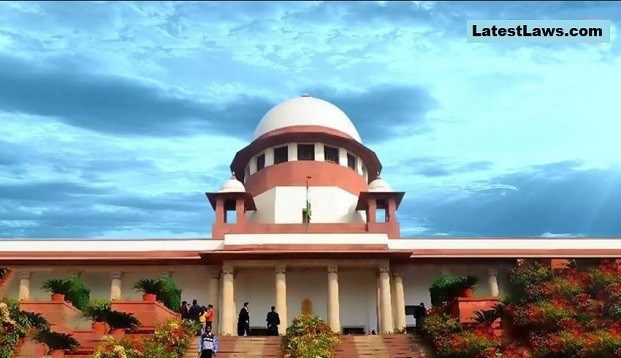
INTRODUCTION –
In these times with the changing world, our constitution has to survive for ages but with changing mentality of the society, our constitution needs alteration. That’s why the meaning and purpose of ARTICLE 21 of constitution has undergone a lot of changes with time and has been interpreted regularly. This doctrine has been deciphered a lot of times in several verdicts of law courts.
There are many things, which are basic and important to the citizens so that they feel secured.
So Article 21 states “ no one shall be deprived of life and personal liberty except procedure established by law”.
This doctrine was derived from US law composition, which says that no one should be divested of their fundamental rights to live and access freedom according to DUE PROCESS OF LAW.
Initially it was not available in the constitution nonetheless after 5th and 14th amendment, this was a part of US constitution. In 19th century, US government traced the doctrine to Magna Carta. Management might not divest any individual after right to living or house under due process of law.
This theory favors the supremacy of courts over constitution and gives judiciary to access the fundamental rights, justice and liberty.
If the honorable Supreme Court finds that any law is not rational, it will be declared invalid and gives precedence over constitution.
NATURAL JUSTICE
In The Constitution of India, nowhere the expression Natural Justice is used. However, golden thread of natural justice perceptively passed through the body of Indian constitution. Preamble of the constitution includes the words, ‘Justice Social, Economic and political’ liberty of thought, belief, worship ,equality of status and of opportunity, which not only ensures fairness in social and economical activities of the people but also acts as shield to individuals liberty against the arbitrary action which is the base for principles of Natural Justice.
In India, the principles of natural justice are firmly grounded in Article 14 & 21 of the Constitution. With the introduction of concept of substantive and procedural due process in Article 21, all that fairness which is included in the principles of natural justice can be read into Art. 21.
The doctrine talks about its relevance, which comes from the due process. Due process talks about the freedom of the citizen to access fundamental right. The doctrine of natural justice tells us about the freedom to be heard and freedom to be heard without any bias or favourism. So both the doctrines are very interrelated in our legal statutes and hence help us to be productive and helpful towards the people.
WHY DUE PROCESSOF LAW WAS DROPPED FROM INDIAN CONSTITUTION?
It was Justice Frankfurter who instructed B.N Rau to drop this doctrine of due process from the draft of constitution as it was measured unfair and imposed an unfair liability on bench. B.N Rau at that time was the leading member of drafting committee.
Later in an interview, Ashok Desai (high-grade advocate of Supreme Court) said that Frankfurter advised this because of his varied view about the doctrine. He further stated that each person will have different view about various aspects and thus will cause chaos and unreason ability.
“After a lot of debates and arguments it was held that, this doctrine was new and freshly liberated, so it is not decent for our democracy.
It was feared that the legal issues might become subjective and political. The members of constituent assembly were afraid about the adoption of this American policy, it will lead to a stream of lawsuit and many cases will be registered after launch of new constitution. They were not set, hence they deleted the clause of due process of law from the draft script and substitution it with Article 21”, which quotes that –
“No person shall be deprived of his life or personal liberty except according to a procedure established by law”.
“Procedure established by law means that a by-law that is accordingly sanctioned by legislature or the concerned party is effective if it has been committed in a correct procedure”.
Thereafter this phrase (procedure established by law) was adopted in our Indian constitution.
B.R Ambedkar wanted this phrase“ due process of law) to be used but Sir Alladi Krishnaswamy Iyer said that in future when we have to introduce social legislations, this part will create problem.
So that’s why procedure established under came into action.
“Due process of law doctrine not only checks if there is a law to deprive the life and personal liberty of a person but also see if the law made is fair, just and not arbitrary.
If Supreme Court finds that a law is not fair and just and discovers that it is infringing the rights, it will be declared invalid”.
The liberal interpretation of this policy was made after 1918 in India.
CASELAWS –
• MANEKA GANDHI CASE (1978)
“Supreme Court overruled its previous stance and it held that Article 21 seeks to provide full and complete liberty to the individual and inherently encloses the principle of natural justice”.
The court also held that the procedure established by law within the meaning of Article 21 must be right and fair and should not be harmful, offensive and arbitrary.
It also is also relative to the doctrine of Audi Alterum Partum (It is the policy that no one ought to be judged deprived of a unbiased hearing in which every party is given the chance to answer to the proof in contradiction to them).
• A.K GOPALAN V/S STATE OF MAHARASHTRA
The plaintiff was stopped somewhere by the officials. It was later alleged that he was restrained and that infringes his right to personal liberty, which comes under Article 21.
Supreme Court said that the right to personal liberty could only be infringed if –
• Physically restraining someone
• In case of coercion
In this particular case, the judgment was passed that this is not a case of infringement of personal liberty.
• LOCHNER V/S NEW YORK (17TH APRIL 1905)
“Lochner, a baker was condemned of interrupting the New York Bakeshop Act, which forbidden bakers from working extra than 10 hours a day and 60 hours a week. The Supreme Court smacked down the Bakeshop Act, ruling that it breached on “right to contract.” The Supreme Court got this “right” from the Due Process Article of the 14th Modification; a change that many think outdid jurisdictional power”.
• Regents of the University of California v. Bakke (26 Jun 1978) –
“Allan Bakke, a white person was disallowed entry in the University of California Medical School at Davis twice on different times. The medical school agreed 16 spots for minority applicants in an effort to address unjust minority omission from medical school. Bakke took the matter to the court about his omission from the Medical School as he stated that his exclusion was entirely the outcome of his race. The Supreme Court ruled that the university’s usage of firm racial allocations were unlawful and not only ordered the university to permit Bakke, but also said that race might be used as one of numerous aspects in the admissions procedure. Justice Lewis F. Powell, Jr. in his view stated that the strict usage of racial quotas disrupted the equal protection article of the 14th Amendment”.
• Mapp v. Ohio (19 Jun 1961) ―
Police got information that a shelling suspect may be located at Dollree Mapp’s house in suburban Cleveland, Ohio. When police inquired to investigate her home, Mapp denied if the police produced a permit. The police used a piece of paper as a bogus permit and got entry to her house unlawfully. After examining the home minus to find any bombing suspect, police noticed some sexual materials and detained Mapp under state law that banned the ownership of X-rated stuffs. Mapp was condemned of owning disgusting things and encountered up to seven years in jail before she filed her case on the reason that she had a right to keep the stuff. The Court said that the proof gathered from an illegitimate quest would be eliminated from her hearing. This came under the safeguarding confidentiality by exercising the Due Process Clause.
CONCLUSION –
DUE PROCESS OF LAW =
PROCEDURE ESTABLISHED BY LAW + INHERENT FAIRNESS/JUSTNESS OF LAW
Due process is the legal obligation that the state must respect all legal rights that are owed to a person. When a government damages a person without following the course of the law, this means there is a due process violation, which offends the rule of law.
Due process has also been frequently interpreted as limiting laws and legal proceedings (see substantive due process) so that judges, instead of legislators, may define and guarantee fundamental fairness, justice, and liberty. That interpretation has proven controversial. The interpretation of due process is sometimes expressed as a command that the government must not be unfair to the people or abuse them physically.
It says that the law must be fair and just and should follow the procedure of law
DARPG adopted the Mantra of Reform, Perform and Transform
Union Minister of State for Personnel, Public Grievances and Pensions Dr. Jitendra Singh has launched the e-booklet on DARPG achievements for the period May 30, 2019 to May 30, 2020 on the occasion of 1st year of Modi Government 2.0. Dr. Singh complimented the Department for being the first one to present its achievements to the people and interacted with senior officials through video-conferencing.
Speaking on the occasion, Dr. Jitendra Singh said that the DARPG had lived upto Prime Minister’s vision of Good Governance and adopted the mantra of Reform, Perform and Transform in letter and spirit. He highlighted the fact that DARPG had provided immense impetus to e-Governance in Indiaby
- Intense pursuit of implementation of e-Office in the Central Secretariat and States and
- The conduct of the 22nd and 23rd National e-Governance Conferences at Shillong and Mumbai in 2019 and 2020 respectively.
Further Dr. Jitendra Singh recognized that DARPG had undertaken significant reforms in handling Public Grievances by pursuing CPGRAMS reforms in several Ministries and Departments.

Dr. Jitendra Singh said that success of the systemic reforms undertaken by DARPG was witnessed in the COVID 19 pandemic period where in several Ministries/ Departments could work from home without disruption in work by using e-Office and timely redressal of 0.87 lac COVID 19 Public Grievances in a record average time of 1.45 days/ grievance.
Dr. Jitendra Singh complimented the DARPG’s engagement with Government of Jammu & Kashmir in conducting a series of Regional Conferences and Capacity Building programs which were participative and innovative in taking forward Government’s agenda for good governance in J&K.
Dr. Jitendra Singh commended DARPG for bringing out 3 important publications – the Good Governance Index (GGI) 2019, the National e-Services Delivery Assessment 2019 and the Central Secretariat Manual of Office Procedure 2019. These publications were rich in their academic content and provided immense inputs for taking good governance forward like enabling the march towards a digital central secretariat.

Looking at the future, Dr. Jitendra Singh said DARPG has a massive responsibility in meeting new challenges of providing timely grievance redressal by improving its tool kit with feed-back call centers, upgraded software solutions and taking forward the Government’s good governance agenda with focus on e-Governance and e-Services. He also urged the DARPG to expedite putting in place an effective work from home policy.
Secretary DARPG, Dr. KshtrapatiShivaji, Additional Secretary DARPG V.Srinivas, Joint Secretaries Smt. Jaya Dubey and N.B.S.Rajput along with senior officials of the Department participated in the event which was conducted through video conferencing facility.
Phased re-opening of all activities outside Containment Zones; Unlock 1 to have an Economic focus
Union Ministry of Home Affairs (MHA) issued new guidelines to fight COVID-19 and for phased re-opening of areas outside the Containment Zones, today. The guidelines would come into effect from June 1, 2020 and would be effective till June 30, 2020. The current phase of re-opening, Unlock 1, will have an economic focus. The new guidelines have been issued based on extensive consultations held with States and UTs.
A strict lockdown was imposed throughout the country since March 24, 2020. All activities were prohibited except essential activities. Subsequently, in a graded manner and keeping the overarching objective of containing the spread of COVID-19 in view, the lockdown measures have been relaxed.
Salient features of the new guidelines
Lockdown measures would continue to be implemented strictly in the containment zones. These will be demarcated by the State/ UT Governments, after taking into consideration the guidelines issued by the Health Ministry. Within the containment zones, strict perimeter control shall be maintained and only essential activities allowed.
All activities that were prohibited earlier would be opened up in areas outside Containment Zones in a phased manner, with the stipulation of following Standard Operating Procedures (SOPs), to be prescribed by the Health Ministry:
Phase I (permitted to open from June 8, 2020)
- Religious places and places of worship for public;
- Hotels, restaurants and other hospitality services; and
- Shopping malls.
Health Ministry would issue SOPs for the above activities, in consultation with the Central Ministries/ Departments concerned and other stakeholders, for ensuring social distancing and to contain the spread of COVID-19.
Phase II
Schools, colleges, educational/ training/ coaching institutions etc., will be opened after consultations with States and UTs. State Governments/ UT administrations are being advised to hold consultations at the institution level with parents and other stakeholders. Based on the feedback, a decision on the re-opening of these institutions will be taken in the month of July, 2020. MoHFW will prepare SOP for these institutions.
Limited number of activities to remain prohibited throughout the country
- International air travel of passengers;
- Operation of Metro Rail;
- Cinema halls, gymnasiums, swimming pools, entertainment parks, theatres, bars and auditoriums, assembly halls and similar places; and,
- Social/ political/ sports/ entertainment/ academic/ cultural/ religious functions/ and other large congregations.
- Dates for the opening of above activities would be decided in Phase III, based on assessment of the situation.
Unrestricted Movement of Persons and Goods
- No restriction on inter-State and intra-State movement of persons and goods. No separate permission/ approval/ e-permit would be required for such movements.
- However, if a State/ UT, based on reasons of public health and its assessment of the situation, proposes to regulate movement of persons, it would give wide publicity in advance regarding the restrictions to be placed on such movement, and the related procedures to be followed.
Night curfew would continue to remain in force, on the movement of individuals, for all non-essential activities. However, the revised timings of the curfew will be from 9 pm to 5 am.
National Directives for COVID-19 management would continue to be followed throughout the country, with a view to ensure social distancing.
States to decide on activities outside Containment Zones
States and UTs, based on their assessment of the situation, may prohibit certain activities outside the Containment zones or impose such restrictions, as deemed necessary.
Protection for vulnerable persons
Vulnerable persons, i.e., persons above 65 years of age, persons with co-morbidities, pregnant women, and children below the age of 10 years, are advised to stay at home, except for meeting essential requirements and for health purposes.
Use of Aarogya Setu
The Aarogya Setu mobile application is a powerful tool built by Government of India to facilitate quick identification of persons infected by COVID-19, or at risk of being infected, thus acting as a shield for individuals and the community. With a view to ensure safety, various authorities are advised to encourage the use of the application.
IT Minister Launches National AI Portal of India- www.ai.gov.in
On the occasion of the first anniversary of the second tenure of the government, the Union Minister for Electronics and IT, Law and Justice and Communications Ravi Shankar Prasad launched India’s national Artificial Intelligence Portal called www.ai.gov.in
This portal has been jointly developed by the Ministry of Electronics and IT and IT Industry. National e-Governance Division of Ministry of Electronics and IT and NASSCOM from the IT industry will jointly run this portal. This portal shall work as a one stop digital platform for AI related developments in India, sharing of resources such as articles, startups, investment funds in AI, resources, companies and educational institutions related to AI in India. The portal will also share documents, case studies, research reports etc. It has section about learning and new job roles related to AI.
On this occasion, the Minister for Electronics & Information Technology, Communications and Law & Justice, Ravi Shankar Prasad, also launched a National Program for the youth, “Responsible AI for Youth”. The aim of this Program is to give the young students of our country a platform and empower them with appropriate new age tech mind-set, relevant AI skill-sets and access to required AI tool-sets to make them digitally ready for the future. The Program has been created and launched by the National e-Governance Division, Ministry of Electronics & IT in collaboration with Intel India, with support from Department of School Education and Literacy (DoSE&L), Ministry of Human Resource Development. DoSE&L will help reach-out to State Education Departments to nominate teachers as per eligibility criteria.
“Responsible AI for Youth” will empower the youth to become AI ready and help reduce the skill gap, while enabling youth to create meaningful social impact solutions. The Program is designed to reach out to students from Government schools pan India and provide them with an opportunity to become part of the skilled workforce in an inclusive manner.
Addressing the media at the launch event, the Minister for Electronics & IT, Law & Justice, Shri Ravi Shankar Prasad said “India must be a leading country in the development of Artificial Intelligence in the world, leveraging upon its vast Internet savvy population and data it is creating. India’s AI approach should be of inclusion and empowerment of human being by supplementing growth and development rather than making human beings less relevant”.
MoS for E&IT, Communications, and HRD, Shri Sanjay Dhotre, while emphasising the role of digital technologies with special reference to pandemic-afflicted world, said that such technologies have proved to be our saviours during the difficult times. These have been of very crucial help especially in the field of education, agriculture, healthcare, e-commerce, finance, telecommunications, etc. He further added that the digital technologies have been great equalisers despite several odds. Highlighting the importance of the AI Portal, Shri Dhotre said that such national portal will lead to democratization of artificial intelligence in the country.
Details of Responsible AI for Youth Programme:
The National Programme is open to students of classes 8 – 12 from Central and State government-run schools (including KVS, NVS, JNV) from across the country – all 28States and 8Union Territories and aims to bring about a change in the thought process and create a bridge for the digital divide. The Program will be implemented in a phase-wise manner and in its first phase, each of the State Education Department will nominate 10 teachers as per the eligibility criteria. Teachers may also self nominate themselves by fulfilling the eligibility criteria. These teachers will be provided orientation sessions aimed to help them understand the premise and identify 25-50 potential students for the Program. The identified students will attend online training sessions on AI and understand how to identify social impact ideas/projects that may be created using AI and submit their ideas through a 60 seconds video explaining a proposed AI enabled solution.
From the submitted ideas in the form of videos, top 100 ideas will be shortlisted and these students will be invited to attend residential boot camps or online sessions (subject to COVID-19 situation); to take them through a deep dive AI journey. Post the boot-camps/ online sessions, these students will be asked to create real time projects and submit their final project in a video format on the website.
Adequate handholding will be provided by Intel certified AI coaches and mentors throughout to ensure that ideas mature as prototypes. The experts will shortlist top 50 project ideas and students will be invited to showcase their projects either face to face or in an online format. Further, top 20 innovative projects will be selected by an independent committee of experts and provided opportunities to showcase at relevant platform.
Indian Navy Commences Next Phase of Operation “Samudra Setu”

The next phase of Operation “Samudra Setu” to repatriate Indian citizens from overseas will commence on 01 June 2020.
In this phase, Indian Navy Ship Jalashwa will repatriate 700 personnel from Colombo, Republic of Sri Lanka to Tuticorin, Tamil Nadu and subsequently repatriate another 700 personnel from Malè, Republic of Maldives to Tuticorin.
Indian Navy has already repatriated 1,488 Indian nationals from Malè to Kochi during the previous phase of operations.
Indian Missions in Sri Lanka and Maldives are preparing a list of Indian nationals to be evacuated and will facilitate their embarkation after requisite medical screening. COVID-related social distancing norms have been catered onboard and evacuees would be provided basic amenities and medical facilities during the sea-passage.
After disembarkation at Tuticorin the evacuated personnel will be entrusted to the care of State authorities. This operation is being progressed in close coordination with Ministries of External Affairs, Home Affairs, Health and various other agencies of the Government of India and State governments.
DST initiates COVID-19 India National Supermodel for monitoring infection
The Department of Science and Technology (DST) has initiated a COVID -19 Indian National Supermodel to help monitor the future transmission of infection, thus aiding decisions involving health system readiness and other mitigation measures.
While the Government is keeping a close watch on infectivity and mortality, it is imperative to bring in a robust forecasting model for predicting the spread and enhancing disease surveillance. Numerous mathematical models for Covid-19 forecasting and surveillance are being worked out by investigators funded by DST-SERB (Science and Engineering Research Board) and other agencies.
Inspired by India’s history of using mathematical models for disaster management planning of metrological events, DST has initiated this exercise to pool in expertise in the field and create one model for the entire country that will be subjected to rigorous tests required for evidence-based forecasting, routinely practiced in weather forecasting communities.
The model will entirely rely only on the data that is relevant to COVID-19, and also have an adaptive built-in component to learn from the newer trends in the data. It will aggregate successful evidence-based mathematical and statistical forecasting models and include the best predictive analytics for robust forecasting of infectious disease spread. The supermodel could be used by the policymakers in India and around the world to overcome difficulties in predicting the rate of spread of infection and how it would burden the healthcare sector, thereby curbing the epidemic.
As part of this initiative, Jawaharlal Nehru Centre for Advanced Scientific Research (JNCASR) and IISc, Bangalore will co-ordinate to connect and work with all COVID-19 modeling projects and programs in the country. This will help develop a set of benchmarks to assess various models and to finally deliver the COVID-19 India National Supermodel. The Coordination team will consult and work with the research groups active in modeling, various software developers, and reputed companies to ensure delivery of a suitable user interface and software.
A consultative committee will work closely with DST and SERB and coordinators (JNCASR and IISc Bangalore) and modellers of this initiative to provide critical inputs on technical aggregation, guidance, and final delivery of a robust Supermodel.
“Mathematical modeling and simulations for the spread of COVID-19 virus and its impact are not mere academic exercises but are critical needs for rational decision making, planning, and resource management. It is thus of vital importance that a robust National Model which is vetted by a large cross-section of scientific community working in the area is developed,” said Prof Ashutosh Sharma, Secretary, DST.
Annual action plan approved for Bihar under Jal Jeevan mission

Bihar State presented their Jal Jeevan Mission Annual Action Plan before Ministry of Jal Shakti for consideration and approval, wherein in it is planned to have 100% coverage of all households with functional tap water connections by 2020-21. Bihar state government has set an ambitious goal of providing all the remaining households with tap connection. It’s a huge target, but the State Government is all set with the roadmap to achieve the target. A proper plan is in place for 100% coverage of all 38 districts during 2020-21. Bihar Government is also giving special attention to providing 100% of Functional Household Tap Connections (FHTCs) in Aspirational districts, quality-affected habitations and SC/ST villages. Because of abundance of ground water and surface water in Bihar, the State is making all efforts in this regard.
State is planning to provide tap connections to remaining 1.50 Crore households in 2020-21. Government of India has allocated Rs. 1832.66 Crore for this during 2020-21.
During the scorching summer and COVID-19 pandemic, the importance of clean water takes precedence. Washing hands and maintaining good hygiene needs clean water. Mostly the rural population depend on stand posts or wells for water, thus making it difficult for the masses to observe social-distancing. The relevance of potable water in one’s household premise is a one-stop solution for the given problem. During this testing time of CoVid-19 pandemic, such attempt to provide household tap connections in rural areas will surely improve the ease of living especially the women and girls reducing their drudgery and making them safe and leading a dignified life.
Though, there has been a considerable improvement in water situation as compared to past many years, but a long road is yet to be covered. Besides, enabling every household with tap connection, Bihar has to give equal thrust on water conservation, rainwater harvesting, grey-water management & tackling over-extraction of groundwater.
Jal Jeevan Mission (JJM) has been launched in partnership with States, to enable every household in villages to have a FHTC within the premises by 2024. It has been envisaged that each household will have potable water supply of 55 lpcd of prescribed quality on a regular and long-term basis. it’s the endeavor of the Government to bring improvement in the lives of rural people by making provision of assured services at their doorsteps.
To implement the mission, institutional arrangements at various levels have been made and State’s PHE/ Rural Water Supply Departments are to play a critical role along with the local community. Gram Panchayat/ village water sanitation committee/ user committee are encouraged to plan, implement, manage, operate, and maintain its in-village water supply scheme. A sense of ownership has to be instilled in the village community as they are at the center of this mission. The community is also expected to play a big role in water quality surveillance.
Rural women and adolescent girls spend a lot of time and energy in getting water for day-to-day use. This results in a lack of participation of women in income generation opportunities, loss of school days for girls, and adverse health impacts. JJM is to play a significant role in bringing ‘ease of living’ for the rural community, especially women. Women must lead JJM in their villages to meet their needs and aspirations.
Consumer Protection Act, 2019 and progress towards One Nation One Ration Card
Union Minister for Consumer Affairs, Food & Public Distribution, Shri Ram Vilas Paswan today listed the achievements and initiatives of the Ministry of Consumer Affairs, Food & Public Distribution during the last one year. The biggest achievement is the Government has been ensuring transport and distribution of free food grains to the people during the lockdown period.
Shri Paswan said the enactment of Consumer Protection Act, 2019, CWC achieves highest ever turnover, increase in the authorized capital of FCI from Rs.3,500 crore to Rs.10,000 crore and the march towards One Nation One Ration Card are among notable achievements of the Ministry during the last one year of the Government.
Food grain distribution
Shri Paswan said sufficient quantity of food grains is available in buffer stock to fulfill the nation’s increased demand during the COVID19 crisis. The Minister informed that as on 28.5.2020, FCI currently has 272.29 LMT rice and 479.40 LMT wheat. Hence, a total of 751.69 LMT food grain stock is available (excluding the ongoing purchase of wheat and paddy, which have not yet reached the godown).
He said that since the lockdown was announced on 24th March, 2020, about 101.81 LMT food grains have been lifted and transported through 3636 rail rakes. Apart from the rail route, transportation was also done through roads and waterways. A total of 213.02 LMT has been transported. 12,000 MT food grains was transported through 12 ships. Total 10.37 LMT food grains have been transported to the North-Eastern States.
He said the FCI and NAFED have undertaken a massive exercise transporting food grains to States and UTs for distribution under Atmanirbhar scheme, PM-GKAY and NFSA.
Under PMGKAY, for 3 months a total of 104.4 LMT rice and 15.6 LMT wheat is required of which 84.95 LMT rice and 12.91 LMT wheat have been lifted by various States and UTs. A total of 97.87 LMT food grain has been lifted till 29.5.2020. Along with additional food grains, 1 Kg Pulses/Dal per family per month are being given free-of-cost to all 80 crore NFSA beneficiaries for a period of three months April to June 2020 across all States/UTs. Shri Paswan said the total requirement for pulses for three months is 5.87 LMT. So far, 4.77 LMT pulses have been dispatched while 3.80 LMT Pulses have reached the States/UTs. As on 29.5.2020, 1.75 LMT pulses have been distributed by the States/UTs.
Shri Paswan said that under NFSA and other welfare schemes of the Government of India total 55 LMT food grains are required for one month. The Department has already delegated the power to Food Corporation of India (FCI) to grant extension to States/UTs for lifting the unlifted quantity to further six months i.e upto June, 2020 as 1st extension and while for the North-east States and J & K as 2nd extension as measures to improve offtake of foodgrain under TPDS/NFSA .
Under the OMSS, the Government liberalized the sale of food grains by the FCI to states and NGOs by offering Wheat and rice at a subsidized rate.
Shri Paswan said that States/UTs have already lifted 2.06 LMT food grains under Atma Nirbhar Bharat package. The distribution has started and shall be completed on schedule.
One Nation One Card
Shri Paswan said national portability of NFSA ration cards holders has been introduced under “One Nation One Ration Card” plan . He said the Ministry is aiming to achieve 100% seeding of ration cards with Aadhar under One Nation One Ration Card scheme by January 2021.
Centrally Sponsored Pilot Scheme on “Fortification of Rice and its Distribution under PDS
Informing about this scheme, Shri Paswan said that a total budget outlay of Centrally Sponsored Pilot Scheme on “Fortification of Rice and its Distribution under Public Distribution System” has been revised to Rs.174.64 Crore from earlier outlay of Rs. 147.61 Crore. The Pilot Scheme is to focus on 15 Districts, preferably 1 District per State.
Increase in the authorized capital of Food Corporation of India (FCI)
The Minister informed that the Cabinet Committee on Economic Affairs (CCEA) in its meeting held on 02.12.2019 approved the proposal of increase in the authorized capital of FCI from Rs.3,500 crore to Rs.10,000 crore.
Central Warehousing Corporation (CWC) achieves highest turnover
Shri Paswan said the Central Warehousing Corporation (CWC) has achieved highest ever turnover of about Rs 1710 crore during 2019-20. Government of India has received Rs 35.77 crores out of the total dividend of Rs 64.98 crore.
Sugar Development Fund
Shri Paswan said loan applications involving amount of Rs.125,05.34 lakhs were approved and an amount of Rs.188,58.91 lakhs loan was disbursed to 15 sugar factories during 01.04.2019 to 31.03.2020. A web-portal has also been launched w.e.f. 28.10.2019 for online submission of loan applications for availing various loans provided under Sugar Development Fund by the Sugar Factories.
Diversion of excess sugar to ethanol
The Minister informed that the Government has also allowed production of ethanol from sugar and sugar syrup for current ethanol supply year 2019-20 (December, 2019 – November, 2020) in order to meet the increased demand for ethyl alcohol to check the spread of Corona virus.
Production of Hand-sanitizers to fight against Covid-19
Shri Paswan said 165 distilleries and 962 independent manufacturers were given licenses to produce hand-sanitizers across the country, which has resulted in production of 87,20,262 litres of hand-sanitizers (as on 11.5.2020).
Face Mask and hand sanitizer manufacturing
Shri Paswan said that in wake Covid-19, Bureau of Indian Standards (BIS) allowed the grant of license to the manufacturers of FFP2 masks as per IS 9473:2002 (which are technically equivalent to N95 masks), with relaxation regarding availability of in-house testing facilities.
Patent to National Sugar Institute
The Minister said that the patent has been granted to National Sugar Institute (NSI) Kanpur for a new process on Sugarcane Juice Clarification to obtain Sulphur-less sugar.
Consumer Protection Bill, 2019
Consumer Protection Bill, 2019 was passed in Lok Sabha and by Rajya Sabha on 30.07.2019 & 06.08.2019 respectively. The President gave his assent to the Consumer Protection Bill 2019 and the Consumer Protection Act, 2019 was published on the official gazette on 09.08.2019.
The Legal Metrology (National Standards) Rules, 2011
The Legal Metrology (National Standards) Rules, 2011 were amended to include new definitions of International System of Units (SI units) of weights and measures as per the definitions adopted by International Bureau of Weights and Measures (BIPM) vide GSR 474 (E) dated 5th July, 2019
Hallmarking
The Minister said that the hallmarking for Gold jewellery and artefacts has been made mandatory in the country vide notification on 15 January 2020 giving a period of one year for implementation.
National Laboratory Directory
He also informed the media that National Laboratory Directory has been launched by Bureau of Indian Standards containing data of more than 4000 laboratories with location and product-wise testing facility.
Tips for Writing the Book Review
Once you have made your observations and assessments of the work under review, carefully survey your notes and attempt to unify your impressions into a statement that will describe the purpose or thesis of your review. Check out our handout on thesis statements. Then, outline the arguments that support your thesis.
Your arguments should develop the thesis in a logical manner. That logic, unlike more standard academic writing, may initially emphasize the author’s argument while you develop your own in the course of the review. The relative emphasis depends on the nature of the review: if readers may be more interested in the work itself, you may want to make the work and the author more prominent; if you want the review to be about your perspective and opinions, then you may structure the review to privilege your observations over (but never separate from) those of the work under review. What follows is just one of many ways to organize a review.
Introduction
Since most reviews are brief, many writers begin with a catchy quip or anecdote that succinctly delivers their argument. But you can introduce your review differently depending on the argument and audience. The Writing Center’s handout on introductions can help you find an approach that works. In general, you should include:
- The name of the author and the book title and the main theme.
- Relevant details about who the author is and where he/she stands in the genre or field of inquiry. You could also link the title to the subject to show how the title explains the subject matter.
- The context of the book and/or your review. Placing your review in a framework that makes sense to your audience alerts readers to your “take” on the book. Perhaps you want to situate a book about the Cuban revolution in the context of Cold War rivalries between the United States and the Soviet Union. Another reviewer might want to consider the book in the framework of Latin American social movements. Your choice of context informs your argument.
- The thesis of the book. If you are reviewing fiction, this may be difficult since novels, plays, and short stories rarely have explicit arguments. But identifying the book’s particular novelty, angle, or originality allows you to show what specific contribution the piece is trying to make.
- Your thesis about the book.
Summary of content
This should be brief, as analysis takes priority. In the course of making your assessment, you’ll hopefully be backing up your assertions with concrete evidence from the book, so some summary will be dispersed throughout other parts of the review.
The necessary amount of summary also depends on your audience. Graduate students, beware! If you are writing book reviews for colleagues—to prepare for comprehensive exams, for example—you may want to devote more attention to summarizing the book’s contents. If, on the other hand, your audience has already read the book—such as a class assignment on the same work—you may have more liberty to explore more subtle points and to emphasize your own argument. See our handout on summary for more tips.
Analysis and evaluation of the book
Your analysis and evaluation should be organized into paragraphs that deal with single aspects of your argument. This arrangement can be challenging when your purpose is to consider the book as a whole, but it can help you differentiate elements of your criticism and pair assertions with evidence more clearly. You do not necessarily need to work chronologically through the book as you discuss it. Given the argument you want to make, you can organize your paragraphs more usefully by themes, methods, or other elements of the book. If you find it useful to include comparisons to other books, keep them brief so that the book under review remains in the spotlight. Avoid excessive quotation and give a specific page reference in parentheses when you do quote. Remember that you can state many of the author’s points in your own words.
Conclusion
Sum up or restate your thesis or make the final judgment regarding the book. You should not introduce new evidence for your argument in the conclusion. You can, however, introduce new ideas that go beyond the book if they extend the logic of your own thesis. This paragraph needs to balance the book’s strengths and weaknesses in order to unify your evaluation.
Any suggestions will be welcome.
Food processing industry stakeholders to assess Covid-19
The grievance cell of Ministry of Food Processing Industries has been able to close and resolve 581 issues out of 585 received, with proactive approach and timely redressal. The task force has been taking up these issues with the respective state governments and other relevant authorities including Ministry of Finance, Ministry of Home Affairs. The task force have also been in constant touch with leading industry associations and food processors across states to address any issues / challenges faced by food and allied industry so that it can run at maximum capacities. Grievances or any problems faced by Food Processing Sector, in either disruption of production or supply chain, during nationwide Covid-19 lockdown can be mailed at covidgrievance-mofpi@gov.in.
A dedicated task force and a grievance cell was set up in the Ministry, which consisted of senior officials of the Ministry and members of Invest India. Industry could reach out to the grievance cell directly or through various industry associations. The major issues which were received at the grievance cell included issues related to
- Plant shutdowns due to lockdown
- Logistics related issues, warehouse shutdown
- Non availability of labour
- Movement of staff and workers
Smt. Harsimrat Kaur Badal, Union Minister of Food Processing Industries has chaired a series of video conferences with the industry associations, cold chain developers, exporters etc. on a regular basis for monitoring the situation at ground level.
The Ministry received various issues during VC interactions with cold chain promoters, on which the task force has promptly reacted and have taken up the issues with all the relevant stakeholders. Various steps were taken keeping in mind the necessities of food and allied industry to recoup with the new normalcy.
MoFPI is also a member of the Empowered Committee on Logistics and Supplies, and has been working to ensure that harvested agriculture produce can be supplied to the industry so that farmers are benefitted. Ministry of Food Processing Industries has taken several measures to ensure that the Food Processing Industry has been impacted minimally due to the Covid-19 crisis.
Scaling up of COVID testing centres (Hub and spoke model)

To scale up testing and enhance the reach across the countryCity /Regional clusters have been established in a Hub and Spoke Model to scale-up testing of COVID-19 samples in government institutions across the country. Institutes and Laboratories which have the capacity and expertise for both sample collection, handling/processing (BSL-2 facility) and testing (RT-PCR) serve as the hubs and they involve a number of laboratories which have RT PCR machines and the requisite manpower as their extended Testing facilities.
The Hubs are Government laboratories approved by respective Ministries /Departments (DBT, DST, CSIR, DAE, DRDO, ICAR etc) as per ICMR guidelines. So far 19 City /Regional clusters have been established in Bangalore, Delhi/NCR, Hyderabad, Thiruvananthapuram, Chandigarh/Mohali, Bhubaneshwar, Nagpur, Pune, Mumbai, Lucknow, Chennai, Kolkata, North Eastern Region, Jammu & Kashmir, Ahmedabad, Madhya Pradesh, Rajasthan, Banaras, Palampur and Delhi city.
About 100 institutions have been involved and over 1,60,000 samples tested. Seven DBT Autonomous institutes have been approved as hubs by ICMR and they are performing testing for diagnosis of COVID-19 (RGCB, THSTI, ILS, inStem, NCCS, CDFD, NIBMG).
They are also functioning as hubs in the respective Cities/Regions and coordinating the efforts with a number of other premier Central and State Government institutions. In addition, they are working closely with the respective State Governments in obtaining samples for testing and are reporting every day to ICMR on their testing results. Collectively in about 4 weeks, these clusters have done nearly 1,70,000 tests. These clusters will now be scaled to nearly 50 in next 4 weeks and reach remote corners of the country.
 Eduindex
You must be logged in to post a comment.