

The Phase-Three of Vande Bharat Mission began yesterday. Briefing media, External Affairs Ministry Spokesman Anurag Srivastava said, it will last till the 2nd of July. Phase-Three will have 432 international flights from 43 countries reaching 17 States and Union Territories. In this phase, there will also be 29 flights from private carriers – 24 Indigo flights, three Go Air flights and two Vistara flights.
The number of flights from the US and Canada have also been increased given the huge demand. There are 53 flights from the US and 24 from Canada. There will be 16 flights from Paris and 16 from Frankfurt which are to be used as hubs in Europe. Mr Srivastava said, this phase of Vande Bharat Mission has widened the reach by including more countries and increasing the number of entry points.
Day: June 12, 2020
Railways fully geared to provide modified coaches for use as COVID Care Centres
Indian Railways is fully geared to provide COVID Care Centres to State Authorities. Trains with unit composition of 10 coaches, with patient capacity of 16 per coach have been made ready.
Railway Ministry said, a total of five thousand 231 coaches were modified to be used as COVID Care Centre. Telangana has asked for coaches to be stationed in three locations- Secunderabad, Kachiguda and Adilabad. Uttar Pradesh has finalized 24 stations for deployment. In Delhi, 10 coaches are stationed at Shakurbasti location.
The Ministry said, Zonal Railways have converted these coaches for a quarantine facility. The coaches can be used for very mild cases that can be clinically assigned to the COVID Care Centres as per guidelines issued by the Health and Family Welfare Ministry. These coaches can be used in areas where the state has exhausted the facilities and needs to augment capacities for isolation of both suspect and confirmed COVID cases. These facilities are part of the integrated COVID plan developed by Union Health Ministry and NITI Ayog.
Railways has kept 158 stations ready with watering and charging facility and 58 stations with watering facility for these COVID Care Centres.
Recovery rate of Covid-19 patients improves to 49.47 pct
The Central government today said that the recovery rate from corona virus has reached 49.47 per cent in the country and the total number of recovered people is one lakh 47 thousand 195. During the last 24 hours, six thousand 166 people have been cured from this virus. Total active COVID19 cases in the country stands at one lakh 41 thousand 842.
The Health and Family Welfare Ministry said, 10 thousand 956 new cases of Covid-19 have been reported in the last 24 hour taking the total number of cases to two lakh 97 thousand 535 in the country. This is the highest spike in fresh cases in one day since the outbreak of coronavirus in the country. During the last 24 hours, 396 deaths have been registered taking the nationwide toll to eight thousand 498. The case fatality rate is 2.85 per cent in the country.
Meanwhile, the Indian Council of Medical Research, ICMR, has said that a total of one lakh 50 thousand 305 tests of corona virus were conducted in the country by various laboratories in the last 24 hour. So far, 52 lakh 13 thousand 140 tests have been conducted in the country. ICMR is continuously scaling up its testing facilities for Covid-19 by giving approval to government and private laboratories. As of now, total 877 laboratories across India have been given approval to conduct the test for Covid-19 including 637 government laboratories and 240 private laboratory chains.
PM Narendra Modi calls for converting Covid-19 crisis into an opportunity to make India self-reliant
Prime Minister Narendra Modi said the country has moved from the policy of command and control to plug and play in order to prepare it for the post COVID world. Addressing the Industry heads at the 95th annual plenary session of Indian Chamber of Commerce on the theme of people, planet and profit in Kolkata through video conference today, Prime Minister highlighted government’s people-centric, people-driven and planet-friendly policies. He said, it is the time for bold investments and bold decisions to build a globally competitive strong domestic supply chain in the country.
The Prime Minister said, the country is fighting multiple challenges on many fronts. He affirmed that these odds have further strengthened the determination of the country. Highlighting the importance of Atma Nirbhar Bharat, he said, the country is determined to convert the challenges into an opportunity and termed self-reliance as the key solution to pave path for the Post COVID world.
Mr. Modi said, self-reliance has been paramount in government’s policy decisions in the last 6 years and maintained that the COVID crisis has given an opportunity to speed up efforts in this direction. Remembering Swami Vivekananda’s mantra for Indian’s to use their own produce and find markets in other countries, he termed self-reliance as the key solution for India. He said that Swami Vivekananda has shown the path for a Post COVID world.
Emphasising on the need to cut down imports, he said production of goods in the country has been encouraged by the various reforms announced by the government and reiterated his call to go vocal for local. Appreciating the efforts of small traders and producers, he said that when we buy local produce from them, we are not just paying them for their goods and services, but are honouring their contributions.
Underlining the reforms of definitional change of MSME to decriminalization of provisions for the industrial sector, he said, these will pave way for better growth in the country. Citing the amendments in the APMC and Essential Commodity Act, the Prime Minister said these historic changes will help farmers develop a bigger and better market. He said, the recent historic decisions have liberated the agrarian economy from years of restrictions.
The Prime Minister said, banking services in the country have reached those who were kept in the category of have-nots for a long time. He also hailed the decision of development of cluster based markets, which he said, will open doors of opportunities for increased local produce.
Prime Minister reckoned path breaking policy decisions taken to boost up manufacture and sale of LED bulbs in the country, which helped save 19 thousand crore rupees for the common people. It also reduced carbon dioxide emission by 4 crore ton and saved non-renewable energy resources. He added that the development of Inland waterways, banning of single-use plastic, boosting use of digital payment and renewable energy sources have helped drive the economy benefiting both people and planet along with equitable gains.
Mr. Modi said, along with the country, eastern and north eastern states have huge potential to utilize the benefits of the economic reforms to boost their productivity.
He urged the Industrial body and corporates to chalk out strategies to further help achieve the goal of self-reliance by adopting greater investment in the manufacturing sector. The Prime Minister appreciated the efforts of the Indian Chamber of commerce in serving the nation since its creation in 1925. He also applauded the ICC’s contribution to the development of the North East
Importance of Career Counseling
After important milestones in education all folks faces this question ‘what next’ after class 10th, after class 12th and after graduation. Career counseling can help altogether the main milestones in one’s career. Firstly, to make a decision a stream and subject combinations, to make a decision the graduation course, and then, to make a decision the post graduation and career option
In school a helpless 16 year old is faced with the selection of varied streams – Humanities, Science with mathematics, science with biology and Commerce, and therefore the only career guidance he has is the opinion of his parents, his teacher’s judgment based on his marks and the comments of his friends and neighbors. A class 11th -12th student together with his subject combinations is flooded with agencies providing various entrance preparation and colleges luring his / her attention. What help he has parents, teachers and admission counselors whose only job is to put the scholar in college and course where they’re going to get commission. A graduate who is doing the course because the oldsters wants him/ her to try to to it or he wasn’t sure of the other and thus is doing the course is also confused about career choices.
We strive to form a progressive world today, where technologies are booming there are many opportunities with various fields where one can make a far better career so guidance provides guidance to an individual to possess a transparent glimpse on what to pursue and the way much duration it takes to finish the course and costs .In today’s world there are also multiple career choices starting from medicine to mass communications, engineering to event management, marine biology to information technology, culinary arts to music.
Choosing a field of study that’s not really suited to your interests or skills could prove disastrous. And that’s where career counseling comes in.
How career counseling works?
Career Counseling involves scientifically developed aptitude tests and personality tests that helps a career counselor give the simplest suited career advice to the scholar supported his report of his aptitude and personality. Human capacities are infinite and may never be measured, nor are we to gauge of what one can do. Every person has unique characteristics, for everybody has his or her own strengths and weaknesses. The key is to identify these unique qualities is through Psychometric Test and career counseling.
What does career counseling offer?
Making an Informed Choice to Choose a Career
Career counseling sessions helps the students to know the pros and cons of the different streams, courses and educational options and the career path it offers, thus the students can make an informed choice, and obtain a career assessment that helps avoid the danger of change in career path later in life. The importance of pinpointing the work cut out for every person can only be gauged when one sees the agony of utmost job misfits. So a career counseling and guidance is needed to help organize ones thoughts and ideas on career related decisions. It can boost the morale and confidence and provides new directions to the scholars which can be beneficial for the entire society. Career counseling helps students discover their true potential and interest in various subjects so as to assist them choose the proper career. Several institutes, including schools and colleges, today offer guidance through a series of aptitude and IQ tests. The tests usually have multiple-choice questions, which don’t got to be prepared for in any way.
Guidance to students
Career counseling is that the guidance given to a student on the road he/she should fancy achieve his/her goals. The advice and counseling provided is predicated on three deciding factors — personality, aptitude and interest.
No confusions
Friends and family can fairly often provide incorrect guidance because their parameters of judging a career choice might differ. A counselor is objective while giving guidance, with no considerations aside from aptitude and interest.
Job Satisfaction
Choosing a career that matches one’s aptitude and personality itself translates into professional success and recognition . The main aim of guidance is to assist students choose a field that’s in tune with their skills and their job expectations. Thus, with the assistance of guidance , most candidates find yourself choosing the proper career, and perform their utmost , which ultimately helps them succeed.
Though not many faculties in India give guidance to students, if your school doesn’t provide you professional counselors, you’ll always seek the assistance of independent counselors. It is always better to hunt professional guidance instead of choose something that the entire herd goes for.
Challenges Associated with Career Counseling
Encouraging Parents and students to take part in counseling is very difficult as people still have a perception that it is time-consuming.
For example in India, there are still 60% of individuals who don’t take career advice 70% of individuals under 14 say they need had no careers advice while 45% of people over 14 have had no or very poor/limited advice.
Over the previous couple of years, there has been a rise within the number of scholars choosing courses aside from engineering. While this is often a positive sign, there’s no doubting the very fact that engineering still remains a dominant choice of scholars pursuing higher studies.
People in India still have a perception that Government service is a secure career so they hesitate to take part in counseling sessions.
Financial problems often provide a drawback in students career even if he/she is good in studies students they visit the career fairs but fails for admissions due to lack of money.
ISRO-NASA Joint Mission “NISAR” : Super Exclusive
NASA (National Aeronautics and Space Administration) and ISRO (Indian Space Research Organisation) are one of the most admired space agencies know in today’s world (not to forget about ROSCOSMOS and ESA). While NASA is known throughout the world for its diverse missions (Voyagers, New Horizons, Cassini, Juno and many more to count on). In the meantime, ISRO is gearing up by creating the most cost-effective and marvelous launches known till date. But what if these two space agencies were to come together and work on a single project..? Well, that’s what NISAR is all about!
NISAR (NASA-ISRO Synthetic Aperture Radar) mission is a joint project between NASA and ISRO to co-develop and launch a dual-frequency synthetic aperture radar (SAR) satellite with the hopes of understanding our home planet in a better perspective than ever before.

KEY FACTS ABOUT NISAR:
- NISAR is designed to map out earth’s entire land and ice masses 4 to 6 times a month and possibly provide an explanation for planet’s most complex geological problems, including natural disasters like earthquakes, volcanoes, tsunamis and even the mysteries to their origin.
2. NISAR will use Advance Radar Imaging to provide mankind with the finest and crispier view of the earth than ever achieved, with a staggering resolution of 5-10 m/pixel(For example, Google Earth has a peak resolution of 15m/pixel!). Moreover,all the data from NISAR would be freely available within 1-2 days of any natural disaster, if any.
3. The Project has an allocated budget of over $1 Billion, making it the most expensive earth-imaging satellite till date. ISRO’s share of the project cost is about US$110 million, and NASA’s share is about US$808 million.
4. NISAR is planned to be launched by 2021 aboard a GSLV MKII (Geosynchronous Satellite Launch Vehicle Mark II) from Satish Dhawan Space center located in India. The mission will have a payload mass of 2800 kg and will be suspended in a Sun-Synchronous orbit. It has a life expectancy of about 3 years.
5. The satellite consists of a L Band and a S-Band Polarimetric Synthetic Aperture Radar (SAR), operating at the frequencies of 1.25 GHz and 3.2 GHz respectively. While NASA will be providing the L-band SAR, a payload data subsystem, a solid state recorder, and GPS receiver, ISRO will provide the Launch Vehicle and S-Band SAR.
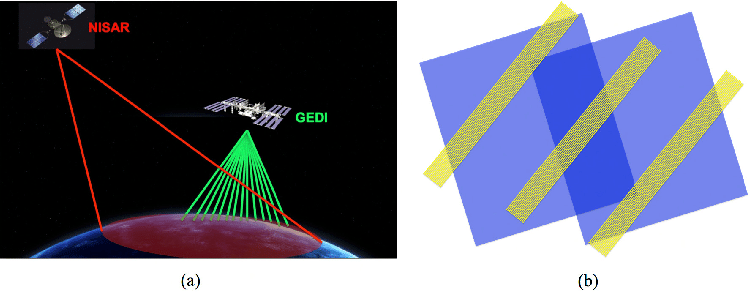
Planned Launch Date: 2022
The NASA-ISRO SAR (NISAR) Mission will measure Earth’s changing ecosystems, dynamic surfaces, and ice masses providing information about biomass, natural hazards, sea level rise, and groundwater, and will support a host of other applications.
NISAR will observe Earth’s land and ice-covered surfaces globally with 12-day regularity on ascending and descending passes, sampling Earth on average every 6 days for a baseline 3-year mission.
Reference- divyanshspacetech.wordpress.com
Monsoon in India: Downsides
The seasonal monsoons rains have already made its way in Southern India and will soon be entering the mid-plateau area (western ghats) of India within two to three days. The monsoon season is truly a blessing for the whole country ,be it crops, irrigation, water bodies or even for hydroelectricity and the most important one is that monsoon rains are used in ground water storage which is essential for multiple purposes.
Every year we expect a good replenishment of monsoon rains from the month of July till the month of September, Indian economy is an agro based economy, our farmers are highly dependent on the monsoon season for their crops. Fifteen percent of India’s GDP is covered by agriculture alone. The farmers look forward to a good monsoon season which not only waters their major crops (Eg-rice, pulses and cotton) but also fills the nearby water bodies to avoid drought like conditions.
But there are some disadvantages as well, on numerous occasions monsoons have become the cause of flooding, the 2019 monsoon created havoc b breathing flood like situation in various parts of Maharashtra which is usually not the case, this damages vehicles, property and much more.eg-During the 2019 Monsoon season specifically during the month of august and September most of the cities in both the states were affected by flood like situations causing rail and road damage, it was said to be the heaviest monsoon in the last 27 years, it cause huge crop damage and also led to deaths. One of the worst cities affected by monsoon almost every year is Mumbai.

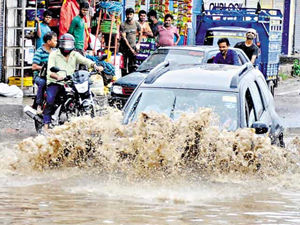
Disease de facto-
It is also one of the biggest causes behind vector diseases like malaria and dengue due to water logging and stagnant water which becomes a house of for these deadly creatures. India has 15 million cases of Malaria on an average every year during the monsoon season with around 16,000 deaths every year.
Water logging and drainage woes-
Monsoon also causes water logging and creates problem in drainage system, leading to blocked drain, overflow of sewage water and many other problems. Heavy monsoon can also be disastrous to crops as well as it can destroy the most essential crops of the coming season which can lead to farmers facing a huge amount of loss.
Landslide and mudslides–
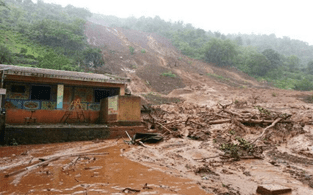
Due to monsoon may areas become prone to landslides, and can destroy villages and farms causing people to lose their livelihood along with their living. This also destroys land and can cause levelling problems.eg- the Malin landslide which took place in a village (Ambegaon Taluka) in Maharashtra caused displacement of so many villagers, the landslide devoured the whole village. The death toll reached 136 and the villagers had to re-built their lives from scratch.
Soil erosion-
Also soil erosion is common as heavy monsoons leads t runoff and in many cases this lead to soil erosion, due to soil erosion many trees are uprooted due to heavy rainfall as their roots have no soil to hold onto and the roots are more exposed to being damaged as the layers of soil drastically have been swiped out due to the torrential rains.
Monsoon comes with its many beneficiaries but too much of it can cause disdain and wreck damage to people, property and much more.
Abdhi Upadhyay
No Room For Sympathy While Sentencing Terror Convicts
It is most heartening and most refreshing to learn that in a latest, landmark and extremely laudable judgment, the top court that is the Supreme Court has very rightly held in Union of India Vs Yasmeen Mohammad Zahid @ Yasmeen in Criminal Appeal No. 1199 of 2019 (Arising out of Special Leave Petition (Cri.) No. 461 of 2019) with Criminal Appeal No. 1200 of 2019 (Arising out of Special Leave Petition (Cri.) No. 6899 of 2019) (D. No. 740 of 2019) delivered on August 2, 2019 that there can be no room for sympathy while sentencing terror convicts. This noteworthy and commendable judgment authored by Justice UU Lalit for himself and Justice Indu Malhotra has very rightly while disagreeing with Kerala High Court judgment restored the sentence of seven years imprisonment awarded to a woman, Yasmeen who was convicted for propagating dreaded international terror group ISIS ideology. Very rightly so!
To start with, the ball is set rolling in para 1 wherein it is held that, “Special leave to appeal granted.” It is then observed in para 2 that, “The judgment and order dated 04.10.2018 passed by the High Court of Kerala in Criminal Appeal No. 506 of 2018 has given rise to these two appeals, one by Union of India against acquittal of A2-Yasmeen Mohammad Zahid @ Yasmeen in respect of offences punishable under Section 125 of the Indian Penal Code (“IPC” for short), Sections 39 and 40 of the Unlawful Activities (Prevention) Act, 1967 (UAPA for short) and also against reduction in sentence ordered by the High Court for offences under Section 38 of the UAPA, while said A2-Yasmeen is in appeal against her conviction and sentence under Section 120B IPC and Section 38 of the UAPA.”
Briefly stated, para 3 then postulates that, “The case of the prosecution, in brief, was as under:
(a) Pursuant to complaint received on 10.07.2016 in Chandera Police Station, Kasaragod preliminary investigation was undertaken which revealed that 14 persons had left India to join Islamic State of Iraq and Syria (ISIS) which is declared to be a terrorist organisation (Serial No. 38 in the First Schedule to the UAPA).
(b) During the course of investigation, A2-Yasmeen was arrested on 01.08.2016 at Indira Gandhi International Airport, New Delhi while she was attempting to travel to Afghanistan along with her child.
(c) According to the prosecution, there was a criminal conspiracy between original Accused No. 1 (husband of A2-Yasmeen) and A2-Yasmeen from 2015 pursuant to which conspiracy A1 and A3 to A15 left India and joined ISIS in Afghanistan; and A2-Yasmeen was an active participant supporting terrorist activities of ISIS; and she had raised funds to further the activities of ISIS and had received funds which were utilised for supporting the activities of ISIS.”
To be sure, it is then envisaged in para 4 that, “Out of 15 accused named in the charge-sheet all the other accused were declared to be absconding and A2-Yasmeen alone was sent up for trial for the offences punishable under Section 120B IPC, Section 125 IPC and under Sections 38, 39 and 40 of the UAPA. The charges were framed against her in respect of said offences. The prosecution examined 52 witnesses and relied upon various documents and material objects. Insofar as the role attributed to A2-Yasmeen was concerned, the relevant witnesses were PWs 4, 6, 7, 8, 11, 12 and 13.”
To put things in perspective, it is then pointed out in para 5 that, “After going through the material on record, the Special Court for the trial of NIA Cases, Ernakulam, found that the prosecution had established the case against A2-Yasmeen and convicted her for the offences punishable under Sections 120B and 125 IPC and under Sections 38, 39 and 40 of the UAPA and sentenced her to suffer rigorous imprisonment for three years, seven years, seven years, seven years and seven years respectively under the aforesaid five counts. A2-Yasmeen was also directed to pay fine in the sum of Rs. 25,000/- under Section 120B IPC, in default whereof she was directed to suffer three months rigorous imprisonment. The judgment and order dated 24.03.2018 passed by the trial court was the subject matter of challenge at the instance of A2-Yasmeen in Criminal Appeal No. 506 of 2018.”
As it turned out, para 6 then discloses that, “The High Court by its judgment under appeal, set aside the conviction and sentence of A2-Yasmeen for the offences punishable under Section 125 IPC, Section 39 and 40 of the UAPA while upholding her conviction for the offence punishable under Section 120B IPC and Section 38 of the UAPA. The High Court however reduced the substantive sentence from three years and seven years to one year and three years respectively on said two counts. The other elements, namely, sentence of fine and the default sentence were not varied or modified by the High Court.”
Needless to say, para 7 then illustrates that, “During the course of its judgment, the High Court observed as under:-
“The aforesaid evidence of PW4, PW6, PW18 and PW21 who had attended the class of 1st accused clearly proves the propagation of ideology of IS. Therefore there is absolutely no difficulty in assuming that the class attended by A2 in the house of PW7 and PW8 and taken by A1 was with reference to IS and the Jihad, which according to them was a war against non Muslims…………….
The prosecution has thus proved that the account ending with 251 is of Sonia Sebastian who is the wife of the 1st accused and the amount was withdrawn from the said account on various dates from 3.6.2016 to 22.07.2016 by the 2nd accused. Contention is that the money was deposited by A1 in the account of Sonia Sebastian and the ATM card given to Sonia Sebastian was used by A2 for collecting the amounts. It is stated that the CCTV footage would show that the 2nd accused has withdrawn money from the bank accounts.
The 2nd accused was arrested on 1.8.2016 and she was under judicial custody in Kannur women prison. At the time of admission, her personal belongings were entered in a register. Among the articles, there were two Idea SIM cards. The SIM cards were seized by PW41 as per P29 mahazar and produced as MO13 and MO14. The articles also contained a memory card marked as MO15. The memory card contained revelation videos and videos relating to ISIS, audio speech of Anwar Alwaki, a brief guide to Islamic State and women of Islamic State. This according to the prosecution further proved that she was preparing to go to Afghanistan at the instance of the 1st accused. When these facts are proved, the question is, whether the accused had committed any such offence.”
In the backdrop of these proved facts, the High Court then considered whether the offences alleged against A2-Yasmeen under the aforesaid five counts were made out. It was observed that there was evidence to prove that A2 had attended classes of Jihad propagating ISIS ideology by original Accused No. 1 but there was nothing to indicate that she had taken any steps to wage a war or had attempted or abetted waging of such war against any Asiatic Power in alliance with or at peace with Government of India and as such there was no material to sustain the charge under Section 125 IPC. As regards charge under Section 38 of the UAPA it was observed as under:
There is evidence to prove that the 2nd accused was associated with A1 who propagated ISIS ideology and had gone even to the extent of joining him. Her attempt to proceed to Afghanistan was with a clear intention to meet 1st accused and to involve in IS related activities. Therefore, she is punishable under Section 38(2)”.”
It would be pertinent to mention here that it is then observed in para 8 that, “In respect of charge under Section 39 of the UAPA the High Court found that though A2 was certainly influenced by the ideology professed by A1, she herself had not arranged any of the acts falling under Clauses (a) to (c) of Section 39. The High Court went on to observe as under:
She had already become a member of the organization as contemplated under Section 38 of the Act. If a person is punishable under Section 38, Section 39 becomes superfluous”.”
Not stopping here, it is then added in para 9 that, “As regards charge under Section 40 of the UAPA, the High Court found that she was not raising any funds for terrorist organisation; the amounts she received were for personal use and for purchasing tickets for travel and other arrangements for herself and for her son and as such charge under Section 40 of the UAPA was not made out.”
Suffice it to say, para 10 then holds that, “Concluding that A2-Yasmeen was guilty of the offences punishable under Section 120B IPC and Section 38 of the UAPA, the High Court considered the case with a lenient view and reduced the substantive sentences in respect of these two offences as stated hereinabove.”
Going forward, while highlighting the importance of mens rea in convicting in such cases, it is then enunciated in para 15 that, “The evidence on record, as culled out by the High Court in the observations quoted hereinabove establishes that A1 was propagating the ideology of IS and advocating among other things, war against non-Muslims; that the classes were attended by A2-Yasmeen; that the videos relating to such speeches were found on her person when she was arrested; and that she was attempting to go to Afghanistan at the instance of A1. These features definitely point the existence of mens rea. The Courts below were therefore absolutely right in recording conviction against A2 in respect of offences under Section 120B IPC and Section 38 of the UAPA. The submissions advanced by Mr. Krishnan, therefore, cannot be accepted and the appeal preferred by A2-Yasmeen must fail.”
Interestingly enough, para 16 then elaborates stating that, “We now turn to the appeal preferred by the Union to see whether the acquittal of A2 for offences under Section 125 of IPC and Sections 39 and 40 of the UAPA was justified. As regards the offence under Section 125 of the IPC, the matter was rightly appreciated by the High Court and we are in complete agreement with the view taken by the High Court.”
Simply put, it is then observed further in this same para 16 that, “Coming to Sections 39 and 40 of the UAPA, these provisions require certain elements in respect of which there is no material evidence on record. For Section 39 of the UAPA to get attracted, support to a terrorist organisation must be within the meaning of either of three clauses viz clauses (a), (b) and (c) of sub Section (1). Similarly, Section 40 requires certain elements on satisfaction of which a person can be said to be guilty of raising funds for a terrorist organisation. None of those features are established as against A2-Yasmeen. The acquittal in respect of charges under Sections 39 and 40 was therefore rightly recorded by the High Court.”
But in the same vein, adding a rider, it is then clarified in para 17 that, “We must however state that the High Court was not right in observing “if a person is punishable under Section 38, Section 39 becomes superfluous”. In our view, the scope of these two Sections and their fields of operation are different. One deals with association with a terrorist organisation with intention to further its activities while the other deals with garnering support for the terrorist organisation, not restricted to provide money; or assisting in arranging or managing meetings; or addressing a meeting for encouraging support for the terrorist organisation.”
Importantly, para 18 then states that, “Lastly, we come to the quantum of sentence in respect of offences where A2-Yasmeen has been found guilty by both the Courts.”
More importantly and more crucially, while rapping the High Court on its knuckles, it is then held in para 19 that, “The only ground that weighed with the High Court while reducing the sentence was sympathy. The material on record indicates the role played by A2-Yasmeen. Even at the time of her arrest, while leaving for Afghanistan, certain objectionable material was found on her person. The intensity of her participation and involvement were clearly made out. In the circumstances, there was no room for invoking sympathetic considerations. The quantum of sentence imposed by the trial court was absolutely correct and adequate.”
Finally and most importantly, it is then held in para 20 that, “In the premises,
A] Appeal preferred by A2-Yasmeen challenging her conviction and sentence under Section 120B IPC and Section 38 of the UAPA is dismissed.
B] Appeal preferred by the Union challenging the acquittal of A2-Yasmeen in respect of offences under Section 125 of the IPC and Sections 39 and 40 of the UAPA is dismissed.
C] Appeal preferred by the Union as regards reduction of sentence awarded to A2-Yasmeen for offences under Section 120B IPC and Section 38 of the UAPA is allowed. The order passed by the High Court in that behalf is set aside and the sentence imposed by the trial court in respect of offences under Section 120B IPC and Section 38 of the UAPA against A2 is restored.”
To summarise, it must be said with certitude that the Apex Court in this latest, landmark and extremely laudable judgment has very rightly reiterated like it has earlier also in many cases that there must be no room for sympathy while convicting the terror convicts. Moreover, it minced no words to hold that in the circumstances, there was no room for invoking sympathetic considerations. So no wonder that the Apex Court set aside the High Court order to reduce the sentence of imprisonment while also restoring the sentence imposed by the Trial Court in respect of offences under Section 120B IPC and Section 38 of the UAPA against A2! Very rightly so! Terrorism is the most heinous crime directed not against one or few individuals unlike other crimes like murder or rape or dacoity or robbery but against the entire humanity which affects all of us and is the biggest threat to our nation as a whole! So there has to be zero tolerance for it! Any display of sympathy will only boost terrorism which no country can dare to ever afford under any circumstances come what may as it will certainly be the surest recipe of unmitigated disaster, destruction and death!
Sanjeev Sirohi, Advocate,
s/o Col BPS Sirohi,
A 82, Defence Enclave,
Sardhana Road, Kankerkhera,
Meerut – 250001, Uttar Pradesh.
Evidence of a Solitary Witness in a Criminal Trial Requires Heightened Scrutiny
On expected lines and as anticipated, the Supreme Court has most recently on August 6, 2019 in a latest judgment titled Jagdish and another vs The State Of Haryana in Criminal Appeal No(s). 1864 of 2009 has once again very rightly reiterated like many times in the past that the evidence of a solitary witness in a criminal trial requires heightened scrutiny. It is not that the evidence of solitary witness in a criminal trial is not acceptable. It is certainly acceptable but what the Apex Court has wished to make it amply clear in this noteworthy case like in the past is only that the evidence of a solitary witness must be subjected to heightened scrutiny before accepting it and it cannot be accepted just at face value!
To start with, this notable judgment authored by Justice Navin Sinha for himself and Justice Ashok Bhushan sets the ball rolling by first and foremost pointing out briefly in para 1 that, “The two appellants have been convicted under Sections 302, 149 and 148 of the Indian Penal Code (hereinafter referred to as ‘IPC’). Originally there were 13 accused. Only six were charge-sheeted. Two of them were tried by the juvenile court. Seven were summoned under Section 319. The Trial Court convicted three persons. One of them, Ishwar has been acquitted by the High Court.”
To be sure, para 2 then brings out that, “Sri S.R. Singh, learned senior counsel, on behalf of the appellants submits that once the other accused have been acquitted, the two appellants alone cannot be convicted with the aid of Section 149 of the Indian Penal Code. The High Court erred in convicting with the aid of Section 34 in absence of a charge framed under that Section. There is no evidence of any common intention, displaying a prior meeting of minds to commit the assault. PW-1 and PW-8 were not eye witnesses. They reached after the occurrence. Their claim to be high witnesses is highly improbable from their own evidence. An alternative submission was made that in any event at best it was a case for conviction under Section 304 Part-II I.P.C. Reliance was placed on Dalip Singh vs. State of Punjab, AIR 1953 SC 364 : 1954 SCR 145, and Sakharam Nangare vs. State of Maharashtra, 2012 (9) SCC 249.”
Quite the contrary, para 3 then reveals that, “Learned counsel for the State submitted that PW-1 and PW-8, the eye-witnesses to the occurrence had stated that Appellant no. 2 made the fatal assault on the head of the deceased with a lathi while appellant no. 1 also assaulted the deceased. The parties resided in the same locality and there is evidence of a street light. Relying on Khem Karan and others vs. State of U.P. and another, 1974 (4) SCC 603, it was submitted that because PW-1 was the sister of the deceased, the credibility of her evidence as an eye-witness to the occurrence cannot be doubted to grant acquittal in the nature of materials available on the records.”
As it turned out, it is then illustrated in para 4 that, “We have considered the submissions on behalf of the parties and perused the materials on record. The parties resided in the same locality and were known to each other. Animosity existed between them because the son of the second appellant had written love letters to the daughter of PW-1. Earlier an altercation had taken place between the parties on 20.05.1995 leading to a police case being lodged against both sides. There was another incident on 12.06.1995 for which the appellants and the deceased were proceeded with under Sections 107, 151 Cr.P.C. The deceased had been released on bail and was returning from the house of PW-1 on 16.06.1995 at about 9.00 P.M. when the assault is stated to have taken place.”
While elaborating further, it is then pointed out in para 5 that, “PW-8 and PW-1 are husband and wife holding arms licence in their individual names. They are stated to have been accompanied to the place of occurrence by Kamla the sister of PW-8 and one Pali Ram who was also an arms licensee. Surprisingly, the latter two have been given up by the prosecution and have not been examined. All four are stated to have moved away from the place of assault out of fear, as claimed. If three of them were possessed of weapons there has to be an explanation why they did not act in self defence when the assault is alleged by lathis, gandasi and guns. It is also difficult to accept that her husband PW-8 and Palli continued to hide in fear while PW-1 accompanied by her sister-in-law alone shortly returned to the place of occurrence to check on the deceased. An additional fact which is not only improbable but highly unnatural according to normal societal rural customs and mores is that PW-1 accompanied by her sister-in-law alone went to the police station at 3.00 A.M. a kilometer away, to lodge the F.I.R. while her husband and Pali Ram who was staying with them remained at home.”
Going forward, it is then brought out in para 6 that, “In the F.I.R. PW-1 made generalized allegations of assault by all the 13 accused who are stated to have surrounded the deceased. But her court statement was more specific with regard to the nature of assault made by each of the accused. A total of 11 injuries were found on the person of the deceased. The first injury was bone deep in the right parieto occipital region with damage to brain and pieces of bone in the wound. There was injury on the neck, lacerated wound over the right wrist joint over the middle of forearm, on the left side of the chest wall, over the iliac crest, over the left scapular region with a linear incision due to sharp weapon, over left deltoid region and lacerated wound over the right knee left ankle and left forearm. The two appellants were armed with lathis by which an incised wound could not have been caused. In any event, the number of injuries on the deceased leaves us satisfied that it was the result of a mob assault and not an assault by the two appellants alone.”
To put things in perspective, it is then acknowledged by the Apex Court in para 7 that, “The High Court has committed an error of record by considering PW-8 to be an eye witness without any discussion when his presence at the time of occurrence has been disbelieved by the Trial Court. With regard to PW-1, the Trial Court has itself observed that her deposition “does not contain the entire truth and it makes the court to sit up and to find out the kernel out of the chaff”. This observation assumes significance in view of the acquittal of the remaining accused by the Trial Court itself, excluding the juveniles.”
More importantly, the Apex Court then poses a question, sounds a note of caution and while further calling for greater scrutiny of solitary witness as rightly pointed out in para 8 wax eloquently to state that, “The question that arises to our mind is that in the mob assault by 13 persons who had surrounded the deceased at night, PW-1 was the sole eye-witness. Even if a light was burning some of them undoubtedly must have had their back to PW-1 making identification improbable if not impossible. The witness has been severely doubted both by the trial court and the High Court to grant acquittal to the other accused. Can the evidence of a solitary doubtful eye witness be sufficient for conviction? We may have a word of caution here. Conviction on basis of a solitary eye witness is undoubtedly sustainable if there is reliable evidence cogent and convincing in nature along with surrounding circumstances. The evidence of a solitary witness will therefore call for heightened scrutiny. But in the nature of materials available against the appellants on the sole testimony of PW-1 which is common to all the accused in so far as assault is concerned, we do not consider it safe to accept her statement as a gospel truth in the facts and circumstances of the present case. If PW-1 could have gone to the police station alone with her sister-in-law at an unearthly hour, there had to be an explanation why it was delayed by six hours. Given the harsh realities of our times we find it virtually impossible that two women folk went to a police station at that hour of the night unaccompanied by any male. These become crucial in the background of the pre-existing enmity between the parties leading to earlier police cases between them also. The possibility of false implication therefore cannot be ruled out completely in the facts of the case.”
Be it noted, it is then observed in para 9 that, “The High Court concluded that the appellants alone were the assailants of the deceased. Ishwar is also stated to have assaulted with a lathi capable of causing lacerated wounds. We find it difficult to hold that the appellants were any differently situated than Ishwar. The susceptibility of eleven injuries, including incised wounds, by two accused is considered highly improbable.”
While citing the relevant case laws, it is then pointed out in para 10 that, “Therefore, in the entirety of the facts and circumstances of the case, the relationship between PW-1 and the deceased, the existence of a previous animosity, we do not consider it safe and cannot rule out false implication to uphold the conviction of the appellants on the evidence of a doubtful solitary witness, as observed in State of Rajasthan vs. Bhola Singh and Anr., AIR 1994 SC 542, (Cri. Appeal No. 65 of 1980 decided on 25.8.1993):
‘4. From the above-stated facts, it can be seen that the case is rested entirely on the solitary evidence of P.W.1. The High Court has pointed out several infirmities in the evidence of P.W.1. It is well-settled that if the case is rested entirely on the sole evidence of eye-witness, such testimony should be wholly reliable. In this case, occurrence admittedly took place in the darkness….’”
Furthermore, it is then envisaged in para 11 that, “In Lallu Manjhi and another vs. State of Jharkhand, (2003) 2 SCC 401, it was observed that if ten persons were stated to have dealt with blows with their respective weapons on the body of the deceased, and that if each one of them assaulted then there would have been minimum of ten injuries on the person of the deceased. In the present case, as noticed there are 11 injuries on the person of the deceased. Giving the benefit of doubt granting acquittal, it was observed as follows:
’13…..The version of the incident given by the sole eyewitness who is also an interested witness on account of his relationship with the deceased and being inimically disposed against the accused persons is highly exaggerated and not fully corroborated by medical evidence. The version of the incident as given in the Court is substantially in departure from the earlier version as contained and available in the first information report. We cannot, therefore, place reliance on the sole testimony of Mannu (PW9) for the purpose of recording the conviction of all the accused persons.’”
Now let us turn to the concluding paras. Para 12 holds that, “We therefore find the order of the High Court to be unsustainable and accordingly set it aside. The appellants are acquitted. They are directed to be released forthwith if they are not required in any other case.” Lastly, it is then held in para 13 that, “The appeal is allowed.”
In essence, this notable judgment like in the past has fully and firmly endorsed the long held position that conviction can be based on the evidence of a solitary witness but it requires heightened scrutiny. There can be no denying it! It is only after strict scrutiny that evidence should be accepted in such cases!
Sanjeev Sirohi, Advocate,
s/o Col BPS Sirohi,
A 82, Defence Enclave,
Sardhana Road, Kankerkhera,
Meerut – 250001, Uttar Pradesh.
Independence and Fearlessness of Judiciary not only Expected from Superior Courts but also from District Judiciary

It is most pleasing, most heartening and most refreshing to learn that the highest court of India that is the Supreme Court has most recently on September 26, 2019 in a latest, landmark and extremely laudable judgment titled Krishna Prasad Verma (D) Thr. LRs Vs State of Bihar & Ors in Civil Appeal No. 8950 of 2011 has minced absolutely no words to underscore clearly, convincingly and categorically the independence, sanctity and fearlessness of judiciary. No nation can function smoothly where judiciary does not function independently. While quashing disciplinary action taken against a judicial officer, the Supreme Court took a strong and commendable stand that independence and fearlessness of judiciary is not only expected at the level of the superior courts but also from the district judiciary.
To start with, this extremely commendable judgment authored by Justice Deepak Gupta (oral) for himself and Justice Aniruddha Bose in its introductory part that is para 1 of this judgment sets the flow by first and foremost observing most rightly that, “In a country which follows the Rule of Law, independence of the judiciary is sacrosanct. There can be no Rule of Law, there can be no democracy unless there is a strong, fearless and independent judiciary. This independence and fearlessness is not only expected at the level of the Superior Courts but also from the District judiciary.” Who can deny this? All those who form a part of the District judiciary must also always bear this in mind while deciding cases!
While continuing in the same vein and taking it further, it is then pointed out in para 2 that, “Most litigants only come in contact with the District judiciary. They cannot afford to come to the High Court or the Supreme Court. For them the last word is the word of the Magistrate or at best the Sessions Judge. Therefore, it is equally important, if not more important, that the judiciary at the District Level and at the Taluka level is absolutely honest, fearless and free from any pressure and is able to decide cases only on the basis of the facts on file, uninfluenced by any pressure from any quarters whatsoever.”
To be sure, it is then further pointed out in para 3 that, “Article 235 of the Constitution of India vests control of the subordinate Courts upon the High Courts. The High Courts exercise disciplinary powers over the subordinate Courts. In a series of judgments, this Court has held that the High Courts are also the protectors and guardians of the judges falling within their administrative control. Time and time again, this Court has laid down the criteria on which actions should be taken against judicial officers. Repeatedly, this Court has cautioned the High Courts that action should not be taken against judicial officers only because wrong orders are passed. To err is human and not one of us, who has held judicial office, can claim that we have never passed a wrong order.”
It is remarkable to note that the top court in this extremely landmark judgment has very candidly admitted in para 3 that to err is human and made it amply clear that no Judge of Supreme Court also can claim that he/she has never passed a wrong order! This is really laudable and all Judges even of the Supreme Court and even the Chief Justice of India must always remember this! There can be no denying it!
Needless to say, it is then also however, made absolutely clear in para 4 that, “No doubt, there has to be zero tolerance for corruption and if there are allegations of corruption, misconduct or of acts unbecoming a judicial officer, these must be dealt with strictly. However, if wrong orders are passed that should not lead to disciplinary action unless there is evidence that the wrong orders have been passed for extraneous reasons and not because of the reasons on the file.”
Briefly stated, it is then held in para 5 that, “We do not want to refer to too many judgments because this position has been laid down in a large number of cases but it would be pertinent to refer to the observations of this Court in Ishwar Chand Jain Vs. High Court of Punjab & Haryana and another, (1988) 3 SCC 370, wherein this Court held as follows:
“14. Under the Constitution the High Court has control over the subordinate judiciary. While exercising that control it is under a constitutional obligation to guide and protect judicial officers. An honest strict officer is likely to have adversaries in the mofussil courts. If complaints are entertained on trifling matters relating to judicial orders which may have been upheld by the High Court on the judicial side no judicial officer would feel protected and it would be difficult for him to discharge his duties in an honest and independent manner. An independent and honest judiciary is a sine qua non for rule of law. If judicial officers are under constant threat of complaint and enquiry on trifling matters and if High Court encourages anonymous complaints to hold the field the subordinate judiciary will not be able to administer justice in an independent and honest manner. It is therefore imperative that the High Court should also take steps to protect its honest officers by ignoring ill-conceived or motivated complaints made by the unscrupulous lawyers and litigants. Having regard to facts and circumstances of the instant case we have no doubt in our mind that the resolution passed by the Bar Association against the appellant was wholly unjustified and the complaints made by Shri Mehlawat and others were motivated which did not deserve aany credit. Even the vigilance Judge after holding enquiry did not record any finding that the appellant was guilty of any corrupt motive or that he had not acted judicially. All that was said against him was that he had acted improperly in granting adjournments.””
As a corollary, it is then laid down in para 6 that, “Thereafter, following the dicta laid down in Union of India & Ors. Vs. A.N. Saxena, (1992) 3 SCC 124 and Union of India & Ors. Vs. K.K. Dhawan, (1993) 2 SCC 56, this Court in P.C. Joshi Vs State of U.P. & Ors. (2001) 6 SCC 491, held as follows:
“7. In the present case, though elaborate enquiry has been conducted by the enquiry officer, there is hardly any material worth the name forthcoming except to scrutinize each one of the orders made by the appellant on the judicial side to arrive at a different conclusion. That there was possibility on a given set of facts to arrive at a different conclusion is no ground to indict a judicial officer for taking one view and that too for alleged misconduct for that reason alone. The enquiry officer has not found any other material, which would reflect on his reputation or integrity or good faith or devotion to duty or that he has been actuated by any corrupt motive. At best, he may say that the view taken by the appellant is not proper or correct and not attribute any motive to him which is for extraneous consideration that he had acted in that manner. If in every case where an order of a subordinate court is found to be faulty a disciplinary action were to be initiated, the confidence of the subordinate judiciary will be shaken and the officers will be in constant fear of writing a judgment so as not to face a disciplinary enquiry and thus judicial officers cannot act independently or fearlessly. Indeed the words of caution are given in K.K. Dhawan case and A.N. Saxena case that merely because the order is wrong or the action taken could have been different does not warrant initiation of disciplinary proceedings against the judicial officer. In spite of such caution, it is unfortunate that the High Court has chosen to initiate disciplinary proceedings against the appellant in this case.””
While endorsing this again, it is then pointed out in para 7 that, “In Ramesh Chander Singh Vs. High Court of Allahabad & Anr. (2007) 4 SCC 247, a three-judge Bench of this Court, after considering the entire law on the subject, including the authorities referred to above, clearly disapproved the practice of initiating disciplinary proceedings against the officers of the district judiciary merely because the judgment/orders passed by them are wrong.”
More importantly, it is then made clear in para 8 that, “No doubt, if any judicial officer conducts proceedings in a manner which would reflect on his reputation or integrity or there is prima facie material to show reckless misconduct on his part while discharging his duties, the High Court would be entitled to initiate disciplinary cases but such material should be evident from the orders and should also be placed on record during the course of disciplinary proceedings.”
On a different note, it is then pointed out in para 9 that, “Coming to the facts of this case there are two charges against the appellant, who was a judicial officer. The charges are as follows:
CHARGE-1
“You, Sri Krishna Prasad Verma while functioning as Additional Distt. & Sessions Judge, Chapra granted bail to M/s Bishwanath Rai and Pradeep Rai on 11.7.2002 in S.T. No. 514 of 2001 arising out of Chapra (M) Khatra P.S. Case No. 453/2000 registered U/s 302/34 I.P.C. notwithstanding the fact that the bail petitions of Bishwanath Rai was earlier rejected by this Hon’ble Court vide order dated 27.3.2001 and 4.7.2001 passed in Cr. Misc. No. 34144/2000 and 15626/2001 respectively, that of Sheo Nath Rai vide order 13.2.2001 and 26.11.2001 passed in Cr. Misc. No. 3387/2001 and Cr. Misc. No. 30563/2001 respectively and that of Pradeep Rai vide order dated 28.2.2001 passed in Cr. Misc. No. 3599/2001.
The aforesaid act on your part is indicative of some extraneous consideration which tantamount to gross judicial impropriety, judicial indiscipline, lack of integrity, gross misconduct and an act unbecoming of a Judicial Officer.
CHARGE-2
You, Sri Krishna Prasad Verma while functioning as Additional District and Sessions Judge, Chapra with an intent to acquit Raju Mistry, the main accused in N.D.P.S. Case No. 15/2000 arising out of Revealganj P.S. Case No. 137/2000 (G.R. No. 1569 of 2000) registered under sections 22, 23 and 24 of the Narcotics Drugs and Psychotropic Substances Act, 1985 closed the proceeding in great haste resulting in acquittal of Raju Mistry, who was charged of driving a Jeep bearing No. W.B.C. 4049 carrying 90 Kg. Charas, without exhausting all coercive methods to record the statement of the Investigating Officer of the case as there is no proof on the record to show that the non-bailable warrant issued against the said Investigating Officer was ever served on him.
The aforesaid act on your part is indicative of some extraneous consideration which tantamount to gross judicial impropriety, judicial indiscipline, lack of integrity, gross misconduct and an act unbecoming of a Judicial Officer.””
To put things in perspective, it is then elaborated upon in para 10 that, “As far as the first charge is concerned, a major fact, which was not considered by the enquiry officer, the disciplinary authority as well as the High Court was that the Additional Public Prosecutor, who had appeared on behalf of the State had not opposed the prayer of the accused for grant of bail. In case, the public prosecutor does not oppose the bail, then normally any Judge would grant bail.”
What’s more, it is then stated in para 11 that, “The main ground to hold the appellant guilty of the first charge is that the appellant did not take notice of the orders of the High Court whereby the High Court had rejected the bail application of one of the accused vide order dated 26.11.2001. It would be pertinent to mention that the High Court itself observed that after framing of charges, if the non-official witnesses are not examined, the prayer for bail could be removed, but after moving the Lower Court first. The officer may have been guilty of negligence in the sense that he did not carefully go through the case file and did not take notice of the order of the High Court which was on his file. This negligence cannot be treated to be misconduct. It would be pertinent to mention that the enquiry officer has not found that there was any extraneous reason for granting bail. The enquiry officer virtually sat as a court of appeal picking holes in the order granting bail.”
Be it noted, it is then illustrated in para 12 that, “It would be important to mention that it seems that later it was brought to the notice of the appellant that he had not taken note of the order of the High Court while granting bail on 11.07.2002. Thereafter, he issued notice to all the three accused on 23.08.2002 i.e. within less than two months and cancelled the bail granted to all the three accused on 11.07.2002. If he had made the mistake of not seeing the whole file, on that being brought to his notice, he corrected the mistake. After the appellant cancelled the bail and the accused were again arrested, they again applied for bail and this bail application was rejected by the appellant on 18.12.2002.”
What we then see being unearthed is pointed out in para 13 that, “After rejection of the bail application of the accused, two out of three accused moved the High Court. The High Court granted bail to one of the accused and the bail application of the other was rejected, not on merits but on the ground that he did not disclose the fact that he had earlier moved the High Court for grant of bail. This itself is clear indicator of the fact that probably even the order passed by the appellant is not an incorrect one.”
Moving on, it is then further pointed out cogently in para 14 that, “Coming to the second charge, which is under the Narcotics Drugs and Psychotropic Substances Act, 1985 (hereinafter referred to as the “NDPS”). On 18.07.2002 the appellant, a Special Judge, closed the evidence of the prosecution which resulted in material witnesses not being examined and consequently the accused was acquitted. As far as this obligation is concerned, the enquiry officer on the basis of the statements of two clerks of the Court has made lengthy observations that the appellant did not send any communication to the Superintendent of Police, the District Magistrate and other authorities to ensure the production of the witnesses. According to the enquiry officer, this being a serious matter, the evidence should not have been closed and the appellant should have made efforts to approach the senior officials to get the witnesses produced. The Code of Criminal Procedure or the NDPS Act do not provide for any such procedure. It is the duty of the prosecution to produce the witnesses. Even in this case, interestingly, the Public Prosecutor had made a note on the side of the daily order-sheet that he is unable to produce the witnesses so the evidences may be closed. We fail to understand how the appellant has been hanged whereas no action has been taken or recommended against the Public Prosecutor concerned. We are constrained to note that the enquiry officer, while conducting the enquiry, has noted, while considering the arguments of the delinquent official, that he had raised a plea that he closed the evidence because the Public Prosecutor had made the statement, but while holding the appellant guilty of misconduct no reference has been made to the statement of the Public Prosecutor.”
Interestingly enough, it is then enunciated in para 15 that, “We may also note that the case of the appellant is that he had given 18 adjournments for production of the witnesses to the prosecution in the NDPS case. Such a judicial officer is between the devil and the deep sea. If he keeps on granting adjournments then the High Court will take action against him on the ground that he does not dispose of his cases efficiently and if he closes the evidence then the High Court will take action on the ground that he has let the accused go scot-free. That is not the purpose of Article 235 of the Constitution of India. That is why we again repeat that one of the responsibilities of the High Court on the administrative side is to ensure that the independence of the District judiciary is maintained and the High Court acts as a guardian and protector of the District judiciary.”
More consequentially, it is then enunciated in para 16 that, “We would, however, like to make it clear that we are in manner indicating that if a judicial officer passes a wrong order, then no action is to be taken. In case a judicial officer passes orders which are against settled legal norms but there is no allegation of any extraneous influences leading to the passing of such orders then the appropriate action which the High Court should take is to record such material on the administrative side and place it on the service record of the judicial officer concerned. These matters can be taken into consideration while considering career progression of the concerned judicial officer. Once note of the wrong order is taken and they form part of the service record these can be taken into consideration to deny selection grade, promotion etc., and in case there is a continuous flow of wrong or illegal orders then the proper action would be to compulsorily retire the judicial officer, in accordance with the Rules. We again reiterate that unless there are clear-cut allegations of misconduct, extraneous influences, gratification of any kind etc., disciplinary proceedings should not be initiated merely on the basis that a wrong order has been passed by the judicial officer or merely on the ground that the judicial order is incorrect.”
Finally, it is then held in the last para 17 that, “In view of the above discussion, we allow the appeal, set aside the judgment of the High Court and quash all the orders passed against the delinquent officer. He is directed to be given all consequential benefits on or before 31.12.2019. The appeal is allowed with costs of Rs 25,000/-.”
In summary, it is a very well written judgment which leaves no room for doubt whatsoever! All the Judges of the District Judiciary must abide in letter and spirit what has been held so rightly and brilliantly in this extremely landmark judgment by the top court! All the Superior Courts must also follow it and respect the District judiciary as directed in the said order!
Sanjeev Sirohi, Advocate,
s/o Col BPS Sirohi,
A 82, Defence Enclave,
Sardhana Road, Kankerkhera,
Meerut – 250001, Uttar Pradesh.
Rights of Victims and Society at Large not Subservient to Rights of Accused

It has to be said right at the outset that a two Judge Bench of the Apex Court comprising of Justice Navin Sinha and Justice BR Gavai just recently on October 4, 2019 in Fainul Khan vs State of Jharkhand and another in Criminal Appeal No(s). 937 of 2011 with Criminal Appeal No(s). 938 and 939 of 2011 has very rightly maintained that the rights of victim and society at large cannot be subservient to rights of accused. The accused certainly has the right to get a fair trial but what also cannot be denied is that the rights of victim and society at large cannot be accorded any inferior position. There has to be a fair and proper balance between the rights of victim and society at large on the one hand and the rights of the accused on the other hand.
To start with, this notable judgment authored by Justice Navin Sinha for himself and Justice BR Gavai first and foremost set the ball rolling by pointing out in para 1 that, “The appellants are aggrieved by their conviction under Section 302/149 of the Indian Penal Code (IPC) sentencing them to rigorous imprisonment for life, along with conviction under Sections 323/149 and 147 IPC, sentencing them to varied terms of imprisonment under the same. The sentences have been directed to run concurrently.” The appellants had high hopes that their sentence would be reduced. This alone explains why they preferred this appeal!
To recapitulate, it is then unfolded in para 2 that, “The occurrence is said to have taken place on 01.11.1983 at about 06.30 PM. The accused were variously armed with spears and lathis. P.W.7 and 8 are stated to be injured eye witnesses. P.W.6 also claimed to be an eye witness. The police report was lodged by P.W.8 at the hospital.”
While presenting the appellant’s version, it is then pointed out in para 3 that, “Learned Senior Counsel Shri Sidharth Luthra making the lead arguments on behalf of the appellants submitted that charge was framed under Sections 302/149 and 323/149 IPC against six persons. But the charge framed under Section 147 was defective being against four persons only and without the aid of Sections 141 and 146. It was next submitted that the appellants have been seriously prejudiced in their defence because proper opportunity to defend was denied under Section 313 of the Code of Criminal Procedure, 1973 (Cr.P.C.) as the incriminating questions put to them were extremely casual and perfunctory in barely two pages. All relevant questions with regard to the accusations were not put to the appellants, denying them the opportunity to present their defence. It cannot be considered as a mere irregularity, to hold that no prejudice has been caused to the appellants. Emphasising the inconsistencies in the prosecution evidence it was submitted that P.W.7 claims lathi injury on his thigh and leg, but P.Ws6 and 8 are silent on the role of appellant Fainul Khan, and appellant Mir Shaukat is stated to have assaulted on the thigh of P.Ws.6 and 7 when according to the F.I.R. he hit on the head of P.W.8. Reliance in support of the submissions was placed on Masalti vs. State of U.P., AIR 1965 SC 202, Ranvir Yadav vs. State of Bihar, (2009) 6 SCC 595 and Samsul Haque vs. State of Assam, (2019) SCC Online 1093; 2019 (11) SCALE 458.”
Furthermore, para 4 says that, “It was next submitted that P.W.6 was not an eye witness to the assault. He had arrived upon hearing the commotion after the appellants had left and the deceased was lying on the ground. P.W.6 also does refer to the presence of P.W.7 at the place of occurrence.” Also, para 5 then states that, “The evidence of P.Ws 6 and 8 to be injured eye witnesses was also challenged in absence of any injury report with regard to them. False implication of the appellants could not be ruled out in view of previous enmity having been admitted by the prosecution witnesses. P.W.8 deposed that the deceased was assaulted on his head from behind and fell on his face, but no facial injury has been found on the deceased.”
Not stopping here, it is then illustrated in para 6 that, “The deceased was assaulted with a spear by accused Siddiq and Zabbar. The allegations of assault by the appellants on the deceased with a lathi are omnibus, since only one bruise has been found on the upper arm. There existed no common object because in that event nothing prevented the appellants from individual assaults each on a sensitive part of the body of the deceased, such as the head. Alternatively, the three appellants at best may be liable for a lesser offence relying on Najabhai Desurbhai Wagh vs. Valerabhai Deganbhai Vagh and Ors., (2017) 3 SCC 261.”
On the contrary, it is then pointed out in para 7 that, “Learned counsel for the State submitted that there was no lacunae in the examination of the accused under Section 313 Cr.P.C. In any event the appellants have not been able to demonstrate any prejudice. Moreover this objection cannot be raised at the present belated stage when it had not been raised at any earlier stage. Reliance was placed on Shobhit Chamar vs. State of Bihar, (1998) 3 SCC 455 and Fahim Khan vs. State of Bihar, (2011) 13 SCC 142.”
What’s more, it is then argued on behalf of the State by the learned counsel in para 8 that, “The absence of any injury report with regard to P.Ws.7 and 8 may at best be a case of defective investigation. It cannot discredit them as injured eye witnesses in view of the nature of their oral evidence and that of P.W.11, the officer-in-charge of the Kisko police station where the deceased and the injured were taken for treatment. There are concurrent findings with regard to the presence of the appellants. There is ample evidence of the appellants sharing a common object with the co-accused.”
After hearing both the parties, it is then observed by the Bench in para 9 that, “We have considered the submissions on behalf of the parties as also perused the materials on record. Originally there were six accused. Two of them have since been deceased and the fate of one is not known. Section 464, Cr.P.C provides as follows:-
“464. Effort of omission to frame, or absence of, or error, in charge. – (1) No finding, sentence or order by a Court of competent jurisdiction shall be invalid merely on the ground that no charge was framed or on the ground of any error, omission or irregularity in the charge including any misjoinder of charges, unless, in the opinion of the Court of appeal, confirmation or revision, a failure of justice has in fact been occasioned thereby.
xxx”
The appellants were well aware that six of them were charged together for a common assault under Sections 302/149 and 323/149 because of their sharing a common object. The appellants were also aware that two of the accused were carrying a deadly weapon, spears, and which were used for assault. We are therefore of the considered opinion that no prejudice has been caused to the appellants and the omission by the court in framing charge under Section 147 alone against four persons only was a mere inadvertent omission. The presence of one bruise injury on the deceased is also not considered relevant in the facts of the case. The objection about a defective charge, without any evidence of the prejudice caused, has been raised for the first time in the present appeal and for that reason also merits no consideration.”
Be it noted, it is then envisaged in para 10 that, “P.W.8 and the deceased were going together when they were surrounded and assaulted by the accused persons. We do not find any lacunae in the evidence or cross-examination of the witness to doubt his presence and the injuries suffered by him in the same occurrence. P.W.7, a resident of the locality and an independent witness also suffered injuries during the same occurrence. However, we are not satisfied that P.W.6 is an eye witness. The witness was at home and reached the place of occurrence after hearing the commotion by which time the deceased was lying on the ground. P.W.7 deposed that P.W.6 reached after him. P.W.7 deposed of assault by appellant Sainul upon P.W.8 with lathi and also upon the witness himself by appellants Fainul and Mir Shaukat causing injuries on his head and right hand. Appellant Mir Shaukat is also stated to have assaulted the witness on his thigh with lathi. P.W.8 deposed that the accused surrounded him and the deceased. Appellant Sainul assaulted the deceased on the head. The witness was assaulted on his face, head and hand with the lathi. Both the witnesses deposed that they were then taken to the hospital along with the deceased where their injuries were examined. P.W.8 during the course of his deposition also showed the scars caused to him by his injuries, noticed by the trial judge. The statement of the two witnesses is also stated to have been recorded at the hospital. The fact that there is no injury report, in our opinion, can at best be classified as a defective investigation but cannot raise doubts about the credibility of their being injured witnesses in the same occurrence. The fact that P.W.8 may be related to the deceased or previous enmity existed, are irrelevant in the facts of the case. P.W.11, the officer-in-charge of the Kisko police station where the deceased and injured were taken, has specifically deposed that he submitted a request for the injury report of the witnesses and pursuant to which their injury reports were made available to him. Only thereafter was the charge sheet submitted by him. We do not find any material in his cross-examination to discredit his statements.”
Briefly stated, para 11 then brings out that, “Section 313, Cr.P.C. incorporates the principle of audi alteram partem. It provides an opportunity to the accused for his defence by making him aware fully of the prosecution allegations against him and to answer the same in support of his innocence. The importance of the provision for a fair trial brooks no debate.”
While adding a caveat, it is then very rightly enunciated in para 12 that, “But equally there cannot be a generalized presumption of prejudice to an accused merely by reason of any omission or inadequate questions put to an accused thereunder. Ultimately it will be a question to be considered in the facts and circumstances of each case including the nature of other evidence available, the kind of questions put to an accused, considered with anything further that the accused may state in his defence. In other words, there will have to be a cumulative balancing of several factors.”
Most importantly, it is then very rightly underscored further in this same para 12 that, “While the rights of an accused to a fair trial are undoubtedly important, the rights of the victim and the society at large for correction of deviant behaviour cannot be made subservient to the rights of an accused by placing the latter at a pedestal higher than necessary for a fair trial.”
Needless to say, it is then also clarified in para 13 that, “In the facts of the present case, considering the nature of ocular evidence available of the injured witnesses P.Ws.7 and 8 who have also been cross-examined by the appellants, and the evidence of P.W.11, we are of the considered opinion that no prejudice has been caused to the appellants. A specific question was put to the appellants that they participated in an unlawful assembly with the common object of murdering the deceased. Further, it was also put to them that they had caused injuries to P.W.7 and 8. Merely because no questions were put to the appellants with regard to the individual assault made by each of them, it cannot be said in the facts of the case that any prejudice has been caused to them.” It is also made clear in this same para further that, “The appellants did not offer any explanation or desire to lead evidence except for stating that they had been falsely implicated.”
It would be imperative to now mention that it is then stated in para 17 that, “In view of the above discussion we regret our inability to consider the alternative submission of Shri Luthra. The appellants were undoubtedly the members of an unlawful assembly some of whom were also armed with spears and assaulted the deceased. All the accused surrounded the deceased obviously to prevent his escape. The initial assault was made on the head of the deceased with the lathi by appellant Sainul. The deceased fell down and when he was trying to stand up, he was assaulted by two persons with spears. P.W.7 was assaulted on the head by appellant Fainul. In the fracas the fact that the assault by appellant Mir Shaukat landed on the thigh of the witness is not of much relevance. Likewise, P.W.8 was assaulted by appellant Sainul on the face and head. The fact that the co-accused may have assaulted on the head again cannot be considered very relevant to eschew the absence of common object.”
Finally, it is then held in the last para 18 that, “We, therefore, find no reason to interfere with the conviction of the appellants. The appeals are dismissed. The appellants are stated to be on bail. Their bail bonds are cancelled and they are directed to surrender forthwith to serve out remaining period of sentence.”
We thus see that the appellants appeals fail to find any favour with the top court. We also see that the Bench gives fair and adequate reasons for rejecting their appeals. So their bail bonds also stand cancelled! They have now no option but to surrender forthwith and serve out the remaining period of sentence which is indispensable now!
To sum up, it is a very well balanced and well written judgment which makes it absolutely clear that while it is true that the accused has a right to get a fair trial which is very important also but what is equally important is that the rights of the victim and also the society at large for correction of deviant behaviour cannot be made subservient to the rights of an accused by placing the latter at a pedestal higher than necessary for a fair trial. There has to be a proper balance which is what has been underscored also very aptly by the top court in this noteworthy case also! Very rightly so!
Sanjeev Sirohi, Advocate,
s/o Col BPS Sirohi,
A 82, Defence Enclave,
Sardhana Road, Kankerkhera,
Meerut – 250001, Uttar Pradesh.
Businesses that are majorly affected!!!
In the pandemic situation where the world seeks a miracle of vaccines, there are many business that came to halt or even they are going to be shut soon. Currently the major task of ours is to stop the spreading of corona virus. It is wisely said “If there is Health there is Wealth”. First we need to cope up with the pandemic situation and then business can be again built, if we stay alive.
CNBC Global CFO survey says that 40% of the business are facing the problem in transportation of the goods and it is expected that it would take more 5-6 months to start and run normally (25% of them said 6 months and other would take a long than that).

“Nobody knows. The economic issues are totally driven by public health issues. You tell me how long we will be at home and I will tell you how long it will take for the economy and supply chains to recover.”
-words of Yossi Sheffi, Professor at Massachusetts Institute of Technology and the director of the MIT Center for Transportation and Logistics. Yossi Sheffi further says, if we want to build our business again as soon as possible than there is only one way out to do this and that is to join the war again corona virus and defeat it as early as possible, this epic war is started by many of the companies with their different types of help they can provide, like wise:
- Auto manufacturers like Tesla and GM motors are providing ventilators to the hospital.

(Image source: LosAngelesTimes)
- Apple and Facebook are the largest in supplying protective mask in the U.S.

- HanesBrands in contract with US federal government has decided to make cotton mask when the use of N-95 mask will be minimum. They decided to make 1.5 million mask weekly, and further if needed can go upto 5-6 million mask per week.

The supply chain is completely disturb there is over manufacturing as there is no one to load and unload the trucks. Border shipping is still allowed but shipping through overseas it still a major concern. There will be also huge disturb in supply chain of for pre-planned Indian weddings, as now weddings are postponed or might be done in simple way, the business related to it like party plots, wedding photographers, ca tress, decorators, wedding materials, transportation, apparels and even small-small business related to it. A single event covers many business so all the business are affected largely.
The business of theater and restaurant are also at halt, which may cause a major set back as there are many of the workers working in restaurant it self. In film industry too many of the workers are engaged.

Quick Lessons: Checking the Pupillary Response
Jennifer Kowalkowski, Department Chair at Herzing University – Madison, teaches us how to check the pupillary response in a patient.
World Day Against Child Labour
June 12 is known as the World Day Against Child Labour. Each year on this day, the world day brings the government, employers and millions of people all stand together, to highlight the plight of child labour and the steps needed to eradicate the problem. This day was invented by International Labour Organization (ILO) in the year 2002 to bring attention to child labour and the efforts and actions needed to eliminate a worldwide issue. World Day Against Child Labour 2020 will focus on the result of crisis on child labor, in light of the COVID-19 health pandemic and the resulting economic and labor market shock.
According to the International Labour Organization (ILO) defines child labor as “work that deprives children of their childhood, their potential and their dignity, and that is harmful to physical and mental development.” According to the ILO, child labor refers to work including::
- is mentally, physically, socially or morally dangerous and harmful to children; and
- interferes with their schooling by:
- depriving them of the opportunity to attend school;
- obliging them to leave school prematurely; or
- requiring them to attempt to combine school attendance with excessively long and heavy work.
According to Census 2011, 10.1 million children are a victim of child labor in India and 168 million worldwide. These children are often working under hazardous and dangerous working conditions. In many cases, child labor exits because to sort of pool in the family income, which is required in poor families. It is more common in the poorest areas. However, the rate has decreased from 2001 to 2011.
“Child” as defined by the child labor (prohibition and regulation) Act 1986, is a person who has not completed the age of 14 years. People under the age of 18 should be encouraged to study and not to work as they are the future of our country. But unfortunately, due to the socio-economic problems children are forced to work in industries, leather factories, hotels and eateries. Industries such as bangle making require delicate hands and little fingers to do minute work with a lot of glass work which increases the risk. This often results in eye accidents of the children and completely ruin their rest of the lives.
Ways to reduce the problem-
The government should take required actions and steps to reduce poverty by providing more job opportunities for their parents. As we have heard, “education is the key”, the government must allocate necessary funds to provide education to poor children. Strict punishments and fines should be made for people violating the child labor act. People who report such crime must be encouraged and awarded. There should be more awareness and education regarding child labor and the reasons to not continue it. We see child labor around us almost every other day and yet we ignore it. Some of the maids working at our homes are underage. Children we see on red lights selling balloons or polishing our shoes. It is illegal yet so common. We should stand together and against child labor not just today but everyday.
Article 370 And Article 35A Are Nothing But Treacherous
“Mr Abdullah, you want that India should defend Kashmir. You wish India should protect your borders, she should build roads in your area, she should supply you food grains, and Kashmir should get equal status as India, but you don’t want India and any citizen of India to have any rights in Kashmir and Government of India should have only limited powers. To give consent to this proposal would be a treacherous thing against the interests of India, and I, as the Law Minister of India, will never do. I cannot betray the interests of my country.”

– Dr BR Ambedkar cited as saying in the book ‘Dr BR Ambedkar Framing Of Indian Constitution’ by Dr SN Biusi
To start with, Dr BR Ambedkar who is the founding father of our Constitution and the first Union Law Minister of India was absolutely shell shocked to hear the absurd proposal that no Indian would be allowed to settle in Jammu and Kashmir nor be allowed to buy any property there or apply for any job there under the garb of protecting people from Jammu and Kashmir! Not just this if any woman from J&K marries anyone outside the state she would lose all her rights and if she marries someone from Pakistan then she would lose no rights and the Pakistani men would gain all the rights! Nothing on earth can be more disgraceful than this and this we see Dr Ambedkar reflecting in his words also!
To be sure, Dr Ambedkar stoutly opposed granting the special status to Jammu and Kashmir. He also opposed Article 370 as he knew that it would be detrimental to our country’s national interests and separate flag, separate Constitution, separate citizenship, separate law would only encourage more secession and separatism and that is what has happened in last 72 years! We all have seen for ourselves how the entire nation bursted in joy and Indians living all across the globe also celebrated hugely the abrogation of Article 370 and Article 35A of the Constitution after the President gave his approval to the same! Union Home Minister Amit Shah who tabled the Jammu and Kashmir Reorganisation Bill, 2019 and the statutory resolutions in Rajya Sabha around 11 am after the Union cabinet met at Prime Minister Narendra Modi’s residence at 9.30 am to grant the go-ahead said that, “Article 370 was a temporary provision…how long can a temporary provision be allowed to continue…After abrogation of Article 370, Jammu and Kashmir will truly become an integral part of India.” Saying Article 370 was at the root of terrorism, Amit Shah told the House that full state status will be restored to Jammu and Kashmir at an appropriate time when normalcy returns. He rightly said that the decision to do away with the special status of J&K and to bifurcate the state into two UTs was in the supreme national interest! No denying it!
As it turned out, Amit Shah rose to place four matters before the Rajya Sabha which are as follows:-
1. Constitution (Application to Jammu & Kashmir) Order, 2019 issued by President of India to supersede the 1954 order related to Article 370.
2. Resolution for the repeal of Article 370 of the Constitution of India.
3. Jammu & Kashmir (Reorganisation) Bill, 2019 by which Jammu and Kashmir which earlier was a state was now proposed to be converted to two Union Territories – Jammu and Kashmir with legislature and Ladakh without a legislature.
4. Jammu & Kashmir Reservation (Second Amendment) Bill, 2019 providing for 10 percent reservation for SC, ST and OBCs in J&K
Eminent jurist and senior Supreme Court advocate Mohan Parasaran who is also the former Solicitor General of India candidly says that, “From a personal point of view, the GoI needs to be congratulated for uniting the country, as there was always a feeling that Jammu and Kashmir was truly not part of India, but part of the nation for historical purposes. This was exploited by politicians, and led to communal forces gaining control, post-Independence, and terrorism taking a lead role. Keeping aside the legal issues, the GoI’s intention has to be appreciated as one which is to bolster the sovereignty and integrity of the country.”
It is for the first time that we saw even many opposition parties supporting the Centre’s move. Even though Congress party opposed it but many of its tall leaders openly hailed it and former Union Law Minister Ashwani Kumar even termed it as a daring move! No doubt, the scrapping of Presidential proclamation of 1954 by the Constitution (Application to Jammu and Kashmir) Order, 2019 which was passed on August 5 in concurrence with the Government of the State of Jammu and Kashmir with immediate effect is the most boldest step by any government in India since independence! This is a more bolder step than even surgical strikes of 2016 or the Balakot air strikes! This alone explains that why even Sushma Swaraj who was the former Union External Affairs Minister and who expired just recently before dying left a most memorable tweet in which she expressed her utmost happiness in the following words, “Thank you Prime Minister. Thank you very much. I was waiting to see this day in my lifetime.”
Finally and most importantly, the integration of Jammu and Kashmir with India is now full and final! No country has no business to comment on our internal affairs! UK should mind its own business and set its own house in order before pointing fingers at India as rightly advised by Naomi Canton who herself a British citizen very rightly said that, “India, to its credit, has stayed neutral on Brexit, saying it is a sovereign matter, even indicating a favourable post-Brexit trade deal. Yet several British MPs have felt the right to publicise their views on Kashmir. Would British people expect Indian MPs to write to Prime Minister Narendra Modi and the UN asking both to intervene in Brexit? Will New York Times or Guardian demand that non-Muslims should not be allowed to settle in these locations in Detroit or Bradford where there is a majority of Muslim inhabitants? If the editors find such an idea absurd, why are they backing it in India? It is an inconvenient truth that those British MPs who say that “the removal of Artticle 370 betrays the trust of the people of Jammu and Kashmir” are the same people who wish to ignore the results of the 2016 EU referendum. Jammu and Kashmir will become two Union Territories on October 31 on exactly the same day the UK will leave the EU.”
No doubt, China should also first itself vacate the territory of Jammu and Kashmir illegally ceded by Pakistan to it and not lecture us! Similarly Pakistan should also vacate the area of Jammu and Kashmir which is in its illegal occupation! It is heartening to note that the UN also refused to intervene in between when Pakistan pleaded before it! Article 370 and Article 35A only were serving as weapons to further the dangerous, dubious and deplorable agenda of Pakistan to alienate the people of Jammu and Kashmir from the rest of India and this alone explains why it fumed and fulminated most when it was scrapped and so it is absolutely right that both these articles have been virtually dumped now!
It gives a great deal of satisfaction to note that the integration of Jammu and Kashmir with India is now full and final! The whole world has to come to terms with this now! US has already accepted this and places India on a developed nation club akin to that of China! Can anyone deny this?
Also, now Jammu and Ladakh will also develop more as more funds will be allotted for their development and it is not just Kashmir alone which will corner away all the major part of the package meant for the entire state! This is truly commendable! All Indians must bury their petty differences and unite together in supporting Centre for taking such a bold and beautiful initiative that even leaders from opposition parties cutting across party lines have chosen to endorse it differing even from their own party line! Ajit Pawar who is nephew of Sharad Pawar of NCP has also openly supported it.
Many regional parties like AAP, BSP, TDP, BJD and many others have also supported it openly! Mukul Rohatgi who is former Attorney General of India and an eminent and senior Supreme Court lawyer was quite outspoken in saying that, “If the President can issue order under Article 370 he can also withdraw it by the same route!” Very rightly so! Pakistan has no business in meddling in India’s internal affairs and Imran Khan himself has candidly confessed that the whole world is standing with India on such a sensitive issue! This is because India’s stand is justified and India has not done anything which can attract opprobrium!
Sanjeev Sirohi, Advocate,
s/o Col BPS Sirohi,
A 82, Defence Enclave,
Sardhana Road, Kankerkhera,
Meerut – 250001, Uttar Pradesh.
 Eduindex
You must be logged in to post a comment.