Hope for the future


There has never been an age that did not applaud the past and lament the present.


“The illusion that times that were are better than times that are has probably pervaded all the ages,” said Horace Greeley.


The Prisse Papyrus, dating back six thousand years or more – the oldest bit of known writing in existence – starts off with these startlingly familiar words: “Alas, times are not what they used to be!” And in one way or another people have been saying that same thing in all the centuries since.


For in the long panorama of man’s progress through the centuries, the trend has been upward, always upward. The way has not been smooth or straight; it has been broken periodically by failures and mistakes, by crushing setbacks and catastrophes, by dark periods of war and depression. But always, irresistibly, the element of progress has been at work. Always, out of every great struggle or disaster, has come a new dawn, a rebirth of life and spirit, the powerful surge of progress carrying man onward and upward again.


Nevertheless, in time of crisis people tend to lose faith in future. Today, too, there are many who feel we have reached the end of progress, perhaps the end of civilisation. There are many who feel the future holds only darkness and despair. It is true of course, that we are faced today with some of the most difficult and trying problems the nation has ever known. It is true that the recent past does not encourage confidence or peace of mind. With half the world in ruins, with millions of people worried and confused, haunted by the spectre of atomic war, it is difficult to believe that there is an element of progress at work.


But we have come through serious crises before… and America has grown stronger with each succeeding crisis. The times may be “ piled high with difficulty,” as Lincoln said in another, earlier period of crisis, but we must rise with the occasion. “ We cannot escape history!”
No; we cannot escape history. But we can learn much from the lessons of history. We can gain strength and courage and understanding from the past , to help us meet the challenges of our own times. “If we but learn the lessons that shriek from the pages of history,” said Bernard Baruch in a recent address, “there is no handicap that cannot be overcome by will power, patience, and application!”


The ever-recurring evidence of history is that no time is as bad as it seems. This time, like all other times, is a very good one, if we but know what to do with it. Emerson’s inspiring words are true today as they were. The frontiers are never closed; the limits of progress are never reached. The future will be what we ourselves make it.


In the opinion of those best qualified to judge, the world is indeed far from doomed. They tell us, in fact, that in spite of the problems and the chaos of the hour, the future is bright with promise. Spectacular advances are being made in science, invention, technology. In the United Nations the dream of centuries has at last taken shape, and hopeful beginnings have been made toward world unity and a lasting world peace. We are standing at the threshold of an exciting new era of development, at the beginning of enormous progress in every direction. The most challenging opportunity of all history lies before us.


If you doubt this, if you live in fear and dread of the future-there is nothing like a little perspective.


Taken from Light from many lamps by Lillian Eichler Watson

HOW PHOOLAN DEVI BECAME A BANDIT QUEEN (part 1)

She belonged to a  poor rural family in Uttar Pradesh and was married at a very young age of 11 years with Puttilal Mallah. He was three times older to her, she tolerated endless beatings and sexual abuse by her husband. When the situation became intolerable, after several attempts she finally ran away and returned to her family. 

Starting of imprisonment 

After some time, Maya Din (her cousin), remembering the insult that he faced due to phoolan in childhood, went to the cops and accused her of stealing his belongings. The cops kept Phoolan for almost three days and abused her, and then let her go with a threat to behave better in the future and live peacefully without battling with her family or with anyone else. When she was released, her parents wanted her to return back to her in-laws as she turned sixteen, but they never accepted her. Somehow they took Phoolan, but she again returned to her parents(not virgin anymore). Her in-laws later stated that under any circumstances they will not take Phoolan back. Life as a Bandit was not at all easy. In 1789 she fell with a gang of Dacoits. Nobody knows whether she was kidnapped or her own insanity, she always regretted this juncture. The leader of the gang was Babu Gujjar, who raped, assaulted, and dehumanized her for three days. The second-in-command of the gang Vikram Mallah saved her as they both were from the same caste. Vikram Mallah killed Babu Gujjar due to a rape. The following morning, he became the leader of the gang. Though Vikram was married and so was she, they resided together. After a few weeks, their gang attacked the village of Phoolan’s husband. She herself dragged him on the road and left him almost dead with a note “older men not to marry young girls”. However, he outlived but with a permanent abdomen pain. After this incident as legally, he was her husband, villagers avoided his company due to the threat of the gang. She then learned using a rifle from Vikram and became a gang activist across the UP- MP border in Bundelkhand. Activities such as kidnapping for ransom, visiting villages looting wealthy upper-caste society were a part of spreading threat and caste discrimination. 

Phoolan’s tongue was actually a problem for every other gang member as the gang consisted of mixed caste members.

Vikram’s death.

 The trouble began within the gang itself resulting in Vikram and Phoolan standing on the same side and the rest of the gang members on the other as the majority of the gang later had Rajputs. Soon after a gunfight happened. Vikram and Phoolan escaped, yet they were later chased and Vikram Mallah was shot dead. Phoolan was taken to the Rajput-dominated village of Behmai by her, not so-called gang members, where she was locked, raped, and molested by gang members of upper-caste for a span of three weeks. They even paraded her uncovered throughout the village. Then she again managed to escape with the help of low caste villagers and gang members involving Man Singh. Later they became lovers and set up a new gang. 

Murders in Behmai

Revenge was in her blood, after the escape she returned back. She demanded to confront the one who was responsible for the assault but couldn’t find it. To spread fear she then took young men of the village and aligned them and shot 22 men. Every department tracked her but failed as she had the support of needy ones.

Vikram taught Phoolan, “If you are going to kill, kill twenty, not just one. For if you kill twenty, your fame will spread; if you kill only one, they will hang you as a murderer.” This motivated her to kill 22 men of the upper caste. 

She was assaulted so many times, didn’t give up, always came back for revenge. She has gone through every evil aspect including child marriage, rape, assault yet came to be fearless.

HOW TO MAKE EXERCISE A HEALTHY HABIT

Do you think that you should add some exercise to your life? Sure, it’s so important to be active, healthy and happy. Regular physical activity is a key element of a healthy life style but you shouldn’t forget to eat balanced healthy food and drink enough water. You won’t get bored! There are so many workouts to choose from such as running, cycling, swimming yoga exercises, hiking, Pilates workout, walking and more.

Health benefits of physical exercise


1. Exercise is good for your Brain. Do you agree when you keep your body in motion your brain works better? Studies suggests that exercising 2-3 times a week can help to increase your memory, reduce feeling of depression, stress and even prevent the onset of Alzheimer’s disease.

2 Do exercise and be happy! Study proved that exercise can increase the production of endorphins in our brain. That means you get positive feelings while doing physical activities. By the way, exercise also helps people suffering from anxiety. It’s a great way to unplug from everything and feel yourself more confident.

3 Set a fitness goal. If you want to burn calories and lose weight, then exercising might be the best option for you. You can choose running, swimming or any cardio exercises which provide a fast metabolism and help with weight loss. But don’t forget about a healthy food.

  1. Physical activity can lower the risk of type 2 diabetes. When people have some health problems exercise become an important part of a treatment plan. But you can start doing exercises to prevent the risk of some chronic diseases. For example, exercise helps to lower blood glucose, “bad” cholesterol and also improve your blood pressure.
  2. Feel energy! Exercise helps you to feel better and more energetic. There are tons of activities that can raise raise your energy level: running, jumping, swimming, hiking, etc. Try exercises outdoors, during the break and whenever you feel fatigue and depressed.
  3. Strong body, strong bones! Exercise will help to keep your bones and your muscles strong and lower risk of osteoporosis. Be sure, your body will thank you later.
  4. Sleep better, look better! Do you know a secret? If you want to look more toned you should exercise. As a result after exercising you can sleep better, beat insomnia and look more attractive.

There is an endless number of health benefits of physical exercises. Keep in mind, that only regular exercise and a healthy diet will be effective for your mental and physical health.

What kind of exercise do you need?
First of all you should choose what you really enjoy. That means to choose the most comfortable exercise for you. Sometimes people want to lose weight in a short time. They start running even they have some problems with their knees. As a result, they get additional problems with health. Does it worth it?

We will try to explain you some of the benefits and disadvantages of different exercises.

Running.


Advantages: it helps to keep your weight under control, strengthen your body. It’s good for your heart and lungs. It’s a very convenient and affordable form of exercise as you can do it outdoors.
Disadvantages: there is a risk for damage to weight-bearing joints. It’s not recommended for people who have have any heart diseases or problems with joints.

Hiking


Advantages: it’s an incredible experience, you can enjoy the harmony and reunite with nature exploring the most beautiful destinations of the world. It’s a great aerobic activity allowing you to escape from stresses and problems of your everyday life.
Disadvantages:You need to be in good health and physically prepared for a difficult mountain trail, etc.

Advantages: it strengthens all your muscles and bones, helps to lose weight, increase cardiovascular fitness, reduce stress, improve coordination, prevent some of diseases, etc.
Disadvantages:It can be tiring to ride and lead to injuries if you are not careful on the road. In fact, there are no other disadvantages of cycling. It’s good for all ages.

Pilates workout
Advantages: it’s a perfect full-body workout that helps to develop a stronger and more flexible body. There are actually no disadvantages but you should be careful when doing any exercise.

Yoga
Advantages: you can discover spiritual and physical benefits of yoga. There are some reasons you can’t do yoga because of serious diseases so you should see a doctor.

Swimming
Advantages: If you don’t like sit in one posture for a long time and strength your muscles, then swimming is for you. It helps you to be in shape.
Warnings: There are no disadvantages but there are particular diseases when swimming should be restricted

Walking
This physical activity is good for everyone. Especially walking in nature is relaxing and useful at the same time. Doctors say that walking has so many health benefits for senior people. If you have a recovery period after an injury you can start short walks.

How to learn to love exercise
There is no clear answer how you can do it. It’s up to you! The most important thing is to understand that it’s your own health and you decide to be healthy or not. Look at the benefits of exercise above once again! Be sure, it’s all true! You can start from small things such as cycling or walking to the shop instead of driving, etc.

You can use these 5 tips to learn how to enjoy exercising

1) Set a Goal. If you have a goal you can do everything! You can lose weight, improve muscle conditioning, look more attractive and be healthy. Exercise can become your habit. One more healthy habit!Check with your doctor and then choose physical activities that are best for you.

2) Try a personal training. Your coach will inspire, motivate, ensure performing exercises correctly and help to reach your goal faster.

3) Make a training schedule. It’s important to write down what physical activity you have for example on Monday, Wednesday, etc. You should understand that relaxation is as important as exercising.

4) Make a company. Encourage your family, kids or friends to exercise together. It will increase your motivation!

Radiation:A slow killer

It’s a term which instantly comes to our mind when we are blamed for overusing our mobiles and laptops or even sitting on the couch for innumerable hours, Radiation from any source is harmful to our physical and mental health and can have long term effects which can house many unwanted ailments.

The movement of energy in the form of waves through any medium/material is known as radiation, even though technology has turned the tables and offered various advantage and been a saviour at times, it can also be a slow killer. According to scientists its ionizing radiation which cause damage to skin, tissue, cells and DNA etc.

Be it mobile towers, laptops, microwaves, bombs, x-rays and even certain chemicals, long term exposure of these to these components can do collateral damage to humans, they all emit harmful radiation which can alter and damage our DNA and can also lead to cell mutation and other diseases. One of the most common examples is cancer.

One of the biggest devices which can harm humans is mobile towers or cellular towers, many people allow the companies to set up their cellular towers near their housing complex as the companies fund these people, they lure people by using money as a means to close their mouths, the rays from cellular towers can cause mutation of tissue cells and can damage tissue present inside our muscles. eventually in the long run it’s the people living near these towers who will be prone to worse case scenarios and will do harm to others as well. But many scientist claim this theory to be absolutely illogical and state that there are no harmful emissions from mobile towers.

When it comes to emission of these harmful bodies even the marine animals are greatly exposed to these radiation leading to death in huge number or even mutation.

X-ray machines also emit strong waves, long term exposure to x-ray machines and frequent exposure to these machines would lead to tumour formation and unwanted changes in the body whose effects can pass on to the next generation. The waves are smaller in size and are ionized and can lead to dismay.

Certain chemical emitted from factories through air ,gas or even water have shown eye opening and shocking changes when people were exposed to it, the absorbtion of these chemical through water, food or even air can lead to genetic mutation and these deadly changes can pass on for generations, carcinogens like  benzene, beryllium, asbestos, vinyl chloride and arsenics.eg-many houses situated near factories especially in villages whose emissions are mixed in the air and water have become the source to numerous skin care diseases, disabilities, deformities and cancers.

One of the most devastating incident which left behind incurable wounds which have been passed on to the coming generations was the Bhopal Gas tragedy, One could literally notice the faults and imperfections in the new-borns of the victims of the gas tragedy, one eye missing, cleft lips or skin ailments. Such tragedies can hamper mental and physical growth and can also cause trauma which can become host to mental disorders like PTSD.

Radiation from nuclear explosions is also common especially in countries like Afghanisthan and Syria which all year around are bound by war between allies and enemies. The (35%) thermal, nuclear(15%) and blast(50%) energy produced from mighty explosions can cause severe damage along with the physical destruction it causes to its surroundings.

When it comes to emission of these harmful bodies even the marine animals are greatly exposed to these radiations leading to death in huge number or even mutation.

UVA and UVB rays from the sun can cause numerous ailments like cataract and skin cancer and do a huge amount of damage to the environment as well as the ozone layer. One of the main reason of coral bleaching in the great marine reef is the absorption of Ultra violet rays.

We can clearly see the radical changes which radiation has caused and we can do our bit by exposing ourselves less to these harmful objects.

Role Change: Soap in COVID-19 Times

What is the first thought that comes to our minds when we hear the word ‘soap’? Of course, it is the one little thing which washes away dirt from the body. For a long time it has been in the FMCG (Fast Moving Consumer Goods) market as a basic bath product. But recently it is having a makeover of sort. In the COVID-19 times soap has earned fame as an essential health care product in India. The Indian Council for Medical Research and front line health workers are making people aware of the necessity of soaps in fighting the possibility of infection. There has been a huge increase in demand for various kinds of soaps— from the pocket friendly to the expensive.  

Initially the official announcement was that we can only protect ourselves if we use hand sanitizer before and after touching anything. This started panic among the common people. They would rush to the nearest stores and start buying bulks of hand sanitizer bottles. It was pointed out that approximately sixty to ninety-five percent of ethanol or isopropanol should be there in hand sanitizers to work effectively. Soon they went missing from the market as the demand far surpassed the supply. Only a handful of people used to carry hand sanitizers all the time. They would be teased by friends that they have OCD (Obsessive Compulsive Disorder) syndrome. Now those friends are also carrying hand sanitizers and actually using it all the time.

The next public announcement noted that use of any soap can be effective for protection. Due to the shortage of supply of sanitizers use of normal soaps was being highly recommended. People who did not get hold of sanitizers started to buy basic variety of soaps. The brand range was from Lifebuoy and Savlon to Dove and Palmolive. Healthcare workers advised people to wash hands for minimum twenty seconds every time. They also showed exactly how to do it. The normal hand wash with soap will not have proper result. The soap market was getting unprecedented response.

Various soap and detergent manufacturing companies are now coming up with unique advertisements to promote their brands ‘suitably’ in the pandemic times. Lifebuoy, the “hygiene brand” from Hindustan Unilever, is resorting to public service message showing the important steps to be taken to restrict the infection. It also claimed that Lifebuoy is the “world’s No. 1” to produce handwash and sanitizers with over 99.9% effectiveness against COVID-19. In an innovative approach Lifebuoy soap advertisements and commercials mention that people can also opt for other competitive brands, “whichever soap you have access to”. Proctor &Gamble’s lead brand, Ariel India, has a new socially-oriented commercial about sharing the workload equally at home. It shows the reality of households during the lockdown period where women work not just from home but also work for home. It has started a campaign— #ShareTheLoad for equal sleep. According to its survey, seventy one per cent women doing all household work sleep less than men. The commercial asks men to share the work equally with wives to lessen the pressure during the lockdown.

Dettol has also promoted its handwash to fight the coronavirus outbreak through a commercial. It shows some illustrative graphics as well as a handwashing guide scene shot by cell phones from homes of those involved in the making of the very commercial. Dettol India and NDTV are now collaborating in the mission Swasth India. Many political leaders and celebrities have joined the campaign Swasth Banega Swacch India. The main focus of the campaign is on hygiene and cleanliness. Top celebrities are also participating in the Dettol #HandwashChallenge through social media accounts to influence their fans to follow the official guidelines.

Coronavirus is infecting millions of people in the world. Several ways are being thought of to fight the dreaded virus. It seems that one major way to stay safe and healthy is to fight it with soap. If we take precaution in our own hands we need to have a soap in our hands.

Corona Virus impact on Indian Students..

It has been a long time since the study of students of lower standard has been put on hold due to this novel Corona Virus.  

this is necessary to maintain social distancing to provoke the spreading of the virus among the youth of the country who are considered to be the future of the nation.

Those students with having well educated parental control are getting their studies carried on with the help of their parents.

But those students, whose parents are not well educated, are waiting for good conditions to stroll out to carry on their studies.

Meanwhile students are losing their interest in studying and going out for school education.They are getting addicted to the virtual world of mobile phones and laptops. Which is surely harmful for their mental health as well as eye sight. they are losing what they learned in groups in classes .The feeling of team work which was usually developed in school education being erected from their mind. This erection is very harful to move with the society as well as for co-operation.

besides of this if we talk about graduate and above level students, it doesn’t seem that the students have any representation in education system. they are only considered for examination purpose now.whatever be the condition,corona cases and fear of students but they are getting pushed in exams by our government and universities.

In Universities, Mostly students are of out of cities, districts,states even countries in such situation where the markets are not fully stand up. All the Vendors are establishing their shops again after lockdown in rolling price high, students will have to face all the problems related to living and food and the health issues would be serious concern

Talking about Lucknow University, it has decided to take exams from 7 july. When university is surrounded by active hotspot.the Chief Minister Yogi ji has did very well in fighting with corona but this decision can be more severe.

some corona cases have already been estimated in the campus ,two professers were found positive 10-15 days earlier besides of this University has made the decision to start the exam with previous syllabus and module.

there is no certain infrastructure to deal with it how to resolve the problem if the situation gets critical in mid of the exam. Students are afraid as they would have to take public transport to get the exam and some of them not assured about their lodging and fooding.

Teacher association had already lifted his hands to deal the problem and sent a notice to the CM to cancel the exams for the present crisis in the norms of UGC.

The matter is to get inspected very carefully, as we have already some example of countries of corona spreading in school and colleges due to carelessness.

Thanks to all…

Stay safe ,stay blessed

The Art of Meditation

Meditation is a very important tool to manage stress and reducing anxiety and depression. It is a conscious effort of allowing your anxieties, fears, and anger to calm down so that one can order their own mind , eliminate the stressful thoughts and enhances physical and emotional well-being. It helps us in attaining peace of mind and soul and also helps us tune into a positive mindset.

Meditation can give us a sense of calm, peace and balance that benefits both your emotional well-being and your overall health. They also lead us to a state of self realization, where our mind is away from the anxieties of the past and the anticipations about the future. With emotional stability and calmness, one ends up feeling more confident and is able to face life. It makes people empathetic and thus able to understand others’ emotions, actions, and behaviors. It also improve our physical health by reducing strain on the heart, lowering blood pressure, improved blood circulation, less perspiration , improved data retention and focus , improved sleep patterns and deeper relaxation.

Types of meditation and relaxation techniques include:

1. Mindfulness

Mindfulness meditation practices require you to concentrate in your present. It ensures stability and control of the present state without getting disturbed by what comes or goes. We establish an embodied presence and learn to see clearly and feel fully the changing flow of sensations, feelings of both pleasantness and unpleasantness, emotions and sounds. For example : close your eyes and start breathing, neither long breaths nor too short ones. Breathe like you naturally do. Just that you are conscious about it, not controlling it in any manner. While you do so, you are sure to feel multiple sensations. What we want you to do is to just feel them, coming and going, not attracting any neither repelling one. You just rest and relax, without any judgement. When you practice this discipline of mindfulness meditation, and while you are onto exercising the breathing routine, your thoughts start mingling and flowing in the process. The intention is not to get involved with the thoughts or to judge them, but simply to be aware of each mental note as it arises.

2. Transcendental Meditation

This is a technique of detaching oneself and promoting harmony and self realization. It involves sitting up with your back straight. In this method, we use a mantra such as a word , sound or phrase repeatedly silently to narrow your conscious awareness and eliminate all thoughts from your mind. We focus exclusively on your mantra to achieve a state of perfect stillness and consciousness. It curbs insomnia, gives more power to our body and mind and increases productivity.

3. Walking Meditation

In this meditation, practitioners move slowly and continuously while staying aware of the body and mind. It encourages us to focus on each footstep in order to be fully present.  We must take deep breaths , use good posture , take deep breaths, and experience the motions of the body. This allows us to cultivate a a sense of mind- body awareness by focusing on your body’s posture.

4. Mantra Meditation

In this type of meditation, we silently repeat a calming word , thought or phrase to prevent distracting thoughts and helps us concentrate on that one particular sound. In every moment that we pay full attention to the mantra, we are not disturbed by any other thoughts, memories, or sensations. This helps reduce stress and improves our concentration and well-being.

Meditation is a simple strategy that can help obtain better health and a happier life. It takes time to learn to meditate but the more we practice , the quicker we learn and the more benefits we get and hence this will certainly have a big difference in our life.

Mistake Of Law In No Offence!

PERFECT EXAMPLE:

Even when we apply law ,it is not perfectly applied, when we will be left acquitted under the law, mistake of law is done by the convicted in Indian constitution where it is purely mention mistake of law is no defence. As our law is stratified ,superior always enjoys the power over inferior ,rule or any norms always passes through and superior to inferior even if Superior has a malaise intentions and inferior knows it, then also, superior will lead this always seems a major drawback of democracy, results, as we can see that politicians misleading their powers for their interest .

RESPONSIBILITY OF CITIZENS:

If people are on the lower hand and did it not follow The orders given by their superior ,eventually, they will get fired .Higher post in a major institutions is always filled by the public visit the present representative although ,evidently, as a democracy suggests that every citizen has the right of speech and expression suggested in article 19 of Indian constitution he or she can argue with these demagogue although this argument leads to the consequences Of suffering of the common man.

Magnificently it seems like they have no responsibility towards the public where on the other hand the same public shown their respect and faith towards this people and here comes out another drawback in which the educated people are left behind and here democracy denies this fact that educated people must be preferred as it violates article 14 of Indian Constitution right to equality education is left behind due to the leadership qualities in these people I do agree with the fact but probably will go with the educated people preferred over and educated one or the one having only leadership skills only.

Apparently it’s a fact which can easily be seen at many places these leaders don’t even know what development is, they are all over report of the secretaries and their subordinates.
there is a reason behind of aiming at goal and  achieving something which cannot be got in the absence of a  thoughtful personality which acknowledge me that this  elevates their credibility of free human hegemony by Play the religious code which often bring them better results as the card of caste always wins. These people are whole into corruption and political equivocal which ultimately resulting in the deprivation of the public development for their own deeds.

In the developing nation like India knowledge and innovative thoughts plays a very crucial requisites then some magniloquent behavior.

If we take this thing to the ancient time in the time of Mahabharata where Argon was a brilliant student of Dronacharya there also we can see that Arjun was having all the qualities to lead but their knowledge was the pro factor he taught the leadership skills but the knowledge to lead makes the odd work in the favour this can be a great lesson which can teach us how vulnerable are we if we are not going to educate people. This endangered the whole human civilization.

World Music Day

Music has emerged to be one of the major driving tools of life since the beginning of time. It does not confine itself into being a mere source of entertainment and its purpose transcends beyond our regular mode of existence while providing with a sense of peace and belongingness throughout the whole journey of life. Music therapy seems to have evolved as an effective therapeutic procedure that never fails to contribute to the betterment of mental health treatments across the globe. Music therapists use music as a developmental tool to help patients improve their social, emotional, psychological, aesthetic and spiritual life.

Apparently the concept of devoting a specific day to celebrate something as precious as music seems unlikely and baseless since music plays a huge role in our life on a daily basis to help us grow as individuals. However, the way it emerged is very interesting and it has found its way to establish itself as a remarkable day in our yearly timetable.

Festival of Music/ World Music Day aka Fête de la Musique was first celebrated in Paris on June 21, 1981. Although the initiative had been taken by American musician Joel Cohen in 1970s, France was the first country that made it possible to celebrate it in a royal manner for the very first time. This particular day also happens to be the longest day of the year. From 1981 onwards, this day has started to be celebrated as the World Music Day in over 120 countries which primarily focuses on recognizing the local musicians and their endless talents which are otherwise unnoticed and to some extent, ignored. In 1981, the culture ministers happened to organize an event that explored different strategies to bring out musicians on the street who would perform collectively. This event was a successful one that created a sense of harmony and unity amidst the chaotic monotony of life.

From this time onwards it has become a ritual in many countries where musicians come out on the streets and play their instruments for fun and entertainment and not any monetary purpose on this particular day. This concept started serving many purposes in the society which include but are not limited to conducting free concerts on the streets, creating a collective space where both the professional and the amateur musicians would feel free to show their art form, providing free and unlimited access to musical events to people who would otherwise not be able to afford it and bonding with people in general.

With the passing years, more and more people have started joining the venture. The way of celebration is subjective. People from different countries celebrate it in their own unique ways which has further created a diverse sphere among the countries where all aspects are different but music. This initiative therefore has eventually established itself as a collective movement that aims at creating a sense of togetherness and unity which never confines itself as a mere commercial source of entertainment. It allows everyone to involve themselves in a correlative space driven by music that knows no caste, religion, gender, age and goes beyond every preconceived mortal binary to achieve a state of endless peace and harmony.

-Suvasree Bandyopadhyay

CONTINUOUS IMPROVEMENT:HOW IT WORKS AND HOW TO MASTER IT

What is Continuous Improvement?

Firstly define continuous improvement. Continuous improvement is a dedication to making small changes and improvements every day, every hour, every minute with the expectation that those small improvements will add up to something significant and increase your success rate rapidly. When we strive to become better than we are, everything around us become better too.

The classic path to self-improvement is to set a large goal, then try to take big surge in order to conclude the goal in as ln short time as possible. While this may sound good in theory, it often ends in emotional collapse, annoyance, and failure. Instead, we should focus on continuous improvement by slowly and some what accommodate our normal everyday habits and behaviors.

It is so easy to dismiss the value of making slightly better decisions on a daily basis. Attach with the elemental is not impressive. falling in love with disgust is not sexy. Getting 1% better isn’t going to make headlines.

How Does Continuous Improvement Work?

So often we convince ourselves that change is only meaningful if there is some large, visible outcome associated with it. Whether it is losing weight, building a business, traveling the world or any other aim, we are going to talk to everyone about some awesome improvement often put pressure on ourselves.

Meanwhile, improving by just 1 percent isn’t notable (and sometimes it isn’t even noticeable). But it can be just as meaningful, especially in the long run. Means our efforts never waste sometime their is no instant result but after 1week, 1 month, 1 year we can see the result or benefit.

Continuous Improvement Tools

Now, let’s talk about a few quick steps you can take right now to start focusing on continuous improvement.

Step 1: Do more of what already works

We often waste the resources and ideas at our fingertips because they don’t seem new and exciting.

There are many examples of behaviors, big and small, that have the opportunity to drive progress in our lives if we just did them with more consistency. Flossing every day. Never missing workouts. Performing fundamental business tasks each day, not just when you have time. Apologizing more often.

Progress often hides behind boring solutions and underused insights. You don’t need more information. You don’t need a better strategy. You just need to do more of what already works.

Step 2: Avoid tiny losses

In many cases, improvement is not about doing more things right, but about doing little things wrong.

This is a concept called improvement by subtraction, which is focused on doing less of what doesn’t work: eliminating mistakes, reducing convolution, and dispossess away the unimportant things.

Here are some examples:

  • Education: Avoid stupid mistakes, make fewer mental errors.
  • Investing: Never lose money, limit your risk.
  • Web Design: Remove the on-page elements that distract visitors.
  • Exercise: Miss fewer workouts.
  • Nutrition: Eat fewer unhealthy foods.

In the real world, it is often easier to improve your performance by cutting the downside rather than capturing the upside. Subtraction is more practical than addition.

One of the best ways to make great gains is to avoid little losses.

Step 3: Measure backward

We often measure our progress by looking forward. We set goals. We plan milestones for our progress. Basically, we try to predict the future to some degree.

There is an opposite and, I think, more useful path: measure backward, not onward.

Measuring backward means you make decisions based on what has already happened, not on what you want to happen.

Here are a few examples:

  • Weight Loss: Measure your calorie intake. Did you eat 3,500 calories per day last week? Focus on averaging 3,400 per day this week.
  • Strength Training: Oh, you squatted 250 pounds for last week? Give 255 pounds a try this week.

“India’s Struggle To Fight Chinese Products”.

Every country in today’s era is working hard so as to make their economies strong and thus increase their GDP. This surely gives rise to better job opportunities to flourish, better infrastructure of the countries and also a tourism sector to thrive. India is one of the developing countries and has been able to mark it’s high GDP growth irrespective of its high population rate. But still there are various factors which makes it a bit tough for India to develop completely and cope up as a developed nation. The factor is dependency on other countries for most of the manufacturing technologies and products. India prefers importing most of the goods and services from other countries, and thus lacks its own manufacturing and research technologies. One of the most prominent country from which India is importing is China. China has been one of the most successful countries in exporting most of its products and thus achieving maximum productivity growth as compared to other big nations like the USA and Japan. 

India is dependent on Chinese products for most of its cost saving benefits. Most of the products we do acknowledge and bully are Chinese as we do find them more feasible and lying in our budget. But still India is fighting back and stopping the import from China and various other countries and focusing on increasing it’s export to other countries. The mission and scheme as launched by our Prime Minister Mr. Narendra Modi of “Make In India ” has brought up various startups and investment in manufacturing technology and has led to growth of the country’s economy and job opportunities. 

But still India does lack production and manufacturing of products at cheaper rates as compared to what China does. There are various things which do affect the cause of same which include:

  1. Availability of  cheap skilled labour: India being 2nd in world’s population, still lacks much of a literacy rate, which is not a case in China and other countries. People in China are much more skilled and educated . So companies do acquire much of these as a resource for their company at cheaper rates and thus reduce their manufacturing cost. While in India we lack much of literacy rate, thus affecting our availability of skilled labour
  2. High production: Productivity as mentioned above of China is much more as compared to other countries. This reflects that they have an abundance of material which not only can be used for manufacturing products in their own country but also exported to other countries. India lacks much of the raw material required for manufacturing anything, so they do rely on foreign factors for manufacturing. 
  3. Selling products at cheaper rates : Chinese products are well known for their cheap rates. This mostly fascinates people to buy them. This surely leads to reduction in the sales of the other similar product and thus the company faces losses thus the company’s only 2 choices “Either to merge with that Chinese brand or to shut down”. It’s frequently bseen that most businesses and companies get off the business which gives these Chinese products a plus point and they become the  lone survivor.And in future times they do raise the prices which market them with huge profits. 
  4. Production of duplicate or matching product: China has been investing more of its money in coping things,since we know for manufacturing of any new or original product, companies invest in it’s research work, qualified labour and number of tests and thus find the best and feasible product. China misses this step and jumps off to the production which saves a lot of money and also the manufacturing cost.

“There are many more reasons which give China and it’s product great power in our country. But we should understand the requirement of not investing our money in those Chinese products and rather bring up products manufactured in our own country so as to keep the countries money within the country. Also more startup ideas must be motivated to flourish and thus growth productivity must be targeted so as to manufacturers and use products made in our country only and rather from buying it from other countries, we must export them . These few efforts would bring out significant change which would lead our country to prosper be one of the developed countries in coming years”. 

Women Bhaktas in North India and the Bhakti Movement

The Bhakti Movement, which moved in waves from one region to another, i.e., regionwise, originating from South India in the 6th century, is known for playing a vital role in shaping the social, cultural and religious life.

Basically, the Bhakti Movement began in the 6th century in South India and spreaded through out the country, which lasted till the 16th-17th centuries. Major Bhakti saints includes of – Kabir, Surdas, Raidas, Dadu Dayal, Eknath, Chaitanya Mahaprabhu, Tulsidas, Rahim etc.

The Bhakti Movement in India was marked by few major practices, such as –

  1. The rejection of the existing ritual hierarchy and Brahmanical superiority.
  2. The use of the vernacular in preference to Sanskrit, the language of the elite.
  3. The emergence of the lower caste and non-literate individuals as great spiritual leaders.
  4. Emergence of the women Bhaktas.

As mentioned above, it’s also not a very denying fact that the women too played a pivotal role in contributing for Bhakti Movement. The Bhakti traditions provided a space for women in the world of religion as well as everyday social relations. It was the patriarchal society and male dominated houses that paved the way for the emergence of the women saints. The Brahmanical rituals imposed a hierarchical social differences between men and women. Later, these were reversed by the rebelling women and thus, one can trace the emergence of the women saints from this point of time, thus.

The life and work of the women saints lie somewhere hidden unlike the male saints. This is partly because none of them established any guru-shishya parampara and none of the disciples are said to have has preserved the compositions of the women Bhaktas. Even lesser number of women were known for their spiritual greatness during their lifetime.

Some predominant women Bhaktas were-

  1. Meerabai in Rajasthan
  2. Lalleshwari or Lalded in Kahsmir
  3. Akkamahadevi in Karnataka
  4. Sahajobai in Maharashtra
Meerabai

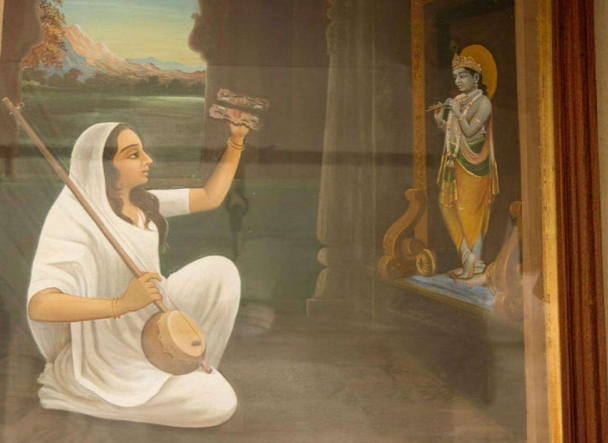
There were few exceptions like Meerabai, who constituted followers, but they were lesser in number. Unlike in the North India, women saints like Andal and Akkamahadevi were greatly recognized and admired in South India. As a matter of truth, Akkamahadevi was the leading member of a council of saints. In the context, the instance of Meerabai must be given. She was one of the major women Bhaktas of the 16th century. Although she didn’t attract a mass following but is recognized as a source of inspiration for centuries. According to some traditions, her preceptor was Raidas, a leather worker. This shows a complete defeat of the prevailing caste system and highly caste stratified society.

Now let us take a look on other major women Bhaktas of that period.

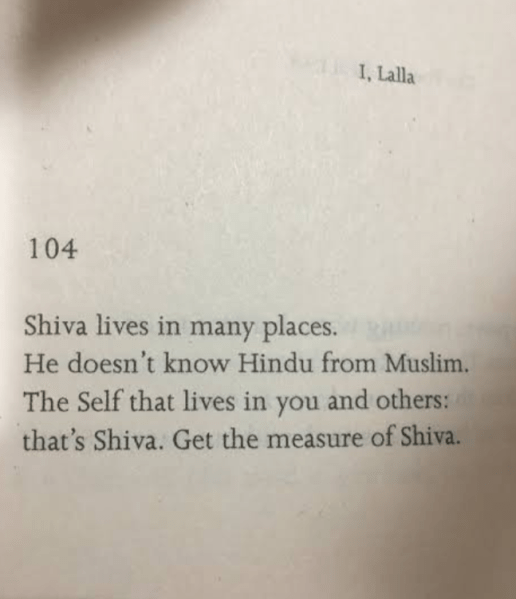
Lalleshwari or Lalded – she walked out of an oppositive marriage and opted for an ascetic oath. Also she composed several poems in praise of Lord Shiva.

One of the compositions of Lalleshwari or Lalded of Kashmir.

Bahinabai- she was again one of the best examples of women Bhaktas who defied all the caste and gender hierarchy, and came under the spiritual guidance of the Shudra saint Tukaram. She was herself a Brahman woman.

Akkamahadevi- she was one of the most famed women saints of Virashaiva tradition, who could walk naked on the streets, defying the patriarchal order and depicting a huge sense of courage. She was the one who considered Mallikarjuna or the Shiba as her husband.

Vinabai-she was the chief disciple of the saint Ramdas, who headed the mutt at Mirajal. The Ramdasi panth occupies a significant place in the history of the women Bhaktas, as this was the first time when a monastic institution was governed by a woman. This satirically shows a defeat of patriarchal and caste based society.

On the other side of the coin, although the women Bhaktas came up as individual spiritual leaders, but they were always under guidance or have remained disciples of male saints only, showing the prevalence of patriarchy in some sense. Hence, it is more logical to say that the women Bhaktas split between social confrontism and deviant rebelliousness, thus.

Effect of parent’s conflicts on children

We all know that due to parents conflicts children also suffer a lot. Then also it is necessary to know that how these conflicts are harmful for children so that these conflicts are properly addressed by parents or family.

Any home is not free from conflicts pr arguments and every children sees parents arguing with each other. According to researchers if children see that they calmly and positively solving their disagreements and problems then it doesn’t have any negative effect on children. Infact, children learn conflict resolution skills and also use them in their lives and relationships.

If conflicts are frequent and it involves verbal insults, raised voice or when parents become physically agressive or when they withdraw themselves from argument and give each other a silent treatment or when conflict seems to threaten the intactness of family then it will be harmful for children.

According to the research, children show distress when parents fight, from a very early age. Their reaction can include fear, anxiety and there are a high risk of variety of health problems like disturbed sleep, difficulty in paying attention, performing good in school and due to which they become aggressive or internalize it in the form of depression, anxiety, withdrawal and dysphoria.

In research, it is also shown that children having high conflict at their homes are more likely to have poor interpersonal skills, problem solving abilities and social competence. It also have s negative impact on the romantic relations in adoloscences and adulthood as high conflict relations of one couple can produce negative relationships in next generation too.

These conflicts also have a negative impact on the parenting style of parent due to which it become harmful for the children. Parents who are in high conflict relations are more involved in agression, shouting, hitting etc, which may harm children.

Children experience physiological reactions related to stress which may harm their brain development. Parental conflict also have a varietal impacts depending on the age, sex and temperament of the child. Sibling relationship, attachment to the parents and socioeconomic pressure also impact how child react to conflicts.

So it is very important to notice what are you doing and how are you behaving infront of the child. Try not to argue infront of the child and if you are arguing or sometimes it happens by mistake always show your child, how positively you are solving that. Children are very sensitive so try not to do such things in front of the child which hurt them or lead to a negative impact on their development.

MALALA YOUSUFZAI: conspiracies and criticisms

I practically cried when literally heard about Malala Yousafzai,the Pakistani blogger who fought for girl education and currently fighting for their rights. The youngest to win most prestigious Nobel Peace prize along with billions of hearts. But there are ongoing discussions on her overrating.

The allegations made on her despite bravery she showed were mentioned below which are depicted as conspiracy.

The three girls who shot during the same time didn’t get as much attention as Malala. The only girl who was hospitalized to London and the only girl who was being educated there was Malala which was one of the conflicting truth. The reason for shifting her to London hospital lies in severity of her injury. She was the one who got affected more due to the bullets. People write to defame her without knowing the actual truth.

She was victim of Taliban because of her dad since he rebelled against them. Being Ziauddin’s daughter made her special among Taliban. Her father made her to speak and she did it. It was her father who should be awarded not her. She did what is to be done. Her fater fought when Taliban attacked the school. The society we live in defame the daughter to fame the father. This is disgusting. Not everyone does what should be done. The so-called guts is necessary inorder to do few things. Her father made her speak but it’s her choice to speak and she spoke not only for herself but also for the rest. It’s her who spoke and world listened while she spoke.

She left the Swat valley and started to live happily in UK without bothering about her native. She never spoke about the wars in some other countries and never cared about the children of her valley after she left the place. People never speak about the happened and always bother about unhappened. She did everything she could and tried to do what she didn’t and failed it. She had a voice of women who are living not only in her region but the rest of the world.

Malala said, “I am ready to tell the world that Pakistan is safe place and teams can go and play cricket there”. If it’s safe then why are you in UK. The criticism she gets for every word she spoke is unbelievable. She tried her way best to make people of her country happy by making them view cricket match. She tried to bring happiness for her country and people depict it in a wrong way.

Another boy who has been shot 8 bullets didn’t get the same attention who tried to save the school attack from Taliban. He never spoke untill the moment. He had to do his job when it had to be done. He didn’t do when it wasn’t required. He had done a great job but what Malala shouldn’t be compared with it. She stood from the begining of war because she started the war.

She was the reason for the operation launched by Pakistani army namely Operation Rah-e-Rast. The army tried to finish its job within a month. SSG commandos tried to kill who resisted or captured who surrendered.

What is the deadly India-China border dispute about?

What has happened?

At least 20 people have died in clashes between Indian and Chinese troops along the disputed Himalayan border running along the Ladakh area of Kashmir. It is the first fatal clash since 1975 and the most serious since 1967.

Fighting broke out on Monday evening when an Indian patrol came across Chinese forces on a narrow ridge. During the confrontation an Indian commanding officer was pushed and fell into the river gorge. Hundreds of troops from both sides were called in and fought with rocks and clubs. Several fell to their deaths.

The Indian Army said there were casualties on both sides, and confirmed three of its soldiers were killed during the clashes, with another 17 later succumbing to injuries.

Beijing has refused to confirm any deaths on its side, but accused India of crossing the border twice and “provoking and attacking Chinese personnel”. The editor in chief of state-run the Global Times, said he understood there had been Chinese casualties, but the People’s Liberation Army wanted to avoid “stoking public mood” by comparing numbers.

Why now?

Tensions have been escalating since late April, when China sent thousands of troops into the disputed territory along the Line of Actual Control (LAC), bringing artillery and vehicles.

Analysts say the Chinese government, which has been more assertive in building infrastructure in the area, is anxious to frustrate any effort by India to upgrade its own military installations.

Their refusal to leave disputed areas, including the Galwan Valley inside Indian territory, has triggered shouting matches, stone-throwing and fistfights in key border areas. Last month, there was a massive brawl between patrols, but no deaths.

Earlier this month senior military leaders from both sides met and made a commitment to disengagement.

What is the history of the dispute?

India and China fought a war in 1962 over their contested border in the Himalayas. The war ended with a truce and the formation of a de facto boundary, known as the Line of Actual Control.

There has been an uneasy and fragile peace since, punctuated by skirmishes on the border, including in 2013 and 2017.

No official border has ever been negotiated, the region where the clashes occurred is hostile terrain, at high altitude and sparsely populated, running through the Ladakh region bordering Tibet, home to a Buddhist-majority population. It is a popular tourist destination.

What is the Line of Actual Control?

The LAC is a rough demarcation line separating Indian-controlled territory from Chinese-controlled territory. The exact location of sections of the line, particularly in the western Ladakh region, have remained in dispute. Efforts between the two countries to clarify the LAC have stalled in the past two decades, according to Indian media.

What do the two sides want?

Both countries have sought to establish their claims to territory, by heavily militarising the region. Both have built roads, airstrips, outpost stations, and other infrastructure, such as telephone lines. Troops conduct regular patrols along the disputed border. China claims more than 90,000sq km in the eastern Himalayas and another 38,000sq km in the west, both of which are disputed by India.