“Apathy. What’s hard to understand? They don’t care. Not until it affects them.”
Donna Lynn Hope
For the first few months as an amateur liberal feminist, I responded to offensive comments and sly remarks with, “Would you still feel the same way if it was someone you knew?”
I would gleam with pride as I see them contemplate for a second.
Now, months later I realize the problem in that. Why should something affect us or someone we know and love, to realize the adverse effects on any social, political, economic, ecological, psychological at stake? Why can’t we feel the same pain and understand a stranger? Why do we need it to get personal?
It sounds spiteful to say that we lack compassion, but it’s true.
Here are a few instances where I was put on the spot with pointless questions and remarks that the world will be a better place without. I live in a country, where my religion is the principal religion, where my voice matter, while my peers’ don’t. I choose to use my voice to scream louder than ever to bring about a change in every individual. As a result, I am questioned for choosing to use my privileged voice to advocate for equality, mental health, LGBTQ rights, and against systematic racism, corruption and just anything wrong.
None of my family members and close friends are Muslims. Every time I advocate for equality for Muslims, and their basic human rights. I am countered with “Do you have a Muslim boyfriend or something?” Why should I have a Muslim boyfriend, or a friend or even a relative? Why can’t I just fight for someone without having any personal agenda?
Another common question I always am asked is, “If you’re so openly advocating for Muslim rights, then why don’t you befriend any Muslims?” It’s simple, I am not an institution, nor do I follow a religion quota. I don’t make friends based on their religion or culture. I will not go and make a Muslim friend just to justify my fight.
When I advocate for LGBTQ rights, people question my sexuality. They think I’d be offended. I am offended, not by their question but by their audacity to still think being anything but heterosexual is a joke.
When I stand for Black Lives Matter, I am asked if I am not concerned about Dalits, Muslims and every other marginalized community in India. I ask, didn’t you ridicule me for that already?
Many more occurrences come to mind, but my point is made.
We lack empathy. We refuse to understand another without getting something in return. We can’t be so cruel to build a business on emotions and humanity, right?
In actuality, we have a huge fucking empire built on humanity, where they sell corruption and apathy. Where people are exploited and made political prisoners. Where people are killed ruthlessly with word and actions, and further with batons and nails.
We are more interested in who said and did what, and less about the sufferings of the person next door.
Why can’t we each work on ourselves to bring about a revolutionary change. Where we support one another and make this world a better, safer and happier place.
Most often than not we are running like robots in this fast paced world. We tend to forget about our heath, family, and friends and more importantly about ourselves. When was the last time you actually pursued something you like? This does not mean watching your favourite series or having a movie marathon with yourself at 3 am. Having a hobby that helps you improve yourself in any way is a best way to have a good lifestyle. It also helps you relax and take a break from your work. Most of us are not lucky enough to be pursuing one of our hobbies as a career, but we sure can take it up in our free time and not lose out on it. Now I can understand that making free time for yourself is not easy. And when you finally get some time off your monotonous routine you would definitely want to sleep it off or maybe finish a movie you’ve been eyeing for some time. But trust me you will feel better by doing something you love instead. Don’t get me wrong I know having occasional movie nights and some extra hours of sleep is great but what I’m saying is that make sure to devote some time to your hobbies also. It could even be a mere half an hour but do it. You will definitely see a change in yourself and your mood. You don’t even have to do it on a daily basis even once a week will be enough.
You will understand better if I quote some examples and benefits.
1. Hobbies encourage taking a break. Hobbies offer an opportunity to take a break—but a break with a purpose. If you’re like me, you might like to feel productive while you’re engaging in an activity and a hobby gives you that. You are doing something while still having fun. Hobbies are great ways to take a break from your busy life while still having a sense of purpose.
2. Hobbies promote eustress. Eustress is that positive kind of stress, the kind that makes you feel excited about what you’re doing and about life. Hobbies, I’ve found, are one of the greatest ways to access that kind of stress. When you’re doing something you love—something you don’t have to do for any other reason other than the fact that you love it—you feel a rush of excitement and joy.
3. Hobbies offer a new challenge. Hobbies break up routine sand challenge you in new ways, ways that are different from work, ways that are positive. The great thing about picking up a new hobby is that it provides an excellent outlet for challenging yourself without the negative stress that comes from a work-related challenge. The new challenge can also open your mind to new ways of seeing the world.
4. Hobbies unite you with others. Even if you engage in a solo activity, like illustrating, you’re exposing yourself to a new world of people, people who find the same thing enjoyable that you do. Though I don’t talk much about illustrating in the “real world,” online I find myself connecting with all kinds of people who are passionate about what I too feel excited about.
5. Hobbies provide an outlet for stress. Adding another activity to your to-do list might seem like a way to create more stress, but I’ve found that engaging in a new hobby actually provides a great outlet for releasing stress. By focusing on a non-work-related task, you’re giving your mind something else to focus on. And when you really get in the flow, all of your worries and stresses seem to fade away.
6. Hobbies promote staying present. If you really love what you’re doing, you tend to get in the flow or zone and really, truly focus on the moment. When I’m working on an illustration, hours can magically fly by because I’m so intensely focused on what I’m doing. Instead of worrying about the future or dwelling on the past, I’m completely and undeniably in the present.
7. Hobbies have physical health benefits. Research has found that engaging in enjoyable activities during down time were associated with lower blood pressure, total cortisol, waist circumference, and body mass index. Engaging in these activities also correlated to higher levels of positive psychosocial states and lower levels of depression and negative affect. Hobbies are good for your mind and your body.
Finding a new hobby isn’t always easy. You can’t just force yourself to like something; it has to come naturally. If you don’t already have something you’re interested in (or might be interested in), try new things. Sign up for a class that sounds interesting or ask your friends what kinds of hobbies they enjoy doing. The key to finding a new hobby—and falling in love with it—is keeping an open mind and being willing to give new things a try. You never know what might become your next favourite past-time! Start discovering yourself.
In view of this pandemic, it seems like some student’s lives have gone on standstill but the reality is that time is not on standstill so with that in mind I am going to give the difference between various classes of people during this period using a case study.
Take x,y and z to be 3 different student during this pandemic and try to fit yourself into the category you belong to as a student
Student x: was not really that brilliant but has taking it upon himself to become better by utilizing his time wisely during this lockdown period .
Student y: is brilliant but keeps horning his skills by reading more and also reading ahead of where the lecturer has gotten to
While student z: is the one scared of the lockdown being removed because of guilt of having not carried his or her books during this lockdown. Lets consider what category we fall under. To be sincere most of us are in the student z category. And i cant blame anyone. Taking myself as a case study. I started out during this pandemic reading my notes vigorously and also reading ahead of my lectures but as time went on the vibe to read is gone so a student x or y can actually find themselves in the position of student z.
To solve this problem and make your days not be the same make a plan to achieve something different each day at times the plan may not work out until discipline and self control is achieved. Back to myself as a case study. I started thinking out of the box l realized I was nothing if my education is taken away so I started learning vocational skills like hairdressing, baking and learning Korean. After a while I started learning about my course of study in details and gathered certificate for myself.
The point is if your yesterday, today and tomorrow is the same there is no progress in your life. You need to make an effort as much as we want to admit that 2020 is not a part of our lives it is and whatever you do in this lockdown period should impact you positively. Look for opportunities to garnish yourself as a student in preparation for the future. It’s not easy it needs self discipline. Make an attempt today to make your life easier tomorrow
Recruitment is a process of finding and attracting the potential resources for filling up the vacant positions in an organization. It sources the candidates with the abilities and attitude, which are required for achieving the objectives of an organization.
Recruitment process is a process of identifying the jobs vacancy, analyzing the job requirements, reviewing applications, screening, shortlisting and selecting the right candidate.
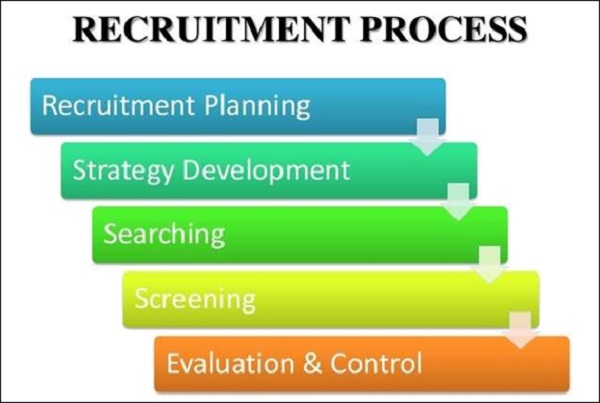
To increase the efficiency of hiring, it is recommended that the HR team of an organization follows the five best practices (as shown in the following image). These five practices ensure successful recruitment without any interruptions. In addition, these practices also ensure consistency and compliance in the recruitment process.
Recruitment process is the first step in creating a powerful resource base. The process undergoes a systematic procedure starting from sourcing the resources to arranging and conducting interviews and finally selecting the right candidates.
Recruitment Planning
Recruitment planning is the first step of the recruitment process, where the vacant positions are analyzed and described. It includes job specifications and its nature, experience, qualifications and skills required for the job, etc.
A structured recruitment plan is mandatory to attract potential candidates from a pool of candidates. The potential candidates should be qualified, experienced with a capability to take the responsibilities required to achieve the objectives of the organization.
Identifying Vacancy
The first and foremost process of recruitment plan is identifying the vacancy. This process begins with receiving the requisition for recruitments from different department of the organization to the HR Department, which contains −
Number of posts to be filled
Number of positions
Duties and responsibilities to be performed
Qualification and experience required
When a vacancy is identified, it the responsibility of the sourcing manager to ascertain whether the position is required or not, permanent or temporary, full-time or part-time, etc. These parameters should be evaluated before commencing recruitment. Proper identifying, planning and evaluating leads to hiring of the right resource for the team and the organization.
Job Analysis
Job analysis is a process of identifying, analyzing, and determining the duties, responsibilities, skills, abilities, and work environment of a specific job. These factors help in identifying what a job demands and what an employee must possess in performing a job productively.
Job analysis helps in understanding what tasks are important and how to perform them. Its purpose is to establish and document the job relatedness of employment procedures such as selection, training, compensation, and performance appraisal.
The following steps are important in analyzing a job −
Recording and collecting job information
Accuracy in checking the job information
Generating job description based on the information
Determining the skills, knowledge and skills, which are required for the job
The immediate products of job analysis are job descriptions and job specifications.
Job Description
Job description is an important document, which is descriptive in nature and contains the final statement of the job analysis. This description is very important for a successful recruitment process.
Job description provides information about the scope of job roles, responsibilities and the positioning of the job in the organization. And this data gives the employer and the organization a clear idea of what an employee must do to meet the requirement of his job responsibilities.
Job description is generated for fulfilling the following processes −
Classification and ranking of jobs
Placing and orientation of new resources
Promotions and transfers
Describing the career path
Future development of work standards
A job description provides information on the following elements −
Job Title / Job Identification / Organization Position
Job Location
Summary of Job
Job Duties
Machines, Materials and Equipment
Process of Supervision
Working Conditions
Health Hazards
Job Specification
Job specification focuses on the specifications of the candidate, whom the HR team is going to hire. The first step in job specification is preparing the list of all jobs in the organization and its locations. The second step is to generate the information of each job.
This information about each job in an organization is as follows −
Physical specifications
Mental specifications
Physical features
Emotional specifications
Behavioral specifications
A job specification document provides information on the following elements −
Qualification
Experiences
Training and development
Skills requirements
Work responsibilities
Emotional characteristics
Planning of career
Job Evaluation
Job evaluation is a comparative process of analyzing, assessing, and determining the relative value/worth of a job in relation to the other jobs in an organization.
The main objective of job evaluation is to analyze and determine which job commands how much pay. There are several methods such as job grading, job classifications, job ranking, etc., which are involved in job evaluation. Job evaluation forms the basis for salary and wage negotiations.
Recruitment Strategy
Recruitment strategy is the second step of the recruitment process, where a strategy is prepared for hiring the resources. After completing the preparation of job descriptions and job specifications, the next step is to decide which strategy to adopt for recruiting the potential candidates for the organization.
While preparing a recruitment strategy, the HR team considers the following points −
Make or buy employees
Types of recruitment
Geographical area
Recruitment sources
The development of a recruitment strategy is a long process, but having a right strategy is mandatory to attract the right candidates. The steps involved in developing a recruitment strategy include −
Setting up a board team
Analyzing HR strategy
Collection of available data
Analyzing the collected data
Setting the recruitment strategy
Searching the Right Candidates
Searching is the process of recruitment where the resources are sourced depending upon the requirement of the job. After the recruitment strategy is done, the searching of candidates will be initialized. This process consists of two steps −
Source activation − Once the line manager verifies and permits the existence of the vacancy, the search for candidates starts.
Selling − Here, the organization selects the media through which the communication of vacancies reaches the prospective candidates.
Searching involves attracting the job seekers to the vacancies. The sources are broadly divided into two categories: Internal Sources and External Sources.
Internal Sources
Internal sources of recruitment refer to hiring employees within the organization through −
Promotions
Transfers
Former Employees
Internal Advertisements (Job Posting)
Employee Referrals
Previous Applicants
External Sources
External sources of recruitment refer to hiring employees outside the organization through −
Direct Recruitment
Employment Exchanges
Employment Agencies
Advertisements
Professional Associations
Campus Recruitment
Word of Mouth
Screening / Shortlisting
Screening starts after completion of the process of sourcing the candidates. Screening is the process of filtering the applications of the candidates for further selection process.
Screening is an integral part of recruitment process that helps in removing unqualified or irrelevant candidates, which were received through sourcing. The screening process of recruitment consists of three steps −
Reviewing of Resumes and Cover Letters
Reviewing is the first step of screening candidates. In this process, the resumes of the candidates are reviewed and checked for the candidates’ education, work experience, and overall background matching the requirement of the job
While reviewing the resumes, an HR executive must keep the following points in mind, to ensure better screening of the potential candidates −
Reason for change of job
Longevity with each organization
Long gaps in employment
Job-hopping
Lack of career progression
Conducting Telephonic or Video Interview
Conducting telephonic or video interviews is the second step of screening candidates. In this process, after the resumes are screened, the candidates are contacted through phone or video by the hiring manager. This screening process has two outcomes −
It helps in verifying the candidates, whether they are active and available.
It also helps in giving a quick insight about the candidate’s attitude, ability to answer interview questions, and communication skills.
Identifying the top candidates
Identifying the top candidates is the final step of screening the resumes/candidates. In this process, the cream/top layer of resumes are shortlisted, which makes it easy for the hiring manager to take a decision. This process has the following three outcomes −
Shortlisting 5 to 10 resumes for review by the hiring managers
Providing insights and recommendations to the hiring manager
Helps the hiring managers to take a decision in hiring the right candidate
Evaluation and Control
Evaluation and control is the last stage in the process of recruitment. In this process, the effectiveness and the validity of the process and methods are assessed. Recruitment is a costly process, hence it is important that the performance of the recruitment process is thoroughly evaluated.
The costs incurred in the recruitment process are to be evaluated and controlled effectively. These include the following −
Salaries to the Recruiters
Advertisements cost and other costs incurred in recruitment methods, i.e., agency fees.
Administrative expenses and Recruitment overheads
Overtime and Outstanding costs, while the vacancies remain unfilled
Cost incurred in recruiting suitable candidates for the final selection process
Time spent by the Management and the Professionals in preparing job description, job specifications, and conducting interviews.
A school fete is looked forward to by most of us. It provides entertainment and also great learning which is useful later in life. It provides entertainment and also great learning. Thus a school carnival gives you lots of unforgettable memories ❤️
Boarding schools provide an unequalled academic environment, because of greater interaction between the students and teachers facilitating mentoring. It gives an opportunity to mingle with students of different backgrounds and inculcates virtues like tolerance and trust.
Boarding schools provide an excellent academic environment, because of greater interaction between students and teachers. This interface unlike day schools is not just limited 6-8 hours. The small class size enables teachers to give individual attention to each student.
Boarding schools are indeed better than day schools for the all round development of the child. They play an important and crucial role in moulding the character and personality, making them useful citizens of the society.
Energy conservation refers to the efforts made to reduce the consumption of energy. The energy on Earth is not in unlimited supply. Furthermore, energy can take plenty of time to regenerate. This certainly makes it essential to conserve energy. Most noteworthy, energy conservation is achievable either by using energy more efficiently or by reducing the amount of service usage.
Importance of Energy Conservation
First of all, energy conservation plays an important role in saving non-renewable energy resources. Furthermore, non-renewable energy sources take many centuries to regenerate. Moreover, humans consume energy at a faster rate than it can be produced. Therefore, energy conservation would lead to the preservation of these precious non-renewable sources of energy. Energy conservation will reduce the expenses related to fossil fuels. Fossil fuels are very expensive to mine. Therefore, consumers are required to pay higher prices for goods and services. Energy conservation would certainly reduce the amount of fossil fuel being mined. This, in turn, would reduce the costs of consumers. Consequently, energy conservation would strengthen the economy as consumers will have more disposable income to spend on goods and services. Energy conservation is good for scientific research. This is because; energy conservation gives researchers plenty of time to conduct researches. Therefore, these researchers will have more time to come up with various energy solutions and alternatives. Humans must ensure to have fossil fuels as long as possible. This would give me enough time to finding practical solutions. Another important reason for energy conservation is environmental protection. This is because various energy sources are significantly harmful to the environment. Furthermore, the burning of fossil fuels considerably pollutes the atmosphere. Moreover, nuclear energy creates dangerous nuclear waste. Hence, energy conservation will lead to environmental protection.
Energy conservation would also result in the good health of humans. Furthermore, the pollution released due to energy sources is harmful to the human body. The air pollution due to fossil fuels can cause various respiratory problems. Energy sources can pollute water which could cause several harmful diseases in humans. Nuclear waste can cause cancer and other deadly problems in the human body.
Measures to Conserve Energy
Energy taxation is a good measure from the government to conserve energy. Furthermore, several countries apply energy or a carbon tax on energy users. This tax would certainly put pressure on energy users to reduce their energy consumption. Moreover, carbon tax forces energy users to shift to other energy sources that are less harmful.
Building design plays a big role in energy conservation. An excellent way to conserve energy is by performing an energy audit in buildings. Energy audit refers to inspection and analysis of energy use in a building. Most noteworthy, the aim of the energy audit is to appropriately reduce energy input.
Another important way of energy conservation is by using energy-efficient products. Energy-efficient products are those that use lesser energy than their normal counterparts. One prominent example can be using an energy-efficient bulb rather than an incandescent light bulb.
In conclusion, energy conservation must be among the utmost priorities of humanity. Mahatma Gandhi was absolutely right when he said, “the earth provides enough to satisfy every man’s needs but not every man’s greed”. This statement pretty much sums up the importance of energy conservation. Immediate implementation of energy conservation measures is certainly of paramount importance.
This year has been unpredictable in many ways. We have seen terrible occurrences right from the very beginning of the year. What with the bushfires that started around south wales, Australia that a third state emergency had to be called. This was just day 2 of the New Year 2020. Then we saw war threats between the United States of Americas military and Iran. And I don’t even need to mention the corona virus pandemic that took over the entire world. A lot experienced in such a short span of time. We didn’t know what more to expect from this year.
But as everything came to a standstill with complete shutdowns and lockdown and social distancing taking over, many panicked on how they will be handling this new normal. I am focusing on the student community especially the final year students who were supposed to be having farewell parties and reminiscing their college years that had come to an end.
With this sudden take-over of the pandemic, all colleges shutdown adhering to the government issued guidelines. Mid-March that’s when it started in India. We however did not know how long this would be and honestly no one took this serious enough. We underestimated this issue to a great extent.
As time progressed colleges started taking classes online and giving out assignments. As this was happening, simultaneously the corona cases started rapidly increasing. Despite the best efforts taken by the government and the frontline and essential workers the cases were blowing out of proportion. This delayed the time as lockdown kept getting extended. As time was running short, colleges were forced to conduct online exams especially to the final year students. The UGC issued guidelines regarding this and gave the colleges the authority to conduct online exams for the final years.
Online exams were conducted and the results declared. This was a major change for the students as they had least expected the turn of events. They definitely exercised something new and scary. They would not in their wildest dreams imagine that they’ll take up their final exams of their college in this manner.
The most important part was that during a crisis like this the placements were not welcoming. With loyal employees being forcefully terminated and the market crashing, it was not a favourable situation to the fresh graduates. Unemployment was peaking with major layoffs from even reputed companies.
These young adults had to go through so much unprecedented activities during their last days of college life. They missed on some cherishable memories of farewell parties, the final exams with their friends, hanging out around the college campus and remembering fond memories of their college life in the campus. But what’s more important for them now is how they take their career and move forward. I’m sure this is not what they expected at the end of their carefree college times but I’m very sure that they have the ability and capacity to take failures in their stride and come up in life. I wish all of you the very best.
Patriarchy refers to a society dominated by men i.e. society, state and the economy are characterised by systematic, institutionalised and pervasive gender oppression.
Patriarchy is a system – a dynamic web – of particular ideas and relationships. Patriarchy can be updated and modernized. It is stunningly adaptable. That is the sense in which it is useful to talk about patriarchy as ‘sustainable’.
In a literal sense, patriarchy means rule by the father. A patriarchal family is therefore dominated by the father with power transferred down the male line, whereas a patriarchal society is based upon male dominance.
It is a social system that values masculinity over femininity. This type of social system dictates that men are entitled to be in charge and dominate women. And it implies the nature state of gender relations is a dynamic of dominance and submission. According to patriarchal society, women are seen weak, submissive and an extension of men, and the highest accomplishment a woman can hope to attain is marriage and child birthing.
On the reverse end of the spectrum, men are expected to be physically and emotionally strong, dominating, and the breadwinner and protector of his family. Although the domination of women today might not be as bad as, say, a couple hundred years ago when women had no legal rights and were considered their husbands property. Gender is still something that is strictly enforces on people today. In patriarchal society’s, cisgender men are typically valued over cisgender women.
However the system forces people into strict boxes called ‘gender roles’, and gender roles hurt everybody. If someone who is assigned a certain gender at birth doesn’t fit into the social norms expected of that gender, they’re often ostracized by society. In the past hundred years or so we’ve seen a loosening of gender roles for women but not so much for men. Women can act or dress in a more masculine fashion with less repercussions that if a man were to act or dress in a feminine way. This stems from the valuing of masculine traits over feminine traits and the association of femininity with weakness. It’s more okay for a woman to ”act like a man”, or whatever that means, than it is for a man to ”act like a woman”. However, the patriarchy doesn’t just harm cis women and cis men. It also hurts trans identities and everyone who doesn’t identify with the gender binary. Being transgender is almost like the ultimate slap in the face to patriarchy and gender roles because you’re stepping outside of the gender you were assigned to birth and saying ” to hell with that”. A lot of trans phobia that we see is based in sexism and the fact that someone is refusing to stay in the gender box that society put them in.
In every Indian household there is a common stereotype thinking of men working and women handling the kitchen. Baby girls are offered soft toys and baby boys are offered guns to play. When the girl hits puberty she’s forbidden to go outside alone. A sister is expected to help her mother in kitchen. Also, the society has fixed some “Code Of Conducts” how a girl should behave. There are some common sexist misconception also, like a girl earns more than her husband. Well, there are much more.
Characteristics of a Patriarchal System
Some characteristics of a patriarchal system include:
Male Dominance: In a patriarchal system, men make all decisions in both society and in their family unit, hold all positions of power and authority, and are considered superior.
Male Identification: Men are concerned with identification that includes qualities of control, strength, forcefulness, rationality, strong work ethic, and competitiveness. Each of these qualities contribute to male identification in a patriarchal system.
Male Centeredness: In a patriarchal system, the center of activity and progression is on men and what they do to move the society forward. In any patriarchal system, men will be the focus and developer of all events and inventions, men will be the heroes in all situations, and men will be the center of social engagement, fun, and entertainment.
Obsession with Control: Men living in a patriarchal system or society must be in control at all times. They have a desire to control all social and family situations and must make all decisions regarding finances and education.
Additionally, in a patriarchal society, the oppression of women is emphasized. The term oppression means to push down or restrict; therefore, women are not allowed to rise up to leadership levels or make decisions. Women are also not allowed to demonstrate independence or suggest changes to any social order.
In essence, women also have a role in a patriarchal society, but only in a sense that is submissive and subservient to men. Let’s look at some cultures and societies that recently or still operate under the patriarchal system.
Examples of Patriarchy
Well, there are countless examples of Patriarchy. From thinking like “Women should know cooking”, “Women should always serve her husband and children and they are perfect for a 9-5 job” to “A man has to be financially and emotionally stable else he is not a man” and “Women are too weak to work in armed forces” everything is a example of Patriarchy.
Patriarchal institutions and practices have to some extent been challenged in recent years via legislative measures and changing social attitudes. In the context of the former, workplaces who employ a specific number of employees are under a legal obligation to publish the pay gap between men and women. There are also laws to prevent sexual discrimination in the workplace with employers liable if found guilty. Cases are often heard in employment tribunals in which grievances may be resolved. In terms of the latter, there is also a greater level of sensitivity towards sexist attitudes in the public sphere.
The right to Information Act 2005 which came fully into effect on12th October 2005 is one of the most significant legislation enacted by the Parliament in India. It is a major step towards more accountable and transparent government. RTI has been enacted to provide for setting out the practical regime of right to information for citizens to secure access to information under the control of public authorities in order to promote transparency and accountability. The Act will certainly lead to end the culture of governmental secrecy andfulfil its potential as a truly great democracy.
Objective of the Act:
1. To promote transparency and functioning of the government. accountability in the
2. To set up a practical regime for giving citizens access to Information that is under the control of public authorities.
3. To empower the citizens as the law will promote the participation of the citizens in official decisions that directly affect their lives.
4. The effective implementation of RTI Act will build public trust in the government functioning.
5. It will lead to effective and efficient records management technique that is needed to facilitate the provision of information in response to public interest.
What is Right to Information?
Government information is national resource. Neither the particular government of the day nor public officials create information for their own benefits. Government and officials are trustees of this information for the people. The RTI act enables the citizens to obtain access under the law to documents that may otherwise be available only at the discretion of government.
The RTI Act 2005 provides effective access to information for citizens of India, which is under the control of public authorities. This overrides the ―official Secrets Acts and similar laws and rules.
The Act primarily envisages setting out a practical regime of right to information for citizens to secure access to information under the control of public authorities, in order to promote transparency and accountability in the working of every public authority.
Right to Information means the right to information accessible under this Act which is held by or under the control of any public authority and includes the right to: –
(i)Inspection of work, documents, records.
(ii)Taking notes, extracts, or certified copies of documents or records.
(iii)Taking certified samples of material.
(iv)Obtaining information in the form of diskettes, floppies, tapes, video cassettes or in any other electronic mode or through printouts where such information is shared in a computer or in any other device.
Every information held by or under the control of a public authority is accessible to a citizen, unless information is exempt from disclosure.
What is Accessible under the Law?
Information means any material in any form, including records, documents, memos, e-mail, opinions, advices, press releases, circulars, orders, log books, contacts, reports, papers, samples, models, data material held in any electronic form and information relating to any private body which can be accessed by a public authority under any law for the time being in force.
Features of the RTI Act:
ØThe Act extends to the whole of India except Jammu & Kashmir.
ØAll citizens shall have the right to information, subject to provisions of the Act. The RTI empowers the citizens to ask any question or seek any information from government authorities be it Central, State or Local governments.
ØIt shall apply to Public Authorities which means any authority or body or institution of self-government established or constituted by or under the Constitution; by any law made by the appropriate Government or, any other body owned, controlled or substantially financed directly or indirectly by the appropriate Government, and includes non-government organisation substantially financed by the government.
ØThe Act lays down the machinery for the grant of access to information. The Public Authorities are required to designate Public Information Officer and Assistant Public Information Officer with in the hundred days of enactment to accept the request forms and provide information. The Public Information Officers/Assistant Public Information Officers will be responsible to deal with the requests for information and also to assist persons seeking information.
ØThe Act envisages creation of an independent non-judicial machinery viz, Central Information Commission, State Information Commission. Legal Framework of exercise of powers by the Commission is defined in the Act.
ØThe Act also provides the two- tier Appellate forum. First appeal is to be made to the departmental officer senior to the Public Information Officer. The second appeal is to be made to State Commission.
ØFee will be payable by the applicant depending on the nature of information sought.
ØTime limit has been prescribes for the compliance of information depending upon the information requirements.
ØCertain categories of information have been exempted from the disclosure under Section 8and 9 of the Act like conduct of International Relations, security of the State, trade and commercial secrets, intelligence agency etc.
ØCentral Information Commission and the State Information Commissions monitor the implementation of the Act and prepare an Annual report to be laid before the Parliament / State legislatures.
Richard Brinsley sheridan, a famous Irish Playwright and Poet said “Never say more than is necessary”.This saying is very common in our Daily life. When we talk more than is necessary it leds to problems. It is true , the more one person speaks , the more that person creates question in other person’s mind. And in the midst of speaking, the secret which is kept inside may slip out of one’s mouth unconditionally. As a human knowledge is required to preserve ,the more we speak we give away the knowledge we have in ourselves. Even our speaking manner and materials reveals about our nature and traits , our personality. And this helps people to guess about our further steps and actions. Even people often get fooled for this habit of their.
Advantage of speaking normal is it puts others in a defensive mode. Mahatma Gandhi talked what was necessary, hence , the people around them and English company not able to suspect his next steps which led them to fail to take steps to prevent his future movements and therefore he won Independence.
One more thing , some people think they can impress people by their words but there also remains some gaps – when we are trying to impress people, the more we say we become common to people in appearance and less in control. Even if one say something banal, it will seem original if you make it open minded and sphinx like. Powerful and succesful people impress others by speaking less. The more you speak, the more likely you are to say something foolish.
It is a very fundamental rule going on from many years. People like to speak about their life and share all bullshit things , thus , they expose their personal life to the outer world.
Thus we should practice ourselves to listen more and speak less as-
1.Speaking less will make people reveal more about them. Your short answer and defence will stand as defence and they will jump in their comments which rather will reveal about themselves than others.
2.speaking less will help people to listen and interpret about you carefully. They have to know what you are thinking. People cannot pierce your intentions and meaning, when you carefully control what you reveal.
3. Human tongue is uncontrollable, only few people can have control over it. Be particularly careful with sarcasm. We often get satisfaction by saying our rough words but it creares our image too.
4. The more you say , the more common you become to people and they will no more value your words.
5. Speaking less will save you from speaking something dangerous and harmful . Take the foolish act of coriolanus , a military hero of Rome around 454 BC. People held him in awe. His speach appeared to be arrogance , cruelty.
6.people will never decieve as they don’t know about your position. According to louis xiv gave rise to “i will see” a very short phrase which said in polite manner.so, let everyone speak , you be a careful listener , to know the people’s views about you and their own reality.
Saying /speaking less is not for high authority people applicable but also for normal common people. In every sector of life , the less you open up yourself to people , you become profound and mysterious to them. The more less you speak , you appear intelligence and powerful to people. So, the less you speak up , the less risk you face in life in regarding difficulties.
Moreover, with development of technology and emergence of new era , people are more likely to be find silent suppressing all their words and feelings, as we all know all are ready to spread salt to your wounds oray take advantages of your weakness. So , better change habit , it will be beneficial to all people not only in personal life but also in occupational sector.
Time is of the essence. This phrase is used when something needs to be done promptly. Ironically, this perfectly fits my today’s article.
India first established time-zones in 1884, owing to the British. During the 1884 International Meridian Conference in Washington, D.C. India registered its two official time zones, Bombay Time and Calcutta Time. Madras Time, an unofficial time was used as well as the Railway Time.
Following the celebrations of India attaining its independence from the British Raj, lots of important decisions were made. One such decision was for India to follow a single time-zone, Indian Standard Time (+05:30:00 GMT), to manifest a unified front against the world. With Pakistan separating to form its own country, this time zone decision was more important than ever.
India is the 7th largest country in the world, with a width that runs approximately 2,933kms. On a usual day, such as today, the sun rises in the eastern Guwathi at 04:42 am IST and at 06:05 am on the western Ahmedabad. The difference is 1 hour and 23 minutes. While it may not seem like much of an issue to most of India, the north-eastern states, the Andaman and Nicobar Islands face a huge impact.
Here’s a table of the approximated sunrise and sunset times across different cities of India on 18th July 2020.
City
Sunrise
Sunset
Guwathi, Assam
04:42
18:17
Port Blair, Andaman
05:04
17:47
Bhubaneshwar, Odisha
05:17
18:29
Vijayawada, Andhra Pradesh
05:44
18:43
Bhopal, Madhya Pradesh
05:45
19:08
Solan, Himachal Pradesh
05:30
19:25
Bangalore, Karnataka
06:02
18:50
Ahmedabad, Gujarat
06:05
19:27
Source: Google Search
The affected North-Eastern states and the Andaman and Nicobar Islands detect sunrise very early and are forced to follow the usual 9 to 5 or 10 to 4 work hours. The work hours start almost 5-6 hours after the sunrise when the sun is at its peak and the days are much hotter. Winter months, bring along another issue with the sun setting much earlier, almost by 16:00 – 17:00 in the evenings. Their nights are much longer and it’s already dark by the time schools and offices shut. The tea plantations, local to North-Eastern India is most affected, farmers struggle to work through the heat and dark.
More so than the obvious issues faced by a portion of Indians, is the social, economic, ecological, and financial repercussions. With the loss of several day-light hours before the office and school timings, the electricity usage is higher in these areas. 2.7 billion units of electricity each year can be saved by advancing IST by ½ hour and establishing another time zone. With a time zone 1 hour ahead of IST, India alone could save 5.4 billion units of electricity and so much more money, manpower, and peace.
For years, politicians from the North-East have filed petitions to set 2 official time zones of India to benefit a whole set of population. Each time just to be faced with the same rejection, blaming the resources and expenditure of resetting clocks and syncing India as a whole.
Assam’s then-Chief Minister Tarun Gogoi, in 2014, frustrated with India’s adamance, decided for Assam to follow its unofficial time-zone, the ChaiBagaan/Bagaan Time. The Bagan time is 1hour ahead of IST.
India doesn’t make use of Daylight Savings either. Daylight Savings is the practice of advancing clocks during warmer months (with longer days) and retreating clocks during colder months (with shorter days). DST is another cheaper alternative to setting a 2nd official time zone in India but the central government is unswerving of change. The country has only used it a couple of times during war with China (1962), and twice with Pakistan (1962 and 1971).
Although it was set post-independence, as a symbol of unity, many leaders including B.R. Ambedkar was against the one time zone policy. They recognized the inconvenience and ecological impacts it would have on the people and the climate.
Time is of the essence, and so is money and manpower. It is important to let go of a symbol of unity and practice unity and support people of our country with a time-zone that saves lives and billions of units of electricity and consequently, money.
It’s been a long time since I have stepped outside my home. With all such dreadful news flying in the air, stepping out is becoming more and more difficult. And to think about all the precautions that one needs to take, makes going out unbearable. If I think about not going out for a week, maybe a few months back, I would have definitely felt insane. There were days when even though there was no necessity to hop out, I would still go, maybe just for a stroll. In fact, truth to be told, I loved going out for any reason whatsoever.
But something seems to be changing with time. I am losing all my urge to go out. I feel terrified of the fact that I have go out. There can be numerous reasons for my lacklustre life. One, before going out, I have to make sure that I wear clothes which I am planning to give for washing, have to put on my mask, carry a sanitizer, carry a carry-bag, keep my mobile at home and the worst of it all, wear a headgear. To go out, maybe for 5 minutes, even for small reasons, such amount of preparation seems to be very tiresome. Two, on coming back to home, there seems to be series of drum-roll activities which is mandatory, otherwise I will be banned from my home. Upon returning, I have to directly run to the washroom, have a bath, wash my clothes and sanitize myself and everything I have bought. And then i am allowed to enter my room. Such huge amount of patience is needed. But what I now think is that I am not going out, not because of the two reasons. These two reasons are like fillers, trying to rationalize the situation and give a plausible explanation to my brain as to why I am not going out. The real reason, which i realized a few days back is completely shocking for me, even after self-realization.
The sole reason is completely psychological. My brain seems to have completely adapted to the new normal and somehow, with time, I ended up liking the isolation. Whenever chances of going out crops out, I do not get the urge to dress up to go out. My brain have completely accepted the fact that if I stay inside, I will be able to keep away the danger of contracting the infection. The truth is I am trying to delay the inevitable and somehow I got too much comfortable at home. Most of the times, I watch series or I study. Either of the two. I have also stopped ordering food from outside, via delivery boys, underlying reason is the fear of contracting infection. It seems like I have reached the peak where I do not feel the urgency nor the necessity to go out.
But, there is a problem with this kind of psychological fear. As our government is trying to bring about Unlock in phases, I still feel that there is no need to go outside, for the slightest of reasons. There is a very high chance that it might not be just me, many people across the globe might be feeling this. But they might not be comfortable opening up about this. So according to what I believe, that it might be very impressive as to what the government is doing to combat the entire issue, but at the same time, mental health and welfare institutions must also come in fore-front to break this silo and to take steps to rebuild this psychological breakdown.
Whenever we get a new assignment with a week’s time for submission, we develop a casual approach towards it, thinking that we have an ample amount of time to complete the work, which leads to delaying it until only a day or two is left before the submission. Sometimes you sit down to do that assignment and you get distracted by other things and at the end of the day the task remains incomplete. This happens to most of us on a regular basis and this is what is known as Procrastination.
“A man who procrastinates in his choosing will inevitably have his choice made for him by the circumstances.” – Hunter S. Thompson
The statement stands true as whenever we decide to postpone a task at hand we are also losing the opportunity to give our 100% to that task from the very beginning and make it a success. Procrastinating sometimes let all the good opportunities slip from our hands as it stops us from taking the chances and make decisions that can help lead a better life.
Many students have the habit of postponing things till the very last date as they get easily distracted by the use of social media or hanging out with their friends. While these can be fun to do as they help to take are minds out of worry, these decisions can sometimes lead to pending and piled up tasks at hand or can even become a distraction from studying, eventually leading to not getting good marks in our exams.
Many amongst us have a regular habit of delaying things, which eventually leads to a guilty thought i.e. ‘Maybe I should have started earlier.’ Whenever we get the schedules of our exams we tend to make a timetable for studying daily so that at the time of our examination we only have to do the revision. Many amongst us are able to achieve this goal; however there are some people who get distracted by their social media accounts that they start postponing their timetable to the next day. The increase in the use of social media among the students has lead to a decrease in their study time which eventually leads to them not getting the marks they expected and they start feeling less motivated to do something productive.
WHY DO WE PROCRASTINATE?
Whenever we decide to delay a task, we know that it is probably not a good idea to do but still we do it anyway. We know that we should plan things ahead of time but we still leave it for the last minute, knowing that it will have a negative result. People often say that you procrastinate because you are lazy or you do not have time management skills; however these have nothing to do with procrastinating.
The real reason is that many people stress about the work they have to do and to overcome that stress, they turn to their mobile phones, play video games, or hang out with friends. These things take their minds off the worry however, when they realise that they still have to complete their work, they feel guilty about not starting early.
Another reason for procrastinating is the insecurity that we have relating to the task. There might have been many incidents when you knew the correct answer to the question but you could not muster up the courage to raise your hand and answer because of the lack of confidence and the fear of being judged by others.
HOW TO STOP PROCRASTINATING
Procrastination is a voluntary action where we decide to do something fun rather than doing something that is important and requires our attention. We have the power to stop ourselves from delaying things and to start becoming productive from day one. The ways we can become more productive are:
1. Make yourself aware that you are procrastinating. It is the key step to stop you from delaying things. Instead of thinking ‘I will do it tomorrow.’ consider thinking ‘I need to do it today!’ Try to break the whole task into smaller sets of tasks so that when you complete those smaller tasks you feel accomplished and feel motivated to finish the whole task.
2. Give yourself little rewards like watching a good movie, having your favorite meal, binge watching your favorite series etc. It helps you to look forward to complete the task in order to earn that reward as it makes you feel good about achieving something.
3. Never let your tasks build up to the situation where it gets overwhelming for you to complete all of those in a short span of time. Start working on them from the very first day you get a particular task. If you feel stuck up at any time, feel free to seek help from others.
4. In case you feel getting distracted while working alone, you can always ask your parents to keep you company while you do your work as it will reduce the chances of you turning to your mobile phones whenever you feel bored. You can always ask a friend too for keeping you company or asking for help whenever you get stuck rather than not completing it further.
5. As students, you should start studying from the day one of your new class or semester as it relieves you of the burden of studying the whole syllabus at the time of your exams. Also, make a habit of studying the topics that the teacher is supposed to teach you in the next class, as it will help you feel connected and keep you interested in the class rather than distracting your mind to other things.
6.Turn off all the distractions that divert your mind from completing the tasks. Shut the television off, keep your phone away from yourself or give it your parents or roommates whenever you are studying, stop watching movies or listening to music whenever you are working as it tends to distract and hamper your thinking process.
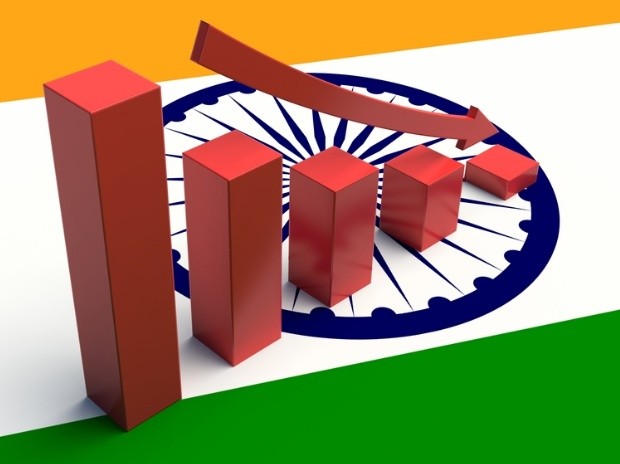
The economic impact of the Covid-19 pandemic in India has been largely disruptive. India’s growth in the fourth quarter of the fiscal year 2020 went down to 3.1% according to the Ministry of Statistics. The Chief Economic Adviser to the Government of India said that this drop is mainly due to the coronavirus pandemic effect on the Indian economy. Notably India had also been witnessing a pre-pandemic slowdown, and according to the World Bank, the current pandemic has “magnified pre-existing risks to India’s economic outlook”.
Economists slashed GDP rates for the predictable future due to the obvious impact of the lockdown. However, it was also estimated that the country might bounce back quickly because its industry composition, with unorganized markets being largely dominant. Losses from organized sectors amounted to an estimated nine trillion rupees in late March, projected to increase with the prolonging of the lockdown. As expected, the most affected industries included services and manufacturing, specifically travel & tourism, financial services, mining and construction, with declining rates of up to 23 percent between April and June 2020.
Recently an industry survey that is jointly conducted by industry body Ficci and tax consultancy Dhruva advisors and took responses from about 380 companies across the sectors. It is said that businesses are grappling with “tremendous uncertainty” about their future.
According to the survey, COVID-19 is having a ‘deep impact’ on Indian businesses, over the coming month’s jobs are at high risk because firms are looking for some reduction in manpower. Further, it is added that already COVID-19 crisis has caused an unprecedented collapse in economic activities over the last few weeks.
The present situation is having a “high to very high” level impact on their business according to almost 72 per cent respondents. Further, 70 per cent of the surveyed firms are expecting a negative growth sales in the fiscal year 2020-21.
Ficci said in a statement, “The survey clearly highlights that unless a substantive economic package is announced by the government immediately, we could see a permanent impairment of a large section of the industry, which may lose the opportunity to come back to life again.”
The survey found:
–In respect to the approved expansion plans, around 61 per cent of the respondents expect to postpone such expansions for a period of up to 6 or 12 months, while 33 per cent expect it to for more than 12 months.
–Surveyed firms of around 60 per cent have postponed their fund-raising plans for the next 6-12 months. Also, nearly 25 per cent of the firms have decided the same.
–Surveyed firms around 43 per cent have reported that they do not predict an impact on exports. Further, 34 per cent said that exports would take a hit by more than 10 per cent.
According to Du & Bradstreet, COVID-19 no doubt disrupted human lives and global supply chain but the pandemic is a severe demand shock which has offset the green shoots of recovery of the Indian economy that was visible towards the end of 2019 and early 2020.
Almost four months has passed, 1.3 Billion Indians have gradually adjusted to the new normal and its completely alright because there isn’t any option left for us. Health workers, security services are working tirelessly to ensure our safety. Centre and State government machinery along with supply chains for essential goods & services are doing best to ensure that food & financial security is available for those who need it the most. Let us all do a favour to our Incredible Nation by helping to constrain the virus, make wise use of unlock period to avoid another lock-down period.





 Eduindex
You must be logged in to post a comment.