5 Simple ways to practice self-love

Do you often hate yourself for the things you have done in the past or for who you are as a person today? Well, self-love is something that doesn’t come instantly, you will have to focus on all the good features and characteristics of yourself to truly love being ‘YOU’ as a person. However, don’t mistake self-love for narcissism. The concept of self-love is much broader than mere loving your outward appearance. Now, let’s explore the 5 simple ways, following which you can learn to embrace your true self.

1) Delete your past- the first step towards the process of self-love is to forget the bad events that had happened in your past and that often makes you feel miserable or guilty, today. Every individual has a past of their own, your past should not impact your present, no matter what! Let go of all the past memories that has the potential to make you feel bad about yourself in the present. Your past belongs to the past, don’t let it spoil your present, instead remember the lesson it taught and try not to repeat those mistakes again.Learn from your worst experiences and keep growing in life. Do not look back!
2) Don’t look for outside validation- don’t let people decide how you feel. In order to practice self-love you will have to stop seeking validation from others. Get dressed as you like, do whatever you want to,without seeking anybody’s validation. It’s okay if you do not get appreciated for the things you do by following your heart, well, that doesn’t  mean you should stop doing it. After all, at the end of the day, it is you who would have to be with your damn self, so don’t let anybody control your life. You should have control over your life and live it the way you want to without seeking anybody’s validation, otherwise it would cost you your happiness and peace of mind.
3) Have control over your thoughts- it is commonly seen that almost every person sees the good qualities in others while they cannot find one in themselves. This is where you start comparing yourself with others and then end up being depressed. Have you ever tried to find your best qualities and understand yourself better? Well, may be you have never tried doing so! It’s never too late though, try it today, to find all the good qualities in yourself and understand why are you better than the person you were comparing, in the first place. I am pretty sure, you will find a number of reasons to love yourself, now. Accept yourself with all your flaws. Everybody has flaws but that doesn’t make anybody less worthy of love.You are not defined by your imperfections as nobody is perfect in this world!
4) Forgiveness- Just like you should let go of your past, you should also forgive yourself and others. Doing this will help you appreciate yourself better and this would help you let go of any regret, guilt, and shame that you might have been feeling so far.
   Forgiveness is thus, the key to love yourself better. Just take a deep breath, let go and forgive!
5) Work on your goals- attach yourself to your life-goals than to any individual. This would help you stay away from the emotional clutches of people that we often find ourselves fall into, as a result of getting emotionally attached to them. As we all know, nothing is permanent, and most of the time people enters your life temporarily, so instead of letting yourself become dependent on them, better stay focused on your goals, and keep chasing your dreams. This would help you become self dependent and give you the strength to fight your own storms. By working on your goals and achieving them would give you immense joy and contentment, and you will feel better about yourself. Your self-confidence would get a boost and you would strive for achieving the best in life.
    So if you constantly hate yourself for the smallest of things you have done in your past or because you do not feel good about your appearance, then my dear readers, you should start implementing the above mentioned ways into your life so as to embrace your true- self and to stop holding yourself in a lower position than any other person. Every person is unique in their own way and is worthy of self-love!

Must-Watch Movies


Must Watch Movies

In the 20th century, movies and series have become easily available to everyone through either television or applications like Netflix, Amazon Prime Video, et cetera. A well-spent weekend is one packed with your favourite movies and shows non-stop along with a variety of snacks, you can enjoy this with friends and family or just yourself. With your favourite films of every genre and time just a click away, we have the power to watch movies we love the most, discover new ones, educate ourselves with documentaries, challenge ourselves with horror and thrillers, and much more.

• Bulbbul

Set back in time, Bulbbul is a movie which gives us insight into the problems that were and are still being faced by women of rural India. It is a story about a girl child who gets married into a good family but has to go through many traumatising incidents at a young age. She becomes a powerful woman who protects the women of her village by killing the men who threaten them, sexually or in any other way. In the end, Bulbbul comes back as a ghost to end the life of her husband who took away her happiness, used violence and left her alone to be wronged further by his brother. This movie is one of the best Bollywood films released in 2020. 

• Axone

The movie is named after a traditional Naga dish and shows the struggles Nort-eastern Indians face in the capital city of India. It stars Sayani Gupta, Lin Laishram, Tenzing Dalha and many more up and coming actors. In the movie, a group of friends attempt to make Axone while organising a small wedding for a member of their group but face more challenges than they expected because of the prejudice people hold against them. It shows multiple layers of differential treatment they receive, be it friendly or hostile. People in India need to watch this movie in order to be aware of the problems of North-eastern people. India will become truly inclusive only if all the citizens feel at home in every state of the large country. 

• Harry Potter marathon

The eight movies of Harry Potter are incredibly entertaining and well-suited for all ages. Binge-watching the Harry Potter series and discussing the return of the Dark Lord as well as Harry’s fate keeps us engaged and on the edge of our seats. In these tough times, these movies allow us to escape into a fantasy land which completely takes off our minds from the crisis we’re facing in our real world. Written by J.K. Rowling, the Harry Potter books are a masterpiece on which these movies are based. By the end of the movies, we can’t help but want more adventures of the three best friends, Harry Potter, Ronald Weasley and Hermione Granger. 

We should keep in mind that movies greatly impact a mind, especially a young one. Most of the movies being produced today have, at least a few, violent or aggress scenes. Some films may also have underlying tones of racism, sexism, homophobia, which they may knowingly or unknowingly promote. Thus, we need to be careful and should learn to identify movies which defame or discriminate against certain communities. Furthermore, we should also raise our voice against such films. 

90s cartoons is the best

Hello readers I am the intern of HARYALI organisation and want to share the best cartoons of our 90s which were unforgettable and in fact today also we can see them and have a fun and laugh time while doing this.So here are these best cartoons which remembers you your childhood time and you will be back to your childhood .Hope you all like this article😊

1.Tom & Jerry: This one is evergreen. It has managed to remain a classic and has both adults and children gaga over its simplicity and happiness-inducing episodes. It had a plethora of life lessons for its viewers as it traced the cat and mouse trajectory. Friendship, madness, goofy tales, rivalry – you name it, the show had it!

These Unforgettable Cartoons  From The 90s Will Put A Smile On Your Face

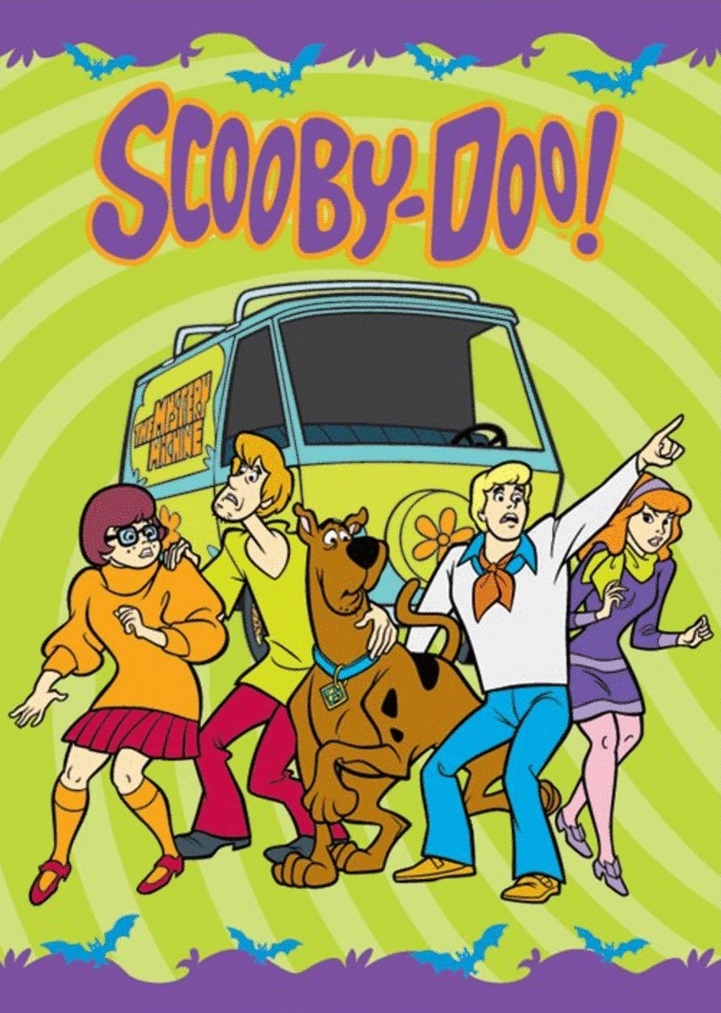
2. The Scooby Doo Show Ah, that lovely dog and Shaggy, who can ever forget Scooby doo? It was innocent and simply effervescent. Scobby Doo and his gang were adept at solving mysteries and to top it all off, it was hilarious to watch their antics, episode after episode. Everyone fell for that adorable, goofy dog!

Scooby Doo, Where Are You! (TV Series 1969–1970) - IMDb

3.Noddy: is the protagonist of the series. He is an imaginative young wooden boy who lives in Toyland. Although he is characterized as a kid with a kid’s imagination and fears, in Toyland he also serves as the main taxi drive.

NODDY the cartoon show - Posts | Facebook

4. Oswald : is a safety-conscious but fun-loving octopus who lives in an apartment complex in Big City with his dog, Weenie. His neighborhood is peopled with colorful characters like his pal, Henry the Penguin, Madame Butterfly, who runs the Big Diner, and her daughter, Catrina Caterpillar. Oswald likes to play the piano and sing, and he always does whatever he can to help his friends and neighbors.

100+ Oswald the octopus images | oswald the octopus, octopus, cartoon shows

5. The Powerpuff Girls : Somehow, a scientist using a recipe to create three perfect little girls resulting in pint-sized heroes turned out to be one of the most feminist and addictive cartoons of the era.

Amazon.com: Movie Posters The Powerpuff Girls - 11 x 17: Prints: Posters &  Prints

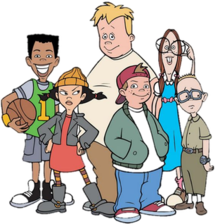
6.Recess :Class hierarchies received a thorough examination in the bright Recess, which revealed the inner workings of the complex social system that rules playgrounds everywhere.

Recess (TV series) - Wikipedia

7.Popeye :the Sailor is a fictional muscular American cartoon character created by Elzie Crisler Segar. The character first appeared in the daily King Features comic strip Thimble Theatre on January 17, 1929, and Popeye became the strip’s title in later years.

Popeye the Sailor (1933) - IMDb

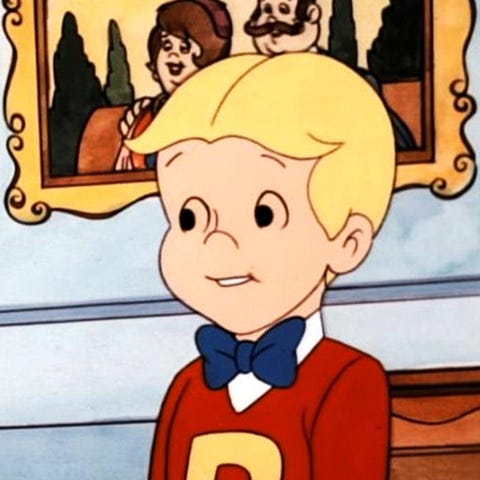
8. Richie Rich:A rich young boy finds his family targeted in an inside job and must use his cunning to save them.

richie rich cartoon

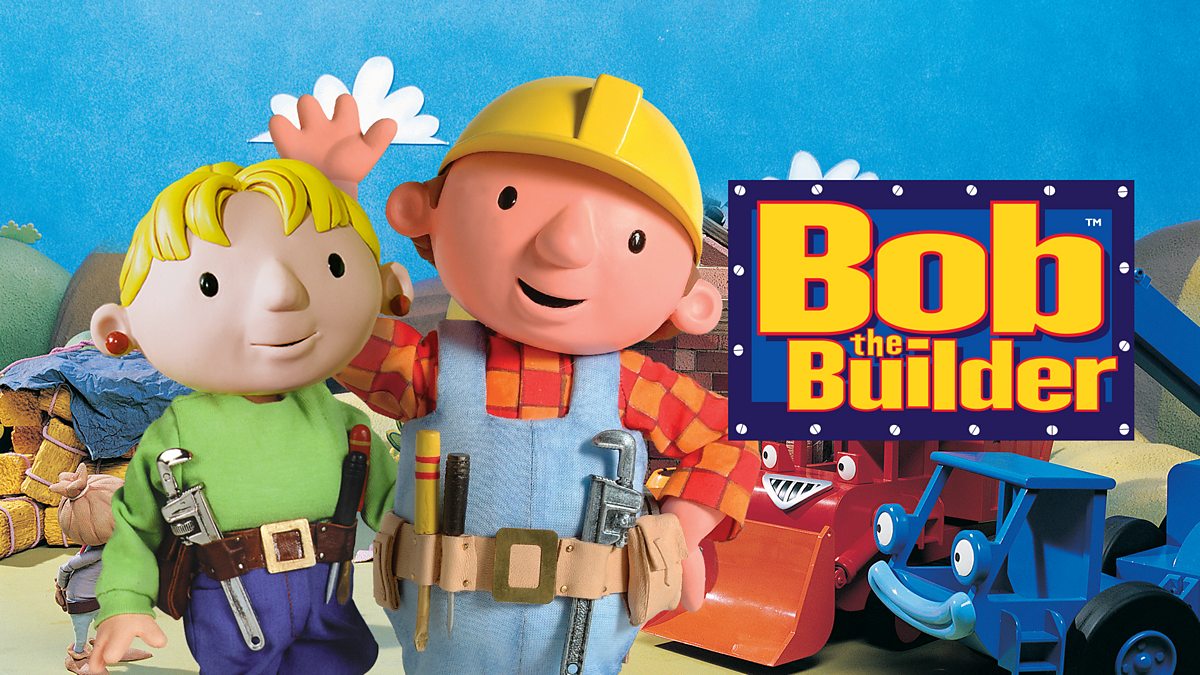
9.Bob the Builder and his machine team are ready to tackle any project. Bob and the Can-Do Crew demonstrate the power of positive thinking, problem-solving, teamwork, and follow-through. The team always shows that “The Fun Is In Getting It Done!” Bob the Builder can be seen building, digging, and hauling.

BBC - Bob the Builder: Series 6

10. Johnny Bravo is a blond egomaniac who just loves pretty women. With spoofs of Schoolhouse Rock! (1973), The Twilight Zone (1959), and other television shows and movies, Johnny Bravo, along with his mother Bunny and his cute neighbor Suzy (Mae Whitman), Johnny learns more about life – the hard way. 

Prime Video: Johnny Bravo - Season 1

11. Mickey Mouse takes on new adventures finding himself in silly situations in different settings.

Mickey Mouse Clubhouse (TV Series 2006–2016) - IMDb

THANK YOU 😊

Arignar Anna-The Great tamil politician

Will is victory if Knowledge is Power

Anna,Tamilnadu

Conjeevaram Natarajan Annadurai (15 September 1909 – 3 February 1969), popularly Arignar Anna (“Anna, the scholar”), was an Indian politician who served as 1st Chief Minister of Tamil Nadu for 20 days in 1969 and fifth and last Chief Minister of Madras State from 1967 until 1969 when the name of the state of Madras was changed to Tamil Nadu. He was the first member of a Dravidian party to hold either post.

He was well known for his oratorical skills and was an acclaimed writer in the Tamil language. He scripted and acted in several plays. Some of his plays were later made into movies. He was the first politician from the Dravidian parties to use Tamil cinema extensively for political propaganda. Born in a middle-class family, he first worked as a school teacher, then moved into the political scene of the Madras Presidency as a journalist. He edited several political journals and enrolled as a member of the Dravidar Kazhagam. As an ardent follower of Periyar E. V. Ramasamy, he rose in stature as a prominent member of the party.

Hindi was first recommended to be an apt language for official purposes in India by a committee headed by Motilal Nehru in 1928. This move was opposed by people and politicians of Tamil Nadu, since they considered that it would make them second class citizens when compared to that of native Hindi speaking North Indians.

Madras Anti Hindi agitation, 1965

When India became a republic with its own constitution in 1950, the constitution had given special status to the Hindi language, which was to gain official status after 15 years in 1965. This move was regarded with anxiety by students in Tamil Nadu. Speaking of making Hindi as official language of India, Annadurai said It is claimed that Hindi should be the common language because it is spoken by the majority. Why should we then claim the tiger as our national animal instead of the rat which is so much more numerous? Or the peacock as our national bird when the crow is ubiquitous?. In view of continued threat to impose Hindi, the DMK held an open-air conference against Hindi imposition at Kodambakkam, Chennai in August 1960, which Annadurai presided over. He gave black flags to leading functionaries, to be shown to the President of India during his visit to the state. Sensing an uprising, Prime Minister Jawaharlal Nehru assured in the Parliament that English would continue to be the official language of India, as long as non-Hindi speaking people desire. DMK gave up the plan of showing black flags and Annadurai appealed to the Union Government to bring about a constitutional amendment incorporating the assurance.

On 10 September 1968 Annadurai travelled to New York for medical treatment and he was operated for Cancer in the gullet at the Memorial Sloan Kettering Cancer Center. He returned to Chennai in November and continued to address several official functions against medical advice. His health deteriorated further and he died on 3 February 1969. His cancer was attributed to his habit of chewing tobacco. His funeral had the highest number of attendees until then, as registered with The Guinness Book of Records. An estimated 15 million people attended it.His remains were buried in the northern end of Marina Beach, which is now called Anna Memorial

Bharathiyar-Epitome of Tamil Literature

Rowthiram Pazhagu

Mahakavi Barathi

Subramanian Bharathi also known as Bharathiyar (11 December 1882 – 11 September 1921), was a Tamil writer, poet, journalist, Indian independence activist, social reformer and polyglot. Popularly known as “Mahakavi Bharathi” (“Great Poet Bharathi”), he was a pioneer of modern Tamil poetry and is considered one of the greatest Tamil literary figures of all time. His numerous works included fiery songs kindling patriotism during the Indian Independence movement.

Born in Ettayapuram of Tirunelveli district (present day Thoothukudi) in 1882, Bharathi had his early education in Tirunelveli and Varanasi and worked as a journalist with many newspapers, including The Hindu, Bala Bharata, Vijaya, Chakravarthini, the Swadesamitran and India. In 1908, an arrest warrant was issued against Bharati by the government of British India lived until 1918.

After his father’s demise with help from his relatives, he went to Varanasi or Kasi to learn about the religious customs. There he was educated in all areas of Hindu spirituality and gained the reputation of being a rebel. Once his education was over, Bharathiyar came back to Ettayapuram to continue his life with his wife. He abandoned many of the customs specific to his community. He cut his hair short, wore a turban or Mundasu, and refused to wear the Punool a white thread across his chest. His actions of not abiding by community rules caused a lot of protests from people from his community. Some close to him even regarded him as losing his mind. Though he criticized customs, he was a staunch devotee of Kalli Devi.

After a few years, he moved to Chennai and continued to work in a magazine and wrote against the British. His health saw no signs of recovery and slipped into more distress. One day while feeding the temple elephant of Triplicane temple, the elephant pushed him away. He fell on the ground and sustained head injury. His weak health status and head injury combined made him bedridden. And he passed away peacefully.

His words are way ahead of his time, and he is a strong supporter of violence if needed. He attended meetings organized by V.O.C.People used to gather in his session to hear his passionate speech and his attacks on the British. He participated at the Surat congress conference, where he met Bala Gangadhar Tilak.

Bharathiyar started to work in a newspaper published from Pondicherry and distributed across Tamilnadu, which carried the seeds of freedom and sometimes violence. His health was also deteriorating during this period and his earnings too. During his stay in Pondicherry, he met many of the extremists who were taken up weapons to bring down British rule in India. One of the crucial people was Savarkar, who was one of the accused in the collector Ashe murder case. Bharathiyar wanted to learn a sword fight, but his health was not in good shape to accommodate it. He coined the famous phrase.

Campus Politics

Politics is both a study and skill as to how power is exercised and by whom, through the administration of power, to manage people’s affairs. Politics is integral part of the operation of public education. Politics in education is not just about the ways of the election of student board members or local student councils but it is an integral part of day-to-day life. Political activity is about negotiations over the allocation of scarce resources and about deciding who gets what? But all political activities are not the same.

Political struggles in schools and colleges have different views and objectives. The introduction of student council’s and groups has led not only to a healthy student voice but it has become a tool for shaping young people’s minds for voting in the future. Young people today are more informed and civic minded than before and student organization’s provide opportunities for many opinions and various political interest on campus.

Students participate in a wide ranging programmes  including  forums, study groups and conferences. But the young lack the mindset and maturity to see the right respective. It is true that there are a lot of opportunities for people who want to take on leadership positions at the university and in other political organizations. Its elected members are representatives to the administration and the student community and at times the only representatives.

These are also responsible for sponsoring many of the programmes and services which are nearest and dearest to the students hearts like concerts, celebration etc. But another aspect of politics is that students get themselves involved in various outside campus political activities and spoil their results or carriers. They shouldn’t talk part in undemocratic activities within or outside the campus. However they should necessarily have awareness about the political development in their country.

Students of today are the future guardians of our nation’s destiny. They’re the moulders and builders of future India. Political consciousness, is therefore, an indispensable factor, contributing to the growth and development of a healthy public opinion on the part of the future pillars of the nation. But in no case should this young men and women be allowed to be used as cat’s paw of the selfish and self centred shoddy politicians.

Students of India must promote a sub line sense of discipline which is one of the first essential requisites of democracy. Should Indian students take part in politics or not has been one of the most baffling questions before our national leaders. During the British reign, Indian students, on one hand, where stirred up by a section of our leaders to take vagarious part in politics, while on the other advised by the pro-British moderate group of leaders to abstain from taking part in politics, however, we know that in the freedom movement of our country our students played they’re role as much seriously and vigorously as any other section of the community could have done.

Cooperatives: Providing Livelihood to people and empowering them with new jobs, new roles and new opportunities

Article by – Shishir Tripathi
Intern at Hariyali Foundation
In collaboration with
Educational News

In the present day times, where a virus is killing lives and people losing jobs each day, it is really important to have some skill, some qualification so that the contribution of an individual to the firm, to the organization or to the government cannot be ignored and the jobs are maintained like the previous times. But creation of new jobs is a slightly difficult thing at present and starting a business all on own is risky too. Now what next then?

This problem is being faced by most of the youth at present in India. To overcome this problem creation of Cooperatives by people can be a very great option. Cooperative society or Cooperative is an association or a group created voluntarily with the aim of fulfilling the common interests of its members.

One can easily decode cooperative as simply a group that is being created by people of similar interests or occupation that come together and start a new venture collectively.

People in many parts of India have come together at the local level and are running cooperatives together and earning good amount of income.
Starting a cooperative society is not so difficult task. According to Societies Act, 1860 a minimum of 7 people can form a cooperative.

For creating a cooperative, a proper mutual understanding between its members should be there regarding the work to be done, contribution of each member into the work done and other investments, distribution of profit after the work between the members and many more issues having a possibility of arising conflicts between the members of the society.
Cooperatives are different from other businesses because they function more for the benefits of their members rather than just earning profit for the investors.

Cooperatives are organized to provide competition, reducing costs, improving the bargaining power, expand new and existing market opportunities, improve product or service quality or both, and obtain unavailable products or services (those products or services that profit-driven firms don’t offer because they consider them as unprofitable).

In Businesses, the share of the person who has invested to the highest amount in the profit is highest. But in Cooperatives the profit earned is distributed among its members as per their contribution in the work or in the production process.


In the process of setting up of a cooperative, a core committee should be formed to represent the cooperative and those members who are good at a particular skill which is required for the growth of the cooperative.

Secondly, a proper study regarding the market should be done so that whichever product or service will be provided by the Cooperative, it gets its consumers in no time it arrives in the market.

All cooperatives have to be incorporated under the appropriate state statute. Selecting a legal counsel to draft or review the articles of incorporation and bylaws is equally important. A cooperative can start out with very basic bylaws and just refine them after developing the business plan.

Lastly, creating a proper plan regarding the techniques for efficient product of goods to be manufactured or following efficient ways to provide the services is important during setting up of a Cooperative. And also, it should be decided that how and when the services of the cooperative will be expanded in order to meet the demand requirements and overall well being of the members of the group.

There are many such examples of Cooperative societies in India that started from scratch and reached to a very high level in future not only across state borders but International borders too. Amul is one such example from India that started from the state of Gujarat in 1950 and is at the present the largest milk cooperative in the world. Amul is owned by 3.6 million milk producers and produces 4.5 million litres of milk per day with an annual turnover of more than 52,000 crores.


Another cooperative from Mumbai known as Shree Mahila Griha Udyog popularly known as Lijjat Papad brand created with the objective of empowerment of women by providing them employment opportunities. With total 43000 members all across the country, it has an annual turnover of more than 801 Crores producing Papad, soaps and detergents, Masale (spices), Gehu Atta (wheat flour), bakery products, Khakhra, Appalam, Chapati,etc.

Therefore people should talk about their interests and mission and collaborate together in the form of cooperatives and can work together and earn their livelihood and good profits by the means of production and various other services.

This needs to be read by every individual who’s not having job, or has lost his or her job, or fears to start a business all alone. Cooperatives will help people get stable income and overall prosperity to the locality, to the nation and obviously to the person who is working and his or her family too.

Modi Government Achievements

Modi can be judged on his government’s five year performance which are follows to read:

Ayushman BharatThe health insurance scheme launched on September 23, 2018, has already benefited 10 lakh poor patients and could be an electoral game-changer. More than 500 million Indians who could not afford medical treatment for non-communicable illnesses like cancer and heart disease now have access to free healthcare.

The Insolvency and Bankruptcy CodeThe legislation, enacted in December 2016, is the silver bullet to tackle India’s chronic problem of non-performing assets. Banks have begun to recover debts that had seemingly turned irretrievably bad. “Phone banking” has ground to a halt.

SanitationThe Swachh Bharat Mission has built toilets at an unprecedented pace. Since October 2014, over 92 million toilets have been constructed, covering nearly 500 million households in one of the world’s largest operations of its kind. Cultural habits, however, mean that open-air defecation remains endemic. Many newly-built toilets lack sewage facilities; others are being used as storage rooms. Nonetheless, a beginning has been made.

Digital transfer of subsidiesThis has cut out most (though not all) middlemen who routinely siphoned off large chunks of benefits due to the poor. Rajiv Gandhi, the then Prime Minister, had famously said in December 1985, while addressing the 100th anniversary of the foundation of the Congress, that only 15 paise out of every rupee in subsidies reaches the poor. With digitised transfers that figure has probably risen to 75 paise.

Free LPG cylindersUnder the Ujjwala Yojana scheme, women in villages now have access to cooking gas. This has both health and economic benefits. Over 60 million free LPG connections have been given with nearly 50 per cent going to SC/ST households.

PM Narendra Modi listed out the big decisions taken by the government in the last eight months. PM Modi said that the aim of government was to perform better as well as faster.

Here are the big achievements of the Government in the last eight months which PM Modi quoted at the Summit:

All farmers covered under the PM Kisan Yojana

Ensuring pension to farmers, laborers, shopkeepers

Ministry of Jal Shakti constituted to end silos on important subject like water

Special fund of Rs. 25,000 crore for completing housing projects for the middle class

Regularising unauthorized colonies which benefits 40 lakh people of Delhi

Law related to triple talaq

Law for strict punishment against child abuse

Law empowering transgender persons

Chit fund scheme fraud prevention law

National Medical Commission Act

Historical reduction in corporate tax

Strict law to prevent road accidents

Appointment of Chief of Defence Staff

Delivery of next generation fighter plane to the country

Bodo Peace Accord

Brue-Reang Permanent Settlement

Formation of Trust for a grand Ram Temple

Decision to revoke article-370

Decision to make Jammu, Kashmir and Ladakh Union Territories

Citizenship Amendment Act

Lathi Khela: A Lesser Known Art and Identity of Bengal

Martial arts and stunts are a treat to look at, and no one can tell me otherwise. In motion entertainment, this form of action is rapidly gaining an enthusiastic audience, thus steadily becoming mainstream. Even the basic moves, when exhibited accurately, looks tough but tempting altogether. Speaking of martial arts, the names and visuals that used to pop up in our mind would have been Karate, Tae Kwan Do or MMA. But, recent times, many indigenous forms are getting recognition, some more than others. It won’t be surprising if you have heard of Kalaripayattu, or Kalari (native to Kerala) or Gatka (native to Punjab). But, do you know about Lathi Khela? If not, how about we find out!

Origin and history

Lathi khela is a form of Bengali martial arts, and the practitioners and experts are termed as lathials. The origin of this art form can be traced  back to ancient South-East Asia, and was said to be practised by the then inhabitants of the region. The etymology of lathi khela can be described using two words, lathi, the Bengali means stick, and khela, which is translated to game. So, this whole word sums up to mean ‘game of sticks’. To this date, this form is practised, mainly in eastern parts of India and Bangladesh.

Lathi, or stick, the integral part of this art, is produced from male bamboo. This makes the lathi flexible and strong. The usual length of lathi is 2 to 2.5 metres. Sometimes, these lathis are also bounded by iron ring(s).

In earlier days, hiring lathials for security and protection was seen as a sign of status. Hence, it was a common practice in rich farmers and important personalities. Lathials were also sent to collect taxes, mostly forcefully, by the  zamindars. 

Mock fights, one on one, or in a group were also fought for entertainment. They were termed as Nori Bari and Baoi Jhak respectively. Many other styles of art forms that used sticks as fighting weapons are unambiguously classified as stick martial arts. 

A distinguished name in the field of lathi khela is Pulin Behari Das. He was a capable lathial and also trained young individuals in stick welding, swordplay and wrestling. Infact, he founded the Bangiya Byayam Samiti, an akhada,  in 1928 for the same purpose.  He also single handedly founded the Dhaka Anushilan Samiti, and taught hundreds of youth to wield lathi against the British firearms. The training made the lathi a formidable weapon and the lathials of Bengal were said to be dreaded even by the British, so was their agility and strength in wielding their weapons. 

Present scenario

In present times, lathi khela is treated more as a sport than a defense technique. And, sadly, both spectators and students learning lathi khela are decreasing at a steady rate. A veteran in the field of lathi khela, Kaushik Mazumder feels that they might be the last generation to see lathi khela in all its former glory. He pointed out that attempts to keep this art form alive are being made, but it is not working very well due to lack of interest and students who learn this. Another occurrence that solidifies this fact is that until 1989, Kushtia, Bangladesh used to organize an annual lathi khela tournament, which was graced by teams from all over the country. But due to decline in demand, this event is now organized once in three years. In India, lathi khela is practiced at an organizational level only in Bharat Sevashram Sangha. And demonstrations have become far and rare, mostly at regional ceremonies.

With appropriate interest and culturing, this art form can be revived to a new glory. At present, lathi khela needs recognition and acceptance in the masses. Let’s hope and help  lathi khela get its due in near future. 

Website References:

https://en.wikipedia.org/wiki/Lathi_khela

https://www.getbengal.com/details/bengal-s-lathi-khela-is-an-answer-to-modern-martial-arts-does-it-survive-today

Seven Fundamental Rights in Indian Constitution

Indian Constitution is the longest Constitution in the world. It’s because india has several religions. Each state differs from its religion and language with the other. Indian Constitution contains 395 articles and 8 schedules and is about 1,45,000 words making it the longest national Constitution to be adopted. We have seven fundamentals rights in our Constitution. Let us now know each of them.

Fundamental rights are written in the third part of the Constitution. The fundamental rights can be defined as the basic human rights. The main prospective behind these seven fundamental rights was to preserve the idea of equality. Let us know each one of the seven fundamental rights clearly.

Right to Equality

Right to equality can be simply explained as the right to live with equal opportunities. It includes equality before law, prevents or prohibits discrimination on various grounds like caste, religion, birth place, race and gender. It also includes untouchability, equality of opportunity in employment.

Article 14 guarantees equality before law as well as equal protection of the law to all people within the territory of India. Article 15 prohibits discrimination on the grounds of religion, race, caste, sex, place of birth, or any of them. Article 16 guarantees equality of opportunity in matters of public employment and prevents the State from discriminating against anyone in matters of employment on the grounds only of religion, race, caste, sex, descent, place of birth, place of residence or any of them. Article 17 abolishes the practice of Untouchability in any form, making it an offense punishable by law. Article 18 prohibits the State from conferring any titles other than military or academic distinctions, and the citizens of India cannot accept titles from a foreign state.

Right to Freedom

Article 19 guarantees six freedoms in the nature of civil rights, which are available only to citizens of India. These include the freedom of speech and expression, freedom of assembly without arms, freedom of association, freedom of movement throughout the territory of our country, freedom to reside and settle in any part of the country of India and the freedom to practice any profession.

There are also some restrictions on these freedom rights to avoid conflicts.

Right against Exploitation

The right against exploitation is contained in articles 23-24. It contains some provisions to prevent exploitation of the weaker sections of the society by individuals or the State.

Article 23 prohibits human trafficking, making it an offence punishable by law, and also prohibits forced labour or any act of compelling a person to work without wages where he was legally entitled not to work or to receive remuneration for it. Article 24 prohibits the employment of children below the age of 14 years in factories, mines and other hazardous jobs.

Right to Freedom of Religion

the right to Freedom of Religion is explained in the articles 25-28. It provides religious freedom to all Indians.

Article 25 guarantees all persons freedom of conscience and the right to preach, practice and propagate any religion of their choice. Article 26 guarantees all religious denominations and sects, subject to public order, morality and health, to manage their own affairs in matters of religion, set up institutions of their own for charitable or religious purposes, and own, acquire and manage a property in accordance with law. Article 27 guarantees that no person can be compelled to pay taxes for the promotion of any particular religion or religious institution. Article 28 prohibits religious instruction in a wholly State-funded educational institution, and educational institutions receiving aid from the State cannot compel any of their members to receive religious instruction or attend religious worship without their (or their guardian’s) consent.

Right to Education and Culture

It is explained in articles 29 and 30. This right is to protect the rights of cultural, linguistic and religious minorities, by enabling them to conserve their heritage and protecting them against discrimination.

Article 29 grants any section of citizens having a distinct language, script culture of its own, the right to conserve and develop the same, and thus safeguards the rights of minorities by preventing the State from imposing any external culture on them. It also prohibits discrimination against any citizen for admission into any educational institutions maintained or aided by the State, on the grounds only of religion, race, caste, language or any of them. Article 30 confers upon all religious and linguistic minorities the right to set up and administer educational institutions of their choice in order to preserve and develop their own culture, and prohibits the State, while granting aid, from discriminating against any institution on the basis of the fact that it is administered by a religious or cultural minority.

Right to Constitutional Remedies

The Right to Constitutional Remedies empowers citizens to approach the Supreme Court of India to seek enforcement, or protection against infringement, of their Fundamental Rights.

Right to Privacy

Right to privacy is the latest right of our country being recently approved by the supreme court of Iindia. According to this right we are liable to keep our material private and without our permission no one can interfere in our private matter.it applies to all our private material also.

Right to Property was removed from the Indian Constitution in 1978. It is no longer counted as a fundamental right.

Some of the information to make up this article was taken from Wikipedia to provide the information with a great reference and in simple words.

Creation of Time: Time Management


Time management is concerned with managing your time efficiently so that all your daily tasks can be completed in a systematic system. One who can follow his timetable correctly can complete almost any task successfully. This is the reason that time management is necessary and it is very important for people from different walks of life.

Time management is important in every field

Time management is essential for people belonging to different walks of life. Whether it is a student or a homemaker, working professional, freelancer or business professional, everyone should manage time to successfully carry out their tasks. Here is detailed information on the importance of time management for each of these groups:


Importance of time management for students

Many such activities are included in this list from the time the student participates in various activities throughout the day and from getting involved in self-study to being fit by participating in additional exercise activities. In such a situation, if you do not arrange your time properly, then you will not be able to do any work efficiently.

Importance of time management for business personnel

If you are planning to start a business, discipline is the first thing that needs to be kept in mind and the first step to discipline is respecting time. In your business, you are the owner yourself, so you have more responsibilities on you rather than working for someone else. To handle everything efficiently you have to start everything by streamlining your time resources.

Importance of time management for homemakers

Housemakers toil throughout the day. Their task list is endless and if they do not manage their tasks properly then it may take them a long time to finish the work. Since they have to do different kinds of tasks every day, they need to prepare a list in the morning. They can prioritize tasks on their list and do them one by one. This will not only enable housemakers to manage their time efficiently but they will also feel a sense of satisfaction in their work.

Importance of time management for freelancers

Freelancers who do household chores, in particular, should ensure that they make a daily schedule and follow it faithfully. Most people who do household chores choose this option because they have to complete some other chores in the house. It is quite challenging to fulfil your systematic duties and professional tasks simultaneously. The key to handling both tasks together is managing your time efficiently. Identify the hours in the day when you can concentrate the most so that you can finish your business tasks diligently.

Importance of time management for professionals

Working professionals also need to perform well in their fields with increasing competition. They are expected to do something different so that their image will remain good in the eyes of their superiors, beating their fellow personnel. Professionals need to schedule their time so that they not only take time out for their normal work but also have enough time to do something different/new.

Tips for efficient time management

• List the work that is necessary

• Finish important tasks first

• Focus only on current work

• Learn to say ‘no’

• As soon as you start your work, put your phone aside

• Get 7-8 hours of sleep a day

• Have a healthy diet

• Exercise regularly

Conclusion

It may appear simple to look at but efficient time management demonstrates a person’s great qualities. You need to always be disciplined and constantly remind yourself why it is important to complete your tasks on time properly.

Cotton

Cotton is the smooth, fluffy staple fibre that grows around the Gossypium seeds in the Malvaceae family in a boll or protective case. The fibre is nearly pure. The cotton bolls increase the seed dispersal under natural conditions. This plant is a shrub from all over the world, tropical and subtropical, as America, Africa, Egypt and India include. Mexico, led by Australia and Africa, has the greatest diversity of wild cotton varieties. In the old and new worlds cotton was autonomously domesticated.

The fibre is spun into yarn or threads most frequently and creates a thin, respiratory textile. The use of cotton for fabrics has been known from prehistoric times. Figures of cotton produced in the Indus Valley Civilization dated to the fifth millennium BC and traces of cloth dating from 6000 BC were found in Peru. While it has been cultivated since ancient times, its invention reduced production cost and commonly used cotton gin and is currently the most widely used fabric of natural fibre in clothing.

At present world output figures are approximately 2.5% of the arable land worldwide, or 110 million bales annually. The largest cotton producer in the world, India. India. For several years , the United States has been the biggest exporter. Cotton, which is approximately 0.48 m3 and weigh 226.8 kilogrammes, is usually weighed in the USA in a bale.

In the Indian subcontinent, Indian cotton production increased in raw cotton, silk cotton and cotton textiles, under the Mughal Empire from the early 16th century until the early 18th century. In response to increasing market demand, the Mughals implemented agricultural reforms such as a new tax structure that favoured high-value cash crops such as cotton or indigo. Cotton cloth, which included manufacture of parts products, calicos and Muslim items available without bleaching and in a range of colours, was the largest manufacturing industry in the Mughal Empire. A substantial part of the empire’s foreign trade was carried out by the cotton textile industry. In early 18th century, India accounted for 25 percent of global textile trade. Indian cotton textiles, consumed across the world from the Americas to Japan, were the most important manufactured products of world trade in the 18th century. The Bengal Subah Province, particularly its capital, Dhaka, was the major centre for cotton production.

Up until the 19th century Indian textiles, particularly those from Bengal, continued to have a competitive advantage. Britain has invested in labor-saving technological innovation to compete with India, while introducing protectionist measures such as prohibitions and tariffs to limit Indian imports. At the same time, the rule of the East India company in India led to its deindustrialization and opened up a new British market for products. After its 1757 conquest, the assets acquired from Bengal were used to invest in UK industries, such as textile manufacture and to raise British wealth.

India is the world ‘s largest cotton producer. India’s cotton production was tied to 29 million bale by the United States Agriculture Minister in the 2019-20 period compared to the previous year’s 26 million bale. The latest estimates suggest that China will all overtake India with 27,75 million bales expected for the same season.

However, productivity per hectare is very poor despite these impressive figures. The Cotton Association of India (CAI) reports a mere 420.72 kg of cotton per hectare of cotton production in India, which is approximately 2.47 bales per hectare during 2018-19. In addition to practices which do not lead to higher income, this means greater land use, but lower-income for farmers. Industry experts think farmers should be aware of the safe practises of cotton.

Happy Engineer’s Day

Every year, the country celebrates September 15 as National Engineer’s Day to appreciate the contributions of Mokshagundam Visvesvaraya. The Bharat Ratna awardee, Visvesvaraya was born on September 15, 1861 in a village called Muddenahalli in Karnataka. He studied Bachelor of Arts (BA) from the University of Madras and pursued civil engineering at the College of Science in Pune.

A Bharat Ratna awardee, Visvesvaraya had studied Bachelor of Arts (BA) from the University of Madras and pursued civil engineering at College of Science in Pune.

As years went by, the Engineering community began to develop greatly that   in the early 19th century, so many changes on production techniques began to take place. As the British engineers then able to design a simple machine that was powered by steam. i.e the steam engine. This simple evolution in British technology brought about great benefits to the government as a whole. So many aspects of productions were improved. Which in turn boosted the economic strength of the nation. All industries soon grew up as labor was now assigned to their new machine. The transportation, power and other basic sectors of the nation’s economy soon diverted to the steam engine which brightened their economy in return. The engine was used to create electricity and also used to move caravans to aid transportation. As time went by, this

evolution was spread all over the world and then Engineering found larger grounds for exploitation.

Everywhere you look you’ll see examples of engineering having a positive effect on everyday life. Cars are safer, sound systems deliver better acoustics, medical tests are more accurate, and computers and cell phones are a lot more fun! You’ll be giving back to your community.

Engineers don’t sit back and watch – they make things happen. Using innovation, creativity and a wealth of knowledge, engineering graduates are impacting the world unlike any other.

The world is changing, and engineers are the ones behind so much of this development. The majority of today’s services and products had some element of engineering involved in their conception at least, paving the way to long, fulfilling and healthy lives for the people influenced by them.

Engineers must be critical yet creative; curious yet capable; as well as ready to handle the constantly changing world.

The wide range of disciplines that fall under the engineering title mean that no matter what the prospective student’s interest, there’s bound to be one facet of the sector they’ll find enticing and engaging. Whether its civil, electrical, chemical or mechanical engineering, if you like tinkering, creating, designing or building, the engineering sector has a place for you.

In an advanced technological world, we need engineers to bring ideas into reality. By applying the principles of mathematics and science, engineers develop solutions to the world’s biggest technical issues.

You could find yourself doing anything from building new bridges to developing electrical sockets for refugee camps; working on special effects for blockbuster movies or testing aircraft and aerospace products. With a myriad of positions open to engineers in almost every field, graduates happily welcome the huge choice of careers they have the potential to explore.

The engineering portfolio knows no bounds, but these people are all working to the same common goal: building a sustainable world. Whatever you wish to contribute to society through your engineering dedication, nothing compares to the knowledge that you’ve achieved something that’s impacted people’s lives for the better.

With this infrastructure, people can go to other place with more comfortable and faster. For example, engineer had created many type of vehicles such as car, motorcycle and airplane that make human life now easier to go to other place. This can reduce of used of more energy by human nowadays. It is also highly important on a human level such as roads, railways and aircraft which all of these are allow people to travel over varying distances. The importance of this for encouraging more frequent personal contact between people cannot be understated. Integrated design has made the system highly efficient, and time wasted by travelling has been significantly reduced. We also can travel to everywhere in the world by transport whether by air, water or land transport for business or holiday.

In our homes, schools, offices, agriculture, automobiles, banks, security, and so many other areas, we observe the applications of engineering. In fact, you may not be able to read this article effectively without the underground works performed by engineers before the final manufacturing of the device. Engineering is a faculty that have been making machines with unique properties everyday. It is filled with experts that have great innovative ideas.

The internet has helped many businessmen in the marketing of products and selling some useful services to their customers. People sit with their computers and advanced mobile phones and promote their businesses through this channel. Presently, there are many websites created where people go and render services to get paid in turn for the work well done. An example of such website is the one called Fiverr. This is a website that has been a source of daily bread to people from different parts of the world. There are dozens of services being offered by sellers in that website including web and graphics designs, promotion of books and other tangible goods, application designs, sound cloud works, writing businesses, and so many others.

Engineering plays fundamental roles in banking institutions of various societies. In a bank, there are many engineers that engineer the affairs of the banking activities. Without these engineers, the banks will not function effectively. Banks are advancing on a yearly basis and they have been demanding the services of the engineers (especially Software and Networking Engineers) to make the advancement unique. Engineering in banks has added a lot to the quality of services that banks render to their customers

Engineering as a profession is a major player in the twenty-first century. Engineering is a unique profession and it has been changing the face of the earth to good. The world is upgrading and seeing clearly because of the importance of engineering profession in our society. In this piece of write-up or essay, the author detailed out the importance of engineering as it relates to agricultural, banking, automobile, educational, marketing, and health sectors.

What Happens When You Starve yourselves?

Your body needs energy to do anything and everything. But what happens if you do not provide the box with this energy? What consequences would occur?

  • Mechanism

 A human body is immensely active and has a smart system in itself. It has a great ability to adapt itself into the new environment and new conditions. The only condition your body has with you is health and food to eat. We all know that energy can neither be created nor destroyed. It simply gets transferred. Supposing,the same are built so that the turbine spins and through which, electricity and fresh water can be obtained.  Here,mechanical energy has got converted into electrical energy. The electricity then flows to make use for domestic and industrial purposes. The electricity then,is  released in the form of heat energy. So,your body cannot really make energy. It simply converts one type of energy into the other. So unless you intake any eatables,the body does not have any energy. But…..then how do people in the hospitals for a longer period of time? Well,they are given supplements,maybe through the fluids injected into their body regularly. In fact, according to a site, supposing if a person in a condition of coma and cannot move at all. Many ,many things can happen when a person in  a state where he cannot move. First of all,the mechanical equipment, like the central line,the tubes,the cathedral( Yah,confusing to me as well) , these equipment stay at the same place,to inject the fluids. When a substance is left out,infections can commonly occur. These lines or tubes have everything that a microbe needs to grow. Now these same  lines travel  inside the patients body and not every time,it will get killed. The infection can also lead to be fatal and even statistics say that a certain amount of death occurs yearly due to the central lines getting infected. Sure,the environment in sterilized and all,but we are talking about the things which have actually happened in the past and present. Anyway,the point was that the nurses have to constantly clean the teeth of the patients and even gently jerk the hands. Almost every day. (So the next time you see some nurse in the corner,just don’t ignore them cause they are doing an awesome work out there.) But what if you stop eating,let’s say for three weeks?

  • Human fuel.

Some people call  food,the ‘human fuel of energy.’  Food is crucial for growth, development,for the organs in your body to work etc. But most people stay without food for about 6-8 hours sometime. What happens is,your body stores that glucose in the form of something called Glycogen.When you eat foods,your body previously stores this glycogen and when your body needs glucose,it will be provided in the form of this glycogen. But..then why do we faint? Fainting can be observed from many factors,the common one being when the brain does not receive oxygen. Why does it not receive oxygen? Well,many factors can be  taken into consideration,such as 

1. Standing for too much time. 

2. Standing under the sun for too much time.

3. When you do not eat food(but sometimes,the food which you’ve eaten,that food also needs energy to be converted into glucose which again makes you faint.)

After some days,your body moves into the phase of something called Ketosis. Ketosis is when your body produces  something called ketones which  is temporarily used as a fuel. But this is not enough. So the next phase is something very disturbing.Now,the body does not have any carbohydrates, so it sort of cannibalises the fats,the proteins in your body because your brain needs it desperately. But when proteins and fats are used to make glucose,your brain will be satisfied,but your body will be devastated. You’ll develop a bony structure as the body builders (proteins) have been burnt. And if you don’t stop now,it can even lead to death.

Fact- Something similar but less complicated occurs in potatoes. You must have noticed,the potatoes tend to sprout maybe due to humid Linares. How does it grow? It uses all the nutrition inside itself. But the potato will not grow until it obtains N,P,K (nitrogen, phosphorus, potassium)so the sprouting is nothing but wasted

Photo By Pixabay

Birthday Tribute to Sri Sarat Chandra Chatterjee: Also Popular in Andhra Pradesh and Telangana

For academic works, I had the opportunity to visit across the country (before my retirement on superannuation) and one of the names commonly I have heard mostly in the districts of Andhra Pradesh and Telangana whenever discussion on story and novels were cropped up   was  the great writer Sri Sarat Chandra Chattopadhyay (Chatterjee), alternatively written as  Sarat Chandra Chatterjee. He was born on 15 September 1876, now in Hooghly district of present West Bengal and passed away on 16 January 1938 in Calcutta/Kolkata. Sri Chatterjee was a novelist and short story writer. Most of his works highlighted the lifestyle, tragedy, suffering and struggle of the people of then Bengal also on the contemporary social practices that prevailed in Bengal. Based on his novels many films were produced in different languages and among these one very popular is Devdas. Based on Devdas   in Hindi 17 times different movies were produced by the film makers because the novel is very favourite to them for making films. In 1937 Assamese film based on Devdas was produced and the film was directed by Sri Pramathesh Chandra Barua. It is pertinent to mention that Sri Barua was born on 24 October 1903 in Assam, (Brahmaputra valley) and passed away at comparatively early age, that is, on 29 November 1951. He was a brilliant actor, director, and screenwriter. Prior to Devdas Assamese film, Sri Barua produced Devdas in Bengali in 1935 and in 1936 in Hindi. Also based on Devdas in 1953 a film under the title of Devadasu was produced in Telugu and Tamil languages (the later on changed name to Devadas).      

   Sarat Chandra ji had to struggle in his life although he studied at a village school but was forced to drop out of college due to his economic issue. He spent most of his childhood with his mother at her family’s home in Bhagalpur, Bihar (in Bengali called Mamabari/maternal uncles’ house).

 After coming to Bhagalpur, Sarat Chandra ji was admitted to the scholarship class of ME school and by staying in Bhagalpur he wrote many stories. At the age of 27, he went to Rangoon (now Yangon, Myanmar) and joined as a clerk in a government office and published his first short story Mandir that won the Kuntolin Puraskar. He stayed in Rangoon for 13 years and after that he returned to Bengal, and started writing. He was a favourite among the readers for his publications in Jamuna and Bichitra. Among Sarat Chandra ji’s  many popular novels, few are mentioned here – Devdas (written in 1901 but published in 1917), Parineeta (1914), Biraj Bou (1914), Palli-Samaj (1916), Srikanta (in four parts; 1917, 1918, 1927, 1933), Charitraheen (1917), Grihadaha (1919), Pather-Dabi (1926), Shesh Prashno (1931), Bipradas (1935) etc. I wish to mention here among his other stories  Mejdidi has greatly touched me. Based on the story in Hindi and Bengali films have been produced under the title of Majhli Didi and Mejdidi respectively.

On this auspicious occasion of his birthday, great salute to respected Sri Sarat Chandra Chatterjee.  

Dr Shankar Chatterjee, Hyderabad