Kangaroo Care: A Bonding Experience With Advantages

Parenthood is a huge responsibility. Parents strive to have a good bonding with their children. Do you know that bonding opportunities start right off with the birth of the child? And with other scientific advantages. This bonding experience is scientifically termed as Kangaroo Care. So what does it exactly involve? Let’s see

Introduction

Kangaroo mother care, also known as skin to skin contact, is a treatment used by the medical workers in the cases of preterm underweight babies. Though it also has an integral part in the newborn care routine, it is of special significance for taking care of the premature low weight baby. The skin to skin contact primarily reduces the chances of the baby contracting hypothermia, while under neonatal intensive care. Apart from that, it helps to regulate and stabilize the baby’s cardiovascular and respiratory parameters, lowers the chances of contracting infections from the surrounding and also have a steady weight gain. 

Deriving similarities with the specific marsupials, who carry their younger ones around in a pouch, this medical phenomenon thrived in the 1970s, when there was a shortage of neonatal care services and equipment for premature low weight babies. Also, there were trends of high infant mortality rates and large number of infection cases. Originally started for the full term babies, this technique soon gained prominence in premature care techniques.

Requirements and Objectives

The preterm babies who weigh less than 1500 grams and can breathe without any external support are the primary cases requiring KMC. Babies under monitoring or some other specialized medical care are not eligible to get KMC initially. For premature low weight babies, a weight increase rate of  15-20g/kg/day is considered to be ideal.

Under KMC, some parameters like temperature and heart rate are checked regularly. Also, monitoring for any symptoms of apnea, diarrhea, yellow skin, convulsions are done.

Kangaroo care has a primary objective, that is to establish bonding with parents and/or family members. The physiological and psychological connect provided by this technique is very effective. Ideally, the contact must be from immediately after the birth and cleaning of the baby, till the first feeding . The baby would be wearing only a diaper and hat, and are placed over the parents chest for direct skin to skin contact. Apart from warmth, this also provides various simulations, essential for baby’s growth, like the vestibular stimulation from parent’s breathing and chest movements, auditory stimulation for parent’s voice and so on. The baby needs to be held in the fetal position for optimum contact. Usually the mother is the one to provide Kangaroo Care, as she also happens to have to feed the baby. But the father can too provide it. In some cases, even the family members also do it. The babies tend to develop attachment with the caregivers. A ground point is that the process should be as long as possible, and should be least disruptive. Normally, it is recommended for healthy babies for upto 3 months and for premature babies upto 6 months.

Advantages

Kangaroo Care has been associated with higher levels of parental confidence. Parents, who have done KC are more likely to be sure of themselves while handling the baby. It also decreases the anxiety levels in both the parents and in the child. Infact, it is recommended that babies should be held close to the skin during any medical procedure after their birth, as holding the babies close to skin reduces their pain. Kangaroo Care also provides a chance to the fathers to establish a very good bonding with the baby. This helps the baby recognize the father’s voice and also stabilize various physiological parameters. These children tend to have better sleep trends and cry less. They also tend to have better cognitive growth and in general, a better rate of growth and development in the long run. Another advantage is the smooth feeding process. Skin to skin contact stimulates the breast feeding response in the babies and hence, it becomes easy and less stressful for the mother to feed the baby. Apart from that, it is observed that the mothers who have participated in KMC tend to produce larger quantities of milk for a longer period of time. For the medical institutions too, KMC is an advantageous opportunity. With lower requirements for neonatal care units and expensive equipment, it also provides ample opportunity to educate the first time parents about some basics. And then, there is the advantage of reduced hospital stay.

With all these advantages, Kangaroo Care is here to stay!
https://en.wikipedia.org/wiki/Kangaroo_care

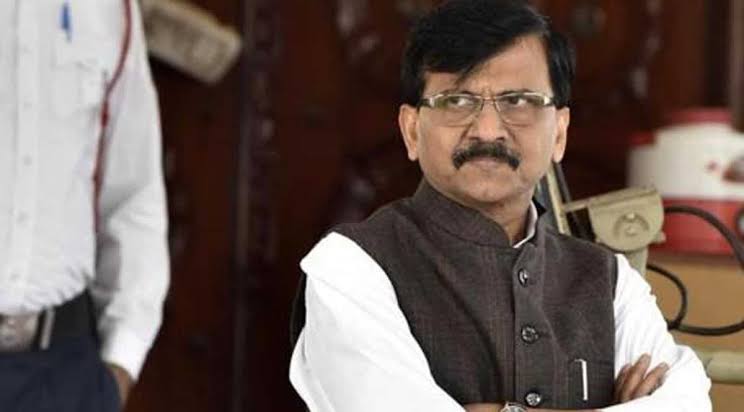
“Issues from Mumbai can be sent as parcel to Bihar” – Sanjay Raut

Sanjay Raut

A day after the Election Commission of India announced the schedule of Bihar elections to be held in three phases on October 28, November 3 and 7, Shiv Sena leader Sanjay Raut said if Bihar doesn’t have enough issues, Mumbai can parcel some. His jibe came in the backdrop of allegations that the death of Bollywood actor Sushant Singh Rajput, who hailed from Bihar, is being used as an election issue in Bihar.

“Elections in Bihar should be fought on the issues of development, law and order, and good governance, but if these issues have exhausted, then issues from Mumbai can be sent as parcel,” the Shiv Sena leader said.

The state police departments of Bihar and Maharashtra locked horns over the investigation into the death of Rajput who was found dead on June 14 at his Mumbai residence. Former Bihar DGP Gupteshwar Pandey accused Maharashtra Police of not co-operating with them. It is also being speculated that Pandey may join politics after he took a VRS.

The Shiv Sena may contest in the Bihar polls, Raut hinted. “Chief Minister Uddhav Thackeray will take a call on Shiv Sena contesting the Bihar elections in coming 2-3 days. The election in Bihar is held on caste and other things. Labour laws or farmers bills will not be an issue in Bihar elections,” Raut said on Friday.

The Shiv Sena leader has been made a party in the case pertaining to the demolition of Bollywood actor Kangana Ranaut’s office.
The MP has recently criticised the questioning of several Bollywood personalities by the Narcotics Control of Bureau in a drug case related to Sushant Singh Rajput’s death.

Beauty of Bhangarh Fort

Located at the border of the Sariska Tiger Reserve in the Alwar district of RajasthanBhangarh Fort is a 17th-century fort, famous all over India for being the ‘Most haunted site in India’. Because of the various ghostly encounters and incidents in the fort premises, communities have sprung up far distant from the fort, due to the fear of whatever lies inside. Even the Archaeological Survey of India or the ASI has blocked the locals and sightseers from entering the fort at nighttime. Several legends have attested to the paranormal happenings inside the fort.

The first myth claims that a king called Madho Singh built the Bhangarh fort after getting due approval from a hermit called Bala Nath who lived there; having accepted to a condition which stated that the umbra of the fort must never descend upon the house of the hermit. But as destiny would have it, one of the aspiring heirs of Madho Singh affixed to the walls vertically, thereby creating its looming obscuration to cover the dwelling of the hermit, cursed the fort after the huge construction and its shadow overpowered his home. The fort was doomed within no time. The alleged prophecy stood fulfilled, and the Bhangarh Fort became haunted.

Another myth tells of a black sorcerer or wicked saint who fell in love with a princess from the fort town and tried to use a love potion to win her heart. However, the princess detected suspicion and hindered the entire plot of the black magician by throwing the potion onto a boulder, which then rolled down toward the magician, physically crumpling him. Before taking his last breath, he cursed the fort, declaring it would end up in a quandary in which no one could endure—as it is today.

No one is permitted to enter the fort after sunset or before sunrise. The complete panorama is subsumed by a covering of gloom and a chilling emptiness once the last ray of daylight bids adieu until the next morning. There are several local stories about the paranormal activities in the fort. It depends on a person whether he should believe it or not. It is said that the apparitions wander in Bhangarh Fort at night and various unusual sounds are detected. Also, as it is said, anyone who enters the fort at nightfall would not be able to return in the morning. People perpetually sense as if their actions are being observed, and the air is filled with a dizzying burden. A board put up by the Archaeological Survey of India warns the visitors not to venture inside the premises of the fort during the dark hours.

On the bright side the fort is decently maintained, for the most section, Bhangarh’s remains today hold different noble constructions, including several temples, public chambers, and the royal palace. Upon entry, visitants will flounder into a variety of temples, including a Hanuman temple, a Ganesh temple, and a Someshwar temple. These constructions, embellished with elaborate carvings and statues, are reasons that Bhangarh is worth touring for not just the spooks.

Subhas Chandra Bose & INC

Subhas Chandra Bose was an Indian nationalist whose defiant patriotism made him a hero in India but whose attempt to abolish Britain ‘s rule with Nazi Germany and Imperial Japan during the Second World War left a disturbed legacy. The Honorary Netaji was first used in Germany at Bose in early 1942 by Indian Legion soldiers and by German and Indian officials at the Berlin Special Office for India.

In 1938 Bose said he believes that the INC “should have a double aim of winning political independence and creating a socialist regime on a large anti-imperialist front.” Bose became a national leader in 1938 and decided to consider the role of President of the Congress. He defended Swaraj without qualifications, including the use of force against the British. The outcome was a conflict with the President of Bose and Mohandas Gandhi who separated the NCP.

But Gandhi instructed Bose to make his own office. Bose tried to preserve unity. Bose and Nehru were separated by the rift. Bose appeared on a stretcher at the 1939 Congress. In the intra-congress struggle U MTHURAMALINGAM Thevar strongly supported BOSE was elected again as president over Pattabhi Sitaramayya as his preferred candidate. Thevar mobilised all the votes for Bose in South India. But Bose had to withdraw from the presidency of Congress because of the manoeuvres of the Gandhi-leading clique in the Congressional Working Committee.

In the Indian National Congress, on 22 June 1939, Bose formed a political party for the All India Forward Bloc to boost the political left, but its main strength was Bengal, its home state. The Forward Block was joined by U Muthuramalingam Thevar who from the beginning strongly supposedly supported Bose. Thevar organised a huge rally at his reception when Bose visited Madurai on 6 September.

When Subhas Chandra Bose was going to Madurai, he passed through the Madras and stayed for three days at the Gandhi peak at the invitation of Muthuramalinga Thevar to gain support to the Forward Bloc. He was quite impressed by his methodical and systematic approach and his steadfast disciplinary outlook on life despite his apparent dislike of British subjugation. In England, Lord Halifax, Lansbury, Clement Attlee, Arthurs Verde, Harold Laski, JB Haldane, Ivor Jennings, G D H Cole, Gilbert Murray and Sir Stafford Cripps, were shared with representatives from the British Labor Party and political thinkers.

He came to believe that, as Turkey’s Kemal Atatürk, for at least two decades, an independent Indian required socialist authoritarianism. Bose was denied a permission to visit Atatürk in Ankara for political reasons by the British authorities. Only the Labor Party and Liberal leaders agreed to meet him during Bose ‘s stay in England to arrange appointments with several politicians, though. Officials of the Conservative Party declined to meet him or show him kindness for being a politician from a colony. Even the dominion status of India was opposed by leading members of the conservative party in the 1930s. India became independent during Labor’s 1945–51 government, with Attlee as Prime Minister.

Bose called for a major civil disobedience movement to oppose Viceroy Lord Linlithgow’s decision on behalf of India without consulting the leadership of the congress. After Bose had failed to convince Gandhi that it would be necessary, in Calcutta Bose organised mass protests to remove the ‘Holwell Monument’ for the Calcutta Black Hole, which was then situated at the corner of Dalhousie Square. The British threw him into prison, but after a seven-day hunger strike he was released. The CID has been tracking Bose ‘s house in Calcutta.

Volatile After-effects of Volcanic Eruptions

Volcanic eruptions are fascinating,yet very much dangerous. But do we know the after effects of volcanic eruptions? Probably not. Well,let’s get to see them,shall we?

  • What are volcanoes?

Imagine you have kept a container filled with water , presumably to boil. After some time some bubbles start to arise. A volcanic eruption is similar to this. Our planet has three layers on it. The thin outer layer,the crust is the slightly cooler layer of the earth,on which we live! The second layer is the mantle,this layer is a bit thicker and considerably warmer than any of the layer. Which is just because the crust is so thin. The mantle is so thick that it’s divided into two parts. Nothing complex,namely upper mantle and the lower mantle. We humans have still not managed to crow even the starting point of the lower mantle. What could possibly be the reason? Well, firstly as you go deeper and deeper into the layer of earth,the temperature rates increase. Secondly,we just don’t know what awaits us inside the mysterious layers of earth! The next layer is the core,which is still burning,with hot magma and many different gases and chemicals. So,when the earth is cooling down,the core releases some magma through some vents,or maybe fissures,and that’s when volcanic eruptions take place. A lot of geographic explanation,but ya,worth that’s pretty much it.

Photo by Pixabay

Where can a volcano be? Volcanoes are usually found around the tectonic plates of earth (these plates keep on moving which usually causes various natural disasters). In fact, volcanoes come first in the list on the terms of natural pollution,releasing the various poisonous gases and the flaming hot lava(confused between lava and magma? Well,magma is the burning hot liquid inside the earth,but when magma is released into the crust,it gets a whole new name which is lava. Vague? I know) Which places can this volcanoes be? Anywhere! In the sense,on the sea beds,some places,rising above the sea levels,on terrestrial lands,ya they got their preferences. But we are interested in what happens after the explosion. Many consequences occur after the explosion of a volcano. Two of them,being weirdly very much fascinating.

  • Limnic  eruptions

Suppose a volcano has erupted inside the the sea bed. Does it have any medium to provide its gases? Nah,not really. So,what does happen? They accumulate of course! The mechanism through which the meantime water travels is,the water in the lower region travel upwards and the water in the upper region travel downwards.Confusing? Very much so. Anyways, mostly the gas which is released by the volcano is CO2 gas. CO2  gas is denser than air,so it gets accumulated inside the marine water than directly getting whiffed off into the air. Eventually,when the gas can no longer sustain inside,it explodes. And don’t think it to be a mild explosion. As a prior warning,before these types of explosion,the marine water becomes a bit warmer than usual and smells like rotten eggs(disgusting). Why do they smell like rotten eggs? Well,it maybe due to the time period of which the CO2    stayed inside the water or maybe some reaction which included some reactive elements, specifically, sulphur. Consequences? Keeping in mind that CO2  is a green house gas,and can result in the greenhouse effect,which means global warming,it is quite dangerous. Also,breathing these gases are highly fatal. Now you may be wondering,’ But….. I exhale CO2 which means my body actually produces CO2 ,do I not? Surely breathing it would not turn out to be dangerous….right??’ Not quite.The gas we release does not have the drastic concentration which a limnic eruption has,if the CO2  concentrations are higher than 10%,they are  fatal for you. Although these eruptions are quite rare,it’s not like they don’t happen at all right?

 Photo by Pixabay

  • Pyroclastic flow

Pyroclastic flow is when a volcanic eruption,instead of releasing lava,releases blocks,stones,gases etc. Why is this dangerous? Dangerous is quite not the word to describe it,my friend,more like lethal. What does it contain,you may ask. Pyroclastic flows basically contains a ‘high density’ of ash,volcanic base,pumice and various rock debris.  This flow can occur in various conditions. Breathing these gases would be like a high-five to death itself,and I am not kidding. They are extremely destructive due to the speed through which they travel and just destroy everything which comes in their way. Note that they may also take things with them, almost like hailstones,but horizontally. The temperatures inside the flow can go as high as 700° to 1000°C . And if you get inside the pyroclastic flow,you’d potentially be steamed. Fortunately though,humans have the necessary equipments to detect if there would be any future occurences. Again,they are not that common but they exist all right.

Photo by Jordan Corrales 

Also,if you reside in India,you have something less to worry. The only volcano which India holds is in the Andaman and Nicobar Islands, specifically,the Barren island. Barren island has been a dormant volcano from most of the historic periods but recently i.e in the year 2017,it started releasing smoke and some lava. Had don’t think of them so badly, because if these natural occurences had not happened,the continents would’ve never formed!

World Tourism Day 2020: Embrace the journey

When the virus put a break on life, a new world of sensations opened up. Trips were not stopped even during the period of house arrest. Disturbed and hurt in the constant war with the virus, the mind is in no hurry to reach anywhere. 
Sometimes on foot, sometimes on a bicycle, sometimes in the car, this phase of meeting with loved ones is as if the car of life has gone too far in the ‘back gear’. The road has become a favourite companion, so it is relaxing to get in the lap of nature. This stagnation is good for the life journey ahead in the ‘new normal’, where people who have become spiritual amidst the fatigue of pandemic, are meeting themselves among nature …

‘Silent, quiet and mysterious. A deep blue-green lake, a sky with matching colours and an endless horizon with huge mountains. In such an environment, why not leave the mind towards a world where there is the only relaxation. After getting into such an environment, things start to clear and only we as our companion. The coronavirus abruptly changes the mood, it often becomes spiritual.

There is life at the moment and you are not there at the moment. Therefore, the lap of nature gives relief to them, who am I after all? What is the purpose of this life? Such questions prepare the mind to struggle with reality again. People travelled regularly, at which the pandemic suddenly put brakes. But after unlock, travel has got a new meaning or expansion. People want to eradicate the bad experiences of a pandemic from it. After all, the mind is an ardent traveller.

It also travelled the country and the world during the time when it was to follow the strict rules of lockdown. Internet support was there. Enjoying virtual travel, mind got comfort. The coronavirus has not only adversely affected the travel industry but has also seen major changes. After the unlock, that is, now after the lockdown, after the opening of the closed life, the new trend ‘Revenge Travel’ should be started. Revenge means, after being closed for several months, people not only started going out of the house in response to it, but they are also enjoying it a lot.

Almost everyone breathed a sigh of relief after unlocking. But it is a big relief for those strollers, for whom travel is like medicine in the running life. 

‘New normal’ has made safety and hygiene i.e. cleanliness a major part of life and travel. People make travel plans of their choice and enjoy it. Road trips are getting a lot of priority. It can be said that road trip has joined travel in a new form during the pandemic, in which safety regulations are taken care of and now this travel will also become an important part.

Getting out of the car with acquaintances and getting out in a nearby area is becoming a major trend of travel today. It has more number of people who are working and is giving preference to booking in the surrounding areas, especially in the hilly areas, but there are also safety rules taken care of. Full help of technology is also being taken like MakeMyTrip has created an app for this which helps to ensure the journey only after mask and social distancing.

Right now people are preferring short distance travel. It is within a distance of about 300 kilometres. However, during the pandemic, it was seen that people also made long-distance trips during road trips. These were the people who left for the family home states. Now people are mostly choosing the places for peace of mind that can give them relief from the fatigue and stress caused by the pandemic. People are opting for the places like Himachal Pradesh, Uttarakhand, Rajasthan as well as Goa.

Every year ‘Tourism Day’ has a different theme. The tourism theme of this time is (Tourism and Rural Development). This is to provide employment to youth and people in rural areas. Tourism provides employment to many people. The cultural heritage of any country is also encouraged by tourism.

Namibia – a place to visit

Namibia, officially the Republic of Namibia, is a country in Southern Africa. Its western border is the Atlantic Ocean; it shares land borders with Zambia and Angola to the north, Botswana to the east and South Africa to the south and east. Although it does not border Zimbabwe, less than 200 metres (660 feet) of the Zambezi River separates the two countries. Namibia gained independence from South Africa on 21 March 1990, following the Namibian War of Independence. Its capital and largest city is Windhoek. Namibia is a member state of the United Nations (UN), the Southern African Development Community (SADC), the African Union (AU) and the Commonwealth of Nations.

The driest country in Sub-Saharan Africa, Namibia has been inhabited since early times by the San, Damara and Nama people. Around the 14th century, immigrating Bantu peoples arrived as part of the Bantu expansion. Since then, the Bantu groups, the largest being the Ovambo, have dominated the population of the country; since the late 19th century, they have constituted a majority.

In 1878, the Cape of Good Hope, then a British colony, annexed the port of Walvis Bay and the offshore Penguin Islands; these became an integral part of the new Union of South Africa at its creation in 1910. In 1884 the German Empire established rule over most of the territory, forming a colony known as German South West Africa. It developed farming and infrastructure. Between 1904 and 1908 it perpetrated a genocide against the Herero and Nama people. German rule ended in 1915 with a defeat by South African forces. In 1920, after the end of World War I, the League of Nations mandated administration of the colony to South Africa. As Mandatory power, South Africa imposed its laws, including racial classifications and rules. From 1948, with the National Party elected to power, this included South Africa applying apartheid to what was then known as South West Africa.

In the later 20th century, uprisings and demands for political representation by native African political activists seeking independence resulted in the UN assuming direct responsibility over the territory in 1966, but South Africa maintained de facto rule. In 1973 the UN recognised the South West Africa People’s Organisation (SWAPO) as the official representative of the Namibian people; the party is dominated by the Ovambo, who are a large plurality in the territory. Following continued guerrilla warfare, South Africa installed an interim administration in Namibia in 1985. Namibia obtained full independence from South Africa in 1990. However, Walvis Bay and the Penguin Islands remained under South African control until 1994.

Namibia has a population of 2.6 million people and a stable multi-party parliamentary democracy. Agriculture, herding, tourism and the mining industry – including mining for gem diamonds, uranium, gold, silver and base metals – form the basis of its economy. The large, arid Namib Desert has resulted in Namibia being overall one of the least densely populated countries in the world.

Tourism in Namibia

Tourism is a major contributor (14.5%) to Namibia’s GDP, creating tens of thousands of jobs (18.2% of all employment) directly or indirectly and servicing over a million tourists per year. The country is a prime destination in Africa and is known for ecotourism, which features Namibia’s extensive wildlife.

There are many lodges and reserves to accommodate ecotourists. Sport and trophy hunting is also a large and growing component of the Namibian economy, accounting for 14% of total tourism in the year 2000, or 19.6 million U.S. dollars, with Namibia boasting numerous species sought after by international sport hunters.

In addition, extreme sports such as sandboarding, skydiving have become popular, and many cities have companies that provide tours. The most visited places include the capital city of Windhoek, Caprivi Strip, Fish River Canyon, Sossusvlei, the Skeleton Coast Park, Sesriem, Etosha Pan and the coastal towns of Swakopmund, Walvis Bay and Lüderitz.

Windhoek plays a very important role in Namibia’s tourism due to its central location and close proximity to Hosea Kutako International Airport. According to The Namibia Tourism Exit Survey, which was produced by the Millennium Challenge Corporation for the Namibian Directorate of Tourism, 56% of all tourists visiting Namibia in 2012–13 visited Windhoek. Many of Namibia’s tourism-related parastatals and governing bodies such as Namibia Wildlife Resorts, Air Namibia and the Namibia Tourism Board as well as Namibia’s tourism-related trade associations such as the Hospitality Association of Namibia are headquartered in Windhoek. There are also a number of notable hotels in Windhoek, such as Windhoek Country Club Resort, and some international hotel chains, such as Avani Hotels and Resorts and Hilton Hotels and Resorts.

Namibia’s primary tourism-related governing body, the Namibia Tourism Board (NTB), was established by an Act of Parliament: the Namibia Tourism Board Act, 2000 (Act 21 of 2000). Its primary objectives are to regulate the tourism industry and to market Namibia as a tourist destination. There are also a number of trade associations that represent the tourism sector in Namibia, such as the Federation of Namibia Tourism Associations (the umbrella body for all tourism associations in Namibia), the Hospitality Association of Namibia, the Association of Namibian Travel Agents, Car Rental Association of Namibia and the Tour and Safari Association of Namibia.

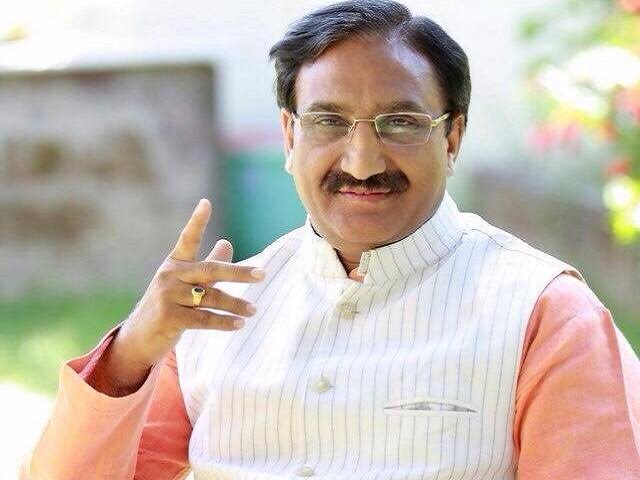
Ramesh Pokhriyal speaks on education in mother tongue.

Education Minister Ramesh Pokhriyal on Friday said that English does not have education in the Indian language and mother tongue as the National Education Policy (NEP) 2020 suggested that Indian languages be strengthened. He was speaking in a webinar on National Educational Policy 2020 – The Brighter Future of Education ‘organized by Assocham.

India got a new NEP after 34 years after it was passed by the Cabinet in late July and ambitious documents are trying to bring in a large number of changes that can completely transform India’s education system.

Changes in mother tongue as a medium of education up to class 5, as free education for all up to 18, removing the divide between vocational and non-vocational subjects, introducing multi-disciplinary education, 5 Scrapping the 10 + 2 structure for + 3 +. 3 + 4 structure in school education, changing board exam pattern, scaling MPhil, offering a choice between 3 or 4-year undergraduate courses etc.

An English is not an Indian language
The Education Minister said that English was not an Indian language and regretted that some felt that learning English was necessary for progress in the international arena.

“I must say that we are not against English, but mother tongue as a medium of education will help strengthen Indian languages,” he said.

People need to understand that English is not an Indian language. I want to tell those who argue that if we do not learn English then we cannot progress globally, we need to look at countries like Japan, Russia, Israel, France, America which all have their Provide education in language. Education Minister said

More than 1.5 million suggestions on NEP 2020 implementation
“The main objective of National education policy 2020 is to develop good human beings and not machines. It is a nation-centric policy, full of human values and in relation to innovation, knowledge, research, science and technology, it Will be on top. ” Internationally, ”Pokhriyal said in the webinar.

He also said that the government had received more than 1.5 million suggestions across India on how NEP 2020 could be implemented.

He also said that 10 countries had approached the Ministry of Education stating that they wanted to implement India’s new education policy in their countries.

University of Delhi to promote intermediate students with backlog for next semester.

New Delhi: University of Delhi has issued promotion criteria for intermediate semester students of undergraduate and postgraduate courses. According to an official notification, all UG and PG students (except for the Council Mandatory course, including the Non-Collegiate Women’s Education Board (NCWEB) and the School of Open Learning (SOL)), students will be allowed to pursue those subjects , In which they have failed.

“Students will be allowed to pursue subjects in which they failed in one semester or year and will be promoted next year,” an official statement said.

“However, such students may approve the syllabus for the examination in which they failed or in which they were absent, when the examinations are conducted by semester and term next year,” the statement said.

DU said that students in the second semester (part I) or fourth semester (part II) of undergraduate and postgraduate courses are eligible for promotion under the criteria.

Registered with the School of Open Learning and Noncollegiate Women’s Education Board (NCWEB) for second year UG courses under the annual mode and second semester (1 year), first year UG students under Choice Based Credit System (CBCS) Delhi. The university said that the School of Open Learning (SOL) is also eligible for promotion.

University of Delhi further stated that this provision is applicable only for the current academic session (2019-20) in view of COVID-19 epidemic. Courses administered by statutory regulatory bodies or councils will not be covered under this provision.

An interview with Dr. M.J Khan (IMPAR): Agenda, Future


Dr. M.J.Khan, President of Indian Muslims for Progress and Reforms (IMPAR) did an interview, where he discussed IMPAR’s agenda, political connections and future goals.

Indian Muslims for Progress and Reforms (IMPAR) where more than 200 prominent Muslims of India came together to create a national think tank and an apex coordination body to put forward the voice of progressive and modern Muslims and to collectively express their constructive views to the media and the nation.

IMPAR was made in a very hostile situation, there was a fear of existential crisis, If the lockdown had not been imposed, 10,000 to 15,000 Muslims would have been killed in the situation that was persistent in India in mid March.

When asked about how they succeeded as a organisation in such less time. Dr. Khan said that innovative and Broad thinking and welcomed constructive criticism were the major reasons for the Success of the organisation.

Dr Khan also addressed the issue of the Tablighi Jamaat and mentioned that, help from everywhere was needed and who indeed helped were very much appreciated.

He also clarified the Flying Rumours about the organisations inclination towards BJP. In his explanation he said that “ BJP is the central government and without talking to them our Point of View wouldn’t be heard and the agenda of IMPAR cannot be fulfilled.”

The ultimate approach of IMPAR is objective and business-like, which means that the approach that will benefit the community the most will be followed.

“It is very important for the Muslim community to reform and for that we need to be economically empowered.” Dr. M.J Khan said.
He also added, “We need to reach out to the corporate sector for guidance, and ultimately to mainstreaming the Muslims as it holds 96% of the jobs in the country and the rest is held by the government.”

The interview with Dr. M.J Khan was very fruitful and he in very simple words explained the agenda and ultimate goal of IMPAR. He also focused on the point that IMPAR has a long term plan and will do the best to for their community.

HAPPY DAUGHTER’S DAY!!

A woman has different roles to play in this society but the first and foremost role is that of a “daughter”. Being a parent to a daughter is one of the most beautiful things in the world. They say that having a boy child is a blessing but the truth is having a daughter is a blessing. Daughters are termed as the “Lakshmis” of the house. Daughters bring happiness and liveliness in the house. They have a different kind of bond with their parents. Especially every mother wants to have a girl child because then they have a different bond. Their friendship, their love, their loyalty, their small fights and everything else is so special. A daughter can tell everything to her mother.They are friends first.

Earlier the birth of a girl child was however considered a myth for the family. They thought daughters were useless and give no benefit for the family. Nobody spent on their studies thinking that one day they have to get married and are a burden on them . They thought this investment basically has no returns. But, with time things have changed. Now people have realized the worth of a daughter. They know that they are the heart of the house. Their smile spreads positivity. A daughter can never see a single tear in her parent’s eyes. She can never leave them alone just like a son does. A daughter’s love is unconditional. She is a reflection of her mother. To mold a daughter into a woman is the most important task for a mother. Because a woman reflects a society. And she is a root of the family. Nobody can deny that the girl will get marry one day. So to make her house a home she needs to have those and values and morals. And that she gets from her family.

But being parents to a girl is also the most challenging task. Because in today’s world where a girl is no more safe. It is difficult for her parents to stay tension free whenever she is out of the house or has gone out to study or maybe going out for a night out. They have this constant tension that their daughter stays safe. Education of girls is the most important thing and now people have realized it. Now they make sure that they give equal oppurtunities to their daughters and sons. We have so many daughters right from Kalpana Chawla to Shivangi Singh who are bring laurels for the country and making India proud. The Beti bachao, Beti padhao slogan is one of the apt slogans out of all movements so far. No daughter should miss the oppurtunity to study.

Daughters always encourage their mothers to be the best versions of themselves . She sees the kind of efforts she puts in keeping her family together and is always by her side. On this occasion of Daughter’s day, a big shout out to all the daughters out there who look after their family, who looks after her husband and her kids. Who looks after her in laws and everybody in the family. Whose Ego is smaller when it comes to saving her bonds because she knows the value of a relation ship. A shoutout to all the daughters who are balancing their personal and professional lives and doing no complains to anybody. A shoutout to all the women as they are avatars of Maa Durga. Who are standing firmly for their family and for themselves . Who can turn into “Kaali” as well when it is required.

A woman is the most precious in this world. Respect them. Don’t only worship Godess Laxhmi, learn to respect the ones in your house. Because wo hai toh hum hai, nhi toh Kuch nhi .

Start saying YES whenever an opportunity knocks your door

Article by – Shishir Tripathi
Intern at Hariyali Foundation
In collaboration with
Educational News

In life everyone has their own story, their own personal experiences. Some people are so happy with the life they are living or they’ve lived whereas some other people regret at the end about the things that they should’ve done or talks they should’ve said. But it always gets so late, whenever an individual realizes that he must go for it.

Life is simply a collection of opportunities and experiences. Each day, each person has got one more chance to do it, but people basically fall short of their confidence and say No whenever they’ve got the chance to do something different, something unique.

People always get a chance to prove them in either academics or sports. People always get a chance to start their hobbies and pursue their interests. People always have a chance to get their dream profession as their career or chose their passion. People always have the chance to prove their beloved, how they love them. People always have chance to return back to their good old days. It is entirely dependent upon the person that whether he is able to identify the chance or he/she really wants themselves to be the better versions of their selves.

People say that they’re not able to do it because they were never given a chance. But actually, life offered them chance but they were never able to recognize it.

In life, everyone gets the same time and yes almost similar opportunities to prove themselves. Some people are never able to realize that they have got a chance or they got opportunities in past too. Most of the people couldn’t distinguish opportunities. They always lose them either by not recognizing them or saying no whenever an opportunity knocks at the door. They want to stay in their safe and comfortable zone and don’t want to exit it even when something so good knocks their door. Point to be paid emphasis here is that even life events which can damage to our respect, dignity and cause ourselves to get in trouble are sometimes mistaken as opportunities which are needed to be grabbed.

Readers are hereby advised that by keeping their eyes and ears open in true sense and allowing the brain and giving it time to analyze that whichever opportunity is there at their door, is really important for them and will contribute towards their growth. It must be analyzed by an individual that whether the opportunity will cause any type of trouble to him or the opportunity which is right at their door is the one which they’ve always been waiting for or will it take them to their desired destination.

Examples of strong and influential personalities from different fields should be considered as an inspiration for grabbing opportunities at the right time i.e., whenever they knocked their door. Whenever a person is given chance in life to prove himself, to test his limits, to explore his talents, he / she must stay calm and eager to learn and explore and accept the opportunity thankfully and bravely.

That’s why it was rightly mentioned on page named

kalam_se_kaleje tak’ on Instagram:

A chance to learn something good or change one’s own self should never get wasted because of a bad mood or bad day at work, or at home”.

John Stuart Mill

A lot of scholars and philosophers alike have discussed the various notions of freedom for centuries. One such important notion is provided by John Stuart Mill. Mill’s contribution to the conception of freedom is extremely valuable. As one of the pioneers of conceptualizing freedom, his philosophy has shaped the trajectories of liberal democratic political models all over the world, from the 19th and 20th centuries to the present day and age.

His conception of freedom is contingent upon his philosophical method of inductive reasoning and his emphasis on empiricism from which he derives most of his theoretical formulations. Derived from the principle of utility, Mill believes that happiness can only be achieved in an environment of social freedom as stated by Leo Strauss and Joeseph Crospey. This means that in advocating the attainment for higher pleasures, his defence of liberty is consistent with his utilitarian beliefs.

Mill’s basis for defence of liberty rests on the foremost freedom i.e. speech and expression. Jill Gordon states, all ideas as per Mill, must be expressed freely to serve the ultimate end of human progress. Mill opposes all forms of censorship in this respect and advocates ideas to be freely expressed whether the opinion is true or false, he especially upholds the right of minorities to express their opinion.

Irrespective of its share of limitations, Mill’s contribution to political philosophy and other fields of study cannot be negated. In claiming the same, it is important to recognise that Mill’s idea of freedom especially freedom of expression has become the basis for the operation or even the definition of liberal democracies. Hence, the current trajectory of politics needs to be taken into consideration with respect to Mill’s ideas. With China’s growing surveillance with its repressive internet laws and censorship regime, especially with the current trend extending to transnational censorship, there is a need to consider Mill’s conception of freedom not just as a human right but also in context of the individual intellectual development.

The censorship regime in China curbs the intellectual development of citizens into becoming model citizens; according to a unified idea of the state, making subordination, easier. However, the lack of freedom of expression in an authoritarian model like China, does not negate the problems of seeing the former as a panacea in liberal democracies. Here, Mill’s ideas lack his vision in practice, irrespective of their theoretical merit. We see the negatives of unconditional liberty provided to media houses which are becoming all too powerful. Such power has resulted in the generation of fake news; through social media platforms and misinformation dominating public debate.

Though Mill would support the circulation of fake news; as part of intellectual development, the spread of misinformation is detrimental in many ways. When viewed as a panacea, freedom of expression also leads to mob tendencies and formulation of opinion based on bandwagoning. This largely leads to unfavourable democratic decisions. Therefore, while liberty cannot be compromised upon, Mill’s idea of freedom in today’s times needs to be constantly considered, as well as challenged.

Present is important.

“The past is gone, the future is not yet here, and if we do not go back to ourselves in the present moment, we cannot be in touch with life.” Thich Nhat Hanh

Our minds are constantly racing towards multiple thoughts. From waking up to snugging back into the sheets, anger for someone, regret for a mistake, worry for the future or fear of taking some actions keep lingering in the mind. But amidst all these thoughts, we simply forget to embrace what we have now.

Children are such wonderful teachers. If we want to remember ourselves, and what life is all about, we just need to observe a child for a few minutes. It won’t be long before we appreciate the joy, simplicity and presence that the child exudes, and perhaps we may even wonder, “How can I be more like her?”

The quality of being able to enjoy life’s simple moments is not far away. In fact, it is our natural state to do so. Children in their innocence and purity are powerful mirrors that show us what is innately within, and what we long to reconnect to—a presence that has never left us. They help us release a familiar spark from within that says, this is who I am, and always have been, deep inside.

We have spent a lifetime learning to sublimate our spirit, living in our heads, and disconnected from the NOW. Obsessing about the past and future has become our natural way of living. It has become habit, and the unnatural has become naturalized. What is hard has sadly become the norm, so much so that we have forgotten that the present moment even exists.

Remember, when you worry for your future, you may be anticipating unrealistic things that may not even come into your life. Moreover, controlling future circumstances is never the right concept. Whereas when you are stressing over the past, you are trying to mould things that will never be changed. And how to live in the moment?

Choosing to live in the past or in the future not only robs us of enjoyment today, but it also robs us of a true living. The only important moment is the present moment. With that goal in mind, we should start living our life in the present. That is, we need to live more in the moment.

They say that the present moment is all we have, and while our past and future are very real concepts, they are just other aspects of this now. Feeling fear and anxiety toward our future comes from neglecting our present and holding onto our past—so in order to enjoy our future, we must first learn to enjoy our present!

You are exactly who you need to be and where you need to be in this moment. Wishing or trying to be someone else or somewhere else only creates resistance to the present.

So allow yourself time to accept your past, feel openly and freely, and practice mindfulness—and know that by doing so, you’re not only living presently, you’re also creating the best possible future for yourself.

Find Happiness In Little Things!…

Rick was a scholar guy. He always used to top the boards. Everything was good with him except for his financial background. This made him scary and he used to be always under stress. Every little thing happening around would bother him deeply. He never dared to take risks in his life because of this fear. Rick was very much into himself and had very few friends in college. There was a girl in his class. She was always in a race with Rick for the first rank. She tried to talk to Rick at times but Rick’s fear made him run away from her. After a few days, Rick began to speak a little with her. She was a carefree girl, thinking about a single day at a time and living it at fullest and Rick used to be under stress every day thinking about the future. So basically, she was exactly the opposite of Rick. Now Rick was feeling comfortable being with her. He began to share things with her which he never did with anyone. He began to open up in front of her and she was just setting him free from his every single fear. She was an angel with a magical wand for Rick. She came into his life and changed it totally. Now Rick was confident about everything. He now dared to take risks to succeed. He even forgot that he had a fear disorder in the past. She made Rick meet his inner and actual self. Now Rick was a happy guy. Later they end up marrying each other and lived happy life together.
We also behave like Rick in our life. Rick is a character replica of Raju Rastogi from 3 idiots. We knowingly or unknowingly search for the one in our life who will set us free from all our scars and fears and be with us till the end.
When a human is born, the first thing it does is to cry. Crying is considered as a sign of sorrow. But our life begins only with a cry. It is the only time when your mother and loved ones smile when you cry. This is what tell us that there is happiness after sorrows.
You grow up. Life begins to show it’s a darker side to you. It’s the time when a face which used to smile on every little thing begins to cry and worry for everything. Our brain has the only job that is to think. When you encounter tough situations in life, your mind keeps on recreating the scene, again and again, making us anxious. You must have heard about the saying that you don’t laugh on the same joke again and again then why do you worry about the same thing again.