Don’t judge a book by it’s cover

The English idiom “don’t judge a book by its cover” is a figurative phrase which means “you shouldn’t judge significance of something by its outward appearance only”.

It is easier and faster to look at the instantaneous outer features of an object or a person. Many cannot deal with the troubling feeling of doubt (fear) when conversing with a stranger so to make it less challenging for themselves, they put a label on their new associate and act accordingly.

For example, you see a good-looking person and a bad-looking person. You know nothing about them except their skin colour, their physical traits and fashion. Then what? You make all sorts of thoughts and make a massive data in a minute just taking a look of their outward appearance. You may get attracted to the good-looking one but that could be a disaster for your life. He/she may not possess any real ability or talent. He/she can even turn out to be corrupt too. Outward appearance can be greatly misleading. There are utterly valueless things that look so good and taking them on their face value is foolishness.

Many people feel that you can tell a lot about a person by observing what they wear and what they eat. This is not the case. Choice of clothing and eating habits, in no way, allow you to pass judgment on a person. Judging people based on these factors is extremely shallow. What one wears and eats in no way depicts character, behavior, or even intelligence. One simply cannot know a person by looking at them and observing what they eat. Such a thought is ridiculous.Instead of looking at clothing and what one is eating, character should be the basis for opinion. Judging a book by the cover only leads to surprises, and in this case, judging a human by dress can lead to surprises as well.

This quote means a lot to me because when I had cancer and my physical appearance changes people judged my looks and thought horrible things about me. For example many who see a rough looking, skinny woman on the streets, who is really boney, may think she’s on drugs. There could be so many reasons why she looks like that.

You can not judge a book from the cover, but you can judge the website from its design. Before going into features and ease of use, people tend to evaluate and judge products and web sites early on the basis of appearance. The following design trend is necessary to make the product fresh and attractive. But is the design trend a panacea? Our designers know that the next design trend is an important part of our work, but we should not blindly use them. Not all situations are useful, useful, or applicable in all situations. Even a good trend may get worse and you may hurt the user experience. This is the reason we have to carefully use them, filter them and adjust them when necessary.We all know that you can not judge a book through its cover, but a good cover certainly will not hurt you. Like a wonderful hardcover book, we will give you a beautiful cover image to set the atmosphere of your photo gallery in your gallery. This cover image will add shine to the top of your gallery and welcome your visitors showing a full range of shine. The cover image fits seamlessly over the galleries, titles, descriptions, buttons (for purchase, slide, download), and all the navigation links displayed at the top of the photo. Since we do not want the cover image to cover all the stunning gallery pictures, we are very big so your gallery gets an amazing introduction they deserve without hiding the pictures under them Designed.I can not judge a book through the front cover, or I can not judge a book through the front cover. That is, you should not judge someone or something according to the appearance or the original appearance. If he loves her, I will be happy to them. You can not judge a book through the cover page. We may say that we do not believe in judging books through the cover, but according to the survey we have done it over and over again.

There is an old idiomatic phrase “Please do not judge a book on the cover.” This is a figurative phrase, “Do not prejudice something’s value or value by just looking.” Determining a book is probably one of the most exploited idioms, but it is certainly not the most commonly used. We do not deliberately dig down the surface, we live in a very superficial society where it is easy to see the surface. It is very troublesome to change this. In order to deeply consider one person, one thing, or one idea, people must maintain strict self-justification and ignore many prejudices.In many cases, our perception of others is greatly influenced by the appearance. Do not judge books on the front page – this is a sentence that everyone should have heard at least once in life. As people who are constantly judged and judged, we need to remember that everything is in a state of change. Therefore, assumptions and judgments increase the complexity of life. It is always a good idea to remove the colour lens.They said, “Do not judge a book on the cover.” Unfortunately, that did not happen. Until you get better you can judge each book with thumbnails and thumbnails of each video. In addition to throwing out part of the video thumbnails, viewers tend to judge the quality of the video through it. You should always avoid confusion and excessive text on thumbnails.

Instead of looking at clothing and what one is eating, character should be the basis for opinion. Judging a book by the cover only leads to surprises, and in this case, judging a human by dress can lead to surprises as well. Just because a man or woman may not dress as nicely, they’re not necessarily bad or even poor. The particular individual may not care what anyone thinks. They may dress a certain way just so people will pass judgment on them, some may just want the attention. This is often the case. One’s appearance can lead to many false judgments. By saying someone is a bum because of what they eat or wear shows total ignorance. If a person did nothing to better their situation, they can be considered bums.

The blacks had no say whatsoever in any of the events that held place in Maycomb, the main town mentioned in the book. In this book, one of the main characters, Atticus Finch, a noble gentleman, teaches his children, Scout and Jem the importance of not being prejudice, and that there should not be any differences between the whites and blacks. He teaches his children to be understanding, and to look at things from different people’s point of view, and to put themselves into other’s shoes. Despite his sister, Alexandra, being one of the most prejudice ladies in Maycomb, he ignores what everyone says of him, and sticks to his views believing that all whites and blacks should be equal. As a lawyer, he faces a stage where he has to defend Tom Robinson, a black man being accused of raping a white. Despite other’s views that he should not take this case seriously, he puts in all his effort into defending Tom Robinson, although he is aware that the chances of winning was zero.
The 1991 Indian Economic Crisis

The 1991 Indian economic crisis was an economic crisis in India that resulted from poor economic policies and the resulting trade deficits. India’s economic problems started worsening in 1985 as the imports swelled, leaving the country in a twin deficit: the Indian trade balance was in deficit at a time when the government was running on a large fiscal deficit. By the end of 1990, in the run-up to the Gulf War, the dire situation meant that the Indian foreign exchange reserves could have barely financed three weeks’ worth of imports. Meanwhile, the government came close to defaulting on its own financial obligations. By July that year, the low reserves had led to a sharp depreciation of the rupee, which in turn exacerbated the twin deficit problem. The Chandrasekhar sir’s government could not pass the budget in February 1991 after Moody downgraded India’s bond ratings. The ratings further deteriorated due to the unsuccessful passage of the fiscal budget. This made it impossible for the country to seek short term loans and exacerbated the existing economic crisis. The World Bank and IMF also stopped their assistance, leaving the government with no option except to mortgage the country’s gold to avoid defaulting on payments.

In an attempt to seek an economic bailout from the IMF, the Indian government airlifted its national gold reserves.

The crisis, in turn, paved the way for the liberalisation of the Indian economy, since one of the conditions stipulated in the World Bank loan (structural reform), required India to open itself up to participation from foreign entities in its industries, including its state owned enterprises.

Causes of the Crisis :

The crisis was caused by currency overvaluation; the current account deficit, and investor confidence played significant role in the sharp exchange rate depreciation.

The economic crisis was primarily due to the large and growing fiscal imbalances over the 1980s. During the mid-eighties, India started having the balance of payments problems. Precipitated by the Gulf War, India’s oil import bill swelled, exports slumped, credit dried up, and investors took their money out. Large fiscal deficits, over time, had a spillover effect on the trade deficit culminating in an external payments crisis. By the end of the 1980s, India was in serious economic trouble.

The gross fiscal deficit of the government rose from 9.0 percent of Gross Domestic Product (GDP) in 1980-81 to 10.4 percent in 1985-86 and to 12.7 percent in 1990-91. For the centre alone, the gross fiscal deficit rose from 6.1 percent of GDP in 1980-81 to 8.3 percent in 1985-86 and to 8.4 percent in 1990-91. Since these deficits had to be met by borrowings, the internal debt of the government accumulated rapidly, rising from 35 percent of GDP at the end of 1980-81 to 53 percent of GDP at the end of 1990-91. The foreign exchange reserves had dried up to the point that India could barely finance three weeks worth of imports.

In mid-1991, India’s exchange rate was subjected to a severe adjustment. This event began with a slide in the value of the Indian rupee leading up to mid-1991. The authorities at the Reserve Bank of India took partial action, defending the currency by expanding international reserves and slowing the decline in value. However, in mid-1991, with foreign reserves nearly depleted, the Indian government permitted a sharp devaluation that took place in two steps within three days (1 July and 3 July 1991) against major currencies.

Recovery :

With India’s foreign exchange reserves at $1.2 billion in January 1991 and depleted by half by June, barely enough to last for roughly 3 weeks of essential imports, India was only weeks away from defaulting on its external balance of payment obligations.

Government of India’s immediate response was to secure an emergency loan of $2.2 billion from the International Monetary Fund by pledging 67 tons of India’s gold reserves as collateral security. The Reserve Bank of India had to airlift 47 tons of gold to the Bank of England and 20 tons of gold to the Union Bank of Switzerland to raise $600 million.  The van transporting the gold to the airport broke down en route due to tyre burst and panic followed . The airlift was done with secrecy as it was done in the midst of the 1991 Indian General elections. National sentiments were outraged and there was public outcry when it was learned that the government had pledged the country’s entire gold reserves against the loan. A chartered plane ferried the precious cargo to London between 21 May and 31 May 1991, jolting the country out of an economic slumber.The Chandra Shekhar government had collapsed a few months after having authorised the airlift. The move helped tide over the balance of payment crisis and kick-started P.V. Narasimha Rao’s economic reform process.

Under Narsimha Rao Sir’s Government :

P. V. Narasimha Rao took over as Prime Minister in June, and roped in Manmohan Singh as Finance Minister. The Narasimha Rao government ushered in several reforms that are collectively termed as liberalisation in the Indian media.

The reforms formally began on 1 July 1991 when RBI devaluated Indian Rupee by 9% and by a further 11% on 3 July. It was done in two doses to test the reaction of the market first by making a smaller depreciation of 9%. There was significant opposition to such reforms, suggesting they were an “interference with India’s autonomy”. Then Prime Minister Rao’s speech a week after he took office highlighted the necessity for reforms, as New York Times reported, “Mr. Rao, who was sworn in as Prime Minister last week, has already sent a signal to the nation—as well as the I.M.F.—that India faced no “soft options” and must open the door to foreign investment, reduce red tape that often cripples initiative, and streamline industrial policy. Mr. Rao made his comments in a speech to the nation Saturday night.” The foreign reserves started picking up with the onset of the liberalisation policies and reached an all-time high US$426.1 billion as on 13 April 2018

Mahatma Gandhi and Martin Luther King Jr

The starkest commonality between Gandhi and King is undoubtedly their pursuit of a non-violent culture of peace. Non-violence for them, wasn’t a strategy of inaction but rather one of action. Their nonviolent methodology and idea of freedom brought about change not just in external laws and systems of governance, but also affected the minds of fellow humankind at large. So much so that their death wasn’t the end of the legacy but rather their ideas drew strength from it.

In a war-torn century, they stood as firm preachers of the non-violent ideology. This ideology served for their goals as a means to an end, which in the case of the two leaders was varying but the ideology also served as a means itself. While for Gandhi it was for the cause primarily India’s independence from colonial rule. He also focused on the structural violence within the community such as caste system. On the other hand, as for King Jr was concerned with the cause of civil rights movements and used non-violent measures as a form of mobilization for legal purposes. The two leaders developed theories that linked to a system that surpassed governmental laws. Logical reasoning attempted to help justify their approaches towards unjust laws. Gandhi focused a lot of his analysis on defining the true meaning of ‘civilization’ whereas King concerned himself with ceasing injustice. Both Gandhi and King discussed reasons regarding the use of non-violent actions to fight for their rights.

But even as their aims, so to say, were a bit different their legacy often tends to meet at a point. The credit for this goes not just to their non-violent strategy but at the same time, to how they chose to approach this. Gandhi attempted to include egalitarian traditions in Hindu religious thought in his fight against the caste system. Similarly, King summoned traditions of resistance in the African-American Protestant Church, with the idea of freedom at the core of it. Both these iconic leaders had come to recognize that the inner and outer divide, the religious realm, the political, are also related which proved crucial in their understanding of the existence of a fundamental link between personal and social transformations.

Mahatma Gandhi and Martin Luther King Jr, have been criticised by many for their lackluster understanding of the society as a whole, more specifically for having near blind faith in their ideologies. However, credit is indeed given where it’s due. There is a moderate consensus that the relevance of the two has carried forward the ages. A reason we can attribute to this is their basic thinking and vision were universal in nature. Perhaps that is the reason why in parts of the world we are able to still witness non-violence amidst of violence, attempt to seek equality amidst ever rising inequalities.

Born 59 years apart, yet united by ideology. The two great leaders, born, brought up, into different local contexts, may have meant different ways to seek problems, it may have meant difference in the analysis of their successes or failures but it did not mean disassociation between the two. The belief that nonviolent resistance is one of the most formidable weapons available to the oppressed sections were commonly shared by the two. The very fact that their ideologies managed to become synonymous with the idea of ‘people’s movements’ seen in many countries is testimony to the fact that their relevance is by no means over yet. It has stood its ground in the face of adversities. Its success or failure is always open to scrutiny and interpretation. Whether or not it survives the passages of time remains to be seen but it can be said that the bond that holds the legacies of the two stalwarts, lives on amongst us even today.

Evolution

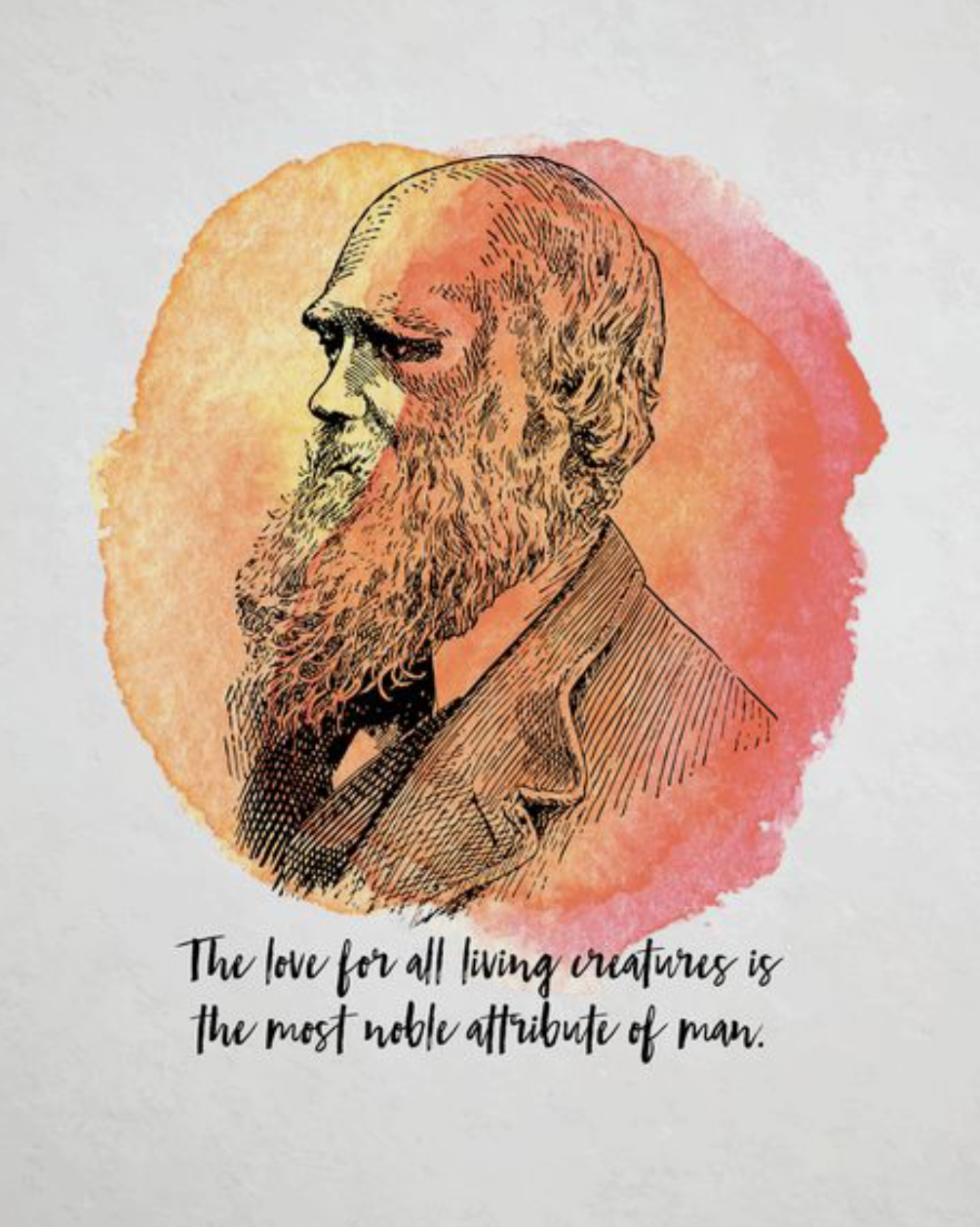
When you think of evolution the first name that comes to one’s mind is that of Charles Darwin. However, the fact is that he was not the first person to put forward the idea of evolution. Lamarck had suggested it earlier but the concept was not popular. In fact zoology professor Robert Grant lost his job because he supported Lamarck theory! An anonymous work titled, ‘The Vestiges of creation’ was ridiculed. It was Charles Darwin who first made the theory acceptable and he was able to do so because he supported it with a huge amount of evidence. Darwin, an English naturalist put forward his theory in a book titled ‘On the origin of the species’. He established that all species descended from common ancestors and that the different species evolved through a process he called natural selection. Darwin’s theory gained acceptance because it was able to explain the diversity of life.


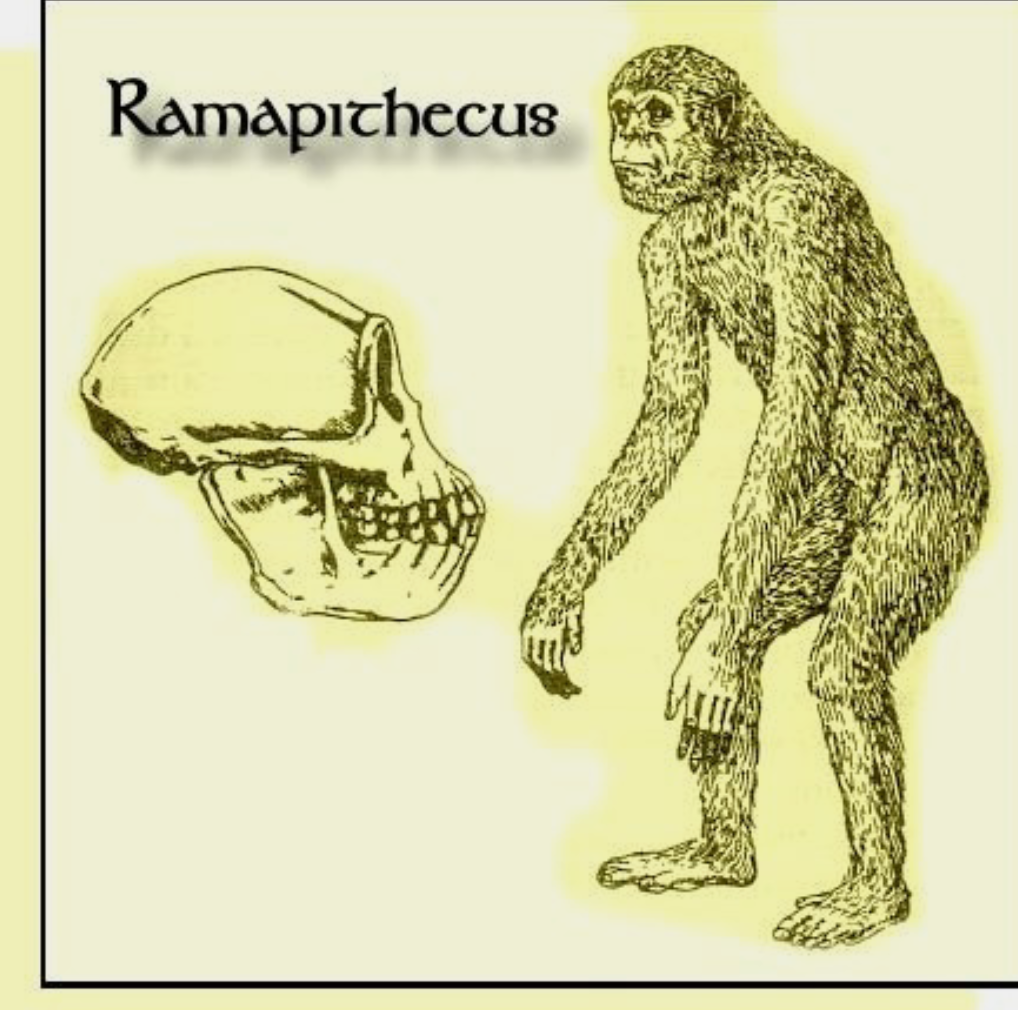
Ramapithecus belongs to an extent group of primates that lived from about 12 to 14 million years ago. Fossils of Ramapithecus were discovered in India and Africa beginning in 1932. Fossil evidence suggested that it had a short face, heavy jaws and enamelled teeth like hominids. Its importance lies in the fact that it was regarded as a possible ancestor of Australopithecus and therefore of modern humans. Later for sale finds indicated that Ramapithecus was more closely related to the orangutan and Ramapithecus is now regarded by many as a member of a group known as Sivapithecus.


It has been long known that humans share a common ancestor with apes but it was only in the last 30 years that techniques for develop to provide strong evidence in support of the theory that humans are more closely related to chimpanzees than they are to gorillas orangutans or Gibbons. The DNA of a chimpanzee is 98% identical to that of a human being. However our bodies adapted for walking on 2 legs. This is possible because the lower portion of the human body evolved to facilitate load bearing and balancing while walking upright. Chimpanzees not only share most of our genes they seem to be able to handle tools and they are able to grasp language pretty well too. Now researchers have found that we share a similar brain pattern when communicating. But in spite of these similarities there are clear differences in body structure intellect and behaviour.


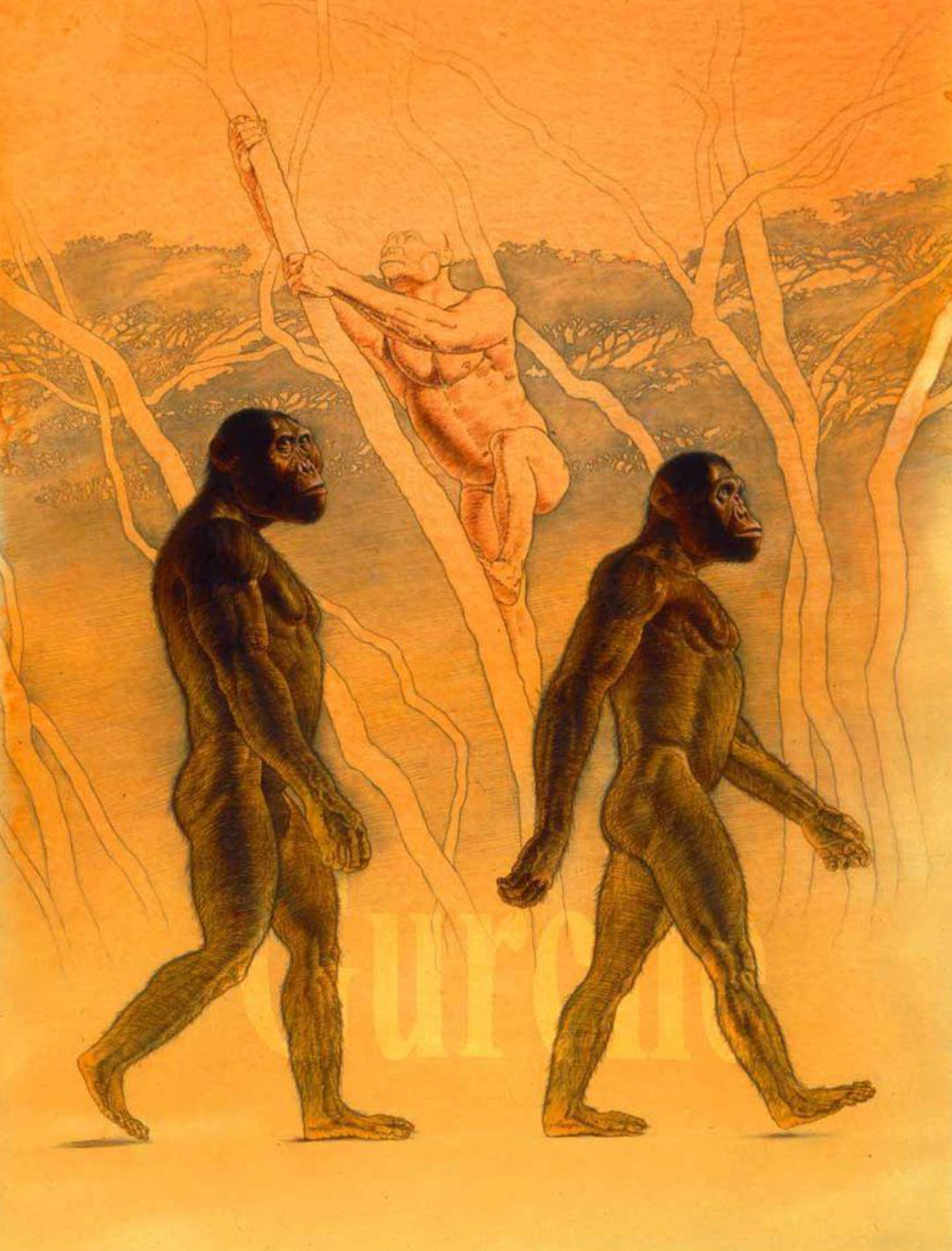
Australopithecus was an early hominid which is now extinct. Fossil evidence suggests that these individuals lived from approximately 4- 2 million years ago after evolving on the continent of Africa. Sense the fossils were recovered from south Africa they were called south African man apes or australopithecines. Australopithecines are believed to have been around 1 to 1.5 metre tall and probably fed on leaves fruits and the remaining of dead animals. Their brains were larger than those of apes but smaller than human brains while their teeth would like human teeth it is believed that Australopithecus eventually evolved into modern humans.


Neanderthal man first appeared in Africa about 200,000 years ago and migrated to the rest of the world around 100,000 years ago. The name Neanderthal comes from Neander valley where an early skull was found. Neanderthals would different from other species of early man. They were much taller and very strong for stop the brains were actually larger than ours are today. They were marvellous hunters. They often used caves as their homes. They were adept at fire making and probably cooked their food routinely. Neanderthals buried their dead. The Neanderthals died out by around 30,000 BC.
Cro-Magnon man lived some 40,000 -10,000 years ago. Their remains were first found in France in 1868 and then throughout other parts of Europe.

Cro-Magnon man was anatomically identical to modern humans and deferred significantly from Neanderthal man who disappeared in the fossil record shortly after Cro-Magnons appearance. Cromagnon man was tall and had an erect posture. He had a prominent chin a surprising forehead and skull shaped like hours. These man was killed hunters toolmakers and artists. Cro-Magnon man was a true human and looked just like us. He is represented by the remains of 5 individuals found in March 18683 adult males one adult female and one child.


•First family.
In 1975 Donald Johansson discovered the remains of at least 13 individuals of all ages at her there in Ethiopia. The sizes of the specimens varied greatly and Johansson believed that they all belong to a single species Australopithecus afarensis in which men were much larger than the females.

Thank you for reading. Have a nice day!🌼

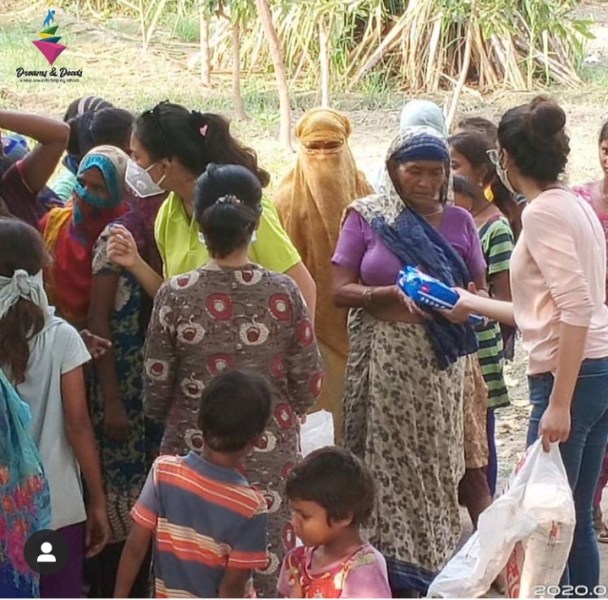
Dreams and Deeds Foundation

D&D it is a type of organisation which works for every single social cause of society.

As we know in this covid-19 whole world is suffering from financial problems . Migrants don’t have a job to run their life. As time passes, their troubles are increasing.

The government is also doing its best, but can we defeat this epidemic only by trying the government? No !

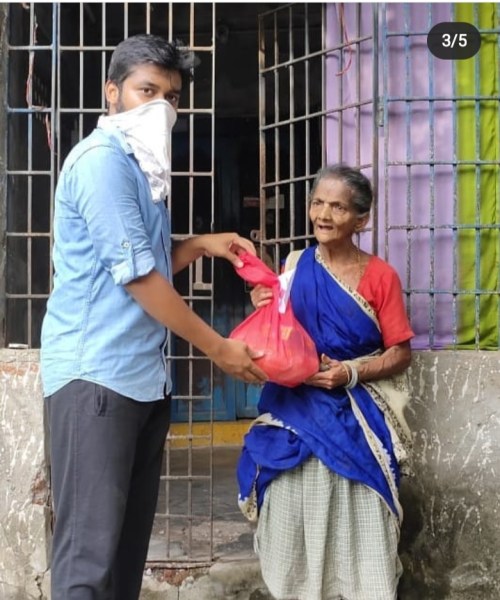
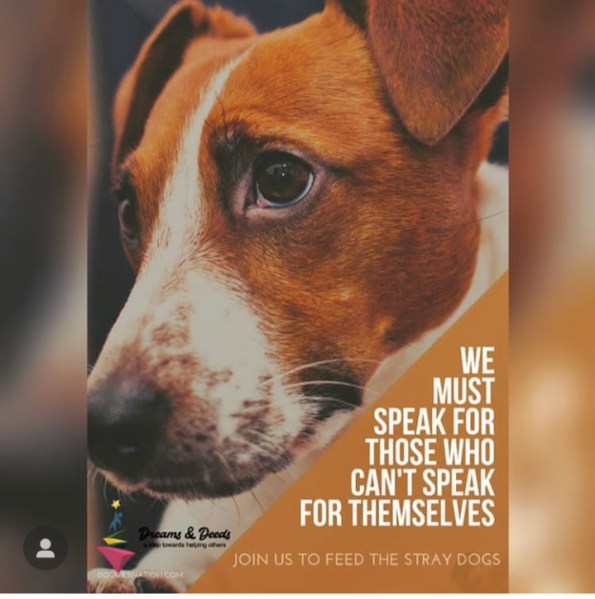
Many people need help. In the time of this epidemic, the Dreams and Deeds Foundation has emerged. And came forward to help those really need. the foundation take initiative to providing food sanitary pads and all the groceries to the migrants. As well as Foundation started feeding the animals this is one of the biggest and greatest step which is taken by dreams and deeds Foundation .

Providing groceries
Packets of the foundation for distribution
Initiate for feed animals
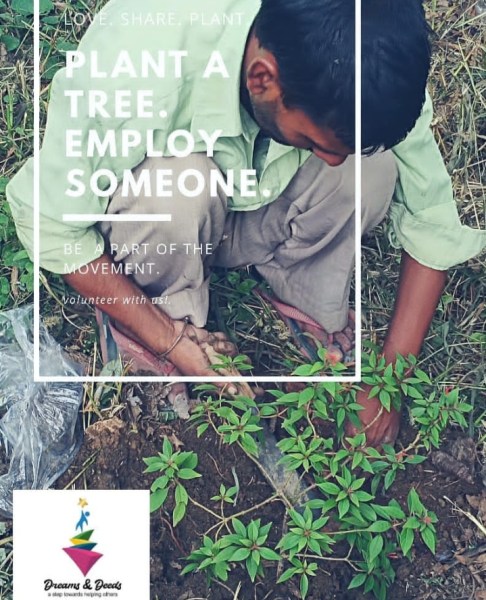
Plantation to protect the nature
Providing sanitary pads to women

So these are some main social cause on which Foundation is working like plantation to save the nature, feeding animals to protect them, providing sanitary pads to women for their safety in mensuration , providing groceries as well as concentrating on child education.

In this pandemic we really need a hand who can help us . A great work doing by the foundation and we all should appreciate it they celebrate every single day with lots of happiness and love. So let’s help them and do something new towards society.

For more query you can go on the Instagram page of the Dreams and deeds Foundation .

.

OPTIMISM.

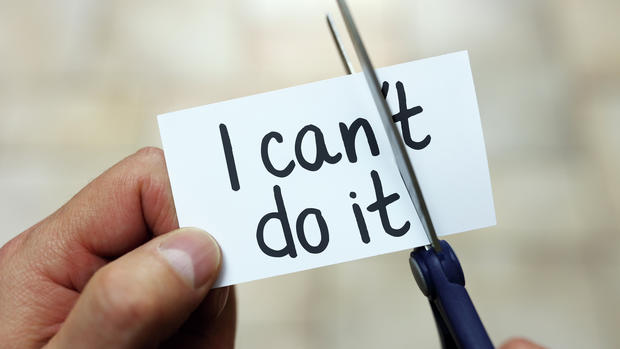
Umeed pe Duniya kayam hai is what we often here . If you want to carry one thing in life. Let it be HOPE. Hope that better things are always ahead. Man ka ho toh acha and Man ka na ho toh aur bhi accha is actually true because than God is planning something great for you. If you do not succeed today does not mean you will not succeed tomorrow Maybe you need a little more efforts. Take the past as your learning. The attitude of I cant do it should always be replaced by I Can do it. Because nothing is impossible in this world,even the word impossible says I M POSSIBLE.

Life is all about ups and downs .You can’t always go up and not fall down. There comes a point where you fail to achieve your goals but don’t get dis-heartened. Collect your efforts back and then pour them into the next activity you undertake. In this world of competition, we have started being too hard on ourselves . We tend to forget that we have a body and a mind that needs rest and positivity. When you on the path of optimism you being stronger and decide not to give up whatever the situation is. Optimism helps you to reduce stress or rather gives you the power to deal with it. You stay healthy and happier.

There are some famous personalities that have won laurels in their field because out of all the qualities they have the one accounts for Optimism . Mahendra Singh Dhoni, our ex captain cool is one of the finest examples of optimism. The amount of positivity and patience he has is unmatchable and appealing. Dhoni is an idol for the youth of this country and time and again he proves himself. He is the most calm personality one could see or meet. Another example is of the New Zealand captain KANE WILLIAMSON .Even after losing the World cup after so much of hard work and almost winning the trophy the smile he had that got viral on the social media and the words he spoke were so positive. He defined exactly why he was chosen to be the captain of India. If we see spiritually, Gautam Buddha is also a perfect example. His priciples were all about positivity in life and he always encouraged his disciples to follow the path of wellness and positivity .Even an ant teaches you optimism. It climbs and falls but still climbs the wall until it reaches its goal.

Your vibe attracts your tribe. So always stay with people who gives you positivity and who are positive themselves. With people who encourage you to be good and stay good. Who appreciate you in your highs and who encourage you in your lows. The kind of company you are in really matters a lot. You grow with them and if you are with people who are pessimistic your scope of growth disappears, because they will only tell you why you should not for something or why you should not try something again which is not at all good. Trying is the thing in life and if you stop trying you stop learning and you become unproductive. Not losing hope is important. You can not allow yourself to break. Gather the pieces and come back stronger. Stay positive. Positivity has a lot of power. If you think positive everything happens positive around you . Spread smiles. Don’t let anybody dull your spark. You are a star and therefore born to shine. Believe in yourself !!!

What is the right time to start, to decide?

Article by – Shishir Tripathi

Intern at Hariyali Foundation
In collaboration with
Educational News

Many people at present (and in past too) have very big dreams for their life. Dream of getting their desired profession, getting their dream car, having their beloved as their life partner, following the time table they made and what not. Desires and dreams are actually endless, but the time required to fulfill those desires and acquire those goals is limited.

People know how to proceed in the process of acquiring their goals and their dreams but 7 out of 10 people are always confused thinking about, ‘When to start’? People basically assume that yes they’ve decided what they always dreamt of but they never could decide when to give it a start.

It is a general tendency that people start from tomorrow. Tomorrow, being a new fresh day looks like the perfect day to start something good. People make plans and strategies which they will be following in the process of achieving their goals and turning their dreams into reality. Whereas some people think that starting of a month, or a week or a year is the perfect time to start something special and something good.

People think that before getting indulged into the race of acquiring their goals and their desires, they must take rest. People think that they must gather strength and the power. People spend hours and days and months just gathering the so called strength and the power. They waste a lot of time thinking that they are resting.

People before taking any important decision, they think that we must give rest to their brain before deciding something. People think that they are making their mind for that particular decision. To some extent it is important that, people must ponder upon the situation and outcomes of the decision but it must not happen that people spend excess time just thinking, thinking and making their mind. Some bizarre people, with a habit of shouting out their decisions to the world waste hours telling about their decision and end up giving up the thought of making a bold move and wise decision.

It has been told since very long that one must respect and value time in order to get their goals and the desires fulfilled. Time goes on like moving water in rivers and falling sand. Each passing moment, each second becomes the part of the past. When one more moment and one more again turns into days, weeks and months, nobody could actually notice it. But it is important for each and every individual to realize the worth of the time.

As time passes by, situations and circumstances also change. It might happen that an individual is in the best state to start something new and take a decision now. Nobody has seen the future; It might happen that circumstances in future are not so good for giving something a new start or making a bold move. Obviously, nobody knows that what will be happening in future.

Therefore, an individual must realize that the present is absolutely into their control. They are the ones’ who can shape their present for a much better future. There’s not all a particular right time to start. An individual after thinking about all the aspects of his decision and the after effects in future can take the best decision. An individual can start anything at anytime, at any moment. The right time is now. Start thinking about it and get into achieving your dreams and your goals as soon as possible.

Meanwhile, one must also realize that missions started and decisions taken in hurry could result in adverse results. Hence, after all the proper planning and mind making, an individual must not waste even a single minute and get onto his work for a better future, a better life.

Corona virus

Priya Yadav,

The World Health Organization (WHO) has declared the coronavirus an epidemic. The coronavirus is a very subtle but effective virus. The coronavirus is 900 times smaller than human hair, but corona infection is spreading rapidly around the world.

What is the Corona virus?

Corona virus belongs to a family of viruses whose infection can range from a cold to a problem with breathing. This virus has never been seen before. The virus infection started in December in Wuhan, China. According to WHO, fever, cough, shortness of breath is symptoms. So far no vaccine has been made to stop the virus from spreading.

As a result of this infection, problems like fever, cold, shortness of breath, runny nose, and sore throat arise. This virus spreads from one person to another. Therefore, great care is being taken about this. The virus was first caught in China in December. It is expected to reach other countries.
Viruses that resemble the corona are spread through droplets falling from coughs and sneezes. The corona virus is no longer spreading in China at the same speed as it is spreading in other countries of the world. The virus named COVID 19 has so far spread to more than 70 countries. Due to the increased risk of corona infection, caution is needed to prevent it from spreading.

What are the symptoms of this disease?

Covid-19 / corona virus has the first fever. This is followed by a dry cough and then after a week, there is trouble breathing.
These symptoms do not always mean that you have a corona virus infection. In severe cases of corona virus, pneumonia, excessive breathing difficulties, kidney failure, and even death can occur. The risk may be severe in the case of the elderly or people who already have asthma, diabetes, or heart disease. Similar symptoms are also found in colds and flu viruses.

When the corona virus infection occurs?

. Currently, there is no cure for the corona virus but medicines can be given to reduce symptoms of the disease.

. Stay separate from others until you recover.

. Work is underway to develop a vaccine to treat the corona virus.

. It will be tested on humans by the end of this year.

. Some hospitals are also testing antiviral medication.

What are the preventive measures?

. The Ministry of Health has issued guidelines to prevent the corona virus.

. According to these, hands should be washed with soap.

. Alcohol-based hand rub can also be used.

. Keep the nose and mouth covered with handkerchiefs or tissue paper while coughing and peeling.

. Stay away from people who have cold and flu symptoms.

. Avoid the consumption of eggs and meat.

. Avoid exposure to wild animals.

Who and how to wear masks?

. If you are healthy, you do not need a mask.

. If you are caring for a person infected with the corona virus, you must wear a mask.

. People who have a fever, phlegm, or breathlessness should wear a mask and immediately go to the doctor.

Method of wearing a mask: –

. Masks should not be front-handed.

. If you feel hands, then hands should be washed immediately.

. Masks should be worn in such a way that your nose, mouth, and part of the beard are covered.

. While removing the mask, one must remove the mask or the lace of the mask, do not touch the mask.

. Masks should be changed every day.

. How to reduce the risk of the corona, read the remedy

. Viruses that resemble the corona are spread through droplets falling from coughs and sneezes.

. Wash your hands well

. Cover your mouth while coughing or sneezing.

. If the hands are not clean then avoid touching the eyes, nose, and mouth.

How to prevent corona infection from spreading?

. Do not travel by public vehicles such as bus, train, auto, or taxi.
. Do not invite guests to the house.
. Ask for someone else’s household item.
. Do not go to the office, school, or public places.
. If you are living with more people, be more cautious.
. Stay in separate rooms and clean the shared kitchen and bathroom continuously.
. Do this for 14 days so that the risk of infection is reduced.
. If you have come from an infected area or have been in contact with an infected person, then you may be advised to stay alone. So stay home.

A similar threat was posed by the SARS virus about 18 years ago. In 2002-03, over 700 people died due to SARS. Thousands of people across the world were infected by it. It also had an impact on economic activities. No such evidence has yet been found about the coronavirus that the coronavirus is spread through parcels, baits, or food. Viruses such as the coronavirus cannot survive outside the body for much longer.

There has been a different uneasiness among the people regarding the coronavirus. There is a shortage of masks and sanitizers in medical stores, as people are increasingly rushing to buy them.

Based on information received from the World Health Organization, Public Health England, and the National Health Service (NHS), we are giving you ways to prevent the corona virus. Be its screening of passengers at the airport or screening of people in the lab, the government has made several preparations to deal with the corona virus. Apart from this, to avoid any kind of rumors, some instructions have been issued to protect themselves so that the corona virus can be dealt with.

Van Gogh : Suicide or Murder?

Van Gogh was born in Groot-Zundert in Holland on March 30th 1853 to a pastor father and was brought up in a highly religious and cultured environment.


Whilst he showed an aptitude for drawing from an early age, the young man didn’t choose to become an artist until his late twenties instead beginning his career working for an art dealer travelling between The Hague, London and Paris.

In 1886, Van Gogh moved to Paris where his younger brother Theo, with whom he was close, lived. Theo, an art dealer, supported his brother financially and introduced him to a number of artists, including Paul Gauguin, Camille Pisarro and Georges Seurat. Influenced by these and other painters, Van Gogh’s own artistic style lightened up and he began using more color.

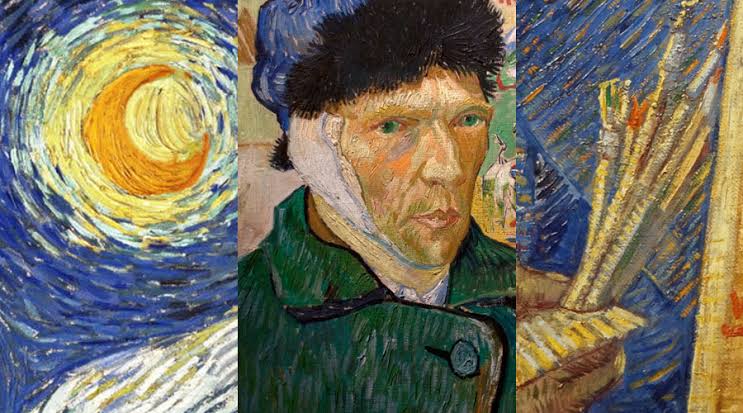
In 1888, Van Gogh rented a house in Arles in the south of France, where he hoped to found an artists’ colony and be less of a burden to his brother. However, tensions developed and on December 23, in a fit of dementia, Van Gogh threatened his friend with a knife before turning it on himself and chopping his ear lobe off.

Afterward, he allegedly wrapped up the ear and gave it to a prostitute at a nearby brothel. Following that incident, Van Gogh was hospitalized in Arles and then checked himself into a mental institution in Saint-Remy for a year. During his stay in Saint-Remy, he fluctuated between periods of madness and intense creativity, in which he produced some of his best and most well-known works, including Starry Night and Irises.

By 1890 his condition had improved and he moved to Auvers-sur-Oise under the supervision of his consultant Dr Gauchet. Here the open air and vistas of wheat fields inspired van Gogh to produce his greatest works; though even at this point of better health he was still incapacitated by his fits of madness which stopped him working for long periods. Two months later he had committed suicide by shooting himself in the fields where he painted and died in his bed from his gun-shot wound.

This was the accepted truth until writers Naifeh and Smith produced a biography in 2011 citing that there is evidence to suggest that van Gogh was shot accidentally by a teenager whom he did not wish to take the blame.

Rene Secretan at the time was a young man of about 18 who dressed as a cowboy and loved guns.

Their logic calls forth the trajectory of the bullet which was at an angle and not straight as a self inflicted wound would be.
Van Gogh had mentioned in previous correspondence with others of his distaste for suicide labeling it immoral and a sin.

So why would van Gogh protect this youngster who according to locals had been tormenting the artist? Perhaps he felt that he had been done a favour – having not the ethics to have committed suicide himself, he may have welcomed the accident as an end to his suffering.

Experts have said that it would have been impossible for van Gogh to have walked the mile or so from the field where he said the shooting took place back to his lodgings and so the incident must have taken place closer; could he have used this as a rouse to protect his killer?

Van Gogh experts all over the world have different opinions many accepting that his death was by suicide citing his history of mental health. Medical experts today have put his conditions down to a brain lesion he was born with which caused him to have epileptic fits; this coupled with his excessive consumption of absinthe (a kind of liquor) would have made the condition worse.

Periods of extreme dedication to his religion and later in producing artwork followed by deep states of depression and melancholy would today be diagnosed as a bi-polar disorder.

FUTURE OF MARKETING

There is a famous proverb that change is the rule of nature and it applies to marketing as well. Marketing is something which keeps on changing after short durations. The advertisements and banners whether digital or physical are to be posted where eyeballs are maximum in number . but showing your ads or banners to wrong eyeballs are not going to give you good returns on the money you invested for marketing. Now the reason why the equations of marketing keeps on changing is the changing of eyeballs. Previously it use to be on newspapers but now it is on social media. In social media also previously Facebook was very popular but now the audience is shifting more towards instagram. But if your target audience is of students then telegram can also be useful to you if you are marketing for educational organisation.

Few years back the newspapers, radios and television were the only place for marketing. Other than that tellecalling and door to door sales were used. Broadly we can say that it was an era of outbound marketing where you reach customers and offer your services or tell about your goods. But now inbound marketing is getting more prominent and customers themselves come to the business. Inbound marketing includes SEO, Social media marketing, PPC, Digital sales E commerce.

Aatmanirbhar Bharat – Can We Make It?

Our beloved prime minister announced a mission called Aatmanirbhar Bharat a few days back. A thick package was also announced to achieve this goal. First of all, I honestly feel very happy and proud of this decision. It made me feel like India is taking a step towards the nation which Dr. Abdul Kalam wanted to create.
It looks too great on paper. Everything made in India, no foreign support. But is it really practical? Just funding a huge amount to our industrial sector will help? Just take this money and manufacture every single component at the workplace. Is it that easy? Obviously, it is not.
We live in a nation and society where education is only about scoring good marks and finally making it to the job of a thick package. The primary level student has the most curious brain. They keep on thinking out of the box. But do they get support? No, they don’t. Even they try to approach their parents or teachers with innovative thoughts and questions, they get ignored. Teachers ask them to focus only on studies calling their ideas foolish. It is the point where we kill an innovation, knowingly or unknowingly. These ignited minds struggle every point in their life. Everybody laughs at them for their ideas, right from school to college to office. They always feel their talent getting spoiled. Now, these people after taking a huge frustration, move abroad to earn and join a firm. These pure super brains go in foreign countries, work hard in the companies, innovative things they always wanted and make that nation’s economy grow. At last, we are only left with a newspaper heading stating ” an Indian origin” person innovated something.
We need to begin from the root level before focusing on the manufacturing sector. If we prepare good students, encourage their ideas, make them grow then these students are the only innovators of tomorrow. Innovation should be included in the syllabus of our education system. I don’t mean final year projects here. We all know how students do that and how innovative it is. I’m talking about pure innovation in every standard of the education system. Only putting innovation in the syllabus won’t help. The teachers need to encourage student’s ideas and help them to innovate out of it. Right from the ancient time, our nation has been blessed with many super brains that ever existed. But it happened many times that their talent got spoiled or stolen by the foreigners. So to really make India aatmanirbhar, we first need to improve these little things. Little by little, this mentality will change for sure. One day we all will say with pride looking at things around ” Made In India “. It will be the win for Aatmanirbhar Bharat.

Service to humanity and nation has been the tradition of our value system: President Kovind

Service to humanity and nation has been the tradition of our value system. It has its roots in our tradition where it has been stated that it is difficult to understand and gauge the implications of service motive, President Ram Nath Kovind said in his address on the occasion of conferring National Service Scheme awards at New Delhi today (24th September, 2020).

Citing the example of Mahatma Gandhi, President Kovind said that service should not be just towards humans but also towards the nature. Reiterating that the National Service Scheme was launched in 1969 on the 100th birth anniversary of Mahatma Gandhi, he said that the Scheme continues to be of immense relevance even today. He appreciated the presentation of awards even in testing times of COVID pandemic and applauded the efforts of the Ministry of Youth Affairs and Sports.

Talking about the NSS, President Kovind observed that it encourages youth to volunteer for community service through various measures true to its motto of “Not me, but you”. The fact that 40 lakh students of various educational institutions are associated with this noble scheme was an encouraging development and also assures that the future of our country is in safe hands, he said.

Emphasizing on the activities conducted by the youth volunteers, the President said that the volunteers were instrumental in creating awareness about social distancing and the proper usage of masks in times of COVID 19. These volunteers were also helpful in providing the quarantined and isolated patients with food and other useful products required during these times. Besides, these volunteers have always whole heartedly helped in providing relief and rehabilitation to floods and earthquake victims, he added.

President Kovind also appreciated that 14 girls in the 42 awardees was reassuring and encouraging. The women of our country are abiding to the tradition of Savitribai Phule, Kasturba Gandhi and Mother Teresa in rendering service to the nation.

A National Webinar in Alternative Models of Education under ShikshaParv

The National Webinar to discuss the implications of the National Education Policy for developing Alternative Models of Education in the country was held on 22 September 2020. The webinar was hosted by the National Institute of Open Schooling. Eminent educationists Prof. N K Ambasht, Former Chairman, NIOS and Prof. GirishwarMisra, Former VC, Mahatma Gandhi Hindi AntarrashtriyaVishwavidyalaya, Wardha were the panelists of the webinar. The webinar was moderated by NIOS, Chairman,Prof.ShridharSrivastavaand Director (Academic), NIOSDr Rajiv Kumar Singh.

Prof. Srivastava expressed concern on the issue of school drop outs as children and youth are being deprived of the fundamental right to education due to issues of access, poor quality and high cost of education. The formal system of schooling is not apt to provide suitable responses to these challenges, while through its inherent flexibility, open schooling caters to a range of learner needs. While the country has struggled to build schools and train teachers, both of which are necessary to achieve universal primary education, the limited primary infrastructures and inadequate economic resources and lack of quality teaching learning mechanisms to provide a quality secondary schooling are serious challenges that are being faced by policy makers. Therefore, there is a basic necessity of serious thinking and strategic planning to develop a mechanism for appropriate, economic and effective alternative systems of education to face the challenge of education at school level.

Prof. Srivastava outlined that the objectives of the webinar were to-

  • discuss the provisions for alternative models of education in the NEP;
  •  explore alternative schooling models in India;
  • suggest alternative pathways to formal education system;
  • promote awareness and acceptance of alternative schooling models; and to
  • mobilize existing resources in an effective manner.

Prof. Srivastava also mentioned that NIOS has taken the lead in empowering out-of-school children (OOSC) across the country, assisting millions of learners in completing their education in its three decades of its existence. He mentioned that some alumni of NIOS would also share their experiences of studying in NIOS.

Prof. Ambasht elaborated on the need for outcome based education today as he spoke of his experience of working with street children in Delhi earlier. He emphasized that children need ample opportunity to study at their own pace and could have better outcomes with experiential learning. Prof. Ambashtmentioned the need to understand the difference between curriculum and syllabus and that learning is long lasting when it is child centric and local centric. He also shared his concern for developing a system of evaluation that is diagnostic rather than declarative of pass or fail. Out of this was born the On-demand exam system of NIOS. He further discussed the role of teacher- as a Facilitator allowing construction of knowledge; He also discussed peer group study; online discussion forums. He emphasized the use of ICTs- Open educational resources and MOOCs. He also deliberated the requirement of reforms in assessment and evaluation- student autonomy in taking exams when ready; on-demand exams; online exams; assessment of values and aptitudes.

Prof. Misra emphasized that the process of evaluation should be a part of the teaching learning process rather than the end towards which the education process is aimed. Prof. Misra reiterated that the open schooling system should not be viewed as the only alternative to formal schooling- there are other systems such asgurukuls, pathshalas, madrassas, and homeschooling and open schooling should initiate a dialogue with them and interact with them to see how the process of certification can be linked with these systems.  The open schooling system should not be just a supplement to formal schools which many has limitations. The mandate of open schooling should be broadened to nurture talent in different areas such as music, dance, sports; NIOS needs to initiate research to understand the changes taking place. Prof. Misra talked of multiple intelligence and the various ways in which people can be talented and achieve great heights- NIOS needs to become more efficacious to nurture this talent. He also mentioned the vocational education programme of NIOS and said that this is the need of the hour. 

Dr Rajiv Kumar Singh emphasized the urgency to bring two crore out of school children back into the mainstream. Speaking of the provisions in the NEP 2020, he said that it calls for restructuring of school education emphasising on the need to provide equitable and quality school education for all children upto 18 years. It also allows for alternative models of education such as gurukuls, pathshalas, madrassas, and homeschooling to operate through multiple pathways including non-formal and open schooling by national or state institutes of open schooling. He further reiterated that the alternative models of education through it’s multiple pathways especially Open and distance learning system could ensure reaching education to the last unreached in the country.

Prof. R Jagannathan, former vice chancellor Middle East University, United Arab Emirateshared his joy at discovering that NIOS permitted him to study Biology at 65 years of age so that he could then go on to study medicine; Ms. Niranjana, a Chennai based ventriloquist and a child prodigy shared how open schooling afforded her an opportunity to continue with her studies along with her professional life; Ms. Sarita Singh shared how she set up her own training center for sewing in a rural area after doing a vocational course at NIOS; and Ms. Seema Pathak informed the audience that she had become a Yoga instructor after undergoing the NIOS Yoga Teacher’s Training course and is financially independent now.

President of India Shri Ram Nath Kovind virtually conferred the National Service Scheme (NSS) Awards for the year 2018-19 today

The President of India Shri Ram Nath Kovindvirtually conferred the National Service Scheme (NSS) Awards for the year 2018-19 on 24th September, 2020 from Rashtrapati Bhawan, New Delhi today. UnionMinister of Youth Affairs and SportsShri Kiren Rijijuattended the ceremony from Vigyan Bhavan, New Delhi. The National Service Scheme (NSS) Award for the year 2018-19 was given to 42 awardees in 3 different categories like University/ +2 Council, NSS Units and their Programme Officers and NSS Volunteers. Secretary of Department of Youth Affairs Ms. Usha Sharma and other dignitaries were also present on this occasion.

Speaking on the occasion the President of India Shri Ram Nath Kovind said that service to humanity and nation has been the tradition of our value system. President added that it has its roots in our tradition where it has been stated that it is difficult to understand and gauge the implications of service motive.

iting the example of Mahatma Gandhi, President Kovind said that service should not be just towards humans but also towards the nature. Reiterating that the National Service Scheme was launched in 1969 on the 100th birth anniversary of Mahatma Gandhi, he said that the Scheme continues to be of immense relevance even today. He appreciated the presentation of awards even in testing times of COVID pandemic and applauded the efforts of the Ministry of Youth Affairs and Sports.

Emphasizing on the activities conducted by the youth volunteers, the President said that the volunteers were instrumental in creating awareness about social distancing and the proper usage of masks in times of COVID 19. These volunteers were also helpful in providing the quarantined and isolated patients with food and other useful products required during these times. Besides, these volunteers have always whole heartedly helped in providing relief and rehabilitation to floods and earthquake victims, he added.

President Kovind also appreciated that 14 girls in the 42 awardees was reassuring and encouraging. The women of our country are abiding to the tradition of Savitribai Phule, Kasturba Gandhi and Mother Teresa in rendering service to the nation.

Foundation Stone of ‘Centre for Disability Sports at Gwalior’to be Laid on 26 September, 2020

The foundation stone of ‘Centre for Disability Sports at Gwalior,Madhya Pradesh’ will be laid at a function organized by DEPwD, Ministry of Social Justice and Empowerment through video conferencing  on 26 September, 2020. Shri Shivraj Singh Chauhan, Chief Minister of Madhya Pradesh will be the Chief Guest and Shri ThaawarchandGehlot, Union Minister for Social Justice and Empowerment will preside over the function, Shri Narendra Singh Tomar, Union Minister for Agriculture, Rural Development, Panchayati Raj and Food Processing Industries will be the Special Guest of Honour. Live Link of Video Conference:-http://webcast.gov.in/msje.

Setting up of a Centre for Disability Sports at Gwalior, Madhya Pradesh was approved by the Cabinet on 28 February, 2019. Total estimated cost to set up the Centre is Rs.170.99 crore. The Centre will be registered under the Societies Registration Act, 1860. For overall superintendence and supervision of the Centre, Governing Body under the Chairpersonship of Secretary, DEPwD has been constituted.For monitoring the implementation of the project, a Project Monitoring Committee under the Chairpersonship of Secretary, DEPwD has been formed.

At present no training facilities are available in the country for sports person with disabilities. The proposed Centre will make available the specialized training facilities for Persons with Disabilities. The setting up of this Centre will develop a sense of belonging in Divangjan to facilitate their integration in the society.

The Centre will provide facilities of international standards to sportspersons with disabilities to compete at international level and bring laurels for the country. It will have an Outdoor Athletic Stadium, Indoor Sports Complex, Basement Parking Facility; Aquatic Centre having 2 Swimming Pools, one covered Pool and an Outdoor Pool; High Performance Centre with classrooms; medical facilities; Sports Science Centre; hostel facilities for athletes, support facilities including accessible lockers, dining, recreational amenities and Administrative Block.

The Centre will have provision for training, selection, sports academics and research, medical support, spectator galleries and suitable for holding national/international events.Sports identified for training are Badminton, Basketball, Table Tennis, Volleyball, Judo, Taekwondo, Fencing and Rugby Boccia, Goalball, Football 5 a side, Para Dance Sport and Para Power Lifting, Athletics, Archery, Football 7 a side and Tennis and Swimming.