

Month: January 2021
National Voters Day in India 25th January
Ramani Wiped 50 Years Of My Hard Work With One Stroke: MJ Akbar
Let me begin with a disclaimer: I have no affiliation with eminent and senior journalist MJ Akbar of any kind and I have never met him in person nor am I affiliated in any way with his political party BJP of which he is a member and earlier was Union Minister of State also for External Affairs. But ever since I gained senses I have been a regular reader of his scholarly articles in most prestigious magazines like “India Today” among others and so also in many eminent newspapers. I used to enjoy reading his learned articles most when I was in school and in college even though later also I made it a point to always read his articles! I was most shocked to learn when his name figured in a controversy and when his name was dragged in it. To be brutally honest, it was the worst shock that I could ever have imagined in my life!

Needless to say, MJ Akbar has always enjoyed an impeccable reputation and even his worst critic could never have questioned his unimpeachable conduct, his impeccable reputation until Priya Ramani raised serious questions marks on his conduct. MJ Akbar through his counsel argued that it was journalist Priya Ramani who “targeted him” for which he was prompted to file the defamation complaint.
It may be recalled that MJ Akbar was left with no option but to resign as Union Minister of State for External Affairs even before the charges have been proved against him in any court and he too became a victim of “MeToo Media Trial”! Hang him if he is guilty but condemning him even before charges have been framed against him in any court and tarnishing his “impeccable reputation” which he has earned in his entire life in just few seconds cannot be justified under any circumstances! MJ Akbar could have easily continued as a Minister but he preferred to resign and first challenge those who tarnished his impeccable reputation in court.
Bluntly put: Is MJ Akbar not entitled to the benefit of the due process of law and legal defence? Should he not be given a chance to prove his innocence? There are many senior eminent women journalists like Tavleen Singh who have always appreciated him and have said that they have never experienced any such “alleged misconduct” from him but this is never highlighted in the media! Tavleen Singh is most famous for calling a spade a spade and she never fears anyone! How can all this be ignored?
Most recently, a woman journalist deposed in court in his favour and admired his upright approach in always dealing with her. Only the numbers are highlighted that 16 or 17 women have levelled most serious charges against him but I want to ask: Why they never dared to lodge FIR against him in any police station of India till now? Why they kept quiet for so many years? Why inspite of being professional they chose to keep quiet? Were they not aware of their legal rights?
Going forward: Why did they not immediately complaint? Why they didn’t spill the beans earlier? Why was there a consensual conspiracy of silence? Why were they lured to keep quiet? Why they compromised themselves just for getting some material benefit? Are they not guilty just like an adulterous women?
It also cannot be ignored that Union Minister Pon Radhakrishnan asked: “If someone makes an allegation that such a thing happened when the incident happened we were playing together while in class 5. Would it be fair? The ‘MeToo’ movement had sullied the image of the country. Will it be right for men to start making similar accusations like them.” Even Union Minister for Tourism K Alphons had cautioned against frivolous complaints by “insincere” people with an agenda. He said that, “People should be extremely careful when they raise an allegation. Yes, if something inappropriate has taken place, it should be in public domain. There should not be any doubt about it, but I hope frivolous complaints are not raised by insincere people to fix people whom they do not like.”
We heard earlier how KWAN founder Anirban Das attempted suicide after sexual misconduct allegations but was saved by an alert police team patrolling the Navi Mumbai bridge! MJ Akbar has vowed to fight for sake of his reputation till the end! There are very few who care for what “mental trauma” a man undergoes when false allegations are levelled against him and he is defamed by “media trial” to the fullest even before charges are framed against him in any court! This must stop once and for all as it mutilates and maims to pieces a men’s integral right to reputation and right not to be defamed and denounced even before any court takes cognizance of the charges levelled against him!
“You do me favors, I do you favors 30 years later
lets call it “me too”
A strong woman does not wait 30, 20, 10 years to speak up, she slaps him on the first “bad touch” and knocks him out
Don’t hide your weakness, the favors in returns that you enjoyed and the work you got by “I was too scared” cry now
You were scared to say NO then because its hard to stand up for what is right and you were scared to loose your status and position in the work place, so YOU CHOOSE to accept the molestation and went back for more …Its very easy to play the abla nari card later and gain sympathy
The Shakti does not wait later to speak up, she silences the evil on spot…
My thoughts on this nonsense of me too
I don’t have me too stories …anyone who tried got a tight slap then and there and I was never afraid to walk out with my head held high ..be it a Job or relationship!
“strong women don’t have me too sob
Stories, they have I gave him thappad
(slap) back short essays”.”
– Geetanjali Arora in Sunday Times of India dated October 21, 2018
Every person must applaud, admire and appreciate Geetanjali Arora for what she has written so courageously on 9 October at 5.35 pm which got published on October 21 in one of the most reputed newspapers of India – The Times Of India! Why should women be treated always as victims? Why should women keep quiet for many decades and then speak up if she herself has nothing to hide from the world?
Does men have no right? Should only women have all the right to speak up whenever she likes? Very few know that a woman had levelled serious allegations against eminent film actor Jitender about an act allegedly done by him 47 years ago when she was very young but the Himachal Pradesh High Court didn’t accept it and rejected the petition as it said that the time limit of lodging the complaint within the limitation period of 3 years was not complied with!
Anyway, coming to the case at hand, while appearing before Additional Chief Metropolitan Magistrate Ravindra Kumar Pandey, senior women advocate Geeta Luthra further argued that Ramani didn’t feel the need to check with the Ministry, department or PRO to confirm if he had resigned before tweeting that he did. “You wiped out 50 years of his hard work with one stroke,” submitted Luthra while rebutting the submissions of Ramani’s lawyer, senior counsel Rebecca John. John had on a previous occasion submitted that, “It is not defamation to impute anything which is true concerning any person if it for the public good… If the imputation of sexual harassment is in good faith and for public it is not defamation. It is not defamation if the imputation relates to something that touches a public question.”
While contesting this submission, Geeta Luthra quipped: “Good faith would have been if you had any evidence. It can’t be for public good. Public good doesn’t mean you will malign someone’s image. Public good is when you’re making a statement then you have to do it with responsibility.”
Most significantly, Geeta Luthra very rightly pointed out while referring to a sexual harassment incident that, “Just by calling it my truth, doesn’t make it a truth… you haven’t proved whether you have made a call to the complainant, you haven’t proved that you met (Akbar).” Luthra also further pointed out that, “This version is a figment of imagination and not truth..After 30 years you are trying to bring something without any evidence. It is all in the air.”
While stating that “whether you make a whisper that a person is a thief or a cheat” it has to be backed with evidence. Luthra told the court that, “You have to have empirical evidence which can stand scrutiny in the court of law. There is no such evidence in this case. There is no investigation.”
As it turned out, Luthra then read out the statement of a witness, Joyeeta Basu who had testified from Akbar’s side. Basu, Luthra claimed, was called a tutored witness. Calling Basu a respected journalist, the counsel said she was a natural witness unlike Ramani’s witness. Luthra also added that, “Her witness is her friend who doesn’t know anything about the alleged incident.”
Needless to say, for Akbar, the defamation complaint was filed as the “malicious tweets by Ramani” had “destroyed my reputation in the eyes of the society”. Luthra also read out another testimony of one Akbar’s witnesses, Sunil Gujral to assert that his reputation was “impeccable”. Gujral was stated to have known Akbar for a long time personally and professionally.
MJ Akbar through his counsel Luthra rightly submitted that, “Harm is done by the man who instigates and ignites the first flame.” The submissions were made by Luthra before Additional Chief Metropolitan Magistrate Ravindra Kumar Pandey. While reading Ramani’s testimony, Luthra told the court that, “She wrote an article without naming anyone because it was a piece of fiction..You said you didn’t name him because he didn’t do anything. The tweet doesn’t say that I’m saying all this because so many women are speaking up.”
Moreover, it cannot be lightly dismissed that MJ Akbar also told the court that Priya Ramani “deliberately, intentionally and maliciously” destroyed evidence by deleting the Twitter account. Akbar’s lawyer Geeta Luthra told the court that, “This strange argument that this Twitter account, the court didn’t tell me to save so I didn’t. How can one take a defence like this?” Luthra also told the court that Ramani knew there was a criminal complaint pending against her.
More to the point, Geeta Luthra also pertinently told the court that, “These are all tweets. They were all primary evidence. Can she destroy evidence…another criminal case can be made out. I would have wanted to cross examine her. This whole thing is destruction of evidence which is not something which is not viewed very seriously…suppose the court wanted to see it. Fact is that everything has been deliberately destroyed to subvert the cause of justice.
Furthermore, Luthra also told the court that, “All evidence which was part of the trial..deliberately, intentionally, maliciously has been destroyed by deleting the Twitter account. These lies have left me defending my reputation in the last few years. It is unpardonable. I wonder at what kind of cost has it come to you. You have damaged a person’s 50 years of reputation.” Luthra also said that, “There was no overt physical attack.”
Adding further more, Luthra said that, “Here also she is self contradictory. She said it was sarcasm then takes alternate defence. Sarcasm is also defamation. Did he do anything or not do anything..same can’t have a non-sarcastic meaning and still be sarcastic…First she says first fourt para are about her. But then talks about ‘shared experience’. Whom did she interview? This has to be before the cause of action. She says it’s my story..what is she trying? Every sentence when examined is contradictory to the next.”
<div style="text-align: justify"><br /></div><div style="text-align: justify"><br /></div><div style="text-align: justify">Truth be told, Akbar had filed a defamation case in 2018 stating that Ramani’s allegations were viewed and read by several people online and he received numerous calls from friends and colleagues from the media and political sphere. For having reportedly suffered “great humiliation” and his reputation being “severely tarnished” he had sought court’s intervention. Luthra reiterated that Ramani had some other motive and “there is no public interest. There is no good faith.”</div><div style="text-align: justify"><br /></div><div style="text-align: justify">Without mincing any words, Luthra said that, “What she (Ramani) said does not mean predator. Many people in positions of hierarchy are more powerful but you can’t call them a predator. There are many words to describe a junior-senior relationship.” Luthra also told the court that, “You cannot turn around and say that you are calling a person the media’s biggest predator…You are a journalist. You have to be responsible ..You can’t write as if without any sense of responsibility or accountability..It doesn’t matter what people say post facto. Harm is done by the man who instigates and ignites the first flame. She is not an eye witness. It is fabricated. She is an interested witness.” Luthra told the court that the meaning of the word predator is a person who has propensity for violent sexual behaviour. </div><div style="text-align: justify"><br /></div><div style="text-align: justify">What has really shaken me most is the enlightening editorial written by Ramesh Thakur who is Professor of Public Policy, Australian National University in ‘The Times Of India’ dated November 9, 2018 titled “Believe Evidence Over Gender” which begins by coming straight to the point saying that, “The #MeToo campaign began as a long overdue effort to call out men abusing positions of power and authority to exploit vulnerable women sexually, but then morphed into some settling of scores for dates gone wrong. In the age of social media, #MeToo swarms of screaming mobs, and bird-dogging, the wildest accusations are amplified instantaneously across the whole world. This makes the charge themselves a powerful political weapon.” He rightly suggests the following to check mud slinging matches: “First, ensure anonymity for both or neither. Name only the guilty party after the trial. If the verdict is inconclusive, keep all names confidential. Second, treat both accuser and accused with sympathy, respect and courtesy. Evaluate the testimony of both with equal skepticism, ask questions accordingly, and weigh their statements against the facts. Everyone deserves a fair hearing: no one deserves to be believed in the absence of evidence; and shifting evidence and timeline to suit the narrative warrants over suspicion. Third, match the prosecution and penalty for false accusations to those of conviction. This will put in place a powerful deterrent. Without consequences, the political weaponisation of false charges will continue. Above all, believe evidence over gender. Senator Susan Collins was branded a rape apologist for doing so.”</div><div style="text-align: justify"><br /></div><div style="text-align: justify">It was in 2018 that we saw how in a landmark judgment titled ‘Joseph Shine v Union of India’, the Supreme Court led by Justice Dr DY Chandrachud very rightly decriminalized adultery as it felt that sex with consent cannot be crime and he overruled his father’s decision rendered earlier in Sowmithri Vishnu in 1985! Law has to change with time. Even the definition of rape needs change and sex with consent should not be termed rape. A woman after having consensual sex with a men for many years cannot and should not be allowed suddenly to scream rape and play the victim card by weeping! The moot question that arises here is: Why the women promptly didn’t lodge complaint if she was forced to enter into sexual relationship? Also, why always men alone be condemned? What if it was women who lured men into sex? Why always women version is to be believed? Why should women not be punished and sent to jail for at least an year if she levels false allegations against a men solely for denigrating, damaging and destroying his untarnished reputation in front of the world? Why should she not be made to pay compensation to him for tarnishing his reputation in front of the world? Why can’t the laws be suitably amended in this regard? Why should only women have right to reputation and right not to be defamed and denounced? Why do we ignore that our laws and Constitution treats men and women as alike? Why should men be deprived of the basic fundamental tenet of law that everyone is innocent until proven guilty? </div><div style="text-align: justify"><br /></div><div style="text-align: justify">It cannot be lightly dismissed that in a criminal case, where the accused will forfeit his liberty if convicted, the standard of proof required to convict him not just is higher but also needs to be proved “beyond all reasonable doubt”. It is high time and all news channels and media groups should refrain from just glamourising “#MeToo” movement and should instead always convince so called “female victims” to approach the court at the earliest and not after 10 or 20 or 30 or 40 or 50 years and fight the legal battle which would seek evidence for both prosecution and proving innocence instead of just levelling the most damning allegations after many decades which only exposes her to “defamation suits” to get real justice for herself! Also, it must be ensured that the identity of both the women levelling the allegations and the men against whom allegations are levelled are not revealed in public until the case is decided at least in the lower court! Such cases too must be decided at the earliest and not after many years as the reputation of both the women and the men suffers enormously which only robs them of their right to privacy which just recently in KS Puttaswamy case has been declared to be a fundamental right!</div><div style="text-align: justify"><br /></div><div style="text-align: justify">It is high time and now women too must be jailed and punished for levelling false allegations. Section 498A of IPC and so also Domestic Violence Act is many times misused and so there must be strict provision for punishing women if her allegations turn out to be false. Women is now no less inferior to men in any field. Then why should she be given blank cheque of exemption if she levels false charge against any men? Even men has the right to reputation and dignity just like women which gets severely compromised when women levels false and wild allegations against men and so should never go unpunished under any circumstances!</div><div style="text-align: justify"><br /></div><div style="text-align: justify">I am certainly not against women getting justice who have suffered at the hands of men but I also simultaneously favour the reasoned and logical stand that, “Men too have right not to be defamed and denounced without facing strictest legal scrutiny in accordance with due procedure of law”. Every Indian women must always abide by what Geetanjali Arora who is herself a female has said which I have quoted right at the beginning! Women are beating men in studies and outsmarting them in every field then why should they take things lying down when it comes to sexual offences?</div><div style="text-align: justify"><br /></div><div style="text-align: justify">Why not lodge complaint at the first place instead of just indulging in character assassination after many years as part of “#MeToo” campaign and getting defamed yourself also and making a huge public spectacle of yourself? Now it is for women to decide for themselves which course of action they would like to adopt but now they must stop laying the victim card and abide in totality by what Geetanjali Arora has said so rightly and never tolerate any sort of any misconduct from any men under any circumstances whatsoever! It is high time and now women must be actually treated at par with men by not always allowing women to play always the “victim card” and encouraging her to always take men head on whenever any men dares to violate her physical or mental integrity in any manner instead of waking up after decades! There can be certainly no denying it!</div><div style="text-align: justify"><br /></div><div style="text-align: justify">Needless to say, MJ Akbar’s case is still pending in court and we have to keep our fingers crossed till the case is finally decided. But certainly the immeasurable pain, anguish and heart bleed that MJ Akbar faced is clearly apparent and one only hopes that justice is done with him and I am sure that judiciary will vindicate the unflinching faith that he has posed in it! </div><div style="text-align: justify"><br /></div><div style="text-align: justify">Sanjeev Sirohi, Advocate,</div><div style="text-align: justify"><br /></div><div style="text-align: justify">s/o Col BPS Sirohi,</div><div style="text-align: justify"><br /></div><div style="text-align: justify">A 82, Defence Enclave,</div><div style="text-align: justify"><br /></div><div style="text-align: justify">Sardhana Road, Kankerkhera,</div><div style="text-align: justify"><br /></div><div style="text-align: justify">Meerut – 250001, Uttar Pradesh</div>
To Constitute AIJS Would Be The Greatest Step Since Independence
Coming straight to the nub of the matter, let me begin penning down my forthright views by first and foremost expressing my utmost happiness to note that Centre has finally decided to get its act together and constitute the All India Judicial Service (AIJS) about which we have been hearing since ages! AIJS is the crying need of the hour and must be debated, discussed and deliberated fully so that all best features are included in it and all possible drawbacks are deleted before it is finally created. There can be no two opinions on it.

It delights me to no end to see that Prime Minister Narendra Modi while addressing a function to celebrate the completion of 50 years of the Delhi High Court on October 31, 2016 set the cat among the pigeons when he sought a debate on creating AIJS which has been hanging fire right since independence. It is most tragic to see that AIJS has always been mocked at by the ruling party in Centre. Even now if AIJS is constituted, it will be the greatest step since independence.
It needs no rocket scientist to figure out that how much our judicial system which is currently on the verge of collapsing due to a whooping number of pending cases will benefit if AIJS is created soon. While I fully support the creation of AIJS, I don’t support reservation in judiciary at all. I certainly would welcome the inclusion of people from the lower strata of society into the judicial system but only when they enter by their own merit and I know that they can do it on their own. They are no less than others in anyway.
Did Dr BR Ambedkar make a name for himself by coming up through reservation? Selection should only and only be on merit alone. There should be no other criteria for selection. No compromise should be made on merit under any circumstances, come what may!
While craving for the exclusive indulgence of my esteemed readers, let me inform you all that I am not at all against Dalits, oppressed, poor and people coming from lower strata of society entering AIJS. But that should not be at the cost of merit under any circumstances as most unfortunately we have been seeing in other services since last 70 years even though Dr Ambedkar had proposed reservations only for 10 years! In fact, I treat them just like others and very strongly feel that they too can do whatever they want just like others! Why should they be treated worse than disabled?
Who is stopping Centre from imparting free coaching to Dalits and all those coming from lower strata of society? Why can’t more scholarship be given to them? Why can’t they be coached by top successful persons of the field for which they are trying? Why can’t they be allowed free expense for giving as many exams as they like? They can be helped in thousands of ways other than reservations. Why politicians favour only reservation as the best possible way? Did Tina Dabi who topped IAS thus becoming the first Dalit to become a topper did by availing reservation benefit? No, by her merit she made it to the top!
How long will this cancer of reservation be allowed to fester and harm the unity and integrity of our nation endlessly? What precedent are politicians and PM setting by always talking about reservations only and never talking about finishing them as Dr Ambedkar wanted them to finish after 10 years only?
Reservation is the worst form of tool and only spreads hatred in society. Also, once it is inserted in the system, it is never thrown out as we can see in our own country where Dr BR Ambedkar who is the founding father of our Constitution wanted reservation only for 10 years but what an unbeatable irony that 70 years later we still see no end of reservations rather many States have increased it beyond 50% which only draws the ire of Supreme Court. This should never happen in AIJS.
For my esteemed readers exclusive benefit, let me tell them that it has been widely reported in the media that the Centre is getting ready to set up All-India Judicial Service (AIJS) by March 2022, according to a proposal submitted by the law ministry to the Union Council of Ministers. This was reported in ‘The Economic Times’ newspaper dated 2 March 2020 with heading “All-India Judicial Service Likely by March 2022”. So it is not that this cannot be worked out in the near future! It was also pointed out in this newspaper that, “The ministry in its recent presentation to the sectoral group of secretaries informed that AIJS was one of its top priority matters. The reports of the 10 sectoral group of secretaries were reviewed by PM Modi and the Council of Ministers. The biggest challenge is to get all states and high courts on board.”
Needless to say, we must applaud PM Modi’s courage and conviction to do what no PM has ever dared to do even though they too supported it – creation of AIJS. PM Modi has called for debate and discussion on creating AIJS but I very strongly feel that Law Commission has time and again recommended the creation of AIJS, former CJI too have recommended, Parliamentary Standing Committee also has recommended and National Judicial Pay Commission too has recommended then why so much of inordinate delay over it? It must be cleared soon now. After the Modi’s Cabinet clears the landmark proposal, the Union Public Service Commission (UPSC) will be entrusted with the AIJS examinations. The Delhi High Court asked the government in an earlier petition by Ashwini Kumar Upadhyay to decide on creating the IJS. It will again hear another petition by him for creating an IJS.
Be it noted, the move for an AIJS didn’t curry much favour with the higher judiciary in the past. The Chief Justices Conferences in 1961, 1963 and 1965 favoured the creation of an AIJS, but the proposal had to be shelved after some states and high courts opposed it. What should have happened way back in 1960s that we don’t see happening even in 2016 and it is only now after PM Narendra Modi has spoken on its dire need from a public platform and that too while addressing a function of lawyers and judges to celebrate the completion of 50 years of the Delhi High Court that some bright ray of hope has finally emerged.
To put things in perspective, subsequently, the Constitution was amended in 1977 to provide for an AIJS. The proposal was again floated by the UPA government in 2012 when it got it vetted by a committee of secretaries and prepared a cabinet note. But the draft bill was shelved after fierce opposition from high court chief justices. In 1972, the then Chief Justice of India had again endorsed the creation of AIJS.
Enough is enough! Now not any more! No more endless wait for AIJS! If Centre is really serious to combat the more than three and a half crore cases pending in lower courts all across the country, it has just no other viable option left before it but to start the AIJS. Ad hoc measures like re-employing retired judicial officers won’t serve much in the longer turn even though it may provide some relief. It cannot be a permanent cure. Centre must realize this which it has failed to realize in last 70 years.
In the absence of AIJS, it is becoming increasingly difficult to maintain the required judge strength in district courts and high courts. The available judges are unable to clear the huge backlog of over 30 million cases. Inspite of all this, IJS not started till date and mere opposition by few States/High Courts gave a lame excuse to successive Union Governments to just sleep over the matter.
Let me reveal here that in his PIL, Ashwini Upadhyay, who is also a BJP spokesperson contends fiercely that the establishment of IJS under the Article 312 of the Constitution of India, is not only necessary to provide equal opportunity to all prospective Advocates in spirit of Article 16 but also essential to secure fundamental right of fair trial and speedy justice to the citizens in spirit of Article 21. IJS has not been established in spite of constitutional provision and despite the Apex Court strongly endorsing it, he states in his petition. He further states that, while most government department has ‘All India Service’ recruits, the Judiciary is the only setup that does not have a national level selection process to attract the best prospective Advocates. “When IAS officers can be allotted State cadres and adjust to local requirements, why can’t IJS officers? Every organ of the State including the judiciary needs to be accountable to the public. People need to know how judges are appointed, what criteria they have been evaluated on. Many judges appointed by the collegiums or by political intervention may have been brilliant, yet their recruitment process is questionable. Judiciary should reflect social reality and the country’s diversity,” the petition reads.
Significantly, the Delhi High Court asked the government on July 11, 2016 to consider a lawyer’s representation seeking setting up of a All India Judicial Service on the lines of the Indian Administrative and Police Services. A Bench of Delhi High Court comprising of the then Chief Justice G Rohini and Justice Sangita Dhingra Sehgal asked the Ministry of Law and Justice to take a decision on the petitioner’s representation and inform him. In his plea, Ashwini Upadhyay said the step to set up the AIJS was “long overdue and has been hanging fire for ever five decades”. He also pointed out that, “Most government departments now had ‘All India Service’ recruits, the Judiciary does not have a national level selection process to attract the best possible talent”.
Before proceeding ahead, it would be imperative to quickly recapitulate the important events associated with AIJS. It will help us broadly in understanding this subject better. The list of important events are as follows: –
03-01-1977: AIJS inserted into Article 312 by the Constitution (Forty-second Amendment) Act 1976. The purpose of the constitutional amendment was to ensure uniformity in standard of selection and to attract the bright and young talent in judiciary so that fair trial and speedy justice made available to every citizen throughout the country.
27-11-1986: Law Commission submitted in its 116th report titled “Formation of All India Judicial Service” to the Union Law Minister and explained in details the importance and urgent need of All India Judicial Service.
10-4-1995: The Hon’ble Supreme Court in WP(C) 1022 of 1989, All India Judges Association v Union of India, directed the Union Government to take immediate measures for setting up the All India Judicial Service. The Union Government sought the views of the State Governments and High Courts on constituting the All-India Judicial Service before moving a resolution in Rajya Sabha.
10-2-1997: Union Government submitted a status report n constituting the All India Judicial Service in the Apex Court. Out of 25 states, 08 states endorsed AIJS, 08 states conditionally agreed upon AIJS, 07 states disagreed on AIJS and 02 states not responded. Out of 18 High Courts, 04 High Courts endorsed AIJS, 04 High Courts conditionally endorsed the AIJS, 03 High Courts disagreed with AIJS and 07 High Courts not responded on AIJS.
24-10-2009: Hon’ble Chief Justice of India endorsed the All India Judicial Service in his inaugural address in a conference titled “National Consultation for Strengthening the Judiciary towards Reducing Pendency and Delays” in Delhi.
25-10-2009: Conference titled “National Consultation for Strengthening the Judiciary towards Reducing Pendency and Delays” unanimously adopted the resolutions presented by Union Law Minister for establishment of All India Judicial Service and increase in the strength of judges by 25% to reduce the pendency of cases from 15 years to 3 years.
19-05-2014: Hon’ble 41st Chief Justice of India Sh. R.M. Lodha on the eve of assuming charge reiterated the need of the All India Judicial Service. He said: “Setting up of All India Judicial Service, being planned by the government on the lines of the IAS and IPS for recruiting judges for subordinate courts, should be given serious thought. A national consensus is lacking as some states have raised reservations on the framework of the Indian Judicial Service. Those states should also be brought on board.”
It must be emphasized here that the Law Commission of India has four times – in its 1st, 8th, 77th and 116th reports called for Indian Judicial Service. The Apex Court has twice – first in 1991, then in All India Judges Case (1992) endorsed the creation of AIJS. It is imperative to ensure fair selection of incumbents and to attract bright and best law graduates to judiciary.
Be it noted, Centre too strongly felt that to prevent the fresh law graduates from rushing to the all enticing private and corporate sector, it is imperative that All India Judicial Service be started immediately and they too are made eligible just like we see in case of Civil Services. Presently, what we are seeing is that the best talent is wasting no time in jumping on the bandwagon of corporate and private sector who is ever ready to hire them at attractive prices. To stop this to a great extent, it is all the more imperative that AIJS be started immediately without any more delay!
Most significantly, it cannot fbe lightly dismissed that three most eminent Judges in the annals of the Apex Court – Justice VR Krishna Iyer, Justice JS Verma and Justice MN Venkatachaliah gave their joint views on the constitution of All India Judicial Service as follows: “We agree with the urgent need to constitute the All India Judicial Service envisaged by Article 312 of the Constitution of India; at par with the other All India Services like the IAS, to attract the best available talent at the threshold for the subordinate judiciary; which is at the cutting edge of the justice delivery system to improve its quality. Moreover, the subordinate judiciary is important feeder-line for appointments to the High Courts. The general reluctance of competent lawyers to join the Bench even at the higher level adds an additional urgency to the problem. AIJS will in due course of time, also help to improve the quality of the High Courts and the Supreme Court. The modalities for creating the AIJS to achieve its avowed purpose, and the necessary constitutional changes and the legal framework can be worked out after acceptance of the proposal in principle.”
No less significant is the irrefutable fact that the First Law Commission of India, headed by learned MC Setalwad, with the benefit of the opinion of the then Chief Justices of India KN Wanchoo and Justice MC Chagla and eminent jurist Nani Palkhiwala among others, had made a strong recommendation for the constitution of an All-India Judicial Service, like the IAS and IPS. The felt need for such a service increased several fold in the last 57 years since that recommendation was made.
It is worth noting that in its 77th Report presented by the Law Commission of India to the then Law Minister Shanti Bhushan, it was noted in Para 9.6: “At the same time, we are of the view that the suggestion to have an All India Judicial Service of the same rank and same pay-scales as the Indian Administrative Service should receive serious consideration. According to article 312, as now amended, Parliament may by law provide for the creation of one or more all-India services (including an all-India Judicial Service) common to the Union and the States. We are conscious of the fact that a school of thought and many States are strongly opposed to the creation of All India Judicial Service. The objection is mostly based upon the consideration that since the proceedings before the subordinate courts would be conducted in regional languages, members of the higher judicial service hailing from other States would not be in a position to efficiently discharge their functions. This difficulty can be obviated if, like recruits to the Indian Administrative Service, the recruits to the All India Judicial Service also undergo a training period of two years. During that period, they can acquire also familiarity with and mastery of the regional language of the State to which they are to be allocated after the completion of their training period. The requirement about practice at the bar may perhaps have to be waived for recruitment to All India Judicial Service, as they will be recruited at a comparatively younger age. It should, however, be essential that the competitors are graduates in law.”
Para 9.6A of this very 77th Report further notes: “Another reason which should weigh in favour of the creation of the All India Judicial Service is the attraction that an All India Service holds for bright young graduates, including law graduates. The result is that many of them compete for and are selected for the Indian Administrative Service. If the All India Judicial Service is created with the same rank and pay scale as Indian Administrative Service, the Judicial Service would hold perhaps greater attraction for bright law graduates. The Judicial Service in such an event would not be denuded of talented young persons. The Law Commission presided over by Shri Setalvad also felt this difficulty and observed that an important factor which detracts from the attractiveness of the judicial service is the inferiority of the status of a judicial officer compared with that of the executive officer. The Law Commission in this connection referred to the following observations of an experienced Chief Justice: –
“One reason why meritorious young men or young practitioners of some standing keep away from the judicial service is the comparative inferiority of the status of district judicial officers vis-a vis officers of the district executive. Formerly, the district judge, like the district magistrate, used to be a member of the Indian Civil Service and its position in the District was superior to that of the District Magistrate. Under the present system, the district magistrate is a member of the Indian Administrative Service which is a service of an all-India character, while the district judge is a member of the higher judicial service which is a State service. The difference in the category of the cadres to which they belong is reflected in the status they occupy in relation to each other and in the estimation of the public vis-à-vis the district judge feels small and is treated as a person of little consequence. Nor can the district judge attain the sense of independence which he might have acquired, if he had not been under the administrative control of the State Government in regard to his service.”
It must also be brought out here that Parliament Standing Committee endorsed the AIJS in its 64th Report (Para – 50). The Report says: “All India Judicial Service has been envisaged under Article 312 of the Constitution of India. The Committee expresses its concern over the delay in its creation. The Committee insists that All India Judicial Service may be created without further delay to attract best talent to the subordinate judiciary from where 33% of the judicial officers are elevated to the Bench of High Courts. Reservation as per existing policy of the Government may be made applicable in All India Judicial Service.”
It is also worth pointing out that the first-ever National Judicial Pay Commission (NJPC), headed by Justice K Jagannatha Shetty who is a former Judge of the Supreme Court and who submitted its report in November, 1999 too recommended constitution of All India Judicial Service in the cadre of District Judges as per provision of Article 312(3) of the Constitution of India. The NJPC mooted that the District Judges, directly recruited and promoted, should constitute the AIJS. Seniority of All India Judicial Service will be on All India basis and as per the ranking in the select list. The inter-se seniority between direct recruits and promoters will be determined according to the date of allotment of promotion. Such direct recruit must thus be annexed to the respective State Judicial Service within the three-tier system. At present, there are only three All India Services i.e. The Indian Administrative Service (IAS), Indian Police Service (IPS) and Indian Forest Service (IFS). While the first two were inherited from British Raj, the IFS is the only All-India Service which was created after independence. It was constituted in 1966 under the All India Service Act, 1951 by the Government of India.
It is high time and now as PM Modi has himself said that the setting up of AIJS must be debated, discussed and deliberated upon before finally transforming it into reality. But it must be done soon. It should have happened right at the time of independence but 74 years later we see it still has not materialized! No delay any longer!
It must be underscored that uniformity in standards for selection will definitely improve the quality of different High Courts and will minimize the scope of partiality, arbitrariness and aberrations in judicial selection and simultaneously the quality of dispensation of justice will improve considerably right from the top to the bottom, as it essentially hinges upon the quality of judges recruited. It is the larger public interest that will be served if AIJS is created and also the interest of fair trial and speedy justice. The recruitment of Judges right from the entry level should be handled by an independent agency just like UPSC and can be named National Judicial Service Commission (NJSC).
It would be the job of NJSC to ensure that only and only the best talent selected through open competition is selected into AIJS thereby ensuring fair and transparent selection process just like IAS, IPS and others are selected into Civil Services by UPSC. Also, there should be comprehensive training of 2-3 years after selection in AIJS to be undergone in National Judicial Academy as we see in Bhopal.
We see court cases not ending even after more than 50 years. This completely erodes and tears apart the otherwise irrevocable faith of people in getting justice from courts. In foreign countries like USA, UK and Canada cases are decided very soon. But in India it is exactly the opposite. This must change if we want to project the image of India as a global destination centre for investment. That can happen only when cases are decided in time. Fair, fast and uniform justice keeps the people’s faith ingrained in the system which is so important for the successful functioning of any democratic country. Access to fair, fast and uniform justice is deeply rooted in the concept of democracy and regarded as a basic human right.
For cases to be decided in time, we need to have adequate number of judges which in turn is possible only if AIJS is started at the earliest. There is just no other viable option available and Centre must grab it with both hands and do the needful so that people at large benefit the most from it for whom justice is really meant. Only such a meritocratic service with open competitive examination and 2-3 years of comprehensive training to all the trainee judges and assured standards of probity and efficiency would be able to ensure “Fair Trial and Speedy Justice’ to citizens in spirit of the Article 21. Unnecessary delay gradually declines the citizenry faith in judicial system which is most dangerous. Fragmentation of faith has the effect potentiality to bring in a state of cataclysm where justice may become casualty. This will only usher in lawlessness which we can allow only at the cost of our own peril!
Needless to say, Opposition too must play its role well by cooperating in ensuring that the Bill for AIJS is passed with thumping majority in both Houses of Parliament. It must be noted that the Union Government cannot do anything unless the Council of States in this behalf passes a resolution to this effect, which is a mandatory requirement for creation of the same as also specified in Article 312. Centre must move a resolution in this regard without further delay. Delay of 70 years is quite a long delay by itself. Now no more alibis of any kind.
It is well accepted by thinkers, philosophers, academicians and jurists that if fair, fast and uniform justice is to be secured to all the citizens, and equality before the law and equal protection of the law has to be ensured, India needs the best talent in the judiciary. Needless to say, the quality of justice dispensation will ameliorate considerably right from subordinate courts to the Apex Court by initiating the AIJS and by establishing a NJSC like UPSC which is of seminal and pivotal concern.
To sum it up: It is in the interest of all concerned that the guilt or innocence of the accused is determined as quickly as possible. This in turn is possible only if there are adequate Judges. Adequate judges can be made available only if they are recruited in large strength through AIJS just like we see in case of IAS, IPS, IFS and other Civil Services. This alone explains why I mince no words to state emphatically that, “To constitute AIJS would be the greatest step since independence”. It brooks no more delay anymore now! I am sure that PM Narendra Modi would take further necessary steps to ensure that AIJS is given the green signal and after getting it passed in Rajya Sabha with the cooperation of Opposition as we saw recently in case of GST is soon brought into action! It is the young generation especially those who have just graduated or are about to graduate in Law in any part of India that will benefit remarkably by leaps and bounds if PM Narendra Modi takes this landmark and momentous decision anytime soon! I only hope that it does not again turn out to be an endless wait for them also as we saw most unfortunately in the past! Let’s hope fervently that history will not repeat itself again!
Sanjeev Sirohi, Advocate,
s/o Col BPS Sirohi,
A 82, Defence Enclave,
Sardhana Road, Kankerkhera,
Meerut – 250001, Uttar Pradesh
Recent Research in Migration and Gender Issues
|

|
|
|
|
Media Trial During Investigation Interferes With Administration Of Justice
In a well-written, well-drafted, well-articulated, well-reasoned and well-worded judgment titled Mr Nilesh Navalakha and others vs Union of India and others in Public Interest Litigation (ST) No. 92252 of 2020 with Interim Application No. 95156 of 2020 that was delivered on January 18, 2021, the two Judge Bench of Bombay High Court comprising of Chief Justice Dipankar Datta and Justice GS Kulkarni minced no words to pronounce in no uncertain terms that media trial during criminal investigation interferes with administration of justice and hence amounts to ‘contempt of court’ as defined under the Contempt of Courts Act, 1971. The Court also held that media reports interfering with criminal investigation, before the initiation of trial, can amount to interference with administration of justice. Very rightly so! We had seen for ourselves how raucously the Sushant Singh Rajput case was discussed in different news channels.

To start with, as a prelude, the Bench first and foremost sets the ball rolling by first and foremost observing in para 1 that, “While COVID-19 was wreaking havoc in the country and causing unimaginable misery [viz. the working class losing jobs and thereby their livelihood, innumerable innocent lives being lost including those of migrant labours not only due to its direct but also indirect effects, the health-care system in all the States across the country facing extreme stress, justice seekers finding the justice delivery system almost inaccessible, etc.] and thus creating an atmosphere of severe tension and despair in the country, the unnatural death of a relatively young film actor (hereafter “the actor”, for short) in Mumbai on June 14, 2020 became the cynosure of the electronic media. The manifold problem, hardship and inconvenience brought about by the pandemic all over the country notwithstanding, various TV channels initiated intense discussion during prime time on the probable cause of death of the actor. Some of such channels, resorting to “investigative journalism” as they call it, sought to spread the message among its viewers that Mumbai Police has been passing off a homicidal death as a suicidal death and that a close acquaintance of the actor, who herself is an actress (hereafter “the actress”, for short), had orchestrated his death. What followed such reportage is noteworthy. The actor’s father had lodged an FIR at Patna, Bihar naming the actress as an accused for his son’s homicidal death. Incidentally, the actor hailed from Bihar prior to making a career in films and settling down in Mumbai. To conduct investigation into such FIR, police personnel from Bihar landed in Mumbai. Citing the pandemic, such personnel were promptly quarantined. It is not necessary for the present purpose to ascertain who were behind such move and what the motive was. Suffice it to note, the actress applied before the Supreme Court for transfer of a First Information Report at a police station in Patna and all consequential proceedings from the jurisdictional court at Patna to the jurisdictional court at Mumbai, under section 406 of the Code of Criminal Procedure (hereafter ‘the Cr.P.C’ for short) read with Order XXXIX of the Supreme Court Rules. Upon hearing the parties, the Supreme Court passed an order dated August 19, 2020 entrusting the Central Bureau of Investigation (hereafter “the CBI”, for short) with investigation into the complaint of the actor’s father. In compliance with such order, the CBI took over investigation. In due course of time, the Enforcement Directorate (hereafter “the ED”, for short) and the Narcotics Control Bureau (hereafter “the NCB”, for short) too joined the fray by launching separate prosecution suspecting offences under the Prevention of Money Laundering Act, 2002 and the Narcotics Drugs and Psychotropic Substances Act, 1985 (hereafter “the NDPS Act”, for short), respectively. After the intervention of the Supreme Court, it had been the claim of some of the TV channels that Mumbai Police’s vicious attempt to suppress the homicidal death of the actor, which had been unearthed by “investigative journalism”, stands validated by reason of the order of the Supreme Court. It had also been the claim of one of the TV channels that because of its persistent vigorous demands for divesting Mumbai Police of investigative powers in the case that truth has triumphed with the CBI being entrusted with the investigation by the Supreme Court. Investigation by the CBI, the ED and the NCB are still in progress.”
Adding more to it, the Bench then observes in para 2 that, “Apart from the above, a couple of TV channels aired several programmes raising questions as to the manner of investigation by Mumbai Police and also as to why the actress had not been arrested in view of materials that such channels had gathered through “investigative journalism”. One of them even went to the extent of obtaining opinion from the viewers on whether the actress should be arrested. One other channel flashed that the actor had been murdered. The persistent efforts of the channels for arrest of the actress did bear fruit in that although the CBI did not find reason to arrest her, she came to be arrested by the NCB. After a monthlong incarceration, this Court by its order dated October 7, 2020 granted the actress bail upon recording a finding that materials collected thus far by the NCB prima facie did not suggest that she had committed any offence under the NDPS Act.”
Most significantly, the Bench then further waxes eloquent to hold in para 349 that, “Having given our anxious consideration to all aspects of the matter, we are inclined to the opinion that the press/media ought to avoid/regulate certain reports/discussions/debates/interviews in respect of and/or touching upon any on-going inquiry/investigation into a criminal offence and that only those items are presented for reading/viewing and otherwise perceiving through the senses which are merely informative but in public interest instead of what, according to the media, the public is interested in. No report/discussion/debate/ interview should be presented by the press/media which could harm the interests of the accused being investigated or a witness in the case or any such person who may be relevant for any investigation, with a view to satiate the thirst of stealing a march over competitors in the field of reporting. Accordingly, we direct the press/media to exercise restraint and refrain from printing/displaying any news item and/or initiating any discussion/debate/interview of the nature, as indicated hereunder:
a. In relation to death by suicide, depicting the deceased as one having a weak character or intruding in any manner on the privacy of the deceased;
b. That causes prejudice to an ongoing inquiry/investigation by:
(i) Referring to the character of the accused/victim and creating an atmosphere of prejudice for both;
(ii) Holding interviews with the victim, the witnesses and/or any of their family members and displaying it on screen;
(iii) Analyzing versions of witnesses, whose evidence could be vital at the stage of trial;
(iv) Publishing a confession allegedly made to a police officer by an accused and trying to make the public believe that the same is a piece of evidence which is admissible before a Court and there is no reason for the Court not to act upon it, without letting the public know the nitty-gritty of the Evidence Act, 1872;
(v) Printing photographs of an accused and thereby facilitating his identification;
(vi) Criticizing the investigative agency based on half-baked information without proper research;
(vii) Pronouncing on the merits of the case, including pre-judging the guilt or innocence qua an accused or an individual not yet wanted in a case, as the case may be;
(viii) Recreating/reconstructing a crime scene and depicting how the accused committed the crime;
(ix) Predicting the proposed/future course of action including steps that ought to be taken in a particular direction to complete the investigation; and
(x) Leaking sensitive and confidential information from materials collected by the investigating agency;
c. Acting in any manner so as to violate the provisions of the Programme Code as prescribed under section 5 of the CTVN Act read with rule 6 of the CTVN Rules and thereby inviting contempt of court; and
d. Indulging in character assassination of any individual and thereby mar his reputation.”
For the sake of clarity, the Bench then makes it clear in para 350 that, “These are not intended to be exhaustive but indicative, and any report carried by the print media or a programme telecast by a TV channel, live or recorded, ought to be such so as to conform to the Programme Code, the norms of journalistic standards and the Code of Ethics and Broadcasting Regulations; in default thereof, apart from action that could be taken under the prevailing regulatory mechanism, the erring media house could make itself liable to face an action in contempt, i.e., criminal contempt within the meaning of section 2(c) of the CoC Act which, as and when initiated, would obviously have to be decided by the competent court on its own merits and in accordance with law.”
Quite remarkably, the Bench then observes in para 351 that, “It has been urged on behalf of the media houses that on diverse occasions, the guests are invited to speak and address the audience on a particular topic during programmes which are telecast live and, in such cases, it is difficult for the media houses to censor the statements of such guests. What the media houses say could be true, but that would not grant any speaker the license to either abuse or defame any particular individual, who could be the target of the speech, to tarnish his reputation in the eyes of the viewers or to indulge in interference with and/or obstruction to administration of justice by such public speaking. In case of the former, the targeted individual could sue the media as well as the speaker for defamation, which must ordinarily sound in damages but in case of the latter, both the media house and the speaker may be proceeded against for criminal contempt. It would not be enough for the media house to put up a disclaimer at the end of the programme that it does not associate itself with the views of the speaker and thereby evade liability. To obviate such situation, the media houses would be well advised to inform, guide and advise the guest speakers to refrain from making public utterances which are likely to interfere with and/or obstruct administration of justice and thereby attract contempt. The role of the anchor, in such cases, is also important. It is for him/her to apply his/her mind and avoid the programme from drifting beyond the permissible limits. Muting the speaker if he flies off or shows tendency of flying off at a tangent could be one of several ways to avoid embarrassment as well as contempt.”
In the same vein, the Bench then holds in para 352 that, “At the same time, while emphasizing on the need for a free, fair, effective and meaningful investigation of an FIR disclosing commission of cognizable offence by an accused ~ be it a celebrity or an ordinary person ~ to be conducted by the investigative agency, we also consider it appropriate to remind the investigative agencies that they are entitled to maintain secrecy in course of investigation and are under no obligation to divulge materials thus collected. If indeed there is leakage or disclosure of materials, which has the potential of stifling a proper investigation, it could pave the way for such information being laid before the competent court having powers to punish for criminal contempt under section 2(c) of the CoC Act and in an appropriate case, for being dealt with in accordance with law.”
In addition, the Bench then also adds in para 353 that, “That apart, one of the suggestions of Mr.Datar seems to us to be worthful and hence, we observe that Mumbai Police as well as the other investigating agencies may consider the desirability of appointing an officer who could be the link between the investigator and the media houses for holding periodic briefings in sensitive cases or incidents that are likely to affect the public at large and to provide credible information to the extent such officer considers fit and proper to disclose and answer queries as received from the journalists/reporters but he must, at all times, take care to ensure that secret and confidential information/material collected during investigation, the disclosure whereof could affect administration of justice, is not divulged. Such officer, if at all appointed, would nonetheless be instructed to bear in mind the decision of the Supreme Court in Rajendran Chingaravelu (supra). There, the Court warned of the growing tendency among investigating officers (either police or other departments) to inform the media, even before completion of investigation, that they have caught a criminal or an offender and that such crude attempts to claim credit for imaginary investigational breakthroughs should be curbed. The investigating agency should refrain from such acts that would prejudice not only the investigation but also the trial before the Court. We say no more on this topic.”
As it turned out, the Bench then also adds in para 354 that, “Finally, what remains for our consideration is Mr.Kamath’s suggestion that if any adverse order is passed by the UOI against an erring news broadcaster for violation of the Programme Code and such order has the effect of abridging the right guaranteed under Article 19(1)(a), this Court may direct that the same as against the broadcaster will remain in abeyance for a period of 15 days or so as to enable the news broadcaster to approach the appropriate Court for relief. We do not consider such suggestion worthy of acceptance. It is not open to the High Courts to further legislate when a legislation is in place. The duty of the High Court would be to interpret the law, if the occasion therefor arises. It is only in exceptional cases where there is no legislation covering a particular topic/subject but right of a subject is infringed or threatened to be infringed that the court may consider attempting to issue guidelines/directions to be followed till such time legislation in that behalf is made. While we have ourselves suggested measures that need to be followed so as to enforce the right to life of individuals accused of criminal offences under investigation as well as laid down guidelines for media reporting on criminal investigation at the prechargesheet stage, the latter is with the obvious intent of marking the ‘lakhsman rekha’ within which the media must operate to avoid contempt of court. However, in view of the provisions of the CTVN Act and the CTVN Rules, it is considered unnecessary to make any direction of the nature suggested by Mr.Kamath.”
In conclusion, the two Judge Bench of Bombay High Court in this noteworthy case makes it crystal clear that media trial during investigation interferes with the administration of justice and this is just not acceptable. All the news channels must always comply with what the Bombay High Court has held so explicitly, elegantly and effectively in this leading case. It also made it amply clear that doing media trial as stated above amounts to contempt of court as defined under the Contempt of Courts Act, 1971. The slew of directions that were remarkably issued by the Bombay High Court as we discussed above must be implemented in letter and spirit! It was also made amply clear that the media trial not only runs counter to the Program Code framed under the Cable TV Act but also interferes with the criminal investigation by police. It was also rightly held that, “Press media ought to avoid discussions, debates relating to criminal investigation and should confine only to informative reports in such matters in public interest. Media should observe restraint in discussions about ongoing investigation so as not to prejudice the rights of the accused and witness.” Media must comply now!
Sanjeev Sirohi, Advocate,
s/o Col BPS Sirohi,
A 82, Defence Enclave,
Sardhana Road, Kankerkhera,
Meerut – 250001, Uttar Pradesh.
THE CURIOUS CASE OF MARITAL RAPES IN INDIA
Marital rape is the act of indulging in sexual intercourse without proper consent of the partner. People often mistake marital rape as an act of domestic violence or sexual abuse, although a lack of consent is enough in itself. The right for sexual intercourse within the marriage was considered as a naturally consigned right of the spouse, historically. Many countries around the world have rightly classified non-consensual sexual intercourse as “rape”, yet countries including India regard this intimate assault a perfectly legal crime.
Section 375 of the Indian Penal Code propounds rape as all forms of sexual assault involving non-consensual intercourse with a woman. Yet the Exception 2 to Section 375 absolves the unwilling sexual intercourse between a husband and a wife over fifteen years of age from Section 375’s definition of “rape”. Thus the atrocities and abuses within the sacredness and sacrosanctity of marriage are legalized by the government under this section. This is a clear case of discrimination against female victims by the Indian criminal laws, just because they have been raped by their own husbands.
According to the National Family Health Survey (NFHS) reports, an average Indian woman is 17 times more likely to be subjected to sexual violence from her own husband than others. Such heinous acts go unreported due to the ineffectiveness of the existing laws. Though India is striving hard to empower its female population, it fails to ensure their safety even in the very basic social structure like family. The patriarchal social structure of India is the fundamental reason for the mortifying status of women in Indian society and the persisting ineffectiveness of laws protecting them.
NGOs for the empowerment of women and Constitutional experts are of the opinion that the Exception 2 to Section 375 is a clear violation of Article 14 and Article 21 and insists that its high time India criminalize marital rape and frame new laws for protecting women from intramarital violence. The equality and liberty rights assured for all citizens in Article 14 and Article 21 of the constitution are denied in exception 2 to section 375. Even the UN General Committee has recommended the Indian government to criminalize marital rape back in 2013. A large part of the British influenced Indian laws which need timely amendments remains untouched for the past 73 years since independence. No Indian government has, however, so far shown an active interest in remedying this problem. As a result, many of such primitive practices still exist in our society.
INFERTILITY AND THE IMPACT OF GADGETS
We live in a century where technology and gadgets are closely knitted to our everyday life and it is hard for us to imagine that the generations before our’s existed with near to zero exposure to the kind of technologies we have today. With the introduction of modern technologies, a significant change in the basic routine of people’s lives is clearly visible. Though these technologies are meant to make life easier and better, they do come with several drawbacks as well. Many aspects of the modern lifestyle have severe impacts upon our health both mentally as well as physically.
While new technologies are introduced every day, simultaneous attempts are made by the researchers to understand its various health impacts. Of all the identified threats caused by the excessive use of technology, especially electronic gadgets, infertility stays high in the order followed by cancer, poor mental being etc. People often overlook the health consequences and carry these gadgets most of the time because of the convenience it provides. Many have a habit of scrolling through their phones right before they go to sleep. Apart from sleep deprivation, studies have revealed that this habit can cause far more shocking repercussions like reproductive disorders in both males and females.
According to studies, the electromagnetic radiations are transferred directly to the reproductive organs when cell phones are kept in trouser pockets for a longer period. Evening or late-night exposure to short-wavelength light(SWL) emitted from electronic gadgets and digital media devices can result in poor sperm quality, reducing sperm motility, sperm progressive motility and sperm concentration. The long-term exposure and its proximity affect the ovarian activity in women leading to infertility. The radiation from mobile phones affects one’s DNA destroying our cell’s natural ability to recover and might result in abortions.
Abstinence from electronic gadgets is not practical but their excessive use must be reduced. The people suffering from fertility issues must consider reducing the use of electronic gadgets. Cutting down the screen time helps one to avoid health consequences like sleep deprivation, fatigue, headache caused by the overexposure to digital gadgets. Pregnant women should limit their exposure to cell phones as it is known to affect the growth of the fetus. Exposure to EMF radiation / RF from laptops, cell phones, Wi-Fi and other personal devices are known to be key detriments to the mental health of a child in its pre-term and neonatal days.
Modern technologies and gadgets are invented to reduce physical efforts and make life easier and better for. The introduction of new technologies every day is revolutionising our world and lifestyle. But the comforts provided by these technologies should never be the ground for us to move away from our basic instincts. Exploiting these technologies without its proper and limited usage will be similar to digging our own grave.
RISE OF A NEW LIFESTYLE !!!
We all thought this was a temporary thing. But here we are. People are already calling this the “COVID era” as if they are reading about it in a history book. But we’re still going through it. For most of my friends and family, the social distancing and handwashing aren’t that bad. We got used to that stuff quickly. The tough part about this era is that life has changed permanently for many folks.
Rifts are created between people with different beliefs on wearing a mask. Complete industries are swept away and will probably never be the same. The world has truly changed. In this article, I’m sharing certain lessons I’ve learned from observing all these changes. Hopefully, these short reminders will make life during this era easier for all of us.
- It’s hard on everybody
I know your life is hard. But so is the life of your neighbor. That puts us all in the same boat. So go easy on yourself and others. - Nothing is forever
It seems like this will last forever. But everything dies. And so will pandemics. - Accept it as if you chose this
This is the only form of useful lying in the world. Trick yourself into believing you wanted a more tranquil and solitary life.Simply accept everything that’s outside of your control as something you wanted. Life will be a lot rosier. - Make the best of your time
Accepting circumstances doesn’t mean we give up. Make the best of it. To be clear: Worrying and thinking about stuff that’s outside of your control is NOT a good use of your time. - Take a breather
Literally. Take a moment for yourself and breeeeath…. Aaaah. Yes, that’s the feeling. - Exercise every day
Stay in shape. If you’re not injured or ill, it’s your duty to take care of your body. Never take this lightly. - Get off social media
It’s a waste of your time. “Always?” Pretty much. - Read books
This is a better use of your time. We all have reading lists with hundreds of books on them. And we’re not going to live 200 years. That means you need to make some tough choices. Which books will you read before you die? - Learn new skills
Technology is improving and changing so fast that we’re not aware what’s going on. We just learn it after the fact. But that’s too late. So stay on top of your field and keep learning new skills you need to do good work. - Keep a daily journal
This will probably be one of the weirdest times of our lives. Don’t you want to document this? Even if you never read it again, it’s still worth writing because it makes you a better thinker. - Inspiration comes from within
“I need to go to Paris for inspiration.” Replace Paris with any city or place in the world. Why do we think inspiration comes from the outside? Look inside! - Good food improves your mood
One of the few pleasures that you never get used to. Research new recipes, be creative, and cook food that makes you go, “Hmmmmnn.” - Objects will not make you happy -I had to tell myself that after a few too many useless purchases.
- More money is not the answer
Look, I’m not going to lie. Having a little bit of money will lighten the load. So start that online business or side-gig you’ve been thinking about. But don’t expect that money will make you happy. It just solves your money problems. Nothing else. - Do work you enjoy
Just because you need to survive, don’t say yes to the first available job you encounter. And also don’t start some kind of soulless online business so you can make a few bucks. Find something you enjoy and pays the bills. - Appreciate what you have
The grass is always greener. We tend to forget. So here’s a reminder: If you’re reading this on your smartphone in the comfort of your house, your life isn’t so bad. - Give back
Do something altruistic. Talk to your elderly neighbors, hold the door for someone, share your hard-earned lessons with others. Small things that have a positive impact on people. - Change is good
This is a difficult period if your industry got swept away. But remember, change is a part of life. And in the long-term, it’s good. We just don’t see the sunshine when we’re going through a storm. - Stop consuming—Start creating -The world never changed for the better by doing nothing. Right now, our biggest challenge is paralysis by consumption. We’re over-consuming everything: News, food, clothes, entertainment, you name it.
To get through this era, we need more action. So stop sitting there and go create something. Without creation, there’s no progress.
DEPRESSION…a serial killer !
Why do we wait for something big and devastating to happen that opens our up eyes for issues that are serious and should be taken care of ?
Recently with the famous actor Shushant Singh Rajput passing away, as he committed suicide shook the whole nation about how a person who was so happy, excelling in his career, what made him take such a step? Suddenly I see whole of the social media getting flooded with things on mental illness, depression , anxiety , importance of it and so on .….
This issue isn’t something new that has born recently. It has always been a serious issue which all of us in some way or the other have neglected. There are plenty of people out there who have, and who are still suffering from mental disorders severely and some acutely. Mental health is something we all need to take care of.
MENTAL ILLNESS AND DEPRESSION
Clinical depression has been linked to other mental illnesses, such as anxiety disorders, panic disorder, social phobia, and generalized anxiety disorder.
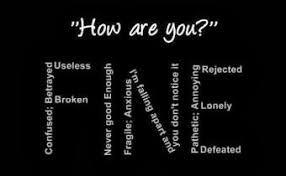
MY EPIPHANY…
Depression is debilitating.
Some people acknowledge it, some think it’s an attention call. For me, depression is like that bundle of laundry that you don’t want to show in your Instagram pictures. I never want to show my heap of laundry to the world, I want my life to seem content and put together, as if I folded and put away all my laundry right out of the dryer.
Depression can be the hardest when others just don’t understand you. Never ask anybody how they can be so sad that they could contemplate suicide. Because honestly most of the people in that situition don’t know. How did they make it to this moment? What did they do to deserve this sorrow?
Nobody really knows how to explain depression to someone. It’s so different for everyone and comes in so many different forms. Some people explains their depression as a weight that holds them down. Others describe it as a shadow that looms in the back of their mind, always taunting and trying to tear them down and then sometimes, depression is described like they are sinking. It’s like dabbling in an ocean of poison and barely catching your breath before you’re dragged back under. I don’t think people understand that depression is persistent. Some days it doesn’t feel as burdensome, it doesn’t tug and pull as hard. And other days, it knocks you down before you can even get out of bed.
I am always fighting this constant battle with myself past many years .. Yes! Me I may smile and laugh and seem happy, but know that, somewhere, in the back of my mind I’m struggling. It makes me feel like a failure, no matter what my successes. I feel worthless and like I’m a burden on everyone around me. After entering my teenage years till now I’ve been aggressive, argumentative used to reacting quickly on situations without understanding them, used to getting upset on small little things and have been called dramatic. It has become one of my biggest triggers, because most of my life I haven’t had that fight to defend it.
I get sad without any reason so often that I’ve created safe spaces. Currently, my safe place is my bathroom floor. Probably about at least 1 time in a month you can find me locked in my bathroom on the floor, crying. The lock on that door is the only form of power I feel I have when I feel everything is parting away.
Many times I have found myself on that bathroom floor contemplating life and how to make it past that very moment, will I? I have to say how thankful I am that I haven’t followed through. Life is so hard. Sprinkle on some depression, heck, dump it on – and life is now even more hard. Sometimes the low gets so low that it seems to take over, overwhelming you in a way that you could not have imagined beforehand.
Dressed from Penny to Gucci it’s a misconception that smile is the finishing touch to most outfits.We all give off the impressions that we are happy but this can be a very inaccurate representation of what we are actually experiencing.
People always say you should talk to someone, tell someone,but how do you put words on something so hard to even understand yourself? How do u explain someone that u want to live your life in peace but also you don’t know how you can? How do u explain that this no longer feels like a choice, that it controls you not the other way around.
Of course we are encouraged to TALK more these days but some of us including me wont even know where to start. some of us will Feel like we don’t have anyone to talk to and others will simply be sick of talking. Sometimes we do so much talking and thinking about whats going in our heads that we get even more confused by our own thoughts. This often leads us to say ‘ENOUGH’ and once again putting back on the brave face and deluding smile. By this we fail to get to the roots of our suffering. I am guilty of smiling so many times when I am actually freaking out from inside.
Why is it so hard to accept our own sufferings ? Well its not facile to accept your suffering because of thoughts in your head and ultimately your ego believes that you shouldn’t be suffering. That makes suffering and challenges we experience in life so much more daunting, arduous and scary.
Depression doesn’t have a face. you never know who is the girl around you always happy and cheerful must be struggling from inside or the boy who shows himself so tough maybe he needs someone to listen to him or be there for him. Nobody really knows how much the other person is hurt. We could really be beside someone who’s world is falling apart and we wouldn’t even know.

THE BIGGEST MISCONCEPTION OF THOSE WHO ARE SUICIDAL
People who believe those are suicidal are selfish- that they only think about themselves and not their loved ones. This is wrong ….. often those who are suicidal truly believe their loved are better off without them because they are such a burden.
Ergo, its important to be kind and tell others how much they mean to you even on their bad days. Often, people tend to not give enough importance to the person who’s suffering from mental issues and rather than giving a smile or telling the person that ‘they understand’, ‘they’re listening’ and that ‘they are there for the person’ they slightly bob their head, as if they understood yet they don’t.
There are people who often say that we can talk to them and they are always there, but when the time comes and we actually need help , they tell us to help our selves or often come to the conclusion that ‘we are in the problem because of our own wrong doings’.This far more worsens the situation for the person going through it. We are nobody to judge which problem is big or small because we all are different and feel different emotions.
I HOPE YOU CHECK UP ON PEOPLE OFTEN EVEN IF THEY HAVE A BRIGHT SMILE, BECAUSE OFTEN BEHIND THAT BRIGHT SMILE THEY MIGHT BE FIGHTING THEIR OWN HIDDEN BATTLES.
Whenever someone says you have hurt them, don’t shut them out. You don’t get to decide if u have hurt them or not. Don’t make them feel like a fool for expressing their feelings. Don’t always be self-righteous and think you can never make a mistake. If knowingly or unknowingly your actions hurt someone, avoid doing it. You can save someone just by being kind and being there for them.
WHAT TO SAY :
- You are not alone in this
- You are important to me
- You have me! And prove them not just saying it for heck of saying
- I am not going to leave in your tough times
- Tell them you care for them and what worth they hold
- Tell them you understand ( only if you really do)
- Assure them they are not weak or defective
- Emphasize that there’s hope
It’s possible that you can say all the “correct” things and your friend will still become upset with you. Each individual have their own unique thoughts and feelings, and being irritated and upset is the nature of depression. Sometimes people will take it out on those trying to help them because they are hurting and don’t know where to direct those bad feelings. Whoever is nearby becomes a convenient target. If this happens, try not to take it personally. Stay serene and continue to do what you can to love and support your friend in whatever way they will allow.
WHAT NOT TO SAY :
Avoid saying such phrases
- Don’t think about it
- Be positive
- I know how you feel – never say this because nobody really knows how the other person feels or is going through
- Count your blessings
- Your mood is bringing everyone down around you
- Just smile and let it go
- Its all in your head
- No one ever said life was fair
A Restless Mind.
A mind which is not stable. When there lots of thoughts keep running in your mind and cannot find any answer to the question. Then, that is called a restless mind. Basically, it is nothing more then a mind that is always insecure about there decision.
Hey there, today I’m going to talk about the most ignored problem of the time. People think it is mind, so, it doesn’t need to be settled. It should be running all the time. Yeah! I don’t totally disagree with them but there should be some limitations for self. Just like excessive use of something is always harmful.
Like for an example, when you want something to happen, you also think about or guess the consequences that might happen, if things doesn’t happen in the same way you thought. And now you are stuck. Whatever you do, you will be having a backup thought about every thing. Like, I’m having a thought for writing this and on the same time I’m questioning myself “Am I writing correctly”.
Many says that this is over thinking. Then let me just tell you something, even planning is also an over thinking or deciding anything is over thinking because, then why you have to decide, when everything is already been decided, right?. And now a days over thinking is not discussed as a problem, it is shifted or got dragged into “Being cool” stuffs. Like if you throw a stone on anyone in a crowd, hey/she will say they do over thinking. Come on its not over thinking, it is the only way our mind works. Like when you go for a trip you think about the pros and cons and the ways of dealing them. Where to stay, where to eat, where to roam, before packing your stuff. So, what is that, over thinking or planning? For some of you it may be a planning but for other or for most of them it is over thinking and they are fed up with.
But, a restless mind is all about that mind who not think about the consequences because of Being to restless to decide. Yeah! This brings the problem of anxiety, self doubting, creating chaos outside, unhappiness and many more. And there can be a lot of problems for that, but, for now it’s your mobile, probably on which you are reading this. Now, it is more then a source of entertainment for you. You literally depend on it. Like, if you got your mood off you want songs or videos to deal with it.
So, how can we deal with it? What can be best measure for it? Frankly, I don’t know. I’m also finding an answer for it. I just wanted to raise a question infront of you, just to make you aware that there are these questions which needs to answered.
Although, Everybody has there different answer, but, every answers will come to same place. Like, for me is staying away from social media for a bit everyday. I need this to be in my habit so that I can focus on my decision or restlessness.
Tell me your ways to deal with this in the comment section below. Till then have a great day and try to think about it, seriously.
Self-Love and Body-positivity
In a time where everyone considered life as a race, everything is treated as a rival, and everything has a price tag, when profits come first and the reality comes second, we fail to pause, smile, and enjoy the moments and experience the joy. What are we missing to have a happier life, just as we’ve always dreamed of? What’s it going to take to be happy?
We all expect to be loved, to be cared for, to be noticed, to be appreciated, to have the good that we give to others. But, are you in love with yourself? Do you think you should ask someone else to love you if you don’t love you yourself?
This is where we go with self-love and body positivity. This culture will make us mad sometimes, try to change us, bind us, before we get better than shapeshifters. We have a duty to defend ourselves, we have a right to be happy. However, the concept of self-love and body positivity is under misconception.
Self-love doesn’t mean to dream about expensive things and luxury, and body positivity certainly doesn’t mean that we don’t care how we look. Through self-love and body positivity hand in hand, you will cultivate your life and mend your mind to a positive lifestyle. In the same way, the significance and value of these definitions should be fully grasped.
Self-love can begin by challenging yourself and looking for answers inside yourself. Speak to yourself, understand what you want, treat yourself like you deserve to be viewed, fill yourself with good feelings, praise yourself, sing a song about yourself, engage yourself with what makes you happy, meet positive people, do things that can motivate you to become a happier person.
Body positivity should begin by respecting what you are, how you look, and being able to take good care of the outside. If you’re short or tall, fair or dusty, lanky or chubby, you can be stunning. Don’t ignore your look in the name of body positivity, the true idea of this should be to express how amazing you are for your individuality. Activities that can help improve the body’s balance with your consciousness, dance, exercise, swim, there are a couple. Making sure you dress up for yourself, so that you can feel confident and relaxed with how you look.
Proper self-love and body positivity would certainly make us better off both internally and externally.
Beauty comes in all shades, shapes and sizes.
Don’t let that kid die inside you
I know you must be thinking about abortion or something related to parenting thing, but, no. Don’t get yourself wrong, as we say “Don’t judge a book by its cover” the same applies here, don’t judge a blog by its title. Then why title is there, huh!
Hello fellows, don’t be so rude that I called you a fellow. I called you because you didn’t even tried to think what title is saying about. There’s a kid in every one, in every gender, in every person. Some of them just forgot about it like time forces them to forget. No! Time always take test, but, how to pass it and how to live after passing the test is always on you. You planned to forget that kid for sake of your future. So, did you got that future?? I guess not, then atleast have one thing for life time.
You are also aware of it that keep the child alive will always keep you interesting, creative and more importantly happy. And do you know why I added happy in the last, because that’s true. Happiness comes from the mysterious ways. And a child can only enjoy that other wise you may have seen an adult asking questions from where this happiness arrived.
There’s one more reason why I ask you keep that child alive, it is because I personally think that child represent your whole life. That child remains in you from starting till end of your life. No Matter how hard your life gets or how strong you become, if you couldn’t save that kid inside you. You technically failed in this life.
So, think and start saving that child inside you.
HOW TO FOLLOW NEW YEAR RESOLUTIONS TO FRUITION
Whether you like them or not, New Year’s resolutions are great to create a positive change in your life.
Maybe you always wanted to start a business, read a book a week, get a six-pack, or meditate more. The start of every year is the perfect opportunity to hit the reset button and do things differently.
But that doesn’t necessarily mean New Year’s resolutions are bad. It means that most of us don’t know how to successfully keep our resolutions.
Everybody can set goals. But a small percentage of people actually perseveres and achieves their goals. Steve Jobs believed that people achieve their goals because they didn’t quit.
The “Secret”
You and I both know there are no such things as secrets when it comes to personal success. Every piece of new advice you hear has been said before. The real secret lies in how well you execute the advice.
Because here’s the secret to successful New Year’s resolutions: Don’t talk about your resolutions until you’ve made them happen.
You see? There’s nothing new about the idea that we should not talk about our goals as it decreases the chances of achieving them.
But how well have you executed that advice? If you’re like most of us, the answer is probably something like, “I didn’t talk about my goals for a week. But I HAD to tell my BFF about it!”
Look, when I say don’t talk about your New Year’s resolutions, I’m dead serious. Like, “don’t even tell your spouse what you’re doing” serious.
Also don’t tell your brother, mother, father, best friend, or even a stranger. Only tell others about what you’ve done after you actually did it or formed the habit.
Why? Here are 4 reasons:
1. You’re More Likely To Succeed
Research says that it takes 66 days on average to form a new habit. But you probably won’t get past day three if you tell everyone about your resolutions.
We all know how these things go. “You?! Do you really want to quit smoking again?” Even though our friends and family don’t mean to discourage us, they often do with their remarks.
I can tell you to stop caring about what others think — which is good advice. But you know what’s better? Don’t give people a chance to say anything. In fact, research even backs this up.
Studies show that people who talked about their goals actually spent less time pursuing their goals than the people who didn’t talk.
Keep your goals and resolutions to yourself. There will be no comments from others. And there will also be no distractions. That gives you more time and energy to focus on your actions.
2. No Waste Of Time And Energy
Every minute you spend talking about doing something is a waste of precious time. I take this very seriously You might think that a few minutes talking about your goals won’t do any harm. But you’re wrong.
You’re wasting the two most important resources you have. Both time and energy should be treated with care.
Plus, who are you doing all this for? Do you want to lose weight to impress others? Or read more just because some blogger told you so?
Don’t fool yourself. None of that shit should matter to you. The only drive that’s sustainable is an internal one. You do things for yourself and the people who truly matter in your life.
3. More Anticipation
For me, this is the most important thing. When you set a goal or trying to form a new habit, it’s much better to talk about it in the past tense.
Instead, I looked forward to telling my friends that I actually did it. Now, my initial plan was to not talk about my resolution for a whole year. But after four to five months, I felt that the habit was ingrained in my system enough that I felt comfortable talking about it more.
And that’s how I do everything. I don’t say that I’m writing a book unless I’m almost done. Because, what’s the point? No one is going to help you write your book, lose weight, quit smoking, read a book, get your degree, and so forth. You have to do those things.
If you want to talk to someone, I recommend talking to yourself in your journal. If you don’t know how to journal.
4. You Put An Emphasis On Action
Let’s face it. Doing something is better than saying you’re going to do something. No one can argue with that.
We all know that nothing will ever happen without action. But what we don’t know is how important motivation and inspiration is in our life.
Every single person in life needs a reason to change. And sure, it has to come from within. But you also need outside inspiration — a kick in the ass to get started.
New Year’s resolutions are just that. Instead of saying that you don’t need resolutions, use them (just don’t talk about it). Improve your life.
And if you do it right, you’ll be the one who’s laughing in 12 months from now —not the idiots who mock New Year’s resolutions.
Finally, Here Are A Few Practical Tips To Make Your Resolutions Stick Even Better
- Keep it small — If you want to start a business, you’re probably not going to make a million bucks in the first year. It’s not about setting low goals. It’s about thinking big and acting small. You’ll achieve those big goals in time.
- Measure Your Progress — If you don’t measure your progress, it’s safe to say that you are not making any. Find a relevant measure and record it every single day. Yes, every day. If you want to change, you better be serious about it.
- Be Accountable To Yourself — We’ve all heard about the accountability partners, etc. I’ve experimented with it too. But I think that one of the most important skills you can learn in life is to be self-reliant. To see this as an exercise to improve your sense of accountability. To do that, you need a real reason to change. Maybe you want to buy your parents a big house, play soccer with your kids, or travel the world. It must be something bigger than you.
Anyone who’s serious about changing something about their life can do it. It doesn’t matter if you failed in the past. Maybe you handle it wrong. What matters is that go for it now.
Don’t judge a book by it’s Cover
The English idiom “don’t judge a book by its cover” is a figurative phrase which means “you shouldn’t judge significance of something by its outward appearance only”.
It is easier and faster to look at the instantaneous outer features of an object or a person. Many cannot deal with the troubling feeling of doubt (fear) when conversing with a stranger so to make it less challenging for themselves, they put a label on their new associate and act accordingly.
For example, you see a good-looking person and a bad-looking person. You know nothing about them except their skin colour, their physical traits and fashion. Then what? You make all sorts of thoughts and make a massive data in a minute just taking a look of their outward appearance. You may get attracted to the good-looking one but that could be a disaster for your life. He/she may not possess any real ability or talent. He/she can even turn out to be corrupt too. Outward appearance can be greatly misleading. There are utterly valueless things that look so good and taking them on their face value is foolishness.
Many people feel that you can tell a lot about a person by observing what they wear and what they eat. This is not the case. Choice of clothing and eating habits, in no way, allow you to pass judgment on a person. Judging people based on these factors is extremely shallow. What one wears and eats in no way depicts character, behavior, or even intelligence. One simply cannot know a person by looking at them and observing what they eat. Such a thought is ridiculous.Instead of looking at clothing and what one is eating, character should be the basis for opinion. Judging a book by the cover only leads to surprises, and in this case, judging a human by dress can lead to surprises as well.
This quote means a lot to me because when I had cancer and my physical appearance changes people judged my looks and thought horrible things about me. For example many who see a rough looking, skinny woman on the streets, who is really boney, may think she’s on drugs. There could be so many reasons why she looks like that.
You can not judge a book from the cover, but you can judge the website from its design. Before going into features and ease of use, people tend to evaluate and judge products and web sites early on the basis of appearance. The following design trend is necessary to make the product fresh and attractive. But is the design trend a panacea? Our designers know that the next design trend is an important part of our work, but we should not blindly use them. Not all situations are useful, useful, or applicable in all situations. Even a good trend may get worse and you may hurt the user experience. This is the reason we have to carefully use them, filter them and adjust them when necessary.We all know that you can not judge a book through its cover, but a good cover certainly will not hurt you. Like a wonderful hardcover book, we will give you a beautiful cover image to set the atmosphere of your photo gallery in your gallery. This cover image will add shine to the top of your gallery and welcome your visitors showing a full range of shine. The cover image fits seamlessly over the galleries, titles, descriptions, buttons (for purchase, slide, download), and all the navigation links displayed at the top of the photo. Since we do not want the cover image to cover all the stunning gallery pictures, we are very big so your gallery gets an amazing introduction they deserve without hiding the pictures under them Designed.I can not judge a book through the front cover, or I can not judge a book through the front cover. That is, you should not judge someone or something according to the appearance or the original appearance. If he loves her, I will be happy to them. You can not judge a book through the cover page. We may say that we do not believe in judging books through the cover, but according to the survey we have done it over and over again.
There is an old idiomatic phrase “Please do not judge a book on the cover.” This is a figurative phrase, “Do not prejudice something’s value or value by just looking.” Determining a book is probably one of the most exploited idioms, but it is certainly not the most commonly used. We do not deliberately dig down the surface, we live in a very superficial society where it is easy to see the surface. It is very troublesome to change this. In order to deeply consider one person, one thing, or one idea, people must maintain strict self-justification and ignore many prejudices.In many cases, our perception of others is greatly influenced by the appearance. Do not judge books on the front page – this is a sentence that everyone should have heard at least once in life. As people who are constantly judged and judged, we need to remember that everything is in a state of change. Therefore, assumptions and judgments increase the complexity of life. It is always a good idea to remove the colour lens.They said, “Do not judge a book on the cover.” Unfortunately, that did not happen. Until you get better you can judge each book with thumbnails and thumbnails of each video. In addition to throwing out part of the video thumbnails, viewers tend to judge the quality of the video through it. You should always avoid confusion and excessive text on thumbnails.
Instead of looking at clothing and what one is eating, character should be the basis for opinion. Judging a book by the cover only leads to surprises, and in this case, judging a human by dress can lead to surprises as well. Just because a man or woman may not dress as nicely, they’re not necessarily bad or even poor. The particular individual may not care what anyone thinks. They may dress a certain way just so people will pass judgment on them, some may just want the attention. This is often the case. One’s appearance can lead to many false judgments. By saying someone is a bum because of what they eat or wear shows total ignorance. If a person did nothing to better their situation, they can be considered bums.
The blacks had no say whatsoever in any of the events that held place in Maycomb, the main town mentioned in the book. In this book, one of the main characters, Atticus Finch, a noble gentleman, teaches his children, Scout and Jem the importance of not being prejudice, and that there should not be any differences between the whites and blacks. He teaches his children to be understanding, and to look at things from different people’s point of view, and to put themselves into other’s shoes. Despite his sister, Alexandra, being one of the most prejudice ladies in Maycomb, he ignores what everyone says of him, and sticks to his views believing that all whites and blacks should be equal. As a lawyer, he faces a stage where he has to defend Tom Robinson, a black man being accused of raping a white. Despite other’s views that he should not take this case seriously, he puts in all his effort into defending Tom Robinson, although he is aware that the chances of winning was zero.
 Eduindex
You must be logged in to post a comment.