Centre issues advisory to States, UTs to protect vulnerable sections of society affected by pandemic

The Centre has issued an advisory to States and Union Territories to take immediate steps for the protection of vulnerable sections of society including women, senior citizens and children who have been orphaned due to COVID-19 pandemic.

In its advisory, Home Ministry said, several States and UTs have initiated action and strengthened their machineries to support the vulnerable groups and various success stories and best practices are now available where emergency services have been provided to the vulnerable groups impacted by COVID-19.

However, in order to meet the new challenges arising out of the recent wave of COVID-19, the Ministry has urged to undertake an immediate review of the existing facilities for vulnerable groups especially for children who have been orphaned, senior citizens who may require timely assistance and members of SC and ST communities who may need guidance to access Government support facilities.

It has asked that the review may include steps taken for sensitization of police personnel, coordination with agencies and departments concerned as well as communities and civil society organizations.

In its advisory, the Ministry also cited over 107 crore rupees released to States and UTs for setting up and strengthening Women Help Desks in Police Stations.

The Desk envisages to have enlisted panel of experts including lawyers, psychologists and NGOs who can assist in accessing support, provide shelter and rehabilitation and help in registration and follow-up in the cases.

In order to address issues related to trafficking, 100 crore has also been released as grants to the States Union Territories to set up and strengthen Anti- Human Trafficking Unit (AHTU) in every District.

These AHTUs would be integrated task forces, consisting of police and other line departments dealing with prevention and combating trafficking.

The advisory added that these units are highly relevant, especially in the current COVID-19 pandemic where children may have been orphaned due to demise of their parents.

States and Union Territories have been asked to put in place suitable mechanisms for ensuring greater awareness on the anti-trafficking.

Union Health Ministry asks State Govts to emulate best practices in various districts to tackle COVID pandemic

May 21, 2021
,
2:05PM

Union Health Ministry asks State Govts to emulate best practices in various districts to tackle COVID pandemic

mohfw.gov.in

Union Health Ministry has asked State Governments to emulate the best practices shared by various district and field officials to effectively tackle COVID pandemic.

In a letter written by Union Health Secretary Rajesh Bhushan to all the State Health Secretaries, he has suggested them to replicate the innovative practices by customizing them to the local needs.

Prime Minister Narendra Modi interacted with the district and field officials of nearly 20 States and Union Territories on Tuesday and Thursday and discussed in detail the innovative strategies adopted by them to effectively manage COVID related issues in their area.

He had also asked them to share the best practices to the Central Health Ministry so that these innovative ideas can be further adopted by more states and districts.

AIR correspondent takes a look at few of the novel ideas shared by the states and district officials.

Marching ahead with the vision that new challenges need new solutions, several States and District Administrations are lauded for their exemplary work in handling the COVID related situation.

Among them includes the idea of active cooperation of RWAs in establishing COVID Care Centres and Isolation Centres effectively demonstrated by Gautam Budh Nagar Administration of Uttar Pradesh.

Where on one hand, Madhya Pradesh shared their prompt isolation and containment measures, Haryana depicted their work-site and drive through Vaccination Centre model and digital solution to health emergencies.

District Administration of Varanasi shared the effective use of Kashi COVID Response Centre (KCRC) to provide one-stop solution for all COVID related queries of common citizens.

Chennai shared their effective use of Taxi Ambulances whereas Chandigarh showed utilisation of Ayush medicines and Ayush Health facilities for COVID management.

Janjgir Champa in Chhattisgarh demonstrated their push to promote Ayush Kadha and Ahmednagar in Maharashtra shared their tiffin box service at the COVID Care Centres.

Mobile OPD, Oxygen Mitra, Oxygen Nurses, Door to door RT-PCR & Rapid Antigen Testing were also among the best practices shared with the states which focus not only on effective COVID management but also on minimising wastage of essential medical necessities.

PM Modi interacts with doctors, health workers of Varanasi; Gives new Mantra of ‘ Jahan Bimar, Vahin Upchar ‘ in fight against COVID

Prime Minister Narendra Modi today gave a new Mantra of ‘ Jahan Bimar, Vahin Upchar ‘ in the fight against COVID pandemic and said that we have to secure our children from the clutches of this pandemic and get ourselves prepared for this fight.

He was interacting with the doctors and para medical staff and frontline workers of his Parliamentary Constituency Varanasi in Uttar Pradesh a short while ago.

Mr Modi said that our fight is against a regular face-changing and cunning virus and we need to prepare ourselves for this.

Emphasizing on the need for vaccination, the Prime Minister said that we must get ourselves vaccinated when the turn comes and must make vaccination a collective responsibility.

He said that the importance of yoga and AYUSH in the fight against this virus is proving now worldwide.

Praising the Varanasi Model in fight with the pandemic, the Prime Minister said that everybody in the country is talking about the way the city fought with this pandemic.

New machines for testing, facilities for oxygen supply and other health infrastructure related things have become an example for others.

He especially mentioned ‘Kashi Kavach’ and said that it is also an innovative experiment of the administration which is helping people get the facility of telemedicine, medicines and other related things necessary for fighting against this pandemic.

He said that it’s not the time for rest, instead we have to fight a long battle with COVID in the Varanasi and other rural areas of Purvanchal.

The Prime Minister said that not just the people of Varanasi but people from Purvanchal and even from Bihar come for the treatment at hospitals of the city and in the last seven years there has been tremendous work for the development of health infrastructure in the city which helps during this crisis.

Mr Modi started his interaction by paying tribute to those who lost their lives during the battle with COVID in the city and in the end.

He said that our collective efforts will definitely give results and with the blessings of Baba Vishwanath of Kashi will successfully win the fight against COVID-19.

Why Do People Go Abroad To Study?

For decades, Indian students have preferred to move abroad in search of better education, jobs, lucrative salaries and higher standards of living. Since during that time India simply didn’t have the professional prospects that other countries offer, so it was the most common motive among the professionals to study abroad. But even after nearly four decades later, the young population of India are following the same course. India has witnessed a massive expansion of its educational infrastructure and today it has one of the largest education networks, and third largest reservoir of science and technology manpower in the world still the problem of Brain Drain is deep- rooted. Well, the reasons for planning to study abroad are different for different individuals but what they all have in common is –“Better Career Prospects”

Let’s look at some of the reasons to Study Abroad

  • Enhanced chances of getting good career opportunities– Foreign universities have extremely highly regarded higher education systems, and a huge percentage of the world’s highest ranking universities are abroad. In a globalized, well-connected world, employers increasingly value graduates with international experience and education. Also, studying abroad offers students a chance to secure a relevant job in that country.
  • Flexibility in choosing courses-Foreign countries not only have accelerated courses but the options of “dual major”, “minor”, and “free electives”. That is one can even study something that is out of major.
  • The Exposure– Studying abroad helps one to learn new languages, appreciate other cultures, and gain a greater understanding of the world. Also, one gets the opportunity to create a global network of contacts. Meeting students from across the globe can create opportunities to work for or with one another in the future. This experience one cannot feel in their own country until and unless they are coming abroad to study.
  • Personal development-While one is studying abroad, one has to do his own work, find a job to take care of his/her living expenses. Thus, they will quickly become more independent, learning to rely on oneself rather than family for everything. It will also develop good communication and critical thinking skills and will help in boosting one’s self confidence as one keeps overcoming new challenges of a new environment.
  • More Focus on skill building-Education system abroad is more focused on developing practical skills of a student and making him job ready, unlike India where the focus is purely on theoretical knowledge.
  • Research Opportunities– It is a well-known fact that research opportunities available in countries like USA, UK rank way ahead of the facilities and funding offered in India. This is one of the primary reasons for studying abroad.


Thus, as we can see there is a visible difference in the quality of education offered in India and Foreign institutions. With the various scholarship opportunities available, better jobs, better securities, more income, international connection; it is definitely a better option for Indian students to go abroad for higher studies.

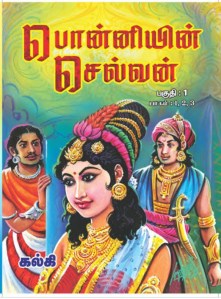
Ponniyin Selvan – Treasury of Tamil Literature


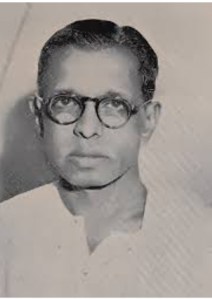
Author Kalki
Writer Kalki

 Ponniyin Selvan is a historical fiction novel written by Kalki. It contains 5 volumes and released   in book form in 1955. It tells the story of Arunmozhivarman, the great Chola emperor. Kalki visited Sri Lanka to gather information for it.

This novel is considered to be the greatest novel ever written in Tamil. Ponniyin Selvan novel added one more gem to the great Tamil literature. This novel has a huge fan base among people of all generation.
The book is famous for its vivid narration, the wit of the dialogue , power struggle and strength of the Chola empire.
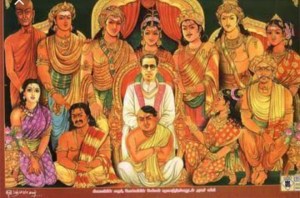
The main characters of this novel are Vandiyathevan, Prince Arulmozhivarman, Periya Pazhavetturayar, Crown Prince Aditya Karikalan, Nandhini.
Ponniyin Selvan novel is also made for visual treat.

The selfless she!

She….the everything!!

She,who gets up early in the morning every day to look after your needs & who wouldn’t mind sleeping. She,who will constantly forgive your lies no matter how big they’re, still give you a warm smile, who will endure all pain caused when you reject her and her kisses because you’re too cool to be seen. She’ll be the only one supporting and lifting up your spirit whenever you’re feeling down.

She, who thinks about only you who crosses her mind constantly throughout the day, who doesn’t want anybody else to hurt you, who consider herself to be fortunate to have you, who stood by your side in your joy and struggles & guided, leaded in a righteous path,giving your her full attention. She, who never get tired of talking to, when bringing down her mood without intention to and affect her emotions with every action of yours but still cares you a lot, to whom you’re the reason of her smile without trying, who’ll be a console when your life gets messed up,supports you when you’re mean to do something.

No matter where she is,what she’s doing, always finds herself thinking about only you who deeply love but often underappreciated, put the needs of you before herself, the marker of magical moments. She, who afraid of losing you & always wanted to keep within, who’ll remember all the moments forever you made it, holding you all the time, who sacrifices all her wants and needs just for only you, who never gives up on you, showing love & care to whom you mean the world, who dares to face the world alone just for you and finally who dedicated everything in her life only for you & who never fails to love you unconditionally!…..that’s why she called selfless!
Perhaps, one day you’ll understand all the sacrifices she gladly made out of her love for you!

I believe in love at first sight, cause I love her since I opened my eyes and she as well!
The purest and truest meaning of the word “unconditional” can only be found in her’s love!
Everything she ,she the everything!!

Comment on…… who’s she?
Love,
Neharika..

Common grammatical errors in written English

Language has had a solid establishment in our society and been advancing with time. Grammar shapes the basic language structure and helps in maintaining structural composition and readability. Having a language means to have a medium to associate with others in a way to exchange feelings and thoughts in an understandable manner.

Over time, English has ended up becoming one of the most popular languages for communication in the world. Despite that, English is frequently seen as a complex and precarious dialect to a great extent due to its erratic spellings and a parcel of exemptions to its rules of language structure. This tricky to learn grammar makes one prone to grammatical errors more often in written English.

Common Errors in English

>Spelling errors

The most obvious and common mistake in written English is of spellings. It mostly occurs due to: (a) too many rules and exceptions for writing certain words- for e.g. Use of ‘I’ before ‘E’ in case of ‘V’ and vice-versa for ‘C’ is instructed. However, the word ‘SCIENCE’ contradicts the rule (b) homophones- for e.g. rain, reign and rein the pronunciation is the same but written differently.

>Missing or misplaced apostrophe

Apostrophes are used to indicate possession and also used in contracted form of words. If misplaced or missing, it changes the sense of a sentence. For e.g. their (possession) and they’re (contracted form of they are)

>Absence or incorrect use of commas

Commas are the simplest tool to separate the fragment of a sentence. If made in use inappropriately or not used at all, commas can influence clarity of a sentence causing disarray in it.

>Subject verb agreement

It is one of the few errors which occur in written as well as spoken English. To maintain grammatical accuracy it is important to satisfy the verb with respect to subject i.e. if the subject is singular, the verb needs to be plural in form and vice versa. For e.g. birds chirp (plural subject, singular verb) and sun shines (singular subject, plural verb)

>Inappropriate use of tense

We often tend to ignore tense while writing. A sentence has to be accurate with the use of tense to maintain the same sense throughout the sentence.

>Overuse of adverbs

Unnecessary adverbs need to be avoided. Instead of searching for more adverb, one should lookout for a more effective verb or adjective to add more colour to the content.

>Inappropriate use of degree of comparison

Herein, mostly errors are observed in comparative and superlative degree. Use of ‘more’ before the comparative degree of adjective and omitting the use of ‘the’ in superlative degree of adjective while comparison are common mistakes. For e.g.- I am more taller than him.

Indian Colourism: Origins and its residual effects


While some people might not be familiar with the concept or term colourism, rest assured for everyone has indulged in it. The oxford dictionary defines colourism as “prejudice or discrimination against individuals with a dark skin tone, typically among people of the same ethnic or racial group.” Perpetuated by both the oppressed and the oppressor alike, it is deeply entrenched in the average person’s psyche. Discussions of such topics are often littered with defensive stances and refusal to believe in one’s own fallacy. People tend to gloss over the microaggressions they partake in every day unbeknownst to themselves.


If we try to look at the roots of the issue and where its origins lie, if there are any, one will find being ruled by fairer-skinned Aryans, Mughals, and Europeans a recurring theme. However, was there no discrimination on the basis of skin in ancient India? The ancient texts portrayed dark-complexioned princes and princesses, gods and heroes in the same light as their fairer counterparts. They were allowed to be heroic and dark and beautiful not in spite of their skin tone but because of it. Lord Krishna’s—whose name means black itself—statues could be dark while Radha’s were made from marble. Times seem to have changed with idols carved in lighter stones selling exponentially more. India’s fanatic obsession hasn’t exempted even gods.


The Britishers moulded the pliable atmosphere after the end of the Mughal rule to their benefit. They were modernized and scientific here to save the uncivilized natives from our erroneous ways. They were symbols of power, class, and status. Who wouldn’t want to be like them? If dogs and Indians were not allowed inside exclusive clubs, who wouldn’t want to shed a part of them for a better life? Thus, colourism unfurled its tendrils. If you weren’t white, be the next best thing. Being white adjacent would land you better opportunities. With the English came the Eurocentric beauty standards. Other places have loosened these to let in talents from diversified backgrounds, but India is still stuck with the remnants of British rule.  


  Manufacturers seized the perfect opportunity by preying on the insecurities of the general public who desperately longed for upward mobility to escape from their circumstances. In 2019, the Indian skin lightening industry was reportedly worth nearly Rs 3000 crore. Bollywood jumped on the bandwagon and ingrained in all our minds that only fair can be attributed to lovely. With whitewashing actors in commercials and casting only fair actresses as love interests, the message was clear: there is no space for dark-skinned actors to be leads in a country of dark-skinned people.


We have internalized the messaging and bigoted ideals. So much to find fair attached to qualities in every matrimonial. To use skin bleaching and lightening products even after knowing their harmful effects. We have attached our self-worth and ability to be seen as desirable and worthy of respect and love to the shade of our skin. We have broken the hearts of millions of innocent kids who would grow to doubt themselves because what they see in the mirror will always resemble the dirt beneath their feet more than it ever does their favourite actor. Change is long overdue.  


War (युद्ध )

 युद्ध शब्द का अर्थ है राज्य संगठनों या देशों के बीच संघर्ष या लड़ाई की स्थिति।  देशों के बीच युद्ध को विश्व युद्ध के रूप में भी जाना जाता है जो बहुत बड़े पैमाने पर होता है और इसमें बड़ा विनाश होता है और देश के बुनियादी ढांचे और विकास और युद्ध हारने वाले देश के लोगों को भी भारी नुकसान होता है।  युद्ध न केवल युद्ध हारने वाले देश को बल्कि युद्ध जीतने वाले देश को भी नुकसान पहुंचाता है क्योंकि युद्ध के दौरान बहुत विनाश होता है।एक कहावत है कि युद्ध कभी अच्छा नहीं होता, शांति कभी बुरी नहीं होती।  लेकिन अगर हम मानव जाति के इतिहास में पीछे मुड़कर देखें, तो यह स्पष्ट हो जाएगा कि प्रागैतिहासिक काल से युद्ध होते रहे हैं।  हालांकि इसे खत्म करने के प्रयास किए गए हैं, लेकिन अब तक सफलता नहीं मिली है।  इस प्रकार, शाश्वत शांति हमारी पहुंच से परे प्रतीत होती है।  ऐसे लोग हैं जो युद्धों को सही ठहराते हैं और कहते हैं कि यह आवश्यक है क्योंकि यह प्रकृति का नियम है।

 वे चार्ल्स डार्विन को अपने सामने रखकर अपनी बात को उजागर करते हैं।  उन्होंने ही योग्यतम की उत्तरजीविता के सिद्धांत की स्थापना की।  उन्होंने बताया कि चेतन और निर्जीव दोनों प्रकृति में जीवित रहने के लिए निरंतर संघर्ष है।  इस संघर्ष में वही सफल होंगे जो योग्यतम होंगे।  इस प्रकार, युद्ध को आवश्यक माना जाता है जिसके बिना मानवता का कोई विकास नहीं होगा।लेकिन ऐसे लोग भूल जाते हैं कि युद्ध हमेशा बड़े पैमाने पर विनाश लाता है।  वे महात्मा गांधी की अहिंसा की शिक्षा को भूल जाते हैं, जिसके बाद उन्होंने अपनी मातृभूमि को गुलामी की बेड़ियों से मुक्त कराया।  वे भूल जाते हैं कि यदि गांधी अहिंसा के बल पर शक्तिशाली अंग्रेजों को बाहर कर सकते थे, तो अन्य लोग उसी पदचिन्ह पर क्यों नहीं चलते। 
युद्ध शब्द की उत्पत्ति जर्मन भाषा के पुराने शब्द ‘वेरन’ से हुई है जिसका अर्थ है भ्रमित करना या बनाना और निष्कर्ष निकालना।  यह पाया गया कि युद्ध आज से लगभग  14000 साल पहले से हुआ है, मेसोलिथिक कब्रिस्तान स्थल में लगभग 45% कंकाल युद्ध के कारण हिंसक मौत के संकेत प्रदर्शित करते हुए पाए गए थे।  पुराने जमाने में इस्तेमाल होने वाले हथियार आज उपलब्ध हथियारों की तरह नहीं थे, वे ज्यादातर धनुष और तीर का इस्तेमाल करते थे, और वे एक दूसरे से लड़ने के लिए भाले का भी इस्तेमाल करते थे और खुद को बचाने के लिए भी वे युद्ध के दौरान ढाल का इस्तेमाल करते थे।  लेकिन आजकल हथियार बहुत आधुनिक हो गए हैं और उनके पास नई तकनीक भी है जो एक बड़ी आपदा पैदा कर सकती है।
युद्ध के विभिन्न कारण हैं;  यह न केवल एक कारण कर्तव्य लेता है, बल्कि इसके कई कारण हैं।  युद्ध का मुख्य कारण एक श्रेष्ठ देश बनना है जिसके कारण वे विरोधी देश पर हावी हो जाते हैं।  विरोधी देश पर प्रभुत्व विभिन्न तरीकों से किया जाता है जैसे कि क्षेत्र बढ़ाने के लिए लड़ना या दूसरे देश से आर्थिक विकास हासिल करना और देशों को अच्छी तरह से और देश के संसाधनों पर नियंत्रण करना।  राष्ट्रवाद युद्ध का एक अन्य प्रमुख कारण है जिसमें देश अपने देश को विश्व से श्रेष्ठ बनाकर अपना राष्ट्रवाद सिद्ध करना चाहता है।  लेकिन कभी-कभी युद्ध इसलिए किया जाता है क्योंकि वे पहले किए गए थे जिनमें वे हार चुके हैं, और वे बदला लेने के लिए फिर से युद्ध करना चाहते हैं।
युद्ध के प्रभाव:

दोनों देशों या राज्य पर युद्ध के विभिन्न हानिकारक प्रभाव पड़ता हैं क्योंकि युद्ध के दौरान बहुत सारे संसाधन का प्रयोग किया जाते हैं विशेष रूप से मानव संसाधन जिसमें युद्ध के दौरान नुकसान के कारण कई मनुष्यों की मृत्यु हो जाती है।  युद्ध के दौरान हुए नुकसान से उबरने में काफी समय लगता है और कई बार इससे उबरना नामुमकिन हो जाता है।युद्ध आवश्यक बुराइयाँ हैं और उनकी भयावहता इतनी अधिक है कि उन्हें शब्दों में वर्णित नहीं किया जा सकता है।  हमें दो विश्व युद्धों की भयावहता को नहीं भूलना चाहिए।  वहां के युद्धों में, ये सामूहिक हत्याएं और संपत्ति का विनाश था।  हजारों को विधवा और अनाथ बना दिया गया।  युद्ध नफरत लाता है और झूठ फैलाता है।  लोग स्वार्थी और क्रूर हो जाते हैं।  इसका खामियाजा मानवता और नैतिकता को भुगतना पड़ता है। युद्ध पूरी मानवता और मानव सभ्यता का दुश्मन है।  इससे कुछ भी अच्छा हासिल नहीं किया जा सकता है।  अत: इसकी किसी भी रूप में महिमा नहीं की जा सकती।  यह न केवल राष्ट्र के विकास में बाधा डालता है बल्कि सामाजिक एकता को भी नष्ट करता है।  यह मानव जाति की प्रगति की गति को धीमा कर देता है। युद्ध समस्याओं का समाधान नहीं हैं।  इसके बजाय वे समस्याएं पैदा करते हैं और राष्ट्रों के बीच नफरत पैदा करते हैं।  युद्ध एक मुद्दे को तय कर सकता है लेकिन कई को जन्म देता है  हिरोशिमा और नागासाकी युद्धों के परिणाम के सबसे भयानक चेहरे हैं। 80साल बाद भी लोग युद्ध के दुखों से जूझ रहे हैं।  युद्ध का कारण जो भी हो, इसका परिणाम हमेशा बड़े पैमाने पर जीवन और संपत्ति का विनाश होता है.

Hope – The essence of our soul

https://tse1.mm.bing.net/th?id=OIP.z5zfExYtgomYCLt-GK059gHaDy&pid=Api&P=0&w=303&h=156

“ Hope is being able to see that there is light despite all the darkness. It whispers, You will overcome this hardship. It reassures us, soothing our minds by reminding, life will improve.”                                                                           – Desmond Tutu

As I was reading a newspaper, a thought came to my mind that made me conscious of the fact that almost every other page in the newspaper nowadays has headline surrounded by depressing and terrifying words. Every day we come across such articles that leave us thoughtful and make our mind accustomed to these negativities that we are surrounded by in the present times. The news of rising cases, increasing death rates and lack of infrastructure facilities makes our feelings frightening and dejected. Everyday we question ourselves when will this be over and when can we get back to our normal lives.

As lord Krishna has rightly said “Change is the law of universe. What you think of as death, is indeed life. In one instance you can be a millionaire, and in the other instance you can be steeped in poverty”. Times have shown that humanity has always adapted itself to extraordinary circumstances. The present ongoing pandemic situation has proved that no matter what the situation becomes our lives will always be governed by hope and affirmation.

Hope is a feeling of expectation and desire for a certain thing to happen. Hope is a symbol of positivity, expectations and joy. It is closely linked to our health, well-being, mental state and situations that surround us. It is like a flower blossoming with the thorns. Hope is linked to trust. When you are hopeful you are believing that something positive will happen, when you are hopeful about future you trust your own choices and decisions, when you trust someone you have a hope that they will never betray your trust. Every action of ours signifies hope, the trust that when you go to bed you will wake up with cheerful mind is itself a hope.

Hope makes us believe that things will get better, that every situation in life is temporary and every dark day is accompanied by positivity and happiness. It changes our perspective and allows for healing and wholeness for ourselves and for others.

According to Charles R Snyder, a psychologist, hope includes three elements: a goal, a path and freedom of choice. A person who is hopeful believes that he/she will succeed. The person has a specific destination and knows the route that he has to take to reach the desired outcome. Hope is a mindset, determination and will to believe that you can overcome your difficulties.

Hope acts as a remedy for all sorts of hardships and misfortunes. It enables us to cope with stressful events, like demise of our near and dear ones. It motivates us to carry on our activities with zeal and enthusiasm. It assists the sick person in getting well, encouraging them to do what it takes to recover. It makes our mind believe that everything will get better with time.

The more you look for hope the more you find it. We can find hope and joy in many things .

Mind is a powerful weapon, it is with us to control it. The type of thoughts and emotions that we want our mind to get used to requires practice. The more we look for positive things in every aspect of life the more we get our minds acquainted to it.

By recalling past instances where you have been hopeful and this hopefulness has led you to accomplish something good can rejuvenate this hope again.

Hope comes with expectations, if you expect good about something you will be hopeful. Hope comes in feeling grateful for things that you have. It comes in closely associating yourself with nature, having an emotional connect with it and feeling embraced.

We should be grateful for the life that we have, we must be happy that at least we have a roof under our heads to keep us safe in these destressing times, that we are not surrounded by miseries faced by those in the hospital yearning for an empty bed, those who don’t have a job or a shelter, or those who are still struggling for meal once a day and are living their life only because they have hope of betterment.


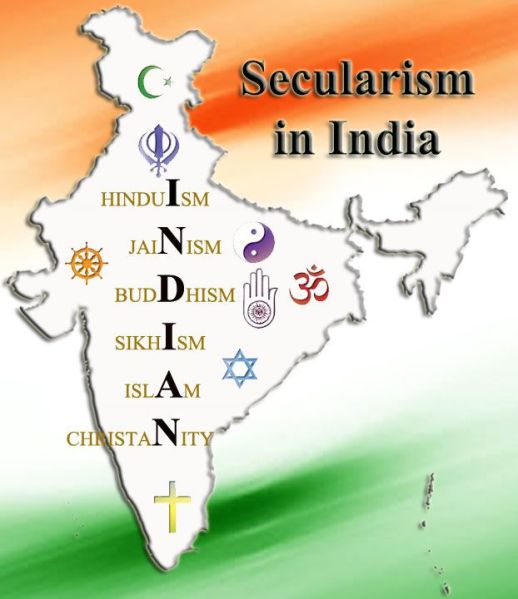
The Secular Concept in India

In India, the concept of secularism was originally born in response to the challenge to the theory of two nations. Indian nationalism proclaimed that India is a secular country and that there is no scope of differentiating between Hindus and Muslims.

Secularism in India is a positive, revolutionary and comprehensive concept which takes within its sweep all the communities in India following several religions. It is not negative in nature, it is not anti-God Or anti-religion; Indian secularism recognises the importance of religion in human life. It believes that no religion has the monopoly of philosophical wisdom. It allows all religions to discharge their function within their legitimate bonds. If citizens wants to worship their God, Indian secularism recognises the need and right for such prayer and worship. It does not prescribe the practice of any religion. Complete freedom of religion is assured in constitution.

secularism can also be non-religious, anti-religion and sceptical. Indian secularism, from this point of view is just non-religious. So long religious functions are held within its legitimate domain, Indian secularism is strictly neutral.

It is remarkable that though the words ‘secular’ and ‘secularism’ are not mentioned in our constitution, it guarantees equality of all religions before law. In that respect Indian Constitution is strictly and essentially founded on secular concept. Indian Constitution guarantees fundamental rights of religious freedom. Secular concept in India has become fully mature in the eyes of the world.

Health Ministry suggests deferment of Vaccination by three months after recovery from Corona virus infection

The Union Health Ministry has accepted the recommendations of National Expert Group on Vaccine Administration for COVID-19 or NEGVAC regarding deferment of vaccination by three months after recovery from COVID-19.

The Ministry said, the individuals having lab test proven COVID-19 illness should defer COVID-19 vaccination by three months after recovery.

Besides, the COVID-19 patients who have been given anti-SARS-2 monoclonal antibodies or convalescent plasma in that case the COVID-19 vaccination should be deferred by three months from the date of discharge from the hospital.

It was also recommended that if an individual is infected with COVID after the 1st dose then the 2nd dose should also be deferred by three months after clinical recovery from the illness.

Over 5.86 crore doses of COVID vaccines being provided free of cost by Centre to States from 1st May to 15th of June

Union Health Ministry has been providing advance information on availability of COVID vaccine doses to be supplied to the States and UTs.

It has written to the States and UTs on allocation of COVID vaccine doses during May and during first fortnight of June from the Government channel which is available free of cost.

It also provided information about availability of vaccine doses that can be procured directly by States and Private Hospitals during May and June.

This advance visibility will enable better and more effective planning by the States.

A total of 5 crore 86 lakh and 29 thousand doses is being provided free of cost by Centre to States from 1st of May to 15th of June.

In addition, a total of 4 crore, 87 lakh and 55 thousand doses will also be available till end of June for direct procurement by States and UTs.

The States and UTs have been advised to prepare a district-wise, COVID Vaccination Centre (CVC)-wise plan for administration of vaccines.

Both States Governments and Private CVCs must publish their vaccination calendar on CoWIN digital platform in advance.

They should desist from publishing single day vaccination calendar. It must be ensured that there is no overcrowding at the CVCs and process of booking appointments on CoWIN is hassle-free.

Centre hikes fertilizer subsidy by 140% to mitigate impact of rising international price rise

Union Government on Wednesday decided to hike the DAP subsidy by 140 per cent to provide the fertilizer to farmers at old rate despite international price rise.
 
The subsidy has been increased from Rs. 500 per bag to Rs. 1,200 per bag.
 
Now, despite the rise in international market prices, it will continue to available at the older price of Rs. 1,200 per bag.
 
A decision in this regard was taken during a high-level meeting chaired by Prime Minister Narendra Modi on the issue of fertilizer prices.
 
Mr Modi stressed that farmers should get fertilizers at old rates despite the international rise in prices.
 
He remarked that his government is committed to the welfare of farmers and will take all efforts to ensure that farmers do not have to face the brunt of price-rise.
 
AIR correspondent reports, recently, the international prices of phosphoric acid, ammonia and others used in DAP have gone up by 60 to 70 per cent.
 
So, the actual price of a DAP bag is currently Rs. 2,400 which could be sold by Fertilizer companies at Rs. 1,900 after considering  earlier subsidy of Rs. 500.
 
With today’s decision, the farmers will continue to get a DAP bag for Rs.  1,200.
 
The Central Government spends about Rs. 80 thousand crore on subsidies for chemical fertilizers every year.
 
With the increase in subsidy in DAP, Government of India will spend an additional Rs. 14,775 crore as subsidy in Kharif season.
 
This is the second major decision in the farmers’ interest in a week, after directly transferring Rs. 20, 667 crore in Farmers’ account under PM-KISAN.