BASICS OF DIGITAL MARKETING

What is Digital Marketing?

Computers and the internet have made it easy for us to do many things simultaneously. It has revolutionized our thought process. With the Covid-19 pandemic the entire world has adapted to the situation by working from home. The use of the term ‘Digital Marketing’ has increased during this time frame. It is used to promote small businesses as well as large scale businesses. We make use of it from the time we use our phones to surf social media platforms like Instagram, YouTube, etc to making deals and strategies for our company or brand. Digital devices, platforms, media, data generated and technology are the foundations of digital marketing.

Milllenials are considered as ‘digital pioneers’ of technology and social media. It is the generation to be born into a world which is at its peak technological innovation. It has seen the rise of many Influencers and social media pioneers who make content and earn through brand collaborations. For a brand, an online presence has never been as important as today. Online brands like Amazon, Google, Zomato, Myntra they’re all based on keeping their online audiences engaged.  As Albert Einstein said “In the middle of difficulty lies opportunity” there is an opportunity for us to seize even in a pandemic. Marketing yourself is the best strategy to follow in this digital era.

Types of Digital Marketing –

With digital marketing platform, you can gain a better understanding of what type of content resonates with the customers. This allows marketers to understand the demand of the consumers. It is entirely dependent on the engagement rate of the audience.

Digital Marketing can be branched into Search Engine Optimization or SEO Marketing, Email Marketing, Social Media Marketing or SMM, Influencer and Affiliate Marketing, Pay- per-click or PPC Marketing. When the customer is looking for something to buy they will probably click on one of the first results that show up on Google. Hence SEO Marketing comes into the picture. It consists of learning strategies on how to rank your own website on Google using appropriate keywords. It is more credible form of marketing. Email marketing allows organizations to stay connected with customers and clients via newsletters and connecting employees within a company to interact formally. Social Media Marketing involves Instagram, YouTube, LinkedIn, Twitter for promoting brands, businesses or their skills using visual effects. It depends upon the impressions, comments, conversions, clicks, etc. Influencer Marketing requires you to choose up a specialty and create a platform and gain followers. The followers trust the influencers, which makes them likely to buy a product recommended by them. Affiliate Marketing is to promote other brands and earn a certain percentage through it. Pay-per-click or also known as PPC is one of the most common types of digital marketing. It charges you for the number of clicks that you get on your advertisement. PPC comes under search engine marketing and content or social media marketing.

Digital Marketing is cheap, measureable and has high returns. Various resources online provide insight into what digital marketing is. There are many students studying in universities who decide to take up Digital Marketing as their major and make a career in this field. The knowledge and skills are just as important as it is to keep ourselves updated with the ever changing technology.

Bioenzymes : Feed Your Soil

Bioenzymes are organic soil growth supplements which has natural and essential nutrients to replenish the soil. Also known as “Jeevamrit“, does exactly what the name says!
It contains growth stimulants like potassium humate, amino acids, vitamin B complex, probiotics as well as blends of various enzymes like proteases, lipases, amylase, etc. Proteases breaks down bigger proteins into smaller amio acid units. Lipases acts on fats molecules and Amylase breaks down carbohydrates like starch.

Benefits of using bioenzymes:
Talking about the benefits, it works miracles. The enzymatic activity increases the concentration of good bacteria thereby, increasing the overall biological activity of the soil. It also increases the NPK levels, boosting plant growth and the difference is quite visible. Plants appear greener and fresher. Flowers are more fluffy n bright. Fruits, bigger and better resulting in good yield. Its a good natural herbicide, insecticide and pesticide which repels pests, enriching the soil of your home garden and orchards, helping plants to grow well in full potential.

Bioenzyme : works miracles

Bioenzymes : DIY
Making bioenzymes at home is extremely easy and simple. All you need is water, fruit peels and jaggery in 10 : 3 : 1 ratio. The peels could be dried or fresh, whatever is available. Even rotten fruits could be put to use. Do not replace jaggery with sugar. Chop the fruit peels into small pieces and mix them all together in an air tight container. Smaller the fragments, better the results. And that’s all! To speed up the process, a pinch of yeast is added. It would be ready to use in a month. If you don’t want to add yeast, have patience and wait for 3 months. Make sure that you don’t fill the container completely. Leave some space, about 1/4th, for the gases to evolve during fermentation. Don’t forget to open the container and stir once in a day or two for at least a few weeks. This is because the gases evolved should be released time to time or the container may explode.

Strain the liquid in a separate bottle for convenience. The fruit peels could be used to make next batch or it could be decomposed to add to the fertility of soil. As long as you maintain the proper ratio, results would be the best!

Vegetable peels can also be utilized but fruit peels, preferably citrus peels are used as they are full of antioxidants and the final product has a very pleasant fruity smell. Even flowers like dahalia are used to make bioenzymes. They have a mild fragrance which gives an aesthetic touch to your house and garden.

How to use bioenzymes?
Bioenzymes could be used in multiple ways. It acts as an excellent cleaner and could be replaced with floor and bathroom chemical cleaners which are extremely polluting & lead to fat bergs in the sewer system. They are also used in rest rooms as surface cleanerns, odour eliminators and even more!
Bioenzymes can be added to the plant roots as liquid fertilizer, mixed with water in the ratio 1:50. Its good to always start with a more diluted solution.
Or it can be applied as foliar spray. Just add a teaspoon of it to 1 litre of water and there you go! Spray it all over the plants. It could be added once or twice a week depending on the vegetation.

Happy Gardening!

Empathy vs Covid-19

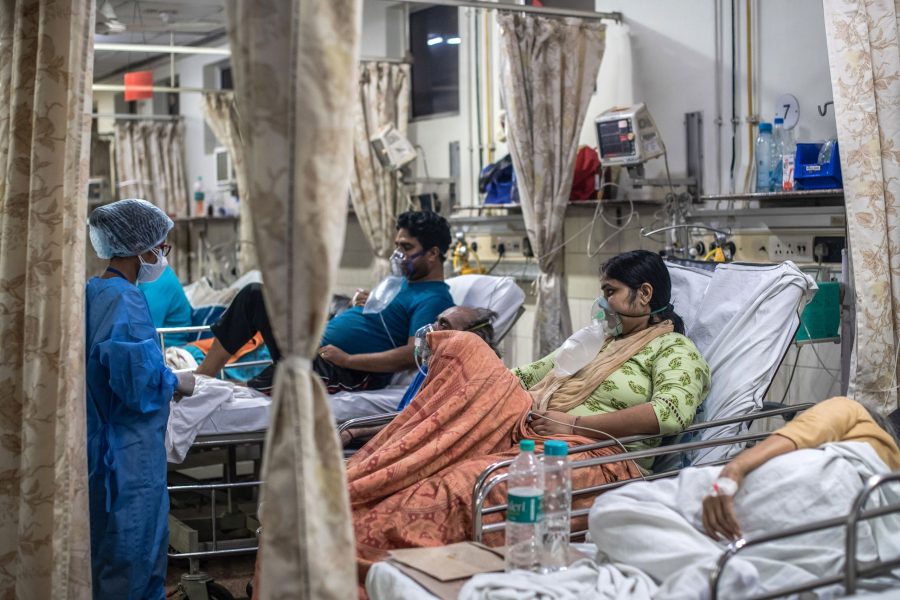
The Covid-19 pandemic has affected everyone disproportionately and unfairly. Health care workers face the harsh realities of the virus head-on. Teachers have had to adapt their years of experience gained from conventional teaching to suit online classes. Millions face the harsh reality of poverty and hunger everyday. Millions have lost their hard-earned jobs. Businesses have been forced to shut down. Hate crimes against groups of society that are baselessly and cruelly accused of spreading the virus have drastically increased. Mental health issues have risen and fueled by isolation, anxiety, uncertainty, and fear. More than 150 million people have gone and continue to battle with this invincible enemy. More than 3 million people have lost their lives because of this virus. Families have lost their loved ones and the world has lost countless dreamers. This virus cossets no one.  

Early notions such as the pandemic would be ephemeral and infections were punitive for those who flouted the necessary precautions and rules have diminished during the ongoing second wave of the Covid-19 pandemic. In my opinion, this is due to a rise in empathy amongst the people of India. Simply put, empathy is the ability of a living being to understand and share the feelings of another living being. Colloquially, it is referred to as “putting oneself in someone else’s shoes” 

The Government of India has had no shortage of opportunities to show empathy and alleviate the suffering of Indians. The Government has neglected its duty to serve the country and as Arundhati Roy put it, has committed a crime against humanity. The government has failed on many fronts. I would like to highlight a few that showcase an egregious lack of empathy. 

Firstly, the poorly planned nationwide lockdown, which was imposed with a mere 4 hours of notice, left thousands of migrant workers helpless, stranded, and vulnerable. With no help from the government, these migrant workers bravely decided to walk back to their villages. This lockdown was stained by police brutality and hate crimes against people that just wanted to survive. The lack of condemnation and apology by the government showcases a lack of empathy. 

Secondly, in an attempt to alleviate the suffering of Indians, the government launched the risibly named PM CARES (Citizens Assistance and Relief in Emergency Situations) fund and its primary objective was “to deal with any kind of emergency or distress situation, like posed by the COVID-19 pandemic and to provide relief to the affected”. The fact that a government that has never shied away from repeatedly putting their plans such as “Make in India”, “Swachh Bharat”, “Beti Bachao Beti Padhao”, etc on the highest possible pedestal has created such an opaque and inaccessible fund shows a lack of empathy. 

Thirdly, the government’s actions before the second wave hit can be described as complacent, incompetent, and overconfident. On the 21st of February 2021, a resolution was passed in the BJP National Office Bearers meeting that “unequivocally hails its leadership for introducing India to the world as a proud and victorious nation in the fight against Covid”. Additionally, the government decided to export vaccines to other countries without ensuring adequate supply was available for Indian citizens. This not only leaves Indian citizens in danger but also betrays all the countries that depended on “the pharmacy of the world” as vaccine exports were abruptly stopped. None of this would’ve happened if the government showed empathy towards the people of India and established appropriate contingent plans.

Fourthly, while the second wave virulently spread and claimed thousands of lives, the government showed no empathy. While a strong case can be made to prohibit sitting union ministers from campaigning in elections that they are not contesting during a crisis, a complete stop to the democratic process would have been detrimental. The occurrence of huge rallies during a pandemic is untenable and all politicians are guilty of this. The myopic and unsympathetic nature of the government is accentuated by the needless comments that they have made throughout the pandemic.  

Finally, the iniquitous lack of co-operation between the centre and states to fight this pandemic showcases a pathetic lack of empathy. The failure to come up with a comprehensive and transparent plan for the distribution and supply of oxygen and vaccines has caused unimaginable suffering to the people of India. Any attempt by the government to set aside pride and partisanship, as leaders have done before when facing a crisis, and listen to good advice and imploration would be a sign of empathy. No such attempt has been made. Their lack of action and belated action have had fatal effects, but the government has not shown a sign of remorse or empathy.    

But all is not lost. There have been instances in which the government has shown empathy. Most states have decided to offer a Covid-19 vaccine for free for different age groups. The central government also has plans to allow final-year MBBS students to join Covid duty before completing the NEET exam. This will drastically reduce the strain faced by health care workers taking care of Covid patients. The government of Karnataka also announced that it would form a team of 15,000 civil defence volunteers in Bengaluru for tracking and tracing Covid-19 patients. This is a significantly more empathetic and humane approach to managing the crisis than the sadistic and vicious approach used last year that made victims of Covid-19 feel like criminals.

However, none of these actions are as consequential and empathetic as the profound empathy amongst the ordinary people of India. Early displays of empathy were seen when people started taking care of stray animals during the lockdown. Furthermore, countless rations and donations were given to the stranded migrant workers to help them cope with the dire situation they faced. From providing meals, oxygen, assistance to the elderly and handling cremations, Gurudwaras around the country have been the perfect embodiment of empathy. Conspicuously, the empathy and equanimity shown by the youth of India has truly been remarkable. With the help of social media, the relentless youth are constantly doing their part by helping those in need. 

Empathy also provides a strong basis for our everyday fight against Covid-19. Precautions like wearing a mask, staying indoors as much as possible, social distancing when outside, and getting vaccinated as soon as possible would not be flouted if people were more empathetic. For those of us who have not been directly affected by the virus yet, empathy goes a long way in helping and caring about those who have. 

Perhaps, the most optimistic and quixotic change that we can hope for during this precarious and seemingly inexorable situation is the crippling of traditional barriers that have separated us before. If we, as ordinary citizens of India, continue to disregard gender, caste, religion, wealth, age, ethnicity, language, political ideology, and other barriers when helping those affected by this pandemic, we could truly be united in this fight against the invisible enemy. Together, we shall overcome.  

How India is lacking in Healthcare

Health is man’s most precious possession. One who enjoys good health can enjoy life in the real sense. The healthcare system of India has been poor for a long time and the ongoing covid pandemic has revealed it.


In the absence of modern quality healthcare in the public sector , people prefer the private sector for better treatment but it is not affordable for them. Healthcare sector is not ready for the unprecedented rise in coronavirus cases which could turn worse. It has highlighted the lack of medical funding to build better healthcare infrastructure.

The covid pandemic creates a special challenge due to the paucity of testing services, weak surveillance system and above all poor medical care. The impacts of this pandemic, and especially the lockdown strategy, are multi-dimensional.


Due to lack of vaccines, many people are getting infected with corona. Not all patients are receiving treatment due to lack of hospital beds. The problem has become more serious as there are not enough doctors. People are dying from oxygen after being infected.

Many states are already at risk of pandemic due to the lack of health infrastructure and equipment ranging from oxygen to ventilators. Most of the people in India have no medical insurance, so they cannot cope financially and mentally against pandemic or any other disease. Who are the decision maker of the society, most of them live in cities and towns. So they cannot reach to the people who live in rural areas. Now people’s lives are at stake.

The solution is to increase healthcare spending and strengthen the healthcare system.The epidemic highlighted the inadequacy of private health care and the importance of spending and strengthening public health care. Longevity; The government needs to re-evaluate and make rapid improvements in public health, infrastructure funding. India need more doctors and nurses for better healthcare system. More government hospitals are needed to treat most people. India need to prioritize healthcare and be better prepared for the future.

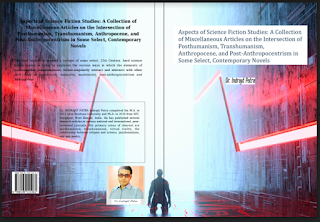
Aspects of Science Fiction Studies: A Collection of Miscellaneous Articles on the Intersection of Posthumanism, Transhumanism, Anthropocene and Post-Anthropocentrism in Some Select, Contemporary Novels

ISBN Number

978-81-951119-6-1

Title Aspects of Science Fiction Studies: A Collection of Miscellaneous Articles on the Intersection of Posthumanism, Transhumanism, Anthropocene and Post-Anthropocentrism in Some Select, Contemporary Novels
Author/Editor Dr. Indrajit Patra
Year Of Allotment of ISBN 2021
Country of Publication INDIA
Product Form Single-component retail product/
Language English
Imprint Pen2Print

About the Book 
The book intends to present a critique of some select, 21st Century, hard science fiction novels in order to explicate the various ways in which the elements of posthumanism, transhumanism,
techno-singularity, interact and intersect with other such ideas as monstrosity, animality, machinicity, postanthropocentrism, and Anthropocene. The study divides its analysis into seven different
chapters and attempts to present an elaborate study on various aspects of posthumanism, transhumanism, and singularity. The book despite being a collection of miscellaneous essays actually intends
to show how a technologically mediated transhuman/posthuman culture will normally be defined by a total dissolution of binaries and human digital and real, and machine and man.
Buy Now from Amazon LINK 1 and Amazon LINK 2

Buy Print Copy LINK 1

IJR – International Journal of Research

International Journal of Research (IJR) is indexed, refereed, peer reviewed, open access journal, publishing high quality papers on all aspects of education.

Social Science

Humanities, Sociology, Education, Political Science, Law, Policy, Social Review, Arts, History, Philosophy, English

Management

Commerce, Economics, Finance, Accounting, Corporate Governance, Human Resources Management, Marketing Management, Quality Management Training and Development

Engineering

Information Technology, Computer Application, Civil Engineering, Machanical Engineering, Chemical Engineering, Electrical Engineering, Physics

Medical Science

Medicine, Health, Nursing, Clinical Research, Pharmacy, Pharmaceutical, Pharmacognosy, Pharmacology, Phytochemistry

Biology

Botany, Bioscience, Microbiology, Biotechnology, Clinical Biology, Molecular Biology, Biochemistry, Agriculture, Chemistry, Environment and Ecology, Food Science, Nutrition, Plant Science, Entomology, Zoology, Fisheries

Physical Education

Sports, Yoga, Physiotherapy, Physiology, Exercise, Health

How to Get Published

Send paper for review to ijr@ijrjournal.com

EAM S Jaishankar virtually participates in G7 Foreign Ministers’ meeting

External Affairs Minister Dr S Jaishankar participated in the G-7 Foreign Ministers’ meeting through video conference yesterday. After the meeting, Dr Jaishankar said, it was an interactive and thought-provoking meeting. He appreciated the opportunity to participate in its many conversations.
 
During the meeting it was discussed that vaccination is the only lasting solution to the COVID-19 challenge. A global answer will require diversified production, uninterrupted supply chains and generous resourcing. Dr. Jaishankar said, India will do its part. He noted that geopolitical changes have been accelerated by Covid-related trends and issues of transparency, reliability and resilience will guide policy choices. Open Societies and personal freedoms require careful nurturing and must be on guard against fake news and digital manipulation he added.
 
Dr Jaishankar said, India had embraced Green Growth since 2014 and transformation stories include renewable capacity, Ujjwala, LED distribution, forest cover and Jal Jeevan. He said, but higher green ambitions require larger green resources and COP26 will be a test. The 2021 UN Climate Change Conference, also known as COP26, is the 26th UN Climate Change conference.
 
Dr Jaishankar thanked UK Foreign Secretary Dominic Raab for inviting India as a guest to the Foreign Ministers’ Meeting.
 
British Prime Minister Boris Johnson interacted with the participating Foreign Ministers in between the sessions. Dr Jaishankar assured him that Foreign Secretary Dominic Raab and he will take forward the 2030 Roadmap. In a tweet, Dr Jaishankar said, India and UK are committed to delivering on the Modi-Johnson vision of the ties.

EAM S Jaishankar virtually participates in G7 Foreign Ministers’ meeting

External Affairs Minister Dr S Jaishankar participated in the G-7 Foreign Ministers’ meeting through video conference yesterday. After the meeting, Dr Jaishankar said, it was an interactive and thought-provoking meeting. He appreciated the opportunity to participate in its many conversations.
 
During the meeting it was discussed that vaccination is the only lasting solution to the COVID-19 challenge. A global answer will require diversified production, uninterrupted supply chains and generous resourcing. Dr. Jaishankar said, India will do its part. He noted that geopolitical changes have been accelerated by Covid-related trends and issues of transparency, reliability and resilience will guide policy choices. Open Societies and personal freedoms require careful nurturing and must be on guard against fake news and digital manipulation he added.
 
Dr Jaishankar said, India had embraced Green Growth since 2014 and transformation stories include renewable capacity, Ujjwala, LED distribution, forest cover and Jal Jeevan. He said, but higher green ambitions require larger green resources and COP26 will be a test. The 2021 UN Climate Change Conference, also known as COP26, is the 26th UN Climate Change conference.
 
Dr Jaishankar thanked UK Foreign Secretary Dominic Raab for inviting India as a guest to the Foreign Ministers’ Meeting.
 
British Prime Minister Boris Johnson interacted with the participating Foreign Ministers in between the sessions. Dr Jaishankar assured him that Foreign Secretary Dominic Raab and he will take forward the 2030 Roadmap. In a tweet, Dr Jaishankar said, India and UK are committed to delivering on the Modi-Johnson vision of the ties.

Tamil Nadu announces new restrictions till May 20 to curb spread of Covid-19

Tamil Nadu has registered more than 23 thousand fresh cases yesterday. The health department said, more than one lakh 25 thousand people are under treatment, the death amounts to more than 160. Chennai continues to register more than 6000 positive cases with Coimbatore registering more than 2000 and Chengalpet with more than 1000.  Tirunelveli and Tiruvallur districts registered more than 900 cases yesterday.  Due to the prevailing pandemic situation, the government has announced new restrictions and nine higher police officials to monitor the logistics and other necessities needed to manage COVID. AIR correspondent reports that the new restrictions of the government will come into force from today to the 20th of this month.
 
Transport services like rail, metro and bus services will be allowed to operate with 50 percent passengers only. Private and government offices will have 50 percent attendance. No other shops except groceries , vegetable and tea shops without air-conditioned facility  will be allowed to function with 50 percent customers till 12 noon. Auditoriums, open air meetings and cultural events are banned. Only 20 people will be allowed in funerals and 50 persons in marriages. Curfew will continue on Sundays. E commerce activities like swiggy and zomato will be allowed to take place from restaurants with restricted timings.  Essential services, Media, freight and medical emergencies are allowed at all times and night curfew will continue from ten pm to four am.

COVID-19 supplies received from global community effectively allocated to states, UTs by Centre: Health Ministry

TheUnion Health Ministry has said that COVID-19 supplies received from the Global Community have been effectively allocated to States and Union Territories by the Centre.
   
The Ministry said that the Government of India has been receiving international donations of COVID-19 relief medical supplies and equipment since the  27th of last month from different countries including the United Kingdom, Ireland, Romania, Russia, UAE, USA, Taiwan, Kuwait, France, Thailand, Germany, Uzbekistan, Belgium and Italy. It added that from the  27th of April to the 4th of this month,  1764 Oxygen Concentrators, 1760 Oxygen Cylinders, seven  Oxygen Generation Plants, 450 ventilators, over  1.35 lakh  Remdesivir vials and  1.20 lakh  Favipiravir strips were delivered.
 
The Health Ministry said, a streamlined and systematic mechanism for allocation of the support supplies received by India has been put into place by the centre for effective distribution of the medical and other relief and support material. Besides, a dedicated Coordination Cell has been created in the Ministry to coordinate the receipt and allocation of foreign COVID relief material as grants, aid and donations.
 
The Ministry said, all these relief medical supplies and equipment are being allocated in a timely manner to the 38 medical institutions across 31 States and union territories, so far in the first tranche. This will help to supplement the medical infrastructure of these Institutions and strengthen their clinical management capacities for prompt and effective clinical management of the hospitalised COVID-19 patients. The cargo clearance and deliveries are facilitated without delay in coordination with agencies concerned.

Over 16 crore 24 lakh doses of Covid-19 vaccines administered in country

India has administered over 16 crore 24 lakh doses of COVID-19 vaccine in the country so far. Over 94 lakh 79 thousand Healthcare Workers  have taken the 1st dose while more than 63 lakh Health care workers have taken the 2nd dose. Over one crore 36 lakh Frontline Workers have taken the 1st dose while more than 74 lakh front line workers have taken the 2nd dose.
 
The Union Health Ministry said, more than 18 lakh 90 thousand beneficiaries were inoculated with COVID-19 vaccine doses till 8 PM yesterday. Out of these more than eight lakh 66 thousand beneficiaries were vaccinated for the 1st dose and more than 10 lakh beneficiaries received the 2nd dose of the vaccine.
 
The Ministry said, two lakh 30 thousand 305 beneficiaries in the age group of 18 to 44 years received their first dose of COVID vaccine yesterday and cumulatively over nine lakh across 12 States and Union Territories. 
 
The Ministry said, the vaccination exercise as a tool to protect the most vulnerable population groups in the country from COVID-19 continues to be regularly reviewed and monitored at the highest level.

12 states and UTs show early signs of reduction in Covid-19 cases: Govt

The Government has said that 12 States and Union Territories are showing early signs of reduction in COVID-19 cases. These States and Union Territories include Maharashtra, Uttar Pradesh, Delhi, Chhattisgarh, Gujarat, Jharkhand and Ladakh. Briefing reporters in New Delhi, Joint Secretary in Ministry of Health and Family Welfare, Lav Agarwal said, around 2.4 per cent day on day growth in COVID cases has been noticed. He said, 12 States and Union Territories have more than one lakh active cases. The states are Maharashtra, Karnataka, Kerala, Uttar Pradesh, Rajasthan, Andhra Pradesh, Gujarat, Tamil Nadu, Chhattisgarh, West Bengal, Bihar and Haryana. 

Mr Agarwal said, seven states have 50 thousand to one lakh active cases, while 17 states have less than 50 thousand active cases. He said, Maharashtra, Karnataka, Andhra Pradesh, Delhi, and Haryana have reported more COVID-19 deaths.

Principal Scientific Advisor, K Vijay Raghavan said, vaccines are effective against current variants. He said, new variants will arise all over the world and in India too but variants that increase transmission will likely plateau. He said, this is a critical time and it is important for all of us to work together and ensure India and the world get out of this Pandemic. He said, mask and social distancing are critical and most effective in containing COVID-19.

Post Poll Violence in West Bengal: Shame to Democracy

In a democratic society some people will vote for the party which is in power and some will vote for opposition parties. This is a simple rule in democracy. But what has been happening in West Bengal after 2 May 2021 is highly deplorable, sad and heart wrenching as a State with all “Bhadraloks” have proved that many of them can go at any level of violence i.e. killing, arson, assault etc. irrespective of any political party.  It is pertinent to mention that same time along with few other states elections were held in Assam. But not a single violence took place in Assam, a neighbouring State so “Bhadraloks” of West Bengal should learn. Few years ago I visited across West Bengal for academic woks and I observed huge unemployment. Many educated youths were literally crying as there were no employment opportunities. Many told​ me ​ educated​ ​​youths  were working as security personnel by getting paltry amounts.  Also it is interesting to mention here that many were proud of Sri Ramakrishna Paramahamsa, Gurudev Rabindranath Tagore, ​ Sri Aurobindo, Kazi Nazrul Islam, Swami Vivekananda, Netaji Subhas Chandra Bose, and many others as they were from Bengal. I highly praise this theory ‘but one should also do his or her good activities’. Anyway, West Bengal was once an economically prosperous state  ​now stands at low level in terms of development. During the 1960s many people used to go to West Bengal in general and Kolkata/Calcutta in particular for work. Against this backdrop, Labour Migration from the State in recent years is high as job opportunities are less. ​A​ccording to the Census 2011​, West Bengal ranks fourth among the states from where people migrate for work and employment. “Between 2001 and 2011, nearly 5.8 lakh people migrated from​ West​ Bengal looking for work, which is only after Uttar Pradesh (37.3 lakh), Bihar (22.6 lakh) and Rajasthan (6.6 lakh)” (The Times of India, 3/11/2019).  

​  ​A few data about post poll violence may be presented here.  According to the Times of India dated May 4, 2021 “11 killed in Bengal post-poll violence”. This is highly deplorable in a so-called   “Bhadralok” State. Killing of any person irrespective of party supporter, religion, caste language etc never can be supported, rather very very deplorable.  By quoting India Today dated 5/5/2021, it may be mentioned that “as post-poll violence grips West Bengal following the announcement of the assembly poll results, hundreds of BJP karyakartas and family members reportedly fled the state and have now taken shelter in Assam by crossing the inter-state border. Senior minister in the Assam government, Himanta Biswa Sarma on Tuesday claimed that around 300-400 BJP karyakartas and family members have crossed over to Dhubri in Assam after post-poll violence in West Bengal. The Assam minister further added that the state government is providing food and shelter to the party workers who have fled West Bengal”.

My fervent request to Didi as you are CM kindly saves the lives and properties of all. Because in school days read, “Violence is the last refuge of the incompetent”

Dr Shankar Chatterjee, Hyderabad, Dt 5 May 2021

Complete lockdown imposed in Bihar and Odisha to contain spread of Coronavirus

Complete lockdown has been imposed in Bihar and Odisha to contain spread of Coronavirus. Bihar government has imposed complete lockdown in the state till 15th of this month to contain the spread of Corona. Vaccination centres, banks and essential services will remain functional during the lockdown.
 
As per new guidelines, government offices and public corporations will remain closed. All educational institution, private and commercial establishments will also remain closed. Cinema halls, Shopping Mall, Gyms, stadium and parks have also been closed. Movement of public transport except train and flights has been stopped. Transport of emergency services has been allowed.
 
However, ration shops, dairy, vegetables and meat shops will remain open between 7 am and 11 am.
 
Home delivery from restaurants will be allowed from 9 am to 9 pm. All places of worship and religious gatherings will also be closed. The concerned authorities have been instructed to encourage home delivery to minimize the movement of individuals outside their homes.
 
Marriage ceremony with a limit of 50 persons has been allowed. For marriage ceremony permission has to be taken three days in advance from the concerned police station. Only 20 persons will be permitted in funeral processions. 
 
Odisha government has also imposed a state-wide lockdown for 14 days beginning today. The lockdown will be effective till 19th of this month. State’s Covid active caseload has jumped to 73,548 with the detection of 8,216 new cases yesterday. AIR correspondent reports, the state that used to report a peak of 4 to 5 thousand infections per day, during the first wave of the pandemic last year, has suddenly been confronted with daily highs of 8 to 10 thousand new cases. The 14 days’ statewide lockdown that aims at an early arrest of the virus, has spared certain essential activities including health services, covid test, vaccination and movement of goods, among others. Certain utility services like petrol pumps, cooking gas, ATM and postal service have also been exempted from the lockdown.
 
People will be allowed to walk down to the nearest roadside or street corner shops within 500 metres of their residence to purchase food items on all week days only between 6 in the morning to 12 noon. While marriage functions with a cap of  50 participants and funeral related rituals with a maximum of 20 participants will be allowed with prior approval and with full adherence to covid 19 protocols, all sorts of socio, religious , political, cultural, sports and entertainment related congregations  will remain barred during the period.