Twitter blames government for threatening free speech

Twitter started putting allegations on government for threatening free speech, Government counters it is defying Indian laws: On Thursday, amid the tensions between social media platform and government due to new guidelines, Twitter putted some serious allegations on government of “dangerous overreach that is inconsistent with open, democratic principles, ” and further also said that it is being forced to withhold portions of “legitimate free speech” over fears around the employees safety and some threats of financial penalties.

Sources are indicating that these were majorly related to the government’s request to pull down tweets related to farmer protests, as it was believed that these were peddling an anti-India sentiment and was an attempt to ruin India’s image globally and initiate some riots, as well as it is also related due to incidents during corona pandemic. The B1.617.2 variant which was initially found in India was being labelled as Indian variant in this social media platform and this was also ruining image of India globally.

A spokesperson of this giant social media platform gave an statement that, “We maintain that the content reported in the original order constitutes protected, legitimate free speech, under Indian and international law, and we have formally communicated this to the government… Yet, due to the law’s limited scope under Section 69A (of the IT Act) which gives limited room to an intermediary to defend the content, we have been compelled to withhold (block in India) in response to a non-compliance notice. Not doing so poses penal consequences with many risks for Twitter employees.

However, the spokesperson also added and defended himself that Twitter does not take any action on any verified accounts that consist of news media entities, journalists, activists, and politicians in keeping with our principles of defending protected speech and freedom of expression . The statement given by him came one day after the social media platform was deemed to be non-compliant with the new social media intermediary norms under which it is now required to appoint some designated officers to deal with the grievances and compliance apart from having a mechanism for pulling down content where there are maligned individuals or there is any sexually explicit matter.

Twitter said that there were some concerns over “intimidation tactics” by police and was bit critical of the new IT rules. The big social media platform also expressed its displeasure over the new rules taking which according to them is weakening the immunity of social media platforms such as Twitter, Facebook, and Instagram over third-party content. It is making them liable for criminal and civil action.

Just after few hours of allegations imposed by Twitter on Indian government the government replied charging the company with deliberately subverting the law of the land and also trying to “dictate” its terms even while using the term “opaque policies” to “arbitrarily” suspend user accounts and delete tweets without any proper explanation. The government asked the American company to stop beating around the bush and said that “the only instance of scuttling free speech on Twitter is Twitter itself and its opaque policies, as a result of which people’s accounts are suspended and tweets deleted arbitrarily without recourse“. The government further added that “law-making and policy formulation is the sole prerogative of the sovereign and Twitter is just a social media platform, and it has no locus in dictating what should India’s legal policy framework should be” and thus slammed Twitter.


COVID-19 recovery rate further improves to 90.34% in country

India’s daily COVID recoveries continued to outnumber the daily new cases for the 15th consecutive day.

Over 2.59 Lakh patients recovered from Corona virus disease within last 24 hours.

The recovery rate further improved to 90.34 per cent in the country.

So far, over two crore 48 lakh patients have already recovered from this infectious disease.

Health Ministry said that the country is registering a significant decline in active caseload, amid the second wave of COVID-19 pandemic.

It said, the country registered a decrease of over 76 thousand active cases in the last 24 hours.

At present, there are over 23 lakh active cases in the country.

More than one lakh 86 thousand new cases were registered in the last 24 hours.

A total of three thousand 660 deaths were reported in the last 24 hours.

Meanwhile, 20 crore 57 lakh vaccine doses have been administered in the country so far.

Testing capacity has been substantially ramped up and 20 lakh 70 thousand tests conducted in last 24 hours.

FM Nirmala Sitharaman to chair 43rd GST Council meeting through video conferencing today

Finance Minister Nirmala Sitharaman will chair the 43rd GST Council meeting through video conferencing in New Delhi today.

Minister of State for Finance, Anurag Thakur will also attend the meeting.

Finance Ministers of all the States and Union Territories and senior officers from Union Government and the States will also participate in the meeting.

NDHM to unleash digital health tech revolution with innovations & various services for citizens: PM Modi

Prime Minister Narendra Modi today directed that steps be expedited to expand operations under the National Digital Health Mission (NDHM).

Mr Modi said that the NDHM will bring ease of living for citizens to avail a large number of health services.

Chairing a high level meeting to review progress of NDHM, he said, it will unleash a digital health tech revolution with innovations and various services for citizens.

Last year during his Independence Day address, Prime Minister had announced the launch of NDHM.

Since then, the digital modules and registries have been developed and the mission has been rolled out in six Union Territories.

So far, nearly 11.9 lakh Health IDs have been generated and 3106 doctors and 1490 facilities have registered on the platform.

It has been envisaged that Unified Health Interface (UHI) – an open and interoperable IT network for digital health should soon be rolled out.

This interface shall enable public and private solutions and apps to plug in and be a part of National Digital Health Ecosystem.

It will allow users to search, book and avail necessary healthcare services such as tele-consultations or laboratory tests.

The system will ensure that only verified healthcare providers join the ecosystem.

In such a manner, healthcare infrastructure and human resources can also be utilised in a more efficient manner across the nation.

The concept of UPI e-Voucher developed by National Payment Corporation of India (NPCI) was also discussed.

The Prime minister observed that the utility of the platform to the citizens will be visible only by way of enabling citizens across the country to avail of services like tele consultation with a Doctor and availing services of a lab.

PM Modi reaches Odisha to review impact of Cyclone Yaas

Prime Minister Narendra Modi arrived at the airport in capital Bhubaneswar in Odisha a short while ago to review the impact of Cyclone Yaas.

He was received at the airport by Chief Minister Naveen Patnaik, Union Minister of State Pratap Chandra Sarangi and other senior level officers.

He will also undertake an aerial survey of the cyclone affected areas of the state.

Prime Minister Modi will also take part in a review meeting over the cyclone-led devastation at Kalaikunda in Paschim Medinipur district in West Bengal today in which the Chief Minister Mamata Banerjee will also take part.

AIR Kolkatta correspondent reports, Prime Minister Narendra Modi will hold a meeting with Chief Minister Mamata Banerjee at Kalaikunda Airport in West Medinipore district before returning to Delhi.

The chief minister said the Prime Minister had called her for a meeting on Friday to discuss the damage caused by the cyclone in the state.

She will be present there.

Note that the Chief Minister herself is going to visit the district today to review the damage caused by the cyclone Yaas.

According to a preliminary review by the state government, damage of at least Rs 15,000 crore is expected to have happened in the disaster caused by the cyclone.

The central government has already announced more than Rs 400 crore in advance compensation for the damage caused by the storm.

Besides, on behalf of the state government, the Chief Minister said that another Rs 1,000 crore would be allocated for relief and compensation.

It is expected that the Center will be asked to allocate the necessary funds on behalf of the state by raising the issue of loss in a meeting with the Prime Minister today.

Menstrual Hygiene Day – 2 products that can make a change

May 28 is celebrated as World Menstrual Hygiene Day to create awareness among every individual about the challenges during menstruation. There are several taboos and stigma around the topic that prevents people from talking about it. These need to be broken and a conversation needs to be made between men and women about the topic to promote awareness and understanding of the issue.   

    A large portion of women in the developing world still uses cloth and other cheap alternatives like ashes and husks during their menstrual cycle. These are highly dangerous and can cause various infections. Switching to sanitary pads and tampons was a revolutionary step at the time as it allowed women to work freely without the fear of leakage. But with the further evolution of menstrual products in the market, much eco-friendly and safer products are made available.   

   Sanitary pads are made of plastics and absorbing chemicals which on burning causes pollution. Also, the amount of plastic sanitary pads used by women in their lifetime is huge. Such pads, if not used properly can cause rashes, urinary infections, and vaginal infections. Therefore better alternatives need to be explored.   

 1.Reusable cloth pads 

 Most women are used to pad-like products and surveys report that the majority of women prefer them as they are comfortable and easy to use. For them, reusable cloth pads are the best options as they act exactly like sanitary pads but not made of plastic. They have good absorbing properties and a pack of about 500 will have 5-6 cloth pads that can be washed and used for every period for about 6 months. These are less expensive and less polluting compared to plastic sanitary pads and tampons   

   2.Menstrual cups 

 Menstrual cups are the best menstrual product available in the market today. They are cups made of silicone. They are flexible cup-shaped products that can be inserted into the vagina. These can be used for up to 12 hours. A single cup can be reused for up to 10 years and the price range between 300-500. The price is very less compared to all other alternatives in the market. It has the least health risks and can be the most eco-friendly product.   Step up and switch to these better products for a greener and safer period!

    Step up and switch to these better products for a greener and safer period!


WHO IS WILLIAM SHAKESPEARE

WILLIAM SHAKESPEARE was born on or about the 23rd April, 1564, at Stratford-on-Avon, Warwickshire. He was the son of a prosperous tradesman of the town, who a little later became its High Bailiff or Mayor. Though there is no actual record of his class , he went to the local Grammar School, an excellent institution of it’s kind, where he was taught Latin and arithmetic. While he never became a learned man, his few years at school thus gave him a sound education as far it went. Financial misfortunes presently overtook his father, and when he was about fourteen, he was taken from school that he might help the family by earning money on his own account. Of the nature of his employment, however, we know nothing. In his 19th year he married Anne Hathaway, a woman eight years his senior, the daughter of a well to do yeoman of the neighbouring village of Shottery. This marriage was hasty and ill advised and appears to have been unhappy. There children were born to him: Susannah and the twins Judith and Hamnet. Tradition says that meanwhile he fell into bad company, and that a deer- stealing escapade in the woods of Charlecote Hall obliged him to fly from home. There may or may not be the truth in this story — we cannot tell. It is certain that a few years after his marriage roughly about 1587 he left his native to seek fortune in London. At this time , the drama was gaining rapidly in popularity through the work of the University Wits. Shakespeare soon turned to the stage and became first an actor and then a playwright.

An ill natured reference to him in a pamphlet written by Greene on his deathbed, shows that in 1592 he was well known as a successful author. He remained in London upwards of twenty years after this, working hard producing on an average a couple of plays a year and growing steadily in fame and wealth. He became a shareholder in two of the leading theatres of the time , the Globe and the Black friars and purchased property in Stratford and London. but the years which brought prosperity also brought domestic sorrows. His only son died in 1596; his father in 1601 ; his younger brother Edmund , also an actor , in 1607 ; his mother in 1608 . Then between 1610 and 1612 he retired to Stratford , where he had bought a house – the largest in the town – known as New Place . His elder daughter had already (1607) married Dr. John Hall , who was later celebrated as a physician ; on February 10, 1616 , Judith became the wife of Thomas Quiney , whose father had been one of the poet’s closest friends. By this time Shakespeare’s health had broken down completely , and he died on the 23rd April of that year.

Shakespeare’s biography proves conclusively that like Chaucer , he was no dreamer , but a practical man of affairs . He reached London poor and friendless ; he left it rich and respected ; and his fortunes were the work of his own hand. Much light is thus thrown not only upon his personal character, but also upon his writings , in which great powers of creative imagination are combined with, and supported by a wonderful feeling for reality , sound commonsense , and a large and varied familiarity with the world.

IKIGAI-JAPANESE SECRET 4 HAPPY LIFE

“THE VERY PURPOSE OF OUR LIFE IS TO BE HAPPY”

IKIGAI-JAPANESE SECRET 4 HAPPY LIFE, this book is authored by Hector Gareta and Francese Miralles. It is based on the ancient, well practiced Japanese technique called Ikigai which gives the true meaning of life and kai meaning the realization of hopes and expectations. It is the reason for well being, encompassing joy, a sense of purpose and meaning and feeling of well being. Most importantly Ikigai gives the reason to jump out of the bed each morning.

A purpose to fulfill or to chase a goal gives us the meaning to live a life.  Ikigai is a beautiful combination of what you love, what you are good at, what the world needs and what you can be paid for. This book is all about finding the true purpose of one’s life and how to can be the path to achieve the happiness. It is the compound of your passion, profession and vocation.

The book touches the various aspects of life which can help us to achieve a very happy long life. Int this book they have described about many therapies in which they clearly explained about the idea that the humans are the most motivated species by a search for the meaning proving that the meaning of the life is the biggest quest in our minds.

In the subsequent chapters of Ikigai- Japanese secret 4 happy life it helps us to deep dive into discovering the meaning of our life.  So it is quite evident that the author is stressing more about discovering the meaning rather than creating one for you. This book draws a lot of references from an island called “OKINAWA” where there are more than 24.5 inhabitants of age more than 100 for every 1,00,000 people, here everyone has a purpose if not they help each other as a community to find the true purpose.

The book Ikigai beautifully tried to explaining the deep art of staying young while growing old. It gives the references of five blue zones in the world where residents of their places live longer than the average. The five blue zones are as follows:

    1. The Italian island of Sardinia.
    2. Okinawa, Japan.
    3. Loma Linda, California.
    4. Costa Rica’s isolated Nicoya Peninsula.
    5. Ikaria, an isolated Greek island.

In this book the author spoke about a technique describing about finding the beauty in imperfection and incomplete things. Here flawed is preferred over perfection. Japanese whole heartedly believe that only the imperfect, incomplete and fragmentary things are beautiful because they symbolizes and resembles the nature.

IKIGAI-JAPANESE SECRET 4 HAPPY LIFE: FINDING THE FLOW IN EVERYTHING YOU DO

 The author helps us to find the flow in everything we do and helps us to find the meaning of being in the flow. If you have discovered the true meaning of your life then you need to completely immerse into the experience without being distracted by the surroundings and you attain the flow. The book also shares various technique that keep our mind and and body intact. It talks about Yoga, Meditation, Sun salutation, Radio Taiso and TaiChi.

Radio Tai

Man performing tai chi in a stunning setting.
Man Performing Tai Chi By The Ocean
30, Backlit, Balance, Blue, Boulder, Chi gong, Chi gung, Cloud, Communion with nature, Elegance, Exercising, Harmony, Nature, Ocean, One man only, One person, Power, Real people, Relaxation exercise, Ripple, Rock, Scenic, Sea, Silhouette, Sky, Spirituality, Square, Standing, Sunlight, Tai chi, Tranquil scene, Tree, Tropical, Turquoise, Water, Wave, Well-being, Zen-like

do checkout my previous article on YOGA AND MEDITATION: 2 PILLARS OF HEALTHY LIFE

IKIGAI-JAPANESE SECRET 4 HAPPY LIFE: 10 MOST IMPORTANT RULES

  1. Stay Active Never Retire:  Remain active throughout your life. Keep helping others and bringing beauty into their lives even after your professional career has ended.
  2. Don’t Hurry:  Stay slow, gentle, and full of ease.
  3. Eat Less Than Your Hunger:  Practice the 80 percent rule: Eat only until you feel 80 percent full. Or, practice intermittent fasting.
  4. Surround Yourself With Good Friends: Enjoy the company of the people you love, and who love you back.
  5. Keep Moving and Get in shape:  Practice gentle movement of some kind.
  6. Keep Smiling:  Maintain a cheerful attitude.
  7. Reconnect With Nature: Take time to get away from cities and recharge your spiritual batteries in communion with nature. do checkout my previous article on NATURE: THE TRUE HEALER
  8. Be Grateful: Take some time every day to direct a grateful attitude toward everything in your life. Find beauty in everything by applying the attitude of wabi-sabi.
  9. Live In The Moment: Give up regrets and fearful anticipation. Live in the now. Practice ichi-go ichi-e.
  10. Follow Your IKIGAI ,Unique Talent and Passion: Follow your ikigai, which motivates you to spend your life sharing the best of yourself with the world. If you’re still not sure what your ikigai is, bear in mind the advice of Viktor Frankl: If you don’t know your mission, then currently, your mission is to find it.

do read this IKIGAI-JAPANESE SECRET 4 HAPPY LIFE here:[PDF*] Ikigai Book PDF Free Download in English (Japanese Concept) (onlinenotes.in)


How to Optimize your blog content through SEO strategy (SEO content marketing)?

SEO: Search Engine Optimization is used to fetch top rank in the results of searches that people do. It can be achieved by using some definitive keywords in your blog. These keywords should be suitable for the content you develop for the target audience.

SEO can be classified into two techniques namely White hat and Black hat.

The White hat SEO is the technique that is accepted by search engines and the Black hat technique is the one that is not accepted.

The Black hat SEO uses some malicious ways like using keywords as hidden text or using the text of the same color as that of the background.

You should always use the white hat technique in your blogs as the search engines might penalize and reduce its ranking if they find out that you are using the black hat SEO.

Content marketing is writing and distributing relevant content to a specific audience online. 

When the SEO strategy and content marketing are applied together, your blog can appear in the top search results. SEO content marketing is a great way to attract more leads and to get your content a great deal of exposure and make it discoverable to a larger audience.

These are some few tips to boost your rank in search results:

1)Figure out the Keyword game: Research on what words the audience is using to search for content similar to yours. Now, use these keywords very judiciously and effectively in your content.

2)Keep your content updated: The information that your content contains should be updated regularly. This would make your content more reliable and hence it would get more reach among the audience.

3)Know your audience: Figure out what type of audience you want to write for and then develop content that they are looking for. Remember your content should be at par with their needs.

4)Make your content user friendly: Write in such a way that appeals audience but at the same time it should be easy to read

5) Effective Blog title: Using keywords in the blog title would be very effective in increasing your blog’s ranking as the search engines use the blog’s title and the metadata to rank the content.

Thus, a meticulously planned SEO content marketing strategy could help in fetching your blog a good ranking in the search results, and eventually, it will lead the target audience to your blog.

Covid-19: impact on Small Scale Industries

It has been over a year since the Covid-19 pandemic came to India and caused widespread havoc. The virus got noxious day by day even after the implementation of a nationwide lockdown.

This catastrophe was and is still so devastating that it has latched itself on to the economy of the country like a deadly sting of a bee. Though no sector has been left untouched by the pandemic’s spell, the small-scale industries have been hit very hard.

Indian small-scale industries play a key role in India’s export business. 45% to 50% of the Indian export is being contributed by Small Scale Industry sector. Unfortunately, this key business sector has been blown severely by the situation.

More than 80% of the small-scale businesses have suffered a negative impact due to Covid-19 and 70% expect that would take a year for their demands to recover to the pre-pandemic times, as observed by the survey of Dun & Bradstreet, a provider of commercial data, for businesses.

The survey also found out that 60% of the small business would require more support including initiatives by the government to stand up to the ill effects of the pandemic.
It further pointed out the 3 top challenges that might hinder these small businesses to expand, which are- market access (42%), improving the overall productivity (37%), and having access to more finance (34%).

During this time digitization in various sectors and even small businesses have earned them cost reduction and productivity. Small scale businesses have cut their costs by 54% during the time.
The Managing Director of Dun & Bradstreet India says “globally, digital adoption has been accelerated by 7 years due to the covid-19 crisis”.

The pandemic has aggravated the problems of credit facility, market support, and technological advancement that already persisted in pre-covid times.
“Given the intensity and duration of Covid-19, these problems will continue to exist in near future,” says Arun Singh, Global Chief Economist, Dun & Bradstreet, India.

STEPS TO TACKLE THE SITUATION:

  1. Government should allocate funds to these small businesses through financial institutions. These institutions must provide loans at low rates.
    2. These banks must provide loans after obtaining minimum security.
    3.The gap between the customer and producer must be bridged through effective marketing, by organizing fairs and exhibitions.
    4.The licensing procedure must be simple and at ease.
    5.Technological support must be provided to these businesses for their modernization.
    6.Training must be provided to entrepreneurs in technological, managerial, financial, and marketing areas.

We as the citizens of our country and potential customers of the small businesses must also contribute to uplifting them.
After all, what is more, heartwarming than lighting someone’s home and life?

WHAT WE CAN DO FROM OUR SIDE?

There are many small small steps that we can take, for instance,
instead of buying packed flour, we can purchase grains and get them ground from the small local mills.
We can privately fund small incense stick manufacturers and help them in their progress.
We can buy dry snacks from local bakery shops.
Likewise, we can support many other small businesses in our everyday life and bring a difference to them.

After all, helping others is not just a responsibility but it gives real meaning to our lives.

Forced migration- a major crisis in Uttarakhand

Forced migration can be described as mass movement of people of a particular area out of threat to their lives and livelihoods. People unwilling to leave their home towns and countries are forced to migrate to nearby, or sometimes far away, cities, towns and countries to have access to better facilities.

In context to Uttarakhand, forced migration or distressed migration has arisen as one of the major issues in recent times. In particular, male-specific outmigration has become a trend in the hills. The people have been migrating not just to seek better employment but also to have access to better healthcare and educational facilities. The educated ones are the first to leave as they get good opportunities in the cities and settle there forever. However, the elderly population is not yet ready to leave their home land because of the affection and attachment to the place.

More than 5 lakh people have migrated from Uttarakhand within the last 10 years. According to 2011 census, a total of 1,18,961 people from 6,338 village panchayats have migrated out of Uttarakhand permanently, while 3,83,726 people have migrated in search of work and prefer to visit their native places in the hills frequently. Out of 16,500 villages in Uttarakhand, 734 have become ghost villages. Also, there are 664 villages with negligible population and 3,900 other villages in the state that have a population of 50 or less.

The state of Uttarakhand was formed in the year 2000 after separation from Uttar Pradesh to ensure development in the hilly region. Though the purpose doesn’t seem to be served yet. Well structured roads and good health facilities continue as the basic requirements of the people. The lack of educational facilities is also among the majors reasons of migration.

Moreover, the decreased fertility of soil is a major concern for the locals affecting the agricultural productivity. Since it is an ecologically fragile state prone to natural disasters with half of the population’s workforce on farm, scope for other employment opportunities reduces.

Changing time brings along changes in basic needs which might not be fulfilled by the traditional methods and style of Uttarakhand. It proves to be a major cause of the shift. People now prefer to settle in the cities permanently in order to enjoy the relaxing life and lucrative opportunities offered there as compared to their home towns in the hills where the daily routine is tough and hectic and a decent livelihood has become a challenge.

WATER CONSERVATION

 CONSERVE WATER CONSERVE LIFE


Water conservation is the practice of using water efficiently to reduce unnecessary water usage. Acc. to Fresh Water Watch, water conservation is important because fresh clean water is a limited resources, as well as costly one.

Major Purpose of Conservation-   

Conservation is the care and protection of these resources so that they can persist for future generations. it includes maintaining diversity of species, genes and ecosystems, as well as functions of the environment, such as nutrient cycling.

Why it’s important to Conserve Water-


Since 71% of the earth is covered in water, some people can’t help but wonder: Why should we conserve?
Here are a few important facts about water on this planet from the U.S. Department of Interior’s Bureau of Reclamation:-
  • 97% of all of water on the earth is salt water, which is not suitable for drinking.
  • Only 3% of water on earth is fresh water and only 0.5% is available for drinking.
  • The other 2.5% of fresh water is locked in ice caps, glaciers, the atmosphere, soil or polluted for consumption.
  1. Water is essential to all life. Not only does it keep us and the animals and plants around us alive, but it also provide special habitats for wildlife.
  2. Conserving water can save your money. The less water you use, the less you may be charged by you water company.
  3. Conserving water saves energy. Energy is needed to filter, heat & pump water to your homes. So, reducing your water use also reduces your carbon footprints.
  4. It minimize the effect of draught.

Ways to Conserve Water-

  • At homes- 

  1. Always turn tap off tightly so they do not drip.
  2. Promptly repair any leaks in and around your tap.
  3. When brushing your teeth, turn the water off while you are actually brushing. use short bursts of water for cleaning your brush. ( this saves about 80% of the water normally used.
  4. When hand washing dishes, never run water continuously.
  5. Take short showers.
  • At gardens-
  1. Avoid watering the lawn on windy days. There is excessive evaporation. This can waste up to 300 gallons in a single watering.
  2. Do not water in the rain. Change or deactivate automatic sprinkles.
  3. Using a pail of soapy water, clean the car and make sure to drive it onto a lawn.
  4. Put a layer of mulch around trees and plants. It low down evaporation.

  • Outside the home-

  1. Turn off the faucet after using public washroom facilities.
  2. Do not use a hose to clean your sidewalks, patio or driveway. Use a broom or rake for cleaning and save hundred of gallons of water.
  3. Check your pool system is shut off valve. If the water level stays higher than normal and it overflows when people are using it, call your problem.
  4. Cover your pool or spa to reduce evaporation.
  5. Avoid purchasing recreational water toys that require a constant stream of water.

Strategies to support Water Conservation-


1.Rainwater Harvesting: Install a rain barrel to collect rain water, and use it water your lawn and garden or wash your car.

-Rooftop rainwater harvesting

-Revival of traditional water harvesting structures

-Recharge structures of wells and borewells

-Micro catchment water harvesting

2.Sustainable Water Usage: 

-Minimize domestic water consumption

-Recycling of waste water.

3.Encourage natural regeneration of vegetation & supplementing with artificial regeneration.

4.Maintain & improve the quality of water.

5.Raising awareness of water conservation.


“LIFE IS DEPENDENT ON WATER AND SAVING WATER IS DEPENDENT ON YOU”


The story of unsung hero – Sindhutai Sapakal


Sindhutai Sapakal also known as ‘mother of orphans’ is Indian social worker and social activist known particularly for her work of raising orphan children. Famously called ‘Mother Terresa of Maharashtra’ or ‘Mai’ in Marathi she has raised 1050 orphan childern and has a grand family of 207 son-in-laws and 36 daughter-in-laws. In her 45 years of relentless service she has been awarded with more than 750 awards.   

 
Sindhutai was born and brought up in Pimpri Meghe village in Wardha district of Maharashtra and was daughter of a cowherd Abhimanji Sathe. From an early age she was very inquisitive, intelligent child with the sense of right or wrong. She was her father’s favorite but was unwanted by her mother and was therefore being called Chindi (a small piece of rag). Married was as early as at 9 years of age education had been denied to her but she took every chance to read. At the age of 20 after facing brutalities from her husband she left the house. When she went to her home her father had already left her and her mother refused to take her inside. She was left all by herself. Abject poverty and dismal conditions made her suffer a lot. 

Begging by day along the railway tracks and hiding by night in the nearby crematorium grounds- it was grim existence. The railway tracks took her into uncharted territory, even as she begged and sang bhajans for the passengers. She began to experience that there were so many children without parents begging on the streets or left alone somewhere in search of food. This gave her a purpose and she decided to give others what she was deprived of. She would plead people to allow her to sing bhajans in their functions. This way she managed to give her children food. 

In few days she gained fame and also earned good amount to enable her and her children to eat food sufficiently. In 1984, ten years after the birth of her daughter she registered her first trust in Chikhaldhara. Her strategy is simple. She makes public speeches on various platforms and appeals to people to contribute for this kind cause. With the help of government’s Child welfare committee children are able to get proper homes. A Marathi movie named ‘Mee Sindhutai Sapkal’ was released on her life in 2010. We must all salute her for the sheer committement and hard work with which she undertakes her work. 


5 Tips to manage your time

You wake up with the mindset to be productive the whole day, but after thirty minutes you find yourself mindlessly scrolling through your social media? Or maybe always end up getting distracted while working hence missing deadlines. You also might find yourself saying – ‘I don’t have time for this.’ If you find yourself in these situations quite often, it might be important for you to start managing your time. Time management is simple terms is planning the usage of time and conscious control over it to increase productivity and efficiency. We need to remember that everyone has 24 hours at their disposal and those who manage their time end up finding time to do everything they need, limiting the wastage of time and accomplishing their goals. Tips to keep in mind while looking to manage your time are-

Make a to-do list – Start by making a to-do list of all the things you need to complete for a particular day. This can also be done the night before so that you’re aware beforehand. This helps you keep all the tasks mentioned in one single place so you would not forget anything important. Creating and following a to-do list helps you start the day right rather than frittering away time getting started.

Prioritise your tasks – The next step is to prioritise the tasks in order of importance. This should be done in descending order, with the task having the highest priority put first. This would help you with putting your attention and focus on the task requiring urgency, improving the quality of work, and proper utilisation of time. 

Set time slots – You might feel overwhelmed with several tasks to be completed on a particular day – which would either make you stressed. To overcome this, try setting time slots for the tasks listed in the to-do list. This is like training your mind to follow a routine – which helps you twofold – firstly you know when you need to do a specified task and also the estimated time within which you need to complete that task. This helps you manage time as well as increases productivity. 

Free yourself from distractions – So you have a list, you’ve prioritised the task, and set time slots. But all of these wouldn’t be fruitful if you get distracted while you are working. The next important step is thus to free yourself from distraction while working. For example, work alone in a room free from the sound of the television. Try keeping your phone away from your workspace if you’re tempted to scroll through your social media. These small actions if taken care of can help you not get distracted and finish your work on time.

Focus on one task at a time – After choosing the task from the specific time slot, sit through it till the end till you finish it. Avoid switching to multiple talks or multitasking like working on a project, replying to emails, and checking your messages at the same time. This hampers your productivity and quality of work as well. Focus on one task at a time to help you avoid being all over the place and off-track from your routine.

An orb and Leonardo da Vinci: The Salvator Mundi Painting Solved

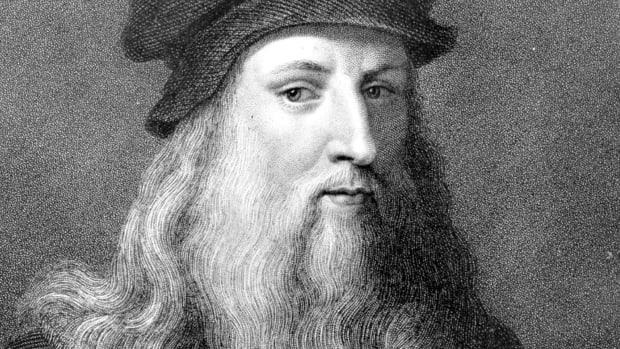
Leonardo da Vinci, the artist of the famous Mona Lisa and Salvator Mundi painting, is a man of mysteries. He was more than a painter. He was an avid engineer, scientist, sculptor and an architect with deep knowledge about science and astronomy. The alien theories, the striking symbolism theories and more out-of-the world speculations about his work are being debated up till now. One such puzzle is the Salvator Mundi painting

The Salvator Mundi Painting

Salvator Mundi
The Salvator Mundi painting

The Salvator Mundi painting was created by da Vinci somewhere between 1490-1500. It is the world’s most expensive painting, priced at 450 million US dollars. No, Mona Lisa isn’t the most expensive one. Deep search can tell you that. The image depicts a man, presumably Jesus Christ, holding in his hand a spherical ball like structure. Nothing mysterious about the painting as of now. Okay. So what was solved?

To understand how scientists solved the puzzle, we have to look up the problem. As I had already stated, da Vinci was a man of science and had genuine knowledge about it. It can be proved by looking at his works which deceivingly represent scientific facts. Salvator Mundi means ‘savior of the earth’. So it can be interpreted that the glass orb that Jesus is holding symbolizes the earth.

The problem behind

What is wrong about this painting is that, any 10th grader would know that a convex lens would provide an inverted, magnified, reversed image of an object placed behind it. The glass orb must act like a convex lens and thus do the same. But if you observe carefully, you can see that it appears as if those properties are defied and a clear, non-reversed image of Jesus’ hand and clothing is visible behind the glass orb.

You may argue that any painter would be ignorant of the science behind a convex lens. But Leonardo da Vinci was not ‘any painter’. He was a polymath of the High Renaissance! He has portrayed much more complex scientific principles in his work than that of a convex lens. There is no plausible way that da Vinci couldn’t have known the laws of optical physics. So why did he do that?

Solved

The puzzle was solved by computer scientists from the University of California, Irvine. The painting was 3d virtualized to study about how the various material orbs would appear under different refractive conditions. Many materials with which orbs could be designed were taken into consideration. At last it was concluded that the spherical orb was not a solid mass, instead a hollow orb. Hollow orb does not behave like a convex lens. It displays the image as it is, thus adhering with the painting. They predicted that the glass of the orb in Salvator Mundi was a fraction of an inch thick thus accounting for the quality.

Did Leonardo da Vinci actually paint it?

Many critics claim that the painting is not actually da Vinci’s. They point that da Vinci is more of a scientist to commit such trivial errors and thus proving that he did not paint it at all and that it was painted by a ‘lesser’ painter. But many say that, such a clever installation of the orb itself is a proof of authenticity. In order to think about hollow orbs and paint it during the 1500s would take immense intellect, which can only be done by the polymath himself.

Leo constellation?


three dots
The three dots in the glass orb

Orange iris
The orange iris of Jesus in the painting

As if the Salvator Mundi has not enough controversies, one more intriguing detail is the three dots painted in the glass orb giving it a mystical appearance. The three dots are said to represent the constellation of the sign Leo. What does it have to do anything with this painting? Well, if you observe the iris of Jesus, a faint orange glow emanates from within. The orange iris imitates Lion’s eyes. And thus the constellation, many say. Some also relate to the fact that his name Leonardo is the reason behind. However there is no concrete explanation behind.

Hope I kindled some curiosity within you today. I leave you with one of my favorite da Vinci’s quote:

To develop a complete mind:

Study the science of art;

Study the art of science.

Learn how to see. Realize that everything connects to everything else.

-Leonardo da Vinci