Not Just A Cool New Thing :How Technology Improves Education

Today, the internet dominates many aspects of our life. We’re so used to it that we don’t even think about all the areas it touches. It helps us communicate with our friends and family. It’s an invaluable tool in the kitchen as we look up recipes and ingredients. If we’re attempting DIY repairs on our car, we might look up a tutorial on YouTube. We access our entertainment online. Whenever we have any question, from the most mundane to the most complicated, we ask the internet.
There’s one facet of our life, however, where we might not often think about the effects of technology, and that’s the realm of education. Today, we want to spend some time examining how technology has found its way into the halls of schools across the country and around the globe, and all the ways technology has changed education.
Technology has improved education by using advanced techniques and tools for research and development. Technology has improved the speed of the learning process through the internet.
Technology helped to create new and updated educational material and syllabus. Data analysis and visualizations Technologies have improved the quality of education. Technology improved the student’s security and provided low cost, real-time platforms for communication.
Now there are thousands of fonts support different emotions and facts in the text. Now notes, eBooks, blogs, videos, apps, charts, smart arts, data visualizations, infographics are the part of educational materials. Today Corel Draw, Microsoft Word, Excel, PowerPoint, smart class apps, Adobe Photoshop, stock images and many other IT sources helping to create, design, and various types of educational materials and class syllabus.
This is a big change in education through technology. And I think the goal should be to store data/information/knowledge systematically in the brain of students. And this helps them to memorize it faster during the class and competitive exams. Even when they will in the jobs they can execute that knowledge to produce creativity in their works. Technology has changed, improved the quality of education. And I think we need to think on long-term problems and results while we plan and integrate the change in education by using Technologies.
Technology has improved the Teachers and students communication channels and methods. There was a time when students fear to ask a question from teachers. There was a time when student hesitates to communicate with the teacher about what they are feeling. If someone wants to learn more about the class topic from the same teacher then there were not the ways. There were no ways to keep connected with the teachers for years.
But technology has changed teachers and students communication methods and types. It is now much stronger, easy, high tech and possible to builds long-term connection with teachers and students with the help of technologies.
Now today’s teachers understand that technology is a part of our life. So they are trying to learn the use and methods of advanced technological tools that help them to explain the class topic.
Use of social media by teachers not only helps students to learn but also help society. If Physics teachers/lectures/professor have social media pages and groups then they can invite and target students especially college students to like and join the group. After that, they can create, post, like content that is related to physics (class wise/chapter wise). It builds a great connection and generates student’s interest to learn physics not only in the class but after class. And I think it’s the biggest and greatest use of social media in education.
Technology removed the communication gaps and it is above then political boundaries. And when we matter education and development of students above then politics then I am sure that we will become not only developed but wise citizens.
Now if students have the option to learn from teachers on their blog, they can follow them on twitter, they can join the communities and overall it helps to study the subject and it helps to create a positive environment.
This way, I think technologies speed up the learning process. Technologies created the platform for students to post questions and answers. Students from different cultures are connected with each other for the class topic.
The better use of technology in the classroom and education mostly depends on our teachers, professors, and management. When they adopt a positive attitude to enhance the capacity of students then it will improve and align the education in the right direction.
But we also need to careful that our students are not motivated to follow the wrong direction directed by trolls, politicians, companies for personal benefits.
To stop the negative impact of technology on students, teachers and professors have to lead students. And it will happen if the government, school, college, university, and management boards work on teacher’s development. So that they can feel safe, secure and inspired to lead students for a better future by developing expertise in students through technologies.
Technology has improved the transparency in the educational process and in the organization, improved the staff management methods, streamlined career development programs, faster and easier methods to conduct exams and test, students’ performance reporting, real-world problem-solving assignments, and projects.
But whatever the ways you choose to integrate technologies in the classroom, school or in the colleges. But always remember that don’t ignore the happiest and joyful environment and projects. If students not happy, everything you do will not be beneficial. So that it’s important to integrate technology around the happiness, interests, and motivations of students.

“Technology will not replace great teachers but technology in the hands of great teachers can be transformational”

INDEPENDENCE DAY

Independence Day is celebrated annually on 15 August as a national holiday.It is celebrated to commemorate India’s freedom from the British rule in 1947. After independence, India became the world’s largest democracy after the UK Parliament passed the Indian Independence Act, 1947, transferring legislative sovereignty to the Indian Constituent Assembly. The Independence Day also marks the anniversary of undivided India’s partition into India and Pakistan. This day is observed as a national holiday across India, with offices, banks and post offices remaining closed. Independence Day is observed with flag-hoisting ceremonies, parades and cultural events in all Indian states and Union Territories. Independence Day preparation’s start a month in advance. Schools and colleges conduct cultural events, competitions, debates, speeches, and quiz competitions.

7 Ways To Make New Friends : LIFE CHANGING

socializing is one of the very important things for survival . but not each and every one can socialize , u always have the introverts sitting at the back bench minding their own business whereas the cool kids of the class are radiating confidence and due to that they are ranking high in someone’s bucket and party list 😉 . people’s attention is not for everyone and , not everyone is made to grab it either . But there are few steps that can be followed to take a step out of your pajama pants and make some new friends , a good friendship bring many opportunities in life and every piece of cake demands a hand to grab it and take it to the mouth.
so here we get started with some minor things to making major difference in socializing .

1) take the first step 

stepping in a group of you classmates or batchmates or a group of friends at the parks and saying hello ! or hi or just a wassup , can lead to a major boost in your confidence with their positive response and congrats you just gained some more people who know you exists.

2) wave at the people you know 

apparently taking the first step in memory , the psychology says waving at people with a smile make you stay in their memory for a longer period of time and a few words of conversation with that wave can be a cherry on cake .

3)  ask them about their life 

with adding one more point in the MUST!! do list , here is a think when u accomplish the above two steps , u can try to reach their souls when you ask about their healthy and their goals their life in general and if they are doing good? it makes them kinda realize that you actually care for them and which makes you appear as a closer friend for them and you rank up in their list of consideration.

4) eye contact while talking

for being a keen listener and more like a good responsible friend , the eye contact also line up in the way . when u maintain the eye contact other then being busy with your phone the person opposite to you immediately distinguish you in the trustworthy list as someone who really cares for them .

5) outings

if you have done with the above steps , lets move forward with “outing” , it is yet another important step , go out with the people you wanna surround yourself with make memories , post on social media , tell the world then you list of friend is growing 

6) social media presence

as i mentioned the social media , you presence on social media is another a must do thing you really dont wanna be a guy who just seek for someone’s attention , if you wanna know about people , they are also intrested in knowing about you , make an account on social media especially the instagram, facebook and snapchat load it yourself , you intrests , you fun moments and give other a chance to approach you as well.

7) wink

it may sound crazy but this thing can also bring a change , winking at your bestie or a girl can make you a reason behind their smile and a topic of gossip anyways who doesnt like to be famous

i hope you took some really neccessary information and gonna look ahead in your life as someone who had many friends with numerous friends .All the very best buddy…↽↾⇀

Gandhi jayanti

Gandhi  Jayanti is celebrated yearly on 2 October. It is one of the official declared national holidays of India, observed in all of its states and territories. Gandhi, father of the Nation, as he was called, led India’s freedom movement along with many other national leaders against the British rule in India. His method of non-violence inspired many civil rights movements across the world.  To celebrate his contribution to the nation, 2nd October is celebrated every year as a national holiday.

The day is also celebrated as the International Day of Non-Violence by the United Nations. Gandhi not only contributed to Indian freedom struggle but he also fought to bring changes into the society. He fought against the pre-existing Indian caste system and worked towards the abolition of the inhumane treatment of untouchables. He also fought to establish equality and brotherhood in the society. His beliefs and principles have motivated the masses to bring down the mighty colonial empire to its knees. His quotes inspire youth even today. His idea of non-violence has taught everyone that even in a gentle way, one can shake the world. Thus 2nd day of October is celebrated as Gandhi Jayanti throughout the nation

Worst Punishment ever In History :- Viking’s Blood eagle .

ORIGIN:

viking’s are known for their merciless gifts to everyone town they went to , through their voyages  in their ships from one place to another they kill people steal or snatch the food , gold , other expensive items , wine , animals and shelter for as long they stay their . Each land then step in becomes a dead ground blood everywhere with absolute no future in upcoming years. their enemies were tortured in the name of their god odin and the god of thunder thor.

In  somewhere in the mid of 9th century the son of king and viking leader
Rangar lothbrok started this ritual to punish the one for offer dishonesty and lack of loyality to their own kind  . for their very first time it was given to Aella  the leader of Northumbria now known as  it is Northumberland as a revenge for killing Rangar by throwing him in a pit of snakes .

HOW IT WAS DONE 

the victim was laid down on his back then a man nothing less than a devil starts slicing  away each and every rib from the spin with an axe  and seperate  it wide open  so the inner organs we on show , when it was done the lungs and intestine were pulled out on show giving it a shape of eagle wings and blood dripping all over ,  it was believed that what made it the worst punishment is they victim didnt use to die until the very last rib was sliced off , later the victim was hung in the town square as a symbol to what happened to him for his sins. 

WHY IS IT HARD TO BELIEVE ?

the punishment was awarded to only 4 people all belonged to royal families and dearest enemies of vikings in late 8th and early 9th century , by the heartless  leader  of vikings .The historians believe that the punishment was so cruel and breath taking that it may actually didn’t happen at all , more reason supporting this believe , the people who wrote about it were more devoted to integrated glories of vikings so maybe to potrait  them as and powerful of call even carving a eagle on their enemies back was written so magnificiently .
Just like other merciless punishments of vikings it is a mystery with almost very less evidence found . 

5 signs to identify a psychopath

If you can relate with most of the signs give below then maybe you have a Psychopath underlying your skin without you even noticing it .

Psychopath is maybe someone with less or absolute no feelings , they can be mistaken for living a normal life by their charm and manipulative nature and good social connectivity , but unlike films they resemble in real life as well they dont wear mask , their skin is enough to hide their mindset and thoughts 
Psychopathy is more likely to be seen as a personality disorder with impaired empathy, bold and even seem like to have egoistic traits. Here are some signs that can help you identify a psychopath –

1) Less or almost no guilt and remorse .

A normal human behaviour allow you to the depth of  what you did wrong and develop that feeling of regrets ,but Psychopath are certainly distant from all such feelings they have that idea in their mind that whatever they did or happened was right and since it cannot be changed they live with almost no regrets towards it.
Psychologists believe that some of them also tend to enjoy such actions of hurting others even if they hide that happiness behind the mask but inside they must be very proud and on cloud 9 for what they did .

2) mimic or mirror others action and respond accordingly .

It counts on one more step for them to look and behave normal , hiding their darkside with their reflecting charm . Psychopaths are believed to behave completely different according to those different conditions kinda like changing personality , a different personality with each different circumstances .
 As most of the psychopaths are socially active and seem attractive to people so in this way they can reach more closer to the core feelings and emotions of other person so they can hurt them and gain some happiness out of it .

3) Blaming others for their actions .

Psychopaths are  totally emotionally shallow and unable to accept the responsibilities for their action , their seeks for chance everytime and everywhere to blame someone for their own actions and even failures , they are mentally weak to accept that they committed a mistake and often fall into anxiety and depression . Hence , this feels like a remarkable self-defence option . their brain with time become designed to act this way and they couldn’t resist it .

4) Poor judgement  of good and evil and capability of learning from experiences.

since psychopaths has this tendency to not accept their failures and responsibilities .These traits come beforehand when they create the sense of them being always right  and accurate in that situation which makes them hardly progressive in their own selves  as they think learning from past is completely pointless .
With poor judgement of their own acts they are confused if what they did was necessary and categories as a right thing to do .

5) Fearless Eyelids.

Even after wearing their charm mask , they are cannot use fake mask towards the natural and psychological responses.
 Even in a tense situation you can read a fearless approach on their face and may act as if nothing happened , you cannot determine their heart rate but by reading their expression and eye blinking rate the culprit can be caught . 

conclusion 

Although identifying a Psychopaths in the crowed of empaths is not an easy task and may required lots of patience and face and action reading skills but with some focus and sincerity towards the aim can save you from someone who only intend to hurt you and your loved ones feelings for fun Stay safe , beware .

Teachers day

In India, 5th September is celebrated as Teachers’ Day as a mark of tribute to the contribution made by teachers to the society. The significance of this day is ever-evolving, including taking lessons from life and making your experiences the teachers you needed to shape you into who you become. For school students, the day also means getting roses, chocolates, gifts including handmade cards to profess their affection for their favourite teachers. For senior students, Teacher’s day is one of role reversal and celebration

When some of his students and friends approached him and requested him to allow them to celebrate his birthday, he said, “instead of celebrating my birthday separately, it would be my proud privilege, if 5th September is observed as Teachers’ day”. From then onwards, the 5th of September has been observed as Teachers Day, in India.

Depression

Depression is very common in today’s youth and even children. The term Depression refers to a serious medical illness that negatively affects how you feel, the way you think and how you act. Fortunately, it is treatable. Depression causes feelings of sadness and or a loss of interest in activities you once enjoyed, What can be worst than that? when you’re not able to enjoy the activities which makes you happy and you have interest in. The feeling of sadness is so heavy that it doesn’t let you see your life in a hopeful way. Depression can lead to a variety of emotional and physical problems and can decrease your ability to function at work and at home.

Overthinking about your problems and failures

Symptoms of Depression:-

  • Feeling sad or having a depressed mood.
  • Loss of interest or pleasure in activities once enjoyed.
  • weight loss or gain unrelated to dieting.
  • Trouble sleeping or sleeping too much.
  • Loss of energy or increased fatigue.
  • Increase in purposeless physical activity (e.g., inability to sit still, pacing, handwringing) or slowed movements or speech (these actions must be severe enough to be observable by others)
  • Worthless feeling or feeling guilty.
  • Difficulty thinking, concentrating or making decisions.
  • Thoughts of death or suicide.

These symptoms must last at least two weeks and must represent a change in your previous level of functioning for a diagnosis of depression.

Some medical conditions like thyroid problems, a brain tumor or vitamin deficiency can mimic symptoms of depression so it is important to rule out general medical causes.

According to the studies depression affects an estimated one in 15 adults (6.7%) in any given year. And one in six people (16.6%) will experience depression at some time in their life. Depression can occur at any time, but on average, first appears during the late teens to mid-20s.

Factors which can play a role in depression:-

  • Biochemistry:- Differences in certain chemicals in the brain may contribute to symptoms of depression.
  • Genetics:- Depression can run in families. For example, if one identical twin has depression, the other has a 70 percent chance of having the illness sometime in life.
  • Personality:- People with low self-esteem, who are easily overwhelmed by stress, or who are generally pessimistic appear to be more likely to experience depression.
  • Environmental Factors:- Continuous exposure to violence, neglect, abuse or poverty may make some people more vulnerable to depression.

Treatment:- Depression is among the most treatable of mental disorders. Between 80% and 90% percent of people with depression eventually respond well to treatment. Almost all patients gain some relief from their symptoms. Medication: Brain chemistry may contribute to an individual’s depression and may factor into their treatment. For this reason, antidepressants might be prescribed to help modify one’s brain chemistry. Antidepressants may produce some improvement within the first week or two of use yet full benefits may not be seen for two to three months. If a patient feels little or no improvement after several weeks, his or her psychiatrist can alter the dose of the medication or add or substitute another antidepressant.

Psychotherapy: Psychotherapy or “talk therapy,” is sometimes used alone for treatment of mild depression; for moderate to severe depression, psychotherapy is often used  along with antidepressant medications. Cognitive behavioral therapy (CBT) has been found to be effective in treating depression. CBT is a form of therapy focused on the problem solving in the present. CBT helps a person to recognize distorted/negative thinking with the goal of changing thoughts and behaviors to respond to challenges in a more positive manner. 

Electroconvulsive Therapy (ECT) is a medical treatment that has been most commonly reserved for patients with severe major depression who have not responded to other treatments.

Self Help:-

Number of things are there which people can do to reduce the symptoms of depression. For many people, regular exercise helps create positive feeling and improves mood. Doing meditation and listening to soothing music. Getting enough quality sleep on a regular basis, eating a healthy diet and avoiding alcohol (a depressant) can also help in reducing symptoms of depression.

Be positive and hopeful

Life is unpredictable so live it in each moment and enjoy every moment to the fullest. Keep yourself busy in the activities you like and don’t provide your mind the time to overthink. Count your blessings and be thankful to the Universe for the life you have and for the every new day in your life.

Read This If You Worry A Lot

The day that I decided to quit my last job and the day that I handed in my notice were almost 90 days apart. In those three months, I worried — a lot. I decided to pursue my desire to become a full-time writer. But shit was getting scary.

Things like “what if I can’t pay my bills?” and “what if I fail?” went through my head. I freaked out, but as it turned out, the solution to my excessive worries was easier than I expected.

Many of us worry about all kinds of things: Work, relationships, money, health. Some concerns are real, but many are unnecessary.

No matter what kind of worry you have, the response in your body is always the same: It increases your cortisol levels.

And an increased cortisol level is something you definitely do not want. Cortisol compromises your immune system. As a result, you will become more susceptible to disease.

Researchers have also found a relationship between cortisol and diabetes, osteoporosis, and heart disease. Also, stress and fear can cause depression, bipolar disorder, panic disorder, and burn-out.

Let’s face it: If you don’t stop worrying, you will die. That’s not me talking. That’s your body talking.

In the past year and a half, I’ve studied worry, stress, fear and anxiety almost every day. I even wrote a book about how you can live a stress-free life. My findings? Don’t try to relieve stress and worry, but eradicate it. Address it — head on.

“Fear defeats more people than any other one thing in the world.”  — Ralph Waldo Emerson

Relief Doesn’t Work

This is what most people do when they experience stress and worry:

  • Take it out on your partner of family
  • Drink alcohol, take drugs, or both
  • Binge-watch Netflix
  • Play video games
  • Go on a holiday
  • Party all night
  • Have sex

Be honest, how long do these things make you forget about your worries? 10 minutes, half hour, a day? It doesn’t last. As soon as you get back to the reality of your life — worry and stress smack you in the face.

Distracting yourself from your life doesn’t work — and yet, many of us keep doing it. I’ve read many books and scientific papers on this behavior. Some say it’s because we have too much free time, some say it’s because of culture, some say it’s because how we are wired.

To be frank, it’s not important to understand the why. We just have to look at the facts: People worry too much, and that can destroy your life. It’s more important to focus your attention on addressing worry.

“Never let the future disturb you. You will meet it, if you have to, with the same weapons of reason which today arm you against the present.” ― Marcus Aurelius

Turn Worry Into Constructive Process

Worry is often about the future. It goes something like this: What if…

“She doesn’t like me anymore?”
“I lose my job?”
“I can’t pay my bills?”
“I fail this exam?”
“I don’t get this promotion?”
“My business doesn’t take off.”

And then we make up consequences. It goes something like this: I have to…

“Be single.”
“Find a new job.”
“Borrow money from my parents.”
“Quit school because I failed.”
“Stay at this job another year.”
“Be ashamed because everyone thinks I’m a failure.”

Then we think: “I can’t handle that.” And finally, we think: “The world is going to end.”

If your thought process is the way described above, worry controls you.

The good news is there is a simple solution: Self-monitoring, which turns worry into a constructive process. In a 2002 study, done by Szabo & Lovibond, students were asked to record their worries.

The results of that study demonstrated that you can turn worrying into a constructive process by focusing on finding a solution to your concerns.

“You have to learn the rules of the game. And then you have to play better than anyone else.” — Albert Einstein

How I Use Self-monitoring To Address Worry

I’m a pragmatic person. I do think that things like meditation and mindfulness help with worry — but not for me. It’s too intangible. Instead, I prefer to take a practical approach like self-monitoring. Here’s how I do it.

  1. Use a note-taking app and create a new note.
    I call my note “Things that I worry about.”
  2. List everything you worry about — and keep adding things to the list.
    Everything that you worry about goes on this list, no matter how small.
  3. Think of a solution for all your perceived problems.
    For example, if your financial situation makes you anxious, you need to create a plan to earn more or spend less.
  4. Then, start executing. 
    Do one thing every day that brings you closer to solving your perceived problem.
  5. Finally, don’t worry about things you have zero control over — those things you have to accept. 
    If you know more about how you can do this; read Meditations by Marcus Aurelius.

This process focuses on action. It forces you to learn the skills you need to overcome your perceived problems. Because problems don’t disappear out of themselves.

Nowadays, I don’t worry anymore because I trust my ability to handle everything that life throws at me.

Because knowledge, skills and character are the only things that no one can take from you—every minute you spend on learning something is well spent.

No matter what happens, trust in your ability to address it. So start now.

NATIONAL ELIGIBILITY TEST PREPARATION: TIPS AND TRICKS

National Eligibility Test also known as UGC-NET, is an exam conducted by National Testing Agency (NTA) to determine the eligibility of a candidate for the post of assistant professor and/or Junior Research Fellowship awards in universities and colleges. It is a national level exam, conducted twice a year (June and December) and over 5,00,000 students appear in the exam per attempt. A total of Eighty-one subjects are offered and applicants choose the subject they have a masters degree in for the exam.

UGC-NET is one of the toughest exams to clear and requires a lot of planning and dedication on the part of the applicant. Not only the applicant is expected to have knowledge of the topics in the syllabus but should also be familiar with related topics.

There are two papers:

Paper-1 General Paper (50 questions for 2 marks each, Time given: 1 hour) : This paper is common to all. The syllabus entails topics such as Teaching aptitude, research aptitude, Information and communication technology, logical reasoning, higher education, etc. Many students have a hard time cramming the concepts. Here are some tips and tricks:

  • Students normally take the route of coaching centers which is very helpful given the faculty is reputed.
  • For everyone who is preparing through self study needs to have a proper timetable according to their sitting capacity.
  • Next, you need to start with the topic that looks the most interesting so as to get you to begin your preparations.
  • Once you choose the topic, you must first read the chapter thoroughly from the book you chose to begin your preparation. Mark every important date, the name of an author, etc.
  • Next, go to YouTube (you will find a gazillion videos on a singe topic), find a lecture on the topic selected and listen to it carefully while taking notes. Online tutors always have something extra to offer. They have an interesting way of teaching which helps to learn things faster while keeping the learners engaged.
  • Now you have all the information related to a particular topic. Revise it at regular intervals to keep it fresh in your mind.
  • You can now move on to the next topic. Repeat the cycle and don’t forget to make detailed notes.
  • Once all the topics are thoroughly covered, you must attempt a few mock tests to put your knowledge to test.

Paper-2 Specific Subject Paper (100 questions for 2 marks each, Time given: 2 hours) : This subject is chosen on the basis of the subjects a candidate has during their post-graduation. There are total 81 subjects to choose from. Since you have already mastered in the subject, there is not a lot of cramming involved. Some additional tips you could follow are:

  • Paper-2 demands you to have vast knowledge of each and every unit involved. There are a hundred questions which can be asked from any topic directly or indirectly.
  • You must first study the syllabus properly and since you have already studied those topics in you masters, it would be easier for you to find out the easy and the difficult ones. For this, I would suggest you prepare a schedule that involves studying for the easy unit and the difficult unit on alternate basis. This will ensure that you are not left with only the difficult topics in the end.
  • YouTube classes are a must in this case also. There is no book that would fully cover the syllabus for this paper and thus you need you follow a reputed online tutor. Again, their tricks will make the subject easier and will enable you to reach at the depths of each unit.
  • Detailed notes will come in handy before the exam, thus make sure that all your notes are up to date and arranged perfectly.
  • When all the units are covered make sure you attempt regular mock tests and keep a track of your scores.

An aspirant must start their preparation ideally 3-6 months before the exam since the syllabus is vast and every topic is important and should not be skipped. If you stick to your schedule and revise everyday, nothing can stop you from clearing the exam. However, it is necessary that the applicant takes regular 3 hour mock tests (or solves previous year papers) and diagnose them later to find out the mistakes. The more mock tests you give, the more you will be sure of your success. However it is important to keep in mind that checking the tests is as important as giving it. You must know where you lack and go through that unit again.

Lakhs of students appear in this exam every year and only a handful manage to clear it and with proper time management, planning and scheduling you could be one of those handful aspirants.

ALL THE BEST!

TEACHERS DAY

Introduction

In India, every year Teacher’s day is celebrated on 5 September. On this day all the students decorate the schools and organise special programs in honour of the teachers all over the country. Along with students, teachers also participate in these programs with full enthusiasm. On this day we are discharged from our school activities so that we can participate in other programs.

Why is Teacher’s Day celebrated on 5 September ?


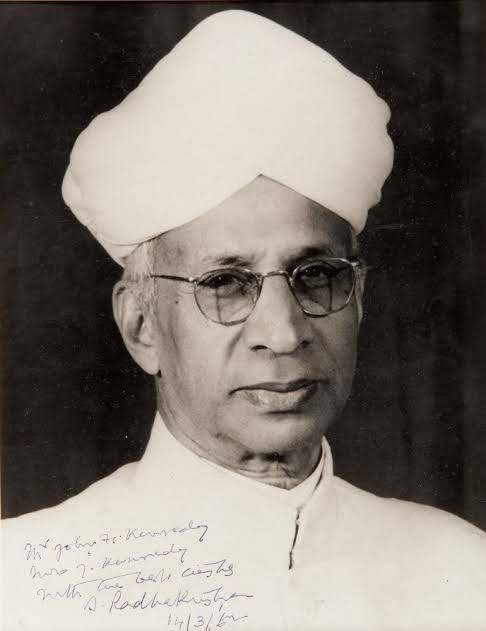
Dr. Sarvepalli Radhakrishnan was born on 5th September. He was the first Vice-President of independent India. He served the country as Vice-President from 1952 to 1962. He served as Second President of the country from 1962 to 1967. Worked as well.

Dr. Radhakrishnan greatly respected the teachers. Before joining politics, he taught in many institutes like Calcutta University, University of Mysore and Oxford University. He was highly appreciated for his work and was also loved by all his students. He believed in the fact that the teacher is the person who prepares the youth as the future of the country. This was the reason that he fulfilled this responsibility of the professor so diligently and always tried to give good values to his students.

When he became the President of our country, his students expressed their wish to celebrate his birthday every year. In response to this, Dr. Radhakrishnan said that he would be more happy if his students celebrated his birthday as Teachers ‘Day. From that day 5th September, his birthday is celebrated as Teachers’ Day.

Importance of teachers day

Teacher’s day is a very important day for both the students as well as the teacher’s life. On this day we celebrate the honour of all the teachers as a tribute to their efforts and works of theirs. Teaching is one of the most difficult tasks in the world because they have the responsibility of educating the youth. There are children in the whole class and because each student is different from the other and has his own ability, this task becomes even more difficult, some students are good in sports and some in mathematics. Some are interested in English. A good teacher always keeps the interest of his students in mind and recognizes their abilities. The teacher teaches them to hone their subject or work skills and also takes care so that their other activities or subjects are not affected.

That is why this day has been dedicated to show respect and gratitude to the teachers.

Teachers’ Day celebration in schools

Teacher’s day programs are celebrated with great enthusiasm in schools across India. On this day, the students wear the costumes of their favorite teachers and go to lower classes than themselves. On this day, senior students go to different junior classes and teach them. It is a very fun day for all of the students. During this, senior students take care that the discipline of the school is maintained and for this junior students support them.

In many schools, junior students also play their role as teachers. On this days students organise various programs for the teachers. They organise programs like singing show, dancing show, quiz competition, dance-drama, ramp walk etc. These programs are normally organized after break time i.e., in the second half of the day. In the first half the senior students take the classes till the lunch break . The teachers relax in the classes and enjoy all these activities.

On this special day, students bring greeting cards, flowers and all sorts of gifts for their teachers. Teachers also feel very happy after receiving all such gifts from their students and they also give treats to their students.

Conclusion

In India, Teachers’ Day is celebrated in honor of teachers, as they work hard throughout the year and want their students to do well in school and other activities. On this day different types of programs are organized in schools across the country. These types of programs strengthen the attitudes of students and teachers. In fact, it is a special day for both students and teachers.

https://en.m.wikipedia.org/wiki/Sarvepalli_Radhakrishnan

https://www.britannica.com/biography/Sarvepalli-Radhakrishnan

@track2traininginstitute @track2trainingseminar @edunewsnetwork @track2trainingservice

Mahatma Gandhi’s philosophy of Sarvodaya

Mahatma Gandhi’s philosophy of Sarvodaya aimed at rural reconstruction and uplifting the people of rural India by peaceful and cooperative means.

Sarvodaya, in simple terms, means welfare and upliftment of people and of all living beings . It means the welfare of not only oneself but of others as well. Sarvodaya stresses coexistence and love.

Ideals of Sarvodaya:

  • Economic implications-Under this philosophy, one should be given the opportunity to contribute to national production. The surplus should be distributed equally and inequalities of wealth should be reduced. Sarvodaya also emphasizes that industries should be decentralized and land should be redistributed.
  • Based on Trusteeship-This philosophy involves that everyone must utilize only that part of his wealth that enables him to lead an honorable livelihood and the rest of the wealth belongs to the community and must be used for its welfare. So all industrialists must act as trustees of wealth and not its owners.
  • Social implications- In the social aspect, this philosophy believes in individual freedom, opposes untouchability, and promotes widow remarriage. It believes in the promotion of brotherhood and human dignity Sarvodaya believes in functional education and decentralized society.
  • Political implications- In Sarvodaya philosophy, political power is not an end in itself but it is only means to an end, the end is human welfare. It believes in the universal adult franchise and favors decentralized democracy. Sarvodaya condemns the majority rule and centralization of power and majorly believes in self-sufficiency. 

Hence, the philosophy of Sarvodaya is an example of the Gandhian philosophy of ‘Simple living and high thinking. It envisages a new pattern of life-based on the decentralization of economic and social power, ensuring the moral freedom of man.

Why current Generation are more vulnerable to Mental Illness than their predecessors?

Photo by Anete Lusina on Pexels.com

It is one of the inevitable topics of the millennial generation and that is, “Mental Illness”. It has become one of the terminal topics of all yet it’s high time to focus on our young minds!

So the question here is, why every fourth out of seven has a mental illness? Is it due to a new way of living life? Or is it the society? Well, we can’t blame society for every cause, right? Instead of living in a society, it is us who should be blamed.  Yes, the destruction is due to unawareness which we didn’t appreciate.

These young minds are an asset to our bright future, but what they are suffering from is the worst disease of all. Medically, there is a cure to all sorts of diseases but the question is, where is the essence of this disease? Why is this happening in excess amount to our young buds? Here are some of the elements which can be the reasons for the illness present in our young  minds :

  1. Giving more priority to the unrealistic world of social media: Teenagers are the most popular groups of all ages who dedicate most of their time to social media and thus, for them, it’s ‘The second home’. They dwell so much in these media platforms that the unrealistic world makes them feel like it is reality.

Specially they tend to create fake personalities in front of their friends and colleagues and when they are avoided or not popular then they think of themselves as ‘worthless’.  

It is highly observed that teenagers are dwelling so much into the ocean of social media life that; they start to judge themselves based on; number of likes they got, followers, and people’s comments. This makes them feel depressed and their minds start to break down in this fake world.

Many times, these youngsters are targeted and bullied on social media through certain comments and unknown threats that they don’t even communicate with their parents to provide no harm to their parents.

  • Fractured child-parent relationship: Contemporary parenting can be one of the elements which lead to their child to depression. Since parents are working 24/7, they don’t give much emphasis on their children and often there is a barrier of communication between the parent and child. Due to the unavailability of the parent’s presence, the child feels more ignorance and often lives in his/her thoughts which leads them to have a mental illness.  

We can also see that; these ignorant kids are often lured to follow the wrong path which leads them to devastation as a result.

  • Academic pressures and Moral dilemmas: Kids these days are often pressurised by their parents to score high marks, study in a decent university, and earn pounds which will raise their status in society.

Often, due to this academic pressure children don’t feel themselves and rather they are distracted and even take difficult steps at a tender age. As we can see those suicides are due to academic pressures is in high rates which are also one of the common factors on the mental health in millennials.

  • Pandemic – A Misery to the Millennial generation: This is one of the latest reasons why kids these days feel depressed about the new normal. The social interactions which made them feel positive are gone in the realms of social distancing and quarantine.

Attending online classes is one of the tiring jobs also several factors for them not being productive and lack in the concentration of academia. This leads to a very high amount of stress as we are humans and when we are clutched or burdened in result we act opposite to it, so the impact of online classes makes them vulnerable when they are facing so many pressures at the same time.

  • Addiction leads to depression among youngsters: It is very unfortunate but a fact that the present generation youngsters face different types of addiction in different platforms and therefore they tag themselves as ‘FREAKS’; notably, these addictions vary from one kid to another, some are addictive to social media, some with games, some mislead their minds to pornography world and some are highly addictive towards drugs and sedatives, etc.

There are endless reasons why kids are being addictive but one of the central reasons is due to the exposure to technology at a very tender age. Often, they are misled by their friends and colleagues and due to fewer interactions with elders, they indulge themselves in these forms of bad impact on themselves.

  • The cure to the sickness among youngsters:

Every disease has a cure at its end and to find this cure is that we should look into the core or the root of the disease. As rightly said, love and acceptance is a human need. The kids these days need parent’s support and guidance and a sense of belongingness so that they wouldn’t feel they are alone.

To bring them to their right place it is the elders who can try some old traditions to introduce among the young minds and let them know about the authenticity of their predecessors. As being together, loving each other and living in harmony can make youngsters feel accepted and so the cause of this disease can soon end.  

Youngsters on the other side can also sense their responsibility by being positive and having a good relationship with their family and creating kindness more instead of hatred.

ONAM- THE HARVEST FESTIVAL

ONAM – the festival of colour in Kerala

Onam is one of the famous festivals of the colourful India. It is actually a major event  of kerala. The people inside and outside of Kerala enjoy it too much. It is a harvest festival . 

According to history, Onam has a long religious context and history of Kerala. According to an earlier reference , Onam is found in Maturaikkaci – a Sangam ers Tamil poem. It says that when games and duels were held in Madurai temple , immolation was sent to the temple , then  the people wore new clothes and celebrated it. On the other hand , in the 9th-century according to Pathikas and Ballads by Periyazharwar , Onam is celebrated as offerings to Vishnu God with feasts and community events. 

According to Kurup  , Onam is a historical hindu-temple based cultural festival which is celebrated for many days. This is a harvest festival and its significance is of 2 Hindu-legends, Mahabali legend and Parashurama legend.

According to the Malayalam calendar Chingam is the 1st month  and the Onam is celebrated in this month. It is marked as the Malayalam New Year. It is celebrated over 10 days and concludes with Thiruvonam. The ten days are sequentially known as Atham, Chithira, Chodhi, Vishakam, Anizham, Thriketta, Moolam, Pooradam, Uthradam and Thiruvonam. The first and the last day are particularly important in Kerala and to Malayalee communities elsewhere.

The 1st day of this festival is Atham ws marked at Vamanamoorthy Thrikkakara temple in Kochi. This temple is the focal center of this festival and the abode of Mahabali legend with raising their festive flag. There are celebrated the parades and those are colourful ,whimming  and floating.

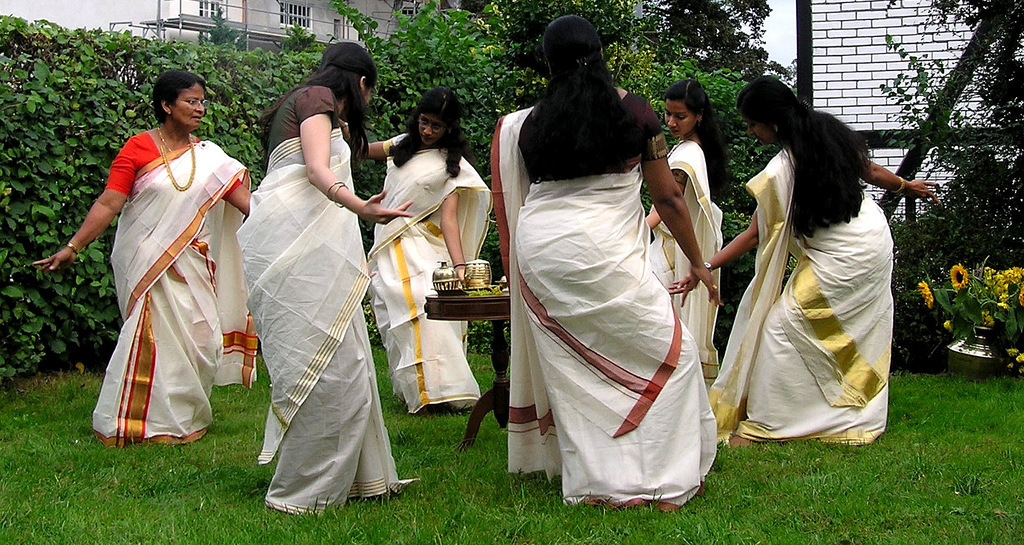
On other days there are celebrated different types of events like boat races which are most popular and stunning , different types of cultural programmes , martial arts, dance, rangoli etc.  People celebrate their times in those days by shopping, donating time or food for the charities and spending quality times with family. The men and women wear their traditional dress . Basically women wore Kasavu saree on this day. 

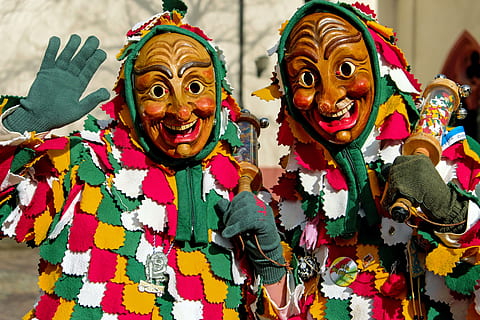
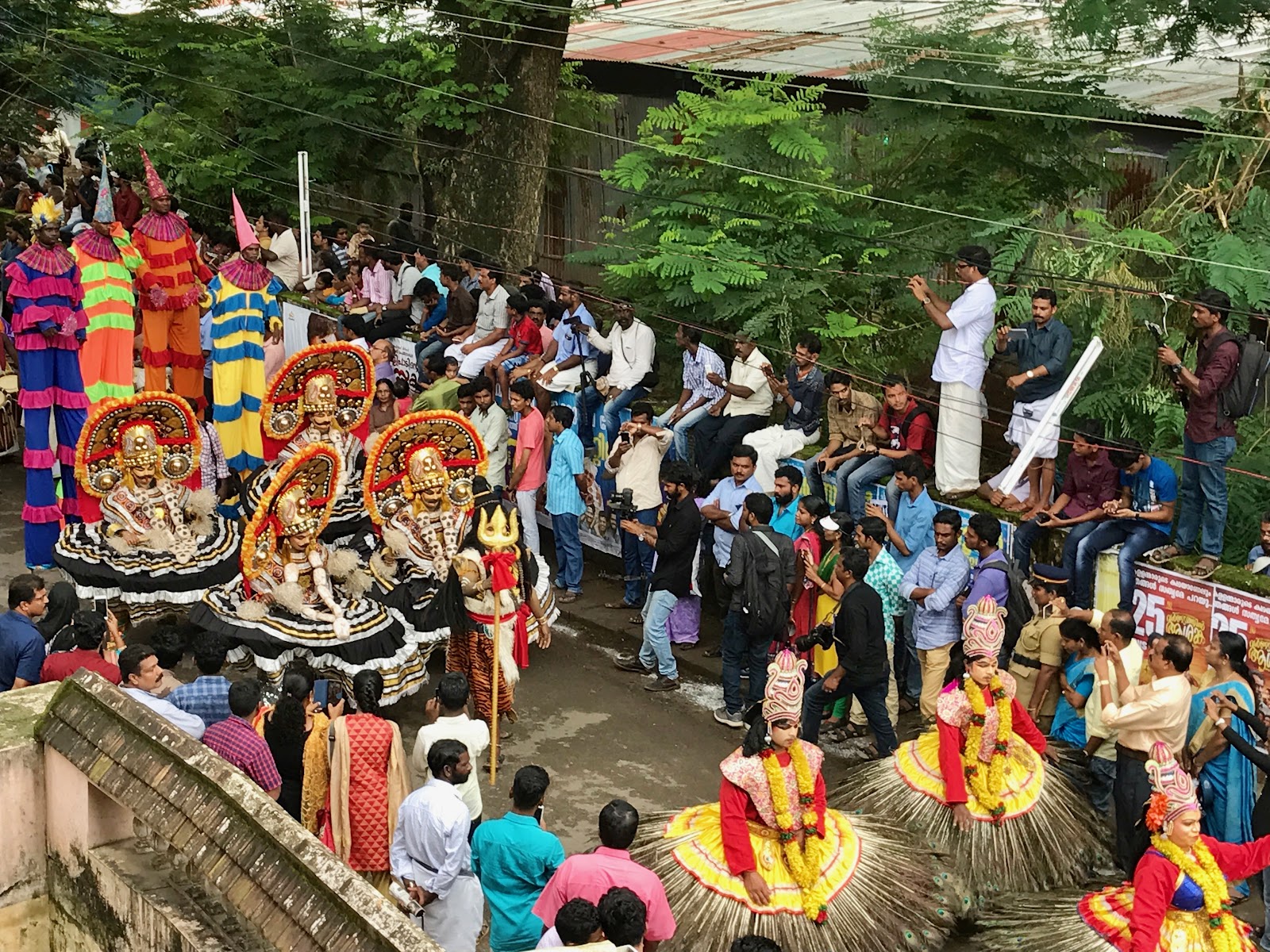
At Tripunithura near Kochi the Onam is celebrated with a grand procession which is called ‘Athachamayam’ , it is also addressed by ‘Thripunithura Athachamayam’. There are elephant marching, drum beats and other music , floats, folk art forms and colourful dressed people and with their masks which is wonderful. According to Kerala history the Kochi king conducted a grand military procession which has now become a state-supported event

There are epic scenes from Mahavarat and Ramayana in this traditional float procession . There are also themes from the Bible .From Tripunithura to the Vamanamoorthy Temple in Thrikkakara, Ernakulam district , is the traditional path. It is  the temple of Vishnu in his Vamana (dwarf) avatar. After arrival at the temple, the marchers offer a prayer.

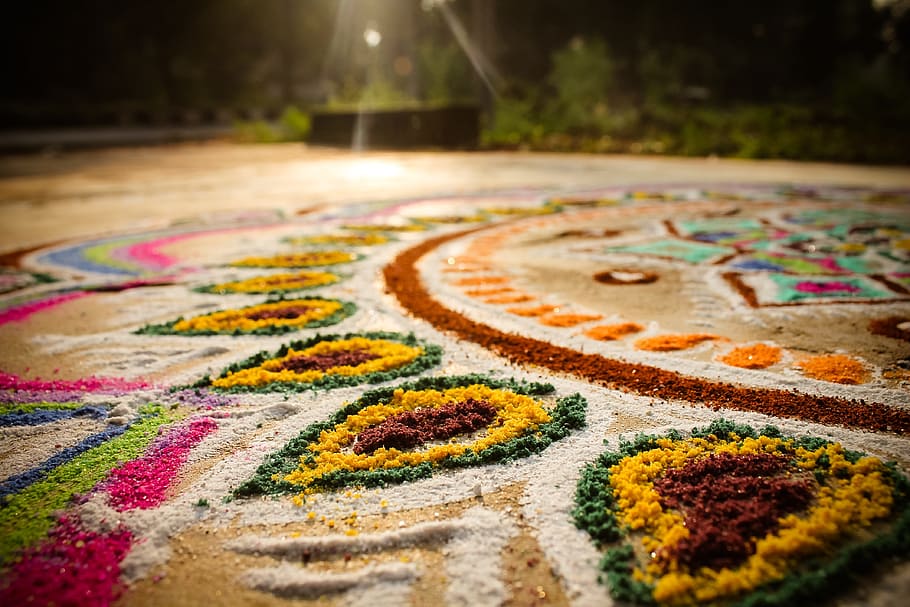
In this festival ‘Pookalam’ , which is called floral rangoli in general, is an attraction. It is known as Onapookalam or Pookalam. There are so many types of flower, basically marigold is the main blossom. It is decorated particularly at the entry point and temple premises like a flower mat. On Atham the Pookalam is called Athspoo and for this day it is comparatively small in size. It grows in size gradually with each day of this festival. In this Pookalam the Dasapushpam (10 types of flower) is used. In Kerala Pookalam competitions are common everywhere on Onam day.

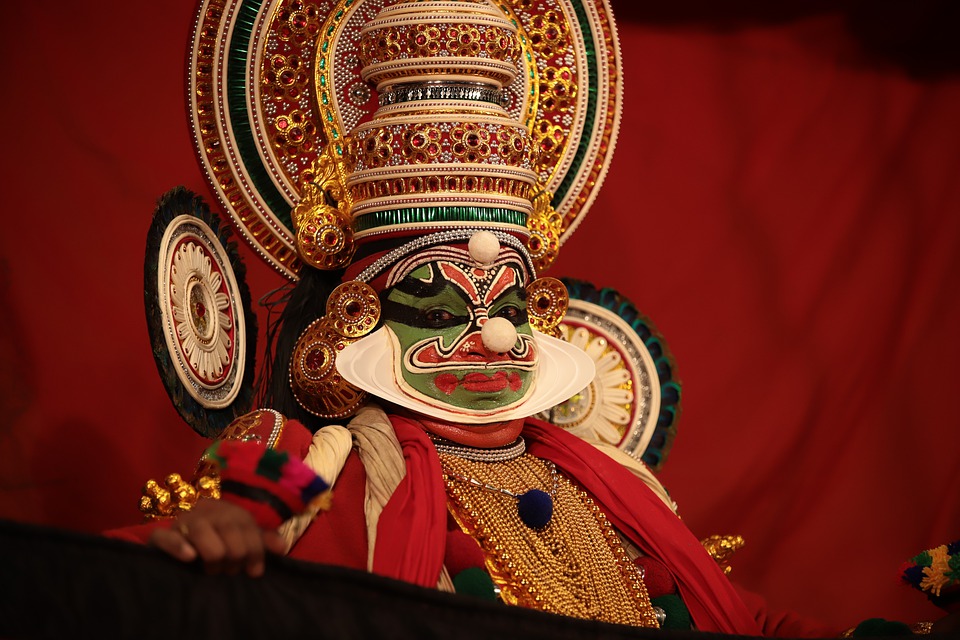
In this festival there are so many types of traditional dance performed like Kathakali , Pulikali, Kummattikali, Thumbi Thullal, Onam Kali etc. Thiruvathira Kali is a women’s dance, where they circle around a lamp. Kummattikali , which is a colorful-mask dance. In Thrissur, festivities include a procession consisting of caparisoned elephants surrounded by Kummatikali dancers. Onam Kali is a form of dance where players circle around a pole or tree or lamp,dance and sing songs from the Ramayana and other epics.  Kathakali is the most famous dance type. 

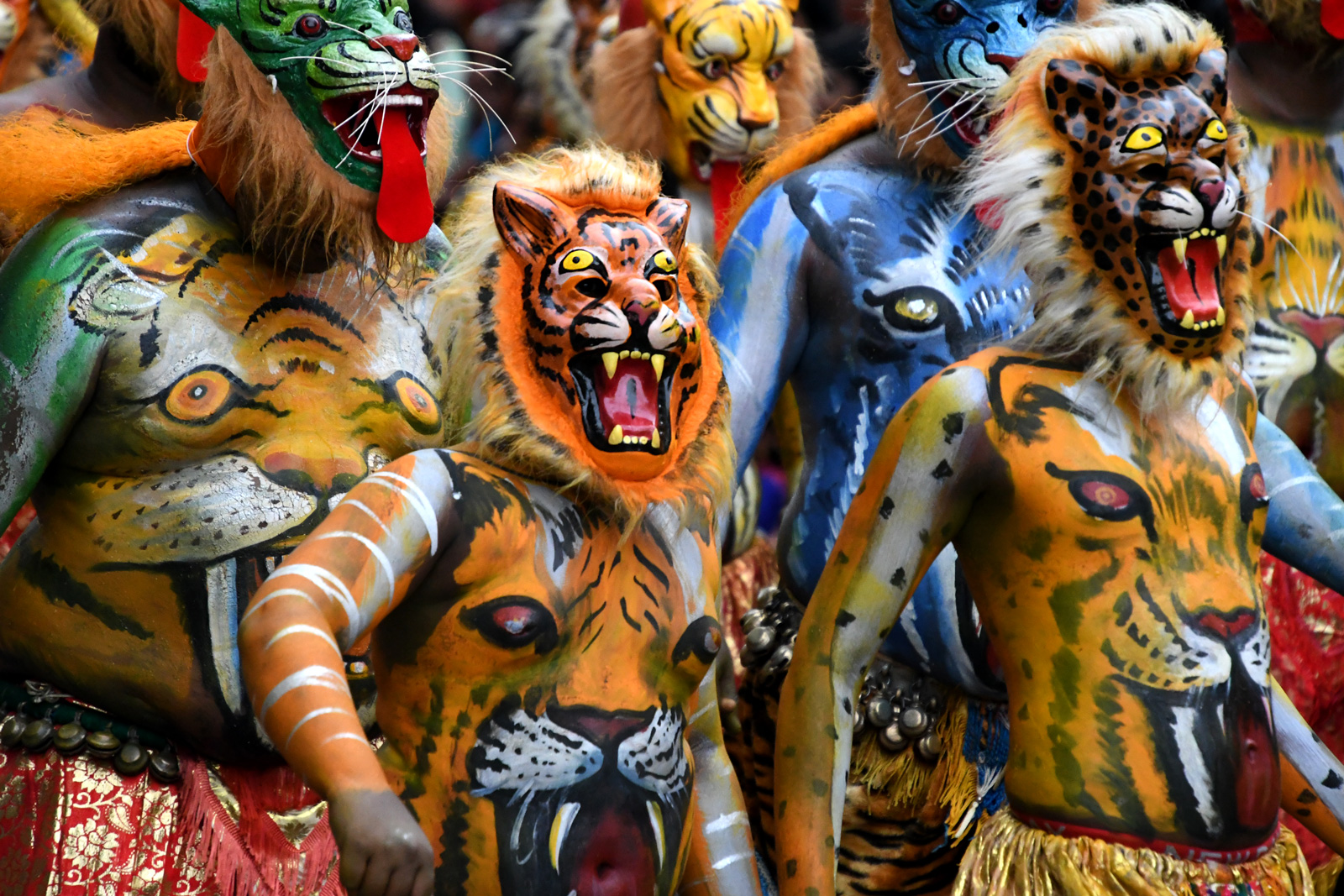
Pulikali is a different type of dance which is known as Kaduvakali during this festival where the performer is painted like tigers in bright yellow, red and black, and dances to the beats of instruments like Chenda and Thakil. It is a type of folk dance.

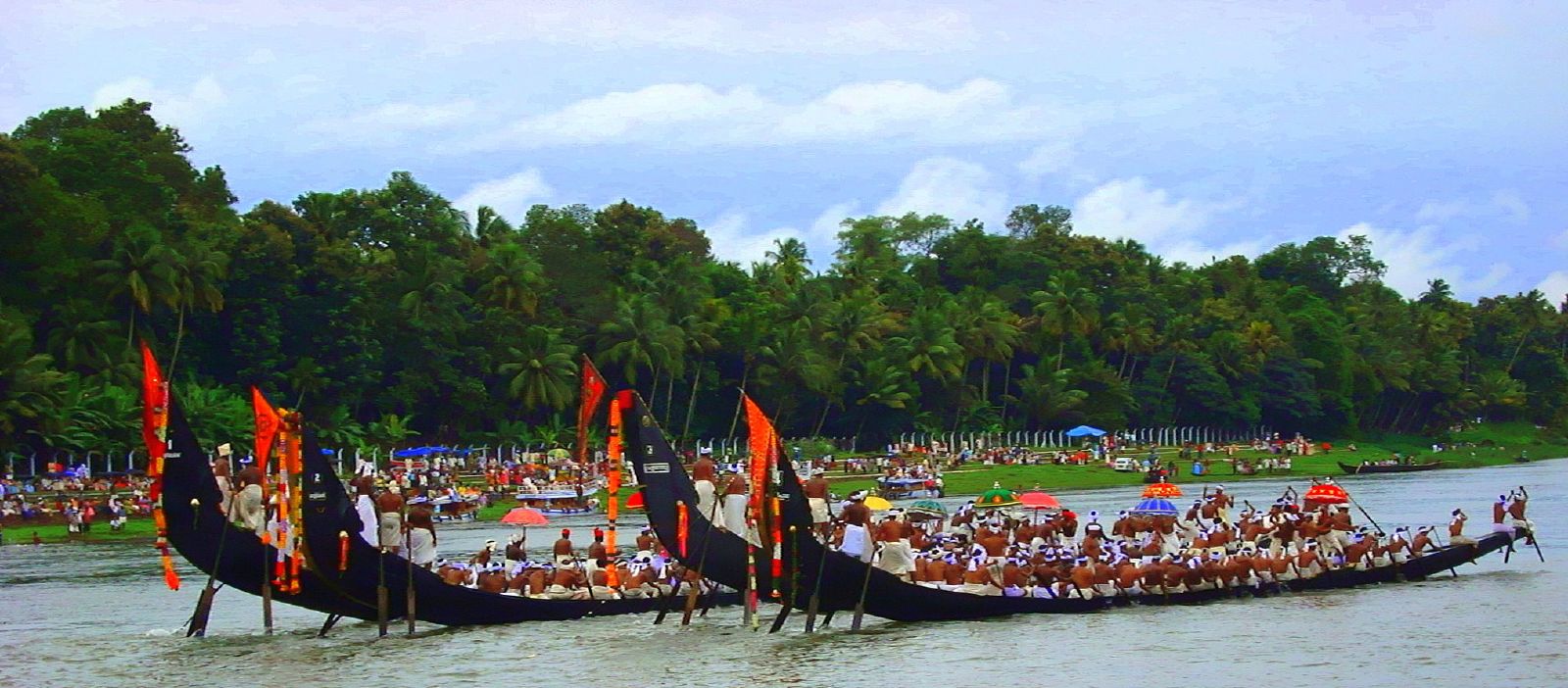
Another amazing part of this festival is Vallamkali which is a snake boat race. In this boat race numerous oarsmen row huge snake-shaped boats and men and women come from far and near to watch and cheer the snake boat race through the water. Particularly it happened on the Pampa River.

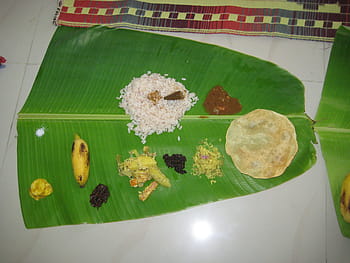
The Onam sadya, which is the feast, is  another amazing part of Thiruvonam and it is observed in every Keralite attempt . Chips , Sharkaraveratti ,Pappadam, various vegetable and soups such as Injipuli, Thoran, Mezhukkupuratti, Kaalan, Olan, Avial, Sambhar, Dal served along with a small quantity of ghee, Erisheri, Moloshyam, Rasam, Puliseri, Kichadi and Pachadi, Moru , Pickles both sweet and sour, and coconut chutney are the menu.

So it is the very interesting festival of our colourful India which is more colourful and delightful to us.

ORIGIN OF THE BUSINESS MANAGEMENT-A HISTORICAL OUT LOOK

In todays world , management is the base of any organization or administration to accomplish the desired goals . It is not a new term or a new skill because it has always been a part and parcel of all the ancient civilizations in the world.

Ancient texts and scriptures of many countries like India, china, America throws the important light on management. We can find the fundamentals of management in the ancient scripture of Bhagwat Gita. Bhagwat Gita contains rich of managerial techniques which was written a thousands of years ago.

During the first pre world war phase (1870-1974) there is a rapid change in economies in terms of trade, transportation and communication which indeed led to globalization. Globalization made management as one of the important aspect of development where the classical management theories were developed.

Classical Theories Of Management :

SCIENTIFIC MANAGEMENT THEORY :

Scientific management theory was developed by “FREDRICK WINSLOW TAYLOR”. This theory got popularity in the period of 1880s and 1890s in U.S manufacturing industries with its analyzing techniques of work flow .

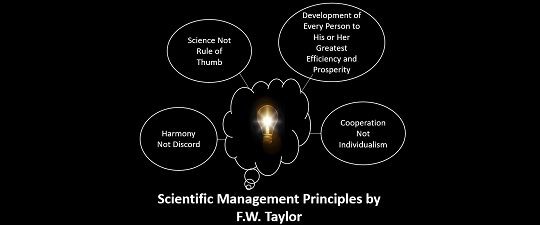
The Principles Of Scientific Management Theory are:

Taylor theory was mostly concentrated on shop floor level and suggested functional foremanship to the industries.

1:Science not a rule of thumb, this principle specifies that organizations should constantly develop new methodologies which makes work easier, faster and quicker rather than sticking to the old methods.

2:Harmony,not discord, this principle specifies that maintaining a positive atmosphere in the organization improves the productivity.

3:Cooperation, not individualism, all the activities of the organization must carried with mutual coordination in order to get improved results.

4:Development of each and every person to his (or) her greatest efficiency, this principle specify that organization should ensure the growth of every individual according to their performance.

ADMINISTRATIVE THEORY:

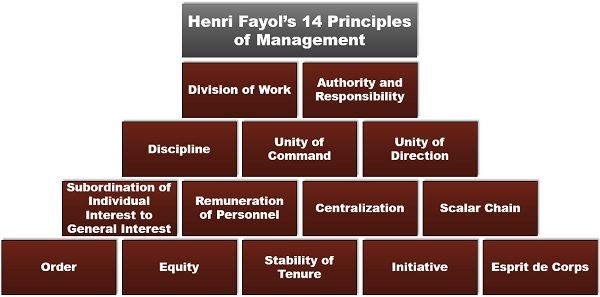
Administrative theory was developed by “HENRY FAYOL (1841-1925)” .Fayol mainly focused on the administrative management of the organization and structure of work tasks.

Fayol concentrated on top level management and he suggested unit of command. Administrative theory is quite opposite to the scientific theory.

Fayol’s generalized principles of management:

Fayol developed 14 principles for the organizational development. Fayol consider that effective management of an organization would lead to efficient results.

Fayol’s five functions of management:

Fayol considered that categorizing the functions of management helps the organization in day to day progress of work. The five management functions are:

Planning: This function is used to classify the needs of an organization and arranging them into tasks to develop strategies in order reach the desired goals.

Organizing: This function is used to determine the appropriate process to complete a task.

Commanding: This function is used to supervise the subordinates in completion of day to day tasks.

Coordinating: This function helps in integrating with different kind of groups and making things get done efficiently.

Controlling: This function ensures in evaluating the overall tasks according to the plan set and making changes if needed.

BUREAUCRATIC THEORY:

Bureaucracy theory was developed by “MAX WEBER(1864-1920)” .This theory was generated during the industrial revolution of Germany to manage it’s growing industrial enterprises.

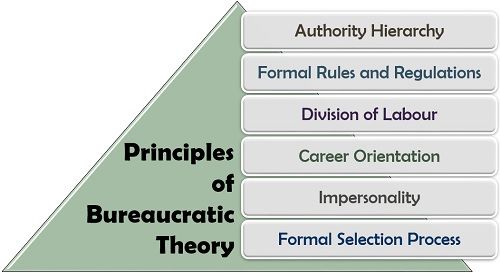
Weber mainly concentrated on the top level management of an organization. According to weber the bureaucratic organization is more rational and can get control over every individual employ. He developed six ideal principles of bureaucracy.

Six principles of bureaucratic theory:

Authority Hierarchy: It is a chain of command to promote individual’s effort to accomplish the organizational goal.

Formal rules and Regulations: These are rules and procedures that are to be followed by the employ’s of entire organization .

Division of Labour: The whole work flow is divided into tasks and distributed among the employees according to their ability.

Career Orientation: Promotion of loyalty among the employs and making the long term relations with the organization.

Impersonality: Making decisions according to the facts rather than personal interests.

Formal selection process: Hiring employ’s according to their skills, qualification , experience etc…

CONCLUSION:

As management & leadership are closely related to each other which has been provided since ages. With globalization management studies has undergone changes in formal study of management which needs a constant experimenting. These classical theories enhance the management abilities and predicts the control behavior of an organization.