People get nervous or self-conscious on occasion, like when giving a speech or interviewing for a new job. Social anxiety disorder, or social phobia, is more than just shyness or occasional nerves. Social anxiety disorder involves intense fear of certain social situations—especially situations that are unfamiliar or in which you feel you’ll be watched or evaluated by others.
These situations may be so frightening that you get anxious just thinking about them or go to great lengths to avoid them, disrupting your life in the process.
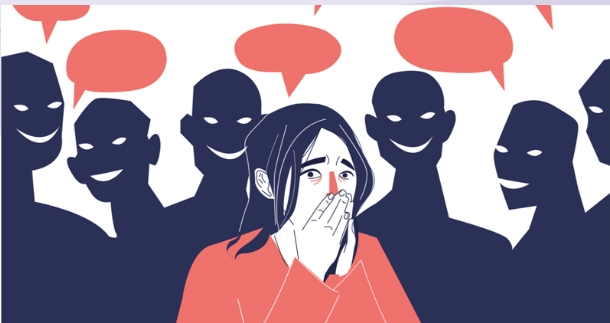
Fear of being watched and judged by people
Most of us would have experienced social anxiety to some extent and it is normal to want to perform well. Anxiety in social situations and concerns overevaluation become problematic when the anxiety is persistent and causes intense distress. A person may be diagnosed with a social anxiety disorder if the anxiety and distress persist for more than six months.
The Diagnostic and Statistical Manual of Mental Disorders defines social anxiety disorder as a persistent fear of one or more social or performance situations in which the person is exposed to unfamiliar people or to possible scrutiny by others.
Some signs of social anxiety disorder include:
Fear of interacting with others
Feeling shy, easily embarrassed or being extremely self-conscious
Fear of appearing anxious e.g. blushing, stuttering, or running out of things to say
Fearing the worst will happen in social situations
Self-conscious thoughts e.g. “people will stare at me” or “people won’t like me”
Avoidance behaviour e.g. avoiding eye contact or general avoidance of social situations
Spending a significant amount of time dissecting past social interactions and focusing on what did not go well
Physical symptoms of anxiety during or before social situations e.g. increased heart rate, shortness of breath, blushing, sweating, trembling, nausea, and muscle tension
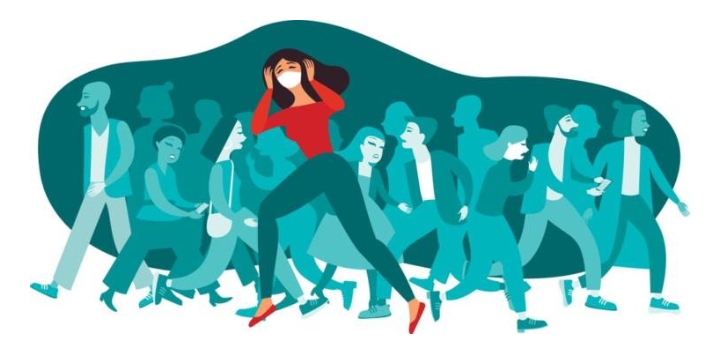
The COVID-19 pandemic can be a challenging time for people with social anxiety. Changes in social interactions and social norms can increase the uncertainties and concerns people have about social situations. People experiencing social anxiety may feel particularly anxious about returning to work or resuming other social activities. The fear of having to interact with people might be more overwhelming than before, especially after a few months of minimal social activities.
How to overcome social anxiety?
Social anxiety sufferers have negative thoughts and beliefs that contribute to their fears and anxiety. These can include thoughts such as:
“I know I’ll end up looking like a fool.”
“My voice will start shaking and I’ll humiliate myself.”
“People will think I’m stupid”
“I won’t have anything to say. I’ll seem boring.”
Challenging these negative thoughts is an effective way to reduce the symptoms of social anxiety.
Prepare
Prepare yourself adequately to encounter social situations by getting information about what you must do in each of the situations. For example, how to use safe entry for necessary contact tracing, what the new workplace guidelines for staff to maintain safe distancing are. You can also mentally visualise the situation and think through what you would do in each situation. By knowing what is expected and being better prepared, you will experience less uncertainty and feel less anxious.
Expose
Continuing to engage in social interaction is critical for people with social anxiety even though it might be uncomfortable. Facing your fears helps to overcome social anxiety. Avoidance of social situations will worsen your anxiety over time. You can start with social situations at work, which are essential. Draw a plan to ease yourself into different social situations.
Practise
Before you get into anxious social situations, you can follow the steps above to prepare and ease yourself into them. You can also try role playing with the help of a friend if necessary. In social situations, be aware of your own thoughts and level of anxiety. When you find yourself starting to feel anxious, practise deep breathing and focus on your thoughts instead.
Talk
Find someone whom you trust to share your concerns and ask for help to journey with you. Prepare yourself, get exposed to social situations and practise more positive thinking and cultivate social skills.
Chetan Bhagat is the author of sex bestselling novels – Five point someone, One night @ the call center , The 3 mistakes of my life, 2 States, Revolution 2020, Half Girlfriend.
In 2008, The New York Times called him ” the biggest- selling author in India’s history”. He is also a Filmfare-award-winning screenplay writer.
TIME magazine named him as one of the 100 most influential people in the world and Fast Company, USA, listed him as one of the 100 most creative people in business globally.
Chetan Bhagat went to college at IIT Delhi and IIM Ahmedabad, after which he worked in investment banking for a decade before quitting his job to become a full – time writer.
” To all Indian girls especially the ones who dare to dream and live life on their own terms.” – Chetan Bhagat
Analysis of the book
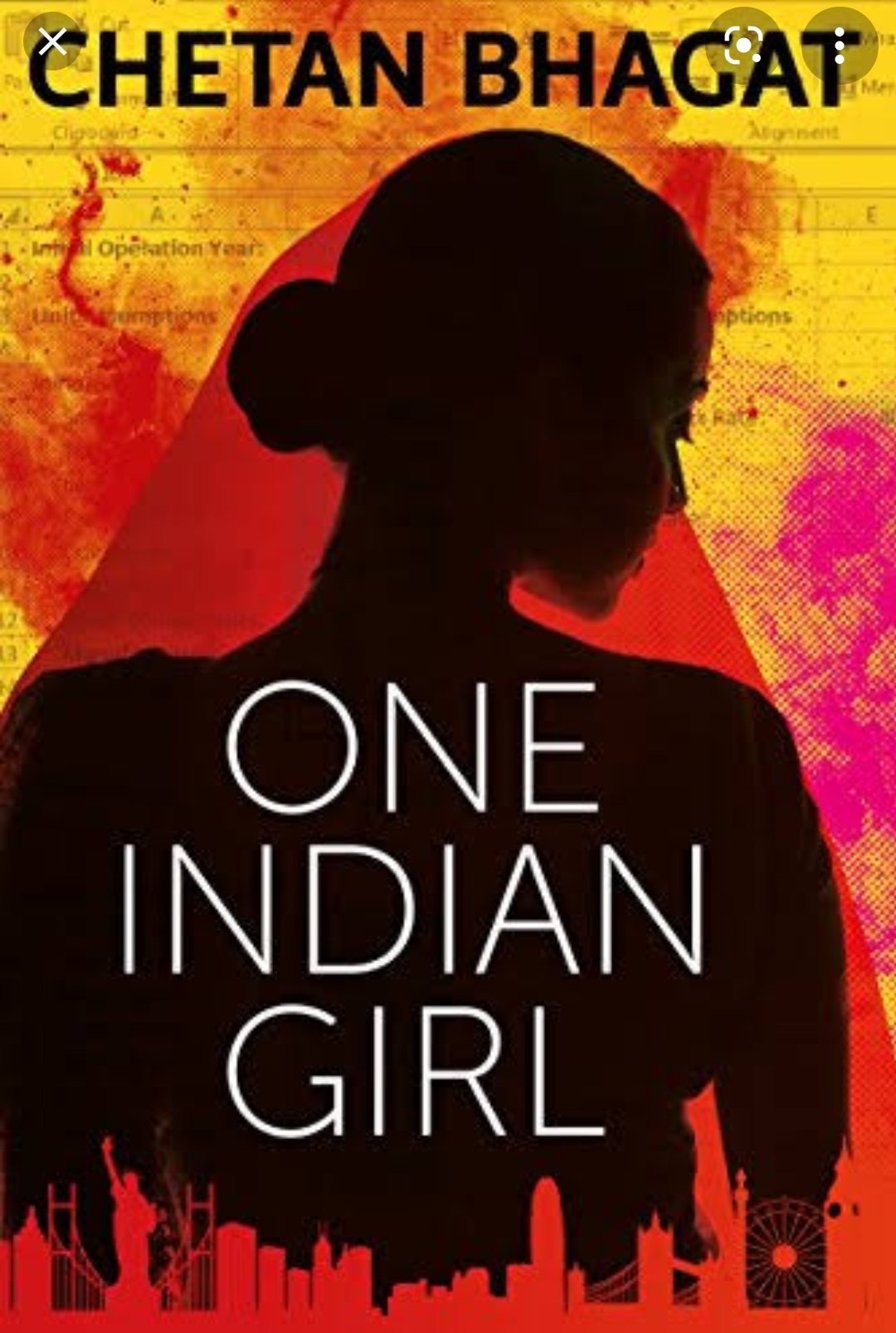
One Indian Girl is the story of Radhika Mehta, a worker at the Distressed Debt Group of Goldman Sachs, the investment bank.
The book tells us about that what if we are a girl, we should also have equal rights to live independently in the way what a boy lives.
“Why do people tell girls all this? You ask them to achieve things, but when they do, you can’t handle it.”
Summary of the story
The book starts with Radhika making arrangements regarding her marriage with Brijesh Gulati who works in the Facebook company in San Francisco. She later reveals her childhood and life in Delhi, as a nerdy personality in contrast to her elder sister Aditi.
While trying to engage conversation with Brijesh, she is unexpectedly contacted by Debasish “Debu” Sen who wishes to meet her, to which she refuses. She later, meets him in the gym and then there occurs the flashbacks to four years ago.
When Radhika began her job training at Goldman Sachs, she was introduced to Debu and then the two started dating, eventually starting a live in relationship. When Radhika gets a bonus of 150,000 dollars and tells Debu, he doesn’t react as Radhika expects and after a few days, he breaks up with her due to being pressurised by Radhika about marriage and wanting instead a simple girl as a housewife. Facing depression, she opts for a move to Hong Kong.
In Hong Kong when she gets to know her boss’s boss Neel Gupta who is 20 years older than her , she finds him attractive. On their business trip together, they end up sleeping together by the beach. This continues for one year, but after that Radhika realises that she has no future with him as he is married with children. Thus she breaks up with him and shifts to London office.
After getting tremendous pressure from her mother for an arrange marriage, she finally agreed and connects with Brijesh Gulati in a matrimonial site and also says yes for marriage to make her mother happy.
Both her ex- boyfriends realised they want her back and contacted Radhika but she was very confused between her past and future husband so she turned down both their proposals and even cancelled her wedding with Brijesh because she felt she was not ready for marriage.
“Why do we need our men to praise and validate us in order for us to feel accomplished?”
“You know what women really want? We don’t want to choose. We want to fly and we also want a beautiful nest. We want both. Do male birds tell female birds to choose? “Hey honey, choose. Either fly or sit in the nest.”
Colorism is the practice of favoring lighter skin over darker skin. The preference for lighter skin can be seen within any racial or ethnic background. Race can be defined as the attributes, traits and features which differentiates one group from the other existing social groups. In simple words, races are the physical qualities that one inherits biologically and serves as a way of self-identification from the other groups. Racism is a theory that one race is superior that the other based on the physical attributes, caste, creed, ethnicity or origin. A person is being racist when he displays the emotions of hatred, prejudice, biasness and intolerance against another person solely due to his skin color, structure of his lips, language, place of origin or any other attribute which he might have gained biologically.
Colorism in India
India is known as one of the most mega diverse nations in the world. It is indeed a diverse country and a home for people belonging to different caste, religion, color, creed, culture and traditions. Indians are known for their varied degrees of skin complexion termed as fair skinned and dark skinned. The skin color has always remained an important factor in determining a person’s value and worth. Fair skin people are considered to be of a superior status than to the people with a dark sin. Racism has been prevailing in India since the Rig Veda Period, followed by the Mughal era and the British rule. We live in a society where the people are highly obsessed with one’s skin tone. Indians have varied degrees of skin complexion and they are categorized as fair, dusky, dark etc. Indians believe that fair-skinned people are of a much more worth and value than those who are dark skinned. The fair is considered the intellectual and gets the respect, dignity and the social status while the dark are left behind struggling for their rights and status. We face color hatred and prejudice and somehow still choose to remain silent about it.
The people need to understand that a person’s worth or status is not determined by his or her color. There are numerous cosmetic brands promoting skin lightening creams and lotions. There are advertisements promoting the desperate need of looking fair. The question is why? No one has the right to question or judge one’s complexion. Racial discrimination brings down the morale and the enthusiasm of the dark, they do not get a chance to stand up and speak up or fight for themselves. The mindset of the Indian society should realize the fact that no matter what the skin tone is, what caste or origin a person belongs to, irrespective of all the other physical traits, a person is entitled to equality before the law and has every right to deserve the same respect and honor a fair person gets.Racism is a refuge for the ignorant. It seeks to divide and to destroy. It is the enemy of freedom, and deserves to be met head-on and stamped out.
From the past few days, I did not get the time to use social media as often as I would. Today when I went back on social media I realised that I am falling back into the cycle of comparing my life with people. It then hit me that from a past few days where I was busy, the world around me changed, the birds were chirping, the flowers were blooming. This was a joke obviously.
But I did notice that I wasn’t comparing my life and was focussing on myself.
Social media is a place where everyone shows how perfect their lives are, even if taking that one picture took them three hours of hard work. Scrolling through social media makes us have questions like
How are they going out daily?
How are they having so many friends?
How do they get such good pictures?
Well, I am not hating on the people who have friends or spend time taking their pictures. They are doing what they want which is good. The problem arises when we start thinking of their lives as “perfect” and start looking down on our lives.
Let’s take an example of how social media makes us feel bad about our lives:
Imagine you have a day planned for working or doing an assignment. Let me tell you which is completely normal. But then you go on social media and see people have fun and it makes you feel bad about your life.
I know we do like posting a picture and getting likes and comments. So, I am not telling you to stop using social media. I am just asking you to remember where to stop. So today when I realised that I was going to fall back in that cycle I stopped and took a break from social media. I went and did something else because I am in a good place right now and I don’t want other people’s life to affect my life.
So the next time you are using social media always remember a few things:
No one has a perfect life: There is no such thing as a perfect life, every person has their share of problems. So, don’t make yourself feel bad about why your life isn’t perfect.
Everything we see is not real: we see stories of people going out every day. Well, they may not always have as much fun as it is shown on social media. I have ordered a few fancy-looking food and, to tell you the truth it did not taste as good as it looked. Even in stories that people post with their friends, they show how much fun they are having but in reality, people are just sitting and are using their devices and scrolling through social media.
Quality not quantity: having a big friend group is fun but they have a lot of drama too. So if you are someone with even 2-4 good friends, appreciate that because you would rather spend time with real friends than be surrounded by fake friends.
Gratitude: we need to be grateful for all that we have. We know that some people don’t even have what we currently have. If you are reading this article that means you do have a device to read it in so be thankful for that and don’t compare your life with people.
Live in the moment: There is a difference between living the moment and, only capturing it. I remember going to a concert and only recording the concert and not really enjoying it or living the moment. I wished that I lived in the moment. But, I was 13 at that time and lacked brain cells. So, don’t repeat my mistake.
Social media is a great platform and can be used to promote small businesses, raise funds, help people out, make money, become an influencer, etc. But if your mental health is getting affected by it and you are subconsciously feeling bad about your life you need to stop and take a break from it.
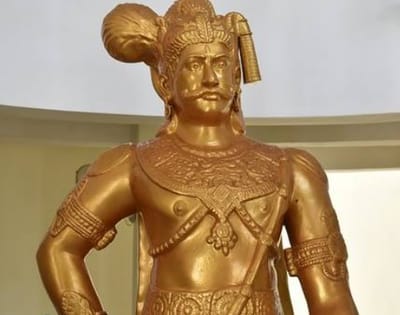
Veerapandya kattabomman became the palayakkar of panchalamkurichi at the age of thirty on the death of his father,Jagavira Pandya kattabomman.The company’s administrators James London and Colin Jackson ,had considered him a man of peaceful disposition.However ,soon several events led to conflicts between veerapandya kattabomman and the East India company.The Nawab under the provisions of a treaty signed in 1781,had assigned the revenue of the Carnatic to the company to be entirely under their management and control during the war with Mysore sultan.One-sixth of the revenue was to be allowed to meet the expenses of Nawab and his family.The company had gained the right to collect taxes from panchalamkurichi.The company appointed it’s collectors to collect taxes from all the palayams.The collectors humiliated the palayakkarars and adopted force to collect the taxes .This was the bone of contention between the English and kattabomman.
Confrontation with Jackson
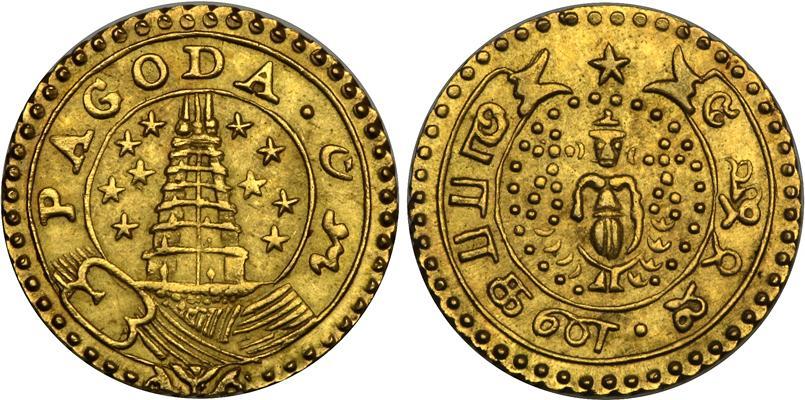
The land revenue arrear from kattabomman was 3310 pagodas in 1798.collector Jackson,an arrogant English officer, wanted to send an army to collect the revenue dues but the Madras government did not give him permission.On 18 August 1798,he ordered kattabomman to meet him in Ramanathapuram.But kattabomman attempts to meet him in between proved futile ,as Jackson refused to give him audience both in courtallam and srivilliputhur.At last,an interview was granted and kattabomman met Jackson in Ramanathapuram on 19 sep 1798.It is said that kattabomman had to stand for three hours before the haughty collector Jackson .sensing danger , kattabomman tried to escape ,along with his minister sivasubramanianar.Oomaithurai suddenly entered the fort with his men and helped the escape of kattabomman .At the gate of the Ramanathapuram fort there was a clash ,in which some people including Lieutenant Clarke were killed.Sivasubramanianar was taken prisoner.
Appeance before Madras council
On his return to panchalamkurichi , kattabomman represented to the Madras council about how he was ill-treated by the collector about how he was ill-treated by the collector Jackson.The council asked kattabomman to appear before a committe with William brown , William Oram and John casamajor as members.Meanwhile,governor Edward Clive , ordered the release of sivasubramaniyanar and the suspension of the collector Jackson.kattabomman appeared before the committee that sat on 15 Dec 1798 and reported on what transpired in Ramanathapuram.The committee found kattabomman was not guilty.Jackson was collector S.R.Lushington appointed.kattabomman cleared almost all the revenue arrears leaving only a balance of 1080 pagodas
Pagados coins
Kattabomman and the confederacy of palayakkarars
In the meantime ,Maruthu pandiyar of sivagangai formed the south Indian confederacy of rebels aganist the British,with the neighbouring palayakkars like Gopla Nayak of Dindigul and Yadul Nayak of Aanamalai .Maruthu pandiyar acted as it’s leader.The Tiruchirappalli proclamation had been made.Kattabomman from meeting the Maruthu Brothers .But Maruthu Brothers and kattabomman jointly decided on a confrontation with the English.Kattabomman tried to influence sivagiri Palayakkarars,who refused to join . Kattabomman advanced towards sivagiri.But the palayakkarars of sivagiri was a tributary to the company.So the company considered the expedition of Kattabomman as a challenge to their authority.The company ordered the army to march on to Tirunelveli.
The siege of panchalamkurichi
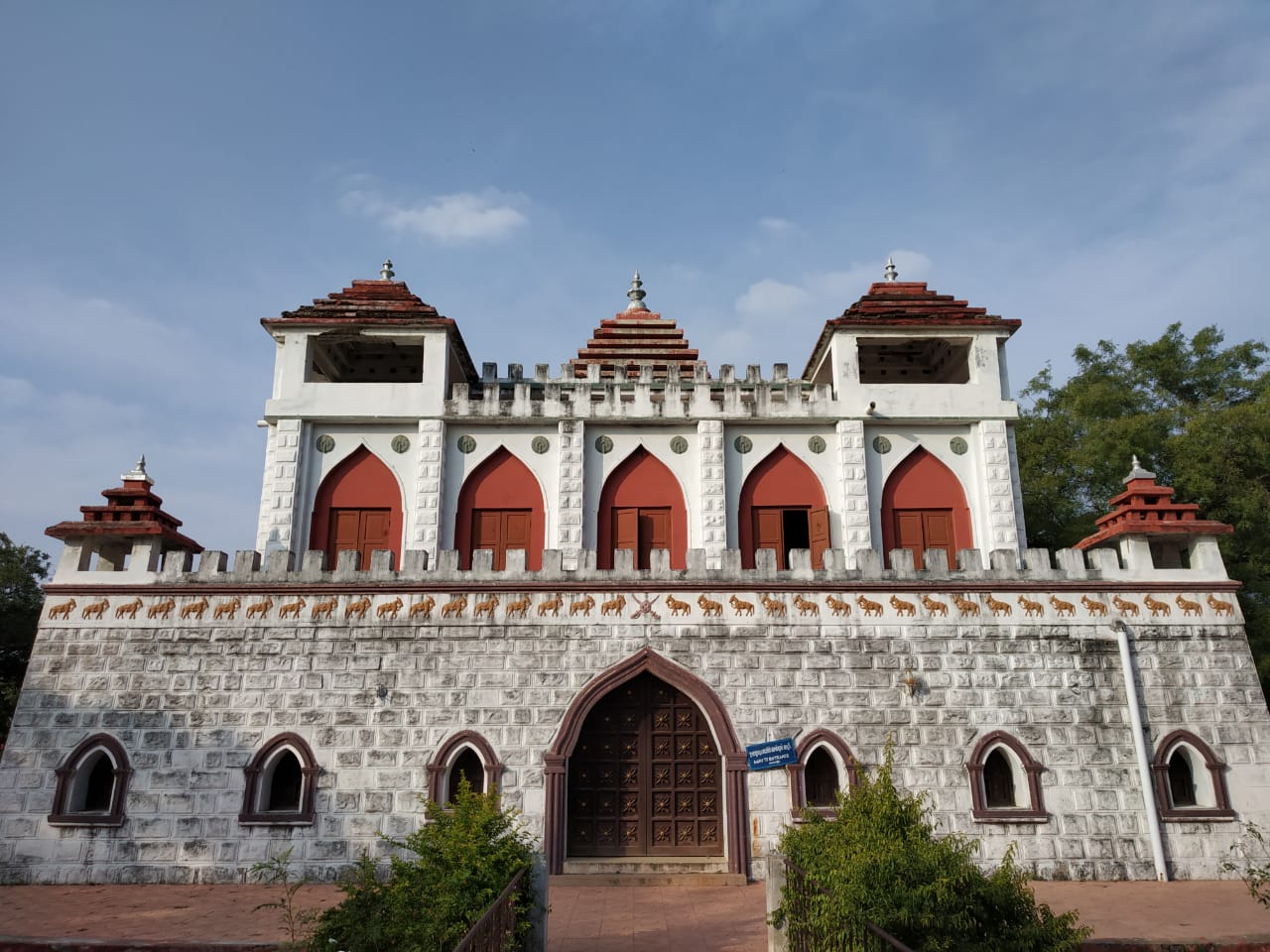
Panchalamkurichi Fort
In May 1799,Lord Wellesley issued orders from Madras for the advance of forces from Tiruchirappalli,Thanjavur and Madurai to Tirunelveli.Major Bannerman commanded the troops .The Travancore troops too joined the British .On 1 sep 1799,an ultimatum was served on kattabomman to surrender.kattabomman’s “evasive reply “prompted Bannerman to attack his fort.Bannerman moved his entire army to panchalamkurichi on 5 September.They cut off all the communications to the fort.Bannerman deputed Ramalinganar to convey a message asking kattabomman to surrender.Kattabomman refused.Ramalinganar gathered all the secrets of the Fort,and on the basis of his report, Bannerman decided the strategy if the Operation.In a clash at kallarpatti , Sivasubramaniyanar was taken a prisoner.
Execution of kattabomman
Kattabomman escaped to pudukottai .The British put a prize on his head . Betrayed by the rajas of Ettayapuram and pudukottai kattabomman was finally captured.Sivasubramanianar was executed at Nagalapuram on the 13 September . Bannerman made a mockery of a trial for kattabomman in front of the palayakkarars on 16 October.During the trial kattabomman bravely admitted all the charges levelled against him.Kattabomman was hanged from a tamarind tree in the old fort of Kayathar ,close to Tirunelveli,in front of the fellow palayakkarars.Thus ended the life of the celebrated palayakkarars of panchalamkurichi.Many folk ballads on Kattabomman helped keep his memory alive among the people.
• statutory body set up in 1949 – by The Chartered Accountants Act, 1949.
• premier accounting body.
• regulates the profession of Chartered Accountancy in the country.
• functions under the administrative control of the Ministry of Corporate Affairs.
• second largest professional body of Chartered Accountants in the world. • Management: in accordance with the provisions of Chartered Accountants Act, 1949 and the Chartered Accountants Regulations of 1988. Council – empowered to frame Regulations under the Act and to constitute necessary standing and non-standing Committees. 40 members – 32 elected by CAs and 8 nominated by the Central Government. nominees generally represent the Comptroller and Auditor General of India, SEBI, Ministries of Corporate Affairs and Finance etc.
• maintains highest standards in technical, ethical areas and for sustaining stringent examination and education standards.
• Role: Regulate the profession of Accountancy Education and Examination of Chartered Accountancy Course Continuing Professional Education of Members Conducting Post Qualification Courses Formulation of Accounting Standards Prescription of Standard Auditing Procedures Laying down Ethical Standards Monitoring Quality through Peer Review Ensuring Standards of performance of Members Exercise Disciplinary Jurisdiction Financial Reporting Review Input on Policy matters to Government .
• functions– Educational, Regulatory and Disciplinary. formulates the code of ethics to be followed by its members.
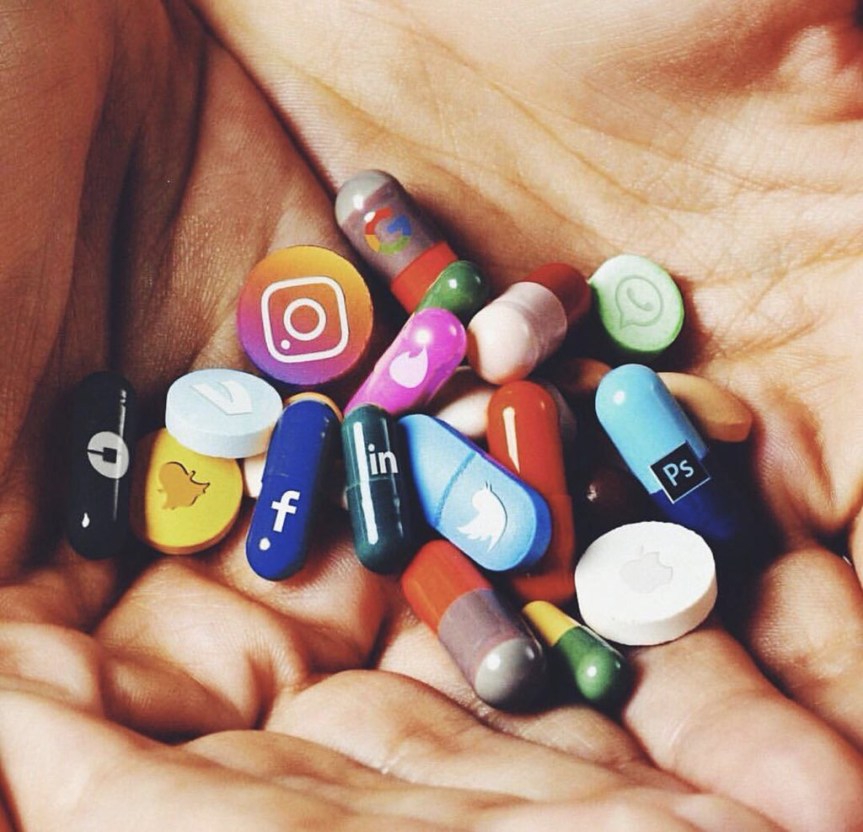
We live in a generation where everything is controlled by social media and it is something that is normalized now. But if social media is seen as neither positive nor negative, what is true is that it leaves people fighting for views, claps, likes or praise. That affects both the younger and the older generations. The constant search for recognition and attention can have detrimental effects on our lives and leave us hurt or needing more attention. Increased use of social media can lead to a high chance of people feeling depressed, anxious etc.
Technically, you can switch off your mobile phone, or you can set up a time limit for your social media use. This will simply prevent you from using these platforms. Of course this is not so easy, as everyone is online, including our friends and families, with whom we would like to keep contact. This means we should be more ‘news literate’ and more educated about the news and any information we read online. For example, we should always check the source or the profile of the person who shares a suspicious post. We should also read from a wide range of sources, and not limit ourselves. Sharing something without reading it is a big no. Social media is toxic not just because it is addictive by design, but also because platforms spread disinformation and they encourage their users to engage with these fake news more than with fact checked ‘real’ news. As a consequence, disinformation spreads faster and reaches a wider audience. This has a toxic impact on public trust in democratic institutions like elections, governments or any public services. What it means is that our own democracy can be established and undermined by outside influences simply by exploiting the loopholes in today’s social media. Social media allows people to share their lives, but it also allows others to criticize, belittle, bully, and berate others on such a grand scale that it sometimes leads to depression and in extreme cases, suicide. I Young children are often hounded by “influencers” to buy merchandise, dress a certain way, eat certain foods, listen to specific music, and think a specific way in order to be accepted. The Logan Pauls and Kardashians of the Internet feed off of the image hungry youth. Even on Youtube and TikTok, everyone is wearing the same brand names, doing the same dance memes, and promoting the same diet or lifestyle products to cash in on the hoards of people watching and envious of the success. Showing off your newest car, handbag, watch, condo, or remote island beach house is no longer considered vain, shallow, or superficial. It’s now considered lucrative. Even on Medium, where words and ideas are King, the first step to getting anyone to read your story is the title and image. And to further cement your superior status, having a boat-load of claps and being published in a successful publication boosts your credibility.
taken control on our life and it makes the decision of what is right and what is wrong which can prove to be toxic because nothing is what it seems on social media. Its not reality.
A.P.J. Abdul Kalam was born in a necessitous and little educated Tamil family on 15 October 1931, at Rameswaram district of Tamil Nadu, India. His father, Jainulabdeen Marakayar, was a boat owner and imam of a local mosque; and his mother, Ashiamma Jainulabiddin, was a homemaker.
Dr. APJ Abdul Kalam’s vision for the Nation:
Vision of the Nation from India 2020 India vision,2020 is a planned proposal by former Indian President Dr. A.P.J. Abdul Kalam ,to make India a developed country by 2020
Overview :
India vision 2020 was initially a document prepared by the Information Technology,Forecasting & Assessment Council (TIFAC) of India's Department of science & Technology under the chairmanship of Dr.A.P.J. Abdul Kalam & a team of 500 experts. The plan is further detailed in the book India 2020 ; a vision for new millennium,which Dr.A.P.J. Abdul Kalam co-authoref with Dr.Y.S. Rajan.
Kalam describes the plan as follows :
“In transforming the Nation into a developed country,five areas in combination have been identified.Based on India’s core competencies , natural Resources & Talented manpower for integrated action to double the growth eate of GCD and realize the vision for developed India.
The fiver Areas :
⭐ agriculture & food processing; Aimed at doubling the present production of agricultural processing &food
⭐ Infrastructure with relible electric power; Providing urban amenities to rural areas,& increasing solar power operations
⭐ Education & health care; Directed towards abolishing illiteracy ,social security & and overall health for all.
⭐ Information & Communication Technology ; Increased E-governance to promote education, Telecommunication & Telemedicine (in Remote Areas,)
⭐ Critical Technology & Strategic Industries ; The growth of nuclear technology, spacy technology &defence technology.
The land of snow :
Trekking is an exciting adventure. Athushi Despande travels to the Land of snow,the Himalayas,aware of it's dangers. He walked to the Milam Glacier on the edge of Tibet. He took a guide , Mr.Khem Nam and a sturdy Porter, Laxmi with him.
The path :
The Indo-China war had affected the villages and the people had field from the path to Milam. Most if the villages were abandoned and appeared to be the ghost villages (Burfu and Bilju) His four day trekking was adventure.
The Weather Conditions :
On their sixth day of trekking,it had rained a whole day and night that made the conditions worse for further travel. They took shelter in a cave Occasional sunshine,Hailstorms,wind chases one another.
The View of glaciers :
The summit of Mandayo spiralled up the blue sky like a cork screw. It had steep cliffs on all faces it looked surmountable. There was the Nanda pal glacier which had icy waters below. It was snow everywhere. To their trained eye,their goal was near. They saw nine small glaciers. Crevasse dotted their way. They marked their route carefully with black stones. They reached twin ponds of Dudh and Suraj Kund with a stunning ice fall as the back drop. The author drank the sweetest water of the pond.
Conclusion :
The author was fortunate to see the deity,Nanda Devi. He paid his obeisance to the Goddess and returned Munnusiyari happily. He cherishes his experiences happily.
One of the most famous experiments in physics is the double slit experiment. It demonstrates, with unparalleled strangeness, that little particles of matter have something of a wave about them, and suggests that the very act of observing a particle has a dramatic effect on its behaviour.
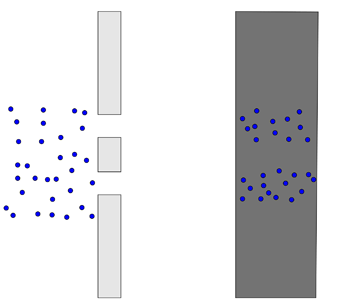
To start off, imagine a wall with two slits in it. Imagine throwing tennis balls at the wall. Some will bounce off the wall, but some will travel through the slits. If there’s another wall behind the first, the tennis balls that have travelled through the slits will hit it. If you mark all the spots where a ball has hit the second wall, what do you expect to see? That’s right. Two strips of marks roughly the same shape as the slits.
In the image below, the first wall is shown from the top, and the second wall is shown from the front.
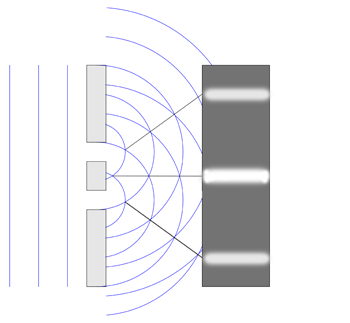
Now imagine shining a light (of a single colour, that is, of a single wavelength) at a wall with two slits (where the distance between the slits is roughly the same as the light’s wavelength). In the image below, we show the light wave and the wall from the top. The blue lines represent the peaks of the wave. As the wave passes though both slits, it essentially splits into two new waves, each spreading out from one of the slits. These two waves then interfere with each other. At some points, where a peak meets a trough, they will cancel each other out. And at others, where peak meets peak (that’s where the blue curves cross in the diagram), they will reinforce each other. Places where the waves reinforce each other give the brightest light. When the light meets a second wall placed behind the first, you will see a stripy pattern, called an interference pattern. The bright stripes come from the waves reinforcing each other.
Here is a picture of a real interference pattern. There are more stripes because the picture captures more detail than our diagram.
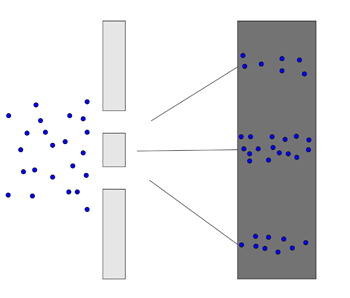
Now let’s go into the quantum realm. Imagine firing electrons at our wall with the two slits, but block one of those slits off for the moment. You’ll find that some of the electrons will pass through the open slit and strike the second wall just as tennis balls would: the spots they arrive at form a strip roughly the same shape as the slit.
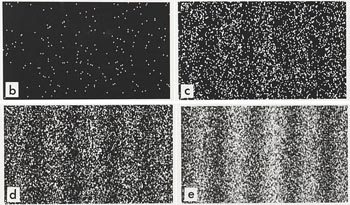
Now open the second slit. You’d expect two rectangular strips on the second wall, as with the tennis balls, but what you actually see is very different: the spots where electrons hit build up to replicate the interference pattern from a wave.
Here is an image of a real double slit experiment with electrons. The individual pictures show the pattern you get on the second wall as more and more electrons are fired. The result is a stripy interference pattern.
What does the experiment tell us? It suggests that what we call “particles”, such as electrons, somehow combine characteristics of particles and characteristics of waves. That’s the famous wave particle duality of quantum mechanics.
• NIA Act, 2008– established the National Investigation Agency (NIA).
• Extends to the whole of India. Applies to Citizens of India outside India.
• Government servants wherever they may be.
• Persons on ships and aircrafts registered in India wherever they may be.
• NIA is the Central Counter Terrorism Law Enforcement Agency in India.
• Can investigate and prosecute for offences under the following Schedule.
National Security Guard (NSG)
• 1984: Union Cabinet decided to create a Federal Contingency Force to tackle terrorism.
• NSG formally came into being in 1986: the NSG Act 1986.
• Modelled on the pattern of Special Air Service (SAS) of the UK and GSG9 of Germany.
• NIA Act, 2008- established the National Investigation Agency (NIA).
• Two complementary elements: Special Action Group (SAG)- comprising Army personnel. Special Ranger Group (SRG)- comprising personnel drawn from CAPF/State police forces.
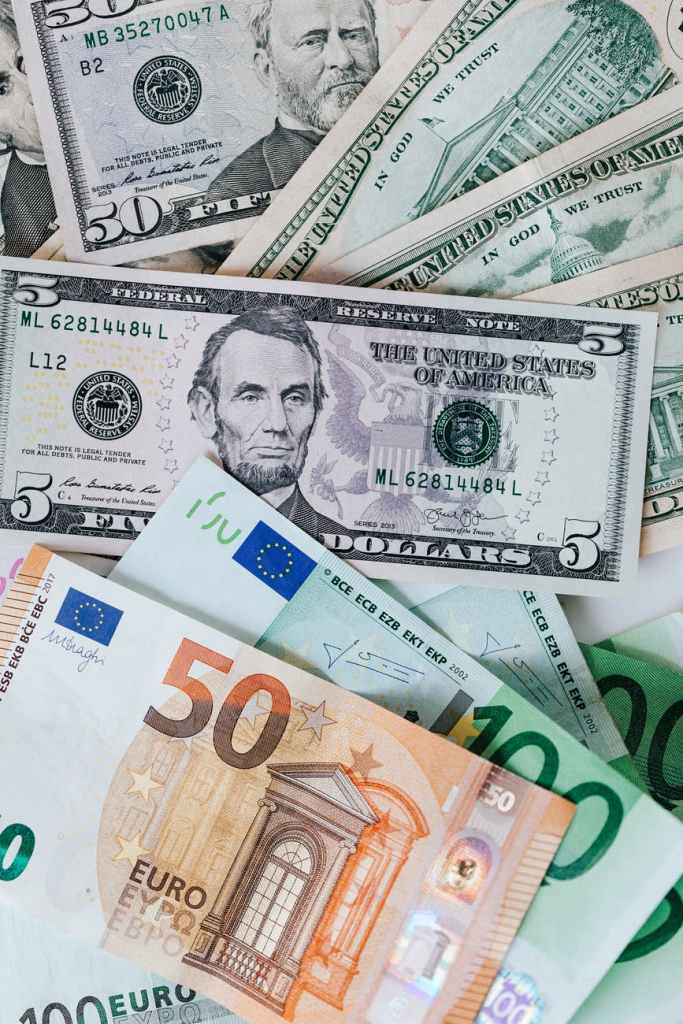
Have you ever wondered how you contributed to sabotaging the environment? If not it’s high time to dig deeper into the treasure, which is a greener Earth. You know what I’m speaking about. Yes, it’s about the fashion industry and the need for sustainable fashion. The fashion industry is one of the top industrial sectors in the world, with a value of 3 trillion dollars and produces 2% of the global GDP according to global fashion industry statistics. Accordingly, 1 in 6 people work in fashion or related industry Furthermore moving closer, the Indian fashion and apparel industry produces 1586 dollars in GDP per capita and enabled 45 million recruitments within the country. It is presently the second-largest employer within the country. Hence proving to be one of the top industries carrying out Apparel manufacturing process involving Product Design, Fabric Selection and Inspection, Patternmaking, Grading, Marking, Spreading, Cutting, Bundling, Sewing, Pressing or Folding, Finishing and Detailing, Dyeing and Washing, QC etc. 100 billion items of clothing are produced annually.
Adding onto the positives, there are many drawbacks to the very fortunate industry. It had been and is still on the top list of the contaminating industries in the world. Say, the textile industry is the second largest pollutant in the economy. The facts that had been put into due negligence till now is being brought to the limelight by Brands and fashion enthusiasts.
Blights of the fast fashion
1.Savagery towards animals
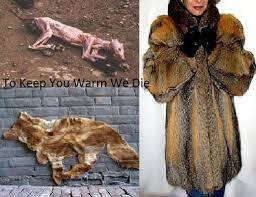
It is not a new fact to us that animals are manipulated to produce clothes or apparel items that seems to be a top trend. Most items produced from fur, leather, wool, feathers are obtained from the mass pestering of innocent animals. Sumanthran tigers and American alligators in the endangered category were still poached for cloth production.
2. Unfair wages and working conditions
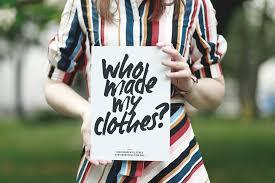
As to the latest protests and struggles to achieve a full-fledged fashion revolution, we see the campaigns with people holding placards written ‘who made my clothes’ and ‘i made your clothes’. It wasn’t any happy day speech, they are the behind the scene labour workers under hardships produce all the commodities as to the recent demands. We often tend to forget them blindsided by the white-collar workers.it had been brought to the mainframe that blue-collar workers of Bangladesh, India, China, Indonesia, Vietnam, etc had minimal protection towards worker’s rights. Under prevailing pandemic conditions, these marginal workers were reported losing jobs, being underpaid, cancelled from orders or being not even adequately paid in which they suffered meeting even the food demands of their family. On the other hand, it has become a custom to exploit farmers to the company and middle-men needs.
3. Customer attitude
The next crucial factor towards non-circular fashion is the growing needs of customers for top quality, yet cheap and mind-blowing colourful garments. consumers are well aware of the upcoming trends and glams of the industry, leading to the fast adoption of these newbies. Speaking of which is a necessary evil. It is brought to the view that one in every three young women restricts herself from wearing a cloth multiple times. As to its blitzscaling, fashion companies are compelled to showcase more attire than the actual need.
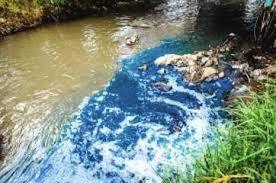
We have come to the major part of the discussion on fast fashion. It is every living being’s responsibility to safeguard the natural resources and pass on the same to the forthcoming generations. Water consumption of the textile industry had met its way beyond the danger zone. It takes 2720 litres of water to manufacture one cotton shirt and 7000 litres to make a pair of jeans. The pollution made to the water bodies doesn’t end there, the chemicals used for the mass production of the garments are disposed of directly or indirectly to the same. It is estimated that one-third of microplastics prolonging in the oceans is the impact of synthetic textiles. These are more deadly as the tiny they are, wouldn’t pass through the filters. The Aral sea, renowned as the world’s fourth-largest lake, has almost dried up as a result of the nearby cotton cultivation. The Kitex industry was recently accused of dumping excessive waste into the nearby waterbody.
5. Excessive carbon emissions
It is said to be true that the fashion industry is responsible for 8-10% of the total greenhouse gas emissions in the atmosphere. The major cause of this is the extensive use of synthetic fabrics like polyester, nylon and acrylic, spandex, faux fur, rayon, etc. Polyester ranks top on the intake of crude oil compared to all others by 70 million barrels annually. Transportation is the other means of carbon ejaculation contributed by the global distribution strategies.
6. Textile waste
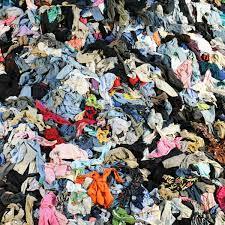
It is said that one garbage truck of textile waste is disposed of every second. This breathtaking fact does prove the intensity of the issue we are dealing with. This directly points out the rising rage for unsustainable fashion culture. For example, polyester is made from the polymerization of petroleum-derived ethylene glycol and purified terephthalic acid, which meltdown to produce polyethylene terephthalate (PET). As such many synthetic fibres are either termed plastic or made out of non-renewable substitutes that concern the ecology.
How can changes be made? How would fashion statements or the industry as a whole regain its fortune? Is the zero-waste fashion possible? Would buyers change their outlook on fashion?
It is time to join hands on the fashion revolutions put forth by fashion creators and promoters on ideas like sustainability, circular economy, zero waste fashion and so on. The idea of the fashion economy sabotaging ecology is given a better view as a result in modern days. Brands now are looking into logical practices to ensure sustainability and restrain themselves from misfortune. Let’s get to know the efforts taken by the industry dignitaries to achieve a stable eco-friendly fashion culture.
Overhaul to fad fashion
1. Sustainable brands
Brands that prove accountable to safeguard bionomics, sacrificing the trend sets should be promoted. Brands those prioritise natural fibres, work with local artisans and so on to gain environmental, economic and social well being. These companies tend to visualise customers as creatives. For example Reff jeans and Girlfriend collective
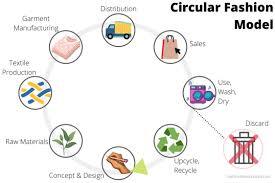
2. Circular fashion
‘Circular fashion’ can be defined as clothes, shoes or accessories that are designed, sourced, produced and provided with the intention to be used and circulate responsibly and effectively in society for as long as possible in their most valuable form, and hereafter return safely to the biosphere when no longer of human use. (Anna Brismar, Green Strategy, 2017). This is the basic idea of the longevity of any garment cycle.
“The circular economy refers to an industrial economy that is restorative by intention; aims to rely on renewable energy; minimize, tracks and eliminates the use of toxic chemicals; and eradicates waste through careful design.” (Ellen MacArthur Foundation)
3. Zero waste fashion
It is the concept of reducing the waste produced with the garment during its life cycle. Furthermore, it is divided into two categories, pre-consumer zero-waste fashion and post-consumer zero-waste fashion. Pre-consumer zero-waste fashion is a holistic approach towards the removal of waste during the manufacture of garments. post-consumer zero waste fashion, on the other hand, is the approach towards post-consumer garments, what more the garment could be used for.
4. Natural dyeing
These are the ancestral dyeing methods using degradable and natural materials like plant sources like roots, fruits, etc. yet the wide-ranging possibilities of this are still in doubt. Whereas a bit of sacrifice towards betterment wouldn’t hurt.
5. Mutating customer attitude
Nowadays customers are more aware of the rising issues on the planet and do agree to take responsive mutation to the outbreaking situations. Social media has had a great influence in making this change possible. When buying an outfit, consumers should ask themselves questions like how is this made, is it a need, how long it would stand, and what to do after. Renting and swapping is too given better focus
6. Personal style
Rather than buying all the so-called latest trends, customers should be aware of their personal style. Personal style does mean the unique way you dress, determining what suits you well, colours favouring, vulgar eliminating, defining yourself and gives you much confidence.
7. Recycling commodities
Brands have come up with the idea of accepting their old products in store. Moreover, specific recycling methods are being conducted and succeeded to a certain level that includes unbinding the fibres to yarns and reforming them to new ones so the focus centralises virgin fibres. As of now, only 13% of clothing and footwear is recycled but in the near future, this is to be a big number. And take care the brands don’t blindside you with mere greenwashing recycling programs.
8. Aquatic treatment
Brands now maintain a ‘water budget’ to not exceed the water demands. It is also noted that natural fibres take in less water for manufacture. There are more ethical ways to dye clothes without the use of water is a plus. Whereas to solve the issue of microplastics, using guppy friend washing bags and installing Girlfriend Collectives microfibre filters in laundry machines is recommended.
9. Ban on poaching
This year London fashion week has been announced prohibiting animal fur due to the rising concerns and brands like Burberry, Gucci and Versace guaranteed to go fur-free. At the same time, Adidas and G-Star RAW introduced apparel produced of ocean plastic. Companies now are developing materials that substitute animal-based leather to the ones made with grape and orange skins which are more laboratory-made.
10. Reducing carbon outrush
The profound carbon emissions are put to a stop by altering synthetic fabrics made of crude oil to natural ones like peach palm fabrics. Transportation caused pollution could be eliminated by procuring and sourcing local resources and employing local artisans.
11. Neat and intact employment
Sustainability couldn’t be possible without fair wages, constant job opportunities with regular and stable working hours. Meanwhile, farmers and blue collars should ensure a safe environment with right protecting laws and policies from the government. So that they could be self honoured with at least meeting the daily living standards which every person of the democracy should enjoy.
12. Minimalism
This isn’t a very pleasing method compared to others on the list. Yet leading a simplistic life could make a big change. Demand is directly proportional to supply. So when demand decreases supply decreases and so will production. Less production leads to the concentration of ones being produced and existing ones, this is where the difference would be visible.
Organ Trafficking is a illegal crime of transporting,harbouring of living persons or deceased persons or their organs by means of abduction ,fraud that makes the abuse of power of a professionals position.Human Trafficking holds a critical place with transactional organized crime groups due to demand of organs at low rates of law enforcement.Organ Trafficking is considered to be dark form of illicit that causes destruction to the medical norms.Global Financial Integrity(GFI) estimates that 10 % of all the organtransplants includes lungs,Hearts and Liver.
According to the sources this illicit invloves a huge groups ,the donors of the organs are mostly targeted to be the orphans. This crime is a planned act which is against law and medical norms.The orphans are easy for this illicit as they have no identity to recognise from their legit.so this loophole is made as business by many Traffickers for operating from various locations.Desperate patients in need of Organ may fall as a prey for the Traffickers who could praise a high Ransom for the organ matching .The Medical reforms involved in this illicit are involves many skilled professional doctors,medicos etc.This professionals perform various Opeartions ,surgeries are a part of Financial exploitation creating multilevel equation of crime.
It is Extremely difficult to know exactly how much Transplantations Laundering generates annually WorldWide But it is estimated that the Illegal trade Conservatively generates around $800 millions to $1.7 Billions annually according to GFI,it is difficult for both law enforcement agents and anti-money Laundering(AML)professionals to detect related Financial activity.This is due to the bulk Groups involving in the crime and Transparency nature of the crime.The main scapegoats made for this illicits are the medical captives includes hospitals and the drug pharmacies.The pharamaceuticals required for the Transplantations are also acquried from various sources from several agencies.
Todays Digital world made easy menthod of transfers through various websites,agencies and medical tourisms that offer transplant services with transparency.Method of payments such as email money transfer,bulk and cash withdrawl,credit card Payments to agencies.
Some Economists generally claim and lean for arguments for organ legalization is the one way to overcome this Red market illicit.Although Governments have Imposed and Implemented initiatives with legal definitions to increase Organ donation through public awareness Campaigns,consent laws.Legalizing payments for organs would encourage more people to donate organs.criminal Middlemen often take large sums of money cut for the payment of the organ leaving a little money left for the donor,this had to be avoided to reduce harm for the donors.After the donors often do not receive any medical followup because they are afraid that their role in crime will be discovered.considering all the facts there is still a quest for this question whether this” Red market Crime can be Exposed or not?”.
Major considerations for this question also have a claim thought of making Organ Transplantation as a Legal Model.One of this model include Free market Model system to Combat the organ shortage that helps to drive the illegal Trade.Although it doesn’t still attain a clear attention as advocates counter these claims by saying that death or murder for financial gain already happens.The main motto to expose this crimes is to protect and prohibit medical professionals and drug Pharmacies from performing such illicit organ transplantations all over the world.
Source: Department of Consumer Affairs, Hunger Watch
• Impacts of Covid-19 pandemic, lockdown – on personal income and food consumption.
• Hunger watch report analysed to provide important information. Income drop.
• In October 2020 – compared to pre lockdown level 27% of respondents lost their income due to the national lockdown 24% of its respondents record that they lost 50% of their income 6% responded that their income did not change despite the lockdown Source: Department of Consumer Affairs, Hunger Watch
Retail inflation
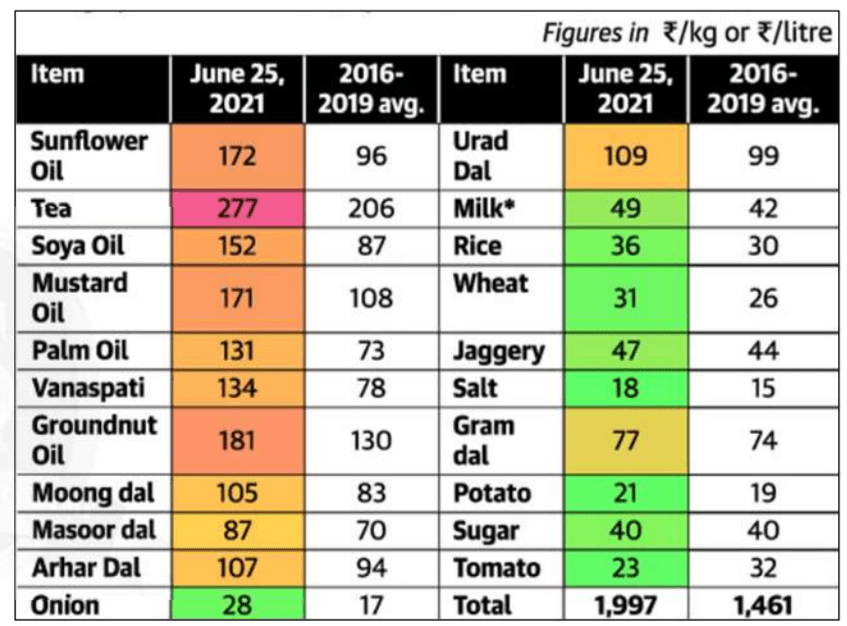
• In June 2021 – the prices of edible oil and pulses are increasing significantly .
• retail price analysis of 21 essential items across India.
• In June 2021- a Consumer – to buy a kg of essential item – has to spend rs.500 more compared to average cost between the year 2016 and 2019 .
• table given – indicates the retail price difference in various occasions .
• with retail inflation – the drop in income level has burdened the consumers.
hold Consumption of Commodities
• the impact of income factor and inflation factor can be seen from the change in consumption level data of October 2020 is compared with March 2020.
• Report – level of household consumption of all commodities listed have decreased.
• In October 2020 – 38% of households reported that the consumption of vegetables decreased a lot.
• consumption of egg/meat commodities have also decreased – another problem in ensuring nutrient security.
Conclusion
adequate policy responses are the need of the hour to address both food and nutrition security in the country.
Go for it, if you are curious of the process of International Relations among nations.
I’ve already provided my simplest version of the answer, but to dig deeper into this notion of taking up such an interesting, and recently developing subject choice has to do so much with the socio-political situation alongside the increasing globalisation we have encountered with changing times.
The subjects holds weird fascination to me, when I first encountered it, and I hope it does the same to you.
But do make your self aware that you won’t directly jump into knowing what Russia or China is handling it’s relations with India, there isn’t anything direct that could give you an eureka movement, but there are these tiny steps you get to take to understand each and every detail when it come to the subject of International Relations.
From Realism, and Trade Policies to tonnes of agreements, and UN and it’s branches, you slowly understand the subject and then next you deal with Diplomacy and its multitudinous types to how a mere decision over their actions on a global scale is surely going to affect someone else. This leads to another set of trials and tribulations but nonetheless the whole idea or the fascination behind this subject lies, for me, is in the knowledge that someone could hole so much power to change something, or some region could change course to appease and pacify another region, all as an act to not create a situation that is surely going to get out of hands, if not monitored.
An asteroid is a minor planet of the inner Solar System. Historically, these terms have been applied to any astronomical object orbiting the Sun that did not resolve into a disc in a telescope and was not observed to have characteristics of an active comet such as a tail.
As minor planets in the outer Solar System were discovered that were found to have volatile- rich surfaces similar to comets, these came to be distinguished from the objects found in the main asteroid belt.
The term “asteroid” refers to the minor planets of the inner Solar System, including those co- orbital with Jupiter. Larger asteroids are often called “Planetoids”.
Asteroids vary greatly in size from almost 1000km for the largest down to rocks just 1 meter across. The three largest are very much like miniature planets : they are roughly spherical, have at least partly differentiated interiors, and are thought to be surviving protoplanets.
“This planet is 15 million years overdue for an asteroid strike like the one that killed the dinosaurs.” – L Niel Smith
“If the Earth gets hit by an asteroid, it’s game over. It’s control-alt-delete for civilization.” – Bill Nye
The vast majority, however, are much smaller and irregularly shaped; they are thought to be either planetesimals or fragments of larger bodies.
The four largest asteroid-
Ceres – 939km
Vesta – 525km
Pallas – 512km
Hygiea – 434km
International Asteroid Day
Asteroid Day is an annual global event which is held on the anniversary of the Siberian Tunguska event that took place on June 30, 1908, the most harmful known asteroid- related event on Earth in recent history.
Asteroid Day aims to raise awareness about asteroids and what can be done to protect the Earth, it’s families, communities and future generations.
“The idea is to raise awareness of, not only the dangers of asteroids but also the fact that we have solutions in hand to find dangerous asteroids and do something about it.” – Tom Jones
“Sooner or later disasters such as an asteroid collision or a nuclear war could wipe us all out, but once we spread out into space and establish independent colonies, our future should be safe”. – Stephen Hawking
















 Eduindex
You must be logged in to post a comment.