Internship, Skill Development and training related

Internship

InTRODUCTION:-

The internship program is designed to provide students engaged in a field experience with an opportunity to share their insights, to explore the links between students’ academic preparation and their field work, and to assist participants in developing and carrying out the major research project which will serve to culminate their internship experience. Internships are individualized and tailored to the needs and interests of each student in the program. As part of the internship experience, students are expected to take an active role in finding an appropriate internship for themselves. Many students pursue their own contacts, however, information is available on Locating Internship Sites.
There is something in internships that is all the more inescapable than the sweet fragrance of a rose flower – Learning. An adage suggests, “Learning is not preparation for life; Learning is life itself.” Learning in every point of life is cardinal in its own way. When students experience a continuous learning environment, they get an opportunity to explore diverse and unexplored territorial domains. What thus follows is a phantasmagoria of constructive and highly rewarding events. This eventually leads to new ideas. Internships are cherished by students and multiple internships are mandated in a few reputed organizations.

Here is a curated list of reasons why internships are important

1. Employers’ Perspective − In this ultra-competitive world where getting a job is an achievement in itself, the perspectives of potential employers and recruiters cannot be undermined. In a survey conducted by National Association of Colleges and Employers (NACE), an overwhelming 95% of employers opined that ‘candidate experience’ is ‘necessary’ and ‘desirable.’ In other words, when it comes to hiring candidates, candidates who have interned with startups or corporates get an edge over other inexperienced candidates.
2. Hiring Decisions and Hiring Avenues − ‘Hiring from the interns’ program has become the latest corporate fad. During their gig as interns in various corporates, interns acquaint themselves with several industry best practices. They get accustomed to the corporate environment. Internships improve the quality of candidates as they are delegated with a few responsibilities and monitored constantly. Thanks to the responsibilities entrusted to interns, creativity kicks in and candidates start giving their very best. Interns who have surpassed the expectations of their employers will be offered jobs.
3. Building Critical Professional Contacts − College students clamoring for profound change should solicit advice from experienced professionals and build a rich professional network. Students should therefore create a dedicated profile and stay in touch with others. This helps them while searching for new jobs.
4. Career Path and Career Goals − Students are generally lost in the vagaries of the so-called ‘Student life’ and hence, they begin to abandon a precise and a thorough understanding of ‘Career Path’ and ‘Career Goals.’ Once students start interning with startups or corporates, they start taking matured decisions. The concepts of ‘Career Path’ and ‘Career Goals’ no longer seem abstract.
5. Theory vs Implementation − In colleges, students seldom get an opportunity to implement and put into practice what they had learnt. On the contrary, interns gain a valuable hands-on experience by implementing what they had learnt. Internships thus helps interns to apply academic knowledge to solve industry problems.
6. Monetary Value − John Maynard Keynes, the celebrated British economist once said, “The importance of money flows from it being a link between the present and the future.” Internship is undoubtedly a voyeuristic invasion of one’s full-fledged salaried life. In other words, students get an opportunity to take a glimpse into their full-time professional lives. As interns, students are generally paid a decent amount. As full-fledged employees, they are paid even better. Moreover, ‘Earn while you learn’ becomes an actuality rather than an abstraction.
7. Intangible Benefits − There is no gainsaying that students begin to exude the joy of life by enjoying the inherent thrills of internship. They master the ability to take calculated risks. Warren Buffet, the celebrated multi-billionaire owes his wealth to his ability of taking calculated risks. On an optimistic note, students can become the next Warren Buffet. As much clichéd as it sounds confidence matters. The fantastic learning experiences as interns will bolster the confidence levels of students. Commitment to work and dedication to job automatically follow the suit. Self-confidence and self-esteem are welcome additions.
8. Resume − Internships make a student’s resume impactful and impressive. They provide the necessary momentum and fillip and eventually make their resumes all the more effective. During the hiring process, companies generally ask for references. After duly taking the permission of the Line Manager and Project Manager under whom you have interned as XXX (designation), students can mention their names and contact details preferably email-ids and mobile phone numbers in the reference section of their resume. As an alternative, students can obtain reference letters one each from their Project Manager and Line Manager. Remember, there are no better testimonies other than the reference letters drafted by the officials concerned. All in all, internships serve as resume builders.
9. Multi-faceted Traits − College students are multi-talented and multi-faceted individuals. They are extremely versatile and brilliant. By participating in various internships that are in no way related to their majors, students get an opportunity to fine-tune their extra-curricular skills. For example, a student who may be a brilliant programmer can also be an excellent content writer. He can opt for content writing internships and draft quality content.

NOTE:-The benefits of an internship are endless and enormous. Today an intern, tomorrow a top-notch professional!

Skill Development

INTRODUCTION:-

Skill development is a process of identifying your skill gap and ensuring you develop these skills. Your skills determine your ability to execute plans and achieve your goals. Skill development and training is an integral part of an employee’s life.Skill development is a vital tool to empower people, to safeguard their future and for the overall development of an individual. It is an important aspect that enhances employability in today’s globalisation. Skills are as essential as one’s academic status. Education and skills should now go hand in hand.
Escort Skill Development- CSR Projects India
* It identifies the gaps and develops the skills which enable the person to achieve their goals.
* An ability and capacity acquired through deliberate, systematic, and sustained effort to smoothly and adaptively carryout complex activities or job functions involving ideas (cognitive skills), things (technical skills), and/or people (interpersonal skills).

* The recognition, practice, and internalization of skills towards improved execution of skills.
* Skill development is the method of detecting skill gaps and improving these skills.

FEW Ways To Improve Your Personal Development Skills:-

Key takeaways:

  • Personal development skills can be soft or technical skills.
  • Select which skills to develop by performing a self-analysis on your areas for improvement and necessary skills to advance in your career or industry.
  • Focus on transferable skills that make you a competitive candidate in any job.

What are personal development skills?

Personal development skills are qualities and abilities that help you grow both personally and professionally. In other words, they are skills that help you nurture your personal development. Understanding and improving these skills can help you maximize your potential. This process is also known as self-development or personal growth.

Why are personal development skills important?

Personal development skills are important because they allow you to create strategic and tactical plans for personal and professional growth towards your goals. It can be helpful to hone personal development skills so that you can naturally work them into your daily routines and use them to:
  • Achieve personal and career goals
  • Advance in your career
  • Improve your strengths and talents
  • Better yourself
  • Find fulfillment and satisfaction

Examples of personal development skills:-

Personal development skills can be traits or qualities you already have or ones you can gain through education and training. Individuals will value different personal development skills depending on their goals, but here are some examples of skills people commonly practice to facilitate personal growth :
  • Communication
  • Interpersonal
  • Organization
  • Problem-solving
  • Self-confidence
  • Adaptability
  • Integrity
  • Work ethic
  • Leadership

Communication:-

Communication includes your ability to speak, write and listen. With these skills, you can understand what others are saying and feeling and also convey your own ideas and feelings. Good communicators can speak clearly and confidently, using a tone that is positive and appropriate for the situation.

Interpersonal:-

Also called people skills or social skills, interpersonal skills are the verbal and nonverbal behaviors and reactions to interactions with other people. They affect your ability to build relationships and make impressions on others in social situations.

Organization:-

Organization skills include the tidiness of your physical and digital spaces as well as your ability to plan, schedule and prioritize. Good organization can help save time, prevent miscommunications and improve efficiency.

Problem-solving:-

Problem-solving is your ability to handle challenging or surprising situations. Good problem-solvers can stay calm when they encounter obstacles and assess all their options to find the best solution.

Self-confidence:-

Self-confidence is the belief in your abilities, actions and decisions. If you have confidence in yourself, you might be more likely to pursue ambitious goals, try new things and believe you can succeed.

Adaptability:-

Adaptability is your ability to adjust quickly and easily to new things. People who handle change well often get along with a variety of personalities and thrive in any environment. They can also remain calm in surprising situations.

Integrity:-

People tend to trust those who are honest and stand by their values. Integrity means doing what is right and telling the truth, even if doing so presents challenges. Having integrity can lead to a good reputation and opportunities for advancement.

Work ethic:-

Work ethic includes not only hard work but also reliability, responsibility, quality, determination and discipline. People with good work ethic tend to be productive and have a positive attitude.

training

INTRODUCTION:-

Training refers to the teaching and learning activities carried on for the primary purpose of helping members of an organization acquire and apply the knowledge, skills, abilities, and attitudes needed by a particular job and organization.Training constitutes a basic concept in human resource development. It is concerned with developing a particular skill to a desired standard by instruction and practice. Training is a highly useful tool that can bring an employee into a position where they can do their job correctly, effectively, and conscientiously. Training is the act of increasing the knowledge and skill of an employee for doing a particular job.
Definition of Training:

Dale S. Beach defines training as ‘the organized procedure by which people learn knowledge and/or skill for a definite purpose’. Training refers to the teaching and learning activities carried on for the primary purpose of helping members of an organization acquire and apply the knowledge, skills, abilities, and attitudes needed by a particular job and organization.
According to Edwin Flippo, ‘training is the act of increasing the skills of an employee for doing a particular job’.

Need for Training:

Every organization should provide training to all the employees irrespective of their qualifications and skills.

Specifically the need for training arises because of following reasons:

1. Environmental changes:

Mechanization, computerization, and automation have resulted in many changes that require trained staff possessing enough skills. The organization should train the employees to enrich them with the latest technology and knowledge.

2. Organizational complexity:

With modern inventions, technological upgradation, and diver­sification most of the organizations have become very complex. This has aggravated the problems of coordination. So, in order to cope up with the complexities, training has become mandatory.

3. Human relations:

Every management has to maintain very good human relations, and this has made training as one of the basic conditions to deal with human problems.

4. To match employee specifications with the job requirements and organizational needs:

An employee’s specification may not exactly suit to the requirements of the job and the organization, irrespective of past experience and skills. There is always a gap between an employee’s present specifications and the organization’s requirements. For filling this gap training is required.

5. Change in the job assignment:

Training is also necessary when the existing employee is pro­moted to the higher level or transferred to another department. Training is also required to equip the old employees with new techniques and technologies.

Reference Links:-

https://www.tutorialspoint.com/importance-of-internships-to-college-students
https://www.igi-global.com/dictionary/skill-development/27090
https://www.yourarticlelibrary.com/human-resource-development/training-meaning-definition-and-types-of-training/32374

Tea – The most overwhelming drink of everyday

Tea is an aromatic beverage prepared by pouring hot or boiling water over cured or fresh leaves of Camellia sinensis, an evergreen shrub native to China and East Asia.The tea plant originated in the region encompassing today’s Southwest China, Tibet, north Myanmar and Northeast India, where it was used as a medicinal drink by various ethnic groups.After water, it is the most widely consumed drink in the world.

Tea has a stimulating effect in humans primarily due to its caffeine content.Portuguese priests and merchants introduced it to Europe during the 16th century.During the 17th century, drinking tea became fashionable among the English, who started to plant tea on a large scale in India.

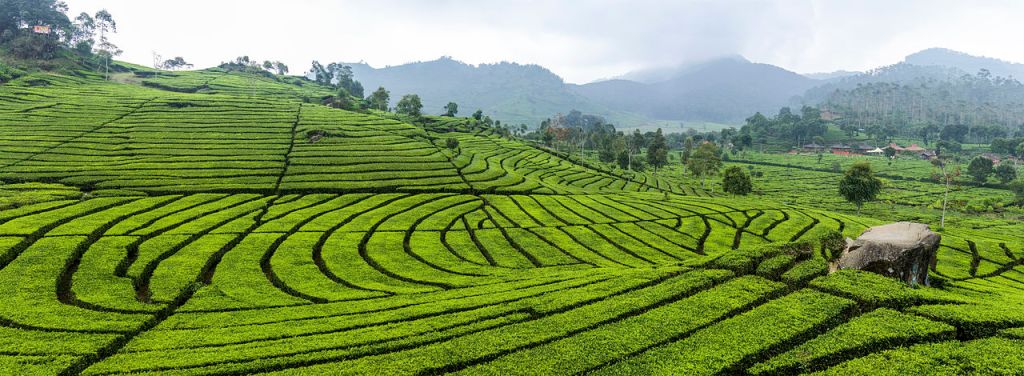
Tea Garden

Origin and history of tea :-

Tea plants are native to East Asia and probably originated in the borderlands of southwestern China and north Burma. Besides that, Chinese (small-leaf) type tea may have originated in southern China possibly with hybridization of unknown wild tea relatives. However, since there are no known wild populations of this tea, its origin is speculative.

Given their genetic differences forming distinct clades, Chinese Assam-type tea may have two different parentages – one being found in southern Yunnan and the other in western Yunnan. Western Yunnan Assam tea and Indian Assam tea both may have originated from the same parent plant in the area where southwestern China, Indo-Burma, and Tibet meet.Tea was first introduced to Western priests and merchants in China during the 16th century, at which time it was termed cha.The earliest European reference to tea, written as chiai, came from Delle navigationi e viaggi written by Venetian Giambattista Ramusio in 1545.

5 Good effects of having tea :-

1. Boosts energy. 2. Protects heart health. 3. Supports mental health. 4. May regulate blood sugar. 5. Aids Digestion.

Different kind of tea

5 Bad effects of having massive amount of tea :-

1. Increased anxiety, stress, and restlessness. 2. Reduced iron absorption. 3. Nausea. 4. Poor sleep. 5. Caffeine dependence.

Different kind of tea :-

Tea is one of the most ancient beverages on the planet, and it’s made by soaking dried leaves in water.Some of the most common tea varieties include black tea, green tea, white tea, oolong tea, herbal tea, and rooibos tea.The tea flavor can change greatly depending on temperature, humidity, and other air conditions. Heat treatments, like pan-firing or steaming, will stop the oxidation process.

1. Black Tea :-

Black tea or red tea is one of the most popular tea flavors and is fully oxidized. The leaves of the Camellia sinensis plant are withered. Assam, Darjeeling, Nilgiri, and Sri Lanka are a few well-known black tea producing regions, and the flavor will vary based on the region and type of black tea.

Black Tea

2. Milk Tea :-

Milk tea refers to several forms of beverage found in many cultures, containing some combination of tea and milk. Beverages vary based on the amount of each of these key ingredients, the method of preparation, and the inclusion of other ingredients (varying from sugar or honey to salt or cardamom).

Milk Tea

3. Green Tea :-

Green tea is the most popular tea globally, is unoxidized, and has less caffeine than black tea. Camellia sinensis leaves are picked, dried, and heat-treated to prevent oxidation. Chinese people often pan-fire leaves, which creates a duller green color, while Japanese people will typically steam them and achieve a brighter green shade. Matcha, Sencha, Gunpowder Green tea, Dragonwell (Longjing) green tea are some different kind of green tea.

Green Tea

4. Herbal Tea :-

Herbal tea doesn’t come from tea leaves like other varieties. It’s made from dried herbs, fruits, and flowers, which can create a wide range of delicate flavors. These tea types are caffeine free, making them ideal for customers with dietary restrictions.hibiscus, chamomile, peppermint, Yerba Mate are some kind of herbal tea.

Herbal Tea

5.Rooibos Tea :-

Rooibos tea, or African Red Tea, is an herbal tea that comes from the South African Red Bush, and the leaves are ground and bruised before they’re fermented and dried. Green rooibos tea doesn’t go through an oxidation / fermentation process and has a lighter flavor.

Rooibos Tea

GAME CHANGER IN PLAYSTATION – SONY PS 6


PS6 Latest Update:
There’s been a talk for years that we’ll reach an end of traditional game console. Could we see Sony downsize to a flash drive-like device that plugs into your TV, like stadia, perhaps? Possibly.Let’s assume that the PS6 is actually in the pipeline for now.
Expected price:
The price might be between $400-$600.
The PS6 is likely to be a long way off.


In an interview with Game informer, Sony’s Executive VP of Hardware Engineering Masayasu Ito confirmed that the PS5 life cycle is expected to last about six or seven years, meaning we won’t see the PS6 until at least 2026.
Features of Sony PS6:
• A smaller console
• More affordable expandable internal storage
• Built in Bluetooth audio support- so we don’t need a dongle for the official headset
• Wireless charging for controllers/headset- can just be placed on top when off
• Wire free and zero latency connection to the TV
• Improve the UI
• VR integration (Virtual reality)
• Smaller design
• Modular upgrades
• Digital only console


The PS6 will surely improve in more ways that the features listed above, but since we’re several years out from launch. The PS6 fashion’s as rugged and dark, with elements presumably taken from various versions of the Xbox, starkly different from the PS5.
Pre orders:
PS6 pre orders will start sometimes after the consoles official announcement from Sony.

WILL YOU GET ANOTHER RELIEF PAYMENT? FOURTH STIMULUS CHECK


The IRS has issued almost 167 million payments in the third round of direct stimulus aid, with another 1.8 million people receiving the$1400 checks. But some lawmakers are pushing for a fourth round of stimulus aid that would effectively send recurring payments until the pandemic ends.
So far, the federal response to the economic crisis caused by the coronavirus pandemic has delivered $3,200 to each eligible adult: $1,200 via the Coronavirus Aid Relief and Economic Security Act in March 2020: $600 in a December relief measure; and $1,400 under the American Rescue Plan signed in March by President Joe Biden.

Last week, President Joe Biden and a bipartisan group of senators worked out the details of a possible infrastructure deal, but nothing resembling pandemic related money was introduced. Biden is “open to a range of ideas” regarding stimulus aid, White House press secretary Jen Psaki said in early June, but that he had already put forward what would be “the most effective for the short term”.
There are many what ifs when it comes to future stimulus aid.
• If it makes the child tax credit raise permanent
• If it passes a minimum wage hike
• If it renews federal unemployment bonuses beyond the fall


Joe Biden said:
It’s time we build an economy that delivers dignity and gives everybody a chance.
Kamala Harris and 80 Democrats in Congress support a new stimulus payment for American families. Joe Biden received 3 request letters for recurring financial payments. Congressmen consider essential for the survival of families that have suffered the pandemic in their family economy.
Fourth stimulus check:
Over 80 lawmakers now support future direct payments to American.

Earth- Sweet Home

11]Earth- Sweet Home 

Earth is the third planet from the Sun. We have learnt about Earth since childhood. Here I will cover some facts and provide quick glances at the basic information which everyone must know about our home planet.

Some facts about Earth:

Diameter- 12,742 km

Orbital period-  365.25 days

Day-   23 hours, 56 minutes, and 4 seconds

Axis tilt- 23.5 degrees

Distance from sun- 1AU

 Hydrosphere:

Earth is the only object known to harbor and support life in the universe so far.  About 29.2% of Earth’s surface is land consisting of continents and islands. The remaining 70.8% is covered with water, mostly by oceans, seas,  lakes, rivers, and other water bodies, which together constitute the hydrosphere.  Much of Earth’s polar regions are covered in ice and many glaciers are present. 

Lithosphere and Structure of Earth

Earth is the densest planet in the Solar System and the largest and most massive of the four rocky planets. Earth’s outer layer is divided into several rigid tectonic plates that migrate across the surface over many millions of years, while its interior remains active with a solid iron inner core, a liquid outer core that generates Earth’s magnetic field, and a convective mantle that drives plate tectonics.  The Earth’s crust ranges from 5–70 kilometres (3.1–43.5 mi) in depth and is the outermost layer. Earth’s mantle extends to a depth of 2,890 km, making it the planet’s thickest layer.

See the source image

Atmosphere

Earth’s atmosphere consists of various gases which are (by volume) -78.09% nitrogen, 20.95% oxygen, 0.93% argon, 0.04% carbon dioxide, and small amounts of other gases. The atmosphere has various layers. From highest to lowest, the five main layers are:

  • Exosphere: 700 to 10,000 km (440 to 6,200 miles)
  • Thermosphere: 80 to 700 km (50 to 440 miles)
  • Mesosphere: 50 to 80 km (31 to 50 miles)
  • Stratosphere: 12 to 50 km (7 to 31 miles)
  • Troposphere: 0 to 12 km (0 to 7 miles)

Gravity and Orbit

The gravitational acceleration on Earth’s surface is considered to be 9.8 ms-2 . Earth’s gravity interacts with other objects in space, especially the Moon, which is Earth’s only natural satellite. Earth orbits around the Sun in about 365.25 days. Earth’s axis of rotation is tilted with respect to its orbital plane, producing seasons on Earth. The gravitational interaction between Earth and the Moon causes tides, stabilizes Earth’s orientation on its axis, and gradually slows its rotation. 

History of Earth and Life

According to radiometric dating estimation and other evidence, Earth formed over 4.5 billion years ago. Within the first billion years of Earth’s history, life appeared in the oceans and began to affect Earth’s atmosphere and surface, leading to the proliferation of anaerobic and, later, aerobic organisms. Some geological evidence indicates that life may have arisen as early as 4.1 billion years ago. Since then, the combination of Earth’s distance from the Sun, physical properties, and geological history have allowed life to evolve and thrive. In the history of life on Earth, biodiversity has gone through long periods of expansion, occasionally punctuated by mass extinctions. Over 99% of all species that ever lived on Earth are extinct. Almost 8 billion humans live on Earth and depend on its biosphere and natural resources for their survival. Humans increasingly impact Earth’s surface, hydrology, atmospheric processes, and other life.

Our responsibility

Recently, Earth has been facing many problems due to human activities. It is the responsibility of humans to fix these problems- Global warming and climate change. Carbon emissions and overpopulation is leading to the creation of many environmental as well as social problems. We must stand up for our Earth and contribute as much as we can, since every step matters.

Structure of Earth – Wikipedia
https://www.nasa.gov/topics/earth/index.html
https://en.wikipedia.org/wiki/Earth

Social Network As the Main Way of Communication in the Modern World

Social Networking has become a predominant part in the modern world. It is recognized as a revolutionary powerful medium of communication. It has an enduring impact on the way people communicate and how it has become an indispensable part of our lives. It is routinely used for social interaction, access to information and news, spread information, generate awareness and so on. The significance of social networking can be seen in various fields like lifestyle, business, entertainment, news etc. The mass number of people using social media is increasing with time and that clearly specifies the importance of it. There are numerous benefits of being on a social platform that has contributed in enhancing the way the world works. Social networking is not only used to make brands and customers meet. In fact, it’s about connecting people from all over the world irrespective of their gender, caste, religion, colour etc. There are ways to grow you network on a social media platform tremendously. It increases connectivity in a modern world. From nations which are progressed to under developed nations everyone is grasping the benefits of social networking and utilizing its power to enhance their lives.

It has been a little more than a decade ever since social networking has made its place in our lives; the influence of social media has gone from an entertaining form to a fully integrated shares of nearly every aspect of daily lives of people. The beauty of the social world is that you can connect with anyone to share and learn irrespective of distance or educational background. Initially the world of social media gained attention because it could connect people from all over the world. It has become very easy for to educate people especially students via social media and networking. Anyone can learn any field of work or can connect with people from that field to have first hand knowledge about their areas of interests. One can update themselves from anywhere about anything. If you have a business, you can reach out to a larger audience in no time. Social networking can benefit in making communities come together, help noble causes, creates awareness among people and invites people to communicate.

However, on the other hand it has affected the world in a negative way as well.  At the end of the day, it is in the hands of the user to use its advantages or disadvantages. One of the major concerns of a social platform is privacy, personal data of anyone can easily be taken out from the internet. Many individuals have scammed and committed fraud through social media. It decreases face to face encounters with people and also lacks emotional connection which can have a huge effect on people. Using social media excessively can lead to having unrealistic expectations.

But nonetheless internet allows people to improve their quality of life in numerous ways. It encourages people to get out of their comfort zone and explore different spheres of life. Moreover, it has opened its access to inaccessible things. With millions of users, social media and networking are emerging as the main way of communication in the modern world.

The Story of Shravan Kumar

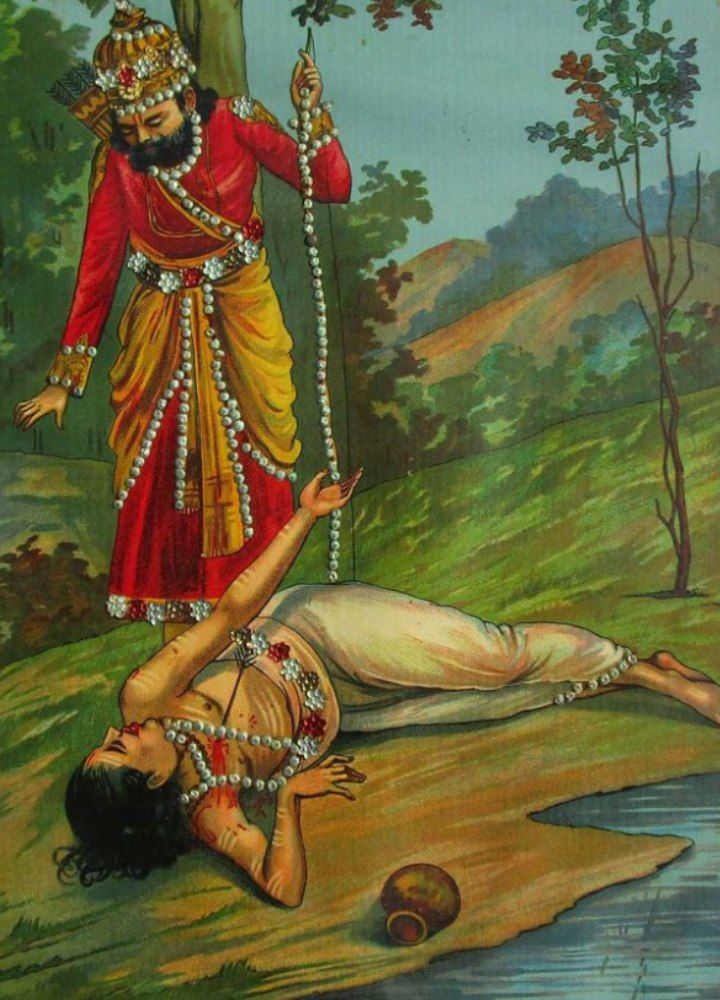
Shravan Kumar, mentioned in the ancient Hindu text Ramayana, known for his filial piety towards his parents, was killed accidentally by King Dasharatha. Shravan Kumar’s parents, Shantanu and Gyanvanti (Malaya), were hermits. They were both blind. When they became aged, Shravan wanted them to take to the four most sacred places of Hindu pilgrimage to purify the soul. Since Shravan Kumar could not afford the transport, he decided to put each parent in a basket and tie each to an end of a bamboo pole, which he would carry on his shoulder while on their pilgrimage.

According to Punjabi folklore, Shravan’s mother was distantly related to King Dhashrath as his sister. According to Ramayana, while hunting in the forest of Ayodhya, then-Prince Dashratha heard a sound near a lake and unleashed an arrow, hoping to hit an animal. When he crossed the lake to collect his kill, he found that his arrow had fatally struck a teenage boy who was bleeding. The injured boy was Shravan, who then told Dasaratha he had come to the lake to collect water for his sick and aged parents, who were both blind and whom he had been carrying on a sling. With his dying breath, Shravan requested Dashratha to take water to his parents and to tell them what happened. Shravan then succumbed to his wounds and when Dasaratha took water for his parents and told them of his tragic mistake, they were unable to bear the shock. Despite acknowledging that it was an accident, they cursed Dasaratha that he too would experience “Putrashoka” (grief due to the loss of a son). Thus Shravan’s sick and thirsty parents died without drinking water.

This curse turned out to be true when king Dashratha had to suffer the exile of his most beloved and able son Rama who had to be exiled at his own orders (it was actually his beloved wife’s wish that could not be ignored since he had himself promised her boon years back when she had saved his life). So he did it unwillingly. 

Local tradition holds that the place where Shravan died was named “Sarvan” in Unnao district of Uttar Pradesh in India, and the spot where Dashratha shot his arrow came to be known as “Sarwara” and the place where Shravan’s parents died is called “Samadha”. An old and dilapidated memorial for Shravan on the banks of the lake is now withering away. Mukhed in the Nanded district of Maharashtra has a samadhi (shrine) dedicated to Shravana. The moral of this story is always respect and care for your elders like Shravan Kumar and don’t be afraid to admit your mistakes like Dashratha.

Roadways in India

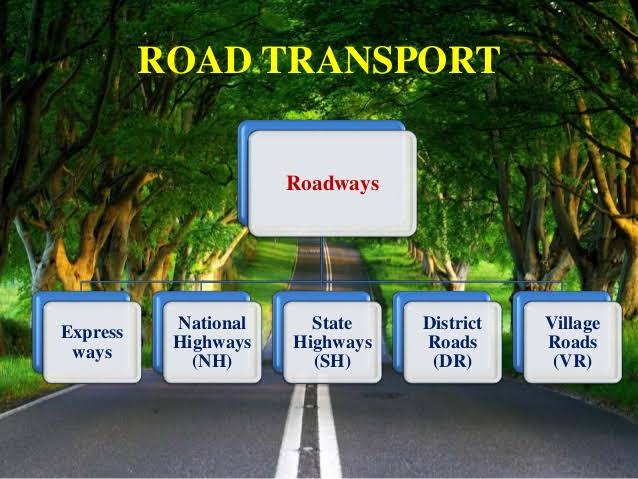
National Highway (NH)🚧🛣 :

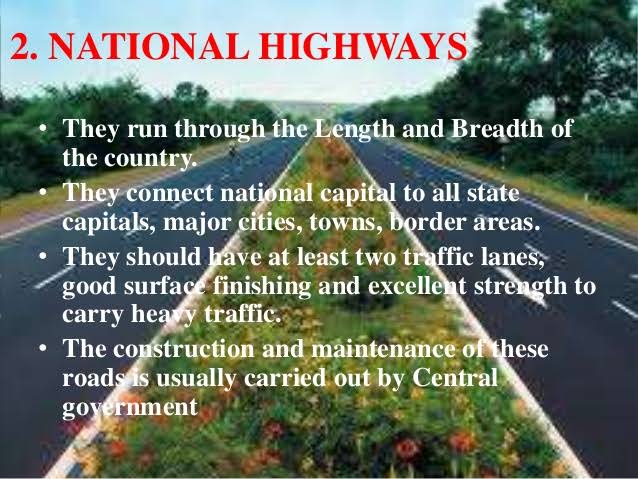
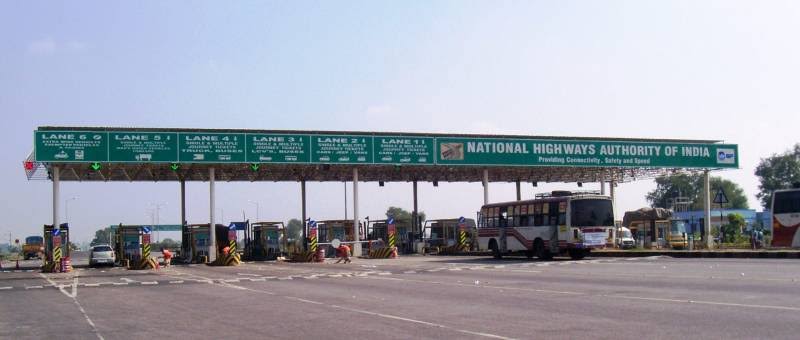
🌟National Highway form the most important system of road transportation in India.
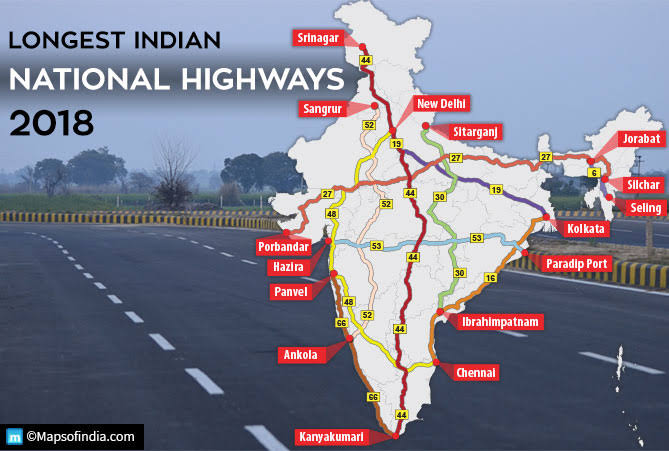
🌟These Highway are running through length and breadth of the country connecting capitals of states, major ports,raji junctions, industrial and tourist centers.
🌟Ministry of Rosd Transport and Highway of India, is responsible for the development and maintenance.
🌟The total length of the National Highway (NHs) in India is 1,01,011 km.
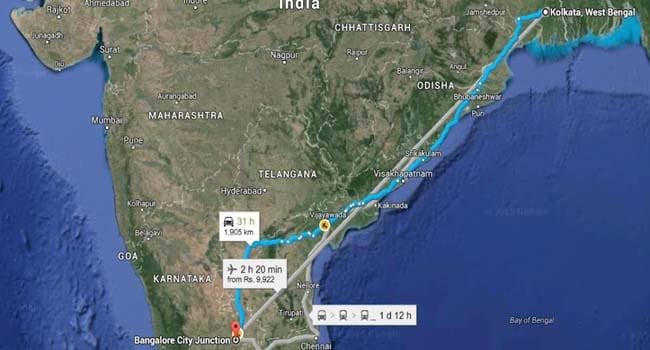
🌟The longest National Highway is NH-7 which runs from Varanasi in Uttar Pradesh to Kanyakumari in Tamil Nadu covering a distance of 2369 km.
🌟The shortest national Highway is NH-47 ,which runs from Ernakulam to Kochi port (Willington Island) covering a distance of 6 km.

State Highway🛣🚧 :

🌟The state Highway are usually roads that link important cities, towns and district headquarters within the state and connect them with National Highways or Highways of neighbouring states.
🌟These roads are administrated and financed by state governments .
🌟It runs to the length of 1,76,166 km as of 2016.

District Roads 🚧🛣:

🌟District Roads provide connectivity between the District and taluk headquarters with the state Highway and national Highway .
🌟 They are contracted and maintained by the Public Works Department of the states.
🌟The total length of the roads of his category is 5,61,940 km (16.80%) in 2016.

Rural Roads (Village Roads) 🛣🚧:

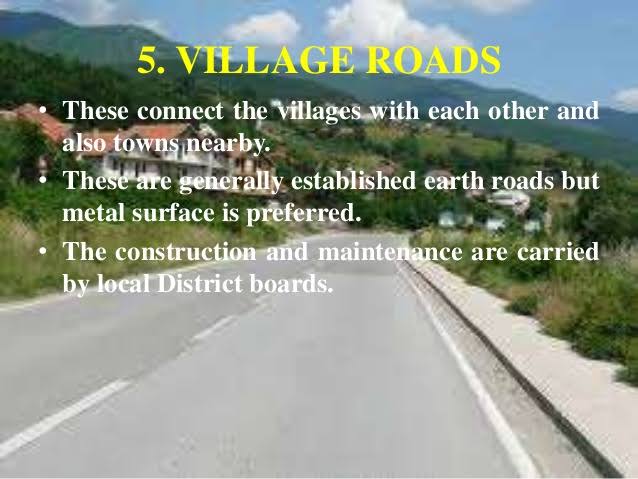
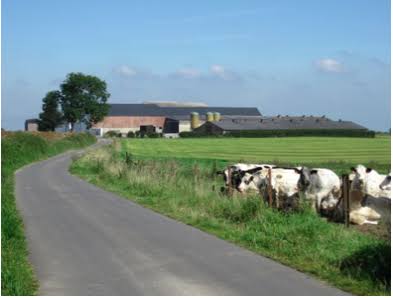
🌟These Roads are vital providing links in the Rural areas.
🌟They are maintained by the Village Panchayats .
🌟 The total length of Rural roads in India is 39,35,337 km as of 2016.
🌟Rural roads consist of Panchayat roads, of the pradhan Mantri Gram Sadak Yojana (PMGSY) and those constructed by the states PWDs.

Border Roads🚧🛣 :

🌟These are the roads of strategic importance in Border areas. They are constructed and maintained by Border Roads of Organization.
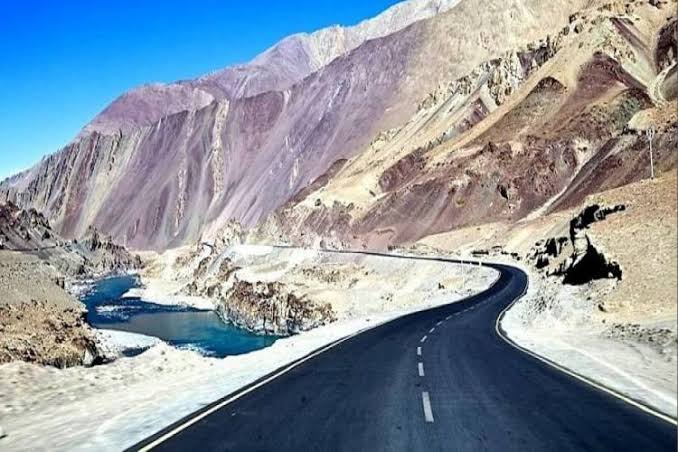
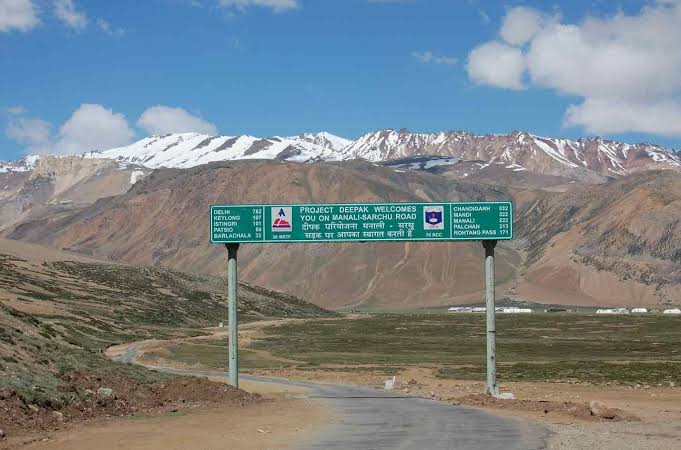
🌟Border Roads Organization are constructed world’s highest roads joining Chandigarh and Leh in Ladakh .This road runs at an average altitude of 4,270 meters.

Golden Quadrilateral 🛣🚧:

🌟5,846 km long road 4/6 lanes connecting, India’s four metropolitan cities: Delhi-Kolkatha-Chennai-mumbai-Delhi.
🌟This project was launched in 1999.

North-South and East-West corridors 🚧🛣:

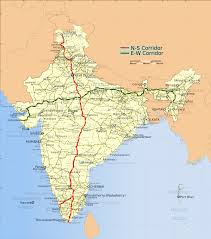
🌟North-South corridors aims at connecting srinagar in Jammu and Kashmir with Kaniyakumari in Tamilnadu (including kochi-Salem Spur) with 4,076 km long road.
🌟The East – West corridor has been planned to connect silchar in Assam with the port Town of Porbandar in Gujarat with 3,640 km of road length.
🌟The two corridors intersect at Jhansi.

Expressways 🛣🚧:

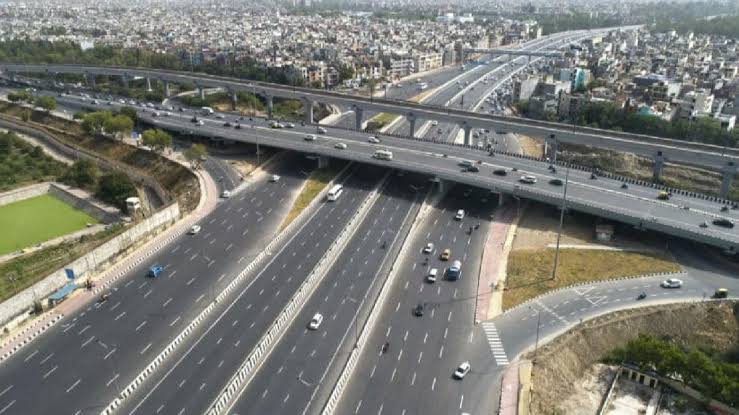
These are multi – lane good quality Highway for high speed traffic. Some of the important expressways are;

  • Mumbai – Pune road
  • Kolkata – Dumdum Airport road
  • Durgapu – Kolkata road
  • Yamuna expressways between Delhi and Agra.
  • International Highway🚧🛣:

🌟These are the roads that link India with neighbouring countries for promoting harmonious relationship with them.
🌟These Highway have been constructed with an aid from world Bank under an agreement with the Economic and Social Commission for Asia-Pacific (ESCAP).
🌟These roads connect important Highway of India with those of the neighbouring countries such as Pakistan, Nepal, Bhutan, Bangladesh and Myanmar.

The Principle Of Maximum Social Advantage. ( Meaning , Assumptions , Explanation , Theories , Limitations )


“The Principle of Public Finance means the fundamental rule by which the financial policy of the state is determined.
This fundamental rule of principle of public finance is called “The Principle of Maximum Social Advantage “

The credit for the implementation of this principle goes to Prof. Pigou and Prof. Dalton .
Just like an individual seeks to maximize his satisfaction or welfare by the use of his resources ,the state ought to maximize social advantages or benefit from the resources at its command .

According to Dalton , principle lies “at the root of public finance “.
The principles of maximum social advantage are applied to determine whether the tax or the expenditure has proved to be the optimum benefit .

He stated “The best system of public finance is that which secures the maximum social advantage from the operation which it conducts “
This principle is also called as ” Principle of Maximum Social Benefits “

Prof Pigou called this principle ” The Principle of Maximum Aggregate Welfare


Significance of the principle :-

Public revenue and public finance are two important financial operations of the state. These operations should be performed on fundamental principles so as to obtain maximum social benefit .

Prof. Hugh Dalton and Prof. Pigou were two famous economists who implemented the principle of Maximum Social Advantage to give the fundamental basis of the function performed by the state to earn revenue and to spend the revenue in the best possible way to Maximum benefit incrementation in the welfare of the public .


Prof. Dalton has expressed it in these words ,
As a result of operations of public finance ,the nature and quantity of money produced and between the categories and different persons there are many changes in the distribution of that money . The question is do these changes ; leave a profitable impact on society ? If it is so then it will be considered that the operations of public finance are justified , otherwise not .The best system of public finance is that can obtain maximum social profit by the operation organised by them .”

Therefore , the Principle of Maximum Social Advantage is the principle that guides the operation of financial activities of the government to obtain economic welfare of the society .

According to Dalton , attainment of the principle requires :-

• Public expenditure and taxation should be carried out up to certain limits i.e where marginal utility received by the Government expenditure must be equal to marginal disutility due to taxation ( government income ).

• Public expenditure should be utilised among the various uses in an optimum manner

• The different sources of taxation should be so trapped that the aggregate sacrifice entailed is the minimum .


Assumptions :-

• The public revenue consists of only taxes ( and not gifts , loans , fees ,etc.,) and the state has no surplus or deficit budgets.

•Public expenditure is subject to diminishing marginal social benefits and the taxes are subject to increasing marginal cost or disutility .


Principle Of Maximum Social Advantage:-

The Principle states that :-

The state should collect revenue and spend the money so as to maximize the welfare of the people. When the state imposes taxes, some disutility is created. On the
On the other hand, when the state spends some money, there is a gain in utility. The state should so adjust revenue and
expenditure that surplus of utility is maximised and disutility is minimised.”

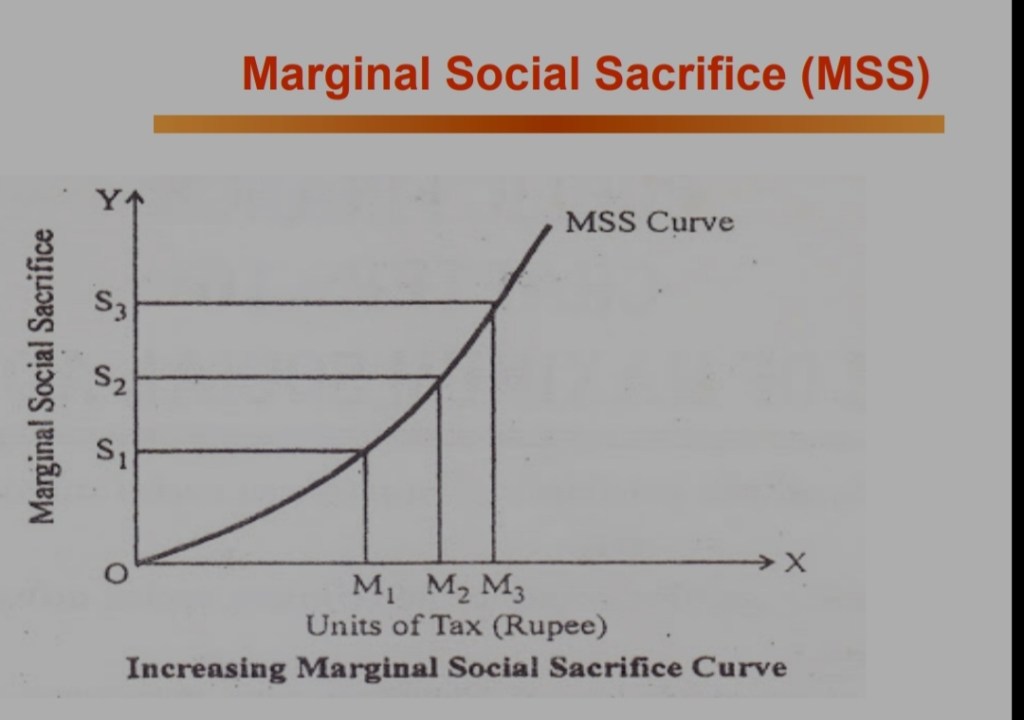
According to Dalton , “ maximum social advantage is at a point where the Marginal Social Sacrifice of Taxation ( MSS) and Marginal Social Benefit ( MSB) are equal .
The point of equality between MSS and MSB is referred to as the point of maximum social advantage or least aggregate social sacrifice .


Maximum social sacrifice of taxation :-

The amount of social sacrifice undergone by the public due to the imposition of an additional unit of tax is called Maximum Social Sacrifice of taxation .
Every unit of tax imposed by the government taxes result in loss of utility.

According to Dalton ,
“The additional burden (marginal sacrifice) resulting from additional units of taxation goes on increasing. Every additional unit of taxation creates greater amount of sacrifice on the society”


The Marginal Social Sacrifice (MSS) curve rises upwards from left to right. This indicates that with each additional unit of taxation, the level of sacrifice also increases.


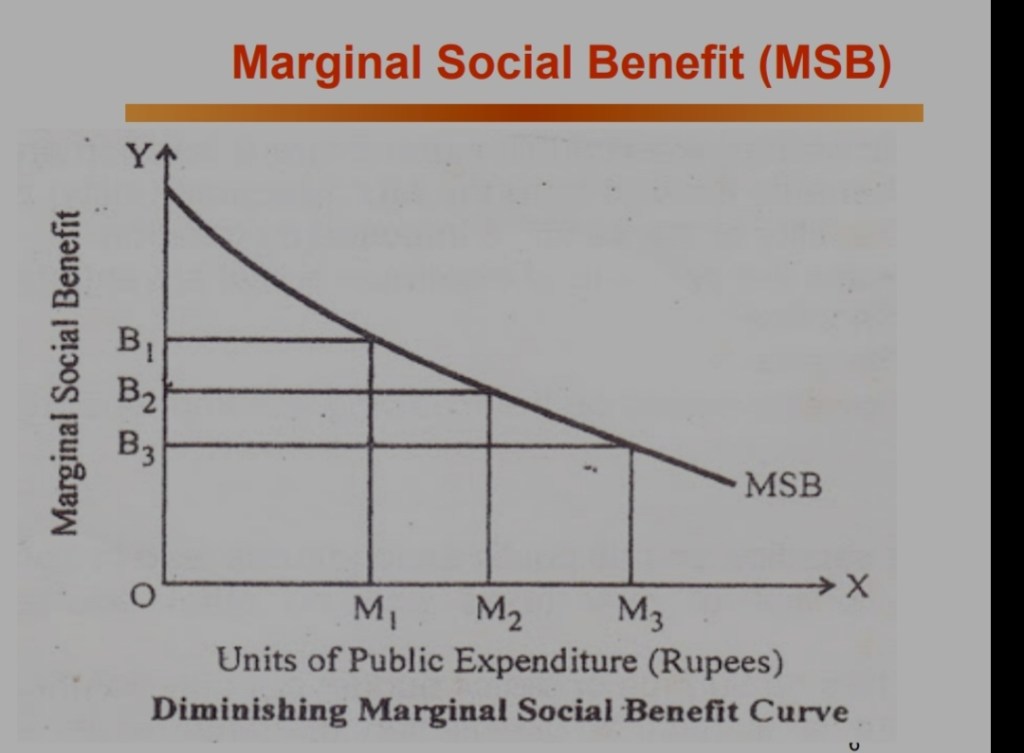
•. Marginal Social Benefit :

The benefit conferred on the society, by an additional unit of public expenditure is called the Marginal Social Benefit curve .

The social benefit from each additional unit of public expenditure declines as more and more units of public expenditure are spent. The marginal utility from commodity to a consumer declines as more and more units of the commodity are made available to him .


MSB curve slopes downward from left to right. This indicates that the social benefit derived out of public expenditure is reducing at a diminishing rate.


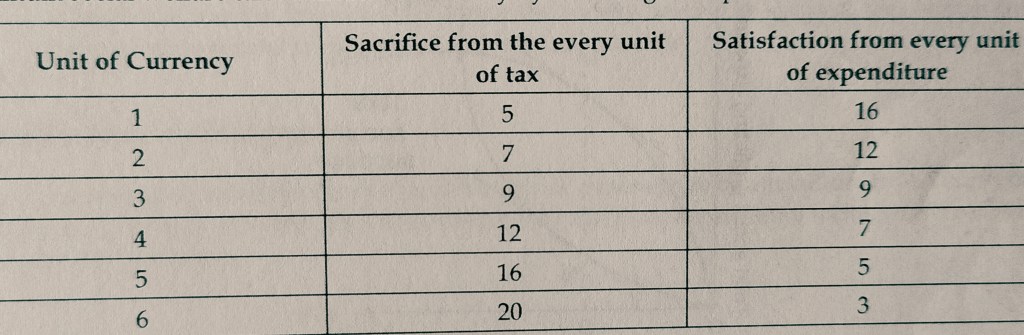
Maximum social welfare can be understood by the following example :-


Table

It can be seen in the above table that marginal sacrifice is increasing due to the increase in every unit weight of tax on society.
Inversely , from every additional unit of Government expenditure ,its utilities diminish .

On the third unit of currency , marginal social sacrifice is equal to marginal social advantage ( 9 units ) . At this point the tax and public expenditure will be fixed .

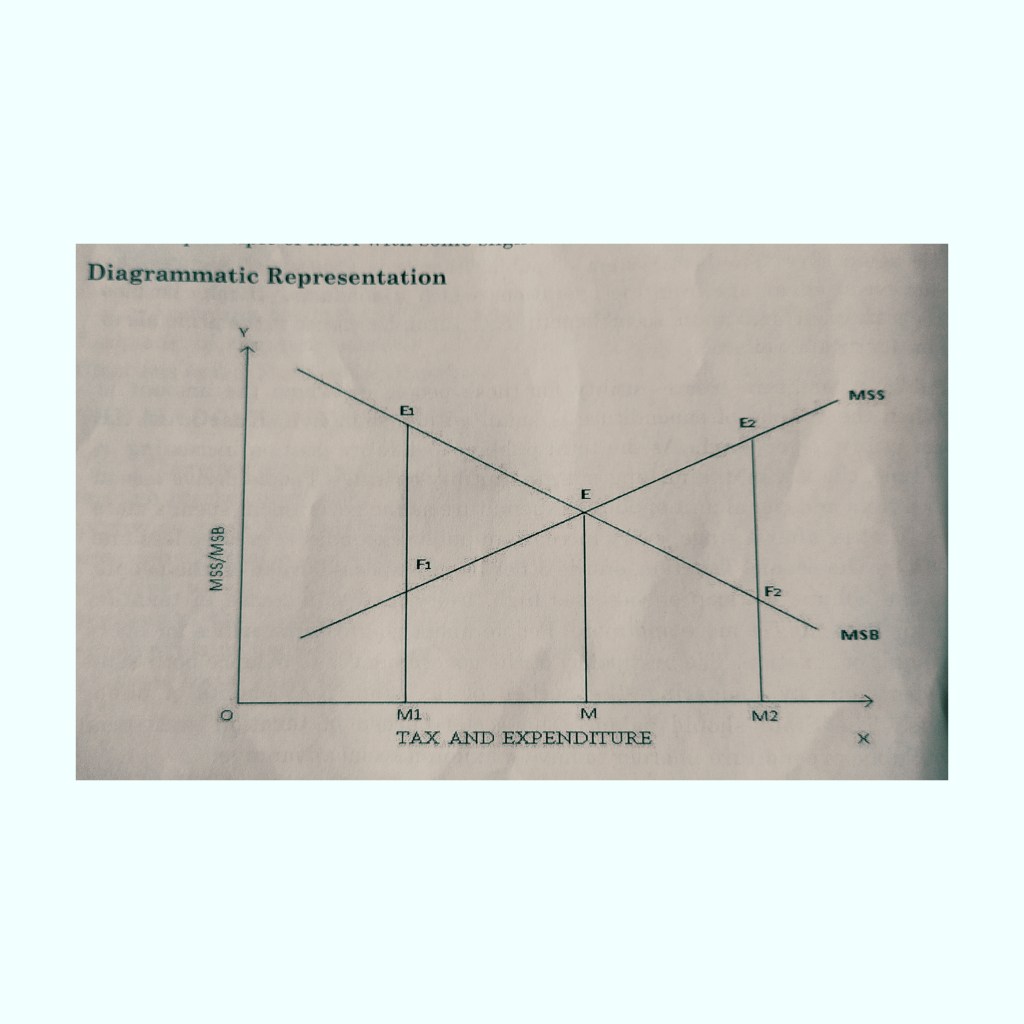
In the above given figure ,
MSS represent marginal social sacrifice of the taxation curve , slopes upward since taxation increases resulting in Increasing of MSS,.
and MSB represents the marginal social benefit of the public expenditure curve , slopes downwards showing that public benefit goes on declining with every unit increase in public expenditure.

The point E where the MSS curve intersects MSB curve , is the ideal point of financial operations where the government collects OM taxation from the society and uses it for public expenditure .


According to Dalton ,
“Public expenditure in every direction should be carried just so far that the advantage to the community of a further small increase in any direction is just counterbalanced by the disadvantage of a corresponding increase in taxation or in receipts from any other source of public income . This gives the ideal public expenditure and income.”


Musgrave’s View :-

The Principle of maximum social advantage can be explained using total sacrifice and total benefit curve as well .

Musgrave called Dalton ‘s principle as
“Maximum Welfare Principle Of Budget Determination “
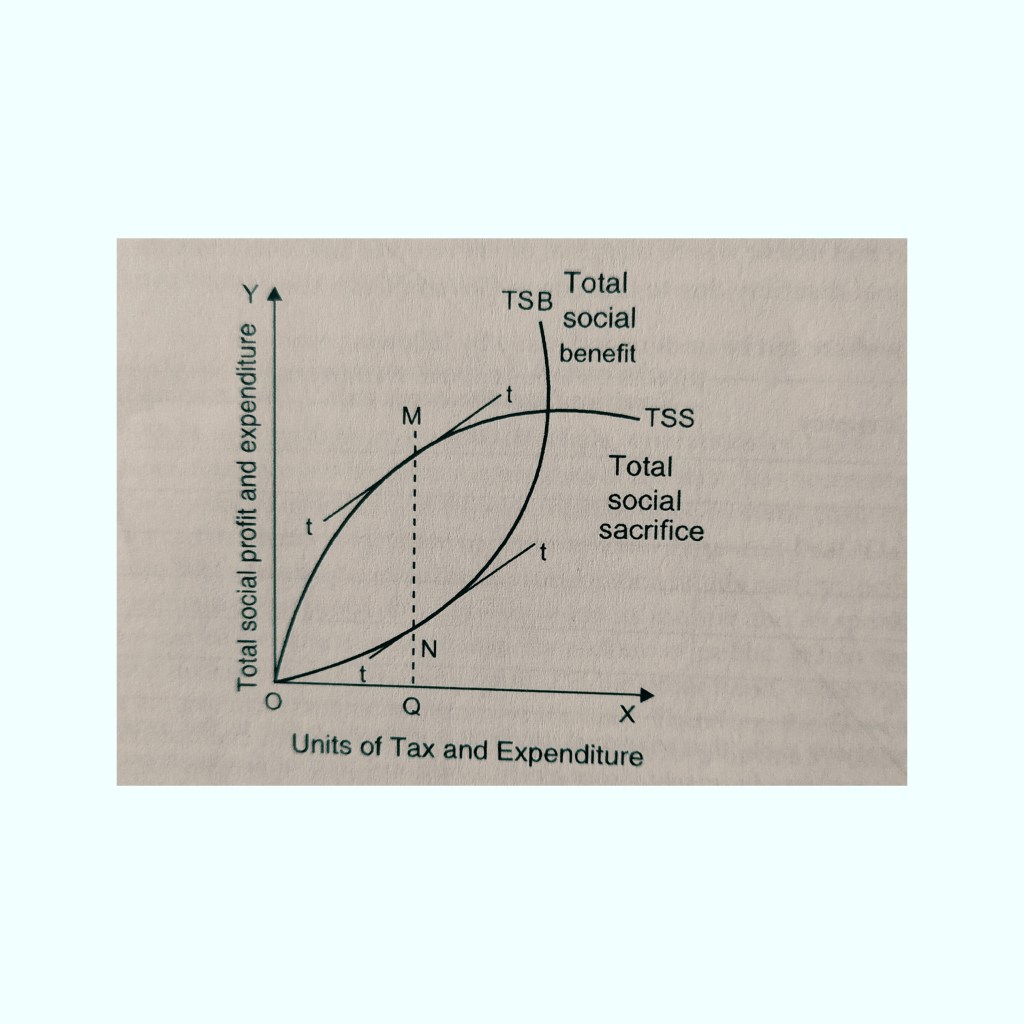
According to him , the difference between total social benefit and total social sacrifice is the net social benefit where maximum social benefit is obtainable .

The TSB curve represents total social benefit received from public expenditure which slopes upward but decreases after some time , showing that as public expenditure increases total social benefit increases .
The TSS curve represents total social sacrifice produced due to tax showing that as total social sacrifice increases with increase in amount of tax but rapidly .

Maximum social benefit will be achieved at a point where the difference between total social benefit and total social sacrifice is maximum .
MN denotes the difference between TSB and TSS showing net social benefit.


Objective Tests Of Social Advantage :-

Dalton has given the following three objective Tests which can lead to Maximum Social Advantage :-

• To preserve the Community :-
According to Dalton , the first test is the need to preserve the community against internal disorders and external attacks. The financial operations of the state to preserve the society in this manner leads to maximum social advantage .

• To increase Economic Welfare :-
Increasing the economic welfare of the community leads to maximum social advantage . According to Dalton ,this can be achieved by improvements in production and improvements in the distribution of national product ( or income ) through state’s financial operations .

• To provide for Future Generation :-
According to Dalton , the financial operations of the state should provide for the future generation . The state should prefer a larger social advantage in the future to a smaller one in the present .


Limitations of Maximum Social Advantage :-

In spite being guiding principle of financial operations of the state , the principle of maximum social advantage possesses the following limitations :-

Vague and Abstract :- The terms “benefit ” and “sacrifice ” are vague and abstract concepts. It is not possible to quantify them and find out their exact implications.


Different Areas :-
It is not possible to compare the marginal benefits accruing to people in one area from a given public expenditure with marginal sacrifice undergone by persons who are taxed in some other areas .

Lack of Divisibility :-
In order to equate the marginal benefit from public expenditure with the marginal sacrifice from taxation , the resources are required to be divided into smaller units . But it is not possible because of the lack of Divisibility of public expenditure and taxes in small units .

Ignores Non- Tax Revenues:
This principle takes into consideration the sacrifice on the part of direct tax payers and ignores Non- tax revenues like fines , fees ,market borrowing , profits of public undertaking ,etc., are equally important sources of revenue and in the effects on social benefit are as important as those of taxes.

Maintaining Balance :-
It is a difficult task for the state to maintain balance between disutility and utility produced due to imposing tax and utility obtained by people from the Government expenditure as the government is not a single person but different servants at different places in different departments .

Simultaneous Calculation not Possible :-
This principle requires simultaneous calculations and equating marginal social benefits from public expenditure and sacrifices from taxation which is not easy .
As put by Prof. Buchana , ” To match them is a function for the’ fiscal brain ”and ‘computers ‘. “

According it Dalton , despite these limitations ,the principle of maximum social advantage is “the best system of public finance “.

THE ANDAMAN AND NICOBAR ISLANDS – FAIR OF NATURE AND VIEWS 

Andaman and Nicobar Island is a union territory of India which consists of 572 islands and 38 of them are inhabited. It is at the junction of the Bay of Bengal and the Andaman Sea. Port Blair is the capital and largest city.

The territory is about three districts- the Nicobar District and its capital is Car Nicobar as its capital, the South Andaman district with Port Blair as its capital and the North and Middle Andaman district with Mayabunder as its capital.There are the Sentinelese, also known as the Sentinel, who are uncontacted tribe. 

NOW LET’S TAKE A TOUR OF THIS ISLAND BY MY ARTICLE-

The Sentinel

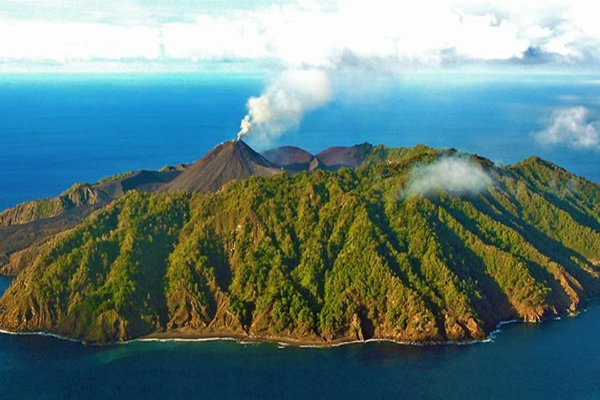
It is the place where India’s only one active volcano , Barren Island, is located, which had  last erupted in 2017. There is also a mud volcano situated in Baratang Island . In December 2018, Prime Minister Narendra Modi, renamed three of the islands as a tribute to Subhas Chandra Bose, Ross Island was renamed as Netaji Subhash Chandra Bose Islan, Neil Island as Shaheed Island, and Havelock Island as Swaraj Island.

THE TOURIST SPOTS –

There are many places to visit like – 

Andaman Nicobar Island

Havelock Island, Neil island, North Bay Island, Baratang Island, Viper Island, Ross and Smith Island, Cinque Island, Rutland Island, Mount Harriet National Park,Chidiya,Tapu,Rangat,Mayabunder,Diglipur,Aamkunj Beach,Dhaninallah Mangrove Nature Walkway/Walk,Panchavati Waterfalls,Cuthbert Beach,Cuthbert Bay Wildlife Sanctuary,Long island,Guitar Island,Merk Bay Beach,North Passage Island,Button islands,Lalaji Beach,Elephant Beach,Kalapathar,Jolly Buoy Island,Corbyn’s Cove Beach,Lamiya Bay Beach, Diglipur,Kalipur Beach,Ramnagar Beach, Neil Island,Ramnagar Beach, Diglipur,Pathi Level Beach,Alfred Caves,Little Andaman,Butler Bay Beach,Netaji Nagar Beach,Waterfalls at Little Andaman,White Surf and Whisper Wave,Little Andaman, Oil Palm Plantation,Stewart Island Beach,Rajiv Gandhi Water Sports Complex,Chatham Saw Mill,Anthropological Museum,Katchal Island,Karmatang Beach,Interview Island,Avis Island,Vijaynagar Beach,Limestone Caves of Baratang Island,Mud Volcanoes of Diglipur,The Parrot Island,Barren Island.

MOST VISITED PLACES- 

Port Blair
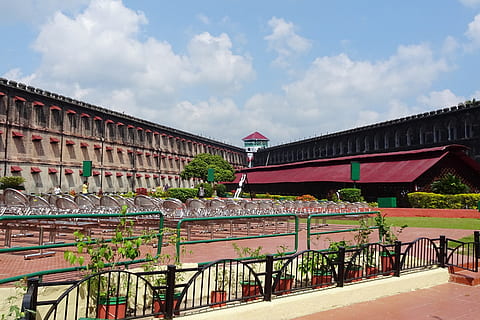
  • Port Blair- Port Blair serves as the entry point for visiting the Andaman and Nicobar Islands.The Cellular jail here is perhaps one of the most infamous remnants of India’s struggle for independence.
Havelock Island
  • Havelock Island-Havelock Island, officially Swaraj Island, is one of the largest islands.The island belongs to the Ritchie’s Archipelago and is located between Peel Island and Neill Island.
  • Baratang Island- It belongs to the North and Middle Andaman administrative district,The boat ride is covered with a canopy of the forest which is also a home to the indigenous ‘Jarawa’ tribe.The Limestone caves here will immediately gather your attention as the erosion have formed some unique shapes.
Batarang Island
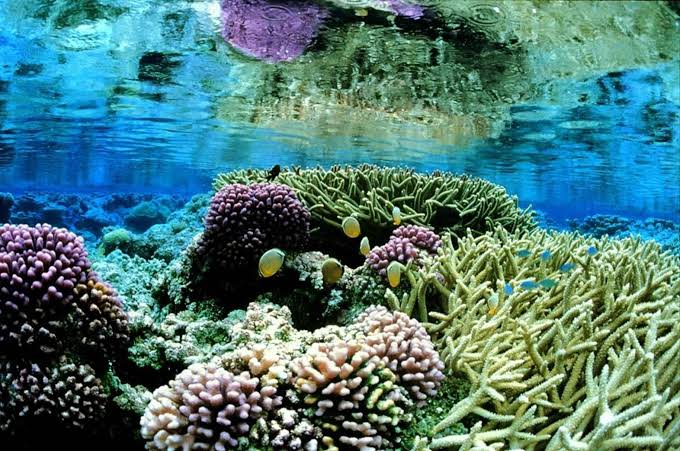
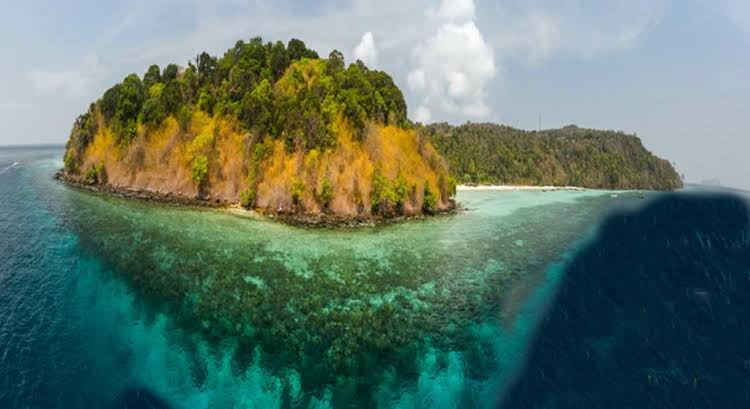
  • Neil Island- Neil Island is also known as the vegetable bowl of Andaman Islands.Because of the beauty of the reefs located here, Neil islands are often termed as the coral capital of Andaman.
Neil Island
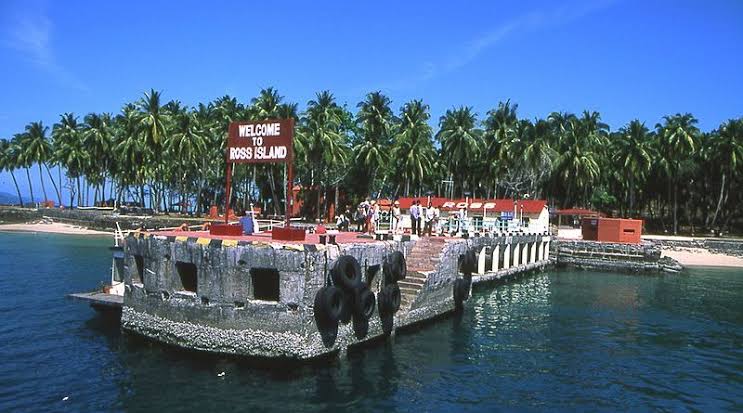
  • Ross Island- Netaji Subhas Chandra Bose Island, formerly known as Ross Island.Ross islands are famous for the ruins of Penal colony that precedes the cellular jail or the Kala pani.
Ross Island
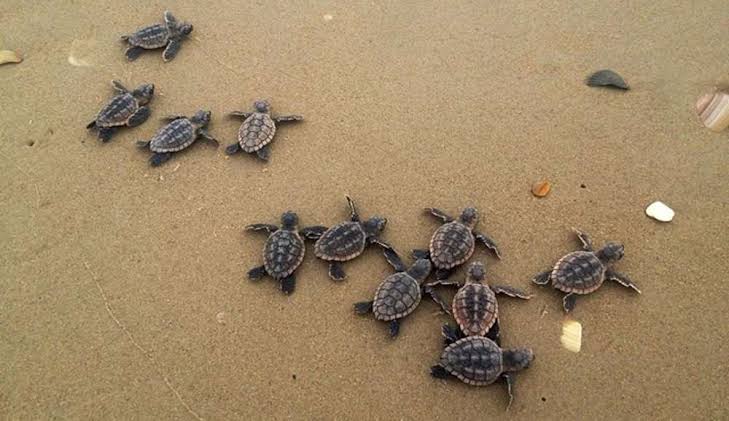
  • Rangat- It is  a town which is located on the Middle Andaman Island,The scenic beauty of Rangat is perfect for flora and fauna lovers.famous for Cuthbert Bay Beach, which is the breeding ground for turtles. These include olive ridley turtles, green sea turtles, hawksbill and leatherback turtles.
Rangat
  • The Great Nicobar Island- Great Nicobar is the southernmost and largest of the Nicobar Islands of India. It is famous for its ecological hotspot, wildlife, and nature. Main attractions are Great Nicobar Biosphere Reserve, Indira Point.
The Great Nicobar

Now it is your turn which place will be your favorite !!! 

Traditional food

Traditional food recipes from the AYUSH system of
medicine

Source: https://ayushportal.nic.in/

• India has a very rich tradition of diverse food
practices in different parts.

• AYUSH compilation of recipes- exploration of
traditional systems of eating for health and
nourishment.

• Encompasses cooking methods of some selected
traditional food items.

Patrode (Colocasia Leaf Rolls)

• A delicacy made with colocasia leaves.

• Popular in Malnad and coastal Karnataka;
prepared in Maharashtra, Goa, Himachal Pradesh,
Gujarat, and NE region.

Malnad region

• A region of Karnataka.

• covers the western and eastern slopes of the Western Ghats – 100 km in width.

• A hilly terrain under the heavy rain fall belt – annual rainfall of 1000 to 3800 mm.

• Agumbe, Shivamogga: receives highest rainfall in Karnataka (10000 mm).

• Known as Karnataka’s
Cherrapunji.

Health benefits of Patrode

• Easily digestible; rich in dietary fibres- help in easy bowel movement.

• Iron rich colocasia leaves- improving the hemoglobin.

• Colocasia leaves contain phenols, tannins, flavonoids, glycosides and sterols.
 Help in reducing chronic inflammation- rheumatoid arthritis.

• Colocasia leaves have significant amounts of vitamin C and beta carotene.

Contraindications:
 Using too much of oil- unsuitable for cardiac patients, diabetics, obese etc.
 Too much spice is not recommended in acid peptic diseases.

Book-Review

I too had a love story which is the debut novel of Ravinder Singh, which was first published in 2008 by Srishti Publishers and republished by penguin publications in the year 2012.

I just completed reading and living to this novel last week. I wanted to experience the moments with the main characters of this novel myself from the moment I thought of reading this book and all the precious reviews of peoples about this books that motivated me even more to just go start reading this book and live in this book. The day when I was just sitting alone why not go grab that book and started reading it? I went straight into my bookshelf took the book “I too had a love story by Ravinder Singh”. The first thing is that I got attractive by the book cover its so mesmerizing that even motivated me more to read that book.

THE SECOND THING IS THAT I started reading it, and it went like ’Smooth like Butter’ yeah, it is just so true.

It is about of the love story One of the best love story well every love story is special, it is a story about Ravin and Khushi, the story started with a plot which is Ravin is working in an Multinational company (MNC) for about a time he is interested in Punjabi vibes he is into Punjabi music and so on. He has few friends which were close to him, so they decided to hold a reunion with those friends only. When they met, they discussed about many things and one such thing is marriage. After the reunion got over, they all went to their respective occupation or workplace. When Ravin was just sitting there in his office he created his account in the matrimonial site and started searching for suitable brie or girl for him. After going through various calls, messages from various girls from the matrimonial site. And one day he got a message from a girl name Khushi she suited all his requirements after booking each other’s they started talking to each other. The started calling each other very often says daily every. It was the call which always ended when to call another time.

They calls went forward like talking to each other family members. After talking on calls for months. Ravin went to Delhi where Khushi lived, he must abroad for which he has to board from Delhi airport. He went there one day before so that he can spend his time with Khushi, to see her for the first time (they could not talk to each other on video calls because they were not invented back them). They meet each other along with Khushi family members. There relationship took more step forward and they were about to get engaged before engagement day Khushi meet with an accident and unfortunately after fighting really hard she died. Ravin his family members and Khushi family were both upset from this tragic loss. The end of the story is about Ravin again went to his work and informed that Khushi died in an car accident.

It was a loving heart touching story. Go read this if you haven’t read it.

https://www.flipkart.com/too-had-love-story/p/itmfc7gykqjvg84g?pid=9780143418764&lid=LSTBOK9780143418764X0CLRE&marketplace=FLIPKART&cmpid=content_book_8003060057_u_8965229628_gmc_pla&tgi=sem,1,G,11214002,u,,,395332127672,,,,c,,,,,,,&ef_id=Cj0KCQjw8vqGBhC_ARIsADMSd1A_RwFVlp0ruMaMttHzGthq5AVS22qpc2IfHytn7G2ajh6z1DBuc3UaAnS7EALw_wcB:G:s&s_kwcid=AL!739!3!395332127672!!!u!295092701166!&gclid=Cj0KCQjw8vqGBhC_ARIsADMSd1A_RwFVlp0ruMaMttHzGthq5AVS22qpc2IfHytn7G2ajh6z1DBuc3UaAnS7EALw_wcB&gclsrc=aw.ds

5 Must have plants at home

1. Tulsi

Scientific name of Tulsi is Ocimum Tenuiflorum, generally known as Basil. Tulsi contains vitamin c, vitamin k, zinc . It has anti-bacterial, anti-fungal and anti-bacterial properties. It is rich source of anti-oxidant.

Benefits :-

  • Immunity booster.
  • Reduces stress.
  • Good for skin.
  • Reduces hair fall.
  • Useful in cold and cough.

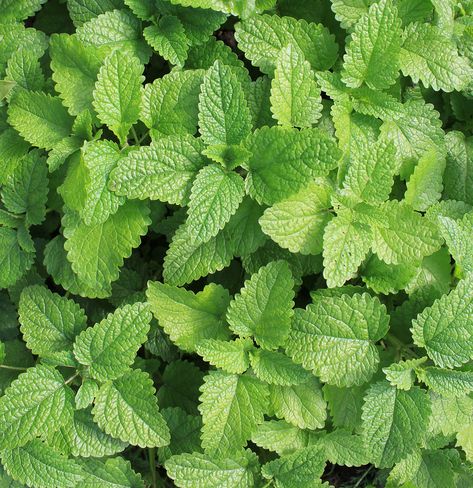
2. Mint :-

Its scientific name is Mentha and belongs to Lamiales family. It contains potassium, magnesium, calcium, iron, etc.

Benefits :-

  • Prevents Skin disease.
  • Provides relief in pain.
  • Beneficial in oral health.
  • Boost immunity.
  • Treat indigestion.

3. Alovera :-

Alovera belongs to Asphodelacea family. It contains vitamin A, C and E, anti-oxidants, salicylic acid, amino acid etc.

Benefits :-

  • Treat dandruff.
  • Treat minor burns.
  • Act as pain reliever.
  • Useful in diabetes.
  • Weight loss.

4. Marigold :-

Scientific name for Marigold is Tagetes belongs to family Asteraceae. Marigold is antipyretic, antiseptic, anti-oxidant and anti-bacterial.

Benefits :-

  • Heals skin wounds and burns.
  • Reduces eczema.
  • Good for digestion.
  • Helps in detoxification.
  • Treats ear infections.

5. Lemongrass :-

Cymbopogon is scientific name for lemongrass. It belongs to Poaceae family. It contains potassium, manganese and iron. It is source of vitamin A and vitamin C.

Benefits :-

  • Relieving anxiety.
  • Prevents infection.
  • Reduces stress.
  • Lowers Cholesterol.
  • Helps in weight loss.

Liberalization

• A relaxation of government restrictions in the areas of social, political and economic policies.

• Economic policy – lessening of government regulations and restrictions for greater
participation by private entities in order to encourage economic development.

Economic liberalization

• Initiated in 1991 .

• Goal – making the economy more market-oriented.

• Aim – Expanding the role of private and foreign investment in a manner that ensured an adequate flow of benefits to the poor .

Situation – Prior Reforms.

• Control system in the Indian Economy – rigid
and restricted entrepreneurship.
 Private sector was not allowed to invest in a number of sectors
 Imports were more strictly controlled
 Import of technology was controlled and Foreign Direct Investment was discouraged.

• 1991 reforms – P.V. Narasimha Rao-Manmohan
Singh duo Evolution of the economy .

• Full benefits took time to materialize – the final results were striking.

• Example:
 GDP growth averaged 7% – 1992 to 2017
 Average of 5% in the preceding ten years
 4% in the preceding 20 years.

• Increase in economic growth – poverty gradually began to decline.
• In-adequate recognition – Sectors like health, education and environmental concerns • Pending reforms – Areas such as labour and land.

• India’s decision – Regional Comprehensive
Economic Partnership.
 Need to enhance its competitiveness.
 Unfair competition from China – imposing
anti-dumping duties on China instead of
raising import duties across the board
 Geopolitics – reducing their dependence on
China.
 India can expect to become a major
player in non-China-dominated supply
chains.
 RCEP membership – Reassuring partners that
trade policy will not be arbitrarily changed.
• Free trade agreements – agreements with
important groups bilaterally • Requires – more give and take policy

Pandemic – collapse in employment.

• National Income – GDP contracted by 7.3% in
2020-21.

• Priority – vaccination coverage expanded as
soon as possible
 Creates conditions conducive to a return to
normalcy.

• Achieving the 2019-20 level economic recovery.

• India’s decision – Regional Comprehensive Economic Partnership.
 Need to enhance its competitiveness.
 Unfair competition from China – imposing anti-dumping duties on China instead of raising import duties across the board
 Geopolitics – reducing their dependence on China.
 India can expect to become a major player in non-China-dominated supply chains.
 RCEP membership – Reassuring partners that
trade policy will not be arbitrarily changed.
• Free trade agreements – agreements with important groups bilaterally .

• Requires – more give and take policy Pandemic – collapse in employment.

• National Income – GDP contracted by 7.3% in
2020-21.

• Priority – vaccination coverage expanded as
soon as possible
 Creates conditions conducive to a return to
normalcy.

• Achieving the 2019-20 level economic recovery.

• Analyse the grounds that caused the slowdown before the pandemic.

• Mutually supportive policies – higher growth
and higher employment with a target for post-pandemic growth.

Mark Cuban: A Biography

Mark Cuban was born on July 31st 1958 in Pittsburgh, Pennsylvania to a Jewish working-class family. From the early age of 12, he began showing entrepreneurial skills. He used to sell garbage bags going door to door to pay for shoes and clothes. In high school he earned extra money by selling stamps and old coins. To pay for his college tuition, he even started giving dance lessons.

He graduated from Indiana University in 1981 and moved to Dallas, Texas where he started his first company MicroSolutions, a computer consulting business. For 8 years, he grew MicroSolutions to become an expert in computer networking. In 1990, he sold the company for $6 million. This was also the time when the internet was gaining traction. Sensing that it was going to become the next big thing, he and his friend Todd Wagner started the internet company Broadcast.com. Broadcast.com let people across the globe listen to basketball games. The comapny was a huge success and was soon sold to Yahoo for $5.6 billion.

Cuban always wanted to be a part of professional sports. So, in 2000 he bought the NBA team, Dallas Mavericks for about $300 million. The Mavericks however, were not really a winning team. Cuban planned to turn this around. He sacked many of the old staff, built a new stadium and always supported his players. He sat courtside for many games and cheered for his team, which was rare for a team owner to do. In 2011, the Mavericks finally won their first NBA championship thanks to their star player Dirk Nowitzki.

In 2011 he also appeared in the reality TV show Shark Tank and has invested in over a hundered companies as of 2020. His net worth today is a whopping $4.5 billion and has made the Forbes list of Top billionaires of the world. He currently resides in Dallas with his wife and 3 children.