Self-motivation won’t last long, especially if it’s an empty one

This thought first crossed my mind when I was writing a letter to one of the stranger penpals that I met online (Although I left it long back). After putting this thought into words and re-reading it again, I realized how sound this phrase was and how accurately it represented what I lacked and what I had.

For all my life I’ve been too focused on productivity, change, and self-improvement so much so that often I ended up exhausting myself while trying to fulfill any of them. As I saw the people around me go through the ‘self-growth’ phase, I always downplayed my own self. I compared their self-growth with my own only to further degrade myself for not possessing enough ‘passion’ or ‘dedication’ to make anything work. Whatever little efforts I put in self-improvement always ended up as failures for they were driven by empty self-motivation. Be it daily work-out or developing a new habit or improving a previous habit, none of them were ever achieved.

Surprisingly, I have also found a link to this exact issue. This one came to me through one of the conversations that took place between my mom and brother. My brother stated that “When our needs increase, we ourselves start taking responsibilities.” After pondering upon this for long I found a path to my own problem. ‘To put myself in situations where I am forced to take responsibilities.’

As a person for whom self-motivation doesn’t last long but for whom deadlines and responsibilities make me work hard as hell, I realized that what I needed was not self-motivation or a human nagging at me to do work but a situation where I am endowed with responsibility. I thought if I can’t take responsibility on my own then putting myself in a situation where I am forced to take responsibility would force me to change. To explain this approach to you I’d take the example of school. When you are a student, the rules of the school make you take responsibility such as doing your assignments, being punctual, etc. By being in this system of school we have definitely changed from whom we initially were.

I know it’s easier said than done, but I think this is much easier than an empty self-motivation. And I can say this because I have tried it. One of the jobs that I got was less with the mindset of money and more with the mindset of responsibility. The only first step that I needed to do was force myself into the situation of a job interview. That’s it. What followed after that were the responsibilities linked with the job and my dedication to fulfill those responsibilities.

But what’s important to note is that you can’t rashly force yourself in any situation. It is important that you choose the situation carefully. Choose a situation and assess how it will help you change the things you want to change by forcing responsibilities upon you. But don’t let the responsibilities be a big burden. Just like this internship which I decided to put myself into, I am now dedicated to fulfilling the tasks of writings almost daily. Thereby, growing not only in terms of self-improvement but also improving my skills of writing. After all, practice makes perfect 🙂


Bridal Mysticism Across Religions

Photo by Arina Krasnikova on Pexels.com

Mysticism is a word derived from the Greek word ‘Mysticos’ which refers to the belief that a person has the potential to achieve oneness with the god. Spirituality and mystics have been around for a long time. It’s a part of humanity that defines a diviner affinity to the belief that God is watching over us and our ultimate goal in this life is to achieve oneness with God. Over the years, there have been several religions that have emerged all over the world, but one of the key differences that separates a spiritual mystic from the others is the fact that they have the tendency to break away from tradition and hence, other forms of religious practices which were considered the norm.

I watch the clouds rupture.
Mira says, nothing can harm him.
This passion has yet
to be slaked.
-Mirabai (Clouds)

A mystic might take on any sort of relationship with the God and it is not restricted to the traditional hierarchical relationship where God is the supreme force who rules over the devotees. The devotees might choose friendship, teacher-student bond, familial bonding or even romantic companionship with their God. Thus, the concept of Bridal mysticism isn’t a new one. It has been around for several ages and is a true form of devotion where a devotee loves their god as they would love their beloved.

Let him kiss me with the kisses of his mouth! For your love is more delightful than wine.
-Song of Solomon (1:2)

The mode of bridal mysticism is so unique, for it negates all the humane all the societal constraints that denies sexuality to women. Bridal Mysticism has no such earthly constraints, it celebrates and even glorifies the bodily union between a devotee and their god, for sexual union is considered to be one of the divinest methods of indicating oneness with God. In this relationship, it is not just the devotee who expresses love, they also understand that their God loves them similarly, just as passionately.  The love that persists between the devotee and the heavenly one is pure and true.

If I adore You out of fear of Hell, burn me in Hell!
If I adore you out of desire for Paradise,
Lock me out of Paradise.
But if I adore you for Yourself alone,
Do not deny to me Your eternal beauty.”
-Rabia Al Basri

Bridal mysticism is a practice that can be seen all over the world across all religions. In Christianity, the most explicit, yet the purest form of Bridal mysticism can be found in ‘Songs of Solomon’; a collection of love poems that has been included in the first testament. In it, two lovers go through a series of events that includes periods of blissful union as well as separation. It has been interpreted in several ways over the years, but the love that is cherished between the lover and her beloved is pure. In Hinduism, we see clear indications of Bridal mysticism in the poems of Mirabai from northern India and Antal from southern India. Both of the women adored and loved the Hindu God Lord Krishna. Like any couples, they express their love, grief, jealousy and fiery passion to their beloved God and relish in the devotion that flows through them. In Islam, the Sufi mystics are known for their poetic works which are brimmed with their love for God. Sufi saints like Rabia spoke of a divine selfless love for God which criticised those who loved God out of fear.

Bridal mysticism is also not gender specific. There are numerous instances of devotees from all genders expressing a romantic love, despite the conventional norms. Bridal Mysticism is thus one of the purest forms of devotion that solidifies the bond between a God and their devotee.

Parents

Growing up, our relationship with our parents is less complex. They are the first best friends that we have. We talk to them about everything, and they listen to us. We look up to them and want to be like them when we grow up.

 But after growing up, we realize our parents are not perfect. They make mistakes too. Well, that is not a bad thing because nobody is perfect. A lot of us then stay angry at our parents for being normal humans. We blame them for everything without realizing that they have a life of their own. Yes, we are their children, and they love us. But that does not mean they should stop living their lives. Our parents provide us with necessities, and they work hard to do it. They sacrifice their dreams to fulfill ours. But a lot of us do not give them the respect or the credit that we should. 

Growing up, parents would appreciate us for every small achievement. Now they don’t say much. We can sense they are happy but have trouble expressing it. We need to understand that it is hard for parents to express their feelings of love towards us once we grow up. It is mainly because their parents were not so expressive towards them.

Here are a few ways that can help fix your relationship with your parents:

If parents have trouble expressing their love, we can express it to them instead. If we can tell our friends, we love them on a daily basis. So, why not do the same with the people raising us?

Communication is the key to fix all relationships. We all get a gap in our relationship with our parents. That gap can only be erased by communicating with them.

Keeping the generation gap aside. We often get distant from our parents because they don’t approve of a few things. But, for that we need to understand where they are coming from. They are trying to accept our generation, but there will still be a few things they will not approve of. Instead of hating on them for it, we need to start understanding them.

We need to understand that they care for us. We sometimes tend to disagree with our parents but agree with our friends if they say the same thing. We need to understand that our parents care more about us than our friends ever would.

We all need to build a deeper relationship with our parents. We need to ask them about their day and tell them about ours. If they accept us with our flaws, we need to do the same with them. I know my parents don’t agree on a few things with me. Which is fine. It doesn’t have to come in the way of our relationship. We all have our ups and downs. Our relationship with our parents will only work when we are willing to make it work.

We say parents don’t understand us.

But do we understand them?

HYMENOPTERA

Classification

Kingdom: Animalia 

  Phylum : Arthropoda 

    Class: Insecta (Endopterygota) 

      Sub-class : Pterygota 

         Order:Hymnoptera 

Hymenoptera

Hymenoptera means membrane wings. 

One of the largest insect order. 

Size range – 0.21nm(0.008inch)-5cm(2inch) in length. 

Usually 4 membranous wings

  • Forewing and hindwing are held together by small hook. 
  • Hind pair smaller than front pair

Complete metamorphosis (Holometabolous).

Mouthparts modified for chewing and sucking

In some form especially bees, certain Mouthparts (labium and maxillae) form a structure for sucking liquid food. 

Antennae usually with 10 or more segment. 

Larvae usually maggot like(i.e. Leg less) 

Large compound eyes, usually 3 simple eyes(ocelli) present. 

Females typically have a special ovipositor for inserting eggs into host or places that are otherwise inaccessible.

Most have constriction between the first 2 segment of the abdomen which is known as a wasp waist. 

Worldwide there are over 100,000 species included in the Hymenoptera. 

In Australia, there are about 1275 ant, 10,000 wasp, 2000 bee and 176 sawfly species.

Habitat

Found in all terrestrial habitat throughout Australia. 

May occur in soil, leaf litter and range of vegetation types especially flowers. 

Life Cycle

Some female produce young one without mating, while other can store sperms and spread out their egg laying to coincide with available food. 

Most species lay their egg to the host plant or paralysed food sources they have gathered into specially constructed nest. 

The Larvae will moult several times before they pupate.

Development may range from a few weeks for some parasitoid to much longer in social species. 

Feeding Habit

Feed on a wide range of foods depending on the species. 

Adult wasp mostly feed on nectar and honeydew. 

Some species are predator or parasites and spend their time searching out invertebrate hosts to lay their eggs on. 

Some are predator, scavenger, omnivores, seedeaters, fungus feeders or honeydew feeders

Suborder of hymenoptera :

1)  Symphyta(sawflies and horntails) 

2)Apocrita(ants, bees and wasps) 

Symphyta :(sawflies)

Most primitive Hymenoptera 

Have a broad junction between thorax and abdomen. 

Body has no waist. 

Paraphyletic group 

Females have a saw-like egg laying device for cutting slits in plants into which eggs are laid. 

Larvae are caterpillar-like and feed on outside and inside of plant tissue.

There are one or two parasitic families

lack of constriction at the base of the abdomen

 fly-like appearance and more extensive wing venation. 

They are often confused with lepidopteron larvae but it include–six or more pair of abdominal prolegs(which lack chrochet ), one lateral ocellus on each side of head. 

Apocrita :(wasps,bees,ants)

The body has a distinct waist. 

The first segment of the abdomen is incorporated into the thorax. A narrow region called the petiole joins this to the rest of the abdomen, called the gaster.

Characterized by Larvae that feed on other Arthropods. 

The larvae are maggotlike.

Have narrow junction between thorax and abdomen. 

Contain largest no. of species. 

Node is usually present. 

Further divided into:- Terebrantia(parasitica) which use their ovipositor for egg laying and the Aculeata, which have the ovipositor modified as a sting. 

Reference

australian.museum

ento.csiro.au

Projects.ncsu.edu

tolweb.org

britannica.com 

Descriptive Writing

My Dreamhouse

Those big architectural windows blow me out with the air whenever I think about it. The sunshine touching the hair in the early morning descends to the feet as the day grows off. My dreamhouse is quite big and beautiful with a garden marking its boundaries. The adorable flowers at the entrance gate elate my visitors. The fragrance they shower off in that small place complements their colourful petals. Some trees are tall and thick while some are newly planted. The biggest of them all holds a small treehouse apt to keep my secret things. Moving on, there’s a pavement on the doorstep of the house with a welcome board.

The tour of the house now starts inside that door. Wooden furniture are the main highlight of my dreamhouse besides the open, airy windows. The hall bears a bouncy couch and table with a glass flower pot along with a dining set for six at the front of the kitchen. The kitchen has a well-settled chimney as a centre of attraction. There is always some extra space in the kitchen for new items. The walls are beautifully designed along with fascinating sculptures on the roof boundary.

Photo by Marta Dzedyshko on Pexels.com

Next comes the staircase which leads to the bedroom and guest room area. The stairs are covered with red carpets to make them look traditional and classy. The width is not much since they are attached at the corner of the hall. The hall is big but to keep it spacious and relaxing to look, everything is arranged at its minimum.

The staircase takes a turn to make us reach the first floor having a bedroom, a guest room and a servant quarter at the corner. The bedroom is the biggest, of-course. It is majorly pink coloured with beautiful prints representing nature. There’s a piano-set besides a bed and a wooden almirah in the room. The lamp aside the bed belongs to antique items. It is muddy yellow in colour and gives a pleasant look to the room at night. There’s a round carpet on the floor between the bed and the piano-set. There are a total of 3 windows among which one is the biggest and right beside the piano- set. It gives immense peace to play it there with open window. There is a study table too at the corner of the room- small and stuffed with books and magazines. The lamp at the study table is small and a modern type. The bathroom attached with the bedroom has also been kept modern style having blue walls with pictures of whales and ships.

The accompanying is the guest room, little smaller than the bedroom but remarkably spacious. It consists only a bed , an almirah, a sofa set and glass table. It too has a big window allowing abundant of sunlight to pass through in the morning. The speciality lies in the location of the house too, every window fetches the most of the sunlight to the house making it irrelevant to turn on lights during the day. The curtains need to be heavy since it becomes too hot in the summer. The servant quarter is comparatively small; approximately the size as of store room attached to the hall on the ground floor. It is however, convenient to stay there. It too includes a bed but relatively small, a table, a sofa, an almirah and attached with it is the washroom.

Next floor is build with terrace which is wide, and cold during winters. It is fenced at two edges with strong grills made of stones. The other two edges are joined via walls to other two houses in the neighbour. The view is wide and serene from the terrace. The designer table and chairs are specially placed to have a cup of tea under the beautiful sky whenever it feels like. The garden too is visible to an extent from the terrace. The chimney installed in the kitchen opens up at the top on the terrace.

The larger windows of the hall and the bedroom hold a wing chain each with different sounds knocking softly at the ears during a pleasant weather. It is therefore a good place for writers and poets to put up. The house in itself is a glory and has a lot to write about. This dreamhouse can be the best to reside in- neither too big nor too congested. Its beauty lies in how spacious and a mixture of traditional and modern architect it is!

IMPACT OF PANDEMIC ON INDIA’S ECONOMY

The COVID-19 pandemic continues to adversely impact lives, livelihoods, and the economy in India, with a devastating second wave wreaking havoc even as the threat of a third wave looms large. Rising uncertainty has reduced consumer and business confidence. This follows an economic slowdown during the three years preceding the pandemic. With investments and trade performance weak, the Indian economy was firing mainly on consumption, which the first and second waves of the pandemic have hit badly.

Renewed restrictions to curb the current coronavirus wave have stalled economic activity, leaving many millions out of work and pushing economists – who have broadly been bullish – to downgrade their views for the second time since early April

India’s unemployment rate soared to a near one-year-high of 14.73% in the week ending May 23, according to the Center for Monitoring Indian Economy (CMIE), reflecting the impact of the economic slowdown.

The Reserve Bank of India has kept its monetary policy loose, including several liquidity measures, and was expected to stay on an easy course for this fiscal year.

While calls have increased for more fiscal stimulus to speed up the economic healing, the government has limited space to respond to challenges posed by the health crisis.

“If the Indian government increases spending … it will probably prevent a loss in economic output in the short term, but this simultaneously puts more pressure on the sustainability of debt in the longer term, essentially mortgaging their future,” said Rabobank’s Eijkelenburg.

“India’s policymakers find themselves between a rock and a hard place when it comes to decisions on additional fiscal stimulus.”

Experts expressed apprehensions about the emergence of new and more virulent strains of the novel coronavirus, which might necessitate the re-imposition of lockdowns across the country, leading to a further (and possibly dramatic) reduction in growth estimates and adding to dampening demand. Complicating matters further is the fact that, as one economist noted, it is not known how consumers and households will react following the end of the second wave: How would household savings be impacted? Will consumers be reticent about spending again?

India’s already stressed banking sector, which is saddled with legacy non-performing assets, remains of concern. Experts fear a fresh wave of bankruptcies that add stress to the books of commercial banks, and that loan repayment schedules could be further delayed. India’s non-banking financial sector – which has traditionally lent to small and medium enterprises likely to be most affected by first and second wave lockdowns – could also contribute to the stress on the banks that lend to them. Similar fears hold about how pressure on microfinance institutions could systemically affect the banking sector.

SMARTPHONE ADDICTION.

smartphone addiction is generally known as nomophobia and is often caused by an internet addiction disorder after all it realise the Phone or tablet itself that creates the comparision why you spend more time on social media for playing games then you do interacting with real people are you cannot stop yourself from repeatedly checking text email or applications.Cell phones have become search powerful and versatile toll that for many people they fear me indispensable literally. For many people social interaction stimulates the the release of dopamine. Because so many people use their phones as tool of social interactions they become accustomed to constantly checking them all social media for that of dopamine that’s released when they connect with others or some other applications. Some applications even with old and release social reinforcements such as likes and comments so we received them in an unpredictable pattern that cycle can lead to a tipping point when your phone seizes to be something you were virtually compressed to use.

Conscious use of phones in dangerous situations or in prohibited context like while driving or excussive phone use controntations as well as loss of interestIn Aadarsh and activities containing the behaviour. The negative effect aap smartphone addiction sar it causes excussive use urgency noticeable physical mental work social for family disturbance chronic impulsiveness to check your device frequent and constant checking of phone is very brief period of time crossing insomnia and sleep disturbance. Increase in use to achieve satisfaction or relaxation or to counteract a dysphoric mood excessive use urgency need to be connected need to respond immediately to messages anxiety irritability if cellphones is not accessible extravests reported using the phone more as a mean of stimulation extravests and disagreeable. Spend more time configuring their phones some of the negative impact on your life due to smartphone addiction can be ee your life can I have addiction of smartphone increasing loneliness and depression while it may seem that losing yourself online while temporally make feeling such as depression and boredom evaporate into thin air it can actually make you feel even worse feeling and city is one of the most negative impact created by the smartphone in which the presence of the phone in a workplace tend to make more and society e and perform poorly on given task increasing in stress using smartphone for work off and mains work blends into your home and personal life you feel the presence to always be on never out of touch from work exacerbating attention defect disorder the constant stream of messages and information from a smartphone can over whelm the brain and make it impossible to focus attention dimension your ability to concentrate and think deeply are creatively instead fo ever being alone Vidyarthi thoughts where now always online and connectivity disturbance your sleep it can impact your memory affect your ability to think clearly and reduce your cognitive and learning skill encouraging self absorption snapping endless selfies posting all your thoughts and details about your life can create an unhealthy self-centeredness disturbing you from real life relationships and making it are to cope with stress addiction like compulsive gambling which may include loss of control over the behaviour presistence arriving real difficulty limiting the behaviour tolerance the need to engage in the behaviour more often to get the same feeling.

Some of the negative impact of smartphone addiction consequences teaming from the behaviour withdrawal or feeling of irritability and anxiety depression being highly extroverted relationship stress eye strain neck pain social anxiety escapist behaviour. Dependence on digital violence the neurotic disagreeable unconscionable and extroverted personality e-type up spend more time texting and engaging in mobile .

SUNDER LAL BAHUGUNA- THE MAN BEHIND CHIPKO MOVEMENT

Born in 1927 in Tehri district in what is now Uttarakhand, Bahuguna grew up surrounded by sal, oak and fir trees and sweeping pasture lands. Bahuguna, who died with Covid-19 on Thursday aged 94, was known the world over as the man who taught Indians to hug trees to protect the environment. He was one of the main leaders of the Chipko movement in northern India in the 1970s. In Hindi, chipko literally means “hugging”.

A devastating flood in Uttarakhand in 1970 had come as a rude awakening for villagers. Three years later, Bahuguna and fellow activists began embracing trees. Young men took an oath in blood to protect nature.Very soon, women in the Himalayas became an integral part of the movement too, embracing trees and tying rakhis – a symbolic red thread tied around a brother’s wrist during the Hindu festival of Raksha Bandhan – onto the bark of trees. They walked in the snow and took away tools from loggers to stop felling.

Bahuguna, who grew up in the Himalayas, connected the dots well. He wrote that deforestation led to erosion of fertile land and pushed the men out of the villages to look for jobs in cities.

This left women to “bear all the responsibilities of collecting fodder, firewood and water, apart from farming”. Not surprisingly, the Chipko movement became an important milestone in the fight to secure women’s rights.

Over the years, Bahuguna, with his flowing beard and trademark bandana, went from strength to strength. College students and women joined him in greater numbers. They staged peaceful demonstrations, hugged trees and went on fasts.

It yielded results: a fast in 1981 led to a 15-year ban on commercial felling of trees in Uttarakahand. Two years later, he marched 4,000km (2,500 miles) in the Himalayas to draw attention to environmental degradation.

In 1992 he shaved his head and went on a fast to protest at the Tehri dam, India’s tallest. He was among those who lost their ancestral homes due to its construction.

Bahuguna was a charismatic ascetic, a spartan man of Gandhian principles. He lived in a small ashram, denounced violence and was essentially non-political. He believed in self-reliance and not in “so much foreign trade”. He despised materialism.

To become energy secure in a “non-violent and permanent society”, he said, India needed to produce biogas from human waste, harvest solar and wind energy and hydro power from the run of the river. Improve machines so they consume less energy, he suggested.

THYROID

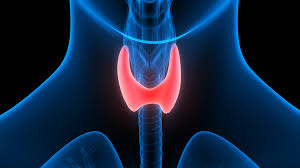
The Thyroid or Thyroid Gland is an endocrine gland in vertebrates. In humans it is in the neck and consists of two connected lobes. The lower two thirds of the lobes are connected by a thin band of tissue called the thyroid isthmus. The thyroid is located at the front of the neck, below the Adam’s apple. The functional unit of the thyroid gland is the spherical thyroid follicle, lined with follicular cells(thyrocytes), and occasional parafollicular cells that surrounds a lumen containing colloid. The thyroid gland secretes three hormones- triiodothyronine(T3) and thyroxine(T4), a peptide hormone- calcitonin.

The thyroid hormone influences the metabolic rate, protein synthesis and in children- growth and development. Calcitonin plays a role in calcium homeostasis. Secretion of the two thyroid hormones is regulated by thyroid-stimulating hormone(TSH) which is secreted from the anterior pituitary gland.

When the thyroid doesn’t work properly, it can impact our entire body. If our body makes too much thyroid hormone, this can develop a condition called Hyperthyroidism. If our body makes too little thyroid hormone, it is called Hypothyroidism. Both the conditions are serious and needs a proper treatment.

WHO CAN BE AFFECTED BY THYROID DISEASE?

This disease can affect anyone be it men, women, infants, teenagers and the elderly. It can be present at birth(typically hypothyroidism) and it can develop as the person age(often after menopause in women). Thyroid disease has become a very common disease. A woman is about five to eight times more likely to be diagnosed with a thyroid condition than a man.

A person may be at a higher risk of developing this disease if he/she:-

  • has a family history of thyroid disease.
  • has a medical condition, such as type 1 diabetes, Rheumatoid arthritis etc.
  • taking a medicine higher in iodine content.

SYMPTOMS OF THYROID DISEASE

Symptoms of an overactive thyroid(hyperthyroidism) include:-

  • experiencing anxiety, irritability and nervousness.
  • having trouble sleeping.
  • losing weight.
  • having an enlarged thyroid gland or goiter.
  • having muscle weakness and tremors.
  • experiencing irregular menstrual periods.
  • feelings sensitive to heat.
  • having vision problems.

Symptoms of an underactive thyroid(hypothyroidism) include:-

  • feeling tired.
  • gaining weight.
  • experiencing forgetfulness.
  • having frequent and heavy menstrual periods.
  • having dry and coarse hair.
  • having hoarse voice.
  • experiencing intolerance to cold temperatures.

GENDER AND SEXUAL EQUALITY

Gender refers to the widely shared set of expectations and norms linked to how women and men, and girls and boys, should behave. Unlike ‘sex’ which refers to the biological and physiological characteristics that define men and women, gender refers to the socially constructed roles, behaviours, activities, and attributes that are assigned to men and women in any given society. These expectations are are not fixed but are continually being constructed and reinforced through social relationships and economic and political power dynamics.

It is commonly assumed that your gender is determined by your biological sex. You are masculine because you are male, for example. The separation of gender and sex is most apparent in the experience of people who feel that their ascribed gender-identity is not aligned with their biological sex. Those people, who may identify as transgender, some will opt to change their biological sex while others may change their gender-identity but not their sex. The sexual orientation of those whose gender identity does not match their biological sex is not self-evident. Biological males who live as females may be attracted to males, females or other trans individuals. This is evident, for example, among travestis In Brazil, as Mountian observes in the policy audit conducted on the country’s ‘Brazil without Homophobia’ education policy, launched in 2004. Mountian found that travestis were discriminated against because they challenge the idea that gender identity is directly related to biological sex. Not all biological males feel themselves to have a masculine identity, and vice versa.

Gender equality is when people of all genders have equal rights, responsibilities and opportunities. Everyone is affected by gender inequality – women, men, trans and gender diverse people, children and families. … Societies that value women and men as equal are safer and healthier. Gender equality is a human right.

Gendered sexuality is the way in which gender and sexuality are often viewed as likened constructs, whereby the role of gender in an individual’s life is informed by and impacts others’ perceptions of their sexuality. For example, both the male and female genders are subject to assumptions of heterosexuality.

Sociology offers a unique perspective on gender and sexuality and their importance in our social world. A sociological perspective transcends biological notions of sex and emphasizes the social and cultural bases of gender. Sociological research points to the ubiquity of gender’s influence in both private and public spheres, and it identifies differences—and similarities—in how genders are treated socially and factors that change this treatment.

The sociological study of gender is often combined with the study of sexuality. Like gender, sexuality is not just biologically constructed, but is shaped by social and cultural factors. Empirical research on sexual identity and behavior reveals such great variation that sociologists refer to multiple sexualities rather than a single sexuality.

Gender equality is achieved when women, men, girls and boys have equal rights, conditions and opportunities, and the power to shape their own lives and contribute to the development of society. It is a matter of equitable distribution of power, influence and resources in society.

Gender equality, also known as sexual equality or equality of the sexes, is the state of equal ease of access to resources and opportunities regardless of gender, including economic participation and decision-making; and the state of valuing different behaviors, aspirations and needs equally, regardless of gender.

RTI ACT- Every Citizen’s right!

Right to Information (RTI) is an act of the Parliament of India which sets out the rules and procedures regarding citizens’ right to information. This particular act was passed as an independent act by the Indian Parliament in the year 2005.

The RTI act has been useful in getting to know our personal grievances, making our politicians and elected representatives accountable.

The RTI act empowers common public in India by indirectly involving them in decision making and in other important public affairs. Every citizen in India through this act got the privilege of right to be informed.

RTI ACT: Controversial, yet beneficial.

Very recently, an RTI application was filed by a group of individuals seeking to know about source of a particular line in NCERT History textbook of grade 7th which said “Temples were rebuilt after they were destroyed by the Mughals”. The individuals wanted to know about the source of information regarding the text to which the response was “Source of information is unknown”.

In such a case, one may argue that RTI act doesn’t mandate an authorised body to respond “according to the query” (meaning, they just have to respond, it does not matter what the response is) that is, an authorised body doesn’t necessarily have to respond, they can just pass the query off by saying “no source of information available.”

But at the same time, RTI ACT as mentioned earlier is a powerful tool for citizens through which commoners in the country can keep an eye on the government and its activities. For example, in 2016, when Demonetisation was announced by the Government of India, Mr. Venkatesh Nayak filed an RTI application which revealed that RBI did not agree with Government of India’s justification that the decision would curb corruption in India.

Another example could be the Commonwealth Games Scam, in which an RTI application was filed by a non-profit organisation which revealed that Delhi Government had diverted Rs. 744 crores from funds which were kept only for Dalits to Commonwealth Games.

A very successful case was also found in Bangalore where a bundle of corruptions and dereliction of duties in allowing encroachment of government land of 12,000 square feet without the permission from the respective authorities by New Cambridge School Trust. The Assistant Executive Engineer who was supposed to actions against the encroachment of land which was worth Rs. 6 crores was found protecting the illegal encroachment of land. These irregularities came out when an RTI application was filed before the Executive Engineer Division in Bangalore.

Denouement:

RTI act from the beginning has been into controversies for being chaotic and problematic in many cases. But in my view, these instances of chaos are again because of the same loopholes we have in our democratic system and legal system we strive to fight against via the help of RTI act. Nonetheless, the act has enabled the citizens to become more aware and hold the government accountable when required. This is evident from the fact that India ranked 4th best in the world for RTI laws. The recent amendment of act in 2019 is however criticised as many feel, it would give Central Government more power.

Story of the Man Behind OYO Rooms

OYO Rooms was started as Oravel in 2011 by the then 18-year-old Ritesh Agarwal. After graduating from the Peter Thiel Fellowship program, Oravel pivoted to Oyo Rooms – a chain of branded budget hotels across several cities in India. OYO Rooms is the country’s largest budget hotel chain with about 1 million rooms in 23,000 hotels all over India.The company is backed by investors like the Softbank Group, Greenoaks Capital, Sequoia Capital, and Lightspeed India and is one of the leading startup unicorns in the hotel industry.

The teenage boy – Ritesh Agarwal is the young Founder & CEO of OYO Rooms – the fastest-growing branded network of hotels offline & online. A college dropout, who once wanted to sit for an engineering exam, Ritesh today heads among the most valuable start-up by a person who never studied beyond school. The journey of our hero began rather early than normal!

Born to a humble family in Cuttack, his journey of becoming a successful entrepreneur wasn’t a very smooth one. In fact, in the era of start-ups, he had to face certain difficulties in trying to battle it out to make his unconventional idea work.

To pursue his passion for becoming an entrepreneur, he enrolled in the Indian School of Business & Finance, Delhi but left college mid-way to start his own company. He was hesitant about his decision but from the beginning, he was very clear about what he wanted to do and took some tough choices to accomplish his dreams.

Ritesh was born to a business class family in Bissam Cuttack in Orissa and attended the Sacred Heart School in Rayagada, Orissa. During the growing up days in Rayagada, Odisha, it was all about fun and learning for him but his ways were rather unconventional from those of other kids. His fun elements included screwing around with the computer and trying hard to find opportunities to make mistakes so that he could learn new stuff. And doing that he gained a keen interest in software!

This started with the idea of it, moved on to know about it and then the hunger just went on increasing. To quench his thirst, he borrowed his elder brother’s books for programming. Some of the basic languages like Basic and Pascal were taught in the school itself and the rest he managed to learn from Google. He even sold sim cards to survive, afraid his family would end his entrepreneurial dreams and summon him back home to Odisha if they knew of his struggles.

In Kota(Rajasthan), where he was ostensibly preparing for his IIT entrance exams, Ritesh says he couldn’t wait every weekend to slip out to Delhi and meet those doing their own thing. This 19-year-old had traveled for months staying at budget hotels, attended customer calls every day, and immersed himself in every possible experience to learn about budget hotel customers and their expectations. That was the kind of on-the-ground learning that helped him pivot Oravel to Oyo.

He has traveled all over the country and during such travels, discovered the problem with budget hotels. At the age of 17, he launched Oravel travels, modeled after Airbnb, which later branched out to become OYO rooms. Soon he discovered that the problem with budget hotels was bigger than just availability, so, to counter other issues, he launched OYO.

In 2014; the company raised Rs. 4 Cr from Lightspeed Venture Partners (LSVP) and DSG Consumer Partners, at a pre-money valuation (valuation of a company before investment or financing) of Rs 14 Cr. What motivated Ritesh, even more, was that by now the company was clocking gross bookings of more than Rs.1 Cr. per month.

Since then; OYO Rooms has gone on to become India’s first technology-driven network of standardized branded budget hotels and has also widely expanded its presence to 20,000+ hotels and more than 1 million rooms in 337 cities like Delhi, Gurgaon, Noida, Bangalore, Mumbai, Pune, Goa, Jaipur, Hyderabad, etc.

Additionally, their OYO Rooms mobile app has been downloaded more than 10 million times and more than 5 million bookings have been made so far. The app ranks amongst the best-rated apps on Google Play Store and has also been listed as one of the top three apps in the ‘Travel & Local’ category.

The company has also raised another $25 Million from Lightspeed, Sequoia and others. In the latest news, OYO’s founder Ritesh Agarwal has purchased $2 billion in shares from venture capital firms Sequoia Capital and Lightspeed venture partners.

GOODS AND SERVICE TAX.

Goods and service tax is indirect tax or consumption tax that are employed on goods and services in India the goods and service tax is imposed on every step in the production process it is collected from point of conception and not the point of origin like previous taxes it is comprehensive multistage and destination based tax. The tax rates rules and regulations are governed by the GST council which consists of the financial ministers of the central government and all the states. GST are divided into 0% 5% 12% 18% 28% rate of taxes. There is a special rate of 0.25 percent On rough precious and semi precious stone and 3% on gold. Pre GST the statutory tax rate for most goods where about 26.5% post GST most of the goods are expected to be in the rate of 18% tax range.

The GST replaced existing multiple taxes live it by the central and state government positive outcome of the GST includes the travel time in interstate moment drop by 20% because of disbanding of interstate check post. The Asim Pargupta committee which was put in place back end technologies and logistics later came to be known as GST network. Later came or for rolling out a uniform taxation regime in the country. The GST was strongly opposed by the opposition Indian National Congress it is one of the few sessions that have been held by the parliament where a panel of federal and state financial ministers decided to revise GST rates on 28 goods and 53 services the party’s reported that they found virtually no differences between the GST and existing taxation system they argued that the GST would increase existing rate on commodities like daily goods while reducing rates on luxury items and also affected for the middle lower middle and four income groups importantly. The reverse charge mechanism is where the GST liable fish on the receiver a tax on the behalf of unregistered smaller materials and services suppliers. And the goods get the eligibility of income taxes which are not enjoyed by the under jasta dealers.

Alcohol for human consumption petrol and petroleum products like petroleum Crude high speed Diesel motor spirit natural gas aviation turbine fuel and no GST applicability. Revenue distribution that are earned from GST were equally shared in interstate seller and buyer on 50-50 basis between the central and respective state governments. The GST council is the governing body of 33 members consisting of two members from Central and 31 members from 28 states and three union territories with legislature the GST council is an Apex member committee to modify reconcile or to procure any law or regulation based on the contacts of GST tax in India. The GST council is responsible for any revision or a enactment of rules aur any rate changes of the goods and services. The gstn software air is developed by the the Infosys technology and information technology network that provides the computer resources is maintained by NIC, goods and service tax network (GSTN) economic profit organisation formed for creating a a sophisticated network accessible to stakeholders government and taxpayers to access information from single source portal. The value addition in case of manufacturers make biscuits by sugar flour another for materials for manufacturing of biscuits the manufacturer then sells the biscuits to the warehouse and then the process continues till the biscuits reaches the final stage the GST is lived on the value addition such as the monetary value added at its States to achieve the final sale to the end customer.

Since the GST tax is the point of conception centre tax revenue will go to the the Karnataka not to Maharashtra. The advantage of goods and service tax are details to remove the cascading effect to tax higher threshold for goods and service tax registration composition scheme for small business simple online facility for GST compliance increased efficiency in logistics helps in single price reduction some of the disadvantage of goods and service tax are increase in cost of software adapting to a complete online access in system GST will mean an increase in operational cost. Some of the indirect taxes are Central excise duty cess state VAT Central sales tax purchase tax luxury tax entertainment tax and taxes on advertisement

Water Pollution: A threat to humans and the environment!

Talking about our most crucial resource “Water”, our rivers, lakes, seas are flooding with chemicals, waste, plastic, and other pollutants. Every living being’s life has become nothing but a threat. Yet we trash water anyway. A British poet named W.H Auden once said “Thousands have lived without love, not one without water.” Polluted water takes away more life than any war/form of violence. With access to less than 1℅ of freshwater resources, it is estimated that by 2050 demand for freshwater will increase by 1/3 than it is today.

In this article, you’ll know:-

★What is water pollution?

★What are the causes?

★What are the ways to prevent water pollution?

What is water pollution?

Water pollution is caused when water bodies are contaminated with chemicals, wastes, or microorganisms, that end up turning water bodies toxic to humans and the environment.

Causes of Water Pollution:-

Water is a Universal Solvent, and it can dissolve more substances than any other liquid on earth. That’s why water is easily polluted. Toxic Substances from factories, farms, and towns mix with it and make it polluted. 

I) Groundwater Pollution- Groundwater gets polluted when pollutants like pesticides, fertilizer runoff, waste are leached from the trash yard and septic systems.

II) Surface Water Pollution- Surface water gets polluted by fertilizer runoff, farm waste, municipal and industrial waste, dumping garbage directly, etc.

III) Ocean water Pollution- Chemicals, nutrients, and many toxic substances from farms, industries, cities are carried by streams and rivers to the sea. Hence, ocean water gets polluted. It is also polluted because of oil spills and leaks.

IV) Radioactive Pollution- Radio Active wastes are generated by uranium mining, nuclear power plants, and by universities and hospitals using radioactive material for research. Unknowingly released or improper disposal of these pollutants can threaten groundwater, surface water, and marine resources. 

What are the ways to prevent water pollution?

The ways by which one can prevent water pollution are:-

I)  Reduce, reuse and recycle plastic.

II) Maintenance of vehicles(especially checking oil leakage or coolant leakage. 

III) Proper disposal of chemicals, factory waste, oils, and non-biodegradable substance. 

IV) By avoiding the usage of pesticides and herbicides.

V) By considering landscaping to reduce runoff.

VI) By spreading awareness. 

SWOT ANALYSIS OF UDAAN

SWOT Analysis is a framework used to evaluate a company’s competitive position and to develop strategic planning. It helps in assessing internal and external factors, as well as current and future potential.

A SWOT analysis is designed to facilitate a realistic, fact-based, data-driven look at the strengths and weaknesses of an organization, initiatives, or within its industry. The organization needs to keep the analysis accurate by avoiding pre-conceived beliefs or gray areas and instead focusing on real-life contexts. Companies should use it as a guide and not necessarily as a prescription.

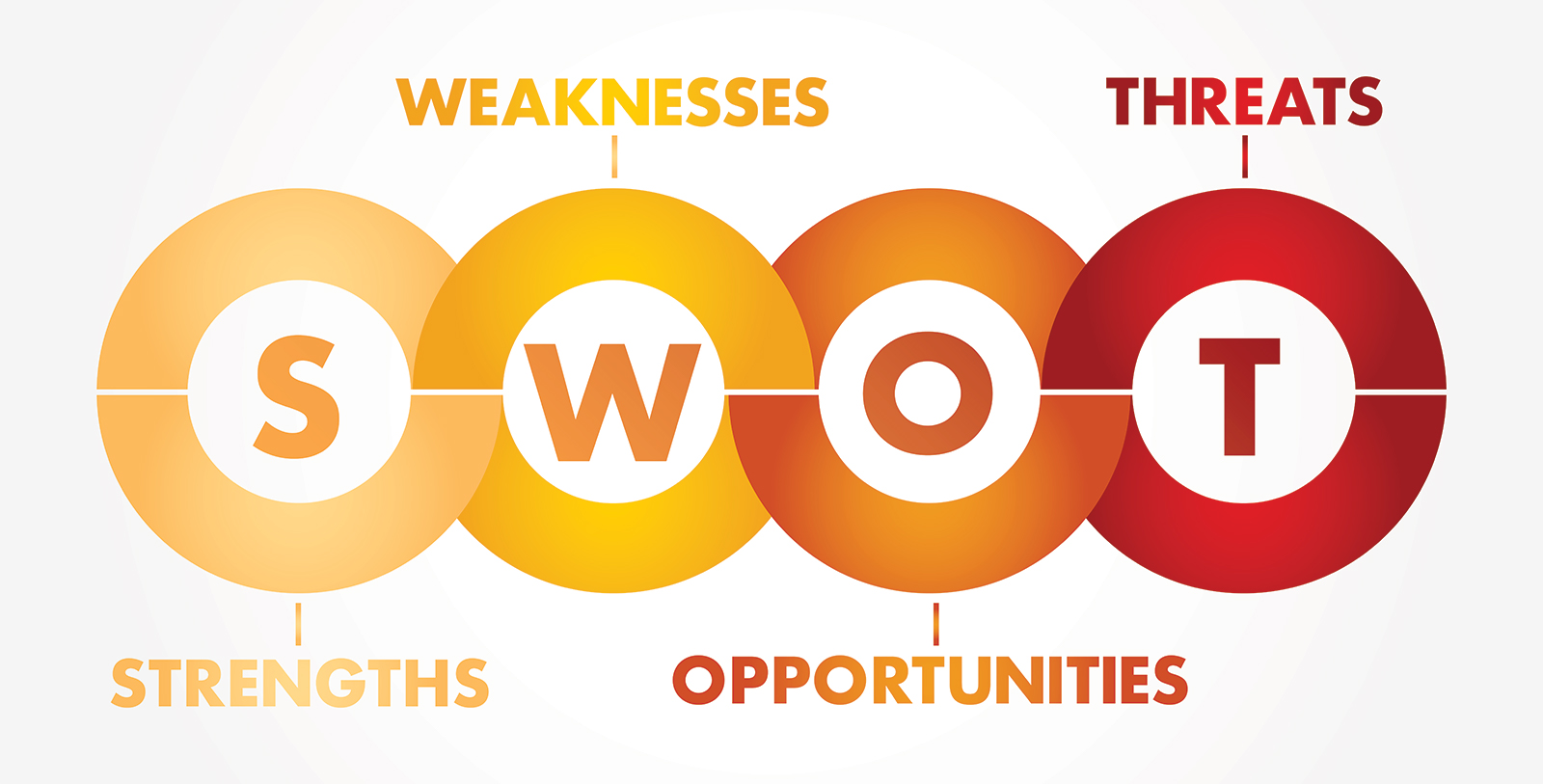
Meaning of SWOT

Strengths- S stands for Strength. It refers to the areas of expertise or any other unique factor that can act as a asset in growth of an organization and provides with an upper edge over its competitors.

Weaknesses- W stands for Weaknesses. It refers to the drawbacks and areas in which an organization needs to work upon to face the competition in the market.

Opportunities- O stands for Opportunities. It refers to the favorable conditions or occasions that can act beneficial in growth of the organization.

Threats- T stands for Threats. These are the unexpected and unfavorable conditions or occasions that can act as a barrier in growth and working of an organization

Why you need to conduct a personal SWOT analysis | Marriage-Stanley &  Associates %

STRENGTHS OF UDAAN

1.Strong Foundation Team:- The founding members of the company already had the required knowledge and experience after working at Flipkart. Due to this, many other Flipkart employees also joined the startup, which helped them in increasing their efficiency and productivity. It enabled the engineers to work on their creativity, which is encouraged at Udaan.

2.Innovative Idea:- The company emerged with a new idea of providing online services to retailers and wholesalers. It provided with a platform for B2B Commerce that can help them in effectively competing with the big retailers and the big branded stores and websites. This helped them to enlarge their customer base.

3.Large and Satisfied Customer Base:- The company has around 1,50,000 sellers on its platform that is increasing each day with increase in downloads and website visits.

WEAKNESS OF UDAAN

1.Unable to manage its Expenses- The expenditures of the company increases with increase in revenue amount but the hike in expenditure is more than the proportion of revenue

2.Supply Chain Issues- The company often struggles in finding potential suppliers to meet the requirements in different geographical areas and deliver the product on time.

3.Requirement of Internet- There are still some areas that don’t have internet facility. These people stay deprived acting as a barrier in covering all geographical areas.

OPPORTUNITIES FOR UDAAN

1.B2C – The company should develop a platform that deals B2C i.e. Business to Customers along with its current department. This will help in increasing the customer base and revenue sources of the organisation.

2.Management Consulting- The company should consult a consultant. This will help the company to manage their resources in a better manner.

3.Setting up of Outlets- The company is currently dealing through online platform. Investing in setting up offline outlets in different geographic area can help in boosting customer base.

THREATS FOR UDAAN

1.Cost:- In an ecosystem where company has to face a lot of competition to survive in the market. Many a times the company has to offer its products and services at a higher price as compared to market due to high amount of cost incurred in the process that can compel its customers to switch to another company.

2.Economic Factors:- The company has invested a handsome amount of money as capital. A small change in economic factors can have a huge impact on the company.

3.Decreasing Profits:- The company though increasing its revenue each year is not able to boost the profits too. The profits are decreasing each year which is a major threat and needs a quick action.