One needs to aim for the sky, to achieve as much as a mountain in the bargain Success in life comes only to those who are ready to work hard for the same. The key to success is to have an aim in life and the earlier you attain this aim, the better.
In spite of all the new options in today’s times, there are those age-old professions that are a favourite with most of the youngsters all the time. These include, the profession of a doctor, an engineer and that of a teacher or an advocate. I too, wanted to be part of one of these noble professions. If my memory proves me right, I always wanted to be a teacher. What is exciting about teaching is that this is one of the few professions where you are actually dealing with living beings. To make a difference to a child’s life or to positively influence a child in such a way as to bring about good change, is a great achievement in itself. Somewhere, along the path, we are also the product of the reinforcements made by our parents and teachers, one way or the other.
However, even our Puranas reinstate that the teacher or the guru’ comes above God. The reason being that teacher is the person who shows you the way to God, or teaches you, what God is all about. So, if the enlightenment of God and the things around you comes from one particular force, then that is the person to be revered, first.
The responsibility being immense, it’s not an easy job either. If the young minds have to look forward to you as a source of knowledge, then you need to be one. With the quantum of knowledge increasing day by day, it’s a difficult task to keep abreast of the upcoming information. Apart from all this, what is more important in this profession is whole hearted dedication and willingness to work beyond the restrictions of time and assigned duties.
With all this view in mind, I would like to pursue my ambition to be a teacher. It’s anyhow of least importance to assert which subject I would specialize in because subject is not as important, as to know, how to effectively teach it. Be it Maths. English or Science, to develop a flair and love for the subject is a teacher’ s greatest challenge. A bad teacher can always generate an aversion towards the subject in the minds of the children, just by not giving the subject a proper treatment. My ultimate aim would be to be such a teacher who would make a difference in the lives of young minds and bring about their overall development.
Technology and gadgets are now indispensable in our daily lives. In the past few years carrying a miniature computer (a smart phone) in a pocket has become commonplace. Technology helps advance the human race forward and makes doing mundane things more efficient and repeatable. Technology has helped create the information revolution. With technological advances, devices have evolved to be so powerful and smart that it feels like having a super-computer on one’s hands. Humans now have an insatiable appetite for information at their fingertips. When technology makes this happen, the natural tendency is for this to become an expectation. Life Without Gadgets: ■People born before the 1980’s would very well relate to life before the information age, when people had no access to internet or personal gadgets. Let’s briefly walk down the memory lane to relive those moments — a life without gadgets. ■Children played together outdoor — they had a lot of physical activity. ■People talked to each other more often, and verbal communication face-face was at its peak. ■Chat jargon did not exist and people knew their spellings well, as they read more books. ■People enjoyed spending more time outdoors with family and friends. ■It was commonplace to get the news from newspaper or radio. ■Entertainment came from playing board games, playing sports, going to the movies, watching VHS tapes, etc. ■Writers often used either a type-writer or a word processor on their computer. ■Computers were expensive and bulky. ■Doing research was hard; frequent visits to the library or scouring through plethora of papers, books, etc. were necessary. ■Communication was slow. Life With Gadgets: Gadgets equipped with internet have transformed our lives in several ways and brought about a paradigm shift in our dependence on technology to perform key tasks in our everyday routine. To highlight a few: ■Enormous amount of information at our fingertips ■Use Google Maps to get directions, watch YouTube videos to learn to cook, sing, draw, learn science, etc. ■Health monitoring apps on the cell phone that would remind people to walk, run, bike, check BP periodically, etc. ■Capability to share daily life or special events instantly with thousands of people and see reaction in a matter of minutes, if not seconds ■Expedited research with access to information galore ■Ability to watch videos on demand from anywhere (Netflix, Amazon, etc.) ■Ability to read e-books online on demand — no more visits to library needed ■Use of mobile phones, tablets as pacifiers for kids ■Improved speed of communication by orders of magnitude leading to faster decision-making ■Existence of mobile apps for entertainment, social interaction through digital media, paying bills, accessing bank accounts, etc. Effects of Gadget Addiction: While the business model of the top few app companies hinges on people spending more time with their gadgets every day, we need to recognize that the most important fallout of this induced behavior would be the rising epidemic of gadget addiction. A sense of urge to use the phone or any other gadget when bored or idle equates to addiction. Gadget addiction doesn’t discriminate who is affected, it affects all age groups and people of all races. The effects range from mental, physical, emotional to even threatening our democracy. Mental and Emotional Health: Dopamine is a neurochemical that largely controls the pleasure and reward centers of the brain. High levels of dopamine are usually associated with motivation and excitement to fulfil goals that would lead to recognized rewards and thus reinforcement of a sense of pleasure while achieving those goals. Procrastination, lack of enthusiasm and self-confidence, and boredom are linked to low levels of dopamine. Research has shown that the brain gets “rewired” as excessive amounts of dopamine get released in the body on frequent interaction with a rewarding stimulus, i.e., using a smartphone app like Facebook. Boredom triggers an interaction with the rewarding stimulus (Facebook app), which in turn results in wide variety of rewards in the form of likes, messages, photos, etc. causing high releases of dopamine in the body. Frequent cycles such as these cause the brain’s receptors to become more insensitive to dopamine, causing the body to experience less pleasure than before for the same natural reward. This leads the person down a spiral, where one has increased craving for the same reward to achieve normal levels of pleasure. If the increased craving cannot be satisfied, it would lead to anxiety, lack of motivation and depression. Gadget addiction is likened to addiction to alcohol or drugs since it results in similar negative consequences. Studieshave shown that children’s cognitive and emotional development can be adversely impacted by internet/gadget addiction. More screen time means more virtual interactions and rewards through social media (shares, likes) and less face time. Less face-to-face interaction with other people results in lack of empathy for fellow human beings. Physical Health: Today’s children are immersed in technology right from a very young age. With more than half the schools in the US using smart devices as teaching tools in class, coupled with at-home smart device usage, the total screen exposure time of students in the age group 8-18 has exceeded ten hours a day. There are obvious benefits to being exposed to technology right from a very young age, i.e., development of skills needed to be successful in technology-related areas in a future career. However, on the downside, there could be lack of development of social behavioral skills and high risk of obesity due to limited physical activity. As one would also expect, one of the biggest health risks of excessive smart device usage is vision-related. The National Eye Institute has found that the frequency of myopia (near-sightedness) has increased exponentially in Americans over the last few decades. The other effect on eyes was reduced blink rate leading to higher incidence of dry eye symptoms. Based on these findings, the American Academy of Pediatricshas revised recommendations for limiting screen time for kids at different ages. Listening to loud music through earbuds has detrimental effects on hearing ability The National Institute of Deafness and Other Communication Disordersreports that about 15% of Americans between the ages of 20-69 have a reduced capability to hear high frequency sounds due to exposure to loud sounds. Other negative effects on physical health from excessive gadget usage include lack of sleep and increased weight on the spine as the head tilt increases to view the screen. As we see the rise of ill effects of long term gadget use, rising health concerns amidst this drive to seek mindshare, finite attention of the same consumers there are groups of individuals who are now speaking up and taking a stand. These groups are investors, ex-employees of these companies and consumer groups. Starting 2018 these voices have amplified and there is a call for action and change is imminent.
Applications enhance and reduce the manpower in every place providing better services online. These apps help the user to experience the online world inside a device/gadget. Each module has a specification unique from others even though if they are used for same purpose. Whereas in the case of laptops or computers, from entertainment till animation various things can be created, explored and viewed in them.
In fact, a helping hand in the virtual environment during this pandemic. It is very simple to cover all the applications that became the best use for windows in the present year. So let me brief each app one by one according to my preference.
Microsoft Office 365
The first ever application that can be used for a large scale of domestic and commercial purposes simultaneously. This package offers seven splendid apps inside in where each one is prone for different activities from kids to elders. Each app has a specialty on its own and a very genuine application created by Microsoft organization.
The usage of each one is unique that makes us to astonish associated with the programming of it. This package is a primary one and does not require any special feature like graphics, designing.
This package is now handy as we can use them in mobiles from anyplace with a network alone. The fact is it also available in three different versions (Mac, iOS, Android) excluding Windows. These apps help in creating data, storing them, manipulating and compiling different data and documents. But the subscription has to be paid as it is not free of cost to utilize.
1.Word – to create documents, and publications.
2.PowerPoint – to organize and combine data including formulas. Also, for handling them.
3.Excel – to store, arrange and handle data
4.OneDrive – to store documents and things online
5.OneNote – to group data you collect including notes, drawings, screen shots, audio files, and much more.
6.Publisher – to create extensive posters, menu and publications.
7.Outlook – to manage email and to do lists, and contacts.
8.Access – to combine and group a huge data.
myTube
This is user-friendly and has no restrictions upon any age of people using it. myTube is a third-party YouTube client. Because YouTube doesn’t always play nicely with third-party developers, myTube often comes with problems and issues.
Also, it is available at free of cost in Store of Microsoft platform in which your videos can be saved and comments can be made while watching random videos.
It makes controlling the app and navigating it easily as it is also a multi-tasking.
More features are to be added, but even if the public release was just a stable, it’d still be the excellent way to watch YouTube videos on Windows platform.
Netflix
This is a huge entertainment platform where people can experience a lot web series and TV shows that go through different journals like horror, sci-fi, thrilling etc. One of the most popular application among youngsters nowadays. This application is totally free but do require subscription to be paid. There are different languages for all TV shows so it will be comfortable for viewers to watch shows in their favorite language. This application has movies and a lot more comprised inside that will be an attractive and mesmerizing as well as stress buster for people.
This will ease your time away as you browse through several shows and categories in it. Even a family entertainer based on each one’s priority. It provides services at ultra-HD clarity so users need not worry about it.
Spotify
It is a digital library that allows us to access to n-number of songs and work from other people related to music and video. This is also a user-friendly and free of cost application but certain services need to be paid if you are in the urge to use them.
Spotify can be used in various range of devices but the podcasts or music can be taken to external from other than their own platform as it is restricted for users
ExpressVPN
VPNs are used to protect private web traffic from snooping, interference, and censorship.
ExpressVPN is a paid VPN service that provides privacy and security while exploring the online world with our device. The application is totally free but needs a subscription for the services to be used.
This is a highly securitized app that can hold all your private passwords secretly while in indoors or roaming. You can feel safe with this module as it and user friendly also. Also works in Windows, Mac, iOS, Android, Linux and router.
PowerToys
PowerToys is similar to Microsoft Office packages but they are different in their functions that works on the software itself. It is a highly specialized that create themes, background screens, layouts, changes the theme of our layout in the keyboard also resizes the pictures instantly. It also works like a booster in launching apps, replacing a file’s name.
Microsoft PowerToys is a set of freeware system tools that is developed by Microsoft themselves to work on Windows operating system for power users at high efficiency. It is a open source software are no cost application that works for old versions for windows also which has been hosted by GitHub the platform for programmers.
Readit
Readit is a Universal Windows Platform (UWP)app so that you can browse with ease and with fastness of the application associated with UI. The either side of the screen can be used to view post and comment on them, and you can manage to change the settings accordingly to your wish. If you start exploring this platform will become your default browser and all-time favorite.
This software comprises the facility for blind and low vision where they can import things and change the style of it to the format that can be viewed and read in a simple manner.
Also available in all types of devices and platform that is free of cost and user-friendly in all occasions. Includes scanning documents and uploading facility also.
I have given my best reviews about all the applications I have listed hope you will found useful reading my content as it may provide you the details the others won’t be given. So try using them in a effective way to gain your wisdom and explore to use them for your skill related way that can lift you to great heights.
Social media is a big tool and has a huge impact on individuals and their lives. While some impacts can be positive, social media has been shown to negatively affect things like our moods and stress levels. Addiction is caused by social media too. With access to it anytime of day on our phones, it’s easy to fall into the bad habit of checking it everywhere – during a meal, in class when a professor is talking, or even in bed when it’s time to sleep!
Genrally what we consume daily is what we become eventually many people get confuse in their life because they are not ableto enjoy their life as they are comparing their luife with life of someone they haver followed virtually,
social media create fake scenarios among young individual, only some percent of people use it wisely other just get depressed by seeing other persons life.
Social media has been a part of our lifestyle since last few years but eventually it is more disturbing now, social media was created to share information’s, to communicate with people, to make friends but now its idea has been changed widely its used for posting pictures, posting about how they buy new car its a whole show off business this can adversely affect young minds i think their should be some age restriction regarding use of social media
AT last I would say, Blaming someone or some users wont help well who are users they are people like us scrolling Instagram or Facebook hours by hours and wasting their time, i think we have power to use it in positive way just wasting time wont help
The story of human origins is complicated since our ancestors swapped genes (and probably skills).
The first humans emerged in Africa around two million years ago, long before the modern humans known as Homo sapiens appeared on the same continent.
There’s a lot anthropologists still don’t know about how different groups of humans interacted and mated with each other over this long stretch of prehistory. Thanks to new archaeological and genealogical research, they’re starting to fill in some of the blanks.
The First Humans
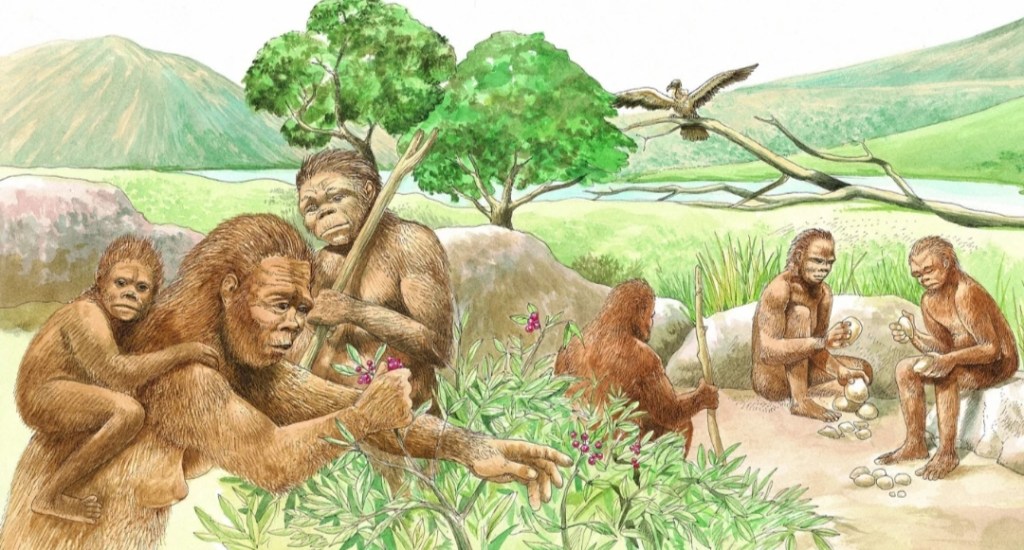
Homo habilis individuals chip away at rocks, sharpening them for cutting up game or scraping hides while a woman, with her child, gathers wild berries to eat and branches to make shelters.
First things first: A “human” is anyone who belongs to the genus Homo (Latin for “man”). Scientists still don’t know exactly when or how the first humans evolved, but they’ve identified a few of the oldest ones.
One of the earliest known humans is Homo habilis, or “handy man,” who lived about 2.4 million to 1.4 million years ago in Eastern and Southern Africa. Others include Homo rudolfensis, who lived in Eastern Africa about 1.9 million to 1.8 million years ago (its name comes from its discovery in East Rudolph, Kenya); and Homo erectus, the “upright man” who ranged from Southern Africa all the way to modern-day China and Indonesia from about 1.89 million to 110,000 years ago.
In addition to these early humans, researchers have found evidence of an unknown “superarchaic” group that separated from other humans in Africa around two million years ago. These superarchaic humans mated with the ancestors of Neanderthals and Denisovans, according to a paper published in Science Advances in February 2020. This marks the earliest known instance of human groups mating with each other—something we know happened a lot more later on.
After the superarchaic humans came the archaic ones: Neanderthals, Denisovans and other human groups that no longer exist.
Archaeologists have known about Neanderthals, or Homo neanderthalensis, since the 19th century, but only discovered Denisovans in 2008 (the group is so new it doesn’t have a scientific name yet). Since then, researchers have discovered Neanderthals and Denisovans not only mated with each other, they also mated with modern humans.
“When the Max Plank Institute [for Evolutionary Anthropology] began getting nuclear DNA sequenced data from Neanderthals, then it became very clear very quickly that modern humans carried some Neanderthal DNA,” says Alan R. Rogers, a professor of anthropology and biology at the University of Utah and lead author of the Science Advances paper. “That was a real turning point… It became widely accepted very quickly after that.”
As a more recently-discovered group, we have far less information on Denisovans than Neanderthals. But archaeologists have found evidence that they lived and mated with Neanderthals in Siberia for around 100,000 years. The most direct evidence of this is the recent discovery of a 13-year-old girl who lived in that cave about 90,000 years ago. DNA analysis revealed that her mother was a Neanderthal and her father was a Denisovan.
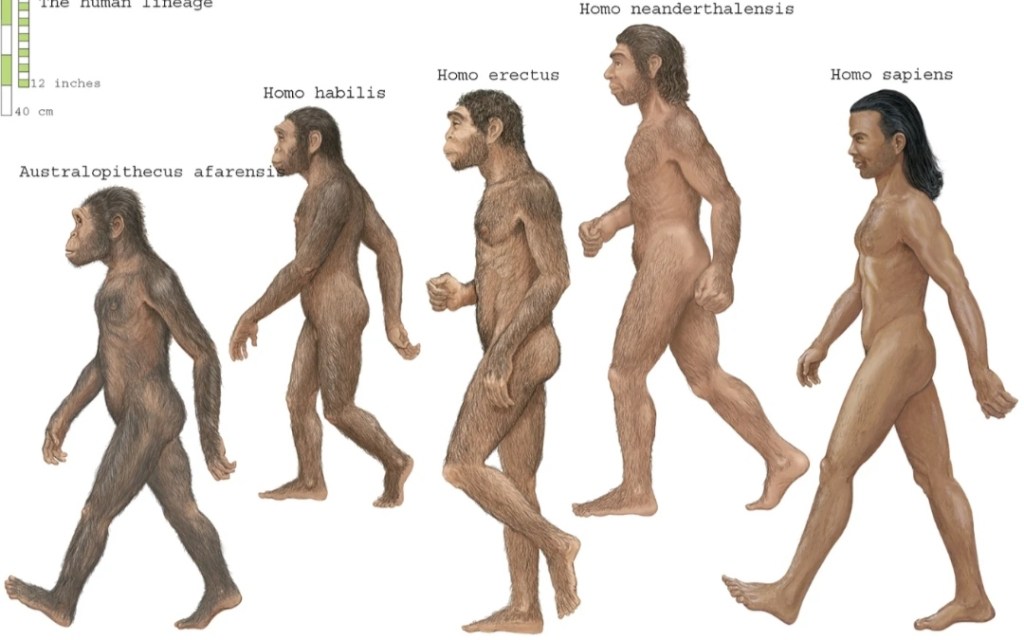
The human lineage of Australopithecus afarensis, Homo habilis, Homo erectus, Neanderthals and Homo sapiens.
Scientists are still figuring out when all this inter-group mating took place. Modern humans may have mated with Neanderthals after migrating out of Africa and into Europe and Asia around 70,000 years ago. Apparently, this was no one-night stand—research suggests there were multiple encounters between Neanderthals and modern humans.
Less is known about the Denisovans and their movements, but research suggests modern humans mated with them in Asia and Australia between 50,000 and 15,000 years ago.
Until recently, some researchers assumed people of African descent didn’t have Neanderthal ancestry because their predecessors didn’t leave Africa to meet the Neanderthals in Europe and Asia. But in January 2020, a paper in Cell upended that narrative by reporting that modern populations across Africa also carry a significant amount of Neanderthal DNA. Researchers suggest this could be the result of modern humans migrating back into Africa over the past 20,000 years after mating with Neanderthals in Europe and Asia.
Given these types of discoveries, it may be better to think about human evolution as a “braided stream,” rather than a “classical tree of evolution,” says Andrew C. Sorensen, a postdoctoral researcher in archaeology at Leiden University in the Netherlands. Although the majority of modern humans’ DNA still comes from a group that developed in Africa (Neanderthal and Deniosovan DNA accounts for only a small percentage of our genes), new discoveries about inter-group mating have complicated our view of human evolution.
“It seems like the more DNA evidence that we get—every question that gets answered, five more pop up,” he says. “So it’s a bit of an evolutionary wack-a-mole.”
Early Human Ancestors Shared Skills
Human groups that encountered each other probably swapped more than just genes, too. Neanderthals living in modern-day France roughly 50,000 years ago knew how to start a fire, according to a 2018 Nature paperon which Sorensen was the lead author. Fire-starting is a key skill that different human groups could have passed along to each other—possibly even one that Neanderthals taught to some modern humans.
“These early human groups, they really got around,” Sorensen says. “These people just move around so much that it’s very difficult to tease out these relationships.”
The whole story revolves around two completely different characters, Kafka Tamura and Nakata Sataru and therefore the characters they found in their journey.
Kafka on the Shore demonstrates Murakami’s typical blend of popular culture, mundane detail, magical realism, suspense, humor, an involved plot, and potent sexuality. It also features an increased emphasis on Japanese religious traditions.
Kafka Tamura a 15 year old runaway bearing a forbidden curse given by his late father and painful memories. Kafka’s character is unlike the other fifteen year old kid features a strange touch of complexity and it certainly is deep growing over time. The second character Nakata Sataru an old man who doesn’t have any clue about his past checking out coming future. Nakata, a dumb yet smart his character itself is sort of a paradox, which may only be dumb if he’s smart and only be smart if he’s dumb. Which is totally different from kafka who bears an easy perspective about things. Nakata’s ability to look at things during a strangely simple perspective is what makes the characters strong and firm as a ancient fence .
Both characters goal and life is totally different yet at an equivalent time similar at certain point of your time . It’s like 2 different ends of same thread. One looking back at his past while deed from it while another being careless of his past heading for completing a search which is to shut the doorway of the alternate reality. One is overly smart and hooked in to books along side other things while another doesn’t even knows the characters in his name.
In the book both characters encounter some potential person’s which makes the story interesting.the first person was a boy named crow which is nothing quite a illusion made by kafka in his mind. The person he meet on the bus while he was deed from his home. Later when he visited a personal library in takamatsu he found another person Oshima, a transgender character who supported Kafka throughout the book may be a nicely forged character. his perspective on LGBT community is sort of impressive and he check out things metaphorically which is totally at another level. it is a character which is somewhat neutral at it’s own axis. Then comes Mrs. Saeki. To be honest you’ll fell for her head over heels for her. She’s the central a part of the story. she’s the manager of the private library where oshima works and kafka live throughout most of the novel. Her character is that of a broken but charming woman. She was the one who opened the doorway to the alternate reality so as to guard herself from harsh reality but it seems that it just made her trapped in her own damned reality. The more you study her the more you crave for her past.
Mr. Hoshino is another character who helps nakata in completing his quest. it isn’t like they need been friends from over an extended time but they both meet one another when nakata decides to travel into his quest. Later Mr. Hoshino find nakata a stimulating person and a small resemblance to his grandfather. Which is why he decides to assist out the old man in his quest and he seems to a crucial key during this whole book. The whole story swings back and forth between the particular reality and therefore the alternate reality where time is simply a mere concept and memories are just a bunch of obsolete things. in this book Murakami’s
literary genre is simply like taking note of a musical sonata, where the sounds of musical instruments bind together at some extent and every one of sudden it alter,break apart into one peak and therefore the process itself goes on and on. The very scale of rising and down with each passing moment never cease to amaze you. In here rather than musical instruments the complex yet simplicity of every and each character is what makes the entire composition exotically attractive.
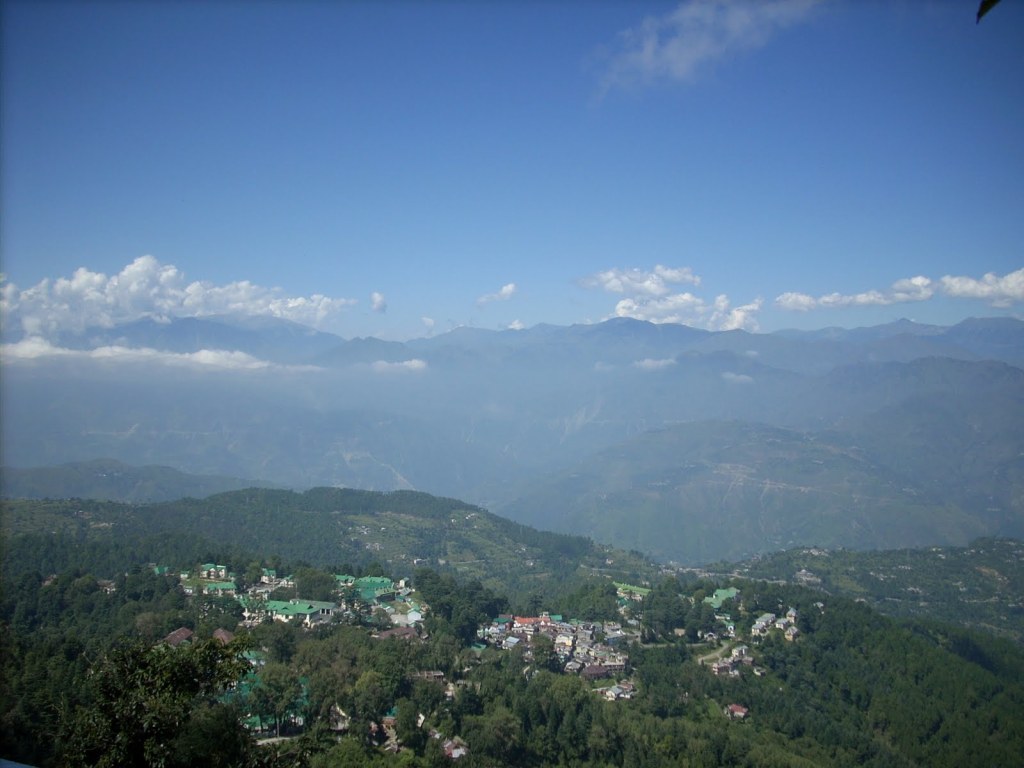
Dalhousie is a hill station in the Himachal Pradesh state of northern India, located in the Chamba district.
Some places you must visit if you are visiting Dalhousie are –
Khajjiar
Khajjiar, often known as the ‘mini-Switzerland of India,’ is a small town near Dalhousie noted for its green meadows, deodar trees, and cottages. There is a tiny lake in the midst of the meadow where you may relax and enjoy the landscape or participate in adventure sports like paragliding, zorbing, and horseback riding. During the winter, however, the road to Khajjiar may be blocked due to severe snowfall.
Kalatop Wildlife Sanctuary
The Kalatop Animals Sanctuary is made up of thick deodar foliage, a wealth of wildlife, snowcapped mountains, carpets of green meadows, and easy-on-the-eye streams of fresh water. It is also known as the Kalatop Khajjiar Sanctuary and is located in Himachal Pradesh’s scenic mountainous Chamba region. The term Kalatop means ‘black cap,’ referring to the dense, black forest cover on the sanctuary’s highest peak.
Chamera Lake
The Chamba Lake is a man-made reservoir for the Chamba Dam, located near Dalhousie in Himachal Pradesh’s Chamba District. It’s a popular picnic site as well as a sailing spot. On a speed boat or a rowboat, one may explore the lake and participate in sports such as kayaking and canoeing.
Rock Garden
Dalhousie’s Rock Garden is a lovely garden and a favorite picnic place. Apart from resting and refreshing at the park, you may also participate in one of the many adventure activities offered in the region, such as zip-lining.
Indo – Tibetan Market
The Tibetan market in Moti Tiba is one of Dalhousie’s greatest locations to buy, selling traditional Kashmiri shawls, needlework, purses, carpets, and a variety of handicrafts. Gandhi Chowk is home to the lively Indo Tibetan market, as well as various handloom and handicraft businesses, providing for an excellent shopping experience.
Chamba
Chamba is a Himalayan town in the Himachal Pradesh district of Chamba. Chamba is known for its breathtaking views of the Pir Panjal, Zanskar, and Dhauladhar mountains, as well as historic temples, caves, and edifices that speak well of Indian history.
This location should not be confused with the Uttarakhand town of Chamba.
Mall Road
Gandhi Chowk, often known as GPO, is Dalhousie’s busiest and most lively street. Dalhousie, unlike other hill stations, lacks a mall road, thus Gandhi Chowk serves as Dalhousie’s Mall Road. Dalhousie has numerous local bazaars and commercial hubs, including Gandhi Chowk. Simple local trinkets, woolen clothing, and daily gems may be found in the shops. GPO is also home to all of the main buildings and hotels.
Cafe Dalhousie
Cafe Dalhousie is one of Dalhousie’s most renowned cafes, noted for its amazing food and ideal ambience. The cafe, which serves international food, also has magnificent views of the surrounding hills and valleys. Snacks including grilled sandwiches, pizza, and shakes are among the cafe’s most popular items.
Chamunda Devi Temple
The temple, which is devoted to Goddess Kali, is a significant religious site in the town. Goddess Ambika is supposed to have slain the demons, Munda and Chanda, at this temple. The Goddess’s divinity is kept covered in crimson fabric, holy and untouchable by the public. The region also has some stunning scenery and vistas.
Jot
On the Pathankot-Nurpur-Chowari-Chamba section, Jot is one of the highest altitude tourist spots in Chamba. It is closed to cars during the winter months since it is covered with heavy snow. In the summer, the road reopens, but because it is a less commercialized area, it is not overwhelmed with people. It’s a prehistoric stretch, ideal for people who enjoy exploring the unknown. Trekking and hiking are popular in Jot.
There are a lot of signs that might tell you something about your mental health. Those signs might be completely new to you or something you didn’t notice.
Here are the signs that shows you are depressed.
LOW MOTIVATION
Low motivation is also called Anhedonia. Anhedonia lies at the core of depression There might be times when you don’t feel like doing things. You might feel drained even when you haven’t done anything. It doesn’t mean that you don’t like doing it, its just that you are too tired to do it and socially withdraws you by surrounding you with negative feelings.
HOPELESSNESS AND HELPLESSNESS
When you are depressed you are mostly hopeless and feel like you are stuck in this world with no light at all. Helplessness kick in right after hopelessness to indicate that we are incapable of doing things. This combination can make you feel like trapped in a dark room, and the door is locked too. During this zone you can try to challenge yourself into things that are bothering you and break out bit by bit.
FATIGUE
Fatigue is another sign that leads to depression. Most of the people say that it is unstable sleep schedule that causes fatigue but it is just that you are too tired and don’t have energy to do things. Taking antidepressants, low/high diet, sleeplessness, stress etc can increase the chances of gaining fatigues. Yoga or exercise is a good solution to put yourself to bed as it can help you lower the sign of fatigue.
INDECISIVENESS
Depression happens to have an impact on your cognition. It will make activities such as decision making, thinking, problem solving, memorizing, and functioning very difficult. The decision making is even more difficult during a depressive episode as you always expect a negative income. Try to consult a therapist as they can help you find a way out.
ANXIETY
Anxiety is a disorder on its own but it has connections with depression as the symptoms for them both are similar. Anxiety can make you feel things like rapid breathing, panicking, feeling unsafe, and trouble focusing on things. Anxiety can be lessened by doing stuff that you are comfortable doing. It could be anything like making your bed, painting, writing journal, taking a walk etc.
IF YOU ARE RELATING TO ANY OF THE SYMPTOMS THEN TRY SEEKING HELP. DON NOT NEGLECT YOUR MENTAL HEALTH.
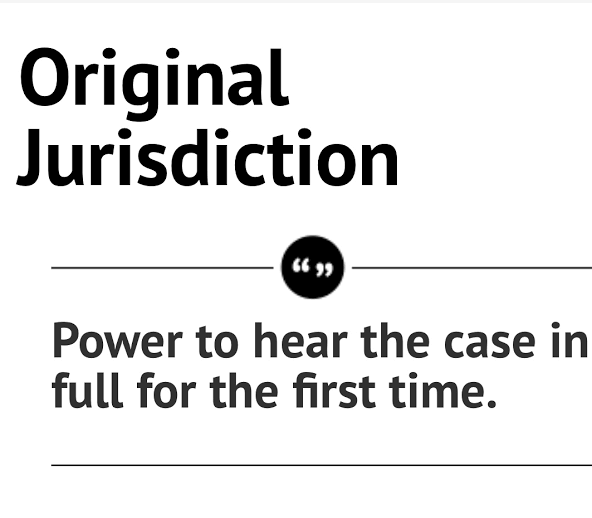
🌟In their Judicial capacity, the High Courts of the President towns Bombay, Calcutta and Madras have original and appellate jurisdiction, while other High Courts have mostly appellate jurisdiction. 🌟Only in matters of admiralty, probate, matrimonial and contempt of Court, they have original jurisdiction.
Appellate Jurisdiction👨⚖️:
As Courts of appeal, all High Courts entertain appeals in civil and criminal cases from their subordinate Courts as well as on their own.
Writ Jurisdiction👩⚖️:
🌟Under Article 226 of the Constitution, the High Courts are given powers of issuing writs not only for the enforcement of the Fundamental Rights, but also for other purposes. 🌟The writs issued through Writ Jurisdiction are,
🔅Habeas Corpus 🔅Mandamus 🔅Prohibition 🔅Quo Warranto 🔅Certiorari
Supervisory Jurisdiction👨⚖️:
High court has the power of superintendence over all courtsvand tribunals functioning in its terrorial Jurisdiction. Thus, it may
🌟Call for returns from them; 🌟Make an issue, general rules and prescribe forms for regulating the practice and proceedings of them. 🌟Prescribe forms in which books, entries and accounts are to be kept by them. 🌟Settle the fees payable to the sheriff, clerks, officers and legal practitioners of them.
Control over Subordinate Courts👩⚖️:
🌟It is consulted by the governor in the matters of appointment, posting and promotion of district judges and in the appointment of persons to the Judicial service of the state. 🌟It deals with the matters of posting, promotion, grant of leave, transfer and discipline of the members of the Judicial service of the state.
You tube! One of the biggest social media platform, whose content is in the form of Vedio. This was first launched in February 2005. Now It hosts biggest content creators of on variety of content from arts to science. You tube has become one of the income sources option or we can say a career option now. There are many educators who found career in you tube. In this situation of pandemic, You tube educators have saved many students education.
You tube has now become a source of information for everything. It is the biggest search engine after google. being a science enthusiast i always watch Scientific you tube channels. There are many YouTube channels doing a great job in giving perfect information with beautiful illustrations and examples. But here are the some I think which are worth subscribing.
Vsause
One of the best you tube channel hosted by Michel David Stevens. He is an American educator The channel has scientific, psychological, Mathematical, philosophical Vedios. Channel is currently on 1.7 crore subscribers and 380 Vedios on the channel. The best thing about the channel is detailed research that is done on the topics presented. And also the host Michel Stevens steals your attention by his method of explanation. He makes the Vedio interesting by scratching your brain and increasing the curiosity. The series called “Mind field” which has 3 seasons is one of the best Vedio series I have watched. They have mind blowing experiments and explorations done by the host himself.
This channel is worth subscribing.
veritasium
Another you tube channel which has the best science Vedios. This channel is hosted by Derek Muller, who is Australian-Canadian science communicator, filmmaker. The channel now has 94.8 lakh subscribers and 313 Vedios. Derek, In his Vedios answers very simple questions in a way that you would never thought of having it. He conducts many street interviews about the topics or you may call it surveys to get the public mindset and information. In may of his Vedios he breaks many Myths around science and psychology.
The best things about the Veritasium channel are the experiments and the execution. The animations used to explain things are very cool to watch. And obviously the perfect information is what you always get.
The royal institution
This is the official you tube channel of the Royal institution situated in great Britain. It is the organization for scientific education and research founded very long back in 1799. The institution holds lectures on various science topics. Many famous scientists gave their lectures here. The you tube channel has the recorded Vedios of this lectures. The channel has 10.4 lakh subscribers and 925 Vedios.
What’s the best thing? The Vedios are genuine lectures from the scientists you admire! You get the whole lecture recorded and what’s better than that. You get to know about the new discoveries and advancements in detail. Vedios make you think more deeply about science. I think that’s more than enough to make you subscribe if you are a science geek.
lectures by walter lewin They will make you love physics
Who doesn’t know Walter Lewin and his love for physics. He is the former professor of physics at Massachusetts institute of technology. He has written a book called “For the love of Physics”. He is one of the best teachers you would ever get. His fun demonstrations of theories, and facts are loved by students around the world. The channel has 10.8 lakh subscribers. His lectures make you really fall in love with physics.
there are many more YouTube channels that provide quality science Vedios. PBS spacetime, Parth G, Periodic Vedios are some other to mention. But the above four channels are my personal favorite and I think are worth giving a try.
Whether you’re five or ninety five, the internet has a lot to offer. Particularly when the topic is education, the resources on the internet are endless. Best of all, many high quality sites are completely free. From history to coding, excellent, free online education awaits you.
1. Coursera:
Coursera is a website that partners with universities and organizations around the world. This brings a wide variety of topics and perspectives to one searchable database. Coursera is a powerful tool for free online education and includes courses from many top universities, museums and trusts. This gives the site an extremely wide range of in-depth courses. Coursera is extremely useful if you’re looking to study many different topics, or want courses from different schools and groups.
2. Khan Academy:
Partnering with many post secondary schools, Khan Academy offers a useable, well-organized interface. Also curating many courses from around the web, Khan Academy offers impressive depth on many different subjects. Among the more well-known educational sites, Khan Academy is also incredibly user-friendly, which may make it easier to keep learning goals. If you’re looking for a free online education, you can’t go wrong with Khan Academy.
3. Open Culture Online Courses:
If you are struggling to find exactly the material you are looking for, try Open Culture’s listing of free online education courses. The page highlights 1000 lectures, videos, and podcasts from universities around the world. The site features a lot of material found only on universities’ private sites, all in easy-to-browse categories. This means you can find hundreds of university courses without having to visit and search each university’s site. Open Culture’s list features courses from England, Australia, Wales, and many state universities around the United States. It’s a very helpful resource for finding many courses in one area of study.
4. Udemy:
Udemy’s free courses are similar in concept to Coursera’s but additionally allows users to build custom courses from lessons. Working with many top professors and schools, the site mixes the customizable platform of other sites with a heavy emphasis on top-quality content. This is another site, however, that mixes free and paid content.
5. Lifehack Fast Track Class:
Lifehack believes in skills that multiply your time, energy, and overall quality of life. In this rapidly changing world, traditional education skills just don’t cut it anymore. You can’t afford to take years learning a skill you’ll never really practice. Besides offering some paid courses that will help you become a better self, it offers a list of free courses which aim to train some of the Core Life Multipliers.
6. Academic Earth:
Another site with courses from many different schools is Academic Earth. Academic Earth brings together top notch courses from many different sources and focuses on offering a wide variety of subjects. Academic Earth lists courses by subject and school, so it might be easier to find what you’re looking for.
7. edX:
Another great option for free online education is edX. Also bringing together courses from many different schools, the site has impressive, quality information for everyone. edX covers a great range of topics from universities such as Harvard, MIT, and Berkeley, meaning a high-quality, free online education is entirely possible here.
8. Alison:
Alison is a free education site offering certification in some areas. Alison offers courses mainly in business, technology, and health, but also includes language learning courses. It’s a great option if users need a professional certificate for their learning, as Alison also offers school curriculum courses.
9. iTunesU Free Courses:
A very convenient place for free online education is iTunesU, because it integrates seamlessly with your iPod or any app-ready Apple mobile device. On an iPad, iPhone, or iPod touch, users download the iTunesU app. Desktop users can access iTunesU on the upper right hand corner of the iTunes Store. iTunesU is also convenient because the store is categorized much like iTunes. Users can search learning materials in many different ways, including by genre and topic. However, courses are often a mix of free podcasts or videos and paid content. iTunesU does include courses on a variety of topics, but it does not integrate with Android, Google or Windows mobile devices.
10. Stanford Online:
Stanford Online is a great site for high-quality courses, though the topics are somewhat limited compared to sites partnered with more than one school. If you’re looking for free courses, make sure to mark the “free” option on the left-hand side.
11. Open Yale Courses:
Open Yale Courses echoes Stanford Online, in that it offers only courses from Yale. While the site is similarly limited to topics taught at the school, Open Yale Courses offers a lot of videos of actual campus lectures. The availability of videos makes the site a great option if you’re looking for quality courses but learn better by watching than by reading.
12. UC Berkeley Class Central:
Much like the other schools on this list, UC Berkeley has a variety of free online education options. The school has slightly fewer courses than the schools above, but it includes some supplementary lectures and webcasts.
13. MIT OpenCourseWare:
Similarly, MIT offers a variety of free courses. The school has a comparable number of courses to the schools above, and it includes very in-depth course materials on the subjects available.
14. Carnegie Mellon Open Learning Initiative:
Carnegie Mellon’s free online education site is comparable with the other school’s on this list. However, Open Learning Initiative also covers a smaller range of topics, but for the topics that are covered, impressive, in-depth material is available.
15. Codecademy:
Codecademy is a website dedicated specifically to teaching coding. Where other coding sites follow an example/practice session workflow, Codecademy includes a live practice window. This means you can practice coding while still viewing the lesson material. The courses at Codecademy are well-written and easy to follow, and the website is organized very nicely. Codecademy features a centralized dashboard where you can monitor your progress, and it organizes lessons into complete modules. This lets you learn an entire language without needing to pick the next course manually.
16. Code:
Code is another website focused on coding and app writing. A site with high-quality courses, Code also features learning options for kids. In addition to kid-friendly courses, Code offers free online education classes on a wide variety of technology topics. These classes include app writing, robotics, and Javascript. Most of the courses are also geared in a such a way that they can be useful in a classroom setting. This makes Code a great resource for harder to find coding topics, as well as various learning settings.
17. TED-Ed:
Another great destination for more general learning and free online education is TED-Ed. From the same people that brought you the all-encompassing, motivational web series comes a site chocked full of educational videos. Most include impressive animation, and all are ten minutes long or less. Not only is TED-Ed an excellent site for the curious, but it also includes supplemental materials and quizzes on the videos. This makes the site extremely useful in formal education settings, as well as in entertaining ways to brush up on new discoveries and topics.
18. LessonPaths:
LessonPaths is another great tool for those looking for a more usable and convenient way to access learning material. On this site, users create link playlists of their favorite learning materials from other sites. Users then rank these collections, making it easy to find many different high-quality, accessible sources on a given topic.
19. Memrise:
Another impressive free online education site offering ease of use and convenience is Memrise. Available both on desktop and as an app, Memrise is a particularly powerful tool if you are studying a language. The site encompasses many other topics as well, though some of the course material is user generated content. Part of what makes Memrise special is their integration of games into the learning materials, mixing learning with entertainment.
20. Fun Brain:
Fun Brain is another great option for kids looking for free online education, as it focuses on games and fun puzzles. Particularly focused on math and reading, Fun Brain’s game-based approach can be valuable if the child in question struggles to pay attention. Fun Brain offers rewards and challenges as well.
Rolihlahla Mandela was born into the Madiba clan in the village of Mvezo, in the Eastern Cape, on 18 July 1918. His mother was Nonqaphi Nosekeni and his father was Nkosi Mphakanyiswa Gadla Mandela, principal counsellor to the Acting King of the Thembu people, Jongintaba Dalindyebo. In 1930, when he was 12 years old, his father died and the young Rolihlahla became a ward of Jongintaba at the Great Place in Mqhekezweni. Hearing the elders’ stories of his ancestors’ valour during the wars of resistance, he dreamed also of making his own contribution to the freedom struggle of his people. He attended primary school in Qunu where his teacher, Miss Mdingane, gave him the name Nelson, in accordance with the custom of giving all schoolchildren “Christian” names He completed his Junior Certificate at Clarkebury Boarding Institute and went on to Healdtown, a Wesleyan secondary school of some repute, where he matriculated. Mandela began his studies for a Bachelor of Arts degree at the University College of Fort Hare but did not complete the degree there as he was expelled for joining in a student protest. On his return to the Great Place at Mqhekezweni the King was furious and said if he didn’t return to Fort Hare he would arrange wives for him and his cousin Justice. They ran away to Johannesburg instead, arriving there in 1941. There he worked as a mine security officer and after meeting Walter Sisulu, an estate agent, he was introduced to Lazer Sidelsky. He then did his articles through a firm of attorneys – Witkin, Eidelman and Sidelsky. He completed his BA through the University of South Africa and went back to Fort Hare for his graduation in 1943. Meanwhile, he began studying for an LLB at the University of the Witwatersrand. By his own admission he was a poor student and left the university in 1952 without graduating. He only started studying again through the University of London after his imprisonment in 1962 but also did not complete that degree. In 1989, while in the last months of his imprisonment, he obtained an LLB through the University of South Africa. He graduated in absentia at a ceremony in Cape Town. Entering politics: Mandela, while increasingly politically involved from 1942, only joined the African National Congress in 1944 when he helped to form the ANC Youth League (ANCYL). In 1944 he married Walter Sisulu’s cousin, Evelyn Mase, a nurse. They had two sons, Madiba Thembekile “Thembi” and Makgatho, and two daughters both called Makaziwe, the first of whom died in infancy. He and his wife divorced in 1958. Mandela rose through the ranks of the ANCYL and through its efforts, the ANC adopted a more radical mass-based policy, the Programme of Action, in 1949. In 1952 he was chosen as the National Volunteer-in-Chief of the Defiance Campaign with Maulvi Cachalia as his deputy. This campaign of civil disobedience against six unjust laws was a joint programme between the ANC and the South African Indian Congress. He and 19 others were charged under the Suppression of Communism Act for their part in the campaign and sentenced to nine months of hard labour, suspended for two years. A two-year diploma in law on top of his BA allowed Mandela to practise law, and in August 1952 he and Oliver Tambo established South Africa’s first black law firm, Mandela & Tambo. At the end of 1952 he was banned for the first time. As a restricted person he was only permitted to watch in secret as the Freedom Charter was adopted in Kliptown on 26 June 1955. The Treason Trial: Mandela was arrested in a countrywide police swoop on 5 December 1956, which led to the 1956 Treason Trial. Men and women of all races found themselves in the dock in the marathon trial that only ended when the last 28 accused, including Mandela, were acquitted on 29 March 1961. On 21 March 1960 police killed 69 unarmed people in a protest in Sharpeville against the pass laws. This led to the country’s first state of emergency and the banning of the ANC and the Pan Africanist Congress (PAC) on 8 April. Mandela and his colleagues in the Treason Trial were among thousands detained during the state of emergency. During the trial Mandela married a social worker, Winnie Madikizela, on 14 June 1958. They had two daughters, Zenani and Zindziswa. The couple divorced in 1996. Days before the end of the Treason Trial, Mandela travelled to Pietermaritzburg to speak at the All-in Africa Conference, which resolved that he should write to Prime Minister Verwoerd requesting a national convention on a non-racial constitution, and to warn that should he not agree there would be a national strike against South Africa becoming a republic. After he and his colleagues were acquitted in the Treason Trial, Mandela went underground and began planning a national strike for 29, 30 and 31 March. In the face of massive mobilisation of state security the strike was called off early. In June 1961 he was asked to lead the armed struggle and helped to establish Umkhonto weSizwe (Spear of the Nation), which launched on 16 December 1961 with a series of explosions. On 11 June 1964 Mandela and seven other accused, Walter Sisulu, Ahmed Kathrada, Govan Mbeki, Raymond Mhlaba, Denis Goldberg, Elias Motsoaledi and Andrew Mlangeni, were convicted and the next day were sentenced to life imprisonment. Goldberg was sent to Pretoria Prison because he was white, while the others went to Robben Island. Mandela’s mother died in 1968 and his eldest son, Thembi, in 1969. He was not allowed to attend their funerals. On 31 March 1982 Mandela was transferred to Pollsmoor Prison in Cape Town with Sisulu, Mhlaba and Mlangeni. Kathrada joined them in October. When he returned to the prison in November 1985 after prostate surgery, Mandela was held alone. Justice Minister Kobie Coetsee visited him in hospital. Later Mandela initiated talks about an ultimate meeting between the apartheid government and the ANC. Release from prison: On 12 August 1988 he was taken to hospital where he was diagnosed with tuberculosis. After more than three months in two hospitals he was transferred on 7 December 1988 to a house at Victor Verster Prison near Paarl where he spent his last 14 months of imprisonment. He was released from its gates on Sunday 11 February 1990, nine days after the unbanning of the ANC and the PAC and nearly four months after the release of his remaining Rivonia comrades. Throughout his imprisonment he had rejected at least three conditional offers of release. Mandela immersed himself in official talks to end white minority rule and in 1991 was elected ANC President to replace his ailing friend, Oliver Tambo. In 1993 he and President FW de Klerk jointly won the Nobel Peace Prize and on 27 April 1994 he voted for the first time in his life. President: On 10 May 1994 he was inaugurated as South Africa’s first democratically elected President. On his 80th birthday in 1998 he married Graça Machel, his third wife.True to his promise, Mandela stepped down in 1999 after one term as President. He continued to work with the Nelson Mandela Children’s Fund he set up in 1995 and established the Nelson Mandela Foundation and The Mandela Rhodes Foundation. In April 2007 his grandson, Mandla Mandela, was installed as head of the Mvezo Traditional Council at a ceremony at the Mvezo Great Place. Nelson Mandela never wavered in his devotion to democracy, equality and learning. Despite terrible provocation, he never answered racism with racism. His life is an inspiration to all who are oppressed and deprived; and to all who are opposed to oppression and deprivation. He died at his home in Johannesburg on 5 December 2013.
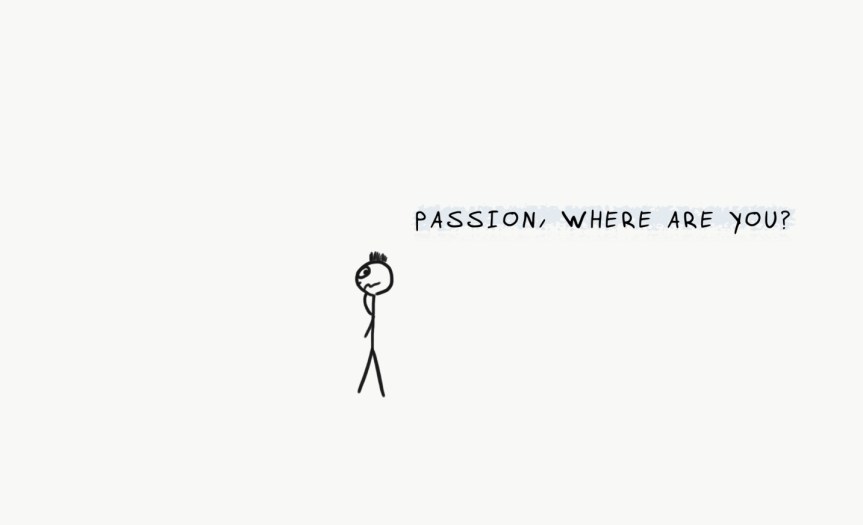
We collectively believe in a lot of myths. One of them is that your life only makes sense if you do what you love. That might be true, but the pursuit of your passion can be equally satisfying, which is something we often overlook.
Casey Neistat is an awesome YouTuber and entrepreneur. In his vlogs, he often talks about how much he loves his work (most recently here). And he advocates the belief of “find a job that you love and you don’t have to work for a day in your life.”
He’s not the only one who believes that. Many artists, athletes, entrepreneurs believe the same.
Steve Jobs even said:
“You’ve got to find what you love. And that is as true for your work as it is for your lovers. Your work is going to fill a large part of your life, and the only way to be truly satisfied is to do what you believe is great work. And the only way to do great work is to love what you do. If you haven’t found it yet, keep looking.”
I agree. However, it seems like many of us put too much pressure on ourselves to find our passion.
Without passion, we are not complete.
Without passion, our life has no meaning.
Really? It sounds like we’re giving ‘passion’ too much attention these days. It’s important, yes, but it’s not a magical solution that will make all your problems disappear.
Some people say: “If only I would find my passion.”
And I think: Then what? Let’s say you find your passion.
But if you’re an idiot, you will be an idiot with a passion. And if you’re a miserable complainer, you’ll be a miserable complainer with a passion.
I’m one of those people who didn’t exactly know what they wanted to do when they grew up. There were many things I thought about doing.
But was I miserable before I started doing what I do now? Fuck no.
I have to admit, I’ve been an idiot and I’ve made stupid decisions in the past, but I’ve also been a hard worker, got two degrees from college, read tons of books, traveled, started and failed a few businesses, and always made the best out of bad situations.
And then one moment in 2015, I thought: Why not write about the stuff that I’ve learned along the way? My mentors and people who were close to me told me I should do this stuff a few years ago. I didn’t think about it at the time. But last year it just happened. Like a eureka moment.
Don’t get me wrong: It’s awesome to wake up every day and look forward to working on the stuff you love to do. But it’s not the ultimate key to happiness.
“So how is that information useful for me?”
For the past year, I’ve been researching how others can stimulate the process of ‘finding your passion.’ But I’ve never found any research that has a sound answer to that question.
No research says ‘do XYZ’ and that will result in YOUR PASSION.
The only research that comes close is from neuroscience and eureka moments. You know super awesome insights that appear out of nowhere. And finding your passion is often the same: It’s just an insight.
In The Eureka Factor, John Kounios and Mark Beeman explain how insights arise and what scientific research says about stimulating them. They write:
“Though insights often come as a surprise, sometimes we can sense that an idea is present, lurking just below the threshold of awareness, ready to emerge. This puzzling phenomenon has a strange subjective quality. It feels like an idea is about to burst into your consciousness, almost as though you’re about to sneeze.”
Instead of putting pressure on yourself, you need something else that will trigger that final step of getting a eureka moment. Kounious and Beeman continue:
“Cognitive psychologists call this experience “intuition,” meaning an awareness of the presence of information in the unconscious mind — a new idea, solution, or perspective — without awareness of the information itself, at least until it pops into consciousness.”
You don’t know your passion because you’re not aware of it. That’s all. Don’t make things more complicated than they are. And don’t try to force it to come out of you. It’s not a pimple that you HAVE to pop.
“But how can I stimulate my brain to get more insights?”
Expose yourself to different things. Read about stuff you’ve never considered. Travel. Hang out with different people. The more you broaden your mind, the more information you get. Kounious and Beeman show that eureka moments are often a blend of different ideas that you’re exposed to.
Manage stress and anxiety. Chronic stress and anxiety prevent your mind to think clearly, focus, and relax. Those are key ingredients of getting new insights. So before you think about finding your passion, deal with stress and anxiety first if you’re having a lot of it.
I think those two things are critical steps that most of us skip. We dive into the practical things like keeping a notebook next to your bed.
But the thing is: You need input if you want to output.
Instead of consciously thinking about your passion, let your passion come to you. It’s somewhere inside of you, hiding because it’s afraid to expose itself.
You just have to trust that someday it will seemingly appear out of nowhere. When that day comes, make a happy dance, celebrate, whatever, but the next day, wake up and start working.
We live in interesting times. Technology has made a lot of things possible that we couldn’t think of, just a few years ago.
We all crave innovation, change, and improvement. That’s why ideas, creativity, and knowledge are one of the most important resources in the world.
New apps and services pop up every single day. And it seems like every single one of them is a success.
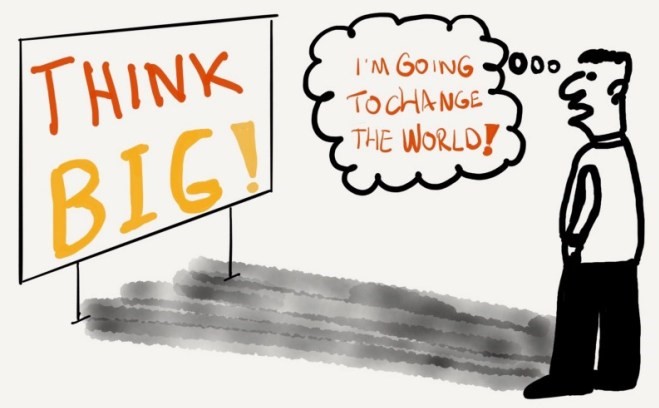
I often hear people, with big ideas, say: “How difficult is it to come up with a new app? You just need to think big and have a great idea.”
And then they continue: “You hire a freelance developer. Release it. Sell it. And BOOM. Relax on a beach.”
But let’s be real, it’s hard to achieve success. And yet, people think that as long as they have a great idea, they can achieve anything they want.
And it’s not just talking. We genuinely believe that we can become anything we want. We look up to people like Mark Zuckerberg, and we say: “You know he started Facebook from his dorm room, right? And now he’s a billionaire.”
“Or how about the founder of Snapchat, Evan Spiegel? He became a billionaire at age 24. Must be easy.”
A Big Idea Does Not Guarantee Success
I’m not going to tell you that you can’t do something—we already have enough people who do that.
But on the other side of that, we have “thinking big.” However, thinking big can turn around and bite you in the ass. It’s delusional to believe that you can change the world before you’ve worked yourself into a place that makes it possible for you to do so.
We often set out to achieve big things that are unique. Things like, “I want to be the first person who did X.” Or, “I want to be the youngest person who did Y.”
Are we a “genius” now because we have these big ideas?
In his new book, Ego Is The Enemy, Ryan Holiday writes about the dangers of thinking big:
“There is a real danger in believing it when people use the word “genius” — and it’s even more dangerous when we let hubris tell ourselves we are one. The same goes for any label that comes along with a career: are we suddenly a “filmmaker,” “writer,” “investor,” “entrepreneur,” or “executive” because we’ve accomplished one thing? These labels put you at odds not just with reality, but with the real strategy that made you successful in the first place. From that place, we might think that success in the future is just the natural next part of the story — when really it’s rooted in work, creativity, persistence and luck.”
Are you an entrepreneur if you have one good idea?
Are you a writer if you published two articles?
Are you a filmmaker when you create a YouTube video?
When you start thinking like that, you might feel like you’ve already achieved success. The biggest reward for most people is that they can call themselves a “founder,” “owner,” “writer,” or any other title that looks good.
But you’re not your Twitter or LinkedIn bio. No one cares about that stuff — but why do we pursue appearances? It’s often our ego speaking for us.
Look, I’m all about thinking big, but I’m also about being practical.
Because there’s still a difference between doing and dreaming. It doesn’t matter how big your dreams are — if you lose sight of what matters, you might never achieve those big dreams in the end.
Start With Tiny Steps
We live in a sum-sum world, not a zero-sum world. So it’s in everyone’s interest that we have people who set out to change the world. And sure, why can’t you change the world? It doesn’t require any special talent to change the world. It requires hard work and determination.
Thomas Edison put it best:
“There is no substitute for hard work.”
But success is not about a glorious vision. It’s about you, working on your goal—even when no one’s watching. With an emphasis on working because dreaming alone won’t get you anywhere.
In Ego Is The Enemy, Ryan Holiday writes about how we are often our own worst enemy when we think big. He draws lessons from different successful people who have made it big now but didn’t think big before they reached a level of success.
Ryan Holiday writes:
“A few years ago, one of the founders of Google gave a talk in which he said that the way he judges prospective companies and entrepreneurs is by asking them “if they’re going to change the world.” Which is fine, except that’s not how Google started. (Larry Page and Sergey Brin were two Stanford PhDs working on their dissertations.) It’s not how YouTube started. (Its founders weren’t trying to reinvent TV; they were trying to share funny video clips.) It’s not how most true wealth was created, in fact.”
Investor Paul Graham (who funded Airbnb, Reddit, Dropbox, and others), even says:
“The way to do really big things seems to be to start with deceptively small things.”
So, if thinking big isn’t a great strategy, what is?
When I study people who are called “successful”, I don’t see hubris. I see hard work. It’s always about doing the work — not about dreaming big.
People who say that dreaming big, visualization, and hoping for big things to happen is a good strategy, always have something to sell. If that stuff worked, everyone was a millionaire, philanthropist, or a world leader.
Unfortunately, you can’t build anything on your good intentions.
As Henry Ford once said:
“You can’t build a reputation on what you’re going to do.”
Similarly, you can’t get any results by dreaming big and not putting in the work on a daily basis. Because at the end of the day, results matter the most, not words.
















 Eduindex
You must be logged in to post a comment.