Machine Learning Algorithms

According to Arthur Samuel (1959), Machine Learning is a field of study that gives computers the ability to learn without being explicitly programmed.

Tom Mitchell (1998) Well-posed Learning Problem: A computer program is said to learn from experience E with respect to some task T and some performance measure P, if its performance on T, as measured by P, improves with experience E.

Machine learning algorithms

  1. Supervised learning
  2. Unsupervised learning
  3. Reinforcement learning

Supervised learning

It is machine learning task of at function that maps an input to on output based on example input-output pair. Basically Supervised learning is learning in which We teach or train the machine using data which is well labelled that means Some data is already tagged with correct answer. We pass data, train it and predict output.

Example 1 – House price prediction : In this data set can be given a which contain locality, size of house, age, no. of rooms, price at which it sell. In this are example locality, size of house are independent variables from which we can we predict house price. In this we can take prices of other houses to train our data. We take real prices map them and can predict price.

Example 2 – If we have different kinds of Fruits. To train the machine with all different Fruits one by one like shape of fruit, colour. Since machine has already learned from previous data this time it will classify fruit with its colour and shape and give output.

  • supervised learning allows collecting data and produce data output from previous experience.
  • It helps to solve various types of real world computation problems.

Unsupervised learning:

It is the training of machine using information that is neither classified nor labeled and allowing the algorithm to act on that without guidance. In this past data is pointless and we need to club similar data together. There is no way to measure similarity before we run the program. It is less accurate.

Example 1 – Google news : In google news, clustering where they use to club similar types of news together. They find some keywords, club similar news and show it on feed.

Example 2 – Feature selection : Assume that we want to predict how capable an applicant is of repaying a loan from the perspective of a bank now, we need to help the bank set up machine learning system so that each loan given to applicant who can repay the loan. So by gathering the Information about applicants average monthly income, debt credit & history we can predict this

Reinforcement learning

It means to establish & encourage a pattern of behavior. It is area of machine learning concerned with how software agent ought to take actions in an environment in order to maximize the notion of cumulative reward.

Example 1 – Chess game : In chess game there are different types of pieces which can move differently. The next move will depend om opponent move or your previous. It is trial and error and decision is dependent.

Example 2 – Web system configuration : there are so many parameters in web system and the process of tuning the parameters requires a skilled operator. This can be automated by using reinforcement machine learning technique to learn from different trial & error phases.


South Indian Kingdom

By the early 7th century, synchronising with the Harsha’s region in the north,the fat south had come under the control of the pallava kings of Kanchipuram.Pallava sovereignty included the domains of the Cholas and the Pandyas.The latter were then emerging as ruling dynasties in their respective river valley regions.Much of the central and eastern Deccan was under the Chalukyas of Badami(Batali),who were then pushed away by the Rashtrakutas.The Medieval period in India was marked by thee mergence of regional centres of power.There was no single imperial power like Mauryas or Guptas who exercised control over the greater part of India in this period.

The pallavas

The pallava kings ruled around the prosperous agraian settlement and important trade centre of India.Kanchipuram was well known to Chinese and Roman merchants.From the flourishing trade centre of Kanchipuram,the later pallavas extended their sovereignty over all the Tamil-speaking regions during the 7th and 8th centuries.The central part of their kingdom, however,was Thondaimandalam,a large political region comprising northern parts of Tamil Nadu and the adjoining Andhra districts.

Pallava Genealogy (prominent kings)

There were early pallava rulers who were feudatories of Satavahanas.Simhavishnu,son of Simhavarman I I (around 550AD(CE),created a strong pallava kingdom after destroying the Kalabhras.He defeated many kings in the south including the Cholas and the pandyas.His able son was Mahendravarman I .He was succeeded by his son Narasimha Arman I .The other prominent pallva rulers were Narasimha Arman I I or Rajasimha and Nandivarman II. The last pallava ruler was Aparajita.
Mahendravarman (c.600-630AD(CE)) contributed to the greatness of the pallava kingdom.Mahendravarman I was a follower of Jainism in the early part of his rule.He embraced saivism by the Saivite saint Appar (Tirunavukkarasar).He was a great parton of art and architecture.He is known for introducing a new style to Dravidian architecture ,which is referred to as ‘Mahendra style’ . Mahendravarman also wrote plays, including (c.620) Mattavilasaprahasana.(The Delight of the Drunkards )in sanskrit,which denigrates Buddhism.
Mahendravarman’s reign involved constant battles with the Western Chalukya kingdom of Badami under PulakesinI I . Pulakesin seems to have defeated Mahendravarman in one of the battles and taken over a large part of his territory in the north.His son Narasimavarma I avenged the defeat by capturing Batali,the capital of Chalukyas.He set Vatapi on fire, killing Pulakesin in the process.
Narasimavarma II(c.695-722),also known as Rajasimha,was a great military strategist.He exchanged ambassadors with China.His reign was comparatively free from any political disturbance.Therefore,he could concentrate on temple-building activities.During his reign,the famous kailasanatha temple at Kanchipuram was built.

Pallava’s contribution to Architecture

Pallava period is known for architectural splendour.The shore Temple and various other temples carved from granite monoliths and the Varaha cave(7th century) at Mamallapuram,are illustrious examples of pallava architecture.In 1984 , Mamallapuram was added to the list of UNESCO World Heritage sites.Pallava architecture can be classified as

  1. Rock-cut temples – Mahendravarman style
  2. Monolithic Rathas and sculptural Mandapas – Mamallan style
  3. Structural Temples – Rajasimha style and Nandivarman style

Mahendra style

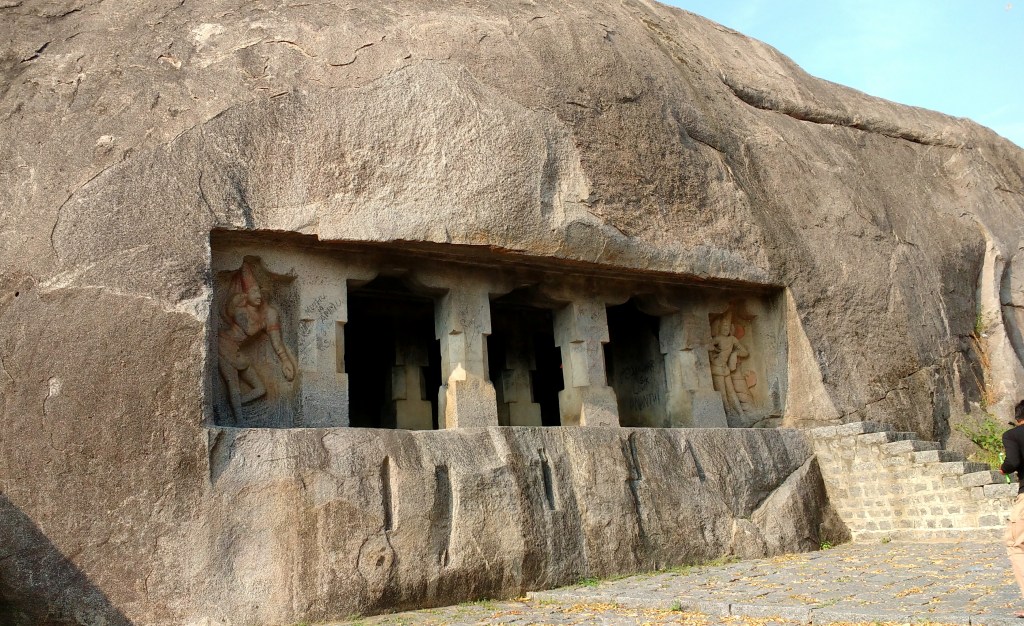
The best example of Mahendravarma style monuments are cave temples at Mamdagapattu,Mahendravadi,Mamandur,Dalavanur, Tiruchirapalli,Callam,Tirukazhukkundram and Siyamangalam.

Cave Temple Mamdagapattu

Mamalla style

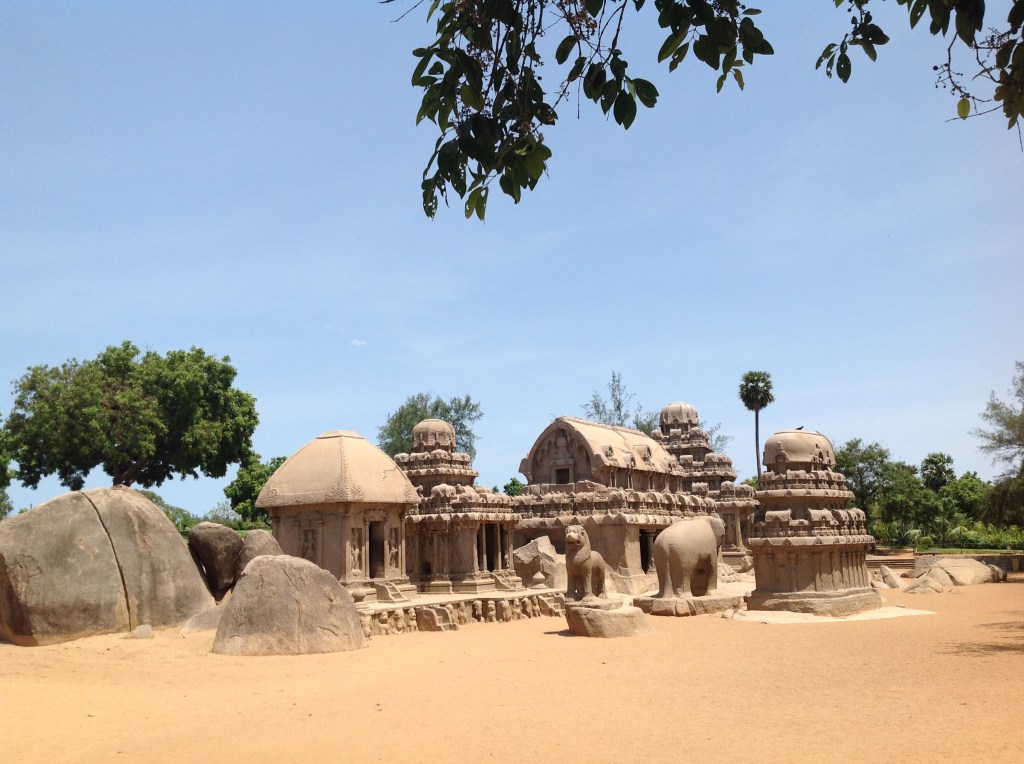
The five Rathas,popularly called Panchapandavar rathas, signify five different style of temple architecture.Each ratha has been carved out of a single rock.So they are called monolithic.The popular Mandapas(pillars pavilions)they built are Mahishasuramardhini mandapam,Thirumoorthi mandapam and Varaha mandapam.

Panchapandavar Rathas

The most important among the Mamalla style of architecture is the open art gallery.Several miniature sculptures such as the figure of lice-picking monkey, elephants of huge size and the figure of the ascetic cat have been sculpted beautifully on the wall of a huge rock.The fall of the River Ganga from the head of Lord siva and the Arjuna’s penance are notable among them.The Great penance panel is considered to be the world’s largest open-air bas relief.

Rajasimha style

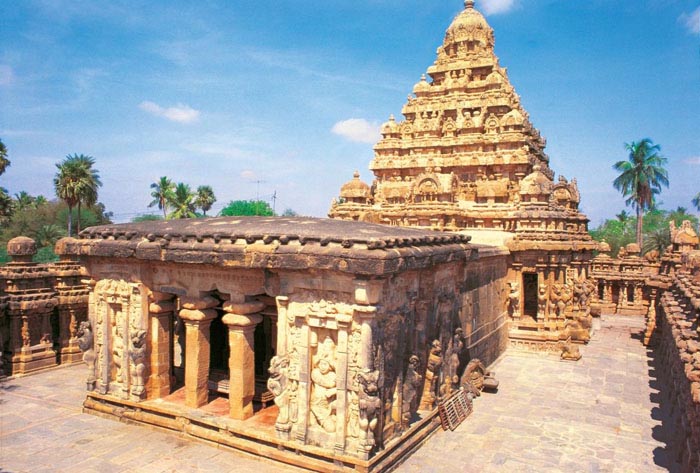
Narasimavarma II,also known as Rajasimha,constructed structural temples using stone blocks.The best example for the structural temple is kailasanatha temple at Kanchipuram.This temple was built by using sand stones.Kailasanatha temple is called Rajasimheswaram.

Kanchi Kailasanatha Temple

Nandivarma style

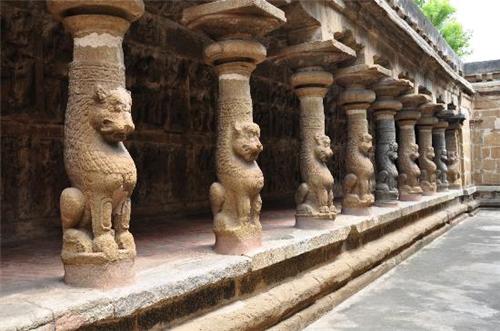
The last stage of the pallava architecture is also represented by structural temples built by the later pallavas.The best example is Vaikunda perumal temple at Kanchipuram.

Society and culture

The Pallava supported Jainism, Buddhism and the Vedic faith.They were great patrons of music, painting and literature.Some of the Pallava kings patronised the Azhwars and Nayanmars.These exponents of Bhakti Cult Preached a new form of Vaishnavism and Saivism.Among the Saivites were Appar and Manikkavasakar.Among the Vaishnatives were Nammazhvar and Andal.The Bhakti movement aimed at preaching a popular faith,in which prayers in Tamil were preferred to those in sanskrit.Women were encouraged to participate in the religious congregations.The Tamil devotional cult was competitive with Buddhism and Jainism.Therefore the latter suffered a gradual decline in most parts of Tamil Country.

Pallava Art

The Pallava kings had also patronised fine arts.The music inscriptions in Kudumianmalai and Thirumayam temples show pallava’s interest in Music.The famous musician Rudracharya lived during Mahendravarma I .The sculptures of this period depict many images in dancing postures.

Acid Rain

“The unthinkable is that we’re distorting this atmospheric balance. We’re shifting the chemical balance so that we have more poisons in the atmosphere – ozones and acid rain on ground level – while we’re also changing the thermal climate of the earth through the greenhouse effect and – get this – simultaneously causing destruction of our primary filter of ultraviolet light. It’s incredible. Talk about the national-debt crisis – we’re piling up debts in the atmosphere, and the piper will want to be paid.”

~ Michael Oppenheimer

Introduction

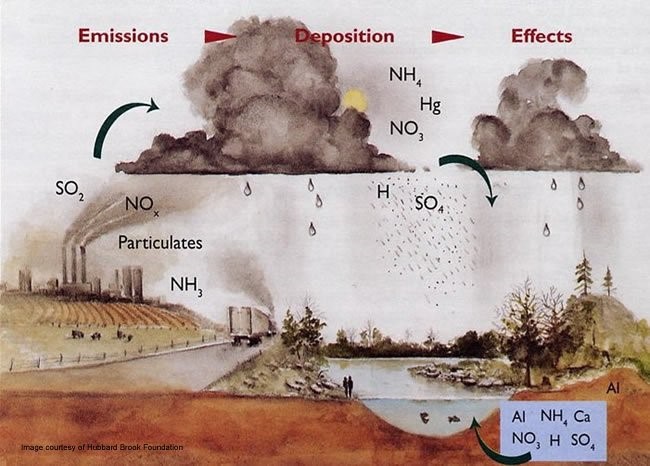
Acid rain, or acid deposition, is a broad term that includes any form of precipitation with acidic components, such as sulfuric or nitric acid that fall to the ground from the atmosphere in wet or dry forms. This can include rain, snow, fog, hail or even dust that is acidic.

Acid rain is caused by a chemical reaction that begins when compounds like sulfur dioxide and nitrogen oxides are released into the air. These substances can rise very high into the atmosphere, where they mix and react with water, oxygen, and other chemicals to form more acidic pollutants, known as acid rain.

It can have harmful effects on plants, aquatic animals, and infrastructure.

Effects of Acid Rain

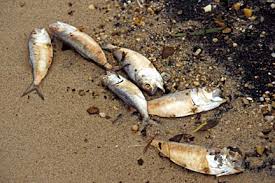
The ecological effects of acid rain are most clearly seen in aquatic environments, such as streams, lakes, and marshes where it can be harmful to fish and other wildlife. As it flows through the soil, acidic rain water can leach aluminum from soil clay particles and then flow into streams and lakes.

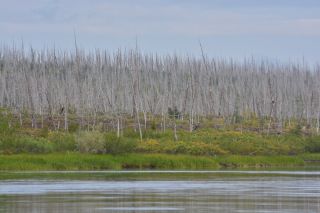
Acid rain has been shown to have adverse impacts on forests, freshwaters, and soils, killing insect and aquatic life-forms, causing paint to peel, corrosion of steel structures such as bridges, and weathering of stone buildings and statues as well as having impacts on human health.

Acid rain also causes the corrosion of water pipes. Which further results in leaching of heavy metals such as iron, lead and copper into drinking water.

Prevention

1. The only precaution that we can take against acid rain is having a check at the emission of oxides of nitrogen and sulphur.
2. We have so far seen the details of acid rain and its harmful effect on animals, plants and the monuments.
3. Being responsible citizens, one should be aware of the harmful effects they cause and of the industries which give out nitrogen and sulphur compound wastes unethically. 4.A great way to reduce acid rain is to produce energy without using fossil fuels. Instead, people can use renewable energy sources, such as solar and wind power. Renewable energy sources help reduce acid rain because they produce much less pollution.

Acid Rain in India

Analysis of rainwater samples from Nagpur, Mohanbari (in Assam), Allahabad, Visakhapatnam and Kodaikanal in the decade 2001-2012 showed a pH level varying from 4.77 to 5.32, indicating that these places have actually been receiving ‘acid rain’. Rainwater with pH below 5.65 is considered acidic.

As energy requirements in India will grow rapidly in tune with the economy, coal dependence is expected to increase threefold over the current level of consumption, making the clouds of acid rain heavier over many highly sensitive areas in the country – the northeast, parts of Bihar, Orissa, West Bengal ,etc ,.

The rains in the Indian Ocean and the Arabian Sea and the Bay of Bengal have become acidic. Studies show the importance to regularly monitor more places for acid rains. But the mechanism to study acid rains is at present inadequate in India. imd stations are not located in the most polluted areas in the country.

Link

(IN)HUMAN RIGHTS

It’s a weekend and you’re wondering how you should spend your time. Maybe go out with friends , or maybe just stay in and read something, or maybe just be locked up in a prison cell. What’s wrong? The last one sounds odd ? Is it not how many people are spending their weekends or maybe everyday of their lives ?

Stan Swamy , 84 year old Jesuit priest, Tribal rights activist based in Jharkhand ,suffering from Parkinson’s disease , died a few days back after being on ventilator for 2 days. He had been lodged in Tihar jail since a year under the stringent charges of UAPA [ Unlawful Activities (Prevention) Act ]. Since he was suffering from Parkinson’s disease , it became difficult for him to carry on his normal day to day activities. It took NIA 50 days to render his request for a sipper and a straw. Yes 50 days. For a straw and a sipper.

Stan Swamy , had worked for Adivasi community and their land and labour rights for decades. He had also questioned the non implementation of 5th schedule of constitution which had led to setting up of Tribes Advisory Coucil with members solely of adivasi communities. He had also raised his voice against indiscriminate arrests of thousands of young adivasis and labelling them as “Naxals”.

Stan Swamy was arrested last year in relation to the Bhima Koregaon case along with many other activists.A brief context to the case – on January 1, 2018 , thousands of Dalits had gathered in Pune to commemorate 200 years of the Battle of Bhima Koregaon — which was won by the British Army (comprising many Dalit soldiers) against Peshwas in 1818.The quiet gathering soon turned violent with many activists being blamed for having instigated and having Maoist links with CPI( M ).

Cartoon 173: Hunger Strike in Iran – Center for Human Rights in Iran

After contracting the corona virus, which further added to his derailing health , he was admitted in the hospital but lost the battle of life before even trying to win the battle of justice.

Human Rights lately sound like a hoax. Despite the fact , that India has Rights of Persons with Disabilities Act ,2016 which protects disabled convicts of torture and discriminatory behaviour in prisons , Stan Swamy was not provided the very basic facilities . India is also signatory to UNCRPD – UN Convention on Rights of Persons with Disabilities, which imposes positive obligation on authorities,including prison staff to ensure that the disabled prisoners are treated equally.

Sudha Bhardwaj, prominent activist , lawyer from Chhattisgarh , also is logded in jail since 2018 in relation to the Bhima Koregaon case and has been refused bail multiple times.

Umar Khalid , activist and former JNU student is also locked up in jail in relation with Delhi riots case under stringent UAPA .

Recently , Pinjra Tod activists, Natasha Narawal and Devangana Kalita were finally released on bail after spending a year in jail. What is most worrisome regarding these cases and many others , is that people have been deprived of their basic fundamental rights. Supreme Court in many of its past judgments has reiterated the right of the accuse of BEING HEARD. Every accused in considered innocent unless proven guilty. And for that purpose BAIL is a very integral part of the process. Bail is the norm , Jail is exception.

How beautiful the sky is , how melodious is the chirping of the birds, how fun it is to catch up with friends at that chai ki dukaan , and how peaceful freedom is. Sadly for some, it’s just a dream.

Applications of Artificial Intelligence-I

What is AI?

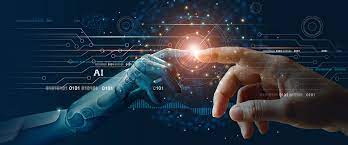
Artificial Intelligence is the intelligence exhibited by machines based on the premise that intelligence is not ‘real’ or human’. It mimics cognitive functions exhibited by humans such as learning and problem-solving.

Artificial intelligence based on Natural intelligence

What is the scope of AI?

Jobs related to AI will increase exponentially in the coming days. It helps to find smart solutions to the problems in various fields in medicine, agriculture, education, security, and so on.

Three stages of Artificial Intelligence. We are near to the second stage.

Applications of AI

  • Machine Learning includes Deep Learning- Neural network
  • Vision includes Image & pattern recognition- Facial recognition
  • Hearing includes Voice and speech recognition
  • Natural Language Processing(NLP) includes Natural Language Understanding(NLU)- Natural Language Generation(NLG)
  • Robotics
  • Expert Systems

We are currently using the following AI-based applications:

  1. Image recognition: Recognizes objects, places, people, and actions in an image.
  2. Speech recognition: Allows humans to use their voices to communicate with the software.
  3. Language translation: Translates a word or sentence from one language to another. Ensure that the translated word is culturally and linguistically correct.
  4. Product analysis: Enables companies to leverage data to reveal user engagement with products or services and tracks the activities, likes, and dislikes of the user.
  5. A/B testing: Determines the version of a webpage and compares two versions and delivers better performance.
  6. Sentiment analysis: Analyze a piece of text to determine the writer’s attitude. It can be categorized as positive, negative, or neutral.

Let’s see few examples of Artificial Intelligence

  1. SIRI: Siri is a popular personal assistant offered by Apple which uses Machine Learning and Voice recognition.
  2. COGITO: It improves the intelligence of customer services by analyzing the human voice emotion and provides real-time guidance.
  3. NETFLIX: Uses predictive technology and provides the user with movie recommendations based on the user’s likes.

Use of Artificial Intelligence in society

“AI is a huge benefit to the society as it enhances the efficiency and throughput while creating new opportunities for revenue generation, cost savings, and job creation.”

-Anand Sampat(Datmo)

‘Robots and AI will destroy jobs’ is nothing but fiction and not fact. But instead, AI creates job opportunities in the market.

“The unparallel combination of human and machine will become the new normal in the workforce of the future”

– Matthew Lieberman

The presence of Artificial intelligence enhances our lifestyles and creates efficient businesses.

“Machine allows humans to do the most interpersonal and creative aspects of work”

 -Chalmers Brown(Due company)

AI platforms will provide real-time insights combined with the explosion of computer power.

“Smart homes will reduce energy usage and provide better security for humans. Marketing will be more targeted and health care will become more effective with smart devices”.

 – Naresh Soni

Start-ups using Artificial Intelligence 

  1. NEST: Alphabet Nest uses AI to learn a home owner’s habit resulting in a reduction of energy consumption. It adjusts the house temperature according to the weather hence energy consumption can be controlled.
  2. COMFY: Comfy offers services for reducing energy consumption in office buildings.
  3. PG&E: Pacific gas and electric company(PG&E) connected 200,000 solar customers, accounting for one in every four houses with solar rooftops.

AI benefits multiple Industries and society will be benefitted from the use of facial recognition, digital content analysis, accuracy in identifying patterns.

“AI risks are real if we don’t understand the quality of the incoming data and set AI rules which are making granular trade-off decisions at increasing computing speeds”

-Mark Butler

Facial recognition: Facial recognition is a biometric technology used to identify human faces and can be used for security purposes. 

Example: Snapchat

Snapchat differentiates between images of objects, pets, sports, and food. It suggests relevant borders and stickers. Identifies your location and suggests location-based filters.
Snapchat filters use Machine Learning and image classification techniques called Convolution Neural Networks(CNN).

BIOTECHNOLOGY- FUTURE OF THE MODERN WORLD

Biotechnology branch of biology deals with the the techniques of using living organism or enzymes to produce useful product for human welfare.

European federation of biotechnology (EFB) has has given a defination of biotechnology from both traditional and modern molecular biotechnology point of view. The definition given by EFB is as follows :

The integration of natural science and organisms,cells,parts thereof, and molecular analogues for products and services”

Engineer Karl Ereky first coined the term ‘biotechnology‘ in 1919, meaning the production of products from raw materials with the aid of living organisms 

Humans have used biotechnology since the dawn of civilization. Egyptians used yeasts to bake leavened bread, the Chinese developed fermentation techniques for brewing and cheese making, and the Aztecs used Spirulina algae to make cakes. Today, when most people think of biotechnology, they probably think of recombinant DNA. Although much of modern biotechnology does deal with manipulating DNA, classical biotechnology began long before we even knew about genes or chromosomes. What began as recipes for production of food now includes technology to enhance everything from farming to pharmaceuticals.

principles of biotechnology.

Traditional biotechnology

Traditional biotechnology refers to ancient ways of using living organisms to make new products or modify existing ones. An example of traditional biotechnology is what human beings have been doing for centuries: cloning plants. Each time a little branch is cut off from a plant and placed in soil to grow a new plant, cloning occurs. Over the past 30 years, biologists have increasingly applied the methods of physics, chemistry and mathematics in order to gain  precise knowledge.

Modern biotechnology

Modern biotechnology we are not only doing the physical manipulation at the visual level but also at the molecular level. In modern molecular biotechnology, we select the desired characteristic at the molecular level and add it to the organism’s genetic makeup. Whereas traditional biotechnology exploits  the potential of processes performed by living organisms, such as fermentation, modern biotechnology manipulates the genes of organisms and inserts them into other organisms to acquire the desired trait. 

However, both traditional and modern biotechnology share the same foundation:  the use of living organisms to enhance crops, fuels, medical treatments and other tools to help humans.

Among many, the two core techniques that enabled birth of modern biotechnology are:

1. Genetic engineering : Techniques to alter the chemistry of genetic material (DNA and RNA),to introduce these into host organisms and thus change the phenotype (physical character) of the host organisms.

2.Chemical engineering : Maintance of sterile microbial contamination free ambience in chemical engineering processes to enable growth of only the desired microbe/ eukaryotic cell in large quantities for the manufacturing of biotechnological products like antibiotics, vaccines, enzymes, etc.

Stanley Cohen and Herbert Boyer in 1972 isolated the first recombinant DNA and the antibiotic resistance gene by cutting out a piece of DNA from a plasmid( autonomously replicating circular extra- chromosomal DNA) which was responsible for conferring antibiotic resistance.

The cutting of DNA at specific locations became possible with the discovery of the so- called ‘molecular scissors’ – Restriction enzymes

Biotechnology is the emerging field nowadays and in coming future it will be the important part For the development of the country. By manipulating genes we can produce more and more useful products for the human welfare.

Classified of Computers based on Configuration🖥💻 :

Based on performance, size,cost and capacity, the digital computers are classified into four different types:
🔅Super computers
🔅Mainframe computers
🔅Mini computers
🔅Macro computers

Super Computers:

🌟The mightiest computers but at the same time, the most expensive ones are known as Super computers.
🌟Super computers process billions of instructions per second.
🌟In other words, Super computers are the computers normally used to solve intensive numerical computers.
🌟Examples of such applications are stock analysis, special effects for movies, weather forecasting and even sophisticated artworks.

Mainframe Computers:

🌟Mainframe computers are capable of processing data at very high speeds- hundreds of million instructions per second.
🌟They are large in size.
🌟These systems are also expensive.
🌟They are used to process large amount of data quickly.
🌟Some of the obvious customers are banks, airlines and railway reservation system, aerospace companies doing complex aircraft design, etc.

Mini Computers:

🌟The Mini computers were developed with objective of bringing out low cost computers.
🌟Ther are lower to Mainframe computers, in term of speed and storage capacity.
🌟Some of the hardware available in Mainframe were not included in the Mini computer handled by hardware in Mainframe computers were done by software in Mini computers.


🌟Hence the performance of Mini computers is less than that of the Mainframe.
🌟However, the Mini computer market has diminished somewhat as buyers have moved towards less expensive but increasingly powerful personal computers.

Micro computers:

🌟The invention of microprocessor (single chip CPU)gave birth to the micro computers.
🌟They are several times cheaper than mini computers.
🌟The micro computers are further classified into,
🔅workstation
🔅personal computers
🔅 laptop computers
🔅smaller computers

🌟Although the equipment may vary from the simplest computer to the most powerful, the major functional units of the computer system remain tha same :
🔅input
🔅processing
🔅storage
🔅output

Workstations:

🌟Workstations are also desktop machines mainly used for intensive graphical applications.
🌟They have more processor speed than that of personal computers.
🌟Workstations use sophisticated display screens featuring high – resolution colour graphics.
🌟Workstations are used for executing numeric and graphic intensive applications such as Computer Aided Design (CAD), simulation of complex systems and visualizing the results of simulation.

Personal Computers:

🌟Today the personal computers are the most popular computers systems simply called PCs.
🌟These desktop computers are also known as home computers.
🌟They are usually easier to use an more affordable than Workstations.
🌟They are self-contained desktop computers intended for an individual user.
🌟Most often used for word processing and small database applications.

Laptop Computers:

🌟Laptop computers are portable compilation fit in a briefcase.
🌟Laptop computers, also called notebook computers, are wonderfully portable and functional, and popular with travelers who need a computer that can go with them.

Getting Smaller Still:

🌟Pen-based computers use a pen like stylus and accept handwritten input directly on a screen.
🌟Pen-based computer are also called Personal Digital Assistant (PDA).
🌟Special engineering and hardware design techniques are adopted to mske the portable smaller and light weight computers.

Major problems faced in India.

Every country in the world have some other the problems, like that India also have some problems. In this blog, we are going to discuss, some major problems in India like the , education system, unemployment, poverty, basic sanitation, and pollution.

EDUCATION SYSTEM

Every education system will have both theoretical and practical knowledge. Both theoretical and practical knowledge are important. In India’s education system consist of 90 percent theoretical knowledge and 10 percent practical knowledge. Every student needs practical and skilled knowledge, because they are the one who help student to live in the real world. Every sector whether it is agriculture or IT needs skilled workers not theoretical workers. Students in India often study to score marks not knowledge.

UNEMPLOYMENT

According to a survey, 6.9 percent of people in India are unemployed. Nowadays, unemployment become common among youngsters. Unemployment is the state at which person who is able to work but fails to get one. Why there is unemployment in India? The unemployment rate is high in India because there are more job seekers than the job requirement. Due to covid-19 pandemic many people lost there jobs because of the national wide lock down and shut down of some companies. There is high competition for every job in India because of the high population. India stands at 86th position in unemployment in the world. The government of India must take the necessary steps to eradicate unemployment. This is very serious problem in the society.

POVERTY

Poverty is another major problem for a country. As of now, 13.7 percent of people in India live below the poverty line. People who earn less than 1060 rupees in rural and 1286 rupees per month in urban comes under the poverty line. 80 percent of the poor people live in villages only. 43 percent of the people belongs to Scheduled Caste(SC) and Scheduled Tribes(ST). The maximum people living below the poverty line are found in Bihar, Madhya pradesh, Uttar pradesh and rajasthan only. People under the poverty line declined from 37 percent in to 13.7 percent in 2021. Experts suggest that it will decline by 5 percent in 2025.

POLLUTION

Pollution is the serious problem for all countries in the world. As of now, India stands 5th position in world’s most polluted countries. Delhi is the most polluted city in India, Breathing air in Dehli is like breathing 35 cigarettes at a time. There are many types of pollution such as water pollution, air pollution, land pollution and noise pollution. sewage water is main reason for water pollution in India. Ganga and yamuna are the most polluted rivers in India. Vehicle horns and construction sounds are main reason for noise pollution. Government needs to take care of these following problems.

BASIC SANITATION

Sanitation is another big problem in India. According to a survey, more than 700 million people don’t have the access to toilets at there home. In slums people don’t have a toilet at all. Many rural schools don’t have toilet facilities because of that parents don’t send there daughter to school. We should be thankful government because under the Swach Bharat Abhiyan government built 12 million toilets for the people.

That’s all from my side. I hope you like it.

IMPORTANCE OF EDUCATION IN OUR LIFE:

Education is a constitutional right of every citizen that prepares an individual to play their role as a sophisticated member of society. The importance of education can be implied by habituating the lack of its existence. The Importance Of Education and its significance can be understood through the life of an ignorant and illiterate person , who has never had the chance to visit the school and is experiencing the bane of illiteracy could value the answer to the question -Why is Education an essential factor in our life? He/she knows the prominence and importance of education and its changes in individuals life. Education is a powerful weapon that aids an individual to face the adversities of life and overcome societal stigmas such as poverty , fear, status ,to achieve success. Education is the hope of development and success for third – world countries and the worlds dominion countries . Mandatory education builds the scope of better growth and development.

MAHABHARAT

The MAHABHARATis one of the epic stories in our Indian history, other than Ramayan. It portrays the struggle between the two gangs of cousins “the pandava” and “the kaurava” in the Kurukshetra.

The Mahabharat is considered as the longest epic poem known and has been described as “the longest poem ever written”

THE OLDER GENERATION

 Shantanu, the king of Hastinapur, once’s married with goddess Ganga and has son with her named Devavrata later knowns as Bhishma. After many years, when King Shantanu sees Satyavati while he was hunting, she was the daughter of the chief of fisherman, and asks her father for her hand. Her father refuses for marriage unless the King Shantanu promises to make their son as the king of the Hastinapur after his death. To resolve his father’s dilemma, Devavrata agrees to relinquish his right to the throne. And takes the oath of not getting married to anyone. Later Satyavati gave birth to his two sons  Chitrangada and Vichitravirya. The miseries still have not ended, king Shantanu died soon and their son Chitrangada also lived a short life. After all this Vichitravirya was announced as the king of Hastinapur and he was later married to the kasi daughters Amika and Ambalika. The older daughter Amba refuses to marry as she wish to marry swayamvara but due to certain reasons swayamvara refuses to marry her and with this she became the great enemy of Bhishma and she gives herself to the angi (fire). And later she was born as Shrikhandi the daughter of Drupada. She was the cause of Bhishma’s death and wish to defeat him with the help of Arujuna.

PANDVA AND KAURAVA PRINCES

Vichitravirya was died young with no children later Satyavati ask Vyas to father them with the widows. The eldest, Ambika, gives birth to her son Dhritarashtra who as born blind. Ambalika gave birth to her son Pandu. Later Ambika and Ambalika send their maid instead, to Vyasa’s room. Vyasa fathers a third son, Vidur, by the maid. He was announced as Prime Minister (Mahamantri or Mahatma) to King Pandu and King Dhritarashtra.
When both the princes grow up, Dhritarashtra was about to be crowned king by Bhishma but due to his blindness King Pandu was honoured and the throne was given to him. Dhritarashtra was married to the Gandhari, a princess from Ghandhara, Pandu was married twice to, kunti and madri. Ghandhari also blindfolded herself for the rest of her life to feel the pain as her husband Dhritarashtra.
Her brother Shakuni was angry as his sister was married to an blind man and vows to take revenge on the Kuru family.
Later Pandu, Madri and Kunti went for excel and their they had their 5 sons. Kunti was give boon by the Druvasa that she could invoke any mantra and have her son. Kunti uses this boon to ask Dharma the god of justice, Vayu the god of the wind, and Indra the lord of the heavens for sons. She gives birth to three sons, Yudhishthira, Bhima, and Arjuna, And shares her rest mantra with Madri, she later gave birth to twins Nakul and Sahadeva through the Ashwini, Later on usually referred to as the Pandava brothers.
Due to uncertain situation King Pandu died and Madri commits suicide.
Ghandhari gave birth to her hundred sons, all born after the birth of Yudhishthira. These where names as the Kaurava brothers, the eldest being Duryodhana and the second Dusasaha.. The competitiveness and enmity between them and the Pandava brothers, leads to the Kurukshetra war.

TO BE CONTINUED IN NEXT ARTICLE……

COMPONENTS OF A MAP

A map should include the following components namely, the title, scale, direction, grid system, projection, legend, conventional signs and symbols.

Title

It indicates the purpose or theme of the map. Example: India – Physical, World – Political, Tamil Nadu – Transport.

Scale

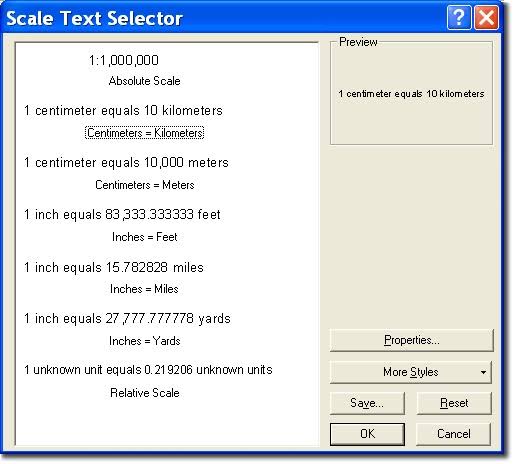
Scale makes it possible to reduce the size of the whole earth to show it on a piece of paper. A scale is a ratio between the actual distance on the map to the actual distance on the ground. Scales can be represented in three methods. They are the Statement, Representative Fraction (R.F) and Linear or Graphical scale methods.

Statement scale

Scale makes it possible to reduce the size of the whole earth to show it on a piece of paper. A scale is a ratio between the actual distance on the map to the actual distance on the ground. Scales can be represented in three methods. They are the Statement, Representative Fraction (R.F) and Linear or Graphical scale methods.

The Representative Fraction (R.F)

Representative Fraction (R.F) = Distance on the map/Distance on the ground

Linear or Graphical scale

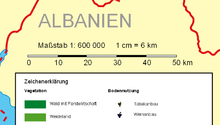
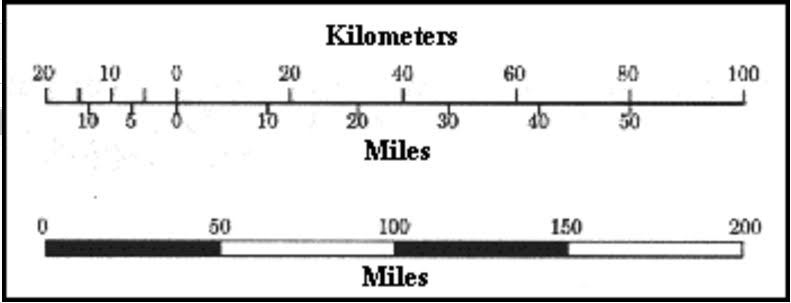
In a map, a linear scale is represented by a straight line divided into equal parts (Primary and Secondary) to show what these markings represent on the actual ground. This scale helps in the direct measurement of distance on the map.

Direction

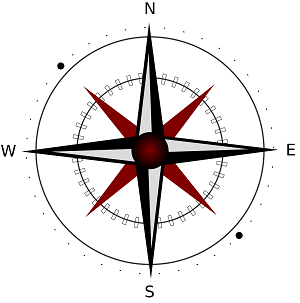
Maps are drawn normally with north orientation. North direction in a map is always towards the North Pole of the earth. If you position yourself looking at the North Pole, on your right will be the east; your left will be the west; at your back will be south. These four main directions are called the cardinal directions. Direction is usually indicated on a map by a North-South line, with the North direction represented by an arrow head.

Grid System

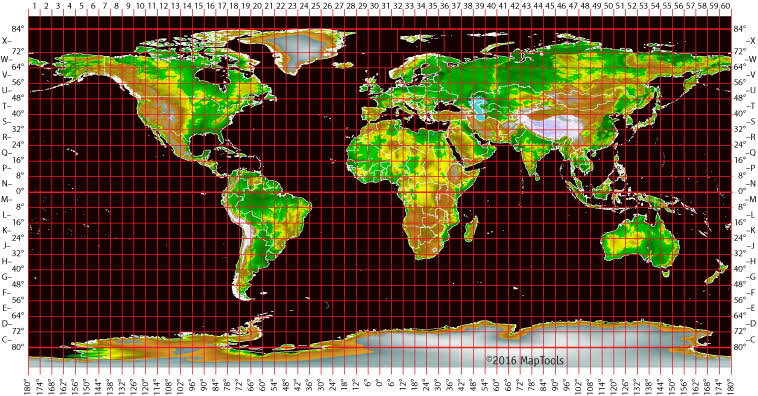
The location of a place can be simply defined by its latitude and longitude. In normal practice, latitude is stated first and then comes the longitude. The latitude and longitude of a place can be expressed in units of degree, minutes and seconds.

Projection

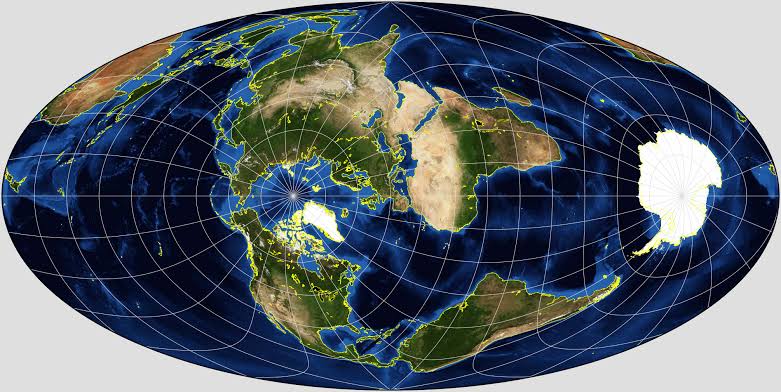
A map projection is a way of showing the spherical shaped earth on a flat piece of paper. Where does the word ‘projection’ come from? Imagine a clear globe with latitude and longitude lines and the outlines of the landmass on it. Suppose there was a light bulb inside the globe. If you wrapped a piece of paper around the globe and turned on the light bulb, the outlines of the grid and landmasses would be projected onto the paper. Map projection is defined as the transformation of spherical network of latitudes and longitudes on a plane surface. Projection are drawn to maintain the shape, area and direction.

The three methods in widest use are as follow:
• Projection on the surface of a cylinder
• Projection on to the surface of a cone
• Projection directly onto a flat plane, called planar or zenithal or azimuthal projection

Legend

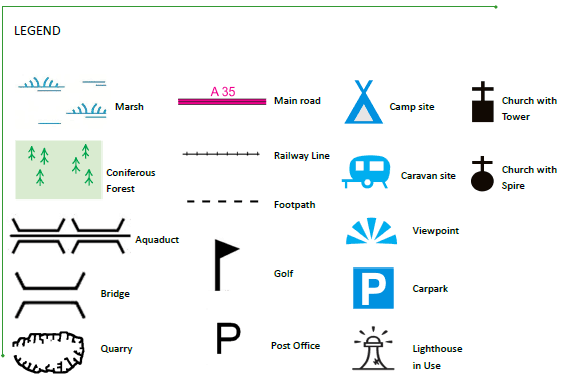
The legend of a map helps to understand the map details which are placed at the left or right corner at the bottom of the map.

Conventional signs and symbols

Conventional signs and symbols are standard symbols used on a map and explained in the legend to convey a definite meaning. The topographic map contains a variety of information about physical and cultural features.

These are shown by using signs and symbols in various colours so that the clarity of the map is maintained.

There are three types of map symbols

• Point Symbols – buildings, dipping tanks, trigonometrical beacons
• Line Symbols – railways, roads, power lines, telephone lines
• Area Symbols – Cultivated lands, ponds, orchards and vineyards

INDIAN NAVY DAY

OVERVIEW :-

Indian Navy Day is celebrated every year on December 4 to salute Indian Navy for their exceptional duties of protecting the water boundaries of motherland India. 4 December was chosen to celebrate the Navy Day because on this date in the year 1971, Indian Navy fought a ferocious war against Pakistan. Indian Navy destroyed 4 Pakistani vessels including PNS Khaibar and killed hundreds of Pakistani Navy personnel. This operation if Indian Navy was named as Operation Trident. This day also marks the day to remember all the soldiers who fought with utmost bravery and laid down their life for motherland India. Thus giving the greatest sacrifice for the country.

THE INDIAN NAVY WEEK :-

The celebrations for Indian Navy Day goes on for a week. During this week, many types of water sports events are organized by the Indian Navy including swimming competitions. Quiz competitions for school children are organized. The warships and aircrafts of Indian Navy are opened for the visitors. This experience give visitors the moment of their life which they will cherish for life long.

NAVY DAY CELEBRATIONS

As per the management of these events, “The Military Photo Exhibition is also performed by photojournalists of the Ernakulum in the Navy fest. Other events such as blood donation camps are also held. A community service for the Indian Navy is conducted by the Naval Institute of Aeronautical Technology (NIAT) at Good Hope Old Age Home, Fort Kochi in which the students from the Navy Children School Chair take turns to entertain the inmates and Naval doctors (from INHS Sanjivani) provides medical checkup to the inmates. The Navy Ball and Navy Queen contests including the Navy fest are held to celebrate Navy Day.”

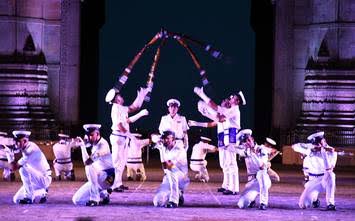
Beating the retreat, LASER light shows and air shows are organized and these are the main attractions for the visitors. Blood donation camps are organized by the Indian Navy Doctors throughout the country at different centres.

AIR SHOW ON NAVY DAY

In the year 2017, The maiden ‘Land of Legends’ marathon conducted by Indian Naval Academy (INA) on the occassion of Indian Navy Day. More than 700 participants took part in this marathon. The total length of this marathon was 21.1 km. For senior citizens, ladies and children this marathon was about 5 km and 3km long.

THEMES OF NAVY DAY :-

Every year the Indian Navy Day is celebrated with a unique theme. Like the theme of Navy Day 2020 was “Indian Navy Combat Ready, Credible & Cohesive”. “COVID-19 and Chinese attempts to change status quo along northern borders have posed new challenges. The Navy is ready to face both these challenges,” Admiral Karambir Singh, the Navy chief said at a press conference on the eve of Navy Day. This year a 360° virtual view of INS Vikramaditya was shown to all the visitors which was a unique experience for them.

“Navy Day greetings to all our valorous navy personnel and their families. The Indian navy fearlessly protects our coasts and also renders humanitarian assistance in times of need. We also remember India’s rich maritime tradition over centuries.” – PM Narendra Modi

“On the occasion of #NavyDay2020 we reaffirm #Indian Navy’s steadfast commitment to the service of the Nation and towards ensuring our Maritime Security & Territorial Integrity.”
– Admiral Karambir Singh, Chief of the Naval Staff & all personnel of Indian Navy

Links :-

MONSOON – BOON AND BANE

The coming of the rains signifies relief from the scorching heat of summer. Holding hands in the summer comes the rains. The rainy season begins in mid-June and lasts until September. Dark and dark skies are a common occurrence during the rainy season, indicating only the much-anticipated rainfall. Although the rains disrupt our daily routine and cause occasional interruptions, the rainy season is always welcome.

At the beginning of the rains, people were seen digging out their umbrellas, raincoats and gumboots. Pupils are seen running to school with raincoats and umbrellas and sometimes very happy to take a shower in the rain. Office travelers seem to rush to the offices so that they can arrive on time. Sometimes when there is too much rain, life stops during the rainy season. Traffic jams, flooded roads, and floodplains, as well as people and children roaming the floodwaters, are common during the monsoon season. Sometimes it is good to watch the children float paper towels in the flooded water. Best of all, the ‘rainy day’ holiday is always welcome this season.

The rainy season is a blessing for farmers across the country and for agriculture. Farmers all over the country are waiting for the floods as the monsoon rains are very important for crop growth. During the rainy season the fields, crops, trees and plants survive. The whole environment comes to life in the ‘green sea’ during the rainy season. It is important that the rains come in time or else the late rains can cause drought; farming is also affected. Apart from modern farming methods, the rainy season is a pond for the farmer and his fields, the inturn which is the source of our food. A variety of plants, vegetables and plants grow in the air. Beautiful flowers also bloom during this time. Dry rivers are flooded by torrential rains for many across the country.

Rainy season has no disadvantages. Sometimes the blessings of this season are turned into curses because of natural disasters and catastrophes. Sometimes when the rains do not arrive on time, a drought occurs. Extreme rainfall also causes severe damage to crops. River flooding causes severe flooding, damaging property, fields and crops, and loss of life. Landslides during the rainy season in the highlands cause many to lose their lives, their homes and their lives. In urban areas the people most affected by hurricanes are people who live on the streets. Poor street dwellers are losing their homes due to heavy rains and floods. Several diseases such as malaria, diarrhea, typhoid and cholera appear to occur among people during the rainy season.

In all of them the blessings of the rain pass when curses and evil abound. The entire cycle of life on earth is connected to the rains. So the arrival of the rain announces the message of creation; and the aroma of rain in the air brings us back to life after the scorching heat and the unending heat of summer.

Bio – War

Biological warfare, also known as germ warfare, is the use of biological toxins or infectious agents such as plagues, bacteria, viruses, insects, and fungi with the intent to kill, harm or incapacitate humans, animals or plants as an act of war.

Deadliest bio weapon

Bacillus Anthracis (Anthrax)

Bacillus anthracis bacteria, which causes anthrax, is one of the most deadly agents to be used as a biological weapon. It is classified by the US Centres for Disease Control and Prevention (CDC) as a Category A agent, posing a significant risk to national security.

when it is actually started ?

One of the first recorded uses of biological warfare occurred in 1347, when Mongol forces are reported to have catapulted plague-infested bodies over the walls into the Black Sea port of Caffa (now Feodosiya, Ukraine), at that time a Genoese trade centre in the Crimean Peninsula.

Biological warfare is distinct from warfare involving other types of weapons of mass destruction (WMD), including nuclear warfare, chemical warfare, and radiological warfare. None of these are considered conventional weapons, which are deployed primarily for their explosive, kinetic, or incendiary potential

Biological weapons may be employed in various ways to gain a strategic or tactical advantage over the enemy, either by threats or by actual deployments. Like some chemical weapons, biological weapons may also be useful as area denial weapons. These agents may be lethal or non-lethal, and may be targeted against a single individual, a group of people, or even an entire population. They may be developed, acquired, stockpiled or deployed by nation states or by non-national groups. In the latter case, or if a nation-state uses it clandestinely, it may also be considered bioterrorism.

With the onset of World War II, the Ministry of Supply in the United Kingdom established a biological warfare program at Porton Down, headed by the microbiologist Paul Fildes. The research was championed by Winston Churchill and soon tularemia, anthrax, brucellosis, and botulism toxins had been effectively weaponized. In particular, Gruinard Island in Scotland, was contaminated with anthrax during a series of extensive tests for the next 56 years. Although the UK never offensively used the biological weapons it developed, its program was the first to successfully weaponize a variety of deadly pathogens and bring them into industrial production. Other nations, notably France and Japan, had begun their own biological weapons programs.

How to stop bio weapon ?

Elements of preparedness include vaccinating military personnel against anthrax and other diseases caused by biological weapons; developing methods for the rapid detection of biological threat agents; developing and stockpiling vaccines and antimicrobial drugs that could be used to protect the public against diseases

When the United States entered the war, Allied resources were pooled at the request of the British, and the U.S. established a large research program and industrial complex at Fort Detrick, Maryland in 1942 under the direction of George W. Merck. The biological and chemical weapons developed during that period were tested at the Dugway Proving Grounds in Utah. Soon there were facilities for the mass production of anthrax spores, brucellosis, and botulism toxins, although the war was over before these weapons could be of much operational use.

Indian Culture

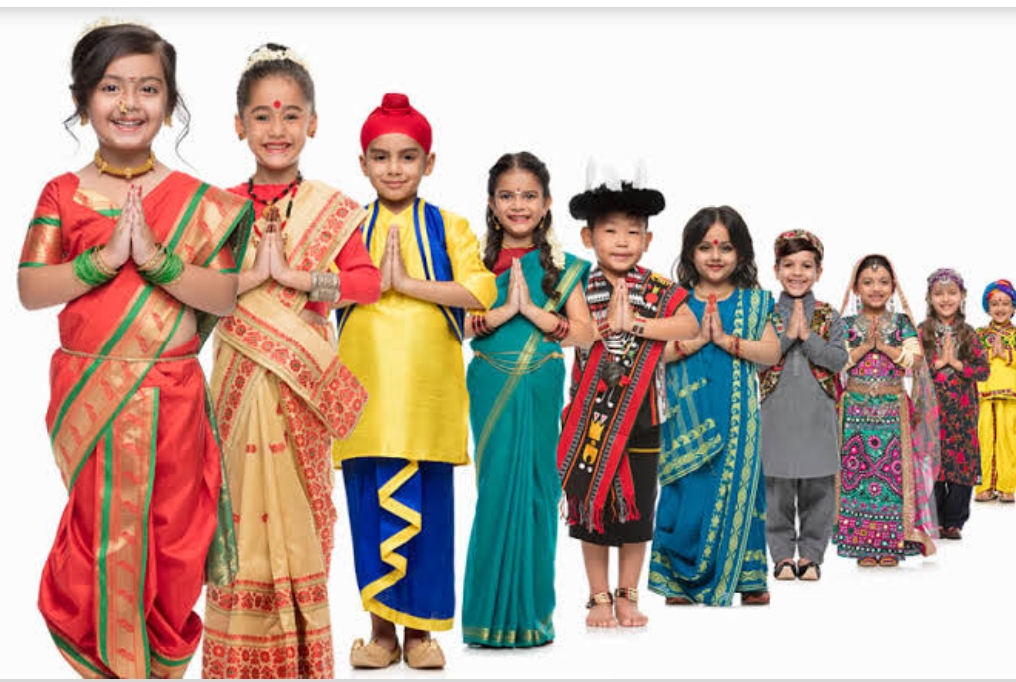
Indian cultures and traditions are popular all over the world.Various art forms such as dance, painting, music also a part of Indian’s heritage. People in India are very religious and spiritual. Indians are also humble, kind and helpful. India has a culture, to welcome and treat guests like God.Indian culture is very rich and it has a unique position in the world.We have a tradition of respecting elders, being truthful and helping each other.Many people in India still live in joint families with grandparents, uncle, etc.This helps children in family to learn culture and traditions from childhood

INDIAN CULTURE

No matter what, they always live together and celebrates each others festivals with great enthusiasm.Many different eras have come and ruled the Indian culture but nothing could influence the rich cultural heritage. Younger generations are still in touch with their ancestors and are therefore able to learn and acquire their cultural and tradition values.The property of togetherness amongst people has made India a unique country.I am really proud of our Indian culture.