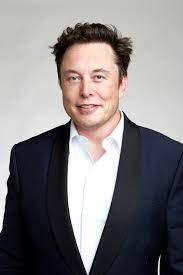
Elon Musk

World’s Second Richest Person and an Ideal For Many

Elon Musk

Elon Musk or Elon Reeve Musk is an entrepreneur business magnate in today’s world who has totally evolved the technological terms of today . He is the founder, CEO, and Chief Engineer at SpaceX early stage investor CEO and Product Architect of Tesla, Inc. He was born in Pretoria, South Africa. He got his Bachelor’s degree in physics and economics from  University of Pennsylvania. He started his career by co-founding the web software company Zip2. This startup was acquired by Compaq for $307 million in 1999. After this Musk co-founded online bank X.com that same year, which merged with Confinity in 2000 to form PayPal. The company was bought by eBay in 2002 for $1.5 billion.

SpaceX

Then In 2002, Musk founded SpaceX, an aerospace manufacturer and space transport services company, of which he is CEO and CTO. This rocket firm SpaceX, works on building reusable rockets and aspires to land humans on Mars .

Tesla

Then after this in 2004, he joined electric vehicle manufacturer Tesla Motors, Inc. (now Tesla, Inc.) as a chairman and product architect and became its CEO in 2008. Tesla produces super modern cars that run on lithium batteries and are luxurious and have an auto pilot mode which sounds really impossible to normal ears.

Solar City

In 2006, he helped create SolarCity, a solar energy services company that was later acquired by Tesla and became Tesla Energy. This company Solar City develops solar panels and solar roof tiles and aims at making this world to use the purest and cleanest fuels that are highly renewable so that even their infinite use does not exhaust them.

Neuralink

Neuralink is a startup which develops ultra high bandwidth brain machine interfaces to connect human brains to computers to help cure nervous system problems. The company was launched in 2016 and was first publicly reported in March 2017.

Failure

All this was not always as smooth as it looks. The biggest success of PayPal today was once awarded with “World’s worst business concept of the year”. Elon Musk is a person who has experienced some very adverse situations in terms of his personal life. After all, he went through a very public and long divorce process with his previous wife. He stated that this period was consumed by deep depression. As if that wasn’t enough when the 2008 recession depleted the profitability of Space X and Tesla. Elon was almost broke again and facing a decision to axe one of these two companies. In the end, Elon decided to split any remaining funds between the two companies and later that year. He received word that NASA were committing $6 billion to Space X. Needless to say, both companies survived the storm and Elon even married again just a few years later.

Where most people leave , Elon leaned in and poured is money , sweat, blood, tears in making his companies successful and his passion for design, engineering and the future would have him succeed on both the fronts.

Learning

The main thing to learn is that with the acquisition of PayPal his net-worth rose to 123 Million USD and he could have retired early and rode off into sunset and live happily after ” BUT THAT’S NOT HOW LEGENDS ARE MADE” . Instead he took a gamble and invested his newfound millions into his two separate companies – SpaceX and Tesla .

Source – https://www.instagram.com/p/CJ_V9__gvNI/?utm_medium=copy_link

Energy currency of the cell ATP

Adenosine 5′-triphosphate, or ATP, is the principal molecule for storing and transferring energy in cells. It is often referred to as the energy currency of the cell and can be compared to storing money in a bank. ATP can be used to store energy for future reactions or be withdrawn to pay for reactions when energy is required by the cell. Animals store the energy obtained from the breakdown of food as ATP. Likewise, plants capture and store the energy they derive from light during photosynthesis in ATP molecules. ATP is a nucleotide consisting of an adenine base attached to a ribose sugar, which is attached to three phosphate groups. These three phosphate groups are linked to one another by two high-energy bonds called phosphoanhydride bonds. When one phosphate group is removed by breaking a phosphoanhydride bond in a process called hydrolysis, energy is released, and ATP is converted to adenosine diphosphate (ADP). Likewise, energy is also released when phosphate is removed from ADP to form adenosine monophosphate (AMP). This free energy can be transferred to other molecules to make unfavourable reactions in a cell favourable. AMP can then be recycled into ADP or ATP by forming new phosphoanhydride bonds to store energy once again. In the cell, AMP, ADP, and ATP are constantly interconverted as they participate in biological reactions.

Thermodynamics in Biological Systems

The First Law of Thermodynamics

The first law of thermodynamics deals with the total amount of energy in the universe. It states that this total amount of energy is constant. In other words, there has always been, and always will be, exactly the same amount of energy in the universe. Energy exists in many different forms. According to the first law of thermodynamics, energy may be transferred from place to place or transformed into different forms, but it cannot be created or destroyed. The transfers and transformations of energy take place around us all the time. Light bulbs transform electrical energy into light energy. Gas stoves transform chemical energy from natural gas into heat energy. Plants perform one of the most biologically useful energy transformations on earth: that of converting the energy of sunlight into the chemical energy stored within organic molecules. 

The challenge for all living organisms is to obtain energy from their surroundings in forms that they can transfer or transform into usable energy to do work. Living cells have evolved to meet this challenge very well. Chemical energy stored within organic molecules such as sugars and fats is transformed through a series of cellular chemical reactions into energy within molecules of ATP. Energy in ATP molecules is easily accessible to do work. Examples of the types of work that cells need to do include building complex molecules, transporting materials, powering the beating motion of cilia or flagella, contracting muscle fibers to create movement, and reproduction.

The Second Law of Thermodynamics   

A living cell’s primary tasks of obtaining, transforming, and using energy to do work may seem simple. However, the second law of thermodynamics explains why these tasks are harder than they appear. None of the energy transfers we’ve discussed, along with all energy transfers and transformations in the universe, is completely efficient. In every energy transfer, some amount of energy is lost in a form that is unusable. In most cases, this form is heat energy. Thermodynamically, heat energy is defined as the energy transferred from one system to another that is not doing work. For example, when an airplane flies through the air, some of the energy of the flying plane is lost as heat energy due to friction with the surrounding air. This friction actually heats the air by temporarily increasing the speed of air molecules. Likewise, some energy is lost as heat energy during cellular metabolic reactions. This is good for warm-blooded creatures like us, because heat energy helps to maintain our body temperature. Strictly speaking, no energy transfer is completely efficient, because some energy is lost in an unusable form.

An important concept in physical systems is that of order and disorder (also known as randomness). The more energy that is lost by a system to its surroundings, the less ordered and more random the system is. Scientists refer to the measure of randomness or disorder within a system as entropy. High entropy means high disorder and low energy (Figure 2). To better understand entropy, think of a student’s bedroom. If no energy or work were put into it, the room would quickly become messy. It would exist in a very disordered state, one of high entropy. Energy must be put into the system, in the form of the student doing work and putting everything away, in order to bring the room back to a state of cleanliness and order. This state is one of low entropy. Similarly, a car or house must be constantly maintained with work in order to keep it in an ordered state. Left alone, the entropy of the house or car gradually increases through rust and degradation. Molecules and chemical reactions have varying amounts of entropy as well. For example, as chemical reactions reach a state of equilibrium, entropy increases, and as molecules at a high concentration in one place diffuse and spread out, entropy also increases.

Various types of Proteins

Based on composition, there are two types of proteins as follows:

  1. Simple Proteins: These proteins are made up of only amino acids e.g.,  albumins, globulins, glutelin.
  2.  Conjugated proteins: These are formed by the binding of a simple protein with a non-protein called the prosthetic group. Depending upon the type of prosthetic group, conjugated proteins are of several types few of which are mentioned below:

Based on shape, proteins are classified into two types:

1.Fibrous proteins: They are thread-like structural proteins that may occur singly or in groups.  Fibrous proteins generally possess secondary structures and are insoluble in water. The common example of fibrous proteins is collagen of connective tissue, actin and myosin of muscles, keratin of scales,  feathers,  hair,  claws,  nails, horns and hoofs, the silk of spider web. Fibrinogen is also a fibrous protein but soluble in blood plasma. It forms insoluble fibrin during the clotting of blood.

2.Globular proteins: They are spherical in shape and are involved in metabolic activities.  They have a tertiary or quaternary structure.  Smaller globular proteins are usually soluble in water and are not coagulated by heat, e.g., histones.  Egg albumin, serum globulins and glutelin (wheat,  rice)  are examples of large globular proteins, which get coagulated by heat.

Role/ Functions of proteins

Proteins perform several functions in organisms. The main functions of proteins are as follows:

1.Structural Proteins: Many proteins serve as a building material of cells and tissues. They take part in the formation of a colloidal complex of protoplast, cell membranes, organelles, extracellular matrices and fibres. Some proteins form supporting structures, e.g., elastin of ligaments, collagen of tendons, cartilages, bone and connective tissue. Keratin is the major constituent of the external protective structure of animals like hair, feathers, horny layer of skin, nails, claws, hoofs etc.

2.Enzymes: Many proteins function as enzymes to catalyse biochemical reactions that occur in the living world. Enzymes play a key role in metabolism. Every enzyme is specific in action.  E.g.,  Amylase,  protease,  RUBISCO  etc.  RUBISCO  (Ribulose Bisphosphate Carboxylase Oxygenase) is the most abundant enzyme found in plants. It the principal enzyme involved in photosynthesis.

3.Carrier  Proteins  (Transport proteins): Some proteins act as carriers that bind and transport specific molecules across a membrane or in a body fluid.  Hemoglobin of RBCs transports oxygen in the body.  RBCs contain haemoglobin  (Hb)  which is made up of 4 polypeptide chains and contains an iron ion. Iron has a strong affinity for oxygen. In the lungs, oxygen combines with haemoglobin to produce oxyhemoglobins. In body cells, oxygen is released and can diffuse into a body cell. Other examples include proteins such as the myoglobin of muscles that store oxygen. α-globulin of blood carries thyroxine and bilirubin,  β-globulin transport vitamins  A,  D  and  K, cholesterol and ions in the blood.

4.Receptor  Proteins: Several proteins present on the external surface of the cell membrane act as receptor molecules. A receptor protein molecule receives chemical signals from outside a cell. When such chemical signals bind to a  receptor, they cause some form of cellular/tissue response. For example, when insulin is released in the blood, the receptor proteins present on the cell membrane bind with this insulin. This binding changes the permeability of the cell membrane and glucose can enter the cell through glucose channels.

5.Hormones: Some hormones are proteinaceous, e.g., insulin(sugar metabolism regulating hormone} parathyroid (calcium and phosphate transport regulating hormones). Hormones play a key role in the regulation of metabolism.

6.Contractile Proteins: Myosin and actin make the muscle fibres contractile to bring about movements and locomotion. The contractile system is made up of protein actin but association with myosin is essential for contraction.

7.Defensive proteins: Some proteins act as antibodies (immunoglobulins) that participate in the defence mechanism of the body.

8.Storage Proteins: These occur in milk, eggs and seeds to nourish the young ones. They include casein of milk, albumin of egg white and glutelin in cereals.

UNDERSTANDING GOOD GOVERNANCE

GOOD GOVERNANCE SHOULD BE LIKE AIR. IT’S EXISTENCE NEED NOT BE DISCUSSED BUT IT’S ABSENCE WOULD MAKE A HUGE DIFFERENCE”

Nowadays the terms “Governance” and “Good Governance” are being used widely. Major reforms, actions, changes and even donations and institutional activities are basing all their rules and regulations which will help achieve “good governance”.

WHAT IS GOVERNANCE ?

Governance is the process or system by which entities are administered or directed and controlled. It is the process of decision making and the process of deciding the actors who will be involved in the decision making process and implementation of decisions.

The concept of “governance” has been used from past many years and can be used in several contexts such as international or national governance, corporate governance, local governance etc. One of the major actor of governance is “government” and other actors involved in the process of governance are NGOs, private bodies, landlords, research institutes, religious leaders, political parties, military etc.

GOOD GOVERNANCE

The term “Good Governance” originated from the report entitled ” Governance and Development” which was published by World Bank in year 1992. The World Bank defined Good Governance as “the manner in which power is exercised in the management of a country’s economic and social resources for development”.

Thus, good governance is an approach which aims in creating a system which finds justice and peace and ensures the protection of individual’s human rights and liberties. Good Governance is measured by 8 characteristics : Participation, Rule of Law, Transparency, Responsiveness, Consensus Oriented, Equity and Inclusiveness, Effectiveness and Efficiency, and Accountability.

Good Governance is a process of governance that considers the views of minorities and vulnerable groups of society and minimizes corruption while taking decisions thereby boosting the economy.

REFERENCES OF GOOD GOVERNANCE

  1. The importance of Governance is clearly highlighted and explained in Indian Constitution which is based on – Sovereign, Socialist, Secular and Democratic Republic for attaining democracy, rule of law and welfare of people.
  2. The Sustainable Development Goal q6 also describes the linkage between improvement of governance, inclusivity, participation, rights and security.
  3. The Bhagavad Gita also provides numerous indications of good governance, leadership, dutifulness and self realization.
  4. According to former United Nations Secretary-General Kofi Annan, “Good governance is ensuring respect for human rights and the rule of law; strengthening democracy; promoting transparency and capacity in public administration.” He also said that “Good Governance is perhaps the single most important factor in eradicating poverty and promoting development”.

PRINCIPLES OF GOOD GOVERNANCE

Principles of Good Governance
  1. Participation: Participation by each section of the society irrespective of their gender, social class, caste, income etc. The participation of the individuals can be through direct or indirect (through other institutions or representatives) mediums. Participation is an crucial part of governance because it brings forward the major concerns of the society, the issues as well as in identification of potentials of the area.
  2. Rule of Law: It ensures fair and legal frameworks and methods being used in the governance and enforces impartially. This requires full protection of human rights, especially of the weaker sections and vulnerable groups of the society. For this the law needs to be impartial, uncorrupted and judicial.
  3. Transparency : Transparency in a process or system or governance ensures that all the decisions, actions and enforcements are taken only after considering the governing rules or laws or regulations. It signifies the availability of information’s to all the stakeholders and the people who will be affected by the actions or enforcements.
  4. Responsiveness: Good Governance requires timely actions and processes and tries to serve all the stakeholders within a reasonable time frame or specified time frame.
  5. Consensus Oriented: Good Governance requires different interests to sum up into a broad consensus to show the best interest for the community and society. It is necessary for developing sustainable human development and the only way by which cultural, social and historical diversity can be preserved.
  6. Equity and Inclusiveness: Equity and Inclusivity ensures that all the members of the community or society are feeling free to put forward their concern and idea. Nobody should feel excluded. Equity and Inclusivity is highly important for minor or vulnerable groups because it is very important to give them the opportunities to express their issues and ideas for improving and maintaining their well being.
  7. Effectiveness and Efficiency: The results or outcomes of the processes should satisfy the needs of the society and should make the best use of available resources, without exploiting them. It is necessary to identify the potentials and weaknesses of the society or community or area before coming up or implementing any solution. All the outcomes and results should within desirable time frame and should be the best decisions for the welfare of the society.
  8. Accountability: It is one of the most vital requirements of good governance as it ensures that all the stakeholders (government bodies or private institutions or civil organizations or NGOs etc) are accountable to the public. Who is accountable to whom depends on the actions or decisions which are taken in the organization.
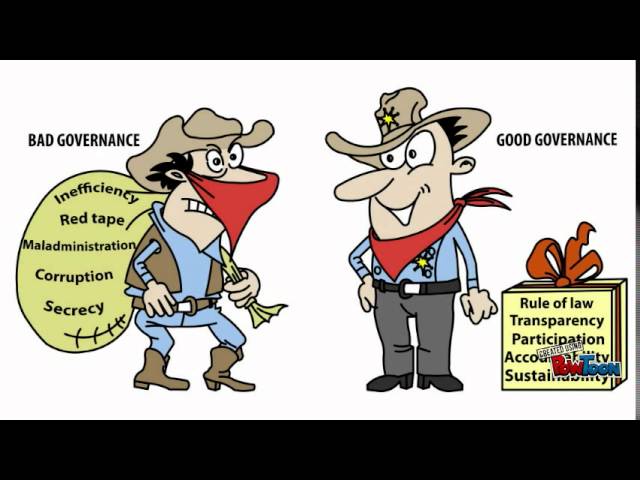
What makes Good Governance different from Bad Governance

CONCLUSION

From the above discussion it is clear that “Good Governance” is the most ideal form of governance but it requires transperancy, accountability and intelligent form of governance which makes it more difficult to achieve. For achieving good governance, a system much be uncorrupted, bias free and free from prejudices.

Thus, there is a need to reform and reformulate strategies for restoring good governance. The government should focus on the principle of : “Sabka Saath, Sabka Vikas and Sabka Vishwas” which will guide the way to achieve inclusive and sustainable development.

BETI BACHAO BETI PADHAO

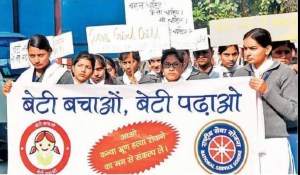
Prime Minister Narendra Modi has inaugurated a scheme for girls called Beti Bachao Beti Padhao. It is to save the girl child and educate the girl child all over India. The program was started on the 22nd of January, 2015 at Panipat.  This scheme was initiated first especially in Haryana because this state has a very low female sex ratio (775/1000) all over the country. It has been effectively applied in a hundred districts across the country. It is to improve the status of girls in the country.


AIM OF THIS SCHEME

The aim of Beti Bachao Beti Padhao scheme is to stop the drop in girl child sex ratio. Therefore, it will encourage women’s empowerment in order to improve women status in the country. It is a tri-ministerial initiative of the following ministries:

  • Women and Child Development
  • Health and Family Welfare
  • Human Resource Development


REASONS FOR THIS INITIATIVE

Two main reasons for Beti Bachao Beti Padhao initiative are:

  • Low child-sex ratio called for the launch of the scheme

The Child Sex Ratio (CSR) census data for 0-6 years was 933 girls per 1,000 boys in 2001, which declined to 918 girls for every 1,000 boys in 2011. UNICEF in 2012 Reported that India ranked 41st among 195 countries. A 2011 Population Census revealed that the population ratio of India in 2011 was 943 females per 1000 of males. The Sex Ratio 2011, however, indications an upward trend from the census 2001 data.

  • Crime against Women on the rise

Aborting of female foeticide by post ultrasonic testing. Thus this type of discrimination against girl infants resulted in a huge drop in the female population. Also, crimes and sex abuse, so on, have been on a constant high.

Back in the year 2014, Prime Minister Mr. Narendra Modi spoke on the event of International Day of the Girl Child. He highlighted on the abolition of female foeticide and asked suggestions from the Indian citizens on MyGov.in portal.


PRIMARY OBJECTIVE OF BETI BACHAO BETI PADHAO INITIATIVE

‘Beti Bachao Beti Padhao’ is a collaborative initiative of the government of India. Ministry of Women and Child Development, Ministry of Human Resource Development and Ministry of Health and Family Welfare started this scheme. It covers all Indian states and union territories.

The scheme has three primary objectives

  1. Prevent female infanticide.
  2. Develop new schemes and work collaboratively to ensure that every girl child is secured and protected.
  3. Ensure every girl child gets a quality education.

DIFFICULTIES IN IMPLEMENTATION

Beti Bachao Beti Padhao scheme having difficulty to gain momentum. This is due to the following facts.

  • Social abuses and orthodox rituals like female foeticide, Sati, child marriage and domestic abuse obstruct the due execution of this scheme.
  • The government machinery and the police are, however, to get the magnitude of women atrocities seriously. This also weakens the effective implementation of the Beti Bachao Beti Padhao scheme.
  • The mindset of people remains conservative besides the numerous campaigns spreading awareness among people.
  • The scheme needs civic body support to achieve the objectives of the scheme.
  • The Dowry system is the main obstacles in the successful implementation and impact of Beti Bachao Beti Padhao scheme.

IMPACT OF THIS SCHEME

It is important to look for the benefit that ‘Beti Bachao, Beti Padhao’, is India’s most high profile campaign. It is to empower the girl child in the country. Some major impacts are-

  • Balancing sex ratios
  • Bringing girl child rights into focus
  • Achieving girl-child access to education

Conclusion

The Beti Bachao Beti Padhao scheme is an initiative by the Government of India to address the issues revolving around girl children in India. This initiative under the scheme have started giving fruit as the level of awareness among the people is increasing.

Therefore, people now have a serious impact to work for girl child upliftment in society. The success of this scheme will add tremendously to the economic growth of the country. This is due to the fact that India cannot afford to have a large part of its population remain neglected.


Self – confidence

Self- confidence is a feelung of trust in one’s abilities, qualities, and judgment.children with a healthy sennsr of self-confidence are able to feel good about themselves and knoe that they deserve respect from others.
Confidence can be a tough thing to build up. We’ve put together some handy tips to help you put.


TIPS FOR BUILDING SELF – CONFIDENCE :


There are number of things you can do to build your confidence. Some of them arejust small changes to your frame of mind; others you’ ll have to work on fora big longer to make them familiar habits.


1.LOOK AT WHAT YOU’VE ALEADY ACHIEVED:


It is easy to lose confidence if you believe you haven’t achieved anythkng. Make a list of all the things you’ re proud of in your life, whegger it’s getting a good mark on an exam or learning to surf. Keep the list close by and add to it whenever you do something you’ re proud of. When you’re low in confidence,pull out the list a use it to remind yourself if all the awesome stuff you’ ve done.


2.SET SOME GOALS :


Set some goals and set out the steps you need to take to achieve them. They don’t have to be big goals; they can even be things like baking a cake or planning a nighy out with friends. Just aim for some achievements that you can tick off a list to hrlp you again confidence in your ability to get stuff done.


3.THINK OF THINGS YOU’RE GOOD AT :


Everyone has strengths and talents. What are yours? Recoginising what you’re good at,and trying to build on those things,will help you to build confidence in your own abilities.


4.TALK YOURSELF UP :


You’re never going to feel confident if you have negative commentary running through your mind telling you that you’re no good. Think about your self- talk and how that might be affecting your self- confidence. Treat yourself like would your bestfriend and cheer yourself on.


5.GET A HOBBY :


Try to find something that you’re really passionate about. It could be photography, sport, knitting or anything else! When you’ve workef out your passion, commit yourself to giving it a go.chances are, if you’re intetested or passionate about a certain activity, you’re more likely to be motivated and you’ll build skills more quickly.


Confidence helps us feel ready for life’s experiences. When we’re confident, we’re more likely to move forward with people and opportunities no back away from them. And if things don’t work out at fisrt , confidence helps us try again. It is the opposite when confidence is low.

Self- confidence is a feeling of trust in one’s abilities, qualities, and judgement. Some of the many causes of low self- esteem may include. Unhappy childhood where parents were extremly critical. Poor academic performance in school resulting in a lack of confidence.

Change before you have to…

Don’t be afraid to give up your better days, surely it will turn to be the best. The most wonderful discovery that a person can do ,is to bring out a change. Even a huge dense forest starts from a small plant , even the small change in you can make great things happen.

If you try to change ,yes ofcourse you have a chance of losing, but if you don’t even try ,you have already lost. Never start a journey just because it is easy, always make sure your choice makes you feel alive.

Dreams are the seeds of changes, no plants grows without a seed and nothing changes without a dream. The only thing that stands between you and your dream is the change, that you have to take to achieve your dreams.

Life is about changes, sometimes it is sorrowful, sometimes it is wonderful, but most of the times it is between.

People say life is full of changes, it is because if you don’t change, you don’t grow, if you don’t grow ,you are not actually living.yes ofcourse, changing yourself suddenly, is painful. But it is even more painful to stay stuck somewhere you don’t belong.

Not everything that you get in can be changed but nothing can be changed without you getting in. Don’t wait for someone else to change your life.You are the one you have been waiting for.You are the change that you have been seeking for.

“sometimes the things you can’t change ,end up changing you , at least cooperate with it”.

when life changing moment comes on your way, you can do one of two things, change the moment or let the moment change you…

“Sundar Pichai” biography

“Sundar Pichai” is the current CEO of Google Inc. He was born on July 12, 1972 in Madurai Tamil Nadu India his father’s name was Regunadha pichai and mother’s name was Lakshmi Pichai. His father worked at an electrical engineer and mother used to be a stenographer before having children. He has one brother Pichai grew up in a middle class home and was a bright student.

He excelled academically at his school, Padma Seshadri Bala Bhavan, and earned a seat in the Indian institute of technology in Kharagpur, one of the most prestigious engineering institutions. In India he did his B tech in metallurgical engineering from IIT Kharagpur and then won a scholarship to study materials science and semiconductor physics from Standard University from where he eventually earned his M.S. He is very good at remembering numbers and could remember every telephone number he dialed when he was young. He initially planned to pursue a ph.D. from Stanford and embark on an academic career. However, he dropped out and joined Applied Materials-a Silicon Valley semiconductor maker as an engineer and product manager he did not work there for long he went on to complete his MBA from the Wharton School of the University of Pennsylvania 2002. Where he was named a Siebel scholar and palmer scholar. Following the completion of his MBA he was appointed as a management consultant at McKinsey & Company. He joined Google in 2004 initially he worked on Google search toolbar as a part of the small team. The toolbar gave users of Internet Explorer and Firefox easy access to Google search. He also worked on other Google products like Google gears and Google pack. The success of Google toolbar gave Pichai the idea that Google should develop its own browser he discussed his idea with his seniors and faced an objection from then CEO Eric Schmidt, who thought that developing a browser would be too expensive affair however Pichai perserved and convinced the co-founders of Google, Larry Page and Sergey. Brin, to launch Google’s own browser. Pichai played a pivotal role in the ultimate launch of the browser, Google Chrome in 2008 Chrome proved to be a great success as it allowed the users to directly access Google search engine.

Pichai played a pivotal role in the ultimate launch of the browser, Google Chrome in 2008, Chrome proved to be a great success as it allowed the users to directly access Google search engine. Pichai became a internationally known figure following the phenomenal success after Chrome which eventually become the number one browser in the world surpassing competitors such as Internet Explorer and Firefox the Chrome also paved the way for a series of other important products like Chrome OS chromebooks and Chromecast. In 2008, Pichai was promoted to vice president of product development in this position he started appearing more often Google presentation and continued rising up the ranks in Google by 2012, he had become the senior Vice President of Chrome and apps in 2013, Andy Rubin the creator of Android left to work on a different project Larry Page then made picture in charge of Android as well his influence continued to increase and he was made the product Chief in October 2014. In 2015, Google formed a company alphabet Inc to serve as a holding company and conglomerate to own the subsidiaries that were previously owned by Google, including a new slimmed down version of Google itself on 10 August 2015 Sundar Pichai was named the CEO of Google. In February 2016 he was awarded 273 328 shares of Google’s holding company alphabet. Which led to a rise in his net worth. These shares were worth $199 million, and this took his holding up to $650 million. He married to Anjali Pichai and they have to kids ” WEAR YOUR FAILURE AS A BADGE OF HONOR”.

HEGEMONY OF HUMAN

Life is the most beautiful gift given by this enormous universe to each and every living organism. We humans are the most capable, social, intellectual and intelligent animal on this planet, we have capability to maximize the use of resources and various other available elements on the earth.
Earlier, man used to live among nature, eat animals and survive. Later, he developed and started using animals for various other purposes, for example: transportation, and earning. This universe has given rights to each and every creature to live freely, to survive as per their natural environment, but we humans have considered ourselves as a supreme power, not only over animals but over nature and it's resources.
Mother Earth has provided us resources for the development and survival of human society. Man can use these resources and explore in a proper and intellectual manner, but we humans are so greedy that we have harassed nature, over utilized the resources, destroyed the cycle and system of nature in the name of development and advancement of technology.
In India specifically, a large number of the population is over burdening the natural resources as well as the environment. Deforestation is increasing day by day, leading to climate change and less rainfall.
For humans, destroying nature and environment is not enough, so he increased his exploitations and didn't spare innocent animals.  When man lived in forests, agriculture was not yet introduced, in order to survive he had to kill the animals and eat as there was no other means of survival. Population at that time was low, hence food cycle was not disturbed. In the medieval times, horses were killed in the battles fought by the king. King hunted animals for fun, for pleasure, for showing their power and pride, and that is when extinction, injustice and dominance over the animals began. Later when technology developed, agriculture developed, grains to eat were available, people still killed animals for filling their stomach.
Mercilessness of human being doesn't end here. He started to command animals. He wants animals to live and survive according to him.  People keep dogs as a pet to be cool, so that they can dictate over him, could be his master. They can't set them free to live. They feed the animal so he has to obey and follow his master. People train dogs as a human, make them learn counting, train them when to bark, when to not, train them to obey and understand the command of his master, train them to be a bodyguard of house as well as of his master, all this happens just because they cannot speak.
When a horse or mare is trained to dance standing on two legs, how much cruelty they have to tolerate, how brutally they are beaten. In a circus, Lion, king of the jungle, becomes a puppet of his master, the cruelty faced by them must be beyond our imagination. 
With the increase in technology in each and every field, the mercy towards the animals from humans has completely evaporated. In the field of dairy, technology has developed at a wider scale. Everybody knows that for every dairy product the raw material is milk which is available from cows and buffaloes. Every day all over the world, cows and buffaloes are purchased in large numbers. With the help of machinery, their udders are stretched long to squeeze milk out of them. Once these cows stop giving milk, they are slaughtered in a rotating machine. It's sad that humanity has gone down to such a low level. 
Just because these animals are animals, and not as capable as humans, it doesn't mean that they should be harassed.  They also have hearts which beat, they also breathe, they also have feelings. Horses, dogs, cows and buffaloes are just the few examples mentioned above, but the reality is that every single creature is being harassed by human beings just because they cannot speak for their rights, they are not as social as humans, but they do have a right from the universe to live in their own natural way.  If you don't feed them they can find their food but at least they can be free.
Humans must behave as humans. They should have mercy, love and care for nature, it’s each and every element. Then being a human will be of some worth. Until then it's worthless.

Biomass Power Generation

Biomass is waste material from plants or animals that is not used for food or feed; it can be waste from farming (like wheat stalks) or horticulture (yard waste), food processing (like corn cobs), animal farming (manure), or human waste from sewage plants.

Electricity generated by Biomass

Power Generation

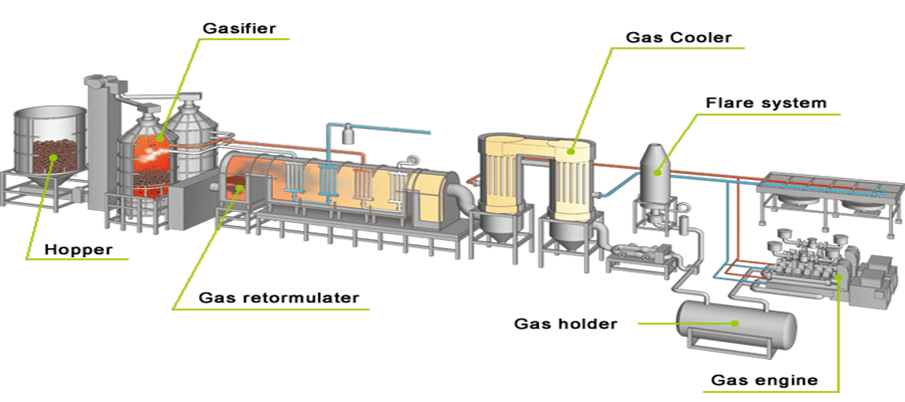
In a direct combustion system, biomass is burned in a combustor or furnace to generate hot gas, which is fed into a boiler to generate steam, which is expanded through a steam turbine or steam engine to produce mechanical or electrical energy. Biomass is the boiler fuel that produces steam to operate a steam turbine and generator to make electricity. Several components required like furnace , boiler , pumps , fans , steams , turbines , generator, condenser, cooling tower .

Scope

India produces a huge quantity of biomass material in its agricultural, agro-industrial, and forestry operations. Over 500 million tonnes of agricultural and agro-industrial residue alone is generated every year. This quantity, in terms of heat content, is equivalent to about 175 million tonnes of oil. This quantity of biomass is sufficient to generate 15 000–25 000 MW of electrical power. Electricity can also be generated from biomass grown on wastelands, road and rail track side plantations, etc. The total electricity generation potential from biomass could reach a figure of about 100 000 MW.

Advantages

  • Renewable
  • Carbon Neutrality : Biomass reduces this because the fuel is a natural part of the carbon cycle, unlike oil and other fossil fuels. The only carbon that is released into the atmosphere from biomass fuels is what was absorbed by the plants during their lifecycles.
  • Less Dependency on Fossil Fuels
  • Low Cost in Comparison To Fossil Fuels
  • It Reduces Waste
  • Availability : Much like with the sun and water, they can be found practically anywhere on the planet.

Disadvantages

  • It’s Not Completely Clean
  • High Costs In Comparison To Other Alternatives
  • Large space required
  • It Requires Water
  • It Has Inefficiencies

RURAL AREAS OF INDIA

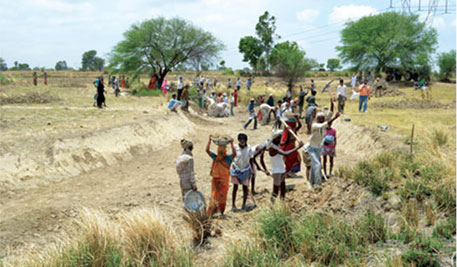
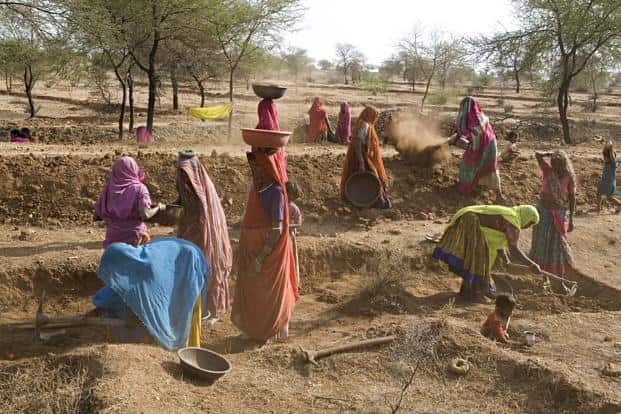
Rural areas are also known as the ‘countryside’ or a ‘village’ in India. It has a very low population density. In rural areas, agriculture  is the chief source of livelihood along with fishing  cottage industries, pottery, etc.

The quest to discover the real rural India still continues in great earnest. Almost every economic agency today has a definition of rural India. Here are a few definitions: According to the Planning Commission, a town with a maximum population of 15,000 is considered rural in nature.

In these areas the panchayat makes all the decisions. There are five people in the panchayat. The National Sample Survey Organization (NSSO) defines ‘rural’ as follows:An area with a population density of up to 400 per square kilometer.

Villages with clear surveyed boundaries but no municipal board,

A minimum of 75% of male working population involved in agriculture and allied activities.

RBI defines rural areas as those areas with a population of less than 49,000 (tier -3 to tier-6 cities).

It is generally said that the rural areas house up to 70% of India’s population. Rural India contributes a large chunk to India’s GDP by way of agriculture, self-employment, services, construction etc.

As per a strict measure used by the National Sample Survey in its 63rd round, called monthly per capita expenditure, rural expenditure accounts for 55% of total national monthly expenditure. The rural population currently accounts for one-third of the total Indian FMCG sales.

National Icecream Day : Facts about icecream

Ice Cream is without a doubt the perfect dessert ever discovered by man. Ice Cream Day became an official food holiday in 1984. President Ronald Reagan declared the third Sunday of July as National Ice Cream Day.

The major ingredient in Icecream is air who would have thought that the major ingredient in ice-cream we eat is actually air. Air makes up to 50% of the total volume of our Icecream which gives it is light texture. Ice cream products are usually made from dairy products.

There waffle cone was invented accidentally in 1904. The tallest icecream cone was over 9 feet tall in Italy.

It takes about 50 licks to completed one scoop of Icecream. Icecream tasters uses a golden spoon to taste the product accurately, so the metal doesn’t impact the taste of the ice cream. The golden spoon enables the tester to sample the Icecream without experiencing any aftertaste from the spoon itself.

The end of the world war 2 was celebrated by eating Icecream.

In Canada, more Icecreams are sold in winter than in summer. The largest worldwide consumption of ice cream is in United States. The most popular flavour is vanilla then comes chocolates. Chocolate was actually invented first. Most favorite ice cream topping is chocolate syrup. The most unusual ice cream flavors is hot dog flavored ice-cream that was created in US. There are believed to be over 1000 ice cream flavors in the world.

There is an icecream fruit in Hawaii, that taste exactly like vanilla icecream. It’s called the inga feuilleii but locals called it icecream bean.

Enjoy National Ice Cream Day by sharing some with your family and friends!

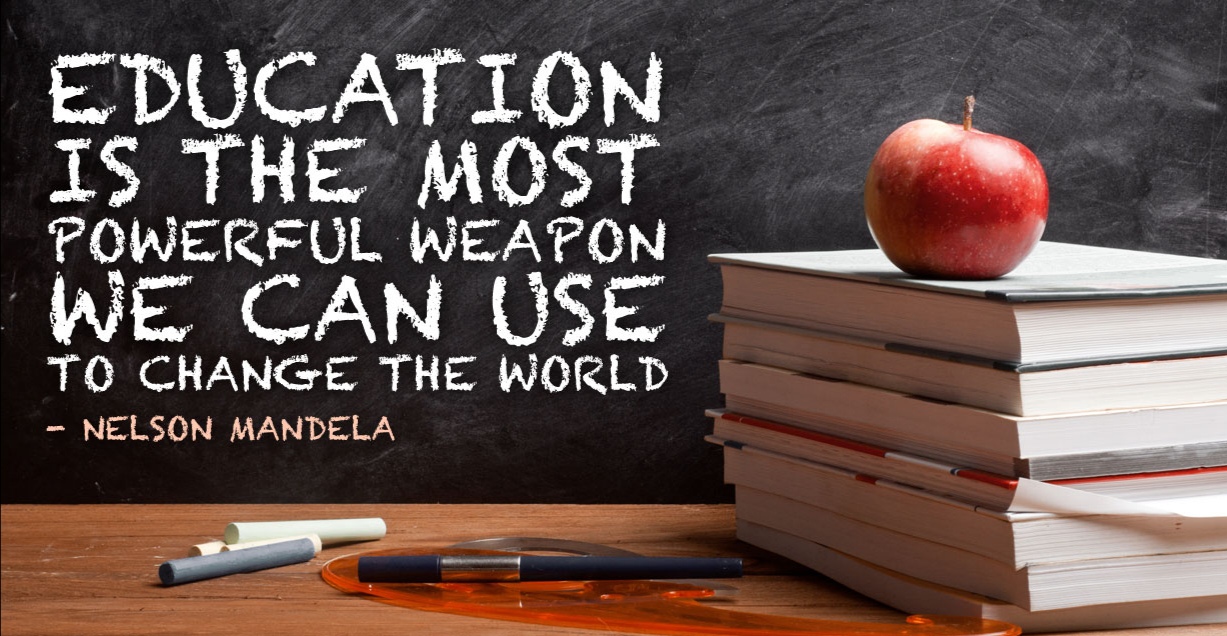
AIM OF EDUCATION IS TO BUILD CHARACTER

The aim of education should be building of character and not merely injecting of information.

– Pranab Mukherjee.

Education is a learning process that enables students and adults in a school community to understand, care about and act on core ethical values.

Learn the value of respect, justice, civic virtue and citizenship, and responsibility for not only themselves but also for others.

Education gives us the knowledge we need to know what dangers in society are and how to deal with them properly.

Intelligence plus character – that is the goal of true education. The complete education gives one not only power of concentration but worthy objectives upon which to concentrate.

– Martin Luther King Jr

Important aim of teaching should be producing students with good moral and skills for life.

Confidence and resilience are two character traits that are essential for success in the workplace.

As we all know, we faces various challenges after school life. We do not comfort with our good grade but we feel comfort with the character traits like confidence and resilience.

People with Confidence deals with well interview and prospect the more responsibility the within a job or any role.

People with resilience character, deals with failure rejection and various unseen obstacles in life. They face problems rather than wasting time on worrying about Minor failures. They always try to keep growing.

Education is the key to build characters

Producing students with good grades are not enough for them to face various kinds of challenges in their life. Good grapes are not going to help them for their fruitful life. But preparing students with good ethics, good Morals, social skills and life skills are really going to help them for their future challenges.

In today’s world the schools are focusing on student and forces them for good grades in academic. Parents also want their child to gain good grades in academics. but in future only good return are not going to work anymore. A person with with good grades and without any social or soft skills or ethics they faces competitions only.

Thus, focusing on building character is also very important for us.

SELF CARE

Self-care can be defined by the word itself – self-care. Self-care includes anything you do to keep yourself healthy – physically, mentally and spiritually. While prioritizing self-care may sound reasonable, especially if you are considering a long life, it is often the first thing we should do when we find ourselves in a difficult situation, be it because of poor health, financial crisis, job loss, divorce or, in our current situation, the COVID-19 epidemic. That’s why it’s important to keep it in mind and not think backwards, especially when we find ourselves in challenging times.

Why Does Self-Care Matter?


In a society where people are expected to work long hours beyond the holidays, there is a basic belief that we should always be productive – which could eventually take the opportunity to take care of themselves. But by taking the time to engage in self-care, you can eliminate the stresses of daily life and reset yourself to return to a high-quality environment where the product is further expanded. When you consider the costs associated with mental health services, lost wages and more, spending some time with yourself can ultimately benefit everyone.

Burning a candle on both sides, which will be discussed, brings serious consequences, which can include but not limited to depression, frustration, anxiety, anger, and other negative consequences. Practicing self-care has been proven clinically to reduce or eliminate anxiety and depression, reduce stress, improve concentration, reduce frustration and anger, increase happiness, improve energy, and more. From a physical standpoint, self-care is guaranteed at the clinic to reduce heart disease, stroke and cancer. Spiritually, it can help us to keep our balance and to understand our purpose in life.

Self-care is an important activity to do every day. Doing so will lead toward a better balance among your dimensions of wellness and lead toward improved overall health and wellness. Life is precious, and it is meant to be enjoyed.