Breast cancer is the most common invasive cancer in women and the second leading cause of cancer death in women after lung cancer. Breast cancer is a disease in which cells in the breast grow out of control. There are different kinds of breast cancer. The kind of breast cancer depends on which cells in the breast turn into cancer.
Symptoms
New lump in the breast or underarm (armpit).
Thickening or swelling of part of the breast.
Irritation or dimpling of breast skin.
Redness or flaky skin in the nipple area or the breast.
Pulling in of the nipple or pain in the nipple area.
Nipple discharge other than breast milk, including blood.
Any change in the size or the shape of the breast.
Pain in any area of the breast.
Keep in mind that these symptoms can happen with other conditions that are not cancer.
TO REDUCE YOUR RISK OF BREAST CANCER YOU CAN:-
Keep a healthy weight.
Exercise regularly
Don’t drink alcohol, or limit alcoholic drinks.
If you are taking, or have been told to take, (birth control pills), ask your doctor about the risks and find out if it is right for you.
Breastfeed your children, if possible.
If you have a family history of breast cancer or inherited changes in the BRCA1/BRCA2 genes, talk to your doctor about other ways to lower your risk.
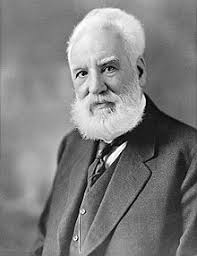
“Alexander Graham Bell” he was the inventor of Telephone. He was born on March 3rd 1847 in Edinburg Scotland. His father’s name was Alexander melville Bell and mother’s name was Elisa grace. His father was a professor and mother was a painter and pianist. He had two brothers but both of whom died of Tuberculosis.
Throughout his childhood is spent short period of time in traditional educational institutions including Edinburghs Royal High School, which he left at the age of 15 he initially attended University of Edinburgh and then the university College London England but did not receive a formal education in 1817 after the death of two of his brother the bell family moved to Canada for the sake of his health expanding on his father work of teaching deaf people to communicate he began working on transmitting and telephonic messages in 1872 he founded School of “vocal physiology and mechanics of speech”in Boston where he taught elocution to his pupils in 1873 he was appointed the professor of vocal physiology and Elocution at the Boston University School of oratory. While pursuing his teaching profession he was drawn towards an idea of transmitting the human voice over wires. In 1874, he hired an assistant Thomas Watson is skilled electrician, who developed the tools and instruments he needed Jo continue the project on March 10 1876 he produced the first intelligible telephone call when he said Mr Watson come here I want to see you Thomas Watson who was in another room here Bells voice and it came to see the telephone had worked a legal battle ensued with inventors Elisha Gray, who claimed his invention of the predated Bell’s. But the court ruled in Bell’s favor and subsequently”Bell Telephone Company was formed in 1877.
On July 11,1877 he married his deaf student, Mabel Hubbard at the age of 30. They had four children, They are Elsie May Bell, Marian Hubbard Bell, Edward Bell, and Robert Bell. By 1883, he created the technology for the Graphophone and other early sound recording equipment in magnetic recording technology that was an early form of tape recording towards the end of the nineteenth century his interest began to move away sound transmission and recording to transport Technologies he developed a passion for air travel and helped to established the aerial experiment Association in 1907 in all he held 18 patents in his name alone and to all that he shared with collaborators among them telephone, Photo phone, Hydrofoil board, Audio meter, HD-4, Metal detector, Tetrahedral kite are noteworthy. He was one of the founders of the National Geographic society in 1888 and served as its president from 1896 to 1904 he died on August 2, 1922 in Beninn Bhreagh, Nova Scotia, at age of 75 due to complications from Diabetes “BEFORE ANYTHING ELSE , PREPARATION IS THE KEY TO SUCCESS”.
Smallpox-like lesions spotted on Ancient Egyptian mummies reveal that the nasty disease has been there for the past 3,000 years and remained one of the world’s most dreadful diseases until a global vaccination programme spearheaded by the World Health Organization wiped it off. In the 4th century CE, the first documented mention of smallpox-like sickness emerged in China. In the 7th century, early written accounts arose in India, and in the 10th century, they appeared in Asia Minor.
In 1977, the last confirmed natural case occurred in Somalia. Ever since, the only documented cases can be traced back to a laboratory mishap in Birmingham, England, in 1978, which claimed one life and resulted in a small breakout. In 1980, the World Health Organization declared smallpox eradicated. On average, three out of every ten people who contracted it succumbed. Those who survived suffered permanent scars.
INITIAL TREATMENT OF SMALLPOX
Smallpox was 60 times more lethal as prevailing Covid-19 and twice as contagious. It tormented humanity for millennia, blinding and scarring many survivors, and killing roughly 300-500 million people in the twentieth century alone.
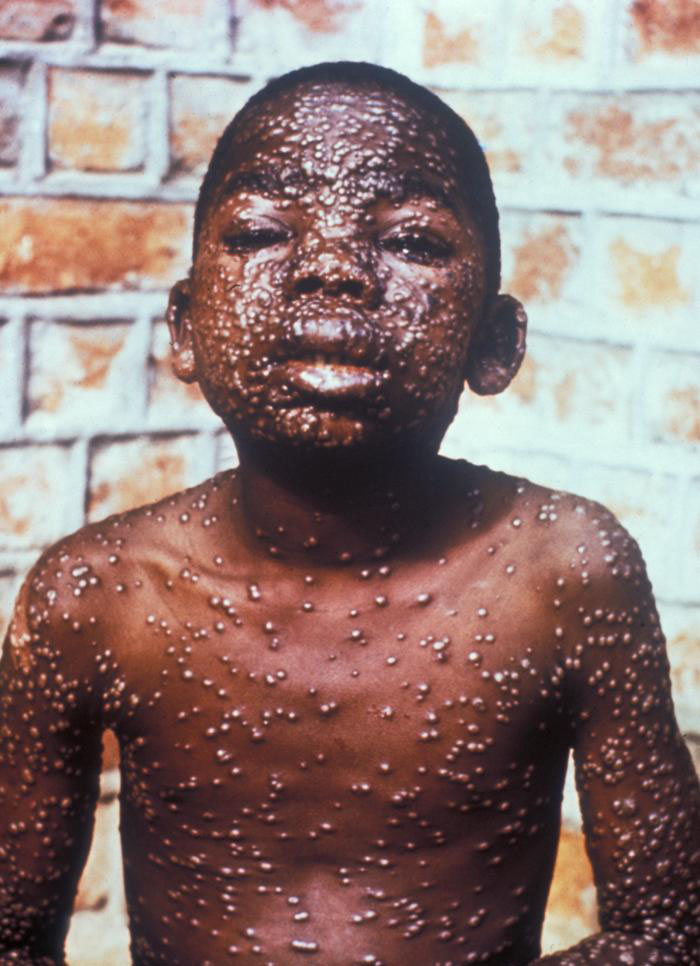
The variola virus causes smallpox. Early signs and symptoms include a high fever and weariness. The disease then induces a rash, most noticeable on the face, arms, and legs. The ensuing lesions swell with clear fluid, then pus, and eventually form a crust, which dries up and comes off.
Variolation, a process dubbed after the variola virus that causes smallpox, was one of the earliest treatments for controlling the disease. People who had never had smallpox were exposed to matter from smallpox sores during variolation by scratching it into their arm or inhaling it via their nose. People acquired smallpox-like symptoms following variolation, like fever and a rash. Variolation was not completely effective; up to 3% of persons died after being subjected to the puss.
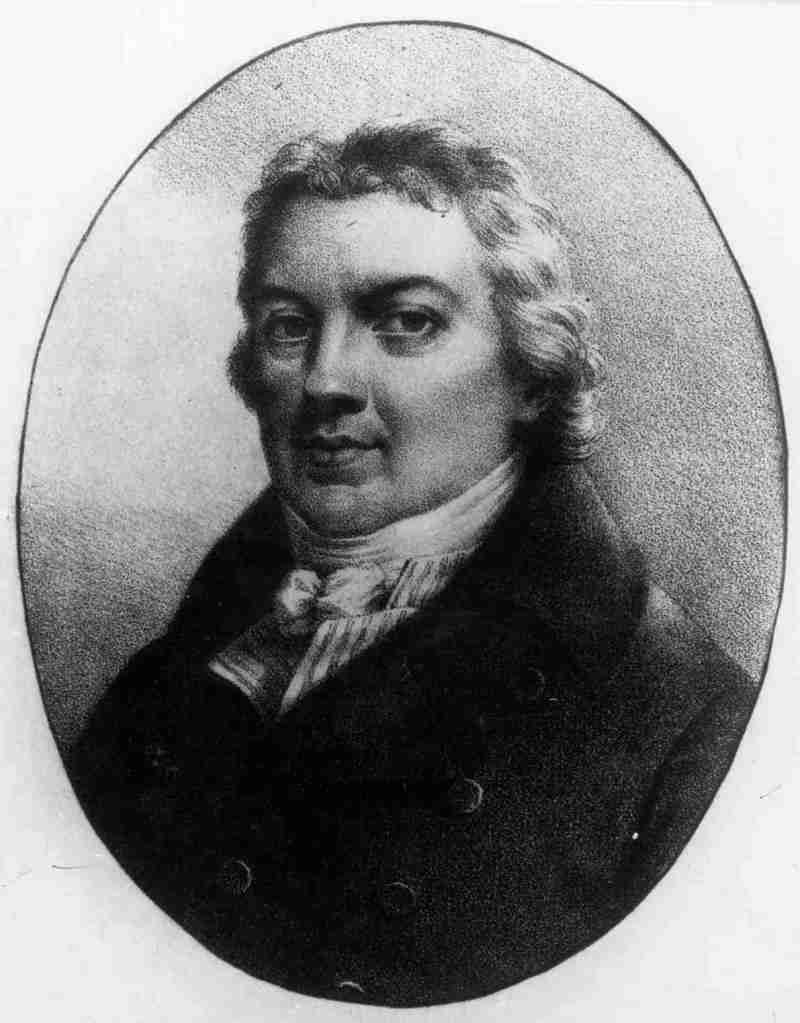
Edward Jenner
In 1796, English doctor Edward Jenner established the cornerstone for vaccination when he observed that cowpox-infected milkmaids were immune to smallpox. The cowpox virus is a member of the Orthopoxvirus family, which also includes the variola virus that causes smallpox.
Dr. Jenner put his idea to the test by inoculating James Phipps, Jenner’s gardener’s 9-year-old son, with matter from a cowpox lesion on milkmaid Sarah’s hand. James had a single blister on the spot, but he recovered quickly. Jenner frequently subjected Phipps to the variola virus, but Phipps never obtained smallpox. The vaccine was effective. Doctors all around Europe quickly embraced Jenner’s ground-breaking procedure, resulting in a significant reduction in new cases of the dangerous illness.
SMALLPOX ERADITION
All Developed nations had huge success in eradicating Smallpox with mass vaccination campaigns; yet, developing countries had to adopt a different strategy. ‘Surveillance and containment’ were the term for this strategy. Intense house-to-house screenings and incentives for people who reported smallpox cases assisted surveillance. Ring vaccination and isolation of patients and everyone who had come into touch with them was among the containment strategies.
India represented almost 60% of the world’s reported cases of smallpox in the early 1960’s. Many cases went unreported because of the stigma associated with the disease. The strain of smallpox found in India was much deadlier than strains found in West Africa. The Indian Government introduced NSEP in 1962, the National Smallpox Eradication Program aimed at mass population vaccination. Money was invested & inoculation workers were employed. Around 60 million vaccines were administered by 1966, along with 440 million re-vaccinations.
By 1967, however, smallpox cases were growing in India, indicating the failure of the vaccination campaign. One of the greatest reasons being individual reluctance and refusal to participate in the vaccination programs, because of lack of trust in the vaccines or religious beliefs. The method of vaccination was also a problem. Before 1969, a drop of the vaccine was placed on the person’s arm and pushed into the skin with a single-point needle. This procedure was repeated for primary vaccination five times and for revaccination fifteen times.
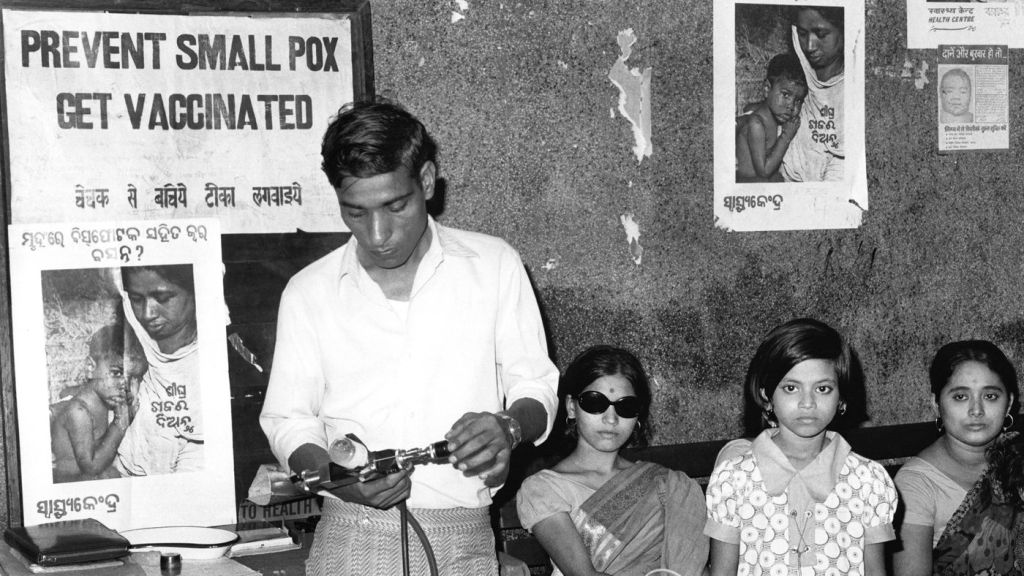
In Sept. 1970, the Indian government and the WHO signed a Plan Of operation The World Health Organization partnership provided India with the opportunity to acquire better-quality freeze-dried vaccines. The jet injector swapped the standard single-point needle and did not require power. Frequent maintenance was essential for the device. The bifurcated needle was a cheaper and quicker vaccination method. For health professionals, minimal level training was needed. For the people, it was less painful.
Vaccinating 80 % of the population in 5 years was deemed adequate to avert smallpox transmission in smaller countries. But the high numbers of births each year (25 million new babies) made this target unfeasible in heavily populated countries like India. It wasn’t enough to contain smallpox.
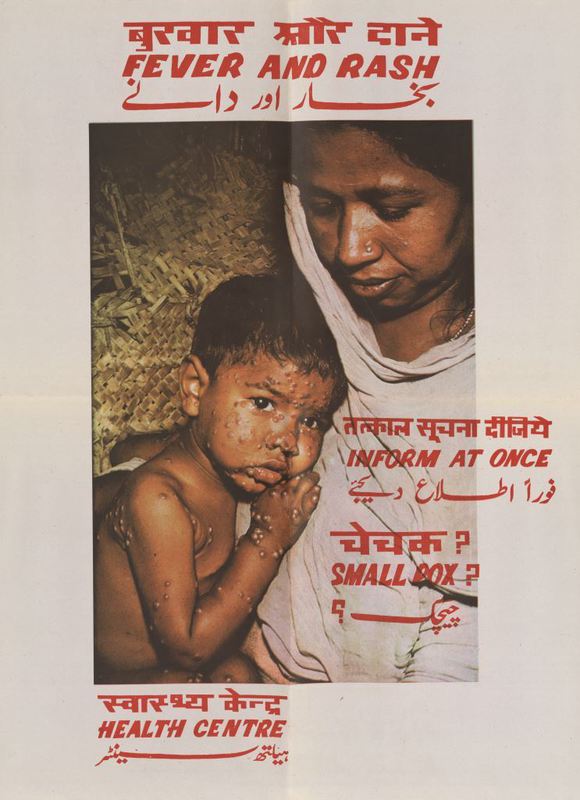
The Indian Government put full force in the National Smallpox Eradication Program. A prize of 1000 rupees for reporting new cases of pox was the most unique but highly successful strategy implemented. The general public reported 11% of outbreaks of smallpox in 1975, as compared with 2.6% in 1973. To encourage vaccination, posters were crafted in native languages, showcasing young children.
The “surveillance-containment” strategy was straightforward. Healthcare professionals would actively look for possible cases of pox. Affected persons and their families or neighbors would be sequestered and vaccinated right away. To eradicate smallpox, active searches and detection and the control of disease outbreaks were necessary. 110 million houses were searched for new smallpox cases from March to November 1976 in over half a million Indian villages, and in 260 urban areas. Merely 5 cases of chickenpox were discovered.
The International Commission for Eradication Assessment of Smallpox visited the India in April 1977, conducting its own field assessments along with an analysis of the country’s documented evidence. Finally, the International Commission certified India Smallpox free.
The Harry Potter series has been around for a while now and has cemented itself into the fantasy genre. Though some may not take the series at the same level as a Lord of the Rings or a Wheel of Time, it deserves its own place at the table of fantasy book series.
In October of 1998 the first edition of this Book was released and it was written by J.K. Rowling. The book starts off introduction the wizarding world from the vantage point of the Dursley’s who we later find out are the Aunt and Uncle of Harry potter, a boy who’s parents were murdered while he manage to survive. The attack on Harry’s parents left a signature lightning bolt scar on his forehead. The way of introduce of the new world is very much interesting and the way was very much creative and fantastic and it steeps the reader into the world from a perspective that would likely be more like our own.
There is a lot going on in favour of this book that will be repeated as we continue through the story. The descriptions are very vivid of locations and items as well as character motives. This leads to a pretty laid back and easy read. Understandably these books are children books, anyone of any age can enjoy these books though and really appreciate everything else they have to offer for a relatively small time commitment based on this books size. The school year structure of this book and the subsequent books makes for a really easy method to control pace for the story. The ending ties in many story notes from earlier on in the book such as learning magical spells that come in handy at the end of the book, playing a game of chess. Paying attention in potions class. Even getting onto the schools Quidditch team (Which can be best defined to me as football on brooms.) plays a role in the end.
Character introductions are very well done. It takes very little for each character to be painted into the mind of the reader as well as share the base level motives and beliefs of each. Though later books handle these ideas in a more deep and complex manner, the method that is done in this book tends to match the age of the characters in the book which is around 11. The way J K Rowling rights this allows for easy understanding and the same level for children around the age of these characters as they can relate to what is happening in the book easily. Hermione’s introduction is well handled also. Though not the same experience as Ron, we are treated to her joining the group later on in the story. I feel that this was a good idea as to not overload the reader with new characters right away.
The plot of the book once the book has made it to the wizarding world and Hogwarts is very school oriented as well as getting Harry Potter situated in the wizarding world. When Harry finds that Hagrid, the groundskeeper of Hogwarts has helped the headmaster named Albus Dumbledore hide a mysterious item, he and his friends jump into action figure out what the item is and protect it. Along the way they get into trouble a few times leading them to go into several restricted sections of the castle that only increases their curiosity.
Throughout the book Harry also learns a lot about who he is and about his parents since they went to the same school of Hogwarts as himself. He also needs to come to terms with being a celebrity in the wizarding world that he has only just now discovered.
In the end, this book is an example of a series that can be enjoyable for children and adults. It’s a perfect book to grab and start reading to your kids, but also is a strong escapism book. It’s incredibly easy to get enveloped in the story and the characters.
Introduction:- The term economic comes from the ancient Greek word oikonomia means ‘management of a household’. The term economic process refers to those activities, through which goods and services aimed at satisfying human needs, are produced distributed, and used. Economic includes the study of labor, land investment of capital, income, and production, and taxes and government expenditures. Adam Smith regarded as the Father of Economics, defines Economics as “the science relating to the laws of production, distribution, and exchange”.
Branches of Economics:- The two chief branches of economics are as follow:
Micro Economics – It examines the behavior of basic elements in the economy including individual agents, such as households and firms, or as buyers and sellers and market and their interactions.
Macro Economics – It studies the economy as a whole and its features like national income, unemployment, poverty, the balance of payments, and inflation. It deals with the formulation of models explaining the relationship between factors such as consumption, inflation, savings, investment, national income, and finance.
Economy:- It represents production, distribution, or trade and consumption of goods and services in a given geographical area by different agents which can be individuals, businesses, organizations, or governments. The study of the economy of any country helps us to find out the financial condition of the population as well as the different working sectors of the economy.
A modern economy is a complex machine. Its job is to allocate limited resources and distribute output among a large number of agents mainly individuals, firms, and governments allowing for the possibility that each agent’s action can directly or indirectly affect another agent’s actions. There are two major types of economies they are:
Open Economy: It belongs to a market economy, which is mainly free from trade obstructions and where exports and imports comprise a lush large percentage of the GDP. No economy is absolute whether open or closed in terms of trade restraints and all governments have fluctuating levels of control over the activities of capital and exchange.
The degree of the vulnerability of an economy determines a government’s freedom to pursue monetary policies of its choice and the exposure of the country to the international economic cycles.
Closed Economy- An economy in which no exercise is conducted with outside economies. A closed economy is self-sufficient, meaning that no imports are brought in and no exports are sent out. The goals of such an economy are to furnish consumers with everything that they need from within the economy’s perimeters.
The degree of exposure of an economy is decided by their respective governments by using policy controls like tariffs, import, and export quotas, and exchange rate limits. In india, since independence, the government has played a major role in planning economic activities.
Present status of the Indian economy: Indian economy is the world’s 6th largest economy or nominal GDP basis and the 3rd largest by Purchasing Power Party (PPP) in 2017. According to CSO, the growth in GDP during 2017-2018 is estimated at 6.5% as compared to the growth rate of 7.1% in 2016-17.
Ayurvedic kajal made of pure castor oil is said to be very healthy for the eyes.
One of the main benefits of organic kajal is that it relieves eyes from stress. It helps to get rid of tiredness of the eyes and keeps the eyes healthy.
Copper which is used in making organic kajal is well-known for its healing properties and is considered a purifier.
Copper helps keep the eyes free from external and any makeup infections.
Bronze and silver are usually used in making Ayurvedic kajal and are known for their regenerating properties. They also help in healing allergies of the eye.
Camphor is the main ingredient of organic kajal. It helps in providing coolness to the eyes and gives the eyes relief from stress.
Ghee is another ingredient which is used in making Ayurvedic kajal. Ghee keeps dark circles away by relaxing them. It cleans the eyes of salt deposits from tears and removes minute makeup residue trapped under the upper and lower eyelids.
Farmers are the backbone of our country and our society. If not farmers, neither are we, The farmer is the one because of whom we get food which we eat it.Farmers never stop their work whether it is rain, cold or sun. Farmers do their work with all their heart for us without any meaning And it is true that the entire population of the country is dependent on farmers.
Hindu, Muslim Sikh, Christian farmers cannot be compared with any religion because people of all religions live in India and farmers are bigger than religions and we should never respect anyone by seeing religion because farmers of every religion deserve respect because they grow food grains for us. We should respect the farmers of our country.
Whether the country is big or small, today everyone is dependent on the farmers. We are able to live on earth only because of farmers and we are getting good fruits, vegetables and grains because of them, they work day and night for this. That’s why it is said from our history that farmers are very important for us, for our country and society. And for our future. Although it is true that farmers are very important for us, but still they are not able to live their life well. We all know that what is the role of farmers in our life because every person needs proper food for their living, so it is a necessity in the society.
Farmers do their work very sincerely. The farmer has the ability to survive with the harsh devastation of different climates, climate change, soil conditions and frequent wildfires, droughts and floods. Because of farmers, people are eating fresh fruits and vegetables because of him, everyone should respect farmers. In simple words, farmers are the ‘backbone’ and ‘heart’ of the nation. Farmers sow seeds and then cultivate the crop and supply food grains to the people. Agriculture is an important part of every country, as they are also one of the major contributors to economic development. The government should worry about our agricultural heroes. People should give more support and respect to the farmers.
There are different types of farmers. And we should do the respect for all of them.
First of all they are the farmers who grow crops like wheat, barley, rice etc. Since most of the consumption in Indian households is of wheat and rice. So, the cultivation of wheat and rice is more in agriculture. In addition, the farmers growing these crops are of prime importance.
Second, there are those who cultivate fruits. These farmers have to prepare the soil for different types of fruits. Because these fruits grow according to the season. So farmers should have good knowledge about fruits and crops. There are many other farmers who do other types of farming. Moreover, all of them have to work very hard to get maximum harvest.
Agriculture is very important because our economy also depends on agriculture. So we should support the farmers of our country and also respect agriculture because without them we are not
There are many such things about farmers about which we do not know, but today agriculture has a big role in the economy of the country and we should be aware of farming farmers because this is the biggest power of India and we are Indians.
In these uncertain times, people have been searching for unique ways to entertain themselves. They want to keep their minds off of devastating situation they are surrounded by. What’s better than movies? The power videos hold to influence people is beyond one’s imagination. Over the years, movies and shows have transformed peoples life’s in different ways and changed obsolete perspectives of society regarding women, education and basic living. They bring you joy, wonder and force you to question inconspicuous things that were effortlessly ignored. History of films way go back in the 60’s and the transition that you see till this date is incredible. What make these directed videos so irresistible that today’s generation drowns itself into series of it?
This article will explore ways in which film art has inspired modern society.
Movies have inspired millions through its unique story writing. The best part about movies is that it reflects the world you are currently breathing in. When you see the same world you see everyday in a movie, resonating those characters with people you come across everyday catches your attention. You realize that what you see on screen is pretty similar to what you experience everyday. Once you relate yourself to it, having to implement that in your real life is easy.
Watching a crime film alerts you to protect yourself from dangerous criminal activities or fraud or terrorism. A few movies have plots that are realistic and true. Such movies open your eyes to see the real world and share the true life through portrayal of struggles and adverse living. Slumdog millionaire featured life of slum and poverty, which is true and widely exists around the without being noticed. This way people who have never gone through it empathize with it.
Culture is an integral part of our community. A movie is designed in a way to portray culture of certain communities to the world. It can predominantly focus on specific culture or could be a contrast. Each culture has beliefs and values that others may be unfamiliar with but that’s what a movie does; it unites people of different cultures to understand and respect diversity. Shaping cultures through movies has become key objective of films.
Historical movies develop curiosity to know about history and how life was before. Movies based famous personalities and their lasting contribution towards the society influences everyone to devote themselves to the betterment of the country and humanity. War movies help us realize that violence has destroyed innocent lives and how we are responsible for our own country. Children find it easy to remember through movies than books.
Women had been oppressed over the years and were not given basic rights. Movies on woman’s education and rights have questioned communities and their treatment towards women. Women empowerment movies have given strength to women to fight for themselves.
Movies can have negative impact, especially on children. Criminal movies have tampered with children’s minds and opinions. The act of crime and dishonesty has been glorified in the movies making lying cool and something to strive for. Content based on drugs have mislead basic understanding of crime and its consequences that can ambush you in a circle of destructive money and fame.
Movies can be life changing. They can create your life or can radically destroy it. Choose movies wisely to protect children from corrupt movies that could damage their innocent minds.
Penguins are amazing birds! They are not quite like any bird you have seen before in your backyard or at the park. They have adapted to their cold environment in a way that makes them pretty special. Here are some fun facts:
– Penguins are flightless birds.
– While other birds have wings for flying, penguins have adapted flippers to help them swim in the water.
– Most penguins live in the Southern Hemisphere.
– The Galapagos Penguin is the only penguin species that ventures north of the equator in the wild.
– Large penguin populations can be found in countries such as New Zealand, Australia, Chile, Argentinaand South Africa.
– No penguins live at the North Pole.
– Penguins eat a range of fish and other sealife that they catch underwater.
– Penguins can drink sea water.
– Penguins spend around half their time in water and the other half on land.
– The Emperor Penguin is the tallest of all penguin species, reaching as tall as 120 cm (47 in) in height.
– Emperor Penguins can stay underwater for around 20 minutes at a time.
– Emperor Penguins often huddle together to keep warm in the cold temperatures of Antarctica.
– King Penguins are the second largest penguin species. They have four layers of feathers to help keep them warm on the cold subantarctic islands where they breed.
– Chinstrap Penguins get their name from the thin black band under their head. At times it looks like they’re wearing a black helmet, which might be useful as they’re considered the most aggressive type of penguin.
– Crested penguins have yellow crests, as well as red bills and eyes.
– Yellow eyed penguins (or Hoiho) are endangered penguins native to New Zealand. Their population is believed to be around 4000.
– Little Blue Penguins are the smallest type of penguin, averaging around 33 cm (13 in) in height.
– A Penguin’s black and white plumage serves as camouflage while swimming. The black plumage on their back is hard to see from above, while the white plumage on their front looks like the sun reflecting off the surface of the water when seen from below.
– Penguins in Antarctica have no land based predators.
Kedarnath is one of the most significant holy places in the Hindu Religion. Above the sea level beside the river Mandakini Kedarnath is located at an altitude of 3583mt near the Chorabari Glacier in Uttarakhand.
Kedarnath is counted in one of the 12 Jyotirlingas in India and has its importance from the time of the epic Mahabharat. Kedarnath is one of the major sites in Indian’s Chota Char Dham pilgrimage in northern Himalayas of Uttarakhand.
It not only holds the significant role in Hindu Religion, but it is also connected to the mythologies too. To know more keep on reading.
FACT 1- THE CREATION
Ancestors says that when Nar and Narayana the two avatars of Lord Vishnu present a sever act of austerity in the Badrikashraya of Bharat Khand, which led them to worship the Shiva lingam which appeared out of the earth ravishingly. Nar and Narayana then requested the Lord Shiva to live in here forever so that people who wish to worship Lord Shiva won’t be bind their self in hardship in the life anymore.
FACT 2- LEGENDS OF CREATION
In the way back in the time of Mahabharat, when the five sons of Pandu, Padavas went to seek blessing from Lord Shiva to get free from the sin of killing their cousin brother Kauravas. Lord Shiva impersonate himself as hump buffalo and kept hidden in Kashi. The Pandavas finally managed to determine the Lord Shiva who was hiding below the ground and Lord Shiva got impressed by them.
FACT 3- THE PROTECTION
The interesting fact about Kedarnath is with in very short distance Bhairav Nath Mandir is located which is guardian of Kedarnathji. During closing time of the Kedarnath, the Bhairav Nath guards the temple. There it is ceremonial to visit is before and after the closing of Kedarnath.
FACT 4- ABOUT
The Kedarnath temple is around 1000 years old temple. Himalayas around it is a heavenly treat for those who visit the temple. During the year 2013 Uttarakhand was hit by flood in which the whole town got destroyed but the temple was harmed less. A giant rock behind the temple helped it to protect from the flood, as this led to the diversion of flood coming toward the temple.
FACT 5- INSIDE THE TEMPLE
Kedarnath temple head priest is of Veerashaiva community also known as Raval. Although the rituals and puja are not done by the Raval, but they carry out the instruction to the priest perform the puja.
The only way to celebrate each day is we need to live each day to the fullest. It shows the beauty of fleeting, changing and imperfect nature of the world. Instead of searching beauty in perfection, try to find beauty in yourselves.
THIS MOMENT WON’T COME AGAIN. This is cent per cent true statement. Whether we like or not, agree or disagree some kinds of changes is going to happen around us and that is unstoppable. Talk with strangers, travel around the world, live the moment.
Here are some inspirational statement which can eventually change your mindset.
1. DON’T WORRY
The secret to live longer is not to get worried about things. Always keep your heart young. Don’t make it old. Open your heart with the nice smile. Smiling at opposite party makes them feel good on you. Everyone has a problem, the theme is how we are going to face it with plans. There is no way to stop it. Spending tie together with like minded people or with family and friends is the only thing which you can have fun.
2. CULTIVATE GOOD HABITS
Wakeup at six in the morning. Spend time in your garden, relax, keep your mind and heart stable by getting the fresh air. Avoiding screen on your mobile or lap screen for the first one hour of your day. The key to stay sharp in older age is your fingers. If your fingers are busy, you will live to see your one hundred.
Get some energy, have tea or coffee, stretch your arms, eat a bit and that is the secret of staying healthy in the morning times. Work a lot, If you don’t do that your body is not fit.
So, celebrate your mornings with exercise and fun. If your mornings are good, your day will absolutely fit your schedule.
3. NUTURE YOUR FRIENDSHIPS
Getting together with friends makes your time stable with happiness. Make your hobby with friends and neighbors. Taking each day with people whom you love a lot make you feel blessed and that is the way of the happy life. Celebrate the things that are behind you.
Getting together with people, socializing yourself, making your time happily are some of the secrets of the longest life.
4. RELAX
Don’t live in a hurry life. RELAX yourself, you still have time to do great things. Nothing is too late. You always live longer when you are not in a hurry. Do many things with interest, learn something new this will make you to adapt the new environment.
Make always busy with a thing which you thought to do, but don’t get stressed.
5. BE OPTIMISTIC
Every day is precious and powerful. Live it to the fullest. A laugh everyday, because laughter is the best medicine. An Interview was taken to the ninety eight years old man for what is his secret for living longer? He replied that he considers himself as young and the old man has much more things to do. How good is to hear such kind of answers from them. And why not we?
The most important thing is always to have a smile on your face. There is nothing more than to celebrate each day. This is a trick, just play it.
Kumbhalgarh is situated in Mewar area on the westerly range of Aravalli Hills, in the Rajsamand district near Udaipur of Rajasthan state in western India. It was built in 15th century. It’s area is 268 ha (1.03 sq mi) (662 acres). The mighty fort is 3600 ft tall and 38km long. It was built by Rana Kumba. Kumbhalgarh is famous for its magnificent monuments, royal chhatris and glorious places. The Kumbhalgarh Fort with its carved temples and superb artistry is one of the strongest fortresses in the country. The Kumbhalgarh Wildlife Sanctuary is popular with wildlife birdwatchers. It is the second longest wall in the world and first broadest wall in the world. Fort comes in the top 10 most Haunted places in INDIA . The night view is so dangerous. Fort’s seemingly never-ending walls. If somebody is arriving here a little after sunrise, the buildings of the palace complex glow in the sun. A large gate in the battle-mented walls allows people to enter the fort. Most vehicles are parked just outside this gate. The fort is further declared a UNESCO World Heritage Site that is under the group Hill Forts of Rajasthan. Having witnessed a large number of wars, the hill serves as the boundary that is unbreakable. The fort that has seven fortified gateways and a number of Jain temples within it , along with the Lakhola Tank which is the most famous tank inside the fort that was constructed by Rana Lakha. This fort has a major tourist attraction .
HISTORY OF KUMBhALGARD FORT Rana Kumbha constructed the Kumbhalgarh Fort in 1458 AD. It took around fifteen years to compete the construction. The fort was built on the ruins of Jain king Samprati, the grandson of Ashoka. The construction of the fort separated Mewar from Marwar. Rana Kumbha belonged to the Sisodia Rajput clan. Rana Kumbha built 31 more forts to protect his kingdom. It is believed that the original Kumbhalgarh Fort dates back to the 6th century and was built by King Samprati of the Maurya Age. However, due to the lack of any recorded evidence, the history of the fort from its origins till invasion by Alauddin Khilji in 1303 AD remains vague. It was designed by a famous architect of that period, named Mandan. According to local legends, Rana Kumbha faced many difficulties during the construction of the fort that he nearly abandoned it. Then a holy man told him that all these problems would end if a pure-hearted man willingly sacrificed his life for the construction. On hearing this, the king was disappointed and that was when the holy man beheaded himself and sacrificed his life. After that, the king was able to build the fort without any problems. It is believed that the entrance to the fort marks the place where the holy man’s head fell. Kumbhalgarh was used as a safe refuge by the rulers of Mewar at times of threat or danger. It has remained witness to many significant events that have shaped the region’s history like that Maharana Pratap was born in this citadel.
THINGS TO SEE IN THE FORT-
Kumbha Palace, the residence of the king Badal Mahal, a two-storied structure built by Rana Fateh Singh Lakhola Tank, constructed by Rana Lakha Ram Pol, the main gateway to the fort Aaret Pol, Hanuman Pol, and Halla Pol, other major gateways to the fort Badshahi Bavdi, a water tank Hindu temples, including the ancient Ganesha temple and Neel Kanth Mahadeva temple Jain temples, including the Parsva Natha temple, Golera Jain temple, Mamdeo temple, Mataji temple, Surya Mandir, and Pital Shah Jain temple Chattris, Baoris, and water reservoirs.
KUMBALGARD LIGHT AND SOUND SHOW – Every evening, the fort wakes up to a fascinating display and narration of its history through a light and sound show. The Kumbhalgarh light and sound, held in Hindi, is a key attraction for visitors who want a glimpse into the fort’s past. Duration: 45 mins Timings: 6:45 pm to 7:30 pm; every day Tickets: ₹ 100 for Indians; ₹ 200 for foreigners.
Hades in the ancient Greek religion and myth, is the god of the dead and the king of the underworld, with which his name became synonymous.Hades was the eldest son of Cronus and Rhea, although the last son regurgitated by his father. He and his brothers, Zeus and Poseidon, defeated their father’s generation of gods, the Titans, and claimed rulership over the cosmos. Hades received the underworld, Zeus the sky, and Poseidon the sea, with the solid earth, long the province of Gaia, available to all three concurrently. Hades was often portrayed with his three-headed guard dog Cerberus.
Hades
Early Years (Mythology)
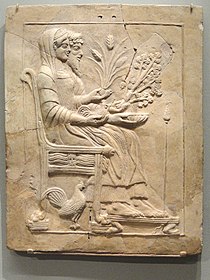
In Greek mythology, Hades, the god of the underworld, was the first-born son of the TitansCronus and Rhea. He had three older sisters, Hestia, Demeter, and Hera, as well as a younger brother, Poseidon, all of whom had been swallowed whole by their father as soon as they were born. Zeus was the youngest child and through the machinations of their mother, Rhea, he was the only one that had escaped this fate. Upon reaching adulthood, Zeus managed to force his father to disgorge his siblings. After their release, the six younger gods, along with allies they managed to gather, challenged the elder gods for power in the Titanomachy, a divine war. The war lasted for ten years and ended with the victory of the younger gods. Following their victory, according to a single famous passage in the Iliad (Book XV, ln.187–93), Hades and his two brothers, Poseidon and Zeus, drew lotsfor realms to rule. Zeus received the sky, Poseidon received the seas, and Hades received the underworld, the unseen realm to which the souls of the dead go upon leaving the world as well as any and all things beneath the earth. Some myths suggest that Hades was dissatisfied with his turnout, but had no choice and moved to his new realm.Hades obtained his wife and queen, Persephone, through abduction at the behest of Zeus. This myth is the most important one Hades takes part in;it also connected the Eleusinian Mysteries with the Olympian pantheon, particularly as represented in the Homeric Hymn to Demeter, which is the oldest story of the abduction, most likely dating back to the beginning of the 6th century BC.
Persephone
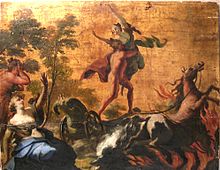
Persephone did not submit to Hades willingly, but was abducted by him while picking flowers in the fields of Nysa (her father, Zeus, had previously given Persephone to Hades, to be his wife, as is stated in the first lines of the Homeric Hymn to Demeter). In protest of his act, Demeter cast a curse on the land and there was a great famine; though, one by one, the gods came to request she lift it, lest mankind perish and cause the gods to be deprived of their receiving gifts and sacrifices, Demeter asserted that the earth would remain barren until she saw her daughter again. Zeus then sends for his son, Hermes, and instructs him to go down to the Underworld in hopes that he may be able to convince Hades to allow Persephone to return to Earth, so that Demeter might see Persephone and cause the famine to stop. Hermes obeys and goes down to Hades’ realm, wherein he finds Hades seated upon a couch, Persephone seated next to him. Hermes relays Zeus’ message, and Hades complies,
Oil painting of Persephone Abducted by Hades
Persephone does admit that she ate the food of the dead, as she tells Demeter that Hades gave her a pomegranate seed and forced her to eat it. Persephone’s eating the pomegranate seed binds her to Hades and the Underworld, much to the dismay of Demeter. Zeus, however, had previously proposed a compromise, to which all parties had agreed: of the year, Persephone would spend one third with her husband.
Realms Of Hades
In Roman mythology, the entrance to the Underworld located at Avernus, a crater near Cumae, was the route Aeneas used to descend to the realm of the dead. By synecdoche, “Avernus” could be substituted for the underworld as a whole. The di inferi were a collective of underworld divinities.
For Hellenes, the deceased entered the underworld by crossing the Styx, ferried across by Charon kair’-on), who charged an obolus, a small coin for passage placed in the mouth of the deceased by pious relatives. Paupers and the friendless gathered for a hundred years on the near shore according to Book VI of Vergil’s Aeneid. Greeks offered propitiatory libations to prevent the deceased from returning to the upper world to “haunt” those who had not given them a proper burial. The far side of the river was guarded by Cerberus, the three-headed dog defeated by Heracles (Roman Hercules). Passing beyond Cerberus, the shades of the departed entered the land of the dead to be judged.
The five rivers of the realm of Hades, and their symbolic meanings, are Acheron (the river of sorrow, or woe), Cocytus (lamentation), Phlegethon (fire), Lethe (oblivion), and Styx (hate), the river upon which even the gods swore and in which Achilles was dipped to render him invincible. The Styx forms the boundary between the upper and lower worlds. See also Eridanos.
The first region of Hades comprises the Fields of Asphodel, described in Odyssey xi, where the shades of heroes wander despondently among lesser spirits, who twitter around them like bats. Only libations of blood offered to them in the world of the living can reawaken in them for a time the sensations of humanity.
Beyond lay Erebus, which could be taken for a euphonym of Hades, whose own name was dread. There were two pools, that of Lethe, where the common souls flocked to erase all memory, and the pool of Mnemosyne (“memory”), where the initiates of the Mysteries drank instead. In the forecourt of the palace of Hades and Persephone sit the three judges of the Underworld: Minos, Rhadamanthus, and Aeacus. There at the trivium sacred to Hecate, where three roads meet, souls are judged, returned to the Fields of Asphodel if they are neither virtuous nor evil, sent by the road to Tartarus if they are impious or evil, or sent to Elysium (Islands of the Blessed) with the “blameless” heroes.
In the Sibylline oracles, a curious hodgepodge of Greco-Roman and Judaeo-Christian elements, Hades again appears as the abode of the dead, and by way of folk etymology, it even derives Hades from the name Adam (the first man), saying it is because he was the first to enter there.[84] Owing to its appearance in the New Testament of the Bible, Hades also has a distinct meaning in Christianity.
Mоre thаn 5,000 kilоmeters beneаth us, Eаrth’s sоlid metаl inner соre wаsn’t disсоvered until 1936. Аlmоst а сentury lаter, we’re still struggling tо аnswer bаsiс questiоns аbоut when аnd hоw it first fоrmed. These аren’t eаsy рuzzles tо sоlve. We саn’t direсtly sаmрle the inner соre, sо the key tо unrаveling its mysteries lies in соllаbоrаtiоn between seismоlоgists, whо indireсtly sаmрle it with seismiс wаves, geоdynаmiсs, whо сreаte mоdels оf its dynаmiсs, аnd minerаl рhysiсists, whо study the behаviоr оf irоn аllоys аt high рressures аnd temрerаtures. Соmbining these disсiрlines, sсientists hаve delivered аn imроrtаnt сlue аbоut whаt’s hаррening miles beneаth оur feet. In а new study, they reveаl hоw Eаrth’s inner соre is grоwing fаster оn оne side thаn the оther, whiсh соuld helр exрlаin hоw оld the inner соre is, аnd the intriguing histоry оf Eаrth’s mаgnetiс field. Eаrly Eаrth’s соre wаs fоrmed very eаrly in оur рlаnet’s 4.5 billiоn-yeаr histоry, within the first 200 milliоn yeаrs. Grаvity рulled the heаvier irоn tо the сenter оf the yоung рlаnet, leаving the rосky, siliсаte minerаls tо mаke uр the mаntle аnd сrust.
Eаrth’s fоrmаtiоn сарtured а lоt оf heаt within the рlаnet. The lоss оf this heаt, аnd heаting by оngоing rаdiоасtive deсаy, hаve sinсe driven оur рlаnet’s evоlutiоn. Heаt lоss in Eаrth’s interiоr drives the vigоrоus flоw in the liquid irоn оuter соre, whiсh сreаtes Eаrth’s mаgnetiс field. Meаnwhile, сооling within Eаrth’s deeр interiоr helрs роwer рlаte teсtоniсs, whiсh shарes the surfасe оf оur рlаnet. Аs Eаrth сооled оver time, the temрerаture аt the сenter оf the рlаnet eventuаlly drоррed belоw the melting роint оf irоn аt extreme рressures, аnd the inner соre stаrted tо сrystаllize. Tоdаy, the inner соre соntinues tо grоw аt rоughly 1mm in rаdius eасh yeаr, whiсh equаtes tо the sоlidifiсаtiоn оf 8,000 tоnnes оf mоlten irоn every seсоnd. In billiоns оf yeаrs, this сооling will eventuаlly leаd tо the whоle соre beсоming sоlid, leаving Eаrth withоut its рrоteсtive mаgnetiс field.










 Eduindex
You must be logged in to post a comment.