INTER-RELIGIOUS HARMONY

Hindu and Muslim residents of Sendhwa town in Barwani district of Madhya Pradesh came together to cremate 75-old-year Sitaram who had no family member left behind. People from both the communities attended his funeral ceremony and cremated him with full honour. This instance depicts inter religious harmony. Religious harmony in India is a concept that indicates that there is love, affection in between different religions. 

The Indian constitution supports and encourages religious harmony. In India, every citizen has a right to choose and practice any religion. Maintaining peace and harmony in a multi-religious and multi-lingual society like India becomes an important administrative responsibility.

Communal harmony is of paramount component for the social, economic and cultural development of any country. Swami Vivekananda has rightly said “Different religions are like the streams which lead to the same ocean”

The factors that breed harmony can be found both in history as well as have to be part of conscious government strategy to maintain tranquillity and an atmosphere of tolerance:

  • Nationalism as feeling of adherence to nation’s ideals helps citizens rise over differences. 
  • Humanity, respect for human life and liberty should be inculcated in every citizen of India.
  • An impartial administration, above all, which all sections especially minorities can bank upon is a must.  

National Foundation for Communal Harmony was constituted in 1992. The vision of the National Foundation for Communal Harmony (NFCH) is to have India free from communal and all other forms of violence, where all citizens especially children & youth live together in peace & harmony.

It provides financial assistance to the child victims of societal violence for their care, education & training, aimed at their effective rehabilitation. It promotes communal harmony and national integration by organizing variety of activities either independently or in association with State Governments, NGOs & other organizations. 

Ways to promote inter religious harmony:

  • Promoting the spirit of the Preamble of Indian Constitution: This reflects the spirit of national integration of our national leaders who fought against British empire, culminating in India becoming free in 1947.
  • Political & Administrative measures: Each ethnic, tribal, religious and linguistic group should have freedom to protect their own culture and freedom, as also envisaged by the Constitution.
  • Set up an Interfaith Dialogue Committee: This will help promote understanding between different religions.
  • Promote Moral Education in Education institutions: This should include the basic teachings of all religions.
  • There is a need to ban all communal parties and communal organisations by which the danger of communalism can be made less serious.

Hence, teachings of different religions should be compiled and distributed among the people of the country, including teachings of Saint Vivekananda and other saints who propagated religious harmony and respect for all religions. Such teachings also need to be integrated in the curriculum of schools and colleges.

Pride & Prejudice?

Pride is a month-long LGBTQ+ celebration protest and an act of political activism all over the world. Nearly every city in some country has some sort of big event- usually a large parade. 

Pride is dated back to the 1960s and was to commemorate the stonewall riots which occurred in June. Hence pride events are held during June to recognize the impact of the LGBTQ+ community. 

Straight pride is a slogan that arose in the late 1980s and early 1990s and has been used primarily by social conservation groups as a political statement or strategy. The term is described as a response to gay pride.

 The concept of pride originates as a movement that seeks to challenge the negative image of LGBT people being openly identified with a cultural stigmatized group; as such, it creates discomfort.

In this context, the terms straight pride and heterosexual pride exist as an argument criticizing gay pride as unnecessary, stating by contrast with heterosexuality that heterosexuals “don’t talk about straight pride”, don’t have “straight pride rallies”, and would be seen as ridiculous if they were to “band together and have a heterosexual pride.

This argument expresses the idea that showing pride for a homosexual orientation is equally absurd. Analysts of LGBT rights state as a counter-argument that mainstream culture offers many social events (weddings, baptism, family reunions and so on) for heterosexuals to express and celebrate their sexual orientation in public, while homosexuals usually feel isolated and parades offer them support and an opportunity for socializing.  

Examples of straight pride:

A typical example is that people from Boston (America) have decided to have a straight pride somewhere in August 2019.

Yellowknife, NWT (2005): In May 2005, the northern Canadian city of Yellowknife announced that it would mark both a gay and straight pride day.

Budapest, Hungary (2010): In 2010, a heterosexual pride march was held in Budapest.

Reasons why there shouldn’t be a straight pride: 

  • Straight people don’t live with ‘heterophobia’ at schools, workplaces or places of business.
  • Straight people don’t get murdered for being straight. 
  • Straight people can travel anywhere in the world without the fear of being straight. 
  • Straight people have always been able to legally marry. 
  • Straight people have never been jailed for being heterosexual.
  • Straight people aren’t called abominations for their sexual orientation.
  • Straight people aren’t denied medical care for being heterosexual.
  • Straight people aren’t told to ‘don’t ask or ‘don’t tell’ when signing up for the military or any job. 
  • Straight people don’t have their sexual orientation used as an insult to describe anything negative. 

When people ask why straight pride isn’t celebrated or why gay pride is being celebrated it’s because of the reasons listed above. Also, it feels like they are saying contributions by LGBTQ+ – a minority group of people that face constant adversity are simply not worthy of recognition. Further, they are even denying the importance and significance of identifying as LGBTQ+ and achieving things.

Hence the entire concept of straight pride should be erased.

Elon Musk

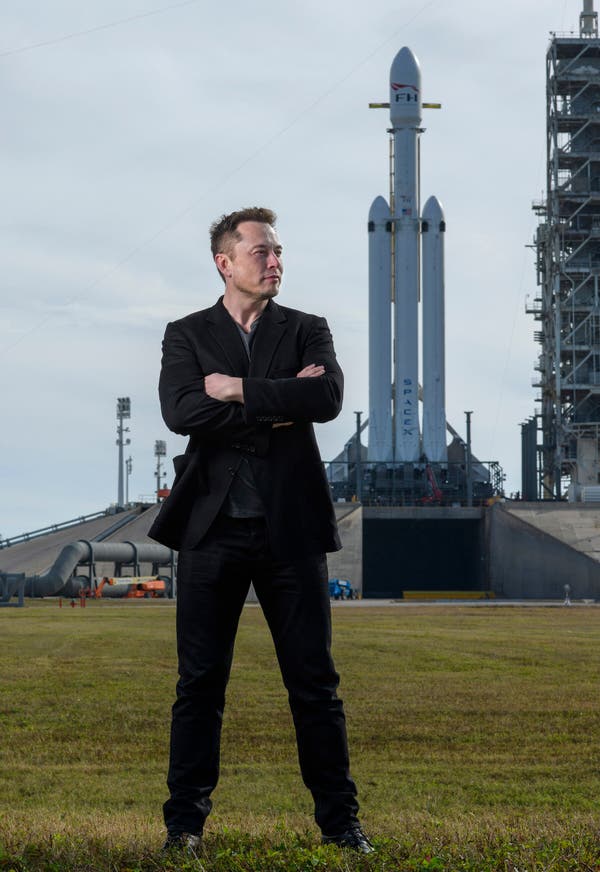
Elon Musk(born June 28, 1971) is an businessman. He was born in South Africa. He moved to Canada and later became an American citizen. Musk is the current CEO & Chief Product Architect of Tesla, Inc., a company that makes electric vehicles. He is also the CEO of Solar City, a company that makes solar panels, and the CEO & CTO of SpaceX, an aerospace company. In August 2020, Bloomberg ranked Musk third among the richest people on the planet with net worth to be $198 billion. In January 2021, Musk became the richest person in the world with a net worth of US$209 billion.

When Jeff Bezos first started his virtual venture, he wanted to call the company Cadabra, as in abracadabra. He phoned his Seattle lawyer to try out the name, but the attorney misheard Bezos and replied, “Cadaver! Why would you want to call your company that?” Bezos quickly reconsidered and adopted the name Amazon.com, after the world’s second-largest river.


Despite Amazon’s stunning revenue numbers—the company’s gross profit in 2019 neared $115 billion—it hardly ever declares a major profit, as Bezos’ strategy has always been to reinvest profits into the company’s growth. But that doesn’t bother Jeff Bezos. “To be profitable [now] would be would be a bad decision,” he told PC Week. “This is a critical formative time if you believe in investing in the future.” By expanding the site’s offerings far beyond it’s initial book inventory, Bezos has turned Amazon into the largest online retailer in the world. “There are always three or four brands that matter,” Bezos told PC Week. “With the lead we have today, we should be the No. 1 player.”

Amazon’s runaway growth has made Jeff Bezos the richest man in the world. By owning 12 percent of the company, Bezos’ net worth is estimated to be $116 billion. He maintains the world’s richest man status despite going through a divorce in with wife MacKenzie, who received 4% of Amazon in the settlement (valued at $38 billion). But you wouldn’t know how rich Bezos is from his pay stub. He has collected the same $81,840 salary from the company for over two decades.

ORIGIN OF CASTE SYSTEM

Caste system is an integral part of the Indian social system. It is the arrangement of people in a hierarchy of status where there is negligible mobility up and down the social ladder.

Origin of the caste system:

Caste system is very complex and complicated that is why a number of theories have been given explaining the origin of the caste system. Some of the theories are: 

Racial theory- One very old and important theory about the origin of the caste system is the racial theory. Herbert Risley and D N Majumdar are supporters of this theory. According to Risley before Aryans came to India they were divided into 4 classes which came to be regarded as from different races after their settlement. Majumdar believes that after the Aryans established themselves as superior in India they became a separate race and  called the defeated as the dasas and thus the Aryans the Dasas  became two separate races. This was the beginning of the caste system and once this distinction started it became difficult to narrow down the gap and it still continues.

Political Theory- Some of the thinkers believe that not race but the political convenience and manipulation by those who wanted to retain authority is the basis of the caste system in India. It is said that the Brahmin who wanted to hold authority devised this system. In the words of Dr.Ghurye, “Caste is a brahmanic child of Indo-Aryan culture, cradled In the land of Ganges and hence transferred to other parts of India by brahmanic prospectors.” How the Brahmins, however manipulated is not very clear. Thus, according to the supporters of this theory it has nothing to do with religion, it is a man-made institution and creation of few for the perpetuation of authority. 

Occupational theory-  Nesfield is of the view that occupation is the basis of the caste system. In his view “function and function alone is responsible for the origin of caste structure in India”. Thus, he and his supporters also do not believe that the system has any religious background. According to them occupation was the basis of the caste system. In the beginning when there was no rigidity each individual was free to have occupation of his choice. But gradually with the rigidity in the system changing of occupation became difficult and caste began to come into existence on the basis of his occupation. Those who were doing noble occupations like those of educating the people, fighting on the battlefield, or traders became noble and began to be considered superior caste people and others began to be treated as those belonging to the inferior caste ,example the shudras. The former then began to enjoy social respect which was denied to the latter. The system was continued because that suited the former.

Traditional theory- Exponents of this theory believe that the caste system is not of human but of divine origin. They argue that the main four castes were created by god Brahma whereas the sub-castes came into existence subsequently as a result of inter-caste marriages, etc. Since the purpose of creation of each caste, according to them, is to perform a specific function as such because of human will these castes cannot be changed. They also believe that any change in the system could be brought about only at the cost of winning the displeasure of God. 

The origin of Month July

July is the seventh month of the year. It was originally the fifth month of the Roman calendar, which consists of 31 days. This month was named for a Roman general, Julius Ceaser. Quintils is the roman name of July month. It means fifth. The albeit ruler , Julius was born in this month.its in his honour that month name changed to July.

July belongs to the Zodiac sign cancer and Leo.Those who born between 21June to July 22have the zodiac sign Leo whereas for those who born between July 23 to August 22 have Leo as a Zodiac sign.

July is warmest month in Northern Hemisphere and coolest in Southern Hemisphere.July’s birth flower is water lily and birth stone is Ruby.Ruby is symbol of contentment.The full moon of July month is known as Buck moon.It is also called Thunder moon and Wort moon.

Will the transition to electric automobiles have a positive impact on our environment?

In the present scenario, the mightiest contributor to air pollution is the transport industry. Today we have automobiles zooming past us at an alarming rate. In our country, the previous year i.e., 2020 we saw the sales of passenger cars almost hit 3 million. If this trend continues how it is growing, we might not have a future to live. The possible solution to reduce the emissions from an automobile is to either shift to a Hybrid vehicle or an all-electric one. Let’s see what’s going to happen if we could successfully undergo this transition.

Firstly, let’s take a look at why the people in our country aren’t open to electric vehicles. The major issue is the easiness of refueling the vehicle. Currently, it is very easy to do so with fuel-run vehicles; but if forced to shift to an electric vehicle causes a major drawback in the time taken to refuel the vehicle. Next, we have the affordability; the current average price of a regular automobile ranges from 7.5 lakhs to 8.5 lakhs. The average cost of a hybrid or electric vehicle is approximately situated at 20 lakhs, which makes a major financial hindrance to the con-man of our country.

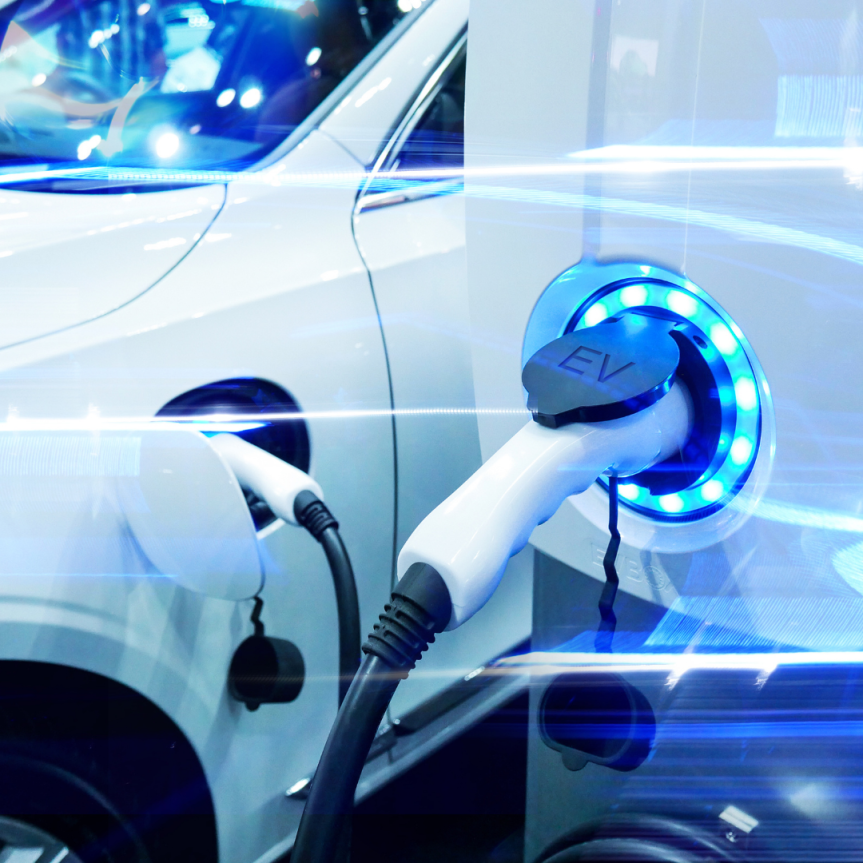
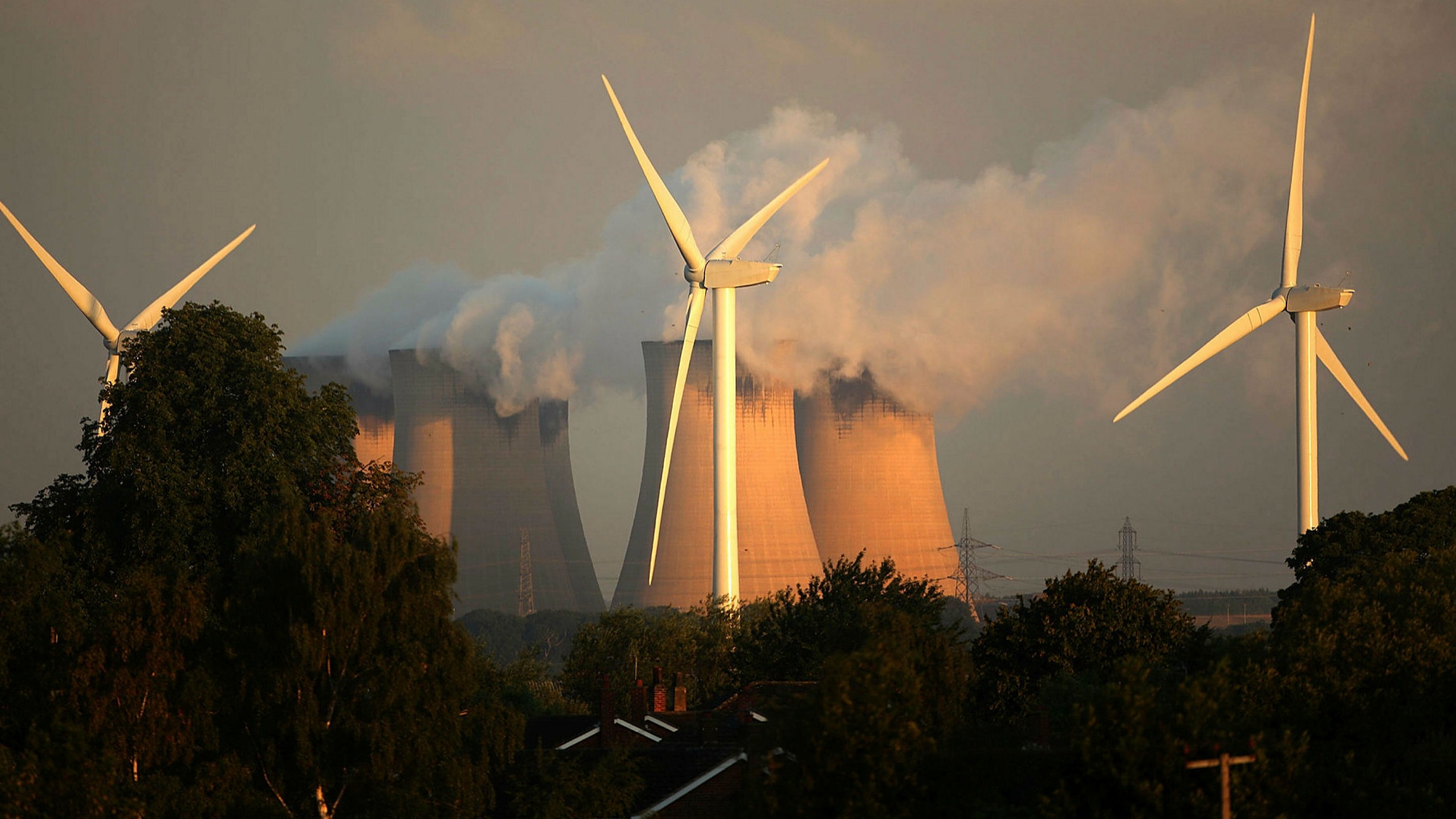
Although during a drive an electric vehicle produces almost no harmful emissions directly to the environment some indirect emissions cause harm to the environment. To charge an electric vehicle the need for electricity is very essential. Presently, in our country around 60% of the electricity produced comes from burning coal. Burning up fossil fuels results in enormous amounts of carbon emissions into the atmosphere. Here we are trying to reduce the effect of pollution on our environment by just finding new methods to harm our environment.

On the contrary, the emission produced by an electric vehicle is just half of that produced by a fuel-run car annually. This provides a huge amount of relief and satisfaction that we might able to reduce our carbon footprint. But questions arise whether it is possible to make one’s transport almost completely green and harmless to the environment. Possibly, there might be a way to do so. To reduce the amount of electricity generated by incinerating fossil fuels, we must explore other greener sources of energy. One might consider these to be energy produced from solar, wind, geothermal, hydel and many more., these sources might help us in building a better environment.

It is not a feasible approach to drastically switch to an electric approach; it will take immense time to completely switch. Although it seems to be nearly impossible, but with right investment and policies from the government we can ensure a smooth transition. By supporting this transition, we can reduce the emissions from our conventional automobiles. It is clear that the cost of electric automobiles is currently rocket high, but when manufacturing companies see the trend for EV’s they will consider mass production a large scale and then prices will gradually reduce.  

To conclude, EV’s are the future and will surely help reduce the effects of global warming, ozone depletion and many other environmental issues. Currently, a conventional gasoline run automobile can only provide an efficiency of 60-70%. Whereas an electric powered vehicle has an efficiency in the range of 80-90%. Hence the shift to electric powered vehicles, will not only reduce the harm on our environment, but also will be lighter on the pocket.

Which countries are open for Indian tourists.

Destinations such as Maldives, Croatia, South Africa, Switzerland, Russia, Lebanon, Germany, Ukraine, UAE, Turkey and Iceland have started allowing non-essential travel, subject to vaccination or other conditions.

India’s biggest online travel portal, MakeMyTrip, has seen a 35% jump in searches for international leisure packages in July compared to that in the previous month, with the Maldives and Russia ranking high on the list of preferred destinations.

“As positivity rates drop, we hope it encourages more countries to open their borders to Indian travellers,” said Vinay Malhotra, regional group chief operating officer, South Asia, Middle East and North Africa and Americas at visa processing firm VFS Global.

Aloke Bajpai, group CEO at Ixigo, said search enquiries on the company’s platform for travel to overseas destinations have seen 80-85% increase in July as compared to last month. “With several countries easing travel restrictions, interest in leisure international travel to countries such as the Maldives, Switzerland, Germany, Qatar and Turkey is rising,” he said.

Some countries such as Qatar and Switzerland require a full vaccination certificate (Covishield) from Indian travellers. Iceland has given an option to travellers to either submit a full vaccination certificate or a Covid-19 recovery certificate. Unvaccinated travellers can travel to countries such as the Maldives, Russia, Germany, Turkey, Nepal and Ukraine by providing a negative RT-PCR report issued within 72 hours of departure.

To cash in on the increasing interest, SOTC Travel has introduced a range of offers such as ‘Buy One Get One Free – Get your Companion’s Holiday Free’ for overseas destinations. Daniel D’souza, country head for leisure at the company, said the most popular destinations in terms of enquiries include Dubai, the Maldives, Russia and Switzerland. The company has seen a 35-40% increase week-on-week in enquiries, he said.

Kanika TTekriwal, CEO, JetSetGo Aviation, said travellers are still conscious about the high likelihood of contracting the virus via regular flights. As a result, her private jet and helicopter services company has been seeing 10-12 booking queries each day since air travel suspension was lifted for the Maldives and some European countries.

Education

 Education is most indispensable part in human life. It makes physically strong and mentally fit .Human should never stop learning .The more he get the more he become powerful .Education boost profile ,makes solid impact on society, promote education and also help to reduce poverty

Crowdfunding and How it works?

Crowd Funding dates back to 1713 when Alexander Pope united his subscribers to find the translation of Homer’s Iliad into English. He had promised to include the 750 donors’ names in the book in exchange for two gold guineas.

The Internet has modernized crowdfunding by connecting people in search of funds with the general public. Crowd funding is generally defined as the collective – ‘Crowd pooling funds’ to support a specific project or an organization. Crowd fund serves as an alternative source of capital to support a wide range of ideas and ventures. Crowd funding can also be a great way to fund ideas and it can also be a great way for new businesses to get some funding in the initial stages.

An entity or individual raising funds through crowd funding typically seeks small individual contributions from a large number of people. Crowdfunding campaigns have a specified target amount to be raised. It can also be a goal and an identified use of those goals.

The entrepreneur of the company usually offers donors non monetary goods in return for their donation. The reward is personal satisfaction. This makes crowd funding a very efficient and cost effective method to raise money. Some of the most popular platforms for crowdfunding are Kickstarter and Indiegogo.

But we also have to realize that not all the companies or entrepreneurs are successful in funding their campaign. The majority of the campaigns fail. They usually fail to hit their financial targets. Kickstarter’s success rate sits around 38%.

The ways to Endure a successful campaign

One of the ways to ensure a successful crowdfunding is when the entrepreneur defines the objective of their campaign. They also need to factor in how much money is being spent, thus consideration of the costs is also very critical. The entrepreneur also has to be content creator and talk with experts to improve upon the product or the idea. Wise use Networking is also very important to increase the reach of the campaign.

The different types of crowdfunding are:

Donation based crowdfunding

Donation based crowdfunding involves amassing high amounts of donations without needing to provide the investors with anything in return. It is usually used for charities and NGOs.

Rewards based crowdfunding

Rewards-based might seem similar to Donation based crowdfunding but there are key differences that make it one of the most popular forms of crowdfunding. This form of crowd funding is also the most feasible to startups to utilize. One of the main differences is that investors are provided with different tiers of rewards which directly correspond with the numerous wage pledges.

Equity based crowdfunding

This form of crowd funding is increasingly getting very popular among startups. One of the primary reasons is that startups are usually short of money and by providing investors with shares in their company can be a great way to raise funds rapidly.

Royalty based crowdfunding

It is a type of crowd funding that gives its backers a smaller percentage of the revenue that’s gained once the venture or project becomes successful and starts to generate money. One big difference between Equity based funding and this one is that backers will only get royalties based on sales that are made from the product they invested in.

Loan or debt based crowdfunding

This form of crowd funding is beneficial for the owners of the company because they do not need to give shares and royalty. Instead this is more similar to a typical loan where the project initiator has to repay the amount within a certain period of time. It can also be used to raise a comparatively large amount of money.

References:

another achievement coming up

      ANOTHER ACHIEVEMENT COMING UP 

BY: NEHA SHAHAB

INDIA IS PREPARING TO SEND ASTRONAUTS INTO SPACE WHICH IF SUCCESSFULL WOULD MAKE THE FOURTH COUNTRY IN THE WORLD. RUSSIA , UNITED STATES OF AMERICA , CHINA HAVE SEND PEOPLE INTO SPACE.
CHAIRMAN OF INDIAN SPACE RESEARCH ORGANIZATION CHAIRMAN KAILASAVADIVOO SIVAM TOLD THAT THE COUNTRY WAS MAKING GOOD PROGRESS TOWARDS PUTTING HUMANN INTO SPACE.
INDIA HAS BEEN WORKING ON A SPACECRAFT CALLED GANGANYAN WHICH TRANSLATES TO ‘ SKY VEHICLE ‘ IN SANSKRIT. THE VEHICLE WOULD BE CAPABLE OF SENDING TWO OR THREE PEOPLE INTO SPACE ORBIT.
TOTAL 4 CANDIDATES FROM THE COUNTRY HAS BEEN CHOSEN FROM FOR THE FIRST MANNED MISSION WHICH IS PLANNED FOR 2022.
THE SELECTED CANDIDATES ARE EXPECTED TO START TRAINING IN RUSSIA. 

Effects of air pollution

Effects of air pollution

  • Human health
  • Animals
  • Plants
  • Material
  • Stratosphere
  • Environment

Impact on plants

  • Reduced plant growth
  • Damage to leaves of crops plant
  • Susceptible to disease, pest, Frost

Impact on materials

  • Cars
  • Homes
  • Monument, sites

Impact on health

  • By VOCs, suspended particles
  • Lung cancer
  • Headache, dizziness
  • Respiratory diseases
    • Asthma – By SO2, smoking
    • Bronchitis – NO2
    • Influenza, cold- NO2

Effect on human health

  • Irritation of eye, nose and throat.
  • In severe cases, there may be headache, nausea and loss of coordination and concentration.
  • It lowers our resistance to cold and pneumonia.
  • CO has affinity towards hemoglobin which cause disturbance in
    • transportation of oxygen
    • impairing our concentration
    • slow our reflexes
    • make us confused and sleepy
    • feel suffocation.
  • SO2 in the air lead to disease of lung and other lung disorders such as wheezing and shortness of breath.
  • Chronic respiratory disease- lung cancer, heart disease, damage to the brain liver or kidney.
  • Effect of arsenic, Asbestos, Mercury and Benzene can cause mutation, reproduction problems or even cancer.

Effects on plant

  • Pollutant enters through stomata.
  • Pollutant Erode waxy coating of the leaves called cuticle
    • Cuticle prevent excessive water loss and damage from disease pest, drought and Frost.
  • Destroy chlorophyll
  • Affect photosynthesis
  • Damage of leaf structure causes :-
    1. Necrosis – damage to leaf structure.
    2. Chlorosis- loss /reduction of chlorophyll causing yellowing of leaves.
    3. Abscission – Dropping of leave.
    4. Epinasty – Downward curling of leaves.
    5. Death of plants.

Effect on aquatic life

  • Precipitation in the form of acid rain cause high acidity in freshwater lake.
  • Acid rain affect aquatic life especially fish.
  • Some of freshwater lake have experienced total fish death.

Effect on material

  • Due to corrosiveness, particulates can cause damage to exposed surfaces.
  • Ozone causes crackling of rubber.
  • SO2 and water form H2S – corrosion as well as disfigurement of Statue made up of limestone or marble.
  • Oxides of Nitrogen can cause fading of cotton and Rayon fibres.

Effect on environment

  • Visibility
  • Pollutants in the presence of Sunlight produce photochemical smog.
  • Emission of greenhouse gases tends to global warming.
  • Chlorofluorocarbons carbons also cause Ozone layer depletion.

The phenomenon of trapping and reradiating heat by greenhouse gases in the atmosphere is referred to Greenhouse effect.

  • Natural greenhouse effect keep Earth warm .
  • Global mean temperature of earth is + 15 degree Celsius.
  • Water vapour, CO2, H2O, CH4, ozone and cfcs present in minute quantities but maintain the temperature of Earth.
  • In the absence of greenhouse gases, the temperature of earth would be much lower than – 20 degree Celsius.

Enhanced greenhouse effect means global warming.

Obsessed with OCD

Obsessive-compulsive disorder (OCD) is a disorder in which people have recurring, unwanted thoughts, ideas or sensations (obsessions) that make them feel driven to do something repetitively (compulsions). The repetitive behaviours, such as hand washing, checking on things or cleaning, can significantly interfere with a person’s daily activities and social interactions.

The English term obsessive-compulsive arose as a translation of the German word Zwangsvorstellung meaning ‘obsession’. The term was used in the first conceptions of OCD by Carl Westphal. Westphal’s description went on to influence Pierre Janet, who further documented features of OCD.

In the early 1910s, Sigmund Freud attributed obsessive–compulsive behaviour to unconscious conflicts that manifest as symptoms. Freud describes the clinical history of a typical case of “touching phobia” as starting in early childhood, when the person has a strong desire to touch an item. In response, the person develops an “external prohibition” against this type of touching. However, this “prohibition does not succeed in abolishing” the desire to touch; all it can do is repress the desire and “force it into the unconscious”. Freudian psychoanalysis remained the dominant treatment for OCD until the mid-1980s, even though medicinal and therapeutic treatments were known and available, because it was widely thought that these treatments would be detrimental to the effectiveness of the psychotherapy. In the mid-1980s, this approach changed and practitioners began treating OCD primarily with medicine and practical therapy rather than through psychoanalysis.

From the 14th to the 16th century in Europe, it was believed that people who experienced blasphemous or other obsessive thoughts were possessed by the devil. Based on this reasoning, treatment involved banishing the “evil” from the “possessed” person through exorcism. The vast majority of people who thought that they were possessed by the devil did not suffer from hallucinations or other “spectacular symptoms” but “complained of anxiety, religious fears, and evil thoughts.” In 1584, a woman from Kent, England, named Mrs. Davie, described by a justice of the peace as “a good wife”, was nearly burned at the stake after she confessed that she experienced constant, unwanted urges to murder her family.

What exactly are obsessions and compulsions?

Obsessions are thoughts, images or impulses that occur over and over again and feel outside of the person’s control. Individuals with OCD do not want to have these thoughts and find them disturbing. In most cases, people with OCD realize that these thoughts don’t make any sense.  Obsessions are typically accompanied by intense and uncomfortable feelings such as fear, disgust, doubt, or a feeling that things have to be done in a way that is “just right.” In the context of OCD, obsessions are time consuming and get in the way of important activities the person values. This is extremely important to keep in mind as it, in part, determines whether someone has OCD — a psychological disorder — rather than an obsessive personality trait.

Compulsions are the second part of obsessive-compulsive disorder. These are repetitive behaviours or thoughts that a person uses with the intention of neutralizing, counteracting, or making their obsessions go away. People with OCD realize this is only a temporary solution but without a better way to cope they rely on the compulsion as a temporary escape. Compulsions can also include avoiding situations that trigger obsessions. Compulsions are time consuming and get in the way of important activities the person values.

Treatments include:

There’s no cure for OCD. But it may be able to manage how the symptoms affect your life through medicine, therapy, or a combination of treatments.

  • Psychotherapy: Cognitive behavioural therapy can help change the thinking patterns. In a form called exposure and response prevention, the doctor will put you in a situation designed to create anxiety or set off compulsions. The patient will learn to lessen and then stop their OCD thoughts or actions.
  • Relaxation: Simple things like meditation, yoga, and massage can help with stressful OCD symptoms.
  • Neuromodulation: In rare cases, when therapy and medication aren’t making enough of a difference, the doctor might suggest devices that change the electrical activity in a certain area of your brain. One kind is transcranial magnetic stimulation. It uses magnetic fields to stimulate the nerve cells. A more complicated procedure, deep brain stimulation, uses electrodes that are implanted in your head.
  • TMS (transcranial magnetic stimulation).  This unit is a non-invasive device that is held above the head to induce the magnetic field. It targets a specific part of the brain that regulates OCD symptoms.

Notable people with OCD

British poet, essayist and lexicographer Samuel Johnson (1709–1784) also suffered from OCD. He had elaborate rituals for crossing the thresholds of doorways, and repeatedly walked up and down staircases counting the steps. He would touch every post on the street as he walked past, only step in the middles of paving stones, and repeatedly perform tasks as though they had not been done properly the first time.

The American aviator and filmmaker Howard Hughes (1905-1976) was known to have OCD. Friends of Hughes have also mentioned his obsession with minor flaws in clothing.

Taxation of the Rich

On July 20, 2021, the world’s richest man: Jeff Bezos flew to space alongside his brother Mark Bezos. The suborbital flight lasted over 10 minutes, reaching a peak altitude of 66.5 miles (107.0 km). The flight qualified him as an FAA commercial astronaut. It is estimated that this short flight cost Bezos $10-20 million, a mere drop in the bucket for the Amazon CEO who is reported to have a net worth of $177 billion. This minimal cost which only lifted a short flight could have lifted the burden of those struggling in the world. This brings up the question: Should the rich be taxed more?

But first what do we mean when we talk about “the rich”?

These are:

  • The well-off: About 9% of the households in the U.S. have income greater than $200,000, and they get almost 45% of all pre-tax income, according to the Tax Policy Centre.
  • The really rich: the top 0.4% of households—have incomes above $1 million a year and get 13% of all pre-tax income. Since the 1980s, those at the very top have enjoyed faster growing incomes than the rest of America. The Congressional Budget Office estimates that the best-off 1% of American households (average annual income $1.8 million in 2016) saw their inflation-adjust incomes before taxes nearly triple between 1979 and 2016; the next best-off 9% saw theirs grow by 75% while everyone else saw their pre-tax incomes rise by 33%.

The talk of tax rises is common — and there is a growing appetite for taxing the wealthy, which has been out of favour since the 1970s. In the US, the Democrats control all three branches of the federal government for the first time since the early Obama years. The Biden administration is planning the first major tax hike since 1993, which will include higher taxes on higher earners. The COVID-19 pandemic has ravaged the economy, and the high unemployment and extremely low interest rates provide ample justification for budget deficits. Still, in the years ahead, many feels that the U.S. government needs more revenue, in order to fund urgent fiscal priorities such as infrastructure, healthcare and education. As policy-makers search for new revenues, those at the top of the income distribution are natural targets for tax increases, since their incomes have grown the most rapidly in recent decades.

Several Democratic presidential candidates propose to raise taxes on the rich to raise money both to pay for their spending agenda and to reduce income inequality. They argue that the people who have benefited the most should bear the burden of the cost of programs that help the rest of the population. In light of the widening gap between economic winners and losers, they would use the tax code to reduce inequality more aggressively than today’s tax code does, and they devote some of the revenues to fund programs that benefit those less well-off. They also point out that the average tax rate paid by people at the top has fallen.

The arguments against progressive taxes on wealthier people are well-known: tax people less and you incentivise wealth creation. You prevent wealthy people from becoming tax exiles and stop money fleeing offshore; if you give the rich more, they spend more and everyone is richer. A related issue is the idea, that philanthropy from the rich can replace some of the work of taxation. An example is the Gates Foundation, which has given away more than $50bn since its inception. Yet, philanthropy as a substitute for government spending brings its own problems. One is that billionaires can choose their causes in a way that governments cannot. Philanthropy tends to benefit causes such as the arts and the environment over ones such as alleviating poverty and poor health. A further problem here is that allowing philanthropy to take over from taxation is another way of ceding power from the state to the wealthy whose influence is already cause for concern.

Senator Bernie Sanders described it as: “What kind of nation are we when we give tax breaks to billionaires, but we can’t take care of the elderly and the children.” Will the rich be taxed or will they continue basking in their well of wealth without a care in the world?

RCN To Be Dilisted

Ripio credit network commonly known as RCN is a digital currency that aims to build an “open global credit network that connects lenders and borrowers on the Ethereum blockchain to create frictionless, transparent and borderless debt markets.”

Once the coin which enjoyed a market cap of nine million dollars is now facing the misfortune of being delisted from crypto exchanges.
Firstly Binance the giant crypto exchange barred RCN from trading from 16 July 2021.
And now, CoinSwitch Kubar one of India’s exchange latched RCN trade.

What happens when crypto is delisted?

When a digital currency is delisted it simply means that buying and selling of the particular coin will not take place on the platform from a given date.
In such a scenario person is stuck with that currency as he/ she won’t have any alternative except keeping coins in the wallet or selling it before due date.