

SOCIAL NEWS TODY 22/07/2021
‘Endurer’ imparts wisdom on deep-rooted social coding
Thursday, 22 July 2021
Author Kapil Raj’s new book ‘Endurer’, A Rape Story, endorses an awareness campaign #SheisnotaVictim #SheisanEndurer and has traveled across States and cities, following sessions and discussions. Kapil Raj shares about his book “Our behavior towards victims is still based out of deep-rooted social coding. Even the sufferer forces self to blame…
Over 95 lakh vaccine doses administered in Capital till now
Thursday, 22 July 2021 New Delhi
Over 95 lakh Covid vaccine doses were administered in the national Capital till Wednesday, according to a bulletin issued here.
The bulletin said Delhi had less than a day’s stock of vaccine doses left on Wednesday morning after administering over 71,000 doses on Tuesday.
SDMC issued 20k death certificates in April-June
Thursday, 22 July 2021 New Delhi
The South Delhi Municipal Corporation (SDMC) issued over 20,000 death certificates between April and June when the city was reeling under the second wave of Covid-19, municipal officials said.
According to data provided by the SDMC, it issued 3,351 death certificates in April, 10,209 in May and 6,832 in June.
Officials attributed the increase in death registrations to the second wave of Covid-19 and clearing of backlog of data.
“As compared to April, the number of death certificates is about 204% higher in May because of the Covid-19 second wave. While the figure in June is about 103% higher than that of April.
“The maximum number of deaths occurred either in May or in the last leg of April during the Covid second wave. So kin of most of the deceased who applied for death certificates got the documents in May and June,” a senior SDMC official told PTI on condition of anonymity.
Civic officials clarified that these death registrations also include normal deaths and they do not necessarily reflect the total death count due to Covid in that particular month.
Some civic officials also said that other than the Covid-19 second wave, there was backlog of data due to technical issues and it was cleared in May and June, leading to a rise in the numbers of death registrations.
In April-May, Delhi was hit by a brutal second wave of the pandemic, which claimed a number of lives every day, and oxygen supply shortage was reported at various hospitals.
62 cases, four deaths reported in last 24 hours
Thursday, 22 July 2021 NEW DELHI
As many as 62 coronavirus cases were reported in the national Capital while four more patients succumbed to the disease on Wednesday.
According to a health bulletin issued by the Delhi Government, the positivity rate stands at 0.09 per cent while sixty-one patients recovered from the infection in the past 24 hours.
Month: July 2021
A Social Reformer : Bhaurao Patil


Bhaurao Patil we born at Kumbhaj, a village on the banks of the river Warna on 22 nd september, 1887. Though agriculture was the main occupation of his family, Bhaurao’s father, Paigonda Devgonda Patil, preferred to work as a clerk in the Renenue Department of the Government of Bombay.
Bhaurao patil came to Kolhapur after the latter completed his primary education. He was admitted in a Jain students hostel run by the orthodox Jain Community. It was during his stay at Kolhapur that Bhaurao came under the influence of the Satya Shodhak Samaj. In his own district, the heroes of the underground resistance movement of 1942-45 received considerable help form Bhaurao Patil. He urged that every village should have a school and every village school should have a trained teacher. For several years he concentrated more on the opening of teacher training colleges and primary schools rather than secondary schools. He wanted his students to be self-reliant, and they were expected to learn while they earned their bread.
Bhaurao lived long enough to see his Rayat Shikshan Sanstha grow like a banyan tree. He was widely acclaimed as a great educator of the masses. A few days before his death on 9th may 1959, in the University of Poona conferred on him an honorary degree of Doctor of letters. This was surely one of the glorious moment in his ardous life when he felt happy over the public recognition and appreciation of the noble cause which he upheld against all odds. Today Bhaurao Patil was not in our but he always remember to all peoples through his work.
ONLINE EDUCATION: EXHAUSTION FOR STUDENTS RATHER THAN KNOWLEDGE
Specially for students of age 4 to 9 years
Everything has a positive and negative side. Similarly, online classes has both positive and negative sides. On one hand, the e-education and online classes have emerged as a solution for the educational crisis in current pandemic and thanks to these technological advancements which helped the students to continue their education. But on the other hand, online learning has numerous negative consequences also. In this article. we will try to identify and understand some these negative consequences and effects of online learning.

Due to pandemic, everybody lost many things, everyone’s life and lifestyle have changed and society has been altered but the there’s a huge impact of this pandemic is on the children’s of age group 4 to 9. These children’s should be learning new thing now, exploring and playing and making friends but all these things are nearly impossible for them in current situation. The pandemic forced the kids to moveout from the learning zone with which they were acquainted, like a classroom and are setup in the completely opposite scenario, where the students have missed many essential part of their education. The sudden transition of education from classroom studies to online learning will also have a huge impact on them. However, the new generation is very internet savvy but the e learning has certain limitations. Online learning comes with many challenges that has many impact on the students.
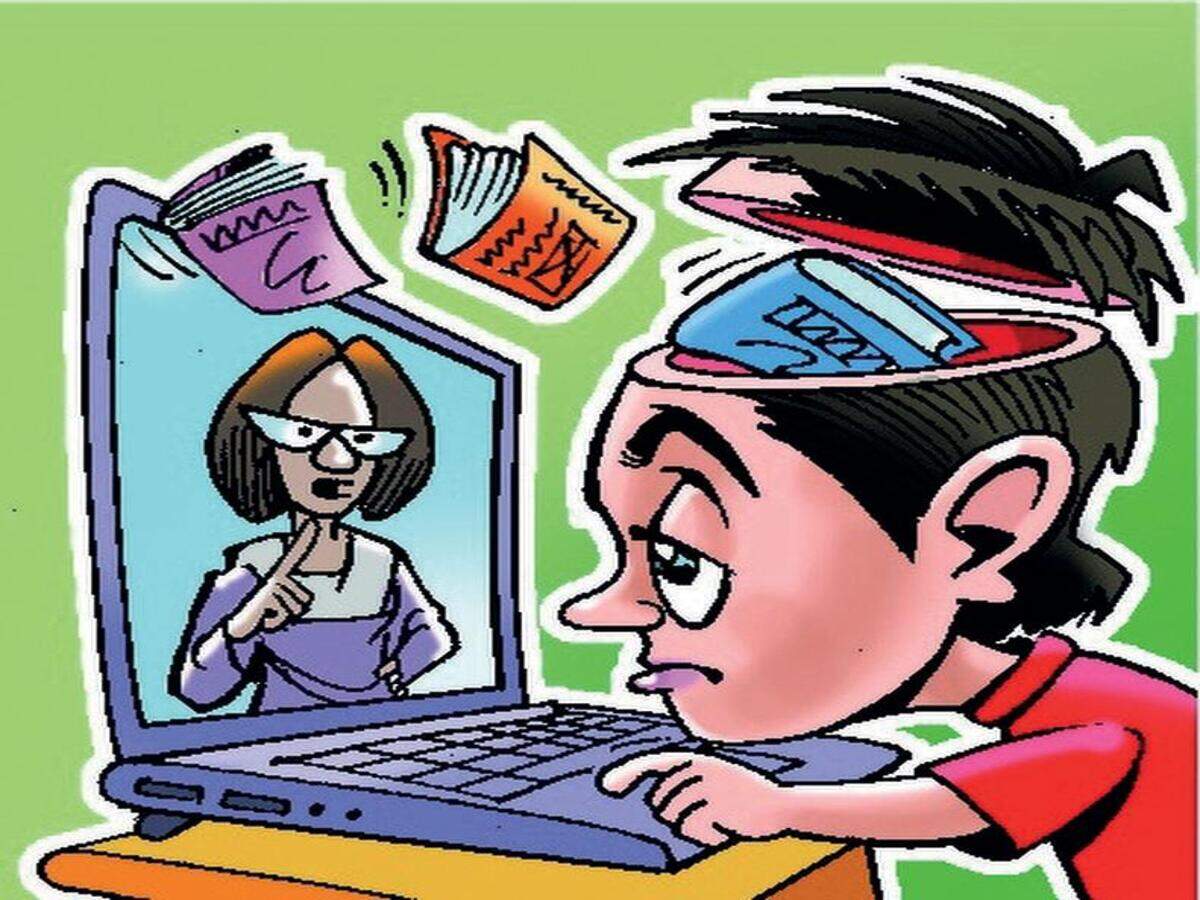
The main issue here is the lack of consistency… Children are more attentive and curious to learn things when they were in class but in this online learning scenario, the consistency of these children to be focused on studies and concentrated decreases. A students interest to answer the questions and clear doubts is more in classes but this is reduced in online learning. The willingness of a student to get his or her doubts cleared and participate in the class decreases due to the lack of one to one reaction with the teachers.
Reduced Concentration and Self Discipline… The major limitations that the students are currently facing in the online learning is reduced concentration in the class and self discipline. A school classroom provides the complete atmosphere which boosts the interest and concentration of students to learn. And such environment and structure which is effective for learning is not present at home. This classroom atmosphere give the best environment to student where they can learn, complete their assignment. Homes lack such things and as a result of which students struggle to finish their homework’s and assignments, lack of motivation and lower goals for themselves. This also discourages the students to do better in academics and explore new things.
Reduced Interaction with Peers… In addition to lack of motivation to study, the very important part of a child’s school life is also missed. This is their interaction with friends. Schools provide a neutral environment for students where they can study as well as enjoy. There is scope of social interactions which aids in developing many new skills such as understanding people of different personalities, setting boundaries, learning cooperation and empathy etc. These skills are very important for the students as it helps them in socializing with others. But such facilities cannot be provided in the homes due to the current pandemics. Because of this the students get isolated and a sense of isolation can emerge in them.

Health Hazards of Online Teaching… Online learning required continuous focus of screens which has many physical health and mental health hazards. The increase in screen time is one the major concerns and disadvantages of online learning. Some students may also develop bad posture and physicals problems. It has serious impacts on the eye sight of the students also.
International Model United Nations Conferences
Way towards success


IMUN conferences a way towards success. A platform where your voice matters. Before IMUN conference we have to know about IMUN first.
What is International MUN?
International MUN is recognized by the United Nations & has hosted MUN conferences in 5 different countries in the last 3 years i.e in Thailand, Vietnam, Egypt, China & Malaysia.
About IMUN conferences.
IMUN conferences is a platform where students (or anyone) are tasked to solve global issues like women empowerment, gender equality through research drafting, lobbying and debate to pass a suitable ‘resolution’.
This conferences are held on sat-sun every week. After completing the whole registration process you will get a mail, in that mail they will give you the meeting link and the topics for the conference. You have to select one topic and have to research about that respective topic.
e.g. I completed my whole registration process, got a mail and selected a topic. Suppose my topic is women empowerment, so I have to research about that topic like what are the issues and how can we solve those issues?. So on a day of online conference I will represent india (if I get india) and the women empowerment in India. I have to discuss the problems and respective solutions about the topic with other members. If you don’t wants to talk it’s okay, you just have to interact with the members.
What is an International Model United Nations (IMUN) conference and Why should someone participate in it ?
International MUN online conference is a 2-day model UN conference where participants from around the world present solutions to global issues. They can choose topics of their choices in every conference. In a 2-day conference, they research about the topics, debate, network with other participants from different countries etc.
Participants also get study materials, free MUN training sessions, experts QnA and position paper submissions. At the end of the conference, all participants receive participation certificates recognised by the Australian embassy and the United Nations. The best participants receive two certificates, one is participation certificate and another is award certificate.
What are the benefits of attending IMUN conferences?
Participating in IMUN conferences helps students to develop leadership skills, communication skills, public speaking, writing, research and many more. You will get a international certificate of participation by United Nation which will help you to get a good job. Interesting with foreign students, discussing and solving global issues with them what would be more interesting than this!!
How can I register?
You can register through the link attached below
https://www.internationalmun.org/RegistrationForm.php?mark=YN4558
So hurry up and register today..
Wrath of Man Review
Wrath of Man is a 2021 action thriller heist film directed by Guy Ritchie, from a script he co-wrote with Ivan Atkinson and Marn Davies, and is loosely based on the 2004 French film Cash Truck by Nicolas Boukhrief. It is Ritchie’s fourth directorial collaboration with lead actor Jason Statham, and first since Revolver (2005). Statham stars as H, a new cash truck driver in Los Angeles who thwarts a robbery only to have his mysterious past begin to get questioned. Holt McCallany, Jeffrey Donovan, Chris Reilly, Josh Hartnett, Laz Alonso, Raúl Castillo, DeObia Oparei, Eddie Marsan, and Scott Eastwood also star.

Plot
The movie is separated into four parts, each chapter circling back to one main event that sets off a chain reaction. Beginning with “A Dark Spirit,” an armoured truck is robbed by heavily armed individuals dressed as construction workers. Two guards and a civilian are killed during the robbery.
Five months after the robbery, a mysterious Patrick Hill applies to Fortico Security, an armoured truck company. In his interview, his soon-to-be superior, Terry, commends him for his references and warns him of the robbery. Hill is then introduced to Bullet, who nicknames him “H” and oversees his training and qualifying tests. “H” barely manages to pass the tests and gets off to a rocky start with his new colleagues, particularly “Boy Sweat” Dave. On his first official training day, “H,” Dave, and “Bullet” are assigned to the same pickup. Dave, who has a “we are the prey” attitude about the job, tells “H” more about the robbery where guards were killed. He reveals that he was supposed to drive the truck but had called in sick that day.
During a training pickup, “Bullet” is taken hostage, and the kidnappers demand the $2 million in their truck. Dave panics, but “H” convinces him to drive to save “Bullet.” When “H” and Dave meet the kidnappers, “H” quickly disposes of them with expert marksmanship, despite his mediocre shooting skills from his qualification tests. The police investigators assigned to the robbery question “H” about his true abilities against his training. Then they ask him to watch security footage of the previously mentioned robbery to see if he thinks the two crimes are connected. “H” denies the connection and is released back to Terry. Terry tries to give “H” desk duty for a month in case of PTSD until the CEO of Fortico comes to personally thank “H,” allowing him to continue work in the field.
The police investigators later identify “H” to their superior, FBI Agent King, as someone the Bureau had been looking for 25 years. However, King tells them to let “H” off the hook and “let the painter paint.” As a result of the attempted robbery, many of “H”‘s coworkers now believe him to be a hero. In what appears to be his hotel room later that night, “H” is visited by a woman who gives him Fortico employee files, photos of coworker Dana Curtis’ family, and an autopsy report. “H” reviews a copy of the robbery footage shown to him by the police investigators.
In a later routine pickup with just “H” and “Bullet,” the truck is attacked again. “H” faces the robbers after they flood the armored truck with tear gas, and they quickly retreat after one of the robbers sees “H”‘s face. Terry doesn’t believe his story, thinking him to now be a psychopath. The Fortico CEO, however, commends “H” once again and sends him on his way. “H” later sleeps with Dana and holds her at gunpoint to interrogate her about a private cash stash he finds. She claims she stole money once from a liquor store for retirement savings. “H” spares her life but threatens further repercussions if he learns she is withholding other information.
The second part, titled “Scorched Earth,” begins with a flashback five months earlier. “H” is out with his son Dougie when he reluctantly agrees to a work call asking him to help with the recon of an armoured truck route. “H” makes an excuse to get some burritos at a food truck and stops on the other side of the bridge from the Fortico depot. Dougie stays in the car while he goes out. While waiting by the food truck, “H” calls his underling to confirm the truck’s route. As the armored truck goes under the bridge, it is attacked by the disguised and heavily armed construction workers, who kill the guards for trying to fight back as well as Dougie for witnessing Jan’s face. When “H” runs toward them, he is gunned down as well but survives. Three weeks later, “H” wakes up in a hospital after life-saving surgery and learns of his son’s death. He is in complete shock, showing little emotion, even when his wife claims their son’s death was his fault and leaves him.
“H” meets up with FBI Agent King and requests intel. King has a list of possible suspects that the FBI is also looking into, unsure of who “H” is looking for. King tells “H” he can do what he likes, but to consider he can only turn a blind eye for so long. “H” is then revealed to be Mason Hargreaves, the boss of a crime syndicate. His syndicate’s direct underlings – Mike, Brendan, and Moggy – are the men who will make the second attack on “H’s” cash truck. “H” demands to find the specific face responsible for killing Dougie. His men claim they’ve already begun searching, scorching the earth for justice, but have yet to find the culprit. After exhausting their list of suspects and coming up with no possible leads, leaving carnage in their wake, Mike suggests that the robbery was an inside job. “H,” says he will fly back to London to clear his mind. Instead, he arranges a local contact, Kirsty, to provide him with the forged identity of Patrick Hill, put him up in a hotel, and locate the autopsy report of Dougie’s death.
In the third part, “Bad Animals, Bad,” we meet a bored former military platoon consisting of Carlos, Sam, Brad, Tom, and Jan, commanded by their platoon leader Jackson. Struggling to make ends meet, most unemployed or working underpaid jobs, the group decides to start stealing money in increasingly ambitious heists. The heists are planned in great detail by Jackson and Tom, while maintaining the façade of ordinary lives with families, except for Jan; he appears to be the black sheep of the group, showing little respect for Jackson and complaining about everything from how the money is divided to what they can purchase with their shares. The first attempt to steal from a wealthy man for whom Carlos works as security comes up with only a few hundred thousand dollars. They then resolve to utilize contacts in armoured truck companies to steal millions of dollars. Each heist comes with increasing wealth and costs. When they perform the Fortico heist, Jan is revealed to be the one that kills the guards and Dougie against the wishes of the rest of the team.
The last part, titled “Lungs, Liver, Spleen, Heart,” is set back in the present. Jackson and Tom bring the team together for a much larger but riskier final heist to steal over $150 million from the Fortico depot on Black Friday. “H” and “Bullet” are riding together when “Bullet” reveals he is the thieves’ insider and asks “H” to cooperate to avoid death. Four of the thieves, dressed in full body armour, hide in the truck to gain access into the depot while Jackson and Tom take a black vehicle behind them. Their goal is to keep the scene drama-free, open the gate to let Jackson’s vehicle in, and empty the depot before SWAT arrives 8 minutes later. Once the hostage cash truck successfully enters the depot, they take hostages, including Terry and Dave. Dana and two other workers named Stuart and Shirley are in the back of another truck, unaware of the situation beyond them. The thieves demand the gate be opened, but one worker, John, triggers the alarm. The workers behind the weapons desk begin shooting at the thieves but are quickly subdued. They let Jackson and Tom in and start taking the money. Dana and Stuart have called the cops now, but Shirley can’t stay hidden and decides to start shooting despite protests from the others.
In the commotion, “H” chokes Carlos out and frees Terry and Dave. He takes Carlos’s body armour to fight back, inspiring Dave to do the same while Terry hides. Realizing they may not make it out, “Bullet” breaks his cover and shoots Dave, Dana, and the remaining guards. He shoots “H” last and leaves him to die. “Bullet,” Jackson, and Jan are the only ones to make it out of the depot, though Jackson is critically wounded. They evade police and make it to a garage where they have access to underground tunnels. Believing Jan will try to kill them, Jackson takes out a pistol, but Jan stops him and slits his throat. When Jan and “Bullet” make it to the end of the tunnel, “Bullet” takes out a gun to kill Jan, but Jan kills him first. Jan successfully makes away with all the money before the police can deduce what happened.
At the apartment, Jan finds a phone ringing in one of the money bags, which was planted there by “H” to track his location. “H” confronts Jan with Dougie’s autopsy report before shooting him in the same places Dougie was shot. “H” turns in the money to his FBI contact and drives off with Mike.
Release
The film was released internationally in several countries, beginning on April 22, 2021, including Russia, New Zealand, Australia and Taiwan. It was later released in the United States on May 7, 2021. It is set to be released in China on May 10. The film was originally set for release in the United States on January 15, but was pulled due to the COVID-19 pandemic. It was later rescheduled for April 23,before being pushed to May 7.
Home media
The film was released on Blu-ray and DVD on July 13, 2021, by MGM Home Entertainment through Warner Bros. Home Entertainment
“Why Do Birds Sing?”
Why do Birds Sing? You might assume that birds sing because they are happy. While birds might be happy, they sing in order to communicate. One reason they sing is to stake a claim on territory.Birds sing to warn other birds to stay off their property.For example, a Robin might stake a claim on a piece of land provides enough worms for the Robin to feed its family. A bird maintains singing perches around the outside edges of its territory. The perches are high in the trees, so other birds can see and hear it. Birds also sing to find a mate. The length and complexity of the mating song gives information about the fitness of the bird. Healthy birds can sing longer, more complicated songs. Birds call to one another in shorter vocalizations in order to warn of danger and to locate one another. Birds sing instinctively. Young birds learn to perfect their songs by listening to adult birds and interacting with other birds. Birds in a local area might learn variations in the basic song which help them recognize other members of their group

Why is Ladakh so important?
Ladakh, also known as “the Land of Passes‟ (La-passes, dakh-land) is administered by India as a union territory.
Quick facts about Physical geography of Ladakh
- Bordering regions: It is bordered by the Chinese Tibet Autonomous Region to the east, the Indian state of Himachal Pradesh to the south, both the Indian union territory of Jammu and Kashmir and the Pakistan-administered Gilgit-Baltistan to the west, and the southwest corner of Xinjiang across the Karakoram Pass in the far north.
- River system: The Indus River and its major tributaries, the Shyok-Nubra, Chang Chenmo, Hanle, Zanskar, and Suru-dras rivers, drain the region. Glacio-fluvial processes aided by freeze- thaw weathering have formed the high altitude landscape of Ladakh.
- Climate: Ladakh has an extremely harsh environment and one of the highest and driest inhabited places on earth. Ladakh’s climate is referred to as a “cold desert” climate due to its combined features of arctic and desert climates.
- Vegetation: The entire area is nearly devoid of vegetation with the exception of valley floors and irrigated areas, due to the following factors:
- Temperature and altitude: These include wide diurnal and seasonal fluctuations in temperature, from -40°C in winter to +35°C in summer, and extremely low precipitation, with an annual 10 cm to 30 cm primarily from snow. Due to high altitude and low humidity, the radiation level is amongst the highest in the world.
- Soil type: In Ladakh soils range from gravely and sandy loams on the alluvial fans to sandy and silt clay loams on the flood plains of Indus. Ladakh’s soil is described as skeletal, calcareous with an alkaline reaction. By and large, soil is coarse and sandy, having varying quantities of pebbles. The soils are characterized by low organic matter content and poor water retention capacity.

Strategic importance of Ladakh
The importance of Ladakh to both India and China is rooted in complicated historical processes that led to the territory becoming union territory in 2019 (earlier it was part of the state of Jammu and Kashmir), and China’s interest in it post the occupation of Tibet in 1950.
- Rich in natural resources: Ladakh is situated within the upper reaches of the Indus watershed, which in total supports about 120 million people in India (in the states of Haryana, Himachal Pradesh, Jammu & Kashmir, Punjab and Rajasthan) and about 93 million in the Pakistan province of the Punjab (literally, “Land of the Five Rivers”). Careful management of water resources within Ladakh is therefore vitally important, not only for the livelihoods of Ladakhis and the ecosystems of Ladakh, but for the health of the whole river system.
- Solar radiation: It is one of the most abundant natural resources in Ladakh, with annual solar radiation exceeding averages for other areas of India with high insulation.
- Geothermal potential: surveys have identified a geothermal resource at depths suitable for exploration and development. This resource could be developed to provide grid connected power to small settlements and army bases sited on the national highway.
- Tourism industry: Popularly known as the Lama Land or little Tibet, Ladakh lies at altitudes ranging between about 9,000 feet and 25,170 feet. From trekking and mountaineering to Buddhist tours of various monasteries, Ladakh has it all.
- Provides connectivity: The passes of Ladakh region connect some of the politically and economically significant zones of the world like Central Asia, South Asia, China and the Middle East.
- Market access: The south Asian countries can reach Central Asian markets through this region. Countries like Uzbekistan, Turkmenistan and Kazakhstan are rich in uranium, cotton, oil and gas resources.
- Energy security: In future, the oil and gas pipeline from Iran to China can pass through this mountainous corridor. India’s energy needs can also be met by constructing a pipeline from Central Asia via this region.
- Geopolitical Significance: The land of Ladakh enjoys the significance of being located at the ancient Silk Route which passes through these regions and played a very vital role in the development of culture, religion, philosophy, trade and commerce in the past.
- Geostrategic location: The presence of resources is what makes India, China and Pakistan struggle over Ladakh, in order to gain control over resources in this region. Pakistan and China are in conflict with India over Siachen and Aksai chin in this region. Ladakh’s geostrategic significance has increased in the backdrop of these conflicts.


Disputes in Ladakh
- Pakistan and China border dispute: Ladakh became a contested territory between the newly independent nations of India and Pakistan. In the early 1960’s a substantial area of eastern Ladakh was annexed by China.
- Due to increasing tensions between India and Pakistan, the Chinese invasion of Tibet in the 1950s, and their occupation of the Aksai Chin region in 1962, Ladakh has become one of India’s most important strategic zones.
- Strategic location and border disputes with Pakistan and China have assured a firm foothold for army presence since the past 50 years
- The origins of this contention date back to the British Raj which failed to demarcate the border between its colony and China definitively.
- Recently, Indian and Chinese armies are engaged in the standoff in Pangong Tso, Galwan Valley, Demchok and Daulat Beg Oldie in eastern Ladakh.
- The Galwan Valley area comes under Sub Sector North (SSN), which lies just to the east of the Siachen glacier and is the only point that provides direct access to Aksai Chin from India.
- All these border disputes are because India continues to maintain the McMahon Line as the legal border, while China has never accepted the border, stating that Tibet was never independent. Hence when China annexed Tibet these border clashed gained momentum.

Conclusion
Ladakh is an integral part of INDIA and has the potential to act as a vessel to feed India its required energy resources. For this peace in Ladakh is a condition. For peace, equal unbiased development is mandatory.
Therefore, India’s policymakers, while drafting their policies for Ladakh, should consider its geographic location, fragile environment, resource potentials and its people’s aspirations. In such a strategic location, it is crucial to keep all these aspects in harmony to take advantage of it to its fullest.
IMAGES IN T.S ELIOT’S THE WASTELAND
The first four parts of The Wasteland are made up of sets of what may be called images. Eliot speaks through many voices and characters in the course of the poem; all of them see what is around them as a wasteland. The reader gets a variety of insights into the state of consciousness which the poem is portraying. Part I deals with memories, II and III deals and focuses on points outside it. Part IV to some extent is a proper part of ‘The Wasteland’ presents an ambiguous image of death, Part V brings the poem to a kind of climax ‘The Wasteland’ to a single sentence it might be – the wasteland consciousness life is a dream- like nasty, arid lacking in all order and long.
Most of the images in Eliot are drawn from myth, religion and nature and are centered around the basic theme of death and rebirth. Thus, spring stands for rebirth and winter for death, drought for spiritual dryness and rain for spiritual fertility, growth and rejuvenation, the rock under the sun may typify spiritual and disintegration, while water and fish may stand for growth. Here in the ‘wasteland’ the drowned Phoenician sailor stands for the fertility God thrown into the waters as a ritual.
Broadly speaking there are two groups of images in T.S Eliot’s poetry- simple images such as similes, metaphors, symbols, and pictures. There are numerous examples for simple images in Wasteland. These might be called as pictures. There are- pictures of the hyacinth girl, Marie of Germany. There is Madame Sosostris, the clairvoyant, the crowd crossing London bridge on winter morning (a picture of desolation) and a bar in the pub. There is the Thames and Mr. Eugaries; the typist and her sordid clerk and finally in the last section the mistier pictures of crowds in anger and revolution and the mysterious third person who can only be seen as you walk long.
The songs of the birds are also significant. The poem describes them phonetically. The Jug Jug of the Nightingale, Drip drop Drip drop song of the hermit thrust and the coco rico coco rico of the cock have special symbolic meaning. All of these are arresting images.
The title of the poem itself brings an image before our eyes, of a desert, of a land once fertile becoming barren. This image keeps recurring throughout the poem. In the very second line “Lilacs out of the dead land” we have the reference to the dead land. The image is further extended to dead trees under the burning seen and dry stones over which no water tickles. Towards the end the betrayal and trail of Jesus are referred to the track up the barren mountain is described. Near the chapel perilous there are empty cisterns and exhausted wells. The song of the dry bones are these dryness and barrenness and the lack of water stand for spiritual state of modern world.
Reference to death and decay in the poem occur frequently example: The Burial Corpse, the drowned phlebas. At the chapel perilous, a cock crows from the roof as lightening flashes thunder rolls and damp winds. These are hints that death may be a beginning to new life and that drought is not final .
Thus, in ‘The Wasteland’ the poet primarily relies on images lined together around a fundamental theme Eliot is not a mere symbolist or imagist, because his poems are more than a mere string of disconnected images. He elicits emotion without directly expressing it, by evoking some situation which by itself arouses emotion.
INFRASTRUCTURAL DEVELOPMENT IN VILLAGES,BUT AT WHAT COST?

Infrastructural development is on the rise. Cities and states are developing rapidly. Where once stood an under-constructed building or an open ground, now stands a grand mall or a fancy showroom. With all these developments going on, villages also want to get empowered and compete head-to-head with the cities in terms of infrastructure.
The very first step towards a good infrastructure is an easily accessible road. Since villages don’t have roads or the ones they have are not plain and smooth and full of puddles, smooth roads are being constructed nowadays.
For this, nearby jungles are being cleared to gather more space for the construction of a better connectivity-driven road.
A simple and subtle example that can be taken is of villages in Uttarakhand. It is a hilly area with narrow roads are jungles on both sides (this is the case in the villages and not in developed cities like Dehradun and Mussorie). Various animals reside in those forests. Along with deer, buffaloes, antelopes, and in some places bears, leopards too constitute a good fraction of the woods.
With the jungles being cleared at a rapid rate, the food cycle is being disturbed. This can be understood with a simple explanation. Forests are composed of trees, shrubs, and plants. The deer or the buffaloes in the area, being herbivores, survive on them. They thus, in turn, continue to reproduce offspring ensuring a continuous supply of food to the big cats. These cats eat, reproduce and die, making food for eagles, crows, and other meat-eating birds.
Therefore, a continuous supply of food, survival, and continuation of species is ensured within the forest premises and all live happily with no business with the outside world, where majorly the homo sapiens reside.
Since infrastructure is on the rise, jungles are being cleared and a lack of grass and trees is observed, deers and other herbivores are dying, blocking the supply of food to the big cats.
Some of these big cats are either dying or are wandering into human habitation in search of food. They often get into cattle houses or stables and consume the whole animal. There have been cases when people have seen leopards take away one full cow and they could not do anything but wait for him to leave. Such is the power of the mighty cat!
Upon human intervention, leopards do not hesitate to kill or injure the humans badly and mercilessly.
Not only this, another issue is deforestation. Since trees are being chopped down, the soil is left unattended giving rise to soil erosion. Since Uttarakhand consists of a good deal of forests and a lot is covered by them, the felling of trees is seen as a problem when heavy rains occur, resulting in landslides and loss of humans and animals alike.
Pollution is another issue related to the felling of trees. We know that trees convert carbon –dioxide to oxygen. Since trees are not there, pollution levels in villages, which once were tourist destinations or vacation spots for people are seeing low footfall and more pollution. This not only impacts humans but the economy and progress rate of the state too.
The fact that infrastructural development is important cannot and should not be ignored. But at what cost is this being done? How many people are left in the villages of the state? The statistics say it all.
Problem Play – A Form of Drama .

The term “drama” comes from a Greek word meaning “action” .

Drama is the specific mode of fiction represented in performance: a play, opera, mime, ballet, etc., performed in a theatre, or on radio or television.
A problem play is a type of drama .
As the name suggests, problem play discusses problems openly in the form of play in theatre or stage.
It is a drama built around a specific problem. The problem is generally of a sociological nature.
Problems such as prostitution, inadequate housing, unemployment, labour unrest, etc. are mostly found as major subject matter of the play .
It examines a specific social or political problem with the aim of igniting public debate.
It was established in France in the 19th century to deal with controversial social issues in a realistic manner openly to the audience.
It flourished in England in the period between the last years of the nineteenth century and the middle of the twentieth.
It deals with the social problems or ills through debates between the characters on stage, exposing the conflicting points of view within a realistic social context.
According to Albert Guerated ,
” The problem play is the presentation of a contemporary question through realistic techniques”
The dramatists of the problem play were preoccupied with the vital problem of contemporary life and morality and the drama which was directly inspired by the society of the time could be effective only if it adopts a realistic form or medium.
___________________________________________
The beginning of the problem play was introduced into England towards the end of the nineteenth century by Henry Arthur Jones & and Sir A. W. Pinero .
Towards the end of the 19th century the English
society started feeling the need of something new and refreshing
on the stage and therefore the start of problem play began .
Pinero’s most popular play is The Second Mrs Tanqueray which deals with the marriage of “a woman with a past.
G. B. Shaw and Galsworthy took the problem play to its height in the twentieth century.
G.B Shaw plays ,
Widowers’
Houses, Mrs.Warren’s Profession ,Arms and the Man and many
other plays are concerned ,as the writer saw it, less with the
crimes of society, and more with its romantic follies and with the
struggles of the individuals against these follies.
Some other examples of problem play are :-
The earliest forms work of Alexandre Dumas, dealt with the subject of prostitution in The Lady of the Camellias.

Shakespeare ‘s All’s Well That Ends Well, Measure for Measure, and Troilus and Cresside written between the late 1590s and the first years of the seventeenth century:
These plays are difficult to classify because their sombre themes and cynical tones contrast oddly with their comedic elements, and the moral issues raised are not satisfactorily resolved.
Ibsen’s plays are mostly problem plays.
His works usually concentrated on the moral dilemmas of a central character which dealt with a social problem such as in A Doll’s House (1879), sexually-transmitted disease in Ghosts (1882) and provincial greed in An Enemy of the People (1882).
In America the problem play was associated with the emergence of debates over civil rights issues. Racial issues were tackled in plays such as Angelina Weld Grimké’s, Rachel
Shaw’s Mrs Warren’s Profession (1902), examining attitudes towards prostitution; and Galsworthy’s Justice (1910), exposing the cruelties of solitary confinement and the legal system.
Some plays by later writers such as A. Wesker, J. McGrath, Caryl Churchill, H. Brenton, and D. Hare also raises contemporary issues, in the form of problem play.
___________________________________________
The problem play is also termed as “thesis play,” or “discussion play “ .
As the play discusses the social ill and opens a room for discussion over certain important topics for the audience.
Using the serious subjects it brings to life some contemporary controversy of the public,by creating a somewhat simplistic, didactic thesis with the audience .
The problem play is sometimes called “the propaganda play,” for the obvious reason that its intent is overtly didactic and propagandist.
Problem play or a play of ideas deals with a particular social or
moral problem related to love, marriage, sex, war, peace, justice
or crime etc. and tries to suggest a solution to it. It profusely
takes the recourse of wit, intellect, materialism and realism. A
problem play finally opposes and rejects all types of narrowness,
confusion and falsehood, and adheres to the principles of
equality, freedom or justice .
Scoffing at the romantic
view of life the new genre of drama examined the social institutions and social ills .
Slum landlords, prostitution, marriage conventions ,social prejudices,
romanticized soldier, glamorous historical figure, medical
profession, critics, religion- these are but some of the people
and things which come under the major theme of problem plays during the 19th & 20 th century .
Many dramatists used problem play for the theme of socialist and socialism.
The problem play is supposed to have arisen out of sentimental drama of the nineteenth century and has often been identified with ‘serious drama ‘ ; a dramatic form distinctly serious but not tragic that aims at presenting the real life problems using fiction on a realistic level.
___________________________________________
Referral link :- Shakespeare’s problem plays. G.B Shaw ‘s Play
Weekly positive rate falls below 5% across districts in Andhra Pradesh.
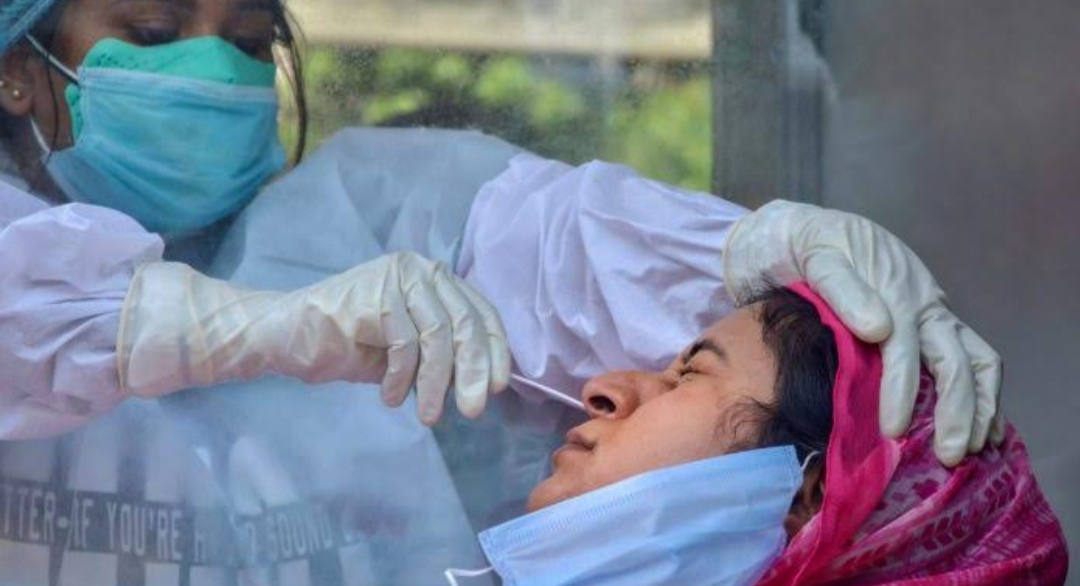
The Covid-19 weekly case positivity rate has finally dropped to below 5% in all districts of the state for the first time in months during the ongoing second wave. Even last week, when Andhra Pradesh’s average weekly positivity rate stood at 3.2%, East Godavari and West Godavari had crossed the 5% positivity rate threshold.
As per the latest weekly case positivity rate statistics between July 12 and 18, Kurnool has the lowest case positivity rate among all districts at 0.74%.
In all, Anantapur, Kurnool, Srikakulam and Vizianagaram have a less than 2% weekly case positivity rate. While the weekly positivity rate ranges between 3% and 5% in five districts, eight districts have a positivity rate less than 3%.
The case positivity rate is a key indicator to gauge the spread of the disease in the community at a certain point in time. The World Health Organisation (WHO), in an advisory released in May last year, stated that less than 5% samples testing positive for Covid-19, at least for two weeks, is an indicator that the disease is under control.
Corresponding with the lowering case positivity rate, the daily new infection numbers have now dropped to about the 2,000 to 3,000 range from the peak of 24,171 cases on May 16. But districts such as East Godavari, West Godavari, Visakhapatnam and Chittoor still continue to contribute a major chunk of the daily infection numbers. This can be gauged from the fact that while the state’s cumulative case positivity rate stood at 8.22% as of July 18, it is as much as 12.43% in East Godavari, 9.88% in Chittoor and 8.59% in West Godavari.
Despite the fall in case positivity rate, the state health department is augmenting infrastructure at all hospitals in its preparation for the anticipated third wave. A special focus has been laid on improving infrastructure to treat paediatric Covid-19 cases based on the assumptions of several experts and reports that the third wave may hit children.
Harshad Mehta, the Raging Bull
Harshad Mehta was known as the ‘Big Bull’ of Dalal Street and the ‘Amitabh Bachchan’ of the Indian stock market. He manipulated stocks by illegally obtaining money from several banks using fake bank receipts. He created a cycle of fraud involving big banks like the State Bank of India (SBI) and the National Housing Bank (NHB).
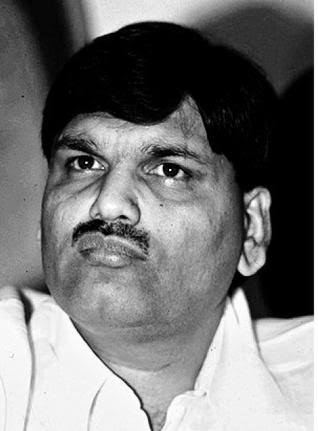
Harshad Shantilal Mehta was born on 29th July 1954, at Paneli Moti, Rajkot district in Gujarat. His early childhood was spent in Borivali, where his father was a textile businessman. He did his early study in Janta Public School, Bhilai. Mehta did not show any special promise in school and came to Mumbai after his schooling for higher studies and to find work. Mehta completed his B.Com in 1976 from Lala Lajpatrai College, Bombay and worked in a number of odd jobs for almost a decade. Mehta started his career as a sales person in New India Assurance Company Limited (NIACL). During this time, he decided to try his luck in the stock market and after a few days, resigned and joined a brokerage firm. In the early 1980s, he got hired for a clerical job at the brokerage firm Harjivandas Nemidas Securities where he worked a jobber for the broker Prasann Pranjivandas. By 1990, Harshad had risen to a position of prominence in the Indian securities industry, after years of success with his own company, Growmore. He believed that the general public is more attracted to organisations that have an English name rather than an Indian one.
A number of eminent people began to invest in his firm, and utilize his services. It was at this time that he began trading heavily in the shares of Associated Cement Company (ACC). The price of shares in the cement company eventually rose from ₹200 to ₹9,000 due to a mass buying from a group of brokers including Mehta. Just like this, whatever stocks he was interested in, skyrocketed. Everyone; super rich and middle-class people alike, invested wherever Harshad invested. He was on every magazine cover page at that time, most of them titled “Raging Bull”.

He had flashy lifestyle with a sea facing 15,000 square feet penthouse in Worli, with a mini golf course, swimming pool, and his fleet of cars including a Toyota Corolla, Lexus LS400, and Toyota Sera. It was truly a prosperous decade for Harshad. But this would all end soon.
In 1992, Mehta bribed bank employees to get fake bank receipts (BRs) issued. He used these BRs to get other banks to lend him money under the impression that they were lending against government securities. This amount was then put into the stock market to skyrocket share prices. Mehta then sold these shares at a significant profit and the principal amount was returned to the banks.
After the scam came to light, the tax department conducted a raid in Harshad’s house on February 28, 1992. Several documents and share certificates were seized. Soon after, he was imprisoned. He was convicted by both the Bombay High Court and the Supreme Court and charged with 74 criminal offences. His legal battles dragged on until 2001, when he passed away in jail from a cardiac arrest, at the age of 47.
The Harshad Mehta scam triggered many changes in India’s financial regulatory system. The Securities Laws (Amendments) Act was passed in 1995, widening Sebi’s jurisdiction and allowing it to regulate depositories, FIIs, venture capital funds and credit-rating agencies. To secure investor interest, Sebi could also make it mandatory for companies issuing securities to make disclosures.
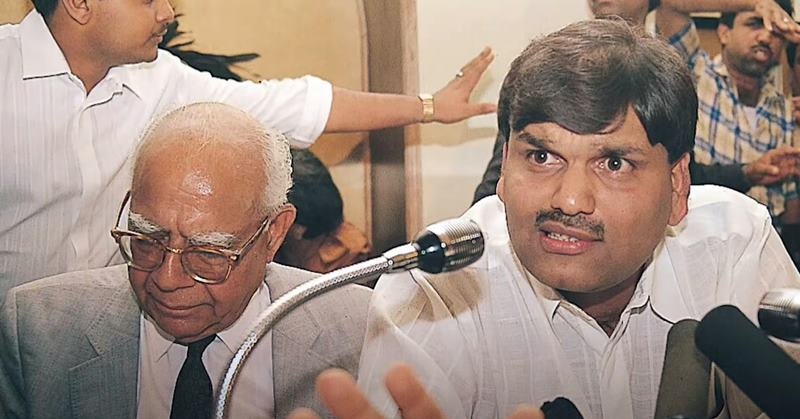
The Indian stock market has come a long way since the scam. Over the years, there have been other stock market scams that left regulatory bodies in pressure. But Mehta was the one who started it all. His actions continue to serve as a reminder to both investors and regulators to remain vigilant at all times.
Online classes and primary level students
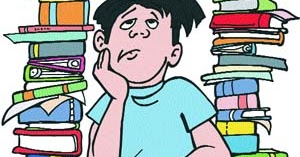
Online classes and primary learners (4to9)
Abstract
During the worldwide pandemic, nations opposed an emergency lockdown. There was a need to shift the education system from traditional to online methods. It was new for the learner to learn through the online medium. Primary level children (4 to 9) faced many problems accessing online platforms.
Keywords: COVID-19, online learning, primary level learners, mental exhaustion.
Introduction
Covid- 19 is a communicable disease. For the safety of the people it was a sudden need of lockdown. All the sectors such as industrial, agricultural, mechanical and educational sectors were dismissed. But the show must be going on. The method working transformed. Companies started work from home for their employees. Hence the education system also shifted their method to online platforms. Primary, upper primary, secondary, senior secondary and higher education learners start their learning through the online medium.
Primary level students are in the 4 to 9 years old age group. The children are really small in age. Their concentration power is really low compared to other level learners. But their minds are developing and they can learn and grab things easily. Online classes became an exhaustion for them. Due to the pandemic they are not allowed to go outside and play. The online classes are really long. The children have to spend 4 to 5 hours on screen. The children start feeling dizzy and uninterested in studies.
Children (4 to 9) enjoy their studies through some fun activities during traditional methods of teaching. They learn many things in groups. The social and playful environment is missing at home. The child does not feel well when they have to study online. They are not aware about the access of the technology.
Some issues children face during online classes
- Environment of home- Environment of home is important during the online classes. Primary children must have a peaceful and joyful environment for learning. At home it is not possible. Children are not able to find the circumstances of learning. That leads to unnecessary chaos in the child ‘s mind.
- Anxiety of using technology- Introduction of technology without any preparation creates an anxiety among the students. They were not used to the technology. They have to learn the use of technology. Using phone, login in meetings, using tools of that particular application, submission of their works creates anxiety among the students. Yet the teachers try to make it simple but the introduction of technology to the students was at the wrong time.
- Low concentration- These age groups have low concentration power. Primary level students can not focus over the thing for long. They start looking for fun and neglect their classes. The children find studies uninterested and watching cartoon or something else on their devices. They lost their interest in class.
- Limited sources of learning -The teacher plans many activities to engage the students in school. But online they have limited sources such as showing ppt and videos. The child explores things by learning and doing. But in online methods, the child is dependent on the internet or webworld.
- Long screen time- The timing of classes mostly 9 to12:30 for the primary level students. It means 3 hours 30 minutes per day. The child has to spend a minimum of that time on screen. They have to stick to the screen. Such a long time can impact their eyes. Children usually feel strain on their eyes and headaches during the classes. Their Physical growth also impacted because of long screen time.
- Less understanding- Topics are not clear to the students during the online class. They hardly understand the concept. They could be physically present on the screen but they start to ignore the thing when they don’t understand them. The teacher can modify their teaching method for the students to make the concept easy and joyful at traditional methods. But due to limited e- resources it is not possible on online methods for these particular age groups.
- Exhausted during online classes – After the long session, the children start feeling tired, lazy and dizzy. Most of the children don’t want to study. They felt fatigue during and after the online classes.
The children not only felt mentally tired, their physical activities were also affected. They become so tired that they don’t want to do anything else or participate in any game or activities. Not only this particular age group, all the age group learners face the same kind of problem and mental illness. There are no proper guidelines for the online classes from the government.
Classes became the source of mental exhaustion rather than providing knowledge.
Conclusion
Online classes are needed for the current time. But there should be proper guidelines for all age groups according to their needs and interests. We have to make classes more interesting for the primary level so the children don’t suffer from any kind of anxiety and stress. Classes should be knowledge providers not mental tiredness.
Faecal Microbiota Transplant.
Imagine you are suffering from a stomach upset every two days, or that you’re lactose intolerant and every time you drink milk or consume dairy products you have to run to the bathroom as soon as possible. This is just one of the many situations.

The human body contains trillions of bacterial cells, more than human cells in or on the external surface of the body. These organisms may be symbiotic, commensals and/or pathogens. Some organisms may be symbiotic which when opportunity provides turn into pathogens. Out of the trillion cells, intestinal organisms are more and diverse than any other group of organisms present in the body.
Faecal Microbiota Transplantation:

Faecal microbiota transplantation is the transplantation of stool through the upper gastrointestinal tract. The stool is taken from a healthy donor and transferred to a recipient whose suffering from a disease that is related to an unhealthy gut microbiome.
FMT was first described in 1958. The first use of FMT in western medicine was published in 1958 by Ben Eiseman and colleagues, a team of surgeons from Colorado, who treated people with using faecal enemas, which resulted in a rapid return to health. FMT is delivered through an enteral route through an endoscope, a nasoenteric tube or via capsules.
The mechanism is due to the concept of establishing a new gut microbiota community to restore the normal gut flora. It is based on repopulating the microbiome flora.
FMT is used to treat Clostridium difficile infection (CDI), inflammatory bowel disease (IBD), autoimmune disorders, allergic diseases and may also be used to treat metabolic disorders like obesity.
The faecal material is collected from the donor after screening. the donor collects their stools in a plastic bag. The stool is then diluted with saline and filtered through sterile gauze. The capsules can be made by dilution, blended and then pipetted in the capsule and then sealed by another capsule. Capsules can be used for up to 6 months and should be stored at -80 degree C.
Requirement for donor and recipient are:
Who is a recipient?
- should have episodes of mild to moderate infection that has not responded to treatment with antibiotics
- have episodes of severe infection, that needs admission
- severe infection that did not respond to antibiotics within 2 days
- Should not have any immunosuppressive disorders, cirrhosis of the liver or be on immunosuppressive drugs
Donor SHOULD NOT
- have had any antibiotics in the last 3 months
- be immunocompromised
- have any tattooing or body piercing in the last 6 months
- have a history of drug abuse
- have a history of high-risk sexual behaviour
- have a history of any incarceration
- have travelled to endemic areas
- have any other gastrointestinal disorder such as IBD
FMT can be transferred through the upper gastrointestinal tract. However, the delivery through this route results in an increased risk of vomiting etc. Hence, delivery by capsules seems a more reasonable choice. The capsule delivery reduces the procedure time, cost and risk of complications.
Common side effects of this procedure include bloating and loose stools. FMT is considered a success if the recipient shows no signs of the earlier disease and doesn’t relapse for eight weeks. To ensure proper treatment, some patients require many sittings.
How Technology Has Changed the Lives of Students
Technology is something every kid of today’s generation will be well familiar with. It has been growing at an immense rate and has been impacting every section of the world from quite a few years now. Technology has garnered high attention especially in the recent pandemic times as it has served as an indispensable tool for students amidst their ‘online classes’. However, we cannot restrict ourselves to only one aspect of technology, for technology has been bridging the learning gap from a long time by enabling students the access to a virtual world of resources at almost no cost.
A foremost benefit of technology has been the vast availability of resources for students and teachers. These resources can be in terms of education matters or to discover new ideas. Teachers now are also able to communicate with their students in a convenient way as well as have the freedom to employ new innovative teaching methods in their studies. Free access to e-books, e-magazines and other reading materials has made it a lot easier for students to acquire materials without having to search through libraries or spend a lot of money in bookstores. This divergent range in materials has also enabled them to research their subject of interest from different points of views and gain as much as knowledge available from verified sources.
The second pro point of technology is its feature to obtain a degree through online education. It does not matter whether you are young, old or just passionate about learning a new skill. It is now possible for any individual to gain a degree without the need to attend a university physically. Technology extension has provided such efficient modes that one can now enrol in prestigious universities located abroad without requiring the need for a passport or visa. Technology has also made it possible for people to sign up for a course offered by any valid institution and complete it within the time limit they wish. Giving them advantages like flexible study routines along with the comfort of their rooms.The third way through which technology has changed the lives of students is by giving them the opportunity to learn at their own pace and their own understanding level. Science has proved before that every individual learns and acquires knowledge differently. Some people are visual learners, some auditory, some verbal, some kinaesthetic etc etc. Here, technology gives a chance and means for every type of learner to learn at the best of their ability. For example, the availability of videos, audio books or audio contents, exercises etc accessible through the forum of technology gives every kind of learner a chance to shine compared to the usually dull and closed environment of physical classrooms. In addition to all this the advancement in technology has now enabled digital simulations and models thereby, enhancing the perceiving powers of students.
The fourth advantage of technology is the easy availability of any news or notices related to their subject or university. The official website of a university serves as a major way for students to procure information with ease, which can be further related to their classmates, friends or teachers through any social media apps of their choice. Not only does it provide an instant way to obtain the latest news but also helps to keep the students up-to-date along with their ongoing course subjects.Lastly, in the present times of pandemic, technology has proved to be a big boon in accessing online learning methodology. It has made assessing students efficient as well as helped vastly in maintaining records of student activities through a variety of online applications. Furthermore, teachers can upload their teaching materials and class recording on apps like Google Classroom and make it possible for students to revisit the teachings for revision sake or in case they end up missing any of their online lectures.
To conclude, technology has come a long way and has successfully impacted the lives of students. It has made students’ lives easier and more efficient by providing them various benefits like e-printed books, ease of access to education, faster communication with teachers and friends and overall comfort of homely environment.
 Eduindex
You must be logged in to post a comment.