IMPORTANCE OF TAKING BREAKS

Many employees tend to work part-time without taking breaks. An excuse for not taking a leave of absence is a heavy workload, deadline, long-term sick colleague or an urgent request from that very important client.

In order to stay alert and focused, it is very important to take a break even though there are all those emergencies. By the way, the word break can be defined in several ways. It can be a 10 minute break, a long break, but also a holiday (short) vacation. It’s all about what you do or don’t do during that break. More about the benefits of taking a vacation later.

Why are breaks not taken consistently or poorly completed? This is due in part to:

Too much work


Ignorance of the beneficial effects of vacation
Corporate culture where employees feel guilty about their colleagues and management when they leave
According to Forbes magazine, 40% of American workers feel uncomfortable during work breaks.

Taking a break leads to success


When you can’t find it, when your mind gets caught up in the same problem, it’s best to take a break or do something completely different for a while. Trying to do the same thing over and over again will not work. For example:

Clear your inbox or reply to a few emails
Read a book or magazine (not digital)
Wipe your desk or office
Take a simple task
Use the brain training app on your mobile phone

For example, a study of call center employees who regularly took breaks found that their enthusiasm and dedication to their work increased. This has had a measurable impact on sales prices (and thus a company index).

Taking a break therefore improves focus and concentration and provides an opportunity for the employee’s mental reset. After a break, work can continue with a lot of energy and motivation. Working without taking one or more breaks leads to mental and physical fatigue. It can lead to burnout over time.

Do less, gain more


Regular breaks give employees time to refresh themselves and relax. After a break, employees are more motivated and go to work with more energy than before a break.

Decide your times


When the employer provides you with space for that, you can take a break at your discretion. According to scientists, breaks work best when you can find out when a break is taking place. This leads to better understanding and less inclination than when the break is set.

Leave the workspace


When you take a break, you better leave
your workplace and certainly not sit behind your computer screen. If you have the opportunity, go outside to nature or to a city park. According to research, this improves mood and reduces negative emotions. When time is spent on the environment, the heart rate and muscle tone are reduced within minutes. When used for at least 20 minutes in the environment, blood pressure also drops.

Long breaks provide additional benefits


Long breaks provide an opportunity for work-related activities not to take place
done, for example, a specific assignment, arranging a dental visit or even a physical exercise. This creates a better working life balance. It also gives colleagues the opportunity to get to know each other better outside of work, for example while traveling together. This in turn encourages collaboration and communication.

Fit India Movement

On the event of 114th birth commemoration of Major Dhyan Chand India’s hockey legend, India observes the dispatch of the “Fit India Movement”. The occasion got going by a vivid exhibition over the depiction of different medical advantages of India’s local combative techniques frames and games that are played in the country by individuals, at Indira Gandhi Stadium Complex.

PM Narendra Modi addressed the country subsequent to honoring Major Dhyan Chand. In his location to the country, PM stressed the significance of a solid way of life and how we have gotten uninformed about our wellness with the development of present day innovation. He asked residents to take an interest with energy in the development, as the public authority just wishes to function as an impetus in this development and needs residents to take it further and make it an immense achievement. He underscored the investment of each man and lady,

In his discourse PM utilized instances of China’s “Healthy China 2030” and Germany’s “Fit rather than Fat” projects to underline the interest of the worldwide local area’s into a better way of life. The mission was a four-year plan; which will be running on various wellness related points each year. First-year of the development will be centered around actual wellness; for the second, third, and fourth-year dietary patterns, climate amicable way of life, and safeguarding from infections would be the subject of a focal center, separately. The Fit India Movement is expected to promote the way of life of sports and wellness in the country. It urges individuals to focus on wellness in their everyday lives. A warning advisory group of 28 individuals has been framed under the authority of Sports Minister Kiran Rijiju, to prompt the public authority on the Fit India Movement. The advisory group is comprising of 12 individuals from the public authority, including agents from Secondary Education, Ayush, Youth Affairs, Health and Higher Education and so on 7 Members from Indian Olympic Association (IOA) and NSF and 9 individuals from private bodies like Reliance Foundation, JSW Cements and JSW Paints, Tata Trusts, and noticeable wellness powerhouse like Mr. Milind Soman and Mrs. Shilpa Shetty are involved.This mission will begin from the panchayat level and will race to the square, region, state, and public levels. The University Grant Commission (UGC) delivered a letter on 23rd of August 2019, illuminating that PM would dispatch Fit India Movement on 29 August 2019. UGC has requested that the instructive establishments get ready and execute an Institutional Fitness Plan.

This wellness plan ought to fuse Sports/Exercises/Physical Activities for each understudy and staff to embrace and practice. The Vice-Chancellors and administrators of a few colleges and furthermore the schools subsidiary to them have been mentioned to make their establishment’s wellness design and distribute it on their sites and notice boards. Despite the development and prevalence of the wellbeing business in India, individuals actually come up short on the energy and discipline to rehearse a sound way of life. Gympik led statistical surveying in Delhi, Bengaluru, Mumbai, and Hyderabad. The exploration included 1.06 million individuals from all sexes between the long term age bunch. The examination uncovered that 52% of the respondents don’t figure out how to work out, though 36% do not have the inspiration to join a wellness place and 14% guaranteed they are ignorant regarding where to start. The examination further uncovers that just 11% out of 30% of respondents, who had an exercise center enrollment, have been customary for over a half year. As Prime Minister Narendra Modi referenced in his discourse we may discover Diet and wellness in vogue yet we need sufficient inspiration and discipline to proceed with a wellness routine consistently. The Fit India Movement permits those 52% of individuals who can’t oversee time for wellness in their day by day schedule.

As UGC mentioned instructive organizations to plan and carry out a wellness system, we are trusting different establishments would likewise join the development. This cross country development could end up being the push we expected to get on the wellness train. The current Government has made a few strides towards working on the personal satisfaction in India. After Swachh Bharat Mission (a cross country mission to advance clean India) Fit India Mission is Modi government’s second immense mission to work on the nature of living. Despite the fact that Swachh Bharat Mission can’t totally change the location of Indian roads, it certainly was a positive development. Neatness is currently a subject of political and public conversation; public spots are unquestionably more sterile than they were previously. With this new mission of Fit India, we are trusting it will be more fruitful and would get a solid way of life each Indian family.

Water Scarcity around the World

Billions of individuals all throughout the planet need satisfactory admittance to one of the fundamental components of life: clean water. Despite the fact that legislatures and help bunches have helped many living in water-focused on areas get entrance lately, the issue is projected to deteriorate with the destructive impacts of a dangerous atmospheric devation and populace development.

Water pressure can vary significantly starting with one spot then onto the next, now and again causing wide-arriving at harm, including to general wellbeing, monetary turn of events, and worldwide exchange. It can likewise drive mass movements and flash clash. Presently, pressure is mounting on nations to carry out more economical and imaginative practices and to work on global collaboration on water the executives.

Water pressure or shortage happens when interest for protected, usable water in a given region surpasses the stockpile. On the interest side, by far most—around 70%—of the world’s freshwater is utilized for horticulture, while the rest is split between mechanical (19%) and homegrown utilizations (11%), including for drinking. On the inventory side, sources incorporate surface waters, like streams, lakes, and repositories, just as groundwater, got to through springs. However, researchers have diverse methods of characterizing and estimating water pressure, considering an assortment of elements including occasional changes, water quality, and openness. In the mean time, estimations of water pressure can be loose, especially on account of groundwater. “Any numbers out there must be thought about while taking other factors into consideration,” says Upmanu Lall, a Columbia University educator and water master. “None of these definitions are regularly representing groundwater utilization, or groundwater stock.”

What causes water shortage?

Water shortage is regularly isolated into two classifications: actual shortage, when there is a deficiency of water on account of neighborhood natural conditions; and monetary shortage, when there is insufficient water foundation.

The two every now and again meet up to cause water pressure. For example, a focused on region can have both a deficiency of precipitation just as an absence of satisfactory water stockpiling and sterilization offices. Specialists say that in any event, when there are critical regular foundations for a locale’s water pressure, human elements are frequently fundamental to the issue, especially concerning admittance to clean water and safe disinfection.

“Quite often the drinking water issue steers clear of actual water shortage,” says Georgetown University’s Mark Giordano, a specialist on water the executives. “It has to do with the shortage of monetary and political fortitude to place in the framework to get individuals clean water. It’s different.”

Simultaneously, a few regions that experience actual water shortage have the framework that has permitted life there to flourish, for example, in Oman and the southwestern United States.

An assortment of specialists, from the public level down to nearby wards, administer or in any case impact the water supply. In the United States, the greater part twelve government offices manage various parts of water: the Environmental Protection Agency (EPA) upholds guidelines on clean water, while the Federal Emergency Management Agency (FEMA) gets ready for and reacts to water debacles. Comparable specialists exist at the state and neighborhood levels to ensure and regulate the utilization of water assets, including through drafting and recovery projects.

The Middle East and North Africa (MENA) is the most noticeably terrible off as far as actual water pressure, as per most specialists. MENA gets less precipitation than different areas, and its nations will in general have quickly developing, thickly populated metropolitan communities that require more water. However, numerous nations in these areas, particularly more affluent ones, still meet their water needs. For instance, the United Arab Emirates (UAE) imports practically the entirety of its food, easing the need to utilize water for farming. The UAE and other rich MENA nations additionally depend intensely on the desalination of plentiful sea water, but this interaction is a costly, energy-concentrated one.

In the interim, places encountering huge financial shortage incorporate Central African nations like the Democratic Republic of Congo, which gets a ton of downpour however needs legitimate framework and experiences undeniable degrees of bungle.

Indeed, even top level salary nations experience water pressure. Elements including obsolete framework and quick populace development have put huge weight on some U.S. water frameworks, causing emergencies in urban communities including Flint, Michigan, and Newark, New Jersey.

Behavioral Finance

Behavioral finance talks about the psychological influencers and biases affect the financial behaviors of investors and financial practitioners. These influences and biases can be the source for explanation of all types of market anomalies and specifically market anomalies in the stock market, such as severe rises or falls in stock price. The purpose of the classification of behavioral finance is to help understand why people make certain financial choices and how those choices can affect markets. Stock market returns are one area of finance where psychological behaviors are often assumed to influence market outcomes and returns but there are also many different angles for observation. One of the key aspects when it comes to behavioral finance studies is the influence of biases. There are many types of biases such as confirmation bias, experiential bias, loss aversion and familiarity bias. Understanding and classifying different types of behavioral finance biases can be very important when narrowing in on the study or analysis of industry or sector outcomes and results.

Concepts of Behavioral finance:-

  1. Herd Behavior: People tend to mimic the financial behaviors of the majority of the herd. The herd mentality is notorious in the stock market as the cause behind dramatic large scale purchases and sell-offs.
  2. Anchoring: Anchoring refers to attaching a spending level to a certain budget or reference. Examples may include spending consistently based on a budget level or rationalizing spending based on different satisfaction levels gained.
  3. Emotional Gap: The emotional gap refers to decision-making based on extreme emotions or emotional strains such as anxiety, anger, fear, or excitement. Emotions are often a key reason why people do not make rational choices.
  4. Mental Accounting: Mental accounting refers to the propensity for people to allocate money for specific purposes.
  5. Self-attribution: It refers to a tendency to make choices based on overconfidence in one’s own knowledge or skill. Self-attribution usually stems from a flair one may have in a particular area. Within this category, individuals tend to rank their knowledge higher than others, even when in reality, it may not be correct or enough.

The applications of behavioral science to finance are now broad and well researched. They encompass activities such as spending, investing, trading, financial planning, portfolio management and business commerce. It also provides a blueprint to help us make better, more rational decisions when it comes to financial matters. Behavioral finance is still young and is only now beginning to make its way into mainstream academics, industries and society.

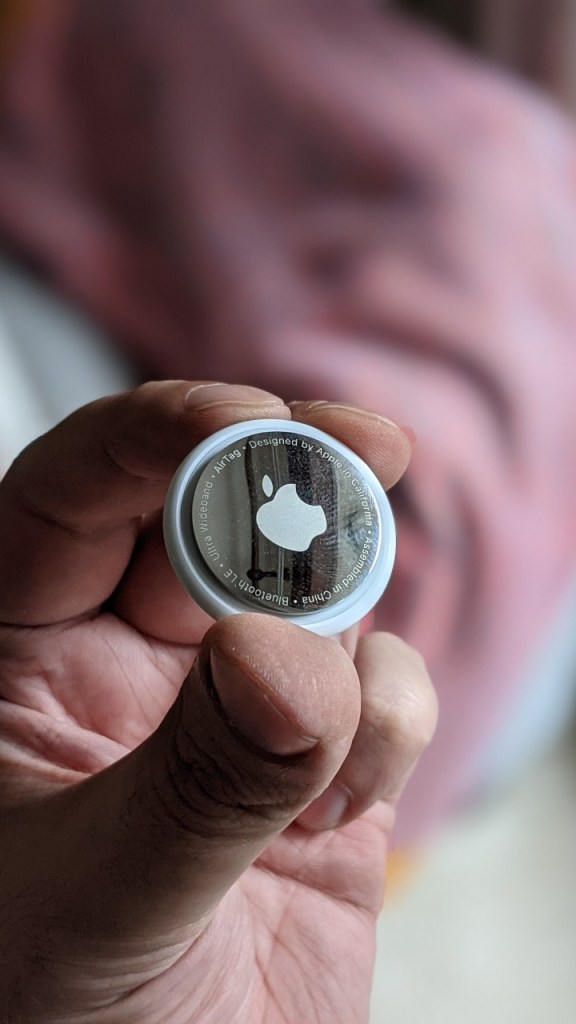
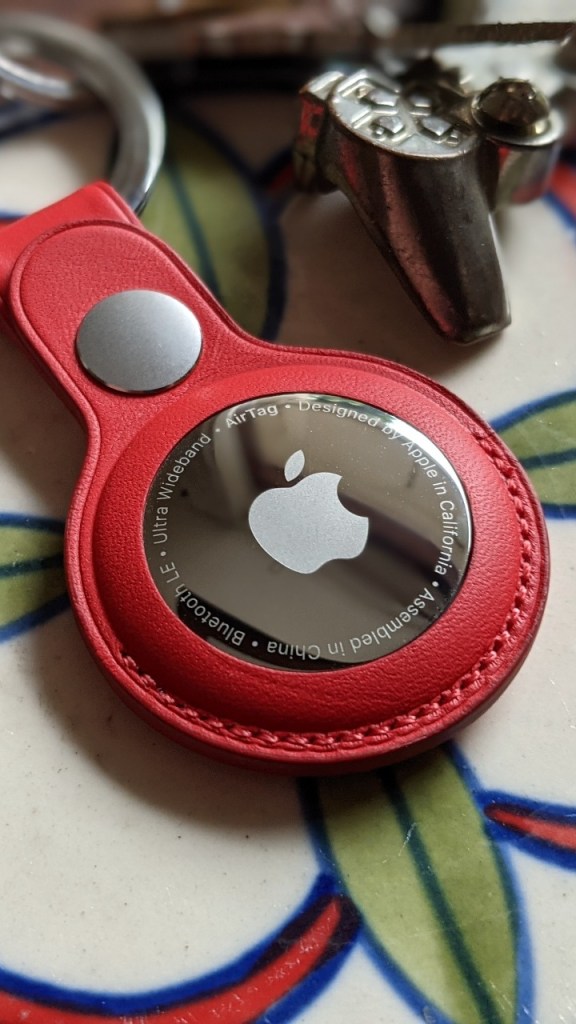
10 Daily Items the Apple Air tag can track.

Keys

Everyone misplaces their keys from time to time. AirTags are the perfect tracking device for lost keys especially using the official keyring accessory that apple is selling in their store would be a great choice. Keyrings aren’t cheap, of course. An Apple leather key ring costs $35.

Gadget Cases

Whether you have a camera, a gaming console or a Kindle, you can insert an AirTag into any gadget’s case. If you have an Apple laptop, it’s already got Find My, so you can track that, but if the battery runs out, or if it’s shut off, an AirTag may help you find it. AirTag batteries last about a year.

Backpack

You can also put an Air Tag in a backpack’s inside pocket or a loop holder.

Luggage

If you travel often, you can simply place the AirTag along with your clothes in your luggage as well because lost luggage can be a real headache. However, bear in mind that you can only use 16 AirTags with a single Apple ID, so if you want to protect luggage for your entire family, plus keys, purses, etc., you may need to share the AirTags among the Apple IDs in your family.

An Umbrella

Afraid of losing your favourite Umbrella? An airtag can help you keep a track of it.

Wallet

Due to its small size, an AirTag can easily fit in your wallet. AirTag may be a bit thick as the thickness is around 8mm. To have an idea of what 8mm is, it’s about the thickness of an iPhone 11 or 12.

A remote

You can tape an AirTag to a remote that you lose often, but it would be a bit clunky; remember, it’s 8mm thick. It’s a shame that the new Siri remote, for the Apple TV, doesn’t use Find My. (Meanwhile, Apple’s rival Roku just released its Voice Remote Pro which has remote-finder functionality.

Musical instrument cases

Similar to luggage and other items you carry around, if you’re a musician, it’s a great idea to stick one in your instrument case. In most cases, you’ll be able to hide the AirTag, and if it goes missing, or anyone just stole it you’ll really be grateful to be able to track it down, especially if you have a gig about to start soon.

Your child’s favourite toy

Everyone with young children knows that kids have favourite toys, often stuffed animals, and it’s easy to misplace them or leave them behind when you’re out. Slip one inside the toy, stitch it up, and you might save some tears. It will be a good option to use these tags.

Mental Health issues in India

Psychological wellness issues are a reason for extraordinary worry in India according to the WHO insights (2017) and the new study (2015 – 2016) led by the Bengaluru-based National Institute of Mental Health and Neuro Sciences (NIMHANS) in 12 states, covering 34,802 individuals. The NIMHANS study uncovers 10% of the populace has normal mental problems and 1.9 percent of the populace experiences serious mental issues. Schizophrenia, bipolar full of feeling issue (BPAD), misery, tension issues, psychoses, fear, self destruction, mind-set issues, hypochondriac or stress related issues, post awful pressure issue, conjugal disharmony, rest issues, liquor reliance and substance abuse, and dementia are becoming normal issues in everybody. The report cautioned that with urbanization, the weight of emotional wellness issues on the general public is required to increment. The commonness of mental dreariness, an upsetting situation, the report recommends could be because of speedy ways of life, encountering pressure, intricacies of living, a breakdown of emotionally supportive networks and difficulties of monetary insecurity. WHO in a new report (2017) suggests prompt master mediation since emotional well-being measurements in the nation might ascend and influence around 20% of the populace by 2020 from 2015 gauge of generally 7.5 percent of India’s populace experiencing some type of psychological maladjustment (major or minor).

The NIMHANS report shows lifetime commonness of mental issue as 13.7 percent with 10.6 percent of them requiring quick mediations. Extrapolating the aftereffects of the 12 states to whole nation would mean no less than 150 million Indians are needing mediation for emotional well-being. This National Mental Health overview shows metropolitan regions to be generally influenced, the issues being 2–3 times higher in Metros. It is seen that very nearly 1 of every 20 experience the ill effects of despondency, being higher in females in the age-bunch 40-49 years. 22.4 percent of the populace over 18 years experiences substance use problem, with the most noteworthy contributed by tobacco and liquor use issue and distinguished more among guys. While commonness of psychological sickness is higher among guys (13.9 percent) when contrasted with females (7.5 percent), certain particular dysfunctional behaviors like mind-set issues (melancholy, masochist issues, phobic uneasiness problems and so forth) are more in females. Depression and stress related sickness is additionally seen to be more in ladies. Predominance in youngsters matured somewhere in the range of 13 and 17 years supposedly is 7.3 percent.

Regardless of developing occurrence and pervasiveness of mental problems as the report recommends as of now just 30 million Indians approach psychological well-being office. A few investigations demonstrate that solitary 10% of Indians with emotional well-being issues get proof based medicines. Treatment holes more prominent than 70% exist because of deficient subsidizing of mental, neurological, and substance use issues. India’s spending on emotional well-being care has reliably been lacking despite the fact that the quantity of people influenced by psychological maladjustment is huge. Regardless of the huge weight of psychological maladjustment in 2011 just 0.06 percent of 4.16 percent of the GDP on wellbeing in the nation was apportioned at a public level for outpatient mental consideration. India’s number of emotional well-being beds was discovered to be well sub optimal with just 2.15 beds per 100,000 contrasted with the worldwide figure of 6.5. In this way a significant worry in the nation is that regardless of three out of four people encountering extreme mental problems, there are enormous holes in treatment. Aside from epilepsy, the treatment hole for all psychological well-being messes is more than 60%. Indeed, the monetary weight of mental problems is immense to the point that influenced families need to spend almost Rs.1,000 – Rs.1,500 per month primarily for treatment and to get to mind.

ADVERSE IMPACT OF INTERNET AND HOW TO DEAL WITH IT

Everything comes with its own set of pros and cons. Water, which is very essential for the existence of life, if consumed in excess, can cause problems such as excessive pressure on the kidneys and a hurting stomach.

Similarly, the internet, which has proved to be an amazing friend and has now become a necessity in these times of pandemic, can also swing both ways.

The Internet has made life extremely easy. One can gain any information, of any sort just by sitting at their home. You may live in countries apart from your cousins, but a video call using the facility of the internet can connect you two, albeit virtually.

The pandemic has shifted offline education completely to online platforms and the internet has played an immense role in keeping people busy amidst these tough times. Be it OTT platforms, online games, and stream of favorite Youtubers, people kept themselves busy and saved themselves from the pangs of boredom.

But as mentioned, the internet brings with it some aspects that may harm people’s lives. Some of them are mentioned below along with solutions for the same.

  1. Obesity- A common problem on the rise not only during pandemic times but way before it. Often people ( mostly teenagers) end up spending a good part of the day on devices and the internet, paying little heed to physical exercise, as a result of which they keep on gaining weight and end up obese. Obesity brings with it another set of diseases such as higher risk of cardiac arrest.

What can be done – Parental control is important. Limited time for use of the internet must be set. Children must be encouraged to exercise and play. Parents should lead by example.

2 Unsuitable content-  Many times children or people with sensitive and tender minds come in contact with content that might not be suitable for them. Content that may affect them and also people surrounding them negatively.

What can be done –  Monitoring the online activity of children is important. Devices should be set to block certain sites and content automatically.

3 Digital thefts- Unemployment is a reality and a grave problem. People resort to unfair means for earning money. Digital theft is one such solution they find easy to earn some quick bucks.

What can be done- Educating oneself about the possible frauds and keeping passwords and important information safe is extremely important in this era full of frauds and deceits.

4 Lowering count of readership of books – With the advent of the internet and various choices available in the form of web series, movies, and documentaries, there is a decline in the number of people who read books. Though there exist, people who indulge in reading, the proportion is less as compared to the pre-internet era.

Hence, it is evident that the internet can have some disadvantages too but its advantageous nature outweighs the former. It is our duty as well as a necessity to be aware of the harms of the internet and blend ourselves accordingly.

Good luck!

Floods and Droughts in India

We realize that water is essential, both for manageable human turn of events and for the solid working of the planet’s environment. Accessibility of freshwater worldwide be that as it may, is restricted. Out of the 2.7 percent of an aggregate sum of 1 400 million km3 of freshwater, the significant bit happens as perpetual snow cover or profound springs and just a little division is accessible for use.

In spite of the fact that India needs to help 16% of the total populace and 15 percent of domesticated animals, we have just 2.4 percent of the land and 4 percent of the water assets of the world. Out of around 4 000 km3 of precipitation in a year, as much as 3 000 km3 comes as precipitation in a short storm time of three to four months from June to September. The appropriation of the water in this way accessible isn’t uniform and is exceptionally lopsided in both existence. The normal yearly water asset capability of the nation is assessed to be 1 869 km3. Due to hydrological, geographical and topographical impediments, in any case, just 690 km3 of surface water can be used by traditional capacity and redirection structures. The yearly re-energize of groundwater is 433 km3.Today, dry spells and floods are a typical component and their conjunction represents an intense danger, which can’t be killed however must be overseen. Move of the excess rainstorm water to spaces of water shortfall is an expected chance. This would likewise help make extra irrigational potential, the age of hydropower, just as beating territorial irregular characteristics.

Floods are repetitive marvels in India. Due to various climatic and precipitation designs in various districts, it has been the experience that, while a few sections are experiencing destroying floods, another part is enduring dry spell simultaneously. With the expansion in populace and advancement movement, there has been an inclination to possess the floodplains, which has brought about harm of a more genuine nature throughout the long term. Frequently, in light of the shifting precipitation circulation, regions which are not generally inclined to floods likewise experience extreme immersion. Accordingly, floods are the absolute most incessant calamity looked by the country.

Flooding is brought about by the lacking limit inside the banks of the waterways to contain the high streams brought down from the upper catchments because of hefty precipitation. Flooding is complemented by disintegration and silting of the stream beds, bringing about a decrease of the conveying limit of waterway channels; seismic tremors and avalanches prompting shifts in waterway bearings and obstacles to stream; synchronization of floods in the primary and feeder streams; impediment because of flowing impacts; infringement of floodplains; and indiscriminate and spontaneous development of metropolitan regions. A few pieces of the country, mostly waterfront spaces of Andhra Pradesh, Orissa, Tamil Nadu and West Bengal, experience tornadoes, which are frequently joined by weighty precipitation prompting flooding.

Dry season is a repetitive regular component which results from the absence of precipitation throughout an all-inclusive timeframe (for example a season or quite a while). It is an impermanent deviation of precipitation and dampness conditions from the mean, along these lines contrasting from aridity and occasional aridity. It is a crawling wonder and, dissimilar to different perils, can keep going for quite a long time and, in serious cases, a long time. Dry spell influences for all intents and purposes every single climatic locale and more than one-portion of the Earth is defenseless to dry seasons each year. Locales with higher fluctuation of precipitation and spillover are more helpless. Contingent upon the possible effect, the wonder of dry spell can be ordered severally, for example, meteorological, hydrological and farming. The spatial degree of dry season is a lot more prominent than for some other risk and isn’t restricted to bowl or political limits. Durable dry seasons lead to corruption of soil, plant and creature natural surroundings and social interruption.

During an extreme dry spell in 1917/1918, the Jhelum River in Kashmir evaporated totally. Out of the 328 million ha topographical space of India, 107 million ha (almost 33%), spread over managerial areas in a few states, is influenced by dry season. It incorporates around 39% of cultivable land and around 29% of our populace. India has encountered 22 significant dry spells during the most recent 131 years. The 2002 dry spell, one of the severest in India, influenced 56% of its topographical region, the livelihoods of 300 million individuals and 150 million dairy cattle in 18 states. The Government of India needed to give alleviation adding up to about US$ 4500 million.

Healthcare Sector in India

India is by and by in a condition of progress — monetarily, demographically, and epidemiologically — as far as wellbeing. While the last decade has seen surprising financial improvement especially as far as (GDP) development rate, shockingly this advancement is joined by developing incongruities between the rich and poor people. There is solid proof to recommend that this pay imbalance or dissimilarity between the distinctive financial classes is related with more terrible wellbeing results. Extending the hole between the rich and the poor has harming wellbeing and social results. While monetary incorporation and federal retirement aide measures are being carried out by the Government to connect financial imbalances, wellbeing area too should guarantee that wellbeing abberations between and among social and financial classes are likewise tended to sufficiently.

The remarkable segment changes in progress are probably going to add to a considerably expanded workforce. Notwithstanding, it will profit the nation just if the populace is solid. The nation at present experiences the triple weight of illness — the incomplete plan of irresistible sicknesses; the test of noncommunicable infections (NCDs), connected with way of life changes; and rise of new microorganisms causing scourges and pandemics. Likewise, the wellbeing framework is as of now over-extended and should be reinforced to empower it stand up to these difficulties in the twenty-first century. In wellbeing area, India has taken colossal steps over the previous many years. The future has crossed 67 years, baby and under-five death rates are declining just like the pace of illness occurrence. Numerous sicknesses, like polio, guinea worm infection, yaws, and lockjaw, have been annihilated.

Despite this advancement, the transferable sicknesses is required to keep on excess a significant general medical condition in the coming many years representing a danger to both public and worldwide wellbeing security. Other than endemic sicknesses, for example, human immunodeficiency infection contamination and AIDS (HIV/AIDS), tuberculosis (TB), jungle fever, and dismissed tropical illnesses, the transmittable infection episodes will keep on testing general wellbeing, requiring significant degree of preparation as far as early discovery and fast reaction. In such manner, vector-borne illnesses, like dengue and intense encephalitis condition, are of specific concern. Antimicrobial obstruction is one of the greatest wellbeing challenges confronting mankind that should be handled with all earnestness. Given the centrality of wellbeing in financial turn of events, a change in perspective in our methodology is required.

putting more in wellbeing and perceiving sickness anticipation and wellbeing advancement as the highest need. Thus, government wellbeing use on wellbeing should increment from 1.3% of GDP at present to basically 2.5% before the finish of thirteenth Five-Year Plan (2013-19). As of now, India has perhaps the most minimal designation to wellbeing among all nations of the world as level of GDP. Because of a low interest in wellbeing and because of high cash based use (85.6% which as per the World Bank is among the most elevated on the planet), almost 60 million individuals are driven further into destitution and into the neediness trap from that they can’t get away.

Of the absolute wellbeing spending designation for wellbeing, basically 80% of the asset ought to be reserved for illness anticipation, wellbeing advancement, and working on the nature of wellbeing administrations at the essential consideration level. The new wellbeing strategy should lay weight on the idea of wellbeing as individuals’ right and make it required to secure wellbeing spending plan consistently including the hour of monetary emergency. In light of the public wellbeing strategy, each states ought to foster a state wellbeing strategy and drive advancement in program execution and discovering answers for its medical issues.

CASE ANALYSIS

M.C. MEHTA V. UNION OF INDIA

FACTS OF THE CASE

M.C. Mehta v. Union of India and others is the first river pollution case to emerge in environmental public interest litigation. In 1985, Mehta filed a writ petition charging that, despite the advances made in the legal code, government authorities had not taken effective steps to prevent environmental pollution of the river Ganga. Using the judicial remedy of mandamus, he called upon state agencies to prevent leather tanneries and the municipal corporation of Kanpur from disposing of industrial and domestic effluent in the river. Justice Kuldip Singh expanded this petition to include all large cities in the Ganga basin. In some law reports, this is called the “Ganga Pollution Case.In this petition the petitioner requested the Supreme Court to restrain the respondents from releasing effluents into the Ganga river till the time they incorporate certain treatment plants for treatment of toxic effluents to arrest water pollution. Mehta requested the court to order the leather tanneries of the district of Kanpur to stop discharging their untreated effluent into the river. He also claimed that the Municipal Corporation of Kanpur was not undertaking treatment of domestic sewage.

SUBJECT MATTER

All human beings for obvious reasons depend on the environment to survive. A safe, clean, healthy and sustainable environment is integral to the full enjoyment of a wide range of human rights including rights to life, health, food, water and sanitation. Without which it is technically impossible for humans to survive. Therefore, human rights also include a right to healthy environment. This relationship is increasingly recognised, as the right to a healthy environment is enshrined in over 100 constitutions. Despite this, at least three people a week are killed protecting our environmental rights- while many more are harassed, intimidated, criminalised and forced from their lands.

LAWS INVOLVED

  • Article 52A (g) on the Constitution of India
  • Environment (Protection) Act, 1986.

JUDGEMENT

In this petition the petitioner requested the court to request the Supreme Court (“the Court”) to restrain the respondents from releasing effluents into the Ganga river till the time they incorporate certain treatment plants for treatment of toxic effluents to arrest water pollution. At the preliminary hearing the Court directed the issue of notice under Order I Rule 8 of the CPC, The Court highlighted the importance certain provisions in our constitutional framework which enshrine the importance and the need for protecting our environment. Article 48-A provides that the State shall endeavor to protect and improve the environment and to safeguard the forests and wild life of the country. Article 51-A of the Constitution of India, imposes a fundamental duty on every citizen to protect and improve the natural environment including forests, lakes, rivers and wild life.

The Court stated the importance of the Water (Prevention and Control of Pollution) Act, 1974 (‘the Water Act’). This act was passed to prevent and control water pollution and maintaining water quality. This act established central and stated boards and conferred them with power and functions relating to the control and prevention of water pollution. Section 24 of the Act prohibits the use of the use of any ‘stream’ for disposal of polluting matter. A ‘stream’ under section 2(j) of the Act includes river, The Act permits the establishment of Central Boards and State Boards. Section 16 and Section 17 of the Act describe the power of these boards. One of the functions of the State Board is to inspect sewage or trade effluents, plants for treatment of sewage and trade effluents.

CONCLUSION

India has a prominent environmental heritage which can be attributable to its biodiversity. The ganga pollution case is very important case and first of its own kind where supreme court cleared that development cannot be done on the value of environment. Then also the judgement seemed to be failed as the river Ganga is still polluted.

Although there were several schemes campaigns by the government like Namami Gange cleanup campaign – the Ganga River Basin Management Plan and the National Mission for Clean Ganga all of them so far proved equally ineffective. If take whole schemes and plans we can conclude that the biggest obstacle for the Ganga cleanup is not the money, tools, or practices, though these are very significant. Instead, it is whether India as a whole is ready to take stand and has the national spirit and the capacity to use these decades of focused investment and management to ensure that by mid-century Indians can swim, fish, and drink safely from the mother river. So, it requires we the people included in it the it would no longer to achieve this.

Coinbase

Coinbase is a company that specializes in digital currency – aka cryptocurrency – exchange. Although the company’s headquarters are based in California, United States, Coinbase has more than 43 million verified users from all around the world.

It’s worth noting, however, that according to the co-founder and CEO Brian Armstrong himself, Coinbase doesn’t exactly have a traditional headquarter like it used to. We’ll touch more on that later when we get to the timeline.

History

Coinbase was founded in 2012 by Brian Armstrong and Fred Ehrsam. Armstrong was previously an engineer at Airbnb while Ehrsam was a trader at Goldman Sachs.In the same year, the company launched services to buy and sell bitcoins through bank transfers. It also raised $5 million from Fred Wilson (Union Square Ventures) in a Series A funding round. 

In 2013, Silicon Valley venture capital firm Andreessen Horowitz invested in Coinbase in a Series B funding round. After the investment, Bitcoin developer Gavin Andresen joined the company in an advisory role.

In 2014, the company partnered with numerous companies including Stripe, Paypal, Braintree, Overstock, Dell, and Expedia to incorporate bitcoin payments for their products or services. Coinbase’s user base had grown to one million.

In 2015, the company launched a US-based bitcoin exchange for professional traders called Coinbase Exchange and also obtained a $75 million investment from investment firm Draper Fisher Jurvetson.

In 2018, Coinbase’s valuation soared to $8 billion after it obtained a $300 million funding round led by Tiger Global Management. Y Combinator Continuity, Wellington Management, Andreessen Horowitz, and Polychain also participated.

In 2019, a potential cyber attack was blocked by the company’s security team. No cryptocurrency was stolen. In the same year, the company also generated around $543 million in revenues, up from $529 million generated from the previous year. 

In 2020, Coinbase announced that it will be offering a Visa debit card program as well as an IPO by the end of the year or early 2021. 

How does it work?

Coinbase has different functions and services to offer for two main categories of their clients – individuals and companies.

Individuals

If you’re not representing a company but only yourself, you can use Coinbase for the following.

  • Buying and selling crypto
  • Earning crypto by learning about it
  • Using Coinbase Wallet. It allows you to send and receive crypto, secure your storage, and have all different types of crypto in one place.
  • Get a Coinbase Card. It’s a Visa Debit card with your Coinbase balance. It works the exact same way as a regular card – you can pay with a contactless, PIN, withdraw cash from any ATM, use it worldwide, and connect it to your Coinbase Wallet. Naturally, tracking transactions and balance history is an option as well.

Business

  • Now, if you happen to be a business, here’s what you can expect from Coinbase.
  • The prime brokerage platform with tools. The tools include stress-tested cold storage, multiple execution options, API solutions to programmatically manage your assets.
  • Asset custodian.
  • Coinbase Commerce. To accept crypto from anyone without any fees, sell crypto for cash or USD coin, use it globally without middlemen.

Revenue

With a Coinbase IPO set in the near future, the company has seen strong revenue growth in the past few years. In 2019, the company generated $543 million in revenues and had even forecasted to generated twice as much revenue by the end of 2020.

Competition

Due to the surge of crypto investing in recent years, it presented an opportunity for companies to develop crypto management platforms of their own similar to Coinbase. Some of these companies include Kraken, Binance, Bitfinex, eToro, and CEX.IO.

CAPITAL PUNISHMENT FOR CRIME AGAINST WOMEN


If the supreme court turns down the appeal, then the condemned person can submit a ' mercy petition' to the president of India and the Governor of the state. The basic intention behind any punishment, in general, is that a criminal deserves a punishment to set an example for other would-be criminals and to maintain the decorum of civilized human society. Henry Ford puts that ' capital punishment is as fundamentally wrong as a cure for crime as charity is wrong as a cure for poverty When the death sentence is awarded for rape, even detailed stories leave out any mention of the debate, for example,  When a political leader makes headlining emotive statements such as “rapists don’t deserve to live”, there are few attempts to balance coverage with statistics or even a summary of evidence-based counter-arguments.

When the matter enters into the realm of emotions of those directly affected, analysis is again put on hold. For example, when the family members of victims — such as the mother of Nirbhaya and the father of the Kathua victim — express views in favor of the death penalty as an appropriate form of retributive justice, media reports rarely provide the context in the form of the larger discourse on capital punishment.

The rape and murder of the young woman in Delhi in 2012 horrific crime and our deepest sympathy go out to the victim's family. Those responsible must be punished, but the death penalty is never the answer." Mukesh (26), Akshay Thakur (28), Pawan Gupta (19), and Vinay Sharma (20) were convicted by the court on September 10 for the brutal gangrape of a 23-year-old paramedic student on the night of December 16, 2012 h eventually led to her death. The justice was given in 2020. The justice is delayed but not denied ……..

The alleged torture, if any, in the prison cannot be a ground for judicial review of the executive order passed under Article 72 of the Constitution of India rejecting the mercy petition.” In November 2019, the gang rape and murder of a 26-year-old veterinary doctor in  Shamshabad, near Hyderabad, sparked outrage across India.[1] Her body was found in  Shadnagar on 28 November 2019, the day after she was murdered. Four suspects were arrested and, according to the Cyberabad Metropolitan Police, confessed to having raped and killed the doctor. All four accused were killed in an "encounter", a term used in India for killings by police, at around 3:30, am IST on 6 December 2019, under a bridge on Bangalore Hyderabad national highway, prompting accusations of extrajudicial execution. Here also the punishment is the death penalty.

I have concluded that the death penalty is morally right to a considerable extent. When a criminal commits a capital crime, they should suffer a punishment which equals the crime and it is thought that the worst punishment possible is the death penalty since it does not only remove a criminal's physical freedom by imprisoning them, it removes their psychological freedom by withdrawing their choice to live. Currently, the death penalty is administered as a painless injection which is the most humane way possible in comparison to earlier methods such as beheading or the electric chair.

1999 Super Cyclone

The 1999 super cyclone was the foremost intense recorded tropical cyclone within the North Indian Ocean and among the foremost destructive within the region. The 1999 Odisha cyclone organized into a tropical depression within the Andaman Sea on 25 October, though its origins might be traced back to a neighborhood of convection within the Sulu Sea four days prior. The disturbance gradually strengthened because it took a west-northwesterly path, reaching cyclonic storm strength subsequent day. Aided by highly favorable conditions, the storm rapidly intensified, attaining super cyclonic storm intensity on 28 October, before peaking on subsequent day with winds of 260 km/h . The storm maintained this intensity because it made landfall in Odisha on 29 October. The cyclone steadily weakened thanks to persistent land interaction and dry air, remaining quasi-stationary for 2 days before slowly drifting offshore as a way weaker system; the storm dissipated on 4 November over the Bay of Bengal.
The storm was the foremost severe to strike Odisha within the 20th century, raking the state and adjacent areas with high storm surge, powerful winds, and torrential rainfall. The storm’s impacts exacerbated the damage caused by a really severe cyclone that struck an equivalent region but fortnight earlier. The 5–6 m surge brought water up to 35 km inland, carrying along side it coastal debris and inundating towns and villages. The surge combined with heavy rains to supply widespread flooding, damaging around 1.6 million homes and causing rivers to breach 20,005 flood embankments. The storm’s effects destroyed numerous crops, including sugar cane, rice, and other winter-time harvests. Although estimates of the price varied significantly—at times suggesting 30,000 fatalities—the Government of India enumerated 9,887 fatalities within the country, of which a majority were caused by storm surge; over 8,000 deaths occurred in Jagatsinghpur. the entire damage cost of the destruction wrought by the super cyclone amounted to US$4.44 billion.
The state of Odisha sustained the foremost catastrophic damage related to Cyclone BOB 06, which was considered the state’s severest cyclone of the 20th century. The damage was compounded by the sooner impact of a really severe cyclonic storm that struck nearby areas just 11 days earlier. Twelve districts of Odisha suffered severe damage, reporting complete breakdown of essential services: Balasore, Bhadrak, Cuttack, Dhenkanal, Jagatsinghpur, Jajpur, Keonjhar, Kendrapara, Khurda, Puri, Mayurbhanj, and Nayagarh. Among these, the blocks of Erasma and Kujang in Jagatsinghpur were the worst affected. In total, 12.9 million people were suffering from the storm; estimates for the storm’s price vary significantly, though the India Meteorological Department indicated that around 9,887 were killed, with a further 40 persons missing and a couple of ,507 others injured. the bulk of those deaths occurred in Jagatsinghpur. where 8,119 were killed.
Approximately 11,000 schools were either significantly damaged or destroyed. All major district roads within the area were either washed out or blocked by felled trees. In Bhubaneswar, 60% of trees were flattened by the winds and rain; aerial surveys revealed that the whole city was submerged by floodwaters. Adjacent areas were nearly stripped of all tree cover. Until 8 November, the town remained without power. The inundation induced by the far-reaching storm surge and heavy rain kept Konark submerged in knee-deep water for 6 days after landfall. Over the course of 4 days, the excessive rainfall caused the flooding of the Baitarani, Brahmani, Budhabalanga, Kharasua, and Salandi rivers, leading to 20,005 flood embankment breaches and therefore the damaging of 6 headworks. Thousands of individuals suffered chemical burns after the flooding mixed industrial chemicals into bathing ponds
Recovery efforts were extensive following the storm’s passage. the govt of India allocated ₹3 billion (US$69.3 million) to the Odisha government , supplementing earlier contributions made towards relief from the sooner cyclone. Various branches of the Indian soldiers were dispatched to assist the recovery efforts. Contributions from foreign governments amounted to just about US$13 million, with quite half allocated by the us . Alongside foreign and domestic government contributions, between 12 and 14 international aid agencies concurrently participated in relief efforts within the storm’s aftermath.

The O2 Tidal power generator

Tidal energy is a type of renewable that extracts power from the natural rise and fall of ocean tides and currents. In the 20th century, we have developed methods to harness this tidal movement to generate power where there are tidal variations. But as of now, tidal energy is still developing or in its baby steps. Until now the power generated by tides is almost negligible, a few plants around the globe can harness this power.

Currently, there are three methods of generating power from these tides: tidal streams, barrages, and lagoons. The most commonly used is a tidal stream as it consists of a fast-flowing body of water formed from tides. Turbines are used to generate electricity from these fast-flowing tides. A turbine is a device that uses energy from a fluid that has the potential energy to convert it to kinetic energy.

Recently, the world’s most powerful tidal turbine has commenced grid-connected power generation at the European Marine Energy Centre in Orkney, an archipelago that’s situated in the northern regions of Scotland. Called O2, and developed by Orbital Marine Power, the massive 680 metric ton turbine is anchored in a body of water dubbed ‘the Fall of Warness’ that’s connected to a subsea cable that links it back to a local electricity network on the ground.

The 74-meter-long turbine includes two fully integrated power trains attached on two wing-like legs. The twin-bladed rotors, each possessing a diameter of 21 meters are the largest ever on a single generating platform, driven by the tidal current to date. These retractable legs are designed to raise the nacelles, pitch hubs, and blades out of the water for making maintenance and repairs easy.

The construction of this turbine began in 2019 and is based on the company’s previous generation of large tidal turbines dubbed the SR2000. The whole rig is built from steel using fabrication methods that emphasize reducing costs and futureproofing of the turbine for mass production.

The massive power generator is expected to be functional for the coming 15 years and would be capable of powering over 2,000 UK homes every year.