ARE WE REALLY ENJOYING OUR WORK?

Work is worship for those who take work seriously and it should be so because your work reflects your personality to some extent and how we do it is also part and parcel of our identity. Here in, comes the real trouble because when you do the work you enjoy, you try to put in your heart and mind into it but, if you are unfortunate enough to be doing the kind of work that you are not proud of, then surely enough it shows in your outcome.

Money, being the prime factor in today’s world and so, when your sole priority is to mint money, then it hardly matters whether you are an engineer or an interior designer. You would try to impress upon the authorities in your field with the sole objective of prosperity in your field. For this, you may go to any extent of unethical attempts, without even thinking about its aftermath.

Mental tension and stress and the related health hazards are all part and parcel of today’ s changing world. Today’s young generation is the first generation of professionals who are earning, four times more than what their parents have earned and so they have a lot of money at their disposal, which is making them spend more All this was possible only because of India’s changing economic condition and the advent of multinational companies with huge capital investment and infrastructure.

In fact, the call centre culture has also changed our lives for the worst, since lifestyle patterns are changing drastically. Initially, youngsters seem to be enjoying the western influence of working like asses on five days and reserving the weekends for parties and celebrations. And to get those two days of relief, they are ready to slog whether they like their job or not. It henceforth, becomes a mechanical slogging where, you are not concerned, whether your mind is at work but it’s just about the finished product that they look forward to. On the whole, we cannot rule out the fact that there are people, who are fortunate enough to bag the job they desire or those who have ultimately landed in those fields, where they have wanted to be. Such people are really lucky in the sense that they do their work with the utmost dedication and they have a fulfilment in life, even if they are not taking home fat salaries like their counter-parts, but don’t have any satisfaction to boost of.

There is a third side to all this and that is trying to derive meaning in whatever meaningless things we are doing to make both ends meet. So even if, one is in a job that is detested by him, he can still work towards generating a positive attitude to one’s Work. Try and enjoy, what one is doing and thus try to attain a sense of satisfaction, that he supposes, he could have otherwise got.
Democracy in India

Democracy is derived from the Greek language which means a government by the people. The citizens of the country are given a right to choose their respective representative. There are mainly two types of democracy – direct and representative and semi-democracy or hybrid. In a democratic country power is vested with the people and is exercised by them in indirectly or directly through a system of representation which usually involves free elections. In order to progress human development a democratic land is essential. This helps and enables citizens to have a free will and live freely in the society. Moreover, it allows people to have equal rights. This helps to enable that equality prevails all over country.

During the rule of the Britishers, the country did not have any democracy. They imposed structures of bureaucracy which maintained order through rule of the law rather than thought arbitrary authority. They controlled the country and refused to give any authority to the citizens on India and kept imposing laws and orders on them. In the small journey as an independent nation, democracy has been a cornerstone of the Indian success saga. From the time when doubts were cast on the ability of the country’s survival as a nation to a time where it holds the powers across the global look for our guidance, India has travelled miles. In the year 1947 when the rule of Britishers came to an end the constitution was adopted in 1950 which led to India being known to have the largest democracy in the world. The country declared itself to be democratic, sovereign and a republic state. The constitution of India gave power to its citizen to elect their representative and their own choice of government. India is known to be a quasi-federal parliamentary system of government which is known to be largely based on the UK model. 

Although India is largest democracy it still has a long way of progression. The country faces a lot of issues which does not let it efficiently function as a democracy. The caste system in country is still prevalent which does hampers with the socialist principle of democracy. Communalism is also on the rise and has led to many bad consequences in India. These factors interfere with the secular aspect of the country. All these differences need to be set aside to ensure happiness and prosperity of the citizens. Democracy in the country is still better than that in most of the countries. Still, there is a lot of room for improvement which we must pay attention on. The government must implement stringent laws to ensure that there is no discrimination that takes place. In addition, awareness must be made to make citizens aware of their rights and duties.

 The smooth transition of governments witnessed by India on the basis of power of ballots has been a testimony to the real functioning of the entire nation. While our neighbours have had their struggles with political instability and various other issues, The Indian democracy has paved its way through to become a role model at the global front. In spite of numerous numbers of problems like poverty, illiteracy, malnourishment and infrastructural deficit India has still managed to ensure that political masters still remain committed to the right cause. The establishment of universal adult franchise has been one of the strongest bases for our democratic success. With the reduction of voting age from 21 to 18, Indian has further strengthened its democracy as it recognized the role of youth in nation building process. Irrespective of any stratified society, people of all colour, caste, creed, language religion, region make up in a single line to express their choice on the Election Day. This integral approach has been the strength of Indian democracy which helped to empower the nation. Indian democracy has managed to go from strength to strength. With the passing of 73rd and 74th Amendment Acts, the democratic decentralization percolated to the Indian grassroots. Panchayati Raj and Municipality Institutions have brought governance closer to the people. They have managed to empowered the people by giving an elected forum to bring about local level and grassroot level development. Democracy in the country brought new vibrancy through local governance to enable rapid social-economic progress in the Indian villages.

HOW TO READ SOMEONE EASILY

In today’s world it is very difficult to read people as we have skilled the ability to hide our emotions. Sometimes it gets difficult to either show emotions or draw them in our minds about others. Let it be helping someone you love or someone you are not so close with, learning to read people’s mind is such a boon!

Here are few tips that hep you to understand others easily.

1) BE UNBIASED

You have to be able to accept people for who you are. Being unbiased and non-judgmental will help the people around you to stay comfortable. That will lead you closer to understand them. You have to let other impressions about them to leave so that you can now who the person really is.

2) STAY TRUE TO YOUR GUT FEELINGS

Even though we might appear open minded it is very necessary that we stay true to our instincts and obey our gut feelings. Sometimes your first impressions can be true based on how the person acts, poses and presents themselves. Its better to keep first impressions.

3) NOTICE THEIR POSTURE

If they have their head held down they might have low self esteem. If they have their head held high or their chest puffed out then they are either confident or have immense amount of ego respectively. They could be trying to regain from the last day as well, therefore look out it they are actually tired or are struggling silently.

4) NOTICE THEIR OUTFITS

There could be times when people are trying to portray a different version of themselves. It could be that they are trying to be someone who they verbally explain the audience to, or it could be the real them! If they feel good in what they are wearing then it is true that they are being true to their personality. People sometimes do feel low when they are wearing something they don’t want.

5) PAY ATTENTION TO THEIR NORMAL PERSONALITY

People often behave a different way when they are in their normal behavior. There might be someone who is used to tapping their feet and it is their regular behavior. But there might be some who tap their only when they are anxious or are hiding something from you. Noticing the person’s behavior will solve most of the confusion and will help you to read them better.

6) NOTICE THEIR FACIAL EXPRESSIONS

We unconsciously work with our facial expressions when are feeling certain emotions. For example, we frown when we are upset, we purse out lips tight when we are angry, we have our eyebrows up when we are confused, we give a genuine smile when we feel happy, and we clench our jaw and have our eyebrows wrinkled when we are i tension or are thinking deeply. Noticing people’s facial expression will help us in detecting their moods and emotions and we will be of good use when we make ourselves available for them.

Don’t make it too obvious that you are reading the people. Try being normal ad play your laws in your mind.

Article by : Haniah MIrza

SOUMYA SWAMINATHAN!!!

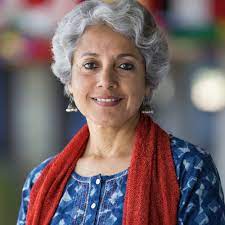
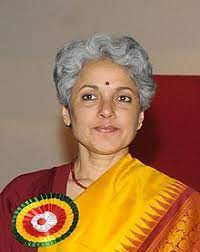
In this highly competitive world, everyone is trying to prove themselves in their areas of interest. Like men, now women are also pursuing their dream wilfully. They are the most competitive persons when compared to men. This doesn’t mean that men are incapable. Just that women are firm and strong enough to prove themselves. You may have a thought why am I talking about women too much? There is definitely a reason. Yeah! Today, I am going to share with you about an Indian Woman who marked her identity in WHO. I think you may have guesses or you should have found who she is? I think, your guess is correct. It’s our Soumya Swaminathan.

Dr. Soumya Swaminathan

Everyone know about the “Father of Green Revolution of India”, Dr. M.S. Swaminathan, right? Soumya Swaminathan was the daughter of Dr. M.S. Swaminathan. She was born on 2nd May 1959 at Kumbakonam, Chennai, Tamil Nadu. Her full name is Soumya Swaminathan Yadav. Her mother, Mina Swaminathan, was an Indian Educationalist. Soumya has two siblings namely Madhura Swaminathan and Nithya Swaminathan. She was married to Ajit Yadav who was an orthopedic surgeon.

Dr. Soumya Swaminathan with her parents and two siblings

Now, let’s see about Dr. Soumya Swaminathan’s educational qualifications and her academic achievements.

  • She received her M.B.B.S degree from the Armed Forces Medical College, Pune.
  • She completed her M.D. in AIIMS, New Delhi.
  • She got her Diplomate of National Board from National Board of Examinations.
  • She completed her Ph.D., in neonatalogy and pediatric pulmonology.

Let’s see about her Career achievements.

  • In 1989, she was a Research Scholar in the Department of Pediatric Respiratory Diseases in United Kingdom till,1991.
  • She also worked as a Senior Research Registar, at Cardiopulmonary Medicine Unit in New Jersey.
  • In 1992, she joined National Institute for Research in Tuberculosis, as a coordinator and later she became it’s Director.
  • From 2009 to 2011, She worked as the Coordinator of WHO/UNICEF/UNDP, for a research and training on Tropical diseases in Geneva.
  • She was the Director of ICMR and Secretory of the Ministry of Health and Family Welfare, in India from August 2015 to November 2017.
  • From 2017 to March 2019, Dr. Soumya Swaminathan was the Deputy Director-General of WHO.
  • In 2019, she has become the Chief Scientist of WHO in research about the SARAS CoV-2 and worked hard in this pandemic getting detailed reports from all the countries. And she conducted interview once in two week to make us know the exact situation of the covid.
Gross inequity in vaccine access hurting; China way ahead, says WHO's Dr  Soumya Swaminathan - The Financial Express

Let me tell you some of the awards won by her. In 2008, She received Kshanika Oration Award from ICMR. In 2011, she was given an Lifetime Achievement award by the Indian Association of Applied Microbiologists. In 2016, She received Research Endowment Award from NIPER and ASTRAZENECA.

I am inspired so much by Dr. Soumya Swaminathan. Yes, now I have the spark to achieve something big in my career and want to reach heights like her. What about you? I hope you too have your own dreams. Give your full effort and just do it. She had proven herself and made her Father proud. Let’s be like her and make our parents proud. Her achievements show us, how capable women are!! How strong!! Okay, Come on! Women, have confidence in yourself that you can do anything and everything! If you can’t, who can!! Let’s make our India proud.

Some Reference Links;

POWER OF FAMILY

Meetali soni

“My family is my life, and everything else comes second as far as what’s important to me.”

A family is a social group of people who stay together under the same roof in a society. It comprises two or more adults like parents and grandparents and young children who are bound in a relationship by birth or blood. They are collectively known as family members. Each family member is committed to each other in a mutual relationship. A family holds a special place in the life of an individual and the society in which he/she lives. Families are the most important part of one’s life. It does not matter if you have a small or big family, as long as you have one. A family serves as the first school to the child where one learns about various things. The basic knowledge about one’s culture and identity comes from their family. You are a reflection of your family. All the good habits and manners one has incorporated are from their family only. I feel very lucky to be born in a family which has made me a better person. In my opinion, families are an essential part of one’s being. Families are a blessing. Some people spend time away from the family in order to become independent. They do not realize the importance og family. Families are essential as they help in our growth. They develop us into becoming a complete person with an individual identity. Moreover, they give us a sense of security and a safe environment. In most societies, it is within families that children acquire socialization for life outside the family, and acts as the primary source of attachment, nurturing, and socialization for human. Additionally, as the basic unit for meeting the basic needs of its members, it provides a sense of boundaries for performing tasks in a safe environment, ideally builds a person into a functional adult, transmits culture, and ensures continuity of humankind with precedents of knowledge. A family consists of an adult and his or her offspring. Most commonly, it consists of two married adults, usually a man and a woman along with their offspring, usually living in a private and separate space. This type of unit, more specifically known as a nuclear family, is believed to be the oldest of the various types of families in existence. Sometimes the family includes not only the parents and their unmarried children living at home but also children that have married, their spouses, and their offspring, and possibly elderly dependents such an arrangement is called an extended family .My family has been always by my side in ups and downs. My family consists of four siblings and my parents. We also have a pet dog that is no less than our family. Within each family member, lies my strength. My mother is my strength as I can always count on her when I need a shoulder to cry on. She believes in me more than any other person. She is the backbone of our family. My father is someone who will always hide away his troubles for the sake of his family.Families are important because they nurture and develop us. They make us happy and give us the chance to become better human beings. Families enhance your confidence and make you believe in yourself.

In short, I cannot imagine my life without them. They are my first teachers and my first friends.They are responsible for creating a safe and secure environment for me at home. I can share everything with my family as they never judge one another. We believe in the power of love above everything and that drives us to help each other to become better human beings.

Thanks for reading…..

Top brands that represent India

Atmanirbhar, A word that entered every Indian’s vocabulary by the end of the year 2020. This gave a hype to use made in India products. people started to check for the made in India label. Now the era is of brands. Everybody wish to wear top brand accessories and cloths and drive a branded car. How can someone fulfil this desire while being Atmanirbhar? There are some brands which represent India and are listed at top. World has many brands, which appear as foreign brand by their names but are Indian.

The golden old times had brands like Parle-G, Vadilal, Godrej etc. The new era is dominated by these brands.

the royal enfield

As the name suggests, the brand is truly royal. It is an Indian multinational company. The headquarters is in Chennai, Tamil nadu. The brand was originally owned by a British company Enfield Cycle and was stared in 1893. In 1994 an Indian company Eicher Motors bought it and renamed it as Royal Enfield India. The brand is special and admired for its retro charm and the thumpy sound. The fuel tank is hand painted. The bike brand is known for its affordability. The bikes price starts at rupees 1.34 lakh and most expensive model is of 3.13 lakh. And it is not complex and easy to repair. Owning a Royal Enfield has been a matter of pride.

a Royal Enfield bike

van heusen india

It is a clothing band. The brand is under PVH corporation which is founded in 1889 and named after a Dutch immigrant john manning van heusen. The Indian section of this brand is owned by Aditya Birla fashion and retail limited. The company calls itself to be a fashion powerhouse. Aditya Birla group has a network of 3,212 stores across the country. Aditya Birla fashion and retail limited is the first billion dollar fashion house of India.

peter england

This brand is also a clothing brand. In 1889 the brand was founded in Londonderry of Ireland. The purpose of establishment was to provide khaki trousers to the British soldiers. The Brand entered India in 1997. In 2000 Aditya Birla group owned this brand. The headquarter is in Bangalore, Karnataka. The brand is the top men’s wear brand and has huge market. The customer base is estimated to be 4 million people. The brands target customers are the corporate employees. The brand offers collection of denims, festive wear, Indian kurtas, accessories etc.

lakme

The brand offers beauty products like cosmetics, skincare products and beauty saloons. It is India’s first cosmetic brand. It is the first to introduce makeup to Indian women and its been more than 50 years for the company for being a beauty brand. The main Idea of establishing a makeup brand of India was of prime minister Jawaharlal Nehru and He asked JRD Tata to execute this. The brand was named after a French opera coincidently which was derived from the name of the goddess Laxmi. Now also the brand tops in the popularity list.

jaguar

This brand is also stared as a British company founded by William Lyons. But now it is owned by Tata motors from 2008. The models are still manufactured in UK and headquarters is in Whitley Coventry, England. The car is one of the luxury vehicle. The cars are very much classy and show a great performance. The car price starts at 46.64 lakh.

these represent some of the success stories of Brands. There are many more brands too in the market who represent India internationally. These are the examples that India can do a great job in establishing brands and can lead the world.

𝑶𝑵𝑬 𝑴𝑰𝑵𝑼𝑻𝑬 𝑳𝑰𝑭𝑬 𝑪𝑨𝑵 𝑪𝑯𝑨𝑵𝑮𝑬

“Life cannot be changed in a minute. But a decision made in a minute can change everything”

If you think a minute of your time is nothing, try challenging your physical limits(Exercise), try challenging you mind to stopped for 1 minute. You will be amazed.. In the blink of an eye everything can change, so forgive often and spread love with all your heart.

You may not have that chance. Always stay positive, keep your surroundings positive, Be positive, Think positive, “you can change everything with in a minute”. Try to help the needed, the happiness from the faces of needed vl make ur day. If you are positive and loved by others, u can change everything, Love has more power than money, By acquiring love and spreading love u can be the leader for your Co’s and next generation. The art of decision making is the key for everyone. It will project to the entire system. So be confident and stay positive, Life will be beautiful and loved by all☺️..

Agatha Christie’s Hercule Poirot

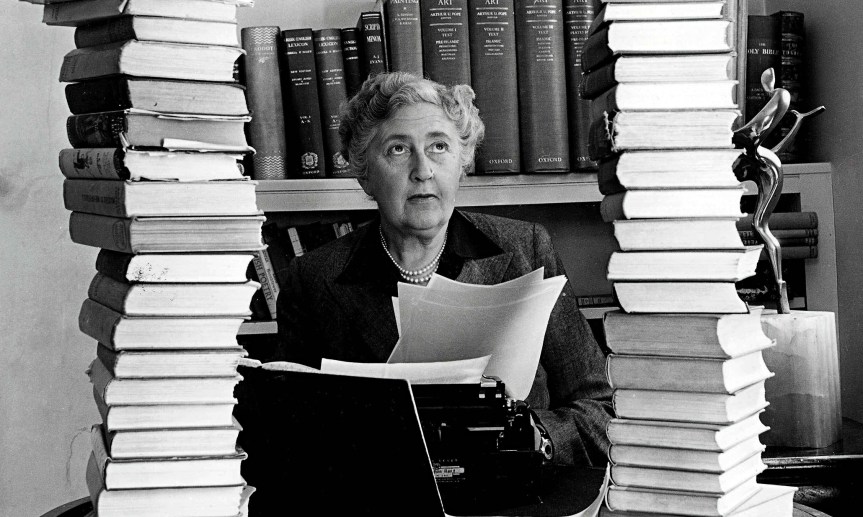
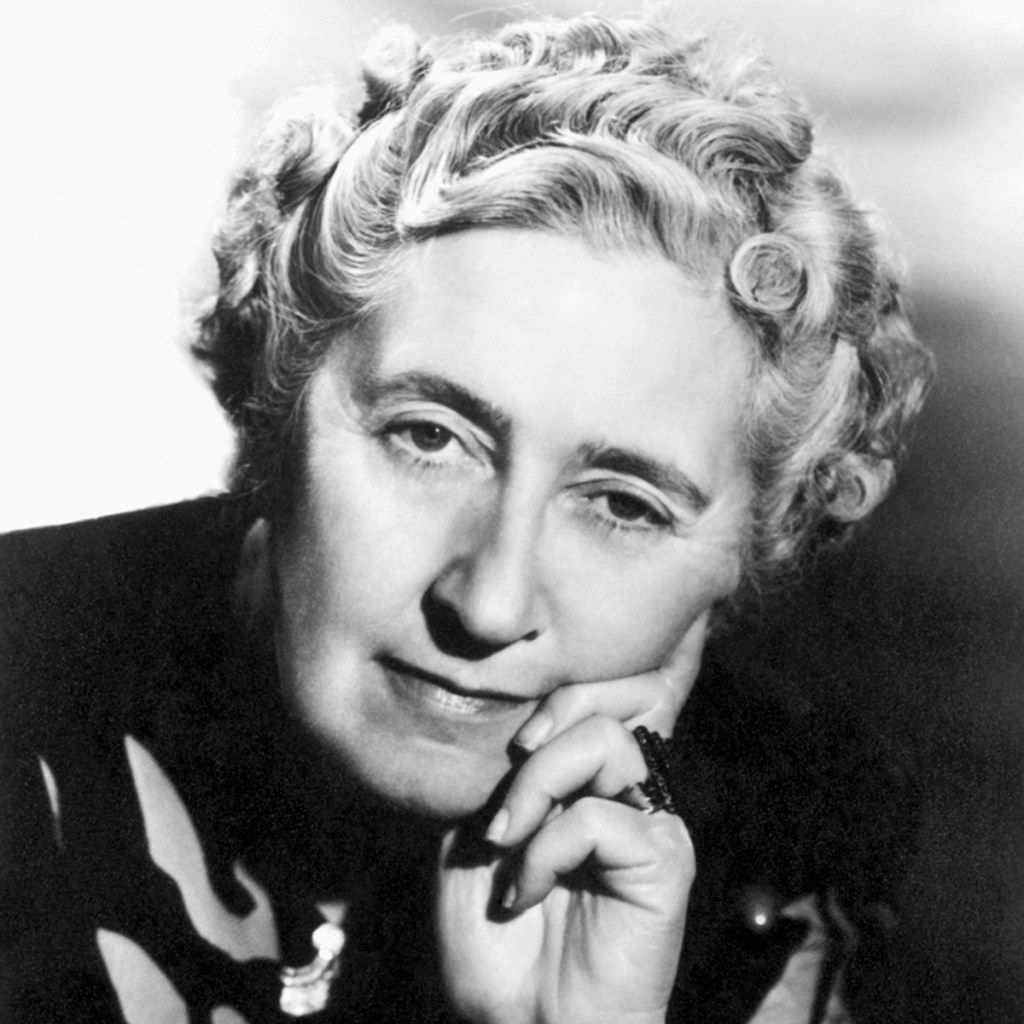
Agatha Christie is an English writer who is famous for her murder mysteries. Dubbed as the ‘Queen of crime’, she is the most widely published author of all time and in any language, outsold only by the Bible and Shakespeare. She is the author of 80 crime novels and short story collections, 19 plays and six novels written under the name of Mary Westmacott. Her play ‘Mousetrap’ is considered to be the longest running play. She has sold over a billion copies in English and another billion in 100 foreign countries. Her first novel ‘The Mysterious Affairs at Styles’, was written towards the end of First World War. In it she created Hercule Poirot, the little Belgian detective who was destined to become the most popular detective in crime fiction since Sherlock Holmes. Agatha Christie was made a Dame in 1971. She died in 1976, since then, a number of books have been published posthumously.

Here are the top 3 Hercule Poirot Books and their blurbs:

3. Death on the Nile

“It often seems to me that’s all detective work is, wiping out your false starts and beginning again.”

“Yes, it is very true, that. And it is just what some people will not do. They conceive a certain theory, and everything has to fit into that theory. If one little fact will not fit it, they throw it aside. But it is always the facts that will not fit in that are significant.”

Agatha Christie’s most daring travel mystery. The tranquillity of a cruise along the Nile is shattered by the discovery that Linnet Ridgeway has been shot through the head. She was young, stylish and beautiful, a girl who had everything – until she lost her life. Hercule Poirot recalls an earlier outburst by a fellow passenger: ‘I’d like to put my dear little pistol against her head and just press the trigger.’ Yet in this exotic setting’ nothing is ever quite what it seems…

2. Murder on the Orient Express

“The impossible could not have happened, therefore the impossible must be possible in spite of appearances.”

Murder on the Orient Express is undoubtedly one of Agatha Christie’s greatest mystery novels. Just after midnight, a snowdrift stops the Orient Express in its tracks. The luxurious train is surprisingly full for the time of the year, but by the morning it is one passenger fewer. An American tycoon lies dead in his compartment, stabbed a dozen times, his door locked from the inside. Isolated and with a killer in their midst, detective Hercule Poirot must identify the murderer – in case he or she decides to strike again.

1. The Murder of Roger Ackroyd

“The truth, however ugly in itself, is always curious and beautiful to seekers after it.”

Known for its startling reveal, this is the book that changed Agatha Christie’s career. Roger Ackroyd was a man who knew too much. He knew the woman he loved had poisoned her first husband. He knew someone was blackmailing her – and now he knew she had taken her own life with a drug overdose. Soon the evening post would let him know who the mystery blackmailer was. But Ackroyd was dead before he’d finished reading it – stabbed through the neck where he sat in the study.

Reference Link:

No new fatalities were found in Delhi for the first time

The national capital had reached a milestone on new fatalities were recorded for the first time since March 2 this year. State government records show that single day fatalities peaked on May 3 as the fourth wave of coronavirus in the city.

The positivity rate in the national capital now stands at 0.06 percent after 59,410 tests were conducted. This marks a slight decrease from the 0.07 percent recorded on Sunday, after 51cases were reported.

As Covid-19 cases in the national capital witness a sharp decline since the past few weeks, Delhi on Sunday reported no new virus related deaths in the last 24 hours, according to the daily health bulletin, keeping the death toll since the pandemic outbreak at 25,027. Recoveries reached 14,09,910 with 80 more patients recovering in the 24 hour period.

Active cases in Delhi are at 592

Earlier this week, Chief Minister Arvind Kejriwal had said that governments should take every step to prevent the spread of COVID-19.

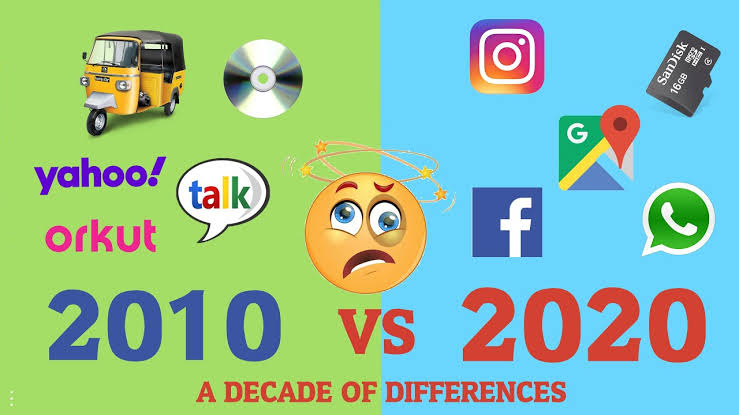
2010 v/s 2020

We no longer smile at people

It has been ages since I last smiled at an unknown stranger when our eyes met. Social media, news, movies, has made us so uptight and alert that our natural reflex has shifted from smiling to suspecting them.

We no longer enjoy food as we did

Snapchat and Instagram have made people forget the value of here and now. Instead of being happily in the present moment, we are often more focused on portraying a happy life which may be far from the reality. The satisfaction of the first sip of the morning tea or the first bite of the domino’s pizza doesn’t feel the same as it did a decade ago. The first thought that we have when we see a delicious food now is to click a perfect picture to show other’s how wonderful our life is.

We no longer see Bollywood as we did before

A decade back movie stars were famous for their work and that was enough in itself. Acting was seen as a profession and a job. However, the current Bollywood seems more like a political party than a show business. It is not the work but the lives of the celebrities that we are most interested in. Political leaders are supposed to have opinions and that is what is to be taken seriously by the people. However, now it is the opinions of our favourite celebrities that we are more into.

We no longer have real meaningful bond

The friendship and relationship trends have changed since the last decade. There were more meaningful bonds between link minded people who were true to one another (even behind their back). However, now the long evening chai meets have turned to Starbucks coffee meets. Where though we are physically together, but mentally and emotionally far into two different worlds in our mobile phones.

Are Serial Killers Genetically Fated to Kill?

Can we tend to use biology to observe the fate of a criminal? Are criminals not at fault for their actions? Does genetic science lead individuals to commit violent acts? What sequences are answerable for this or is it simply one gene?CDH13 or the “warrior gene” contains explicit variations within the X chromosome sequence that produces monoamine oxidase A (MAOA) enzyme. Cdh13 is concerned with the signaling between cells, but has additionally been
connected with hyper attention-deficit / upset disorder[ADHD], autism, schizophrenic psychosis, and emotional disorder.

This review covers projects and experiments conducted on its role related to violent behavior.
Recently a bunch of researchers from the Karolinska Institute in Sweden delineated the foremost recent look of MAOA-L published in the journal of Molecular Psychiatry. The study was led by Professor Jari Tiihonen who analyzed
the genes of 895 Finnish criminals which shows the criminals condemned of many violent crimes have the MAOA-L catalyst or the mutant version of it whereas the calm controls failed to.
Violent crime could be a major issue that affects the standard of life even in stable and plush societies. In industrial countries, the bulk of all violent crime is committed by a comparatively tiny cluster of delinquent recidivistic
offenders, and quite five hundredth of severe delinquent behavior is due to genetic factors.Cdh13 is additionally known as a possible risk sequence for syndrome spectrum disorder, violent behavior, substance abuse, depression.
Twenty years ago, it was ascertained that a rare mutation resulting in a whole deficiency of MAO-A (MAOA) was related to impulsive and aggressive behavior in a very Dutch kindred. Thus far, solely 2 studies have rumored
associate degree association between a selected sequence and criminal violent
offending. In the study, 12 % of the boys had a mix of the low-activity MAOA
promoter genotype and childhood ill-treatment, which accounted for 44% of the
violent convictions in their cohort. Although this finding has not been
replicated, and therefore the majority of violent convictions during this
cohort weren’t severe, like killing or tried killing, this MAOA variant has
become widely known as a ‘warrior gene’. Recently, it was rumored that this
finding has begun to influence the attitudes on court sentences within the
North American country. A meta-analysis that enclosed 11,000 people showed a
big interaction between the low-activity MAOA genotype and childhood
adversities on a subsequent delinquent outcome. However, the biggest study on
this issue, with quite 4000 people, couldn’t make sure the hypothesis that this
MAOA genotype moderates the link between childhood ill-treatment and delinquent
behavior, however, found statistically non-significant proof for the main
result of MAOA genotype on having a disposition toward violence. Thus, the
problem of a ‘warrior gene’ has remained moot.
To my information, this can be the primary study to research the genetic
background of severe aggressive behavior. The low-activity MAOA genotype also affects the metabolism of serotonin and serotonin signaling within the
corticolimbic circuitry, leading to increased impulsive aggression.
The high proportion of intoxicated offenders in our cohort is well in line with
a comprehensive review on the pharmacological medicine of bloody offenders in
developed countries, that complete that the bulk of offenders are intoxicated
by a mind-altering drug at the time of the killing, with alcohol being the
foremost usually rumored substance. The results indicate that concerning 9% of
severe violent crime in Finland is due to the low-activity MAOA genotype, which
is extremely near to the results of Caspi et al., who calculated that
concerning 11% of any violent crime within the New Zealand cohort was due to
this low-activity genotype and childhood ill-treatment. However, it’s essential
to emphasize that the sensitivity and specificity of the genotype findings are
too low for any screening functions, either for the primary or secondary bar of
violent offending. It is equally vital to appreciate that, in line with the
fundamental principles of rhetorical medical specialty, solely the particular
mental capability (phenotype) of the wrongdoer matters once social control or
obligation is taken into account, and therefore the purported risk factors as
such (such as genotype) don’t have any legal role within the ensuing judgment.
Regarding the secondary bar of violent crime generally, it’s obvious that the
utilization of alcohol, drug abuse, and alternative substances that induce a
transient monoamine neurotransmitter burst, and subsequent aggressive behavior,
ought to be reduced when unleashing from jail. This might be meted out by
implementing obligatory supervised treatment with a medicinal drug or long
narcotic antagonist as a part of a probation police investigation.
According to my knowledge, no previous studies have controlled the result of
co-existing abuse and delinquent psychological disorder once learning the
genetic background of severe violent behavior. Results from the
population-based sample showed a redoubled risk for alcoholism particularly due
to those that had severe issues in childhood. However, the results from this
study indicate that CDH13 and low-activity MAOA are quite specific to violent
crime because the ORs of the SNPs for offenders having committed solely
non-violent crimes (predominantly delinquent people with substance abuse),
indicating solely a small association with abuse and a criminal tendency as
such. The results indicate each low amine metabolism and somatic cell membrane
dysfunction as plausible factors within the etiology of utmost criminal violent
behavior, and a conservative estimate implies that 5–10% of all severe violent
crime in European nations is due to specific MAOA and CDH13 genotypes.
The role of active genetic proof in excusing and mitigating criminal behavior
is unclear. Analysis has recommended that the genotype of the catalyst enzyme
(MAOA-L) could increase the chance for aggressive and delinquent behavior. By
examining criminal proceedings during which MAOA-L genotype proof was
introduced, the rhetorical uses were explored. Westlaw and LexisNexis legal
databases were electronically probed for cases from 1995 to 2016 to spot court
documents from cases involving the MAOA-L genotype. Proof of the MAOA-L
genotype was enclosed in records from eleven criminal cases (9 U.S. and a pair
of Italian). Within the guilt part, genotype proof was dominated admissible in
one among 2 cases and should have contributed to a conviction on a lesser charge. Within the sentencing part, genotype proof was admissible in four of 5
cases, one among that concluded with a lesser sentence. Even once charges or
sentences are reduced it’s tough to determine the impact of proof of the MAOA-L
genotype. Genotype proof could lack a persuasive impact as a result of the
impact of the allelomorph on a specific suspect is tough to ascertain.
We tend to find that the warrior gene is specifically expressed in Golgi cells
within the cerebral cortex and is essential for repressive operate of Golgi
cells with deletion of Cdh13 in non‐executive centers of the brain, like the
neural structure, could contribute to psychological feature and social activity
deficits coupled to neurologic disorders.
So as an answer we can use genetic editing to tweak the genes playing a role in
the gene regulation and modulate the enzyme to stay the disorders in restraint.

Poverty In India

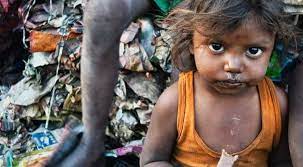
Poverty is defined as a condition in which a person is deprived of fundamental needs of existence. Furthermore, the individual does not have an insufficient amount of food, housing, or clothing. In India, the majority of the poor cannot afford to pay for a single meal each day. They also sleep on the side of the road and dress in filthy old clothing. Furthermore, they do not receive appropriate healthy and nutritious food, as well as medicine or any other required item.

Causes of Poverty:-

Poverty in India is growing due to a rise in the urban population. People from rural areas are flocking to cities in search of better opportunities. The majority of these individuals find a low-wage employment or an activity that just pays for their meals. Most significantly, lakhs of urban residents live below the poverty line, with many more on the verge of destitution.

Furthermore, a large number of people live in slums or low-lying regions. These individuals are generally uneducated, and despite their best efforts, their situation stays unchanged and there is no satisfying outcome.

Furthermore, there are several factors that may be identified as important causes of poverty in India. Corruption, increasing population, poor agriculture, a huge disparity between wealthy and poor, ancient customs, illiteracy, unemployment, and a few more factors are among these causes. A significant number of people work in agriculture, yet the compensation is relatively low in relation to the labour done by employees.

Furthermore, as the population rises, so does the need for food, housing, and money, and in the absence of these resources, poverty spreads rapidly. Furthermore, being extremely poor or extra affluent widens the divide between rich and poor.

Furthermore, the affluent are getting richer while the poor are increasing poorer, creating an economic divide that will be difficult to close.

Effects of Poverty:-

It has a wide range of effects on people’s lives. It also has a variety of impacts, such as illiteracy, bad nutrition and food, inadequate housing, child labour, unemployment, poor hygiene and lifestyle, and feminization of poverty, among others. Furthermore, impoverished people cannot afford a good and balanced diet, attractive clothing, appropriate education, a stable and clean housing, and so on since all of these amenities cost money, and if they can’t afford to eat two meals a day, how can they afford to pay for these amenities?

The Solutions for Ending Poverty:-

It is critical that we act swiftly and appropriately to address the issue of poverty. One approach to addressing these issues is to equip farmers with enough infrastructure. So that they can make agriculture lucrative rather than migrating to cities in search of work.

Illiterate individuals should also be provided the necessary instruction in order to live a better life. Family planning should be practised in order to control the growing population. Furthermore, steps should be done to eliminate corruption so that we can address the wealth disparity.

List of Indian states and union territories by poverty rate:-

India’s GDP per capita income is around $2241 (or 168,075). This is a list of Indian states and union territories rated in terms of poverty as of 2021. Number and Population – The rank is determined by the percentage of persons living below the poverty line and is based on MRP consumption.

State/U.T.Percentage of population living below the national poverty line
Goa5.09
Kerala7.05
Himachal Pradesh8.06
Sikkim8.19
Punjab8.26
Andhra Pradesh9.2
Haryana11.16
Uttarakhand 11.26
Tamil Nadu11.28
Meghalaya11.87
Tripura14.05
Rajasthan14.71
Gujarat16.63
Maharashtra17.35
Nagaland18.88
West Bengal19.98
Mizoram20.4
Karnataka20.91
Uttar Pradesh29.43
Madhya Pradesh31.65
Assam31.98
Odisha32.59
Bihar33.74
Arunachal Pradesh34.67
Manipur36.89
Jharkhand36.96
Chhattisgarh39.93
TelanganaN/A
Andaman And Nicobar Islands1
Lakshadweep2.77
Puducherry9.69
Daman and Diu9.86
Delhi9.91
Jammu and Kashmir and Ladakh10.35
Chandigarh21.81
Dadra and Nagar haveli39.31

Conclusion

To summarize, poverty is a national problem, not a personal one. It should also be addressed as soon as possible by the deployment of appropriate solutions. Furthermore, poverty eradication has become critical for the long-term and inclusive progress of individuals, society, country, and economy.

RESPIRATORY SYSTEM

Anatomy Of The Respiratory System

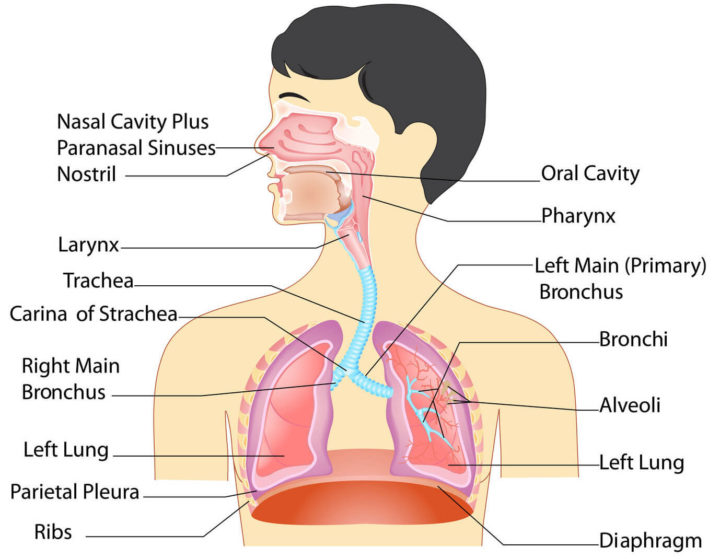
Respiration is the process of obtaining and using oxygen, while eliminating carbon dioxide. It is the process by which human beings take in oxygen from their environment and give out carbon dioxide that is produced as a result of some chemical changes within the cells. The requirement of oxygen is indispensable for the human body. If the intake of oxygen is completely suspended for more than four minutes, the person usually dies. So, our body needs a continuous supply of oxygen . Some chemical changes take place in tissue cells. The main product of these chemical changes is CO2 . A continuous elimination of CO2 is essential. In fact, respiration is a twofold process. One is called internal respiration and the other is external respiration . The inhalation of oxygen is followed by some chemical changes in which , waste products are formed . Then exhalation of waste products takes place. The process of inhalation of O2 and exhalation of CO2+ H2O is called respiratory process . There are various organs of respiratory system , which play a vital role in respiration . These are mentioned below.

  • Nose
  • Pharynx
  • Larynx
  • Trachea
  • Bronchi
  • Diaphragm
  • Lungs

Why is vaccination important?

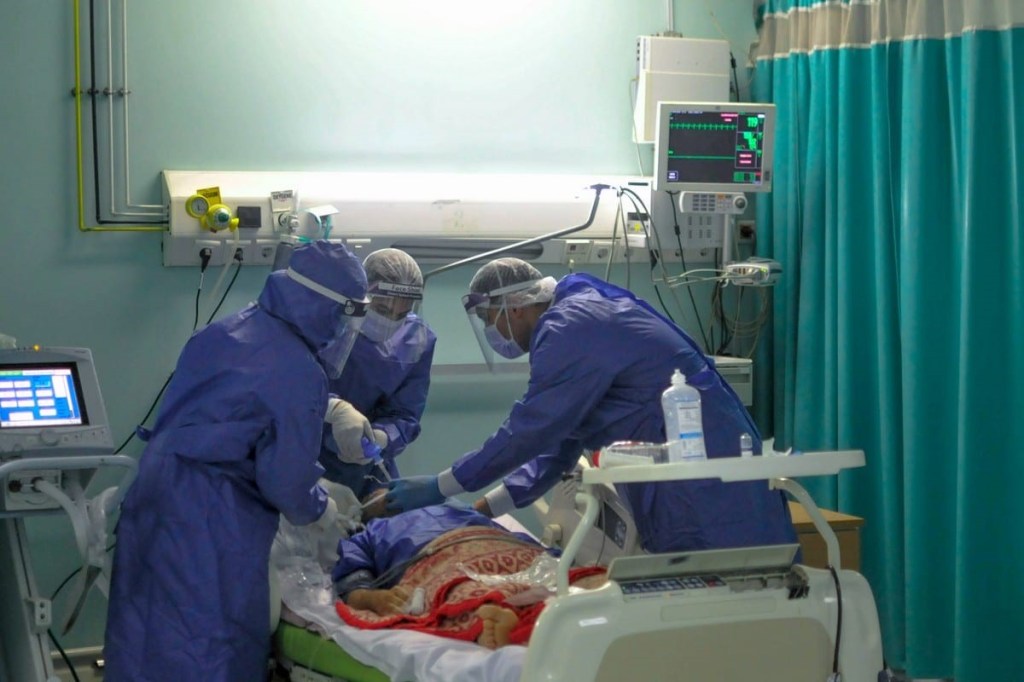
COVID-19’s catastrophic second wave left India crippled. Shortage of oxygen, hospitals on the brink, unbridled Covid deaths, rampant Covid cases, people in agony pretty much sums up the second wave.

The virus evolves as it spreads. India is coping with the UK version, South African variant, Double mutant, Kappa variant, and Delta variant- to name a few.

When will COVID-19 come to an end?

Some of the viruses responsible for previous pandemics, such as the H1N1 swine flu virus, continue to spread today, so does H3N2.

And, the bitter truth is, this may also be the case with COVID-19. COVID-19 is far more difficult to eradicate since it may spread from animals to humans and from humans to humans.

“The virus sticks around, but once people develop some immunity to it — either through natural infection or vaccination — they won’t come down with severe symptoms. The virus would become a foe first encountered in early childhood, when it typically causes mild infection or none at all,” quoted Jennie Lavine, an infectious-disease researcher at Emory University in Atlanta, Georgia.

Eradication, on the other hand, isn’t the sole option. We’ve previously controlled and confined Ebola, hepatitis B, measles, and SARS, all of which were similar to the current COVID-19.

“The end of the pandemic is not the end of this virus — it’s the end of an unsustainable impact on health systems,” ANDREW J POLLARD, FRCPCH PhD FMedSci, is Professor of Pediatric Infection and Immunity at the University of Oxford said. “If we can convert it into something more innocuous, then we’ll have the end of the pandemic in sight.”

COVID-19 can also be contained and controlled with vaccination. Covishield has a 90% efficacy rate, while Covaxin has an 81 percent efficacy rate. Russia’s Sputnik V has a 91.6 percent efficacy rate. It’s time to get vaccinated for your own and your family’s protection, as vaccination is the only way out of this pandemic.

Post-vaccination symptoms & why they are good?

After taking the vaccination, one may experience some side effects like pain at the injection site, joint pain, redness, headache, chills, swelling at the injection site, fever, nausea, or fatigue.

But it’s perfectly normal and, in fact, beneficial. Side effects are the immune system’s response to the vaccine & a sign that the vaccine is working.

The good news on our part is that a brisk response equals an effective response,” Dr. Mark Loafman, chair of family and community medicine for Cook County Health in Illinois, told NBC 5. “It tells us that the vaccine is working. Our body’s forming a robust immune response and we feel that that’s a positive thing. So, we tend to see the vaccines that have a higher efficacy rate also have more of the so-called side effects or the symptoms because they work so well.”

Vaccines are designed to give you immunity without the dangers of getting the disease. Common and mild or moderate side effects are a good thing: they show us that the vaccine is working. Experiencing no side effects doesn’t mean the vaccine is ineffective. It means everybody responds differently. 

EDUCATION AND ITS CRITICAL IMPORTANCE:

Education is something that a person obtains from his surroundings or from a school. It is a weapon in one’s arsenal. Education is defined as the acquisition of knowledge. Education is a never-ending process in which we learn new things at every turn, and it will continue until a person’s last breath. In this process, there are no age restrictions; anyone can learn at any age they want.

Education can play a significant role in shaping a child’s personality. As a result, educational institutions play a critical role in this. An educational institution should anticipate children’s needs. The teachers and instructors should be very kind and loving to the students, or else the education and institution will be boring and tiresome to them. Education should not only be about learning, but also about having fun so that the children find it interesting. Education has the potential to impact global development in the long run. A well-educated person is always working to improve humanity. Education produced civilized, well-organized people. People who are educated have great ideas and strive for betterment in life. It assists in breaking out of one’s comfort zone, which is where the magic happens.

Physical education is another aspect that plays a significant role in one’s life. When a child receives a better physical education, he will grow up to be a healthy person with a fit body. As a result of their education, people mature. Refinement enters the lives of educated people. Above all, education teaches people the value of discipline. People with a higher level of education understand the value of time much better. In the eyes of educated people, time is equal to money.

Education is more than what we learn within the four walls of a classroom; it is a broader concept. Nobody in the world knows everything because the world is a mystery and we cannot find a solution to everything. We obviously don’t know everything, so we should always be curious and excited when we come across a new discovery. So, if we are ignorant about something, it is almost certain that when we discover it, it will provide us with an incalculable amount of pleasure.