Impacts of Virtual gaming

In the late 90’s many adults and teenagers would have had a great craze for video games and they found it fun filled, entertaining and a way of relaxation from their mundane routine. The games would be innocuous without involving more harm or trauma , which were just meant to be for enjoyment, time pass and an activity to unwind without imposing more negative impacts on the user. But today as the technology is been growing by leaps and bounds , the games and gaming have changed a lot over the years. Modern games have brought amazing graphics that 90s developers could not have even imagined. Mobile is becoming a critical segment of the game industry. According to a research 70% of the families have at least one child who plays video games. The youngsters perceive the games available online to be more fascinating involving realistic characters, 3d effects and many such improvements in the field, but it also comes with lot more drama to an extent that it has caused many online games to be banned in the country.

More than of a relaxation and entertainment online games are becoming more dreadful. Under the garb of more developed features many lives are ruined, some of the games demand for investing money to afford the requisite tools for the games and the users are misled and deluded at times by many anonymous people in the game field. Without the right guidance, children can be exposed to many risks such as game bullying, abuses, hidden fees, privacy problems, webcam hacks, online grooming etc. Many children who are not aware of all the mishandlings in online gaming tend to get trapped very easily. The users are vulnerable to many of the risks and some even indulge in problems with investing money and get fooled at the end. We see many cases flooding the news with death , crimes and abuses involved in online gaming. There are many devastations that online gaming creates and the ultimate snag is losing lives.

A 26 year-old man hanged himself from a ceiling fan at his home in Visakhapatnam upset over losing money online while gaming. In Puducherry 38 year old man set himself ablaze after losing more than 30 lakhs rupees in an online rummy game. Women in gaming routinely suffer sexual harassments, aggressive abuse and sometimes even graphic threats of rape and murder. The study, carried out by Young Gamers & Gamblers Education Trust discovered some 35 % of women said they have been sent inappropriate content or messages from other gamers. The addiction to online games is more like an addiction to alcohols, when you cross the boundaries the effects are dreadful, alcohol ruins the physical health and more screen time to the online games ruins the mental health.

Especially in this pandemic situation everyone being locked up, it paved the way for the youngsters to indulge more in online gaming and gave rise to frightful impacts. The online game addicts reported more anxiety, depression, affects the psychological well being, builds negative emotions when they lose in the game, lowers self esteem, loneliness, poor academic performances. Constrained in a room, many are not even aware of what is happening around them or in the family and many parents worry their child’s rising aimlessness. Many are connected to online games via mobile, and the prolonged screen time increases eye sight, migraine and other related problems. It would be better if the children come to out this situation very soon otherwise it augments the idleness, dwelling in our home is not going to persist for long we have to return back to our work mode and this could be a great hindrance for their career. Parents should have complete monitor over their children’s activities over phone before they fall at the wrong hands. Adults can engage themselves in many other quality exercises which can bear fruit. Gaming can be taken up as an activity of relaxation and entertainment but it should not end eating up your lives.

SELF-CONFIDENCE

Self-confidence is one of the most significant aspects of a person’s personality; a person who believes in their own talents always succeeds and achieves their objectives. A person who is self-assured is constantly free to think about his or her goals without being distracted by negative thoughts; they are always focused on their objectives without question. Those who believe in themselves have a lower or zero likelihood of failing.

To achieve your goals and fulfil your aspirations, you must have self-confidence. People that are self-assured always succeed. Because a self-assured individual is typically autonomous, enthusiastic, hopeful, affectionate, and positive, he or she cannot attain his or her goal in life without confidence. Self-confidence is the key to success, or as we like to say, the first step toward it. If a person has self-assurance, he or she has already won half the battle. People who have achieved success in school, the job, and the public sector are more initiative, forward-thinking, and confident in their decisions, helping them stand out from the crowd.

People that take more initiative and are more upfront and active in life gain success in school and at work. Furthermore, because they are more confident in themselves, they make better selections. As a result, it distinguishes them from the competition. People will notice you if you stand out from the crowd. As a result, you have a better chance of achieving life success. It will be difficult, on the other hand, if there is someone who does not trust or believe in themselves. They will have a difficult time succeeding since they will be subjected to both failure and criticism. As a result, if they lack self-confidence, they may take longer to recover than someone who does.


Importance of Self Confidence:

Develop a sense of self-acceptance: One of the most essential things we can do is learn to accept ourselves. Examine your accomplishments and strengths, and devise a strategy to address your flaws. We must cultivate self-acceptance, feeling good about ourselves and others regardless of the circumstances. In this sense, we may occasionally believe it is appropriate to be critical of our behavior and attempt to modify it without being critical of ourselves. This mindset aids in the development of a healthy sense of self-assurance.


Seeking Positive Experiences and People: We can increase our self-confidence by giving ourselves positive experiences. It’s also beneficial to spend time with folks who appreciate us for who we are. Surround yourself with positive people and stay away from those who are always negative. Being in the company of critical people can have a negative impact on our self-esteem and self-confidence.

Concentrate on Your Achievements: If you take the time to reflect on your life, you will see that you have accomplished a lot. What matters is that these accomplishments are meaningful to you. Consider your accomplishments and determine what you can learn from them. Make a list of everything you’re proud of and put it on it. The fact that you’re concentrating on the positives will also help you gain self-assurance.

Appreciation and Support: As you work to improve your self-esteem, reward yourself. It makes little difference what the reward is as long as it is something you truly appreciate. To sum up, self-confidence is a broad phrase that encompasses a wide range of emotions. Emotional restraint, empathy, and resilience all contribute to the development of a self-assured personality. A self-assured person would know how to state things that are true without hurting other people’s feelings.

Political Parties

Political parties are an essential part of democracy. Parties are the link between government and the people.

Meaning of Political Party

A political party is an organisation formed by a group of people with a certain ideology and agenda to contest elections and hold power in the government. A political party has three components: a leader, active members and the followers.

Types of a Party System

There are three of party system in the world namely.
✓Single – party system in which one ruling party exists and no opposition is permitted. China, Cuba, the former USSR (Union of Soviet Socialist Republics ) are the examples for the single – party system.
✓Two – party system in which only two major parties exist, for example, USA, UK.
✓Multi – party system in which there are more than two political parties, for example, India, Sri Lanka, France and Italy.

Types of Political Parties

Political parties in India are classified according to their area of influence into two main types: ✓national and ✓state parties.

National Parties

A party which is recognised as a state party in at least four states is recognised as a national party. Every party in the country has to register with the Election Commission while the Commission treats all the parties equally. It offers some special facilities to state and national parties. These parties are given a unique symbol. Only the official candidate of the party can use that election symbol. In 2017, there were seven recognised national parties.

State Parties

Other than the seven national parties, most of the major parties of the country are classified by the Election Commission as ‘state parties’. These are commonly referred to as regional parties. A party is recognised as a state party by the Election Commission of India based on certain percentage of votes secured or a certain number of seats won in the Assembly or Lok Sabha elections.

Recognition to the Parties

For getting recognition as ‘national party’, a party has to fulfill any one of the following criteria:
✓At least 6% votes in at least four states and members to the Lok Sabha.
✓In the election of Lok Sabha, at least 2% members from at least three states are elected to Lok Sabha.
✓Recognition as a state party at least four states.

Functions of Political Parties

☆ Parties form and run the government.
☆ Parties shape public opinion. They raise and highlights issues of importance.
☆ Parties function as the useful link between people and the government machinery.

Role of Opposition Parties in a Democracy

In a democracy, there may be a two-party system like in the USA or a multi-party system like in India and France. The ruling party may have to received the mandate of the majority people and the Opposition party represented the remaining people.

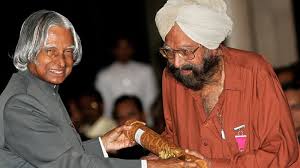
KARMA – Khushwant Singh

🚉INTRODUCTION🚉:

🔹️Karma is a story written by Indian writer Khushwant Singh.
🔹️He was born in 2 February 1915. He is renowned Indian Journalist, Novelist,Lawyer and Politician.


🔹️His notable works are History of Sikhs,Train to Pakistan.
🔹️He died in 20 March 2014.

🚉Journey Of Mohan Lal and Lachmi in a train🚉:

🌟Sir Mohan Lal is checking himself out in the mirror of a First-class railway waiting room.
🌟He started to criticises the Indian mirror for poorly made and admires himself as a good looking gentleman.
🌟The train is yet to come and he calls the bearer and orders a drink.
🌟Outside the waiting room,his wife Lachmi is sitting on a small grey steel trunk.
🌟She is Chewing a betel leaf and she is commonly dressed because She is a traditional Indian woman.


🌟She requests a coolie to carry her luggage and go to the platform for the inter-class women Compartment.
🌟The mam carries her bag and the two of them converse for sometime while she is eating.
🌟She tells the porter that she travels with her husband, but he is not allowed to accompany with her husband in the first class Compartment because her husband is a lawyer and educated in Britain.
🌟However, Lachmi is fat ,middle aged and uneducated women and both of them have no children.


🌟The train arrives at the platform and Lachmi enters the inter-class Compartment.
🌟There is a lot if noise and the passengers are jostling on the platform.
🌟Mohan Lal is calm and quiet and he is still enjoying his drink.
🌟He strictly follows the manners of the English.
🌟He rarely speaks Hindustani.
🌟He can talk on any subject like a cultured Englishman.


🌟He expects some Englishmen as co-passengers.
🌟In that case it will be enjoying Journey to him.
🌟Then he started to recalls his five-year glorious life in England and loves everything of thr country.
🌟However, Sir Mohan enters his reserved first class coupe and it is empty.
🌟He feels very sad and he begins to read the Times.


🌟After few minutes two English soldiers came and they looking fir a suitable Compartment.
🌟Sir Mohan is ready to welcome them.
Then the two soldiers ultimately choose Sir Mohan’s Compartment and they order him to gry out from the Compartment.
🌟Eventhough it is reserved, the soldiers do not care for it.
🌟Sir Mohan protest mildly.
🌟His royal English, Sahib appearance and the times come of no use.
🌟The soldiers throw all the belongings of Sir Mohan out of the train.


🌟Finally they push him out of the train .
🌟The train quickly passes the station leaving him on the platform.
🌟His wife,totally unaware of his train quickly passes the station leaving him on the platform.
🌟His wife, totally unaware of his condition, chews the beta leaves, spits and sends a jet of red dribble flying across like a dart.

🚉CONCLUSION🚉:

🔸️Thus, the story “Karma” illustrates the famous proverb “Pride Cross Before a Fall” .
🔸️Singh says about false belief in foreign excellence.

IMPORTANCE OF TIME MANAGEMENT AND HOW TO DO IT

Life can sometimes be hotchpotch. With a lot of tasks to be completed and all of them urgent and not knowing where to start from; we all have been in this situation. Some would have been able to complete all the tasks, some partially and some would have given up even before starting, knowing very well their failed attempts at multi-tasking would not be of any help.

For all these three categories of people, managing time wisely would have been helpful. Some may argue that the first category of people completed all the tasks successfully. But has to be kept in mind that it was mere luck and in terms of quality, justice may not have been served to the tasks.

The task here does not mean only in the case of office goers or people working in companies. School-going children who have homework to be complete or have exams coming up or sportsperson, who have to do various kinds of warm-up exercises also count.

Managing time is indeed important, for it brings out the best work possible and creates minimum pressure on a person to complete the task in a hurry.

But how exactly to manage time? Given below are a few key pointers that may help – 

  1. Distinguishing between Important and Urgent – Understanding the difference between tasks that are ‘important’ and tasks that are ‘urgent’ is a necessary requisite for time management. While a task has to be completed in itself is evidence that the task holds some importance in your life. But a task may be ‘important’ but not urgent. Such as task has to be done, but not immediately. Other tasks need immediate attention (urgent). If one focuses on the important tasks first and later realizes that the time for the urgent ones is going out of hand, a ruckus is created. Hence, categorization of your tasks is important.
  2. Write them down– Writing them down helps. Pen down your tasks, either for a day or part of a day so that you do not have to remember them again and again. This will make life simpler and more smooth.
  3. Be determined– Time management isn’t a skill to learn in a day. It needs practice. And expertise will be achieved only if daily tasks that you pen down are completed. Order of the tasks may not be necessary to follow. The focus should be completing, rather completing every task mentioned. For this, one has to be determined and ready to put in the effort.
  4. Don’t forget to include sleep and exercise in the schedule!- No doubt tasks need attention, but so does your sleep and physical fitness, and exercise. Do not, under any circumstance, deprive yourself of sleep and exercise. Include them in the list too. Since a healthy mind resides inside a healthy body, ignoring these two and continuous hours of work is not advisable.

These are simple tips to lead a peaceful life by managing your time properly and be able to spend a quality life.

Cheers!

If conservation of natural resources goes wrong, nothing else will go right

Natural resources are materials that help humans to meet their needs. Any natural material that humans use can be called natural resources. There are different kinds of natural resources on earth. We use them daily basis directly or indirectly. Depending on the recovery rate, natural resources are divided into two categories.

A natural resources is what people can use which comes from the natural environment. Examples of natural resources are air ,water ,wood ,oil , wind energy, natural gas, iron, and coal. ….. Petroleum and iron ores are natural,but need work to make them into usable refined oil and steel.

Natural resources are resources that exist without any actions of humankind. This includes the sources of valued characteristics such as commercial and industrial use, aesthetic value, scientific interest and cultural value.

Oil, coal, natural gas, metals, stone and sand are natural resources. Other natural resources are air, sunlight, soil and water. Animals, birds, fish and plants are natural resources as well. Natural resources are used to make food, fuel and raw materials for the production of goods.

NATURAL RESOURCES

* The three Rs that help save natural resources are Reduce, Reuse, and Recycle.

* Using renewable resources responsibility can reduce the emission of several greenhouse gases that are typically released from fissile fuel.

* Despite being covered by 70% of water , the Earth is less than 1% of the water that is consumable and available for human use.

Fouling Organisms

A fouling organism is an animal or plant species that exists in water and attaches to the surface of a material immersed in the water. When attached to a ship’s hull, these organisms accumulate and grow to form undesirable layers of material.

Several aquatic organisms cause damages to submerged surfaces.Since this infestation has an economical importance,several studies are being made.Marine sedantary organisms may affect piles,floats,wooden dry docks and boats.These organisms are called foulers.Most of these organisms are distributed all over the world through the agency of ships.They are of economic importance,since fouling of ships results in increased resistance to movement through water, reducing the efficient, lowering of speed, increasing fuel consumption and leading to wear and tear of engine.The efficiency of underwater sound equipments fitted on to commercial and naval vessels is also seriously affected as result of the accumulation of fouling Organisms.

Pipes and conduits used to convey salt water in ships, industrial plants,oil refineries,nuclear power plants and aquaria become clogged and the flow is interrupted by the growth of these organisms inside the pipe.Thus the problem of fouling Organisms is serious.

Factors influencing the settlement of fouling Organisms

Several factors are known to influence the settlement of larvae of fouling Organisms.The most important of which is recognised to be the formation of the primary film.It is composed chiefly of diatoms and algal spores with a relatively small portion of bacteria.The thin filaments of algae may afford foothold on the substratum for the larvae to settle.The algae and diatoms serve as food for these larvae.

Members of the fouling community

The most important members of the fouling community include algae and representatives from almost all the invertebrate groups and the tunicata.Among the molluscs the mussels are the most important foulers.They settle heavily, especially in the pipe system carrying seawater and obstruct the flow of water.Aming Arthropoda, the barnacles are the dominant representatives of the fouling community.There are over 100 species of barnacles as foulers.

Prevention of fouling

⭐ Using copper sheathing on wooden hulls of boats.

⭐ Applying suitable antifouling paint.

⭐Chlorination in condenser system.

Elon Musk

World’s Second Richest Person and an Ideal For Many

Elon Musk

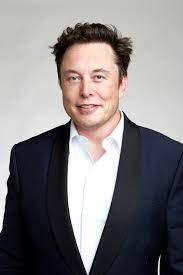
Elon Musk or Elon Reeve Musk is an entrepreneur business magnate in today’s world who has totally evolved the technological terms of today . He is the founder, CEO, and Chief Engineer at SpaceX early stage investor CEO and Product Architect of Tesla, Inc. He was born in Pretoria, South Africa. He got his Bachelor’s degree in physics and economics from  University of Pennsylvania. He started his career by co-founding the web software company Zip2. This startup was acquired by Compaq for $307 million in 1999. After this Musk co-founded online bank X.com that same year, which merged with Confinity in 2000 to form PayPal. The company was bought by eBay in 2002 for $1.5 billion.

SpaceX

Then In 2002, Musk founded SpaceX, an aerospace manufacturer and space transport services company, of which he is CEO and CTO. This rocket firm SpaceX, works on building reusable rockets and aspires to land humans on Mars .

Tesla

Then after this in 2004, he joined electric vehicle manufacturer Tesla Motors, Inc. (now Tesla, Inc.) as a chairman and product architect and became its CEO in 2008. Tesla produces super modern cars that run on lithium batteries and are luxurious and have an auto pilot mode which sounds really impossible to normal ears.

Solar City

In 2006, he helped create SolarCity, a solar energy services company that was later acquired by Tesla and became Tesla Energy. This company Solar City develops solar panels and solar roof tiles and aims at making this world to use the purest and cleanest fuels that are highly renewable so that even their infinite use does not exhaust them.

Neuralink

Neuralink is a startup which develops ultra high bandwidth brain machine interfaces to connect human brains to computers to help cure nervous system problems. The company was launched in 2016 and was first publicly reported in March 2017.

Failure

All this was not always as smooth as it looks. The biggest success of PayPal today was once awarded with “World’s worst business concept of the year”. Elon Musk is a person who has experienced some very adverse situations in terms of his personal life. After all, he went through a very public and long divorce process with his previous wife. He stated that this period was consumed by deep depression. As if that wasn’t enough when the 2008 recession depleted the profitability of Space X and Tesla. Elon was almost broke again and facing a decision to axe one of these two companies. In the end, Elon decided to split any remaining funds between the two companies and later that year. He received word that NASA were committing $6 billion to Space X. Needless to say, both companies survived the storm and Elon even married again just a few years later.

Where most people leave , Elon leaned in and poured is money , sweat, blood, tears in making his companies successful and his passion for design, engineering and the future would have him succeed on both the fronts.

Learning

The main thing to learn is that with the acquisition of PayPal his net-worth rose to 123 Million USD and he could have retired early and rode off into sunset and live happily after ” BUT THAT’S NOT HOW LEGENDS ARE MADE” . Instead he took a gamble and invested his newfound millions into his two separate companies – SpaceX and Tesla .

Source – https://www.instagram.com/p/CJ_V9__gvNI/?utm_medium=copy_link

Energy currency of the cell ATP

Adenosine 5′-triphosphate, or ATP, is the principal molecule for storing and transferring energy in cells. It is often referred to as the energy currency of the cell and can be compared to storing money in a bank. ATP can be used to store energy for future reactions or be withdrawn to pay for reactions when energy is required by the cell. Animals store the energy obtained from the breakdown of food as ATP. Likewise, plants capture and store the energy they derive from light during photosynthesis in ATP molecules. ATP is a nucleotide consisting of an adenine base attached to a ribose sugar, which is attached to three phosphate groups. These three phosphate groups are linked to one another by two high-energy bonds called phosphoanhydride bonds. When one phosphate group is removed by breaking a phosphoanhydride bond in a process called hydrolysis, energy is released, and ATP is converted to adenosine diphosphate (ADP). Likewise, energy is also released when phosphate is removed from ADP to form adenosine monophosphate (AMP). This free energy can be transferred to other molecules to make unfavourable reactions in a cell favourable. AMP can then be recycled into ADP or ATP by forming new phosphoanhydride bonds to store energy once again. In the cell, AMP, ADP, and ATP are constantly interconverted as they participate in biological reactions.

Thermodynamics in Biological Systems

The First Law of Thermodynamics

The first law of thermodynamics deals with the total amount of energy in the universe. It states that this total amount of energy is constant. In other words, there has always been, and always will be, exactly the same amount of energy in the universe. Energy exists in many different forms. According to the first law of thermodynamics, energy may be transferred from place to place or transformed into different forms, but it cannot be created or destroyed. The transfers and transformations of energy take place around us all the time. Light bulbs transform electrical energy into light energy. Gas stoves transform chemical energy from natural gas into heat energy. Plants perform one of the most biologically useful energy transformations on earth: that of converting the energy of sunlight into the chemical energy stored within organic molecules. 

The challenge for all living organisms is to obtain energy from their surroundings in forms that they can transfer or transform into usable energy to do work. Living cells have evolved to meet this challenge very well. Chemical energy stored within organic molecules such as sugars and fats is transformed through a series of cellular chemical reactions into energy within molecules of ATP. Energy in ATP molecules is easily accessible to do work. Examples of the types of work that cells need to do include building complex molecules, transporting materials, powering the beating motion of cilia or flagella, contracting muscle fibers to create movement, and reproduction.

The Second Law of Thermodynamics   

A living cell’s primary tasks of obtaining, transforming, and using energy to do work may seem simple. However, the second law of thermodynamics explains why these tasks are harder than they appear. None of the energy transfers we’ve discussed, along with all energy transfers and transformations in the universe, is completely efficient. In every energy transfer, some amount of energy is lost in a form that is unusable. In most cases, this form is heat energy. Thermodynamically, heat energy is defined as the energy transferred from one system to another that is not doing work. For example, when an airplane flies through the air, some of the energy of the flying plane is lost as heat energy due to friction with the surrounding air. This friction actually heats the air by temporarily increasing the speed of air molecules. Likewise, some energy is lost as heat energy during cellular metabolic reactions. This is good for warm-blooded creatures like us, because heat energy helps to maintain our body temperature. Strictly speaking, no energy transfer is completely efficient, because some energy is lost in an unusable form.

An important concept in physical systems is that of order and disorder (also known as randomness). The more energy that is lost by a system to its surroundings, the less ordered and more random the system is. Scientists refer to the measure of randomness or disorder within a system as entropy. High entropy means high disorder and low energy (Figure 2). To better understand entropy, think of a student’s bedroom. If no energy or work were put into it, the room would quickly become messy. It would exist in a very disordered state, one of high entropy. Energy must be put into the system, in the form of the student doing work and putting everything away, in order to bring the room back to a state of cleanliness and order. This state is one of low entropy. Similarly, a car or house must be constantly maintained with work in order to keep it in an ordered state. Left alone, the entropy of the house or car gradually increases through rust and degradation. Molecules and chemical reactions have varying amounts of entropy as well. For example, as chemical reactions reach a state of equilibrium, entropy increases, and as molecules at a high concentration in one place diffuse and spread out, entropy also increases.

Various types of Proteins

Based on composition, there are two types of proteins as follows:

  1. Simple Proteins: These proteins are made up of only amino acids e.g.,  albumins, globulins, glutelin.
  2.  Conjugated proteins: These are formed by the binding of a simple protein with a non-protein called the prosthetic group. Depending upon the type of prosthetic group, conjugated proteins are of several types few of which are mentioned below:

Based on shape, proteins are classified into two types:

1.Fibrous proteins: They are thread-like structural proteins that may occur singly or in groups.  Fibrous proteins generally possess secondary structures and are insoluble in water. The common example of fibrous proteins is collagen of connective tissue, actin and myosin of muscles, keratin of scales,  feathers,  hair,  claws,  nails, horns and hoofs, the silk of spider web. Fibrinogen is also a fibrous protein but soluble in blood plasma. It forms insoluble fibrin during the clotting of blood.

2.Globular proteins: They are spherical in shape and are involved in metabolic activities.  They have a tertiary or quaternary structure.  Smaller globular proteins are usually soluble in water and are not coagulated by heat, e.g., histones.  Egg albumin, serum globulins and glutelin (wheat,  rice)  are examples of large globular proteins, which get coagulated by heat.

Role/ Functions of proteins

Proteins perform several functions in organisms. The main functions of proteins are as follows:

1.Structural Proteins: Many proteins serve as a building material of cells and tissues. They take part in the formation of a colloidal complex of protoplast, cell membranes, organelles, extracellular matrices and fibres. Some proteins form supporting structures, e.g., elastin of ligaments, collagen of tendons, cartilages, bone and connective tissue. Keratin is the major constituent of the external protective structure of animals like hair, feathers, horny layer of skin, nails, claws, hoofs etc.

2.Enzymes: Many proteins function as enzymes to catalyse biochemical reactions that occur in the living world. Enzymes play a key role in metabolism. Every enzyme is specific in action.  E.g.,  Amylase,  protease,  RUBISCO  etc.  RUBISCO  (Ribulose Bisphosphate Carboxylase Oxygenase) is the most abundant enzyme found in plants. It the principal enzyme involved in photosynthesis.

3.Carrier  Proteins  (Transport proteins): Some proteins act as carriers that bind and transport specific molecules across a membrane or in a body fluid.  Hemoglobin of RBCs transports oxygen in the body.  RBCs contain haemoglobin  (Hb)  which is made up of 4 polypeptide chains and contains an iron ion. Iron has a strong affinity for oxygen. In the lungs, oxygen combines with haemoglobin to produce oxyhemoglobins. In body cells, oxygen is released and can diffuse into a body cell. Other examples include proteins such as the myoglobin of muscles that store oxygen. α-globulin of blood carries thyroxine and bilirubin,  β-globulin transport vitamins  A,  D  and  K, cholesterol and ions in the blood.

4.Receptor  Proteins: Several proteins present on the external surface of the cell membrane act as receptor molecules. A receptor protein molecule receives chemical signals from outside a cell. When such chemical signals bind to a  receptor, they cause some form of cellular/tissue response. For example, when insulin is released in the blood, the receptor proteins present on the cell membrane bind with this insulin. This binding changes the permeability of the cell membrane and glucose can enter the cell through glucose channels.

5.Hormones: Some hormones are proteinaceous, e.g., insulin(sugar metabolism regulating hormone} parathyroid (calcium and phosphate transport regulating hormones). Hormones play a key role in the regulation of metabolism.

6.Contractile Proteins: Myosin and actin make the muscle fibres contractile to bring about movements and locomotion. The contractile system is made up of protein actin but association with myosin is essential for contraction.

7.Defensive proteins: Some proteins act as antibodies (immunoglobulins) that participate in the defence mechanism of the body.

8.Storage Proteins: These occur in milk, eggs and seeds to nourish the young ones. They include casein of milk, albumin of egg white and glutelin in cereals.

UNDERSTANDING GOOD GOVERNANCE

GOOD GOVERNANCE SHOULD BE LIKE AIR. IT’S EXISTENCE NEED NOT BE DISCUSSED BUT IT’S ABSENCE WOULD MAKE A HUGE DIFFERENCE”

Nowadays the terms “Governance” and “Good Governance” are being used widely. Major reforms, actions, changes and even donations and institutional activities are basing all their rules and regulations which will help achieve “good governance”.

WHAT IS GOVERNANCE ?

Governance is the process or system by which entities are administered or directed and controlled. It is the process of decision making and the process of deciding the actors who will be involved in the decision making process and implementation of decisions.

The concept of “governance” has been used from past many years and can be used in several contexts such as international or national governance, corporate governance, local governance etc. One of the major actor of governance is “government” and other actors involved in the process of governance are NGOs, private bodies, landlords, research institutes, religious leaders, political parties, military etc.

GOOD GOVERNANCE

The term “Good Governance” originated from the report entitled ” Governance and Development” which was published by World Bank in year 1992. The World Bank defined Good Governance as “the manner in which power is exercised in the management of a country’s economic and social resources for development”.

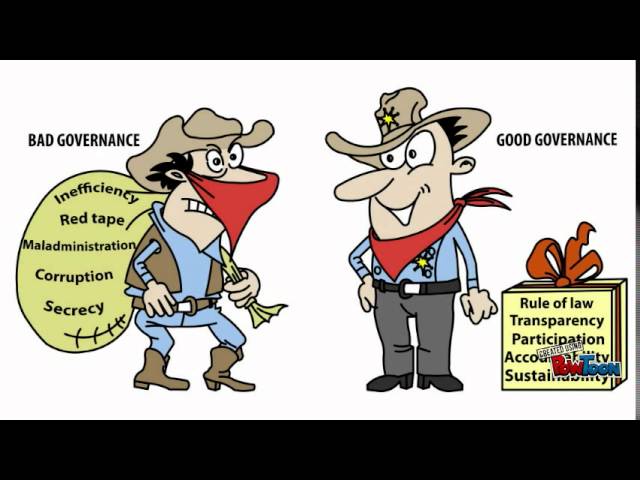
Thus, good governance is an approach which aims in creating a system which finds justice and peace and ensures the protection of individual’s human rights and liberties. Good Governance is measured by 8 characteristics : Participation, Rule of Law, Transparency, Responsiveness, Consensus Oriented, Equity and Inclusiveness, Effectiveness and Efficiency, and Accountability.

Good Governance is a process of governance that considers the views of minorities and vulnerable groups of society and minimizes corruption while taking decisions thereby boosting the economy.

REFERENCES OF GOOD GOVERNANCE

  1. The importance of Governance is clearly highlighted and explained in Indian Constitution which is based on – Sovereign, Socialist, Secular and Democratic Republic for attaining democracy, rule of law and welfare of people.
  2. The Sustainable Development Goal q6 also describes the linkage between improvement of governance, inclusivity, participation, rights and security.
  3. The Bhagavad Gita also provides numerous indications of good governance, leadership, dutifulness and self realization.
  4. According to former United Nations Secretary-General Kofi Annan, “Good governance is ensuring respect for human rights and the rule of law; strengthening democracy; promoting transparency and capacity in public administration.” He also said that “Good Governance is perhaps the single most important factor in eradicating poverty and promoting development”.

PRINCIPLES OF GOOD GOVERNANCE

Principles of Good Governance
  1. Participation: Participation by each section of the society irrespective of their gender, social class, caste, income etc. The participation of the individuals can be through direct or indirect (through other institutions or representatives) mediums. Participation is an crucial part of governance because it brings forward the major concerns of the society, the issues as well as in identification of potentials of the area.
  2. Rule of Law: It ensures fair and legal frameworks and methods being used in the governance and enforces impartially. This requires full protection of human rights, especially of the weaker sections and vulnerable groups of the society. For this the law needs to be impartial, uncorrupted and judicial.
  3. Transparency : Transparency in a process or system or governance ensures that all the decisions, actions and enforcements are taken only after considering the governing rules or laws or regulations. It signifies the availability of information’s to all the stakeholders and the people who will be affected by the actions or enforcements.
  4. Responsiveness: Good Governance requires timely actions and processes and tries to serve all the stakeholders within a reasonable time frame or specified time frame.
  5. Consensus Oriented: Good Governance requires different interests to sum up into a broad consensus to show the best interest for the community and society. It is necessary for developing sustainable human development and the only way by which cultural, social and historical diversity can be preserved.
  6. Equity and Inclusiveness: Equity and Inclusivity ensures that all the members of the community or society are feeling free to put forward their concern and idea. Nobody should feel excluded. Equity and Inclusivity is highly important for minor or vulnerable groups because it is very important to give them the opportunities to express their issues and ideas for improving and maintaining their well being.
  7. Effectiveness and Efficiency: The results or outcomes of the processes should satisfy the needs of the society and should make the best use of available resources, without exploiting them. It is necessary to identify the potentials and weaknesses of the society or community or area before coming up or implementing any solution. All the outcomes and results should within desirable time frame and should be the best decisions for the welfare of the society.
  8. Accountability: It is one of the most vital requirements of good governance as it ensures that all the stakeholders (government bodies or private institutions or civil organizations or NGOs etc) are accountable to the public. Who is accountable to whom depends on the actions or decisions which are taken in the organization.
What makes Good Governance different from Bad Governance

CONCLUSION

From the above discussion it is clear that “Good Governance” is the most ideal form of governance but it requires transperancy, accountability and intelligent form of governance which makes it more difficult to achieve. For achieving good governance, a system much be uncorrupted, bias free and free from prejudices.

Thus, there is a need to reform and reformulate strategies for restoring good governance. The government should focus on the principle of : “Sabka Saath, Sabka Vikas and Sabka Vishwas” which will guide the way to achieve inclusive and sustainable development.

BETI BACHAO BETI PADHAO

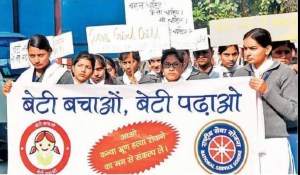
Prime Minister Narendra Modi has inaugurated a scheme for girls called Beti Bachao Beti Padhao. It is to save the girl child and educate the girl child all over India. The program was started on the 22nd of January, 2015 at Panipat.  This scheme was initiated first especially in Haryana because this state has a very low female sex ratio (775/1000) all over the country. It has been effectively applied in a hundred districts across the country. It is to improve the status of girls in the country.


AIM OF THIS SCHEME

The aim of Beti Bachao Beti Padhao scheme is to stop the drop in girl child sex ratio. Therefore, it will encourage women’s empowerment in order to improve women status in the country. It is a tri-ministerial initiative of the following ministries:

  • Women and Child Development
  • Health and Family Welfare
  • Human Resource Development


REASONS FOR THIS INITIATIVE

Two main reasons for Beti Bachao Beti Padhao initiative are:

  • Low child-sex ratio called for the launch of the scheme

The Child Sex Ratio (CSR) census data for 0-6 years was 933 girls per 1,000 boys in 2001, which declined to 918 girls for every 1,000 boys in 2011. UNICEF in 2012 Reported that India ranked 41st among 195 countries. A 2011 Population Census revealed that the population ratio of India in 2011 was 943 females per 1000 of males. The Sex Ratio 2011, however, indications an upward trend from the census 2001 data.

  • Crime against Women on the rise

Aborting of female foeticide by post ultrasonic testing. Thus this type of discrimination against girl infants resulted in a huge drop in the female population. Also, crimes and sex abuse, so on, have been on a constant high.

Back in the year 2014, Prime Minister Mr. Narendra Modi spoke on the event of International Day of the Girl Child. He highlighted on the abolition of female foeticide and asked suggestions from the Indian citizens on MyGov.in portal.


PRIMARY OBJECTIVE OF BETI BACHAO BETI PADHAO INITIATIVE

‘Beti Bachao Beti Padhao’ is a collaborative initiative of the government of India. Ministry of Women and Child Development, Ministry of Human Resource Development and Ministry of Health and Family Welfare started this scheme. It covers all Indian states and union territories.

The scheme has three primary objectives

  1. Prevent female infanticide.
  2. Develop new schemes and work collaboratively to ensure that every girl child is secured and protected.
  3. Ensure every girl child gets a quality education.

DIFFICULTIES IN IMPLEMENTATION

Beti Bachao Beti Padhao scheme having difficulty to gain momentum. This is due to the following facts.

  • Social abuses and orthodox rituals like female foeticide, Sati, child marriage and domestic abuse obstruct the due execution of this scheme.
  • The government machinery and the police are, however, to get the magnitude of women atrocities seriously. This also weakens the effective implementation of the Beti Bachao Beti Padhao scheme.
  • The mindset of people remains conservative besides the numerous campaigns spreading awareness among people.
  • The scheme needs civic body support to achieve the objectives of the scheme.
  • The Dowry system is the main obstacles in the successful implementation and impact of Beti Bachao Beti Padhao scheme.

IMPACT OF THIS SCHEME

It is important to look for the benefit that ‘Beti Bachao, Beti Padhao’, is India’s most high profile campaign. It is to empower the girl child in the country. Some major impacts are-

  • Balancing sex ratios
  • Bringing girl child rights into focus
  • Achieving girl-child access to education

Conclusion

The Beti Bachao Beti Padhao scheme is an initiative by the Government of India to address the issues revolving around girl children in India. This initiative under the scheme have started giving fruit as the level of awareness among the people is increasing.

Therefore, people now have a serious impact to work for girl child upliftment in society. The success of this scheme will add tremendously to the economic growth of the country. This is due to the fact that India cannot afford to have a large part of its population remain neglected.


Self – confidence

Self- confidence is a feelung of trust in one’s abilities, qualities, and judgment.children with a healthy sennsr of self-confidence are able to feel good about themselves and knoe that they deserve respect from others.
Confidence can be a tough thing to build up. We’ve put together some handy tips to help you put.


TIPS FOR BUILDING SELF – CONFIDENCE :


There are number of things you can do to build your confidence. Some of them arejust small changes to your frame of mind; others you’ ll have to work on fora big longer to make them familiar habits.


1.LOOK AT WHAT YOU’VE ALEADY ACHIEVED:


It is easy to lose confidence if you believe you haven’t achieved anythkng. Make a list of all the things you’ re proud of in your life, whegger it’s getting a good mark on an exam or learning to surf. Keep the list close by and add to it whenever you do something you’ re proud of. When you’re low in confidence,pull out the list a use it to remind yourself if all the awesome stuff you’ ve done.


2.SET SOME GOALS :


Set some goals and set out the steps you need to take to achieve them. They don’t have to be big goals; they can even be things like baking a cake or planning a nighy out with friends. Just aim for some achievements that you can tick off a list to hrlp you again confidence in your ability to get stuff done.


3.THINK OF THINGS YOU’RE GOOD AT :


Everyone has strengths and talents. What are yours? Recoginising what you’re good at,and trying to build on those things,will help you to build confidence in your own abilities.


4.TALK YOURSELF UP :


You’re never going to feel confident if you have negative commentary running through your mind telling you that you’re no good. Think about your self- talk and how that might be affecting your self- confidence. Treat yourself like would your bestfriend and cheer yourself on.


5.GET A HOBBY :


Try to find something that you’re really passionate about. It could be photography, sport, knitting or anything else! When you’ve workef out your passion, commit yourself to giving it a go.chances are, if you’re intetested or passionate about a certain activity, you’re more likely to be motivated and you’ll build skills more quickly.


Confidence helps us feel ready for life’s experiences. When we’re confident, we’re more likely to move forward with people and opportunities no back away from them. And if things don’t work out at fisrt , confidence helps us try again. It is the opposite when confidence is low.

Self- confidence is a feeling of trust in one’s abilities, qualities, and judgement. Some of the many causes of low self- esteem may include. Unhappy childhood where parents were extremly critical. Poor academic performance in school resulting in a lack of confidence.

Change before you have to…

Don’t be afraid to give up your better days, surely it will turn to be the best. The most wonderful discovery that a person can do ,is to bring out a change. Even a huge dense forest starts from a small plant , even the small change in you can make great things happen.

If you try to change ,yes ofcourse you have a chance of losing, but if you don’t even try ,you have already lost. Never start a journey just because it is easy, always make sure your choice makes you feel alive.

Dreams are the seeds of changes, no plants grows without a seed and nothing changes without a dream. The only thing that stands between you and your dream is the change, that you have to take to achieve your dreams.

Life is about changes, sometimes it is sorrowful, sometimes it is wonderful, but most of the times it is between.

People say life is full of changes, it is because if you don’t change, you don’t grow, if you don’t grow ,you are not actually living.yes ofcourse, changing yourself suddenly, is painful. But it is even more painful to stay stuck somewhere you don’t belong.

Not everything that you get in can be changed but nothing can be changed without you getting in. Don’t wait for someone else to change your life.You are the one you have been waiting for.You are the change that you have been seeking for.

“sometimes the things you can’t change ,end up changing you , at least cooperate with it”.

when life changing moment comes on your way, you can do one of two things, change the moment or let the moment change you…