|Ageing Dams|

India is ranked third in the world in terms of building large dams, of the over 5,200 large dams built so far, about 1,100 large dams have already reached 50 years of age and some are older than 120 years.

Minor and medium dam shelf-life is lower than large dams for example Krishna Raja Sagar dam built in 1931 is 90 years old and Mettur dam built in 1934 is 87 years old.

Implications of ageing dams:

In a paper ‘supply-side hydrology last gasp’ Rohan D’Souza writes the siltation rate of Bhakra dam is 130.86 % so at this rate it will function for merely 47 years as against the original estimate of 88 years.

When when the dams ages the soil replaces water, the supply of water decreases and this in turn leads to reduction in the cropped area as  less water is received and which increases dependency on on the rain which is erratic in nature and groundwater is overexploited, the crop yield increases and farmers income thereby decreases.

By 2050 this will pose difficulties such as scarcity of water to feed the ever increasing population.

The flawed siltation rates reinforce the argument that designed flood cushions within several reservoirs across many river basins may have already depleted substantially due to which floods become more frequent downstream of dams. For example the flooding of Bharuch in 2020, Kerala in 2018 and Chennai 2015 a few examples attributed to downstream releases from reservoirs.

Way forward:

The way forward in the situation can be the building of medium or minor irrigation based small storage structures, identifying mechanisms to recharge aquifers and store water underground.

Hence, India will eventually feel difficulty in finding sufficient water in the 21st century to feed the rising population by 2050, grow abundant crops, create sustainable cities, or ensure growth. Therefore all stakeholders must come together to address this situation urgently.

Universal destruction

How could it be possible that when the time gets worse we often ignore the vulnerable?

Nikhil Meshram

We are living in the world , where no one can intrude . A life , where you can’t touch the one you want . A life, where one has to stay away from his own . A life , where no one can go in one’s home . Yes , it’s a life we are living ‘ A life of a LOG’ .

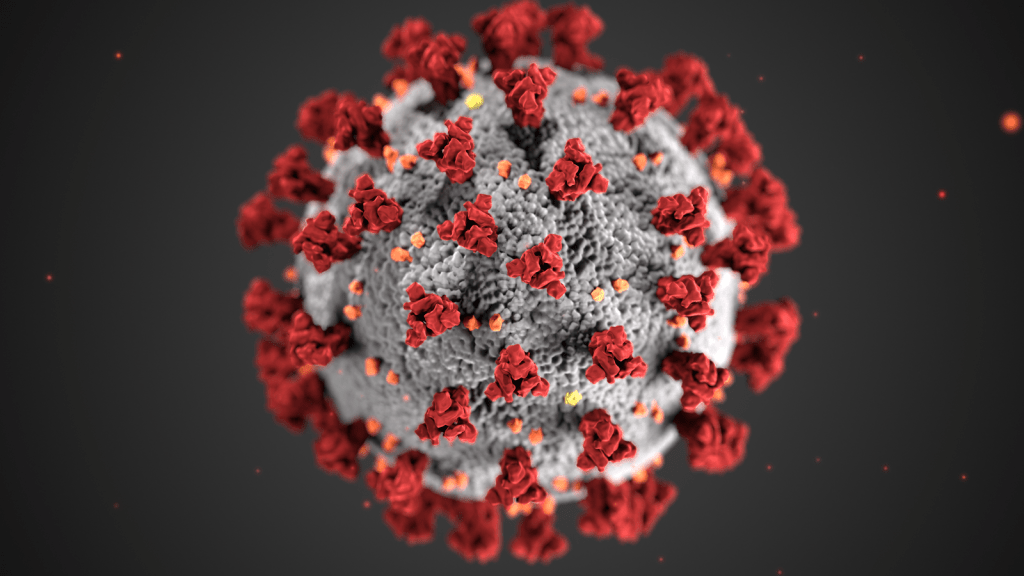
Coronavirus , I believe it’s not a new word in your dictionary . This eleven letter word creating a massive destruction all over the world . I know you are well aware but the real question is , are you following the protocols properly?

Firstly let’s get some knowledge about coronavirus.

The origin .

The recent outbreak began in Wuhan, a city in the Hubei province of China. Reports of the first COVID-19 cases started in December 2019.

Coronaviruses are common in certain species of animals, such as cattle and camels. Although the transmission of coronaviruses from animals to humans is rareTrusted Source, this new strain likely came from bats, though one study suggests pangolins may be the origin.

However, it remains unclear exactly how the virus first spread to humans.

Some reports trace the earliest cases back to a seafood and animal market in Wuhan. It may have been from here that SARS-CoV-2 started to spread to humans.

Coronaviruses are a group of viruses that can cause disease in both animals and humans. The severe acute respiratory syndrome (SARS) virus strain known as SARS-CoV is an example of a coronavirus. SARS spread rapidly in 2002–2003.

The new strain of coronavirus is called severe acute respiratory syndrome coronavirus 2 (SARS-CoV-2). The virus causes coronavirus disease 19 (COVID-19).


Around 80%Trusted Source of people with COVID-19 recover without specialist treatment. These people may experience mild, flu-like symptoms. However, 1 in 6 peopleTrusted Source may experience severe symptoms, such as trouble breathing.

The new coronavirus has spread rapidly in many parts of the world. On March 11, 2020, the World Health Organization (WHO)Trusted Source declared COVID-19 a pandemic. A pandemic occurs when a disease that people are not immune to spreads across large regions.

It’s okay take a deep breath . Yes, it’s a lot to take in but we all know how china played with the whole world .

The protocols.

  • Wear masks ,
  • Wash hands ,
  • Use sanitizers ,
  • Social distancing , etc,.

Is it important to follow protocols ?

You say NO , I say ‘if you want to die you can easily ignore the protocols ’ . Well I don’t want to die , I have my whole 20s , 30s and so on…… .

According to the survey, people have been moving around freely, meeting different social groups and attending gatherings, going to malls and markets. This indicates that a pandemic fatigue has set in after after a year of restrictions on movement, social distancing and strict mask wearing norms.

Well , if you are saying this is what following protocols is than I am happy to stay home rather than chilling around like a monkey . Like really , a monkey also has a common sense that when to do chilling and when to fight for himself . What we are doing is putting masks in our pocket to showcase the world that I have one . Haha it’s kinda funny .

We long to return to normal, but **normal led to this**. To avert the future pandemics we know are coming, we MUST grapple with all the ways normal failed us. We have to build something better. I hope this piece, in showing what went wrong, helps.

Link :

CANCER- EATING PRECIOUS LIVES

Cancer has a major impact on society across the world. Cancer statistics describe what happens in large groups of people and provide a picture in time of the burden of cancer on society. Cancer has become one of the leading causes of death worldwide. Each year so many people die of cancer either because they could not survive the chemotherapy treatments given to them or due to lack of money they could not afford the treatment. The most common Cancers(listed according to estimated new cases in 2020) are Breast cancer, Non- Hodgkin Lymphoma, Kidney and Renal Pelvis cancer, Endometrial cancer, Leukemia, Pancreatic cancer, Thyroid cancer, Liver cancer.

Prostate, lung and colorectal cancers account for an estimated 43% of all cancers diagnosed in men. For Women, the three most common cancers are Breast, lung, colorectal and they account for an estimated 50%.

WHAT IS CANCER?

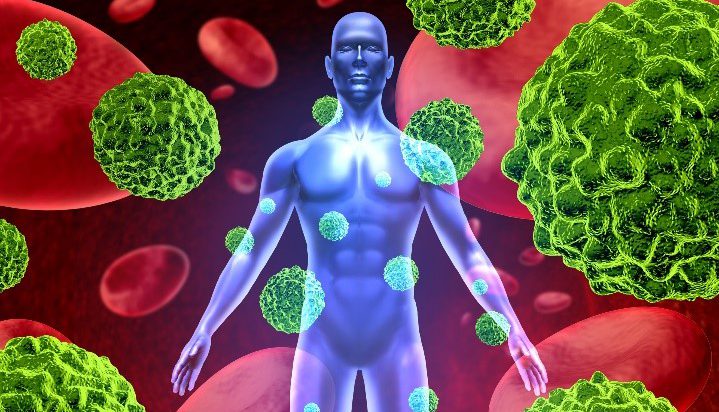
Cancer is a group of diseases involving abnormal cell growth with the potential to invade or spread to other parts of the body. Benign tumors do not spread to all parts of the body whereas Malignant tumors spread to the different parts and grow where ever they get accumulated. Cancerous cells have the ability to infiltrate and destroy normal body tissues.

SYMPTOMS

Signs and symptoms caused by cancer vary depending upon the part of body getting infected. Some of the general signs and symptoms associated with the same are:-

  • fatigue
  • lump or area of thickening that can be felt under the skin.
  • weight changes, including unintended loss or gain.
  • skin changes, such as yellowing, darkening or redness of skin, sores that won’t heal or changes to existing moles.
  • changes in bowel or bladder habits.
  • persistent cough or trouble breathing.
  • difficulty in swallowing.
  • hoarseness
  • persistent indigestion or discomfort after eating.
  • persistent muscle or joint pain.
  • persistent fever/night sweats/bleeding.

CAUSES OF CANCER

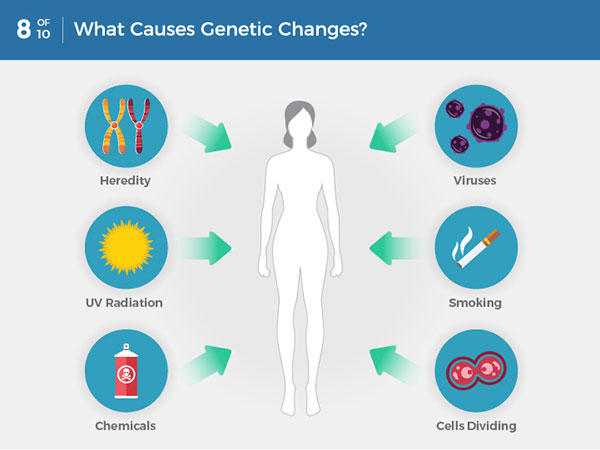
Factors causing cancer include certain infections, exposure to ionizing radiations, mutations in genes and environmental pollutants. Cancer is caused by changes(mutations) to the DNA within the cells(in majority of cases). The DNA inside a cell is packaged into a large number of individual genes, each of which contains a set of instructions telling the cell what functions to perform as well as how to grow and divide. A gene mutation can instruct a healthy cell to:-

  1. allow rapid growth– a gene mutation can tell a cell to grow and divide more rapidly. This creates many new cells that all have that same mutation.
  2. fail to stop uncontrolled cell growth– normal cells know when to stop growing but cancerous cells lose the control(tumor suppressor genes) that tell them when to stop growing. A mutation in tumor suppressor gene allows cancer cells to continue growing and accumulating.
  3. make mistakes when repairing DNA errors– DNA repair genes look for errors in a cell’s DNA and make corrections. A mutation in DNA repair gene means that other errors aren’t corrected.

PREVENTION

  • Stop smoking.
  • Avoid excessive sun exposure- harmful UV rays from the sun can increase the risk of skin cancer.
  • Eat a healthy diet.
  • Exercise most days of a week.
  • Maintain a healthy weight- being overweight or obese may increase the risk of cancer.

What is Astrophysics?

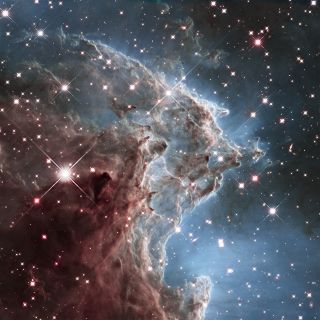
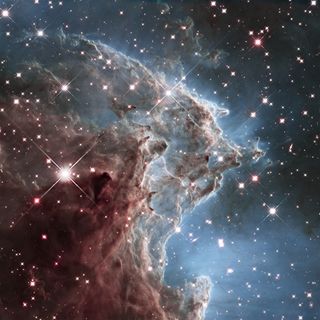
Hubble Snaps 'Monkey Head' Nebula
Astrophysics is a branch of space science that applies the laws of physics and chemistry to explain the birth, life and death of stars, planets, galaxies, nebulae and other objects in the universe. It has two sibling sciences, astronomy and cosmology, and the lines between them blur. 

In the most rigid sense:
Astronomy measures positions, luminosities, motions and other characteristics
Astrophysics creates physical theories of small to medium-size structures in the universe
Cosmology does this for the largest structures, and the universe as a whole. 

In practice, the three professions form a tight-knit family. Ask for the position of a nebula or what kind of light it emits, and the astronomer might answer first. Ask what the nebula is made of and how it formed and the astrophysicist will pipe up. Ask how the data fit with the formation of the universe, and the cosmologist would probably jump in. But watch out — for any of these questions, two or three may start talking at once!
Goals of astrophysics
Astrophysicists seek to understand the universe and our place in it. At NASA, the goals of astrophysics are “to discover how the universe works, explore how it began and evolved, and search for life on planets around other stars,” according NASA’s website.

NASA states that those goals produce three broad questions:

  • How does the universe work?
  • How did we get here?
  • Are we alone?

It began with Newton

While astronomy is one of the oldest sciences, theoretical astrophysics began with Isaac Newton. Prior to Newton, astronomers described the motions of heavenly bodies using complex mathematical models without a physical basis. Newton showed that a single theory simultaneously explains the orbits of moons and planets in space and the trajectory of a cannonball on Earth. This added to the body of evidence for the (then) startling conclusion that the heavens and Earth are subject to the same physical laws.

Perhaps what most completely separated Newton’s model from previous ones is that it is predictive as well as descriptive. Based on aberrations in the orbit of Uranus, astronomers predicted the position of a new planet, which was then observed and named Neptune. Being predictive as well as descriptive is the sign of a mature science, and astrophysics is in this category.

Milestones in astrophysics

Because the only way we interact with distant objects is by observing the radiation they emit, much of astrophysics has to do with deducing theories that explain the mechanisms that produce this radiation, and provide ideas for how to extract the most information from it. The first ideas about the nature of stars emerged in the mid-19th century from the blossoming science of spectral analysis, which means observing the specific frequencies of light that particular substances absorb and emit when heated. Spectral analysis remains essential to the triumvirate of space sciences, both guiding and testing new theories.

Early spectroscopy provided the first evidence that stars contain substances also present on Earth. Spectroscopy revealed that some nebulae are purely gaseous, while some contain stars. This later helped cement the idea that some nebulae were not nebulae at all — they were other galaxies! 

In the early 1920s, Cecilia Payne discovered, using spectroscopy, that stars are predominantly hydrogen (at least until their old age). The spectra of stars also allowed astrophysicists to determine the speed at which they move toward or away from Earth. Just like the sound a vehicle emits is different moving toward us or away from us, because of the Doppler shift, the spectra of stars will change in the same way. In the 1930s, by combining the Doppler shift and Einstein’s theory of general relativity, Edwin Hubble provided solid evidence that the universe is expanding. This is also predicted by Einstein’s theory, and together form the basis of the Big Bang Theory.

Also in the mid-19th century, the physicists Lord Kelvin (William Thomson) and Gustav Von Helmholtz speculated that gravitational collapse could power the sun, but eventually realized that energy produced this way would only last 100,000 years. Fifty years later, Einstein’s famous E=mc2 equation gave astrophysicists the first clue to what the true source of energy might be (although it turns out that gravitational collapse does play an important role). As nuclear physics, quantum mechanics and particle physics grew in the first half of the 20th century, it became possible to formulate theories for how nuclear fusion could power stars. These theories describe how stars form, live and die, and successfully explain the observed distribution of types of stars, their spectra, luminosities, ages and other features.

Astrophysics is the physics of stars and other distant bodies in the universe, but it also hits close to home. According to the Big Bang Theory, the first stars were almost entirely hydrogen. The nuclear fusion process that energizes them smashes together hydrogen atoms to form the heavier element helium. In 1957, the husband-and-wife astronomer team of Geoffrey and Margaret Burbidge, along with physicists William Alfred Fowler and Fred Hoyle, showed how, as stars age, they produce heavier and heavier elements, which they pass on to later generations of stars in ever-greater quantities. It is only in the final stages of the lives of more recent stars that the elements making up the Earth, such as iron (32.1 percent), oxygen (30.1 percent), silicon (15.1 percent), are produced. Another of these elements is carbon, which together with oxygen, make up the bulk of the mass of all living things, including us. Thus, astrophysics tells us that, while we are not all stars, we are all stardust.

Astrophysics as a career

Advertisement

Becoming an astrophysicist requires years of observation, training and work. But you can start becoming involved in a small way even in elementary and high school, by joining astronomy clubs, attending local astronomy events, taking free online courses in astronomy and astrophysics, and keeping up with news in the field on a website such as Space.com. 

In college, students should aim to (eventually) complete a doctorate in astrophysics, and then take on a post-doctoral position in astrophysics. Astrophysicists can work for the government, university labs and, occasionally, private organizations.

Study.com further recommends the following steps to put you on the path to being an astrophysicist:

Take math and science classes all through high school. Make sure to take a wide variety of science classes. Astronomy and astrophysics often blend elements of biology, chemistry and other sciences to better understand phenomena in the universe. Also keep an eye out for any summer jobs or internships in math or science. Even volunteer work can help bolster your resume.

Pursue a math- or science-related bachelor’s degree. While a bachelor in astrophysics is the ideal, there are many other paths to that field. You can do undergraduate study in computer science, for example, which is important to help you analyze data. It’s best to speak to your high school guidance counselor or local university to find out what degree programs will help you.

Take on research opportunities. Many universities have labs in which students participate in discoveries — and sometimes even get published. Agencies such as NASA also offer internships from time to time. 

Finish a doctorate in astrophysics. A Ph.D. is a long haul, but the U.S. Bureau of Labor Statistics points out that most astrophysicists do have a doctoral degree. Make sure to include courses in astronomy, computer science, mathematics, physics and statistics to have a wide base of knowledge.

Natalie Hinkel, a planetary astrophysicist who was then at Arizona State University, gave a lengthy interview with Lifehacker in 2015 that provided a glimpse into the rewards and challenges of being a junior astrophysics researcher. She described the long number of years she has put into doing her research, the frequent job switches, her work hours and what it’s like to be a woman in a competitive field. She also had an interesting insight about what she actually did day to day. Very little of her time is spent at the telescope.

“I spend the vast majority of my time programming. Most people assume that astronomers spend all of their time at telescopes, but that’s only a very small fraction of the job, if at all. I do some observations, but in the past few years I’ve only been observing twice for a total of about two weeks,” Hinkel told Lifehacker. 

“Once you get the data, you have to reduce it (i.e. take out the bad parts and process it for real information), usually combine it with other data in order to see the whole picture, and then write a paper about your findings. Since each observation run typically yields data from multiple stars, you don’t need to spend all of your time at the telescope to have enough work.”

Energy-harvesting design aims to turn high-frequency electromagnetic waves into usable power

Device for harnessing terahertz radiation might help power some portable electronics.

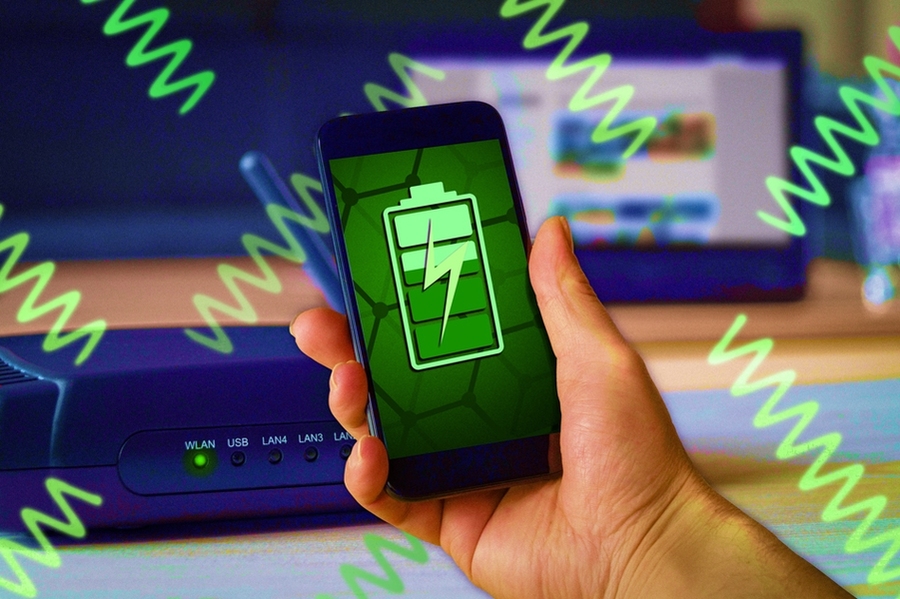
Terahertz waves are pervasive in our daily lives, and if harnessed, their concentrated power could potentially serve as an alternate energy source. Imagine, for instance, a cellphone add-on that passively soaks up ambient T-rays and uses their energy to charge your phone.

Terahertz waves are electromagnetic radiation with a frequency somewhere between microwaves and infrared light. Also known as “T-rays,” they are produced by almost anything that registers a temperature, including our own bodies and the inanimate objects around us.

Terahertz waves are pervasive in our daily lives, and if harnessed, their concentrated power could potentially serve as an alternate energy source. However, to date there has been no practical way to capture and convert them into any usable form.

Now physicists at MIT have come up with a blueprint for a device they believe would be able to convert terahertz waves into a direct current, a form of electricity that powers many household electronics.

Their design takes advantage of the quantum mechanical, or atomic behavior of the carbon material graphene. They found that by combining graphene with another material, in this case, boron nitride, the electrons in graphene should skew their motion toward a common direction. Any incoming terahertz waves should “shuttle” graphene’s electrons, like so many tiny air traffic controllers, to flow through the material in a single direction, as a direct current.

The researchers have published their results today in the journal Science Advances, and are working with experimentalists to turn their design into a physical device.

“We are surrounded by electromagnetic waves,” says lead author Hiroki Isobe, a postdoc in MIT’s Materials Research Laboratory. “If we can convert that energy into an energy source we can use for daily life, that would help to address the energy challenges we are facing right now.”

Isobe’s co-authors are Liang Fu, the Lawrence C. and Sarah W. Biedenharn Career Development Associate Professor of Physics at MIT; and Su-yang Xu, a former MIT postdoc who is now an assistant professor chemistry at Harvard University.

Breaking graphene’s symmetry

Over the last decade, scientists have looked for ways to harvest and convert ambient energy into usable electrical energy. They have done so mainly through rectifiers, devices that are designed to convert electromagnetic waves from their oscillating (alternating) current to direct current.

Most rectifiers are designed to convert low-frequency waves such as radio waves, using an electrical circuit with diodes to generate an electric field that can steer radio waves through the device as a DC current. These rectifiers only work up to a certain frequency, and have not been able to accommodate the terahertz range.

A few experimental technologies that have been able to convert terahertz waves into DC current do so only at ultracold temperatures — setups that would be difficult to implement in practical applications.

Instead of turning electromagnetic waves into a DC current by applying an external electric field in a device, Isobe wondered whether, at a quantum mechanical level, a material’s own electrons could be induced to flow in one direction, in order to steer incoming terahertz waves into a DC current.

Such a material would have to be very clean, or free of impurities, in order for the electrons in the material to flow through without scattering off irregularities in the material. Graphene, he found, was the ideal starting material.

To direct graphene’s electrons to flow in one direction, he would have to break the material’s inherent symmetry, or what physicists call “inversion.” Normally, graphene’s electrons feel an equal force between them, meaning that any incoming energy would scatter the electrons in all directions, symmetrically. Isobe looked for ways to break graphene’s inversion and induce an asymmetric flow of electrons in response to incoming energy.

Looking through the literature, he found that others had experimented with graphene by placing it atop a layer of boron nitride, a similar honeycomb lattice made of two types of atoms — boron and nitrogen. They found that in this arrangement, the forces between graphene’s electrons were knocked out of balance: Electrons closer to boron felt a certain force while electrons closer to nitrogen experienced a different pull. The overall effect was what physicists call “skew scattering,” in which clouds of electrons skew their motion in one direction.

Isobe developed a systematic theoretical study of all the ways electrons in graphene might scatter in combination with an underlying substrate such as boron nitride, and how this electron scattering would affect any incoming electromagnetic waves, particularly in the terahertz frequency range.

He found that electrons were driven by incoming terahertz waves to skew in one direction, and this skew motion generates a DC current, if graphene were relatively pure. If too many impurities did exist in graphene, they would act as obstacles in the path of electron clouds, causing these clouds to scatter in all directions, rather than moving as one.

“With many impurities, this skewed motion just ends up oscillating, and any incoming terahertz energy is lost through this oscillation,” Isobe explains. “So we want a clean sample to effectively get a skewed motion.”

One direction

They also found that the stronger the incoming terahertz energy, the more of that energy a device can convert to DC current. This means that any device that converts T-rays should also include a way to concentrate those waves before they enter the device.

With all this in mind, the researchers drew up a blueprint for a terahertz rectifier that consists of a small square of graphene that sits atop a layer of boron nitride and is sandwiched within an antenna that would collect and concentrate ambient terahertz radiation, boosting its signal enough to convert it into a DC current.

“This would work very much like a solar cell, except for a different frequency range, to passively collect and convert ambient energy,” Fu says.

The team has filed a patent for the new “high-frequency rectification” design, and the researchers are working with experimental physicists at MIT to develop a physical device based on their design, which should be able to work at room temperature, versus the ultracold temperatures required for previous terahertz rectifiers and detectors.

“If a device works at room temperature, we can use it for many portable applications,” Isobe says.

He envisions that, in the near future, terahertz rectifiers may be used, for instance, to wirelessly power implants in a patient’s body, without requiring surgery to change an implant’s batteries.

“We are taking a quantum material with some asymmetry at the atomic scale, that can now  be utilized, which opens up a lot of possibilities,” Fu says.

This research was funded in part by the U.S. Army Research Laboratory and the U.S. Army Research Office through the Institute for Soldier Nanotechnologies (ISN).

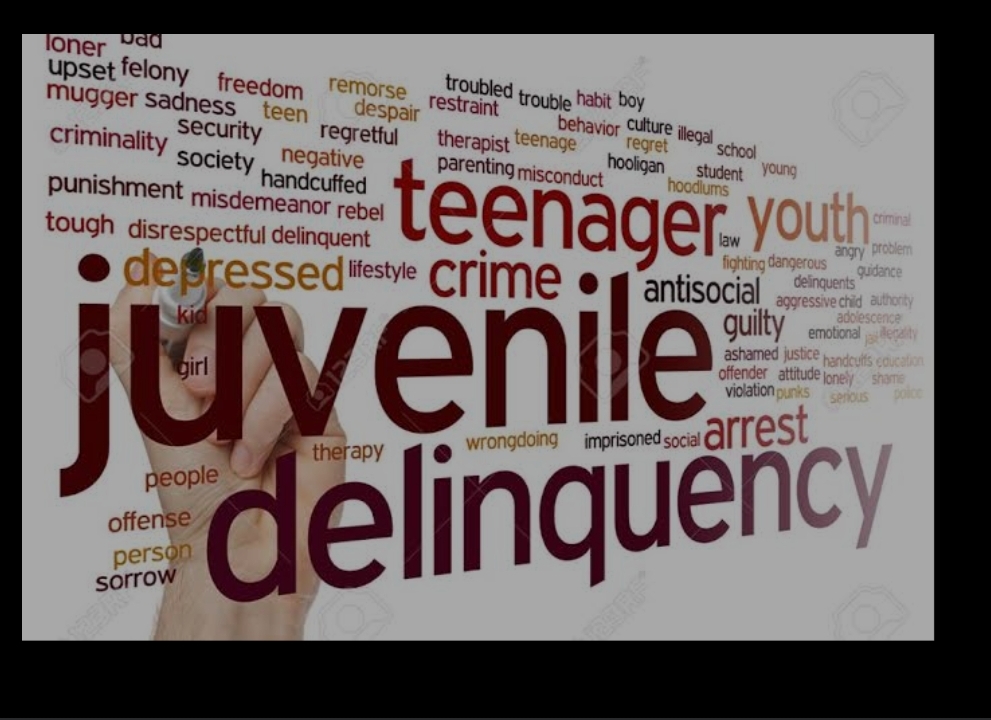
Juvenile Delinquency ( Meaning , Definitions Causes and Prevention Measures )

Juvenile Delinquency is one of the most serious problems of the society , a huge cause of disorganisation.


Mr. G.C.Dutt states,
Juvenile Delinquency is rapidly becoming a serious menace in India and with the progressive industrialization of many parts of the country , this problem will soon assume the same proportion as many of the Western Countries . ”


What is Juvenile Delinquency ?


Delinquency undoubtedly is a social evil.
It is a socially unacceptable behaviour .Delinquency in general means misconduct .
When an individual deviates from the course of normal social life ,his behaviour is called delinquency.
Delinquency implies conduct that does not conform to the legal or moral standards of society; it usually applies only to acts that, if performed by an adult, would be termed criminal.

Delinquency in the view of Coleman (1981) refers to “behaviour of youths under 18 years of age which is not acceptable to society and is generally regarded as calling for some kind of admonishment, punishment or corrective actions”.

Delinquency includes all sorts of crimes committed by children.
Starting from the business and use of illegal drugs and homicide murder, it may include various types of dangerous criminal offences.

It is a crime categorized mainly based on age. The age of juvenile delinquency has not been similarly determined in all countries . It varies from country to country but is within the usual limits of 16 and 20 .


Definitions :-

Cyril Burt defines delinquency as occurring in a child ” When his antisocial tendencies appear so grave that they become the subject of official action .”

Friedlander says , ” Delinquency is a juvenile misconduct that might be dealt with under the law .”

The Second United Nations Congress on the Prevention of Crime and Treatment of Offenders (1960) states , ” By juvenile Delinquency should be understood the commission of an act which , if committed by an adult , would be considered a crime .”

C.B Mamoria writes , ” The phrase ‘ juvenile delinquency ‘ may be loosely used to cover any kind of deviant behaviour of children which violates normative rules , understanding or expectations of the social system .”

In simple words , juvenile delinquency is a type of abnormal or antisocial behaviour by a juvenile who is below an age specified by statute .


Who is a juvenile delinquent ?

Juvenile delinquents are minors, usually defined as being between the ages of 10 and 18, who have committed some act that violates the law. Read on to learn about different types of delinquent acts as well as how to detect and prevent juvenile delinquency.
Deliquescent acts may include running away from home , spending time idly beyond limits , visiting gambling centers , committing sexual offences etc.


Offence Committed :-

Offenses committed by juveniles aren’t called “crimes” as they are for adults.
Rather, crimes committed by minors are called “delinquent acts.”
Instead of a trial, the juvenile has an “adjudication,” in which they receive a “disposition” and a sentence.

Juvenile proceedings differ from adult proceedings in a number of other ways as well.

Delinquent acts generally fall into two categories.

The first type of delinquent act is one that would be considered a crime had an adult committed it. For particularly serious crimes, some jurisdictions will even try children as adults. When children are tried as juveniles, on the other hand, parents are often required to pay the court costs for the child.

The second type of delinquent act is one that wouldn’t normally be a crime had an adult performed it. These are typically known as “status” offenses since it’s considered an offense because of the person’s age. The most common examples of status offenses are staying out past curfew, alcohol possession or consumption, and truancy, which is the continued failure to attend school.


Causes of Juvenile delinquency :-


There’s no single cause or simple reason for the development of delinquent behaviour .
Causes can be external factors including social elements or internal factors including physical and psychological Causes.

In the book , “ Approach and Concept of Criminology “ , the causes of Juvenile delinquency may be classified under two major factors
• Social Factors
• Personality Factors

1) Social Factors includes :

• Family:-
The major situations in the family that cause many factors that may lead to juvenile delinquency .
Situations such as a broken house , attitude of parents , conduct of parents etc.

A study of juvenile delinquency has revealed that the greatest number of delinquents come from broken families . A broken family ,as the term indicates home where all ties are broken ,where there’s no interaction or family love to make one feel like they belong .
Interaction in home is a very important means for teaching the child socialisation .
Lack of parents’ affection , security , absence of loving mother or father etc. has a huge contribution in factors in spreading juvenile delinquency.


• Poverty :-

Crime and poverty are intimately related. Study conducted by Shaw , McKay and Elliot revealed that among juvenile delinquents a majority belonged to families with a high poverty ratio .
According to Bonger and Fornasiri , poverty acts as an incentive to crime .

Poverty compels the children to consciously or unconsciously join hands with gangsters and become delinquents.
Poverty leads to family quarrels and dissensions , inadequate education , lack of affection from parents , necessity of basic life products etc. which are more active factors that lead to juvenile delinquency behaviour .

• Delinquency Areas :-

The delinquents come mostly from the areas that are underground , crime dominated , liquor shops , motels and clubs etc. Such a neighborhood places a high influence upon a child .

• Bad Company :-

Charles Shaw said ,” delinquency is a product of community forces ” .

As a child grows older he goes into the neighborhood and becomes a member of the peer group . If by chance he joined the group or the gang that fosters delinquent attitudes he is likely to become a delinquent.
In slum areas peculiar social groups called gangs are found . These gangs are found to be associated with crime in all aspects like delinquency , rioting , corrupt politics , etc.

According to famous criminologist Edwin H. Sutherland , criminal behaviour is acquired through interactions with others .
Hence , bad companionship leads to juvenile delinquency behaviour.


• School Dissatisfaction :-
Some students get dissatisfied with school life and such dissatisfaction makes them regularly absentee , wandering around in the streets forming gangs if their own , gambling , eve teasing , pickpocketing , smoking , drugs etc. leads them on .


2) Personality Factors

Personality factors are mainly factors related to mental deficiency and emotional disturbances .

• Mental Deficiency

It has been observed that a good number of delinquents are mentally deficient .
Some Psychiatrists and neurologists believe that the psychopathic personality is a cause of crime .
According to Tappan , psychopathic children are very crude , obstinate , suspicious , self centered , lonely , revengeful , hyper sexual , etc .
Such persons are devoid of repentance over their own crude doing and the pain and suffering of others.

Emotionally/ Psychological Problems of the Individual :-

Emotional instability is one of the most common causes of crime .
A child’s personality is rendered unbalanced through lack of love and affection, emotional insecurity , strict discipline , feeling of insufficiency and inferiority, such factors that inspire the mind of the child to criminal behavior.

From a psychological point of view , “Delinquency is a rebellion and an expression of aggression which is aimed at destroying , breaking down or changing the environment .”
This rebellion is mostly against the social conditions which deny the individual his basic rights and the satisfaction of his fundamental needs . Thus delinquents are not born but they become so due to social circumstances and personal deficiencies .

The delinquent individual who is governed by the “pleasure principle “ wants to get immediate pleasure and immediate satisfaction for his needs and so they become a victim to his own impulses.


Remedies For Juvenile Delinquency

It is said , “ a delinquent child today may turn out to be a chronic criminal tomorrow “.
Discussions have been made at national and international level by scholars to seek out effective remedies for this problem .

The three most suggested methods are
• Preventive measures
• Rehabilitative or curative measures.
• Legislative Measures


1) Preventive Measures

• Giving proper training to the members and staff of all organisations concerned with delinquency control .

• Establishing child guidance clinics to give appropriate treatment to the disturbed and maladjusted children.

• Educating the family so as to help the parents to realise the importance of giving proper attention to the needs of their young children .

• Establishing wholesome recreational agencies to prevent young children from becoming law abiding .

• Improving the social environment – slum areas , busy market places , gambling centers etc .

• Spotting potential delinquents by predictive tests in schools or society and giving treatment to such cases.

• The problem of beggary and poverty are to be removed or controlled and the general economic standards of the people must be increased to prevent children from becoming delinquents due to economic exigencies.

2) Rehabilitation or Curative Measures

The main purpose of the method of rehabilitation is not to punish or to treat them mentally disabled but the intention is to help the delinquent children to get proper guidance and training so that they don’t become victims of their own impulses and lead a normal life .

Some institutions to rehabilitate Juvenile Delinquents :-

Juvenile Courts :- Juvenile Courts are established in order to treat Juvenile delinquents and adult criminals separately. There are currently 39 Juvenile Courts in India .
This court is different from the normal civil courts . Juvenile delinquents cannot be chained or produced to courts by police , no advocate arrangements are made for plead .
The intention behind this treatment is to create positive feelings in the minds of juveniles .

• Remand Homes :- When a child is arrested under the Act ,he is produced before the magistrate within 24 hours and kept in Remand Homes till the case is investigated.
The child is kept until the final disposal of the case .. Sometimes persons convicted are sent to Remand Homes for a few days and released later .

Certified School :- Certified Schools are established to give some general education and technical training to children . Children are sent for long term treatment and voluntary bodies or local authorities with financial assistance of the government and the public .
There are two types of schools :-
• Junior School for under 12
• Seniors Schools for under 16

The children are confined here for about 2 to 3 years .
After the release they are put under the charge of a Welfare or Probation officer who watches their activities .

Auxiliary Homes :- The auxiliary homes are attached to Certified Schools just like remand homes are to juvenile courts . Here the convicted delinquents are kept for some time and studied by a social worker and sent later to certified school on the basis of their attitude and behaviour.

Reformatory Schools :- In states where there are no Children Acts , Reformatory Schools are established . They are meant for the education and vocational training of delinquent children. The young convicted offenders below 15 years are detained here for 3to 7 years . The delinquents are removed from bad environments through these schools .

Borstal Institutions :- Under Borstal Institutions special treatment is provided for adolescent offenders between the ages of 15 to 21 years . Offenders are sent to Borstal Institutions for rehabilitation rather than kept under imprisonment . The term of Borstal Institutions are 2 to 3 year but may exceed in any serious case . Separate arrangements are made for offenders , training , physical and education are given to prevent them from committing offences again .

Fit persons Institutions and Uncared Children Institutions :- These two non government institutions managed by private bodies and give refuge and protection to destitutes , neglected children and children in pre – delinquent stage .


3) .
Legislative Measures :-

Various legislations have been made in India from time to time to deal with juvenile delinquency .
Some acts are :-

• Apprentices Act of 1850
• Reformatory Schools Act 1897
• Children Acts
• Juvenile Smoking Acts
• Suppression of Immoral Traffic Acts .
• Probation of Offenders Act
• Borstal Schools Act for Adolescents.
• Provision in the Criminal Procedure Code ( under section 399 of ICPC )


A grave problem such as juvenile delinquency cannot be solved by means of legislation , government or private institutions efforts alone . The public attitude towards juvenile delinquents must also change to make them feel accepted and initiate their treatment as a cure not abnormality .
A juvenile delinquent is a product of unwholesome environmental factors hence in order to change his attitude he needs to be supported emotionally , mentally and physically by all .

Water on Mars: Exploration & Evidence

Newton Crater

Liquid water may still flow on Mars, but that doesn’t mean it’s easy to spot. The search for water on the Red Planet has taken more than 15 years to turn up definitive signs that liquid flows on the surface today. In the past, however, rivers and oceans may have covered the land. Where did all of the liquid water go? Why? How much of it still remains?

Observations of the Red Planet indicate that rivers and oceans may have been prominent features in its early history. Billions of years ago, Mars was a warm and wet world that could have supported microbial life in some regions. But the planet is smaller than Earth, with less gravity and a thinner atmosphere. Over time, as liquid water evaporated, more and more of it escaped into space, allowing less to fall back to the surface of the planet.

Where is the water today?

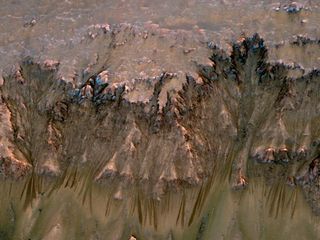
Liquid water appears to flow from some steep, relatively warm slopes on the Martian surface. Features known as recurring slope lineae (RSL) were first identified in 2011in images taken by the High Resolution Imaging Science Experiment (HiRISE) camera aboard the Mars Reconnaissance Orbiter (MRO). The dark streaks, which appear seasonally, were confirmed to be signs of salty water running on the surface of the planet.

“If this is correct, then RSL on Mars may represent the surface expression of a far more significant ongoing drainage system on steep slopes in the mid-latitudes,” a research team member told Space.com in 2012.

In 2015, spectral analysis of RSL led scientists to conclude they are caused by salty liquid water. [Related: Salty Water Flows on Mars Today, Boosting Odds for Life]

“The detection of hydrated salts on these slopes means that water plays a vital role in the formation of these streaks,” the study’s lead author, Lujendra Ojha, of the Georgia Institute of Technology in Atlanta, said in a statement. Vast deposits of water appear to be trapped within the ice caps at the north and south poles of the planet. Each summer, as temperatures increase, the caps shrink slightly as their contents skip straight from solid to gas form, but in the winter, cooler temperatures cause them to grow to latitudes as low as 45 degrees, or halfway to the equator. The caps are an average of 2 miles (3 kilometers) thick and, if completely melted, could cover the Martian surface with about 18 feet (5.6 meters) of water. 

Frozen water also lies beneath the surface. Scientists discovered a slab of ice as large as California and Texas combined in the region between the equator and north pole of the Red Planet. The presence of subsurface water has long been suspected but required the appearance of strange layered craters to confirm. Other regions of the planet may contain frozen water, as well. Some high-latitude regions seem to boast patterned ground-shapes that may have formed as permafrost in the soil freezes and thaws over time. 

The European Space Agency’s Mars Express spacecraft captured images of sheets of ice in the cooler, shadowed bottoms of craters, which suggests that liquid water can pool under appropriate conditions. Other craters identified by NASA’s Mars Reconnaissance Orbiter show similar pooling.

Evidence for water on Mars first came to light in 2000, with the appearance of gullies that suggested a liquid origin. Their formation has been hotly debated over the ensuing years.

But not everyone thinks that Mars contains water today. New research reveals that RSL may actually have formed by granular flows formed by the movement of sand and dust.

“We’ve thought of RSL as possible liquid water flows, but the slopes are more like what we expect for dry sand,” lead author Colin Dundas said in a statement. “This new understanding of RLS supports other evidence that shows that Mars today is very dry.”

That idea may have been washed away by the recent discovery of a possible subsurface lake near the Martian South Pole.

An underground lake?

Researchers made a big splash when they announced that Mars might be hiding a lake beneath its southern pole. The European Mars Express spacecraft used its Mars Advanced Radar for Subsurface and Ionosphere Sounding (MARSIS) to detect the proposed water. Ground-penetrating radar sent radar pulses to the surface, then timed how long it took for them to be reflected. The properties of the subsurface layers affect how long it takes for the beams to return.

MARSIS’ investigation revealed that the Martian south pole is composed of multiple layers of ice and dust to a depth of about nearly 1 mile (1.5 kilometers) spread over a 124-mile-wide (200 km) region.  

“This subsurface anomaly on Mars has radar properties matching water or water-rich sediments,” Roberto Orosei, principal investigator of the MARSIS experiment and lead author of the new research, said in a statement. 

MARSIS also revealed the presence of a subsurface lake among the pockets. According to the radar echoes, the lake is no more than 12.5 miles (20 km) across, buried nearly a mile beneath the surface. The scientists aren’t certain of the lake’s depth, but they have confirmed that it is at least 3 feet (1 meter) deep. According to the researchers, the lake must have salt to keep from freezing.

“This is just one small study area; it is an exciting prospect to think there could be more of these underground pockets of water elsewhere, yet to be discovered,” Orosei said.

Not all researchers are as certain about the presence of liquid water.

“I think it’s a very, very persuasive argument, but it’s not a conclusive or definitive argument,” Steve Clifford, a Mars researcher at the Planetary Science Institute in Arizona, told Space.com. “There’s always the possibility that conditions that we haven’t foreseen exist at the base of the cap and are responsible for this bright reflection.”

More than three decades ago, Clifford proposed that Mars could harbor liquid water beneath its polar caps in the same way that Earth does. On Earth, lakes beneath the Antarctic and Greenland ice sheets are created when heat from within the planets melt the glaciers in patches. Clifford told Space.com that a similar scenario could happen beneath the Martian polar ice caps.

“The bright spot seen in the MARSIS data is an unusual feature and extremely intriguing,” Jim Green, NASA’s chief scientist, said in a statement. “It definitely warrants further study. Additional lines of evidence should be pursued to test the interpretation.”

“We hope to use other instruments to study it further in the future,” Green said.

Liquid gold

Water may seem like a very common element to those of us stuck on Earth, but it has great value. In addition to understanding how Mars may have changed and developed over time, scientists hope that finding water will help them to find something even more valuable — life, either past or present.

Only Earth is known to host life, and life on our planet requires water. Though life could conceivably evolve without relying on this precious liquid, scientists can only work with what they know. Thus they hope that locating water on celestial bodies such as Mars will lead to finding evidence for life.

With this in mind, NASA developed a strategy for exploring the Red Planet that takes as its mantra “follow the water.” Recent orbiters, landers, and rovers sent to Mars were designed to search for water, rather than life, in the hopes of finding environments where life could have thrived.

That has changed, however, with the flood of evidence these robots have returned. Curiosity determined that Mars could indeed have supported microbial life in the ancient past, and the next NASA rover — a car-size robot-based heavily on Curiosity’s basic design — will blast off in 2020 to look for evidence of past Red Planet life.

Schizophrenia

Schizophrenia is a long-term brain disease. Some symptoms include speech confusion, delusions, lack of motivation, trouble thinking, and hallucinations. But there are many treatments that can alleviate symptoms and minimize the chance of a recurrence.
Documents on Schizophrenia | English
Schizophrenia Papers for Students and Children Jan 8, 2021, Prasanna
Schizophrenia Papers: Schizophrenia is a mental disorder that occurs in early adulthood and primarily affects emotions in personal life, thinking and speaking.
This is a life-long disease, but treatment can help control symptoms. A person may experience anxiety and inattention before the actual symptoms of schizophrenia appear.
You can also find more essay writing articles on events, characters, sports, technology, etc.
English short and long essays on schizophrenia for students and children
We provide students with a 500-word long essay and a 150-word short essay on schizophrenia for students’ reference.
Schizophrenia Long Essay 500 English words
Schizophrenia Long Essay is usually taught in classes 7, 8, 9 and 10.
Schizophrenia is a long-standing brain disease. Some symptoms include speech confusion, delusions, lack of motivation, trouble thinking, and hallucinations. But there are many treatments that can alleviate symptoms and minimize the chance of a recurrence.
One of the most terrifying mental illnesses, schizophrenia, has affected humanity for countless years without declining. Schizophrenia reached its prominence as an independent clinical unit in 1860. Between 1936 and 1956, approximately 7,000 articles were published on this subject. In the past 100 years, more researchers have spent more money, time, and energy writing articles on schizophrenia, perhaps more than all other mental illnesses combined.
People still have a profound lack of knowledge about its process, definition, causes, results and treatment. There is no permanent cure for schizophrenia, but research is leading to safe and innovative treatments. By studying genetics, using advanced imaging techniques to look at brain structure and function, and conducting behavioral studies, experts are unraveling the causes of this disease.
Due to the complexity of the illness, people have many misunderstandings about schizophrenia. Many people think that schizophrenia means multiple or split personalities. However, in general, patients with schizophrenia are not more violent than the normal population. It is a misunderstanding that most people with schizophrenia end up living in the hospital or being homeless, although due to the limited mental health resources in the society, some people may have to go to the hospital frequently or may lead to homelessness. But most people with schizophrenia live alone or with their families.
Schizophrenia Papers | English Learners and Children’s Schizophrenia Papers
January 8, 2021, Prasanna
Schizophrenia Papers: Schizophrenia is a mental disorder that occurs in early adulthood and mainly affects personal life Emotions, thoughts and words.
This is a life-long disease, but treatment can help control symptoms. A person may experience anxiety and inattention before the actual symptoms of schizophrenia appear.
You can also find more essay writing articles on events, characters, sports, technology, etc.
Long and short English for students and children with schizophrenia
We provided students with a sample of a 500 word essay and a short 150 word essay on the topic of schizophrenia for reference.
Long Essay on Schizophrenia 500 English Words
Long Essay on Schizophrenia is usually given in classes 7, 8, 9 and 10.
Schizophrenia is a long-standing brain disease. Some symptoms include speech confusion, delusions, lack of motivation, difficulty thinking, and hallucinations. But there are many treatments that can reduce symptoms and minimize the chance of recurrence.
One of the most terrifying mental illnesses, schizophrenia, has plagued mankind for countless years and has not declined. In 1860, schizophrenia as an independent clinical unit reached a prominent position under the heading of earlier dementia. Between 1936 and 1956, around 7,000 articles were published on the subject. In the past 100 years, more researchers have spent more money, time, and energy writing articles on schizophrenia, perhaps more than all other mental illnesses combined.
People are still very ignorant of its process, definition, causes, results, and treatment. There is no permanent cure for schizophrenia, but research is leading to safe and innovative treatments. By studying genetics, using advanced imaging techniques to look at brain structure and function, and conducting behavioral studies, experts are unraveling the causes of this disease.
Due to the complexity of the illness, people have many misunderstandings about schizophrenia. Many people think that schizophrenia means multiple personality or split personality. But, in general, people with schizophrenia are not more violent than normal people. Most people with schizophrenia end up living in hospitals or homeless, which is a misunderstanding, although due to society’s limited mental health resources, some people may have to go to hospital frequently or may end up homeless. home. But most people with schizophrenia live alone or with their families.
Studies have shown that schizophrenia can have an earlier onset in men, although it affects men and women equally. Due to the high incidence of diseases such as diabetes and heart disease, patients with schizophrenia are more likely to die than the general population.
A plot that cannot distinguish between reality and fantasy when the disease is active. As with any other disease, the duration, frequency, and severity of symptoms can vary. Once a person begins to age, the incidence of severe psychotic symptoms generally decreases.

The use of alcohol or illegal drugs, stressful situations, and unregulated drug use often increase the symptoms of schizophrenia. The three main categories of this disease are i. Positive symptoms include hallucinations, such as seeing or hearing things that are not there, and distorted perceptions, behaviors, and beliefs. ii. Negative symptoms include decreased or loss of ability to speak, make plans, or express emotions. 3. Disorganized symptoms, including speech and thinking confusion or disorder, abnormal movements, or difficulty in logical thinking.

6 Ways to take care of Your Mental Health

Mental Health the word that has so much in it , you can’t even think of . Living in a world with so much of negativity around , comparability , insecurity , stress issue is what we were dealing with every day , you can’t run from these as they are the part the life no matter how good or bad you life is , its surrounding will effect you in one or the other way .Earlier people don’t know the importance of mental health , even today there are people who still felt shy talking about it , prefer dealing with it alone than being transparent about it , which further leads to other health issues. “What mental health need is more sunlight, more candor, and more unashamed conversation” , these days people are more exposed to mental issues than physical issues as the diversity of internet is somewhere becoming the cause of mental health issues now a days. So how can we deal with it.

Well , there are several life changing habits that you need to adopt to deal with the day to day mental issues , these are neither time taking nor do unconventional to do , remember a health mind is an ‘edited mind’ you like edited things so why not to try it with your “mind”. So lets dive in

1. Doing Physical Activity

Sounds boring , let me tell you how effecting it is for your mental health. Researches had shown , doing physical activity help to release good endrophins , a natural cannabinoids brain chemical and other such chemicals that enhances your sense of well being . Physical activity here does not necessarily mean going to gym spending hours there , following strict schedule , truly not any of these but rather means doing few exercise for atleast 10 minutes a day , 10 minutes won’t be tough right , or you may just have a walk of 40 min a day this will also help.

2. Get a nice nature meetup.

Nature has the ability to calm you down , it spread positivity .You must have felt calm , relax by being at a place surrounded by greenery , fresh air . Researches had shown that a five minute contact with the nature can change your mood and general emotional well being , a simple walk in the nature has the ability to reduce your stress , negativity and will relax your mind deeply . I know because of the current situation it will not be possible neither safe to go out no worry you can just have a nice early morning walk on your terrace area that will also be good for your mental well being.

3. Practice Positive Thinking.

Psychologist says that your brain has tendency of making you feel like what you think of your self , if you only had negative thoughts in your mind than it will make your body feel that way , so better let positive thinking comes on your way it will help you in and out both . Positive thinking has amazing effect on your mental well being , instead of focusing on bad do focus on good that happen to you in a day . I can understand its hard to stay positive all the time but remember that you have the ability to stop that as no one can control your mind other than you .

4. Socialising with people , you are happy with.

Researches had shown that socialising with people does have positive effect on your mental health . These days chatting , texting had hindered socialising , we prefer to talk over on phones than to meet and this has become the new way of meeting people which is somewhere not good for our mental health. For your mental well being do socialise with people you stay happy with , in the current situation though it’s not preferable but you have your family , sit with them have a nice talk about random stuff , this will be good for your mental well being .

5. Keep a Gratitude Journal.

Gratitude is linked with happiness and positivity . Feeling grateful has a positive effect on your mental health , when you feel grateful you hinder the negativity leading to positive mind set . The best way to increase your gratitude is to keep a gratitude journal , write down atleat 3 think that makes you happy in a day at night before going to bed you will find out how effecting it is for your mental health.

6. Get enough Sleep .

I know it is very basis but, is also very important for your mental health almost 60% to 80 % of the people with insomnia had depression which further leads to other health issues . Have a check on your sleeping pattern , get a proper sleep of 8 hours , or as recommended by your doctor. Your body need time to rest so do your brain too , follow the proper sleeping pattern for your mental and physical well being and if you are having a regular imbalance sleep than do prefer to meet a doctor .

All these need to become the daily routine of your life , if you are dealing with any mental issue you will see the difference by following few of the steps above and try to make these your habit . Mental health is important infact it is much more important than your physical health , as most of the mental health issues are the cause of your physical health issues . So do prefer to prioritize your mental health.

Unlawful Activities Prevention Act And Watali judgement

Unlawful Activities Prevention Act And Watali judgement

• Enacted in 1967. 

• Purpose – provide for more effective prevention of certain unlawful activities of individuals and associations. 

• Deals with prevention of terrorist activities and related matters. 

• Powers to the central government:

              If declared unlawful – to impose all-India bans on associations.

THE UNLAWFUL ACTIVITIES (PREVENTION) ACT, 1967

2. Definition— (1) In this Act, unless the context otherwise

requires,—

(o) “unlawful activity”, in relation to an individual or association, means any action taken by such individual or association (whether by committing an act or by words, either spoken or written, or by signs or by visible representation or otherwise),—

(i) which is intended, or supports any claim, to bring about, on any ground whatsoever, the cession of a part of the territory of India or the secession of a part of the territory of India from the Union, or which incites any individual or group of individuals to bring about such cession or secession; or

(ii) which disclaims, questions, disrupts or is intended to

disrupt the sovereignty and territorial integrity of India; or

(iii) which causes or is intended to cause disaffection

against India;

•Can declare a person or an

organization as a terrorist or

terrorist organisation if Participating in acts of

terrorism.

 Prepares for terrorism.

 Promotes terrorism or is otherwise involved in terrorism.

 • Investigation of cases – State police and National Investigation Agency.

Issues in UAPA act 

• Act does not define terrorism.

 • Definition of unlawful activity – covers almost every kind of violent act. 

• No objective criteria for categorization of an

individual as a terrorist.

 • Does not provide any opportunity to the individual –

to justify the case before the arrest. Information declaring a person a terrorist – can be withheld for 6 months. 

• Those arrested can be imprisoned up to 180 days

without filing a charge sheet.

• Union Home Ministry’s data – in 2016 and 2019 only 2.2% of cases registered under the

UAPA resulted in conviction.

Watali Judgement

• Supreme Court’s interpretation of UAPA – affected all later judgements involving UAPA. 

• Accused remain in custody throughout the trial – even if evidence produced against the

the accused is invalid.

 Essentially excluded the admissibility of evidence at the stage of bail.

• Bail applications – courts must presume that every allegation made in FIR is correct. 

• Bail obtained only if the accused produces material to contradict the prosecution.

 Burden of proof rests on the accused.

 • Precedent used by High courts to unavoidably refuse bail.

 • Author – denial of bail for activist Stan Swamy- systemic abuse of majoritarian authority -disregard for the rule of law.

 Way forward regarding the judicial precedents – High courts should also examine,interpret and validate the constitutional laws.

Elon Musk

Elon Reeve Musk is an entrepreneur and business magnate. He is the founder, CEO, and Chief Engineer at SpaceX; early stage investor,[note 2] CEO, and Product Architect of Tesla, Inc.; founder of The Boring Company; and co-founder of Neuralink and OpenAI. A centibillionaire, Musk is one of the richest people in the world.

Musk was born to a Canadian mother and South African father and raised in Pretoria, South Africa. He briefly attended the University of Pretoria before moving to Canada aged 17 to attend Queen’s University. He transferred to the University of Pennsylvania two years later, where he received bachelor’s degrees in economics and physics. He moved to California in 1995 to attend Stanford University but decided instead to pursue a business career, co-founding the web software company Zip2 with brother Kimbal. The startup was acquired by Compaq for $307 million in 1999. Musk co-founded online bank X.com that same year, which merged with Confinity in 2000 to form PayPal. The company was bought by eBay in 2002 for $1.5 billion.

In 2002, Musk founded SpaceX, an aerospace manufacturer and space transport services company, of which he is CEO and CTO. In 2004, he joined electric vehicle manufacturer Tesla Motors, Inc. (now Tesla, Inc.) as chairman and product architect, becoming its CEO in 2008. In 2006, he helped create SolarCity, a solar energy services company that was later acquired by Tesla and became Tesla Energy. In 2015, he co-founded OpenAI, a nonprofit research company that promotes friendly artificial intelligence. In 2016, he co-founded Neuralink, a neurotechnology company focused on developing brain–computer interfaces, and founded The Boring Company, a tunnel construction company. Musk has proposed the Hyperloop, a high-speed vactrain transportation system.

Musk has been the subject of criticism due to unorthodox or unscientific stances and highly publicized controversies. In 2018, he was sued for defamation by a diver who advised in the Tham Luang cave rescue; a California jury ruled in favor of Musk. In the same year, he was sued by the US Securities and Exchange Commission (SEC) for falsely tweeting that he had secured funding for a private takeover of Tesla. He settled with the SEC, temporarily stepping down from his chairmanship and accepting limitations on his Twitter usage. Musk has spread misinformation about the COVID-19 pandemic and has received criticism from experts for his other views on such matters as artificial intelligence and public transport.

Top 2 entrance exams other than JEE MAIN and JEE ADVANCE

Every students want to go IIT(Indian Institute of Technology) because IIT are the top prestigious engineering colleges in India. There are overall 23 IITs in India. The only way to get into IIT is JEE Advance, to write JEE advance you have to first qualify in JEE main then only you can write JEE advance. Around 15 lakhs of students every year write JEE main, in which 2,50,000 students qualify to write JEE advance. In that 2,50,000 lakhs students your rank has to come under 2,000 then only you can get admission in IIT. This blog is for those who doesn’t qualify in IIT. In this blog, I am going to tell you some other entrance exams other than JEE.

TOP ENTRANCE EXAMS OTHER THAN JEE MAIN AND ADVANCE

  1. BITSAT

Birla Institute of Technology and Science(Bits) is a private university in India that conducts BITSAT( Birla Institute of Technology and Science Aptitude test) entrance exam every year. It is a computer based test conduced every year to get admission in first year degree programs like BE(Bachelor of Engineering), MSc(Master of Science), and Pharma in Bits. It has three campuses in India(Hyderabad, Goa and Pilani) and one in Dubai(UAE).

Eligibility criteria

 1. Student should have passed class 12 from a recognized board with physics, chemistry and mathematics with 75 percent marks in each subject.

 2. Candidate should be proficient in English.

3. Candidates already studying in Bits are not eligible to write Bitsat.

About the Examination

  1. The duration of the exam is 3 hours.
  2. All questions are multiple choice question only.
  3. The exam has 4 section physics, chemistry, biology, and English proficiency and logical thinking.
  4. Medium of paper is English.

Marking scheme

  1. For every correct answer 3 marks are awarded.
  2. For every wrong answer 1 mark is deducted.
  3. For untried question no marks are awarded.

2. KVPY

KVPY stands for Kishore Vaigyanik Protsahan Yojana is a national level scholarship program is conducted to encourage students in basic sciences courses. It is funded of department of science and technology of India. Students who qualify in Kvpy will receive scholarship. Also if you qualify in Kvpy you can get admission in top institutions like IISc Bangalore, IISER, IIITs, and other Research institutes. Class 11th, 12th and those who in 1st year of there under graduation are eligible for the exam.

Eligibility criteria

  1. There are 3 streams in KVPY. They are SA, SX, and SB. Students in class 11 comes under SA stream, class 12 students come under SX stream and undergraduate 1st year students comes under SB stream.
  2. Students must be enrolled in science stream.

About the Exam

  1. The duration of the exam is 3 hours.
  2. The exam has 4 sections physics, chemistry, mathematics and biology.
  3. The paper consists of two parts, part 1 and part 2.
  4. Part 1 consist of 60 questions.
  5. Part 2 consist of 20 questions.
  6. The mode of the exam is Online.
  7. Medium of the exam is English and Hindi.

Marking Scheme

  1. The paper consists of 100 marks.
  2. In part 1, for every correct answer 1 mark is awarded.
  3. In part 1, for every wrong answer 0.25 mark is deducted.
  4. In part 2, for every correct answer 2 marks are awarded.
  5. In part 2, for every wrong answer 0.5 mark are deducted.

I hope you like this blog, if you like please like and rate it.

Fast-moving consumer goods (FMCG).

\KEY TAKEAWAYS

  • Fast-moving consumers goods are non-durable products that sell quickly at relatively low cost.
  • FMCGs have low-profit margins.
  • Examples of FMCGs are Milk, gum, fruit and vegetables, toilet paper, soda, beer, and over-the-counter drugs like paracetamol and digene.

What are Fast-moving consumer goods (FMCG)?

The products that are always in demand, easy to buy, and sold quickly are called Fast-moving consumer goods (FMCG). FMCG products principally have meager profit margins, but they do wonders in the business sectors due to their higher demand. FMCGs generally spend less time on the shelves of the stores mainly due to two reasons firstly, higher in requests and secondly quick putrefaction. All the items in your nearby supermarket fall in the FMCGs sector.

Some common Fast-moving consumer goods are:

Fruits and vegetables, eggs, fish and meat, soft drinks, Dairy products, toiletries, bread, other baked items, grooming products, and some of the medications are some of the Fast-moving consumer goods.

Most of the time, FMCGs are sold in massive proportions at low prices. If the prices are set higher, FMCGs like fruits and vegetables, fish, meats, or dairy products can remain unsold as they forfeit their freshness shortly.

HOW DOES FMCG RUN?

FMCG category has a powerful present and future as this sector provides relief to people’s daily necessities effortlessly at affordable prices. For illustration, the office employees who have to rush in the morning prefer ready to make food or packed food to avoid delay reaching their offices. Likewise, the industry makes itself capable of providing medicines, personal grooming commodities, and many other daily requirements effortlessly. FMCGs require a dominant distribution system as this industry promises not to let the shelves of the marts be vacated. 

Practically, the distribution system consists of two parts. The marketing happens between the manufacturers and consumers and where manufacturers trade the products through some third party.

CLASSIFICATIONS OF FMCG.

1.Durable products.

Durable products last on the shelves for a long time, i.e., for at least 3-4 years. Some of these products are home appliances, electronics items, furniture, tools, and stationery.

2. Non-durable products.

Non-durable products last on the shelves for a short duration, i.e., less than a year from their manufacturing date. Some of these products are food, beverages, cosmetics, and drugs.

STRUGGLES FOR FMCG COMPANIES.

FMCG products have low-profit margins and limited shelf existence. So to maintain fluency in the market, FMCG companies have to sell a large number of products with intelligent marketing and keeping high-quality products at a lower cost to gain permanent consumers.

Other struggles for FMCG are:

  • Delaying the expiration of perishable products (meats and dairy products). 
  • Keeping a pocket-friendly price because consumers are becoming price-sensitive due to the increase of E-Commerce.
  • Producing products and packaging that are favorable to the environment.

TOP 5 FMCG COMPANIES IN INDIA.

1. Hindustan Unilever Limited.

According to a survey, HUL products are found in almost every household. Assimilated on 17th October 1993, HUL is India’s largest FMCG company because of its substantial brand value and quality. Top brands like Clinic plus, Glow and lovely, Surf Excel, Rin, Pond’s, and Vaseline are produced by Hindustan Unilever Limited.

Corporate Office: Mumbai, Maharashtra.

Employees: 17,000+

Turnover: 4.2 Billion dollars.

2. Colgate-Palmolive.

Colgate-Palmolive is solely based on health care products. Top brands like Colgate toothpaste, Halo shampoo, Palmolive Natural Soap, Colgate Plax active Salt Mouthwash, and many more are produced by Colgate-Palmolive. 

Corporate Office: New York, USA.

Employees: 38000+

Turnover: 17.5 Billion dollars.

3. ITC Limited.

It is one of the broadest FMCG companies in India. Popular products like Savlon, Yippee noodles, Classmate, Bingo, Sunfeast, Fiama, Ashirvaad lie under ITC Limited. Varying from Hotels, Agri businesses, Packaged foods, and confectionery to Safety Matches and Tabacco products, ITC has a varied brand portfolio.

Corporate Office: Kolkata, West Bengal.

Employees: 29000+

Turnover: 7.2 Billion Dollars.

4. Nestle India Limited.

Nestle is India’s most famous FMCG company, producing Milk and nutrition, prepared food, chocolates, Infant cereals, Pasta, and Noodles. Nestle India Ltd. has top brands like Maggi, Milkybar, Kit Kat and Nescafe.

Corporate Office: Vevey, Switzerland.

Employees: 330000+

Turnover: 87.2 Billion Dollars.

5. Parle Agro India Limited.

Solely based in India since 1985, Parle agro India Ltd. is India’s vastest beverage company. Top brands like Frooti, Appy Fizz, Appy Bailey, and Bailey soda are produced by Parle Agro India Ltd.

Corporate Office: Mumbai, Maharashtra.

Employees: 2700+

Turnover: 1 Billion Dollars.

HOW CAN SOMEONE JOIN THE FMCG SECTOR?

FMCG has good career opportunities. Some of the jobs one can pursue in FMCG companies are-

A. Product control executive.

B. Sales executive.

C. Procurement Assistant.

WHAT ARE THE MAJOR SKILLS FOR A CAREER IN FMCG SALES?

People willing to work in this sector should be good travelers. Why? Meeting existing customers and making new customers is the primary goal required. They will need to know about the product’s data in detail to convince their clients with ease. To be recognized in this sector, one has to be optimistic, generous, and have excellent communication and presentation skills.

However, one should be aware of fake job calls that claim to be from India’s top companies. 

FMCGs AND E-COMMERCE.

Nowadays, people are rapidly shifting from offline stores to online stores because of the price-sensitive offers and door-to-door delivery. Even offline stores give incredible suggestions to bring the consumers to their stores to compete with the online stores. 

FMCG PRODUCTS.

  • Toiletries.
  • Food products.
  • Self-care products.
  • Herbal products.
  • Dairy products.
  • Home Appliances.
  • Electrical products.
  • Stationery.
  • Ayurvedic Products.

FMCGs can be divided into various categories, including-

  • Processed foods: Cheese products, cereals, and boxed pasta
  • Prepared meals : Ready-to-eat meals.
  • Beverages : Bottled water, energy drinks, and juices
  • Baked goods: Cookies, croissants, and bagels
  • Fresh, frozen foods, and dry goods: Fruits, vegetables, frozen peas and carrots, and raisins and nuts
  • Medicines: Aspirin, pain relievers, and other medication that are bought without doctor’s consultants.
  • Cleaning products : Baking soda, oven cleaner, and window and glass cleaner
  • Cosmetics and toiletries: Haircare products, concealers, toothpaste, and soap
  • Office supplies : Pens, pencils, staplers, and other products.

Thanks for reading.

www.instagram.com/thetorturedstories

Autism is Normal

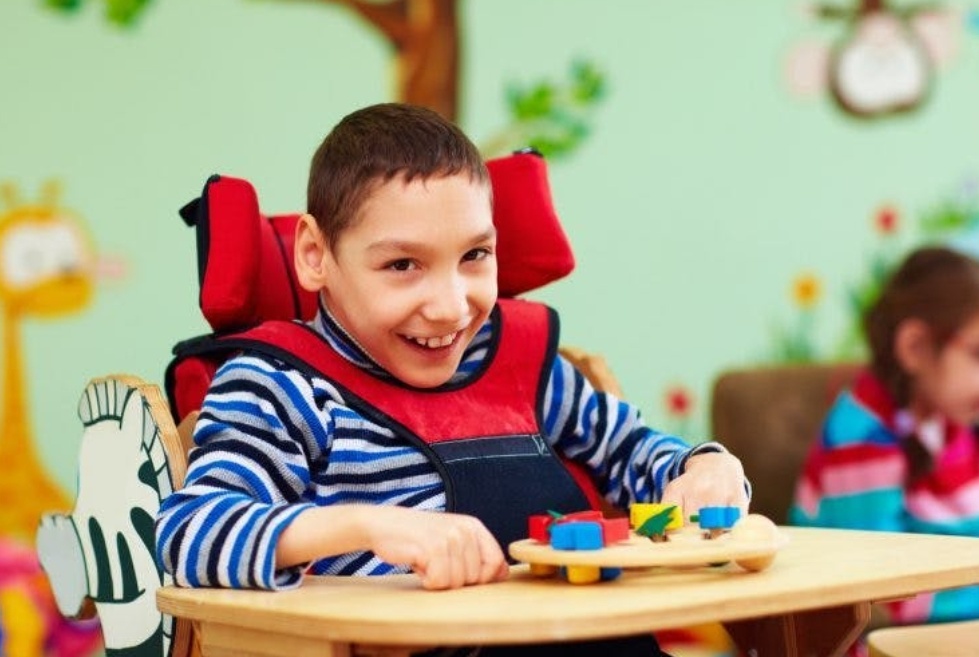
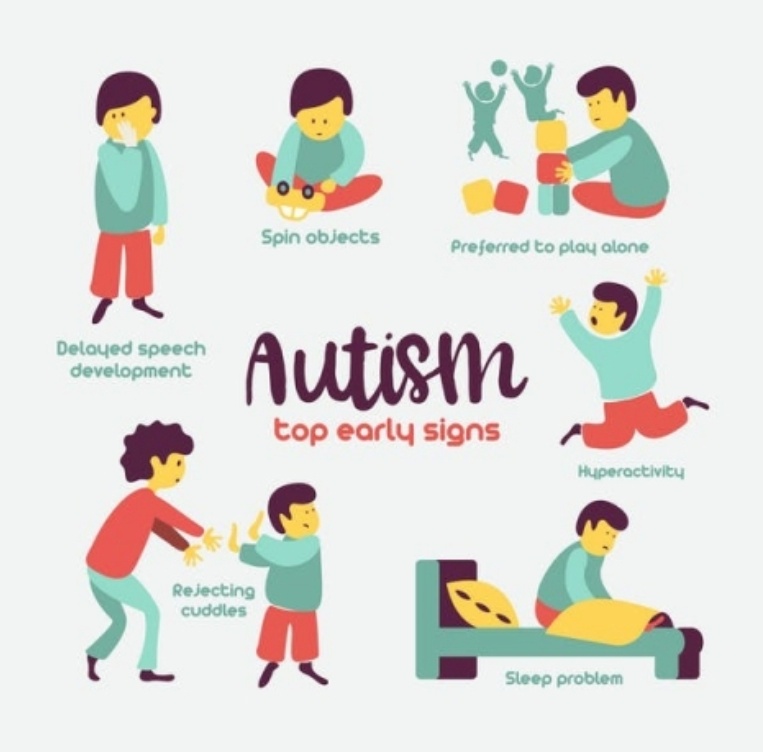
Have you ever met an autistic child? If you have, you must have noticed some irregular behavior in them. This behavior may include repetitive body movements such as rocking, clapping, spinning and you can also notice obsessive attachment towards strange articles such as switches, boxes, rubber bands, etc.
There is no particular reason for this condition but genetics can be a reason for this condition.
After brain scans, it is seen that the shape and size of a brain in an autistic child is bigger as compared to a typical child.
They find it difficult to communicate and won’t be able to express their emotions to us too but that doesn’t mean they don’t feel any emotions.

Their way of loving and caring is unique in its own way and many would even fail to understand it.
Taking care of an autistic child is far more difficult than raising a normal child. It takes a lot of time to understand the behavior and act accordingly.
There are few tips to remember while taking care of an autistic child.

 • Be patient
 • Follow a schedule
 • Create a safe environment in the house
 • Pay attention to the child’s sensory sensitivities.
 • Show love and Interest

Therapy For Autism
There is no cure for autism but there are various therapies available to reduce the symptoms and focus on development and learning.
There are different therapies available such as
 • Speech Therapy
 • Applied Behavior Analysis
 • Sensory Processing
 • Play Therapy
 • Occupational Therapy, etc

Even an autistic child deserves the same love as a normal child and has all the rights to study and grow among other children. Autism is normal.

Short Anime series to binge watch

Most of the popular anime series like Naruto, dragon ball z, one piece etc. have more than 200 episodes. They are all great shows off course but watching them requires a lot of time. Due to this reason some people refrain from getting into these series. There are however, many series out there which are very good too and very short indeed.
Here are some of the short but great anime series. Each of these series have utmost 13 episodes which can be watched in a day or two.

• Erased (2016):
Episodes: 12
Genre: Mystery, sci-fi, thriller

Erased is one of the best short anime series out there. It is a bliss for thrill seekers and for people who like the idea of time travel. The story revolves around a 29 year old man who is sent back in time to erase the events which lead to his mother’s death, which began with a series of kidnappings. The anime has very nice soundtrack and beautiful animation and the plot is very interesting. The characters are well written and overall the series is a must watch.

• Blue Spring Ride (2014) :
Episodes: 12
Genre: coming-of-age, drama, romance

Blue spring ride or more popularly known as ao haru ride, is a very decent slice of life romance anime. It is a coming of age drama and shows how the characters grow and change over time. It depicts very well the internal conflicts characters have and is very relatable to watch. The music in this anime is used very well to emphasise the scenes. Overall it is a must watch for those who are into romance genre.

• Terror in Resonance (2014) :
Episodes: 11
Genre: psychological, thriller

This is anime is rather underrated but nevertheless it is one of the best short anime thrillers out there. This anime serves everything in just 11 episodes. Excellent storyline, great music, top notch animation etc. It depicts terrorism very differently and deals with many of the contemporary issues. This is a must watch for everyone.

• Angel Beats! (2010) :
Episodes: 13
Genre: fantasy

This anime is set in a realm of afterlife where a band of teens fight from being taken to the next level. This is a very nice series and worth your time. It has action, drama, fight sequences, tragedies, music, romance and what not. The concept of this anime is very different and it deals with overcoming the regrets of life. It is an epic journey showcased in just 13 episodes!

• Violet Evergarden (2018) :
Episodes: 13
Genre: coming-of-age

This is a more recent anime series. The story revolves around the post war life of an emotionally detached soldier who begins to reconnect with her feelings while searching for the meaning behind her commander’s final words. This anime is a masterpiece. The animation, music, pacing, character designs, backstories etc. all are done very well. It is very empathetic and sentimental anime. This anime is a must watch for anyone!!