INDIA’S UNEMPLOYEMENT DILEMMA

Unemployment refers to those who are competent and actively seeking employment but are unable to find one. Those in the workforce who are working but are not in a suitable position are included in this category.

In India, because of its rising population and need for jobs, the country’s unemployment difficulties are significant. There are hundreds of thousands of individuals out there that are unemployed.

As per, center for monitoring Indian economy (CMIE) report India’s unemployment rate is 12.81 percent as of June 8th, 2021, despite the lockdown and limitations on movement. Previously, India’s unemployment rate increased from 6.5 percent in March 2021 to 8% in April 2021, rising to 14.7 percent by the end of May, while employment decreased from 37.6 percent in March to 36.8 percent in April. Many companies have been forced to close because of the lockdown to contain the coronavirus epidemic, resulting in increased unemployment across the country. So, if we ignore this problem, it will become the nation’s undoing. 

The administration has taken the situation seriously and is taking steps to reduce unemployment gradually. Following are the initiatives taken by Indian government to tackle the problem of unemployment: –

  1. TRYSEM (Training of Rural Youth for Self-Employment) was established by the government in 1979. The goal of this program was to assist jobless youngsters in rural regions aged 18 to 35 years old in learning self-employment skills. Women and youth from the SC/ST group were given priority. 
  2. In the following year, 1980, the government established the Integrated Rural Development Program (IRDP) with the goal of creating full-time jobs in rural regions.
  3. In 1982, Sri Dharmasthala Manjunatheshwara Educational Trust, Canara Bank, and Syndicate Bank collaborated on a new project called RSETI/RUDSETI. The goal of RUDSETI, which stands for Rural Development and Self Employment Training Institute, was to reduce young unemployment. RSETIs (Rural Self-Employment Training Institutes) are currently handled by banks with active participation.
  4. The Jawahar Rozgar Yojana (JRY) began in April 1989 by combining two existing wage employment programs, the RLEGP (Rural Landless Employment Guarantee Program) and the NREP (National Rural Employment Program), on an 80:20 cost-sharing basis between the state and the center.
  5. The Mahatma Gandhi National Rural Employment Guarantee Act (MNREGA) was passed in 2005, giving individuals the right to work in rural areas. MGNREGA’s employment plan aims to offer social security by guaranteeing all families with adult members who choose unskilled labor-intensive jobs a least of 100 days of paid work per year.
  6. In November 2014, the National Skill Development Mission was established to pursue the ‘Skill India’ goal in ‘Mission Mode,’ bringing together current skill training programs and combining scale and quality of skilling efforts with speed.
  7. In 2015, the Pradhan Mantri Kaushal Vikas Yojana (PMKVY) was introduced. The goal of PMKVY was to enable the country’s young to enroll in industry-relevant skill training to earn a better living
  8. In 2016, the government announced the Start-Up India Scheme. The goal of the Startup India programs was to create an environment that nurtured and promoted entrepreneurship throughout the country.
  9. In the same year, the Stand Up India Scheme was also introduced to help women and SC/ST borrowers get bank loans between Rs 10 lakh and Rs 1 crore to start a greenfield business.

Furthermore, the government makes some restrictions flexible under these programs so that jobs might be produced in the private sector as well. To sum up, we may say that India’s unemployment crisis has reached a tipping point. However, the government and local governments have finally recognized the problem and are striving to address it to minimize unemployment. Also, this problem should be addressed correctly by determining its causes so that it doesn’t create a major social and economic problem that has far-reaching consequences across the board if left neglected. 

BOOK REVIEW: THE FAULT IN OUR STARS

Image Source: google.com

Author : John Green
Genre : Young Adult Novel, Realistic Fiction
Publisher : Dutton Books
Publishing Date : January 10,2012
Pages : 313
Price : 399
ISBN : 0-525-47881-7

This bestseller book is an absolute treasure that will break your heart in the most beautiful way possible.
This book is one of the most intriguing reads of my life. The title comes from the quote “the fault, dear Brutus, is not in our stars, but in ourselves, for we are underlings.” From ‘Julius Ceaser’ by William Shakespeare. This simply means that people are in charge of their own destiny.

It is written in a coherent narrative style. The story revolves around Hazel Grace Lancaster who narrates the story and is experiencing stage 4 thyroid malignancy and Augustus Waters who lost his leg to osteosarcoma. Their first gathering turns out to be at a Cancer Support Group. They become hopelessly enamoured knowing their life wont last more. They talk about a ton of things including films and books. They exchange their favourite novel and agrees to read it. Augustus gives Hazel ‘Prince Of Dawn’ and Hazel proposes ‘An Imperial Affliction’, a novel about a malignant growth stricken young lady Anna. Augustus reads the story and is disappointed as the story is incomplete. Subsequent to battling a ton they meet Peter Van Houten, the writer of the book. However, they are stunned by the horrifying conduct of him towards youngsters and the story goes on.

My favourite character in the book is Hazels mother. She is sincerely solid and kind lady. It was she who enrolled Hazel to Cancer Support Group to cause her to mingle. She wants to be with Hazel all the time with an end goal to make her life additionally satisfying and fun. John Green takes you on a journey both awful and wonderful. He shows the significance of family and wellbeing. The characters are so genuine and wonderful that the reader will feel an extraordinary association with them. TFIOS is brimming with light and wealthy in feelings. It additionally teaches you to be glad even in the haziest circumstances.

Some of my favourite quotes from the book are ;

‘My thoughts are stars I cannot fathom into constellation’
‘Some infinities are bigger than other infinities’
‘That’s the thing about pain, it demands to be felt’ &

“Without pain, how could we know joy?’ This is an old argument in the field of thinking about suffering and its stupidity and lack of sophistication could be plumbed for centuries but suffice it to say that the existence of broccoli does not, in any way, affect the taste of chocolate.”

Based on the book, a Hollywood movie with the same name was released on 2014 starred by Shailene Woodley and Ansel Elgort in main roles. Later in 2020, ‘Dil Bechera’ a bollywood movie was made based on the same starred by Sushanth Singh Rajput and Sanjana Sanghi in lead roles.

Each word, each sentence of this book is mystically woven. I would recommend
this book to all readers as it will remain in the core of them until the end of
time. You will not regret picking up this book,for sure.

My rating : 4.5 stars

Constitution and Constitutionalism

Constitution

Constitution is a document with legal force that contains a set of fundamental principles and laws of a state. The concept of constitution is connected with the philosophy of constitutionalism. The government of a state has to conduct itself according to this document. Legally, it is the supreme law of the land and above everyone including the government. Constitutions have been classified into certain types by different scholars. They are:

Evolved/Cumulative Constitution: Evolved or Cumulative constitution is not a constitution created through a national convention. It is a product of evolution of many years. It has not come into force suddenly. The elements of this type of constitution have been cumulatively added over a period of time. For example, the Constitution of the UK is a cumulative constitution.  

Enacted/Conventional Constitution: Enacted or Convention Constitution is a document which has been  developed and framed by a Constituent Assembly.  It has come into force at a specific date.

For example: The US Constitution, and the Indian Constitution. 

Legal Constitution: Legal Constitution is nothing but the bare text of the written Constitution. 

Real: This type of Constitution also includes, in addition to Legal Constitution, conventions and judicial decisions relating to it form the real Constitution. 

Other types of Constitution include written and unwritten and rigid and flexible. According to the opinion of Dr. Garner, a written and enacted Constitution, and an unwritten and evolved Constitution, is essentially the same. Rigid Constitution refers to a type in which the provisions are difficult to amend and can be done only through a complicated procedure. Example: the US constitution. Flexible Constitution refers to a Constitution whose provisions can be easily amended. Example: the Swiss Constitution. 

There are certain features of an ideal Constitution. A good constitution has to be clear and should not be ambiguous. All the provisions contained in it have to unambiguous. Secondly, there has to be a balance between precision and comprehensiveness. It should not be verbose and must be precise in its expression. While achieving preciseness, it must not sacrifice comprehensiveness. It has to comprehensive to account for all possibilities. An ideal Constitution should aim for a balance between precision and comprehensiveness. It should also aim for a balance between rigidity and flexibility. Though rigidity makes a Constitution stable, there is a disadvantage of becoming unresponsive to changing circumstances. Flexibility allows to introduce changes to meet the changing requirements. Therefore, a right balance between rigidity and flexibility has to be achieved.

Constitutionalism

Constitutionalism is the philosophy that there must exist a Constitution that guides the government of a state how to and how not to act. According to this philosophy, every citizen of a state and the government itself must obey the Constitution. An ideal Constitution has to reflect the ideals and desires of the state’s citizens. The goal of constitutionalism is to prevent arbitrary usage of power and abuse of power. According to Don E. Fehrenbacher, constitutionalism is “a complex of ideas, attitudes, and patterns of behaviour elaborating the principle that the authority of government derives from, and is limited by, a body of fundamental law.” According to constitutional scholar David Fellman, the touchstone of constitutionalism is the concept of limited government under a higher law. 

The roots of constitutionalism can be traced back to Athens, Greece. Athens was a well-known city state in its time. The state was run on the basis of Constitution built on the basis of direct democracy.

Between 624 – 404 BCE, there existed 11 Constitutions which governed Athens. Aristotle has studied and described a large number of Constitutions in his seminal work ‘Politics’. In this work, he discusses about constitutional government. Plato also regarded a constitutional government the best form of government. According to Plato, the philosopher-king is the best king, but even such a king should be subject to restrictions. 

How I lost 25 kilos.

Weight loss obviously varies from person to person, As someone who has lost 25 kilos in a year I feel like I am qualified to give you some tips. Just remember that every body is different what worked for someone else may not work for you but you should not be disheartened and also remember that weight loss is possible. I personally thought i would never lose weight but here i am. These tips I am going to give you are tips that you can adopt into your lifestyle even after you have lost the weight, even if you don’t want to lose weight and you want to maintain these tips, will help you. Also if you want to lose weight start now, you cannot give any excuses as it is your life. If you lose weight it will benefit you and if you continue your unhealthy lifestyle it will affect no one but you.

  1. Change your diet.

I cannot stress how important it is to change your diet. No matter how much you workout if your diet is bad you will never lose weight. First thing you need to do is go to a dietician. These people are professionals, they have learnt how to figure out what is the root cause of the weight gain. One thing you need to remember is that everyone gains weight for a reason. A dietician finds that reason and fixes it. Even if you change your diet and workout less you will see a change in your weight. Usually carbs are the main reason for the increase in weight, so your dietician may ask you to lay off of it for a while. When you suddenly change your diet your body is not able to cope and ends up shedding the fat. I understand how hard it is to not eat your favorite food because I have gone through it but trust me the results are totally worth it.

2. Get at least 30 mins of physical activity a day.

Everyday for at least 30 mins you must do some sort of physical activity. it can be walking, cycling, running, yoga, Pilates, dance or you can even go shopping. Your body needs to move. The human body has not been designed to stay in one position for a long time. By not moving your body you are actually doing harm to your body. The muscles built for movement are wasting away. 30 mins a day is all you need. Of course as you lose more weight the time you allocate for exercise needs to increase as it gets harder to lose weight. I personally hate working out in gyms, so I initially at the start of my weight loss used to dance and then now I do a mix of walking and other workouts for YouTube.

3. Control your snacking

Personally I can talk about this all day. My main problem was snacking. I never ate huge meals, infact I always ate lesser than everyone. But i was a huge snacker. I loved fried food like chips, biscuits, puffs etc. I was a person who ate when I was bored. I could probably finish a huge packet of chips all on my own even now. I also want to say that snacking is not bad, it is essential to snack throughout the day but you must see how much and what you eat. Establishing a control on my mind to help stop snacking was hard but I was able to do it, and I realize that it is harder for some to stop snacking but you can start slow. Its the change that matters. Don’t skip meals because that is going to make you hungrier and in turn is going to make you snack more. Some changes that I brought into my lifestyle were, whenever I was hungry I ate something, never starve yourself. I ate healthier snacks like fruits, nuts, healthy whole wheat biscuits. Ensure that the nuts are unsalted. You need to keep in mind that even the healthy snacks need to be eaten in moderation.

4. Eat homecooked meals

Home cooked meals are the best. They are delicious, nutritious and cost efficient. I cannot deny that fast food or the food you get in restaurants is not good, they are really good but we don’t know what exactly goes into the food. Once in a while food from outside is ok but never make it a habit. You may have noticed that you may eat a lot of food and home and not feel full but if you eat even a little from outside you instantly feel full, this is because of Sodium. The combination of fat, sugar, and lots of sodium (salt) can make fast food tastier to some people. But diets high in sodium can lead to water retention, which is why you may feel puffy, bloated, or swollen after eating fast food.

5. Try to avoid sugar

Did you know that sugar is also known as the ‘White Poison’. Sugar is so tasty but not even its taste can make up for its disadvantages. Increased sugar consumption obviously can lead to diabetes and if you are obese your chances are increased by 75%. In my case I have a family history of diabetes and being obese caused my blood sugar to be really high. I was on the verge of being diabetic but luckily I reduced my blood sugar. Lesser known fact is that most of the fast foods have not only a huge amount of salt but sugar as well.

These are some basic tips that helped me change my life for the better. Nothing is impossible and you are never too late. But first and foremost you need to accept that you are unhealthy and that you need help. So make the first step towards a happier and healthier life.

Transportation tech post COVID-19

The Covid-19 pandemic has driven education for children of all ages from school to home, and often a hybrid of both. As remote learning stretches into the new school year in many areas, parents are worried, with parents of young children especially concerned about writing.More than half of parents of young children (54 percent) say that “writing is the area of greatest concern,” in terms of remote learning, according to a survey conducted by Learning Without Tears (LWT), a company that has been providing writing and other educational materials to parents and teachers for more than 40 years.Parents faced with remote learning want to know how to develop and improve their children’s handwriting without the guidance of a teacher in a classroom setting.”Whether you are employed outside the home, or a stay-at-home parent, remote learning is challenging. Some subjects, like handwriting, are particularly difficult without a teacher’s direct instruction, which creates a lot of angst at home,” says Lana Dugdale, from Southborough, MA, mother of three young kids, including a rising first-grader.LWT is meeting the home-based learning challenges with improved and innovative updates to its classic and proven products.”It’s clear now that too many students were left behind as the country moved to distance learning,” says Terry Nealon, CEO of Learning Without Tears.”During a child’s elementary years, any gap in learning can result in setbacks that impact that student for the rest of his/her life. Learning Without Tears has always focused on improving learning outcomes; we don’t have to accept those gaps.”To enhance remote learning, families can choose from a range both digital and print resources: activity books geared towards various elementary school grades, including books on letters and numbers, printing, and cursive, as well as keyboarding programs. In addition, with sharing materials out and hand sanitizer in, individual manipulative packs for hands-on learning are the ideal solution for single student use in the classroom, or for parents opting for homeschooling in small groups or pods.Need more handwriting resources? There’s an app for that. Designed to help young children learn the correct way to form letters and numbers and to show parents how to support that learning, LWT has launched “Wet, Dry, Try,” for use on an iPad. With over four hours of instruction and technology that identifies individual student needs, the app provides a multisensory approach, with customized audio instructions that give teachers a way to monitor student progress remotely, when they can’t be in school.Learning loss during school shutdown has parents, teachers, and kids worried, stressed, and looking for solutions, and LWT resources are improving this unsettled situation. So teachers can be as effective remotely as they are in the classroom, LWT’s +Live Insights – its platform that brings all of its solutions together for in-school, at-home, and hybrid teaching – facilitates crucial data-driven individualized student instruction, as well as “whole class” gallery approach that was typical of remote teaching in the spring.The only thing certain about back-to-school this year, is its uncertainty. Visit LWTears.com for more information about early education products and resources for families and teachers to weather the new world of remote learning and beyond.

History of Java Programming Language

What is Java?

Java is a programming language and computing platform first released by Sun Micro systems in 1995. There are lots of applications and websites that will not work unless you have Java installed, and more are created every day. Java is fast, secure, and reliable. From laptops to data centers, game consoles to scientific supercomputers, cell phones to the Internet, Java is everywhere!

History of Java

The history of Java is very interesting. Java was originally designed for interactive television, but it was too advanced technology for the digital cable television industry at the time. The history of Java starts with the Green Team. Java team members (also known as Green Team), initiated this project to develop a language for digital devices such as set-top boxes, televisions, etc. However, it was best suited for internet programming. Later, Java technology was incorporated by Netscape.

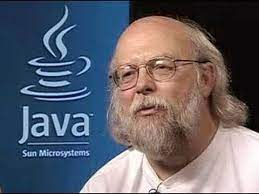
1) James Gosling, Mike Sheridan, and Patrick Naughton initiated the Java language project in June 1991. The small team of sun engineers called Green Team.

2) Initially it was designed for small, embedded systems in electronic appliances like set-top boxes.

3) Firstly, it was called “Greentalk” by James Gosling, and the file extension was .gt.

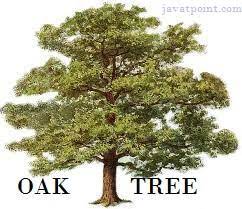
4) After that, it was called Oak and was developed as a part of the Green project.

5) Why Oak? Oak is a symbol of strength and chosen as a national tree of many countries like the U.S.A., France, Germany, Romania, etc.

6) In 1995, Oak was renamed as “Java” because it was already a trademark by Oak Technologies.

7) In 1995, Time Magazine called Java One of the Best Product of year 1995.

Difference between Java and C++

Global Variables are not present

Use of goto is not observed

Pointers are not included

Memory Allocation functions are not present

Unsafe Type Casting is not supported

Preprocessor Directives are not present

Separate Header Files are not included

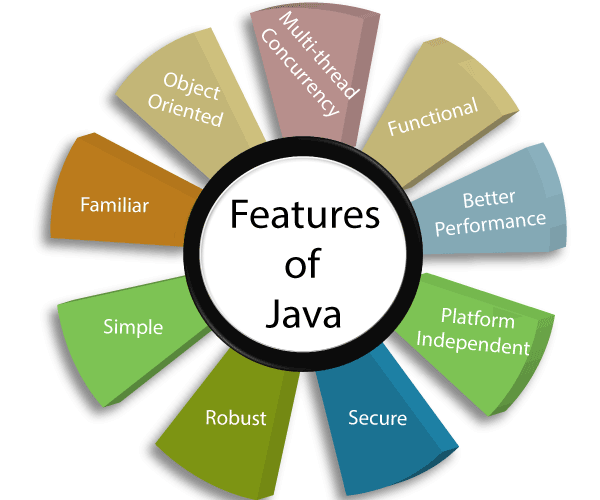
Java Features

Compiled and Interpreted

Platform Independent and Portable

Object Oriented

Robust and Secure

Dynamic

Distributed

Small, Simple and Familiar

Multithreaded

Conclusion

Java offers the real possibility that most programs can be written in a type-safe language. However, for Java to be broadly useful, it needs to have more expressive power than it does at present. This paper addresses one of the areas where more power is needed.

MESSIER 87-The Galaxy that gives Hope

M87
The elliptical galaxy M87 is the home of several trillion stars, a supermassive black hole and a family of roughly 15,000 globular star clusters. For comparison, our Milky Way galaxy contains only a few hundred billion stars and about 150 globular clusters. The monstrous M87 is the dominant member of the neighboring Virgo cluster of galaxies, which contains some 2,000 galaxies. Discovered in 1781 by Charles Messier, this galaxy is located 54 million light-years away from Earth in the constellation Virgo. It has an apparent magnitude of 9.6 and can be observed using a small telescope most easily in May.
This Hubble image of M87 is a composite of individual observations in visible and infrared light. Its most striking features are the blue jet near the center and the myriad of star-like globular clusters scattered throughout the image.
The jet is a black-hole-powered stream of material that is being ejected from M87’s core. As gaseous material from the center of the galaxy accretes onto the black hole, the energy released produces a stream of subatomic particles that are accelerated to velocities near the speed of light.
At the center of the Virgo cluster, M87 may have accumulated some of its many globular clusters by gravitationally pulling them from nearby dwarf galaxies that seem to be devoid of such clusters today.
For more information about Hubble’s observations of M87, see:
http://hubblesite.org/news_release/news/2008-30
http://hubblesite.org/news_release/news/2000-20
http://hubblesite.org/news_release/news/2013-32
locator star chart for M87

“Jojo Rabbit” – A Humurous,Holocaust Movie !

Literature and the Holocaust

Recollecting those distressing periods of all times in the world of history, where the Holocaust is considered one of the most prominent events which is still a devastating wound to the Human community. Especially, One of the most terrorizing historical traumas for the Jews.

Profoundly, any form of Art: Literature, Films, etc have held their back and portrayed Nazism and the terrified rule of Adolf Hitler which is famously a topic when discussed Communism. Majorly the movies had contributed their best and still giving the audience a piece of vibrant information about the politics, social life of that time of Nazi protocol.

“Heil Hitler”! – The Autocratic power of Hitler:

The movie begins with the background music of the song “The Beatles’ Komm gib mir Deiner Hand (the German version of their smash single I Wanna Hold Your Hand). This shows us how the Protagonist (JoJo Betzler) who is a kid of 10yrs and Appears on the screen dressed up with the uniform of Scouts of Germany which is a dress commonly for the Young boy who is trained for the war.

Imaginary Friend Hitler: We see that the movie starts where JoJo is Practicing being strong and confident and saying Heil Hitler to his friend Hitler himself – (Heil Hitler was the word people used to wish each other as a greeting purpose) This symbol presents us that Hitler was the god Figure for Germany.

Brainwashing young minds of Germany: Many instances from the movie portray us how the young children were brainwashed and made them the ardent follower of Adolf Hitler. “The Weekend Training of boys’ and girls’’ in the movie where boys were taught to be tough and made ready for the war, whereas the girls were trained to be like a woman and teach the nursing skills if men get injured in war.

Events like, “Burning of books” – A real incident where the kids are trained to burn all books and literature of the Jews. These young minds are taught at schools about the Jews and how much they are not good for the world. Hitler politically tried to depress the Jews with his young generation of Germany so that this war will continue till the end.“Burning of Books” is commonly referred in Holocaust literature which happened during Hitler reign where Nazi Germany main motive was to make german literature flourish by supressing Jew literature.

Structure of the house: The structure of the house, people, and the lifestyle portrayed in the movie is the same as people at the time of Nazi Germany lived.

Theme: A pervasive theme in the film is that of the Nazi party and their anti-Semitic and oppressive regime. The film’s protagonist, JoJo, wants badly to fit in with his fellow Nazis and to ascend the ranks of the party, becoming a soldier.

Johanna Betzler, (Mother of JoJo): She was the fiercest woman who raised his son alone while her husband was at war. She was secretly keeping a Jew at her house in the attic, which her son later got to know, and his life became upside down after the Jew girl’s arrival.  The mother was Anti- Nazi and hated wars, this trait of her gave her death at the end, and she tried to raise his son just like her, but his son became just like the other boy of his age who was anti–Jew. Usually we come across certain movies and literature with holocaust elements have this setup of attic where the jews are hidden by there friends as not all germans were bad!

Relationship of Jew and Nazi: The movie represents us how a Jew and Nazi lived under one roof and the differences in their mindsets made them different. But it’s fun watching if you would like a light-hearted, comedy movie with the real events of Nazi conspiracies held onto it. In particular, this movie is best for children to make them understand about friendship, love , life and compatibility in different types of relationships.

Conclusion: Well, it is worth watching this movie as it not only provides us information about Nazi Germany but also gives us the message of “An Anti-hate satire,” “Jojo Rabbit” seeks to strike a delicate balance in using a Hitler-obsessed boy – during Nazi Germany’s final throes. Love, war, Trust, and friendship are also important themes that can be taken into consideration.

“Jojo Rabbit “, is one of the best Holocaust movies which are portrayed with all the fine lines between Nazi Germany and the Jews. The dialogues by each Character make them unique in their own way as all of them are portraying the audience of that period who were under the grip of Adolf.

Done Class 12th , What Next?

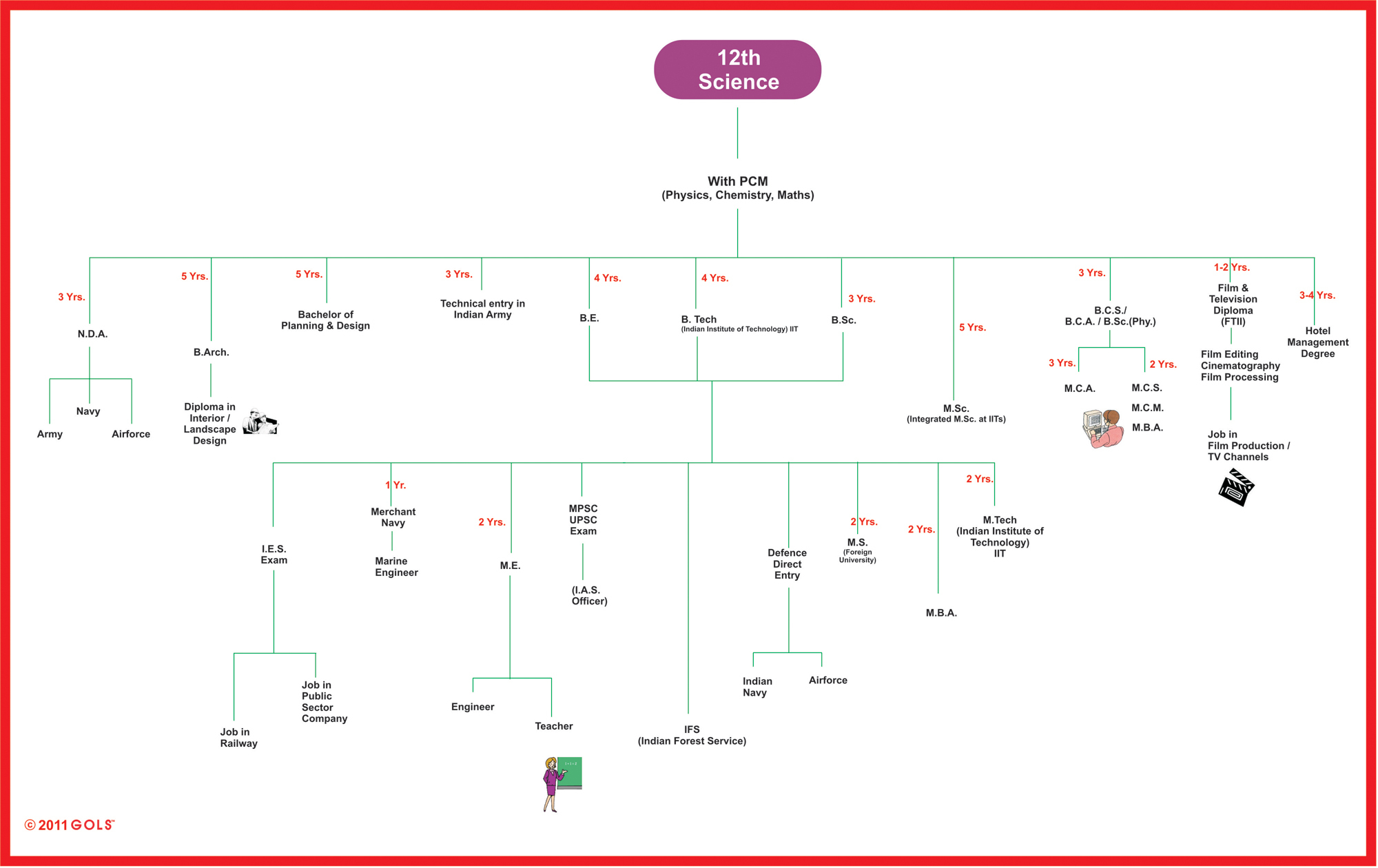
After the class 10th and 12th people usually have a dilemma of what to do next. Most of the children opt for medical and non-medical lines eying to become a computer science engineer or a doctor. In most cases people chose these streams purely based on pay, some due to parental pressure – Well Sharma Ji’s son and daughter are engineer and doctor so how can their relative’s children chose arts or commerce. This is a common notion throughout the country. Other professions are not considered at par. But what exactly are other professions?

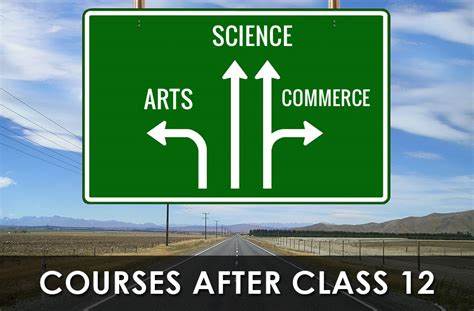
After class 10th streams are broadly divided into Medical, Non-medical, Commerce, and Arts. The detailed professions after class 12th are below:

See the source image

Non-Medical

It mainly comprises physics chemistry and math. Most of the people do BTech which is further branched into a plethora of fields like Computer science, Mechanical Engineering, Chemical and so on. People also do Bachelor of Architecture which comprises building construction. Besides this people can also opt for 3 year long BSc courses in the field of Mathematics, Chemistry, Physics, Computer Application.

Medical

After completing physics chemistry and biology students have options like MBBS, BDS which comprises of Dental Science, B Pharma. ( a 4 year long for becoming a chemist) , BSc Nursing, BHMS (Bachelor of Homoeopathic Medicine and Surgery), BAMS (Bachelor of Ayurvedic Medicine and Surgery). Just like Non, medical students can also opt for B.Sc. in Chemistry, Biology, Physics.

See the source image

Commerce

They have math, economics, accounts, business studies as their subjects. The most popular stream followed after class 12th is B.COM, a 3-year long course consisting of subjects related to finance and commerce. People who further want to do MBA usually opt for B.COM. There also other courses like BBA (Bachelor of Business Administration), CA, etc.

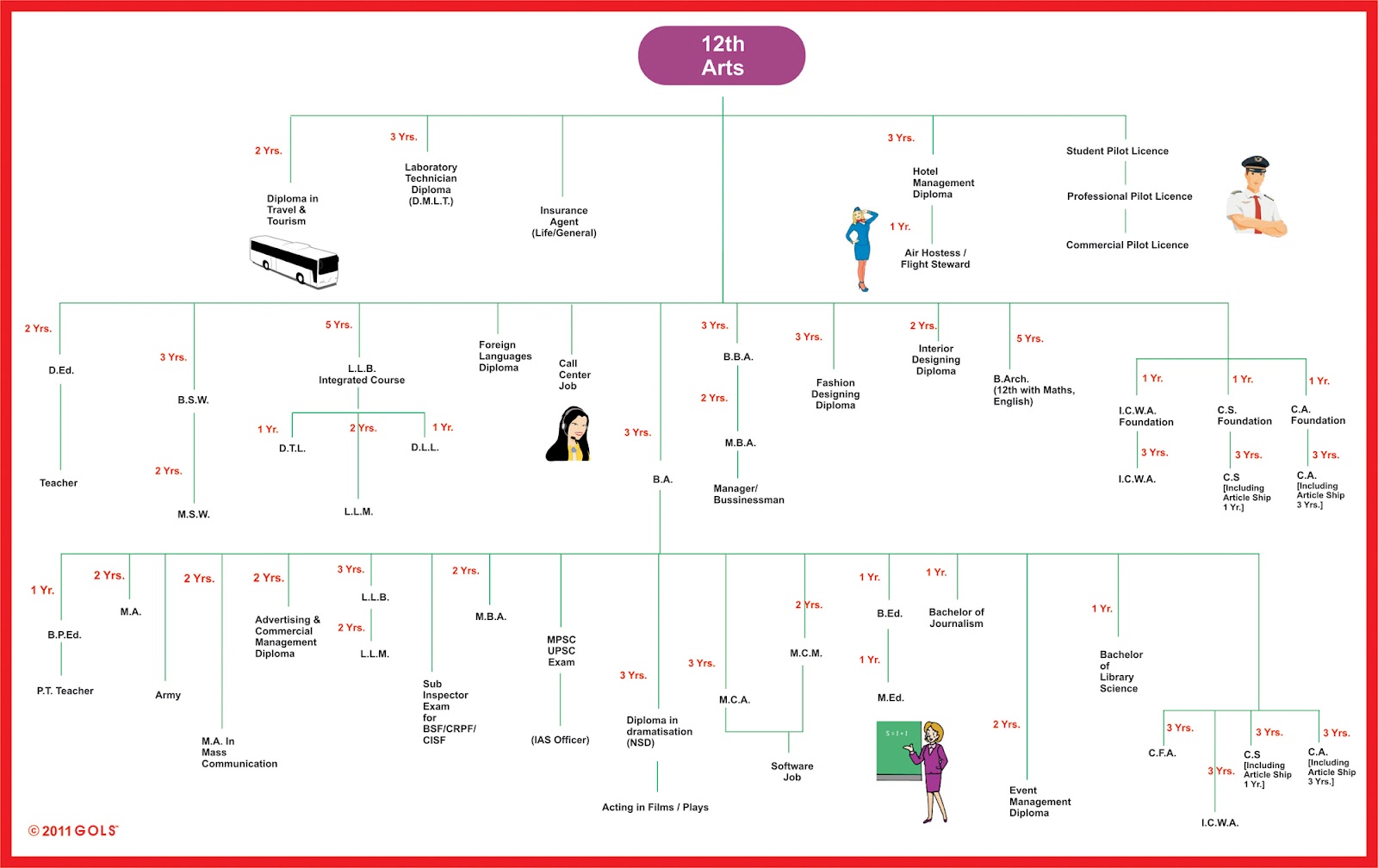
Arts

There are innumerous subjects like political science, history, English, economics, etc. Usually, people opt for BA after class 12th which can be done for various subjects like philosophy, political science, English, etc. People whose interest lies in drawing and painting chose BFA (Bachelor of Fine Arts). After that, they can take various professions like interior designing, etc.

Common courses

There are various courses which a student can opt after class 12th irrespective of their branch. People interested in law can opt for LLB (Bachelor of Law). People belonging to the agriculture domain opt for B.Sc. Agriculture. To become a fashion designer students do B.Sc. in Fashion Design. Students having a passion for teaching opt for B.Ed. in their particular domain. People who are intrigued by mass communication and journalism opt for BJMS(Bachelor of Journalism and Mass Communication. Likewise, there are various other fields.

Although there are various fields to explore students usually are restricted to particular fields like medical and non-medical. However, if someone has a passion in a particular domain, he/she will find success one day or another …

Origin of vedas

The Vedas are a large body of religious text originating in ancient India. Composed in Vedic Sanskrit, the texts constitute the oldest layer of Sanskrit literature and the oldest scriptures of Hinduism. Vedas are considered as the earliest literary records of Sanskrit Literature, written by Rishi Vyasa. It is bealived to be the oldest book in hinduism. Vedas means knowledge.  It is a Sanskrit word from the root “Vid”, which means finding, knowing, acquiring, or understanding. The Vedas formed the earliest segment of Vedic literature. The Vedic literature had been evolved in the course of many centuries and was handed down from generation to generation by the word of mouth. The Vedas are the collection of hymns, prayers, charms, litanies, and sacrificial formulae. The ideas, teachings, and practices described in the Vedas formed the basis for the six major schools of Hindu philosophy – Nyaya, Vaisheshika, Samkhya, Yoga, Mimamsa, and Vedanta.

There are four Vedas: the Rigveda, the Yajurveda, the Samaveda and the Atharvaveda.and all of them together are attributed to as ‘Chaturveda’

Rig Veda − It is the oldest Veda. It is a collection of hymns.

Samveda − it is a collection of songs, which are mostly taken from Rig Veda.

Yajurveda − It is a collection of sacrificial formulae.

Atharvanaveda − it is a collection of spells and charms.

The Rig Veda serves as the principal one and all three but the Arthaveda agree with one another in form, language, and content. Each Veda has been subclassified into four major text types or four portions.

The Samhitas, the most ancient layer of text in the Vedas, consisting of mantras, hymns, prayers, and benedictions which has in literary terms put together or joined the other three texts;

The Aranyakas which constitute the philosophy behind the ritual sacrifice,

The Brahmanas which in turn has the commentary on hymns of four Vedas and

The Upanishads, which consist of conversations between teachers and students which clarify the philosophical message of the Vedas.

Rigveda

The Rigveda Samhita is the oldest extant Indic text. It is a collection of 1,028 Vedic Sanskrithymns and 10,600 verses in all, organized into ten books. The hymns are dedicated to Rigvedic deities.  Two Sanskrit words Rig and Veda constituting it translates to ‘praise or shine’ and ‘knowledge’ respectively

Like the other three Vedas, the believers of the Hindu dharma regard the Rig Veda too as Apauruṣeya; meaning, not of a man or impersonal and also not belonging to a particular author. The hymns and the verses were written by the Rishis (Sages) and as the ardent believers of the Sanatana dharma claim the revered Lord himself taught the Vedic hymns to the sages, who then handed them down through generations by word of mouth.

The Mandalas of the Rig Veda which are ten in number and were composed by poets from different priestly groups over a period of several centuries is structured based on clear principles The Rigveda is structured based on clear principles. The Veda begins with a small book addressed to Agni, Indra, Soma and other gods, all arranged according to decreasing total number of hymns in each deity collection; for each deity series, the hymns progress from longer to shorter ones, but the number of hymns per book increases. Finally, the meter too is systematically arranged from jagati and tristubh to anustubh and gayatri as the text progresses.

Rigveda, in contemporary Hinduism, has been a reminder of the ancient cultural heritage and point of pride for Hindus, with some hymns still in use in major rites of passage ceremonies.  Musicians and dance groups celebrate the text as a mark of Hindu heritage, and these have remained popular among the Hindus for a long time. However, the contemporary Hindu beliefs are distant from the precepts in the ancient layer of Rigveda Samhitas.

Sama Veda

The Samaveda Samhita consists of 1549 stanzas, taken almost entirely (except for 75 mantras) from the Rigveda. While its earliest parts are believed to date from as early as the Rigvedic period, the existing compilation dates from the post-Rigvedic Mantra period of Vedic Sanskrit, between c. 1200 and 1000 BCE or “slightly later,” roughly contemporary with the Atharvaveda and the Yajurveda.

The Samaveda samhita has two major parts. The first part includes four melody collections and the second part three verse “books”. A melody in the song books corresponds to a verse in the arcika books. Just as in the Rigveda, the early sections of Samaveda typically begin with hymns to Agni and Indra but shift to the abstract. Their meters shift also in a descending order. The songs in the later sections of the Samaveda have the least deviation from the hymns derived from the Rigveda.

In the Samaveda, some of the Rigvedic verses are repeated. Including repetitions, there are a total of 1875 verses numbered in the Samaveda recension translated by Griffith. Two major recensions have survived, the Kauthuma/Ranayaniya and the Jaiminiya. Its purpose was liturgical, and they were the repertoire of the “singer” priests.

Yajurveda

Yajur Veda, of Sanskrit origin, is composed of Yajus and Veda; the two words translate to ‘prose mantras dedicated to religious reverence or veneration’ and knowledge respectively. Third of the fourth canonical texts of the Hindu dharma, this liturgical collection is famous as the ‘book of rituals’. Of the ancient Vedic text, it is a compilation of ritual offering formulas or the prose mantras to be chanted or muttered repeatedly by a priest while an individual performs the ascertained ritual actions before the sacrificial fire or the Yajna.

The earliest and most ancient layer of Yajurveda samhita includes about 1,875 verses, that are distinct yet borrow and build upon the foundation of verses in Rigveda. Unlike the Samaveda which is almost entirely based on Rigveda mantras and structured as songs, the Yajurveda samhitas are in prose and linguistically, they are different from earlier Vedic texts. The Yajur Veda has been the primary source of information about sacrifices during Vedic times and associated rituals.

The Yajurveda is broadly grouped into Krishna Yajurveda and Shukla Yajurveda, also referred to as the Black Yajurveda and the latter as the White. In reference to the verses of the Krishna Yajurveda being un-arranged, unclear, and disparate or dissimilar, the collection is too often referred to as Black Yajurveda. In contrast, the well-arranged and imparting a particular meaning, the Shukla Yajurveda is known as the White Yajurveda.

Yajurveda, in contemporary Hinduism, has been a reminder of the ancient cultural heritage and point of pride for Hindus. The text is a useful source of information about agriculture, economic, and social life during the Vedic era. The verse, translated from the Shukla Yajurveda, for example, lists the types of crops considered important in ancient India.

Atharvaveda

The Artharvaveda Samhita is the text ‘belonging to the Atharvan and Angirasa poets. It has about 760 hymns, and about 160 of the hymns are in common with the Rigveda. Most of the verses are metrical, but some sections are in prose. Two different versions of the text – the Paippalāda and the Śaunakīya – have survived into the modern times. The Atharvaveda was not considered as a Veda in the Vedic era, and was accepted as a Veda in late 1st millennium BCE. It was compiled last, probably around 900 BCE, although some of its material may go back to the time of the Rigveda, or earlier.

The Atharvaveda is sometimes called the “Veda of magical formulas”, an epithet declared to be incorrect by other scholars. The Samhita layer of the text likely represents a developing 2nd millennium BCE tradition of magico-religious rites to address superstitious anxiety, spells to remove maladies believed to be caused by demons, and herbs- and nature-derived potions as medicine. The text, states Kenneth Zysk, is one of oldest surviving record of the evolutionary practices in religious medicine and reveals the “earliest forms of folk healing of Indo-European antiquity”. Many books of the Atharvaveda Samhita are dedicated to rituals without magic, such as to philosophical speculations and to theosophy.

The Atharva veda has been a primary source for information about Vedic culture, the customs and beliefs, the aspirations and frustrations of everyday Vedic life, as well as those associated with kings and governance. The text also includes hymns dealing with the two major rituals of passage – marriage and cremation. The Atharva Veda also dedicates significant portion of the text asking the meaning of a ritual.


Course Description: Bachelor of Management Studies

Introduction

Bachelor of Management Studies or BMS is an undergraduate program for management studies offered by many universities throughout the world. The course allows you to obtain the knowledge and skills needed to assume management positions in a wide range of organizations. Management studies program provide students with a solid foundation in organizational behavior and human resource management while electives in labor-management relations, negotiation, conflict resolution, compensation systems and organizational development allow students to develop deeper knowledge in specific areas of interest. In addition to business management course, it will equip you to understand how organizations work, how they are managed, and how they interact with object oriented programming using c++ and data structures, national and international environments.

Course Structure

  • Core and Major Curriculum

This program enables students to develop advanced knowledge and skills in a range of business functions while setting them within the wider context of current business practice. In the first and second years, students have a variety of choices with an understanding of the role of the core business disciplines:

  • Accounting
  • Introduction to finance
  • Operations and Information management
  • Human resource management
  • Introduction to marketing
  • Micro Economics
  • Organizational Behavior
  • Business Law

In third year, students will study Organizational Strategy and they will have a choice of subjects from a list of options, based on their own interests and career aspirations. These options offer excellent opportunities to gain relevant work experience to prepare for their careers or add an international dimension to their undergraduate study.

Main Course Descriptions

  • What is Management?

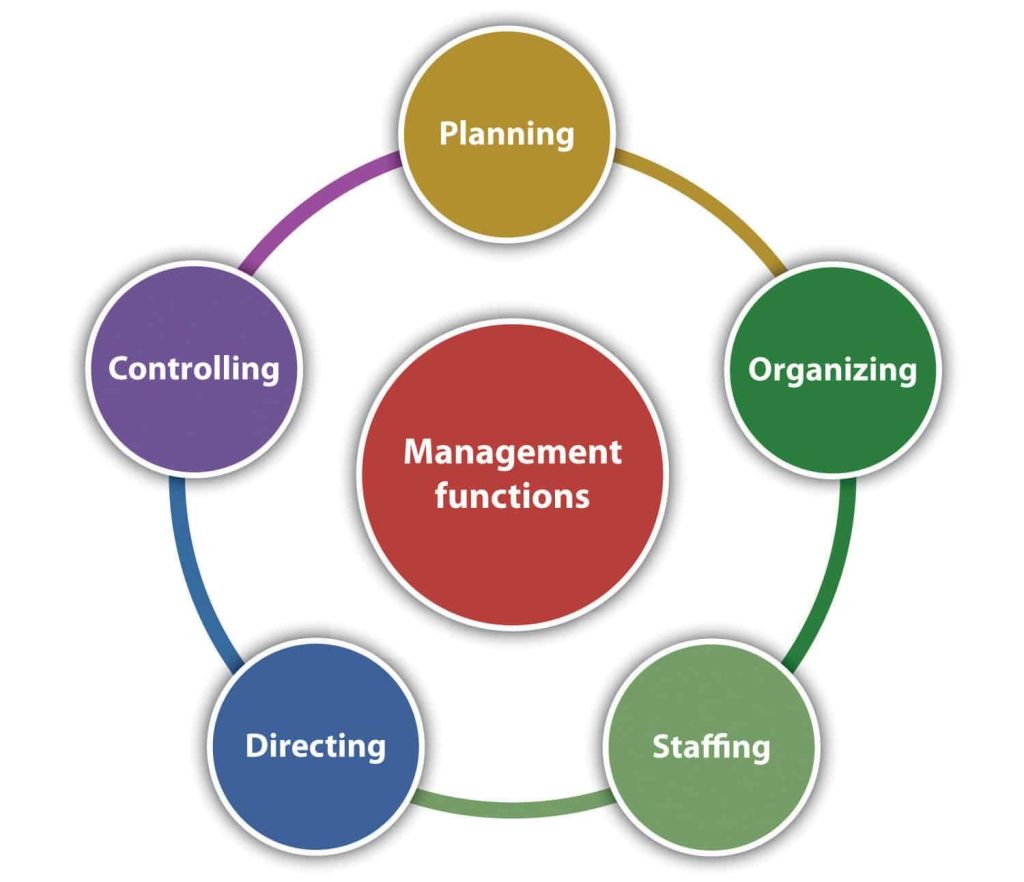
This course gives a brief introduction to the critical management skills involved in planning, structuring, controlling and leading an organization. It provides a framework to help students understand managing and being managed. Thus, leading them to become a more effective contributor to organizations that they join. Students can develop a system view of organizations through examining organizations as part of a context. It aims to train the learners to diagnose and suggest the suitable solutions to various managerial and organizational cases.

  • What is Human Resource Management

The focus of this course is to explore the principles of leading and managing people efficiently in today’s global enterprises. In this field, students access HR policy and practice in the areas of employment law, job analysis, employee relations and international HRM.

  • What is Organizational Behavior

This organizational behavior course combines classic arguments and contemporary empirical debates by discussing different elements of organizational structure. It introduces theoretical and empirical research on individual, interpersonal and group effectiveness at work. Course topics can be extended from decision making, motivation, leadership, teamwork to organizational culture. The learning method highly focuses on applying the essential tools of human side of management in role-play exercises and group projects in global organizations.

  • What is Economics for Management

The objective of the course is to show students how economics theory is related to the applications in managerial decision making and how resources are allocated and coordinated to achieve the organizations’ end goal. It emphasizes microeconomics ideas to solve problems and define the main concepts and models used in economic analysis. “Course topics covered include consumer theory, production, applications to the labor market, market structure, monopoly, oligopoly, product differentiation, pricing, decision analysis, bargaining, auctions, and asymmetric information.”

  • What is Law and Policy

The primary aim of the course is to make students aware of the basic legal concepts and implications affecting business transactions. It fosters a deeper practical sense of how to critically manage the important relationship between business and the natural environment 

  • What is Organizational Strategy

The first half of the course studies strategic situations and learn how to utilize the analytical tools to evaluate a firm’s position in the industry. Due to the modeling foundation of game theory, students will be tackled the real-world challenges and build the appropriate action plans .The second half of the course explores the evidence of different managerial styles and the impact on firm process, organizational change and corporate culture that constitute today’s collaborative business environments.

Optional Courses

The flexible management courses share a common first year before allowing you to focus on your chosen specialism to enhance your career prospects. The dissertation and optional modules allow students considerable opportunities to focus their studies on areas of special interest. Students are able to choose some elective modules (optional courses) from a selection list include:

  • Strategic management
  • Managerial Economics
  • Bank Strategy and Management
  • Entrepreneurship
  • Introduction to International Business
  • Leadership
  • Advanced Financial Accounting

Conclusion

Business management focuses on the organising, planning and analysing of business activities that are required to efficiently manage and run a business.You will learn what makes an organisation successful in a saturated global business environment and will gain the knowledge and skills required to work for businesses of all sizes – from multinational companies to start-ups. 

Magic ! An illusion…

Image credit: Julius Drost

Magic , which encompasses the subgenres of illusion, stage magic, and close up magic, among others, is a performing art in which audiences are entertained by tricks, effects, or illusions of seemingly impossible feats, using natural means.


Observe, all these points before you start practicing Magic;
1. As a magician you should face the audience with a smile on your face, cracking jokes and fluent language.
2. Be confident with your presentation, without stage fear. Presentation depends upon the performer.
3. You may need to face many kind of audience, tough people, naughty boys and many questions you should be ready with your answers.
4. Practice the magic several times before stage presentation. As “Practice Makes Man Perfect.”
5. Practices should be done in front of the mirror which will make your mistakes visible.
6. Watch as many magic shows as possible and study their manners.
7. Preserve your magic items and chemicals in a safe place properly locked.
8. Be careful while you handle chemicals, blades, knifes, fire. Read instructions thoroughly.
9. Chemical tricks should be done in adult supervision only. If a child is practicing magic tricks then, it’s parent or supervisor should be there to observe him.
10. Never neglect the small tricks. These are often most mystifying than stage illusions .
11. Accidents may occur, while performing chemical tricks be careful.
12. Mistakes do occur while doing magic but you must have the talent to divert the concentration of the audience.
13. The more you perform, the more you learn about the Magic and mind of the audience.
14. Join in a reputed Magic circle, read Magic journals, Magic Magazines.
15. Never repeat the same tricks before the same audience.
16. It is better to present the show with least number of assistants.
17. Self-confidence is important for the performer to present without hesitation.
18. Magic is a skill, wonderful art, else there are no psychic powers, super natural powers it is all illusion that is created by the magician.
19. Train your assistants perfectly else you have to be ashamed before the audience.
20. A magician must win the audience’s mind, to create a perfect illusion.
21. Never criticize other’s performances in your shows.
22. Never prove that, what magic you are performing is because of God or such superstitious beliefs. Show people that, there are people who are exploiting poor and innocent people in the name of God and showing some tricks .
23. Make a list of your performance item wise.
24. Choose your dialogues carefully and then talk neatly.
25. Never under estimate the audience. They are more clever than you. People may vary in their expressions, everyone’s reactions will be different.
26. Carry few pocket tricks with you, when you attend small functions, parties and picnics with your simple tricks you can entertain every one.
27. Do not apply lengthy procedure’s because audience do not have patience to watch So.
28. Better you perform happy half an hour than two dull hours.
29. After one show rearrange your tricks for the next show, it is a good habit.
30. Always have at least one spare item for your trick for emergency.
31. The place you choose for giving performance should be clean. Arrange your items neatly and your dress should also be suitable for the magician look.
32. Pack up your items as soon as to show is completed, otherwise curious person may tamper with it.
33. Say to people you have no Mantras or Tantras in your show . This truth may attract more audience for your show .
34. When you read good magic books or observe shows of other magicians note down the particular points neatly .
35. Finally , education is important; for your passion do not spoil your educational future.

Minimum Support Price

Minimum support price or MSP is the guaranteed price at which farmers can sell their produce and goods. The government buys the crops from the farmers at pre-set prices to save the farmers from price fluctuations or lack of market access. These price fluctuations occur due to poor market integration, poor monsoon and lack of information. The Commission for Agricultural Costs and Prices (CACP) fixes the MSP for various crops twice a year. These crops include wheat, maize, bajra, ragi, groundnut, cotton, jute etc. MSP was introduced in 1966 when India was facing a deficit in crop production. In the wake of the Green Revolution, the Indian Government realised that they needed to give some incentives to farmers to grow labour intensive crops like wheat and paddy. These crops also didn’t fetch good prices in the market.

The CACP while fixing the prices, takes into consideration some costs. These costs are:-

A2: Expenses incurred on seeds, fertilisers, labour, irrigation and fuel

A2+FL: A2 costs and also includes the value of unpaid family labour

C2: Includes A2+FL and revenue on owned land and interest on fixed capital that is foregone.

The CACP generally uses A2+FL while fixing the MSPs for several crops. C2 costs are kept as a benchmark to check if the recommended prices cover the costs in major producing states. Various other Ministries and Departments also help the CACP in determining the MSPs. In the last decade, the growth rate of MSPs has consistently been declining for both rabi and kharif crops.

Advantages of MSP- MSPs provide an incentive for farmers to grow a crop which may be in short supply, It has helped in transferring incomes to the rural areas, It leads to crop rotation, Profits coming from MSP can be invested in new machinery and equipment by the farmer and also can prevent farmer suicides.

Disadvantages of MSP- Only 6% of Indian farmers actually sell at MSP because of the lack of awareness, As the MSP is announced just before the sowing season many farmers may have started growing some other crop, lack of government machinery and procurement measures, some states benefit more than others.

In the future a higher budget must be allocated toward MSP and adopt a more scientific approach to increase product per hectare. Awareness must be spread about crop diversification as this can prevent supply shocks. Modern warehousing infrastructure is needed like storage facilities and weighing bridges to extend shelf life and prevent rotting of crops. Lastly, MSP should be fixed based on current costs and not on historical costs. These are some ways the MSP system can be improved.

A Brief Understanding of Schizophrenia

Schizophrenia is a chronic and severe mental disorder that affects the way a person thinks, behaves, expresses emotions and perceives reality. It affects around 20 million people worldwide, so it is not as common as other mental illnesses like depression or anxiety disorder. However, it is perhaps the most chronic and disabling one. It is quite evident when people are suffering from schizophrenia, as they act very abnormally and differently. This is why schizophrenics often have problems doing well in society, school, work or in their personal relationships, as they appear to have lost touch with reality and do not know how to behave like a normal, sociable people. Hence, schizophrenia is associated with considerable disability and greatly affects educational and occupational performance.

Causes

Till today, the exact causes of schizophrenia are still unknown. Research conducted on the topic suggests that it may be a combination of genetic, physical, psychological and environmental factors that cause it. So the causes may range from genetic inheritance, chemical imbalances in the brain, and the use of certain drugs and medication, to external environmental factors like trauma, excessive stress, etc.

Symptoms

As mentioned before, schizophrenia causes a wide range of symptoms on a mental, behavioural and emotional level. These symptoms may vary in number and degree from one schizophrenic to another, but there are some commonly seen symptoms among all of them;

  • Hallucinations – Seeing or hearing things in their heads, which are not there in reality. A hallucinating schizophrenic may see or hear something that do not exist, but they fully believe that it is a real experience.
  • Delusions – These are false or fictitious beliefs that schizophrenics have which are not real. Such delusions could be that someone is constantly following them when no one is, or delusions of grandeur where the schizophrenic feels as if he/she is some great, famous person.
  • Disorganized Thinking (Speech) – This means that schizophrenics lack proper communication skills and do not have much interactive capability. They may only half answer questions or not respond at all, and their speech might be meaningless and incomprehensible.
  • Disorganized Motor Behavior – Even their body movements and postures are often abnormal. The behavior may be childlike and unpredictable, and often is not focused on performing any task. They may even require help to perform daily life functions like brushing teeth, eating, etc.
  • Negative Symptoms – This generally refers to their lack of ability to function like a normal human being. They may lack hygiene and care for themselves. They may also lack emotion, or express emotions at wrong times, like showing happiness at a funeral.

Treatment

Since schizophrenia is chronic, even treatment for it is lifelong. Unfortunately, schizophrenia cannot be cured, but it can be controlled. Treatment can help the afflicted person manage the symptoms of the illness and avoid hospitalization. There is no blanket treatment plan and doctors will often tailor it to suit the individual persons. The cornerstone of schizophrenia treatment is medication. Schizophrenics will most commonly be given antipsychotic drugs to keep control of the mental disabilities and allow the person to think and function somewhat normally. Along with this, even psychosocial support from family members and in the form of counselling can help a person develop coping skills in life. This is especially important because schizophrenics often have suicidal thoughts and tendencies, and having a social support system helps them in averting these thoughts and gives them hope.

It is important to highlight here that there is a stigma, and discrimination against people with schizophrenia is common nowadays. They are also often abandoned by their families or relatives thinking that they are beyond saving. We must learn as a society that such people are not as fortunate as us, and suffer from inflictions that we cannot even imagine. Society must be educated on the fact that they are not dangerous or scary people, and must be encouraged to seek help. Hence, we must do all we can to support schizophrenics and provide them with the best help we can.

Is Recycling really good for the environment?

Ever since we were children we have heard that if we want to save the environment we should follow the 3R’s Reuse, Reduce and Recycle. But have you wondered if recycling is actually good for the environment. You may not know but recycling has many disadvantages. Recycling is really expensive. In order to repurpose certain recycled materials, separate manufacturing plants need to be built and used. This would counteract the advantage recycling has of creating less pollution, since more may actually be generated as a result of the additional factory. It makes us wonder whether it is really worth it to eat the high costs to impact the planet in such a small way over a long period of time? For recycling to work more people need to participate, as the world is getting more advanced more recycling technologies are being introduced but it will take a long time before a significant amount of people start participating. Recycled products are often of lesser quality. Products made from used, repurposed materials simply don’t stand up quality-wise to new material. They’re often fragile and overused. The more a piece of material gets recycled, the worse it gets. Recycling Sites Are Commonly Unsafe, Items thrown into the recycling bin is a form of trash. As with any waste, it has to be transported and processed somewhere. This means there are many locations having potentially hazardous waste. These heaps of trash are grounds for bacteria, disease, and many other diseases. Also recycling sites are also industrial plants. This means they are not without their own forms of pollution. waste produced is frequently mixed with large bodies of water, leading to broader scale pollution. Quite the opposite effect of what recycling advocates are going for. What we can do instead of recycling is we can Reuse. Reusing items is extremely beneficial to the environment because it prevents pollution caused by reducing the need to harvest new raw materials, saves energy also it saves a lot of money.