We have to travel via roads almost every day to go to school, college, office, shops, visit relatives and friends. We need to be safe on the roads. Road safety refers to the methods and measures used to prevent road users from being killed or seriously injured.
Need for safety on Roads
It is a saddening fact that India is the world’s largest contributor to road accidents. India accounts for about 10% of roads accident fatalities at worldwide. Road crashes have a threatening impact on Indian lives, growth and economy.
Causes for Road Accidents
Distracted driving
This is a larger threat and the leading cause for road accidents. It is the distraction of the driver, engaging in any other activity while driving. It may be talking over the mobile phone or texting message or engaging in any activities with attention diverted from driving.
Reckless driving
It is a major traffic violation of rules. It is defined as the mental state in which the driver purposely disregard the rules of the road.
Night driving
An extra alertness is needed while driving at night. The uncontrolled sleep, tiredness due to long drive, poor lighting on the road can cause fatal accidents.
Tailgating
Tailgating refers to a condition where a driver drives behind another vehicle without leaving sufficient distance between them. In this condition, if the vehicle in front of him, stops suddenly, his own vehicle will crash with it.
Heavy Traffic
Increase of vehicles on the road create heavy traffic jam and cause more pollution.
Road conditions
Road expansion is very slow when compared to the expansion of vehicles.
Avoidance of safety gears
Avoiding the use of helmets for two wheelers and seat belts for four wheelers lead to unwanted happenings.
Impatience of Pedestrians
Impatience of Pedestrians and violation of traffic rules result in accidents.
Other causes
Drunken driving, jumping red light over speeding and unmanned railway crossings cause great damage to valuable lives. Due to this, many families lose their breadwinners.
Road Safety Rules
Every country has its own road safety rules and regulations for the best interests of its citizens. India also has designed road safety rules for protecting the road users from meeting with accidents and injury.
As per the Indian law, one should be eligible to get a driving licence at the age of 18. While driving use of mobile phone is prohibited. Sound horn is prohibited near a hospital or a school zone.
Preventive Measures
Government
Through the Ministry of Road Transport and Highways, Government of the India has taken earnest steps for reducing the number of road accidents.
☆ Taking steps for the rectification of accident black spots and improvement of road engineering.
☆ Ensuring the good functioning of the traffic signals and road signs at busy crossing roads.
☆ Constructing proper roads both in urban and rural areas.
☆ Installation of CCTV cameras to record high speed offences which can detect the offenders.
☆Prohibiting the act of digging or hoarding soil from roads
☆ Remove encouragement and maintain proper pedestrian ways for ensuring road safety. If the public are violating the traffic rules, it is the duty of government to correct the public and maintain order. Stringent actions are to be taken for the violation of any road safety rules.
Personality development is the development of the organized pattern of behaviors and attitudes that makes a person distinctive. personality development occurs by the ongoing interaction of temparement, character and environment. personality is what makes a person a unique person, and it is recognizable soon after birth. a child’s personality has several components, temperent, environment and character. temperament is the set of genetically determined triats that determine the child’s approach to the world and how the child learns about the world. there are genes that specify personality traits, out some genes do control the development of the nervous system which in turn controls behaviour. a second component of personality comes from adaptive patterns related to a child’s specific environment. most psychologists agree that these two factors temperament and environment influence the development of a person’s personality the most. temparament with its dependence on genetic factors is sometimes referred to as nature while the environmental factors are called nurture.
while there is still controversy as to which factor ranks higher in affecting personality development, all experts agree that highly quality parenting plays a critical role in the development of a child’s personality. when parents understand how their child responds to certain situations they can anticipate issues that might be problematic for their child. they can prepare the child for the situation or in some cases they may avoid a potentially difficult situation altogether. parents who knows how to adapt their parenting approach to the particular emperament of their child can best provide guidance and ensure the successful development if their child’s personality. finally the third component of personality is character the set of emotional, cognitive and behavioral patterns learned from experienced that determines how a person thinks, feels and behaves. a persons character continues to evolve throughout life although much depends on inborn traits and early experiences. character is also dependent on a persons moral development.
INFANCY: during the first 2 years of life an infant goes through the 1st stage. learning basic trust or mistrust. well nurtured and loved the infant develops trust and security and a basic optimism. badly handled the infant becomes insecure and earns basic mistrust. TODDLERHOOD: the second stage occurs during early childhood between about 18 months to 2 years and 3 to 4 years of age. it deals with learning autonomy or shame. well partnered the child emerges from this stage with self confidence elated with his or her newly found control. the early part of this stage can also include stormy tantrums, stubbornness, and negativism, and depending on the child’s temperament. PRESCHOOL: the 3 rd stage occurs during the play age or the after preschool years from about three to entry into formal school. the developing child goes through learning initiative or guilt. the child learns to use imagination to broaden skills through active play and fantasy; to cooperate with others; and lead as well as to follow. SCHOOL AGE: the 4 th stage learning industry or inferiority, occurs during school age up to and possibly including junior high school. the child learns to master more formal skills: .relating with peers according to rules .progressing from free play to play that is structured by rules and requires teamwork ADOLOSCENSE: the 5 th stage learning identity or identify diffusion, occurs during adolescence from age 13 or 14. maturity start developing during this time. the young person acquires self certainity as opposed to self doubt and experiments with different constructive roles rather than adopting a negative identity, such as deliquency. the well adjusted adolescent actually looks forward to acheivement and in later adolescense clear sexual identity is established. Young businessman holding a marker and drawing circular structure diagram of personal growth on transparent screen. Isolated on white background.
We all have been influenced by the current COVID-19 widespread. In any case, the effect of the widespread and its results are felt in an unexpected way depending on our status as people and as individuals of society. Whereas a few attempt to adjust to working online, homeschooling their children, and requesting nourishment by means of Instacart, others have no choice but to be uncovered to the infection whereas keeping society working. Our distinctive social characters and the social bunches we have a place to decide our incorporation inside society and, by expansion, our powerlessness to scourges.
COVID-19 is slaughtering individuals on a huge scale. As of October 10, 2020, more than 7.7 million individuals over each state within the Joined together States and its four regions had tried positive for COVID-19. Agreeing to the Modern York Times database, at slightest 213,876 individuals with the virus have passed on within the Joined together States. In any case, these disturbing numbers grant us as it were half of the picture; a closer see at information by diverse social characters (such as lesson, sex, age, race, and restorative history) appears that minorities have been disproportionally influenced by the widespread. These minorities within the Joined together States are not having their right to well-being satisfied.
Agreeing to the World Wellbeing Organization’s report Closing the Hole in an Era: Wellbeing Value through Activity on the Social Determinants of Wellbeing, “poor and unequal living conditions are the results of more profound auxiliary conditions that together design the way social orders are organized—poor social approaches and programs, out of line financial courses of action, and terrible politics.” This poisonous combination of components as they play out amid this time of emergency, and as early news on the impact of the COVID-19 widespread pointed out, is excessively influencing African American communities within the Joined together States. I recognize that the widespread has had and is having annihilating impacts on other minorities as well, but space does not allow this exposition to investigate the effect on other minority bunches.
Utilizing a human rights focal point in this investigation makes a difference us decipher needs and social issues into rights, centering our consideration on the broader sociopolitical basic setting as the cause of the social issues. Human rights highlight the inalienable respect and worth of all individuals, who are the essential rights-holders.
Governments (and other social performing artists, such as organizations) are the duty-bearers, and as such have the commitment to regard, ensure, and fulfill human rights. Human rights cannot be isolated from the societal settings in which they are recognized, claimed, upheld, and satisfied. Particularly, social rights, which incorporate proper wellbeing, can be gotten to be imperative instruments for progressing people’s citizenship and upgrading their capacity to take an interest as dynamic individuals of society.
Such an understanding of social rights calls our consideration to the concept of balance, which needs that we put a more noteworthy accentuation on “solidarity” and the “collective.” Besides, in arrange to produce balance, solidarity, and social integration, the fulfillment of social rights isn’t discretionary.
In arrange to fulfill social integration, social arrangements have to reflect a commitment to respect and ensure the foremost helpless people and to make the conditions for the fulfillment of financial and social rights for all.
The phenomenal COVID-19 widespread spread quickly over countries and nation after nation reacted with lockdowns, making around 1.5 billion understudies universally stay at home. Under these circumstances, and in arrange to lock in understudies in a valuable reflection on current and prospective challenges, UNESCO and Takhte have organized a rolling exposition challenge entitled ‘Year 1 AC (After Coronavirus): Skillet India Online Paper Challenge 2020’. Children (matured 11–14 a long time) and youth (matured 15–24 a long time) has been welcomed to unleash the control of composing to combat separation and invigorate imagination.
Amid the primary month since its dispatch, hundreds of youthful members from over 24 states in India shared their significant and inciting considerations through their papers. As of mid-May, more than 500 entries were gotten, from children and youth, extending from 11 to 24 a long time. Members – outstandingly youthful ladies bookkeeping for over 67% of the entries beneath the Youth category, have voiced their concerns approximately life after the coronavirus, particularly on sex parts and generalizations. The challenge has captured Indian young people’s want to precise their considerations amid this period, visualizing long-standing time they would like to construct after the coronavirus blurs away. Following an exhaustive screening preparation, 35 winning papers have been showcased through the UNESCO site and social media channels. Each of the expositions has something unused and critical to say. Here is what a few of the youthful journalists had to say.
UNESCO Unused Delhi and Takhte would like to thank all the members and empower the others to send their voices as the challenge is continuous and will proceed to get entries until a date to be declared.
You may have heard about the eruptions of volcanoes like Mount Vesuvius and Mount Tambora that devastated the land surrounding them and killed thousands of people living in their vicinity. However, not many of us stop to question why or how a volcano erupts in the first place. It is indeed not only an interesting, but also a useful bit of knowledge to have about one of the most fascinating natural phenomena that occur in our world.
What is the process?
We know that deep within the earth, the temperatures are extremely high. In fact, it is so hot that some rocks gradually start melting and become a thick flowing substance called magma. This melting takes place in the layer of the earth’s interior called the ‘mantle’. The mantle is the layer between the dense, superheated core and thin outer crust of the earth. The immense heat from the core melts the earth’s mantle and this melted rock (magma) begins its journey to the surface. The melting may happen where tectonic plates are pulling apart or when one plate is pushed down under another.
Magma being a lighter and more viscous substance than the rock surrounding it, starts rising to the top and collecting in areas known as magma chambers. As the magma rises, bubbles of gas also form inside it. Eventually, some of the runnier magma charges through any vents or fissures in the earth’s crust and gets released onto the surface as lava. Hence, magma that is released through volcanoes are then called lava, which flow in every direction away from the volcano to surrounding areas.
For the magma that is thicker in nature, the gas bubbles are not able to escape easily and the pressure starts building as the magma rises. When the pressure that is building reaches a point where it is too high for the earth’s surface to handle, an explosive eruption happens from the volcano. Such eruptions may also occur suddenly if the rocky surface above the magma has eroded over time, allowing the pressurized magma to easily burst through. Explosive eruptions are what often cause mass death and destruction, as the lava flows with much greater force and heat intensity. It can melt anything in its path, and most human creations will succumb to its natural power. The aforementioned bubbles, which are of undissolved water and sulphur, then burst with the intensity of a gunshot and release plumes of ash into the atmosphere. This ash can suffocate plants, animals and humans.
Another way eruptions happen is when water underneath the earth’s surface happens to come in contact with hot magma and creates steam. This may happen when ocean water is able to slip into the earth’s mantle and mingle with the magma. Over time, the rock strength of earth’s surface decreases as the pressure builds, and the steam can gradually build enough pressure to cause an explosion through the volcano.
It is important to highlight that some volcanic eruptions are explosive while others are not. As explained, it depends on the composition of the magma. If it is runny and gas is able to escape easily, lava will simply flow out. This is easy for people to avoid as it flows slowly and gives them time to move away. However, if magma is thick and gas cannot escape easily, pressure builds up until there is a violent explosion for it to escape. Magma blasts into the air, and lava flows at a greater speed for a greater distance. This is often unexpected and harder to escape from.
What is the role of Climate Change?
Geological studies have shown that human-induced climate change will most likely cause an increase in volcanic activity around the world. This is primarily because climate change has caused melting of glaciers in the earth’s crust. These glaciers have an impact on the flow of magma to the surface, and so melting glaciers may cause more magma eruptions. Basically, after glaciers are removed, the surface pressure decreases and the magma can more easily propagate to the surface and thereby erupt.
A team of researchers in the UK found that with the advancement of glaciers over time, there was diminishing volcanic activity. In turn, the team found that as the climate warmed up due to global warming and glaciers melted, there were more frequent and bigger eruptions. It has been found that even relatively minor climate changes may have an influence on this. Hence, it can be concluded that today’s global warming could mean more frequent, and even greater volcanic eruptions.
Want to write formal letter but don’t know how to write formal letter then this article is only for you and the learners who wants to learn letter writing. In today’s article we are sharing the steps, Tips or samples for writing formal letter.
Writing Formal letters are business like and get quickly to the point. Formal letters are different to personal letters. You do not write in a chatty manner or use slang. For example, you would write a different letter to your Principal inviting him to your class JCSP graduation as you would to your friend.
How to Write Formal Letter?
Formal letter writing is undoubtedly one of the most challenging types of letter format. When putting it together, often you are addressing a person or organization with whom you are not familiar and the quality of your content, including spelling and grammar will be strongly scrutinized.
Types of Formal Letter:
There are many types of latter :
Formal Request Letter
Formal Letter of Interest
Formal Apology Letter
Formal Complaint Letter
Formal Appeal Letter
Formal Reference Letter
Steps to Write All Formal Letter
Introducing oneself if it is the first time you are writing.
Referring to an earlier letter if you are responding to it.
Stating the purpose of the letter.
Stating action/information required from the addressee.
Explaining action taken/supplying information.
Urging action to be taken.
Offering assistance in future.
This is the basic structure of formal letter. It will have to be modified according to the purpose for which it is written and the person to whom it is addressed.
Typical Format of Formal letter
Business correspondence should get across the message in a direct, clear and natural way. In contrast to informal letter writing, one should avoid using slang and casual language, clichés, short forms and abbreviations.
The writer should avoid overly formal and rigid language too. The letter should be logically structured and organized. The layout of a formal letter follows basically the same order:
Sender’sAddress: The sender’s address usually is included in letterhead. If you are not using letterhead, include the sender’s address at the top of the letter one line above the date. Do not write the sender’s name or title, as it is included in the letter’s closing. Include only the street address, city, and zip code.
Date: The date line is used to indicate the date the letter was written. However, if your letter is completed over a number of days, use the date it was finished in the date line. Write out the month, day and year two inches from the top of the page. Depending which format you are using for your letter, either left justify the date or tab to the center point and type the date.
InsideAddress: The inside address is the recipient’s address. It is always best to write to a specific individual at the firm to which you are writing. If you do not have the person’s name, do some research by calling the company or speaking with employees from the company. Include a personal title such as Ms., Mrs., Mr., or Dr. Follow a woman’s preference in being addressed as Miss, Mrs., or Ms. If you are unsure of a woman’s preference in being addressed, use Ms.
Mr. – for a male
Mrs. – for a married female
Miss – for an unmarried female
Ms. – for a female whose status is unknown or would prefer to remain anonymous
Dr. – for a person with the status of a doctor
If there is a possibility that the person to whom you are writing is a Dr. or has some other title, use that title. Usually, people will not mind being addressed by a higher title than they actually possess. For international addresses, type the name of the country in all-capital letters on the last line. The inside address begins one line below the sender’s address or one inch below the date. It should be left justified, no matter which format you are using.
Salutation: “Use the same name as the inside address, including the personal title. If you know the person and typically address them by their first name, it is acceptable to use only the first name in the salutation (for example: Dear Tejas:). In all other cases, however, use the personal title and last/family name followed by a colon.
Leave one line blank after the salutation. If you don’t know a reader’s gender, use a nonsexist salutation, such as their job title followed by the receiver’s name. It is also acceptable to use the full name in a salutation if you cannot determine gender. For example, you might write Dear Chris Harmon: if you were unsure of Chris’s gender.
Body of Formal letter: For block and modified block formats, single space and left justify each paragraph within the body of the letter. Leave a blank line between each paragraph. When writing a business letter, be careful to remember that conciseness is very important. In the first paragraph, consider a friendly opening and then a statement of the main point. The next paragraph should begin justifying the importance of the main point. In the next few paragraphs, continue justification with background information and supporting details. The closing paragraph should restate the purpose of the letter and, in some cases, request some type of action.
Closing: The closing begins at the same vertical point as your date and one line after the last body paragraph. Capitalize the first word only (for example: Thank you) and leave four lines between the closing and the sender’s name for a signature. If a colon follows the salutation, a comma should follow the closing; otherwise, there is no punctuation after the closing.
Enclosures: If you have enclosed any documents along with the letter, such as a resume, you indicate this simply by typing Enclosures one line below the closing. As an option, you may list the name of each document you are including in the envelope. For instance, if you have included many documents and need to ensure that the recipient is aware of each document, it may be a good idea to list the names.
A Note about Format and Font of Formal Letter
BlockFormat: When writing business letters, you must pay special attention to the format and font used. The most common layout of a business letter is known as block format. Using this format, the entire letter is left justified and single spaced except for a double space between paragraphs.
Font : Another important factor in the readability of a letter is the font. The generally accepted font is Times New Roman, size 12, although other fonts such as Arial may be used. When choosing a font, always consider your audience. If you are writing to a conservative company, you may want to use Times New Roman. However, if you are writing to a more liberal company, you have a little more freedom when choosing fonts.
Punctuation: Punctuation after the salutation and closing – use a colon (:) after the salutation (never a comma) and a comma (,) after the closing. In some circumstances, you may also use a less common format, known as open punctuation. For this gyanlog style, punctuation is excluded after the salutation and the closing.
Important Points About Formal Letter Writing :
The date and signature are very important in letters.
Do not use commas after every line in the address.
Do not begin your letters with hackneyed expressions like, ‘With reference to your letter dated 10 January’. Instead, use personalised variations like, ‘I was glad to receive your letter of 10 January…’ or ‘We were happy to note from your letter that the goods have reached you safely…’
Never end your letters with hanging participles like ‘Thanking you’ or ‘Awaiting your reply’. Instead write, ‘Thank you’ or ‘We/I await/look forward to your reply’.
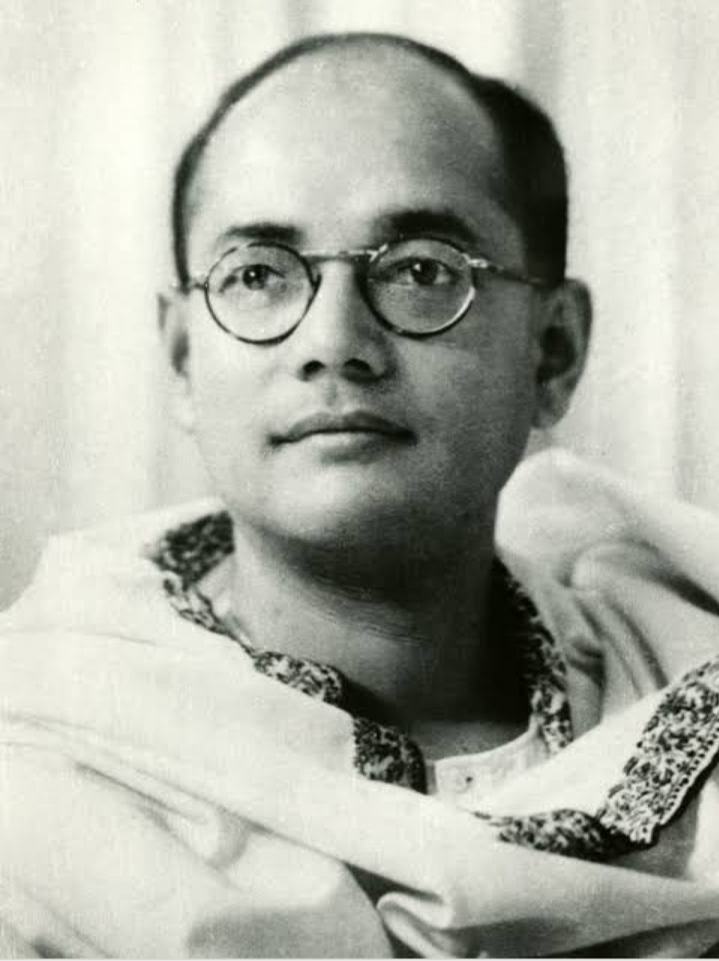
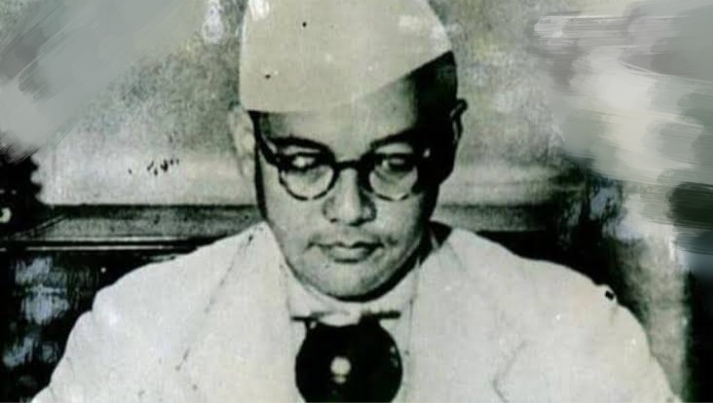
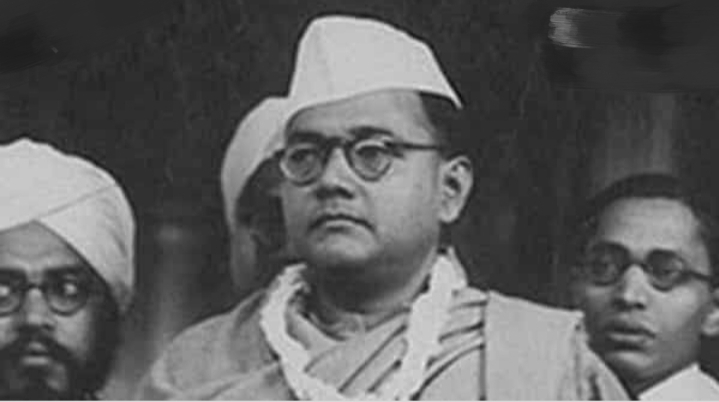
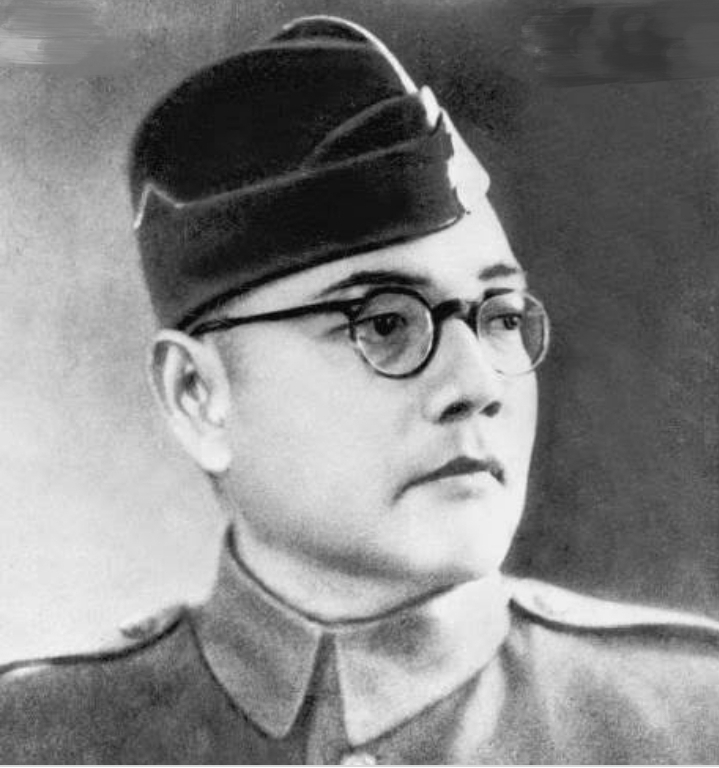
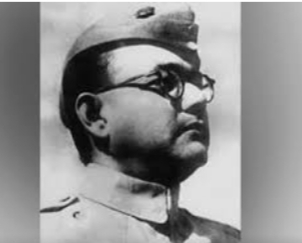
Subhas Chandra Bose was an Indian nationalist whose contribution to Indian independence and development is incomparable. Subhash Chandra Bose, the dynamic leader who gave all his sweat and blood for India’s freedom movement continues to inspire millions of mind with his words even today.
Netaji was born in Cuttack in Odisha in 1897 in a well-to-do family. His father’s name was Janakinath Bose and his mother’s name was Prabhavati Dutt Bose. He was the ninth child among the fourteen.
Bose was a bright student and also the topper in matriculation examination from Calcutta. Since childhood he was influenced by the teachings of Swami Vivekananda and was popular for his patriotic enthusiasm.
He graduated from Kolkata, and to pursue his career in Indian Civil Services, he went to England and appeared for competitive examination and stood fourth in it. He proved his mettle by becoming an Indian Civil Services (ICS) officer. But he was not accustomed to a life of comfort and amenities that came with his job. He was a warrior, who had to wage the freedom struggle.
Not only did he embrace the freedom movement wholeheartedly, but also became an inspiration for freedom. With the slogan “Give me blood and I will give you freedom”, he started preparing to awaken the country. Such was the charisma of his philosophy and personality that whoever listened to him was attracted to him. His popularity skyrocketed and he became “Netaji” to the general public.
He was so fond of Bharat Mata that his country tied to the chains of slavery did not let him live peacefully. People beyond India’s borders also developed a fascination for him. Heads of states of important countries stood by him and Netaji lit the fire of the freedom struggle beyond India’s shores. Netaji was influenced by the teachings of Mahatma Gandhi and he soon joined Indian National Congress. In 1930, he was sent to jail during the civil disobedience movement and was released in 1931. Later, he was expelled from India to Europe but taking the advantage of the situation he worked to strengthen the ties between the two countries. Challenging the ban in the home country he returned, but was again sent to jail. In 1937, after Congress came in to power, he was released.
He built a force and presented that force before the enemies of the country as the Azad Hind Fauj (Indian National Army). He gave the slogan of “Dilli Chalo” with a new spirit. Thousands of soldiers of his 60,000-strong army sacrificed their lives for the country.
Netaji was an active member of the Indian National Congress. He was elected as the President of the All India Youth Congress in 1923. His views as a freedom fighter were very different from those of Mahatma Gandhi. Netaji was a part of the Non-Cooperation Movement led by Gandhiji. He was given the title of Netaji in Germany by Indian soldiers in early 1942. Since then, he has been popularly known as Netaji among people.
“Success always stands on the pillar of failure.” Bose lived with this philosophy and also inspired others. Netaji encountered failures several times, but he converted those failures to triumph with his struggle. Whether it is municipal politics, the journey from a common Congressman to the Congress president’s position, the formation of the Forward Bloc or the struggle of the Indian National Army, he passed every test with distinction.
Bose accepted the leadership of Mahatma Gandhi, but ironically, Gandhiji himself became the cause of him leaving the Congress. But the two leaders always had respect for each other.
At the time of India’s independence, Clement Attlee was the British Prime Minister. He came to Kolkata in 1956. At that time, his host, governor and former Calcutta high court chief justice PB Chakravartti, tried to find out from him the reason behind the British decision to grant freedom to India. In response, Attlee said that the loyalty of the Indian army and navy to the British state was declining due to the increasing military activities of Bose’s Azad Hind Fauj. This was one of the major reasons. This acknowledgement proves the great contribution of Bose to India’s independence.
Jabalpur in Madhya Pradesh had a major contribution in the life of Netaji. The banks of the Narmada transformed his life. The Tripuri Congress session was held from March 4-11, 1939 in Jabalpur. Despite poor health, Netaji had arrived on a stretcher to participate in it. Thereafter, he came again to Jabalpur on July 4, 1939 to form the Forward Bloc. The people of Madhya Pradesh have a deep relationship with Netaji. In every town of the state, there’s a ward in his name. Subhas Chandra Bose’s message to his colleagues was: “Success may be distant, but it is imperative”. Bose used to say, “If a person is not obsessed, he can never become great. But he should also have something else inside him.” Bose is credited with giving global identity to the Indian leadership. Earlier, Swami Vivekananda had enlightened the world about India’s spiritual and cultural superiority and identity.
Netaji was also fluent in many Indian languages. Bose’s struggle for freedom proved to be an inspiration not just for India, but also for all Third World countries. The Indian freedom struggle and the war of independence led by Bose had a profound impact on those countries. Netaji’s status establishes him as the “hero of freedom” globally.
Unfortunately, on August 18, 1945, he was killed in a plane crash in Taiwan.
There are many circumstances of children around the world who experience a lack of education, resulting in them having a below average level of knowledge. Lack of education is a significant barrier for underprivileged children around the world.
Today, education remains an inaccessible right for millions of children around the world. More than 72 million children of primary education age are not in school and 759 million adults are illiterate and do not have the awareness necessary to improve both their living conditions and those of their children.
What Is Lack of Education?
A lack of education can be described by a state where people have lower than average common knowledge and basic skills to support them in their daily life.
This includes the ability to read, write, spell, speak, and do simple math.
What Causes Lack of Education?
A lack of education is a significant concern due to lack of funding for education, having untrained teachers, limited or no classroom space, limited resources (e.g., paper, pencil, etc.), living far away from school, and living in countries of conflict.
This concern is a leading issue in underdeveloped countries as an education system is highly dependent on region’s economic status.
People Who Are Less Likely To Receive Education
Females
Girls are commonly left uneducated because many countries believe there is more value in educating boys in comparison to girls.
Additionally, girls are forced to marry as early as eighteen years old which prevent them for continuing their education.
Children With Disabilities
Children with disabilities most regularly do not regularly receive education because teachers do not receive adequate training to work with these kids.
In addition, these children face a lot of discrimination in terms of accessibility to a safe learning environment, as well as communication with their surroundings.
Outcomes From a Lack of Education
Lack of education can prevent a person from having a sound voice in society, as they face communication barriers and are looked down upon
Not having enough education is a leading cause of unemployment, as many industries require well informed and educated individuals to step into an employment position
Being uneducated puts people at a higher risk of falling into the poverty trap, which is defined by being unable to escape poverty due to a lack of resources. This is because education provides people with the means to make a sustainable living; however, without it, the chances of having a sufficient income is low
Lacking education promotes exploitation, as many people without a proper education take on unsafe positions. Some of these positions include becoming a prostitute, sweatshop laborer, and can even result in child marriages.
Prevalence Rates
34.3 million girls around the world do not attend primary school.
97.4 million girls around the world do not attend secondary school.
In countries of conflict, girls are twice as likely to receive education in comparison to countries without conflict.
In developing countries, up to 95% of disabled children are not enrolled in school.
51% of the uneducated population comes from South Asia.
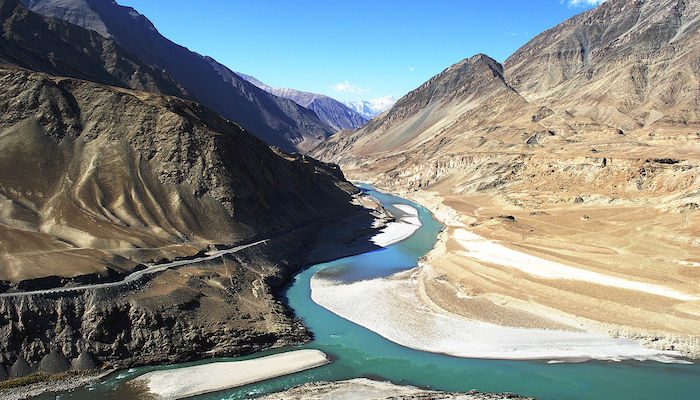
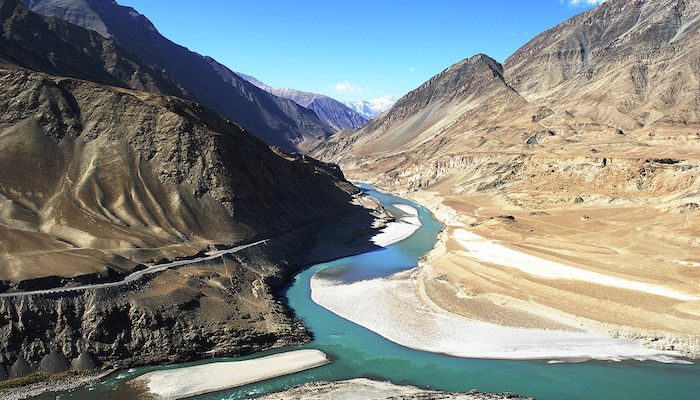
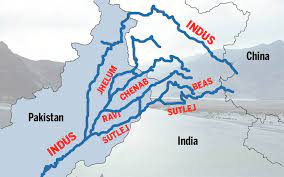
The river Indus as said about the Ganga is a transboundary river that flows Ladakh and Kashmir northwards, passes leftwards towards Nanga Parbat Massif, and Pakistan southwards and ends its journey in the Arabian sea by Karachi. The Indus is termed to be one among the world’s largest rivers in average annual flow, with an estimate of 243 cubic km, which is twice and thrice of the river Nile and the Tigris with the Euphrates combined respectively. The Indus originates from the Tibetan plateau near Lake Manasarovar and enters India in Ladakh. It cuts through the Himalayas in a deep gorge near Nanga Parbat to enter Pakistan. It has five main tributaries – the Sutlej, the Beas, the Ravi, the Chenab and the Jhelum. These rivers give Punjab its name, for the word ‘Punjab’ means ‘five rivers’. This Himalayan river is both snow-fed and rainfed, and therefore flow continuously throughout the year. The river Indus, also known as the Sindhu river, flows for 2897 km, mostly through Pakistan. Since the river moves slowly across the plain, it deposits accumulated silt on its bed. The river bed is thus higher than the sandy plain. When the river is in flood, this results in much destruction. The Indus finally branches into distributaries that join the sea at Karachi. The very river is also famous for the Indus river dolphin, a freshwater dolphin, and one of the world’s rarest mammals. It is, also the second most endangered freshwater river dolphin.
Regions through which the Indus flows
The Indus rises in southern Tibet at a height of about 5500 metres. It flows through a high plateau, then the ground falls away, and the river drops rapidly, and gathers momentum. It rushes northwest and collects the waters from innumerable glacier-fed streams. It flows between the greatest mountain ranges, the Karakoram and the Himalayas. generally, the river becomes slower and has a wider channel as it approaches its delta on the Arabian sea. Agriculture in Pakistan wouldn’t be even possible without this river. In addition, it supplies essential ingredients for human life for many urban areas. These include the Pakistani cities of Islamabad, Lahore, Peshawar and Karachi. Therefore the Sindhu is Pakistan’s longest river with a total length of 3180 km.
The Chenab
The Chenab rises in the upper Himalayas, in the district of Himachal Pradesh in India. Its waters begin from snowmelt from the Bara Lacha Pass. During the Vedic period, it was known as Chandra Bhaga, and it begins at the confluence of two rivers, the Chandra and the Bhaga in Himachal Pradesh. It flows through the Jammu, into the plains of Pakistan. It is first joined by the Jhelum, and then by the Ravi rivers. Later, it meets Sutlej, which has earlier been joined by the Beas.Altogether, these form the so-called ‘five rivers of Punjab’. After, 960 km, it flows into the Indus. The river is dear to the people of Punjab. Moreover, it forms an important part of the land’s history and culture.
Fact: The world’s highest railway bridge – the Chenab bridge – spans the Chenab. It crosses the river in Jammu and Kashmir.
map showing the path of the Indus river
The Jhelum
The Jhelum is the largest, and most western Punjab’s five rivers. It is an ancient river that has been mentioned both by the ancient Greeks as well as ancient Egyptians. It rises from a deep spring, the Verinag Spring in the southeastern part of the valley of Kashmir in India. the river wanders northwards through the valley of Kashmir to the Wular Lake. After emerging from the lake, it continues winding its way through a deep gorge into Punjab. It widens out into an alluvial plain and then goes south to join the Chenab at Trimmu after 813 km. its flow is controlled by snowmelt and the monsoon. In its lower course, the river is famous for its hydroelectric power generation. The Mangla dam and the reservoir on the Jhelum irrigate around 3 million acres of land.
The Ravi
The Ravi, one of the five rivers that create Punjab, crosses national boundaries. It rises in the majestic Himalayas in the state of Himachal Pradesh in India. It crosses Jammu and Kashmir and then flows into Pakistan. After 725 km, it empties itself into the Chenab. It is fed by glacier melt and is the smallest of all rivers of Punjab. In Vedic times, the Ravi was known as Iravati or Airavati river.It is a trans-border river of India and Pakistan. After partition, the river waters were divided between India and Pakistan.
Fact: It irrigates a large area in Punjab through a canal. This canal is known as the upper bari doab canal.
The Beas
The river Beas, one of the five rivers of Punjab, is famous in world history. It is one of the rivers that created problem’s in alexander the great’s conquest of India. His troops mutinied here in 326 BC, refusing to go any further, as they had been away from home for eight years. The Beas rises from the Rohtang Pass in the western Himalayas of Himachal Pradesh and flows south through the Kulu valley. It then enters Punjab and flows in a southerly direction. Thereafter, it finally meets the Sutlej after flowing for 470 km. the chief tributaries of the Beas are bain, Banganga, Luni and Uhal. The river was known in ancient India as the Vipasha, while the ancient Greeks called it the Hyphasis. In the 20th century, it was developed for irrigation and hydroelectric power generation.
The Sutlej
The Sutlej, the longest Punjab’s five rivers, has its source in the Rakshastal lake in Tibet. Sometimes called the red river, it is the easternmost of the Indus river’s tributaries. Further next, it rushes through the Himalayan gorges, and crosses Himachal Pradesh, before entering Punjab. It then joins the Chenab and they empty into the Indus. There are many irrigation projects along its 1400 km long course. They include the Bhakra- Nangal project, and the Sirhind canal. In addition, there is also the Sutlej valley project which benefits both India and Pakistan.
Fact: In the villages of the Sutlej valley you will find descendants of the yak traders of the olden times. These traders were known as Zhang Zhung.
The Indus: the cradle of civilization
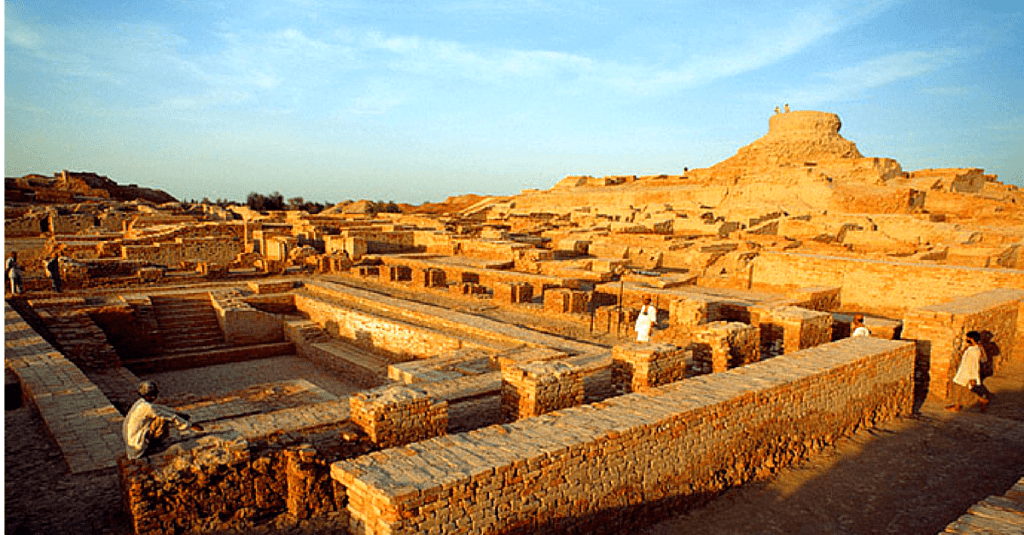
One of the greatest civilizations of ancient times flourished on the banks of the river Indus. Around 3300 BC, there were two great cities in the Indus valley, Harappa and Mohenjo Daro. They were very planned and had houses built with bricks, and even a proper drainage system. The town planning, water supply, sewage and drainage system were of very high quality – there were bathhouses and granaries in plenty, too. These cities prove to the world that the most sophisticated urban civilization of its time flourished in India, more than 5000 years ago! The wonders of engineering and architecture, the richness of the culture, and the quality of the life enjoyed by the people all prove that the valley stood to be the cradle of civilization.
The river basin covers an area of around one million square kilometres and extends to four countries. They are China, India, Afghanistan and Pakistan. Snow and glacier meltwater is the main source of water for this river system, as rainfall is low in the region. It ends in a delta, which includes numerous mangroves. The Indus basin stretches to the Karakoram and Haramosh ranges in the north, the Arabian Sea in the south, the Sulaiman and Kirthar ranges in the west, the Himalayas in the east. In India, the basin spreads over the states of Jammu and Kashmir, Himachal Pradesh, Punjab Rajasthan, Haryana and the union territory of Chandigarh.
Indus Water Treaty
India and Pakistan are two of the four countries through which the Indus river flows. The waters of the same and its tributaries support life in vast areas in these two countries. The Indus river system consists of three western tributaries of the Indus and three eastern rivers. The treaty was a result of Pakistani fears that since the sources of the rivers of the Indus basin were in India, India would have total control of the water. So, the world bank drew up a water-sharing treaty called the Indus water treaty. According to this treaty, the Ravi, the Beas and the Sutlej, which constitute the eastern rivers, are allocated for exclusive use by India, before they enter Pakistan. Similarly, Pakistan has exclusive use of the western rivers the Jhelum, the Chenab, and the Indus. The treaty was signed in Karachi on September 19th, 1960.
Major cities in the Indus basin
Industries in the Indus river basin are mainly based on agriculture and allied products. These include the textile, woollen, sugar, oil and paper Industries, as well as Industries manufacturing agricultural equipment. Other Industries in the region are cement, automobiles, machine and machine parts. These Industries have led to the growth of many towns and cities in the river basin. Important urban centres and towns in the basin are Chandigarh, Srinagar, Shimla, Ambala, Bikaner, Bathinda and Patiala. Chandigarh serves as the capital of Punjab and Haryana while Srinagar is the capital of Jammu and Kashmir. Shimla, a beautiful city on the forested hillside of the Himalayas, is the capital of Himachal Pradesh.
Problems faced by Indus rivers
Rapid population growth
As the Indus is one of the longest rivers in Asia, and many civilizations shaped near it, the rapid population growth has a serious hand on the pollution caused. As the number of people around it increases so does the manipulation and excessive use of river water. Thus it could be concluded that the human actions that affect the river pollution counter affect them.
Increased cultivation rate
As the population increases, so does the need for food. Thus for achieving this the cultivations as a whole should be raised to a certain level covering the need. Added to this the Indus basin highly supports cropping. The exploitation caused by chemical fertilizers and pesticides used had serious effects on the river. The
Issues related to reservoir
The inefficiency of the reservoir had been in great discussions among authorities over the years. the increased freshwater need has come to a greater problem. Added to the low capacity of reservoirs, is the issue of inefficient management of the same.
Sewage management
The untreated sewage disposal to the rivers had adversely affected their condition for too long. The urban sewage added to the industrial waste is strengthening the damage caused. Proper treatment of the sewage is the only possible way to counterattack this issue.
Excessive industrialization
The Indus is a cradle of civilization, many industries grew near it, making it a great industrial site from time immemorial. So is the industrial waste disposal to the water bodies. The extensive water manipulation on the industrial need and discharge of the harmful by-products to the rivers marks the need for sustainability over the industrial sector. It is said that it is one of the top rivers that end up polluting the oceans.
Regional climate change
The fast-paced climatic changes such as the overheated summers causing glacier melts in a higher level are the representations of unstable weather conditions. This then leads to a decrease in river water flow. Well, it isn’t a new fact that global warming the main enemy. When fossil fuels are burned which then increases the greenhouse effect leading towards glacier melts. The minute changes in water flow can even cause not so smaller but undesirable changes in crop production and the organisms.
Diabetes insipidus is an uncommon disorder that causes an imbalance of fluids in the body. This imbalance leads to the production of large amount of urine. It also makes the person feel very thirsty even if they have something to drink. While the terms “Diabetes mellitus” and “Diabetes insipidus” sound similar but they are not. Diabetes mellitus- involves high blood sugar levels and can occur as type 1 or type 2 is very common whereas Diabetes insipidus involves excess of urination and is very rare.
WHAT ARE THE CAUSES OF DIABETES INSIPIDUS?
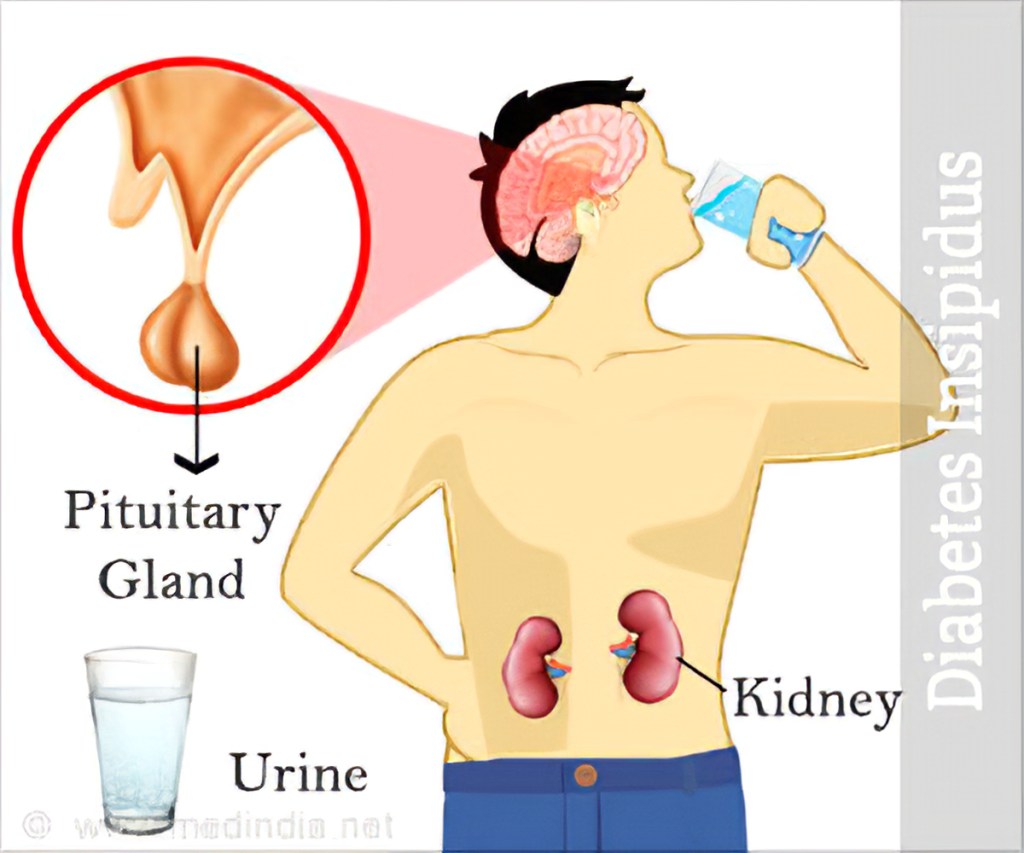
Diabetes insipidus occurs when the body can’t properly balance the body’s fluid levels. The kidneys filter the fluid portion of our blood to remove the waste products. The majority of the fluid is returned to the bloodstream while the waste and a smaller amount of fluid make up urine. Urine is excreted from the body after being temporarily stored in the bladder. A hormone called anti-diuretic hormone(ADH) or vasopressin, is needed for the fluid that’s filtered by the kidneys to go back into the bloodstream. ADH is made in a part of the brain called the hypothalamus and stored in the pituitary gland, a small gland found in the base of the brain. Conditions that cause a deficiency of ADH or block the effect of ADH result in production of excess urine.
TYPES OF DIABETES INSIPIDUS:-
Central Diabetes insipidus– damage to the pituitary gland or hypothalamus from surgery, a tumor, head injury or illness can cause central diabetes insipidus by affecting the usual production, storage and release of ADH. An inherited genetic disease also can cause this condition.
Nephrogenic Diabetes insipidus– occurs when there’s a defect in the structures of the kidneys that make them unable to properly respond to ADH. The defect may be due to an inherited(genetic) disorder or a chronic kidney disorder. Certain drugs such as lithium or antiviral medications such as foscarnet (Foscavir) also can cause nephrogenic diabetes insipidus.
Gestational Diabetes insipidus– is a rare condition. It occurs only during pregnancy when an enzyme made by the placenta destroys ADH in the mother.
Primary Polydipsia– also known as dipsogenic diabetes insipidus, this condition can cause production of large amounts of diluted urine from drinking excessive amounts of fluids.
SYMPTOMS:-
Being extremely thirsty.
producing large amounts of pale urine.
frequently needing to get up to urinate during the night.
trouble sleeping
fever
vomiting
delayed growth and weight loss.
electrolyte imbalance- can cause an imbalance in minerals in our body such as sodium, potassium that maintain the fluid balance in our body and can lead to weakness, nausea, loss of appetite, muscle cramps etc.
TREATMENT:-
For mild diabetes insipidus, we only need to increase our water intake.
if the condition is caused by an abnormality in the pituitary gland or hypothalamus(such as a tumor) then the doctor first treats the abnormality with a synthetic hormone called desmopressin that replaces the anti-diuretic hormone(ADH) and decreases urination.
available as a nasal spray, a tablet or by injection.
Web hosting is an online service that enables you to publish your website or web application on the Internet. When you sign up for a web hosting service, you basically rent some space on a physical server where you can store all the files and data necessary for your website to work properly.
A server is a physical computer that runs without any interruption so that your website is available all the time for anyone who wants to see it. Your web host is responsible for keeping that server up and running, protecting it from malicious attacks, and transferring your content — such as text, images, files, etc. — from the server to your visitors’ browsers.
Types of Web Hosting Packages
Shared Hosting
This type of hosting is the most common answer for most web hosting needs and it’s an excellent solution for most small businesses and personal blogs. With this type of hosting, you’re sharing one server with other clients. Websites hosted on the same server share all its resources, such as memory, computing power, disk space, and others.
Pros :
Low cost, excellent for small online business websites
No need for specific technical knowledge
Pre-configured server options
User-friendly control panel — hPanel
Maintenance and server administration is taken cared for you
Cons :
Little or no control over server configuration
Traffic surges on other websites can slow down your website
2. VPS Hosting
When you’re using a Virtual Private Server — or VPS for short — you’re still sharing a server with other users. However, your web host allocates an entirely separate partition for you on that server. This means you get a dedicated server space and a reserved amount of resources and memory. In fact, VPS hosting can be great for medium-sized businesses with a rapidly growing number of websites and traffic.
Pros :
Dedicated server space
Traffic surges on other websites have no effect on your performance
Root access to the server
Easy scalability and high customizability
Cons :
More expensive than other types of hosting
Technical and server management knowledge is a must
3. Cloud Hosting
Cloud hosting is currently the most reliable solution on the market. With cloud hosting, your host provides you with a cluster of servers — your files and resources are replicated on each server. When one of the cloud servers is busy or encounters a problem, your traffic is automatically routed to another server in the cluster. This results in little to no downtime, which is excellent if you own a very busy website.
Pros :
Little to no downtime
Server failures have no effect on your website
Allocates resources on demand
Pay-as-you-pricing strategy — you only pay for what you use
More scalable than other web hosting types
Cons :
Hard to estimate the actual costs
Root access is not always provided.
4. WordPress Hosting
WordPress hosting is a particular form of shared hosting, created for WordPress site owners. Your server is configured specifically for WordPress and your site comes with pre-installed plugins for crucial tasks, such as caching and security.
Pros :
Low cost and beginner-friendly
One-click WordPress installation
Good performance for WordPress sites
Customer support team trained in WordPress issues
Pre-installed WordPress plugins and themes
Cons :
Recommended only for WordPress sites, which can be a problem if you want to host more than one website on your server
5. Dedicated Hosting
Dedicated hosting means that you have your own physical server that’s dedicated solely to your website. Therefore, you’re given incredible flexibility over how you want to manage your website. You can configure your server as you wish, choose the operating system and software you want to use, and set up the whole hosting environment according to your own needs.
Pros :
Full control over server configuration
High reliability and security options
Root access to your server
Cons :
High cost, more oriented towards larger businesses
Technical and server management knowledge is a must
Tajmahal is also treated as memorial of love .It was located in AGRA. It is also one of the seven wonders of the world.It was built by shah Jahan for his wife mumtaz. Therefore this wonder is also known as mumtaz Mahal. This most beautiful of mausoleums was begun upon her death in 1631 and took 20,000 working men until 1648 to complete .this implies it took over 17 years to build this beautiful moment
Incorporating many elements of ismalic design including arches,minarets, an onion shaped doom, and black calligraphy inlaid around the entrance, the tajmahal is largely constructed of white marble decorated with delicate inlaid floral patterns and precious and semi precious stones such as jade,lapis lazuli,diamonds and mother of pearl
The best time to visit is either at dawn or at dusk when the atmosphere is brilliantly altered by the change in lighting .If possible try to catch a view of tajmahal’s reflection far from the bank of the yamuna River it makes for a memorable selfie
2.THE HOLY CITY OF VARANASI
A major pilgrimage centre for Hindus, holy city of varanasi has long been associated with the mighty ganges. River,one of the faithes most important religious symbols. Dating back to 8th century’s BC ,varanasi is one of the most oldest still inhabited cities in the world
It offers many reasons to visit mnot least of them the chance to explore the old Quarter adjacent to the ganges where you will find kashi Vishwanath temple, built in 1780
Bathing in ganges is of great importance to Hindus, and numerous locations known as “ghats” feature stairways leading to the water where the faithful bathe before prayers
3.HARMANDIR SAHIB :THE GOLDEN TEMPLE
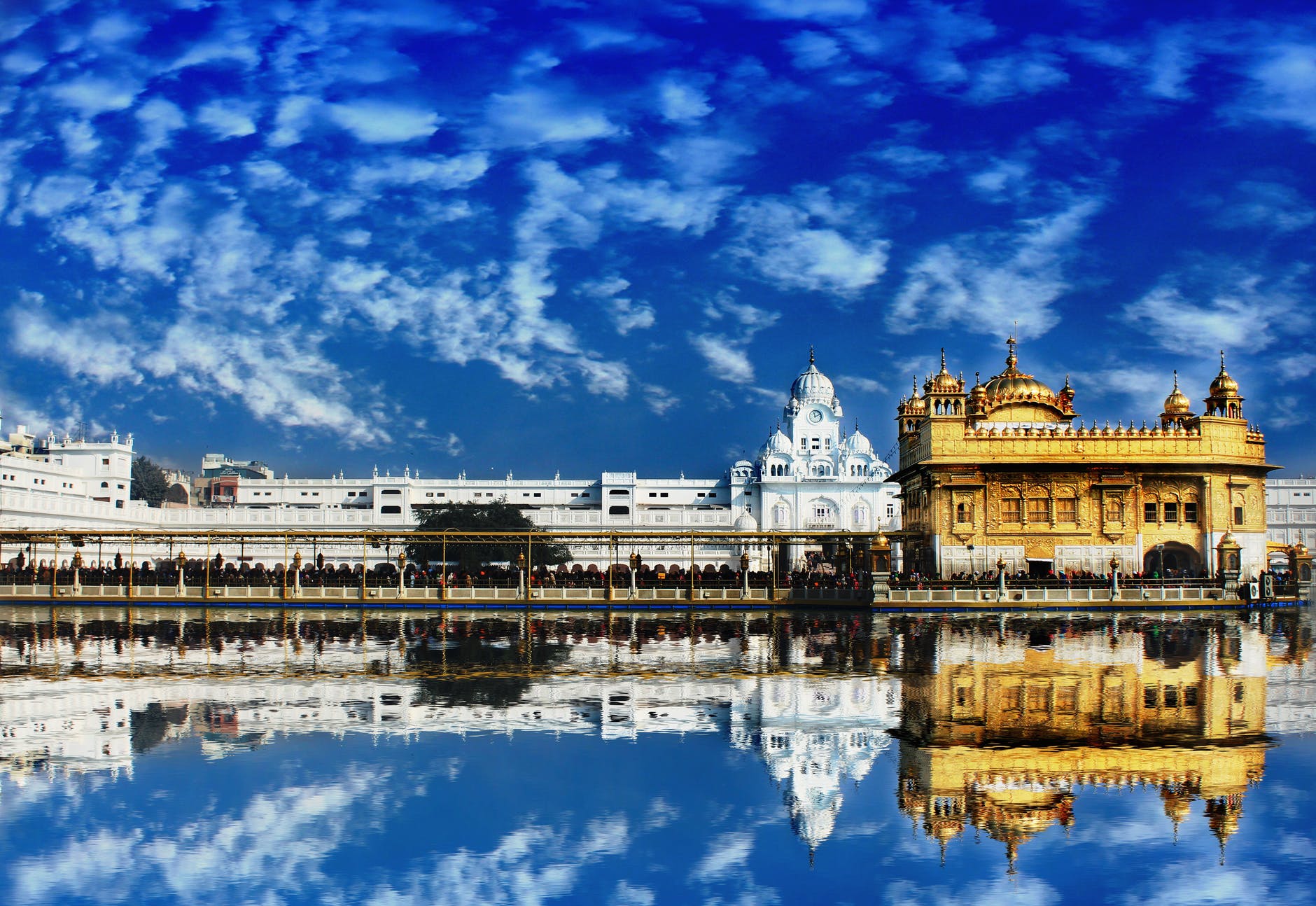
It was founded in 1577 by ram das, Amritsar is an important hub of sikh history and culture .The main attraction here is Harmandir Sahib ,opened in 1604 and stillmoften referred to as golden temple for its beautiful gold decoration. The holiest of India’s many Sikhs shrines,the temple was built in a blend of Hindu and ismalic styles, its lower marble section featuring such flourishes as ornate inlaid floral and animal motifs ,while the large golden dome represents a lotus flower ,a symbol of purity of Sikhs
In addition to it’s splendid design ,visitors are equally impressed with temple’s spiritual atmosphere, an effect enhanced by the prayers continuously chanted from the sikh holy book and broadcast throughout the complex.
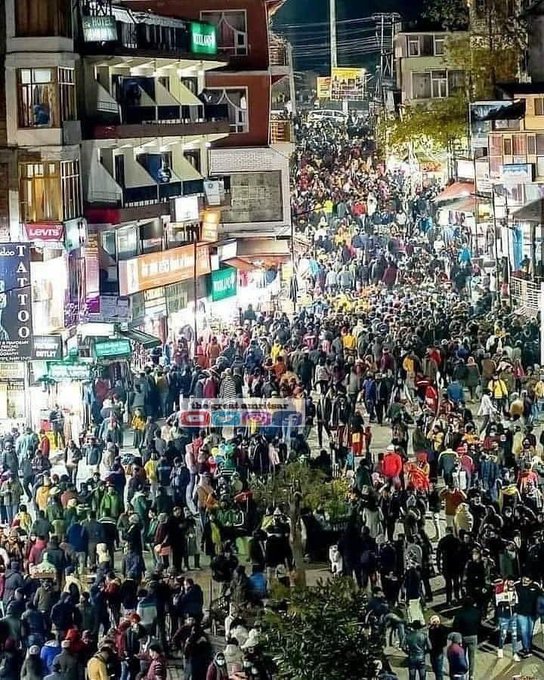
Amidst the heat waves in various places across the country people are setting off to the hill stations . Manali, Shimla, Mussoorie and many more hill stations are now packed up by people. Hotels are running out of beds .
The pandemic has tested the patience and strength of all of us since it has been over a year now Covid has infiltrated our lives. With lockdown imposed regularly the number of tourists declined in the previous year. It was now when the lockdown has just been lifted and the second wave has started to ease out that people decided to visit the hill stations . Moreover most of the people have summer vacations at this point of time.
Nainital administration has announced that once the parking reaches the limit ,tourists will be allowed to enter according to the availability of the space. Although the hoteliers are enthralled since the occupancies of the rooms has peaked, but it is adding a lot of problems to the tourists especially when the rainy season has set off. As a result a lot tourists are returning midway.
Last year Shimla faced utter water crisis and the tourists were urged not to visit. Therefore with this overcrowding water pollution , air pollution aggravates and the whole purpose of setting off to hill stations in the lap of nature demolishes. There are even some cities where even RT PCR is not compulsory .
Although the second wave is at its departure , the third wave is at large which is speculated to arrive in end August and is supposed to peak in September. Therefore it is advised to be careful and not to assume that Covid is over and avoid visiting to the hill stations especially when it is overcrowded . Although vaccinations shields from the virus but since its efficacy is not 100% the protocol of wearing mask, using sanitizer and keeping distance should be followed.
Excel is typically used to organize data and perform financial analysis. It is used across all business functions and at companies from small to large. The main uses of Excel include: Data entry.
Excel is a software program created by Microsoft that uses spreadsheets to organize numbers and data with formulas and functions. Excel analysis is ubiquitous around the world and used by businesses of all sizes to perform financial analysis.
The main uses of Excel include:
1 Data entry 2 Data management 3 Accounting 4 Financial analysis 5 Charting and graphing 6 Programming 7 Time management 8 Task management 9 Financial modeling 10 Customer relationship management (CRM) ** Almost anything that needs to be organized!
Excel is used extensively in finance and accounting functions. In fact, many organizations run their entire budgeting, forecasting, and accounting functions entirely out of Excel spreadsheets.
While Excel is defined as a “data” management tool, the data that is most commonly managed is financial. At CFI, we would define Excel as the ultimate financial software. While there are other pieces of financial software that are tailored toward performing specific tasks, the strongest point about Excel is its robustness and openness. Excel models are as powerful as the analyst wishes them to be.
Accountants, investment bankers, analysts, and people in all types of financial career paths rely on excel to perform their daily job functions.
And one should know how to use MS Excel. Its on of the most important skill in today’s corporate world.
National Workaholics Day is on July 5th, and it might remind us to balance our work and home life better. Work isn’t everything – right? Do you come in early, skip your lunch and stay late or know someone who does? This day is dedicated to the people who fit that description
By definition, a “workaholic” is a person addicted to their work. While dedication is certainly an admirable trait, a healthy work-life balance is also important.
For all the workaholics of the world, today is the day to step back and take it easy. If you fall into this category, take an afternoon nap, read a book, or spend a few hours watching videos on YouTube. You’ll have plenty of time to finish your work tomorrow!
For everyone else, today is the perfect opportunity to celebrate the workaholics in your life and to recognize all they have accomplished. To celebrate Workaholics Day, arrive at the office a little earlier than usual and tackle a project that you’ve been avoiding. Happy Workaholics Day!
The “Broken Windows” policing strategy, which has been used in New York and other large American cities since the early 1990s, has been credited with lowering crime in some areas. According to the hypothesis, stopping, warning, and even prosecuting perpetrators of low-impact crimes such as vandalism and disruptive behavior adds to a more cohesive neighborhood and a setting less likely to attract serious crime. In 1982, James Q. Wilson and George Kelling developed the broken window theory, which used the window as a metaphor for a crime. Their idea focuses on preventing crimes in the first place so that they do not escalate into more serious crimes. According to James Q. Wilson, the degree to which a society governs itself has a profound impact on crime and disorder. The “broken windows” referenced in the theory’s name refers to the belief that where one broken window is left un-replaced, there will be many more. A broken window is a tangible manifestation of the fact that the residents of a specific neighborhood do not care about their surroundings and that low-level criminality is permitted. The hypothesis had considerable impact on policymakers on most notably in New York in the 1990s.
According to this theory, there are several stages of a crime but most importantly:
Disorder
Crime
It is claimed that disorder is nothing more than little visual evidence of a crime, and that the authorities must regulate those obvious signs in order to minimize the crime rate. Their approach was zero – tolerance policy, in which the criminal justice system took low-level crime and anti-social behavior far more strictly than it had previously. This included “three strikes and you’re out” regulations, under which people may face substantial jail time for repeating minor offenses like unsolicited windshield washing, prostitution, drunk and disorderly behavior, and so on.
The concept was that low-level crime should not be accepted and strong punishments for anti-social behavior and minor infractions should be imposed in order to prevent more serious crime and assure that collective consciousness and social cohesion are maintained through clear boundary enforcement.
As we all know, India has yet to put this idea into practice. One of the most populous countries on the planet, as well as one of the hardest impacted by crime, but if India needs anything like this? Stopping the minor visible disorder, in my opinion, is one method to stop the larger crime. It takes a lot of effort to execute something like this in India, and not just the police, but also societal awareness among the general public, is required to reduce India’s crime rate. We can reach the conclusion that the broken window theory is the best tool for reducing crime rates, but we must keep in mind that instead of a zero-tolerance government policy, we can try to accomplish the financial needs of the country.












 Eduindex
You must be logged in to post a comment.