Green Revolution


The introduction of high-yielding varieties of Indian seeds after 1965 and the increased use of fertilizers and irrigation are known collectively as the Indian Green Revolution. It provided the Increase in production needed to make India self-sufficient in food grains. The program was started with the help of the United States-based Rockefeller Foundation and was based on high-yielding varieties of wheat, rice, and other grains that had been developed In Mexico and in the Philippines. Of the high-yielding seeds, wheat produced the best results.

The green revolution is a term used to refer to the transfer of technology, to the agricultural sector that occurred in the late 1960s. This opened new horizons of scientific methods in agriculture, leading to better and more reliable crop yields. The Green Revolution mainly helped developing countries to meet their food requirements and strengthen the position of farmers.

The Green Revolution in India refers to the adoption of new agricultural techniques such as the use of high-yielding variety (HYV) seeds, irrigation facilities, tractors, fertilizers, pesticides, etc. An Indian geneticist and administrator M.S. Swaminathan a.k.a Mankombu Sambasivan Swaminathan is considered the father of the Green Revolution in India. It was under his guidance and supervision that high-yielding varieties of rice and wheat began to be cultivated in India. M. s. sight of. Swaminathan had to rid the world of hunger and poverty. Swaminathan actually called it the “Evergreen Revolution” and advocated sustainable development, sustainable agriculture, food security, and ending hunger and poverty. The Green Revolution started briefly in India in 1958 and greatly benefited farmers in Punjab, Haryana, and Uttar Pradesh by introducing high-yielding varieties of wheat and rice.

Benefits of the green revolution:

1. Higher crop yield per region

2. Constant yield

3. Poverty reduction

Effects of Green Revolution  

1. Increase in production

2. Food Safety
3. Scientific practice
4. Industrial Development
5.  harmful to biodiversity
The Green Revolution brought a significant change in the world agricultural industry. This helped the developing countries greatly by improving their yield and its quality. Nevertheless, if we have to face the changing times, the Green Revolution needs to be improved regularly. The Green Revolution is a big name in the agricultural industry and has helped developing countries to meet their food needs and also boost their economical figures. As a result of greater and better crop yield, the social and economic condition of farmers has improved as a result of the Green Revolution. The farmer, who is a part of the Green Revolution, is more confident about his yield and his quality as well as his financial status.

“ARISTOTLE” Biography

“Aristotle” was a philosopher and teacher of Alexander “The Great”. He was born in 384 BC on Stagira, Greece. His father’s name was Nicomachus. His father Nicomachus named him Aristotle, which means “the best purpose”. His father served as a personal physician to king Amyntas of Macedon.

Being a physician’s son he was inspired to his father’s scientific work but did not show much interest in medicine. When he turned 18, he is shifted to Athens to pursue his education at Plato’s Academy. He left Athens somewhere in 348-347 B.C, spending almost 20 years in the City 343 B.C, after the death of Hermias, Philip II of Macedon invited him to become the tutor of his son Alexander Aristotle became the head of Royal Academy of macedon here he become a tutor not only to Alexander but came lessons to two other future kings- Cassander and Ptolemy- as well. In his role as tutor to Alexander, he encouraged him to conquer east. In 335 B.C, he returned to Athens where he established his own school called Lyceum. For the next 12 years, Aristotle organized his school as a centre of research on astronomy, zoology, geography, physics, anatomy and many other fields. Aristotle wrote 170 books, 47 of which still exists more than 2,000 years later. Aristotle was also a philosopher who wrote about ethics psychology economics theology Political Science and rhetoric later inventions search of the telescope and the microscope would prove many of Aristotle’s theories to be incorrect but his ideas formed the basis of modern science Aristotle married two times first time to Pythias. A daughter was born to the couple. Later he married of Stageira. They blessed with a son. He breathed his last, in 322 B.C, in Euboea, due to natural causes, at the age of 62. “PLEASURE IN THE JOB PUTS PERFECTION IN THE WORK”.

THE BALLAD

The ballad is a simple narrative poem in short stanzas telling a story. It may be called a short story in verse. Originally it used to be sung to the accompaniment of musical instrument like the hard by strolling bands of singers or minstrels. The word is derived from the Latin ‘Ballare’ which means to dance. This shows its connection with tribal dance.

A ballad deals with some episode of simple motive written in stanza suitable for all oral transmission. In ancient ballad, often, the authors were unknown. The themes were commonly furnished by the elementary aspects of life. Large space was given to tales of adventure and love, fighting and valour. Generally supernaturalism was an essential elements of such ballads.

HOW THE BALLAD IS EVOLVED:

The ballad begin to appear in England even before chaucer’s time. The earliest English Ballad is the fragmentary ‘Judas’ of the 13th century. The central characteristics of the Ballad are narative presentation, simplicity and spontaneity of expression. The most popular Ballad measure used to be there ‘quatrain stanza’ with rhyme at the end of the second and fourth lines.

TYPES OF BALLAD:

There are only two kinds of ballads. The traditional ballad and The Ballad of growth and the modern Ballad or the literary Ballad.

The traditional ballad: It is originated from the folk culture of each nation. Most of these ballads are of unknown of the authorship. They are the authentic ballads that have grown naturally among a primitive race and are transmitted orally from generation to generation. They are impersonal in character because they are not concerned with the subjective feelings of the narrator.

The Theme: The Ballad mostly deals with love and adventure. The narrator generally begins with the climatic episode and tells the story by means of action and dialogue. There is no attempt to give the details of place and time and no introductions are given. Most traditional ballads have a sudden and abrupt beginning as in the famous ballads ‘Sir Patrick Spens’ and ‘The Wife of Usher’s Well’. These ballads use refrains and repetitions. Many of these ballads have immense dramatic power and metrical beauty. Most of the ancient English ballads are collected in Bishops Percy’s ‘Reliques of Ancient English Poetry’ published in 1765. Majority of them are of Scottish origin. There are several ballads dealing with the legend of Robin Hood. Some other important traditional ballads are ‘Chevy chace’, ‘Edom O’ Gordon’, ‘Thomas, The Rhymer’ and ‘The Bailiff’s Daughter of Islington’.

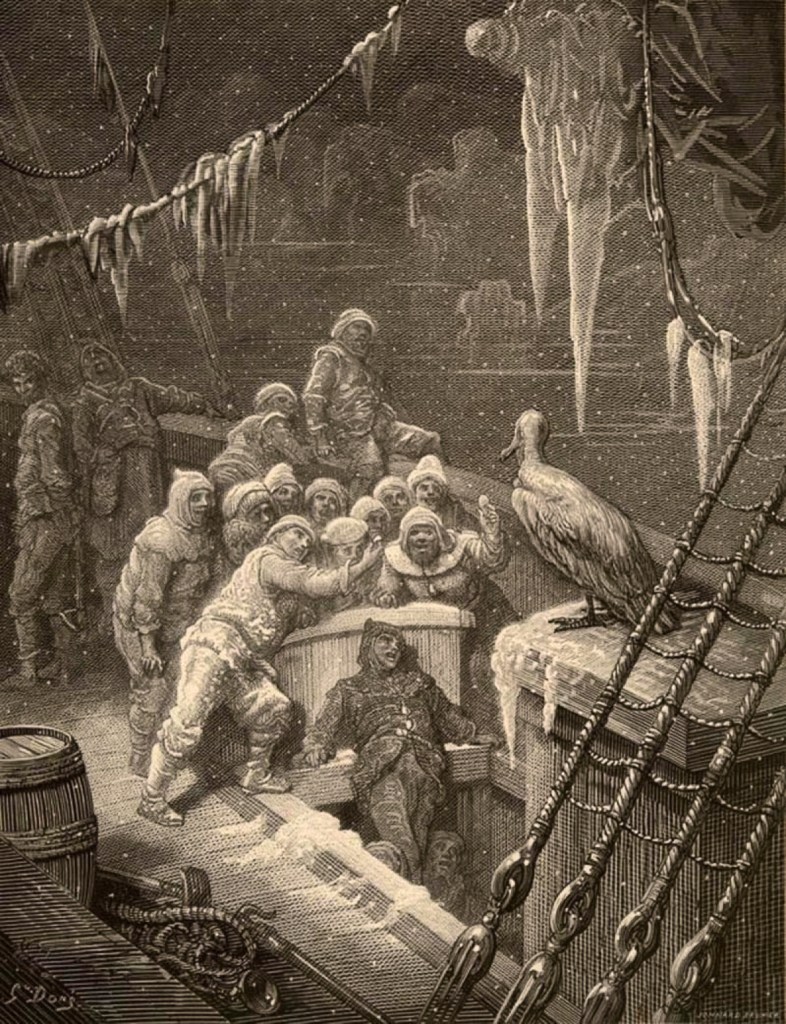
Modern or Literary ballad (Ballad of Art): It is generally written by a learnt poet in conscious and sophisticated imitation of the traditional ballad. Many of the conventional features like the stanza form are retained in the literary Ballad. Bishop Percy’s collections of songs and ballads gave a powerful impetus to the writings of ballads. Some of the greatest literary ballads were written during the period of the romantic revival. The most well-known among them is Coleridge’s ‘Rime of the Ancient mariner’ in which the ballad metre is used. Wordsworth wrote two ballads-‘We are Seven and ‘The Tables Turned’. Keats’s famous ‘La Bella Dame Sans Merci’ represents a variation on the traditional Ballad stanza.

Rime of the Ancient Mariner

The Theme: The theme strongly resembles that of the traditional ballads. Literary ballads show enlargement of description, psychological interest and a more finished style. In ballads like Tennyson’s ‘The Revenge’, Browning’s ‘Herve Reil’ and Rossetti’s ‘The king’s Tragedy’ we not only this sterling qualities of the old ballads but also traits of originality which make them modern and original poems. The theme strongly resembles that of the traditional ballads.

Important Literary Ballads: Scott’s ‘Eve of St. John’, Kingsley’s ‘The Sands of Dee’ and William Morris’s ‘Shameful Death’.

Mock ballad: the mock ballad is a minor form of literary Ballad in which a comic theme is treated with the seriousness appropriate to a regular ballard. It follows the ballad conventions in all respects except in the choice of the theme.

Important mock ballads: Cowper’s ‘John Gilpin’, William Maginn’s ‘The Rime of the Ancient Waggoner’ and an excellent parody of Coleridge’s ‘The Rime of the Ancient Mariner’.

Education in India

                                          Education is fundamental to human progress. It plays a prominent role in the all-round development of the individual as well as society in the country. A large number of books have been written on the importance of education. Education plays a key role in creating patriotic, disciplined, and productive manpower. Educated manpower is a precious asset for advancing the nation.

 Education in India is similar to other south Asian nations consisting of mainly 3 major

components i.e general, vocational and technical. There are 3 stages of education in India.

Primary, secondary and higher-level education.

     The Government of India lays emphasis on primary education up to the age of fourteen

years. It is also called primary education. The Government of India has also banned child

labor in order to ensure that the children do not enter unsafe working conditions. However,

both free education and the ban on child labor are difficult jobs due to prevailing economic

disparity and social conditions. The Right of Children to Free and Compulsory Education

(RTE) Act, 2009 as well as Article 21 A, inserted in the Constitution of India through the

Constitution 86th constitutional amendment Act, 2002, became operational on 1st April 2010.

There are many schemes related to education.

1. Rashtriya Madhyamik Shiksha Abhiyan

2. Sarva Shiksha Abhiyan

3. NPEGEL program 

4. Mid-day Meal scheme 

5. Right to education act 

6. Beti Bachao Beti padav 

Here are several reasons why people need education. The main reason being, we need to be

alert and aware of things that affect our daily life. It is the need of all human beings to know

about what is happening so that they can plan for the future and take any steps to counter

immediate problems and situations. Nowadays there is a vast choice of education. People can

study to become engineers, doctors, accountants, computer experts, government servants, and

many other professions.s we can see, education is very important. It is the most important

thing in this world. Education is an ongoing process as we call it. What we learn during our

childhood stays with us all life, even if we forget complicated lessons taught in schools and

colleges. Skills that we learn during our life can actually help us to stay alive. This can be

anything simple from sewing a button on our dress or taking medicines for illness. Education

makes a man be responsible and follow the rules and regulations of society. Hence they have

unique fame in the community. Also, they work thoughtfully and improves their social status.

Such qualities sometimes offer them the recognition of a good leader or respected profession.

In conclusion, the Indian education system must change for the better. It must give the

students equal opportunities to shine better in the future. We need to let go of the old and

traditional ways and enhance the teaching standards so our youth can get create a better

world. A gift of knowledge can bring us to the top of our dreams. It leads us to the right path

and gives us a chance to have a wonderful life. Education makes people capable of doing new

interesting things that can go a long way to improving human living conditions and standards.

Our education is really worth an investment. Only if you believe and work hard you can

achieve anything achieve greater numbers of students succeeding across the education system

more coordinated social support is needed for some students to complement the curriculum

improvements that are required in some secondary schools. We should always remember that

getting a good education is imperative in today`s society as it is a foundation of our

successful future. Our education is really worth an investment.

E.LALITHA

Ra Ra Rasputin

Back Story

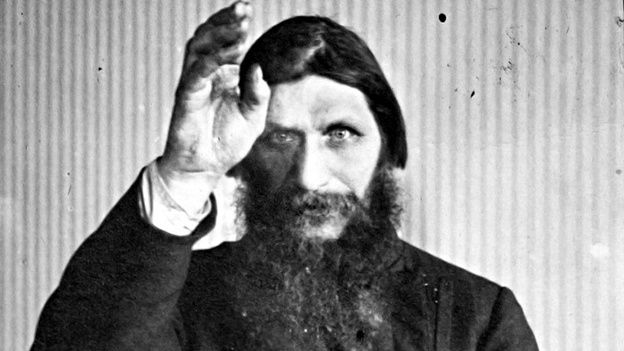
Grigoris Rasputin was born on January 22 to a peasant family. Rasputin which means ‘debauched one’, underwent a religious conversion to the Russian Orthodox Church at the age of 18 and attended a monastery.

But eventually, he did not become a monk and instead came back at age 19 and married Proskovya Fyodoronva Dubrovina. She bore him four children.  Marriage was not his cup of tea, so he left his family and wandered to Jerusalem, Greece and Mount Athos and lived of the peasants’ donations.

He gained a reputation for his ability to heal and predict the future.

Now things get interesting…

While on one of his pilgrimages, he came to the capital – St. Petersburg, where got acquainted with Russian Tsar Nicholas II. Rasputin was warmly welcomed by Nicholas and his wife Alexandra as they were devout believers of the Orthodox church. 

Despite his heavy drinking, theft and promiscuity he was attracted by laypeople and powerful clergymen.

Alexei, son of Nicholas and Alexandra was captive to haemophilia. Nicholas was summoned to the palace to work his powers. He told his parents to terminate the use of drugs prescribed for the treatment and somehow it proved successful in helping ease the boy’s suffering. Rasputin left the palace prophesying that if he died or was deserted by the royal’s family, then their only son and crown would forever be gone.

Views about Rasputin outside the Palace.

One set of people like the peasants regards him as one of their own. Another group such as the nobles and clergymen despised him.

They were convinced that he was corrupting the royal family and decided to kill him. Yusupov plotted his assassination.

In the presence of the royal family, Rasputin remained a humble and holy peasant. But outside the palace, he was a different man, with filthy habits. He acquired mistresses and seduced many women with claims of healing powers.

Death of Rasputin

Several attempts were made to end Rasputin’s life but none proved to be successful.

Yusupov’s memoirs explain how he once tried to assassinate Rasputin by serving him pastries containing cyanide. But he was shocked to find that Rasputin showed no ill effects. On further questioning, he understood that one of his conspirators substituted cyanide with a harmless substance.

He further tried to shoot down Rasputin but it was of no use. Rasputin recovered and fled.

Finally, Yusupov and his team chased Rasputin and shot him on the forehead and dumped his body in the Malaya Neva river.

Enraged at the news of his death the peasants took matters into their own hands and that was the end of the Russian monarchy just like Rasputin had prophesied.

Indian Fiscal System

It refers to the management of revenue and capital expenditure finances of the state.

  1. Fiscal system of a country refers to the revenue and capital resources that can be raised by government, the procedure to be observed in raising and spending funds and in case of a federation such as ours the provision that governs the relationship of the constituent unit of federation. It includes with in its purview taxation, expenditure, debt management and inter- governmental fiscal relation.
  2. Indian fiscal system is based on the constitution of India which is federal in character. The constitution envisages two layers of government: the Union of central government and the state government. Local bodies do not find a place in the constitution and the function and resources allotted to them are delegated by the state government.

Fiscal Policy:- It is how a government rectifies its spending levels and tax ratios to monitor and influence a nation’s economy. It is the sister strategy to Monetary Policy through which a Union Bank influences a nation’s money reserve. These uses can affect the following macroeconomic variable in the economy:

• Aggregate demand and the level of economic activity;

• The distribution of income;

• The pattern of resource allocation within the government sector and relative to the private sector.

Sources of Revenue:- The main sources of revenue are custom duties, excise duties, service tax, taxes on property, corporate taxes, and income taxes.

Sources of Expenditure:-

Plan Expenditure includes agriculture, rural development, irrigation, and flood conrol, energy, industry, minerals, transport, and communications, etc.

Non-Plan Expenditure:- It consists of interest payment, defence, subsidies, and general services.

Public Dept:-

Internal Debt comprises loans raised from the open market treasury bills issued to the RBI, Commercial Banks, etc.

External Debt consists of loans taken from World Bank, IMF, ADB, and individual countries.

Deficits:- In a budget statement, four types of deficits are mentioned:

• Revenue Deficit

• Fiscal Deficit

• Capital Deficit

• Primary Deficit

(1) Revenue Deficit: There are various ways to represent and interpret a government’s deficit. The simplest is the revenue deficit which is just the difference between revenue receipts and revenue expenditures.

Revenue deficit = Revenue expenditure – Revenue receipts

(2) Capital Deficit: An imbalance in a nation’s balance of payments capital account in which payments made by the country for purchasing foreign assets exceed payments received by the country for selling domestic assets.

In other words, investment by the domestic economy in foreign assets is less than foreign investment in domestic assets. This is generally not a desirable situation for a domestic economy.

Capital deficit = Capital receipts – Disbursement on Capital acoount

Fiscal Deficit: This is the sum of. revenue and capital expenditure less all revenue and capital receipts other than loans taken. This gives a more holistic view of the government’s funding situations since it gives the difference between all receipts and expenditures other than loans taken to meet such expenditures.

Fiscal Deficit = Difference between country’s expenses and earnings

Fiscal deficit = Revenue receipts (net tax revenue+non tax revenue) + Capital receipts (only recoveries of loans and other receipts) – Total expenditure ( Plan and non- plan) .

Primary Deficit: Amount by which a government’s total expenditure exceeds its total revenue, excluding interest payments on its debt.

Primary deficit = Fiscal deficit – Interest payments.

“ATITHI DEVO BHAVA” – Part 1.

Land of all Seasons:

India is the current tourism hot spot. The other epithets used while referring to the nation include ‘Destination of the Millennium’ and ‘Land of All Seasons’. Spanning an area of 3,287,263 square kilometers, India is a vast country and includes dry desert areas, evergreen forests, snowy Himalayas, a long coast, and fertile plains.The natural beauty and cultural diversity of the place echoes a rich tradition. India flaunts with equal grandeur bays and beaches, deserts and mountains, enigmatic green valleys and backwaters. There exists in India a comfortable juxtaposition of contrasts- the existence of bustling haats and swanky malls, emergence of nuclear families but a reluctance to let go on the joint family system, a rush to embrace modernity yet a firm resolve to preserve traditions; destination for both ayurveda and modern medical tourism; bustling communities and indigenous tribes.

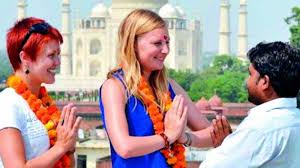
India has a rich heritage and culture of warm hospitality. In India it is believed that honouring guests equals to honouring God. A guest is welcomed into our home and hearth with cheerful gratitude. The Sanskrit adage ‘atithi devo bhava’ dictates the respect granted to guests in India. This wonderful tradition of our country has become the unique selling point of the modern tourism industry. Ministry of Tourism, Government of India has pioneered an initiative that will help tap into the full potential of tourism in India. Ministry of Tourism, Government of India has introduced “Atithi Devo Bhavah Program”- a nation wide campaign that aims at sensitizing key stakeholders towards tourists, through a process of training and orientation. The endeavour is to boost tourism in India, which in turn would act as a catalyst for India’s economic growth.

The ‘Incredible India’ Campaign has been launched to create awareness about the effects of tourism and sensitizing people about preservation of our rich heritage and culture, cleanliness and warm hospitality. It also re-instills a sense of responsibility towards tourists and reinforces the confidence of foreign tourists towards India as a preferred holiday destination.

Some points prepared by the Ministry of Tourism, Government of India, Part -1:

‘Guest Is God – Atithi Devo Bhavah’

Image Source -google.

As the old saying goes, “Treat others as you would like to be treated yourself.” That is the essence of Atithi Devo Bhavah campaign. And for that to happen, we need to change our attitude towards tourists. Some of us have lost touch with the hospitality that we were famous for. Let us bring that warmth back. Let us truly embrace the spirit of Atithi Devo Bhavah.

WHY ATITHI DEVO BHAVAH? : Last year we had 3.3 million visitors, but when you consider that Singapore gets 7 million a year, Thailand 9.6 million a year and Malaysia 11.5 million, it is a small number. There is no reason why we can’t aim to increase our numbers by 100%. And that too would be just a beginning. However to do this we need to change our attitude towards those who visit us. Often tourists are mistreated, cheated and rudely dealt with. It is simple logic: if someone in a house is rude to you, as a guest, you don’t encourage your friends and relations to go there. This is perhaps the reason why, in spite of an incredible wealth of tourist spots, cultural attractions, natural wonders and destinations for the soul, India still isn’t amongst the top 15 tourist destinations of the world. The time has definitely come to get together to change this.

INSPIRATION BEHIND ATITHI DEVO BHAVAH ? : Respect has always been an integral part of the Indian soul. From time immemorial we have always respected our teachers, our elders, our parents and our guests. Perhaps this is why a great Indian Emperor once observed-‘In Hindustan our manner is very respectful and our hearts are always open’. In many ways, at that time India was the ultimate destination for the enlightened travellers. Now, thousands of years later, we can when bring that golden age back again. This inspired us to go back to those years, when Indian hospitality set the standard for the world. And we found the keystone of what we want to do ,

Or guest is blessed, Our visitor is God. That was how we arrived at our mission called ‘Atithi Devo Bhavah’.

To be continued………………

External Morphology of leech

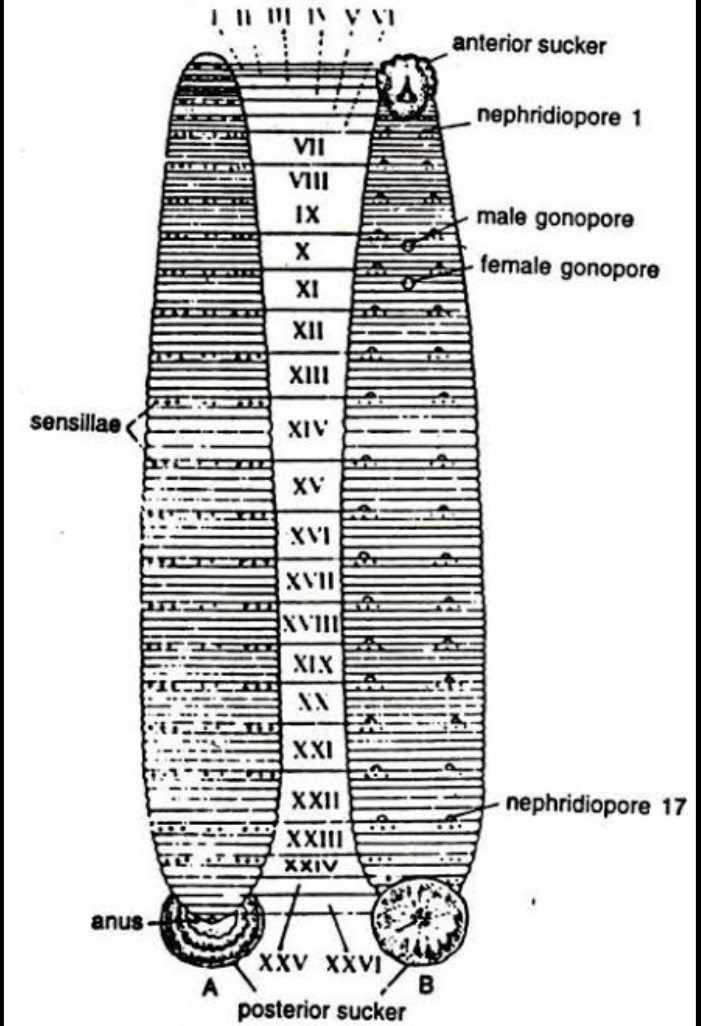
Shape and size: The body of a leech is soft, vermiform, elongated and segmented. It becomes ribbon shaped when extended and almost cylindrical when contracted. Leeches may grow to a length of 35cm.

Colouration: Dorsal surface is olive green in colour and the ventral surface is orange yellow or orange red in colour.

Segmentation: Metamerism is the segmentation of the body. The body of leech is metamerically divided into 33 segments. The segments are arranged one behind the other. Each segment is further superficially subdivided into rings or annuli. A temporary clitellum is formed on segments 9-11, which is meant to produce a cocoon during the breeding season.

Receptors: On the dorsal side there are five pairs of eyes on the first five segments. Each segment bears a number of sensory projections called receptors are located in each annulus and segmental receptors are located on the first annulus of each segment.

Suckers: leech has two suckers. The sucker located at the anterior end is called anterior sucker or oral sucker which is ventral in position occupying the first five segments. The posterior sucker is formed by the fusion of the last seven segments. The anterior sucker helps, in feeding, while both suckers help in attachment and locomotion.

External apertures

Mouth: It is located in the middle of anterior sucker.

Anus: Anus is a small aperture that opens on the mid- dorsal side of 26th segment.

Nephridiopores: Nephridia open to the exterior by 17 pairs of nephridiopores. They lie ventrally on the last annulus of each segment from 6 to 22.

Male genital pore: It is a mid – ventral opening, situated between second and third annuli of 10th segment.

Female genital pore: It lies mid- ventrally between second and third annuli of 11th segment.

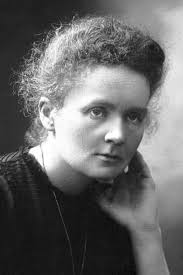
“MARIE CURIE” Biography

“Marie Curie” was the first woman to win a Nobel prize. She was born in Warsaw, the Kingdom of Poland then part of the Russian Empire. On 7 November, 1867 her father’s name was Wladyslaw Sklodowska, and her mother’s name was Bronislawa Sklodowska. Her father and mother was a teacher she was the youngest of the five children she was ten years old and began attending the boarding school of J. Sikorska.

Then she attended a gymnasium for girls from which she graduated on 12 June 1983 with a gold medal she started her practical scientific training at the chemical laboratory in 1891 she moved to France where she enrolled herself at the Sorbonne University. In 1993 she was awarded a master’s degree in Physics she returns to Paris to pursue a Ph.D. In 1894 Marie met Pierre Curie. Like Marie, he was a scientist and the two of them fell in love. They married on July 26, 1895, and they had to daughter. Marie became fascinated by rays that were recently discovered by scientists Wilhelm Roentgen and Henri Becquerel. Roentgen discovered X- rays and Becquerel had found rays given off by and elements called uranium Marie begin to do experiments once Marie was examining a material called pitchblende see it budget there to be a few raised from the Uranium pitchblende. But instead, Marie found a lot of rays she soon realized that there must be new and discovered the element in pitchblende Mary and her husband spent many hours in the science lab investigating pitchblende and the new element the event figured out that there where to a new element in “Pitchblende” they had discovered two new elements for the periodic table Mary named owner of the element polonium after her Homeland Poland she named “The Other radium” because it gave off such strong rays the curies came up with the term “radioactivity” to describe elements that emitted strong rays. In 1903, the Nobel prize in physics was awarded to Marie and Pierre Curie as well as Henri Becquerel for their work in radiation. Marie became the first woman to be awarded the prize. In 1911, Marie won the Nobel in chemistry for the two elements, polonium, and radium. She was the first person to be awarded two Nobel prizes. Marie became very famous. Scientists came from around the world to study radioactivity with Marie soon doctors found that radiology could help with curing cancer when World War I started Marie learned that doctors could use X-rays to help determine what was wrong with an injured Soldier. At that time Marie finds out a new portable system to carry the machine and helped over 1 million soldiers during the war she was the first woman to be awarded the prestigious Nobel Prize and the only to win into the field and multiple Sciences. She died in Passy, Haute-Savoie, France on 4 July 1934, at the age of 66. “YOU CANNOT HOPE TO BUILD A BETTER WORLD WITHOUT IMPROVING THE INDIVIDUALS”.

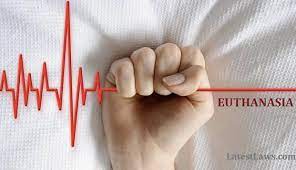
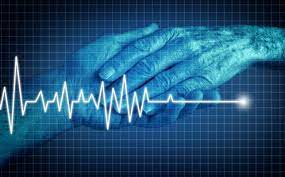
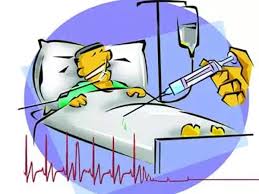
EUTHANASIA:

Euthanasia refers to deliberate action taken with the intention of ending a life, in order to relieve persistent suffering. It is performed by doctors when requested by people to put and end to illness and a lo of pain.

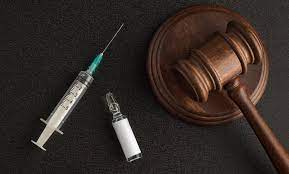
In most countries, euthanasia is against the law and it may carry a jail sentence. For a long time now, euthanasia ha been controversial and emotive topic.

TYPES OF EUTHANASIA:

There are different types of euthanasia

  • Voluntary euthanasia:

It is conducted with the consent of the patient. 

  • Non-Voluntary euthanasia:

It is conducted when the consent of the patient is not available.

  • Involuntary euthanasia:

It is conducted against the will of the patient.

  • Passive and active euthanasia:

Passive euthanasia entails the treatment necessary for the continuance of life. Active euthanasia entails the use of lethal substances and is more controversial.

CONTROVERSY SURROUNDING IT:

There are many arguments both for and against euthanasia.

Some believe euthanasia is murder and find it unacceptable for moral reasons. Some argue that it is legal if someone is mentally capable of making their choice.

“Death with dignity” is a movement that encourages legislatures to allow people to decide how they want to die. Some people prefer not to go through a lot of pain while dying and often it concerns on not putting burden on their loved ones which is what exactly this movement defines.

It is also concerned about the ethical complications that doctors could face. Long back doctors have taken the Hippocratic oath which implies to care for and never harm those under their care. As a result most doctors never encourage euthanasia. But even in that Hippocratic oath some argue that it ends suffering and brings no more harm and hence euthanasia is totally acceptable.

IS EUTHANASIA LEGAL?

Well there are lot of debate going about the legality of euthanasia. But according to laws, euthanasia is legal in

  • Belgium,
  • Canada,
  • Luxembourg,
  • Netherlands,
  • New Zealand,
  • Spain and
  • several states of Australia.

Whereas in INDIA passive euthanasia is legal under strict guidelines. Patients must consent through a living will, and must be either terminally ill or in a vegetative state.

There is no particular conclusion in this case as the debate is still ongoing and one cannot come to a conclusion whether euthanasia is necessary or not. It it always in the individual and it is also a matter of choice.

Anime series for beginners

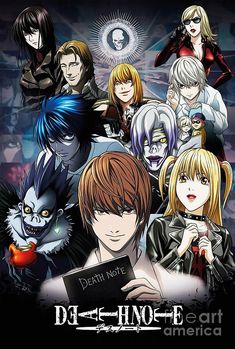
1.Death Note

Death Note is written by Tsugumi Ohba and illustrated by Takeshi Obata. It consists of 37 episodes . It is psychological thriller, mystery based anime. This is the story of a teen genius boy who got a strange notebook which originally belongs to Shinigami Ryuk.

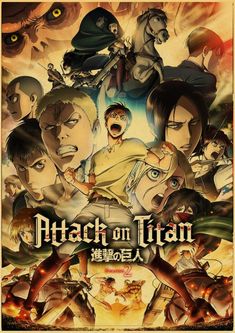
2.Attack on Titan

It is written by Hiroshi Seko and illustrated by Tetsuro Akari. Attack on Titan is of 4 season and 75 episodes. It’s genre is action, dark fantasy and post-apocalyptic.

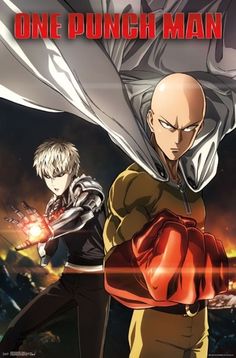
3. One Punch Man

It is written by ONE and illustrated by Yusuke Murata. It consists of 23 episodes and it’s genre is action, gag comedy and superhero. One punch man is a story of a boy name Saitama, who has superpower and strongest person in the universe.

Indian Female Athletes And Their Contribution To Sports

Women athletes had constantly struggled to create space for themselves in Indian sports. People had doubts about women’s performance and did not think they had what it took to compete in sports. They were considered weak and too emotional to survive the rough play. Though, women had been part of sports for a long time, lack of motivation and trust in them took time to make a mark and reinforce the lost confidence. Women are born to cook and have family was the belief of the society, but they defied all odds and changed history of sports with striking sporting skills. Now, female athletes have made India proud in various international games and their passion has inspired every girl out there to believe in her dreams and work hard to achieve them.

Here are a few Indian female athletes who have made India proud on international platforms.

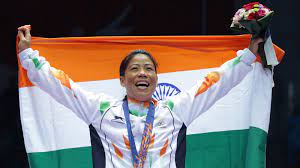
  1. Mary Kom (Boxing)

Boxing is a career that was believed to be meant for men and not women. Female boxing was not considered a viable sport to be played and was discouraged by people. However, Mary proved them wrong and kept working to be the boxer she aspired to become. She had her own struggles but strived to the best that she is now. She overcame all the obstacles that pulled her from reaching the level that is unattainable to come near to even for the greatest boxers. Winning a medal in each of the six World Championships, she has set an astounding record despite being a wife and a mother of three children. Also, Mary is the first Indian female boxer to win gold in Asian Games. She could not qualify further in Olympics but her achievements are inspirational.

2. Saina Nehwal (Badminton)

Saina is the first Indian female badminton player to win Olympics medal. She is a true inspiration to young girls who aspire to be badminton player. She won prestigious awards like Arjuna Award, Padma Shri and Padma Bhushan. She was the first female to be raked no. 1 in the world.

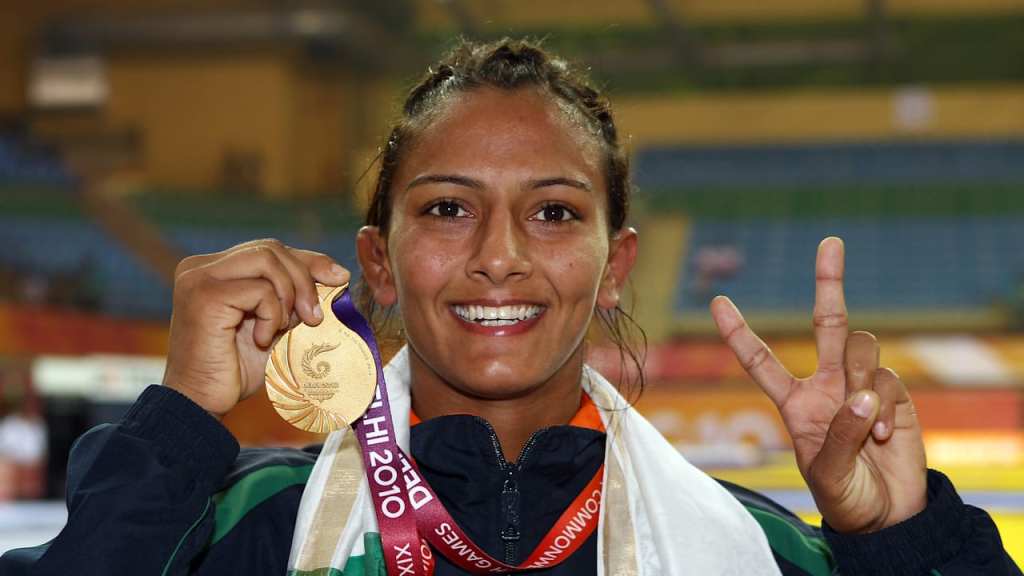
3. Geeta Phogat (Wrestling)

Geeta Phogat in wrestling stunned everyone with remarkable performance. She wrestled her way through gold medal in Commonwealth Games. She is not the only Phogat known to incredibly represent the country but her sisters as well are equally bringing pride to Indians. Geeta and her sisters sacrificed a lot to be who they are now. Moreover, she was the first Female Indian Boxer to qualify Summer Olympics.

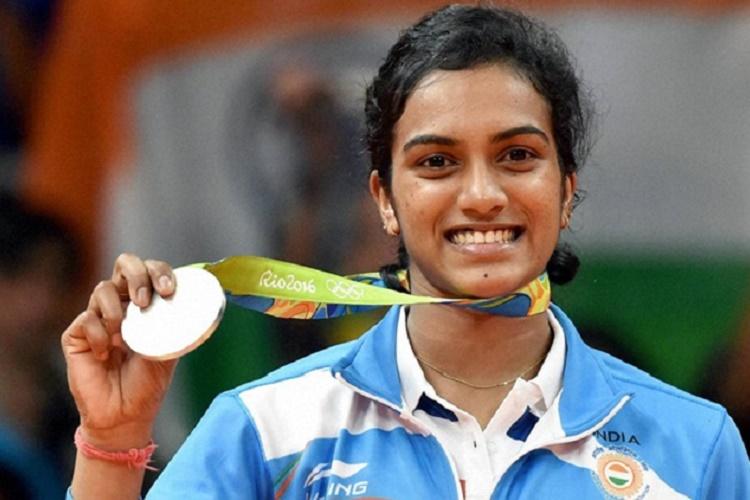
4. P V Sindhu (Badminton)

PV Sindhu at a very young age achieved magnificent things that made her India’s favorite badminton player. She was the first Indian woman to win a silver medal in Olympics at only 21 years of age. With her precision and skills she has now entered semi-finals in Tokyo Olympics and will be seen in action today.

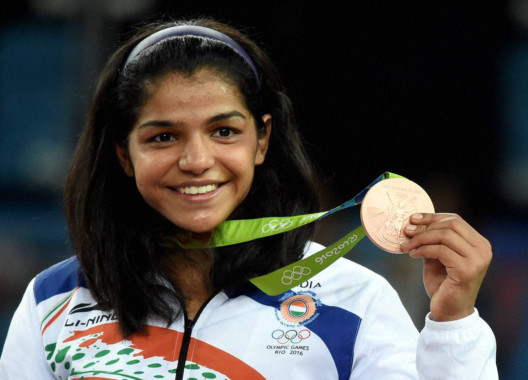
5. Sakshi Malik (Wrestling)

Rio Olympics, 2016 turned to be the time when a talent like Sakshi Malik had become inspiration by winning first Olympic medal in wrestling. She started wrestling at a young age and her hard work payed off by achieving third place with supreme talent.

6. Deepika Kumari (Archery)

An inspiring woman who is praised for her excellence in archery and rewarded with numerous titles. Her achievements in archery are exceptional. She was ranked world’s no. 1 female archer. She could not make it through Quarter-finals but we can expect to see a lot of extraordinary performance in future games.

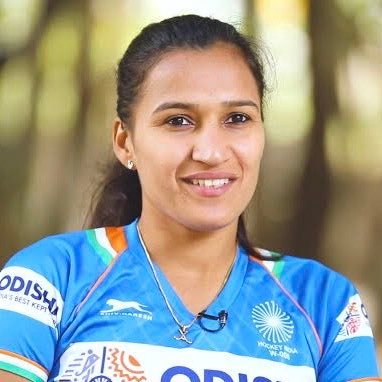
7. Rani Rampal (Hockey)

At the age of 15, she wonderfully represented India at the World Cup. She was awarded Khel Ratna and Padma Shri in the year 2020. Her contribution to Indian hockey paved her way to becoming captain of the team. Rani is successfully leading hockey team this year in Tokyo Olympics.

People were tough on them but they fought for themselves and for all those girls who were prevented to dream. They carved a way for women to strive against stereotypes. We are proud of you!

TOKYO OLYMPICS (2020) AND INDIA’S TOP MEDAL CONTENDERS

The 2020 summer Olympics officially the Games of XXXII Olympiad unbranded as Tokyo 2020. Tokyo 2020 is an international multi sport event being held from 23 July to 28 August 2021 in Tokyo Japan with some preliminary events that begin on 21 July.

POSTPONED TO 2021:

During the 125th IOC session  in Buenos Aires held at Argentina, on September 7, 2013 TOKYO was selected as a host city to conduct 2020 Olympics. The actual date to conduct the Olympics was from 24th July to 9th August 2020. But due to Covid -19 pandemic the event was postponed to 2021 and now happening in Tokyo. This is the first time the Olympics games had been rescheduled. The name of the event remains the same Tokyo 2020 because of marketing and branding purpose. The event is been held with all safety measures behind the closed doors, without any public spectators. The Summer Paralympics will be held between 24 August and 5 September 2021.

The 2020 Games are the fourth Olympic Games to be held in Japan, following the Tokyo 1964 (Summer), Sapporo 1972 (Winter), and Nagano 1998 (Winter) games.[c] Tokyo is the first city in Asia to hold the Summer Games twice. The 2020 Games are the second of three consecutive Olympics to be held in East Asia, following the 2018 Winter Olympics in Pyeongchang, South Korea, and preceding the 2022 Winter Olympics in Beijing, China.

NEW GAMES:

This 2020 olympics introduces new games. Those games were once held but subsequently removed.  New games are 3×3 basketball, freestyle BMX (bicycle Motocross), Madison cycling (relay race). New IOC policies also allow the host organizing committee that is Japanese Olympic Committee to add new sports. The games are baseball and softball. The olympic debuts are karate, sport climbing, surfing and skateboarding.

Bermuda and the Philippines won their first ever olympic gold medals. San-Marino and Turkmenistan won their first ever olympic medals.

INDIA’S TOP MEDAL CONTENDERS:

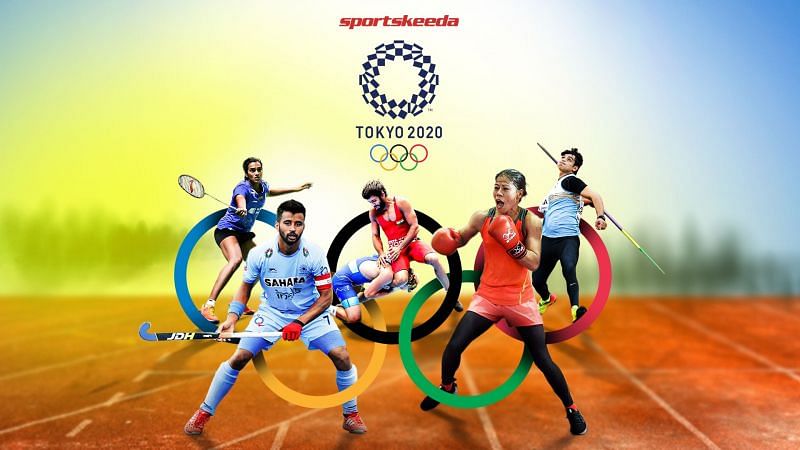
India is sending its largest ever contingent to the Tokyo Olympics. The nation has the great hope of bettering its medals hauls this time over previous Games. With 122 athletes competing in 13 events across 85 events, the country hopes to win medals for shooting, wrestling, boxing, archery and badminton.

In 2016 Rio Olympics, India returned with two medals. A silver for ace shuttler PV Sindhu in the Women’s Singles Badminton and a bronze for wrestler Sakshi Malik in the Women’s 58kg Freestyle Wrestling Event.

  • 2016 Rio Olympics: 1 Silver, 1 Bronze
  • 2012 London Olympics: 2 Silver, 4 Bronze
  • 2008 Beijing Olympics: 1 Gold, 2 Bronze

India has won a total of 28 medals since 1900 – 11 from hockey, five from wrestling, four from shooting, two each in badminton, boxing and athletics, and one each in tennis and weightlifting.

SHOOTING: India’s 15 member, shooting contingent is the favourite to bring back a big haul of medals.

Nineteen year old Manu Bhaker is one of the top contenders on the 10m Women’s Air Pistol event. She has won two gold medals in ISSF World cup in 2018 and she was the youngest Indian to win gold medals in ISSF World Cup to Commanwealth medal and Youth Olympics.

Shooter Saurabh Chaudhary, world number two and Youth Olympics champion, became the youngest Indian shooter to win a gold at the Asian Games in 2018 when he was just 16. Rahi Sarnobat in the pistol events, rifle marksman and two-time Olympian Sanjeev Rajput (2008 and 2012), and the current world-number-one Divyansh Singh Panwar and Elavenil Valarivan in the men’s and women’s air rifle, respectively.

BADMINTON: In 2016 Rio Olympics, India returned with two medals. A silver for ace shuttler PV Sindhu in the Women’s Singles Badminton.”I was just a participant back then, but now everyone says Sindhu has to get a medal,” she told the BBC recently. Last year, the ace shuttler won the inaugural BBC Indian Sportswoman of the Year award. In 2019, she was crowned the World Badminton Champion but her form has had inconsistencies since then. However, she remains India’s top medal prospect.

BOXING: Mary Kom also known as Magnificent Mary, the Iron Lady. She won bronze at the 2012 London Olympics. She is expected to win Gold medal when she participates in Flyweight section. In May, she picked up a silver when she lost the final to Kazakhstan’s Nazym Kyzaibay during the Asian Boxing Championships in Dubai.At 38, Kom may well be taking part in her last Olympics, and India will be rooting for her to increase her tally before she takes off her gloves.

WRESTLING: India had a decent run at the Rio Olympics in 2016, with Sakshi Malik earning a bronze medal. In Tokyo, Vinesh Phogat leads the women’s wrestling team. Having suffered a freak injury during the Rio Olympics, Phogat returned to India in a wheelchair and underwent surgery. The 26-year-old is now roaring to go in the 53kg category with some great wins in the last couple of months, as well as reclaiming the number one ranking. With three world championships to his name, wrestler Bajrang Punia is the top contender from India in the 65kg men’s category at his first Olympics.

WEIGHTLIFTING: The Tokyo Olympics will be Mirabai Chanu’s second time on the big stage. In 2016, she qualified for Rio but failed to record any legal lift in three attempts in the Clean and Jerk category, and was out of the running in the Women’s 48kg category.In 2017, she won gold in the World Weightlifting Championships and went on to win gold in the Commonwealth Games a year later and bronze at the 2019 Asian Weightlifting Championships.

She is the first athlete from India to win Silver medal in 2020 Summer Olympics.

ARCHERY: Only last month, archer Deepika Kumari won three golds at the Archery World Cup in Paris. Deepika Kumari is the number one ranked recurve woman in the world
She is now the world number one in the women’s recurve category and a strong candidate for a medal in Tokyo. Kumari has won nine gold, 12 silver and seven bronze medals at various World Cups and will be looking to add the Olympic medal to her tally now.

The nation is looking forward for more medals from the athletes competing in Tokyo Olympics and also feeling proud of Mirabai Chanu who is the one to win the first medal, silver medal for India in 2020 Olympics until now.

IMPORTANCE OF TECHNOLOGY IN EDUCATION

In the world that we currently live in,
technology is a very vital factor. With each passing day a new software or
gadget is being brought into the market that serves to improve our lives in one
way or another and make it much easier and also to advance an already existing
software or gadget. However, it is important to note that despite the fact that
technology plays a big role in making our lives easier, it is not the only role
it has.
There are countless reasons why technology
is a key aspect of learning in the schools. Whether we like it or not,
technology is everywhere; and in order for our students to survive in
post-secondary education and the business world, they must know technology.

Although many people like to rely on
traditional methods of teaching, the possibilities that open when technology is
brought into the classroom are endless. For one, access to education has been
significantly broadened as a result, including a wide range of learning styles
and degree options. Even if you are not a student or an education professional,
it is crucial to note the importance of technology in education. To really
utilize these tools, teachers should ask themselves why students want
technology in the classroom, not just why they need it.

Students are often bombarded with
information in a classroom which they must quickly attempt to process and make
sense of. However, this can leave them feeling overwhelmed and confused by
concepts. Technology provides students with access to countless online
resources, encouraging them to carry out research and therefore become more
independent. It also simplifies learning by making concepts more digestible,
for example through an instructional video. It is important to recognise that
there are various learning styles and traditional education may not be catering
to them all. Technology has made it possible for students to gain
qualifications online and educate themselves through institutes that offer
online courses. They can learn from home without having to pay to commute or
move away to attend university.

Technology that is made use of in the
classroom is very beneficial in helping the students understand and absorb what
they are being taught. For instance, since there are a number of students who
are visual learners, projection screens connected to computers could be put in
classrooms to let the students see their notes as opposed to simply sitting
down and listening to the instructor teach.

With the continuing advances in the
technological world, students are getting improved access to such educational
opportunities. Every time something ‘better’ and ‘new’ is brought into the
market, the price of the existing technology is decreased which makes it much
more accessible in the educational setting even to those schools that might not
have a lot of financial resources available to them. We need to face the truth,
technology is the ‘in thing’ in the world today and it has become necessary in
each and every aspect of our lives and education has without doubt not been
left behind. It is very useful in providing more knowledge to our students and
also on making them competitive in the job market.


India At Olympic 2021 (Updated)

30th July 2021 – P.V. Sindhu (Badminton), Indian hockey team, Deepika Kumari (Archery), A.M. Sable(Athletics), Madari Palliyalli (Athletics), Simranjeet Kaur (Boxing), Lovlina Borgohain(Boxing), Fouaad Mirza (Equestrian), Anirban Lahiri and Udayan Mane (Golf), Indian Sailing Team,

31 July 2021 – Atanu Das(Archery), Kamalpreet Kaur(Athletics), P.V. Sindhu(Badminton), Pooja Rani(Boxing),Fouaad Mirza (Equestrain), Anirban Lahiri (Golf).

1 Aug 2021: P.V. Sindhu , Fouaad Mirza, Anirban Lahiri, U. Mane, Indian Hockey Team.

2 Aug 2021: Kamalpreet Kaur, Dutee Chand, Fouaad Mirza, Indian women’s hockey team.

3 Aug 2021: Annu Rani(Javelin Throw), Tajinderpal Singh Toor(Shotput), Indian Hockey Team,

This image has an empty alt attribute; its file name is untitled-design-6.jpg

Archery

Women’s individual

Deepika Kumari defeated Ksenia Perova from Russia in 1/8 Eliminations with scores 6-5.

But, An San from Korea gave her a tough match in Quarter Finals. Deepika Kumari lost to wth scores 6-0.

Men’s individual

In 1/8 Eliminations, Takaharu Furukawa from Japan won against Atanu Das in a close call match with scores 6-4.

Athletics:

Men’s 3000m steeplechase

In round 1, Heat 2, A.M. Sable secured 7th Position failing to qualify for the next round.

Men’s 400m hurdles

In round 2, Heat 5, Madari Palliyalli, secured 7th position failing to qualify for next round.

Women’s discus throw

Valarie Allman from USA and Kamalpreet Kaur from India have qualified for finals by securing 1st and 2nd Position respectively.

Discuss Finals:

  1. Valerie Allman from America
  2. Kristin Pudenz from Germany
  3. Yaime Perez from Cuba

Kamalpreet Kaur held the 6th position in the finals.

Women’s 200m

Dutee Chand acquired 7th position in heat 4.

Women’s Javelin throw

Annu Rani secured 14th position with score as 54.04m in qualifications.

Men’s shotput

Tajinderpal Singh Toor, a petty officer in the Indian Navy, secured 13th position with distance as 19.99mm.

Badminton

Women’s Singles

What a amazing match it was between Akane Yamaguchi and P.V. Sindhu. In the first set, the points were 21-13 with Sindhu being in lead. In the second, we can see the clash between shot acer (Sindhu) and defense master (Yamaguchi) aggressively using their skills to make points. Sindhu gets the game to deuce i.e. scores are 20-20 wherein a player has to score 2 more points than their opponents score. Using her signature moves, Sindhu won by scoring 2 continuous smashes.

Women’s Singles Semi-Finals


Tai Tzu-ying from Chinese Taipei Vs P.V. Sindhu. TTY won by 21-18 and 21-12.

1 Aug, P.V. Sindhu can fight for Bronze medal in Bronze medals match vs He Bingjiao

P.V. Sindhu begged the Bronze Medal.

Boxing

Women’s LIghtweight

Sudaporn Seesondee from Thailand defeated Simranjit Kaur From india in Round 16.

Men’s flyweight

Yuberjen Martínez from Colombia won against Amit Panghal in round 16

Women’s middleweight Quarter-finals

Pooja Rani vs Li Qian. Li Qian won by 5-0 scores in Quaterfinal 4

Equestrian

Individual eventing

Fouaad Mirza placed at 9th Position in Dressage session 2

He continues his streak by acquiring 9th place in Dressage session 3

He bagged 22nd Position in Cross-Country

He placed 23rd in the Jumping Finals. – 2 august

Golf

Udayan Mane secured 66th positon in Men’s Individual.

Anirban Lahiri acquired 28th Position in round 3 of Finals and U. Mane 55th Position.

Hockey

Men’s Tournamnet

Indian Men’s Hockey team defeated Japan with scores 3-2.

Belgium defeated India in the semi-finals to enter finals with scores as 5-2. – 3 aug

Women’s Tournament

Indian Women’s Team defeated Ireland with scores 1-0

India defeated South Africa with scores 4-3 on 31 July.

Indian Women’s Team defeated Australia in a nail-biting against match against with scores 1-0 to enter the Semi-Finals. – 2 Aug

Sailing

49er

Indian team secured 17th Position in Race 9.

Race 12, India bagged 17th Position.

Wrestling

Women’s freestyle 62kg

In an extremely nail-biting match of “Sonam Malik vs Bolortuya Khurelkhuu “, Bolortuya Khurelkhuu from Mongolia won with points 2-2. Although, the scores were eual and acquired in the last second, she won due to powerful move of scoring in 1/8 Finals.