Say No To Dowry Death

Dowry death is a major problem faced by the women in our country. It is a death of married women by her husband or her in law families because of the extortion of gifts. It refers to death of women with the cause of burn or any injury in the body within seven years of marriage and before her death she is subjected to lot of harassment and merciless acts by her spouse or her family members. The report suggest that every day twenty women die due to the harassment they face because of dowry death it may be either murder or are forced to commit suicide. It’s a phenomenon which indicates the death of a young married woman due to dowry after facing all the harassment and abuse. Since 1980s such ill activities are followed. The first case came into the eye of media where a young brides being burned to death.

In the women movement during the time of post-independence the key issue was the ‘bride burning’. Marital violence is a ‘cultural crime’ which is practiced in India. During the time of marriage a ritual is followed where gifts in the form of property, cash and goods are offered from the bride’s side to the bridegroom and his family, such ill practices are followed with the name of custom and is called dowry. The practice of such ill activities is now followed by almost every community and caste. The occurrence of such custom is just because of our patriarchal society that prefers men much more superior than women. Boys are given the prevailage of rate card which is an unofficial price the male members of the society are worth. This worth is measured by the dowry provided to them on their marriage. We say that we all are equal but at many places strong inequality is followed where the bride’s family is constantly pressured to full fill all the demands of the groom’s family and in return they accept their daughter. The dowry system is deeply connected to our Indian Culture and thus remains satisfactory and unchangeable in the society. We all know that dowry taking is a crime but we ignore this fact and as a result dowry death occurs. Even educated people practice such ill customs because we are afraid to go against and challenge our society and its traditions. The result of our custom and tradition is dowry death which has till now taken many lives. In this ill tradition members of the groom side have given much advantage and are considered superior. In case the women and her family is unable to full fill the desires and needs of the groom then the bride is tortured and harassed.

 Dowry death is the bitter realities which every next upcoming bride is afraid off and due to this customs daughter are considered inferior than man and a burden for whole family. As a result, families store the wealth rather than investing it on the daughter’s education or they certainly kill the baby inside the mother’s womb. Dowry death is a great offence and there should be strict rules plus regulation for it. The one who practice such ill acts in the name of tradition shall be given strict punishment.

PV Sindhu loose to Tai in semi-final

Pusarla Venkata Sindhu, commonly known as PV Sindhu (born 5 July 1995) is an Indian professional badminton player. She is the first Indian to become the Badminton World Champion and the first Indian woman to earn an Olympic silver medal in 2016. She rose to a career-high world ranking of no. 2 in April 2017.India’s hopes for a badminton Gold medal at the 2020 Tokyo Olympics came to an end on Saturday evening as the ace PV Sindhu was knocked out in the semi-final of the Women’s singles event by the World number 1 Tai Tzu Zing. The intensely fought contest lasted 40 minutes as Tai won 21-18, 21-12.

However she outlasted world No. 5 Japanese shuttler Akane Yamaguchi 16-21, 21-16, 21-19 in the All England Open Badminton Championships quarter-finals to enter the top four of the women’s singles event. Sindhu however remains in contention for the Bronze medal, for which she will take the court on Sunday at 5pm IST. She will face China’s He Bingjiao for the Bronze.

It was Tai who started off with a quick 2-0 lead before Sindhu rattled of four points, leaving the opponent on the floor with a fantastic cross court smash. The two players, well acquainted with each other’s game, kept chipping away, finding the angles and using the depth of the court well to pick points off. Sindhu led 11-8 at mid-game in the first game.

After the break, Tai upped the ante and as did Sindhu. However, Tai, who was showing off her full repertoire of shots, quickly cut down the lead, bringing things to level pegging even as the Indian kept up, for most of the first game. Quite simply, none were giving away an inch but Tai, who played catch-up for most of the first game won it at 21-18 in 21 minutes.

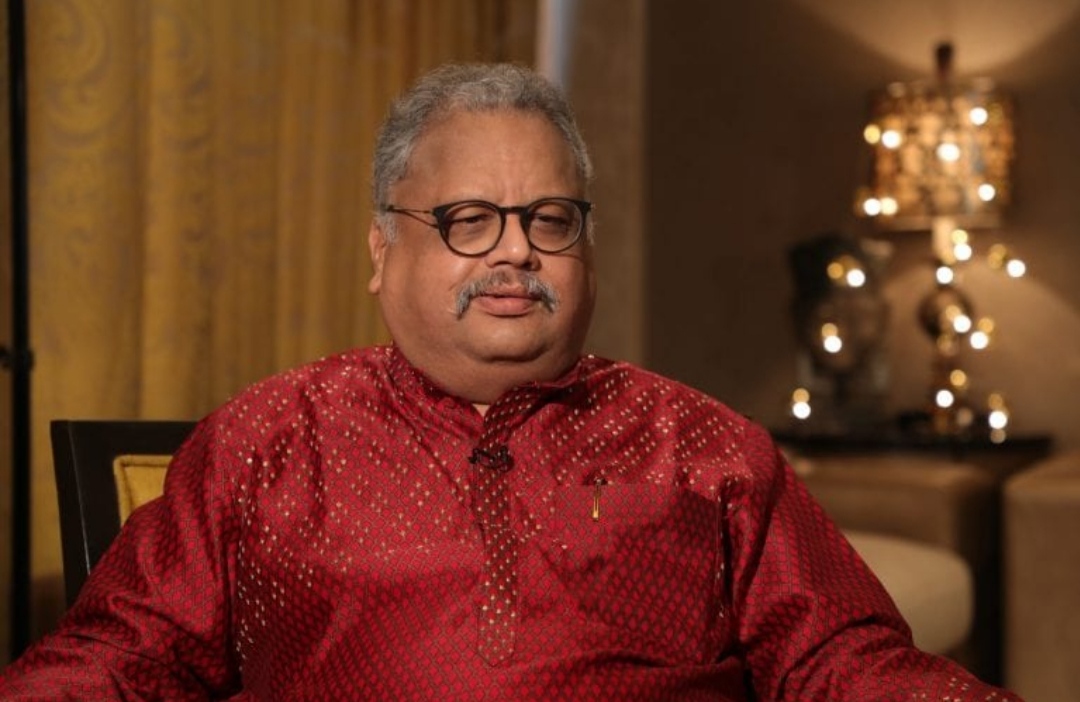
Billionaire Investor Rakesh Jhunjhunwala Plans Ultra-Low Cost Airline

Billionaire investor Rakesh Jhunjhunwala is planning on having 70 aircraft within four years for a new airline he wants to set up in India on optimism more people will travel by air.

Mr Jhunjhunwala, who is considering investing $35 million and would own 40% of the carrier, expects to get a no-objection certificate from India’s aviation ministry in the next 15 days, he said in a Bloomberg Television interview Wednesday.

The ultra-low cost airline will be called Akasa Air and the team, which includes a former senior executive of Delta Air Lines Inc., is looking at planes that can carry 180 passengers, he said.

It’s a bold bet by Mr Jhunjhunwala, who’s known locally as India’s Warren Buffett, in a market that has seen some airlines collapse in the face of intense fare wars and high costs. Still, what was once the world’s fastest-growing aviation market holds an allure and Jhunjhunwala is looking at opportunities to woo flyers with a brand new carrier offering low fares.

“For the culture of a company to be frugal you’ve to start off fresh,” Mr Jhunjhunwala said. “I’m very, very bullish on India’s aviation sector in terms of demand.”

Even before the pandemic, airlines in India were struggling. Kingfisher Airlines Ltd., once the country’s second-largest domestic carrier, ended operations in 2012, and Jet Airways India Ltd., which was recently approved to fly again, collapsed in 2019.

While demand for air travel has been hit globally, India’s aviation industry is at greater risk of delayed recovery as the threat of a third wave of infections looms. Airlines are feeling the impact.

Vistara, which Singapore Airlines Ltd. jointly owns with conglomerate Tata Group, is in discussions with Boeing Co. and Airbus SE to delay aircraft deliveries and make changes to the payment timetables. IndiGo, India’s largest airline, reported a wider-than-anticipated loss as Covid disruption crimped its revenue.

That’s not deterring Mr Jhunjhunwala, who according to Forbes has an estimated net worth of about $4.6 billion.

“I think some of the increment players may not recover,” he said. “I’ve got some of the best airline people in the world as my partners.”

Mercilessness on creatures

All laws of generosity deny creature savagery. In case of domesticated animals, no request can legitimize savagery, as terrible animals can do little to ensure themselves. There are numerous kinds of savagery to domesticated animals. It is endured essentially by the individuals who have little information on how the touchy balance of nature is to be kept up with by various species. The Savagery To Creatures Exposition is a knowledge into the remorselessness that creatures endure and what arrangements can be embraced

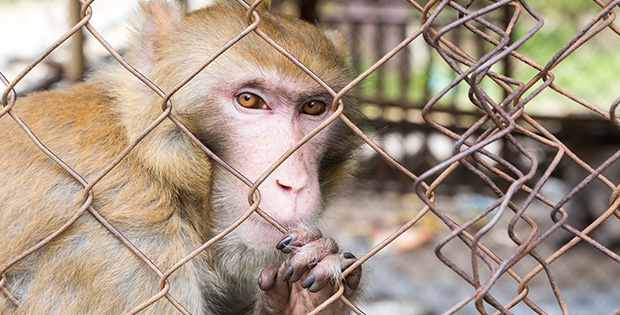
At the first spot on the list is a sort of’ government-supported savagery that is clear from the sorry condition of our zoos where creatures are kept in squeezed confines, some of which’ smell’ so severely that you can’t get the solidarity to take a gander at the creatures all the more intently. Behind the entryways of the research center is the most shocking case of remorselessness — youthful creatures in the lab are being tormented for the sake of studies and experimentation.

In beautifiers, 60,000 synthetic compounds are utilized and frequently tried on rodents, bunnies, guinea pigs, mice, and monkeys. To choose corneal pestering, damaging engineered compounds are mixed into the eyes.. To decide tissue decay, creatures are frozen in ice and put on hot plates. Consistently, around ten million creatures are killed in tests.

Different instances of overall detailed pitilessness incorporate uncommon species, for example, Liver Ridley turtles becoming enmeshed in the fishing vessel’s nets, driving in suffocation, or spinal followed reptiles Offered to make aphrodisiacs. Within the sight of imminent customers, their necks are snapped.

The balances of the sharks are cut and the terrible creatures stream once again into the sea to bite the dust a difficult demise. Frog legs are additionally cut, which are taken care of as a delicacy. Additionally, the adolescent chiru deer hide is utilized to make’ wraps’ of colorful toosh. In spite of many creatures and birds being caught and killed for the sake of custom and custom, notwithstanding the laws.

Untamed life Laws

There is enactment determined exclusively to save the uncommon and quickly diminishing species. For instance, the Constitution’s Article 15A(G) pointed toward securing and working on the common habitat. The Untamed life Assurance Demonstration of 1972 is another similar law.

In any case, the irregularity is that there isn’t sufficient execution of any of this enactment. Likewise, the Untamed life Insurance Act, for instance, was changed in 1991, however it couldn’t stop India’s outlandish bird exchange.

Clearly, guidelines alone can’t defend creatures from eradication. It will possibly happen on the off chance that we figure out how to cherish and recognize the sacredness of both human and creature life types.

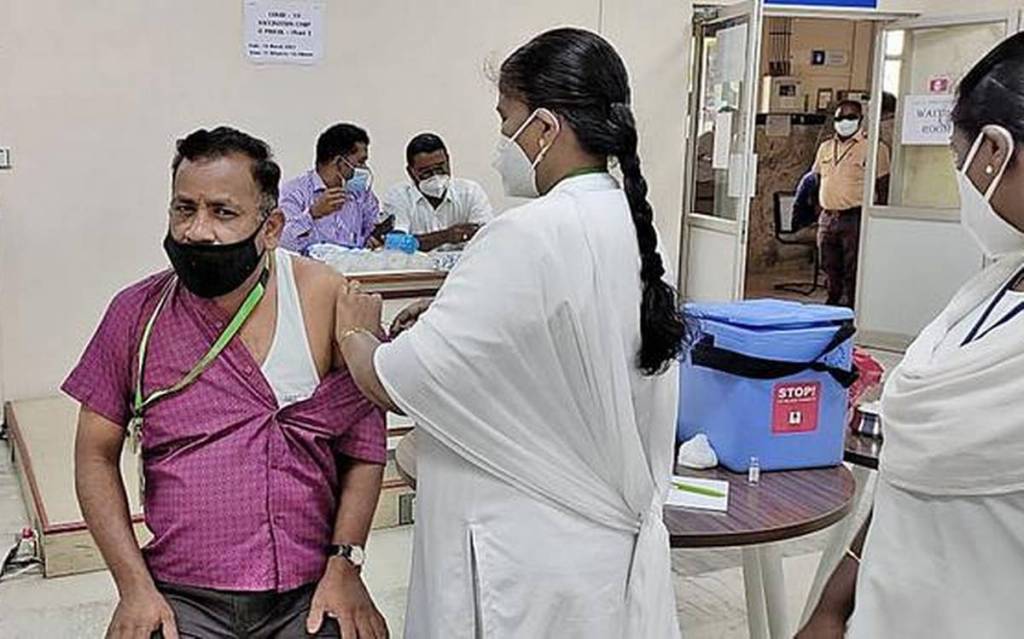
PROBLEMS FACED BY INDIA DURING VACCINATION

Before 2020, the world was normal and happy. At the end of 2019 and in the beginning of 2020, the most dangerous virus emerged worldwide named as covid-19.
It's a kind of virus with symptoms of normal fever, cold, cough and headache. On the surface, they seem to be so normal. However, their impacts are so severe. It's a life taking virus which damages the lungs, causes breathing problems and degrades the immune system.
The very first case of this virus in the world was found in Wuhan city of China. As it is a virus and thus transmits from one body to another through air.
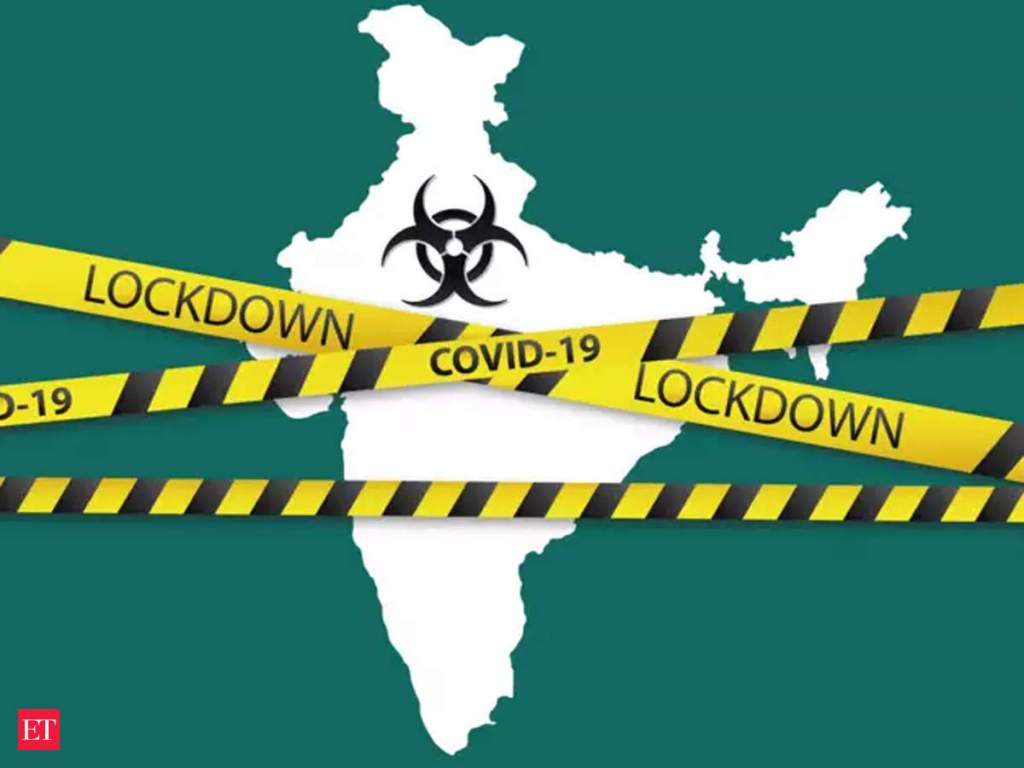
The first wave was very harsh. In order to control the spread of virus and save the lives of people, most of the countries decided to put a lockdown nationwide. People were suggested to wear masks if for essential things they need to go out. Social distancing was preferred for safety.
Coronavirus is a unique and new virus found on the earth. There was no treatment available to contain its spread. It's a virus which cannot be killed, one can only make it effortless by being vaccinated against it, as of polio and other deadly viruses.
India too faced this phase of coronavirus and implemented a lockdown. The first wave for India was not very severe. There were few cases in the month of March 2020, and lockdown was imposed.
Lockdown was the only solution. Restriction on people gathering was the only solution until a vaccine was being developed by the various nations. Entire world was struggling to make a vaccine. India was also doing the same.
In India, after December 2020, when vaccination was about to be released to people, India faced its worst ever wave of coronavirus in the months of March - May 2021.
Thousands of people lost their lives. India was unable to manage the supply of oxygen for the people suffering from the virus. Hospitals did not have beds for the treatment of people. Hospitals refused to admit people. Many people lost their family members and loved ones. One by one, a member of the family was going into the death's mouth due to this virus.
It became hard for India to manage the situation. To save people during the first lockdown India became critical. It faced so much economic loss. GDP fell, and the development of the nation almost stopped. Many people lost their jobs. Hence this time it was very difficult to impose a lockdown again. India has to manage its economy and boost it up again.
Anyhow India managed and coped up with the second wave of virus and by that time vaccines were also available in the country. The government announced that people will be vaccinated.
Earlier the government announced that people of old age i.e above 45 will be getting vaccinated for free. One has to do online registration and can get vaccines in any part of the country.
People of old age in India are less in number and hence vaccination was done smoothly for this age group. Both the doses.
From May 1 2021, India announced a vaccination program for people above 18 years old . 70% of India’s population is young. In the beginning, it was easy to get vaccination in both urban and rural areas with the help of online registration.
In the month of June, one day PM Modi addressed the nation and announced that people will get vaccination without registration in various health camps for free of cost and that's where the problem arose.
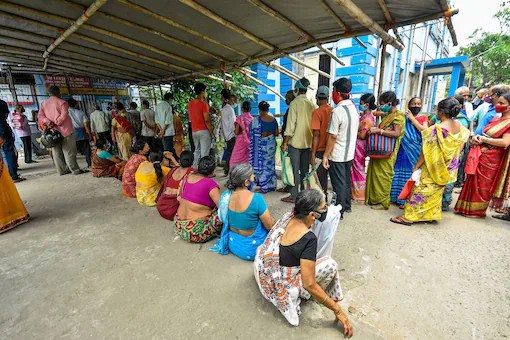
The number of people being vaccinated was huge and the number of doses was so low. People stood in long queues for getting vaccinations.
Hardly 2-3 camps were established by the government in the nearby area. Places allotted for vaccination did not receive any vaccine. One who wanted to get a vaccine had to run door to door searching for camps and vaccines.
Even if they reached the camp they had to stand in the long queue. When their turn came, the vaccine was out of stock. The person again has to wait for the next day. Entire day goes to waste.
Poor people who earn daily wages and don't have knowledge of technology and are unable to do registration have to wait long and waste their day on a daily basis. How hard it would be for them to be vaccinated. Though several NGOs and organizations worked and are still working to help this section of people.
Fraud is in the blood of some people, specifically if we talk about Indians, at the time when people were fighting between life and death due to viruses, many people did black marketing of vaccine doses and injections. Hospital charges in lakhs for admitting the patient. People sold water filling in vaccine tubes. How can someone do business and play with someone's life at the time when each and every person was struggling in one or other way.
Spreading rumours is another problem of Indian society. People said that after taking vaccine doses a person can die, he/she can lose his eyes, his/her nervous system can get damaged and many more.
Even literate people were thinking the same and were not ready to get vaccinations. Many people who are illiterate and are from remote areas started beating and throwing stones towards nurses and doctors who went to vaccinate them.
People jump in well, hide inside the houses, harm the health workers because they feel vaccination will take away the life of themselves and their children. Still there are many who think the same and still aren't vaccinated.
On an average, we see India faced so many problems and is still facing the problem of being vaccinated, but still it is moving towards success in this campaign. People are getting vaccinated. Problems are still coming in the path but as so many people are already done with their first dose it has now again begun to run smoothly. Let's hope that this goes on.
Vaccination is one of the best solutions to fight this virus. It's very important for everyone to get vaccinated for their own and other's health and safety. Hence this program should continue without any barrier and that's the main responsibility of the government.

Things we never notice in our LIFE

It was 7:30 in the morning, and I heard someone singing “Happy Birthday To You, Happy Birthday to you, Happy Birthday Dear”. I opened my eyes and it was my dad who came to wish me as it was my 20th birthday and like every year he came to wake me up singing happy birthday songs for me. Like every year, this year too I went to the temple together with my mom and dad. That night my mom made my favourite dinner for me and all of a sudden, I realised I turned 20 this year. I am getting older and along with me my mom & dad too.

In the morning when we were going to the temple, we hadn’t completed the half steps but they were out of breath and worned out. Mom’s legs hurt while doing the chores or while making dinner for us. Dad can’t read newspaper without spects now. They get tired very soon and the only reason is because they’re growing old. There is one rule in our house: to at least have one meal a day together. Ever since I was a kid we had our dinner together but that day it was quite different, the vibes were different and the thought that my parents are getting older was scary as hell. I just wanted to live my whole life with my parents happily, I don’t want them to grow older. Besides,on the other hand I was happy that now I can take all their responsibilities and let them live the remaining years peacefully. As, this is what I wished for ever since I was a kid. But back then I never imagined that someday, someday they’ll leave too, just like the others. Now after realizing this I really don’t want them to grow up and neither do I want to grow up, I just want my childhood back and want to live a happy life with my parents forever and ever.
There are times they act cold, yell at me for no reason and won’t allow me to do what I want to that time I really wants to live my life on my own ways and want to runaway far from home, far from them, where no one knows me, know one going to judge me, no one will yell at me, no one will have to right to take my life decisions but me, and no one will stop me, will nag me from doing what I want to do.
But that is not life. We always need someone to scold us when we do something wrong, to nag us. Someone who will comfort us on our lowest and be our supporters at the highest points, someone who’ll love us more than they love themselves and trust me parents are the only ones who love their children more than they love themselves and no one can match their love. Sometimes they may be dominating but that’s because they love you and they are worried about you. Even if you are 50- 60 years old, for them you are still the same, the baby, who cries on small things. That day I really felt like yesterday it was my first day at school & I was crying cause I didn’t want to leave my mom. The feeling was something we never thought about. We are just getting older and busy with our studies, career and job that we never think about our parents. We have become so busy in our lives that we don’t have time for our parents.
Now after realizing this I really don’t want to grow up, I just want to live my life with them. But I can’t. It is the rule of the world, that everyone grows and evolves and leaves this planet some or the other day. It’s like we are all here for each other to support, to talk, to love but then we’ll not be in each other’s lives forever anyway.

We are just here as supporting characters to each other’s main character lives and we’ll leave after seeing them grow/ evolve at our own specific times and we never notice that, like billions of times we eat with them, we watch them from beginning but never notice when they grow up. Time really flies and after this day every single second it will remind me that they are getting older and that one day they’ll leave us behind.

5 Names of Indian freedom fighters you might not know

The remembrance of our freedom struggle involves a lot of nostalgia – romanticized and commemorated by the country as best as possible. But there are a few names which have been lost over the years. Names which do not enter the hyped mainstream media responses on freedom fighters; which are subaltern and marginalized. Here is a list of some of those names, of people who formed a very important part of our freedom struggle and are yet, not as well known as a few others.

1. Pingali Venkayya

He was a devout follower of Mahatma Gandhi and was also known as Diamond Venkayya for his knowledge on diamond mining. He was an authority in geology, agriculture and also an educationalist. His major contribution to the movement was the design of the national flag of India, which was first modified and adopted as the flag of Indian National Congress and later modified again to be the national flag of India.

2.Tanguturi Prakasam

A politician and a freedom fighter, he was first the Chief Minister of the Madras Presidency and then the Chief Minister of the Andhra state. He started his career as a lawyer, but gave up his practice in 1921 and was drawn to the freedom movement. One of his most famous acts was in 1928 during the protests against Simon Commission in Madras. The police had imposed a ban on protests in some areas, and had warned of shooting people who violated orders. He faced the police, tore open his shirt, bared his chest and dared them to shoot if they could. This singular act of defiance won him the title of Andhra Kesari (Lion of  Andhra).

3.veerapandiya kattapomman

He was a courageous Palyekar chieftain from Tamil Nadu in the 18th century. He waged a war with the British sixty years before the Indian War of Independence (the 1857 rebellion) occurred in the Northern parts of India. He was captured and hanged in 1799 CE. His fort was destroyed and his wealth was looted by the British army. He basically protested against the sovereignty of the East India Company and refused to pay their taxes.

4.The Trio: Benoy, Badal & Dinesh

The trio is mostly remembered together for their attack on the Dalhousie Square in Kolkata. Their full names are Badal Gupta, Dinesh Gupta and Benoy Basu and all of them hailed from Bengal. Col N.S. Simpson, the Inspector General of Prisons, was infamous for brutally oppressing prisoners. The revolutionaries decided not only to murder him, but also to strike terror among British officials by launching an attack on the Secretariat Building – the Writers’ Building  in Dalhousie Square, Kolkata. The three of them were dressed as Europeans when they went and killed Simpson, but they did not wish to get arrested. So, Badal consumed poison, while the other two shot themselves using revolvers. The Dalhousie Square was renamed as the B.B.D. Bagh after them.

5.Surendra Sai

The man died in obscurity despite protecting Western Orissa from the British rule along with a few other comrades. Eligible as the next in line to the throne of Sambalpur after the death of Maharaja Sai in 1827, he helped the lower caste tribal people in Sambalpur against the British by encouraging their language and culture development.  Affectionately called Bira by the local people because of his swordsmanship, he began protesting from the age of 18 and spent some 17 years in jail after that. But he continued the protest till 1862, when he surrendered and went to jail. He spent 20 years in prison after his surrender.  Also, Sambalpur was the last patch of land to be occupied by the British except for the princely state, and it is said that it was largely due to the efforts of Sai.

Veerapandiya kattapomman

Though most historical accounts cite the revolt of 1857 as the ‘first war of independence’ in India against the British, they seem to overlook a valiant chieftain from Tamil Nadu in the late 18th century who refused to align with the sovereignty of the British East India Company, and singlehandedly waged war against the colonialists.

Born to Jagaveera Kattabomman and Arumugathammal on 3 January 1760, Veerapandiya Kattabomman belonged to the Bommu and Aathi Kattabomman clan in the village of Panchalankurichi in Thoothukudi district of Tamil Nadu.

His father was a Palayakarar (a feudal title for a class of territorial administrative and military governors appointed by the Nayaka dynasty in southern India during the 16th and 18th centuries), from whom Veerapandiya assumed the position of the 47th Palayakarar when he turned 30.

So how did the British manage to maintain a stronghold in the region? It was a well-calculated move. They lent huge sums of money to the Nawab of Arcot and demanded to be repaid through taxes and levies from all the Palayakarars under the Nawab’s domain.

As the Nawab was in severe debt, watched as his people were plundered by the British in the name of tax collection.

Except for Veerapandiya, every other Palayakarar yielded to the diktat of the company. In fact, the British were quite crafty and tried to establish cordial alliances with all the regional statesmen, who in turn tried advising Veerapandiya to ally with the former and live in peace.

Emerging as an undesirable element in the plan that the British had for the region, they began working on different conspiracies to bring the rebellious chieftain down. However, they remained unsuccessful in their schemes until the British army suddenly decided to raid Panchalankurichi under the command of Major J. Bannerman in 1799.

As the entire village had been in Thiruchendur for a temple festival, the British hoped to ambush Veerapandiya unawares. But he had already learnt of the attack through his informers and had prepared well in advance.

Right before the attack, Veerapandiya was ordered to surrender unconditionally through a messenger sent by Bannerman. “We are the sons of this soil. We live with prestige, honour and dignity and we let our soul die for the prestige, honour and dignity of our land. We don’t bow down to the foreigners. We will fight until death,” was the smarting message taken back to the army commander.

Veerapandiya and his men held the fort quite valiantly against British troops, who couldn’t quite match up to their expertise and had to withdraw. However, Veerapandiya knew that his fort would not be able to withstand the onslaught if the British were to unleash their cannons.

Upon receiving information about their hideout, the British threatened the king of Pudukottai, Vijaya Raghunatha Tondaiman to trace and handover the elusive chieftain or face similar consequences.

Buckling under pressure, he sent his soldiers to track down Veerapandiya, who was subsequently arrested at Kayathar on October 1, 1799. Following an interrogation stretching over 15 days and a ridiculous trial, Veerapandiya was sentenced to public execution.

Even in the face of death, he didn’t flinch and continued to stand by his ideals of honour, dignity and prestige. He even boldly argued for the right of his homeland and admonished the British for their immoral and illegal occupation.

Veerapandiya Kattabomman was hanged on October 16, 1799, thus putting an end to the first ever known revolt against the Empire.

The remnants of his old fort at Panchalankurichi is protected by Archaeological Survey of India.

On October 16, 1999, a postage stamp commemorating the bicentenary of Veerapandiya’s execution was released by the government of India in his remembrance.

Every year, the district administration of Tirunelveli honours the legend and his heroic deeds by celebrating the ‘Veerapandiya Kattabomman festival’ at Panchalankurichi on his birth anniversary. Besides, there is an Indian Navy communications centre at Vijayanarayanam, which is named INS Kattabomman after the brave freedom fighter.

On his 258th birth anniversary, let’s remember the valiant Palayakarar from Panchalankurichi who refused to bow down to the British and sacrificed his life for his homeland.

Childeren’s day

All the kids

, chin up, smile and celebrate the day dedicated specially to you! November 14 is celebrated as Children’s Day (also called Bal Diwas) in our country and the occasion also commemorates the birth anniversary of Jawaharlal Nehru, the first Prime Minister of India. As the schools and colleges gear up to celebrate this day, here is all you need to know about the history, importance and significance of the occasion.

Nehru was known for his affection and love for kids, whom he regarded as the ‘future of the country’ and was fondly called as Chacha Nehru. “The children of today will make the India of tomorrow. The way we bring them up will determine the future of the country,” he exclaimed once. He always emphasised on the education of children and played a major role in establishment of colleges in the country which are still considered one of the best in the country

After his demise in 1964, his birth date, November 14, was decided to be celebrated as Children’s Day every year.

On this day, schools and colleges organise various programmes like plays, competitions, cultural events etc., and sweets, books, stationary and other gifts are distributed to children. Also, November 20 is celebrated as the Universal Children’s Day, as declared by the United Nations.

The day is a reminder that every child deserves education, nurturing and the best of everything. They are the building blocks of the nation and hence, the future of the nation depends how well they are brought up. To those who are now an adult, keep the kid inside you alive!

TRENDING NOW #1 SC/OBC/ST ARE VIP CATEGORIES IN MODERN COMPETITION OVER GENERAL – Sahaj Sabharwal

SC/OBC/ST ARE VIP CATEGORIES IN MODERN COMPETITION OVER GENERAL Race in the modern world is a phase, from which no one can chase. Today’s world runs after competition and every single contestant runs with the aim to win in it. But unfortunately, everybody can’t win it, but everyone aims and will be glad to win. Due to a few vacancies available at the winning position, many have to return home to practice again and to try again the next time. Out of those who returns home, only a few of them get motivated, having a positive mindset, learns with the loss While the others feel demotivated and think that its failure for them in life. But actually its not a failure, everyone who participated, practiced well and aimed to win is a winner. Because the winner is just because of luck and a little more efforts. The winners’ positions are less that’s why it is never a fair competition and not a genuine way to check the power, talent or skills of a particular contestant. In our world, in a pen paper or online exams, someone can pass with pass by unauthorised tricks such as cheating, corruption, nepotism etc. And after the results of that particular exam, if a particular cheater wins, then he/she will be determined as a winner without any verification or something, whether that person has some good skills or not. That’s why, just an examination is never the best way to to check inner talents and exceptional skills. ©Sahaj Sabharwal …… 𝗙𝗢𝗥 𝗖𝗢𝗠𝗣𝗟𝗘𝗧𝗘 𝗔𝗥𝗧𝗜𝗖𝗟𝗘 𝗩𝗜𝗦𝗜𝗧 -: https://www.sahajsabharwal.in #pedagogicalthoughtsmadefactsbysahajsabharwal

TRENDING NOW #1 SC/OBC/ST ARE VIP CATEGORIES IN MODERN COMPETITION OVER GENERAL – Sahaj Sabharwal

In India, 5th September is celebrated as Teachers’ Day as a mark of tribute to the contribution made by teachers to the society.

5th September is the birth anniversary of a great teacher Dr Sarvepalli Radhakrishnan, who was a staunch believer of education and was a well-known diplomat, scholar, the President of India and above all, a teacher.

When some of his students and friends approached him and requested him to allow them to celebrate his birthday, he said, “instead of celebrating my birthday separately, it would be my proud privilege, if 5th September is observed as Teachers’ day”. From then onwards, the 5th of September has been observed as Teachers Day, in India.

In the year 1965, some of the prominent students of Late Dr S. Radhakrishnan organised a gathering to pay obeisance to that Great Teacher of repute.

In that gathering, in his speech Dr Radhakrishnan expressed his deep reservation regarding his birth anniversary celebration and emphasised that his birth anniversary should be celebrated as ‘Teachers’ Day’, by paying homage to other Great Teachers of India and Bangladesh.

Since the year 1967, 5th September is celebrated as Teachers’ Day till date.

Pandit Jawaharlal Nehru, who was one of his closest friends throughout, had many great things to say about Dr. Radhakrishnan: “He has served his country in many capacities. But above all, he is a great teacher from whom all of us have learnt much and will continue to learn. It is India’s peculiar privilege to have a great philosopher, a great educationist and a great humanist as her President. That in itself shows the kind of men we honour and respect.”