The all-new Mobility copter

Airbus’s new ‘CityAirbus’, a 4-seater urban mobility copter, just took to the skies for the first time in public during a demonstration flight.

The electric aircraft is part of Airbus’s vision for “flying taxi” aircraft and currently being developed by the manufacturer’s helicopter division. Airbus Helicoper’s Twitter handle wrote: “New #CityAirbus videoDown pointing backhand index. Our full-scale #UAM demonstrator took off at 2,310 kg – the highest take-off weight of a full electric VTOL aircraft with a distributed drive system. The 4-minute demo saw the 4-seat #eVTOL fly at an altitude of 20 metres. #ZeroEmissions.”

a small plane sitting on top of a grass covered field
The Flying taxi

The idea for a compact “flying taxi” first came from our desire to take city commuting into the air in a sustainable way. Our team began by rethinking traditional aircraft architecture, creating a multirotor design based on electric motors. Thus, CityAirbus was born. To date, the CityAirbus sub-scale model has flown more than 100 test flights, which has proven the aerodynamic configuration of the full-scale prototype.

CityAirbus has a multicopter configuration that features four ducted high-lift propulsion units. Its eight propellers are driven by electric motors at around 950 rpm to ensure a low acoustic footprint. The single failure tolerant architecture ensures safety. Its cruise speed will be approximately 120 Km/h on fixed routes with up to 15 minutes of autonomy. It has a capacity of four passengers that is ideal for aerial urban ridesharing. 

The world’s deepest diving pool

The world’s deepest swimming pool for underwater diving has opened in Dubai. According to Deep Dive Dubai, it is 15 metres deeper than any other pool in the world. The pool has been verified by Guinness World Records as the world’s deepest swimming pool and holds the equivalent of six Olympic swimming pools. The pool has been verified by Guinness World Records as the world’s deepest swimming pool and holds the equivalent of six Olympic swimming pools.

People visiting this pool can practice both scuba diving- with a tank of air- and freediving- where divers simply hold their breath. As the divers go down, they witness a landscape of a sunken city with sound and lighting effects. Further, there are two air-filled dry rooms on the way down. This underwater diving facility in Dubai is shaped like an Oyster in reference to the UAE’s pearl diving heritage. The company says that the facility also holds the region’s largest underwater film studio. 

Slide 6 of 6: This underwater diving facility in Dubai is shaped like an Oyster in reference to the UAE's pearl diving heritage. The company says that the facility also holds the region's largest underwater film studio. (Source: Text and image/Reuters)
UAE’s pearl diving heritage

Located in Nad Al Sheba neighborhood in Dubai, this massive pool features a sunken city that divers across all levels can explore. The pool features sound and mood lighting systems as well as a unique filtration system. To maintain fresh water, it gets filtered and circulated every six hours using a siliceous volcanic rock. NASA-developed technology and UV radiation is also used within the filtration system. The pool’s water temperature is maintained at 30 degrees Celsius to ensure divers comfort. With a massive size of 1,500sqm, the facility features a diving shop, a gift shop and a restaurant that will be open to the public later this year. It also hosts a variety of meeting, event and conference spaces.

SCIENCE AND TECHNOLOGY

Science and Technology have now become crucial parts of our life and our life has many luxuries and we are able to utilize them because of science and technology. It has helped us to do all these in short time because of the advancement in science and technology. Every day new technologies get introduced in the field of science and technology which makes human life easier and comfortable. And now it is difficult to imagine our loves without science and technology. Because of this we are now living in modern civilization and our evolution has occurred. This development in the field of Science and Technology is present in every aspect of our life and has great contributions in it.

There have been many new inventions in the field of Science and Technology which has changed the overall perspective of humans towards life and helps in modernizing the human civilization. Hence, people get the chance to enjoy the lives more comfortably and make it more pleasurable. In other days, humans now have a simple life because of science and technology. It has now expanded its wings into the fields of medical, education, manufacturing and many other areas.

WHAT IS SCIENCE ?

Science is the consists of systematic study of the behavior and structure of physical and natural world through observation, experiment and technology with the application of scientific knowledge for practical purposes. And Like everything, Science also has a journey and it has long lasting impact on the humans. Science has large contributions in the evolution of human.

WHAT IS TECHNOLOGY ?

“Technology” is the application of this scientific knowledge for practical purposes. Thee mobile, laptop etc. have now become the essential parts of our life and make use of connectivity or communication or smart technology for doing our activities. From the machines used in industries to the robots created, all fall under technological invention. So, in simpler words we can say that technology has made our lives comfortable.

Science and Technology: India

Ever since British rule, India was famous for many things and after gaining independence, science and technology, played a great role in shaping the present and future of India. Now, it has emerged as an essential source of creative and scientific developments all over the worlds. All these advancements have led to the improvement of Indian economy and assisted development in various fields including Space Technology, Mathematics, Space Technology and many more. Some of the prominent examples of these developments are railway system, smart phones etc. Such advancements only helped in launching Chadrayaan 2 and helped India earn critical acclaim from all over the world.

In conclusion, we must admit that science and technology have led human civilization to achieve perfection in living. However, we must utilize everything in wise perspectives and to limited extents. Misuse of science and technology can produce harmful consequences. Therefore, we must monitor the use and be wise in our actions.

Advancement in science and technology has changed the modern culture and the way we live our daily life.

The future of Yachts

The yacht dates back to almost the 14th century, the Dutch were the inventors of this marvelous boat that roared over the waters for centuries together. A yacht is actually a sailing or power vessel used either for pleasure, cruising, racing or even for trade and travel. There was a category of yachts used as armed cargo carriers by the European states from the 16th to late 18th century, they were known as Galleons.

Recently, a Californian designer has spun up a futuristic look to this gigantic 520-foot yacht. The Galleon by Steve Kozloff is the largest design in his Goliath series of superyachts and would measure 520ft long and include a mammoth eight decks. The luxurious ship, designed as a modern version of a Spanish 16th century Galleon cargo carrier, would suit multi-millionaires hosting extravagant parties with accommodation for up to 200 guests and 150 crew members.

The ship would provide hours of entertainment for its guests as it includes an indoor sports centre, which comes fitted with a full-sized basketball court, a tennis court, and four handball courts below deck. Its massive size gives it the flexibility of being a cruise ship for up to 200 guests, a sailing vessel with up to 20 private residences, or a large sailing yacht for one owner.

On the upper deck, guests will find a lounging area, a full luxury bar, and a 74’ by 32’ pool while a 44.5’ by 25’ indoor pool is located on the level below the bridge deck. Both pools featured an automated hard cover designed by Kozloff that can seal them in order to avoid draining them in rough conditions. On the upper forward decks are two lazy river pools connected by a waterslide. The Galleon has four full-beam garages designed for six luxury speedboat tenders, four U-boat Worx NEMO submarines, six rib tenders, and 21 personal water crafts. Each garage is equipped with a launch and recovery system for all water vessels.

The 4,500sq ft fully-enclosed hangar includes space for 10 helicopters and an aircraft maintenance facility. Twelve free-fall lifeboats for both crew and guests can accommodate up to 30 people each. It surely is the Yacht of the future!!!

Travel to space?

Mankind initially entered into space in the early 1960’s, to be precise it was on the 12th of April 1961 when Yuri Gagarin in the Vostok 1 entered space. His journey lasted for an hour and 48 minutes. This was just the beginning of space travel, satellite launches, exploration missions and finally colonization out of the planet.

Space travel is currently in dreams of many conmen and women around the globe.  Recently, Amazon founder Jeff Bezos blasted in space on his rocket company Blue Origin’s first flight. He is now a second billionaire to ride his own spacecraft. This raised several speculations all around the world.

The Nehru Science Centre (Mumbai) in association with the Aeronautical Society of India, Mumbai Branch organised an online lecture on ‘Space Tourism: The Next Frontier’ on Tuesday (July 27, 2021). Dr. Punita Masrani, Aerospace Medicine Specialist, V. M. Medical Centre, Mumbai in the online discussion took note of various aspects of the commercial space travel in the lecture.

Dr. Punita stated that NASA and the Russian Space Agency had earlier started taking tourists for space travel calling the process exorbitant and stringent. A spacecraft called Russian Soyuz used to take tourists every 6 months. ‘Space Adventures was the first agency in the field of Space Tourism. The agency was started by US billionaire Richard Garriot in 1998. The agency offered brokered rides aboard the Russian Soyuz Rockets’ Dr. Punita said. While both NASA and the Russian Space Agency halted space tourism, industrialists and entrepreneurs thought they could start private missions so that more and more people could travel to space. This gave birth to the concept of Space tourism, Dr Punita added.

Further, Dr. Punita while concluding the lecture, also discussed that the science involved risk, awareness, concerns, and medical informed consent which are essential parts of tourism. She further explained possible post flight medical conditions and impact of space travel on the human body and brain.

Although currently it might seem next to impossible to travel to space, in the coming future technological advancements and the changing conditions on earth will teach us to adapt to these new things.

Five new heritage sites!!

The world heritage committee recently added four cultural sites situated in Russia, Italy, Slovenia and the UK. They have also added one natural site in Africa. These sites have been added to UNESCO’s world heritage list. These additions were made in the previous week during the extended 44th session of the World Heritage Committee.

In Russia, “Petroglyphs of Lake Onega and the White Sea”, containing 4,500 petroglyphs carved in the rocks during the Neolithic period dated 6,000 to 7,000 years ago, is one of the largest such sites in Europe with petroglyphs that document Neolithic culture in Fennoscandia. The serial property encompasses 33 sites in two component parts 300 km apart: 22 petroglyph sites at Lake Onega in the district of Pudozhsky featuring a total of over 1,200 figures and 3,411 figures in 11 sites by the White Sea in the district of Belomorsky. “They show significant artistic qualities and testify to the creativity of the Stone Age,” said the committee.

In Italy, the “Porticoes of Bologna” comprises 12 component parts consisting of ensembles of porticoes and their surrounding areas built from the 12th century to the present. “Together, the selected porticoes reflect different typologies, urban and social functions and chronological phases. Defined as private property for public use, the porticoes have become an expression and element of Bologna`s urban identity,” said the committee.

The urban design work of Joze Plecnik carried in Ljubljana, capital of Slovenia, between World War I and World War II were inscribed on the list as it consists of a series of public spaces and public institutions that were sensitively integrated into the pre-existing urban, natural and cultural context and contributed to the city`s new identity. The Slate Landscape of Northwest Wales in the UK became a World Heritage site as it “offers an important and remarkable example of interchange of materials, technology and human values”.

The new natural site is Ivindo National Park situated on the equator in northern Gabon. The largely pristine site encompasses an area of almost 300,000 hectares crossed by a network of picturesque blackwater rivers.

It features rapids and waterfalls bordered by intact rainforest, which make for a landscape of great aesthetic value. The site`s aquatic habitats harbour endemic freshwater fish species, 13 of which are threatened, and at least seven species of Podostemaceae riverweeds, with probable micro-endemic aquatic flora at each waterfall.

FRIENDS TO STRANGERS

We all start as strangers and sometimes we also end that way too. Strangers can become best friends just easily as best friends can become strangers.

It is annoying when strangers become friends but it is so sad , when friends become strangers.

It is weird how you go from being strangers, then friends, then more than friends and then strangers again.It is sad when friends become enemies but what is even more worst is when they become strangers.

It is sad how the people you were once, so close to each other ,can become just as another strange you don’t even know. As time goes by , things change and people also change.

Those you knew becomes strangers and those you did not know become your trusted once. Sometimes friends are the once becoming strangers, whom you thought would always be close to you.

When two people really get to know each other: their secrets, their fears, their favourite things, what they love , what they hate, literally everything about them but one day when people change everything changes , the saddest part is and then they go back to being strangers.

It is like you have to walk past by them but pretend like you never knew them, never ever talked to them before but really you knew them will before.
Some have always done films with their best friends rather than strangers. Blood makes you related but only loyalty can make you friend. Being honest won’t get a lot of friends, but it will get you the right once.

Wait for them…

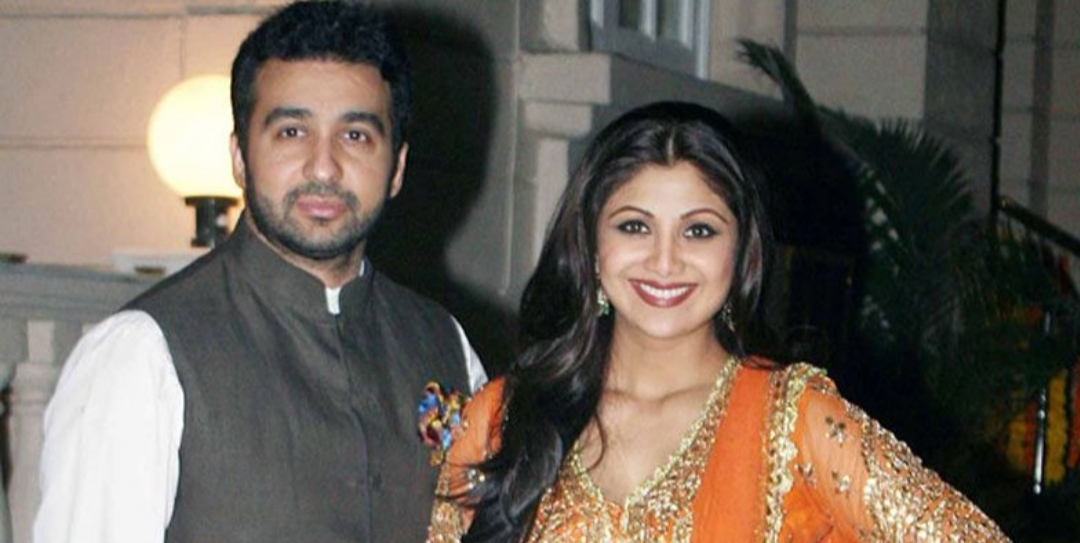
Shilpa Shetty, Raj Kundra and their company Viaan Industries fined Rs 3 lakh by SEBI in insider trading case

The Securities and Exchange Board of India (SEBI) has imposed a penalty of Rs 3 lakh on Bollywood actor Shilpa Shetty Kundra, her businessman husband Raj Kundra and their company Viaan Industries for violating insider trading rules.

Kundra, Shetty and Viaan have been fined for a three-year delay in the disclosure of an allotment of preferential shares.

In 2015, Viaan Industries had made a preferential allotment of 500,000 equity shares. Of this 1.28 lakh equity shares each were allotted to Kundra (referred to as Ripu Sudan Kundra) and Shetty, the promoters of the company.

According to SEBI’s Prohibition of Insider Trading Rules, 2015, the promoters had to disclose this transaction to the company within two days if it exceeded Rs 10 lakh in value. The company, in turn, has to relay this disclosure to the stock exchanges within two trading days.

In this case, SEBI said the value of the transaction was Rs 2.57 crore each and the disclosures pertaining to the 2015 transaction were made only in 2019.

In reply to a notice from the regulator, Shetty and Kundra acknowledged the mistake and said it was not done with malafide intent.

However, the SEBI adjudicating officer Suresh B Menon refused this explanation and imposed a fine.

Moneycontrol has reached out to Shetty and this copy will be updated when she replies.

Kundra could not be reached as he is police custody in an unrelated case. He was arrested on July 19 for allegedly making, publishing, and distributing pornography. Earlier a Mumbai court rejected his bail plea.

Importance of Trees

Trees are very important, valuable and necessary to our existence as they have furnished us with two important life essentials; food and oxygen. Apart from basically keeping us alive, there are many other little and big benefits we get from trees. So, trees are vital resources for the survival of all living beings. Therefore, Governments world over and many Organizations are taking steps to prevent deforestation and to tell the benefits of planting trees.

Trees have a lot of importance in our lives, and it provides seamless service for the environment. we have somehow not protected them and perhaps that is why as on today we are being affected by global warming, severe pollution and other ill effects of deforestation. Trees should be treated and nurtured nicely so that human beings can survive on this planet. We should encourage others to plant more and more trees. It is for our own betterment and the sooner we understand this the better it is for us.

Significance of Nature

Nature has been in existence long before humans and ever since it has taken care of mankind and nourished it forever. In other words, it offers us a protective layer which guards us against all kinds of damages and harms. Survival of mankind without nature is impossible and humans need to understand that.

If nature has the ability to protect us, it is also powerful enough to destroy the entire mankind. Every form of nature, for instance, the plants, animals, rivers, mountains, moon, and more holds equal significance for us. Absence of one element is enough to cause a catastrophe in the functioning of human life.

We fulfill our healthy lifestyle by eating and drinking healthy, which nature gives us. Similarly, it provides us with water and food that enables us to do so. Rainfall and sunshine, the two most important elements to survive are derived from nature itself.

Further, the air we breathe and the wood we use for various purposes are a gift of nature only. But, with technological advancements, people are not paying attention to nature. The need to conserve and balance the natural assets is rising day by day which requires immediate attention.

Qualities of a Good Leader

First of all, confidence is the most quality. A leader must have strong self-confidence. A person lacking in confidence can never be a good leader. A person must be confident enough to ensure others follow him. The leader must have confidence in his decisions and actions. If he is unsure, then how can people have the desire to follow him.

A good leader must certainly inspire others. A leader must be a role model for his followers. Furthermore, he must motivate them whenever possible. Also, in difficult situations, a leader must not lose hope. How can a leader inspire people if he himself is hopeless?

Honesty is another notable quality of a leader. Honesty and Integrity are important to earn the love of followers. Above all, honesty is essential to win the trust of the people. Probably, every Leadership which loses trust is bound to fail. People will not work with full effort due to an immoral leader.

Good communication is a must for a good leader. This is because poor communication means the wrong message to followers. Furthermore, good communication will increase the rate of work. Also, the chances of mistakes by followers will reduce.

Another important quality is decision making. Above all, if a leader makes poor decisions then other qualities will not matter. Furthermore, good decision making ensures the success of the entire group. If the leader makes poor decisions, then the efforts of followers won’t matter.

A good leader must be an excellent innovator. He must display a creative attitude in his work. Most noteworthy, innovation is a guarantee of survival of a group or innovation. Without creative thinking, progress is not possible.

Ozone Layer Depletion and Global Warming

Global Warming is one of the major problems in the current time. We all think that the root cause of global warming is Ozone layer but it’s not true but root cause for both these problem are same i.e., the mundane activities done by we human being that ultimately pollutes the atmosphere. Global warming reason is the excess release of carbon dioxide into the atmosphere by burning the coal, oil and natural gases to produce electricity and to run our automobiles. In this modern time people have a notion that everything should be done instantly in more simpler words we can say that we fails to have patience and want works to be done as soon as possible and for this we use cars, bikes and scooters which ultimately deplete the environment. Earlier, the basic means of transportation was walking and riding in bicycle which not only kept the environment safe but also the health of human beings.  

Most recently, carbon is prolonged all around the planets in the form of a blanket and carbon plays the foremost role in absorption of ultraviolet radiation which consists of the bulk of solar system. The depletion of ozone layer take place when chlorofluorocarbon (CFCs)  and halons gases which are formerly found in aerosol spray cans  as well as refrigerants are ultimately released in the atmosphere. The upper layer atmosphere in the ozone absorbs ultraviolet radiation which is harmful for every being. CFC’s plus halons forms a reaction that ultimately breakdowns the ozone molecules and reducing ozone’s ultraviolet radiation absorbing capacity. In the upper atmosphere or the stratosphere a hole is formed which gradually deplete the ozone layer. This hole is known as the “ozone hole”, the ozone hole is damaged by solar radiation which is reaching the Earth’s surface and is eventually affecting the life of every single being living in the atmosphere. This damage in Earth’s surface is resulting by causing eye problem as well as skin cancer to people. Since the time of 1960’s the global warming of the lower level of atmosphere is rapidly increasing and is also causing cooling of the upper part of the atmosphere. This warming and cooling is causing ozone loss. As greenhouse gases are increasing massively it is causing heat in the lower atmosphere whereas cooling in the upper atmosphere. This rapid change in the atmosphere is the root cause of all the problems. All these carbon dioxide and other heat gases is rising the atmosphere and is spreading all around the atmosphere like a blanket. All these harmful gases are making the blanket thicker. This thick blanket warms the surface of the Earth and gradually traps more heat in the lower part. This blanket causes heat in lower atmosphere and slowly but surely cooling the stratosphere. All these heat trapping gases are cooling the atmosphere that finally results in ozone depletion. The greenhouse gases works as absorbing the heat and is ultimately warming the surface but they reacts opposite as they prevent heat from rising. The ozone depletion affects the most in the South Pole.

Internet: The Global Village

 Modern technology and the internet has connected us all globally. We can easily watch a music video or film from another country or get updates about the international news within seconds. Be it the Olympics being held in Tokyo or an update from the WHO Headquarters in Geneva, we have access to everything through the internet. It has made us a part of the “Global Village”

“Global Village” was a term coined in 1964 by a media and communication theorist, Marshall McLuhan. McLuhan believed that with the emergence of new electronic media and technological advances, the whole world would be a part of the “Global Village”. He believed that there would be total involvement by each and every person. He called it “one world interconnected by an electronic nervous system.” The electric age will be the age of inclusiveness and deep personal involvement. 

Internet as the global village

On the internet everyone is the producer as well as the consumer of content. People are involved extensively by getting updates, sharing opinions and creating content. The Internet is used for information, education and entertainment. 

The Internet as the Global Village connects us with the world. It leads to cultural intermingling by breaking the cultural barrier and knowing more about cultures of other continents. This cultural impact can be negative or positive. It can lead to the shrinking as well as expanding of world culture. 

It also promotes unity and togetherness among different communities across the world. People express their solidarity or support to other countries through social media platforms like Twitter, Facebook,  Instagram etc. In the black lives matter movement last year, people across the globe united against racism and many used social media to show their protest. 


It has made the flow of information easier. We can receive constant updates across the globe without much effort, just by using the internet. Gone are the days when we had to wait for days to receive a letter. The internet helps in the process of communication across different countries. It is so simple to connect with people worldwide by using social media, calling, texting, video meetings etc. Especially during the pandemic, the world was connected to each other using the internet. 

It has also opened up new job opportunities. People can work from home for a company situated in a different country using the internet or work as a freelancer and have clients from different parts of the world. With the popularization of online meeting apps like Zoom and Google Meet, it has become easy to work virtually, no matter where the company is located. It has also helped in building a new form of trade to different countries. E-commerce has made it easy to buy things from different areas through online payment. 

Internet has connected us with the rest of the world and has built a global community which is similar to what is popularly termed as a Global Village. 


STORY OF PARLE -THE SWADESHI BISCUIT

There may not be a single Indian who hasn’t heard of Parle; from its beginning in 1939, it has become an indispensable part of the everyday life of most Indians. 400 million Parle-G biscuits are produced daily and According to an estimation, every second, over 4500 people enjoy a Parle-G biscuit, originally known as Parle Gluco.

Parle-G was the first FMCG brand in India to reach Rs. 5000 crore mark in retail sales in 2013. It was also listed #29 in the Brand Trust Report India’s Food & Beverage category in the year 2019.

Parle-G now has over 130 factories and is sold in over 5 million retail outlets throughout India. Every month, Parle-G manufactures about a billion packs of biscuits. Parle-G is available in the most distant of places. Certainly, a mass-market item.

THE EMERGENCE OF PARLE

Under the British Raj, foreign goods were marketed at exorbitant prices across the Indian market. At the time, candy was a huge hit.

The founder of the Parle firm, Mohan Lal Dayal, was not pleased with this and was heavily inspired by the Swadeshi movement. To combat this trend, he chose to begin manufacturing candy domestically. To accomplish this, he flew to Germany to acquire the skills to manufacture candies and later returned to India in 1929 with a candy-making machine that cost Rs 60,000 at the time. He began his business in Mumbai, where he acquired an old factory located between Irla and Parla. The factory got named after the location where it all began. The company began with just 12 employees, all of whom were family members.

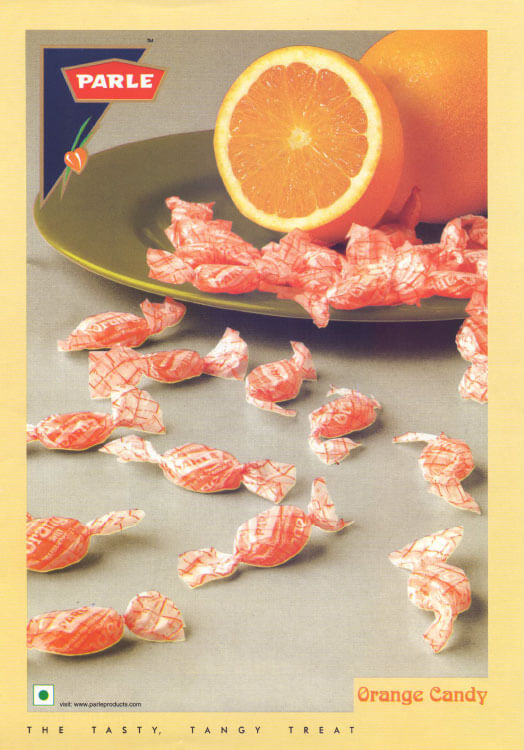
Parle’s very first product was The Iconic orange candy, and from there they expanded into confectioneries and toffees. After a decade later, in 1939, the ‘Parle Gluco’ biscuit, an economical biscuit intended for the general public, was introduced. So that Indian people can afford and enjoy delicious candies with their families.

Under British rule, Biscuits were a high-end product, enjoyed primarily by Britishers and upper-class Indians, with the majority of them being imported into the country. The market was dominated by British brands such as United Biscuits, Huntly & Palmers, Britannia, and Glaxo. These were imported and expensive.

The wheat-based biscuit was reasonably priced, and it was readily available to the majority of Indians. Produced by the Indians for the Indians, Parle-G was India’s response to the British-made biscuits and became the British-Indian Army’s go-to cookie during World War II. The Parle Gluco cookie became immensely popular and it swiftly took over the market. All British businesses began to lose money at that point. Parle also made India’s first salted cracker, Monaco, in the early 1940s.

Due to a shortage of wheat, one of Parle’s primary ingredients, following Partition in 1947, the company had to halt production of Parle Gluco & they instead began making and selling barley biscuits.

THE FOREVER ICONIC PACKAGING

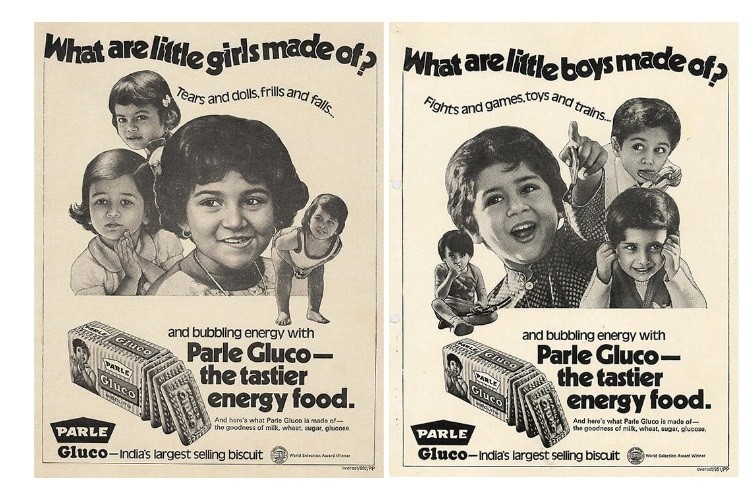
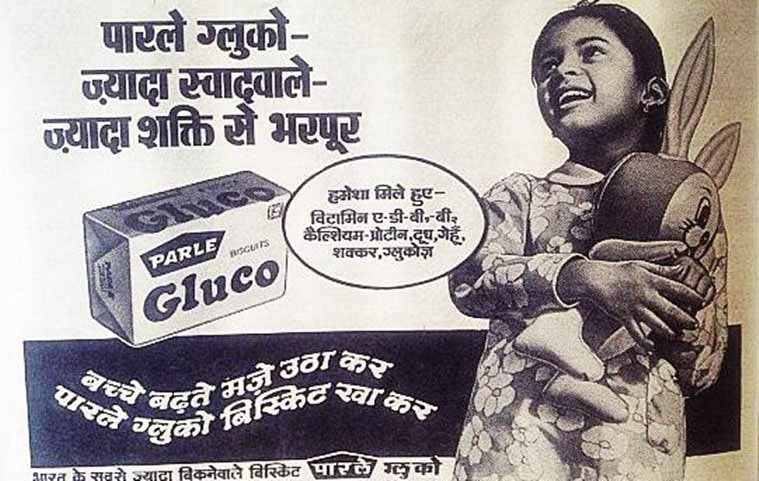
Over time, more and more brands featuring the words “gluco” or “glucose” in their names began to appear on the market. Britannia also introduced the ‘Glucose D’ biscuits. In the 1980s, Parle Gluco changed its name to ‘Parle-G’ and released a new box with white and yellow stripes and an illustration of the ‘Parle-G Girl’ to maintain its sales and stand out in the marketplace to consumers. Over time, more and more brands featuring the words “gluco” or “glucose” in their names began to appear on the market. Britannia also introduced the ‘Glucose D’ biscuits. In the 1980s, Parle Gluco changed its name to ‘Parle-G’ and released a new box with white and yellow stripes and an illustration of the ‘Parle-G Girl’ to maintain its sales and stand out in the marketplace to consumers. The packaging became legendary & is still recognized by Indians today.

Parle also debuted their first TV commercial for Parle-G in 1982 on Doordarshan, with the catchphrase “Swaad Bhare, Shakti Bhare, Parle-G.” Shatkimaan, the public’s beloved superhero at the period, accepted to do a commercial for Parle-G in 1998.

 Changed to “Genius” in the early 2000s, the “G” in Parle-G stood originally for “Glucose”. As per figures from 2009-10, Parle-G’s sales outstripped the combined sales of all other biscuit brands in China, the world’s fourth-largest biscuit-consuming country. As shown in a 2011 Nielsen survey, Parle-G had eclipsed Cadbury as the best-selling biscuit brand in the world.

Parle will forever remain Iconic, for why it started, for whom it started and for what it has provided to the people of country. A happy part of every Indian’s childhood, it will continue to remain an integral part of everyone’s chai time.

Indian athletes at Tokyo 2020.

In 1920, India sent a team to the Olympic Games at Antwerp, Belgium. And after that, India never stopped and has commenced participating in every summer game since then.

India’s surge in sports and athletes from 1964-2020. If we see earlier, in 1964 India had 52 males athletes and 1 female athlete in 8 games. And now there are 68 males and 52 female athletes in 18 games.

We’ve seen a rise in each of its past three editions at the Summer Olympics and all signs make a fact that the finest athletes of our country are continuing the movement at Tokyo 2020.

It is quite impressive that more than 100 athletes from India have qualified for the Olympic Games comprising one men’s hockey team, one women’s hockey team, and two relays.

This time India is participating in 18 games so Let’s see some information about our Indian athletes at Tokyo 2020.

1. Archery

If we talk about archery, there are no changes in the team, but this time the men’s trio will also compete as a team.

Men’s recurve.
1 Tarundeep Rai
2 Atanu Das
3 Pravin Jadhav

Women’s recurve.
In the women’s team, there’s only one lady, Deepika Kumari who will compete in Tokyo 2020.

2. Badminton

Looking ahead in badminton, the women singles silver medalist of Rio 2016 PV Sindhu is ready and she will exemplify again in Tokyo 2020.

Men’s singles.

1 B Sai Praneeth 

Men’s doubles.

1 Satwik sairaj rankireddy and Chirag Shetty.

The update is that this time there will be no mixed doubles and women’s doubles pair in the Indian badminton team.

3. Equestrian

After 20 long years, Fouad Mirza is the first Indian equestrian ever to qualify for the summer games.

He locked his allotment in the evening after crowning the group in the individual event category at the Southeast Asia Oceania qualifiers in November 2019. We hope the best from India’s first equestrian.

4. Golf

1 Anirban Lahiri

2 Udayan Mane

Representing women’s events.

1 Aditi Ashok

This time at Tokyo summer games 2020, India’s participation in golf will feature Anirban Lahiri and Udayan Mane from the men. The good news is from men’s Udayan Mane who cut a replacement, will be making his Olympic debut, and while in women’s event, Aditi Ashok will represent.

5. Fencing

Coming to fencing, Chennai’s Bhavani Devi became the first Indian fencer to qualify for the Summer Olympics. The sabre fencer reserved her opening for Tokyo 2020 through the (AOR) adjusted official ranking method at the sabre world cup Budapest, Hungary, it was an Olympic qualifying event.

6. Gymnastics

This time Deepa Karmakar

Is not participating but, our second Indian woman gymnast Pranati Nayak is qualified for the Olympics. The artistic gymnast made the slash in may month via the Asian quota.

7. Hockey

Seeing India’s craze and energy will be continuing in the 20th Olympic games as it will feature the men’s hockey team while the women’s team will be making their third appearance and second in progression.

From the men’s team, Manpreet Singh and the women’s team Rani Rampal qualified their teams in November 2019 and each of them will carry the squad at the summer Olympics 2020.

8. Judo

When it’s about judo, India eyes on the only judo participant at summer 2020 Shushila Devi Likmabam, in women’s extra lightweight (48kg) category, she cut the highest-ranked Asian judoka outside the top 18 on the (OGQ) Olympic game quota rankings list.

9. Rowing

Coming to rowing, in the Doubles sculls event at the Asian qualifiers at Tokyo, Japan in may the Indian rowers Arjun Jat and Arvind Singh made themselves qualified for the summer Olympics.

10. Sailing

Talking about sailing, India never had more than two sailors at a single Olympics before. But now, for the first time, team India will be competing in more than one sailing event at the games, Nethra Kumanan became the first Indian woman sailor to qualify for the Olympics at the mussanah open championship in April 2021. And not only that, but three other Indian sailors also made the Tokyo 2020 cut in Oman.

Laser radial category:

1.Nethra Kumanan

Laser standard category:

1.Vishnu Saravanan

49er category:

1.KC Ganapathy 

2.Varun Thakkar

11. Swimming

Let’s have a look at how our three Indian swimmers will compete at the Tokyo Olympics. 

Men’s 200m freestyle, 100m butterfly, 200m butterfly.

1.Sajan Prakash

Men’s 100m backstrokes.

1.Srihari Natraj

Women’s 100m backstrokes.

1.Maana Patel

Talking about Sajan Prakash, he became the first Indian swimmer to qualify directly for the summer Olympics, just after achieving an elusive ‘A’ cut.

Srihari Natraj also managed to achieve the tricky ‘A’ cut in the 100m backstrokes a day later. While Maana Patel qualified via the universality quota, which secures their seat in Tokyo Olympics 2020.

12. Weightlifting

This time, Mirabai Chanu will be India’s only representative in weightlifting at the Summer Olympics 2020. 

Ranking no.2 in the world, former world champion Mirabai Chanu is among the idols for a medal in the women’s 49kg division. 

13. Tennis

Women’s doubles:
1.Sania Mirza
2. Ankita Raina

Men’s singles:
1.Sumit Nagal

Talking about our men’s singles player Sumit Nagal, he will be making his Olympic debut this year. And whereas Sania Mirza qualified for Tokyo Olympics via her protected ranking and chose Ankita Raina as a partner for women’s doubles.

14. Wrestling

Women’s freestyle category.

1.Seema Bisla 50kg

2.Vinesh Phogat 53kg

3.Anshu Malik 57kg

4.Sonam Malik 62kg

Men’s freestyle category.

1.Ravi Kumar Dahiya 57kg

2.Bajrang Punia 65kg

3.Deepak Punia 86kg

Competing at Tokyo 2020, all the seven wrestlers secured a quota place for our country in their respective categories, the wrestling association of India (WAI) has confirmed their seats in the summer Olympics with Sonam malik winning the quota in the 62kg category, the bad news is Rio 2016 bronze medalist Sakshi Malik will not be wrestling at Tokyo 2020.

15. Table tennis

Players.

1.Sharath Kamal

2. Sathiyan Gnanasekaran

3. Sutirtha Mukherjee

4. Manika Batra

These players qualified for the Olympics at the Asian qualifiers at Doha, Qatar in March 2021. Talking about Sharath kamal, who will be making his 4th impression at summer games. While Sathiyan G and women’s singles player sutirtha mukherjee fastened their seats to Tokyo 2020. Manika Batra and Sharath Kamal booked their place on the basis-based ones.

And also they will compete together in the mixed doubles after their Olympic piers at the Asian qualifiers.

16. Boxing

Men’s category.

1.Vikas Krishan 69kg

2. Ashish Kumar 75kg

3. Manish Kaushik 63kg

4. Amit Panghal 52kg

5. Satish Kumar 91kg

Women’s category.

1.Lovlina Borgohain 69kg

2. Pooja Rani 75kg

3. Simranjit Kaur 60kg

4. MC Mary Kom 51kg

Qualifying at Asia Oceania boxing Olympic qualifiers held in Amman, Jordan. All the nine Indian boxers smacked all the nine tickets to the summer Olympics.

17. Shooting

Categories.
Women’s air rifle 10m
1.Anjum Moudgill
2. Apurvi Chandela

Men’s air rifle 10m
1.Divyansh Singh Panwar
2. Deepak Kumar

Women’s 3rd position rifle 50m
1.Tejaswini Sawant

Men’s 3rd position rifle 50m
1.Sanjeev Rajput
2. Aishwarya Pratap Singh Tomar

Women’s air pistol 10m.
1.Manu Bhaker
2. Yashaswini Singh Deswal

Men’s air pistol 10m
1.Saurabh Chaudhary
2. Abhishek Verma

Women’s pistol 25m
1.Rahi Sarnobat
2. Chinki Yadav (replaced by elaveneil valerian)

Men’s skeet.
1.Angad Singh Bajwa
2. Mairaj Ahmed Khan

The 15 outstanding shooters of the Indian team have achieved Olympic capability so far, making it the country’s biggest faction at any game.

The following athletes secured their place by their participation at the showpiece event was decided by the national rifle association of India (NRAI).

18. Athletics

Athletics has never been India’s strong suit at the Olympics, but rising players like javelin throwers Neeraj Chopra and Shivpal Singh, the 4×400m mixed relay, and race walking have put up confidence this time at the Olympics.

4×400m mixed relay will make its first debut at the Summer Olympics, we will see an Indian team that has Asian games gold medalist Muhammad Anas, after finishing third at the world athletics championship in 2019.

The first Indian athlete to qualify for the summer Olympics KT Irfan gave us the first hope in 2019. While our ace sprinter Dutee Chand is set for her second Olympic appearance.

Categories.

Men’s 20km race walking. 1.KT Irfan

2. Sandeep Kumar

3. Rahul Rohilla

Men’s 50km race walking.

1.Gurpreet Singh

Women’s 20km race walking.

1.Bhawna Jat

2. Priyanka Goswami

Men’s 3000m steeplechase.

1.Avinash Sable

Men’s long jump.

1.Murali Sreeshankar

Men’s 400m hurdles.

1.MP Jabir

Men’s javelin throw.

1.Neeraj Chopra

2. Shivpal Singh

Women’s javelin throw.

1.Annu Rani

Men’s shot put.

1.Tajinderpal Singh Toor

Women’s 100m and 200m.

1.Dutee Chand

Women’s discuss throw.

1.Kamalpreet Kaur

2. Seema Punia

4×400m Mixed Relay

Mens 4×400m Relay

Thank you so much for reading this blog!!!

For more content like this please visit, @eduindexnews