A broken marriage can mean a lot of things to a family. Marriages can be broken by a lot of things including laws defined by societies about whom to love, whom to marry and whom not to.
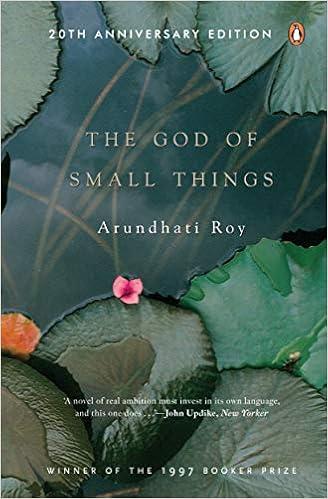
The god of small things is a caricature of human pain and life built on the layers of political leanings, the realities of Indian conservative societies, casteism and of course on how other people exploit it just to feel away and free from their own realities.
A multi-generational family lives in a small village in the state of Kerala – a communist stronghold. A woman from the family falls in love with an Irish priest, despite the opposition of her father, but failing to get any near him, is left bitter and becomes the antagonist of the narrative. Two twins witness a rape and murder wherein this lady, their aunt, the one who once loved an Irish priest is almost implicated for lying about the criminal and she tricks the poor children into blaming their servant. All this happens in the backdrop of a violent and turbid communist politics of which the servant who dies due to police beating turns out to be a member of. The aunt hates the communists because they once forced her to weave the red flag while forcible stopping her car on the road. To save herself of any implications, the lady gets rid of the children – blaming them of the death of the raped girl and the servant, breaks down their family – the mother dying at 31 and the father never really bothered. The twins grow broken, traumatized and never really heard or cared for. And the climax of the story just leaves one crying when the two twins finally meet at 31 – the age their mother died. The girl twin no longer speaks and the boy is just a lost one. They, for the first time realize the meaning of love and warmth and that it is them alone who share it with each other.
This review will and any review will, as a matter of fact, fail to capture the perfection Roy has achieved in this book. The 1997 Booker’s Prize winner is a masterpiece of storytelling and narrative. And it is a wonderful critique on politics, religion and casteism.
Happy reading!
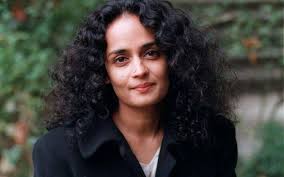
Arundhati Roy, who might be in news due to her remarks in the present day has penned a beauty.
Maybe you really like the feeling of money in your pocket or you want to gain the relevant experience needed to achieve your dream of becoming a Fortune 500 Company CEO. Either way, you need to dust off that old resume or create a fresh one. After all, how can you tell future employers about all of your impressive skills without that all-important document? Sort of like your Facebook (except more professional), a resume gives potential employers a quick snapshot of your experience.
Important? Yes. Scary? Definitely. For the newbies, how do you create the perfect resume without crashing and burning faster than someone running on two hours of sleep and six Redbulls?
RESUME BREAKDOWN
1. The Essentials
Without your name and contact info, your resume is only a list of impressive accomplishments. Don’t forget to include your email address (the one you actually check), phone number, and street address. Place this at the top so it’s the first thing they see.
2. Education
You’ll want to list your school, using its full name, your graduation date, your major, any minors, relevant coursework and awards/scholarships (if you have them). As for your GPA, only include that if it’ll blow their minds. In other words, if you cringe looking at your GPA, then keep it to yourself.
3. Experience
Pro tip: List only the most impressive and relevant points in reverse chronological order, including the location and the time period you worked there. While looking at a stack of resumes, your potential employer’s short attention span needs a reason to keep reading. If you’re applying for a marketing position, don’t bother including high school goalie, but make sure to list last year’s business internship. Don’t forget to write out a job description and acquired skills for each position to show how your previous experience will translate to the job you’re about to land.
4. Organizations
You know all those clubs that take up so much time? Here’s when they come in handy. List anything from sports teams to Greek life to honour societies, especially if you held a leadership position.
5. Skills
Use this section for any relevant skills for the job. Include your WordPress and Adobe premiere pro expertise, but leave out Microsoft Word since most people know how to use it.
Some of the obvious questions which would bother you while making your resume:-
Q1) SHOULD I INCLUDE MY LIFE STORY IN MY RESUME?
Absolutely not—only include anything relevant to the position you want. If you hope to land a writing internship, definitely mention your editor experience at your school’s paper. If you’re applying for a position at your school’s biology lab, nobody cares about your part-time barista experience.
Q2) HOW CAN I BEEF UP MY RESUME?
Do you need the experience to put on your resume to find jobs so you can get experience…sound familiar? If your professional experience equals zero, then volunteer experience, part-time jobs and internships come in handy. Keep in mind that part-time jobs may feel like a waste of time since you’re not gunning to become a fast-food server for the rest of your life, but the skills you gain (like time management) actually attract employers like college students flock to free food.
Q3) HOW DO I FORMAT MY RESUME?
Avoid fancy fonts and stick to a simple one that’s easy to read. Your contact info goes at the top, in a slightly larger font (think size 14–16 or so), while the body follows your typical font size of 12. You want to include a second page only if you can fill that entire page. Otherwise, cut down your resume to one page. A longer resume doesn’t necessarily look better, so don’t include fluff to make yourself seem more impressive. Your English teacher never appreciated long run-on sentences included only to meet the page requirement (curse those 10-page papers), and your employer feels the same way too.
If you’ll keep all these things in mind then your resume will definitely leave a good impression on your employer.
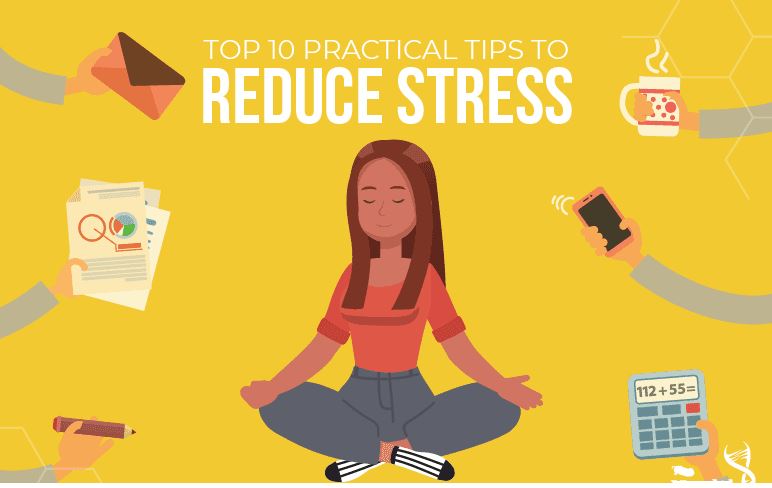
Everyone is in the rat race to be super productive and to achieve life’s ambition neglecting the fact that how draining the entire process is. As overwork brings stress so is the topic, because we need to address these issues and it is quite necessary.
To deal with it we need to plan out the day effectively and manage everything as per the need. While no one can avoid all stress, you can work to handle it in healthy ways that increase your potential to recover.
Study and practice relaxation techniques. Taking the time to relax every day helps to manage stress and to protect the body from the effects of stress. You can choose from a variety of techniques, such as deep breathing, imagery, progressive muscle relaxation, and mindfulness meditation. There are many online and smart phone apps that provide guidance on these techniques; although some entail purchase costs, many are available free of charge.
Exercise regularly. In addition to having physical health benefits, exercise has been shown to be a powerful stress reliever. Consider non-competitive aerobic exercise, strengthening with weights, or movement activities like yoga or Tai Chi, and set reasonable goals for yourself. Aerobic exercise has been shown to release endorphins—natural substances that help you feel better and maintain a positive attitude.
Try to connect with people. A good support network of colleagues, friends and family can ease your work troubles and help you see things in a different way. If you don’t connect with people, you won’t have support to turn to when you need help,” says Professor Cooper. The activities we do with friends help us relax. We often have a good laugh with them, which is an excellent stress reliever.
Avoiding unhealthy habits could be good practice to reduce stress from day to day life. Speaking of which working on a sleep schedule is mandatory and sound of sleep of 8 hours should be taken.
Last but not least to try to stay positive as much as you can because you can never work on any of the aforesaid strategy unless you’re in the the mood to uplift you and do something better for yourself
King Tutankhamen, popularly known as Tutankhamun, was born in the year 1341 BCE. “Aten’s living image” is the etymology of his name. He was crowned Egypt’s pharaoh at the young age of nine. He reigned from circa 1332 to 1323 B.C.E. as the 12th pharaoh of the 18th Egyptian dynasty. He ruled at a time when Egypt and the neighboring kingdom of Nubia were at odds over land and trade routes.
King Tut was confirmed to be the grandchild of the renowned pharaoh Amenhotep III and the offspring of Akhenaten, a contentious character of the 18th dynasty of Egypt’s the New Kingdom.
Akhenaten disrupted Egypt’s centuries-old religious system by favoring the worship of a single god, the sun god Aten, and relocating the country’s religious capital from Thebes to Amarna. Several of his father’s actions were annulled by King Tut, with the assistance of his advisor Ay, and Egypt returned to polytheism during his reign. Following Akhenaten’s demise, two pharaohs served for a short time until Tutankhaten inherited the crown.
Nearly a decade after attaining power, the “boy king” died under dubious circumstances only at 19. Below-mentioned are the few assumptions-
The Egyptian royal family’s longstanding incest is also believed to have contributed to the young prince’s ill health and early demise. His parents were siblings, as per DNA testing revealed in 2010, and his spouse, Ankhesenamun, was also his half-sister.
He stood tall but was fragile, with a terrible bone condition in his malformed left foot. He is the only pharaoh, believed to have sat while engaging in physical sports like archery. As per researchers, King Tut died from a gangrene infection, most likely triggered by a fractured leg.
It was assumed Tutankhamun was slain because his remains exhibited a hole in the back of his skull, but current findings reveal the wound was formed during mummification.
In 1995, CT scans indicated that the pharaoh had a crippled left leg, and DNA from his mummy showed signs of multiple malaria illnesses, all of which could have attributed to his premature death.
Tutankhamun suffered from malaria and was crippled, necessitating a cane to move, as per a 2010 analysis of his DNA, which could have triggered his fall and exacerbated his leg infection.
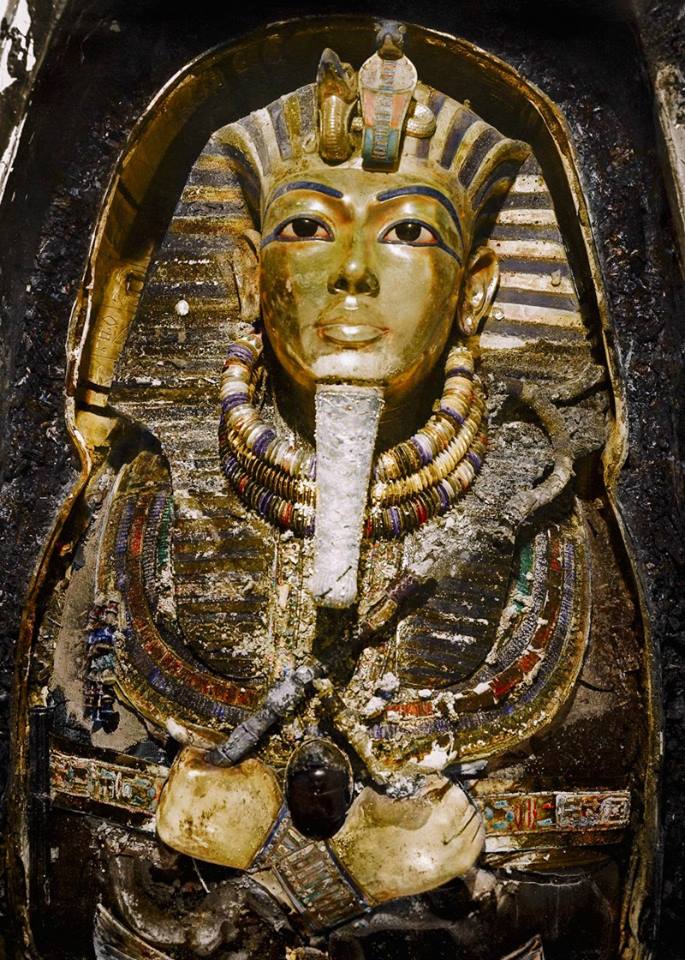
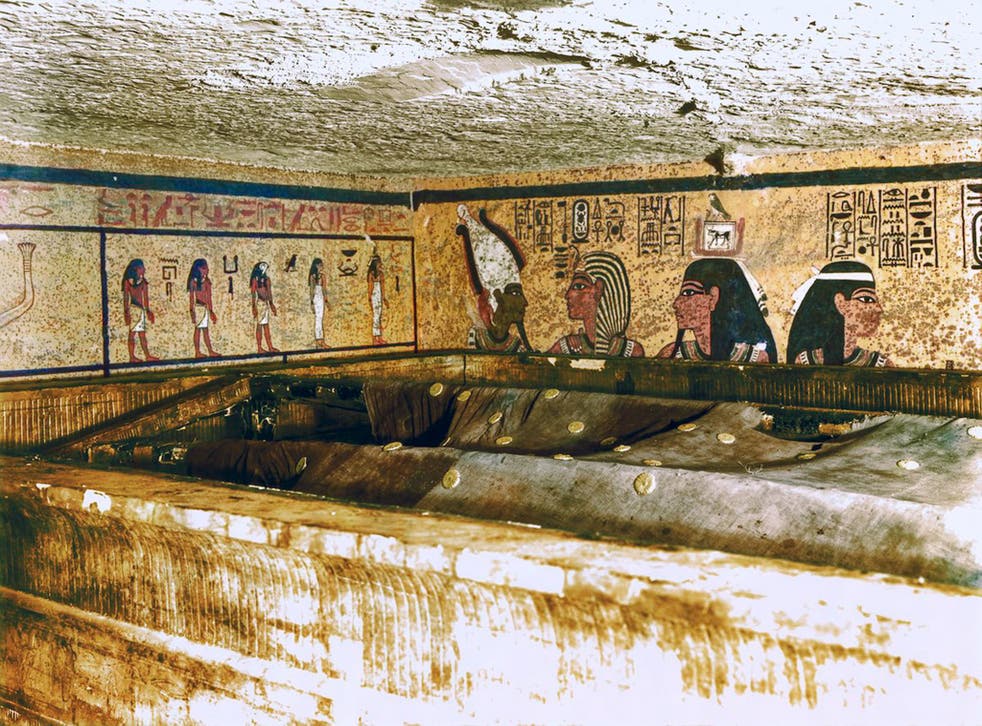
King Tut was mummified after he perished, in compliance with Egyptian religious practice. Embalmers removed his organs, dressed him in resin-soaked bandages, and then put in several nested coffins—three golden coffins, a granite sarcophagus, and four gilded wooden shrines, the greatest of which barely fit inside the tomb’s burial chamber.
According to archaeologists, King Tut’s death might’ve been unforeseen considering the modest size of his tomb.
More than 5,000 antiquities, comprising a solid gold mask, furniture, chariots, apparel, couches, canopies, funerary objects, musical instruments, scribal instruments, jars, sticks, thrones, headrests, swords, and 130 of the crippled pharaoh’s walking sticks, were crammed into the tomb’s antechambers. The entryway passage was believed to have been ransacked shortly after the interment, whilst innermost chambers remained concealed. King Tut’s gold mask was crafted utilizing 22 pounds of gold.
TREASURES OF Tutankhamun
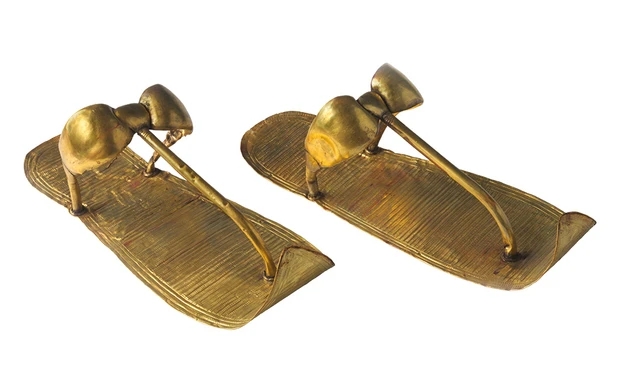
1. Walking on gold
These sandals, made of solid gold for burial purpose, would’ve been put on dead Pharaoh’s feet before he was draped in layers of linen. These resembled the leather and plant sandals Tutankhamun wore in actuality.
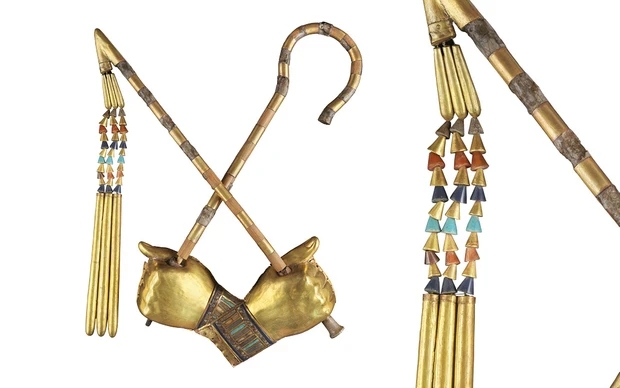
2. Symbols of pharaonic power
In Ancient Egypt, the crook and flail were the most important metaphor of royal power, with the shepherd’s crook symbolizing royalty and the flail indicating agricultural productivity. Within Tutankhamun’s mummy’s wrapping, The crook and flail featured silver centers, while the crossed hands were crafted of gold with colored glass.
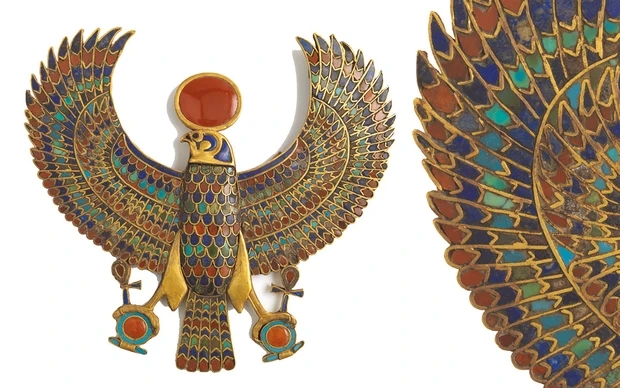
3. Divine protection
Pectorals, or extravagant pieces of jewelry, were worn across the chest. The gold Falcon depicts god Horus clutching the sign for eternity in his claws. Horus was believed to be the pharaohs’ creator and guardian.
4. Fierce protector
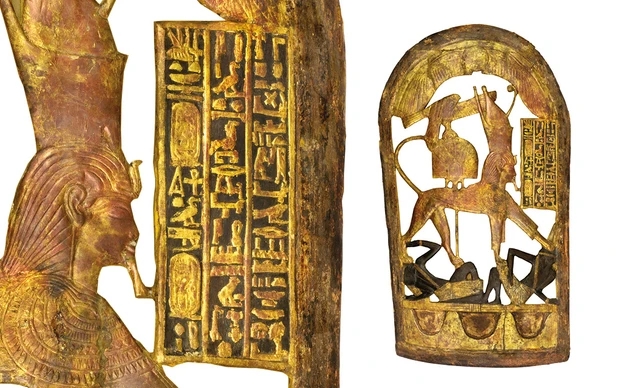
One of 8 wooden shields excavated in the tomb’s annex depicts Tutankhamun as a sphinx crushing his adversaries. The sphinx is surmounted by a falcon, which is a representation of the fighting deity, Montu. The openwork of the wood indicates that this armor was designed for ritualistic rather than fighting purposes. The Pharaoh’s armor represents him as a formidable pharaoh who safeguards Egypt from its enemies.
5. The hand of the king
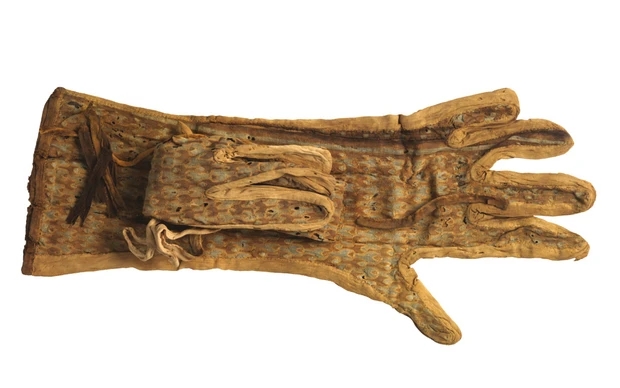
The majority of the items unearthed in the tomb were ritualistic or were meant for the Pharaoh’s afterlife use. But, researchers believe Tutankhamun used these linen gloves during his lifetime, most likely during the cold months, when in Memphis or while riding his royal chariot.
6. Gilded Wooden Bed
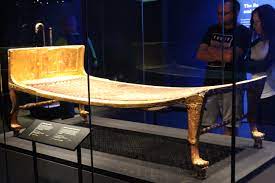
This gold-covered bed is assumed to have been prepared for King Tut’s funeral. The Ancient Egyptians felt that the deceased is just resting and that they’d awaken in the afterlife when they were reborn. Religious figures were carved on the bed to guarantee the Pharaoh’s safe travel into the afterlife and to keep evil powers away.
7. Immortal body
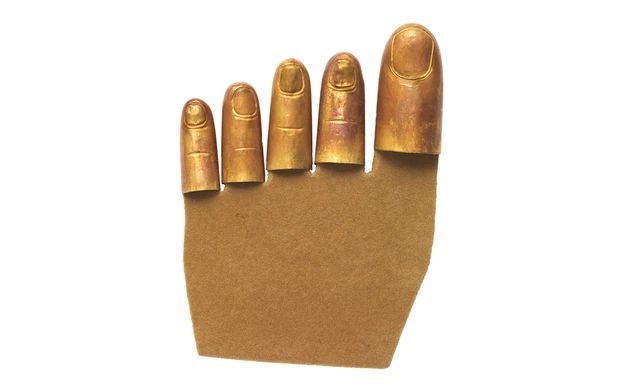
The ancient Egyptians believed that the body will be required in the afterlife, so they took great care to protect it after its demise. Stalls were used to maintain the shape of fingers and toes. Gold was highly regarded because it doesn’t rust or alter. It goes on and on.
Indeed animes are so popular . Animes have range of genre like romance, action, sad etc. Animes are full of creativity. It is a world full of fantasy where impossible does happen. Here are some long animes worth to watch.
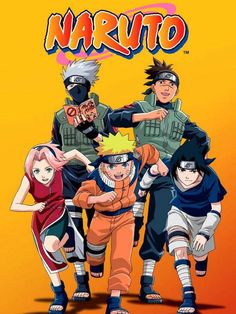
1. Naruto
Naruto is written and illustrated by Masashi Kishimoto. It is the story of Naruto Uzumaki, a ninja who’s drean is to be Hokage, the leader of village. A demon ninetails fox within Naruto’s body . Everyone in village hates him and don’t acknowledge him. He suffers lots of hate. Here’s begin his struggle to become greatest ninja. Naruto is of 720 episodes.
2. Bleach
This is written by Tite Kubo and produced by studio Pierrot and directed by Noriyuki Abe. The series tells about the story of Ichigo Kurosaki who obtains the power of a soul reaper. Bleach is of 366 episodes.
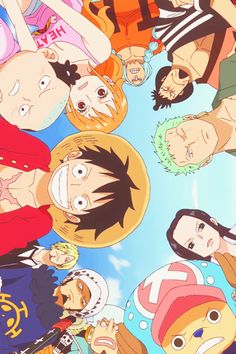
3. One Piece
It is written and illustrated by Eiichiro Oda. Series focus on Monkey D.Luffy a young man who inspired by powerful pirate “Red Haired”. One Piece contains 981 episodes.
Gurudev Rabindranath Tagore was a great patriot as well as an excellent human being, a doyen of Indian literature and man of versatile qualities as in any field of Indian literature, song, drama including dance drama, painting, music, playwright, etc., without mentioning him discussion would be incomplete. According to him, “the highest education is that which does not merely give us information but makes our life in harmony with all existence.” – Rabindranath Tagore (7 May 1861 – 7 August 1941). It is evident from here that on 7 August 1941Tagore left for heavenly abode. Let me first highlight his date of birth issue. The poet wanted his birthday to be celebrated as per Indian calendar and accordingly 25 Baisakh is taken into account not any Gregorian calendar. Born on 7 May, Tuesday 1861(as per Bengali/Indian calendar 25 Baisakh, 1268) in then Calcutta, now Kolkata, he was fourteenth child of Devendranath Tagore and Sarada Devi. As desired by Tagore 7 May is not considered for celebration but 25 Baisakh so as per Gregorian calendar it falls on 7May or 8 May or 9 May. This is a noteworthy point of his patriotism.
From childhood Rabindranath was a genius and at the age of eight years he made his first attempt in his versification. His father Devendranath Tagore who was like a sage had a vision and arranged Rabindranath’s school-teaching at home under private tutors. While studying at home at the age of 13 years, he wrote a verse based on Macbeth and at the age of 14 years he recited a poem in public gatherings which later on was published in the local newspaper. Tagore’s patriotic fervour was also clearly reflected when he returned the Knighthood, awarded by the then Imperialist British Government, as a protest against the Jallianwala Bagh massacre in 1919.The British initiated the policy to divide Bengal in 1905 based on religious line and used the words ‘Hindu Bengal and Muslim Bengal’. Like many other stalwarts irrespective of religion, Gurudev also came forward and opposed the partition of Bengal. He ventilated his anguish by writing a poem ‘Amar Sonar Bangla……’ (My golden/beloved Bengal…) and subsequently the same has been adopted as the National Anthem of Bangladesh after liberation of East Pakistan in 1971. Regarding our National Anthem “Jana Gana Mana………..” I wish to mention that the British falsely propagated that Jana Gana Mana……, was written to praise King George V and Queen Mary on their visit to India in 1911 which Tagore did not accept and vehemently protested. Another point, for the benefit of readers in general and north-east in particular I wish to highlight that only the first of five stanzas has been adopted as National Anthem but in the last stanza poet has mentioned sun rises from the extreme hills of the east of India (that is present north-east).
The poet was a great person and wanted to see a united India as he passed away on 7 August 1941 so did not see partition of India. In his ‘Bharattirtha’ (Holy India) poem, he has stated India is for all – Hindus ,Muslims, Christians, Dalits, Aryans, non-Aryans and others. Even in this poem he specifically highlighted ‘do not bother about caste, have an open mind’.
In the context of present West Bengal, I feel had Tagore been alive today; he would have been upset to observe WB Situation as ‘Bhadralokbabus’ have shown the level of poll violence and their cruelty. As a result death, assault took place etc., and many fled from WB to Assam. The Calcutta High court has to intervene for the safety of human beings. My simple view is that in democracy citizens have the right to do politics but the Party in power should save them from the criminals whether criminals are ‘Bhadraloks’ or ‘non Bhadraloks’. Another issue, a couple of days back Result of the third session of the Joint Entrance Examination (JEE) Main 2021 has been announced. In the third session, according to the National Testing Agency (NTA) 17 students have scored 100 percentile, eight are from Andhra Pradesh and Telangana (2 Telugu speaking states). Anyway not a single student is from West Bengal. Maybe now students of WB are more interested in politics than study. Third point, as many as 100 engineers, 500 postgraduates and 2,200 graduates have applied for six lab assistant posts also called ‘dom’ to handle corpses at a state-run hospital in Kolkata, indicating high unemployment in the state. In addition, many types of scams took place in the State of ‘Bhadralokbabus’. Only a few I am highlighting, the Saradha Group financial scandal, Narada sting operation, the Rose Valley financial scam, ‘fake vaccination’ scam, etc. It has to be admitted that many stalwarts and highly intellectuals were born once upon a time in the state.
I extend my Pronam to Gurudev Rabindranath Tagore on this day of his death anniversary.
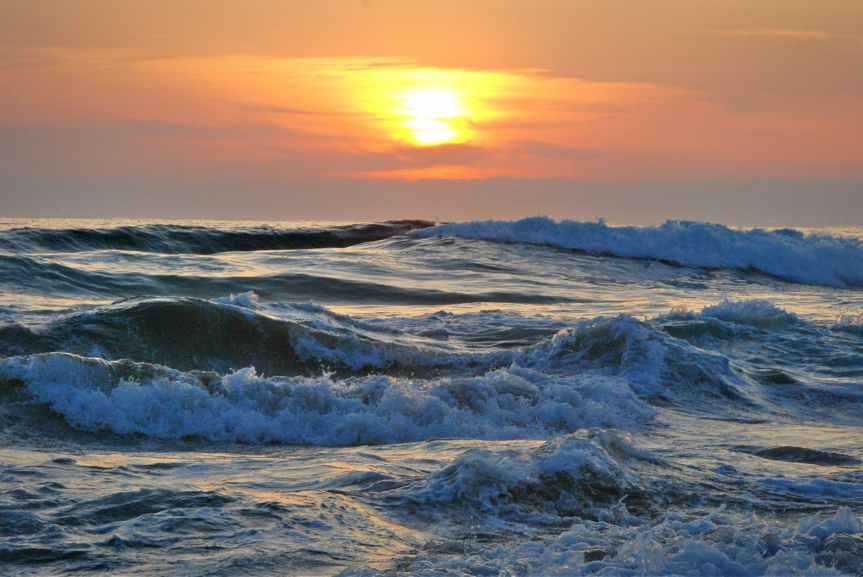
Pacific ocean is the largest ocean in the whole world, covering 32 % of the Earth’s total surface area and about 46% of the Earth’s water. It also has the largest number of coral species. It stretches to the Bering Sea in the north and the Southern ocean to the South, in the west are the continents of Australia and Asia and on the east the Americas. The world’s deepest point, The Challenger deep in the Mariana Trench (eastern boundary of the Filipine tectonic plate), reaching a depth of 35,850 feet is located in the Pacific ocean. It also has the southern hemisphere’s deepest point- The Horizon deep in the Tonga Trench at a depth of 35,509 feet. It also has many marginal seas-
South China sea
East China sea
Sea of Japan
Sea of Okhotsk
The Philippine sea
Coral sea
Solomon sea
Tasman sea
Yellow sea
The word Pacific means ‘Peaceful’ though the ocean is anything but peaceful. The Pacific ocean has the ‘Pacific Ring of fire’, the largest ring of active volcanoes and earthquake zone in the world. The Japanese Islands and The Philippines islands are a result of volcanic activity. The Pacific ocean has the largest number of islands (around 25,000) including the island groups of Micronesia, Melanesia and Polynesia (he largest- stretching from Hawaii to New Zealand) and the world’s largest archipalego- The Indonesian islands, an island groups of around 17,500 islands. It also has the Great Barrier Reef, the largest coral reef(2,300 km) along the eastern coast of Australia and The Coral Sea islands, atolls present to the west of the barrier reef. The temperature decreases longitudinally going towards the poles, though the temperate region has the highest temperature. There also exist latitudinal variations depending upon the oceanic currents. Salinity also varies latitudinally as well as longitudinally with temperature. High temperature zone have high salinity. Addition of fresh water lowers the salinity. The ocean currents also lead to intermixing of currents thereby lowering the salinity. The highest surface salinity occurs in the southeastern zone and the lowest salinity occurs in the extreme northern zone of the Pacific.
This is something about the largest and one of the most majestic oceans in the world.
Kindly note: Use the acronym PAISA to remember names of the 5 type of oceans:
A board game of strategic skill for two players, played on a chequered board on which each playing piece is moved according to precise rules. The object is to put the opponent’s king under a direct attack from which escape is impossible.
The Rules of Chess
The King may move one square in any direction, so long as no piece is blocking his path. …
The Queen may move any number of squares straight or diagonally in any direction.
Rooks move horizontally or vertically any number of squares.
Bishops move diagonally any number of squares.
Knights move in an ‘L’ shape’: two squares in a horizontal or vertical direction, then move one square horizontally or vertically. They are the only piece able to jump over other pieces.
Pawns move vertically forward one square, with the option to move two squares if they have not yet moved.
History of chess: The game originated in northern India in the 6th century AD and spread to Persia. When the Arabs conquered Persia, chess was taken up by the Muslim world and subsequently, through the Moorish conquest of Spain, spread to Southern Europe.
In ancient times India was ruled by hindu kings, earlier the entire society was divided into four categories starting from higher to lower.
Brhaman were superior and were considered as gurus and mentors of the entire society. Second class was of Shatriya people; they were mainly sepoys and kings who ruled the kingdom, and their main work was fighting wars. Third class was of Vaishya people, they were Business men and were engaged in trade. The last class was considered the most inferior class, they were considered left out people and were not involved in any activity of the state, they were discriminated in many ways.
Later Mughals ruled over India and established their hegemony, rights of Indians were infringed by them, Mughals dominated over Indians, they established their political power and have influenced the Indian political history such that till today we study their rulers in the academics. They burnt all the evidences of Indian rulers, so that people could only come to know about them in future.
As the time of Mughal rulers ended. Britishers started coming to India; they ruled almost one century over the Indian subcontinent and had robbed the golden sparrow so brutally. They broke down the unity of the nation, used it as a weapon to establish their hegemony in India.
After the 1800s Indian people started realizing the need for freedom from the Britishers, and in 1857 a revolt took place which is known as the first struggle by the Indians for freedom. Later after the arrival of Gandhiji and various other social reformers. Finally after hard struggle on 15th August 1947 India got Independence from Britishers.
Though after getting independence from the Britishers it was not easy to make India as a whole, as independence resulted as a partition of Indian subcontinent into two- India and Pakistan as Muslim community demanded for the separate nation.
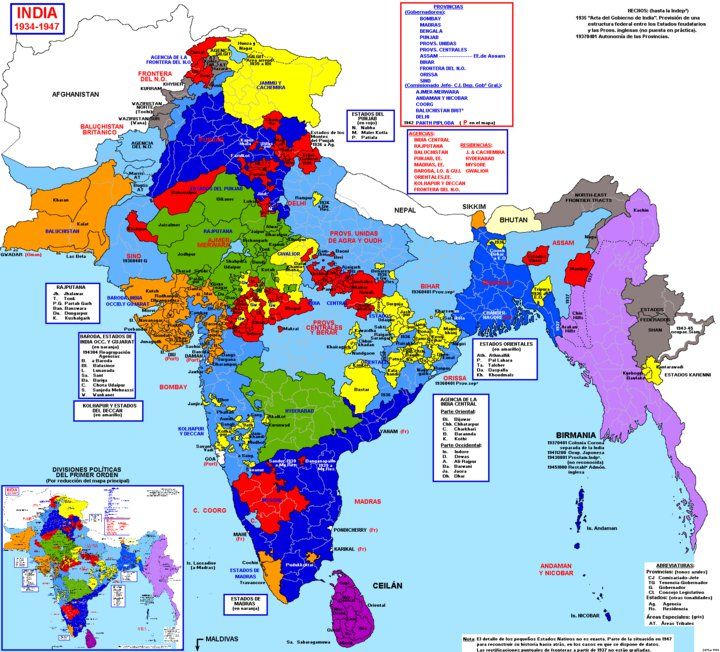
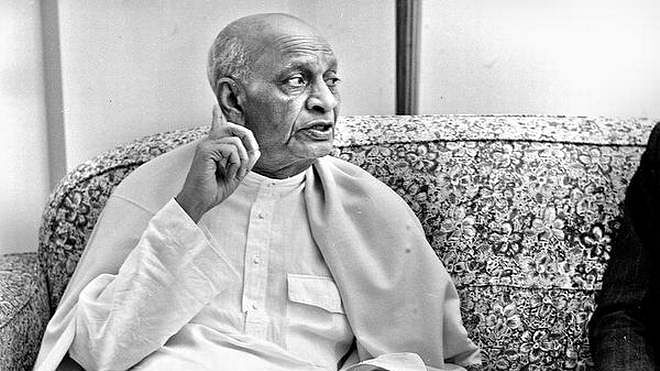
India consisted of 565 princely states before independence which worked separately. The task was to unite all these princely states of different culture, religion and tradition. Sardar Vallabh Bhai Patel emerged as a savior for India. He convinced all the Maharajas of princely state, still Maharaja of Kashmir and Nizam of Hyderabad want to make separate nation, they neither want to join India nor Pakistan.
Finally Sardar Patel convinced both the princely state's Maharaja and Nizam and New India was formed. Sardar Patel is known as Iron Man of India, if he would have not interfered, the structure of India we can see today would be different.
Today, India is the largest democracy of the world, with diverse culture and traditions. From North to South and East to West India is full of different colors of tradition, culture, living style, food, dance, dressing, festivals and many more.
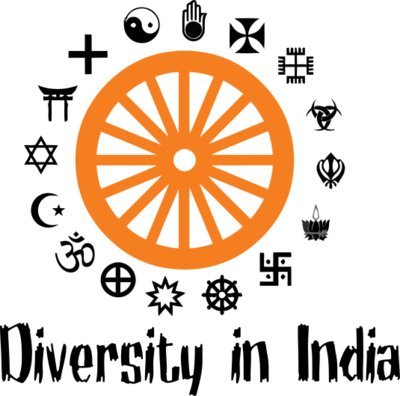
Each corner of the country is unique within itself. In the whole world one will not find anywhere this much diversity at one place. India is famous for its diversity and culture.
In India people of almost all religions are found, four major religions of the world were founded in India i.e Hinduism, Sikhism, Jainism and Buddhism.
In India since ancient times the majority of people were of the Hindu religion, others either migrated or converted themselves. Christianity was brought along with Britishers in India.
After Independence India adopted its own written Constitution on 26 January 1950 which today we celebrate as our Republic Day.
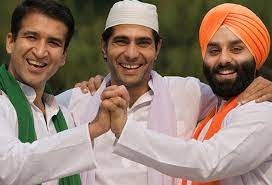
Under the Constitution India provides all rights to all religions equally without discriminating over any particular religion, culture and caste. All people of India follow one citizenship and identity of being Indian.
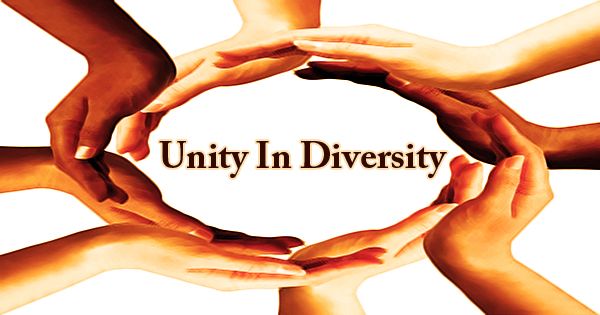
Therefore, India is well known globally for its title of 'unity in diversity'. All people of diverse cultures live under the shed of one Constitution and with one citizenship.
As earlier mentioned that Indian society was divided among four divisions and were discriminated on the basis of work of each caste, in order to uplift the economically and socially backward classes Indian Constitution provides some special privileges and rights to them. They are given reservation in all aspects, special laws were made for protection of their rights.
Earlier women in society were considered as inferior and were stopped from enjoying their basic rights and hence to improve the condition of women Indian Constitution provides special rights and reservation to them.
Among Indian population the majority of people follow Hinduism, hence one religion could not dominate over the entire society, special privileges are given to minor religion followers and are given equal rights in all the aspects.
Imagine what would have happened if we hadn't got independence? Even if we would get it, what if the framing members of Indian Constitution would have not given such privileges which are mentioned above to the socially backward classes, poor and to minorities, what if any of the religion would have dominated over the entire society? What if after independence the nation builders would have chosen any other form of government rather than democratic one?
India would have missed the title of 'unity of diversity' and such a respected identity in the world. As India is known for unity in diversity, thinking about oneness is like a nightmare.
If we see from bird's eye view India is still a democratic country, united where every section of society is enjoying all the constitutional, social and democratic rights, but deep inside at the ground reality people are not ready to accept these forms of administration.
The reality is people are still fighting and rioting on the name of religion, and the main tussle is among Muslims and Hindus, from partition this conflict began and still after 75 years it is continuing, not only the India and Pakistan, the Hindu and the Muslims of within country are fighting for establishing their power and hegemony.
Hindus want to make India as a nation of Hindus, they don't want any other religion to live here, Muslims want to make India as a Islamic nation, and same is with other religion followers. At the ground level both the religion followers have hatred in their hearts and minds towards each other.
Discrimination has not been ended yet, still people discriminate against each other on the basis of caste.
Politics is always like a mirage, what we see is something that never exists and so is with India, it may seem everything is going constitutionally and equally, but reality and truth can be experienced by observing the situation at ground level.
Let's hope that this nightmare of oneness in United and diversed India never becomes real. Even if it's seeming to be.
The busy schedules become headache though they include your interest matter and work. This can be because of improper management of work and making a load out of it. Procrastination is a major reason of work load. The deadlines at the end confuses the project and lowers the enthusiasm of a person. This results in bad quality of work and dissatisfaction.
Lifestyle needs a change if you feel bored of your job and find it a burden on you. It is the same job you might have applied for with great interest and enthusiasm and wanted to join in quick. The same joy can be brought back by simple steps.
To start with, you should avoid procrastination. It is the worst habit to possess. Once done, you will repeat it for the sake of comfort. However leaving everything to the future will lead no path besides getting you in a trap and creating chaos. Take responsibility and make it a habit to do tasks on-the-spot. This will help manage multiple things at a time and make way for more.
While doing a task, try to make it as interesting that it appears new to you each time you start. Add your own flavor to it by applying innovation and creativity. doing the same job with regular tasks would become fun once you try it the other way keeping the basics same but improving the presentation.
To increase your workplace productivity, a positive and enriching environment is a must. Clear the clutter from the work desk sort out all your online and offline stuffs. It can be deleting unnecessary e-mails, pictures, apps or messages from your device or removing useless files and pages from your office room or desk. Replace unnecessary items with important ones and make sure to add positivity to your environment by keeping green plants nearby and attaching colorful frames on your walls. Be in contact of things that bring energy and joy to you and avoid dull colors and bad company. Make friends who are enthusiastic and determined towards their work.
Always make sure you have time for yourself in between the work. It is important in order to re-energize yourself and start the rest of it-afresh. Being engaged for long hours decreases the capacity and productivity. A break is a must. It may include taking a little walk around or having a short meal, having a chat with your friends or fellow workers or whatever is preferred.
A healthy diet is the key to a healthy mind. Eat healthy and nutritious food which not only fills your stomach but provides you with energy and increase your productivity. Green vegetables help improve focus and make the mind sharp. On the other hand, Fruits also provide essential vitamins to the body. Avoid caffeine to wake up in the morning. Apples are a better substitute for them as per a study.
Enjoy your holidays by planning hangouts with friends and family. This will refresh the mind and prepare for the upcoming busy schedules.
Listen to music to stress-out and involve yourself in social interactions at workplace. It is good to remain involved and make your presence felt among others’. Work continuously to improve yourself and achieve more with hard work and dedication.
It is often hard to manage work and family altogether but it is important to earn to run a family. There are many responsibilities on a working person besides issues arising during the tenure. Conflicts can occur often and sorting them out leaving the work can be frustrating for a busy person. However people should try keeping work and family apart and not letting small things affect their lifestyle. There are lot more of such things that may disturb the mind like road traffic and irregularity of an employee but in order to be successful, one should know how to tackle them on a daily basis. Patience and mindfulness are important characteristics of a leader or even a common worker nowadays.
From its early days as a military-only
network to its current status as one of the developed world’s primary sources
of information and communication, the Internet has come a long way in a short
period of time. Yet there are a few elements that have stayed constant and that
provide a coherent thread for examining the origins of the now-pervasive
medium. The first is the persistence of the Internet—its Cold War beginnings
necessarily influencing its design as a decentralized, indestructible
communication network.
The History of the Internet
The near indestructibility of information
on the Internet derives from a military principle used in secure voice
transmission: decentralization. In the early 1970s, the RAND Corporation
developed a technology (later called “packet switching”) that allowed users to
send secure voice messages. In contrast to a system known as the hub-and-spoke
model, where the telephone operator (the “hub”) would patch two people (the
“spokes”) through directly, this new system allowed for a voice message to be
sent through an entire network, or web, of carrier lines, without the need to
travel through a central hub, allowing for many different possible paths to the
destination.
The Internet has revolutionized the
computer and communications world like nothing before. The invention of the
telegraph, telephone, radio, and computer set the stage for this unprecedented
integration of capabilities. The Internet is at once a world-wide broadcasting
capability, a mechanism for information dissemination, and a medium for
collaboration and interaction between individuals and their computers without
regard for geographic location. The Internet represents one of the most
successful examples of the benefits of sustained investment and commitment to
research and development of information infrastructure. Beginning with the
early research in packet switching, the government, industry and academia have
been partners in evolving and deploying this exciting new technology.
Role of internet in today’s world
Internet has given the field of business
and trade a new face by taking it online. Undoubtedly, online business is
thriving on the net. The Corporate World can reach out to a wider base of
customers, through their websites. The number of active shoppers online is
progressively on the rise and the business world is tapping this fact for the
better. Locating resources like shops, outlets, businesses offering specific
products and services has become easier through Internet. Apart from speed,
reliability and an extensive reach, it also provides the buyers as well as the
sellers with a greater range of products and services to choose from. It also
eliminates the geographical limitations of trade and exchange. Thus, it is
proving to be a fairly profitable mode in the business arena. Advertising and
marketing have also experienced a radical makeover, all thanks to the Internet
and its enormous coverage. A new product can be introduced to a mass audience
within a matter of a few seconds through this high-speed medium. Apart from
garnering the attention of the consumers, sellers also get the all-important
feedback through various programs and polls. Looking at its colossal potential,
Internet has become a highly viable advertising medium, too.
Internet
has made the tendering process smoother, safer and speedier. More secure and
quicker filling up of tenders and execution of orders is now possible through
e-tendering. Organizations using the new age methods undeniably enjoy a
striking edge over the organizations making use of the conventional methods.
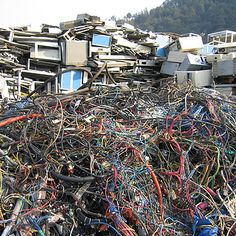
E-waste or electronic waste are those electronic product that are unwanted, not working and nearly at end of their life. E-waste includes almost any household or business item containing with either power or battery supply.
E-waste is a global concern. Many new better technology are coming these days. When new appliances hit the market, old appliances were discarded this generates E-waste.
E-waste contains toxic materials:-
Most appliances contains some form of toxic materials including beryllium, cadmium,mercury and lead which badly affect our soil, water , air and wildlife.
When E-waste buried at landfills, it can dissolve in microscopic traces. These traces of toxic materials pool into ground below landfill known as leaching.
Solution to E-waste
All electronic waste contains some form of recyclable material. It includes plastics, glass and metals.
Reduce the generation of e-waste through smart maintenance.
Reuse the electronic equipment by donating or selling it to someone who still manage too use it.
we all know that in today’s time it is very important to keep ourselves fit for our health. Because if we stay fit we will be healthy And we all know that in today’s time it is equally difficult for some people and not for some people.
But in today’s time, healthy is a very difficult topic, the one who will be healthy and fit, only he can survive. We used to see the people of earlier times that they used to be very fit, they never got sick, that’s why till today they are living their life so well.
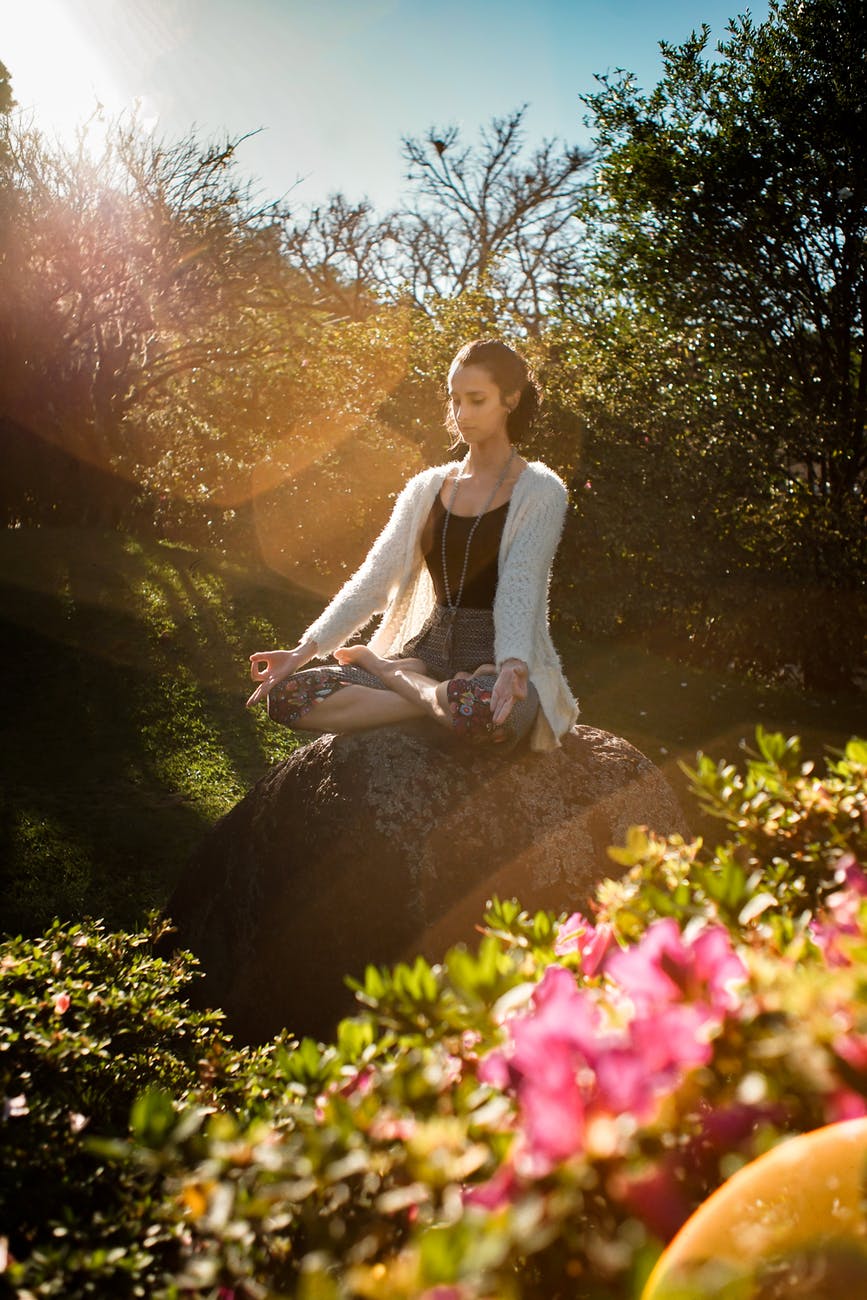
For all of us to be healthy, there are many facilities like we should do yoga and exercise so that our body remain fit.
We must have seen that earlier people used to be very fit, the reason was that they used to work very hard. It doesn’t mean that today’s people don’t work hard. My opinion is that at that time there were no facilities like today’s time, so all of them used to work physically.
But today’s time is different, we have got many types of facilities, due to which time is being saved, we are able to give time to our family and rest of ourselves. But at the same time, the effect of all this is also read on our health.
We have seen in earlier times that as soon as the children got time, they run outside to play. But in today’s time, parents like to play video games on their children’s phones sitting at home, but they cannot see their children getting hurt by going out. All this is the reason for bringing laziness in our body. We must understand that being healthy is very important for the life of all of us but also for our family members.
If we are sick today, how many types of medicines do we eat to survive? But if we are already fit then we will not need any medicine. Whatever hard work we do today, we do it for our loved ones, then we should also think that our health will also affect the lives of our loved ones. Whatever hard work we do today, we do it for our loved ones, then we should also think that our health will also affect the lives of our loved ones.
In today’s time, we should pay attention to our health, we should do yoga or exercise whenever we get time. So that our mind also remains calm and we can live our life happily.
‘Growing up with Teens’ by Ruchi Verma, is a psychological approach that revolves around the lives of Teens. I loved to explore this genre. It intrigues me a lot, how parents establish connections with their offspring, how they involve in the process of long-term behavioural management. So, to explore the reality I read this book.
This book was all about the vision of teen parenting. It is not an easy task to raise a teenager, but with the right approach, every parent puts forward to make this journey easier. As communication should not be a barrier in your relationships with your offspring, and these methods will definitely help you to begin better conversations with your teenage kids.
Ruchi Verma states ‘Each day as a parent we too are growing up and understanding the other side of the story.’ This book comprises of 12 chapters. Every section deals with new challenges that emerge in the road of family life. There are so many questions that arise with this set of age, in regards to emotional, physical and social changes. And the perspective, author shared here, is really a nice construct if you can agree to put it into practice this book is really helpful to parents.
Ruchi Verma offers a whole section on communication that I liked the most about this novel. The author acknowledges many important points, for example─ why communication is important? How your teens want to communicate? Do and don’ts of communications.
‘Don’t assume or read their mind. If you don’t understand certain behaviour change or less communication or even, they are not doing things according to the rules made by you’.
‘Listening means letting them finish their story and their thoughts. Just make sure when they talk, look in their eyes, and show interest in their versions. Your opinion on that same topic might differ but remember to give them equal opportunity to put forward their opinions so that they don’t feel neglected.
As a reader, I have mixed feelings about this novel. On the positive side, Ruchi Verma shared some absolute gems of tips and advice based on her personal and professional experiences. She comes up with the idea of talk about adolescence, depression, anxiety. Adding to this, she explored myths and taboos of sex education in India. ‘We carry a hush-hush talking attitude for years. It’s high time to change and break this taboo. Teaching your child this aspect is as important as giving them any other education’.
Not only had she incorporated discussion on daughter’s puberty but also added her son’s too. I have found it to be immensely practical and loved reading it.
The author has rightly convinced me to go on reading the book because every page gave me a new idea about the way she handles the teen’s mind swings. On the other side, I found the information bit repetitive. I so wish it were organized a bit differently.
Reading this book has enhanced the way we look at the behaviour of teens, and the way we feel their life is easy, but they also go through various emotional traumas. ‘It is important to teach both boys and girls that they are equal in the society, and one should respect the other gender’s emotions and consent always.
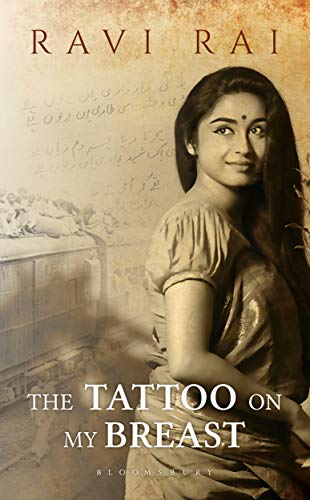
‘The Tattoo on My Breast’ is the debut novel by acclaimed television director and writer Ravi Rai. The story is a mixture of an epic tale of love, passion, emotion, drama and romance set in the times of partition through the eyes of our protagonist women.
The story is set in the 1940’s era, around the time of the Quit India movement and Independence. A Spanish aid worker named Abella Alejandro had come with the International Red Cross to Nepal after the 2015 earthquake and there she learns about Sadhana’s story, the childish granddaughter of a rich Sindhi grain merchant who was getting married to Prakash, when Rehman, the meek, poor boy living next to Sadhana’s house and was Sadhana’s childhood friend realizes his love for her.
On the other hand, Jinnah and Nehru have started displaying their influence on the young and the restless of the yet undivided India, where the several Gurdwara’s Sikh flags are replaced with the green flag of Islam and Prakash becomes a fatality in one such crossfire.
Barely 15 days into her marriage and Sadhana is a widow. And Rehman is back in her life. But little does she know that her radical Hindu father has fixed her marriage to Sunil, a Sindhi millionaire running his looms in Dhakka, which is soon to become East Pakistan.
Sadhana and Rehman plan an escape, but destiny plays a cruel role with the breakout of riots and Rehman is once again late in claiming his love. The Radcliffe line has been drawn and has divided India. The lovers had parted painfully.
Sadhana, now a nurse, is attending to the injured when she meets Sunil, the man she was slated to marry. His brother, Anil is a doctor at the hospital and has fallen in love with the young nurse. But Sadhana’s heart only beats for Rehman. In this hour of difficulty, Sadhana’s grandfather plans a sinister conspiracy and poisons Sadhana’s mind against Rehman; causing her to marry Anil.
And just when connubial happiness begins to set in and Sadhana gets pregnant, Rehman returns for her causing her heart to beat for him once again. What will Dr. Anil, who till now was unaware of their undying love, do when he comes to know of Rehman’s presence? Will Sadhana follow her heart or will she bind herself in chains that have always distanced her from her true love? Will Rehman accept a pregnant Sadhana as his soulmate or leave her at the crossroads once again? To known these answers read the beautifully written book by Ravi Rai ‘The Tattoo on My Breast’ which is easily available on Amazon.in offline and online as well.
I feel the story is well researched and beautifully executed. The plot and some of the imagery make it evident that the writer used to write dramatic shows, which explains the dramatic plot and graphic visualisation. The book gives readers a deep look at the hardship and inequality of suffering around the turbulent times in Indian history. Despite the backdrop, the story is predominantly a love story, and this book is a great gift to romantic book readers. Personally, I feel it describes the sorrow of separation and make you realise the importance of your loved ones in your life.

















 Eduindex
You must be logged in to post a comment.