Tips for Share Market

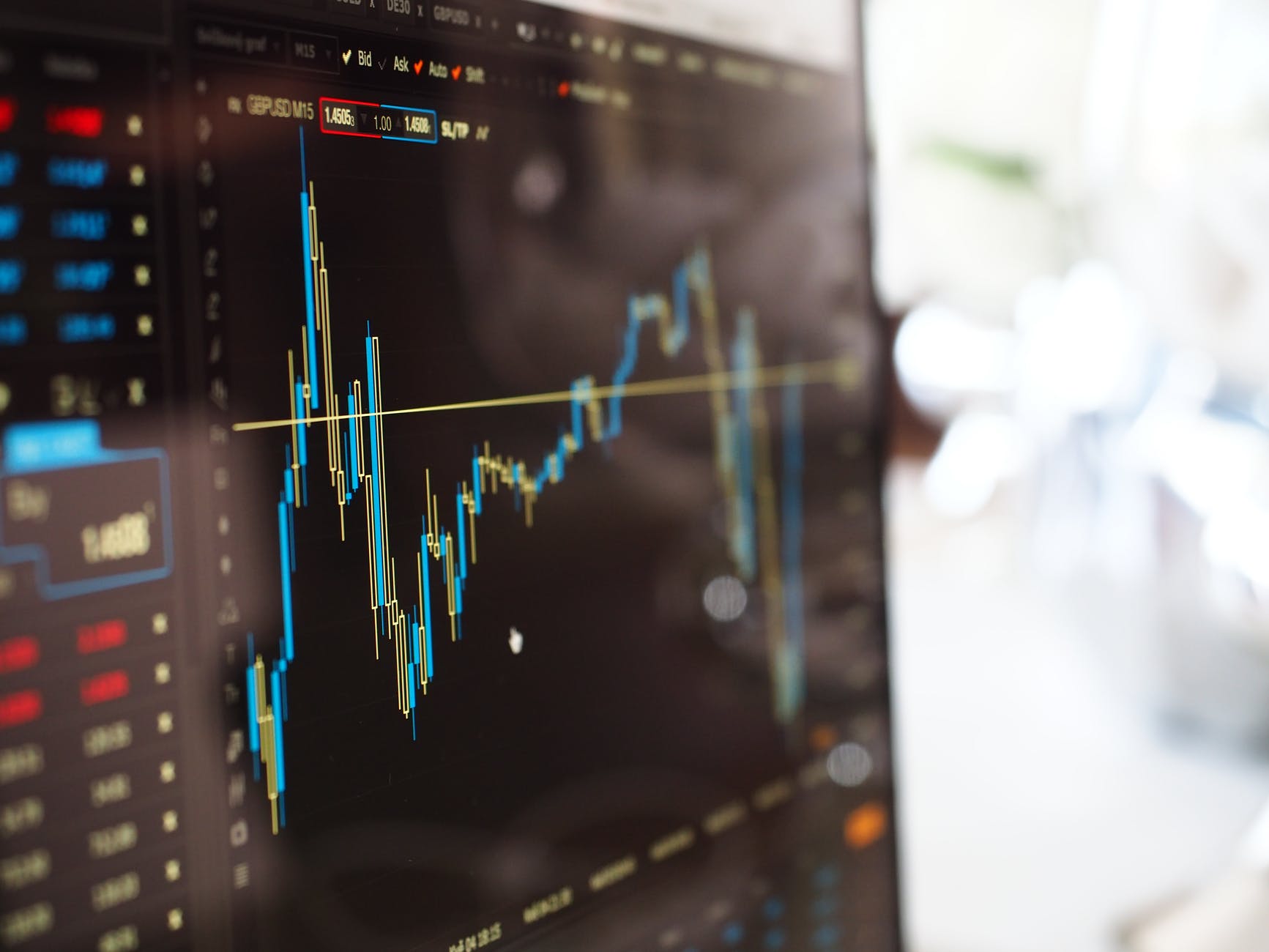
The potential of large gains from share markets can entice you as an investor. To a novice, the stock market may appear to be a place where you may obtain quick returns on your investments or make millions in a flash. On the other hand, the reality is rather different. It’s difficult to make money in the stock market. You’ll need patience and a long-term investment horizon, as well as a deep understanding of the market. You should only employ share market advice from a professional financial advisor, and your investing ideas should correspond with your financial objectives and risk tolerance.

Different investors have different investment objectives when they enter the stock market. Some investors seek rapid and huge profits, while others seek long-term investments and a well-balanced portfolio. However, to prevent volatility, every investor should follow a few share market guidelines during their trading journey.
Best tips for Share Market

1. Prior to investing, set goals

Goal-based investing can assist you in accomplishing your financial objectives. Determine your financial needs and develop short- and long-term goals to meet them. This will assist you in determining the length of your investment, the amount you want to invest, and the best investment channel for your needs. Let’s say you have a short investing horizon. Then you might try to profit on short-term stock price swings. If you have a longer timeline, on the other hand, you may invest in blue-chip stocks, which are renowned to provide strong long-term returns.

2.  Recognize Your Risk Tolerance

Given the volatility of the stock market, it’s a good idea to figure out your risk tolerance before investing. Risk tolerance is an important part of the investment process, and it varies from investor to investor. It primarily refers to the ability to withstand market fluctuations and their impact on the investment’s value. An investor’s low-risk tolerance is determined by his or her hunger for loss or ability to cope with worry in a highly volatile market. Low-risk investors are more likely to sell their stocks in a panic at the wrong time.

3. Choosing a Stock Broker

One of the most important decisions you’ll have to make early in your trading career is which stockbroker to use. In India, there are a plethora of stock brokers to choose from, making it tough for newcomers to make an informed decision. Consider factors such as the broker’s reputation, trading portal or software, and brokerage while making a decision. Keep an eye on the brokerage because you’ll have to pay it whether you make a profit or a loss on a deal. Brokerage fees can be levied as a flat fee or as a percentage of the trade value. This is especially significant for stock traders because the brokerage fees for repeated trades can soon add up.

4. Learn the fundamentals of the stock market

Learn the fundamentals of the stock market before investing your hard-earned money. Learn how the stock market works, what drives it, how stock prices are influenced, trading and investing tactics, and more. To make informed investments, you’ll also need to get familiar with a variety of technical terms. Those who invest without first learning the basics risk losing their money. Learn about the market before you begin your stock market trip if you desire strong and regular results.

5. Choose companies that are fundamentally sound

Consider investing in companies that have solid fundamentals. These businesses not only deliver better long-term returns to investors but also provide more liquidity. Companies with good fundamentals can also withstand share market volatility and changes. As a result, they are a generally safe investment option. Large-cap mutual funds are another option for mutual fund investors.

Conclusion

The potential of big profits tempts many to invest in the stock market. Keep in mind that markets are volatile, and stock prices can swing dramatically. Experienced investors, on the other hand, do not let these dangers affect their decision-making. Instead, they concentrate on research and analysis to determine whether or not to invest, where to invest, and whether or not to buy, hold, or sell a stock. If you’re just getting started, the above share trading advice can help you get started. Use them to create a successful stock market investment strategy that yields consistent profits.
Emotions:

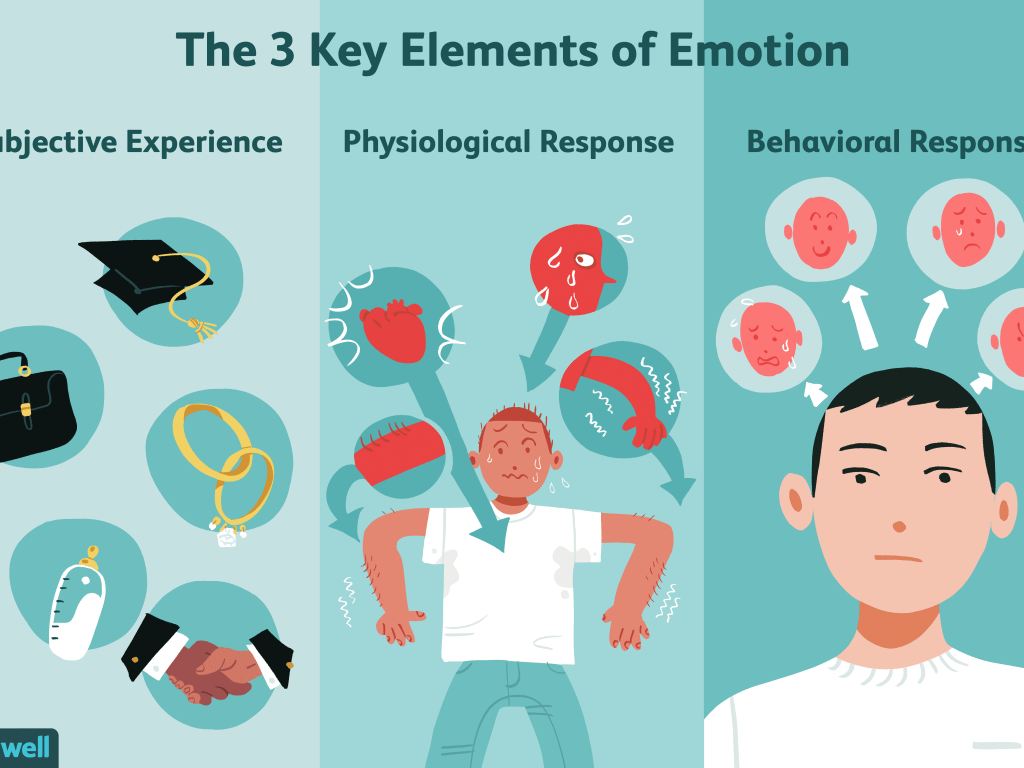
According to the book “Discovering Psychology” by Don Hockenbury and Sandra E. Hockenbury, an emotion is a complex psychological state that involves three distinct components: a subjective experience, a physiological response, and a behavioral or expressive response.

In addition to trying to define what emotions are, researchers have also tried to identify and classify the different types of emotions. The descriptions and insights have changed over time:

a. In 1972, psychologist Paul Eckman suggested that there are six basic emotions that are universal throughout human cultures: fear, disgust, anger, surprise, happiness, and sadness.
b. In the 1980s, Robert Plutchik introduced another emotion classification system known as the “wheel of emotions.” This model demonstrated how different emotions can be combined or mixed together, much the way an artist mixes primary colors to create other colors.
c. In 1999, Eckman expanded his list to include a number of other basic emotions, including embarrassment, excitement, contempt, shame, pride, satisfaction, and amusement.
Plutchik proposed eight primary emotional dimensions: happiness vs. sadness, anger vs. fear, trust vs. disgust, and surprise vs. anticipation. These emotions can then be combined to create others (such as happiness + anticipation = excitement).

Key Elements of Emotions
In order to better understand what emotions are, let’s focus on their three key elements, known as the subjective experience, the physiological response, and the behavioral response.


The Subjective Experience
While experts believe that there are a number of basic universal emotions that are experienced by people all over the world regardless of background or culture, researchers also believe that experiencing emotion can be highly subjective. Consider anger, for example. Is all anger the same? Your own experience might range from mild annoyance to blinding rage. While we have broad labels for emotions such as “angry,” “sad,” or “happy,” your own experience of these emotions may be much more multi-dimensional, hence subjective. We also don’t always experience pure forms of each emotion. Mixed emotions over different events or situations in our lives are common. When faced with starting a new job, you might feel both excited and nervous. Getting married or having a child might be marked by a wide variety of emotions ranging from joy to anxiety. These emotions might occur simultaneously, or you might feel them one after another.

The Physiological Response
If you’ve ever felt your stomach lurch from anxiety or your heart palpate with fear, then you realize that emotions also cause strong physiological reactions. (Or, as in the Cannon-Bard theory of emotion, we feel emotions and experience physiological reactions simultaneously.) Many of the physiological responses you experience during an emotion, such as sweaty palms or a racing heartbeat, are regulated by the sympathetic nervous system, a branch of the autonomic nervous system.

The autonomic nervous system controls involuntary body responses, such as blood flow and digestion. The sympathetic nervous system is charged with controlling the body’s fight-or-flight reactions. When facing a threat, these responses automatically prepare your body to flee from danger or face the threat head-on. While early studies of the physiology of emotion tended to focus on these autonomic responses, more recent research has targeted the brain’s role in emotions. Brain scans have shown that the amygdala, part of the limbic system, plays an important role in emotion and fear in particular.

The amygdala itself is a tiny, almond-shaped structure that has been linked to motivational states such as hunger and thirst as well as memory and emotion. Researchers have used brain imaging to show that when people are shown threatening images, the amygdala becomes activated. Damage to the amygdala has also been shown to impair the fear response.


The Behavioral Response
The final component is perhaps one that you are most familiar with—the actual expression of emotion. We spend a significant amount of time interpreting the emotional expressions of the people around us. Our ability to accurately understand these expressions is tied to what psychologists call emotional intelligence, and these expressions play a major part in our overall body language.

Research suggests that many expressions are universal, such as a smile to indicate happiness or a frown to indicate sadness. Sociocultural norms also play a role in how we express and interpret emotions. In Japan, for example, people tend to mask displays of fear or disgust when an authority figure is present. Similarly, Western cultures like the United States are more likely to express negative emotions both alone and in the presence of others, while eastern cultures like Japan are more likely to do so while alone.


Emotions vs. Moods
In everyday language, people often use the terms “emotions” and “moods” interchangeably, but psychologists actually make distinctions between the two. How do they differ? An emotion is normally quite short-lived, but intense. Emotions are also likely to have a definite and identifiable cause.

For example, after disagreeing with a friend over politics, you might feel angry for a short period of time. A mood, on the other hand, is usually much milder than an emotion, but longer-lasting. In many cases, it can be difficult to identify the specific cause of a mood. For example, you might find yourself feeling gloomy for several days without any clear, identifiable reason.

VALUE EDUCATION- A REMEDY FOR SOCIAL EVILS

Education is provided everywhere in today’s world but the concept of value education is not provided. No one feels the need of providing value education to the students, no one teaches that. The institutions and schools only provide education to their students, how to learn and write, but no one gives the knowledge of values to them. There is no stress in the educational institutions to uplift the students morally, spiritually and physically. The need of the hour is to impart value based education. Morals, ethical values, performance of duty, regard and consideration for fellow human beings, sympathy and compassion seem to have gone with the wind in this modern, complex and fast competitive era. We should realise the real aim of education, which is to provide moral values, to follow the concept of value education in every small and large educational institution.

Modern education simply prepare students to acquire degrees or diplomas in general or specialized fields but value education helps for the all round development, inculcate moral values. It teaches a person to handle their responsibilities well, be compassionate and a decent human being. It makes a person sacrificing and empathetic in nature which can decrease the crime rate and all the social evils happening in our society. The students must be learned to keep values as top priority.

WHAT IS SOCIAL EVIL?

Social evil is any pain or suffering brought by the evil intentions or actions of many individuals. It harms a person and even toxics their life to death. Common social evils include- caste system, poverty, dowry system, domestic violence, no education for girls, illiteracy etc. These are happening from a very long time and if no value education is provided within a right time, these evils continue to happen.

ROLE OF EDUCATION IN PREVENTING SOCIAL EVILS-

Education enables people to distinguish good and bad and become a good person in the society. Value education provides the overall learning to the people. It makes them go through the various areas of knowledge, the individual becomes able to distinguish good from the evil and right from the wrong. It helps the students to become more sensible and responsible towards their work. It generates a feeling of compassion to other human beings and develop a sense of belongingness in them. It makes a person helping in nature and they try to help people and not to harm them in any way. It helps them to understand the perspective of life in a better way and lead a successful life. They become a responsible citizen of the country and make their country secure from any social evil. It also help students to develop a strong relationship with family and friends. Education also empowers women to fight for their rights and challenge inequality. It gives them learning about their various rights and duties and how should they exercise it. Value education can cure economic inequality and poverty, racism and sexism. It can make the life and future of a person better and act as backbone in society. It develops the character of a person and improves the inner personality. If it is rightly exercised in every institution, then the social evils will come to an end.

CONCLUSION-

Our education should lay stress on cultivating human values. A really educated person has the capacity of self-sacrifice. A dedicated individual is a boon to the society and the nation. In fact value education can help in removing all social and cultural evils. We need vigilant men and women to help India march forward. Thus, it is very important to include the concept of value education to remove all the social evils happening in our country.

” The aim of education is the knowledge not of facts but of values.”- William Ralph Inge

Travelling

                                   TRAVELLING


 Travelling plays an important part in making us feel relaxed and rejuvenated. It also brings positive changes in our life and keeps us alive and active. Travelling gives us practical experience of things we have studied in the books and surfed on the internet. So a person who does not travel at all does not find any meaning in the name of India Gate or Ganga River. However, if he has travelled to these places, he can truly relate everything he has studied and will always remember each and every detail of that place.

Nowadays, many people like travelling as they want to explore the world and watch everything they have read about. And this seems to be quite justified as practical knowledge is way more essential and effective than the theoretical one. People like to visit historical places present in different parts of the world and gather information on the same to write books and stories.

Travelling has become easier due to advancement in technology and transportation. Earlier people use to travel by road or sea and it takes many days to reach from one place to another, however, now the scenario has changed and people travel to far off places within hours and minutes-thanks to well-built roads and aeroplanes.
People travel for different purposes, some travel for the sake of education while others travel to relax and enjoy. Many people take a break from their hectic schedule and go for a vacation, this makes them feel delightful and also help them to invigorate.

<

p style=”border: 0px;font-size: 15.2015px;line-height: inherit;margin: 0.75em 0px;padding: 0px;vertical-align: baseline”>Many poets, writers, and painters travel to different places to capture some of the best things of nature and express them in the form of paintings or poems. People also travel for business purposes so as to expand and gain profit from their business. Students travel for educational purposes so everyone has a unique reason to travel. Therefore, travelling is an important part of human life and it instils knowledge and offers various benefits to mankind.

CHARITY


The word ‘charity’ means generosity in giving some­thing to the needy out of loving kindness towards them; and a charitable organization is an institution with funds to help the needy.

There is a proverb: ‘Charity begins at home.’ A per­son, who is kind at heart and possesses compassion from his early days towards the weak and the needy in the society, is generally found to help and make gifts to the poor. He finds joy and satisfaction in giving alms to a beggar, or renders some financial relief to the needy persons who are near at hand.

Thus charity begins at home. In other words, it begins in the near neighborhoods of a person. One first comes forward to help his neighbors, relatives and friends in the very beginning. Afterwards, he extends his, same helping hand to the distant places, where thousands of the needy and the weak people await his help and sympathy.

There are instances in India, of great men, who gave their all to the cause of charity. One such man was Deshbandhu Chittaranjan Das, the great political leader and a renowned barrister. He donated his house, wealth and all that he had in his possession to his countrymen. In his name, hos­pitals and similar other charitable institutions are still func­tioning successfully.

The Birla’s, in India, have donated and built many chari­table institutions in India for the benefit of the common peo­ple. The dharmasalas (a guest-house where pilgrims and travelers are accommodated temporarily free of cost), the hos­pitals, the educational institutions and numerous scholar­ships for the poor but meritorious students are their generous contributions towards their countrymen.

Charity, a noble quality in man, brings welfare in the society. It enlarges human hearts and spreads the message of brotherhood and innocent love among the people.

The prac­tice of charity was adored in ancient days. The saints and the sages lived on alms offered by the affluent people. It was then an accepted practice to give whatever was possible in charity for the welfare of the people and the society.

In a family, the parents should teach their children to be compassionate towards the poor and the distressed. They themselves should practice the noble act, citing bright exam­ples before their off springs, because charity makes one glori­ous and pure at heart. Selfishness and narrow-mindedness disappear from his character. And that can make him one day really great in his life.

INTERVIEWS

                                                      INTERVIEWS


Interview is a give and take of views between the interviewer and the interviewee. It consists of consultation, mutual interchange of opinions and deliberating together. It can be used to get information, to give information and to change behavior. Its purpose thus is three-fold—it involves gathering all available pertinent facts, making a diagnosis on the basis of all the evidence and formulating an appropriate plan of action.

All problems may not be settled in the interview but to be successful, it should lead to some plan of action.

Its aim should be to serve the individual even though the counsellor may do no more than present the facts in a more objective light, thus enabling the student to see himself, his assets, his liabilities and MS Opportunities more clearly than he could see them unaided.

The interview may be used for any of several purposes, but a purpose it must have. It may be introductory, fact finding, informative, evaluative, and therapeutic in nature and its use for any of these purposes should be clearly recognized by the counselling officer and his subject.

What are some of the specific practical questions which are likely to come up for consideration during an interview? There are a great many such questions, of course and they are as varied and as individually color as the interviewee who seeks answers to them.

The student who feels a need to be better informed about his scholastic and vocational prospects may want estimates of his aptitude for college work, his intellectual promise for special fields of training, his disposition to favors or avoid various spheres of activity (vocational interests), and his emotional adjustment tendencies (traits of personality and temperament).

He may wish to consider with his counsellor the questions as whether he should remain in college, how much additional training he should take, what course he should take and whether he should transfer to another institution.

He may decide to ask about the duties and services performed by workers in a particular occupation and about employment requirements and opportunities in that field of work.

There might be some difficulties at home or harassment by other students or he might find difficulty in his adjustment with room-mates in the hostel.

It is obvious there is no simple answer to the question ‘what problems should be discussed in an interview?’

Perhaps the best rule of thumb is that any personal problem that generally concerns the interviewee or any question that bears upon his personal planning and decision making activities is a legitimate matter for interview.

What is a proper counselling topic for one student may not be suitable for another. There are a number of problems of the students—academic, disciplinary, economic, educational, emotional, residential, social, etc. which necessitate the use of this tool. The fact that a student comes to a teacher occasions a meeting and may result into an interview.

“Poverty is the worst form of violence”. – Mahatma Gandhi.

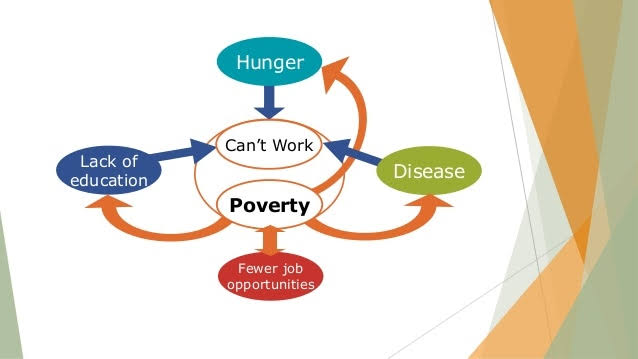
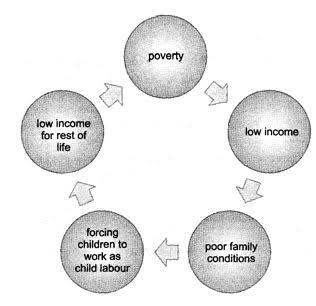
We can define poverty as the condition where the basic needs of a family, like food, shelter, clothing, and education are not fulfilled. It can lead to other problems like poor literacy, unemployment, malnutrition, etc. A poor person is not able to get education due to lack of money and therefore remains unemployed. An unemployed person is not able to buy enough & nutritious food for his family and their health decline. A weak person lacks the energy required for the job. A jobless person remains poor only. Thus we can say that poverty is the root cause of other problems.

How Poverty is Measured?

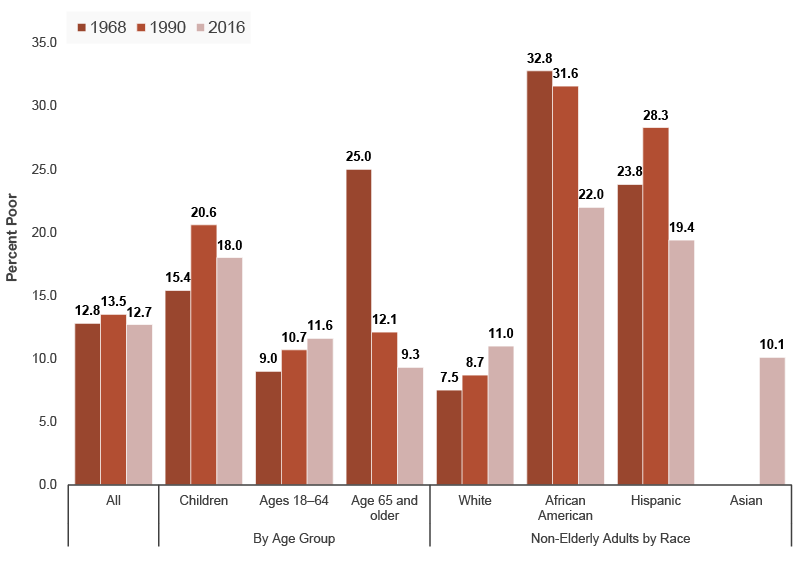
For measuring poverty United nations have devised two measures of poverty – Absolute & relative poverty. Absolute poverty is used to measure poverty in developing countries like India. Relative poverty is used to measure poverty in developed countries like the USA. In absolute poverty, a line based on the minimum level of income has been created & is called a poverty line. If per day income of a family is below this level, then it is poor or below the poverty line. If per day income of a family is above this level, then it is non-poor or above the poverty line. In India, the new poverty line is Rs 32 in rural areas and Rs 47 in urban areas.

Causes of Poverty

According to the Noble prize winner South African leader, Nelson Mandela – “Poverty is not natural, it is manmade”. The above statement is true as the causes of poverty are generally man-made. There are various causes of poverty but the most important is population. Rising population is putting the burden on the resources & budget of countries. Governments are finding difficult to provide food, shelter & employment to the rising population.

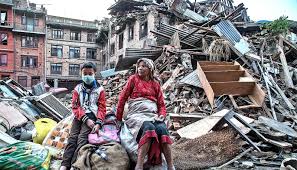
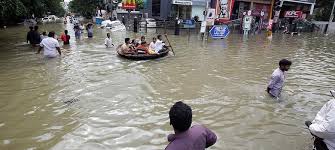
The other causes are- lack of education, war, natural disaster, lack of employment, lack of infrastructure, political instability, etc. For instance- lack of employment opportunities makes a person jobless & he is not able to earn enough to fulfill the basic necessities of his family & becomes poor. Lack of education compels a person for less paying jobs & it makes him poorer. Lack of infrastructure means there are no industries, banks, etc. in a country resulting in lack of employment opportunities. Natural disasters like flood, earthquake also contribute to poverty.

In some countries, especially African countries like Somalia, a long period of civil war has made poverty widespread. This is because all the resources & money is being spent in war instead of public welfare. Countries like India, Pakistan, Bangladesh, etc. are prone to natural disasters like cyclone, etc. These disasters occur every year causing poverty to rise.

Ill Effects of Poverty

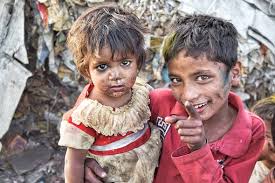
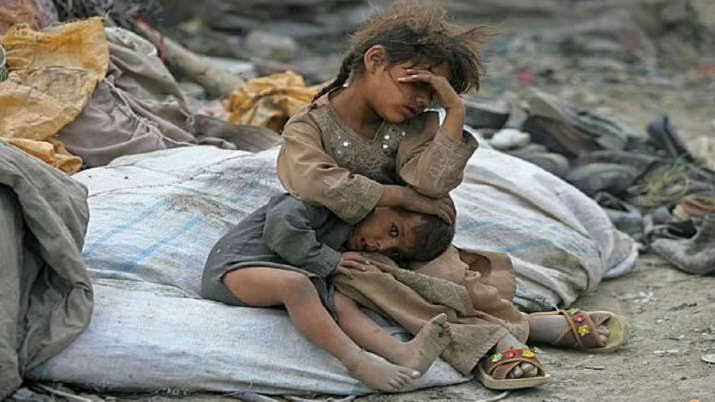
Poverty affects the life of a poor family. A poor person is not able to take proper food & nutrition &his capacity to work reduces. Reduced capacity to work further reduces his income, making him poorer. Children from poor family never get proper schooling & proper nutrition. They have to work to support their family & this destroys their childhood. Some of them may also involve in crimes like theft, murder, robbery, etc. A poor person remains uneducated & is forced to live under unhygienic conditions in slums. There are no proper sanitation & drinking water facility in slums & he falls ill often & his health deteriorates. A poor person generally dies an early death. So, all social evils are related to poverty.

Government Schemes to Remove Poverty

The government of India also took several measures to eradicate poverty from India. Some of them are – creating employment opportunities, controlling population, etc. In India, about 60% of the population is still dependent on agriculture for its livelihood. Government has taken certain measures to promote agriculture in India. The government constructed certain dams & canals in our country to provide easy availability of water for irrigation. Government has also taken steps for the cheap availability of seeds & farming equipment to promote agriculture. Government is also promoting farming of cash crops like cotton, instead of food crops. In cities, the government is promoting industrialization to create more jobs. Government has also opened ‘Ration shops’. Other measures include providing free & compulsory education for children up to 14 years of age, scholarship to deserving students from a poor background, providing subsidized houses to poor people, etc.

Poverty is a social evil, we can also contribute to control it. For example- we can simply donate old clothes to poor people, we can also sponsor the education of a poor child or we can utilize our free time by teaching poor students. Remember before wasting food, somebody is still sleeping hungry.

Overcoming poverty is not a gesture of charity. It is an act of justice.

—nelsen mandela

IS SOCIAL MEDIA POLARIZING SOCIETY?

PROLOGUE

Today, society isn’t just the buyer of data however the maker too. Practically 1.49 billion individuals sign into Facebook day by day. All things considered, around 6,000 tweets are tweeted on Twitter each second. From the hour of its commencement, more than 40 billion photos have been posted on Instagram. Web-based media should turn into an extension between far off individuals, yet it has become a divider between close individuals.

Tragically, counterfeit news has become an industry today and is common all over. Its development, thus, prompts a developing doubt in the traditional press. Counterfeit news has contributed drastically to the reverberation chamber wonder. “Reverberation chamber” alludes to a circumstance where explicit thoughts, convictions, or information focuses are solidified through reiteration of a shut framework that doesn’t permit elective or contending thoughts or ideas.

A PEEP INTO ASCH CONFORMITY EXPERIMENTS

Incredible social analyst Solomon Asch had led a progression of mental trials called the Asch Conformity Experiments during the 1950s. These trials expected to comprehend the degree to which an individual’s perspectives are affected by a gathering. Through the series of investigations, Asch, amazingly, tracked down that an individual was able to try and offer an off-base response just to adjust to the larger part see. The respondents furnished wrong responses for various reasons. Some of them were hesitant to be derided or considered as exceptional. Others dreaded judgment or shame. Some of them likewise accepted that the gathering should be preferred educated over them, so they ought to go with their viewpoint. Method for correspondence and commitment have fostered a great deal since the 1950s, yet the human intuition to fit in stays as before. This clarifies the effect of phony news on the web, which adds to a spellbound society.

HOW IS SOCIAL MEDIA POLARIZES SOCIETY?

Clients in a social framework bond more with ones who are like them in assessment than with ones who are divergent. This is called client homophily. An investigation did by Aalto University on expanding polarization via online media found that elements like client homophily and algorithmic sifting lead to upholding and supporting conviction frameworks. This frequently guarantees that we don’t open our psyches to assorted feelings. Individuals look for educated and reliable thoughts through channels just from individuals they trust. They even search for news that affirms their perspective to mollify themselves. This outcomes in individuals developing inflexible assessments of issues and not the appropriate range to the issues. For instance, Twitter regularly prompts individuals to follow individuals holding a comparative perspective.

Most web-based media destinations are more than able to play abettors. The provisions of receptiveness, lack of definition, and anonymity that were intended to invigorate underestimated networks are currently giving trawlers the qualification to discourteous remarks. This additionally makes space for mean expectations to develop. Also, there has been a developing pattern of deception principally because of predispositions or human mistakes. A steadily developing society of phony records is likewise noticeable. It is fundamentally accomplished for pushing a political plan or annoying individuals. These days there is disinformation also. Disinformation alludes to counterfeit news made deliberately.

OTHER FACTORS OF POLARIZATION

In the early occasions, the print machine was viewed as inconvenience by the Ottomans. The speed at which books were printed and conveyed led to doubt. The principal Greek printing house set up in 1627 distributed a booklet focusing on Jews. Books were just a medium, actually like web-based media is today. Forbidding books and accusing web-based media are the outcomes of comparable wrong rationale. On the off chance that web-based media had an inclination towards evil, stories couldn’t ever have discovered a method of articulation. Web-based media likewise houses numerous accounts of lost kids being discovered, canines being embraced, cash being raised for different causes, and comparative great deeds and human cases.

As indicated by the BI-2018 review, the quantity of people with admittance to TV has is 835 million. Cell phone entrance has developed to around 300 million. The quantity of every day dynamic clients on WhatsApp and Facebook are 200 million and 194 million, individually. The details plainly feature that online media in India is as yet a specialty marvel. Web-based media stages are multilingual, multicultural, and are comprehensive. These stages permit equivalent freedoms for all, independent of class, belief, race, religion, sex, age, or monetary assets. Consequently faulting web-based media for each online wrongdoing doesn’t appear to be persuading.

TOWARDS THE END

Online media is catching society in thin, uneven, and ordinarily counterfeit perspectives. This is disturbing. There isn’t anything amiss with being stubborn. In any case, being inflexible in suppositions is without a doubt wrong. There are consistently different sides to a similar coin. It isn’t care for online media has unfriendly impacts as it were. Online media has a few efficacies also. It interfaces far off individuals and works with the fast scattering of data.

While web-based media faces the worldwide difficulties of data barrage, which is verifiable and counterfeit, it likewise empowers underestimated networks to get to their privileges and voice their viewpoints. So it relies upon the client how he chooses to utilize online media as an instrument or as a weapon. Ideally, individuals will figure out how to be more liable for what they offer, and web-based media stages will recover their tragically missing trust.

POLITICS

 When we hear the term politics, we usually think of the government, politicians and political parties. For a country to have an organized government and work as per specific guidelines, we require a certain organization. This is where politics comes in, as it essentially forms the government. Every country, group and organization use politics to instrument various ways to organize their events, prospects and more.

Essay on Politics

Politics does not limit to those in power in the government. It is also about the ones who are in the run to achieve the same power. The candidates of the opposition party question the party on power during political debates. They intend to inform people and make them aware of their agenda and what the present government is doing. All this is done with the help of politics only.

Dirty Politics

Dirty politics refers to the kind of politics in which moves are made for the personal interest of a person or party. It ignores the overall development of a nation and hurts the essence of the country. If we look at it closely, there are various constituents of dirty politics.

The ministers of various political parties, in order to defame the opposition, spread fake news and give provocative speeches against them. This hampers with the harmony of the country and also degrades the essence of politics. They pass sexist remarks and instill hate in the hearts of people to watch their party win with a majority of seats.

Furthermore, the majority of politicians are corrupt. They abuse their power to advance their personal interests rather than that of the country. We see the news flooded with articles like ministers and their families involving in scams and illegal practices. The power they have makes them feel invincible which is why they get away with any crime.

Before coming into power, the government makes numerous promises to the public. They influence and manipulate them into thinking all their promises will be fulfilled. However, as soon as they gain power, they turn their back on the public. They work for their selfish motives and keep fooling people in every election. Out of all this, only the common suffers at the hands of lying and corrupt politicians.

Lack of Educated Ministers

If we look at the scenario of Indian elections, any random person with enough power and money can contest the elections. They just need to be a citizen of the country and be at least 25 years old. There are a few clauses too which are very easy.

The strangest thing is that contesting for elections does not require any minimum education qualification. Thus, we see how so many uneducated and non-deserving candidates get into power and then misuse it endlessly. A country with uneducated ministers cannot develop or even be on the right path.

We need educated ministers badly in the government. They are the ones who can make the country progress as they will handle things better than the illiterate ones. The candidates must be well-qualified in order to take on a big responsibility as running an entire nation.
In short, we need to save our country from corrupt and uneducated politicians who are no less than parasites eating away the development growth of the country and its resources. All of us must unite to break the wheel and work for the prosperous future of our country.

8 Emerging Plastic Alternatives We Need To Start Using

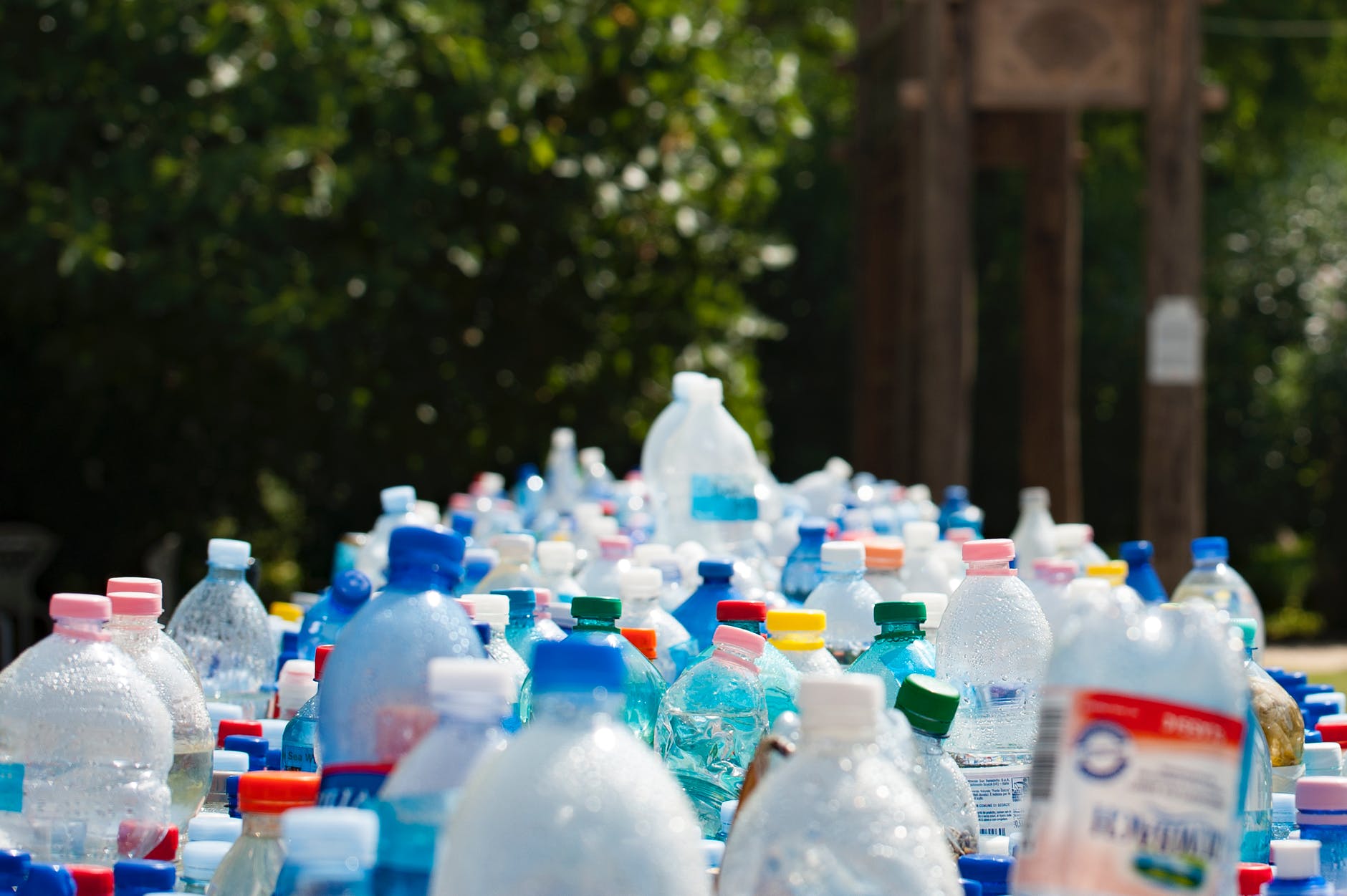
Plastics is currently one of the world’s most significant challenges. Consumers are becoming more aware of the thousands of tonnes of plastic that are polluting the ocean thanks to David Attenborough’s Blue Planet. Due of the widespread usage of plastic, particularly in packaging, firms will need to act quickly to identify plastic alternatives. In fact, 25% of customers are extremely concerned about plastic packaging, and 42% believe manufacturers should prioritise making packaging recyclable, while 21% believe the industry should move toward completely plastic-free packaging (Kantar). As plastic continues to be featured in the news on a regular basis, this figure will only climb. Brands must be seen to be taking a responsible approach; else, their hard-earned equity will be harmed.

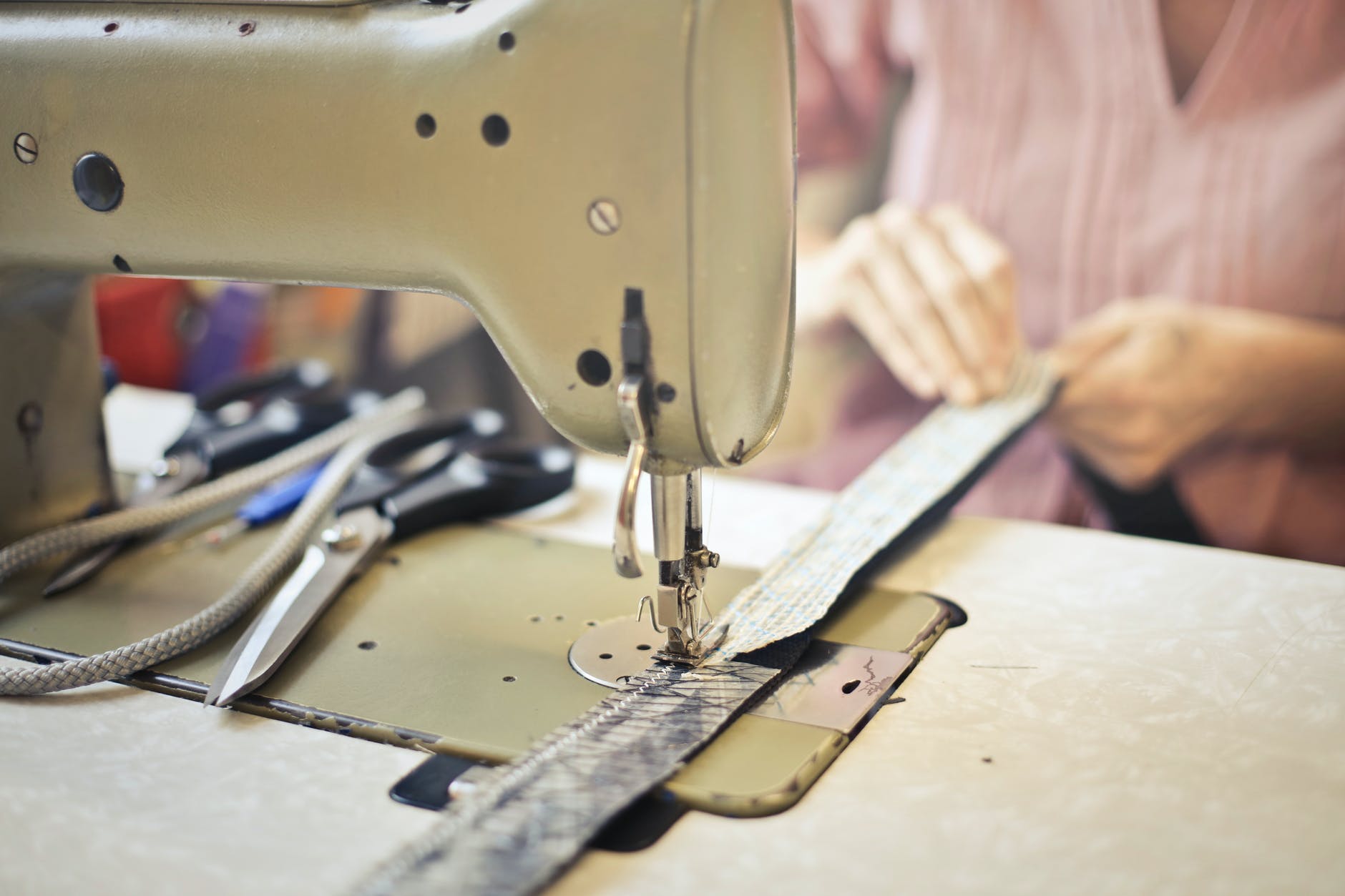
Photo by mali maeder on Pexels.com

With so many plastic alternatives being produced, we’ve compiled a list of 13 of the most interesting plastic replacement technologies.

1. Plant Based Plastic: Bioplastics are created from a range of materials, including corn that has been broken down into PLA (polylactic acid). Because it’s manufactured from waste products from maize cultivation – which is also easy to grow – it’s highly sustainable to make. PLA can be used to produce beverage bottles, food-grade containers, and films. Innocent, the eco-heroes, are now using 15% PLA in their bottles.

2. Bagasse: Bagasse is a sugarcane manufacturing waste product. It may be easily moulded into packaging ideal for food delivery and food service, comparable to polystyrene, because to its malleability and stickiness. It’s guaranteed biodegradable and compostable, and because it’s a by-product, it’s considerably more environmentally friendly to make than polystyrene.

3. Seaweed Water Bubbles: Ooho, a British firm, has developed a seaweed-based edible (and, by default, biodegradable) water bubble. “To provide the convenience of plastic bottles while minimising environmental impact,” they say. They’ve devised manufacturing methods that are both more efficient and less expensive than creating plastic bottles. When compared to PET manufacture, the process emits 5 times less CO2 and consumes 9 times less energy.

4. Shower Friendly Paper: L’Oréal, the beauty juggernaut, has now introduced Seed Phytonutrients, an eco-beauty line. The products themselves sound wonderful (crafted with 93-100 percent natural ingredients, cruelty-free, paraben-free, etc. ), but it’s the packaging that stands out. The exterior card is made by Ecologic and is recyclable, compostable, glue-free, and water-resistant. The inner liner is composed of recyclable plastic and consumes 60% less material than standard plastic bottles.

5. Stone Paper and Plastic: You might be surprised to learn that stone can be used to make paper. It obviously had an effect on me. I have a stone paper notepad with a lovely smooth finish that feels almost chilly to the touch. This wonderful invention might be used in a variety of packaging applications. It can be used as a paper or plastic substitute because it is printable, recyclable, and water-resistant… and it also has good eco credentials. It’s created from calcium carbonate, one of the world’s most common minerals, and the manufacturing process consumes less water, has a lower carbon footprint, and is more energy efficient than traditional papermaking. FDA-approved food packaging can also be made with stone paper. Paper (supermarket singlet) bags, takeaway food cartons, greaseproof paper wraps, and Ziplock bags can all be made with this.

6. Palm Leaves: The oyster-like casings for Holy Lama’s handmade soaps are constructed from palm leaves from the areca palm. The areca palm’s leaves naturally fall to the ground, where they are collected and shaped into the required shape. They’re brilliantly environmentally friendly because they employ a natural areca palm waste product and the final packaging is biodegradable. Arekapak, a Berlin-based firm, is working on palm leaf packaging for foods like fresh fruit, vegetables, and nuts.

7. Mushroom Root: Packaging is physically grown with Mycelium (mushroom roots, which is also the same substance that Quorn is comprised of). Ecovative Design collects agricultural waste, mixes it with mycelium in moulds, and then watches as the packaging grows. You can see how it works here, but I’m not convinced it’s not magic.

8. Wood Pulp Cellophane: NatureFlex is the more environmentally friendly younger sibling of cellophane, created from FSC-approved wood pulp and certified biodegradable. It is available in three different types: uncoated, which is ideal for chocolate and confectionery as well as household items; semi-permeable, which is suitable for fresh produce and dairy; and barrier, which is suitable for bakery, snacks, coffee, tea, chocolate, confectionery, as well as home and personal care items.

The Ultimate Productivity Hack

The ultimate productivity hack is saying no. Not doing something will always be faster than doing it. This statement reminds me of the old computer programming saying, “Remember that there is no code faster than no code.” The same philosophy applies in other areas of life. For example, there is no meeting that goes faster than not having a meeting at all. This is not to say you should never attend another meeting, but the truth is that we say yes to many things we don’t actually want to do. There are many meetings held that don’t need to be held. There is a lot of code written that could be deleted. How often do people ask you to do something and you just reply, “Sure thing.” Three days later, you’re overwhelmed by how much is on your to-do list. We become frustrated by our obligations even though we were the ones who said yes to them in the first place. It’s worth asking if things are necessary. Many of them are not, and a simple “no” will be more productive than whatever work the most efficient person can muster.

Why we say Yes?

We agree to many requests not because we want to do them, but because we don’t want to be seen as rude, arrogant, or unhelpful. Often, you have to consider saying no to someone you will interact with again in the future—your co-worker, your spouse, your family and friends. Saying no to these people can be particularly difficult because we like them and want to support them. Collaborating with others is an important element of life. Do whatever favors you can, and be warm-hearted and direct when you have to say no. But even after we have accounted for these social considerations, many of us still seem to do a poor job of managing the tradeoff between yes and no. We find ourselves over-committed to things that don’t meaningfully improve or support those around us, and certainly don’t improve our own lives. Perhaps one issue is how we think about the meaning of yes and no.

Difference between Yes and No

The words “yes” and “no” get used in comparison to each other so often that it feels like they carry equal weight in conversation. In reality, they are not just opposite in meaning, but of entirely different magnitudes in commitment. When you say no, you are only saying no to one option. When you say yes, you are saying no to every other option. I like how the economist Tim Harford put it, “Every time we say yes to a request, we are also saying no to anything else we might accomplish with the time.” Once you have committed to something, you have already decided how that future block of time will be spent. In other words, saying no saves you time in the future. Saying yes costs you time in the future. You have to pay back your commitment at some point. No is a decision. Yes is a responsibility.

Saying No

Saying no is an important skill to develop at any stage of your career because it retains the most important asset in life: your time. As the investor Pedro Sorrentino put it, “If you don’t guard your time, people will steal it from you.” You need to say no to whatever isn’t leading you toward your goals. You need to say no to distractions. Nobody embodied this idea better than Steve Jobs, who said, “People think focus means saying yes to the thing you’ve got to focus on. But that’s not what it means at all. It means saying no to the hundred other good ideas that there are. You have to pick carefully.” There is an important balance to strike here. Saying no doesn’t mean you’ll never do anything interesting or innovative or spontaneous. It just means that you say yes in a focused way. Once you have knocked out the distractions, it can make sense to say yes to any opportunity that could potentially move you in the right direction.

Upgrading Your No

Over time, as you continue to improve and succeed, your strategy needs to change. The opportunity cost of your time increases as you become more successful. At first, you just eliminate the obvious distractions and explore the rest. As your skills improve and you learn to separate what works from what doesn’t, you have to continually increase your threshold for saying yes. You still need to say no to distractions, but you also need to learn to say no to opportunities that were previously good uses of time, so you can make space for great uses of time. It’s a good problem to have, but it can be a tough skill to master. In other words, you have to upgrade your “no’s” over time. Upgrading your no doesn’t mean you’ll never say yes. It just means you default to saying no and only say yes when it really makes sense. The general trend seems to be something like this: If you can learn to say no to bad distractions, then eventually you’ll earn the right to say no to good opportunities.

How to say No

Most of us are probably too quick to say yes and too slow to say no. It’s worth asking yourself where you fall on that spectrum. If you have trouble saying no, you may find the following strategy proposed by Tim Harford, the British economist. He writes, “One trick is to ask, “If I had to do this today, would I agree to it?” It’s not a bad rule of thumb, since any future commitment, no matter how far away it might be, will eventually become an imminent problem.” If an opportunity is exciting enough to drop whatever you’re doing right now, then it’s a yes. If it’s not, then perhaps you should think twice. This is similar to the well-known “Hell Yeah or No” method from Derek Sivers. If someone asks you to do something and your first reaction is “Hell Yeah!”, then do it. If it doesn’t excite you, then say no. It’s impossible to remember to ask yourself these questions each time you face a decision, but it’s still a useful exercise to revisit from time to time. Saying no can be difficult, but it is often easier than the alternative. What is true about health is also true about productivity: an ounce of prevention is worth a pound of cure.

5 Main Problems faced by Small Scale Industries

Just because of their nature and size, small-scale industries do not have many of the advantages that large-scale firms do. They have contributed significantly to economic development, but they have not reached their full potential. They have a lot of issues with how they operate, and a lot of small businesses are sick.

Certain commodities were set aside by the government for exclusive production by Small Scale Industries. Large-scale businesses were not permitted to create commodities reserved for the SSI sector. Many things have been successively De-reserved as the economy has opened up and followed the principles of liberalization and globalization. As a result, small-scale industries must now contend with the dual pressures of rivalry from both Indian large-scale firms and overseas competitors.

In this blog, we are going to learn about the problems faced by Small Scale Industries.

Problems of Small Scale Industries

1. Funding Shortage

When it comes to fundraising, small businesses confront numerous challenges. It is one of the most serious issues. Many of these businesses are unable to raise cash from the capital market due to a lack of creditworthiness. Banks are also wary of lending money to these businesses because many of them lack proper collateral security or guarantees.

A lack of cash can cause a small firm to fail before it even gets off the ground. Following nationalization, several banks make loans to these types of businesses. The situation is still deteriorating due to the sudden outbreak of covid-19, which resulted in a lockdown and a drop in the economy. Entrepreneurs are obliged to seek funds from money lenders at unreasonably high-interest rates, which throws their business calculations into disarray.

2. Idle Capacity 

In the case of small-scale industries, installed capacity is underutilized to the tune of 40 to 50 percent. Various factors contribute to this underutilization, including a lack of raw materials, a lack of cash, and even a lack of power. Small scale units, unlike their large-scale counterparts, are not completely able to deal with all of these issues.

3. Management abilities

A tiny business is started and run by a single person. As a result, that person may lack all of the managerial skills required to run a business. They cannot afford to hire competent managers or staff due to a lack of finances. This can cause minor disruptions in the business’s operations. Delays, errors, poor decision-making, and other factors can all contribute to the company’s demise. This could also be considered unprofessional behavior on the part of the client, which is bad for the company’s market reputation. All of these requirements are easily met in major corporations thanks to various specialized teams.

4. Sickness

It’s heartbreaking to see the majority of the small units succumb to illness. There is a lack of forethought. Another stumbling block is the lack of qualified and trained employees. They have no choice but to sell on credit. Their clients fail to pay them on schedule. There are a lot of terrible debts. As a result, they are unable to maintain the production process due to a lack of operating capital. This results in illness.

5. Unpredictable raw material supply

Small businesses have a difficult time obtaining raw materials, whether they use locally available or imported raw resources. The issues develop as a result of defective and irregular raw material delivery. Other obstacles for the small-scale sector include a lack of sufficient quantities of raw materials, occasionally poor quality of raw materials, rising raw material costs, foreign exchange crisis, and, most importantly, entrepreneurs’ lack of awareness of government policies.

Conclusion

Small-scale entrepreneurs face a slew of issues, including excessive reliance on institutional agencies for finances and consulting services, a lack of creditworthiness, a lack of education and training, reduced profitability, and a slew of marketing and other issues. The Indian government has launched a number of initiatives targeted at enhancing the overall performance of these institutions.

Said “I love you” more -Positive thinking

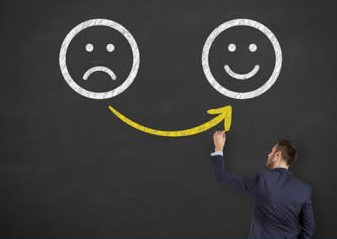
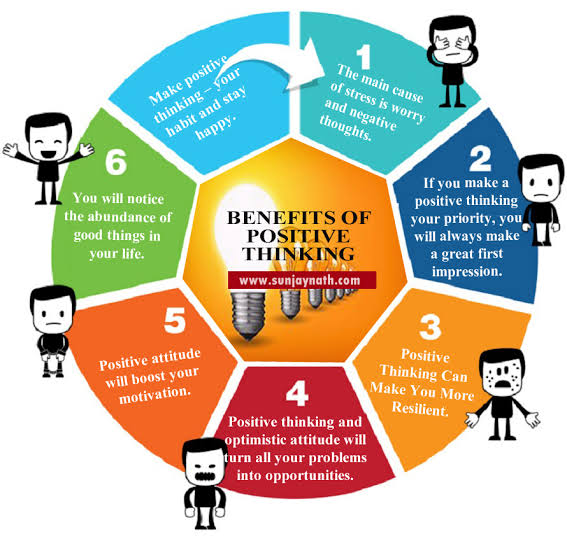
Positive thinking refers to a belief or mental attitude which makes us think that good things will happen eventually and our efforts will pay off sooner or later. It is the opposite of negative thinking which makes our mind full of stress and fear. Thus, an essay on positive thinking will show us how it reinforces thoughts like optimism and hope and works wonders.

Benefits of Positive Thinking

Let it be clear that positive thinking does not mean you do not notice the bad things in life. It means you try to find a solution in a productive way instead of whining about it. There are many benefits of positive thinking.

The first one is better health. Negative thinking gives rise to anxiety, stress, frustration and more. However, positive thinking helps you avoid all this and focus on staying healthy and doing better in life.

Further, it is essential for us to fight depression which positive thinking helps with. Similarly, it will also help us to relieve stress. Positive thinking overwhelms stress and it will allow you to get rid of stress.

As a result, positive thinking helps you live longer. It is because you will be free from diseases that form due to stress, anxiety and more. Moreover, it is also the key to success. Meaning to say, success becomes easier when you don’t bash yourself up.

Similarly, it also gives us more confidence. It boosts our self-esteem and helps in becoming more confident and self-assured. Therefore, we must certainly adopt positive thinking to make the most of our lives.

How to Build a Positive Thinking

There are many ways through which we can build positive thinking. To begin with, we must inculcate the habit of reading motivational and inspiring stories of people who are successful.

All this will help in motivating and inspiring you and showing you the right path. Moreover, it is important to never let negative thoughts thrive in your mind and work towards putting end to this habit.

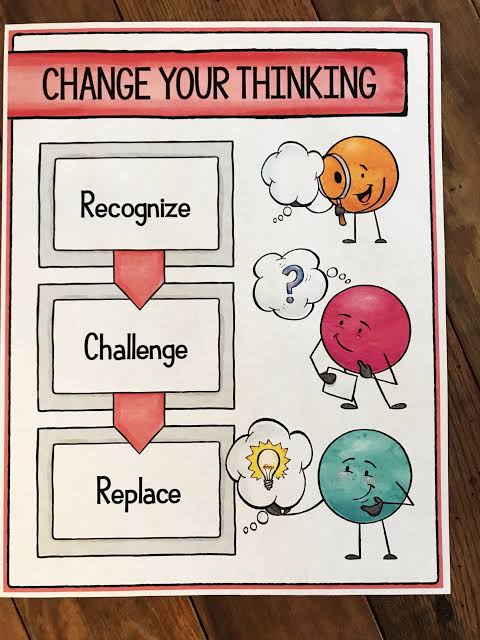
You can do so by replacing your negative thoughts with constructive and positive reviews. Start to pay attention to your ideas and don’t pay heed to negative thoughts. Further, it is helpful to use affirmations.

These positive statements will truly sink into your subconscious mind and guide you to take better action. It will also help in visualising your dreams and getting the right means to achieve them fast.

Finally, always stay guard and gatekeep your mind to make important changes in life. In other words, do not be afraid to take actions. Keep yourself busy and do different things to avoid becoming cynical and remaining positive.

Conclusion of the Essay on Positive Thinking

To conclude, we must change our attitude and believe that we will succeed one day. Moreover, we also need to implement positive thinking techniques which will help us learn from our failures and stay focused. As positive thinking plays an essential role in our lives, we must make sure to adopt in our lives.

Positive thinking helps you stand back up again when you are knocked down by bad luck or negativity.

. —Tom Laurie

USAGE OF BOTTLED WATER

SHOULD WE AVOID IT?

For a long time now, bottled water has become a trend amongst people all around the world. Mostly, it is cheap and advertised as healthy. Unfortunately, the water is actually not always as healthy as it might seem. Many companies use tap water sealed into bottles, sometimes purified, sometimes not. Many people who buy water bottles never reuse them and the plastic ends up polluting the environment. The cost for transporting millions of empty bottles each month is huge, and ultimately pollutes the air. Therefore, harming the environment, polluting the air and wasting plastic and fuel are strong arguments that why should not sell bottle water.

“Drinking water is like washing out your insides. The water will cleanse the system, fill you up, decrease your caloric load and improve the function of all your tissues.” – Kevin R. Stone

Even though recycling is something everyone should be doing, many people still throw away their water bottles. Millions use plastic bottles each month, causing transport to waste lands costing great amounts of money for fuel. The wastelands pollute the air, and so does the fuel when used. If our school sells and uses these plastic bottles normally, that demonstrates that we are helping to pollute the environment.

I believe that bottled water should be banned, because of the environmental impact & the health effects they cause. Bottled water is obviously not a healthier or cleaner option to normal tap water. Also, bottled water is despicably expensive when you compare it to the cost per gallon of tap water.

Almost all bottled water sold is tap water, which is put in plastic bottles and sold at huge profits. So pretty much what you’re doing is buying the same water that you could drink at your house for FREE. Also, if a person is choosing between tap water and bottled water, tap water is clearly the more economical and the healthier option.
According to a 2001 report of the World-Wide Fund for Nature, approximately 1.5 million tons of plastic are used in the bottling of 89 billion liters of water each year. Other than the amount of plastic bottles produced each year, the energy essential to produce and transfer these bottles to the market uncontrollably drains limited fossil fuels.

Did you know that each year the making of the plastic water bottles takes sufficient oil and energy to fuel a million cars? Millions of gallons of fuel are wasted daily transporting filtered tap water around the world and across countries. All the energy to make the bottle, even more to ship it around the planet and then we drink it in about two minutes? And do you know what happens when you’re finished with that bottle?

Ninety percent of water bottles end up in landfills where they sit for thousands of years or in incinerators where they’re burned releasing toxic pollution. I don’t see this as being recycling; real recycling would be turning the bottles back into bottles, which happens to only ten percent of the water bottles.

Pretty much what the government is doing, is wasting so much money and energy to pollute our earth. Bottled water companies have made a momentous strain on the environment, due to their tolerant use of precious resources and their manufacturing of billions of plastic bottles.

Around the globe, a billion people don’t have access to clean water. However cities all over the world are spending millions of dollars to deal with all the plastic bottles thrown out. What if we spent that money improving our water systems or even better, developing better water systems in third world countries?

Just remember it could be the beginning of this change, but after cities would be banning water bottles and maybe even countries.

Mental Illnesses doubled among youth : Latest Study

 Latest study by JAMA Pediatrics, a medical journal, reveals that Anxiety and Depression has doubled among the youth globally, as compared to the pre-Covid period. The analysis was published on 9th August, 2021 after collecting empirical clinical data on depression and anxiety in East Asia, Europe, North America, Middle East, Central and South America.

As per the data given in the study, one in four adolescents worldwide, have shown symptoms of depression. While one in five youth suffer from symptoms of anxiety. The data has sparked concern among the mental health experts and psychologists. “Results from this analysis suggest that the pandemic has likely instigated a global mental health crisis in Youth” said Sheri Madigan, professor of psychology at University of Calgary. 
The mental health of youngsters was already deteriorating before the pandemic. Experts said that the mental health of children and youngsters have gotten worse with the passage of time in the pandemic. Some reasons that have made the situation worse include persistent isolation, disruption in education, and financial problems in the family. The pandemic has created conditions in which the youth feels hopeless and have accumulated a negative feeling inside them.

The closure of schools and online learning from home has adversely impacted the children. Loss of interaction with the peers, lack of support from the teachers along with chronic stress and instability in daily routine are also major contributors to mental illnesses. It has led to an increase in symptoms of depression like sadness, loss of interest in activities, difficulty in sleeping, loss of appetite etc. 

An uncontrollable fear and constant worry about the health of family and friends have also affected the children and youngsters, leading to an increase in the symptoms of anxiety. According to the data, these symptoms of depression and anxiety are more prevalent in young females as compared to males. Number of females affected by mental health issues was higher than males even prior to the pandemic. 

These symptoms have affected the older children more than the younger ones. Factors like loss of interaction, along with puberty related hormonal changes have affected the elder children.  Adolescents and youngsters are the most affected age group. This can be a constraint in their personal growth as well as for the society as a whole. Mental wellbeing should be promoted among the youth before they step into adulthood. Issues related to mental health can have long lasting consequences if that persists without being properly addressed. 

Children and youngsters are finding it difficult to cope up with the disruptions in their routine in these difficult and unprecedented times of pandemic. It is important to monitor and keep a check on the mental health status of children globally with the help of data, research, and studies. The collective support from parents, teachers, researchers, medical facilities and policy makers can surely develop a better future in terms of mental health for the children and youth worldwide.