DOWRY


Dowry is a social evil in society that has
caused unimaginable tortures and crimes towards women and polluted the Indian
marital system. Dowry is payment made in cash or kind to a bride’s in-laws at
the time of her marriage.

Today the government has come up with many
laws (The Dowry Prohibition Act 1961) and reforms, not only to eradicate the
dowry system, but also to uplift the status of the girl child by bringing in
many schemes. However, owing to the social nature of this problem, the
legislation has failed to produce the desired results in our society. In order
to get rid of this problem, appealing to the social and moral consciousness of
the people, providing education and economic independence for women, and
effective enforcement of legislation against the dowry system, can help.

What People Think of Dowry System

Dowry is like suicidal bag for many people
who are not very strong financially. It should be completely stopped from all
the country wherever it is followed strongly, the government needs to take
action in this so that no more crime takes place. In the modern era of India
where people are reaching everywhere and achieving many things but still in
many populations our thinking against dowry is the same.
Dowry
system varies from state to state and also on the job profile of the groom. If
we see in the north part of the country the groom having government job, doctor
or engineer than dowry is huge in terms of money, and like the south part of
the country, the bride is forced to give dowry in terms of land, jewellery and
money. We can say if you can give huge dowry you can get anyone for your
daughter. In ancient times dowry was taken only from upper caste families, but
now becoming universal for everyone.
Still in India marriage
is taken as a big grand celebration from both sides of the family by calling
all the relatives and taking their complete care till the marriage happens even
if the bride is having a good job or highly educated still the bride has to
give dowry for marriage. Dowry is not voluntary which is made by the bride or
groom, it is demanded from the groom’s parents.

Why the Dowry System Should be Stopped?

The new dowry system is creating problems
in society. Poor parents do not get any groom who will marry their daughter
without taking dowry. They have to take “Marriage Loans” to get their daughter
married. Dowry is becoming a nightmare for Women. The cases of infanticide are
increasing. Poor parents do not have any other option. They cannot afford to
have a girl child, and hence they are intentionally killing infant girl. More
than 8000 women are killed because of Dowry! It is very clear that Dowry is
creating violence. Groom’s parents are misusing this pure tradition. And they
are not aware that they are misusing it, because they are not educated about
the traditional dowry system. Everyone is just following the new dowry system
blindly.

Conclusion

Dowry system is good unless and until it
is considered as a gift given to the bride by her parents. If the groom’s
parents are demanding money to get married as a “Dowry” then that is completely
wrong and illegal.


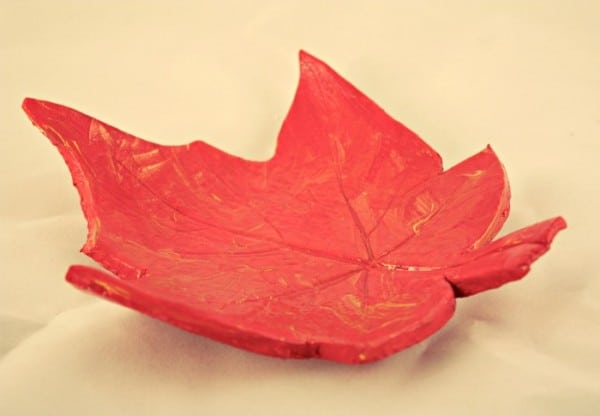
DIY

Equipments

°Air Dry Clay
°A large leaf
°Bowl
°Rolling pin
°Knife
°Paint

Instructions

1.Start with a fist sized lump of potters clay.  Review and complete wedging of the clay.
2.Simply roll the clay into 1/4″ slabs using rolling pins and two guide sticks which help you get an even result.
3.Place a large leaf over the clay- facing up so that the veins are down. Go over with the rolling pin to make an imprint.
4.Use the knife to trim around the leaf.
5.Smooth the rough edges with one finger and a bit of water.
6.Lay some plastic wrap, a paper towel or a thin cotton cloth inside of a disposable paper bowl. Lay your clay leaf inside of the bowl and gently press it down to take its new shape.
7.Dry for several days and then paint.

List of PSUs in India

A state-owned enterprise in India is called a public sector undertaking—PSU or a public sector enterprise. In a PSU company, most shares, 51% or more, are owned by the central or state government. The ministry of heavy industries and public enterprises administers central public sector enterprises. PSUs are mainly categorized into 3 major ratnas.

  • Maharatna Companies
  • Navratna Companies
  • Miniratna Companies
PSU Jobs - Check The Latest Job Openings In Top Govt PSU

Maharatna Companies

For a company to be eligible for the Maharatna category has to fulfil these criteria; Three years with an average annual net profit of over Rs. 2500 crore, OR Average annual Net worth of Rs. 10,000 crore for 3 years, OR Average annual Turnover of Rs. 20,000 crore for 3 years (against Rs 25,000 crore prescribed earlier)

Benefits for investment: Rs. 1,000 crore–Rs. 5,000 crore, or free to decide on investments up to 15% of their net worth in a project.

Navaratna Companies

Eligibility: A score of 60 (out of 100), based on six parameters which include net profit, net worth, total workforce cost, the total cost of production, cost of services, PBDIT (Profit Before Depreciation, Interest, and Taxes), capital employed, etc., AND A company must first be a Miniratna and have 4 independent directors on its board before it can be made a Navratna.

Benefits for investment: up to Rs. 1,000 crore or 15% of their net worth on a single project or 30% of their net worth in the entire year (not exceeding Rs. 1,000 crores).

Miniratna Companies

Miniratna Companies are further divided into two minor categories:

  • Miniratna Category-I
  • Miniratna Category-II

List of Maharatna Companies

1. National Thermal Power Corporation (NTPC)

2. Oil and Natural Gas Corporation (ONGC)

3. Steel Authority of India Limited (SAIL)

4. Bharat Heavy Electricals Limited (BHEL)

5. Indian Oil Corporation Limited (IOCL)

6. Coal India Limited (CIL)

7. Gas Authority of India Limited (GAIL)

8. Bharat Petroleum Corporation Limited (BPCL)

9. Power Grid Corporation of India (POWERGRID)

List of Navratna Companies

1. Bharat Electronics Limited (BEL)

2. Container Corporation of India (CONCOR)

3. Engineers India Limited (EIL)

4. Hindustan Aeronautics Limited (HAL)

5. Mahanagar Telephone Nigam Limited (MTNL)

6. National Aluminium Company (NALCO)

7. National Buildings Construction Corporation (NBCC)

8. National Mineral Development Corporation (NMDC)

9. Neyveli Lignite Corporation Limited (NLCIL)

10. Oil India Limited (OIL)

11. Power Finance Corporation (PFC)

12. Rashtriya Ispat Nigam Limited (RINL)

13. Rural Electrification Corporation (REC)

14. Shipping Corporation of India (SCI)

Book review for ‘the Boy in the stripped Pyjamas’: A heartbreak but not a very real story

The holocaust is for sure a topic that as discussed as infamous it can be. It is as much a tragic story as a fact that can make any person grip in fear of what a human is capable of becoming.

Bruno is a 9-years old boy in Berlin during the Second World War and his father a member of the Nazi party, soon promoted to office the Auschwitz camp at the personal orders of the Fuhrer.

Sad and missing his friends, Bruno spots a pale boy in pyjamas with a lot of people on the other side of the fence. Bruno meets this boy, Shmuel whom he quickly befriends. Shmuel informs Bruno that he lived on this side of the fence with his grandfather, brother and father. And to the merry of both boys, they share the same birthday and age.

Shmuel grows pale and lean everyday and Bruno starts to sneak him food. They talk and share their lives while Bruno does not really understand what is going on the other side of the fence.

One day, Shmuel informs Bruno that his father is missing and everyone in his family is desperate to find him. That evening, Bruno removes his clothes, pulls up the stripped pyjamas Shmuel offers him and crosses the fence to search for Shmuel’s father.

Both the kids are spotted by guards who ask them to participate in the march. The march ends in a closed room which Bruno assumes is the place to sleep and sit together. He holds Shmuel’s hands and whispers to him that they shall be friends for life.

Bruno is missing and only his clothes are found near the camp fence. His father, deducing what must have happened is broken and offers himself to the now invading Allied armies.

This fictional story that forms the plot of the book, “The boy in the stripped Pyjamas” by Irish author John Boyne. The book quite metaphorically illustrates the fact that the adults were really not concerned with what is happening under their noses while the kids were just been broken, separated by fences and lines drawn between races.

The Boy in the Striped Pajamas (Deluxe Illustrated Edition) by John Boyne:  9780399559310 | PenguinRandomHouse.com: Books

However, and quite correctly, the historians have argued that this book has several historical inconsistencies that might make a reader believe that concentrations camps were way more lax than they really were. No one, let alone a kid was left off work to let him have the time to meet, talk to and enjoy another human being’s company.

Auschwitz: Concentration Camp, Facts, Location - HISTORY
An actual picture from the Auschwitz Camp

At the end, the author expresses his belief in humanity by stating,

Of course, all of this happened a long time ago and nothing like that could ever happen again. Not in this day and age.

Happy reading!

ONE STATE MANY WORLDS


Karnataka is a state in southwest India with Arabian Sea coastlines. The capital, Bengaluru (formerly Bangalore), is a high-tech hub known for its shopping and nightlife. To the southwest, Mysore is home to lavish temples including Mysore Palace, former seat of the region’s maharajas. Hampi, once the medieval Vijayanagara empire’s capital, contains ruins of Hindu temples, elephant stables and a stone chariot.

Originally known as the princely State of Mysore, Karnataka was formed on 1st November 1956 and is located in the South-Western region of India. Close to the Arabian Sea and the Laccadive Sea, Karnataka is known for its beautiful yet unpopulated beaches and rich culture.

Karnataka is the largest state in South India and sixth largest in India. The state is in the south western region of India. It was formed on 1 November 1956, with the passage of the States Reorganisation Act. Originally known as the State of Mysore , it was renamed Karnataka in 1973. The state corresponds to the Carnatic region. Its capital and largest city is Bangalore.

Karnataka is bordered by the Arabian Sea to the west, Goa to the northwest, Maharashtra to the north, Telangana to the northeast, Andhra Pradesh to the east, Tamil Nadu to the southeast, and Kerala to the south. It is the only southern state to have land borders with all of the other 4 southern Indian sister states. The state covers an area of 191,976 square kilometres , or 5.83 percent of the total geographical area of India. It is the sixth largest Indian state by area. With 61,130,704 inhabitants at the 2011 census, Karnataka is the eighth largest state by population, comprising 31 districts. Kannada, one of the classical languages of India, is the most widely spoken and official language of the state. Other minority languages spoken include Urdu, Konkani, Marathi, Tulu, Tamil, Telugu, Malayalam, Kodava and Beary. Karnataka also contains some of the only villages in India where Sanskrit is primarily spoken

The economy of Karnataka is the fourth-largest of any Indian state with ₹16.99 trillion in gross domestic product and a per capita GDP of ₹231,000 . Karnataka has the nineteenth highest ranking among Indian states in Human Development Index.

The diverse linguistic and religious ethnicities that are native to Karnataka, combined with their long histories, have contributed immensely to the varied cultural heritage of the state. Apart from Kannadigas, Karnataka is home to Tuluvas, Kodavas and Konkanis. Minor populations of Tibetan Buddhists and tribes like the Soligas, Yeravas, Todas and Siddhis also live in Karnataka. The traditional folk arts cover the entire gamut of music, dance, drama, storytelling by itinerant troupes, etc. Yakshagana of Malnad and coastal Karnataka, a classical dance drama, is one of the major theatrical forms of Karnataka. Contemporary theatre culture in Karnataka remains vibrant with organisations like Ninasam, Ranga Shankara, Rangayana and Prabhat Kalavidaru continuing to build on the foundations laid by Gubbi Veeranna, T. P. Kailasam, B. V. Karanth, K V Subbanna, Prasanna and others. Veeragase, Kamsale, Kolata and Dollu Kunitha are popular dance forms. The Mysore style of Bharatanatya, nurtured and popularised by the likes of the legendary Jatti Tayamma, continues to hold sway in Karnataka, and Bangalore also enjoys an eminent place as one of the foremost centres of Bharatanatya.

Karnataka also has a special place in the world of Indian classical music, with both Karnataka (Carnatic) and Hindustani styles finding place in the state, and Karnataka has produced a number of stalwarts in both styles. The Haridasa movement of the sixteenth century contributed significantly to the development of Karnataka (Carnatic) music as a performing art form. Purandara Dasa, one of the most revered Haridasas, is known as the Karnataka Sangeeta Pitamaha (‘Father of Karnataka a.k.a. Carnatic music’). Celebrated Hindustani musicians like Gangubai Hangal, Mallikarjun Mansur, Bhimsen Joshi, Basavaraja Rajaguru, Sawai Gandharva and several others hail from Karnataka, and some of them have been recipients of the Kalidas Samman, Padma Bhushan and Padma Vibhushan awards. Noted Carnatic musicians include Violin T. Chowdiah, Veena Sheshanna, Mysore Vasudevachar, Doreswamy Iyengar and Thitte Krishna Iyengar.

Gamaka is another classical music genre based on Carnatic music that is practised in Karnataka. Kannada Bhavageete is a genre of popular music that draws inspiration from the expressionist poetry of modern poets. The Mysore school of painting has produced painters like Sundarayya, Tanjavur Kondayya, B. Venkatappa and Keshavayya. Chitrakala Parishat is an organisation in Karnataka dedicated to promoting painting, mainly in the Mysore painting style.

Saree is the traditional dress of women in Karnataka. Women in Kodagu have a distinct style of wearing the saree, different from the rest of Karnataka. Dhoti, known as Panche in Karnataka, is the traditional attire of men. Shirt, Trousers and Salwar kameez are widely worn in Urban areas. Mysore Peta is the traditional headgear of southern Karnataka, while the pagadi or pataga (similar to the Rajasthani turban) is preferred in the northern areas of the state.

Rice and Ragi form the staple food in South Karnataka, whereas Jolada rotti, Sorghum is staple to North Karnataka. Bisi bele bath, Jolada rotti, Ragi mudde, Uppittu, Benne Dose, Masala Dose and Maddur Vade are some of the popular food items in Karnataka. Among sweets, Mysore Pak, Karadantu of Gokak and Amingad, Belgaavi Kunda and Dharwad pedha are popular. Apart from this, coastal Karnataka and Kodagu have distinctive cuisines of their own. Udupi cuisine of coastal Karnataka is popular all over India.

Kannada is the official language of the state of Karnataka, as the native language of 66.5% of its population as of 2011 and is one of the classical languages of India. Other linguistic minorities in the state were Urdu , Telugu , Tamil , Marathi , Hindi , Tulu , Konkani , Malayalam and Kodava Takk .

Kannada played a crucial role in the creation of Karnataka: linguistic demographics played a major role in defining the new state in 1956. Tulu, Konkani and Kodava are other minor native languages that share a long history in the state. Urdu is spoken widely by the Muslim population. Less widely spoken languages include Beary bashe and certain languages such as Sankethi. Some of the regional languages in Karnataka are Tulu, Kodava, Konkani and Beary.

Kannada features a rich and ancient body of literature including religious and secular genre, covering topics as diverse as Jainism (such as Puranas), Lingayatism (such as Vachanas), Vaishnavism (such as Haridasa Sahitya) and modern literature.

Time Management skills that everyone should know

 Have you ever wondered why we feel so short of time these days. Why do we get tense when we do not work on time, if not then read this article till the end. In this article, I will share with you 15 tips from Sudhir Dixit’s book Time Management, so that you can achieve your best version. So without further due let’s talk about 15 Time Management Skills to improve your time utilisation.

  1. Keep a Log of Time : Just as you budget for money, in the same way budget for time. To make a budget, you have to calculate where your money is being spent. Follow the same policy in case of time also. Take a diary and keep a record of how much time you spend in which work for a week. Remember there is only one week, you have to do this. The more detail you keep in the log book, the more profit you will get. After a week, sit on Sunday and analyze this entire record thoroughly. With this analysis, you will get to know which work is meaningless or in which activity you are giving more time than necessary. You can get extra time only if you leave some old activity.
  2. Set Financial Goals : If you don’t know where you want to reach, you can’t get anywhere. If you don’t have a goal, then how will you plan to reach it, so if you want to do something in life, then setting a goal is important for you and without it, it will not work. The clearer your goal is, the higher is your chances of succeeding. Let us understand this with an example. The wife of a salesman was admitted in the hospital for a long time. Surprisingly, that year the salesmen sold twice as much as the average sales. When the salesman was asked the secret of his success, he said that the hospital bill was placed in front of him and he knew exactly how much he would have to sell to pay the bill.  From this example it becomes clear that if a person is determined, then he can achieve his financial goal provided he has a clear goal in front of him.
  3. Do the most important work first : Our daily routine is such that we start doing whatever work comes in front of us and because of this, all our time goes to doing small tasks. But the ambitious man is cautious about this because he knows that in order to get success, it is necessary that important work should be done first. And for this, they have a diary in which their work list is according to the priority. You can do this too. You take a diary and make three columns in that diary named A, B and C. In column A, put your most important work which you consider essential. In column B, keep such work which is not mandatory but not important. In column C, keep such common work, which is neither important nor mandatory. First of the day, complete the first work of A column, then start the work of B column and then do the work of C column only when there is time left. 
  4. Make complete use of travel time : Common people go to simple sit idle and do nothing during travel time, while successful people make maximum use of their valuable time. Mahatma Gandhi used to take sleep while traveling so that he could stay refreshed. When Napoleon went to war with the army, he used his time well by writing characters on the way. Microsoft founder Bill Greats follows this principle by doing important things on mobile while traveling. All successful people have been cautious about time because they know that time is very powerful and success is possible only by using it properly. You and I can also take advantage of our travel time. It takes a lot of time for employed people to travel from home to office. You can make meaningful use of it by doing some important work in this time.
  5. Work in your prime time : At a particular time of the day, your energy and efficiency are higher than at other times. This is your prime time. Do your most important or creative tasks during this time, so that they can be done well and quickly. Sometimes so much happens in an hour which is not normally known in a day. Remember quality of time is more important than quantity of time. This is called Quality Time. The person who is not very successful makes a goal of working 8 hours a day; More successful is the person who sets the goal of doing 8 or 9 tasks a day, the only difference between the two is that the first person gives importance to the quantity of time and the second to the quality of time and that is why their success is tremendous which makes the difference.
  6.  Do organise yourself : Unorganized life creates many difficulties in front of us. One of the difficulties is that our time is wasted unnecessarily and the sad part is that we ourselves are to blame for it. The most common example of unorganized work is the absence of any paper or file. It is estimated that people working in the office waste about 30 minutes every day searching for a paper or file. Due to laziness or haste, we do not keep something in the right place and then disturb the office or home in finding it. In the end we find that thing at a place where it should not have been kept. To make the best use of time, we should lead an organized life. Keep in mind that if your routine is organized then your life will also be organized and when your life is organized then you will be able to make the best use of time easily.
  7. Engage yourself in action : We all know that we cannot be successful without working hard, but the amazing thing is that in spite of this, we keep working hard, keep postponing the work, making excuses for not being in the mood, arguing for lack of time or resources. That is, they do everything except work. If you want to reap the harvest of success in the future, then you have to sow the seeds for it today. If you don’t sow seeds, how can you expect to reap in the future? The whole creation works on the principle of karma and fruit, so you will get the results in proportion to your karma. If you want success, then work hard and keep working till you become successful. If you learn to make the best use of time, then in the long run time will reward you with the thing you strongly want.
  8.  Increase your work efficiency : If you know typing, do one thing. Remember the time when you first started typing. How fast could you type then? Maybe five words per minute and what is the situation now? Maybe thirty words per minute. Why so? Because you learned typing, you practiced continuously, as a result of which your typing speed increased. You have to do the same in the time zone. Desire is the first condition for increasing efficiency. You must have a desire for it. The second condition of increasing efficiency is knowledge. You have this knowledge. How should the capacity be increased. For this read the book, go to the seminar. The third condition is to compare with your past performance. Think that if yesterday you did some work in one and a half hour, how can it be done in one and a half hour today? Just keep in mind that the quality of the work should not decrease. Do not let the work get spoiled in the hurry to save time. 
  9. Set your deadlines : After all, what happens in the deadline, which increases your capacity and makes you complete the work faster? The first thing is that it gives you a clear goal, secondly, you make a plan and discipline yourself to follow it. Third, the deadline keeps your mind focused on the task, so that you can think of new ways to complete it in time. When you are given a deadline, adrenaline is released inside you and you become active and get focused and get involved in the work. You know that if the work is not completed on time, then there will be disaster, so you get up a little early in the morning, work till late at night. Let us understand this as an example, suppose in normal condition you run one kilometer in six minutes. But if a fierce dog is chasing you, how fast will you run? Obviously, you will cover a kilometer in less than six minutes because of the dreaded dog behind you. Deadline is also the same as the dreaded dog. 
  10. Always work on schedule : There is a clock in our body, which is called biological clock, when you get used to working at a certain time, then your body adapts accordingly. So friends, you should always try that every work should be done at a fixed time so that you can use the biological clock of your body to save your time. 
  11. Wake up early in the morning : People may argue that getting up in the morning is not up to them, work is best done in the stillness of the night and they can work at night and for as long as they can, but these arguments are useless. Even after getting up at 4 o’clock there is peace and work is done relatively well in that. The main thing is that at that time the speed of work is also fast, because both the body and the mind are refreshed. Timing is not ideal. 
  12. Exercise for an hour : A person thinks that he is living for himself, but the way he spends time, it does not seem that he is living for himself. Often he eats food that belongs to his wife or child. When he returns home tired, he is also has to watch television programs of others’ choice. That is, he does not even know how to find time for himself. One hour you have to take care of yourself and in this one hour you have to take care of your body. To walk, to exercise, to go to yoga or gym, to massage your body, that is, to pay attention to the health of the body as a whole. 
  13. Avoid being lazy : To save time you should avoid laziness. Whenever a difficult task comes in front of us, we start laziness and postpone it. But apart from procrastination, there are many reasons for laziness. One of the main causes of laziness is overeating. Have you ever wondered why we work best in the morning? One reason is that the body does not remain tired after taking rest at that time. The second reason is that oxygen is more in the morning and the third reason is that our stomach is empty at that time. When the stomach is empty, the brain moves faster, so we should avoid overeating at one go. When you eat less, you don’t get sluggish and your energy and concentration level remains up. 
  14. Don’t procrastinate : Why do people procrastinate? There are many reasons for this: either the work is boring or difficult, or it has no deadline. Whatever may be the reason for procrastination, remove it and make a habit of completing today’s work today. If you postpone for tomorrow, then its loss will be that you mortgage tomorrow’s time. By postponing the work that you can do today, you increase the burden of tomorrow even more. Do today’s work today only so that tomorrow does not become a burden. If possible, then do some work of tomorrow also today, so that tomorrow the pressure on you is reduced and you can do new work in it. The mind is afraid of hard work, so if you want to do something in life, do not be a slave to your mind or mood. Discipline the mind and start working whether the mood is there or not. 
  15. Avoid bad habits : Alcohol and cigarettes are not only injurious to your body, but are no less harmful to your time. It is estimated that youth spends about half an hour smoking cigarettes. It takes only five minutes to smoke a cigarette, but it takes time to juggle it and create its atmosphere. Alcohol wastes time even more. One, it takes a long time to drink alcohol. After the second drink, the man is of no use. Not only this, drinking alcohol also spoils the next day, because it causes headache or hangover the next morning. Apart from cigarettes and alcohol, there are many bad addictions, which waste a lot of your time. The habit of doing evil to others or talking here and there. To argue or fight. 

Small Savings for Better Future

 Small Savings

“Small drops make a great ocean” is an elixir votes cast by some to explain the benefits and benefits of saving. We will see a little explanation about that in this article.

Small Savings to Help at Risk

Man needs money to lead a normal human life. Some costs are subject to human planning. Some costs are unplanned. Take medical expenses for example. At such times some will be heartbroken. The reason is that they do not plan and save. But those with a saving habit need not worry. Because their small savings will give them a hand.

Essential Cost Savings 

The first expense that each individual or family has to make according to his or her ability in the income available to him or her is to set aside for small savings. It is a good habit to set aside a certain percentage amount for the future.

Small Savings are Security for Tomorrow’s Generation 

To any man, “Why do you live?” If asked, the answer is “for the benefit of my children.” Yes, children faith on and depend on their parents. It is the duty of parents to ensure a secure future for their children. It is savings that provide such protection.

Those who save separately for children’s education, for clothes, for marriage need not worry about anything. For that, a long-term plan and a short-term plan must be drawn up and implemented.

It is just as important to save the occasional amount of money as it is to store rainwater in dams, lakes and ponds and use it for agriculture and drinking water for a long time. 

Savings methods

Little by little we have seen people screaming that the money we save is invested in private companies with high interest rates and that there is no interest. So it is safer to save in reliable, secure post offices or in state-owned banks, rather than saving in unsafe private companies. 

We really need the habit of saving. It should be stored in more reliable places. Then our life will be happy.

Alibaba Group Founder Jack Ma Short Biography and Success Story

Friends, in this article we are sharing the story of a tourist guide becoming a billionaire. This story is about a brave man who worked as a tourist guide for many years; Who could not get a small job even after many attempts. He was rejected in 30 job interviews, but despite this he did not give up and continued to try his every rejection as a new opportunity to do something else. With this combativeness, he created a huge business empire and today he is the richest person in China.

Short Biography : 

Name : Jack Ma

Birth : 10 September 1964

City : Hangzhou

Occupation : Founder and Executive at Alibaba Group 

How did a tourist guide become the richest person in China?

This is the story of “Jack Ma”, Founder & Executive Chairman of Alibaba Group. Alibaba Group is a Chinese e-commerce company, which provides business-to-business, business-to-consumer and consumer-to-consumer sale service through web-portal. It is the world’s largest retailer company, which operates in more than 200 countries. In addition, it is also the largest internet company in the world. Let’s know about Alibaba Group Founder Jack Ma Success Story.

Birth and Early life of Jack Ma :

Jack Ma was born on 10 September 1964 in Hangzhou village of Zhejiang province of China. After his birth, he was given the name “Ma Yun” by his parents. To earn a living, his parents used to roam from place to place and play traditional songs. He has an elder brother and a younger sister. The main language in China is Mandarin and it is not considered necessary to speak English there. But Jack Ma was fond of learning English since childhood. That’s why he used to cycle every morning to a hotel near his house. He used to practice English by talking to the tourists staying there in broken English. 

In the urge to learn English, he also started working as a guide. In his spare time, he used to take foreign tourists to the city for free. In this way, he used to get an opportunity to spend more and more time with him. For nine years, he worked as a guide in this way. Not only did he learn English from this work, but he also gained knowledge of Western civilization, technology and style. While guiding foreign tourists, he also became friends with a foreign tourist. 

After going back to his country, he used to write letters to Jack. It was he who gave him the name “Jack Ma”, because Jack’s Chinese name was very difficult to speak and write. Since then he is known as “Jack Ma”.

Education :

Jack Ma was not good in studies. He failed twice in class V and thrice in class VIII. After completing his schooling, when he gave the entrance examination of the university, he failed thrice in this also. He was rejected 10 times from the famous Howard University. After that he took admission in ‘Hangzhou Teachers Training Institute’ and completed his graduation from there in 1988. After completing graduation, he worked as a teacher of English in a local college for 5 years at a salary of $ 15 per month. During this time, he also applied for jobs in many other places.

Frequent Rejection in Job :

Wherever he applied for Jack Ma jobs, he would have been disappointed. He applied for jobs in 30 different places, but was rejected from everywhere. He gave the first interview for a police job, but due to his skinny appeal, he was rejected. When KFC opened for the first time in China, job advertisements came out for 23 people. 24 people applied for that job, of which Jack Ma was also one. 23 out of 24 people were selected for the job. Jack Ma was the only candidate who was rejected.

Internet access for the first time :

After getting rejected continuously in job interviews, he decided to try his hand at business and opened a translation company. He went to America in 1994 with his company’s work. There he got the opportunity to use the Internet for the first time. The first word that he searched on the Internet was – Bear ‘bear’ meaning ‘bear’. During the search, he got information from different countries related to ‘beer’, but he did not get any information related to Chinese Bear.

Then he searched other general information related to China on the Internet. But they were surprised that no information about China was available on the Internet. Jack Ma became sad because of not having any information about his country on the Internet. He felt that his country was far behind in the technical field as compared to other countries.

Launch of ugly.com website :

To provide information related to China, he along with his friends created a website, which he named – ugly.com. Within 5 hours of creating this website, he got e-mails from some Chinese people who wanted to know about him. After this incident, he realized that a lot can be done with the Internet.

Establishment of company named China Yellow Pages :

In 1995, Jack Ma started a company with the help of his wife and friends by investing $ 20000. The job of this company was to make websites for other companies. He named his company ‘China Yellow Pages’. In one year this company earned $ 80000. But due to lack of capital investment, this company could not be more successful and it had to be closed. After that Jack Ma worked as President in an IT company established by ‘China International Electronic Commerce Center’ between 1998 and 1999. After resigning from there in 1999, he came back to China.

Launched alibaba.com :

After coming back to China, he, along with his 17 friends, started China’s first Business-to-Business Marketplace website alibaba.com (Alibaba.com) at his home for $ 60,000. The purpose of this website was to connect various suppliers and buyers of the world. alibaba.com faced some problems initially. Due to which many in Silicon Valley had termed this project as a loss-making business model. 

But in 1999 and 2000, two big companies ‘Goldman Sachs’ and ‘Soft Bank’ invested a total of $ 25 in alibaba.com. This investment helped in the growth of alibaba.com. After this the company never looked back.

Take ebay.com out of Chinese market :

Jack Ma’s team created an auction website named taobao.com in 2003. By that time, eBay.com dominated the bulk of the Chinese auction market. But taobao.com showed the way out of eBay.com within 4 years. Apart from this, Jack Ma also created sites like Alipay, Tmall etc., which are under the Alibaba group.

Today Jack Ma is the richest person in China. Along with this, he is also counted among the rich of the world. His net worth is more than $ 20 billion. The network of his company Alibaba ‘Alibaba’ is more than Facebook. Jack Ma’s company ‘Alibaba’ alone does more than what Amazon and eBay earn together. 


VIBRANT GUJARAT

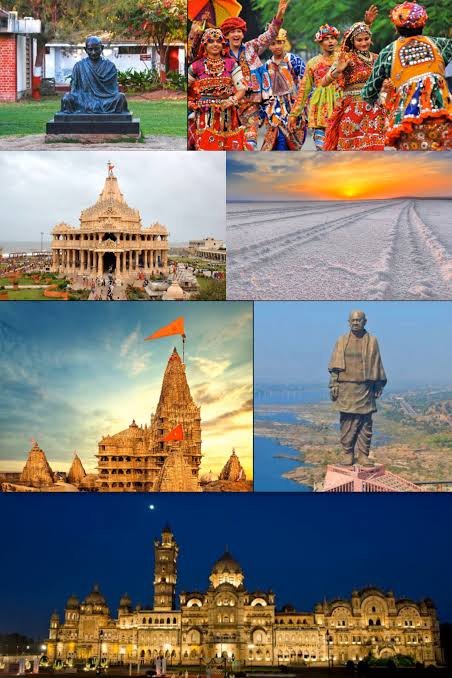
Gujarat is a state on the western coast of India with a coastline of 1,600 km – most of which lies on the Kathiawar peninsula – and a population of 60.4 million. It is the fifth-largest Indian state by area and the ninth-largest state by population. Gujarat is bordered by Rajasthan to the northeast, Dadra and Nagar Haveli and Daman and Diu to the south, Maharashtra to the southeast, Madhya Pradesh to the east, and the Arabian Sea and the Pakistani province of Sindh to the west. Its capital city is Gandhinagar, while its largest city is Ahmedabad. The Gujarati people of India are indigenous to the state, and their language Gujarati, is the state’s official language. The economy of Gujarat is the fifth-largest in India, with a gross state domestic product GSDP of ₹18.5 trillion and has the country’s 11th-highest GSDP per capita of ₹216,000 . Gujarat ranks 21st among Indian states in human development index. The state traditionally has low unemployment and is widely considered one of the most industrially developed states of India and a manufacturing hub.

The state encompasses some sites of the ancient Indus Valley Civilisation, such as Lothal, Dholavira and Gola Dhoro. Lothal is believed to be one of the world’s first seaports. Gujarat’s coastal cities, chiefly Bharuch and Khambhat, served as ports and trading centres in the Maurya and Gupta empires, and during the succession of royal Saka dynasties from the Western Satraps era.[citation needed] Along with Bihar, Mizoram and Nagaland, Gujarat is one of four Indian states to prohibit the sale of alcohol. The Gir Forest National Park in Gujarat is home to the only wild population of the Asiatic lion in the world

Gujarati food is primarily vegetarian. The typical Gujarati thali consists of rotli or bhakhari or thepala or rotlo, dal or kadhi, khichdi, Bhat and shak. Athanu (Indian pickle) and chhundo are used as condiments. The four major regions of Gujarat all bring their own styles to Gujarati food. Many Gujarati dishes are distinctively sweet, salty, and spicy at the same time. In the Saurashtra region, chhash (buttermilk) is believed to be a must-have in their daily food.

Gujarati folk music, known as Sugam Sangeet, is a hereditary profession of the Barot, Gadhvi and Charan communities. The omnipresent instruments in Gujarati folk music include wind instruments, such as turi, bungal, and pava, string instruments, such as the ravan hattho, ektaro, and jantar and percussion instruments, such as the manjira and zanz pot drum.

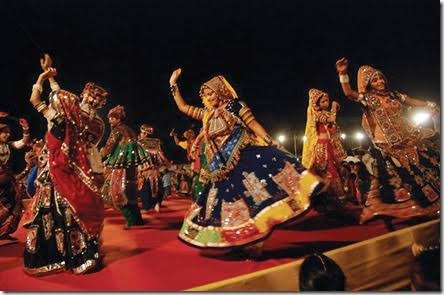
The folk traditions of Gujarat include bhavai and raas-garba. Bhavai is a folk theatre; it is partly entertainment and partly ritual, and is dedicated to Amba. The raas-garba is a folk dance done as a celebration of Navratri by Gujarati people. The folk costume of this dance is chaniya choli for women and kedia for men. Different styles and steps of garba include dodhiyu, simple five, simple seven, popatiyu, trikoniya (hand movement which forms an imagery triangle), lehree, tran taali, butterfly, hudo, two claps and many more. Sheri garba is one of the oldest form of garba where all the women wear red patola sari and sing along while dancing. It is a very graceful form of garba. Makar Sankranti is a festival where people of Gujarat fly kites. In Gujarat, from December through to Makar Sankranti, people start enjoying kite flying. Undhiyu, a special dish made of various vegetables, is a must-have of Gujarati people on Makar Sankranti. Surat is especially well known for the strong string which is made by applying glass powder on the row thread to provide it a cutting edge.

Gujarat’s natural environment includes the Great Rann of Kutch and the hills of Saputara, and it is the sole home of pure Asiatic lions in the world. During the historic reigns of the sultans, Hindu craftsmanship blended with Islamic architecture, giving rise to the Indo-Saracenic style. Many structures in the state are built in this fashion. It is also the birthplace of Mahatma Gandhi and Sardar Vallabhbhai Patel, great iconic figures of India’s Independence movement. Amitabh Bachchan is currently the brand ambassador of Gujarat Tourism.

Gujarat has a variety of museums on different genres that are run by the state’s Department of Museums located at the principal state museum, Baroda Museum & Picture Gallery in Vadodara, which is also the location of the Maharaja Fateh Singh Museum. The Kirti Mandir, Porbandar, Sabarmati Ashram, and Kaba Gandhi No Delo are museums related to Mahatma Gandhi, the former being the place of his birth and the latter two where he lived in his lifetime. Kaba Gandhi No Delo in Rajkot exhibits part of a rare collection of photographs relating to the life of Mahatma Gandhi. Sabarmati Ashram is the place where Gandhi initiated the Dandi March. On 12 March 1930 he vowed that he would not return to the Ashram until India won independence.

IMPORTANCE OF SOIL AS A NATURAL RESOURCE

Natural resources play an important role for the sustenance of human habitation. One of the most important of them is Soil. Apart from being an important natural resource, it is the top covering of the earth’s surface. The formation of soil takes place due to wear and tear of rocks by natural and human-made forces.

How is soil formed?– Formation of soil is related to the parent rock material, relief, climatic conditions, natural vegetation, and animal and human activities. Fine vegetable and animal remains, called humus add to the fertility of the soil. The importance of the soil lies in its fertility.  The formation of soil is a slow process. It takes thousands of years to from a very thin layer of it. Thickness of soil is usually one to three metres. The reason being beyond this depth, rocks do not have the elements necessary for plant growth. Right mix of minerals and organic matter are important requisites to make the soil fertile. Soil formation takes place under specific natural conditions. The quality of soil varies from place to place. Soil also differs in colour, texture and fertility. Various factors influence the formation of soil. These are as follows:

  1. Parent rock material-  Underlying rocks which contain minerals and make up the bulk of the soil are called parent rocks. Parent rocks influence the colour, texture, chemical properties, mineral content and permeability of the soil so formed.
  2. Relief- Elevation and the nature of slope influence the rate of weathering and drainage of water. Thus, flat areas have thicker layer of soil as compared to steep slopes.
  3. Climatic conditions- Climatic conditions exert both direct and indirect influences on soil formation. Seasonal distribution of temperature and rainfall determine the type and effectiveness of weathering of rocks and humus formation.
  4. Plant and Animal remains- Plants and micro-organisms help converting young soil into mature soil. Dead plants provide humus which is consumed by other forms of life, like bacteria. The dark brown colour of the soil is due to the humus.
  5. Time- A body of soil is considered mature if the soil forming processes have acted over a sufficient period of time and the soil has developed a distinct soil profile. Soil develops more quickly in humid regions than the dry ones.

Soil profile – A vertical section of soil from the surface to the parent rock is the soil profile. The process of formation of soil gives rise to well- marked horizontal layers in the soil profile. These horizontal layers are called soil horizons. The soil horizons are usually named A.B.C, and D from the uppermost layer of the soil to the parent rock below.

Soil erosion– Soil erosion has become really common and it is alarming. More trees must be planted for the soil to remain intact. Soil erosion can lead to death of microorganisms that help fix and convert various gases of atmosphere and aid humans in farming and agriculture. Also, soil erosion in areas where soil is present in large quantities can lead to landslides and loss of human lives. Hence, we must be considerate towards the environment and do our best to save it.

Sources- Google, Quora, Newspaper Articles

TOP 5 INTERNSHIP SITES IN INDIA

Want you knowledge to get applied somewhere , internship is the chance . Just having a good degree is no longer enough to secure that all-important graduate job offer in today’s world. Pertinent work experience is now just as valuable as your degree and exam results when it comes to building a successful career. As a result, internships have become an essential way to help candidates make themselves stand out. The importance of an internship has been shown in several recent surveys. According to NACE’s Class of 2019 Student Survey, “More than half of all graduating seniors who applied for a full-time job (53.2%) received at least one job offer. Within this group, 57.5% of students who had an internship and 43.7% of graduating seniors who did not have an internship received a job offer.”

Internship helps you get the exposure which you want in any cooperate sector or any organization or non profit organization. It gives you a platform to establish a wide network connection . It helps you to know about yourself , you get to know about your caliber , your potential to cope up with the real industrial work . it help you to lean professional work as well as technical skills according to the requirements of the organization .

TOP 5 INTERNSHIP SITE IN INDIA RAE LISTED BELOW :

  1. INTERNSHALA

This is one of the most popular and probably the first website which all students or workers with no previous experience should usually start at. This website provides all its users with literally thousands of opportunities in all fields and domains. The process for applying to internships on this website is also incredibly simple. To get the process started you would first be required to make a login ID and password. Once you have that then you can access a large number of internships which are available on this website. You can manage and edit your resume at any time and can also find the right internship for you by using the filter box on the side. This website ensures that it connects everybody to trusted and assured companies who are genuinely interested in hiring interns. This website also gives assurance that they are connected to trusted companies & also help you to in various forms like how to talk to others , maintain professionalism .

2. LinkedIn

LinkedIn is a very famous community of professional networks which is known for providing the best jobs. This company connects working professionals on a single platform and allows them to communicate in a professional manner. At this website, you can post jobs or even apply for them. However, what most people don’t know is that this website also allows people to apply for internships.

There is also an entire section of this website which is devoted to students and working professionals alike who wish to learn new and relevant skills. This website allows users to filter their search for internships and it offers thousands of options for everybody to choose from. 

3. LetsIntern

This website exposes students to some of the best internships from a number of large organizations like Tencent, the Indian Express, and Comic-Con India. The website enables employers and students to register in a similar process, which enables better communication between organizations and their interns. They are putting all their hard work to provide you all with the bust internship offers & job offers.

4. Twenty19

With a user base of over 6 lakh students, Twenty19 brings students and companies on a single platform for projects, internships, volunteering opportunities etc. The platform shares your personal profiles with corporate companies to select to enhance the quality of interns. This portal is free of cost for the students as well as colleges.

5. stuMagz

This is a Digital Campus Discovery Platform based out of Hyderabad which was founded in 2015. You can find both tech and non-tech internships here. The site offers a great way to build your profile. The user interface is great and easy to use. With the reach of 500+ colleges, stuMagz serves as the platform for brands to reach out to a talented pool of students.

Foods that increase estrogen level

Estrogen is an important naturally occurring hormone. It’s a key to woman reproductive development. Estrogen may support bone health, mood regulation and lowers cancer risk.

1. Flax seeds :-

Flax seeds also known as linseed. It contains high amount of phytoestrogens. The primary phytoestrogen in flax seeds are called lignans which are beneficial in estrogen metabolism.

2. Soyabean :-

Soyabeans are one of the best sources of phytoestrogen and therefore one of the most effective estrogen boosting foods.

3. Fennel :-

Fennel is a herb which is used in variety of dishes. It also contains high levels of phytoestrogen making it ideal for boosting estrogen.

4. Grains :-

People who eat cereals have higher rates of estrogen. It has been found that many of the grains typically used in cereals have higher rates of phytoestrogens.

WHY BIHAR CONSIDERED BACKWARD

         WHY BIHAR CONSIDERED BACKWARD

BY : NEHA SHAHAB 
Bihar has a population of over 103 million.
Bihar is the only state in India where the incidence of poverty is uniformly at the highest level (46-70%) in all the sub-regions. The annual real per capita income of Bihar at Rs 3650 is about a third of the national average of Rs 11,625. Bihar is also the only Indian state where the majority of the population – 52.47% – is illiterate.
Bihar has 7.04 million hectares under agriculture and its yield of 1679 kg per hectare. While it is less than the national average of 1739 kg per hectare, it is better than that of six other states, which include some big agricultural states like Karnataka and Maharashtra.
The causes of poverty in Bihar may be viewed in terms of certain parameters such as (i) Over population and apathy towards family planning (ii) Poor land and water management for agriculture (iii) Mal-administration, poor governance and corruption (iv) Illiteracy (v) Poor Health care (vi) Lack of industrialisation.

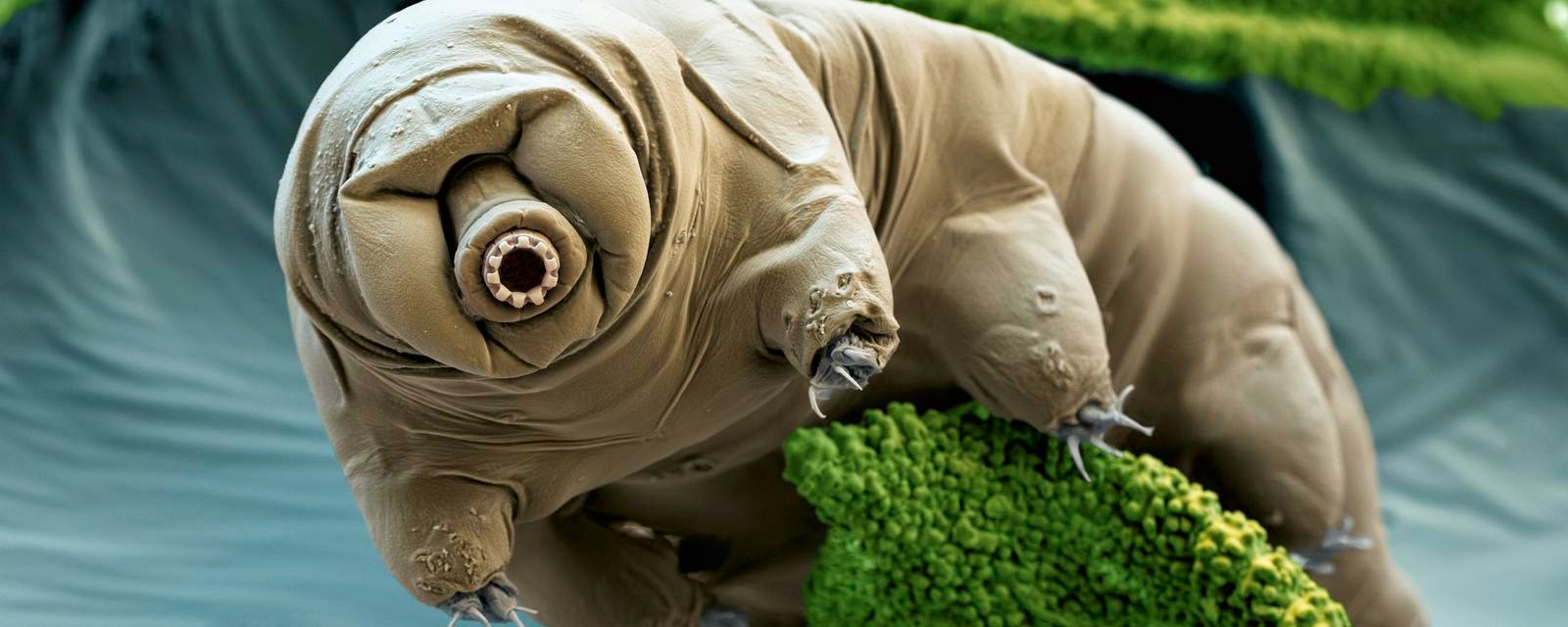
Tardigrades

The tardigrade, better known as a water bear or moss piglet, is the real star in the race of survival. This eight-legged, water-dwelling animal, which is a closer relative to nematodes (roundworms) than they are to their look-alikes, the arthropods (insects, myriapods, arachnids and crustaceans), has gone unseen for a significant part of our existence. Astonishingly, there are over 1200 different species of tardigrades, and it is believed that less than 10% of the species have been identified.

How big are tardigrades?

The biggest adults reach a body length of only around 1.5 mm, while the smallest is less than 0.1 mm. Newly hatched tardigrades may be even smaller than 0.05 mm. You would need microscopic vision to see these impeccable wonders of nature. Tardigrades are nearly translucent and they average about half a millimeter (500 micrometers) in length, about the size of the period at the end of this sentence. In the right light you can actually see them with the naked eye. But researchers who work with tardigrades see them as they appear through a dissecting microscope of 20- to 30-power magnification—as charismatic miniature animals.

What do tardigrades eat?

They feed on the fluids of plant and animal cells, piercing their cell walls and membranes, with the help of primitive piercing mouthparts, called stylets. Some species of water bears are known to engulf entire live organisms, such as rotifers. Tardigrades even eat other tardigrades! Yes, cannibalism is very much alive and well among certain species of tardigrades. When they have enough food and water to support their bodily functions, they live out the natural course of their lives. They are probably the most paradoxical animals on this planet. These organisms are impossibly cute, like tiny blimps bumbling around harmlessly on their stubby little legs, but they also enjoy a legendary reputation as the toughest and most indestructible creatures on Earth.

Tiny but Robust

Tardigrades are biologically immune to apocalyptic events like Gamma Ray Bursts (left) or meteor showers (right).

Tardigrades have been reported to survive the piping hot sulphur springs amidst volcanic mountains; they have survived atop the Himalayas, beneath layers and layers of thick ice, remaining unscathed by the immense pressures and exceedingly low temperatures. Tardigrades are fully capable of surviving complete global mass extinctions caused by astrophysical events, such as gamma-ray bursts and giant meteorite impacts.

Tardigrades and Ant-Man

Ant-Man and the Wasp(2018)

Pop culture seems to love tardigrades. And with good reason! Tardigrades have been a part of several sci-fi movies, shows, and documentaries. Science fiction loves good space monsters that are biologically dominant to their heroic counterparts. Tardigrades are no stranger to this culture; they have been featured in various movies like Star Trek: Discovery, Ant-Man, and Harbinger Down. However, was it just their terrifying and gruesome appearance that inspired the filmmakers to caste these critters, or were they well aware of their dominant stature amongst other mortal creatures? Either way, they weren’t wrong!

Tardigrades in Space

In 2007, a group of researchers pushed the resilience of these extraordinary animals to the extreme, in conditions that would be impossible for any other known living creature to survive. A sample of dehydrated tardigrades was exposed to outer space for ten whole days. The vacuum of space, which results in severe dehydration and cosmic radiation, was not a problem for water bears. When those same specimens were returned to earth and rehydrated, 68% of those shielded from the radiation survived; even a handful of those without radiation protection not only came back to life but also produced viable offspring

Cryptobiosis

The adaptation that allows tardigrades to live through such barbarous conditions is their ability to enter a dehydrated state, one that closely resembles death, and this is what makes all the difference. When encountered with environmental stresses, a tardigrade will moult its skin, and inside the shed skin, it curls up into a dry, lifeless ball called a tun. This reduces its metabolic activity immensely, to around 0.01% of its normal levels, but still protects their DNA. To do this, their body produces trehalose, a natural protective sugar that forms a gel-like medium that suspends and preserves the cell organelles and membranes. In the tun, a tardigrade can survive for decades or more. Once immersed in water, their bodies return to a normal metabolic state over the course of a few hours. In one such incident, a group of dehydrated tardigrades was reportedly taken from a museum sample of 100-year-old dried moss and was brought back to life by simple rehydration. That being said, the longer a tardigrade persists in a dehydrated state, the lower are its chances of being successfully revived.

Conclusion

Whether it is the scorching heat of thermal vents, the icy cold of subglacial lakes, or even the vacuum of space, these hard little critters will survive it all. Boil them, mash them, stick ’em in a stew… they are versatile and probably the most durable creatures on the planet. Having survived five great mass extinctions over a period of half a billion years, they might be the strangest combination of cute and terrifying that anyone has ever experienced while looking through a microscope. Extreme conditions that terrify us and would most certainly kill almost any life form, barely even faze them. These tiny tots have expanded the notion of habitable environments, and understanding their indestructibility will have profound implications for both earthbound medicines and survival on other worlds.


A Brief History of Pandemics

 The world is still fighting with the coronavirus, after more than a year of it being officially declared as a pandemic by the World Health Organization (WHO). A pandemic is an epidemic that crosses the borders of one country. Pandemics can have a severe and long term impact on humankind. 

Pandemics in History

There have been several instances of pandemics since the ancient times, when modern medicine and science was not much developed. Earlier, people believed that a disease was caused by gods or spirits to inflict destruction upon those who deserve it. But this unscientific perception prevented them from treating the patient properly and led to the death of millions of people. 

There were a number of plague epidemics and pandemics in history, especially in the times of war. The Anthenian plague was spread between 430 to 26 B.C. It originated in Ethiopia during the Peloponnesian War. It spread to different parts of Egypt and Greece. The overcrowded city of Athens became severely affected and many lives were lost due to the rapid spread of the disease. Similarly, the Antonine Plague between 165-180 A.D, infected the Roman Empire. 

The Justinian plague was known as the “real plague” epidemic. It originated in Ethiopia and spread to different parts through trade. It was one of the most severe plagues which led to lonely and deserted streets as trade activities were abandoned. The Black Death of 1334, originated in China and spread to several parts of central Asia, North India, Russia and Europe.

Spanish Flu was caused between 1918 to 1920 by the H1N1 strain of the Influenza virus. Its spread happened in the middle of World War-1. This avian borne flu was one of the most spread pandemic, it infected almost all the parts of the globe. It had a higher mortality than the previous virus and had a deeper impact on humankind. It caused nearly 50 million deaths worldwide. Even after its deadly impact, the virus faded away easily from everyone’s attention because of the ongoing World War at that time. Some writers have written about it as the “forgotten pandemic”. 

The Ebola outbreak was one of the most recent outbreaks, between 2014 and 2016. It mostly affected Central and Western Africa. But it was efficiently contained and did not spread rapidly all over the world.  


Covid-19 Pandemic

The pandemic caused by coronavirus originated in China in November, 2019. It was officially declared as a pandemic by WHO, on March 11, 2020. By that time it had spread to 114 countries. Methods such as quarantine, isolation and lockdown were implemented to curb its spread. New developments related to medicines, treatment, and vaccination have been developed over time. 

The vaccines stand as a ray of hope to overcome the Covid pandemic in near future.