Role of GST and its Impact on Indian Economy


Introduction to
GST


Goods and Services Tax replaced many Indirect Taxes in
India w.e.f. 01.07.2017 and is levied on the supply of goods and services. It
is much needed Tax reform which will lay path to aligning the Indian Economy
and the Indian Accounting standards with the International systems and
standards. It is the biggest Tax reform in India based on “One Nation, One
Market, One Tax”.


Impact
of GST on Indian Economy

The instant impact of GST was that it resulted in fall
in the GDP. People were not prepared for the enormous change in the tax
structure. The Indian GST system is extremely complicated and requiring
specialized systems and softwares and many small businesses were forced to take
expensive services of professionals because understanding and handling GST is
beyond their capacities. The implementation of GST was neither effective nor
efficient with many changes taking place ion the framework and policies
continuously. 


With the coming in Force of GST there was an initial set back to
the Indian Economy. With the passage of time things are  improving, the processes have smoothened out.
The GDP is slowly recovering and improving. Gradually there is a steady
increase in the FDI and people migrating to India. On the flip side for a
common man at the micro level GST will translate into the common man paying
more taxes. There is also an increase in the cost of compliances for smaller
businesses which will translate into higher cost of production.


Advantages of GST


GST has replaced about 16 different types of taxes which
were paid by Indian Businesses.  This has
reduced the burden on the tax payer in terms of no need to  file different returns for different taxes.
Hiring different professionals for different taxes. Compliances reduced because
one ACT one Rule has to followed. For the Government it has resulted in faster
detection of tax frauds and faster recovery mechanism by the government because
now various departments like (Sales Tax, Excise etc.) are unified under one
department of GST.


Down side of GST


In other countries like Singapore and Australia GST
works under a single tax rate which means that all the goods and services are
taxed under a single rate. However, in India the there are five tax slabs (nil,
5%, 12%, 18% and 28%) with 3 rates (IGST, CGST and SGST) because the single tax
slab will not work in the Indian economy since we follow the concept of
equitable distribution instead of equal distribution to ensure that tax
benefits are passed on maximum to the poorer sections of the society.


 The GST
common portal is still not equipped to handle traffic of more than 50 lac users
at a time resulting in huge glitches. Petroleum products and Alcohol have yet
not been covered under GST resulting in benefits not being passed on to the
customers in case of fall in the global crude oil prices.


Role of GST in the future of Indian Economy


It is anticipated that the Indian Economy will reap
benefits of GST which is the biggest Tax reform in Indian History in the long
run. With the removal of cascading effect of taxes, reducing and lowering tax
rates, single tax net in operation it is estimated that the prices will greatly
reduce leading to decrease in inflation. Due to its wide nature and since
the entire functioning of the GST is IT based monitoring and curbing of Tax
evasions will become very easy. This will result in increase of the revenue of
the Government. 


The entire economic operations of the country will be
streamlined and fine tuned to become an extremely efficient system. Red – tapism
and harassment at the hands of the Tax officials will be greatly reduced.
Fiscal Deficit will be kept in check. Exports are bound to increase due to
increase in the production capacities. Indian Industry will attract larger
number of FDIs and all in all the Indian Economy will see an upward growth
trend.


 Over the last few months it has been observed that the already volatile
stock market becomes extremely sensitive when any changes in the GST rate,
structure or policies are made for a particular industry. Therefore GST has
become a crucial factor in determining the net worth in an industry.


Conclusion


It is believed that GST which is the
biggest Tax reform of India will have positive impact on the Economy in the
long run with making it simpler with fewer tax slabs, reducing compliances and
streamlining and smoothening the implementation.


Demonetization : A broader perspective


Introduction to
Demonetization


Demonetization happed on 8th November,
2016 when the Indian Government declared that the Rs.500/- and Rs.1000/-
currency notes were not longer legal tenders. The move was sudden which stunned
the Indian Economy where there is a parallel cash economy operating at all
times. It is estimated that 86% of the currency was pulled out of Circulation.
The Government claimed that this was a necessary step to curb Black money and
rampant counterfeit currency which was used to fund illegal and dangerous
activities like terrorism. The suddenness of the scheme had huge side effects.


Impact
of Demonetization on Indian Economy

 Demonetization had a negative impact on the Indian
Economy. It largely did not deliver its promises. No fruitful gain was observed
for the Indian Economy. Demonetization adversely affected small operations and
businesses so much so that many of the businesses were not able to recover and
were forced to shut down. The entire operation and implementation was extremely
ill timed and planned.

 People  lost work
hours because they were forced to stand in long ques outside banks
to either exchange the old currency that
they had or procure new currency. 86% of the cash currency was pulled out of
the system resulting in the industry to come to a grinding halt. There was a
sudden dip in GDP of the country. Many economists claimed that it will take
at least 2 years for the economy of the country to recover.
  The Government was not prepared to tackle the
situation. 

The new currency was way short in supply as compared to the demand.
The cost of withdrawal of the currency and printing and issue of new currency was
greater than the benefits claimed. The Government has till date not quantified
or published data for the benefit of the public to clarify the benefits derived
from demonetization.


Advantages of Demonetization


Advantages of Demonetization ‘claimed’ have been removal
of black money and breaking the back of Terrorist and illegal activities in
India. There is no substantial proof of this being achieved by Demonetization.
However, the citizens of the country have moved towards cashless economy.
During the initial period inflation rate went down with the prices of
commodities declining. 


Banking operations have become stronger, their lending
portfolio has increased from MSME’s and small businesses. People are better equipped
with handling virtual money instead of paper currency. Also, the month of
November, 2016 saw maximum collections by the Government, Municipal and Civil
bodies in terms over due and advance taxes and utility bills. Example: The
Greater Hyderabad Municipal Corporation reported collecting about 160 crores in
cash payments of outstanding and advance taxes, within first four days of
demonetization.


Down side of Demonetization


There was a definite slow down of the economy. Many
sectors were hit hard like real estate and automobile. Agriculture sector was
worst hit because it is 80% cash based. Resentment was there because of the
poor planning and implementation.
According to RBI 99.3% of the
currency which was in the market came back into the banking system which is
interpreted as either there was very little black money in the market or the
entire exercise was futile as all the black money has been laundered and is
back into the system. Many are also of the view that the newly introduced Rs.2000/-
currency note will increase the presence of black money because of ease of
storage and hoarding.


Conclusion

According to the Industry
Professionals, Demonetization was a step that should have been avoided since it
had negative impact on the Indian Economy and did not reap any substantial
benefits.
 

JANMASHTAMI

Janmashtami is a Hindu festival celebrating the birth of King Krishna. It is celebrated in August every year. Krishna Paksha Ashtami Day is a day to celebrate Janmashtami. Lord Krishna is considered to be the greatest of the ten creatures of King Vishnu. Hindus celebrate Janmashtami with splendor and honor. Let’s talk a little bit about King Krishna.

The Life Story of Lord Krishna


Lord Krishna is one of the incarnations of Lord Vishnu. He was born 5200 years ago on the eighth day of the dark night in the month of Badon on the Hindu calendar. He is considered to be an extremely powerful deity. He was born on Earth for the special purpose of freeing us from evil arms. He became very influential in the Mahabharata, in which he took the side of Pandavas and led them to the success of the Kurukshetra war. Throughout his life, he preached the idea of ​​Bakti and Karma.

Lord Krishna was born in prison since his parents were kept in prison by his uncle Kansha. Kanbe fears that the eighth child of their parents will kill him. Although Krishna is the eighth child, his father Vasudev saved him from Kanbe by giving him to his friend Nand. Krishna grew up in the Gokul community with his adoptive father, Nand, and his adoptive mother, Yashoda. He showed several magical practices by killing several asuras in his youth and youth, and he grew into a strong man. Eventually, he and his brother Balaram went to the Kansha palace for a battle, where Krishna killed Kansha.

Several shows on Lord Krishna are broadcast on television every day. I loved watching myself as a child, and still do. I love the fact that Krishna loves to eat Makhan, who used to steal from his mother’s kitchen. For this reason, Lord Krishna is also known as ‘Natkhat Nand Lal.’ He was nicknamed Nathat because he was shy when he was younger. He played with friends and cows, therefore, he is also called Govind.

Lord Krishna had dark skin, as black as clouds filled with rain. King Krishna’s best friend is his aunt Radha. Radha is very important in the life of King Krishna. Lord Krishna likes to spend time with him. She also enjoys spending time with friends like Sudama.

Janmashtami celebration


Since Lord Krishna was born at night, people celebrated Janmashtami at midnight. People follow a special way of celebrating Janmashtami. Since King Krishna liked to eat Makhan, people played games with Makhan. They put makhan in a clay pot called matki. The judge ties a matki full of makhan high above the ground. People play this game in teams. These people make a pyramid so long that they can reach the ties tied at the top. Some groups try to block them from accessing the tags. All teams have a specific time to access the tags. If any party fails to reach the mark ahead of time, other parties are given the opportunity to reach the target. The game is so interesting that many people came to see the game.

Janmashtami is also celebrated in houses in different ways. People decorate the inside and outside of the house with lamps. They performed pujas and offerings in various temples. On the night before Janmashtami, we all heard the sound of mantras and bells all day. Many people also enjoy singing and dancing to religious songs. Janmashtami is considered one of the most important festivals in the Hindu religion.

Introduction and Role of a Bank in Financial Inclusion In India


History of Financial Inclusion

Financial Inclusion came into light in 2005 when Mr.Y.V
Reddy, Governor of The Reserve Bank of India, coined the term ‘Financial
Inclusion’ that gained a lot of momentum. In 2008, under the leadership of Mr C
.Rangarajan, RBI governor, a committee was formed, where financial inclusion
was acknowledged and recognized.


Meaning of Financial Inclusion

Financial Inclusion means making available the financial
services to the last strata of the people, living in the remote villages, at a
low cost. The purpose is to provide financial services to the poor people, for
their benefit and inclusive growth. Most of the people in India are residing in
remote villages without any access to financial and banking services.


Why there is a need for Financial Inclusion?

The poor and illiterate, believe that they have no other
option but to borrow money from ‘Unlicensed people’. These unlicensed people
comprise of moneylenders, sahukars etc, who lend money at exorbitant interest
rates, taking undue advantage and making their lives of the borrower miserable.


Role of a Bank in Financial Inclusion In India

In order to prevent exploitation of the underprivileged,
Government of India implemented the concept of financial inclusion. For its
execution, banks were asked to provide a platform to financially weaker
sections of the society so that all financial services are available to them at
lower or reasonable cost. This includes all financial services whether it be
banking services, loan/credit facilities, deposit facilities etc.


Conclusion

Growth of Urban Sector does not conclude the existence
of inclusive growth. The economic growth of a country can be achieved only when
the benefits and opportunities of financial services are accessible to every
section of society.

Financial inclusion includes
provision of banking services such as opening of bank accounts for savings and
transactional purposes, insurance facilities, financial advisory services and
equity products to the underprivileged at reasonable cost. This will ensure
that the poor sections of the country also get and enjoy the same benefits as
urban segment ensuring country’s growth.


True FEMINISTS aren’t Against MEN.

Term ‘Feminism’ was initially brought up as a Label for women to fight against the discriminations happening towards them under it’s name. The purpose of the concept was to retrieve back the rights of women, breaking all the Stereotypes and putting an end to the prejudice beared by females since the earliest times. The beginners fought for women rights but never had a mission to demean males’ in any form or lower their status or rights so as to provide a higher position to women. Feminism was never invented to disregard men’s existence but all it was meant for is making the society aware of the fact that women deserve to have the same standard and respect EQUAL to that of Men. Majority of each and every person who has come across the notion, considered it worthy of all the attention and a very important agenda for empowerment. Feminism raised several issues and even unveiled injustices occurrings taking place against women in tremendous ways worldwide. For example, To receive an equal pay – as of the Male worker in the company while working on the same position, To get the freedom of working, dressing and living with their own choice, To ensure safety, To fight against domestic violence, sexual harassment and the superstitious harmful practices such as Female genital mutilation / cutting.

Image source

HOWEVER!!!

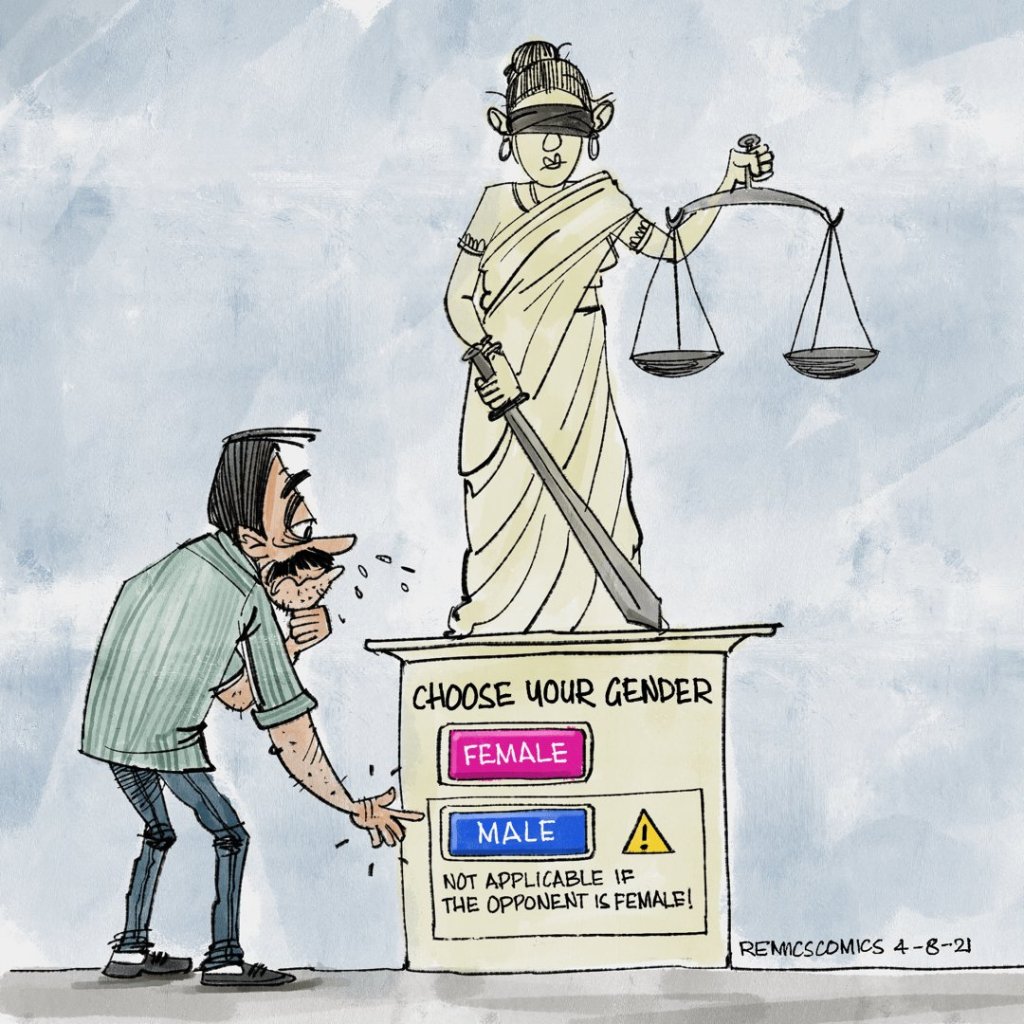
Likewise every law has a loophole, there are always Some people in a crowd who just couldn’t think Right! So Here’s where came a wave of demolishing the concept of Feminism. While, the movement was bringing a good change in the social norms and actually convincing the people about the shortcomings on the grounds of Building Equality, the fake flag bearers of Morality amd virtue started exaggerating the agenda. They created a state of Gender Bias all around. Some women would try to take unfair benefits in the name of feminism namely, a practice called PSEUDO FEMINISM. This includes examples such as; women’s income tax slab is higher than men’s. A woman who earns till 3,00,000-3,50,000 is exempt from tax payment. If both men and women earn the same account, why should it only be the men who pay tax. Another example is As of 2009, 175 men had been kidnapped and abducted for the purpose of illicit intercourse, according to the 2012 NCRB data. As per a reliable source the cases were registered under the Indian Penal Code (IPC) Sec 363 to 369, 371 to 373. Such cases are not dealt with in the same way as the abuse committed on women, even under regulation.

A Dilemma

But Why can’t we just accept, respect and treat both the genders equally at the same time? We are already living in a culture where both Women and Men face so many challenges everyday due to Orthodox mindsets of people. Upon that, these Psuedo feminists suggest that women deserve more respect, priority, benefits than any other genders everywhere. They believe that the world should be governed/ controlled by females and they also potray all men as nemesis, responsible for all crimes against women. Little do they know, The most brutal crimes against women are conducted by another women themselves at many places. You get enough proofs of this on daily basis especially, when you are an Indian citizen. As here, there’s no place to be where you won’t find an elder Lady or even young girls judging others for one’s clothes or casual behaviour. The biggest example to this (in India) is when “A women is proclaimed as responsible for her own rape. She is ashamed for wearing certain clothes and provoking Men herself to do this injustice to them”. Now this is why Not only the “Men” But every single person irrespective of their gender or age having that narrow mindset with preconceived representations in their head of how a Women is a weaker gender, supposed to be kept and treated like slaves, etc. are responsible. And an even bigger mistake that Pseudo feminists do here is to blame and hurt those who are innocent considering it their right. Such incidents not only could hurt the image as well as emotions of the ones who are actually decent but also can pave a way for their thoughts to turn in a wrong direction. It creates an unjust impression of the actual concept of Feminism in everyone’s mind specially, in today’s era where every news is spread on social media at an incredible pace amd affects millions of brains which could even change the supporters and drive their views to become Feminism’s antagonists.

LATEST NEWS.

Is it true?

We all are familiar with case of Priyadarshani yadav from lucknow, taking advantage of her gender to prove herself as the victim for hiding the cruel deed of her’s. A video that is now quite viral on social media shows a woman in Uttar Pradesh’s Lucknow getting into a fight with a cab driver and during this, the woman slapped this driver not once or twice but more than 20 times. The girl could be seen crossing the road when the traffic light was green. She claimed that the driver was coming with a high speed and ran into her, while the cab driver (Saadat ali) said that the girl suddenly came in front of the car but he immediately stopped it. However, whatever the case might be no person haves a right to take law in his/ her hands and hit a person in midst of the road in front of a wholesome crowd. This incident has left the netizens in rage and a hashtag called #arrestlucknowgirl is trending on Twitter. All the support on social media is with cab driver who is clearly be seen calmly handling the situation. He further ranted in his statement in an interview that, being a guy if he had done such cruelty thousands of amendments would have been cast on him, he would be criticised by the whole country and his image and self respect would have been damaged by herher which is indeed a true scenario fabricated by pseudo feminists.

Conclusion.

Image source

On the contrary, the actual lesson what our country need to get is to stop favouring citizens according to their gender. Rather, everyone should be influenced to treat each other with Equality and Respect no matter the sex. And mainly, acquire the knowledge of deciding Right and wrong after learning all the facts and figures instead of judging and building conclusions and defaming anyone while being exposed to only one side of the story, just because some fake feminists motivate us to do so.

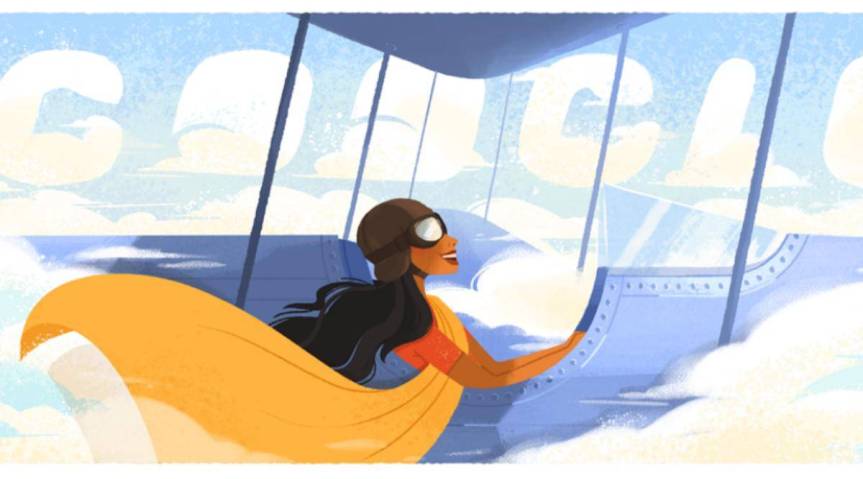
Google Doodle Honors Sarla Thukral On Her 107th Birthday

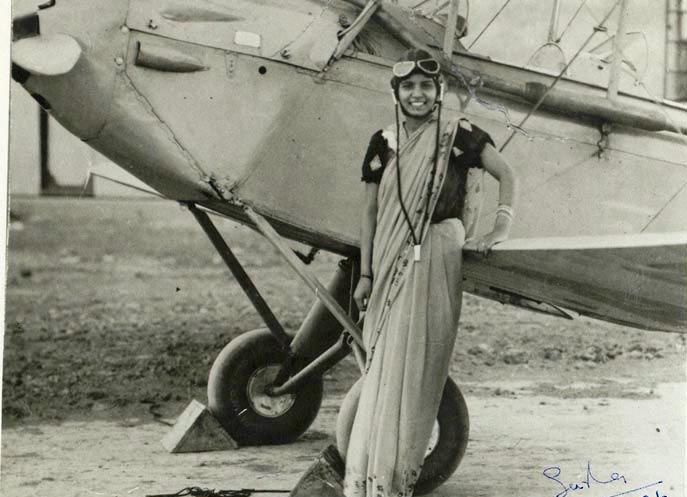
The first Indian woman to fly an aircraft was Sarla Thukral. She was born on 8th August, 1914. She was only 21 when she earned her aviation pilot license in 1936. After earning aviation pilot license, she worked hard and completed 1000 hours of flying owned by Lahore Flying Club. She married at the age of 16 to P.D. Sharma. Her husband came from a family which had nine pilots. He encouraged her to pursue her flying dream. She was also the first woman to receive ‘A’ license. Her husband was the first Indian to get airmail pilot’s license. She flew between Lahore and Karachi. He constantly supported, including her father-in-law who enrolled her in flying club She had a four-year-old daughter and in spite of that she went on to become an incredible pilot. When she completed her required 1000 flying hours and even more; her instructor made her fly solo.

One of the interesting facts of Sarla Thukral is that she flew aircrafts in a saree. She entered the cockpit of a Gypsy Moth in a saree in aviation that was mainly dominated by men. She made history by becoming India’s first pilot. She was working to get ‘B’ license to get authorization to fly a commercial flight. But unfortunately, World War 11 had started and training was suspended. She had gone through immense pain of losing a husband at the age of 24. In 1939, her husband passed away in a plane crash in Jodhpur, after which she decided to give up on her dream of becoming a commercial pilot. After giving up, she had to stay strong and work for a livelihood as she had daughters to raise. She returned to Lahore and started attending Mayo School of Art. She trained in Bengal school of painting, where she earned diploma in fine arts. She succeeded in painting as well and established as an incredible painter. She

She was devoted follower of Arya Samaj. In this community, Vedas were spiritually followed. This Samaj allowed remarriage. She moved back to Delhi with her two daughters. She met R.P. Thukral and married him in 1948.  She created her own life by becoming a successful entrepreneur. She made jewelries and designed sarees. She even made paintings and designed costume jewelry for National School of Drama. Vijaya Laxmi Pandit was one of her clients. Her jewelries were not only worn by great figures, but was supplied to Cottage Emporium for 15 years. After that, she started creating designs for the drama school. She once said in an interview that she plans out her day as soon as she wakes up in the morning. She feels happy to work rather than wasting a precious day. She believes that you should be happy and cheerful. This mantra has helped her through various crisis in life. She died on 15th March, 2008.

She was an inspiring woman to all those who once dreamt of flying above the clouds. She embraced her ethnicity and achieved what most feared to achieve during that time. Today, Google honors her pilots on her birth anniversary for the courage and determination she showed that paved a way for future women pilots.

AGRICULTURE AND FACTORS INFLUENCING IT

Out of the many important things needed for the survival of life, food holds an important place. The primary source of food is agriculture. Not only is providing food the sole task agriculture is done for, in fact, but it is also one of the most important economic activities as well. The different economic activities are broadly categorized into three types- primary, secondary, and tertiary.

Primary activities include the extraction of raw materials from the earth’s surface. The main primary activities are hunting, food gathering, pastoralism, fishing, forestry, mining, and agriculture.

Secondary activities include the processing of raw materials and converting them into finished goods of higher value. The main secondary activities are industries, such as making steel from iron ore and weaving cloth.

Tertiary activities include all types of services that support primary and secondary activities. The main tertiary activities are transport, trade, education, banking, insurance, and advertising.

With a basic knowledge of different categories of economic activities, it is imperative that we delve into agriculture, the factors influencing it, and its effects on society.

As mentioned, agriculture is a primary activity and is closely related to the natural environment. The term agriculture has been derived from the Latin words ‘ager’ meaning soil and ‘culture’ meaning cultivation. Though we are living in a highly technical and industrial-driven world, still more than half of the world’s population is directly or indirectly engaged in agriculture. Humans have also developed various means and techniques to increase agricultural production. This was done to meet the increasing demand for food for the growing population.

FACTORS INFLUENCING AGRICULTURE –  The methods of farming, types of crops grown, and the amount of production vary from place to place. This is due to changing environmental conditions. Following are the factors that affect agriculture at a place : 

  1. Relief-  Land on which crops are grown is known as arable land. The lowlands such as river basins, flood plains, and deltas are more suitable for the growth and development of agriculture than the highlands. In the lowlands, the dense population not only provides adequate and cheap labour, but also a ready market for farm products.
  2. Climatic conditions- The climate of a place plays an important role in agriculture. The hot and humid climate favors agriculture. This is the reason that cultivation is possible almost throughout the year in the equatorial and tropical regions. In the winter season and colder regions, the temperature is too low for plant growth.
  3. Soil-  The soil not only supports the plant but also acts as a medium to supply moisture and nutrients to the plant. Porous soil is soft and can be tilled easily. Clayey soil has high moisture- retentive capacity.
  4. Economic factors – The economic factors include the availability of farm inputs, adequate and cheap labor, transport facilities, markets, and loans for the farmers. The main farm inputs are seeds, fertilizers, machinery, and labor. Other important factors are the system of land tenure, land use, availability of farm machinery, and technological developments.

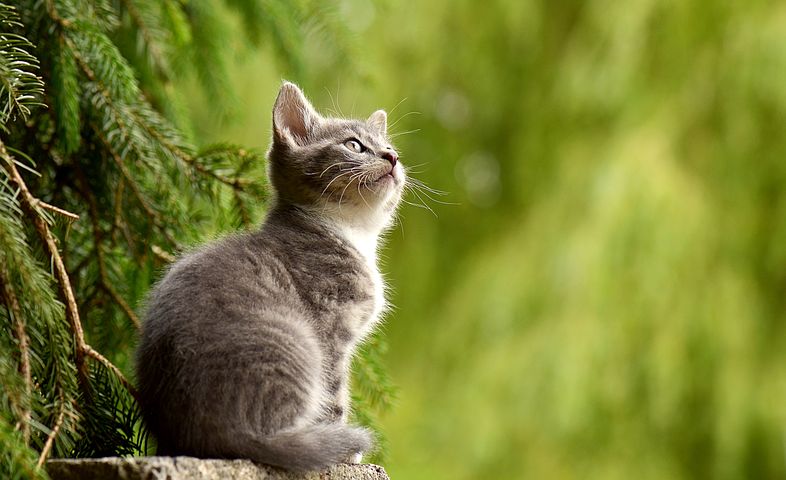
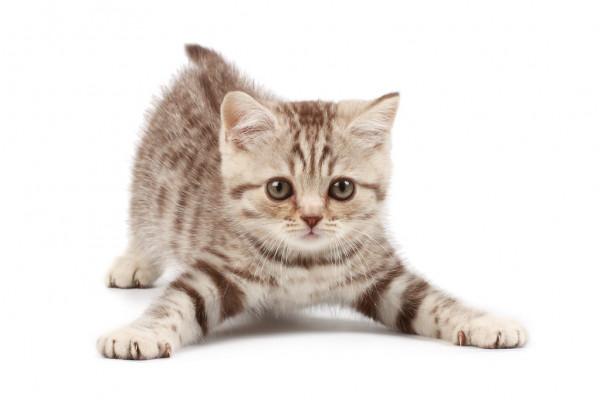
International Cat Day!! 8th August 2021!

Theme this day and importance. Ways we can adopt, protect, and cherish our feline friends, and Important facts to know about them.

Theme : ‘ BE CAT CURIOUS’

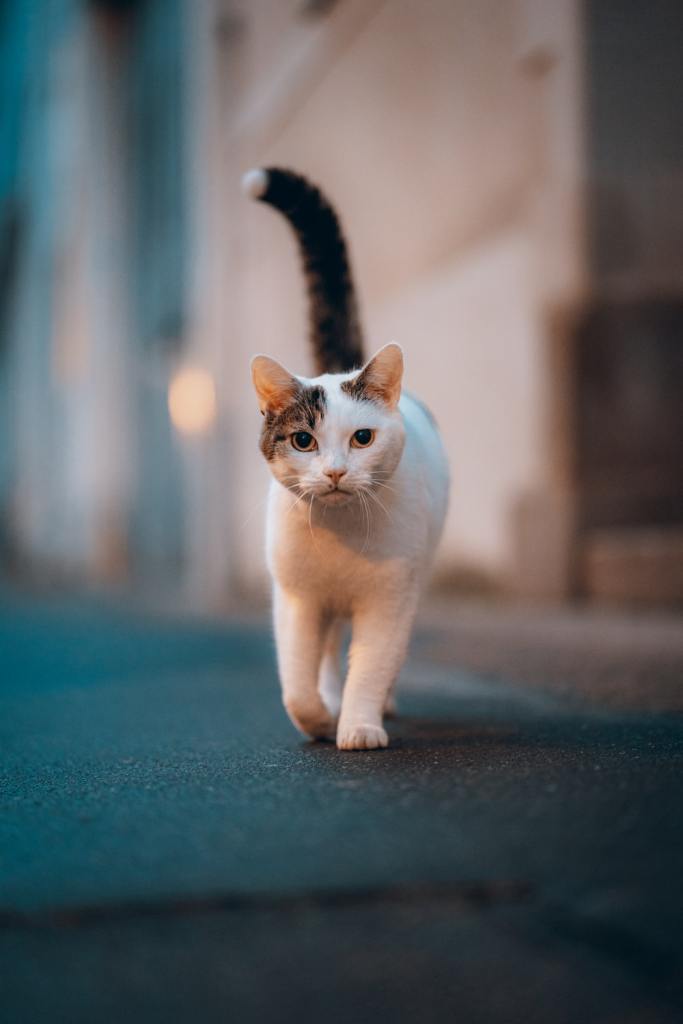
Cats: Fluffy, mature, savage, intellectually and emotionally sharp, and blessed divine gifts. Besides my intense love for them let’s dive into some scientific knowledge about cats. The cat is a domestic, small carnivorous mammal. It’s Binomial Name is Felis Catus. Often, they are called Domestic Cats to distinguish them from the Wild Cats. Usual types of cats: Farm cat, a house cat or a feral cat. Around 7500BC, Cats are known to be first domesticated in the Near East especially in the Ancient Egypt.

Cats have inborn hunting and territorial characteristics. it’s very, very important for them to survive. Being wary of humans and other animals helps them not to fall in the traps of horrific poachers and deadly animals. There are terrible people who lure cats in just to torture, sell your pets by kidnapping them, and all of this just for alleged “Fun” or “Money”. Abuse surrounding feline creatures have been growing. You can not only protect your cat partners but also donate, foster, food drive, neuter drive, and protect animals around you as well. Remember that your one act of kindness gives a safe home for cats. It isn’t necessary to care for them by bringing them home.

 First time celebrated in 2002 by the International Fund for Animal Welfare (IFAW), Canada

IMPORTANT NOTE: For their safety and wellness, make sure your cat wears a safety collar and an ID tag.

Cats are naturally curious and love to explore. Due to vehicles (Crossing road or sleeping under cars for shade), poachers, coyotes, owls, and what not. Obviously, we don’t want to rob outside life from cats just to keep them completely safe since indoor things or genetic diseases can hurt them as well.

It is always better to train them about goods and bad, cat-friendly leashes for walking if they like it, and taking precautions. You can take following steps to care for them:

  • Build an outdoor Catio.
  • Do not put bells on their collars
  • Have a back-up caretaker, like a neighbor(Not completely), siblings, or a trusted friend.
  • VACCINATIONS! VACCINATIONS like rabies, feline leukemia and feline distemper vaccine.
  • Always leave a bowl of extra food and water before you go out.
  • Tend to injuries immediately.
  • GET AN ID TAG! An ID tag has the cat’s name and your phone number.
  • Do not declaw very often They need it to protect themselves.
  • Neutering cats might feel a little extreme, but it is for their own safety.
  • Get acknowledged with flea-, tick-, and intestinal parasite–preventive medications with veterinary directions. About 250 heritable genetic disorders have been identified in cats,

Aim is to enable and inspire people to understand cats’ individual needs and perspective, and to act in the interests of each cat’s welfare. We do this by creating and sharing knowledge, insights, skills and current best practice so people can feel confident in their ability to help cats and to challenge ignorance and misconceptions,

– International Cat Care

Facts:

  • Cats can actually taste the air.
  • A cat can also heal itself by purring.
  • Cats love milk, they are actually lactose intolerant and must avoid it.
  • A female cat can be referred to as a molly or a queen, and a male cat is often labeled as a tom.
  • A cat’s nose is as distinctive as a human’s fingerprint.
  • Left paw is typically their dominant paw.
  • Cats are known to represent mythic symbols of divinity.
  • Cats can jump up to six times their length.

Look out for stray cats if you can’t adopt them. NGOs conduct neuter drive, food drive, fostering kittens or adult cats. You can donate to them who take actions and take baby steps while learning how to help and advocate for stray cats.

Consider:

  • Adopt a senior cat.
  • Foster newborn babies.
  • Donate for the cause.
  • If possible, start a group to gather money and have a checkup of cats around you.
  • Give them loads of love, you will never ever regret it.

Cats are so precious beings. They will be your parent, sibling, baby, best friends forever, nanny, ninja cat just for biting and licking afterwards. Their varies personalities will amaze you and fill you with love. They are truly one of the best companions.

What is Afforestation and Its Benefits?

AFFORESTATION

Forests provide the clean air, water, and food grains that organisms need to survive in the world. There are no lives without forests. So in this article we will look at the benefits of these forests and their current status.

The Source of Life is Forests

It is a scientific fact that only living things on earth live in the solar family, and that this is because only air and water exist on earth. The fact is that all living things on earth can survive, even though researchers are still researching whether the planets have enough air and water to sustain life. This air contains gases such as nitrogen, oxygen, and carbon dioxide. Organisms all absorb oxygen and release carbon dioxide. At the same time, plants absorb carbon dioxide, release oxygen, and provide clean air for organisms to live.

The Source of Water is Forests

Water is essential for human beings and living beings. This water is available to us through rainfall. Where it rains is mostly in the forests. It rains because of the forests. There are no trees in the deserts. So no rain. There are plenty of trees in the hills. So it rains generously. It is the forests that pour rainwater into the earth and give us groundwater.

Shade Trees and Forests 

Living beings rest in the shade of a tree as they travel from one place to another. That is why all the kings planted trees on both sides of the roads.

Forests That Prevent Soil Erosion

When it rains and the water flows away, the soil is washed away. Thus residential areas are devastated. But soil erosion is largely prevented as the roots of the trees cling to the soil. 

Forests to Help the Home

In addition to the above, trees are also used for building doors, tables, beds, and shelves for humans to live in.

Trees That Provide Food and Medicine

The fruits of the trees are used as food for humans and animals. The leaves, bark, roots, fruits and pods of many trees are also used medicinally. The water that falls on some plants and falls on us is also used as medicine. 

Disadvantages of deforestation 

Today forests are being massively destroyed in the name of civilization. Deforestation to build apartments. This causes erosion and many lives are lost. Decreased rainfall leads to drought, famine and starvation. Man has to wander for drinking water. 

So we will plant trees, grow forests and see resources to live healthily and happily in the world of organisms.

Motivational Literature

Introduction:

The motivational genre is concentrated on motivating the readers to achieve their goals. It focuses on problems and helps to solve the puzzle. It also helps to improve the character and the personality of the readers.

Motivation:

The term motivation is derived from the Latin word, ‘Movere’ meaning ‘To Move’. Motivation can be referred to as a combination of motive and action. Motivation is an action word that influences every aspect of our daily lives. Motivation is fundamental in the level of success and individual attains.

Characteristic of motivational literature:

In Literature, “Motivation” is defined as a reason behind a character-specific action or behavior. This type of behavior is characterized by the characters on consent and willingness to do something. Characters have some motivation for every action, as do people in real life. Therefore, The implicit or explicit reference to a motivation of a character makes the piece of literature seems closer to life and reality.

Indian motivational literature:

The God of Small Things by Arundhati Roy

Arundhati Roy is one of the prominent writers in India. Her famous works are “The God of Small Things” and “The mystery of utmost happiness”. The God of Small Things is an inspirational encounter with two twin sisters who go through a series of unfortunate events in life. This work is a big booster of inspiration that helps us to boost up our self moral self-esteem and inspiration to embark upon a new beginning full stop the book will make you realize that need for change on the futility to become rigid in life.

If you are happy in a dream, does that count?

African literature:

I know why the caged bird sings by Maya Angelou

I know why the caged bird sings is a 1969 autobiography describing the early years of American writer and poet Maya Angelou. It shows how the strength of character and the love of literature can help overcome racism and trauma. This autobiography touches on themes such as race, sexuality, love, and identity. Struggles to separate sexuality and love in two separate category due to the lack of love from her family and on account of being sexually abused.

Hoping for the best, prepared for the worst, and unsurprised by anything in between.

Austrian literature:

Man’s search for meaning by Viktor E Frankl

Viktor E Frankl is an Austrian doctor, a writer, and a Holocaust from the Nazi concentration camp. This book is about how he lived inside the camp and how he managed to survive. And to stand for the title he talks about logotherapy that is a person needs a reason to survive. This book is full of meaning and hope.

Those who have a “why” to live, can bear with almost any “how”.

Lebanese literature:

The Prophet by Kahlil Gibran

The Prophet is a short book with enormous wisdom within the pages. The Prophet provides timeless spiritual wisdom on a range of subjects including giving, eating and drinking, clothes, buying and selling, crime and punishment, laws, teaching, time, pleasure, religion, death, beauty, and friendship. It is not a religious book but it is spiritual. In this book every word is like a poem, it has its rhythm and rhyme schemes.

“Your children are not your children you may give them your love but not your thoughts for they have their own thoughts.”

The Ode

Two must-read books by Paulo Coelho part 2

Traffic Rules & Regulations Followed By People

 Traffic Rules & Regulations

Travel is an inevitable part of human life. No man can stay in a room for long. So it is necessary to go to public places. For that you have to use the roads. The rules to be followed on the roads are called traffic rules. We all read here to know what are the rules to be followed by pedestrians and motorists.

Rules for pedestrians

Pedestrians refer to people walking on foot.

  • They should only walk on roads, on sidewalks.  
  • Walk only on the black and white lines that are marked for it in certain places and cross the roads.
  • Pedestrians should cross the road only when allowed by the traffic police.
  • In the absence of police, vehicles from the right and left should pass only when they do not arrive. 

Motorists need to pay attention 

  • Drive only on the left side of the road.
  • Motorists should raise the sound when coming from a short distance to pedestrians. 
  • When returning to the road, the appropriate markings should be given to oncoming vehicles shortly before the specified location. 
  • Never use flashlights that glare at onlookers.
  • Only overtake on the right when overtaking ongoing vehicles. Never overtake on the left. 
  • Your vehicle should not overtake other vehicles for any reason on narrow roads and bridges.
  • Air horn should not be used in front of hospitals or schools.
  • Do not drive more than the speed specified for each vehicle. 
  • You need to drive at a steady pace and realize that you can only save fuel.
  • No more than two people can travel in a two-wheeler.
  • Helmets are required for both motorcyclists.
  • Do not drive under the influence of alcohol. 
  • Do not drive while talking on the phone or listening to music.
  • Four-wheeler drivers must use a seat belt attached to the seat.

Vehicle passengers should pay attention

  • Do not get on or off a moving vehicle.
  • Do not talk to the driver.
  •  Do not travel on stairs.
  • Space must be provided for boarding and disembarking passengers. 
  • Pregnant women, the elderly and the disabled should be provided with seating. 
  •  Need to get the appropriate ticket.
  • Be respectful to the conductor and fellow passengers.
  • Avoid mistakes such as smoking inside the bus, spitting, and stretching the hands and head out of the vehicle.

The purpose of the journey is only to reach the place we want to go, but also to realize that trying to go fast and not reaching death. We will all follow the traffic rules carefully.

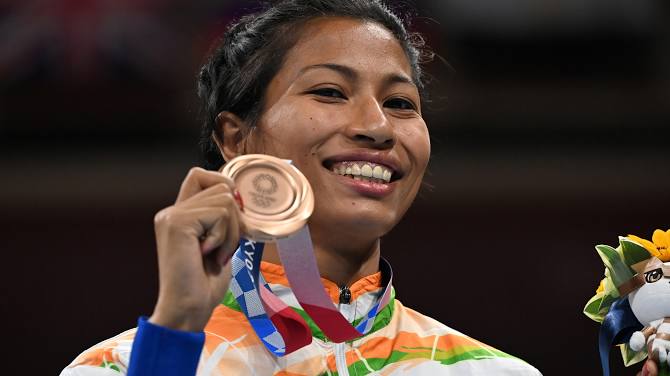
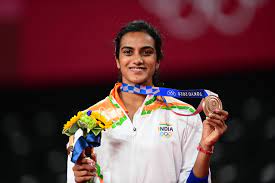
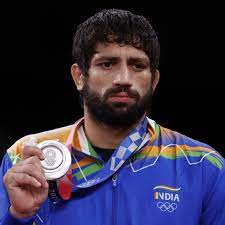
WHY INDIA STRUGGLES TO WIN MEDALS IN OLYMPIC ?

India is nation of 1.3 billion individuals yet we are aching for gold medals. Though little nations like France, Japan and Germany have more gold medals than our complete awards till now. What could be the explanation ? Do our people need potential or difficult work ? No, we have potential however we don’t utilize it.

Since our youth we are advised to do well in examinations, we scarcely have any games period in our school. Numerous nations have sports like gymnastic, volleyball and swimming in their school however we don’t have any. A few guardians don’t permit their children to play any games since they imagine that it could influence their scholarly.

In our nation sports like cricket are given more significance. Cricketers are viewed as God though scarcely anybody knows the names of our Hockey players which is our national sport. Cricket isn’t directed in Olympics. Simply 10 to 12 nations play cricket and we feel extraordinary in the wake of winning a World cup directed between those 12 nations. Cricket is a game which brought by Britishers while games like Kabaddi and wrestling are from India.

Tokyo Olympics Daily: India wins hockey bronze after years of  disappointment | Financial Times

Our Government additionally spend extremely less cash on sports. A portion of the players don’t have appropriate equipment. They additionally need to battle a great deal since some of them come from small towns. They need to confront analysis which the players of different nations don’t confront.

After this load of issues we anticipate that our country should win medals and assuming we don’t, we censure our players. We have been playing Olympics from 100 years while China from 69 years then additionally they have all out 250 gold medals though our all out awards are scarcely 40. Our players are not lacking anyplace they simply need our help and legitimate offices. Assuming we need our nation to more win medals in next Olympics then we should chip away at these issues.

Tokyo Olympics​: India celebrates wrestler Bajrang Punia's wrestling  bronze- The New Indian Express

THE ENGLISH NOVEL

FAMOUS NOVELS:

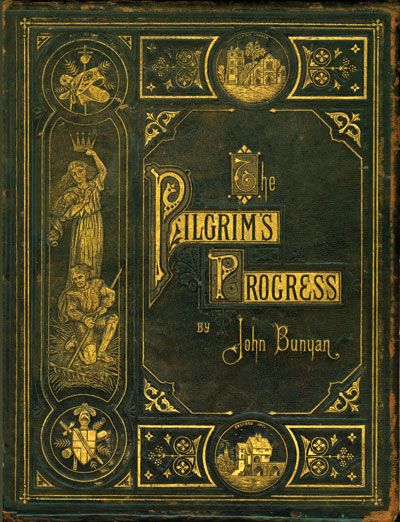
The novel proper in English literature began in the 18th century. But the rudiments of the novel could be seen even in Chaucer’s conception of the gallery of characters in The Canterbury Tales. Several Elizabethan writers wrote prose fiction which laid the foundations of the English novel. Among them the most important were John Lyly who wrote ‘Euphues’ and Nash, the author of ‘The unfortunate Traveller’. The first work was a didactic prose fiction in the picarseque tradition and the second was a realistic story of action. In 1678 John Bunyan’s ‘The Pilgrim’s Progress’ was published. In many respects this ranks as a novel. Then came Defoe’s ‘Robinson Crusoe’ and Swift’s ‘Gulliver’s Travels’. Several critics thinking that Robinson Crusoe was the first great novel in English literature thought it was up your fantasy. Swift’s work is considered to be the first great satiric expression.

HOW IT EVOLVED:

It was in the 18th century that the novel acquired its modern form. Samuel Richardson, the author of ‘Pamela’ is regarded as the originator of this form. His great novel was told in the form of letters. Richardson was concerned with moral themes in all his novels he was an adept in expressing human feelings and motives through character. Henry Fielding parodied Richardson’s Pamela in his novel ‘Joseph Andrews’. His ‘Tom Jones’ is a great novel in the picarseque tradition. He anticipated Dickens in his social criticism and satire. Two other important points in the field of the novel were Smollet who wrote ‘Roderick Random’, ‘Peregrine Pickle’ and three other novels and Sterne, the author of ‘Tristram Shandy’. Among the later novelist of the eighteenth century Goldsmith deserves mention as the author of ‘The vicar of wakefield’ the earlist domestic novel in English. The first great women novelists first Fanny Burney who published her ‘Evelina’ in 1778.

VARIOUS DEVELOPMENT:

The 19th century saw the development of the novel in various directions. The novel discarded the sensationalism of the 18th century Gothic writers like Horace Walpole and Picarseque tradition of Fielding and smollet. It entered a new era of artistic refinement, thematic liberalism and stylistic innovations. Jane austen’s domestic novels reached unprecedented artistic perfection. Her novels such as ‘Pride and Prejudice’ and ‘Emma’ dealt with a respectable country society and the presented a miniature world dominated by graceful social conventions and manners. Scott inaugurated the historical novel in which picarseque details were combined with romantic feelings for the past. Some of his famous novels are Waverley, Ivanhoe, The Talisman and Kenilworth. The tradition of the historical novel was carried on by a few others including Charles Reade, the author of ‘The Cloister’ and the ‘Hearth’. The two women novelist Charlotte Bronte and Emily Bronte were a striking contrast to Jane Austen. In the novels Jane Eyre and wuthering Heights respectively they made use of the elements of horror and soul-suffering to heighten a human story of violent passion.

CHARLES DICKENS’S CONTRIBUTION:

The most outstanding name in the Victorian novel is Charles Dickens. He developed more complex plots than his predecessors and introduced greater human interest, pathos and humour. Some of his novels contain autobiographical elements. He was supreme in depicting the life of London and he used in novel as a platform for social reform. His most famous novels are there with David Copperfield, Great Exceptions, Nicholas Nickleby and A Tale of two cities. Thackeray excelled in the novel of ideas. Vanity Fair is his masterpiece. He moralizers and his weapons for social criticism and reforms are irony and satire.

OTHER NOVELISTS:

George Eliot novels contains philosophical observations on religion, politics and morals. Her famous novels are Adam Bede, Middlemarch and Silas Marner. Another novelist who stands out as a satirist and was George Meredith. His novel such as ‘The Egoist’ and ‘The ordeal of Richard Feveral’ anticipate the psycho-analytical method that become so popular with the 20th century novelists. Pain and tragedy found their most artistic expression in the novels of Thomas Hardy. He took his characters from the peasantry of his native Wessex and portrayed the innermost soul of his characters with great insight, affection and even humour. some of his important novels are ‘Tess of the D’Urbervilles’, ‘The Return of the Native’ and ‘The Mayor of Casterbridge’.

STREAM OF CONSCIOUSNESS:

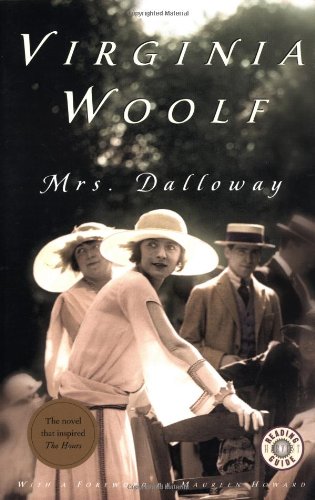
Stream of consciousness novel found its exponents in Virginia woolf and James Joyce. Novels like Virginia Woolf’s ‘Mrs dalloway’, ‘To the Lighthouse’ and James Joyce ‘ulysses’ inaugurated the trend of exploring the subconscious recesses of the human mind. Novelist such as D.H. Lawrence and Aldous Huxley introduced several innovations in theme and style. The most significant novels of D.H. Lawrence are ‘Sons and Lovers’, ‘Woman in Love’ and those of Huxley are ‘Brave New World’ and ‘Crome yellow’.

During the last fifty years the scope of the novel has widened to include almost every subject. It has become the most popular medium through which an author can reach the public. There have been as a host of good novelist during the last fifty years – E.M. Forster, Somerset Maugham, Charles Morgan, Graham Greene, Kingsly Amis, Iris Murdoch and William Golding.

The English novel is no more a drawing room entertainment address to the ladies as novelist George Moore once said.

CULTURE AND TRADITION OF WEST BENGAL

The culture of West Bengal is an Indian culture which has its roots in the Bengali literature, music, fine arts, drama and cinema. Different geographic regions of West Bengal have subtle as well as more pronounced variations between each other, with Darjeeling Himalayan hill region and Duars showing particularly different socio-cultural aspects.

West Bengal’s capital Kolkata—as the former capital of India—was the birthplace of modern Indian literary and artistic thought, and is referred to as the “cultural [or literary] capital of India”. The presence of paras, which are cluster of neighbourhoods that possess a strong sense of community, is characteristic of West Bengal. Typically, each para has its own community club and, on occasion, a playing field. Residents engage in addas, or leisurely chats, that often take the form of freestyle intellectual conversation. However, with the growth of apartments, expansion of neighbourhoods and rapid urbanization, this culture is on decline.

LITERATURE –

The Bengali language boasts a rich literary heritage, shared with neighbouring Bangladesh. West Bengal has a long tradition in folk literature, evidenced by the Charyapada, Mangalkavya, Shreekrishna Kirtana, Thakurmar Jhuli, and stories related to Gopal Bhar. In the nineteenth and twentieth century, Bengali literature was modernized in the works of authors such as Bankim Chandra Chattopadhyay, Michael Madhusudan Dutt, Rabindranath Tagore, Kazi Nazrul Islam, and Sharat Chandra Chattopadhyay. Coupled with social reforms led by Ram Mohan Roy, Swami Vivekananda, and others, this constituted a major part of the Bengal Renaissance. The middle and latter parts of the 20th century witnessed the arrival of post-modernism, as well as literary movements such as those espoused by the Kallol movement, hungryalists and the little magazines.

THEATRE AND FILMS –

West Bengal has a tradition of folk drama known as jatra. Kolkata is the home of the Bengali cinema industry, dubbed “Tollywood” for Tollygunj, where most of the state’s film studios are located. Its long tradition of art films includes globally acclaimed film directors such as Academy Award-winning director Satyajit Ray, Ritwik Ghatak, Mrinal Sen, Tapan Sinha, and contemporary directors such as Aparna Sen, Buddhadeb Dasgupta, Goutam Ghose, Koushik Ganguly, Rituparno Ghosh, Anjan Dutt, Kamaleswar Mukherjee, Sandip Ray.

MUSIC –

The Baul tradition is a unique heritage of Bengali folk music, which has also been influenced by regional music traditions. Other folk music forms include Kabigaan, Gombhira, Bhawaiya, kirtans, and Gajan festival music. Folk music in West Bengal is often accompanied by the ektara, a one-stringed instrument. West Bengal also has a heritage in North Indian classical music. The state is recognised for its appreciation of rabindrasangeet (songs written by Rabindranath Tagore) and Indian classical music. Nazrul Geeti is another classical music of Bengal, which is written and composed by poet Kazi Nazrul Islam. He was person in Bengal music who created the first Bengali ghazals.

Popular music genres include adhunik songs. Since the early 1990s, new genres have emerged, including one comprising alternative folk–rock Bengali bands. Another new style, jibonmukhi gaan (“songs about life”), is based on realism.[16] UNESCO selected The Rural Craft Hub of Bengal to showcase their artwork in Paris in 2015.

FESTIVAL AND CELEBRATIONS –

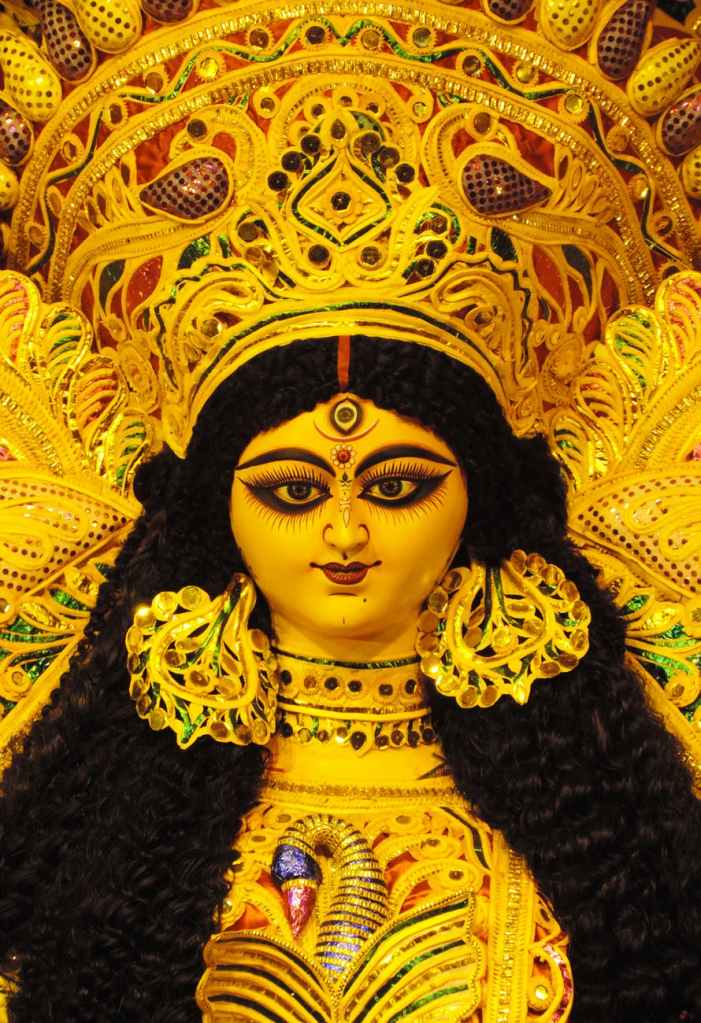
West Bengal is famous for its culture and festivals are an inevitable part of this culture. Some festivals are celebrated statewide, while others are local in nature. There are also various other village fairs and seasonal tribal festivals. Durga Puja is the biggest and most important festival of West Bengal, and it features colourful pandals, decorative idols of Hindu goddess Durga and her family, lighting decoration and immersion processions. Other major festivals are Kali Puja, Diwali, Holi, Saraswati Puja, Jagaddhatri Puja, Rath Jatra, Kojagori Lakshmi Puja, Vishwakarma Puja, Poush Parbon, Poila Boishakh, Christmas. Kolkata Book Fair, Kolkata International Film Festival and Dover Lane Music Festival are major annual cultural events of Kolkata, whereas Poush Mela, Ganga Sagar Mela, Jhapan are some of the major annual fairs of the state.