MEANING AND TYPES OF EATING DISORDERS

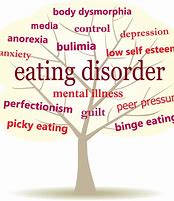
The Diagnostic and Statistical Manual of Mental Disorders (DSM) recognizes Eating Disorders as a serious mental health condition characterized by unhealthy dietary habits and an obsession with body image, weight and food. This can affect any gender but women have a higher risk of getting affected.

SYMPTOMS

  • Avoiding meals
  • Often checking oneself in the mirror
  • Self isolation. Not interacting with people where food is involved
  • Keeping a check on calories, carbs and content of food eaten
  • Often feeling tiresome
  • Episodes of fainting or feeling dizzy
  • Sudden increase or decrease in body weight
  • Low immunity

Causes

  • Low self esteem
  • Facing other mental disorders such as Depression, Anxiety, O.C.D, etc
  • Impulsivity
  • Strongly following a particular thinking
  • Experience of traumatic events such as bullying or peer pressure in the past
  • Body image dissatisfaction

TYPES OF EATING DISORDERS

PICA

It is a disorder characterized by craving and consumption of non-food materials. It is mostly found to affect children and pregnant women. Common cravings include chalk, clay, ice chips, glue, soap, etc. People suffering from PICA are found to have nutritional deficiency, stomach pain and damaged teeth. The most common causes may include autism, malnourishment, schizophrenia or pregnancy. Advice of a trained medical practitioner is essential to treat this disorder. A doctor may advice the patient to consume Vitamin supplements if the disorder is caused due to Vitamin deficiency. For a person suffering from other mental health disorders including Pica, the doctor may evaluate him/her accordingly and prescribe psychological therapy. For people having intellectual problems, Pica may last throughout their term of life, while for pregnant women and children, it may fade over a couple of months with accurate treatment.

ANOREXIA NERVOSA

This disorder leads people to obsessively think about their body weight and often see themselves as bulky. Patients follow self starvation and keep a high control over what they consume in order to lose as much weight as possible. They often end up having a life threatening low BMI (body mass index). They follow an intake of medicines and induce puking in order to minimise the calories. It is a complex emotionally stressful condition showing behaviors such as following an extreme exercise routine, constantly weighing themselves, paranoid thinking about weight gain, limiting the consumption of meals, feeling anxious or depressed and social isolation. Low confidence, experience of tragic events, societal pressure, etc may contribute in occurrence of Anorexia Nervosa. Medication, counselling with the family and peer, mineral supplements, dietary advice, cognitive behavioral therapy can help resolve the causative factors of Anorexia Nervosa.

NIGHT EATING SYNDROME

According to this syndrome, patients awaken during the nocturnal period and consume food for a period of more than twice a week. It can affect people from all genders. Night eating episodes or excess consumption of food after having an evening meal is associated with NES. It is quite similar to binge eating, wherein a person is unable to control the urge to eat a large amount of food in a short time span. Symptoms include consumption of more calories in the evening, lack of appetite in the morning, skipping breakfast for more than four mornings a week, misinterpretation that eating in such a manner will induce a better sleep, dull mood, etc. Treatment comprises of physiological methods such as maintenance of a healthy sleep habit, consumption of a healthy diet, gaining emotional support, regularly exercising . Application of other strategies like preventing a response to cravings, self monitoring and increasing consumption of food in the daytime is proven helpful.

ORTHOREXIA NERVOSA

People suffering from this disorder have a mania to ingest only healthy and pure food. This disorder makes the desire to eat the right kind of food so intense that, if one consumes unhealthy or imperfect kind of food, they end up fasting or punishing themselves for it. People suffering from it, will often find themselves surfing through food research sites, convincing themselves that the food they have eaten up was pure, being wary of sickness, fearing to eat food served at unknown places or by unknown people over the thoughts that it might not be according to their set standards, etc. This disorder may be a product of consumption of intoxicants, traumatic childhood dietary illness, fear of a developing a disease, etc.

Along with the above mentioned eating disorders, there are numerous other related disorders. According to statistical research, about 70 million people across the globe are diagnosed with an eating disorder once in their lifetime. Among these approximately 10,200 people die annually, due to an eating disorder. It erodes personal relationships, causes psychological stress and major physical complications. Hence, we can conclude that suffering from any eating disorder disrupts day to day living and thus needs a timely diagnosis, medical intervention and treatment.

Music a Therapy

Music a word which we all love to listen and we always love to listen music as well. Music relaxes our mind. Music listening to music makes us happy. Today everybody whenever they get little bit of their time they listen to music.

It has become an integral part of our life, we can’t even think of a life without music. We have music for every situation. It is scientifically proven that music has many good effects on our health. It helps us to relax from a busy life, it helps to change your mind when we are not feeling good, it booster moral to do something I.e., motivates us, it helps us to work out by giving us inspiration to do it, it helps to forget our tension etc.

Music has actually become a therapy today. Everyone have airpods, earphones, headphones which they use while working out to listen to music to have an inspiration to do it more fast or properly. We hear music in functions which makes us feel very happy with actually enhance is the party or function.

When we hear energetic music automatically feel like dancing which helps is to feel happy. And in Indian weddings we can’t even think of weddings without music and Nagin Dance too.

Whatever be your mode music is always there to motivate you to do better I just to make you happy and enjoy. It actually and has a thinking ability. So there are so many positive effects of listening music so, you do listen to music but, do take care of your ears too, don’t listen it in very high volume. And listen to positive music.

Yoga an Ancient way of Modern Living

Yoga an ancient Indian practice of balancing your body and mind. This is the actual modern way of living as in the stressful life we have forgot in the mean essence of life. Yoga helps us to be fit mentally as well as physically.

Now the whole world has realised the power of yoga. Even the UN has announced 21st june as the international yoga day. Now the whole world is doing yoga and are actually paralyzing the benefits of it.

It is scientifically proven that doing yoga helps you to calm your blood pressure, anxiety, stress and is capable of curing any diseases if done in right manner. It makes your body more flexible and yoga is actually a way of living.

It is really proud moment for India as an Indian ancient practice is now valued in the whole world and is given the Prestige which it deserves. One of the best thing of doing yoga is that it doesn’t have any side effect. Anyone can do it it doesn’t need any prior fitness or anything you can start with simple yoga.

Just if you introduce your car in your daily routine even for 15 minutes it will really give good benefits to your health which you will realise. Yoga has actually become a modern science. So if you are doing yoga please do it on a regular basis and if you are not doing your please start doing it as it has really very good effects on your mental as well as Physical health.

Gandhi Jayanti

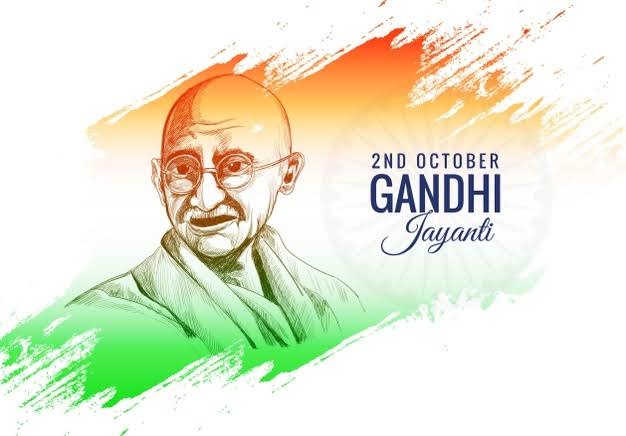
2nd October, Gandhi Jayanti ,a date which needs no introduction. Father of our nation Mohandas Karamchand Gandhi was born on this day. He was one of the strongest pillar for India during in struggle for freedom from British era.

He was very different from other freedom fighters. He believed in the concept of nonviolence and self sufficiency. His personality has impressed many leaders around the world like Martin Luther King Jr, Nelson Mandela, Einstein and even the Britishers one of those.

He was a gentleman who gained law degree in London and came back to the India and I was so touched by the living conditions of the people here that he decided to be one of them. He wore a dhoti and thin cloth on upper body.

He was a man of principle, in his aashram he did all of his work on his own and teach the same lesson to his followers. He was a tiny man but having a great speed. He walked miles on his foot that too with great speed, matching his speed was not easy.

He always live for his countrymen and tried to solve their problems and dedicated whole of his life for the country. He fought the fight of freedom with never compromising his principles. That’s the reason he was given the title of ‘Father of India’.

WHY IS PLANNING IMPORTANT IN BUSINESS?

 Planning is
a major part of the business. In fact, it is the first and foremost step by the
organization towards the achievement of their goal. In terms of business, it
basically refers to the process of setting up of objectives in a given time period
and analyzing all of the alternatives possible to achieve those objectives and
then finally, choosing the correct method to do so.

We can tell
by its definition itself that it is a crucial part of the business that cannot
be ignored. Let’s understand in detail exactly how important planning actually
is from a business’ perspective.


1.PROVIDES
DIRECTION

If we have
already stated in advance that what our objectives are and how the work is
supposed to be done, then it will provide a direction to us. Planning makes
sure that all the objectives are clear so that everybody knows what action is
to be taken and in which direction. All the employees are aware what the
organization has to achieve and what they must do in order to complete those
achievements. If there won’t be any planning done beforehand, the employs would
be confused and will work in different directions which would lead to nothing
but chaos.


2.REDUCES
UNCERTAINITY

Planning is
an activity that allows the organization to look ahead and anticipate the
uncertain events and risks that may take place. If we have a plan in advance,
there are less chances of the organization facing a loss in an uncertain event.
Therefore, planning anticipates the future risks and develops possible
solutions for it beforehand. Although it must be noted that planning only
anticipates the upcoming risks and does not eliminate them. So, it won’t help
you to avoid those problems but will provide a way to make sure you are
affected the least.


3.REDUCES
USELESS ACTIVITIES

Planning
makes sure that each and every department in the organization knows their goal
and the employs know what they are doing. There is a clarity in thoughts and
actions of everyone which helps to carry out the operations smoothly without
any confusion. Due to this, there is very low chances of redundant activities
taking place and wasting the time and resources. It becomes easier to detect
the inefficient work and eliminate them.


4.PROMOTES
CREATIVE IDEAS

Planning is
all about thinking in advance about what to do and how to do it and therefore,
new innovative and creative ideas can take place and provide everyone with a
solid plan. It is closely linked to creativity.


5.HELPS IN
DECSIONS

It helps the
organization to look ahead and gives them a chance to protect themselves
against the uncertain events and prepare with an action plan for it. For this,
one must choose the correct plan from among the various possible alternatives
available. Here, they must look and evaluate both, the positive as well as the negative
aspects of all the alternative choices because they need to select the one
which is the most feasible and profitable. Therefore, planning helps in making
efficient and fully developed decisions.


Instagram Business And Its Secrets

World is a five letter word holding entire adventures within it. Instagram is just another world and it is flourishing as one of the top social media platforms. A gallery of smiles, luxurious outings, good moments and pretentious good moments of a million of people, the application also serves as the stage for every artist and talent in the hidden alleys by provided them the boost to come out and display their capabilities and business potential.
The application, often criticized for its contribution to building up toxic body images, beauty standards, luxurious fantasies, toxic egoism, teen inferiority complex and social media addiction is undoubtedly filled with positivity if one tries to find it in the right places.

How did instagram became a brewing pot of new businesses?

During first few months of the covid outbreak, the shopping industry had suffered a huge loss. Offline shopping was out of reach and non essential items were barred from delivery. The online applications served the needs of the people and therefore, in the absence of any other option, online platforms became the only choice for the consumers.
However, this later became a more permanent and prevalent trend with the gradual relaxation on the non essential items. With the huge choices of options available for the people, going out was not being missed. Low prices, new items, discounts and quick delivery made it convenient for almost every household to manage their expenses.

When all of it was happening, somewhere in each home, social media platforms became the major source of social interaction. Online classes,webinars,video calls, vent posts, counseling, support, emotion and mental health management campaigns were on their peak (and still are). The main shift which occurred was rooted to one main cause. If social interaction, counseling could be carried out on social media, then why not shopping?!
Instagram business owners are well aware of how diverse and creative the instagram is as a potential business platform. The creative minds used the time to present an entire online bazaar for the users with the most unique, well designed and fresh items.
According to a research conducted by Statistica,14% of the people had to say that their choice of product was only available online which made them choose online over offline.

Instagram is an application which is often used by the people to derive inspiration and ideas . People follow celebrities and influencers for their styles, writers for their writings, artists for their art, designers for their unique designs, stationary addicts for their journal decoration, interior decorators for their work and the list goes on. Instagram runs on visually rich, aesthetic, luxurious, attractive and satisfying images. Every shopping site runs on this visual satisfaction but however, the trend has been going on in instagram not long after its launch.

How Can A Business Establish Itself On Instagram?

•Whenever anyone scrolls through google to search for instagram business tactics, VISUALLY AESTHETIC IMAGES, pops up on the lists without fail. The more creative your post is, the more audience you get. Instagram is all about the glitters and what makes the businesses successful is that, they turn the glitters into gold. Catchy quotes, glimpse of your products, interesting information on it and right editing can make wonders the business owner.
If the person is aware of how much demand his product can receive on the platform, he will be presenting it in best way possible.
For example: If a person wants to start with a customized clothing business, he has to be aware of the trending styles and material. Satin dresses, for example, are doing rounds all over instagram


Interaction is another key. Unlike typical online shopping websites where the product is all which matters, instagram users have a keen interest on knowing more about a business owner. Especially if the business is a unique handmade business of any sort . The more reels and posts you make displaying the process of making products, packaging or even having causal conversations by going live, increases your chances of gaining a bigger audience. Interacting with people in the comment section and sending direct messages to new followers, asking them to check out your page are some other good options.

#Hashtags. The right hashtags help you to reach your targeted audience on instagram.


Consistency Is The Key to the business growth. It applies to everything we do in life afterall. Online businesses have grown so large in numbers that the competition is unimaginable. If you have the good product, someone has a better product of the same kind. If you have great ideas, someone has greater ideas and consistent actions to make it known to the people. But, how will you survive in this race? Its simple. Its consistency. Know your ideas and work on it everyday. If you have no new collection, interact with your audience or just share a picture of your work space. Consistency on your balance of ideas and actions make success a reality . Dedicating time to your business everyday assists you largely in the growth of your online business.

Instagram is often perceived with a cynical perspective due to sharp difference in reality and the visuals which are presented on the platform. Most of the people undoubtedly try to be the perfectionist in order to sell their ideas or themselves in exchange of likes, followers and views. However, everything can be utilized if a positive approach is adopted towards it. Same goes for instagram.

Evolution of motorcars mechanism

It is difficult, to imagine a world without the motorcar. Back in the 1700s, some of the very first cars were powered by stream engines. When German engineer Karl Benz drove a motorcar tricycle I 1885 and fellow Germans Gottlieb Daimler and Wilhelm Maybach converted a horse down carriage into a four wheeled motorcar in august 1886, none of them could have imagined the effects of their invention. Benz recognized the great potential of petrol as a fuel. His three wheeled car had a top speed of just ten miles (16 km) per hour with its four-stroke, one cylinder engine. After receiving his patent in January 1886, he began selling the Benz Velo, but the public doubted its reliability. Benz’s wife Bertha had a brilliant idea to advertise the new car. In 1886 she took it on a 60 mile (100 km) trip from Mannheim to near Stuttgart. Despite having to push the car up hills, the success of the journey proved to a skeptical public that this was a reliable mode of transport.

Daimler and Maybach did not produce commercially feasible cars until 1889. Initially the German inventions did not meet with much demand, and it was French companies like Panhard at Levassor that redesigned and popularized the automobile. In 1926 Benz’s company merged to form the Daimler Benz company. Benz had left his company in 906 and, remarkably, he and Daimler never met. Due to higher incomes and cheaper, mass produced cars, the United States led in terms of motorization for much of the twentieth century. This kind of movement has, however, come at a cost. Some 25 million people are estimation to have died in car accidents worldwide during the twentieth century. Climate changing exhaust gases and suburban sprawl are but two more of the consequences of a heavy reliance on the automobile.

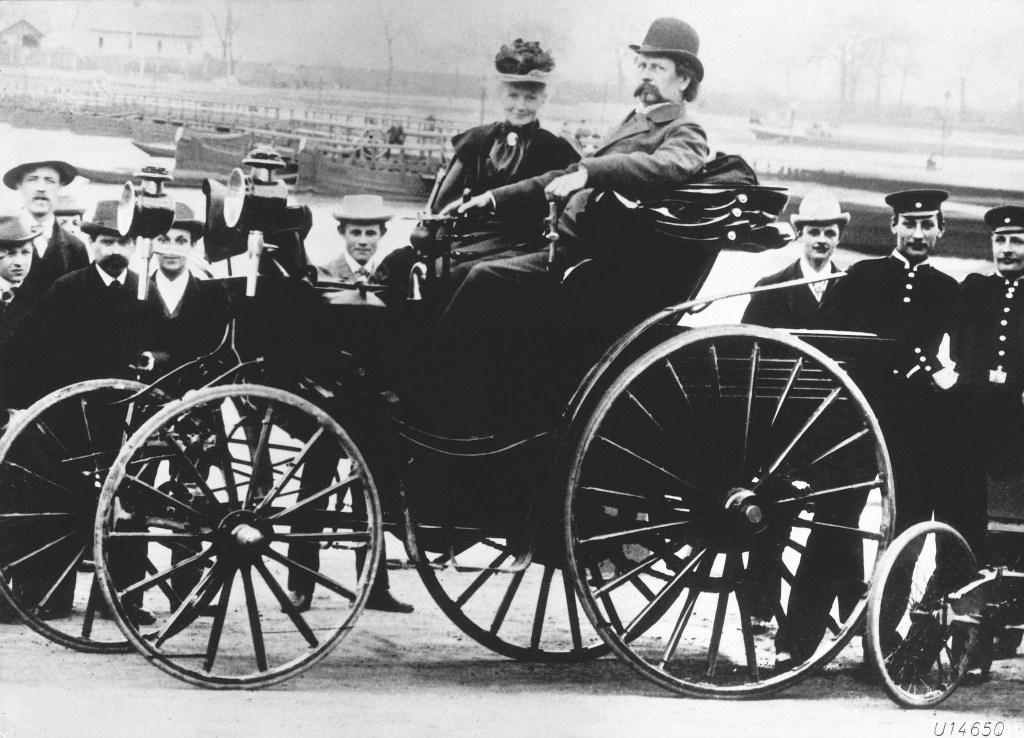
Karl Benz with his wife Bertha, the first motor car (1885)

Invention of the clutch

Almost all historians agree that clutch was developed in Germany in the 1880s. Daimler met Maybach while they were working for Nikolaus Otto, the inventor of the internal combustion engine. In 1882 the two set up their own company, and from 1885 to 1886 they built a four-wheeled vehicle with a petrol engine and multiple gears. The gears were external, however, and engaged by winding belts over pulleys to drive each selected gear. In 1889, they developed a closed four- speed gearbox and a friction clutch to powers the gears, this car was the first to be marketed by the Daimler motor campy in 1890. Without a clutch, if the car engine is running the wheels keep turning. For the car to stop without stalling, the wheels and engine must be separated by a clutch. A friction clutch consists of a flywheel mounted to engine side. The clutch originates from the drive shaft and is a large metal plate covered with a frictional material. When the flywheel and clutch make contract, power is then transmitted to the wheels.

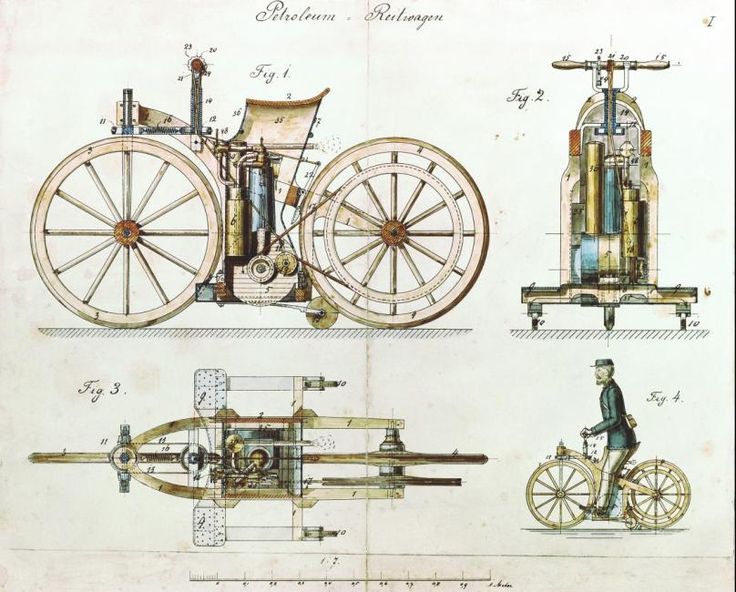
Patent drawings of first motorcar – Karl Benz

Gears in Motorcars

Karl Benz was the first to add a second gear to his machine and also invented the gear shift to transfer between the two. The suggestion for this additional gear came from Benz’s wife, Bertha, who drove the three-wheeled Motorwagen 65 miles from Mannheim to Pforzheim – the first long distance automobile trip. The gears allow the engine to the maintained at its most efficient rpm while altering the relative speed of the drive shaft to the wheels. Gears originally required double clutching, where the clutch had to be depressed to disengage the first gear from the drive shaft, and then released to allow the correct rpm for the new gear to be selected. The clutch was then pressed again to engage the drives shaft with the new gear. Modern cars use synchronized which use friction to match the speeds of the new gear and he shaft before the teeth of the gears engage, meaning that the clutch only needs to be presses once.

“One thing I feel most passionately about: love of invention will never die” – Karl Benz

The Refugees

“Taking Mum’s hand, I whispered ‘Are we really safe, here?’ ”

Alwyn Evans (Walk in my Shoes)

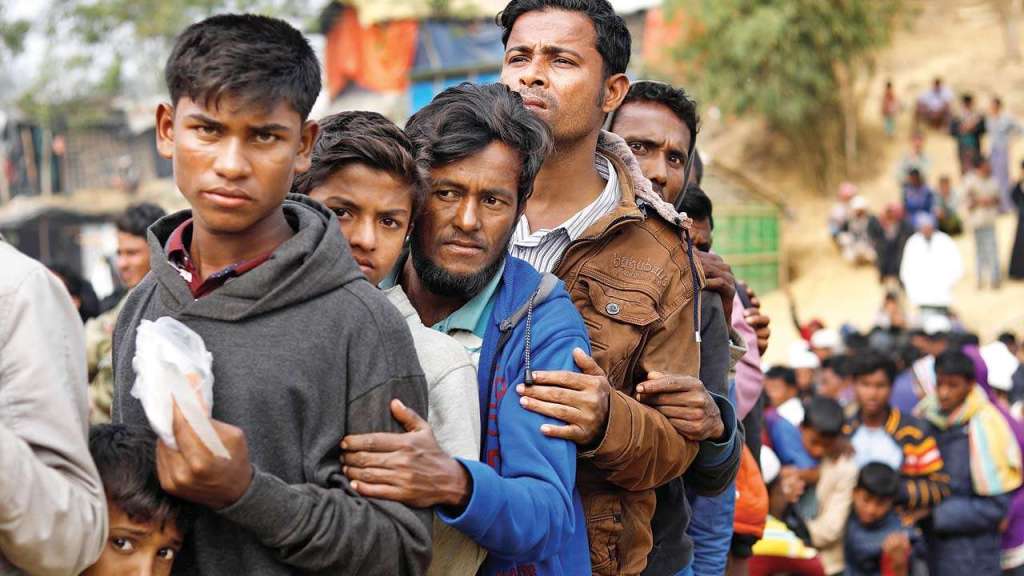
Everyone has a right to make his/ her life happy and fruitful but the refugees have to pay a high price for this quality life. The refugees are the most affected people, in today’s globalised world. Refugees are people who are outside their home country because of their race, religion, nationality, membership of a particular social group or political opinion. Displacement is a long, lasting reality for most refugees. We need to bring them out of the situation which they face at borders of different countries. We all know that refugees deserve much better treatment on the borders of the countries than they are able to get. Migration has long been part of our human history, but the current Afghan crisis has shown that countries must accept refugees into their sovereign states. Although we all know the countries with refugees have special security but still we are not ready to take responsibility of human. All the countries know the process to bring refugees or displaced people to a stable life in their country. But still one fact is that we are not ready for this responsibility. Why? No one knows, but what all we should know is the way to make refugees’ life stable as readily as possible. Countries have potential to make life better and even best for refugees but the problem is that we are not taking refugees a collective responsibility. But still there are some super ways to help refugees collectively (by different countries).

All the countries should investigate trafficking gangs who exploit refuges and migrants, and put people’s safety above all. Governments also need to stop blaming refugees and migrants for economic and social problems. Even if governments allow refugees to enter their country, they should not treat them as worthless creatures as they are intruders. Opening up safe routes for refugees is one important solution to the problem. When people are assured about their security, they too start feeling safe though they have a lot of crisis in their country related to their country related to their health and housing, yet they have faith in those country members who by giving equal rights and opportunities assure them that they will definitely be able to live comfortable and happy life. Resettlement is vital solution for the most refugees. And whether they travel by land, or by sea, they should be allowed to cross borders, with or without travel documents. Though countries are not forced to make refugees a part of them, still if they allow some of them to enter, they would definitely be one of the countries who appreciate their courage to come out of drastic situations just to ensure good future on their own basis but what all they want is some support of the country and its permission to enter that particular country.

As we all know women are essential part of a family and a nation. The condition of migrant and displayed women has become the worst. Refugee women, who lose their homes, families, husbands, have to face some very devastating situations during migration. They have to go through different critical situations of rape, sexual and physical harassment and violence. Even the girls of five to twelve years of age have to face such unfortunate incidents which haunt them throughout their lives. Women are more required to migrate than men as they have to face more violence than men. Single parent with her children needs to be concerned more. When females try to cross the borders of the other countries, they are locked with men who are unknown to them, which make the situation worse than ever.

All these incidents of misfortune, violence and harassment can be stopped if we all take a collective step against them countries should accept women as their part of the nation. They should make efforts to make women safe, and secure from these kinds of situations. All the countries should make more migration policies for women and children. For women and children, different routes for migration should be made. If their cases are pending, they should be allowed to live in quarters but not with men of other families. If women refugees are being oppressed, their cases should be recognized and they should be given justice. For children, policies like keeping them away from gang exploiters should be formed. Children who get separated from their parents should be kept in safe places. Special security forces should be there to safeguard children and women. So it is not important that whatever we do alone could gain better results, things done collectively are more beneficial for people who are real heroes, who leave their home and nation for betterment, who we call victims of misfortune, “THE REFUGEES”.

About that author- Rudyard Kipling

Rudyard Kipling, a journalist, short-story writer, poet, and novelist who is best known among us for his novel the jungle book, was an eminent  20th century writer. Kipling became the youngest person and till this date is the youngest person to receive the award in 1907, at the age of 41.

Life  

Rudyard Kipling was born in 1865, in Mumbai, India, which was a British colony during that time. He was born to John Lockwood Kipling and Alice Kipling. His father was an artist and an architect who used to work at an art school in Mumbai.

He spent his early childhood in India as an Anglo-Indian and at the age of 6 went to Britain and was vaguely perplexed with his identity, a topic he lightly touches on in his later work. In Britain, Kipling did not live with his parents; instead they left both Rudyard and his younger sister with a foster family. During this time, the couple that were looking after the siblings did not treat him very well. In his autobiography Something of Myself for My Friends Known and Unknown, which was published posthumously , Kipling looks back at this period of  his life with dread. Kipling felt abandoned and isolated throughout his childhood. First he was abandoned by his parents and then he was neglected in his foster home too.

In 1877 Kipling’s mother returned to England and pulled her children out of that foster home. The very next year, he was sent to the United Services College in Devon, where students would be prepared for the army. 

Career 

Towards the end of the school, Kipling dropped out as his family did not have enough money to send him to college so instead his father secured a job for him in India and worked as an editor and a journalist for a newspaper. This was the beginning of his journalistic career. It was in India that Kipling started to publish his collection of short stories. He published Plain Tales from the Hills in 1888 and he published 6 volumes of short stories which included soldiers Three, The Phantom Rickshaw; between 1887 and 1889. By the end of this decade, Kipling gained so much popularity that he was being considered one of the best prose writers of his time.

He left India in 1889 and went to San Francisco during this journey he met The Adventures of Tom Sawyer writer Mark Twain.

In 1892, he married Caroline Balestier and the couple lived in America before moving to England. In this decade Kipling he produced work that he is most known for, like  The Light That Failed in 1891, The Jungle Book in 1894, The Seven Seas  in 1896, a collection of poems,  Captains Courageous in 1897.

In 1907, at the age of 41, he became the youngest and the first Englishman to receive the Nobel Prize for literature. Kipling is thought to be an imperialist; his ideology at that time and even during this time is not accepted by people  and has been long criticized for the same. However, he was a very popular writer of his time.

About that author- Charles Bukowski

“We are here to laugh at the odds and live our lives so well that Death will tremble to take us.”

This very famous quote by Charles Bukowski gives us an idea about the kind of individual he was. He was the kind of poet who wrote whatever was in his heart, whenever it was. He always spoke about a part of himself that exists inside us all but we choose to silence it. Bukowski, afraid of that part, still chooses to give it a voice through his poems.

Life 

Charles Bukowski was a German-American poet, writer known for the violent imagery he tries to depict with his writing. Bukowski left his home in Los Angeles to move to New York to pursue writing. In New York he took up a lot of odd jobs so that he could continue to write, but he did not see much success during that period of his life.

Career 

Charles Bukowski published his first story, titled  “Aftermath of a Lengthy Rejection Slip” in 1944, at the age of 24 in a magazine. He published another story titled “20 Tanks from Kasseldown” about 2 years later in 1946, but unfortunately he failed to make a breakthrough and was left disappointed. Bukowski wrote a lot, was published too little and received even less recognition. This led him to quit writing or rather take a break from writing in the year 1946.

Now, one could say that Bukowski did not do anything during his hiatus but I disagree. During these years Bukowski gathered material for his future work. He moved back to Los Angeles and lived the life of a hippie and wandered around the country staying in cheap places. He would travel. drink alcohol and observe. The observations are talked about in his later published books.

Bukowski talked about the harsh and crude reality of existence and is known for his raw and bare writing.

After a hiatus of almost a decade, Bukowski got back to writing. In the mid 1950s he was hospitalized for a fatal bleeding ulcer. After being released from the hospital he started to write poetry, at the age of 35. Charles Bukowski, in 1957 married Barbara Frye, who later died in India. This incident resulted in Bukowski going back to alcohol and writing poetry.

By this time, Bukowski’s poems were published in literary magazines. But still he was unable to see the success he very much deserved. In the 1960s, he published a lot of poems and short stories and only tasted success in his 50s.

Bukowski spent more than half of his life writing and not seeing any considerable amount of success. He did not give up, in fact there was no point in him giving up because he was not one of the writers who wrote to achieve success, he wrote because he was extraordinarily in love with his art. He did not try to be a writer, in fact he didn’t try to be anything but true to himself and his work. He did not force himself to write, evident by his decade long hiatus. He thought that there had been too many writers in the past who forced themselves to try, whereas in his opinion if you truly love an art form you wouldn’t have to try, it would come to the artist. In his opinion if you had to try to be or do something you shouldn’t try at all. Even his grave has the words “don’t try” engraved on it.

He died in 1994, due to leukemia after living an adventurous and fulfiled life. 

Has Democracy Expired?

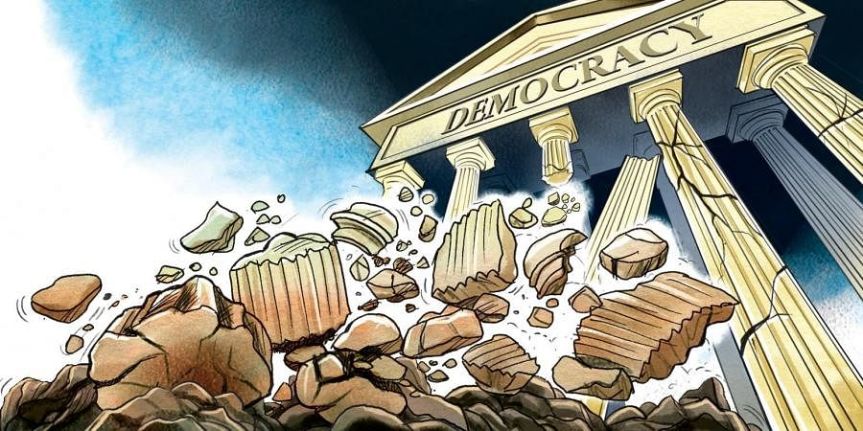
Democracy, or rule by the people, has always been a complex concept. There have been freedom struggles, revolutions, and even wars to protect it. But nothing is permanent. Humankind has often taken democracy for granted and overestimated its permanence. As J.S Mill put it, “The fatal tendency of mankind to leave off thinking about a thing when it is no longer doubtful, is the cause of half their errors”. It wouldn’t be the first time an ostensibly powerful institution ended after years of dominance. When thinking about the end of a monarchy, guillotines and cake are few images that come to mind. 

Critiques of democracy note that voter ignorance and slow decision making often cause problems in a democracy. Furthermore, A democratically elected government earns its legitimacy because a majority of people, not all people, vote for it. Thus, it reflects the will of the majority and not everybody. This creates the possibility of the “tyranny of the majority”. Plato went so far as to assert that democracy is the science of manipulating people and it leads to the rule of tyrants. 

India’s “democratic experiment”, which began after we gained independence, has been anything but a smooth journey. Nevertheless, despite attacks on our democracy, such as the National Emergency of 1975, democracy has always protected our people. But now, democracy itself is in danger. 

We often make the mistake of ennobling free and fair elections as the only necessary criteria for a successful democracy. This is far from the truth. This article is not an attempt to undermine the fact that the current government was democratically elected, instead, it intends to showcase the harm a government elected by 38% of the population and a rising resentment of democracy amongst the people can cause. As we shall see, India’s democratic nature has been conspicuously declining for a while. 

Freedom House, an American Think Tank, gave India a score of 67/100 in its 2021 report and characterized India as a “partly free” country. A score of 34/40 in the political rights section confirms the purity 0f our elections. However, a score of 33/60 in the civil liberties section emblazons the potency of this government’s attack on democracy. According to the report, events such as the violence during the CAA protests, the misuse of sedition laws, the significant hardships that migrant workers had to endure during the lockdown, the baseless scapegoating of Muslims as super-spreaders of Covid-19, and the Babri Masjid Verdict contributed to this score. India was considered a “free” country as recently as 2020, with a score of 71/100. The 2021 score is also lower than those of 2019 (75/100) and 2018 (77/100), showing that the strength of our democracy is depleting. The last time the Freedom House considered India as partly free was in 1997, possibly because of the instability in Parliament at that time. 

Another report by the V-Dem Institute in Sweden described India as an “electoral autocracy”. According to the report, India belonged to the “EA+” category, signifying that it could also belong to the “closed autocracy” category. The reasons for this score include the curtailment of freedom of media, academia, and civil society; an increase in censorship; the misuse of sedition, defamation, and counter-terrorism laws, especially the Unlawful Activities Prevention Act (UAPA) to harass, intimidate, and imprison critics and opponents; the Citizenship Amendment Act (CAA); and the use the Foreign Contributions Regulation Act (FCRA) to restrict the entry, exit and functioning of Civil Society Organisations (CSO) and constrain the use of foreign contributions to NGOs within India. The V-Dem Institute reports have described India as an “electoral democracy” in the 2020, 2019, and 2018 reports. 

Sadly, the government’s response to these reports has been vituperative. They decided to deny the validity of these reports instead of countering their assertions. This approach to criticism and dissidence is not limited to foreign entities. Indian dissenters, whether they are farmers, students, members of opposition parties, or even ordinary citizens, are punitively called “anti-nationals” and even terrorists for criticizing the government. In an increasingly globalized world, it is accepted that opinions may be formed on issues beyond one’s national borders. The government’s disrespect and disregard for reputable news agencies, such as The New York Times and The Australian, is appalling. The government prefers listening to fraudulent news agencies, such as The Daily Guardian and The Australia Today, that were made by staunch sycophants. The government must remember that “You measure a democracy by the freedom it gives its dissidents, not the freedom it gives its assimilated conformists.” (Abbie Hoffman)

The symbol of our democracy, the parliament, has also witnessed numerous attempts to undermine our democracy. The Question Hour, which is a tool used to hold the ruling party accountable, was removed for the Monsoon session of Parliament. Considering that this was the first session of parliament since the pandemic began, the removal of this accountability mechanism is untenable. The ruling party used this session to push through the contentious farm bills. If these bills were truly what the entire nation needed, the government should have adhered to the democratic process and allowed a division vote when members of the opposition repeatedly requested for one. A voice vote may be quicker, but it undermines the voice of the opposition, which is a pillar of democracy. 

These farm bills join a larger list of controversial bills, including the bill that abrogated Jammu and Kashmir’s special status, the Citizenship Amendment Bill, and amendments to the Unlawful Activities (Prevention) Act, that did not pass motions to be sent to select committees for further parliamentary scrutiny. These committees provide a forum for feedback from various stakeholders and act as a consensus-building platform across political parties. In the 16th Lok Sabha (2014-19), 25% of the Bills were referred to these committees, which was much lower than the 71% and 60% during the UPA II and UPA I regimes respectively. Since 2020 began, out of the 44 bills introduced in parliament, no bill has been referred to the select committee. Unlike the GST Council, these standing committees weren’t allowed to meet virtually during the pandemic, despite numerous requests from opposition parties. 

From the exploitation of anti-defection laws; the misuse of ordinances; the creation of the opaque PM-CARES Fund; the oligarchical capture of democratic institutions such as the Central Information Commission, Reserve Bank of India, and even the Election Commission and finally to the recent Information Technology (Intermediary Guidelines and Digital Media Ethics Code) Rules, 2021 that could undermine free expression and privacy for internet users in India, the recent attacks to our democracy have been terrifying. Criticism, accountability, and independent institutions have all been seriously diminished. The Covid-19 pandemic appears to have derailed all democratic processes, except elections. 

At this time we must ask ourselves, do we still value our democracy? And most importantly, are we willing to fight for it together? I fear that the answer to both these questions is no and it has been for a long time. 

In 2017, two well-reputed political science scholars, Roberto Foa and Yascha Mounk published a paper titled “The Signs of Deconsolidation” that showed that over 70% of Indian respondents wished for a “strong leader who does not have to bother with elections”. This is a higher percentage than that of the USA (30%), Nigeria (45%), Turkey (58%), and even Pakistan (62%). This indicates that Indians are more willing to express support for authoritarian alternatives to democracy. 

This preference for the undemocratisation of India is further highlighted by recent studies conducted by the Pew Research Centre. Their 2017 report on democracy showed that 55% of Indian respondents felt that “a system in which a strong leader can make decisions without interference from parliament or the courts” would be a “totally good” way of governing this country. Conversely, only 17% of respondents felt that this would be “very bad” and 28% of them felt that this would be “totally bad”. Moreover, their 2020 report showed that 70% of Indian respondents were satisfied with the way that democracy worked in India. This is a significant rise compared to the 54% of respondents that were satisfied with it as per the 2019 report. The 2020 report also showed that 26% were dissatisfied with it, which is lower than the 33% in 2019. 

Undoubtedly, concluding that democracy has no place in our future would be incongruously prescient, but a growing intolerance for democracy is indubitable. People prefer quick decision making over the slow democratic process that requires consensus and deliberation. People would rather see tangible changes made by decree than wait for the democratic process. While the subversion of the democratic process may seem harmless to the current ruling party and those who espouse their ideology, permanent harm to our democracy ought to be denounced. The ubiquity of democracy should not depend on any political party’s ideology. The end of democracy would bring about the epoch of a procrustean India and end the plurality, secularism, and diversity that we have considered primordial for decades. At the rate our democracy is eroding, impassivity could mean that we’re the last generation of Indians to live in a true liberal democracy. 

The next opportunity for voters to actively resist this attack on our democracy may seem too far away. However, the 2024 general elections are preceded by elections in 16 states. My hope is that the control, division, and hatred promulgated by our current leaders, will ultimately consume them. Any reduction in their mandate will benefit our democracy. And if there is one thing that authoritarians cannot handle, it is the feeling of losing control. 

Democracy is not a plant that grows everywhere but hopefully, it can re-grow in our great nation. 

DU Cut Off List 2021 : Top colleges seek 100% marks for 10 courses

DU 1st Cut Off List 2021, Delhi University UG Admissions Cut Off List Live Updates: Based on the cut-off students will now have to select courses and colleges they are eligible for at du.ac.in and fill options.Delhi University UG Admission Cut Off Live Updates: The University of Delhi (DU) today released the first-cut off list for undergraduate (UG) courses. Aspirants can check the course-wise cut-offs for different colleges at du.ac.in.

The cut-offs this year are as high as 100 per cent in many colleges for various courses. This year, over 70,000 students have scored more than 95 per cent in CBSE class 12 board exams this time. Based on the cut-off students will now have to select courses and colleges they are eligible for at du.ac.in and fill options.

The admission process against the first list will be completed on October 8, which will be the last date for candidates to make their payments. The entire admission process will be conducted online.

While the first cut-off list will be released on October 1, candidates can begin applying for admission to colleges against this list between October 4 and October 6, and colleges have to complete approvals for these admissions before October 7 evening.

Last year, the first cut-off had gone as high as 100 per cent. Lady Shri Ram College for Women offered admission to BA (H) Economics, BA (H) Political Science, and BA (H) Psychology programmes to students who got 100 per cent as their best of four subjects score.

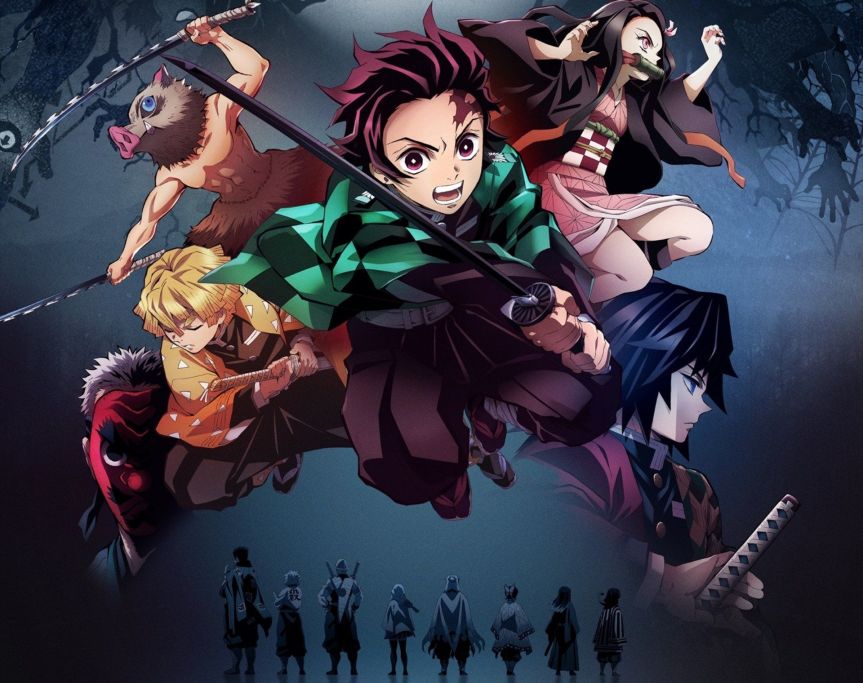
DEMON SLAYER SEASON 2 IS HERE !!

The much awaited season 2 of Kimetsu No yaiba or Demon slayer is finally set to arrive on December 5th 2021, but before the anime returns it will get a brief revisit of the Mugen train Arc which will be split into 7 episodes airing from October 10th with a complete original first episode , new cuts and background score which focuses on the story of Rengoku Kyojuro aka the flame hashira. This set of new episodes will not exactly be what viewers already saw in Mugen train movie but rather will try to seamlessly connect the bridge between season 1 and season 2. As for Demon slayer’s actual new season, it will start off with an hour long special episode, which would premiere on 5th December. The season would start with manga’s Entertainment District Arc, which will introduce the series’ latest major Demon Daki.

If you haven’t already watched the Mugen train movie, it is available on online streaming platforms like Hulu, Crunchyroll and Funimation and the season 1 is available on netflix It is yet to be known which online platform would stream season 2 .