Communal Harmony

By – Supriya

“A house divided against itself cannot stand together” is an old saying and it holds true in the present context of increasing communal disharmony in the society as these dividing forces weaken and mutilate the society.The culture , civilization and tradition of India is approximately 12000 years old. The spirit of tolerance and assimilation has made it possible for our civilization to survive the test of time. But with passage of time, the growing attachment to one’s own ethnic, religious, racial or cultural group rather than being a part of a wider circle of the entire social milieu, has posed one of the gravest problems of modern times. Somehow with the increase in science and technology, the man who should have opened up to assimilation and integration has receded into his own cells and has become more conservative and protective towards his own culture and community. Fear, suspicion and insecurity towards other communities have given rise to hatred , which acts as fuel feeding the flame of communalism. Communal harmony can be achieved by making the people realise the significance  of oneness. People should be awakened to the fact that the differences of ethnic and religious origins have no foundations at all and these feelings should be discouraged if a nation has to survive , and on a larger scale if humanity has to survive. Roses alone cannot make a garden . It is the variety of different coloured and perfumed flowers that lends beauty to a garden. Yet, all flowers have their own essence. Fostering the spirit of brotherhood and mutual trust is the most challenging task that our country has to accomplish . We have to make every possible effort to eradicate vestiges of communal hatred and prejudice . One way of accomplishing this huge task in India is by promoting scientific temperament and smoothing the cobwebs of caste and religious prejudices. We also need to encourage the educated strata to continually participate in the work of social integration by educating the masses. It is the illiterate masses that fall an easy victims to the anti – social forces as they are gullible and in turn render the entire society vulnerable . India has had a long and proud history of mutual co – operation and trust . People belonging to various ethnic groups, races , religions, creed , cultures have come and settled on this land and since centuries have made it their home. But the divide and rule policy that has taken its roots deeper than what the colonial masters could have imagined , shows its predatory signs time and again.These seeds of communal divide, sown to meet short term selfish political ends , are now deep – rooted and threatening to uproot the century – old harmony and unity of the country. This hatred was at its worst during the I’ll – fated partition of the country. The articulation of the two – nation theory and the creation of the state of Pakistan implied that the enmity between the two communities was so great that it was virtually impossible for them to live together in peace as the same nation. Even today India’s fragile peace is shattered by a communal riot anytime. During the British rule, riots were triggered to either district attention from the growing freedom movement, or else to dilute and weaken the unity of Hindus and Muslims who were fighting jointly against the British. In contrast, Hindu-Muslim unity has always been one of the essential pillars of any progressive national movement. India’s valiant attempt to build a secular polity in a desperately impoverished nation was a step of profound importance , and key to the rehabilitation of the Indian people from two centuries of bondage to an exploitative alien power. But the task of reconstruction has not been easy at all , and from time to time the unity of the Indian people has been challenged by the anti – social and anti – secular elements of the society who feel their purpose is defeated in the face of growing unity and understanding among people of different communities and cultures; hence they try to instigate the hatred of a common man to serve their own selfish and ulterior motives.

The recent genocide of Gujarat , the anti- sikh campaigns during the mid -80s , the Mumbai Riots, the Ayodhya episode, the evaluation of Kashmiri Pandits, the attacks on the pilgrims on their way to pilgrimage are all blots on the secular fabric of the country. The nation should take lessons from its past and pledge not to let the domen of communal clash ever rise again. We, as responsible citizens, should continuously and ferociously guard our great secular heritage. Communal differences should be nipped in the bud itself and not be allowed to rise and flourish . The children should be taught to appreciate the diversity of the country. They should be taught to learn divergent cultures and ways of living. Religious snobbery, fanaticism and conservation should be discouraged and scorned at. One cannot and should not make a sweeping judgement about India’s secular nature just by browsing through a few shameful incidents of hatred, which are registered on the pages of history. Yet, one cannot ignore that it is during such times that the secular minded citizens of the country have joined hands together to fight against the forces of dissension. Although a handful of anti – social elements try to create an atmosphere of turmoil, turbulence and fear, yet time and again, the entire nation has risen against those handful to guard and protect the peace and harmony of the country. Moreover, a few power hungry political parties, sects and communities for their vested interests try to use diversity as a weapon to maintain their status – quo. Their greed makes them so short – sighted that they fail to see that they are in turn digging their own graves.

The road to peace and harmony can never be smooth. Every nation has had its share of violence in order to create a society where all can have equal rights and can live with respect and dignity. Who can forget the bloody civil war of America, the division of Germany and Korea, the Bolshevik Revolution, the violence after the French revolution, the prevailing disturbances in the Middle East , Israel – Palestine problem etc — the list is endless and the instances bloodier and more violent than the other.
India has emerged as a stronger nation every time communal forces have tried to test its secular foundations. One cannot sit back and relax at such times rather one has to work persistently against such forces that pose danger to the idea of a united nation. This cannot happen by the waving a magical wand. It is we, the people of the nation, who have to rise above these forces of dissent and division , so that India becomes a nation where religion of humanity is superior to every other religion. According to the census Data 2001, India is the home of
80.5% Hindus, 13.4% Muslims, 2.3% Christianity , 1.9% Sikhs,0.8% Buddhists, 0.4% Jains , and 0.7% persons of other religions are the other major religions followed by the people of India. However, India being the largest democracy in the world with a civilization more than five thousand years old boasts of multiple cultural origins. Despite multiple religious, linguistic , cultural , regional and caste identities , Modern India presents a picture of unity in diversity where people of different faiths and beliefs live together in peace and harmony.

THANKYOU!

About that author- Oscar Wilde

Oscar Wilde, a writer and a dramatist, this name noticeably sits on the plays that he wrote in the last decade of his life. 

Oscar Fingal O’Flahertie Wills Wilde, was an Irish poet and a playwright born in 1854 in Dublin, Ireland. Oscar’s father, William Wilde was Ireland’s foremost ear and eye surgeon, his mother was an Irish poet who wrote under the pseudonym Speranza which is “hope” in Italian. Wilde was homeschooled till he was 9 and learnt German and French. Later he went to the  Portora Royal School with his brother Willie. At school, Wilde was exceptional, academically and was also popular among his peers for his funny stories.

After attending the Portora School Wilde got into Trinity College, Dublin through multiple scholarships and later to Magdalen College, Oxford.

During his time in Magdalen College he wrote a poem Ravenna which won the Newdigate Prize.

Here is an excerpt from Ravenna

“Taken from life where life and love were new,

He lies beneath God’s seamless veil of blue;

Tall lance-like reeds wave sadly o’er his head,

And oleanders bloom to deeper red,

Where his bright youth flowed crimson on the ground”

He was highly inspired by the likes of John Ruskin, a writer and philosopher of the Victorian era  and Walter Pater, who was a writer and an art critic, just like many others in his time. 

Wilde had established himself in the world of literature in the early 1880s.

In 1881, he published his first book “Poems” , which received quite jumbled reviews. A periodical called “Punch” was at the forefront of this criticism and made him out to be a caricature. 

After a few years of the release of “Poems’ ‘, he went to America to deliver a few lectures and was more accepted by the American readers.

Wilde got married in 1884, to Constance Lloyd and gave birth to two children Cyril and Vyvyan.

He became the editor of Woman’s World,  a fashion magazine in 1887. During his time as an editor he published The Happy Prince and Other Tales (1888), which is a collection of stories for children though it consists of some stories that do not pertain to the young readers. The Happy Prince and Other Tales received positive reviews overall and Wilde was even validated by Walter Pater, who wrote to him praising the book.

In 1889, after giving up the editorship at the Woman’s World Wilde started working on The Picture of Dorian Gray, which is a philosophical novel with witty dialogues, wilde was able to blend gothic themes with French decadence. Despite all his great, articulately written novels his success is attributed to his dramas. He wrote over 10 plays in his lifetime, some of the most famous being Lady Windermere’s Fan (1893), A Woman of No Importance (1893), An Ideal Husband (1899). These plays were all societal comedies, most of them but one Salomé , which offended a lot of people for it’s violent acts and the representation of biblical characters.

After the essay “The Decay of Lying” was published in 1889 , Wilde was accused of indulging in sodomy and was found guilty 4 years later. He was released in 1897, and had gone bankrupt. A year after his release, he died due to acute meningitis followed by an ear infection.

EXOTIC FRUITS OF INDIA

Fruits that are not native and are cultivated at their place of origin are known as exotic fruits, simply they are unusual or different. There are several fruits around the world that are found in a particular place, collected from the wild and usually eaten by the locals. nowadays, exotic fruits have found their way to the international audience. India too is an abode to some fruits that are different from the usual fruits like mango, banana and are rare, found in particular places.

Photo by Geraud pfeiffer on Pexels.com

Carambola (star fruit)

Thanks to social media star fruit has become a known fruit among indian locals and is quite popular. Also known as five fingers, carambola is the native to southeast asia and is consumed in many parts of the world. The whole fruits is edible, and is fleshy, crunchy and firm. It is consumed when the fruit leaves all traces of green and turns yellow, it tastes sweet and sour. It is a source of a good number of nutrients, especially vitamin C and fiber. despite being anutritiuos fruit star fruit can have negative effects on some poeple due to availability of high oxalate content.

Buddha’s Hands (fingered citron)

An unusual hand like fruit which is given as an offering in buddhist temples, and it is believed that buddha prefers fingers that are closed rather than open as they resemble praying hands. In chinese religion it is a symbol of happiness, longitivity and good fortune. It is a very fragrant fruit an is used to add fragnance to rooms and clothes, specifically in china japan and malaysia. although citrus fruits are juicy but most variety of buddha’s hands contain no pulp and usually known for their aroma and texture. It is used as a flavouring agent in dishes, desserts and beverages. It is also a part of traditional medicine.

Phalsa (Indian sherbet berries)

Phalsa is a small dark purple fruit and is helpful in balancing sweet and sour flavors. It is a good cooling agent and perfect for hot weather. It is a good source of calcium, magnesium, potassium, iron, phosphorus and vitamin C. It cures diarrhea, stomachache, builds immunity and supports smooth digestion. It is also consumed in the form of squash or sugar syrup and despite numerous benefits it is a very less known fruit in India.

Bael (wood apple)

One of the most popular summer fruit, bael is a highly effective against the scorching heat of the sun. The outer covering of the fruit is hard but the inner part is sweet and soft. Every part of the plant is good for human body, high in fibre, vitamins and other essential nutrients, it cures ulcers and piles, prevents constipation, is a good source of energy and equally effective against respiratory issues. The number of benefits it provides are uncountable.

Chalta (elephant apple)

Large sized shrub that is native to southeastern asia and the fruit of this plant is loved by the local elephants hence the fruit is known as elephant apple. It is consumed in both ripe and unripe form and is usually used is usually used for making jam, chutney or pickled dishes. The fruit has a large greenish-yellow shape and consists of 15-20 carpels, the fruit pulp is bitter-sour. It consists of numerous health benefits, like lowering blood pressure, fighting flu,cold and other infections, it is also good for eyes, has vitmin C and also cures stomach related problems.

SOLITUDE

A state of being alone is what we’ve understood about Solitude.Is it true? Does the meaning of solitude is only about being isolated,becoming an introvert or it has another viewpoint too.

We’re humans & it is said that we’re social animal,we need some connections we need relations in our lives fair enough but to relinquish ourselves to those relations for everything is not fair at all.

  • Why we’ve turned into someone who needs another being for survival ?
  • Why it has become difficult for us to think of moving alone in our lives ?
  • Why are we so scared of alone ?

Yet solitude is not as scary as we all think of it.

  • It is a power to ourselves.
  • We realize a lot.
  • We discover ourselves.
  • We introspect a lot of things within.
  • We turn ourselves into someone who has the ability to scrutinize.

At the end of the day the fact is we’re ( an individual ) main character of our own story and we’ve serve ourselves more than anyone else,we gotta help ourselves more than anyone & same goes in case of company we shall accompany ourselves the most than anyone else should.

As a matter of fact we own ourselves & we should be there for ourselves more than being around others.

Let us sense the flavor of this beautiful company of our own SOLITUDE.

Post covid lifestyle

Finally we can say we have reached the transaction period after 2years of fight with the panadamedic . We have been looking forward to it very much. This lifestyle tho is not as we expect it has been . Cooped up for a long time humans have lost the comfort to open up to people in person. Adults suffer from mental health problems such as stress, depression, and high level of competition in the workplace. 

Children fear opening up , going to school and college, making new friends. Many think it is very unnecessary points to focus, but it is for people who suffer.Many are facing severe financial crunch, mental health issues, economies shut down, and struggling to meet ends for each day. More than half the population have been pushed below the poverty line according to the UN’s statistics. 

Focusing on all these problems, people are coming up with solutions to solve these. Humans have always been beating such diffulities – source ‘history’. It all began with acceptance to reality, to the loneliness and pain and frustration we all had to go through. 

First step is very simple as to return to daily life where you-  Eat, Play music in traffic, meet people, miss those who are gone.

Second, the failure which left you devastated makes that devastation tell you bye bye!! Think it’s a new beginning even if faced success thinks of ways to make things worth it.

Many have realised thankfulness, sorrow, loneliness, success , failure and such other things deeply. People had paused their lifestyle and taken a look behind everything they had done. This helps in our future plans to get out of the panadamedic effect. Think what is that we always did, what is wrong we wished we correct, what ambitions still pending, what bad things we should cut out, things we missed out in life. It’s good that your here now to do this! 

Preferred gender pronouns

Preferred pronouns or preferred gender pronouns or personal gender pronouns is a set of pronouns that an individual wants others to use to refer to that person’s gender identity. These pronouns are different from the pre-defined gender specific pronouns such as she/her/hers which are used for females and he/him/his for males.

Importance of Gender Pronouns

Pronouns are usually not conformed to gender identity but we tend to relate the two. However, using the correct pronoun for the respective gender symbolises respect and social equality to all and also creates an inclusive environment. It is also important to not assume a person’s gender and pronoun on the basis of their appearance and looks as gender and pronouns are not necessarily tied up together. Moreover, using a wrong pronoun can be disrespectful and offensive whereas, ignorant behaviour towards a person’s pronoun can make them feel alienated and outcasted. Knowing and using the correct gender pronoun is a positive way of supporting people with diverse backgrounds. Also, it lowers gender depression, raises self esteem and creates a level of comfort among people.

Gender Neutral Pronouns

Gender neutral pronouns don’t specify the subject as male or female in third person. We can replace the traditional binary pronouns by neutral pronouns like:-

>he/she: zie, sie, tey, ve

>him/her: zim, sie, em, ver

>his/hers: zis, hirs, vers, ters

>himself/herself: zieself, hirself, verself, terself

In addition to these, there are a few traditional neutral pronouns in which can be used in everyday conversations such as they, them, theirs, everyone etc..

Becoming gender inclusive

The most important part of becoming inclusive is to normalise gender inclusive pronouns and respecting them. The best way to normalise the process is including them in day-today life, using pronouns in email signature, adding them on your social media handles etc.

Avoiding use of gender specific terms such as Ms, Ms, Mrs, watchman, postman etc. and replacing them by their corresponding neutral pronouns like Mx, security guard, postalperson etc. to neutralise gender specifications.

Another way to be inclusive is by using gender neutral pronouns in workspace. It helps avoiding stereotypical assumptions of job roles such as he for doctors, police officers etc and she for teachers, receptionists etc..

Seva Cafe: Where your meal is a gift from someone else

Who doesn’t like gifts? And a wholesome meal as a gift is no less than a surprise. But what if this a regular tradition followed by a cafeteria near you? Totally unimaginable, right? Ahmedabad’s Seva Cafe brings in the exact same concept to reality where your meal is a gift from someone else who came before you. It’s not just a tradition here but a belief in the happiness of serving people. This cafe not just gives a wholesome dining experience but also leaves behind a lesson for all. ‘Living is Giving’ is what they believe here in Seva Cafe. You don’t get a bill once you are done with your meal as it was already paid by the guests before you. All you need to do is carry forward this tradition and contribute in sustaining it. The visitors in the cafe are treated as guests, more like family, than mere customers.

Source: amazingindiablog.in

The cafe is an initiative by John Silliphant and Jayesh Patel, founders of Manav Sadhna NGO. It was founded in 2006 with its primary location in Ahmedabad. The motive is to make a change and connect people with the bond of trust. The cafe is based on pay-it-forward idea and is run by the contributions made by the guests. All the costs and income are made transparent with all the profits made in use for social services.

The cafe is run and operated by volunteers willing to devote their free time rendering their services. From cooking the meal to serving it, everything is done by the volunteers.

In today’s fast-paced life where people have forgotten to look after their loved ones, Seva Cafe is reminding and taking forward the concept of ‘Joy of giving’. The successful 15 years of this cafe justify the idea of ‘Vasudhaiva Kutumbakam’ and prove that the spirit of giving still resides within.

Engaging activities for the lockdown period

The lockdown period bothers everyone especially when all the social gatherings and meet ups are halted. We get plenty of time in our hands. This is the time when we can learn new skills and brush up the old ones. So why not look out for some interesting and productive activities which can be carried out even during lockdown.

>Catch up with old friends

It’s a great time to catch up with all the friends and family members you haven’t talked in a while. Chat with them on video call, play online games or just plan an online get together.

>Read books

Treat yourself with a good book. Reading is not just a great past time but also a productive activity. Read to get inspired or simply to learn something new and advance your vocabulary. Look for some good and easily accessible e-books.

>Get an online internship

During the time of lockdown on-site jobs and opportunities might not be possible but a virtual internship might prove beneficial. Many companies, associations and organizations are providing online internships to individuals which can be done from home. Look for the best suited internship for yourself. This might later help in grabbing good job opportunities post lockdown.

>Learn to cook

Try cooking and let your friends and family taste it. Start with basic and easy-to-cook recipes. Reach out to family and friends for cooking hacks and tips or just surf online for your favourite recipe. Participate in online workshops for cooking to master the skill.

>Maintain your personal diary

Ever read ‘The Diary of a Young Girl’ which is a collection of diary entries of a young girl during the Nazi rule in Germany? If you wish to do something similar, this is the right time. We are experiencing a pandemic and what better than this can be the theme for your diary entries. Create time line of events, collect newspaper articles and picture. This can also act as a pandemic time capsule. One day, you’ll be able to narrate these stories to your children and grandchildren.

>Get hands on a new skill

This can prove to be the perfect time to grab a new skill. Explore your creative side. Try out drawing, sketching or painting. If interested in music, go on to learn singing or instruments. Dancing, photography and art are also fun to do and really engaging.

>Start your kitchen garden

If you are an expert gardener and love to grow plants, this is the ultimate opportunity for you. Kitchen gardening is one of the most popular activities done during lockdown. What can be better than eating what you grow?

>Create a YouTube channel

Since most of the entertainment these days is digital, YouTube is a platform for fresh content. Just like most of the celebrities, you too can begin a YouTube channel and start uploading your fun and engaging videos.

RATE THIS:

8th June- World Oceans Day

Oceans cover more than 70% of the Earth’s surface and constitute about 97% of water on Earth. It is a life support unit, supporting human sustenance and every other living organisms on the planet. It is home to many biodiversities of the world and also fulfils about 50-80% of the planet’s oxygen demand. Other than that, oceans absorb almost 30% of carbon dioxide produced by humans restraining global warming.

World Oceans Day is observed every year on June 8 to mark the significance of oceans and spread awareness about the negative impacts of human activities and exploitation of ocean water. The objective is to conserve and use ocean and other marine resourses sustainably.

Theme for 2021

‘The Ocean: Life and Livelihoods’ is the announced theme for the year. This year the United Nations has planned to highlight the grave dangers the oceans are exposed to due to human activities such as dumping plastic pollution, garbage disposal, oil leaks etc.. With 90% of big fish populations depleting, 50% damages to coral reefs, the purpose is to highlight the role of humans in preserving oceans and its biodiversities. The theme sheds light on the wonders of oceans and creating a balance and deep rooted understanding between oceans and human relations. Moreover, it is also meant to motivate sustainable use of marine resources with oceans being a huge part of our economy by proving trade routes and jobs to millions of people.

History

The first World Oceans Day was celebrated in the year 1992 at the Earth Summit of the United Nations Conference on Environment and Development (UNCED). However, it was only after 16 years that the United Nations General Assembly recognised the day officially as World Oceans Day and managed it to celebrate every year on 8th June.

Things we are afraid of

>Failure

The root cause of fearing failure is the underlying embarassment and shame. In our society where a person is judged on the basis of the grades and achievements, failure is not observed as a life lesson but the end of career, opportunities and all good things that caould ever happen to you. The fear of failing is accompanied by emotions like unworthiness, inferiority complex, low self esteem and fear of rejection.

>Not being good enough

Psychology says ‘not being good enough’ is rather a thought than fear. It is usually our inner critic which is often doubtful about our survival in the competitive world out there. It is a result of negative thoughts, feeling of low self-esteem, comparing self with others or pressure from peers, family, relatives and society for not having the right job, good relationships, poor lifestyle etc. leading to self doubt.

>Asking for help

Asking for help makes a lot of people uneasy. It is sometimes due to the fear of rejection out of which people end up struggling for it forever. Another cause of it is the dependency factor for which self reliable people are mostly not ready. Also, asking for help might be seen by many as burdening someone else or a burden by the helper himself.

>Raising hand in class

Not raing hand in the class even being doubtful about something is a prominent issue among many students. It is most probably due to the factor of confronting your weaknesses publicly. Not everybody’s got the courage to stand upto their weaknesses and inabilities as we doubt being made fun of most of the times.

>Being vulnerable

The fear of being vulnerable is a central emotional challenge. It is due failure in relationships, fear of rejection, abandonment or lack of attention from loved ones. It is a state of isolation where giving or receiving positive thoughts becomes difficult leading to discomfort and lonliness.

Superfoods for immunity

In times like today, health has become the primary concern for all. Good immunity proportionates healthy living which comes from eating the right food in the right amount. Superfoods are the go-to food items for strong immunity and good health.

Source: organicindia.com.au

Superfoods are high in nutrition having very few calorie count. They contain high value of vitamins, minerals and naturally occuring antioxidants which keep your body disease-free and make you healthier. When taken in the right quantity in your diet, superfoods can improve heart health and increase energy level in the body, detox the body, regulate metabolism, lower body cholestrol, reduce cardiovascular disease risks and also help in weight reduction.

>Green leafy vegetables

Green leafy vegetable are a great source of many nutrients that boost our immunity such as vitamin A,C,E and K, calcium, iron, fibre, zinc, potassium, magnesium etc. The fibres and nutrients present in green leafy vegetables are found useful in preventing heart diseases, type-2 diabetes and certain chronic diseases. Some well known green leafy vegetables include kale, spinach, beet greens, watercress etc.

>Citrus fruits

Citrus fruits are rich source of vitamin C and B6, ribloflavin, calcium, magnesium and a variety of phytochemicals. These nutrients are responsible for improved gastrointestinal function and vascular protection. Also, consuming citrus fruits reduces risk of diabetes, cancer and neurological diseases. Examples of citrus fruits are orange, sweet lime, tangerine, kinnow,pomelo etc.

>Berries and cherries

Berries are rich in vitamin C, minerals, manganese and antioxidants and are also low in calories. They also contain flavonoids which are responsible for protection of body cells. Similar to berries, cherries are a great source of antioxidants which help in protection against viruses. Potassium rich berries are also good for improved blood pressure.

>Turmeric

Known for its antibacterial properties, turmeric is a very commonly found and well known ingredient in Indian households. It is rich in proteins, carbohydrates and minerals like manganese, potassium and phosphorous. Scientifically proven health benefits of turmeric include prevention of heart diseases, cancer, Alzheimer’s and prevent symptoms of depression and arthritis.

>Honey

Honey, which is often considered a substitute of sugar, is a rich source of ascorbic acid, pantothenic acid, niacin and riboflavin and minerals like iron, copper, zin, calcium, phosphorous etc. It is also rich in antioxidants and helps regulate blood pressure and has benefits on heart health.

>Yogurt

Yogurt provides to the body good amount of vitamin B12, minerals like calcium, riboflavin, phosphorous etc and proteins. The fermentation process used to make yogurt makes it healthier than milk and easy to digest which cause the nutrients to get absorbed by the body more easily and quickly. This not just improves digestive health but also helps in weight management, strengthens immunity and prevents bone diseases like osteoporosis.

Seva Cafe: Where your meal is a gift from someone else

Who doesn’t like gifts? And a wholesome meal as a gift is no less than a surprise. But what if this a regular tradition followed by a cafeteria near you? Totally unimaginable, right? Ahmedabad’s Seva Cafe brings in the exact same concept to reality where your meal is a gift from someone else who came before you. It’s not just a tradition here but a belief in the happiness of serving people. This cafe not just gives a wholesome dinning experience but also leaves behind a lesson for all. ‘Living is Giving’ is what they believe here in Seva Cafe. You don’t get a bill once you are done with your meal as it was already paid by the guests before you. All you need to do is carry forward this tradition and contribute in sustaining it. The visitors in the cafe are treated as guests, more like family, than mere customers.

Source: amazingindiablog.in

The cafe is an initiative by John Silliphant and Jayesh Patel, founders of Manav Sadhna NGO. It was founded in 2006 with its primary location in Ahmedabad. The motive is to make a change and connect people with the bond of trust. The cafe is based on pay-it-forward idea and is run by the contributions made by the guests. All the costs and income are made transparent with all the profits made in use for social services.

The cafe is run and operated by volunteers willing to devote their free time rendering their services. From cooking the meal to serving it, everything is done by the volunteers.

In today’s fast-paced life where people have forgotten to look after their loved ones, Seva Cafe is reminding and taking forward the concept of ‘Joy of giving’. The successful 15 years of this cafe justify the idea of ‘Vasudhaiva Kutumbakam’ and prove that the spirit of giving still resides within.

India produces world’s most expensive coffee

India which is Asia’ third largest producer and exporter of coffee has started producing the world’s most expensive coffee made from cat poop. It’s being manufactured on a small scale in Coorg district of Karnataka. The coffee is called Civet coffee prepared from the poop of Civet cat.

Also known as Kopi Luwak, the world’s most expensive coffee has its origin in Indonesia. The price of the coffee ranges from Rs 8,000 per kg in India and Rs 20,000 to 25,000 per kg in other European countries. The method of preparation of this coffee contributes to its high rise prices. It is produced from excreted coffee beans. The main ingredient is the Arabian coffee. The Asain palm civet eats the skin of coffee beans which undergo fermentation as they pass through the civet’s intestine and experience acidic and enzymatic treatment. The fermented beans are then collected along other fecal matter and separated.

A Karnataka based start-up firm, Coorg Consolidated Commodities (CCC) has intiated to manufacture this luxury coffee on a small scale. The coffee is being sold locally under the brand name Animane at Club Mahindra Madikeri Resort which is the only outlet selling locally produced coffee, spices and other products.

Narender Habber, one of the founders of Coorg Consolidated Commodities claims that the company’s method of preparation of coffee is different from the traditional one. The coffee plantations are located close to the forests from where the civet cats come to eat the coffee beans cherries. The purpose is to encourage naturally produced coffee unlike other countries where the civet cats are ceged and forcefully fed with coffee beans.

Indian Hockey Teams Pull Out of 2022 Birmingham Commonwealth Games Citing Discriminatory Quarantine Rules

The Indian people’s hockey group won’t be important for the 2022 Republic Games in Birmingham subsequent to pulling out of the occasion refering to Coronavirus concerns and unfair quarantine rules Indians in Joined Realm. This move comes simply a day after Britain pulled out of the FIH Men’s Lesser World Cup to be held in Bhubaneswar one month from now, refering to various Coronavirus related concerns including the Indian government’s obligatory 10-day quarantine convention for all UK nationals.

India had last week refreshed its tourism warning for residents coming from the Assembled Realm in a complementary measure. The refreshed tourism warning notices expresses that all English nationals showing up in India from the UK should go through a required 10-day quarantine from Monday regardless of their inoculation status as a feature of a corresponding activity against the UK’s new global travel rules with comparative measures for Indians.

This came in the scenery of the UK as of late declining to perceive India’s Coronavirus immunization endorsements and forced a 10-day hard quarantine on explorers from the nation regardless of whether they were completely inoculated.

You will see the value in that the Asian games is the Mainland capability occasion for the 2024 Paris Olympic Games and remembering the need of the Asian Games, Hockey India can not hazard any individuals from the Indian groups contracting Coronavirus during the Republic Games,” Ningombam composed.

Yoga at workplace: 5 exercises to de-stress at office and regain focus

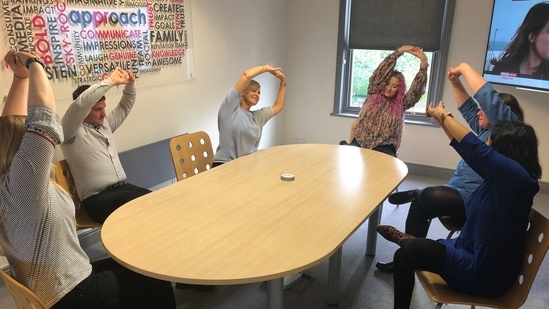
Yoga at workplace: 5 exercises to de-stress at office and regain focus(Twitter/Approach_pr)

Keep spinal pains, neck torment, muscle firmness and joint issues under control as you work extended periods. Attempt these 5 straightforward corporate Yoga asana that guarantee to lessen actual torment, work environment stress, decline non-attendance and increment usefulness alongside work inspiration.

We as a whole have utilized our office work areas to stick family pictures, our most loved munchies and heap heaps of work yet from now, it will observer a wellbeing turn as well, graciousness these corporate Yoga practices that are easy to perform and serve to de-stress at working environment and recapture center. Exactly when we Tuesday blues began to soak in, we went over some Yoga asanas that keep spinal pains, neck torment, muscle solidness and joint issues under control while we work extended periods of time.

Simply require out 10 minutes during work hours to rehearse these simple yoga stretches and breathing activities at your work area or out in the outside air and under the sun. This is on the grounds that these 5 basic Yoga asana guarantee to diminish actual torment, working environment stress, decline truancy and increment efficiency alongside work inspiration:

1.Siddhasana or Achieved pose

Method:: This is the most simple posture of Yoga where you sit leg over leg with eyes shut somewhere down in reflection and hands laying on your knees. Sit with your toes got into your thighs and set your feet next to each other while keeping your knees wide and eyes shut in a thoughtful posture to expert the situated asana.

Advantages: Siddhasana or Yoga’s Cultivated posture or Siddhi’s posture is ideal situation for contemplating. It is amazing for expanding adaptability in hips and crotch/internal thigh muscles.

It not just opens the expert’s hips, chest and shoulders yet in addition extends the spine, further develops pose, extends the front of the lower legs, reinforces lower leg muscles, initiates the chakras, keeps the brain alert, diminishes pressure and uneasiness and assists with adjusting the exercises of the conceptive organs.

  1. Situated Sickle Moon Posture

Method:: Situated in your work area seat, breathe in and lift your chest upstanding, taking your arms upwards, either corresponding to one another or palms joined. With each breathe out, twist further into the posture, squeezing your tailbone towards the floor.

On the off chance that conceivable, take your head back and turn upward. To emerge from the posture, return and rehash by inclining toward to the opposite side and hold this posture for a few breaths prior to exchanging sides once more.

Advantages: This asana further develops adaptability around your shoulders and neck. The posture gives a profound stretch to the hips, thighs and crotches.

It assists with extending and open the chest and shoulders, gives recuperation post-exercise and lifts energy while deliberately working to better the body pose. The asana additionally works on the equilibrium of the body.

3. Seated Backbend Pose

Method:: Like you perform Ustrasana or camel present, sit in your office seat with feet on the floor and back off the seat while the spine is kept straight and not bended. Incline forward, arrive at your arms back behind you, snatch the rear of the seat and keep your elbows straight

Watch your shoulders unwind into the posture as you pull your shoulder bones back and breathe in. Clutch this stance prior to delivering the posture and sitting upright.

Advantages: From extending to reinforcing the shoulders, this activity further develops breath by opening up the chest. It relaxes up the vertebrae, mitigates lower back torment and further develops pose and lessens fat on thighs.

4. Seated Figure Four Pose

Method:: Track down a steady seat where you can put the two feet on the floor and not a seat with wheels or with a ton of padding. Sit ahead on the edge of your seat, keep your back nonpartisan, roll your shoulders both clockwise and counter-clockwise and slacken your neck to further develop portability.

Cross your right leg by establishing your left foot firmly on the floor and lifting your right leg to twist it at the knee as you place your right lower leg to your left side thigh. Inhale profoundly, extend your stomach then, at that point, rehash similar developments with the other leg.

Advantages: This activity extends the exterior of the professional’s hips just as their butt as it explicitly focuses on the gluteus medius, the muscle that guides in hip development and hip portability. It soothes strain in the muscles encompassing the sacrum and decreases lower back torment.

5. Prasarita Padottanasana or Wide-Legged Forward Bend

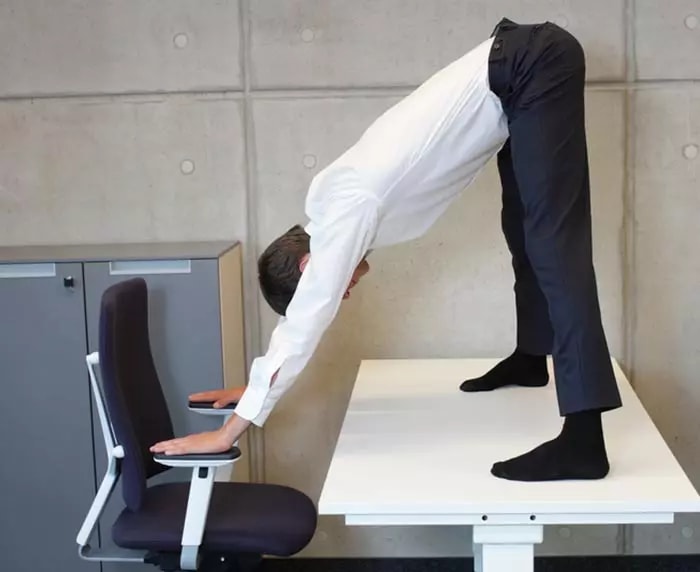
Prasarita Padottanasana or Wide-Legged Forward Bend(Twitter/Cian_Chaos)

Method: Keep an equal distance of around 3 to 4 feet between your legs and spot your hands on your hips. With your legs and spine seriously extended, breathe in, lift your chest up tall through your entire middle and crease gradually over your legs. Start to extend your middle forward by setting your hands level on the floor and keeping them shoulder-width separated. Crease further, bringing your head toward the floor.

Advantages: This wide-legged remaining forward twist is a decent get ready for other wide-position standing postures as it extends the backs of the legs and the inward crotches. It quiets the mind and facilitates exhaustion while further developing dissemination of blood and conditioning the stomach organs.

A Harvard research uncovered that “Yoga brings mental advantages like diminished nervousness and sadness. Might be seriously astounding that it really makes your cerebrum work better.” As per the examination done in Word related Medication, work environment yoga intercession can decrease apparent pressure and back torment and further develop mental prosperity.