The Hubble space telescope is the most famous telescope in the world. It was named after the famous astronomer Edwin Hubble who changed our understanding of the universe proving the existence of other galaxies. It is an automatic observatory, has discovered millions of new objects in space. It helped us to witness the birth of new stars, found planets outside the solar system and see super massive black holes. Hubble was launched in 1990, and from December 1993 to may 2009, the telescope was repaired and updated four times. Astronauts visited HST five times in order to make repairs and new instruments.
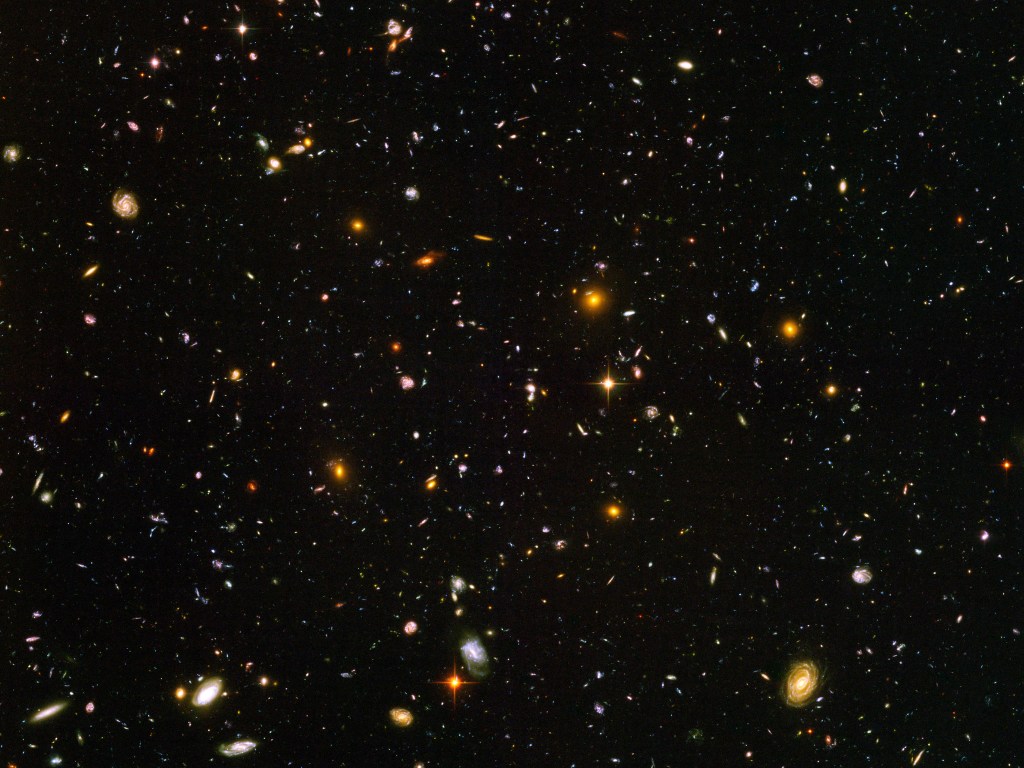
Hubble holds the record for the longest range of observation. The light from the most distant galaxies has taken billions of years to travel across the universe and reach Hubble. By taking this picture, Hubble was literally looking back in time to the very early universe. You can notice on the right side of the image, there is a galaxy very much like the Milky Way that galaxy is about five billion years away, so we are looking back in time by five billion years. In March 4th, 2016, NASA releases a historic image, one that many believed was impossible. It captured the farthest away of all known galaxies; it’s located about 13.4 billion light years away from us. The light from his galaxy has just reached the earth crossing the distance that separates us; hat is now we can observe it as it was 400 million years after the big bang. This galaxy is 25 times smaller than our galaxy, the Milky Way. It helped to find the age for the universe now known to be 13.8 billion years, roughly three times the age of earth.
This view of nearly 10,000 galaxies is called the Hubble Ultra Deep Field. The snapshot includes galaxies of various ages, sizes, shapes, and colours. The smallest, reddest galaxies, about 100, may be among the most distant known, existing when the universe was just 800 million years old. The nearest galaxies – the larger, brighter, well-defined spirals and ellipticals – thrived about 1 billion years ago, when the cosmos was 13 billion years old. The image required 800 exposures taken over the course of 400 Hubble orbits around Earth. The total amount of exposure time was 11.3 days, taken between Sept. 24, 2003 and Jan. 16, 2004.
With the advanced camera of the NASA’s Hubble space telescope, it discovered a new planet called Fomalhaut b which orbiting is parent star Fomalhaut. Fomalhaut is 2.3 times heavier and 6 times larger than the sun around it is a disc of cosmic dust which creates the resemblance of an ominous eye. Fomalhaut b lies 1.8 billion miles inside the ring’s inner edge and orbits 10.7 billion miles from its star. Astronomers have calculated that Fomalhaut b completes an orbit around its parent star every 872 years. The Fomalhaut system is 25 light years away in the constellation Piscis Australis. But in April 2020, astronomers began doubting its existence; the planet is missing in the new Hubble pictures. Scientists believe that this planet was a cloud of dust and debris formed as a result of a collision of two icy celestial bodies.
Fomalhaut – The the brightest star in the constellation of Piscis Austrinus
In 1994, Hubble captured the most detailed image of the iconic feature called the pillars of creation. The pillars of creation are fascinating but relatively small feature of the entire eagle nebula. The blue color in the image represent oxygen, red is sulfur, and green represents both nitrogen and hydrogen. The nebula was discovered in 1745 by the Swiss astronomer jean Philippe Loys de Cheseaux, is located 7,000 light years from earth in the constellation Serpens. During its work Hubble has presented millions of images but unfortunately NASA has suspended missions to repair and modernize the telescope. It is assumed that in 2021, Hubble will be replaced with the new James Webb space telescope.
The people of India have a special love for the language of English. With it being one of the official languages of India, people have obsessed over it now for years. It is considered supreme to any other local or regional language, the language of the elites, the language of the educated, the language of the rich, the language of the better, the language of the greater. Why the knowledge of an alien language has been recognised as the mark of standard or class? Why do Indians take pride in celebrating the English language more than any other? Why do the older generations boast about their children being able to speak English so much? Why do Indians being proud about their culture, traditions, ethnicity, customs and festivals are not as proud of their mother tongues as they are of English? These questions pop up every time a non- English speaking person is humiliated or belittled for their poor English speaking skills. But the real question is do we really need this toxicity of humiliating someone just for the sake of a mere language? No, absolutely we do not.
The answers to all these questions go back to the pre independent era. Ever since the British ruled over India they started with the policy of rejecting non-English, non-white, natives so as to establish strong foot of their supremacy. They dented the minds of naive Indians with the theory that only English speaking, white, educated (the western way) people were supreme and had the capability of ruling over others. With decades of humiliation and degradation, the people in pre independent India accepted the superiority of the English language and this made them bound to have inferiority complex about their very own language and mother tongue. The effect was so profound that even after independence, the people educated in English were considered better than those who were equally skilled but not in this supreme language. The Indian population were now interested in educating their children in an English medium school. The liking for the society with English read people enlarged to a level that it lead to the decay and ultimately the end of traditional schools with Indian native languages.
As India’s economy started to grow and new industries and establishments were born, the culture of hiring mostly and after some time only English speaking people grew to an unexpected level. The new businesses wanted English conversing people as they were now associated with better intelligence and know how. When we look back into the history of the relation between English language and the skills or expertise or wisdom we do not find any strong logical evidence to support that. It was merely the supremacy of the language created by the British that Indians starting judging themselves on the basis of the English speaking skills. The interviews were taken only in English language so as to ensure their hold of the language. Students with better grip of this foreign speech were preferred over others. Even this lingo came to be recognised as the symbol of intelligent, sincere and best for any job students.
Society made it very clear with their over likeness towards English that only the privileged, classy, affluent and powerful individuals could afford and were entitled to this learning. This obsession with a foreign tongue was so unhealthy and unwanted that till this day citizens of India have not been able to accept the fact that it is just a language and that the understanding of this speech has nothing to do with intelligence or wisdom. The folks with lesser experience or practice in English are judged too quickly as being the lesser ones. There is a swift shift in people’s attitude after they realize they are conversing with someone with no skills for English language than with the one who is an expert in it. Though with developing nature of the society today, the respect and glory of the local, regional or native language that was lost decades ago is returning back but nevertheless the tilt towards the English language continues, bent enough to stay an obsession.
The Pandora Papers leak includes 6.4 million documents, almost three million images, more than a million emails and almost half-a-million spreadsheets. Stories revealed so far include: *The owners of more than 1,500 UK properties bought using offshore firms, including individuals accused of corruption *The Qatari ruling family who avoided £18.5m tax on a London supermansion *Sir Philip and Lady Green went on a property spree after off-loading the BHS retail chain which went on to collapse *The prominent Tory donor who was involved in one of Europe’s biggest corruption scandals *The King of Jordan’s £70m spending spree on properties in the UK and US through secretly-owned companies *Azerbaijan’s leading family’s hidden involvement in property deals in the UK worth more than £400m *The Czech prime minister’s failure to declare an offshore investment company used to purchase two French villas for £12m how the family of Kenyan president Uhuru *Kenyatta’s secretly owned a network of offshore companies for decades *The files expose how some of the most powerful people in the world – including more than 330 politicians from 90 countries – use secret offshore companies to hide their wealth. The Pandora Papers reveal complex networks of companies that are set up across borders, called tax heavens hiding ownership of money and assets. Tax heavens place the wealthy can keep their money away from the government , a place for ultra rich, criminals, politicians, social celebrities,drug dealers. it’s easy to set up companies there are laws that make it difficult to identify owners of companies there is low or no corporation tax. The destinations are often called tax havens or secrecy jurisdictions. The most well known destinations include British Overseas Territories such as the Cayman Islands and the British Virgin Islands, as well as countries such as Switzerland and Singapore. Is it illegal to use a tax haven? Loopholes in the law allow people to legally avoid paying some taxes by moving their money or setting up companies in tax havens, but it is often seen as unethical. Although having secretive offshore assets is not illegal, using a complex network of secret companies to move around money and assets is the perfect way to hide the proceeds of criminality. There have been repeated calls for politicians to make it harder to avoid tax or hide assets, particularly following previous leaks such as the Panama Papers. How easy is it to hide money offshore? All you need to do is set up a shell company in one of the countries or jurisdictions with high levels of secrecy. This is a company that exists in name only, with no staff or office. It costs money , Specialist firms are paid to set up and run shell companies on your behalf. These firms can provide an address and names of paid directors, therefore leaving no trail of who is ultimately behind the business. What it costs? According to reports, it cost governments 600bn tax loss for all around the world. It impacts on the development of people and economy. Tax havens sure make the great place to hide dirty money. It because the question of person ethics and social evils when let to get away from these. It makes stagnation of money and accumulation of individuals hold power. Ms Kumar said it is detrimental to the rest of society: “The ability to hide money has a direct impact on your life… It affects your child’s access to education, access to health, and access to a home.”
“Food, Clothe, and Shelter” we all have been told that these are the basic requirements of an individual’s survival but have not we ever thought what is the basic requirement for existence? Isn’t the air we breathe in? Isn’t it the environment we dwell in?
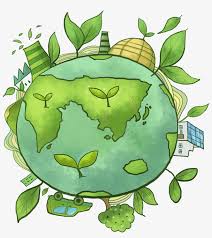
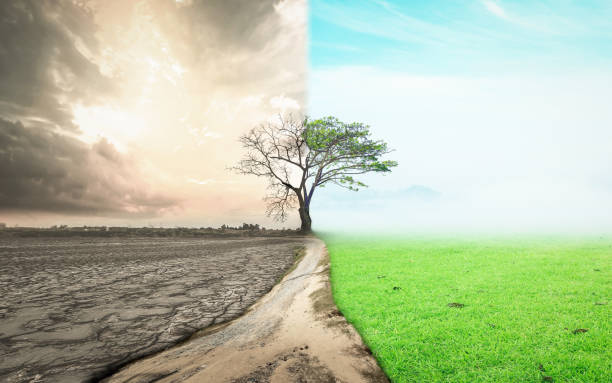
Environment sheltered us, provided atmosphere to breathe, lithosphere to prevail & a lot more but as a human what we’ve done? In couple of years due to industrialization, chemical industries, excessive usage of fuel based vehicles, improper wastage management & a lot has resulted in degradation of the environment.
But also every problem has it’s solution & even the Impossible says ” I’m Possible”. We can together still make a change & work in betterment of the environment and we can achieve success in restoration of the environment by several practices like-
*Plantation
*Minimizing the usage of vehicles that leadsto air pollution
*Encouraging & implementing carpool,using bicycles & even walking is walking for health as well.
*Spreading awareness among people about the consequences& trying to make our lives go eco-friendly.
We human beings are the superior most creation of the Almighty. Let us come together & work on the refinement of the environment & Mother Earth. Let us pledge to prevent it from pollution as much as possible & pay back to the love we’ve received from our environment. At end of the day where we will go if have left out residence destroyed.? Same is the case with our environment if we didn’t take care of it we’ll be drifting apart.
Conclusion : Invest a little of ourselves for the sake of the environment before it is delayed.
North Korea on Thursday, September 9 held a midnight military parade to mark their 73rd founding anniversary in the capital city of Pyongyang.
This was the 3rd parade that was held in North Korea in under a year following a parade held last October to celebrate the 75th anniversary of the worker’s party of North Korea which saw the display of the Intercontinental Ballistic Missile (ICBM) and the Submarine Launched Ballistic Missile (SLBM) and one in January after the 8th congress of the worker’s party of North Korea. Contrary to what a myriad of people might believe North Korea does not hold parades as frequently as it did this past year.
This parade was broadcasted on the North Korean state run television on Thursday.
What set this parade apart?
This parade was unlike any other parade held in North Korea as it did not consist of any display of ballistic missiles, in fact no ballistic missiles were even mentioned. This parade was more of a celebration according to Yang Moo Jin, the vice president of public affairs of North Korea. According to Moo Jin the parade was held to strengthen internal solidarity and it would have been inappropriate to exhibit any sort of missiles. The purpose of this parade was not to intimidate any country but rather to boost the morale of the citizens of North Korea in the midst of a crisis as per some experts.
The event didn’t go on for very long as opposed to the previous military parades that took place this year. This parade lasted only for around 1 hour. In addition to that it was also scaled down.
This parade observed the troops and the emergency disease prevention unit in red hazmat suits and gas masks march past their leader. The hazmat suits and the gas masks represent the prevention of Covid-19 in North Korea as the country reported no Covid-19 cases during the course of the pandemic
The leader Kim Jong-un did not deliver a speech that could cause outrage with the US, South Korea or any other country; he just simply waved at the troops that marched past. In lieu of Kim Jong-un the member of the ruling party Ri Il-Hwan addressed the nation.
Another change that was observed during the event was Kim Jong-un’s weight loss. The leader looked much healthier and skinnier since his last public appearance. All these events are taking place amidst a food crisis in North Korea. The country is reportedly facing the worst food shortages at the time, which could be attributed to the isolated economy and a trade halt that the country is under.
The state media released photos where people were seen to be enjoying the event that represented solidarity. Paratroopers could be seen jumping off of aircrafts, fireworks filled the midnight sky in Pyongyang and firetrucks filled the Pyongyang soil.
This parade also featured students carrying rifles and farmers marching as well. People were also seen dancing towards the end of the parade.
These events are being held in North Korea amid one of the worst economic and food crises the country has ever witnessed according to the reports.
The data industry is projected to grow by leaps and bounds over the next decade. Massive amounts of data are being generated every day with a quintillion bytes being the safe estimate. Data professionals and statisticians are of paramount requirement in this fast-paced, data-driven world. They perform many tasks ranging from identification of data sources to analysis of data. Additionally, they find trends and patterns in the existing data at hand, however, the real set of duties would depend from organisation to organisation. Since data is relevant in almost every field now, the statistical requirements would also understandably change with the various sectors.
Candidates aspiring to step into this industry would be expected to have a fair knowledge about the statistical software in use, being proficient in one increases the job prospects manifold. It is nevertheless advisable that the potential employees narrow down the types of companies they wish to…
The requisite conditions include those not arrested during investigation, cooperated throughout in the probe including appearing before Investigating Officer whenever called, the Supreme Court said.
New Delhi:
The Supreme Court Thursday issued guidelines for granting bail after the filing of charge sheet and said trial courts are not precluded from granting interim relief considering the accused’s conduct during the probe.
A bench comprising Justices SK Kaul and MM Sundresh accepted the suggestions made by Additional Solicitor General S V Raju and senior advocate Sidharth Luthra on the issue.
The offences are put into four categories — A to D, and the guidelines have been laid down without fettering the discretion of the courts concerned and keeping in mind the statutory provisions, it said.
We are inclined to accept the guidelines and make them a part of the order of the Court for the benefit of the Courts below,” the bench said.
The category A offences include: a) Ordinary summons at the 1st instance/including permitting appearance through Lawyer; b) If such an accused does not appear despite service of summons, then Bailable Warrant for physical appearance may be issued; c) NBW on failure to failure to appear despite issuance of Bailable Warrant.
Social media has made more harm to young minds than a gen before. It’s showcase seemingly unnatural and unrealistic beauty, they unconsciously scrolling it seeps into our mind that only those beauty.
People often make barriers to the subject of beauty- flat stomach tout, perky long legs, double eyelids, operated body to our needs. Such acts leave a mark on people about the beauty they think of.
People are so immersed in such social standards many have been affected with serious mental health issues.
In reality, those pictures have taken an immense amount of effort with full make up equipment.
They are trying to promote a product, not a lifestyle. It is spreading the idea that supplements, diet pills and detox teas are the best way to achieve her body type, when in reality, it could not be further from the truth.
In day to day life such standards are too far away to measure. NOBODY HAS A PERFECT BODY, yes teens today need to be told that. They have to make comfortable to be as themselves in these seemingly misconceptions of beauty. It’s very important that teen realise that there body is just as good as Kim Kardashian, or Christian.
As in end like always said – teach them inner beauty, beauty of acceptance of their own looks and curves. These lessons must be taught beyond gender. Society as whole must tackle such narrow agend.
Writer John Tolkien has rightly expressed, “Not all those who wander are lost.” To travel is to set on a new journey, new experiences and lifetime memories. Life is a book and those who do not travel will just remain reading a single page of that book. People travel for numerous purposes such as to explore other places, to seek education and knowledge, stress reduction, to spend time with near and dear ones, etc. To travel without hindrances, one must have thorough information about what to carry and keep alongside during the journey. This blog will attempt to cover most of the travel essentials required.
Travel Bag
It is quite apparent that one will certainly carry a bag while travelling. The bag that one will carry must depend on the time period of travel and purpose of travel. The bag used must provide comfort in mobility and must not be one which can be easily damaged.
Long Vacations – Sturdy rolling luggage bag
Treks – Long rucksacks
Short Business Travels – Cabin sized wheeled duffel bag
Shopping – Tote bag
First Aid Kit
It is a must have commodity while travelling. In case of any small mishap, having a first aid kit along, will help prevent further complications or may even omit trips to a clinic, if acted upon quickly. Accidents are unpredictable, hence being prepared beforehand is necessary. Any first aid kid must include the following items – Band aids, bandages, antibiotic ointments, non latex gloves, aspirin (as one’s doctor suggests), a pair of scissors, thermometer, etc as per the Red Cross.
Diary
Keeping your personal travel journal along will help you to rewind all those lovely memories. Jotting down personal experiences will help you list down all what you have experienced while traveling. One can also pen down important phone numbers which he/she might need in case of an emergency. If travelling solo, one may write down the list of places that one would like to visit during the travel to avoid forgetting about it later on. A soft bound, back pack friendly diary with maps and pens is ideally recommended by avid travellers.
Vitamin tablets and Energy drinks
Events in a tour are uncertain. While one must decide beforehand, about what and where he/she would consume while on the tour, there is a possibility that plans may not work out accordingly. In case of unavailability of food supplies, energy bars, energy drinks and multivitamin tablets according to the doctor’s prescription can be consumed. During in flight travels, food options are scarce, hence the body does not receive the daily needed dose of supplements. Also, while travelling in a public transport, one’s body is prone to germs and infections. To avoid being stuck in such situations, it is always better to carry the needed dose of supplements along.
Seasonal Elements
One must thoroughly research on the weather conditions of the place he/she is travelling to. The climatic conditions in various regions of the world is varied.
Tropical Climate – Carry light coloured outfits to keep yourself cool. White or lightly printed loose tees, shorts and breezy dress are a go to set of clothing. Also, one must remember to carry along, shades, hats and sunscreen.
Cold Climate – Natural fibers such as wool and silk work wonders in preventing feeling cold. Layers of sweatshirts, fleece garments or thermals worn inside an all season leather jacket helps in protection from wind and rainfall. Gloves and socks are also to be carried for better warmth.
“Man cannot discover new oceans unless he has the courage to lose sight of the shore”
– ANDRE GIDE
One must relentlessly travel and explore the world. We might not understand how flamboyant the people, cultures and landscapes of this world are, unless we travel. In order to travel worry-free and experience serenity, one has to keep in mind the essentials that he/she must carry while embarking on a journey.
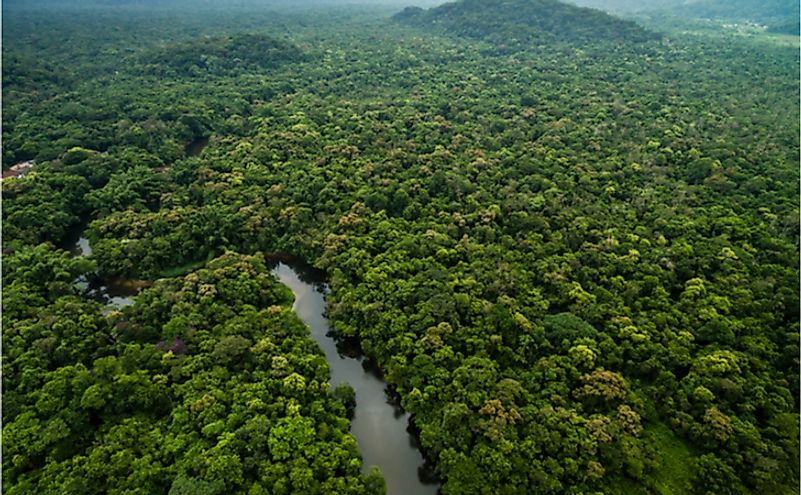
A rainforest is an area of tall, mostly evergreen trees and a high amount of rainfall. Rainforests are Earth’s oldest living ecosystems, with some surviving in their present form for at least 70 million years. They are incredibly diverse and complex, home to more than half of the world’s plant and animal species—even though they cover just 6% of Earth’s surface. This makes rainforests astoundingly dense with flora and fauna; a 10-square-kilometer (4-square-mile) patch can contain as many as 1,500 flowering plants, 750 species of trees, 400 species of birds and 150 species of butterflies. Rainforests thrive on every continent except Antarctica. The largest rainforests on Earth surround the Amazon River in South America and the Congo River in Africa. The tropical islands of Southeast Asia and parts of Australia support dense rainforest habitats. Even the cool evergreen forests of North America’s Pacific Northwest and Northern Europe are a type of rainforest. Rainforests’ rich biodiversity is incredibly important to our well-being and the well-being of our planet. Rainforests help regulate our climate and provide us with everyday products. Unsustainable industrial and agricultural development, however, has severely degraded the health of the world’s rainforests. Citizens, governments, intergovernmental organizations, and conservation groups are working together to protect these invaluable but fragile ecosystems.
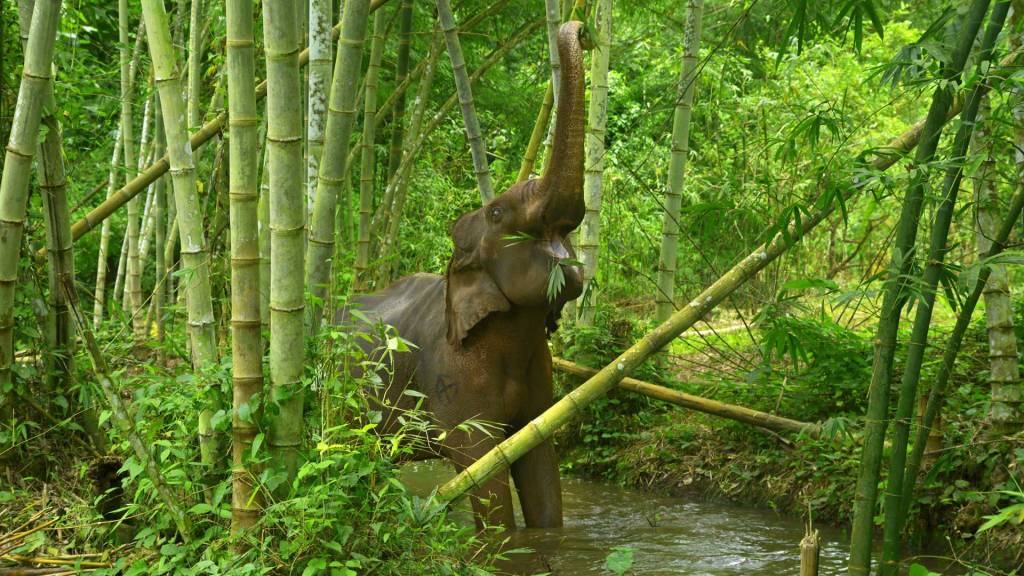
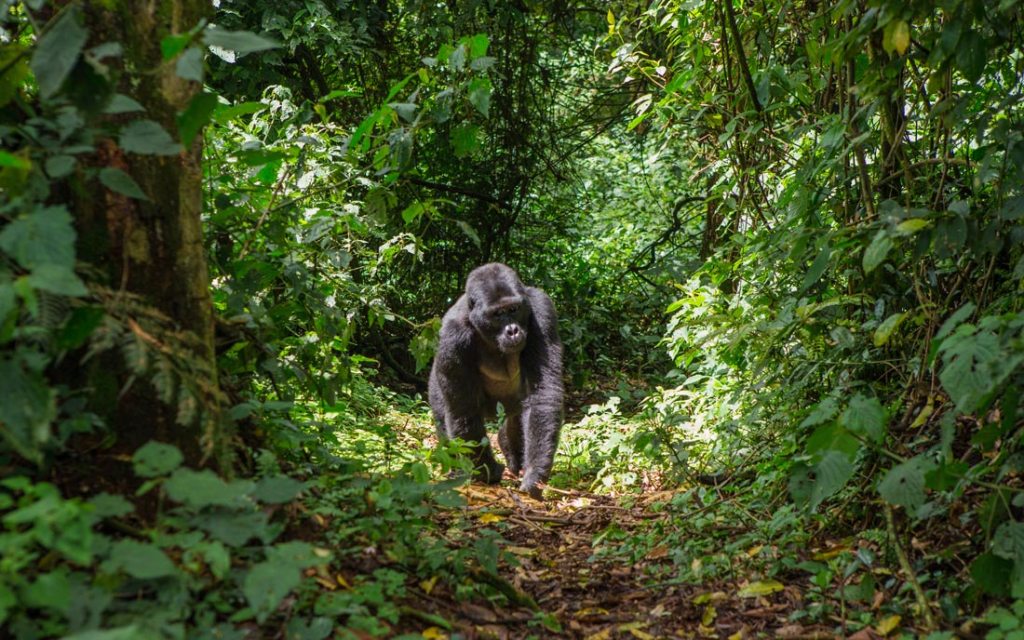
Rainforest Structure Most rainforests are structured in four layers: emergent, canopy, understory, and forest floor. Each layer has unique characteristics based on differing levels of water, sunlight, and air circulation. While each layer is distinct, they exist in an interdependent system: processes and species in one layer influence those in another. Emergent Layer The top layer of the rainforest is the emergent layer. Here, trees as tall as 60 meters (200 feet) dominate the skyline. Foliage is often sparse on tree trunks, but spreads wide as the trees reach the sunny upper layer, where they photosynthesize the sun’s rays. Small, waxy leaves help trees in the emergent layer retain water during long droughts or dry seasons. Lightweight seeds are carried away from the parent plant by strong winds. In the Amazon rainforest, the towering trees of the emergent layer include the Brazil nut tree and the kapok tree. The Brazil nut tree, a vulnerable species, can live up to 1,000 years in undisturbed rainforest habitats. Unlike many rainforest species, both the Brazil nut tree and the kapok tree are deciduous—they shed their leaves during the dry season. Animals often maneuver through the emergent layer’s unstable topmost branches by flying or gliding. Animals that can’t fly or glide are usually quite small—they need to be light enough to be supported by a tree’s slender uppermost layers. The animals living in the emergent layer of the Amazon rainforest include birds, bats, gliders, and butterflies. Large raptors, such as white-tailed hawks and harpy eagles, are its top predators. In rainforests on the island of New Guinea, pygmy gliders populate the emergent layer. Pygmy gliders are small rodents that get their name from the way flaps of skin between their legs allow them to glide from branch to branch. Bats are the most diverse mammal species in most tropical rainforests, and they regularly fly throughout the emergent, canopy, and understory layers. One of the world’s largest species of bat, the Madagascan flying fox (found on the African island of Madagascar), for instance, is an important pollinator that mainly feeds on juice from fruit, but will chew flowers for their nectar. Canopy Layer Beneath the emergent layer is the canopy, a deep layer of vegetation roughly 6 meters (20 feet) thick. The canopy’s dense network of leaves and branches forms a roof over the two remaining layers. The canopy blocks winds, rainfall, and sunlight, creating a humid, still, and dark environment below. Trees have adapted to this damp environment by producing glossy leaves with pointed tips that repel water. While trees in the emergent layer rely on wind to scatter their seeds, many canopy plants, lacking wind, encase their seeds in fruit. Sweet fruit entices animals, which eat the fruit and deposit seeds on the forest floor as droppings. Fig trees, common throughout most of the world’s tropical rainforests, may be the most familiar fruit tree in the canopy. With so much food available, more animals live in the canopy than any other layer in the rainforest. The dense vegetation dulls sound, so many—but not all—canopy dwellers are notable for their shrill or frequent vocalizing. In the Amazon rainforest, canopy fruit is snatched up in the large beaks of screeching scarlet macaws and keel-billed toucans, and picked by barking spider and howler monkeys. The silent two-toed sloth chews on the leaves, shoots, and fruit in the canopy. Thousands and thousands of insect species can also be found in the canopy, from bees to beetles, borers to butterflies. Many of these insects are the principal diet of the canopy’s reptiles, including the “flying” draco lizards of Southeast Asia. Understory Layer Located several meters below the canopy, the understory is an even darker, stiller, and more humid environment. Plants here, such as palms and philodendrons, are much shorter and have larger leaves than plants that dominate the canopy. Understory plants’ large leaves catch the minimal sunlight reaching beyond the dense canopy. Understory plants often produce flowers that are large and easy to see, such as Heliconia, native to the Americas and the South Pacific. Others have a strong smell, such as orchids. These features attract pollinators even in the understory’s low-light conditions. The fruit and seeds of many understory shrubs in temperate rainforests are edible. The temperate rainforests of North America, for example, bloom with berries. Animals call the understory home for a variety of reasons. Many take advantage of the dimly lit environment for camouflage. The spots on a jaguar (found in the rainforests of Central and South America) may be mistaken for leaves or flecks of sunlight, for instance. The green mamba, one of the deadliest snakes in the world, blends in with foliage as it slithers up branches in the Congo rainforest. Many bats, birds, and insects prefer the open airspace the understory offers. Amphibians, such as dazzlingly colored tree frogs, thrive in the humidity because it keeps their skin moist. Central Africa’s tropical rainforest canopies and understories are home to some of the most endangered and familiar rainforest animals—such as forest elephants, pythons, antelopes, and gorillas. Gorillas, a critically endangered species of primate, are crucial for seed dispersal. Gorillas are herbivores that move throughout the dark, dense rainforest as well as more sun-dappled swamps and jungles. Their droppings disperse seeds in these sunny areas where new trees and shrubs can take root. In this way, gorillas are keystone species in many African rainforest ecosystems. Forest Floor Layer The forest floor is the darkest of all rainforest layers, making it extremely difficult for plants to grow. Leaves that fall to the forest floor decay quickly. Decomposers, such as termites, slugs, scorpions, worms, and fungi, thrive on the forest floor. Organic matter falls from trees and plants, and these organisms break down the decaying material into nutrients. The shallow roots of rainforest trees absorb these nutrients, and dozens of predators consume the decomposers! Animals such as wild pigs, armadillos, and anteaters forage in the decomposing brush for these tasty insects, roots and tubers of the South American rainforest. Even larger predators, including leopards, skulk in the darkness to surprise their prey. Smaller rodents, such as rats and lowland pacas (a type of striped rodent indigenous to Central and South America), hide from predators beneath the shallow roots of trees that dominate the canopy and emergent layer. Rivers that run through some tropical rainforests create unusual freshwater habitats on the forest floor. The Amazon River, for instance, is home to the boto, or pink river dolphin, one of the few freshwater dolphin species in the world. The Amazon is also home to black caimans, large reptiles related to alligators, while the Congo River is home to the caimans’ crocodilian cousin, the Nile crocodile.
Types of Rainforests Tropical Rainforests Tropical rainforests are mainly located between the latitudes of 23.5°N (the Tropic of Cancer) and 23.5°S (the Tropic of Capricorn)—the tropics. Tropical rainforests are found in Central and South America, western and central Africa, western India, Southeast Asia, the island of New Guinea, and Australia. Sunlight strikes the tropics almost straight on, producing intense solar energy that keeps temperatures high, between 21° and 30°C (70° and 85°F). High temperatures keep the air warm and wet, with an average humidity of between 77% and 88%. Such humid air produces extreme and frequent rainfall, ranging between 200-1000 centimeters (80-400 inches) per year. Tropical rainforests are so warm and moist that they produce as much as 75% of their own rain through evaporation and transpiration. Such ample sunlight and moisture are the essential building blocks for tropical rainforests’ diverse flora and fauna. Roughly half of the world’s species can be found here, with an estimated 40 to 100 or more different species of trees present in each hectare. Tropical rainforests are the most biologically diverse terrestrial ecosystems in the world. The Amazon rainforest is the world’s largest tropical rainforest. It is home to around 40,000 plant species, nearly 1,300 bird species, 3,000 types of fish, 427 species of mammals, and 2.5 million different insects. Red-bellied piranhas and pink river dolphins swim its waters. Jewel-toned parrots squawk and fly through its trees. Poison dart frogs warn off predators with their bright colors. Capuchin and spider monkeys swing and scamper through the branches of the rainforest’s estimated 400 billion trees. Millions of mushrooms and other fungi decompose dead and dying plant material, recycling nutrients to the soil and organisms in the understory. The Amazon rainforest is truly an ecological kaleidoscope, full of colorful sights and sounds. Temperate Rainforests Temperate rainforests are located in the mid-latitudes, where temperatures are much more mild than the tropics. Temperate rainforests are found mostly in coastal, mountainous areas. These geographic conditions help create areas of high rainfall. Temperate rainforests can be found on the coasts of the Pacific Northwest in North America, Chile, the United Kingdom, Norway, Japan, New Zealand, and southern Australia. As their name implies, temperate rainforests are much cooler than their tropical cousins, averaging between 10° and 21°C (50° and 70°F). They are also much less sunny and rainy, receiving anywhere between 150-500 centimeters (60-200 inches) of rain per year. Rainfall in these forests is produced by warm, moist air coming in from the coast and being trapped by nearby mountains. Temperate rainforests are not as biologically diverse as tropical rainforests. They are, however, home to an incredible amount of biological productivity, storing up to 500-2000 metric tons of leaves, wood, and other organic matter per hectare (202-809 metric tons per acre). Cooler temperatures and a more stable climate slow down decomposition, allowing more material to accumulate. The old-growth forests of the Pacific Northwest, for example, produce three times the biomass (living or once-living material) of tropical rainforests. This productivity allows many plant species to grow for incredibly long periods of time. Temperate rainforest trees such as the coast redwood in the U.S. state of California and the alerce in Chile are among the oldest and largest tree species in the world. The animals of the temperate rainforest are mostly made up of large mammals and small birds, insects, and reptiles. These species vary widely between rainforests in different world regions. Bobcats, mountain lions, and black bears are major predators in the rainforests of the Pacific Northwest. In Australia, ground dwellers such as wallabies, bandicoots, and potoroos (small marsupials that are among Australia’s most endangered animals) feast on the foods provided by the forest floor. Chile’s rainforests are home to a number of unique birds such as the Magellanic woodpecker and the Juan Fernández firecrown, a hummingbird species that has a crown of color-changing feathers.
People and the Rainforest Rainforests have been home to thriving, complex communities for thousands of years. For instance, unique rainforest ecosystems have influenced the diet of cultures from Africa to the Pacific Northwest. MbutiThe Mbuti, a community indigenous to the Ituri rainforest in Central Africa, have traditionally been hunter-gatherers. Their diet consists of plants and animals from every layer of the rainforest. From the forest floor, the Mbuti hunt fish and crabs from the Ituri River (a tributary of the Congo), as well as gather berries from low-lying shrubs. The giant forest hog, a species of wild boar, is also frequently targeted by Mbuti hunters, although this species is hunted for sale more often than food. From the understory, the Mbuti may gather honey from bee hives, or hunt monkeys. From the canopy and emergent layers, Mbuti hunters may set nets or traps for birds. Although they are a historically nomadic society, agriculture has become a way of life for many Mbuti communities today as they trade and barter with neighboring agricultural groups such as the Bantu for crops such as manioc, nuts, rice, and plantains. Chimbu The Chimbu people live in the highland rainforest on the island of New Guinea. The Chimbu practice subsistence agriculture through shifting cultivation. This means they have gardens on arable land that has been cleared of vegetation. A portion of the plot may be left fallow for months or years. The plots are never abandoned and are passed on within the family. Crops harvested in Chimbu garden plots include sweet potatoes, bananas, and beans. The Chimbu also maintain livestock, particularly pigs. In addition to their own diet, pigs are valuable economic commodities for trade and sale. TlingitThe temperate rainforest of the northwest coast of North America is the home of the Tlingit. The Tlingit enjoy a diverse diet, relying on both marine and freshwater species, as well as game from inland forests. Due to bountiful Pacific inlets, rivers, and streams, the traditional Tlingit diet consists of a wide variety of aquatic life: crab, shrimp, clams, oysters, seals, and fish such as herring, halibut, and, crucially, salmon. Kelps and other seaweeds can be harvested and eaten in soups or dried. One familiar Tlingit saying is “When the tide is out, our table is set.” In more inland areas, historic Tlingit hunters may have targeted deer, elk, rabbit, and mountain goats. Plants gathered or harvested include berries, nuts, and wild celery. YanomamiThe Yanomami are a people and culture native to the northern Amazon rainforest, spanning the border between Venezuela and Brazil. Like the Chimbu, the Yanomami practice both hunting and shifting-cultivation agriculture. Game hunted by the Yanomami include deer, tapirs (an animal similar to a pig), monkeys, birds, and armadillos. The Yanomami have hunting dogs to help them search the understory and forest floor for game. The Yanomami practice slash-and-burn agriculture to clear the land of vegetation prior to farming. Crops grown include cassava, banana, and corn. In addition to food crops, the Yanomami also cultivate cotton, which is used for hammocks, nets, and clothing.
Benefits of Rainforests Ecological Well-Being Rainforests are critically important to the well-being of our planet. Tropical rainforests encompass approximately 1.2 billion hectares (3 billion acres) of vegetation and are sometimes described as the Earth’s thermostat. Rainforests produce about 20% of our oxygen and store a huge amount of carbon dioxide, drastically reducing the impact of greenhouse gas emissions. Massive amounts of solar radiation are absorbed, helping regulate temperatures around the globe. Taken together, these processes help to stabilize Earth’s climate. Rainforests also help maintain the world’s water cycle. More than 50% of precipitation striking a rainforest is returned to the atmosphere by evapotranspiration, helping regulate healthy rainfall around the planet. Rainforests also store a considerable percentage of the world’s freshwater, with the Amazon Basin alone storing one-fifth. Human Well-Being Rainforests provide us with many products that we use every day. Tropical woods such as teak, balsa, rosewood, and mahogany are used in flooring, doors, windows, boatbuilding, and cabinetry. Fibers such as raffia, bamboo, kapok, and rattan are used to make furniture, baskets, insulation, and cord. Cinnamon, vanilla, nutmeg, and ginger are just a few spices of the rainforest. The ecosystem supports fruits including bananas, papayas, mangos, cocoa and coffee beans. Rainforests also provide us with many medicinal products. According to the U.S. National Cancer Institute, 70% of plants useful in the treatment of cancer are found only in rainforests. Rainforest plants are also used in the creation of muscle relaxants, steroids, and insecticides. They are used to treat asthma, arthritis, malaria, heart disease, and pneumonia. The importance of rainforest species in public health is even more incredible considering that less than one percent of rainforest species have been analyzed for their medicinal value. Even rainforest fungi can contribute to humanity’s well-being. A mushroom discovered in the tropical rainforest of Ecuador, for example, is capable of consuming polyurethane—a hard, durable type of plastic used in everything from garden hoses to carpets to shoes. The fungi can even consume the plastic in an oxygen-free environment, leading many environmentalists and businesses to invest in research to investigate if the fungi can help reduce waste in urban landfills.
Threats to Rainforests Rainforests are disappearing at an alarmingly fast pace, largely due to human development over the past few centuries. Once covering 14% of land on Earth, rainforests now make up only 6%. Since 1947, the total area of tropical rainforests has probably been reduced by more than half, to about 6.2 to 7.8 million square kilometers (3 million square miles). Many biologists expect rainforests will lose 5-10% of their species each decade. Rampant deforestation could cause many important rainforest habitats to disappear completely within the next hundred years. Such rapid habitat loss is due to the fact that 40 hectares (100 acres) of rainforest are cleared every minute for agricultural and industrial development. In the Pacific Northwest’s rainforests, logging companies cut down trees for timber while paper industries use the wood for pulp. In the Amazon rainforest, large-scale agricultural industries, such as cattle ranching, clear huge tracts of forests for arable land. In the Congo rainforest, roads and other infrastructure development have reduced habitat and cut off migration corridors for many rainforest species. Throughout both the Amazon and Congo, mining and logging operations clear-cut to build roads and dig mines. Some rainforests are threatened by massive hydroelectric power projects, where dams flood acres of land. Development is encroaching on rainforest habitats from all sides. Economic inequalities fuel this rapid deforestation. Many rainforests are located in developing countries with economies based on natural resources. Wealthy nations drive demand for products, and economic development increases energy use. These demands encourage local governments to develop rainforest acreage at a fraction of its value. Impoverished people who live on or near these lands are also motivated to improve their lives by converting forests into subsistence farmland.
Rainforest Conservation Many individuals, communities, governments, intergovernmental organizations, and conservation groups are taking innovative approaches to protect threatened rainforest habitats. Many countries are supporting businesses and initiatives that promote the sustainable use of their rainforests. Costa Rica is a global pioneer in this field, investing in ecotourism projects that financially contribute to local economies and the forests they depend on. The country also signed an agreement with an American pharmaceutical company, Merck, which sets aside a portion of the proceeds from rainforest-derived pharmaceutical compounds to fund conservation projects. Intergovernmental groups address rainforest conservation at a global scale. The United Nations’ REDD (Reducing Emissions from Deforestation and forest Degradation) Program, for example, offers financial incentives for reducing carbon emissions created by deforestation to 58 member countries. The Democratic Republic of the Congo used REDD funds to create an online National Forest Monitoring System that tracks and maps data on logging concessions, deforestation in protected areas, and national forestry sector measures. REDD funds were also used to investigate best practices in solving land disputes in Cambodia, which lacks proper forest zoning and boundary enforcement. Nonprofit organizations are tackling rainforest conservation through a variety of different approaches. The Rainforest Trust, for example, supports local conservation groups around the world in purchasing and managing critically important habitats. In Ecuador, the Rainforest Trust worked with the Fundación Jocotoco to acquire 495 more hectares (1,222 more acres) for the Río Canandé Reserve, considered to have one of the highest concentrations of endemic and threatened species in the world. Partnering with Burung Indonesia, the Trust created a 8,900-hectare (22,000-acre) reserve on Sangihe Island to protect the highest concentration of threatened bird species in Asia. The Rainforest Alliance is a nonprofit organization that helps businesses and consumers know that their products conserve rather than degrade rainforests. Products that bear the Rainforest Alliance seal contain ingredients from farms or forests that follow strict guidelines designed to support the sustainable development of rainforests and local communities. The Alliance also allows tourism businesses use of their seal after they complete an education program on efficiency and sustainability. In turn, this seal allows tourists to make ecologically smart vacation plans.
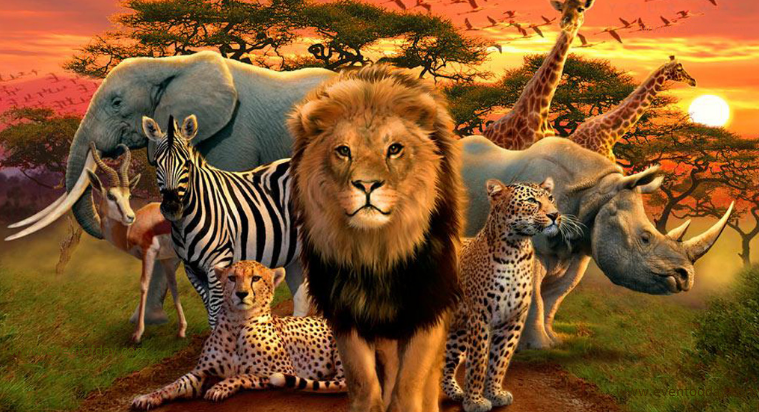
Wildlife Conservation is the practice of protecting plant and animal species and their habitats. As part of the world’s ecosystems, wildlife provides balance and stability to nature’s processes. The goal of wildlife conservation is to ensure the survival of these species, and to educate people on living sustainably with other species.
The human population has grown exponentially over the past 200 years, to more than seven billion people today, and it continues to rapidly grow. This means natural resources are being consumed faster than ever by the billions of people on the planet. This growth and development also endangers the habitats and existence of various types of wildlife around the world, particularly animals and plants that may be displaced for land development, or used for food or other human purposes. Other threats to wildlife include the introduction of invasive species from other parts of the world, climate change, pollution, hunting, fishing, and poaching.
National and international organizations like the World Wildlife Fund, Conservation International, the Wildlife Conservation Society, and the United Nations work to support global animal and habitat conservation efforts on many different fronts. They work with the government to establish and protect public lands, like national parks and wildlife refuges. They help write legislation, such as the Endangered Species Act (ESA) of 1973 in the United States, to protect various species. They work with law enforcement to prosecute wildlife crimes, like wildlife trafficking and illegal hunting (poaching). They also promote biodiversity to support the growing human population while preserving existing species and habitats.
National Geographic Explorers, like conservation biologists Camille Coudrat and Titus Adhola, are working to slow the extinction of global species and to protect global biodiversity and habitats. Environmental filmmakers and photographers, like Thomas P. Peschak, are essential to conservation efforts as well, documenting and bringing attention to endangered wildlife all over the world.
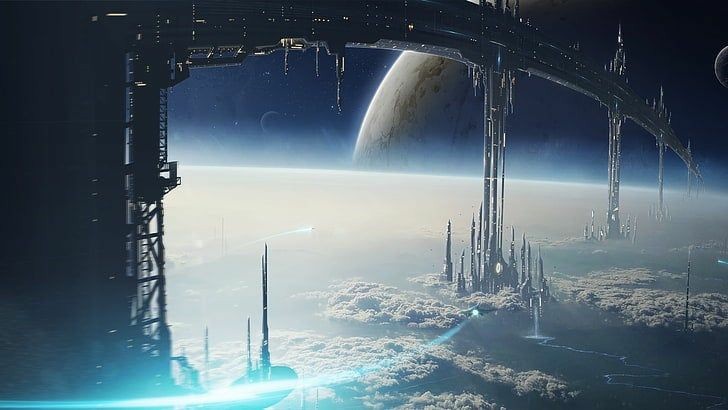
The observable universe is consists up to two trillion galaxies that are made of billions and billions of stars. In the Milky Way galaxy alone, scientists assume that there are some 40 billion earths like planets in the habitable zone of their stars. When you look at these numbers, there are a lot of possibilities of alien civilization to exist. In a universe that big and old, the possibilities of civilizations may start millions of years apart from each other, and develop in different directions and speed. So their civilization may range from cavemen to super advanced. We know that human started out with nothing and then making tools, building houses, etc. we know that humans are curios, competitive, greedy for resources, and expansionists. The more of these qualities that our ancestors had, the more successful they were in the civilization building process.
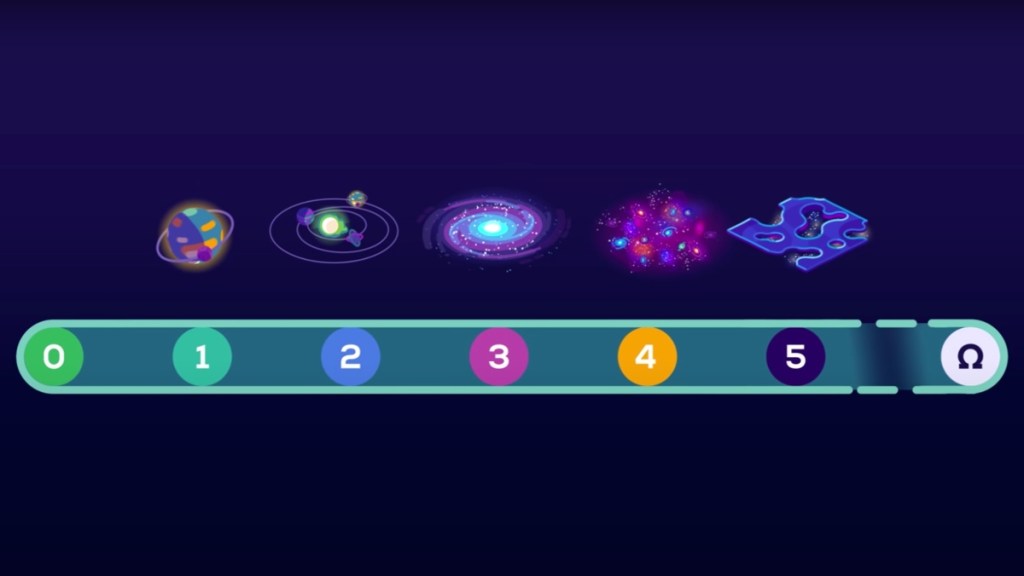
Like this, the other alien civilizations also might have evolved. Human progress can be measured very precisely by how much energy we extracted from our environment. As our energy consumption grew exponentially, so did the abilities of our civilization. Between 1800 and 2015, population size had increased seven fold; while humanity was consuming 25 times more energy. It’s likely that this process will continue into the far future. Based on these facts, scientist Nikolai Kardashev developed a method for categorizing civilizations, from cave dwellers to gods ruling over galaxies into a scale called the Kardashev scale. It is a method of ranking civilizations by their energy use. It put civilizations into four categories. A type 1 civilization is able to use the available energy of their home planet. A type 2 civilization is able to use the available energy of their star and planetary system. A type 3 civilization is able to use the available energy of their galaxy. A type 4 civilization is able to use the available energy of multiple galaxies
. It’s like comparing an ant colony to a human metropolitan area. To ants we are so complex and powerful, we might as well be gods. On the lower end of the scale, there are type 0 to type 1 civilization. Anything from hunting, gatherers to something we could achieve in the next few hundred years. These might actually be abundant in the Milky Way. If that possible, why they are not sending any radio signals in space. But even if they transmitted radio signals like we do, it might not be very helpful. In such a vast universe, our signals may extend over 200 light years, but this is only a tiny fraction of the Milky Way. And even if someone were listening, after a few light years our signals decay into noise, impossible to identify as the source of an intelligent species. Today humanity ranks at about level 0.75. We created huge structures, changed the composition and temperature of the atmosphere. If progress continues, we will become a full type 1 civilization in the next few hundred years. The next step to type 2 is trying and mine other planets and bodies.
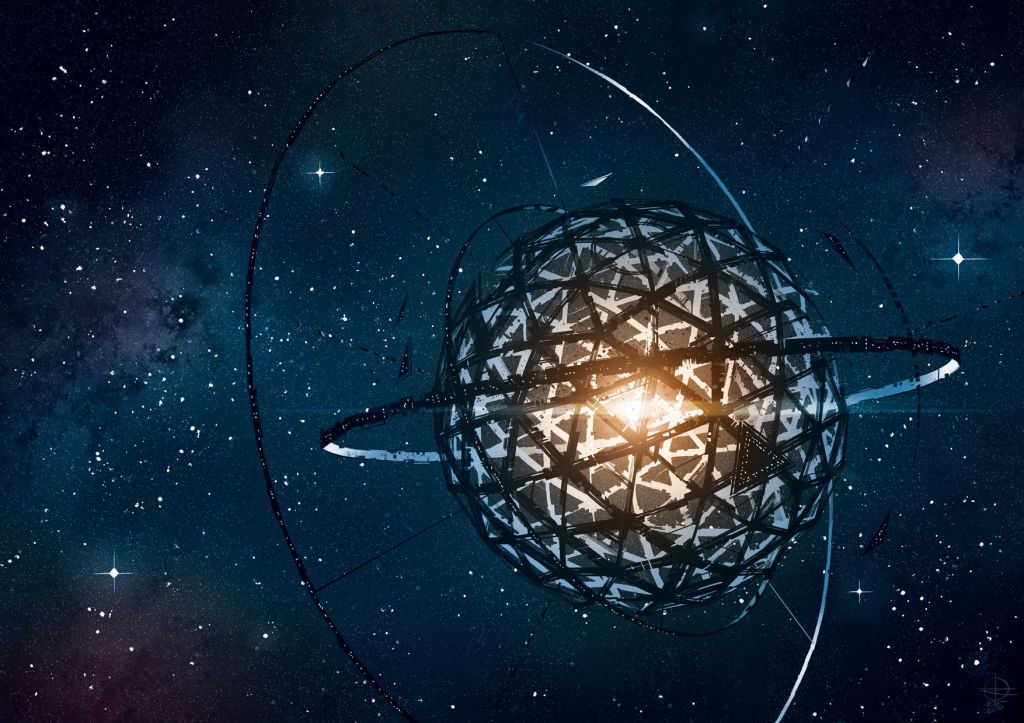
The Dyson sphere – mega-structures built around sun to draw energy
As a civilization expands and uses more and more stuff and space, at some they may start a largest project that extracting the energy of their star by building a Dyson swarm. Once it finished, energy has become unlimited. The next frontier moves to other stars light years away. So the closer a species gets to type 3, they might discover new physics, may understand and control dark matter and energy, or be able to travel faster than light. For them, humans are the ants, trying to understand the galactic metropolitan area. A high type 2 civilization might already consider humanity too primitive. A type 3 civilization might consider us bacteria. But the scale doesn’t end here; some scientists suggest there might be type 4 and type 5 civilizations, whose influences stenches over galaxy clusters or super clusters. This complex scale is just a thought experiment but, still it gives interesting things. Who knows, there might be a type omega civilization, able to manipulate the entire universe, and they even might be the actual creators of our universe.
“Somewhere, something incredible is waiting to be known.” – Carl Sagan
Globalisation has brought new prospects and faces to human history, global trade, global activists, global entertainment, global culture and tradition and many more. This has also raised a new wing of global politics. It all began after the end of WW2 . The world had lost a lot of people and life but importantly it had reached its end of strength to take war’s horrors. We all know that’s when the UN was established. It was a new era of world integrated for greater purpose without anymore bloodshed but sheer will and intellect. This was the time world politics took its place in making countries with higher ambitions and capacity a world dominant players.
“A great deal of world politics is a fundamental struggle, but it is also a struggle that has to be waged intelligently. -Zbigniew Brzezinski”. Players of different parts of countries and some different geographical parts, all have the main purpose of having a peaceful life for common people. They have to stop the purpose of every wearing fight between the political heads of the country. New way to spread their power and gain on their ambitions was POLITICS.
So there began the messy or the beauty of diplomacy. The major occurrences are that of the America – Russia cold war, Vietnamese war, Korean war, breaking of Berlin Wall,the rise of china in recent years has led to major shifts in the political landscape.Some of the major was theses diplomacy takes place is are hard power like military and economy this way they can keep good negotiate with countries they want. Some other way is called soft power, this is through the media example as BTS for South Korea.
There is a long debate about the effects of world politics on society. Let’s take a glance at that. The positive influence that has taken is:
1.Climate change awareness: There has been an immense increase in awareness among the younger generation. It has also been seen national getting together for a genuine reason other than there personal ambitions.
2.Fight for social evils at the biggest levels: women rights have gained a major place in the world. Me too moment has brought justice to many people. Child labour and many indian inhuman practice have been stopped as international pressure.
3.Feeling of oneness: It has been seen that social has been friendly to people and they have faced the same conditions and feel connected to each other.
4.Economic and technology development: United people have progressed and developed new and effective means. With peace by their side humankind reached the moon and Mars and looking for what not.
5.World peace: People are more peaceful than in 50years than in the last 150 years. After world politics have been taking place the politicians fight among themselves than use them people for their cause.
1.Power stagnetation: The power struggle has made an individual hold power rather than trusting as all members together with that. This also increases hunger for power from others. Example, America-Russia tug-of war where it has been inscribed in every way possible in the history of the century.
2.Social media influence:It has both positive and negative impact on society,it has been providing direction to citizens without much effort by them.
But the direction usually flows towards a more vocal person than the right person.
3.Social insecurity rises: People feel overwhelmed by such information available which was in deficit before. The information above their understanding makes people tell decisions without correct understanding or wrongly influenced.
4.Terrorism: Growing defecive strategy of countries have used less powerful countries in their political web to create terrorism so as to stop the other countries from growing
Politics always comes with it’s own advantages and disadvantages, it’s important to understand how and when this political policy should be applied for a win-win situation. Because politics is a true lifesaver when used in it’s limitations and knowing disadvantages. When it involves the world politics in it more or less we hold the history of us and future of coming gen to influence them
Pollution has became a part of our life. It has became the reality whether we accepted or not. We have to now keep air purifier to purify the air inside our house. Just think of the level of destruction in has caused to just as well as to nature.
We have reduced the resources of nature or either we have misused the resources of nature for our own benefit. We youmans are so selfish that for our benefit we can even take away the things which are meant for everyone. Like we have polluted so many rivers which has caused death to so many aquatic animals that we can’t even imagine of.
We have polluted the air quality so much that we are now facing difficulty to breathe ourselves. We have caused pollution in air, water, soil, noise whatnot. Just think it yourself.
Now there are so many activist and NGOs are coming ahead for cleaning up the message that has been spread by us only. But it is not enough. To remove Facebook devil from our mother nature each and everyone have to contribute towards this.
We can take small steps like using public transport instead of personal one for travelling which will reduce the air pollution. There is no need of very much big-big steps to be taken a small step by each individual is enough for cutting this pollution into half.
It is our nature and we should use net sustainabily so that it is available for other animals and future generation as well.
Education the solution for every problem in this world. If you are educated you know how to manage difficult time in a better way then others. Education is not only provided in school but it also present all around you.
The context of education is very wide, you can’t say that education is only provided in schools and colleges. By education you’re mean that you learn from your surrounding not only bookcase knowledge. A person who never went to school doesn’t mean that he don’t have knowledge of anything.
At present to the covid-19 situation there are millions of children who had lost the access to education, because they are not having digital devices to have their online Classic in even their schools are shut off.
Today we are having so many excuses for online classes like we’re having strain in eyes, neck, headache etc. I don’t mean mad they are not genuine but, these are not as hard as you are not getting education. You are fortunate in now to continue your education even without going to school but many in this world a not so fortunate.
There are many example synthesis world who had sacrifice a lot just to get educated. One of them is Malala Yousafzai who was ready to get shot from gun just to get educated.
So whenever you feel like you don’t want to study just think about them and you automatically will get an inspiration and a sense of gratitude that you are having so many resources that your education is not getting any hindrance.
We and government together should take step that gift access of education to everyone in your country or in the world. We can donate our old book, pencils and other stationaries to them and that will be a small step from our side but will make a big difference for them.







 Eduindex News
You must be logged in to post a comment.