BRANDED KITCHEN UTENSILS

INDUCTION COOKTOP:

As the proverb goes “The kitchen is the heart of the home” and so the utensils play an important role in this process.

Kitchen is where ones creativeness flourish. Be it the recipes passed from generation to generation or trying out something new, everything is a creative process that is poured out of love and care. And for this, and equipped kitchen is a must so that the process is not interrupted.

And when ones thinks of equipped kitchen, the one thing that immediately comes to mind in this modern world is induction cooktop as it makes life easy and simple with its advanced features.

WORKING:

It basically works on the principle of electrical induction rather than thermal induction. An induction hob contains copper coil underneath the ceramic plate which helps transfer electrical current to the cooking pot which in turn transforms as heat to the pot.

SAFETY FIRST:

While cooking can be the love for many people but safety is an important thing to keep in mind. Unlike gas stoves that rely on exposed flames induction cook top are safer and there’s no risk involved. There is no release of nitrogen dioxide and particles into the air unlike in gas. They avoid combustion of gas.

ADVANTAGES:

  • The foremost reason to have an induction cooktop is that it makes cooking faster. That to in this modern world where cooking is a time consuming process, this makes life easy.
  • They are planet friendly. It uses less energy and lower residual heat. Thus lower energy bills.
  • They are safer. They use the electromagnetic reaction to heat the contents and not regular burners which makes its much safer.
  • They are mess free. Food seldom sticks on it.

Natural Calamities

  1. Glaciers retreaaring
  2. Polar caps melting
  3. Pemafrost experienceing a thaw
  4. Unnaturally high temperaaturesin places like siberia
  5. Forest fires
  6. requent andd more intenses el-nino and cyclones, tornadoes and sea- storms
  7. Loss of biodiversity inpolar areas due to melting of ice caps and
  8. floods

Australi and amzon rainforests

Every job in the medical field is as important

Every job in the medical field is as important and as responsible as a doctor. Pharmacists do take a special part in the medical industry who basically undergo a rigorous education, training and take tests before becoming a complete pharmacists. They are typically a health care professional who fills up the prescriptions and educate the customers about it. RPh is the one requirement for the pharmacist’s job.

But what is RPh? – answer paragraph

RPh stands for Registered Pharmacist. It is a degree that is required to gain knowledge to become a pharmacist. RPh is basically a license to practice pharmacy.

RPh title:

RPh is all about practicing in the field of pharmacy. RPh title is a title that’s been awarded to pharmacists when they are been registered by national pharmacy council of one’s country. Also this title is valid and authentic. It is basically an evidence that their name and qualifications are now registered at national level. Also to note that when they hold this title they are not allowed to practice in any other country unless and until the person passes the exam of that country and gets registered as a pharmacist in the particular country. When the person holds this title then that particular person is allowed to practice only in one country.

Why is RPh title necessary?

One gets an RPh degree after a Pharm D degree. Pharm D is not the end in the pharmacy field. Therefore RPh title is essential to increase one’s worth. It is necessary to stabilize one’s Pharm D degree. There are lot of task that cannot be performed by Pharm d degree holders. Therefore it requires an RPh title to perform further operations.

Advantage of having RPh title:

By having an RPh title one can own a pharmacy by the help of license whereas unregistered pharmacists cannot own a pharmacy of his own. They can also apply foe government jobs. You have flexibility in making your own schedule and enjoying it. You have a substantial income on your hand.

Educational path:

To work as RPh it is necessary to complete a bachelor’s degree in pharmacy first which would take 4 years after which one should take an aptitude test for pharmacists based on score in college grades. Then, one can attend a Pharm.D program where one can get an RPh degree. RPh is a plus point for Pharm.D holders.

Duration:

This can take about   to 6 years to complete.

To be licensed to practice as a pharmacist and earn an RPh title, a Pharm.D. Degree is a prerequisite.

After bachelor’s degree of 4 years, one needs to take Pharm.D as a professional degree after which RPh is given as a licence to practice.

Steps involved to earn an RPh:

  • Dual degree program:

Earn your bachelor’s degree alongside your doctor’s degree which make take up to six to seven years to complete.

  • Doctorate only program:

Those who already have a bachelor’s degree in chemistry or biology can take this course which takes up to three to four years to complete.

  • Pass Admissions exams:

One have to take and pass all the admission exams that comprise of topics such as biological processes and quantitative reasoning. Passing scores are decided by individual schools.

  • Find an Internship:

One has to complete internship in one’s own state according to state requirements as it may vary from one location to another location.

  • Pass Licensing exams:

After the internship process the particular individual has to take two licensing exams ,North American Pharmacist Licensure Exam (NAPLEX) and either the Multistate Pharmacy Jurisprudence Exam (MPJE) or a state equivalent.

  • Register to practice:

Register to practice and earn your license according to your state guidelines as it may vary state to state.

Job opportunities:

Registered pharmacists work in

  • Research labs.
  • Clinics.
  • Government and military facilities.
  • Hospital and retail pharmacies.

Apart from these they can apply for government jobs like drug inspectors.

Job outlooks:

When it comes to pharmacist’s job, it is expected that there wouldn’t be a huge change happening up to 2028. Although demands are expectedly increasing that too in this pandemic period, they are projected to decline to about 3 % within 2029. However they are projected to increase in some health care. They are expected to have a great role in pharmacy operations rather than in drug stores.

What do they do?

They primarily focus on safety and effective use of medications. They administer vaccines. They have enduring compatibility with patients and try to do the level best for them. They are the ones who inform customers about the medicines. Dealing with lives is not an easy task, in that case medical industry insurance is a must. Pharmacists have the responsibility to work with insurance agencies and make sure that all the medicines the safe. Besides all these they also work and conduct pharmacy technicians. They check the prescriptions to avoid any allergies and negative effects. They also consult patients and by that ther aim to achieve

  • Maximum benefit for medications.
  • Educate the patients about the need for storing and using drugs.
  • Minimize the side effects.

They are also well versed in conducting screenings.

Why to choose RPh as a career?

Being a pharmacist is equal to being a doctor and saving lives. They have powerful impact on patience medication and play an important role in positive health outcome of the patient. Also to note that they have a career that is stabile all the time and it’s also flexible. It also pays a way for a good and handful earning. It has a brighter further that too in US where American are living longer and population of patients increasing with age, there is a high demand for pharmacy services. With the degree of pharmacy and RPh one can start their own business and establish one’s own career and one can be their own boss without the need for working under someone. It is to be noted that they have a high growth potential that too where medications like biosimilars are becoming a huge part of pharmaceutical industry and they are highly flourishing as the demand increases.

Salaries:

RPh salary usually varies somewhere between as low as $54,072 and as high as $118,956. According to the percentile RPh salaries vary.

According to statistics in US a 10 percentile RPh salary is $124,417.

25 percentile RPh salary is $131,701.

50 percentile RPh salary is $139,701.

75 percentile RPh salary is $148,801.                                 

90 percentile RPh salary is $157,086 as per June 28, 2021.

Also to note the average salary for certified technician is $15 per hour and $35,000 per year whereas it is $57 per hour and $110,000 per year for a pharmacists who holds an RPh title.

Designations:

As it is clear that only after Pharma D degree one can earn an RPh title. Therefore the designations used by the pharmacists can either be simply PharmD or simply RPh or both. It solely depends on the person or the pharmacist’s preference.

Example:  

  • Helen, RPh.
  • Sandy, PharmaD.
  • Milan, PharmaD, RPh.

Conclusion:

As there are more than enough things said up it, to sum up RPh is all about practicing while having a license in hand. It gives the student the knowledge base for becoming a pharmacist. RPh is more worthy and gives value to the Pharm.D degree and it will also open the door for new opportunities in hospital as well as clinical pharmacy. It also pays ways for switching career in another country by registering there. Therefore this makes the RPh title legal and more valuable.

Frequently asked questions (FAQ):

  1. What does RPh stand for/mean?

The term RPh stands for registered pharmacist which is basically a license given to the pharamcy degree holder you practice pharmacy.

  • Are pharm.D and RPh same?

No, Pharma D stand for doctor of pharmacy whereas RPh is registered pharmacist. Is it worth to note that Pharma D is a professional degree whereas RPh is a license to practice pharmacy and is not a degree.

     3. How much money does an RPh make?

An RPh salary usually vary between as low as $54,072 and as high as $118,956. Majority of the time the salaries ate based and percentile and it may vary accordingly.

4. Is RPh a doctor?

They are medical professionals who undergo various training to earn the doctor of pharmacy degree after which RPh is an additional license to practice pharmacy.

  • Can RPh use “Dr” before their name?

Though there are a lot of ongoing debate about the use of “Dr” in front of the name by a pharmacist and after several judgements it is said that a Pharma D holder can use the term “Dr” before their name as Pharma D refers to doctor of pharamacy.

  • How long does it take to hold an RPh degree in US?

It requires at least a two year pre professional course or an undergraduate course which is followed by a four year academic or a professional course.

  • What qualifications are needed for an RPh?

To qualify as an RPh one needs a doctor of pharmacy degree also called Pharma D which is a professional degree after which the individual has to pass national as well as state board exams to get the license to practice pharmacy.


Let’s Express Ourselves

Photo by u795d u9e64u69d0 on Pexels.com

The Art of Articulation is not something one is born with,rather it is something one learns with self practice.

Aren’t we often puzzled by hundreds of thoughts crossing our mind all at once!When required or asked about them we can hardly put one thought is a proper sentence.

Why does this happen?Why are not able to put across our exact feelings and thoughts to the people around?

Lets break the code:-

Some Fascinating and Perplexing Unsolved Mysteries of Indian History

1. Disappearance of the Indus Valley Civilization

Untitled design

The Indus valley civilisation is perhaps India’s most ancient mystery. There are many unanswered questions about this great civilisation that was larger than the ancient Egyptian and Mesopotamian civilisations combined. The secrets behind the identity of the people who created it and their puzzling 4000-year-old Indus pictographic script are yet to be discovered. Also, perhaps the most bewildering fact about this civilisation is that all its major sites went into sudden decline and disappeared more or less simultaneously. There are several theories about why this happened but none of them have been very conclusive.

2. Alien Rock Paintings Of Charama

aliens-01
Puzzling ancient rock paintings have been found in caves near the town of Charama in the tribal Bastar region of Chhattisgarh. Archaeologist JR Bhagat, who discovered them, says they depict eerie humanoids with no facial features and other paintings of flying discs. Interestingly, nearby villages have several legends of small ‘Rohela’ people who used to land from the sky in round shaped flying objects and kidnap one or two villagers. The Chhattisgarh Department of Archaeology and Culture has asked the Indian Space Research Organisation and the US space agency, NASA, to help research these compelling finds.

How can we spell the difference between remote controlled and autonomous drones?

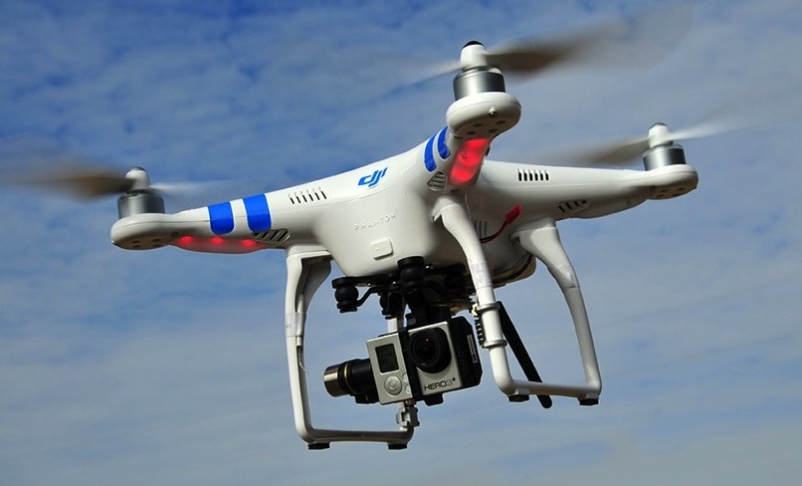
The surging technological advancements has tremendously given rise to many innovations in diverse fields and similarly to a broader extent the drone technology has its prevalence and widespread applications in several sectors that are perceiving immense growth presently. Drones are bringing the next mass tech revolution and various sectors are riding through this new wave. Drones are formally known as Unmanned Aerial Vehicles (UAVs) which is an unpiloted aircraft that are able to carry out many innovative range of tasks from a small scale to larger scales which can be large as an aircraft or small as the size of your hand. UAV is a flying robot that can be controlled remotely ( with pilot intervention) or autonomous drones ( without pilot intervention) through software controlled flight plans comprising of sensors, infrared cameras, GPS, laser etc.

Remotely controlled drones

Here the drones are controlled by remote ground control systems which also referred to as a ground cockpit. Drones do not require a pilot onboard whilst a drone controller works by sending a radio signal from the remote control to the drone which manipulates the action of the drones. There are numerous products around the world that are Wi-Fi enabled so that they can be remotely accessible and can be broadcasted over a computer or smart devices. These are more common, possess wide range of applications and allowed in all categories unlike the autonomous drones which are allowed in only in a specific category. With the remote control abilities, drones monitor locations, communicate possible hazards and notify threatening conditions , they are also more economical to afford. They are used in surveillance, rescue, in agriculture to monitor the crop growth and detect pests, capturing high quality aerial photographs, film making, construction, mapping etc.

Latest autonomous drone technology and challenges

Autonomous drones is the juncture where AI and drone technology meets, as it works so with the help of artificial intelligence, powered navigation and operational software, enabling it to cope up with all kinds of unforeseen and unpredictable emergency situations. An autonomous drone is a type of UAV, but a UAV is not necessarily an autonomous drone. It is a UAV that can operate and conduct a safe flight without any human intervention. It can take off, flight, establish the missions and land completely autonomously with pre-determined routes defined by the drone operator. It sounds fascinating right? Delivery drones are usually autonomous that are used to transport food, packages or goods at your doorstep. Markets and sectors may use autonomous drones to perform work in broad fields that are difficult to analyze swiftly by people. It also makes data collection easier by its integrated software and solutions.

Drones that can be used for commercial purposes have a huge market. Its TAM is expected to be worth 100 billion dollars (total addressable market). Drones might thus be utilized in a variety of areas, including industry, agriculture, scientific data collection, inspection and security monitoring, managing photographs, delivery, defense, disaster management etc. Even though autonomous drones are very unique in operation there are also many challenges linked with it because it is harder to design one that works all on its own like handling adverse weather, flying in urban populated areas, managing intricate situations etc. Right now drones can achieve conditional automation, where an intervention is necessary to monitor how the vehicle is doing on its own and there are less widely available fully developed autonomous drones as of 2020.

In a big push for drone technology, government eases standards

The Ministry of Civil Aviation released certain draft policy for drones recently which brings more safety features and appears to address some problems in India’s nascent unmanned aerial vehicle (UAV) industry regarding the compliance norms outlined earlier. “On the premise of basis of trust, self-certification, and non-intrusive monitoring”, the draft policy reduces the number of approvals required by applicants. It brings down the number of forms from 25 to 5 under the UAS Rules, and reduces fees for certain approvals. This draft policy has got approbation from the industry.

Many fields are revolving around the effectual drone technology and the future of drones and their distinctive applications are much exciting and obliging!

Kolkata

Situated in easterly part of India along the famous Hoogly river, Kolkata which was earlier known as Calcutta is referred as the city of joy .With the magnificent architecture, rich traditions, beautiful music and art this city has something unique within it. And not only the traditions, but this city is a place of residence for esteemed artists such as the great Rabindranath Tagore and Satyajit Ray providing a special admiration for literature as well as cinema. Among all this city provides an exceptional religious and traditional experience of Durga Puja known as “Maha  pujo” or merely puja or pujo every year.

“Dugga Dugga” echo the unified voice of all the Bengali women as they move towards the pandals for the “pujo”, wishing for a  secure journey ahead in their life. The euphonious sound of beats coming from the dhak echoes the entire pandal and the aroma of dhunuchi(a Bengali incense burner used in traditional ceremonies)) fills in every house and the joyous street of Kolkata. Attired in the most beautiful sarees along with the heaviest of jewels, every Bengali women seem to walk a step ahead of every individual on the auspicious day. Nothing  

Does tomato juice go bad

Tomato Hearing this word the things related to it come in the mind of all of us.But today the question related to tomato is does tomato juice is bad? So let’s answer this question, let’s clear everyone’s doubt does tomato juice is really bad and if it happens then for how long?

does tomato juice go bad?

then I would say yes it does go bad but it doesn’t happen so fast And whether it is tomato or any other juice, they get spoiled after a limit.But if we follow the instructions given below, then tomato juice does not spoil so quickly.

Actually, we use tomato juice in two ways, some people are those who buy it from the market.And there are some people who use tomato juice by making it at home.In today’s time, most of the people buy everything from the market, but due to corona, some people prepare everything at home for safety.

Does tomato juice bought from the market last longer?

So first let’s talk about tomato juice bought from the market.

  • We all know that juice comes in a closed bottle in the market and it is very good for juice or any material.Tomato juice bought from the market lasts easily for 4 to 5 months without keeping it in the fridge.
  • If it is not opened, tomato juice lasts longer than the date of the given bottle and is also safe It does not spoil and we can use it comfortably.
  • It is a matter of not spoiling tomato juice without opening it.But if we open the bottle of tomato juice bought from the market and keep it in the fridge, then we can use it for at least a week Or it stays good for 2 to 3 days only.
  • But if we keep tomato juice in the fridge for a long time, then it will be safe only for 6 to 10 days after taking it out, after which it may spoil.
  • It may also happen that tomato juice will start to smell or its taste will change or mold will appear, then leave it.
  • If we have ever taken tomato juice from the market or kept it at home, then see if they are leaking or rusting from anywhere.So do not buy such a bottle of tomato juice or keep it at home throw it away.
  • Tomato juice taken from the market is known to be more safe and last longer because it is packed in very good and safe conditions and due to Corona everyone wants safety first.
  • Tomato juice bought from the market is neat and clean as well as lasts longer than the given date.And like this we must have seen many types of juices
  • We also have to keep in mind that whenever we open the bottle of tomato juice, the sooner we finish it, the better.

As we all know that what I am telling you, I am telling it from my own guess.Because many times it happens that there is tomato juice or some other juice, they go beyond their given date.So sometimes but sometimes it happens that they last for 1 year and we use them and many times it does not happen I will tell you about all the juices apart from tomato juice, which we buy many types of juices from the market. So the same thing happens with all of them, it is not necessary that everyone’s quality should be the same, but I am telling from my guess.

WARNING

Whenever we buy tomato juice from the market, it is not necessary that it is tomato juice, but whenever we buy any juice, then buy it after seeing its date.And keep in mind that if we keep tomato juice in the fridge, it will last for at least 2 to 6 days, not necessarily whether you open it or not.And for more information, read the label given in the bottle carefully, this will make you understand everything better.

Does homemade tomato juice last longer?

So let us now know about homemade tomato juice.

As we all know that many people are who like homemade things more than the things in the market.And even if it is tomato juice.No matter how many market products we use, but the matter of homemade tomato juice is different.There is a lot of difference between the two, except that it is from the market and this homemade tomato juice There is a difference for quality in tomato juice bought from the market and tomato juice made at home.

We all know that there is a difference between homemade tomato juice and tomato juice bought from the market.Homemade tomato juice is not safe for a long time Homemade tomato juice is most refreshing, beneficial and good for 3 to 4 days only.But as we all know that if we want to keep it safe for some more time then we have to keep it in the fridge.This is good for those who have a fridge, but those who do not have a fridge, then they can use tomato juice for 2 to 3 days only.

So let me tell you through a table

PantryFridge
Homemade tomato juice
1 – 3 days
Tomato juice is sold without opening and without keeping it in the fridge.3 – 5 months past its date
Tomato juice is sold by opening it without keeping it in the fridge.4 – 6 days

If tomato juice is sold by keeping it in the fridge2 – 5 days

How to keep tomato juice more carefully.

we all just saw and read that we can keep tomato juice without keeping it in the fridge and without opening it If you keep it in a dark and cool place then it will not spoil easily for 3 to 6 months and we will be able to use it.And we all know that every product has a limit to be bad, but we try to keep it fresh and good for a long time That it should not be bad..

And apart from all these things, we should also keep in mind that if we drink tomato juice Or any other juice that we are drinking and cannot finish it, then seal it.This will not spoil the juice and will remain fresh.

4 Tips About Tomato Juice

  • If we buy a can of tomato juice, then use it as much as we need.And seal the juice of the remaining tomatoes, so that it will be safe and useful for several days.
  • And if we open a bottle, then keep it in the fridge as soon as possible.
  • And we should keep in mind that whenever we drink tomato juice, we have to drink as much tomato juice.So take out that much in a glass and keep the remaining tomato juice well in the fridge.
  • And it is up to us how we have to take care of our hygiene.

Summary

We should always know what kind of stuff we are using, how long we can use it And what are the advantages and disadvantages of it, we should know everything whether the quality of the product is good or bad, we should be aware of all these things.

Love and relationships

Photo by cottonbro on Pexels.com

Love the most complicated yet simple word in pronunciation. This is the word we have heard millions of time. And also have spoken multiple times. Now If we define love what would be it?. Something which give you happiness and pleasure is love. The person with whom you are happy and know that he or she can make you happy everytime.

Today we are talking about love in relationships. Relationships one more complicated word. And in actual relationships are complicated. The start of every relationship is from I think the word love. In most cases this is not love. How can you just a say person you saw ? That’s what is like not love. And we assume it as love and enter into relationships that are going to end soon.

May be with the passage of time you eventually fall or may be you dont. The situation is worst when one and the other doesnot. This is what we call DEVDAS stage. Person in Stage of singing TADAP TADAP KE IS DIL SE AAG NIKLTI RAHI.. And he feels all sad songs. Ohh damn this is so good and it was written for me.

Relationships are never smooth. Have you ever seen any marriage smooth? So how can be a relationship smooth? Your relationship can only be successful if you both understand each other. How you can run your vehicle? Sounds like marriage yaa it is. But the roots of both are same. Trust and understanding.

Every relationship is different in its own and you dont need a LOVE GURU for it. Follow what your heart says and everything is best then. Sometimes expert advice can ruin your life. Use your mind. #kbhi toh istmal kro.. and #phle istmal kro fir vishwas kro. 🤣🤣🤣.. Sorry for the joke.

If you like the blog please vote and like. Tomorrow we are going to come with another munch masala. Byyee byee!!

Toycathon aims to position India at 100 billion USD global toy manufacturing market

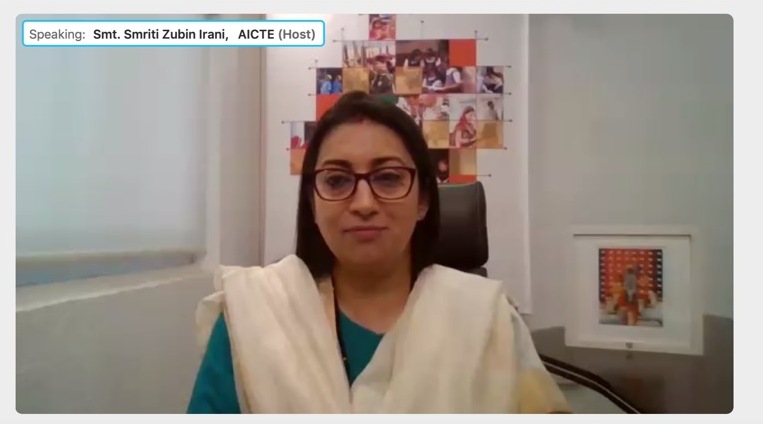
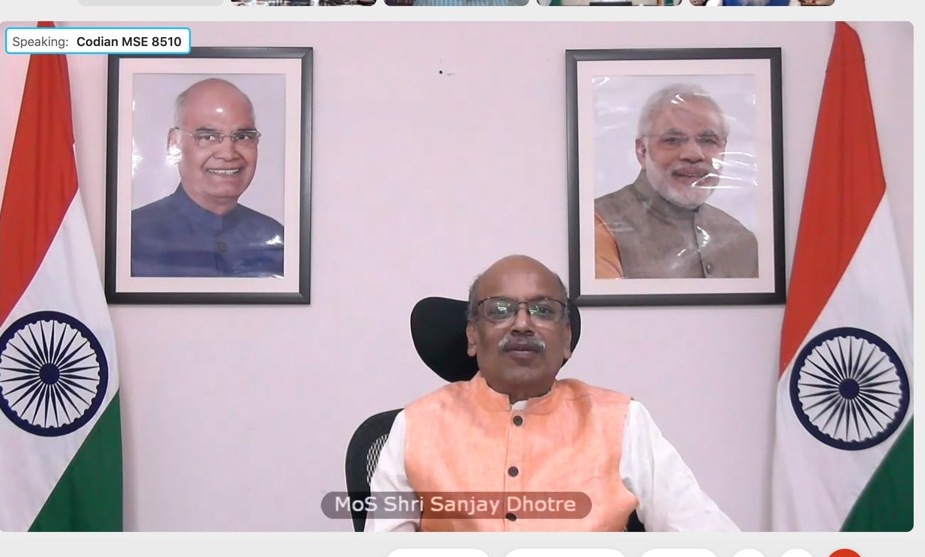
 Union Minister Women and Child Development and Textiles Smt. Smriti Zubin Irani and Minister of State for Education Shri Sanjay Dhotre virtually inaugurated Toycathon 2021 grand finale today. Shri Amit Khare, Secretary, Higher Education, Ministry of Education; Shri Upendra Prasad Singh, Secretary, Ministry of Textiles; Prof. Anil D. Sahasrabudhe, Chairman, AICTE; Dr. Abhay Jere, Chief Innovation Officer, Ministry of Educations Innovation Cell; Dr. M.P. Poonia, Vice Chairman, AICTE and Dr. Mohit Gambhir, Director, MoEs Innovation Cell were present at the inauguration session.

The Toycathon 2021 is being organized jointly by Ministry of Education in coordination with five other Ministries viz: Ministry of Women and Child Development, Ministry of Information and Broadcasting, Ministry of Commerce &Industry, Ministry of Small and Medium Enterprises, and Ministry of Textiles. This inter-ministerial Toycathon focuses on conceptualizing new and innovative toys using local materials which are economical, affordable, safe, environment friendly, with exceptional high quality for both Indian and global markets.

Speaking on the occasion, Smt. Smriti Zubin Irani marked the moment as historical where the nations first toy hackathon is being dedicated to the world. The Minister complimented 17749 individual teams that submitted the ideas at Toycathon 2021. She hoped that many more ideas from this toycathon grand finale be commercialized. She emphasized that the toys have huge impact on psychomotor abilities of children, impact their memory skill and generate huge responsibility towards ensuring future autonomy of the child.

She expressed her concerns that 85% toys that our children are playing with are imported and are predominantly made of plastic. Drawing inspiration from Prime Ministers global commitment for sustainable development, Minister invited research bodies and toy manufacturers to make sustainable toys. She also advised that India is known for its engineering potential and our technologists should equip toy sector with adequate and innovative technologies for electronic toys.

Shri Dhotre said Indian toy market stands at around $1.5 billion USD and currently we are importing a major chunk from outside. The global toy market is estimated to be more than 100 billion USD, we must channelize our creative, innovative and manufacturing power to have our share in these areas. This toycathon will provide opportunity to our young innovative minds to lead the path to manufacture toys in India for the world.He suggested that the use of toys could ease the burden of rote learning science and other subjects.

Speaking on the occasion, Shri Upendra Prasad Singh  highlighted the commercial as well as pedagogical importance of toys in inculcating the values, ethos and awareness about our history and culture. He said we have a very large number of clusters and very good artisans, but one thing which is required is to innovate, innovate as per the changing requirement of not only our country but for abroad as well. He hoped that the ideas generated in this toycathon will be very useful for the said purpose. 

Shri Amit Khare expressed his concerns that economical value of imported toys is huge and it is a roadblock for atmanirbhar Bharat. He said, The curb on import of toys will generate new opportunities for our artisans. He added that the National Education Policy 2020 advocates for 5+3+3+4 system and it asks for activity-based learning for children through toys and games, here the importance of regional Indian toys is very significant in connecting young minds with our history and culture.

On Inaugural occasion Prof. Anil D. Sahasrabudhe, Chairman, AICTE said that early child education should not be stressful and it should be fun based learning through toys, stories and games. He added, Edutainment, which is entertainment and education at the same time,  is required.He praised the organizing team for developing a robust digital platform which could bring the participants, evaluators and organizers on one platform to facilitate this toycathon.

Dr. Abhay Jere, Chief Innovation Officer, Ministry of Educations Innovation Cell, welcomed the dignitaries and motivated the participants to do best as per their abilities.

Dr. Mohit Gambhir, Director, MoEs Innovation Cell, who mastered the inaugural ceremony emphasized the importance of grassroot innovation. He said In todays time it is well understood that the future innovations will spring from the base of pyramid – where common men-women will innovate for their needs. This base of pyramid is very critical for holistic development of society and needs to be trained.

The hackathon was initially conceptualized in physical as well as digital mode. Due to the prevailing Covid 19 pandemic and owing to the safety of participants the physical edition has been deferred and now only digital edition is being conducted from 22ndJune to 24thJune 2021. Toycathon 2021 majorly focuses on conceptualizing new and innovative toys using local materials which are economical, affordable, safe, and environment friendly, of exceptionally high quality for Indian as well as global market.

The ongoing Toy Hackathon have 3 tracks:

Track 1for Junior Level Participants i.e., primarily SCHOOL STUDENTS. They mainly focus on designing toys for kids of age group 0-3 years and 4-10 years. 

Track 2 for Senior Level Participants i.e., students and faculty from Higher education institutions. This group focus on developing concepts for 0-3 years, 4-10 and 11 years and above. This segment primarily focused on Electronics, Sensors, Mechatronics, and toys based on AI and ML approaches, AR-VR-XR and Robotics.

Track 3 for Startup-Professional Level that incudes overall innovation and development of prototypes. These prototypes are expected to enable toy industry in boosting up the production along with improving the quality of toys in Indian market.

During three-day Toycathon 2021 grand finale, participating teams of all tracks will be mentored through specialized mentoring session in morning half of the day and then they will be evaluated in later half of the day for initial two days and then there will be a power judging round for participating teams to declare winners for Toycathon 2021 Digital Edition. For this purpose, Ministry of Education Innovation Cell has engaged 645 mentors and evaluators for 1567participating teams. 85 Nodal centers have been selected to support Ministry of Educations Innovation Cell and All India Council for Technical Education, which are the organizing agencies for this Inter-ministerial Toycathon.

***

Ensure continuity of quality education during the pandemic

The Minister of State for Education Shri Sanjay Dhotre participated in the G20 Education Ministers’ Meeting on 22nd June, 2021. The meeting was hosted in blended mode by Italy. G20 Education Ministers exchanged views on how to progress on the fight against educational poverty and inequalities, especially in context of the Covid 19 pandemic. The ministers also resolved to share innovative experiences implemented during the pandemic to ensure the continuity and quality of learning pathways through blended education

Representing India, Shri Sanjay Dhotre reiterated the country’s commitment towards reducing and eventually eliminating educational poverty, inequalities and early school leaving. Speaking on National Education Policy, 2020, the Minister said it envisages equitable and inclusive education for all, withspecial focus on children and youth, especially girls, from socially and economically disadvantaged groups who are more at risk of being left behind.

Shri Dhotre said that the Indian education system has made steady progress towards bridging gender and social category gaps in all levels of education through multiple interventions. Some of these include increasing intake capacity of schools; tracking out-of-school children; monitoring the learning outcomes of vulnerable students; ensuring physical safety & zero tolerance to breach of child rights;  mid-day meals to ensure health of children; enabling mechanisms for Children With Special Needs ; promoting multiple pathways to learning and strengthening open and distance learning programmes. 

Regarding ensuring educational continuity during the pandemic, the Minister shared that India has promoted blended learning extensively.   Digital educational content has been made available on various e-learning platforms like DIKSHA, SWAYAM and several others which can be accessed by Anyone, Anytime, and Anywhere free of cost. Permissible online component in conventional education has been increased from 20% to 40%. Over 100 top ranked universities have been allowed to introduce full-fledged online education programmes. In order to address the digital divide, India has been making extensive use of the SWAYAM PRABHA TV channels and the Community Radio. The Digital infrastructure is being expanded rapidly. A National Education Technology Forum is being   set up under NEP 2020 to aid technology led education.

The Government also took special care to address mental health issues of students through counseling programmes like Manodarpan and others, he highlighted.

Shri Dhotre said that India reaffirms its support to the collective efforts of the G-20 countries to reduce educational poverty, inequalities and early school leaving. India also supports the collective efforts of G20 countries to further improve and strengthen blended learning initiatives on the basis of the lessons learnt during the pandemic to ensure education continuity.

The Education Ministers adopted a declaration at the end of the meeting

Later in the day, a Joint Meeting of Ministers of Education and Ministers of Labour and Employment was also held virtually. G20 Ministers exchanged views on transitions from school to work. Shri Sanjay Dhotre represented Ministry of Education  in the meeting. Ministry of labour & employment was represented by MoS (I/C) Shri Santosh Gangwar.

Addressing the participants, Shri Dhotre said that it is essential that we, the member countries of G20,   recognize the need to equip our youth well for a smooth transition into the work space after completing their education. This is especially important for learners from socially and economically disadvantaged population groups, who are more at risk of being left behind.

The Minister stated that India is committed to helping its youth develop the knowledge, skills and attitudes necessary for the 21st century global work space. Our approach has been to integrate vocational education with general academic education, with focus on demand driven, competency based, and modular vocational courses, he added.

The Minister highlighted that National Education Policy 2020 provides for early vocational exposure in middle and Singapore international secondary school and its smooth integration into mainstream education.. It aims that by 2025, at least 50% of learners in the school and higher education system would have exposure to vocational education. He further said that the NEP 2020 also provides for vocational education to be aligned to skill gap analysis and mapping of local opportunities. Vertical mobility for students from the vocational stream is being ensured through a National Skills Qualifications Framework. Standards under this framework will be aligned with the International Standard Classification of Occupations maintained by the International Labour Organization”. This Framework will be the basis for Recognition of Prior Learning, and reintegration of dropouts from the formal system, he added. 

Shri Dhotre informed that India is also enhancing post education apprenticeship opportunities for youth by realigning the existing scheme of National Apprenticeship Training Scheme.

He said that India attaches great importance to the collaboration between G20 countries in the field of vocational education and training. He reaffirmed the support of the Government of India to the collective efforts of the G-20 countries to develop strategies to ensure smooth transition from education to work.

G20 Education and Labour and Employment Ministers’ adopted a Declaration at the end of the meeting.

Click here for G20 Education Ministers’ Declaration

Click here for G20 Joint Education and Labour and Employment Ministers’ Declaration

                                                                        ******

Rapid Antigen Test Kit for COVID-19 developed by IIT Delhi

 Union Education Minister Shri Ramesh Pokhriyal ‘Nishank’ virtually addressed students, teachers and stakeholders regarding Board Examinations today.

Shri Pokhriyal expressed deep gratitude and thanked Prime Minister Shri Narendra Modi for taking a decision to cancel the class 12 CBSE Board Exam in the interest of the students keeping in view their health and safety in the wake of Covid.

In his address, Shri Pokhriyal stated that CBSE has already issued comprehensive guidelines on assessment and evaluation for Class 12th Board examinations. He assured that those students who are not satisfied with the assessment, will be provided with an option to take the exams, whenever the situation becomes conducive, in August.

The Minister reiterated that safety, health and the future of the students are the top priorities of the government.

*****

Convocation of Indian Institute of Information Technology (IIIT) Sri City Chittoor

 Minister of State for Education Shri Sanjay Dhotre virtually addressed the students at the convocation of Indian Institute of Information Technology (IIIT) Sri City Chittoor today. Chairman of the Board of Governors of IIIT Sri City Mr. Balasubramaniam was present on the occasion. During the convocation, a total of 261 students comprising 164 Computer Science and Engineering students and 97 Electronics and Communication Engineering students received degrees. This includes 28 Honours students from both disciplines.  

Shri Dhotre said that National Education Policy 2020 aims at making India a global knowledge super power. It endeavours to develop scientific temper, rational and critical thinking in students, ensure students are endowed with 21st Century knowledge and skills, while displaying a strong character, filled with humanistic values, that flow from the ethos of India, i.e.Bharat.  He further added that our students will not only be the top-class students, they will also be the top-class citizens of this country and the world.

Speaking on the importance of Technology, Shri Dhotre urged students to explore how these technologies can be used to solve common man’s problems, such as to improve farming efficiency, and in turn improving his income; in  ensuring energy security, in ensuring piped water to every household in an efficient way.

Minister noted that Technology is playing a massive role in transforming the whole world economy. While working to achieve a goal of a 5 trillion-dollar economy, India is actively focusing on the strength of the digital economy.  He further added that this new India needs young technocrats to provide smarter solutions to the problems. He urged the students to play their part and contribute in making our country a world leader in every aspect of digital technology.

Shri Balasubramaniam said, “The remarkable growth of the fast-growing 180 billion USD IT/ITES industries in India over the past decade has shown the world India’s scientific, engineering and technological prowess and capabilities. The best multinationals of the world are leveraging Indian talent and rushing to set up large R&D hubs in India. We need to be self-reliant as Aatmanirbhar Bharat has now turned the gaze of this world-class innovative talent inwards, to create products and services for the Indian market at par with other countries.”

Dr. G. Kannabiran, Director said that “We propose to significantly improve faculty-student ratio, augment R&D infrastructure and focus on student development initiatives.  We plan to launch online BTech programmes and other continuing education programmes at the certificate, diploma and MTech levels in our key areas of strength.  We also plan to take up in-house corporate training in emerging technology areas, joint degree programmes with suitable overseas universities, enhance our campus infrastructure for next generation students.   We will continue as a family to make IIIT Sri City as a Nationally Relevant and Globally Recognized Entrepreneurial Institution.” 

IIIT Sri City is presently serving as the Secretariat of IIIT Coordination Forum. Besides enabling and coordinating regular meetings, few key activities are being taken up by the Secretariat for the member institutions, including FICCI-Panel discussion with Industry Leaders, Faculty Development Programme on E-Content Development and NOSSCOM Conference for IIIT Directors to benefit the member institutions.

*****

KP/AK

Swachh Vidyalaya Puraskar 2021 – 2022

 Shri Subhas Sarkar, Minister of State for Education today virtually launched Swachh Vidyalaya Puraskar (SVP) 2021 – 2022. The event was attended by Mrs Anita Karwal, Secretary (SE&L), and representatives from all States and UTs and UNICEF.

Shri Sarkar while launching the awardsunderlined the importance ofWater, Sanitation and Hygiene in Schools as it plays a significant role in determining the health of students, their attendance, dropout rate, and learning outcomes. The provision of water, sanitation and hygiene facilities in schools secures a healthy school environment and protects children from illness (including COVID-19) and exclusion, he added. Shri Sarkar emphasized that the SwachhVidyalayaPuraskarrecognise, inspire and award the schoolswho have undertaken exemplary work in the field of water, sanitation and hygieneand also provides a benchmark and roadmap for schools to make further improvements in future.

In order to create self-motivation and awareness about sanitation the SwachhVidyalayaPuraskar (SVP) was first instituted by the Department of School Education and Literacy, in 2016-17.

The SVP 2021-22 is open to all categories of schools. i.e. Government, Government aided and Private schools in both rural and urban areas. The schools will be assessed through an online portal & mobile app in 6 sub-categories: Water, Sanitation, Hand Washing with soap, Operation and Maintenance, Behaviour Change and Capacity Building and the newly added category on COVID-19 Preparedness and Response and the system will generate the overall score and rating automatically.The schools have been given sufficient time till March 2022 to apply for the awards so that they can do so at an appropriate and safe time.

Schools shall be awarded at the District, State and National level based on an internationally recognized five star rating system. Also, every school will get a certificate of participation showing the category-wise scores and overall rating of the school. This will help in promoting sustainable practices of improved Water, Sanitation & Hygiene in schools.

At the National level, 40 schools will be selected for awards this year under the overall category. The award money for the schools has been enhanced this year from Rs. 50,000/- to Rs. 60,000/- per school, under Samagra Shiksha scheme. Also, 6 sub-category wise awards have been introduced for the first time, with award money of Rs. 20,000/- per school.


* * * * *

Realize the dream of activating India 2.0, fueled with the spirit of Atmanirbhar Bharat

 National Innovation week will inspire us to work collaboratively to realize the dream of activating India 2.0, fueled with the spirit of Atmanirbhar Bharat, said Shri Subhas Sarkar, Minister of State for Education while addressing the valedictory session of  E- Symposium on ‘Building Innovation Ecosystem in Educational Institutes’ here today.

In his concluding remarks Shri Sarkar said that our goal is to promote innovation, entrepreneurship, critical thinking, and out-of-the-box thinking in our educational system, which is also reflected in the New Education Policy 2020. He further said that Government is committed to enhance the Indian economy and working tirelessly to achieve India’s goal of becoming a 5 trillion-dollar economy by 2024-25. Facilitating investment, fostering innovation, building best-in-class infrastructure, and making India a hub for manufacturing, design, and innovation will help us achieve the Atmanirbhar Bharat in the true sense. 

Click here to see Closing Ceremony of e-Symposium on Building Innovation & Entrepreneurial Ecosystem

Shri Sarkar stressed that the time has come when every Ministry, Government Department, Industry leaders, and all key stakeholders work collaboratively and support our higher education institutions so that they work on creating a holistic culture of innovation, research, and help in nurturing young talent to pursue their dreams as an Innovators and solve the problems faced by society and address upcoming challenges. 

At the occasion, Professor K. Vijay Raghavan, Principal Scientific Advisor (PSA) to the Government of India, emphasized on need of innovation for economic change and sustainability. He said that we need to expand the funding of research and innovation eco-system to position India as a favoured destination for Research and Development. He highlighted on adoption of best global practices for establishing closer linkages with national R&D institutions and academia, talent development and sourcing, strategic partnerships to bolster R&D in India and integrating with the domestic start-up ecosystem. He further added that, innovation must be linked with economic change and market and in synchronization with ongoing policy measures including Swachh Bharat, Made in India etc. etc. He urged Indian youth to come forward in sharing the ideas for country and economic development.

The opening session was followed by two panel discussion titled, “Grey Hairs not mandatory to build greater enterprises” and “Attracting Big Investment for Innovative ideas from Educational Institution” which was well attended by eminent personalities. All the panelists were enthused with such platforms which are much needed for building up the R&D and innovation eco-systems in India.

Prof. M. P. Poonia, Vice Chairman of AICTE had delivered welcome address and appreciated for the overwhelming responses and participation from student and faculty fraternity from educational institutions. The sessions were viewed by more than1.2 lakh attendees online across the globe. All panelists were enthused with e-symposium platforms which is the need of hour for building the R&D and innovation eco-systems in India.

Prof. Rajive Kumar, Member Secretary, AICTE highlighted the role of AICTE in supporting the technical institutions to excel in the field of innovation and entrepreneurship. The event concluded with vote of thanks delivered by him.

******