Russia attacks Ukraine: Is this World War III?

Amid threats of the Russian invasion, netizens took to Twitter to share their fears that the Russia-Ukraine crisis might trigger a World War 3 like situation.

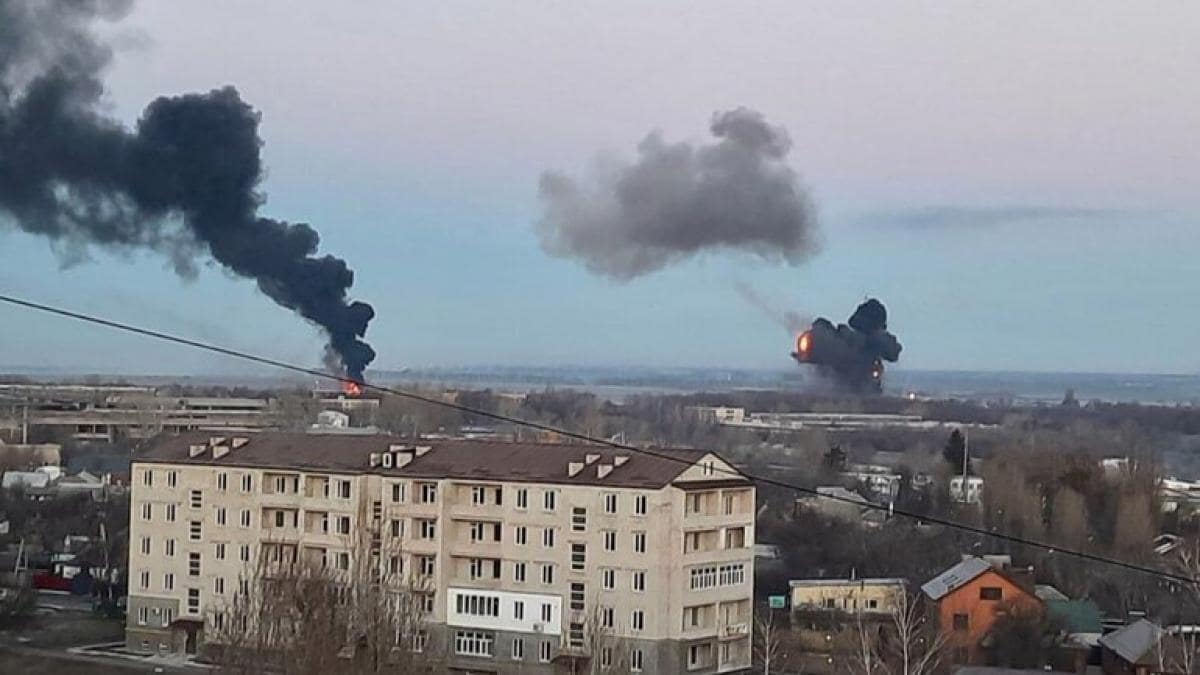
Russia-Ukraine war: Smoke rises in Kharkiv, the northeastern city of Ukraine (Twitter/@ahmermkhan)

Russia’s declaration of war on Ukraine has prompted outrage from across the world with nations and people alike condemning President Vladimir Putin’s act. 

While he has claimed that it’s a military action in Ukraine, explosions could be heard soon after in the capital Kyiv and other parts of the country. Putin also called on Ukrainian service members to “lay down their arms and go home”, adding that the special military action was meant for “demilitarisation and denazification” of Ukraine. 

As his statement comes amid Ukraine facing threats of the Russian invasion, netizens also took to Twitter to share their fears that the Russia-Ukraine crisis might trigger a World War 3 like situation.     While several shared a serious concern of Russia’s attack on Ukraine, others posted funny memes, trying to make light of the ensuing situation. null

The Russia-Ukraine crisis 

Russia declared war on Ukraine on Thursday, February 24 with Russian President Vladimir Putin calling it a military operation.

Putin has also warned other nations not to interfere with the Russian action as it would result in “consequences they have never seen”. Soon after his announcement, big explosions were witnessed in Ukraine’s Kyiv, Kharkiv and other regions.

Later, air sirens also went off in Kyiv, indicating that the capital is under attack. Meanwhile, Ukraine has closed its air space for civilian flights due to a “high risk” to safety amid Russia’s declaration of war on the country. Besides, The United Nations Security Council held an emergency meeting at the request of Ukraine on Wednesday night. 

On February 21, Russia recognised the independence of two separatist regions in eastern Ukraine after President Vladimir Putin signed decrees to recognise Ukraine’s regions of “Luhansk and Donetsk People’s Republics” as “independent”.  

The move escalated tensions in the region, heightening fears of Russia’s invasion of Ukraine. Putin also ordered Russian soldiers into eastern Ukraine in what the Kremlin termed a “peacekeeping” mission in the Moscow-backed regions.

Source: Google

SECRET OF HEALTHY LIFE

Importance of Exersice and meditation

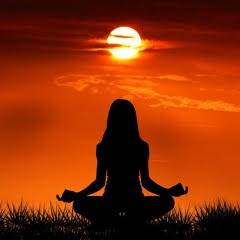
MEDITATION

All of us want a healthy and happy life. but how to get it? Regular exercise for the body and meditation for the mind are mood boosters. It is very helpful for a happy life. and all of us want it. let’s start with exercise,

Physical exercise means the exercise of our limbs. this exercise is essential for a good personality and healthy life. To enjoy every moment of life and make our mind happy our health is important. because mind and body are complementary to each other. A healthy mind grows only in a healthy body. so it is said that HEALTH IS WEALTH.

EXERCISE

Exercise is of different kinds. walking, swimming, rowing, riding, and playing games also. the asanas and yoga are also good for youngsters. walking is the simple and the best form of exercise. it is good for old and diseased people. Exercise helps us to digest our food and the blood to circulate. A man who takes regular exercise enjoys good health. Good health keeps a man cheerful. Cheerfulness is necessary for the proper concentration of mind. morning and evening time is best for exercise.

Meditation is used to develop an awareness of the present moment. It is done to sharpen focus and attention, connect to the body and develop acceptance of difficult emotions and even alter consciousness. It has a number of physical and psychological benefits like stress reduction and improved immunity. It is a habitual process. It is to increase awareness of yourself and your surrounding. Meditation develops a positive mood, discipline yourself, healthy sleep patterns,s and promotes good emotional health.

physical exercise is essential for a healthy body while meditation strengthens our mind. so regularly 30 min exercise gives healthy and happy life. It’s the secret. A beggar with good health is happier and luckier than a king with poor health.

Mental Health in India

Over the last two years in India, some of the most significant changes in thought and opinion, both positive and negative, were seen on the issue of mental health. Mental health refers to a person’s psychological, emotional, and social well-being. As individuals, we tend to be more focused on our physical well-being. But it is important to maintain a healthy body and a healthy mind as well.

When the COVID-19 pandemic hit the world, there was fear, panic, and a lot of confusion. People’s mental health took a heavy toll. The situation in India was not different either. According to a study by Lancet in 2020, there was an increase of 35% in the number of anxiety and depression cases reported in the country. Covid-19 patients often suffer from depression, anxiety, and post-traumatic stress related to the disease. Front-line workers and people in the healthcare system also face issues of stress and insomnia and may face a lot of stigma from their communities. The situation has obviously relaxed these days, but the lockdown days were definitely a difficult period for everyone. The general population also suffered from issues such as stress, anxiety, depression, and loneliness. Spending time in isolation or quarantine led to increased concerns regarding suicidal thoughts and suicidal ideation, particularly among the youth. There was increased alcohol consumption and drug use, even as many cases of people suffering from severe withdrawal symptoms were reported due to the sudden unavailability of alcohol and other addictive substances during the lockdown.

While there has been a lot of distress, the lockdown has been beneficial for a fraction of people too. For some, it gave them the opportunity to spend previously unavailable time at home with their family, with work and studies going online.

In India, mental illness has long had a perceived sense of judgment attached to it. Mental disorders are usually not considered a real problem that requires proper medical care and treatment. There is a lot of stigma regarding it in our society. While timely diagnosis, professional help, and therapy can be very helpful for patients with mental illnesses, many are not usually ready to seek the required help. They feel a sense of shame and embarrassment in having to seek medical help. Lack of awareness and education also makes it difficult for people to properly express their emotional distress in such cases. Many are not aware of disorders like PTSD, behavioral and eating disorders. Mental health services may also not be easily available or affordable for everyone. There is a major portion of the population whose mental issues go untreated.

Regardless, the pandemic period has evidently brought a change in the mentality of people regarding this topic. With more people talking openly about their mental health struggles, the conversation around this topic has become more mainstream. Many now understand the importance of opening up and seeking help for their mental issues. They also understand the Importance of supporting those who require help. In a study conducted by LiveLoveLaugh in 2020, 92% of those surveyed said that they would seek treatment and support those who seek treatment for mental illness. This is a definite increase from the 54% who were of this opinion in the same survey conducted in 2018.

The central and state governments have also done work in increasing the general awareness about mental health and improving the country’s mental health services. The Government of India has initiated two major programs to tackle this problem. The National Mental Health Program (NMHP) was launched by the Government in 1982 with the following objectives:

  • To ensure the availability and accessibility of minimum mental healthcare for all in the foreseeable future, particularly to the most vulnerable and underprivileged sections of the population
  • To encourage the application of mental health knowledge in general healthcare and in social development
  • To promote community participation in the mental health service development and to stimulate efforts towards self-help in the community.

Under NMPH, the District Mental Health Program (DMHP) was launched in 1996 which also concentrated on improving public awareness, providing training to professionals, and ensuring early detection and treatment of mental illnesses.

During the lockdown period, the three central mental health institutions- National Institute of Mental Health and Neuro-Sciences (NIMHANS), Central Institute of Psychiatry (CIP), and Lokopriya Gopinath Bordoloi Regional Institute of Mental Health (LGBRIMH), under the direction of Central Ministry of Health and Family Welfare, started a national helpline with the aim of supporting people with mental health concerns that arose out of the COVID-19 pandemic.

It is essential that such efforts and meaningful conversations regarding the topic of mental health take place in our society. Everyone should be educated and made aware of such issues, including children. They need to accept that mental health issues are normal. The important thing is to take action and reach out for professional help. A person seeking help for their mental health issues is not inferior or weird, and they require all the support they can get.

Water Crisis in India: The Present and The Future

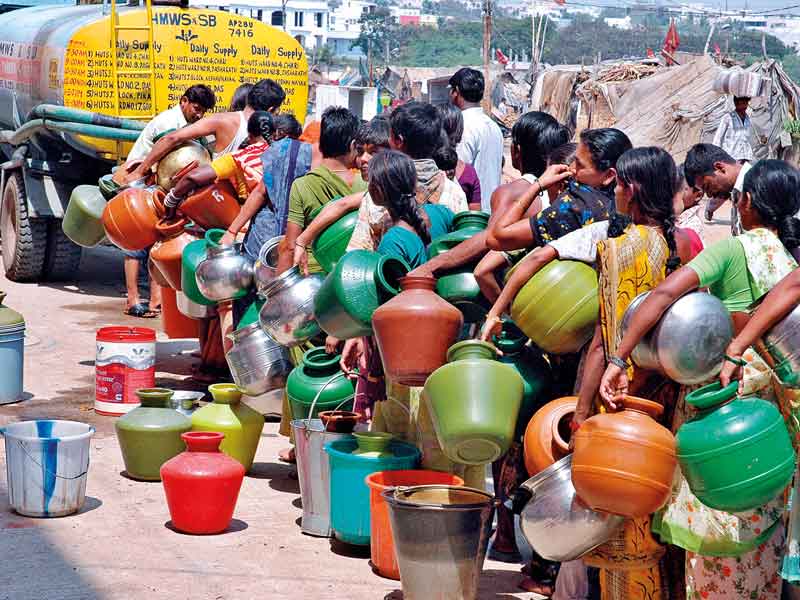
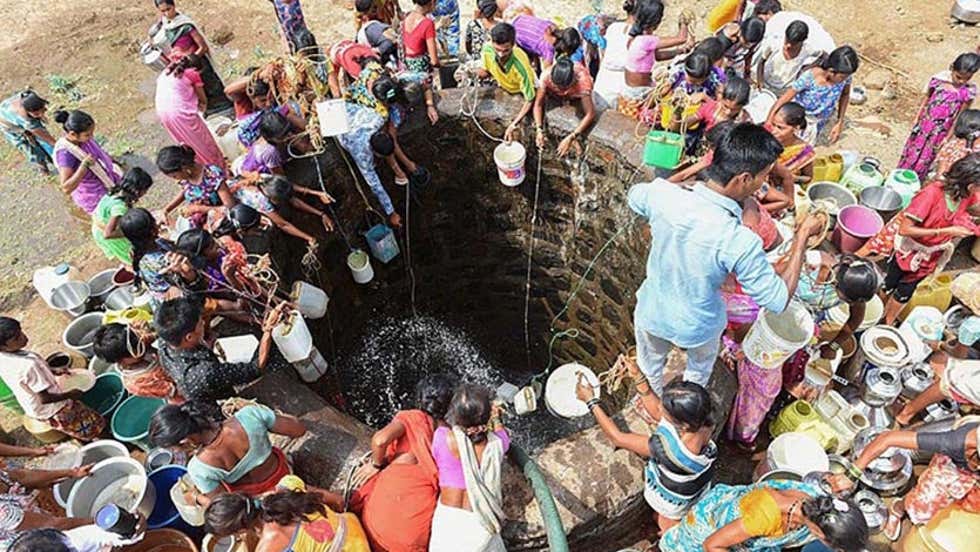
Queue for daily water collection

Introduction

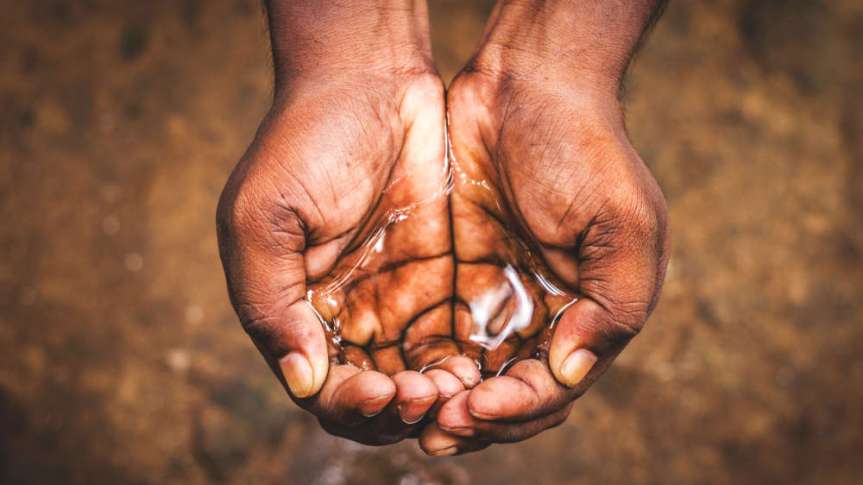
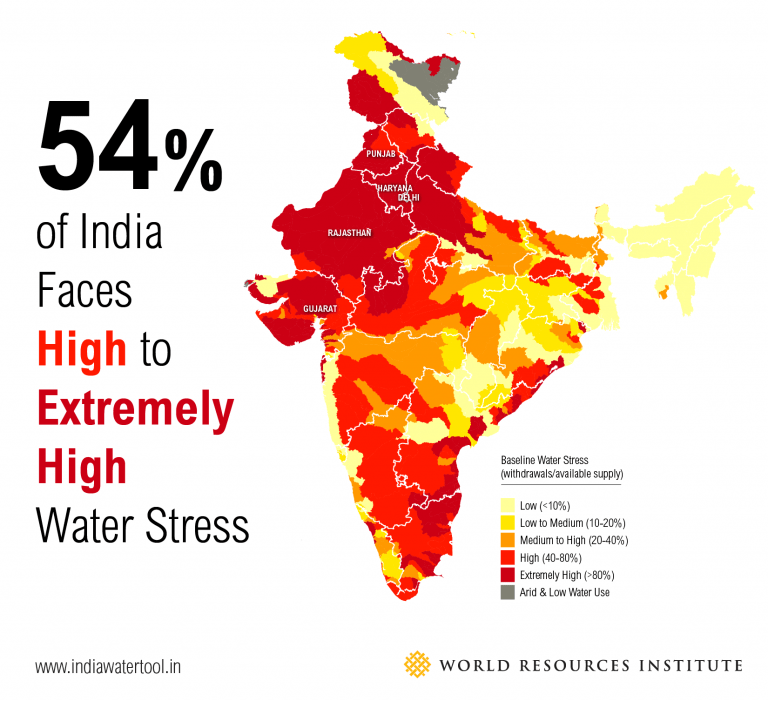
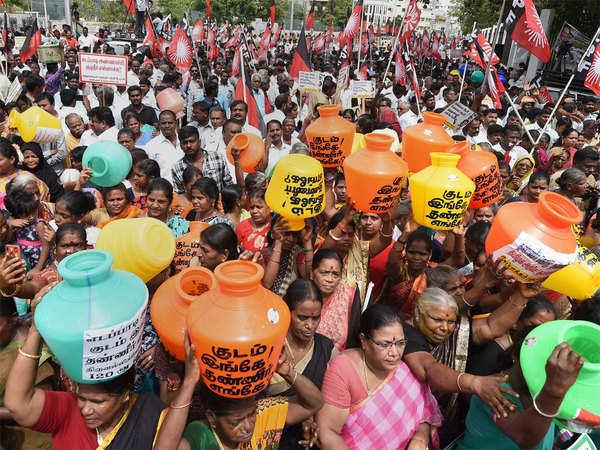
Water is the most essential element of life and livelihood. And India is having a hard time, coping up with the severe crisis of water. India constitutes 16 per cent of the world’s population, but the country has only four per cent of the world’s freshwater resources. With the changing weather patterns and recurring droughts, India is now declared as “water stressed”.

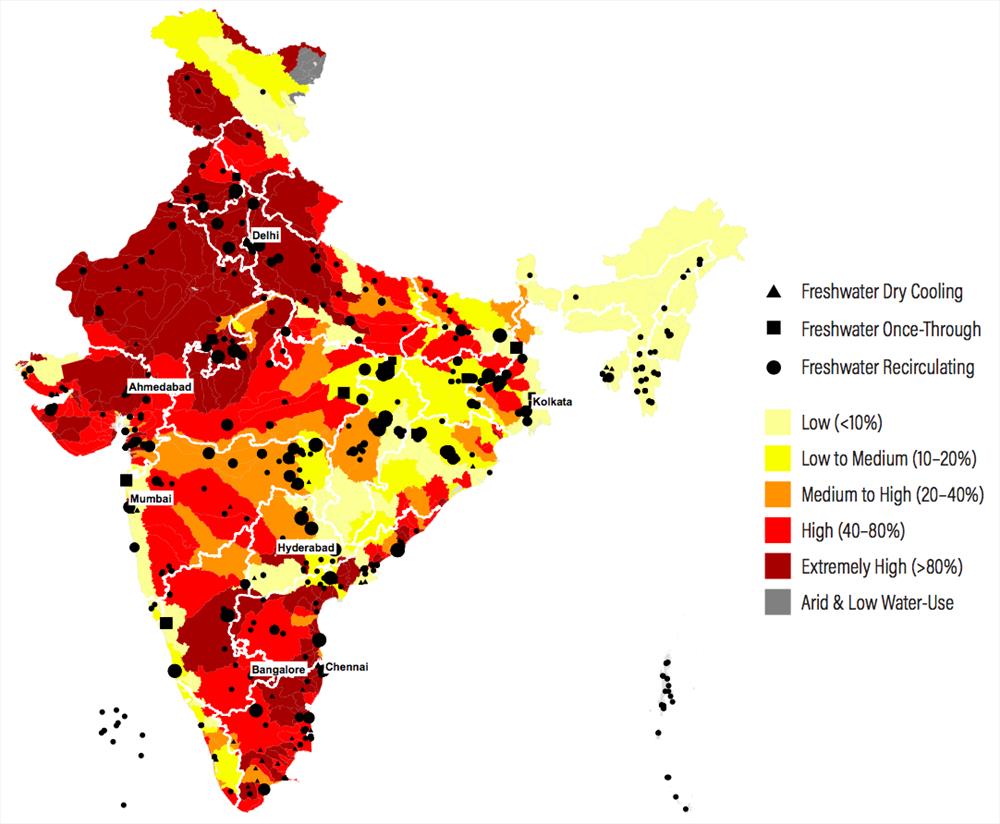
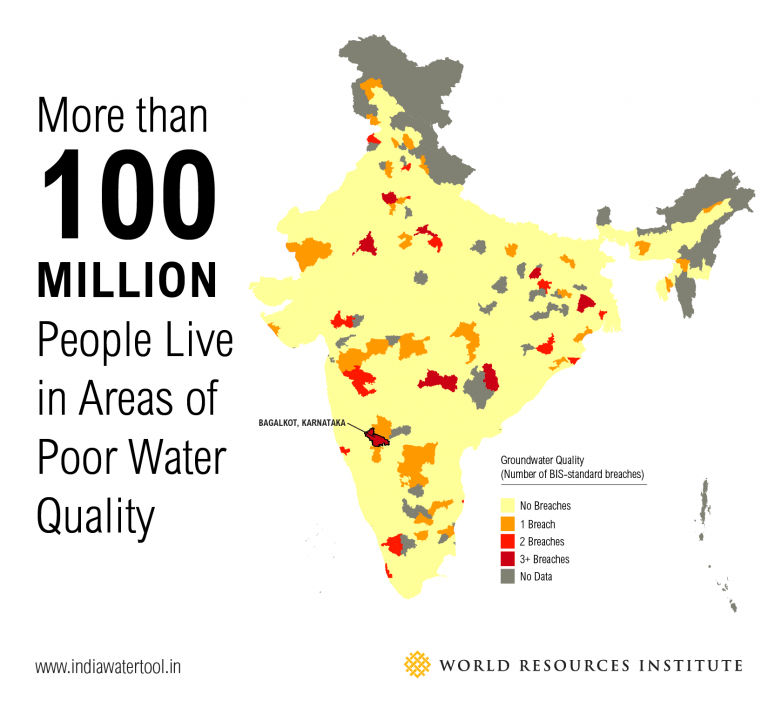
Statistical representation of India‘s Water Crisis

Background

Archaeological researchers had assumed the fall of Great Indus Civilisation was due to a catastrophic water scarcity caused either by shifting rivers or by drastic climate change that forced people to abandon city settlements. And history seems to repeat for present day India again. According to a NITI Aayog report in 2018, about 600 million people, or nearly half of India’s population, are facing extreme scarcity of water. The three-fourths of India’s rural households do not have stable running water supply and rely on sources that can cause serious health risks. The report also stated that India has become the world’s largest extractor of groundwater, accounting for 25% of the total. Moreover, 70% of the water sources were labelled as contaminated .And the conclusion of the report was ‘India is suffering from its worst water crisis in its history.’ It also pointed out 21 Indian cities to be run out of groundwater by 2020.

Reasons behind Water Crisis in India

1. Climate Change : The North-East monsoon is responsible for 10%-20% rainfall of the total rainfall in India, while the South-West monsoon provides approximately 80% of rainfall. In 2018, the North-East monsoon decreased by 44% and the South-West monsoon was deficient by 10%, causing the total rainfall in the area to decrease by 36 percent in comparison to the 50-year average. Because of the lower rainfall, water levels in reservoirs across the country decreased and led to extreme shortages of water in many major cities of India

. 2. Ground Water Extraction: Groundwater meets more than half of the country’s need of water supply and nearly 89% of the groundwater extracted in India is used for irrigation purposes. The traditional techniques of irrigation are also to blame for the water crisis as they result in a majority of water loss and evaporation during the irrigation process.

3. Pollutions in Our Rivers: Due to the lack of long term water management plans, most of the country’s rivers either run dry or have remained polluted over decades. The national river of Ganges is also the one that is most severely polluted, which is mainly resulted from untreated sewage of densely populated cities, industrial waste as well as due to religious ceremonies in and around the river.

4. Wastage of Unmanaged Water : According to the Central Water Commission, even though climate change has resulted in a reduction in rainfall and lack in underground water reservoirs, the country still receives enough rainfall to meet the needs of over 1 billion people. However, India only catches only 8 percent of its annual rainfall due to poor rainwater harvesting. Also for lacking the treatment of wastewater reuse, approximately 80% of domestic wastewater is drained out as waste and ends up flowing into salt water bodies.

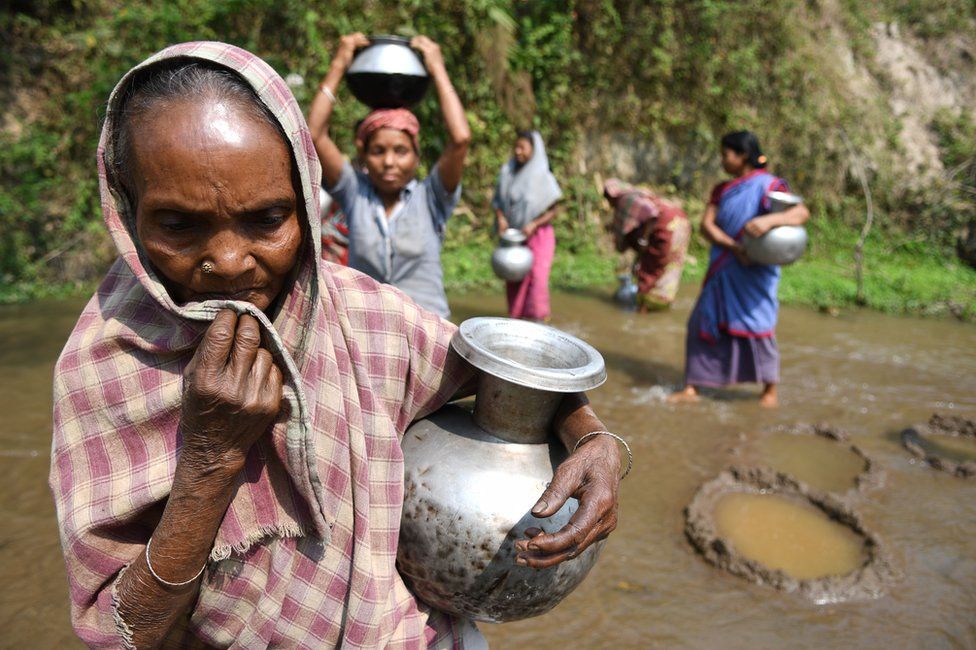
Struggle for daily water collection in water-stressed areas of India

Effects of Water Crisis in India: Where We Stand Today

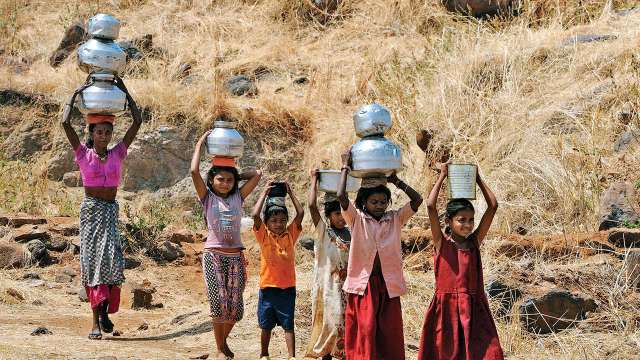
As many as 256 of 700 districts have reported ‘critical’ or ‘over exploited’ groundwater levels, according to a data from the Central Ground Water Board (2017). Fetching water in India has been perceived as a women’s job for centuries, especially in the rural areas. As groundwater resources come under increasing pressure due to over-reliance and unsustainable consumption, wells, ponds drying out fast, escalating the water crisis and placing even greater burden of accessing water on women. A rural woman in Rajasthan walks over 2.5 kilometres to reach a water source, according to a report by the National Commission for Women. Moreover, according to a non-profit named Water, women around the world spend a collective 200 million hours fetching water for their family. In addition to the time spent collecting water, millions may also spend significant amounts of time finding a place to go to relieve themselves. This makes up an additional 266 million hours lost each day. The acute crisis has even led to polygamy in one drought-prone village of Maharashtra. This involves having more than one spouse to collect water. The arrangement is termed as ‘water wives’.

The struggle for women

The Solution to the Crisis: Future Stands

Children also becoming victims of Water Crisis

The Government has taken up the most important role to eradicate the crisis by forming the Ministry of Jal Shakti and launching “Jal Jeevan mission”- Rural in 2019 to promote “Har Ghar Jal” by 2024. Goa and Telengana have achieved the first two Indian states to reach “Har Ghar Jal“, while Andaman & Nicobar Islands and Puducherry became first Indian Union Territories to reach the milestone. In 2021, “Jal Jeevan mission”-Urban was launched to complement the project. “Jal Shakti Abhiyan-Catch the rain” is also introduced to capture and reuse of rain water at the grassroot level as a Jan Andolan. Along with this, for the cleaning and filtration of Ganges river “Namami Gange” had been rolled out as a national flagship mission. Coastal Reservoirs, Desalination of sea water and improved irrigation techniques are now been adopted to address the crisis.

Conclusion

Along with time, active participation from every layer of society in solving the water crisis of India is being witnessed. The youth has come forward with an appealing message to properly addresses the crisis and solve the drawbacks together. Now, the emerging awareness spreading among masses India can hope for a better future to handle the crisis more effectively.

Punaura Dham included under PRASHAD Scheme of the Ministry of Tourism

 As per the request received from the State Government of Bihar, Ministry of Tourism has included Punaura Dham in the Ramayana circuit of Swadesh Darshan Scheme.  The destination of Punaura Dham has been recently included under PRASHAD Scheme of the Ministry of Tourism. 

Details of the projects approved under Swadesh Darshan Scheme for the State of Bihar is given below:

  • Development of Thirthankar Circuit in Vaishali- Arrah- Masad- Patna- Rajgir- Pawapuri- Champapuri under Jain theme, approved in the year 2016-17 at the cost of Rs. 37.20 Cr.  A amount of Rs. 26.11 Cr. has been released till date.
  • Integrated Development of Spiritual Circuit at Sultanganj – Dharmshala – Deoghar under Spiritual theme, approved in the year 2016-17 at the cost of Rs. 44.76 Cr.  A amount of Rs. 42.52 Cr. has been released till date.
  • Development of Buddhist circuit – Construction of Convention Centre at Bodhgaya approved in the year 2016-17 at the cost of Rs. 98.73 Cr.  A amount of Rs. 93.22 Cr. has been released till date.
  • Development of Gandhi Circuit: Bhitiharwa – Chandrahia – Turkaulia under Rural theme approved in the year 2017-18 at the cost of Rs. 44.65 Cr.  An amount of Rs. 35.72 Cr. has been released till date.
  • Development of Pilgrimage Circuit in Mandar Hill & Ang Pradesh under Spiritual theme approved in the year 2017-18 at the cost of Rs. 47.53 crore. A amount of Rs. 38.02 Cr. has been released till date.

Why we need Space exploration? It it a waste of money?

Poverty still rising all over the world, COVID-19 pandemic made it even worse. About 1.89 billion people, or nearly 36% of the world’s population, lived in extreme poverty. Nearly half the population in developing countries lived on less than $1.25 a day. Why should we spend money on space exploration when we already have so many problems here on Earth? Is it really that important? It’s like What if our ancestors thought that it would be a waste of time to figure out agriculture while we can do hunting? Or why should we spend so much time on exploring new lands while we have so many problems in our land? Each year, space exploration contributes to a lot of innovations on earth. It gave answers to many fundamental questions about our existence, and a lot of questions there to be answered if only we could increase our investment on space exploration.

Benefits of space exploration

    Improves our day to day life

       Since 1969, Neil Armstrong became the first human to ever set foot on moon, our interest in science and technology has improved a lot. In 22nd February 1978, US space agency launched the first satellite for its program of global positioning system (GPS). Currently there are 31 global positioning system (GPS) satellites orbiting the earth.Space exploration helped us to create many inventions like television, camera phones, internet, laptops, LED’s, wireless gadgets, purifying system of water and many more that we are using in our day to day life. There are nearly 3,372 active satellites providing information on navigation, business & finance, weather, climate and environmental monitoring, communication and safety.

   Improving health care

       The international space station plays a vital role in health and medical advancements. The Astronauts who works on the ISS able to do experiments that aren’t possible on earth due to the difference in the gravity. The project of Exomedicine – the study of medicine and microgravity, gravity has an effect on a molecular level so working in an environment where it can be eliminated from the equation allows discoveries that would otherwise be impossible. Medical advancements due to space exploration include,

  • Diagnosis, treatment, and prevention of cardiovascular diseases
  • Treatment of chronic metabolic disorders
  • Better understanding of osteoporosis
  • Improvements in Breast cancer detection
  • Programmable pacemakers
  • Laser angioplasty
  • NASA’s device with Space technology for Asthma
  • ISS plays vital role in vaccine development
  • Early detection of immune changes prevents shingles
  • Development of MRIs and CT or CAT Scans
  • And invention of ear thermometers.

Need for space colonization

       Overpopulation is one of the major crises in our planet. Currently we have 7.8 billion people alive on earth. Experts predict that there will be 9.7 billion people by 2050 and 11 billion by 2100, our earth can carry only 9 billion to 12 billion people with the limited food and freshwater resources. That means we have to find an exoplanet with suitable conditions soon. We already went to moon 6 times, we already sent a rover to Mars. Robotic missions are cost efficient, but if one is considering the future of human race we have to go there ourselves. Elon Musk announced that SpaceX is going to send people to Mars I 2022. NASA planned to make a colony on Mars by 2030. These missions are not something we need at this moment. But it may play an important role on our future. Proxima Centauri b is an exoplanet which is 4.24 light years away from us. With our current technology, it is impossible to reach it in our lifetime. But we should make it as an aim for interstellar travel over the next 200 to 500 years. Stephen hawking said that the human race has existed as a separate species for about 2 million years. Civilization began about 10,000 years ago, and the rate of development has been steadily increasing. If the human race is to continue for another million years, we will have to boldly go where no one has gone before.

The day we stop exploring is the day we commit ourselves to live in a stagnant world, devoid of curiosity, empty of dreams. –Neil deGrasse Tyson

How new media act as a objective information provider:-

I totally agree with the statement that media act as a objective information provider as in the age of technology it’s very easy to have a connection with the world and that is possible only with the help of media that in the busy life of people media act as a informer it’s very easy to read news articles or any sensation going on with the help of our phones laptops newspaper etc The concept of media has reached to its new sensation there are different forms of media available now a days which is very easy access for example. 1.Facebook- Facebook is world’s largest social media network more than 1.55 billion people are monthly active users of Facebook. It helps you to exchange messages as well as update your photos and profile including updates of latest news and information and different advertisement of the brand pages are also included in this tool. 2.Blogging- These platforms help you how to make your writing a voice for the nation where you can discuss your ideas or show your opinion in favor or against of any specific topics for discussion. 3.Twitter- It is a platform which allows blogging and to stay connected with different updates of the world 4.Instagram- One of the famous app of this generation has to be Instagram which allows you to update your pictures with filters and frames as well as share your ideas for different social networking sites and issues in the world. 5.YouTube- It allows you to put creative content on the media platforms with a significant message which device helps people to understand things more clearly with the help of visual aids, characters and more added to it. Media acts as a catalyst for our democratic society and helps in development as it is said to be the “FOURTH PILLAR OF COUNTRY”, helping to make public participation meaningful. If media is honest and committed in its job, democracy is bound to function more efficiently. On the topic if media is biased, corrupt and favours only a particular party or few individuals, it can prove to be very dangerous for the smooth functioning of democracy. Media is one of the part and parcels of everyone’s life it helps people to get updated with the things going around the world. There are a lot of examples where media act as an information provider Media’s role during election:- Media access and covers elections for judging whether elections are fair. During election period media increasingly Practises a combination of statistical analysis and the techniques of media studies to measure media’s roles in an election. Media ensures democratic electoral processes like: 1. Media as transparency. 2. Media as public educator. 3. Media as open firm for debate and discussion/ public voice. It acts an intermediate between government and people which makes them aware about each other. It is one of the best ways to spread awareness on any political views ,issues and problems and helps the public in exercising their rights. It helps in exercising the freedom of speech. It covers the protest for different movements to answer the right and wrong like “BETI BACHAO BETI PADHAO” , `AATMNIRBHAR BHART’ ‘ Let’s talk about the second example India act as a information provider media’s role during covid-19:- When lockdown was imposed suddenly in the country , it created a havoc among the wage workers who were living far away from their home as they had to travel long miles walking as no transportation Facilities were available because of the lockdown. Here, media played a crucial role in covering the painful scenario of these wage workers as a result of which many people came forward to help these needy people reach their homes safely. But it is not true that always media acts as an information provider sometime media goes bias with their opinion which is the problem we were facing during the hathras case which I have mentioned below:- Recently, there was a case from Hathras, Uttar Pradesh where a teenager girl was raped there was no such high coverage for this news . Here, media acted ignorant and they were more distracted Towards the SSR case i.e. ”news for sale or news for TRP rather than news for awareness or news for justice”. But living in the age of internet media’s toil was taken by social media where people By their posts and tweets raised their voices for justice. The disadvantages of the media include a risk of inaccurate reporting and a loss of privacy. Sometime, in a rush to be the first to break a story, the media puts out incorrect or inaccurate information. Media is acting biased and ignorant whenever there is a coverage against the government. Nowadays, truth is overshadowed by the TRP of the news channels. Media are now more focused towards the news for sale than news for awareness. There are various positive feature of media we develop lots of ideas and knowledge it benefits us in a lot of waves with the magnification source of education in just seconds. It made communication easier distance are not a limitation now with the help of this it makes interaction very ease compared to other platforms. Another in advantage that it provides a platform for young aspiring artists to showcase their skills and talents. It provides possibilities of employment Serves Company who want to promote their trademarks. It is known as the hub of information; you can get all information throughout the world with just a snap. Having such a huge advantage social media has also lead to one of the most dangerous element of the society the use of social media control the whole aspect of your life it makes you isolated drives children as a victim of social anxiety the addiction of social media is very common in youth they cross any extremities to be recognized in these digital platforms they follow all the hypes and trends just to make them self-fit in the media world. Fake news disturbs the mind of the civilians people get obsessed with the media tools and become the victim of this hy The sensation of latest new trend of mass communication has both loss and gain it helps to create good knowledge skills but at the same time are dangerous for the youth to follow any hype to be fit it is easiest way of communication but one of the largest platforms to spread rumors and fake news. Things come down to, it is your choice to make it work as the benefited form of hub of knowledge or to get wrapped in the dark side of this world. As an informer it should supply information in true and unbiased form and let the public choose, what may be right in their interest. Media makes us aware of various social, political and economical activity happening around the world. It plays a crucial role in shaping a healthy democracy. It is like a mirror which shows us or strive to show us the bare truth and harsh realities. It is the backbone of democracy. No one can become perfect but the media can rise upon the aspirations of the people for which it is primarily meant.

SECRETS TO SELF MOTIVATION DURING COVID

Self motivation is the ability to drive oneself to take initiative and action to pursue goals and complete tasks. It’s an inner drive to take action — to create and to achieve. It’s what pushes a person to keep going on and pursue tasks, especially those you’re pursuing because you want to, not because someone told you to.

When reaching for a big goal, self-motivation plays a key role. But making a change in your life requires persistence, and many of us find it difficult to stay motivated over time.When we talk about self-motivation, we are going beyond basic motives. What we really mean is the ability to follow through ,on making a positive change in life — without giving up. Self-motivation requires that you believe in yourself, stay inspired, and keep going despite setbacks. In other words, we are talking about grit. 

Photo by Madison Inouye on Pexels.com

With the onstart of covid, also emerged lack of motivation. My quarantined self can rightly describe the experience of quarantine being like ” a monotonous vacation”and the whole self-isolation process comes with a lot of the same risks and challenges. It is easy to let go of usual routines of self-care, such as having a schedule, showering, dressing well and eating structured meals at regular times. While not all these patterns are risk factors for depression, they may affect your motivation and energy levels. After wiling away a considerable amount of precious time that most of us were always falling short of once can also become a factor in reducing one’s motivation in life in general.

Similarly, sleep patterns can become dysregulated, with either excess sleep or sleeping out of sync with the usual daily routine – going to sleep early morning and waking around lunch or later

CORONAVIRUS-MY STORY AND WHOM DOES THIS VIRUS AFFECT THE MOST

Three years down the lane Ashok at this time was busy getting ready to college, he closed the doors dusted his bicycle and was about to leave but he sensed something missing thought for a while and left without further ado and while on his way he realized he left his face-mask at his room but that didn’t bother him much and he felt relieved after realizing the thing he was missing and he reached his college on time and yes who could have gone back home just for a mask and be late for his English classes. Ofcourse no one.


Today,Ashok was going to the market for purchasing his usual fruits and vegetables,he took a clothbag, closed the door ,dusted his bicycle and was about to leave when he sensed something missing, the watch as usual was on his wrist, mobile as usual in the pocket, clothbag in the handle but still something was missing.He closed the gates being absorbed in that thought but when he saw his neighbour, he left his bicycle on the road and ran into his house, opened his door, took his face-mask and kept the sanitizer in his pocket and now he felt relieved not just of the thought that clouded his mind but of his, his family and his neighbourhood being safe.

 CORONAVIRUS-WHOM DOES IT AFFECT THE MOST THE RICH OR THE POOR ?

It was Wuhan Institute of Virology from where the Virus leaked but who in this world is affected the most?
You would have heard people say that Corona doesn’t differentiate between rich and poor and Yes you have heard that right it’s both that can be prone to it.
But how can you be prone to something if you evade it, yes that’s what the uber-rich or the multi-millionaires of India did, they escaped from the harrowing situation during the Second wave of Covid. No, I would be happy that they had an option to fly to distant part of the world and save them and their bosom ones when their own people were suffocating ,were gasping with low levels of oxygen. The country saw them leaving in masks and shield who were only to return when the situation would be suitable for them through their “private jets.”They evaded so they are not at risk from this deadly mutants.

Next comes the ones who are a little less rich, the upper class and the upper middle class people who are shamefully and utter negligently crowding in the hilly areas when our country is recovering from the second wave but on the gateway to the third one. If memory is what we are blessed with, then the ones now gathered at the top seem to be devoid of it. They seek respite not in villages with poor offering help but with buddies in Hills getting a life. They are the ones that are privileged, they are the ones who saw funeral pyres on television and social media sites but they neglect the truth.

The middle class and the poor suffered the most neither could they escape from this country neither could they relax after the second wave in hill stations. They lost their jobs, returned home empty-handed to their wives and children doing with just savings.

It’s just a rhetoric to say that Virus doesn’t differentiate between rich and poor. Reality is that the rich have an option and poor ones don’t.

National stock exchange of india.

National Stock Exchange of India Limited (NSE) is the leading stock exchange of India, located in Mumbai, Maharashtra. It is under the ownership of Some leading financial institutions, Banks, and Insurance companies. NSE was established in 1992 as the first dematerialized electronic exchange in the country. NSE was the first exchange in the country to provide a modern, fully automated screen-based electronic trading system that offered easy trading facilities to investors spread across the length and breadth of the country. Vikram Limaye is Managing Director & Chief Executive Officer of NSE.National Stock ExchangeNational Stock Exchange of India (NSE).

National Stock Exchange has a total market capitalization of more than US$3 trillion, making it the world’s 9th-largest stock exchange as of May 2021. NSE’s flagship index, the NIFTY 50, a 50 stock index is used extensively by investors in India and around the world as a barometer of the Indian capital market. The NIFTY 50 index was launched in 1996 by NSE.However, Vaidyanathan (2016) estimates that only about 4% of the Indian economy / GDP is actually derived from the stock exchanges in India.

history of NSE.

National Stock Exchange was incorporated in the year 1992 to bring about transparency in the Indian equity markets. Instead of trading memberships being confined to a group of brokers, NSE ensured that anyone who was qualified, experienced, and met the minimum financial requirements was allowed to trade. In this context, NSE was ahead of its time when it separated ownership and management of the exchange under SEBI’s supervision.

NSE was set up by a group of leading Indian financial institutions at the behest of the Government of India to bring transparency to the Indian capital market. Based on the recommendations laid out by the Pherwani committee, NSE was established with a diversified shareholding comprising domestic and global investors. The key domestic investors include Life Insurance Corporation, State Bank of India, IFCI Limited, IDFC Limited and Stock Holding Corporation of India Limited. Key global investors include Gagil FDI Limited, GS Strategic Investments Limited, SAIF II SE Investments Mauritius Limited, Aranda Investments (Mauritius) Pte Limited, and PI Opportunities Fund I.

The exchange was incorporated in 1992 as a tax-paying company and was recognized as a stock exchange in 1993 under the Securities Contracts (Regulation) Act, 1956, when P. V. Narasimha Rao was the Prime Minister of India and Manmohan Singh was the Finance Minister. NSE commenced operations in the Wholesale Debt Market (WDM) segment in June 1994. The capital market (equities) segment of the NSE commenced operations in November 1994, while operations in the derivatives segment commenced in June 2000. NSE offers trading, clearing and settlement services in equity, equity derivative, debt, commodity derivatives, and currency derivatives segments. It was the first exchange in India to introduce an electronic trading facility thus connecting the investor base of the entire country. NSE has 2500 VSATs and 3000 leased lines spread over more than 2000 cities across India.

Markets of NSE.

Equity Derivatives EditThe National Stock Exchange of India Limited (NSE) commenced trading in derivatives with the launch of index futures on 12 June 2000. The futures and options segment of NSE has made a global mark. In the Futures and Options segment, trading in the NIFTY 50 Index, NIFTY IT index, NIFTY Bank Index, NIFTY Next 50 index, and single stock futures are available. Trading in Mini Nifty Futures & Options and Long term Options on NIFTY 50 are also available.[14] The average daily turnover in the F&O Segment of the Exchange during the financial year April 2013 to March 2014 stood at ₹1.52236 trillion (US$21 billion).

Equity Derivatives.

The National Stock Exchange of India Limited (NSE) commenced trading in derivatives with the launch of index futures on 12 June 2000. The futures and options segment of NSE has made a global mark. In the Futures and Options segment, trading in the NIFTY 50 Index, NIFTY IT index, NIFTY Bank Index, NIFTY Next 50 index, and single stock futures are available. Trading in Mini Nifty Futures & Options and Long term Options on NIFTY 50 are also available.[14] The average daily turnover in the F&O Segment of the Exchange during the financial year April 2013 to March 2014 stood at ₹1.52236 trillion (US$21 billion).

On 29 August 2011, National Stock Exchange launched derivative contracts on the world’s most-followed equity indices, the S&P 500 and the Dow Jones Industrial Average. NSE is the first Indian exchange to launch global indices. This is also the first time in the world that futures contracts on the S&P 500 index were introduced and listed on an exchange outside of their home country, the USA. The new contracts include futures on both the DJIA and the S&P 500 and options on the S&P 50

Interest Rate Futures.

In December 2013, exchanges in India received approval from market regulator SEBI for launching interest rate futures (IRFs) on a single GOI bond or a basket of bonds that will be cash-settled. Market participants have been in favor of the product being cash-settled and being available on a single bond. NSE will launch the NSE Bond Futures on 21 January on highly liquid 7.16 percent and 8.83 percent 10-year GOI bonds. Interest Rate Futures were introduced in India by NSE on 31 August 2009, exactly one year after the launch of Currency Futures. NSE became the first stock exchange to get approval for interest-rate futures, as recommended by the SEBI-RBI committee.

Debt Market.

On 13 May 2013, NSE launched India’s first dedicated debt platform to provide a liquid and transparent trading platform for debt-related products

The Debt segment provides an opportunity for retail investors to invest in corporate bonds on a liquid and transparent exchange platform. It also helps institutions that are holders of corporate bonds. It is an ideal platform to buy and sell at optimum prices and help Corporates to get adequate demand when issue bonds.

Financial literacy of NSE.

NSE has collaborated with several universities like Gokhale Institute of Politics & Economics (GIPE), Pune, Bharati Vidyapeeth Deemed University (BVDU), Pune, Guru Gobind Singh Indraprastha University, Delhi, the Ravenshaw University of Cuttack and Punjabi University, Patiala, among others to offer MBA and BBA courses. NSE has also provided mock market simulation software called NSE Learn to Trade (NLT) to develop investment, trading, and portfolio management skills among the students.[20] The simulation software is very similar to the software currently being used by the market professionals and helps students to learn how to trade in the markets.

NSE also conducts online examinations and awards certification, under its Certification in Financial Markets (NCFM) programs.[21] At present, certifications are available in 46 modules, covering different sectors of financial and capital markets, both at the beginner and advanced levels. The list of various modules can be found at the official site of NSE India. In addition, since August 2009, it has offered a short-term course called NSE Certified Capital Market Professional (NCCMP).[22] The NCCMP or NSE Certified Capital Market Professional is a 100-hour program for over 3–4 months, conducted at the colleges, and covers theoretical and practical training in subjects related to the capital markets. NCCMP covers subjects like equity markets, debt markets, derivatives, macroeconomics, technical analysis, and fundamental analysis. Successful candidates are awarded joint certification from NSE and the concerned.


Covid-19

Due to covid-19 period there has been a lot of differences in real work as well as virtual work. As we know that due to pandemic the style of doing work in industries affected a lot and also changed the lifestyle of the people. But pandemic is just a one part which affect the style of work if we think of the other side that is developing technologies is the other concern for the future of work. Consider Artificial Intelligence which is automating several jobs in all the sectors, especially for the low skilled labors. So due this low-wage workers will become jobless. There is a need to reskill them to keep them employed. New technologies such as blockchain, Internet of things have so much of potential to create plenty of employment opportunities. The jobs which will be there in the future are present today but the main concern is that they are not accessible for all. There is need to bridge the skills gap. Otherwise ,rich-poor inequalities will increased at a rapid rate. Future jobs will demand more skills as compared to present jobs. Future jobs will be more of technology based and it will create new job opportunities for new recruitment. Example – Cybersecurity jobs, Food deliveries etc. At present many workers are fighting towards exploitation of workers and human work culture, it is expected that the future of work will be more humane. Most of the companies will follow ethical practices such as minimum wage rule, ethical work hours etc. The future companies will be more customer-centric. Customer Happiness will be the integral to the success of the company.

The Future of work demand upskilling and reskilling of many workers .It is important to train low-skilled and unskilled people to prevent them from becoming jobless. It is expected that the future of work is going to be more humane and ethical.

Best Friend and Family :)

You all know that right.. Friends are inseparable part of human life! We all need friends to share our happiness and dark times. A friend around us motivates to be cheerful and easy going.

I have a bunch of friends. But very few among them I rely on. There are people that come into your life and slowly they become the part of your family. Often, when I’m not able to share anything with my family, I go to my best friend🙂 She makes everything easy with her I find the answer to my every problem.

I remember the first time I met her at a park near my home. Her eyes were sunken and gobbled with heavy drops of tears. I never thought my first meeting with her whom I admire will be like this. I saw her sobbing, sobbing and she just went on sobbing! I sat next to her, patted her & consoled her. But she was not ready to stop. Her hands and fingers were shivering. When I actually wonder the Ouch experience, the first meet with her, I am always taken aback! From that point, I understood the only thing in life all she needed from a friend was companionship and support.

I have met a lot of temporary people in life. Some friendships are short-lived and some last forever. I believe for a friendship to last there must be a mutual understanding, trust, loyalty and 0 jealousy.

The most crazy thing about my best friend is that she never fails to abuse me. Honestly, now I am afraid to let her down in any circumstance! Now I know that whatever happens I have to pick her call and listen to her rants and everything. There is no option to skip her call! Not that she is insane but I do stuffs which makes her abuse so badly that no other option stays my side rather than surrendering myself to her. I am the person in our friendship that often takes mini breaks from everything. This shooks her head & resulting the release of unparliamentary languange. HAHAAAA! We are best friends because we know where exactly our mind goes. The best thing about her is that she catches me up when I fall down.

Ship picks, she pats, she abuses, she hugs, she holds and we walk. What more do you need in life? When your friend refuses to leave you anyday! I feel blessed that I have her back with God’s grace. From her, I believed families are not only blood relations but my best friend is no less than my family

The golden age of Indian comics

By Anshiki Jadia

A magazine for children that tells stories through pictures which is often combined with text or other visual information.

History of fun

India’s comic industry began in the mid-1960s when the leading newspaper The Times of India launched Indrajal Comics. Mid 1960s saw syndicated strips like The Phantom, Mandrake being translated to Indian languages.

In the late 1960s, evolution of Indian comics came in the form of Amar Chitra Katha which contained 100% Indian content. In

1970, Indians most popular comic character Chacha Chaudhary was brought to life through Hindi magazine Lot pot. The popularity of Chacha Chaudhary, Pran Kumar Sharma’s stories went on to be translated in over 10 different languages.

1980s saw the entrance of several unforgettable and original characters, magazines and publishing houses like Tinkle magazine was founded.

Chacha Chaudhary’s entry into the world of Diamond comics. The arrival of Raj comics.

Around 1992, A Raj Comics issue titled Nagaraj aur Bughaku and super commando Dhruva and sold more than 9 lakh copies within 3 months of its launch, becoming the bestselling Indian Comic ever.

Manoj Comics, another one of India’s leading comic book houses, also published more than 365 comics within a year in the ‘90s, thereby implying that there was a time in the era readers actually had one new comic book to read every single day.  

There was a major decline in the sales of comic books by the late ‘90s and most Indian comic book companies were forced out of the game. The reason was rise in technology. After 2000, only Amar chitra Katha, diamond comics and raj comics were left.

After few years of struggling to revive Indian comic culture, comic companies were able to revive the culture through the birth of virgin comics, bullseye press, graphic India. Also in 2004, Web toons (a publishing portal) was launched which is a home to thousands of digital comics of different genre.

Famous Indian Comic Characters

Chacha Chaudhary is one of most favorite comic character that was created by pran Kumar Sharma. Chacha Chaudhary is a middle class Indian, frail but an extremely intelligent elder. The usual villains of Chacha Chaudhary are corrupt government officials, thieves, roadside goons & bullies, tricksters, cons and local thugs. He not only fights them and helps the common man but also teaches them moral lessons and good behavior.

Shakti is Goddess Kali’s transcending incarnation. Kali is the destroyer of demons and the last word in woman-power. She has a raging desire to get justice for women in this man’s world. The distress cries from any woman, anywhere in the world, turn her ordinary self of Chanda into a ferocious killer known as Shakti. Shakti is Maha Kali – Great Kali.

The Bahadur series focused a lot on dacoits. Bahadur himself was the son of a dacoit Bhairav Singh, who died in combat with Police. Bahadur, then a teenager, was adopted by Vishal, the police officer. Upon growing up, Bahadur set up the Citizen’s Security Force. Though Bahadur dealt with many kinds of villains, he displayed a much softer corner towards dacoits trying to rehabilitate them.

Shambu is a cowardly and lazy shikari (hunter) whom the rest of the world perceives as courageous. He always tries to run away from dangerous animals, but due to some stroke of luck always ends up as a hero. He lives with his wife Shanti. In The   Legend of Shikari Shambu (Tinkle Magazine No.573), it was revealed that Shambu, before being called “Shikari” Shambu, fell on a tiger and knocked him out. It was after this incident that he got the name “Shikari” Shambu.

Reasons Behind Failure Of Indian Comics

  • The publishers don’t know the difference between inspiration and copy.
  • Indians prefer watching over reading. (mostly free)
  • No resource for new creator.
  • Pressure of family and society.

Conclusion

For every 90’s kid, comic books were like a family member but today’s generation prefers online platforms for reading rather than seating and reading books. Many of them do not understand the thrill one feels while reading books.

But now, many Indian comic books have digitalized themselves and also have websites or apps for their fan so that They can access to the content. Now it’s our job to let get them past us devices and introduce it to young generation.