

28 Summers by Elin Hilderbrand


The fourth book in Jasmine Guillory’s series focuses on Maddie’s mum Vivian Forest and her meeting a smart and handsome British man.
I like the way throughout the series the author created diverse characters that do not often get enough representation in romance books. This time she concentrates on slightly older protagonists – Vivian is 54 and has been divorced for more than three decades. She has also been working hard as a social worker in a busy hospital, raising her daughter as a single mother and taking care of her sister Jo who has had serious health probems. All this meant that she hasn’t had much time for travelling or holidays.
When Maddie Forest unexpectedly is invited to step in and substitute her mentor on a work trip to the UK which is scheduled around Christmastime, Maddie knows she can spend New Year with her boyfriend Theo, but Christmas…Christmas is for family, Christmas is for her mum. Luckily, Vivian is all in. The job is high profile as it involves the royal family and Ms Forest and Ms Forest get to spend a part of their holiday at a royal residence in the north of England. We do not see much of Maddie in this book as she is way too busy with clothes alterations and fittings, so Vivian has a lot of free time to explore the house and marvel at neverending cultural differences. Vivian’s meet cute, Malcolm Hudson has an important job- he is a private secretary of Her Majesty. He has been divorced for six years, and his private life very much centres around his sister and his 19 year old nephew Miles. Malcolm is charmed by Vivian’s smile and positive attitude: ‘She had such a strong and playful sense of self…She was neither demanding nor bashful; just friendly and inquisitive and smiling’. Christmas holidays and New Year are a special time when unusual things can happen and even the most careful and realistic people decide to give in to romance. Malcolm takes time to get to know Vivian and what is important to her, as much as it is possible in the short time they have together. I love the way Vivian vents her feelings on the subject of surprises and how they are often about what the other person wants, not the person they are surprising, and Malcolm takes it aboard to make sure she feels comfortable with the things he suggests.
The fairy-tale setting and royal guest appearances in the book might make you think that this romance is too far away from real life and difficult to relate to, but it isn’t the case. Vivian and Malcolm live thousands of kilometers away, but, ultimately, they will understand that the connection they have is special and worth the risk. You don’t have to be based in different countries to experience this feeling: No, we are too different…No, there is no way it will work… He/She is too set in his /her ways. His job/ college/family is too important for him…The logistics would be a nightmare… And another potentially beautiful relationship bites the dust before you’ve even given it a chance. Yes, our life experiences teach us that we have to be realistic and pragmatic, and avoid risks, and this is how we may end with a job that brings more money, but less joy and happiness, or refuse to apologise to a relative or a friend who might just have a different point of view, but be as right as we are. Vivian and Malcolm knew from the very beginning the risks, but, still, they decided to give it a try, and they certainly deserve their own happy ever after.
This was not a laugh out loud book for me, but Jasmine Guillory’s trademark sense of humour is still there, coupled with her impeccable writing style. If you loved her previous books, and the diversity of her characters and settings, you will definitely appreciate this slightly more mature romance. And if you love tea, scones, cucumber sandwiches and all things British, you will have even more reasons to enjoy this last instalment of Jasmine Guillory’s hugely successful Wedding series .
Thank you to Edelweiss and Berkley for the ARC provided in exchange for an honest opinion.

I enjoyed reading THE WITCHES OF NEW YORK by Ami McKay and found it interesting, engaging, informative and well written. I liked the historical references, and was intrigued by the three main characters and Perdu, who looks like a raven, but is not a bird.
Adelaide Thom, claiming to be a mind reader, and Eleanor St. Clair, a keeper of spells, have a tea shop specializing in cures, potions, and palmistry and cater to Manhattan’s high society ladies. When Beatrice Dunn, a girl of sixteen and interested in magic, shows up at the tea shop, something happens!
Having enjoyed reading this book and The Birth House by Ami McKay, I wish to read The Virgin Cure also written by her.
A little tune that Eleanor’s mother used to sing at the onset of a thunderstorm,’a reminder of the dangers of getting caught in a tempest.’
‘Beware the oak, it draws the stroke. Avoid the ash, it prompts the flash. Creep under the thorn, it saves you from harm.’
Page 357
Some more of my favourite quotes from this book :-
“They’d lived there, just the two of them, in a house so large that even their shadows occasionally got lost.”
Page 13
‘May you rise with the sun, ready to make hay.
May the rains come at night to wash your cares away.
May you sleep with the angels sittin’ on your bed.
May you be an hour in Heaven a’fore the Devil knows you’re dead.’
Page 31
“Careful what you wish for, lest you receive it.”
Page 504
I am excited to add that I did get to meet Ami McKay and hear her read from this book! I think that everyone present enjoyed listening to her talk about her interest in witchcraft and extensive research in preparation to write this book. She welcomed and answered questions until there were no more.
As an aside, that same evening, I had the pleasure and surprise of a private encounter with Ami McKay. She is lovely!
This is the final installment in ‘Napier’s trilogy on one of the most famous non-Roman historical figures.
It starts off reasonably well enough with the siege of Viminacium, a legionary fortress though one which is nevertheless incredibly provincial in comparison to what it would have been like at the apogee of Roman might.
Napier’s sporadically used abilities for deep characterisation are at their most evidenced for the characters who feature predominantly in this part of the story – though a number of survivors do feature more or less throughout the rest of the book.
Sadly, that level of characterisation isn’t sustained through the rest of the book as it feels like the story is going through the motions to close the loop of the story rather than being driven by intrigue or passionate story-telling.
There are times when it actually becomes something of a slog just to keep going with the story and, I’ll be honest, if I didn’t already know that this was the end of the trilogy and the climax to the tale, I would quite easily have bailed midway through.
As it was, it was ultimately the final reckoning for both Aetius and Attila which kept me slogging through this book, which was at times more pompous and possibly even pretentious, certainly more so than I recall the author’s previous works being.
If I have to read one more case of a warrior quoting poetry to himself like some cheesy 50s MGM sword-and-sandals epic, I might just throw the book out the window. Not to mention that there is also a rather glaring error in that the characters refer to Constantinople as Byzantium, even though it had changed names almost a century earlier than the events in the book.
Overall, an initially appealing but gradually underwhelming, increasingly tepid affair which is also a relatively sound summary of the trilogy itself.
I first became aware of ‘Napier’ after reading his book on the Siege Of Malta in 1565 and, while there was still occasions where the pretense and poetry loving got a bit OTT, it was still a relatively rip roaring read. There’s relatively little, if any, of the same compulsion to this story. If I was being harsh, I could sum it up basically as a “by the numbers” story; average, standard fare. Kind of like the jacket potato of the historical fiction world.
If you’re genuinely interested in Attila the Hun, Aetius or the fall of the Roman empire, frankly a good non-fiction book would do a far better job of engaging with the reader than what’s on display here.
Distinctly average & bland.
In every way a leap up from the first.
For thirty pages I was uncertain; before page fifty I was won. Won by Attila, whom Napier has ambition to portray as a truly great man – and succeeds, for me. Won also by description of the steppe. The first had an element of fantasy; this doesn’t, but I was put in mind of fantasy whenever we journey over the steppe: description both very real in local detail and a little surreal, and just the sense of the unexplored, the strange (yet not fantastic) landscapes to be met with. Won, thirdly, by a philosophical vein in the book.
That’s largely from the person of Attila. Attila gave his first speech around page fifty, or more of a contemplation aloud over the campfire, for three pages. Near the end of the book we have a chapter called, ‘Attila Speaks, the Council Listens’ and that’s his fieriest speech, for seven pages. I was electrified by both. But it’s daring, isn’t it, it’s stretching the expectations of histfic – Attila speaks, for several pages, and when I tell you he quotes from a kindred spirit, he gives you a couple of proverbs from ‘The Marriage of Heaven and Hell’, you’re going to talk about trespasses against histfic, maybe. I happen to be an admirer of William Blake as of Attila, and I can see where their thoughts about the world might intersect. Does that make me the audience for this book?
There are two ways in which this is not the straightest of straight histfic. I can get bored with the straightest of the straight, so I’m happy with both of these: they either crank up my brain or they fire my imagination. I’ve told you one; the other has to do with history.
The plot of this second is, Attila unites the steppe. Black Huns, White Huns, the monstrous Kutrigur Huns, once-Huns who have settled and corrupted: by means fair or foul he has them declare a brotherhood, to be one army, Huns undistinguished, against the settled world. We visit the steppe from end to end; Attila has travel tales from his thirty years of exile, he has seen the Yellow River and the Great Wall, he has been to the Huns’ lost home in the Ordos. There you have it. Attila’s Huns keep a memory of China, and the name of China does not cross their lips – until Attila is bold enough, not only to remind them of their old humiliations, but to forge a nomad army and march, first against Rome and next, against the original enemy, the other empire that has done the Huns wrong. For Rome and China are two imperial peas in a pod, to nomad eyes, and Attila has speeches to tell you why.
Now, this can’t exactly be called historical. It draws on history before and after. I think he has drawn on Attila’s later distant cousin, Genghis – both for Attila’s life story, and for this grand conception of conquest east and west. These Huns can sing the Mongols’ origin legends, and the Turkic epic Manas. Of this I’m going to say, Napier widens history. He fits more history in. He has a time period, but he draws into that strands from before and after, because he wants to talk about historical issues – large ones. He wants to talk about the settled and the steppe, and to that end Attila, steppe spokesman, knows things he can’t have known, travels further than in any likelihood he did. As I say, this is fine by me, and makes for a fiction that comments on history.
There’s a Roman interlude, to keep us up to date with Rome and Constantinople. This wasn’t a trot-through, for me; I cared about the people we meet – Aetius and Athenais – and I’m glued to the page by his style. The scandal-sheet was a riot, as were the deviant adventures of Galla Placida’s daughter. Though the latter stopped being funny when she has a hideous forced abortion. Napier always has a heart for the unfortunate, and though awful things happen in this book, he writes about them with humanity. Only once or twice do I think his love of description runs away with him so that he glories in the porridge brains out the saucepan of the skull. With descriptive skills like his, I understand an ill-judged one or two.
Despite the subtitle, I bought this book expecting it to be more of a memoir than it actually is. I think Amy Tan’s main purpose in writing it was to set the record straight on a variety of topics, beginning with an inaccurate summary of her life that turned up in an edition of CliffsNotes. She does so in essays that directly address the points that need to be made, and also tosses in other writings that range from a college commencement address to an item she wrote for the newspaper when eight years old.
As such, it’s somewhat disjointed and uneven. Some parts appealed to me much more than others.
Early on, she provides some personal and family history, which includes plenty of elements readers will recognize from her fiction (a character who goes one day each year without speaking, for example, and most certainly the memorable voice of her mother). This is followed by a section in which she argues that readers ought not assume that her stories are autobiographical. (Maybe they aren’t, but reading between the lines in yet another section one can conclude that she sees a self-portrait in The Kitchen God’s Wife.) There’s also an eloquent rebuttal to the people in publishing and educational circles who insist on pidgeon-holing her as a representative of her ethnic group, gender, color, etc. and looking to her for politically correct lessons. That kind of writing, she feels (and I agree) amounts to propaganda, not literature. She says, “I write stories about life as I have misunderstood it. To be sure, it’s a Chinese-American life, but that’s the only one I’ve had so far.”
There are points at which it seems the lady protests too much. She mentions a journalist friend who says, “Any attention is valuable … If you receive any, you should be grateful.” I rather agree with that as well, because Tan’s path to literary success appears to have been unusually smooth. Better to be misunderstood by some harebrained people than completely ignored. This is not to suggest that she doesn’t deserve success; she emphatically does. But she too acknowledges that she has been lucky.
Her luck has not been only literary, since apparently she’s had more than her share of close brushes with death. For me, the final section is devastating. It describes a mysterious illness that overtook her and the frustratingly slow process of getting a diagnosis. Because of the story described in my own book, I recognized her discovery that most doctors and even professional medical societies are clueless when presented with something out of the ordinary. I recognized the cynical but helpful voices she found on Internet discussion boards, and her conclusion that, rare or not, this thing afflicts a heck of a lot of other people.
I found most of this book utterly fascinating. It sparked an interest in going back and rereading her novels. It reaffirmed an earlier impression that Amy Tan is someone I’d be glad to know (an impression that faded when I later visited her Facebook page). Most importantly, in discussing her life and what has been important to her, she shows how much of the joys and fears of this existence are common experiences
Feminism came up into being and became operative after India gained freedom in 1947. The Constitution of India then conceded right to equality, religious freedom and freedom from gender or religious discrimination. To provide health, welfare, education and employment to women, a seven five year plans were brought up by the government. The sixth five year plan even declared women “partners in development”.
Although the Indian government has tried their best to terminate inequality in workforce yet women fail to receive equal treatment. However, AIIMS nurses professed gender inequity in Nursing Officers enrollment, providing 80 percent posts to female candidates and remaining to male. Indian women winning international beauty pageants have also demonstrated in the form of pride of nation, such growth have provided considerable sexually self governed and independent women and more authority over their own bodies but some differ in opinion considering that this only portrays female bodies as mere commodities having purpose only to serve man’s desires. Headway is being made in enrollment of female students and teachers in schools, by now the female literacy rate has increased handsomely and great efforts are still being made so that female may receive education in par with male students.
In order to protect the rights of women and in wake to feminism and women empowerment different bills have been passed and various policies have been made by the government, some of them are as follows:
Today women are treated equal to men and offered equal opportunities. They are also excelling in their work and in various fields they are even ahead of men, still in many parts of India regardless whether urban or rural region, women are still battling against numerous brutal crimes.
Government of India has taken several steps towards comprehensively overhauling of the existing water infrastructure of the nation. For improving the safety and operational performances of some of the selected existing dams, Govt. of India implemented the Dam Rehabilitation and Improvement Project (DRIP), with financial assistance from the World Bank. Under the first phase of the DRIP program, which was implemented during April 2012 to March 2021, about 223 existing dams located in 7 States have been comprehensively rehabilitated at a cost of Rs. 2567 crore.
After the completion of DRIP Phase- I, Govt. of India has now taken up DRIP, Phases-II & III. The Scheme envisages rehabilitation of 736 dams located in nineteen (19) States with a budget outlay of Rs 10,211 crore. It is a State Sector Scheme with Central component. The Scheme is of 10 years duration. DRIP Phase-II has become operational from 12th October 2021. DRIP Phase-II entails financial assistance from the World Bank and the Asian Infrastructure Investment Bank (AIIB) to the tune of 500 Million US$.
Further, during 2016-17, ninety-nine (99) on-going Major/Medium irrigation projects (and 7 phases), in the country having balance estimated cost of Rs.77,595 crore (Central Assistance-Rs.31342 crore and State Share- Rs.46253 crore) under Pradhan Mantri Krishi Sinchayee Yojana (PMKSY) – Accelerated Irrigation Benefits Programme (AIBP), have been prioritized in consultation with States for completion in phases. Out of these, AIBP works of 46 projects have been reported to be completed. Under the PMKSY-AIBP scheme there are 7 Extension, Renovation and Modernization (ERM) projects. Rs. 1013.72 Crore have been released to respective States as Central Assistance for ERM projects during 2016-21.
Government of India is also implementing the Repair, Renovation & Restoration (RRR) of water bodies Scheme under PMKSY (Har Khet Ko Pani). Under the RRR of Water Bodies scheme, since 12th Plan onwards, 2,218 schemes are ongoing with an estimated cost of Rs. 1,910 crore. Central Assistance (CA) of Rs. 476 crore has been released to States up to March, 2021. Further 1,591 water bodies are reported to have been completed up to March, 2021. Target irrigation potential restoration of these schemes is 1.887 lakh ha and out of this, 1.320 lakh ha is reported to be restored till March, 2021
The Union Government has recently enacted the Dam Safety Act, 2021 for surveillance, inspection, operation and maintenance of the specified dams for prevention of dam failure related disasters. As per this Act, dam owners have to take such measures as may be necessary to address safety concerns with a view to achieve satisfactory level of dam safety assurance.
Rivers in the country are polluted due to discharge of untreated and partially treated sewage from cities/towns and industrial effluents in their respective catchments, problems in operation and maintenance of sewage/effluent treatment plants, lack of dilution and other non-point sources of pollution. It is the responsibility of the States/Union Territories (UTs), Local Bodies and Industrial Units to ensure required treatment of sewage, industrial effluents to the prescribed norms before discharging into rivers and other water bodies, coastal waters or land and prohibit dumping of puja materials & other items of religious offerings to prevent and control of pollution therein.
As per the Provisions of Environment (Protection) Act, 1986 and the Water (Prevention & Control of Pollution), Act 1974, industrial units are required to install effluent treatment plants (ETPs) and treat their effluents to comply with stipulated environmental standards before discharging into river and water bodies. Accordingly, Central Pollution Control Board (CPCB), State Pollution Control Boards (SPCBs)/Pollution Control Committees (PCCs) monitor industries with respect to effluent discharge standards and take action for non-compliance under provisions of these Acts.
CPCB has issued guidelines for idol immersion and disposal of other puja materials during festivals and Hon’ble National Green Tribunal (NGT) directed respective District Magistrates and other Authorities to ensure implementation of guidelines of CPCB to curb pollution due to immersion of idols in rivers and water bodies. In addition, National Mission for Clean Ganga (NMCG) has also issued directions under Section 5 of the Environment (Protection) Act, 1986 regarding the immersion of idols in rivers and water bodies on festive occasions, directions have been issued to States/UTs for restricting idol immersion into rivers and water bodies during festivals like Ganesh Chaturthi, Durga Puja, Deepawali, Chat Puja, Viswakarma Puja, etc. as these causes pollution/contamination of water leading to deterioration in the quality of water in rivers, water bodies besides having harmful effect on aquatic life.
Besides, in compliance of the orders of NGT in Original Application No.673/2018 regarding rejuvenation of polluted river stretches in the country, States/UTs are required to implement approved action plans, including installation of wastewater treatment plants, for restoration of the polluted river stretches in their jurisdiction as identified by CPCB and published in their report of 2018, within the stipulated timelines. As per the orders of NGT, regular review on implementation of action plans is undertaken in the States/UTs and also at Central level.
Delhi Pollution Control Committee (DPCC) has been conducting periodic sampling of major drains (24 nos.) out falling in river Yamuna and at various locations (8 nos.) in the stretch of river Yamuna. CPCB in association with various SPCBs/PCCs have been monitoring the water quality of rivers and other water bodies across the country through a network of monitoring stations under the National Water Quality Monitoring Programme. As per the last report published by CPCB in September 2018, 351 polluted stretches have been identified on 323 rivers in the country based on monitoring results in terms of Bio-chemical Oxygen Demand (BOD), an indicator of organic pollution. This report of CPCB includes the stretches of river Yamuna in Delhi, Haryana, and Uttar Pradesh which are as below:
|
River |
State |
Polluted River Stretches |
Priority |
BOD Range (mg/l) |
|
Yamuna |
Delhi |
Along Wazirabad to Asagpur |
I |
9-80 |
|
Haryana |
Panipat to Sonepat |
I |
4-55 |
|
|
Uttar Pradesh |
Asgarpur to Etawah Shahpur to Allahabad (Balua Ghat) |
I |
12-55 |
Under Namami Gange Programme, 23 projects amounting to Rs.4290 crore for creating/rehabilitation of 1840 mld capacity sewage treatment plants (STP) have been sanctioned in Yamuna river basin. These 23 projects are spread over Himachal Pradesh (1 project), Haryana (2 projects), Delhi (12 projects includes consultancy & public outreach project) and Uttar Pradesh (8 projects). Out of these 23 projects, 6 projects have been completed. Till December 2021, National Mission for Clean Ganga (NMCG) has utilized an amount of Rs. 1593.32 crore for all the 23 projects for river Yamuna.
In addition, Delhi Jal Board is also undertaking works such as capacity augmentation, improvement in treatment effluent parameters, laying of sewer network, construction of decentralized STPs, sewer interceptor, Septage Management and tapping of drains directly out falling into Yamuna river through the Yamuna Cleaning Cell (YCC) to improve quality of river water of Yamuna.
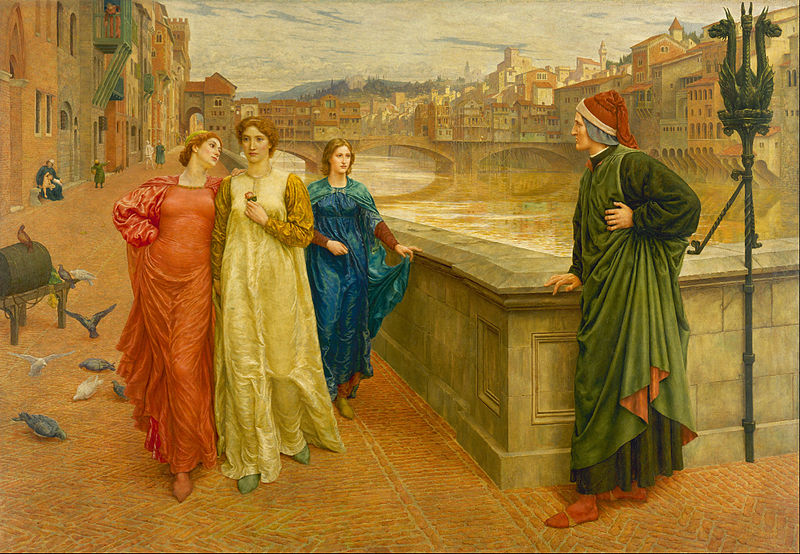
Introduction
Dante Aligheiri, the famous Italian poet, is without any debate, one of the most passionate poets of all time who believed in and lived by the true meaning of Love through his exceptional writings . His works are still considered as the Canvases of Human Mind, sparkling and expressing love through words. Though, the love of his own life remained unrequited and that agony fueled his journey of writing as a neverhealed wound, creating some masterpieces of Romantic Literature.
Early Life of Dante
Born in Florence, Italy around 1265, Dante was the son of Alighiero di Bellincione Alighieri and Bella di Abati, and he grew up among Florentine aristocracy. Scholars surmise that he received formal instruction in grammar, language, and philosophy at one of the Franciscan schools in the city.
Dante’s Love : Beatrice Portinari
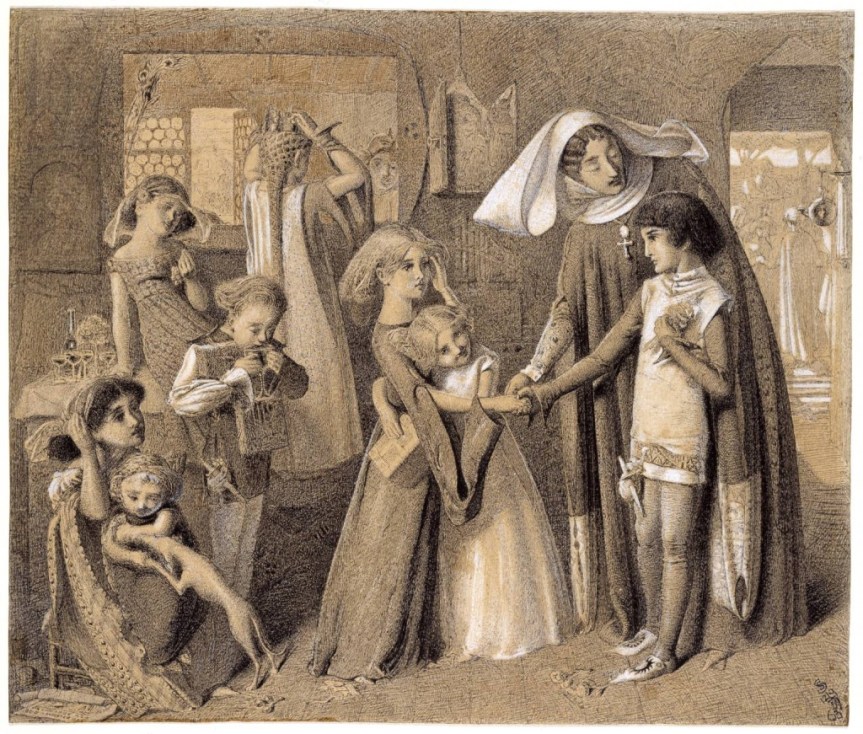
Dante first met Beatrice Portinari, daughter of Folco Portinari, when he was only nine years old and he claimed to have fallen in love with her “at first sight”, apparently without even talking with her. He would later write about his instant love for her in “Vita Nuova”, saying “Behold, a deity stronger than I; who coming, shall rule over me.”
When he was 12, however, he was promised in marriage to Gemma di Manetto Donati, daughter of Manetto Donati, member of the powerful Donati family. Contracting marriages for children at such an early age was quite common and involved a formal ceremony, including contracts signed before a notary. Dante claimed to have seen Beatrice again frequently after he turned 18, exchanging greetings with her in the streets of Florence, though he never knew her well.

Beatrice’s Death: Presence in Dante’s work
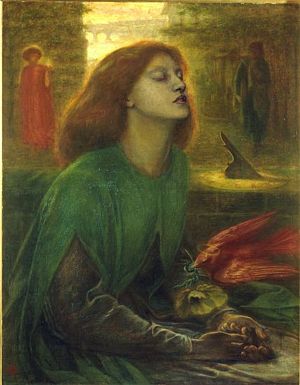
Beatrice died in 1290 at age twenty four. Beatrice probably never had any idea of the depth of his passion for her, yet she was to become one of literature’s most famous figures.
After Beatrice’s death, Dante withdrew into intense study and began composing poems dedicated to her memory. The collection of these poems, along with others he had previously written in his journal in awe of Beatrice, became La Vita Nuova, a prose work interlaced with lyrics.
Dante describes his meetings with her, praises her beauty and goodness, describes his own intense reactions to her kindness or lack thereof, tells of events in both their lives, and explains the nature of his feelings for her. She represents an idealized love, the kind of love that transcends physicality. Alighieri included her in both La Vita Nuova and Divine Comedy. She is his salvation; the “gentilissima” (most kind) and “benedetta”(blessed). It is Beatrice who serves as his guide in Heaven in Divine Comedy. La Vita Nuova also relates of the day when Dante was informed of her death and contains several anguished poems written after that event. In the final chapter, Dante vows to write nothing further of Beatrice until he writes “concerning her what hath not before been written of any woman.”
Analysis of Dante’s Love and Literature
The promise is fulfilled in the epic poem The Divine Comedy, which he composed many years later. In that poem, he expresses his exalted and spiritual love for Beatrice, who is his intercessor in the Inferno, his purpose in traveling through Purgatorio, and his guide through Paradiso.
Beatrice addresses Dante, the author and a character himself, for the first time in Canto 2 of Dante’s “Inferno”: she descends into Limbo and prays that the poet Virgil can rescue Dante. She then reappears in Canto 30 of Purgatorio, when Virgil disappears.
At first sight of her in Purgatorio, he is as overwhelmed as he was at the age of nine and is dazzled by her presence throughout the journey until she ascends again to her place in heaven, the point closest to God that he is allowed to reach.
This expression of sublimated and spiritualized love ends with Dante’s total absorption into the divine.
Their last meeting is set among the blessed in Heaven at the end of their journey into the afterlife.

Conclusion
Dante’s love for Beatrice may have been idealized and unattainable, but at the core of that love is admiration, goodness, and respect. That’s a type of love that we don’t see much of in the media of today’s world. We prize the scintillating and love has become synonymous with physical lust.Dante’s love transcends the physical. It is a love of the heart and the intellect. She represented the ideal of beauty and grace, but was also a real woman.
Beatrice appeared to Dante as the woman/angel that guides him through Paradise, but also remained a real woman who made his heart beat in the streets of Florence.
I completely agree with J Ann when they talk about gender differences and how society had deeply created that image in peoples mind. It is that widely accepted that even if you ask a small child if boys can cry, they simply would say otherwise. All of this questions us the very idea of the kind of generation we are breeding into. Society had laid down certain characteristics as to how a man should behave and how a women should too. This line is so wide that people are terrified of crossing it.
We have all been conditioned to believe that women are born to be weak, emotional, always in distress, home makers and always crying. While on the other hand men are strong, not emotional and always the hero. This have been taught to us in the forms of books, academic sessions, moral policing, films etc. It has become so much rigid that people who do not feel the same are alienated and ridiculed. They are forced to believe that they are not normal when in reality no barrier has been kept or the definition of normal haven’t been defined yet to be judge of someone’s gender.
We can understand this very closely if we take a dive into our childhood. Ever since we were kids there always have been certain set of rules for a girl child and a boy child, the latter being more liberal than former. Girls were asked to come home early while boys weren’t. Young boys were taught to not cry and be strong and if you cry then it simply means that you are a girl and being a girl was projected as a shame. Directly or indirectly we all have been a part of this system which fosters a toxic environment for people who do not identify their sex and gender as same to grow. At this point of time, they would feel dejected, left out from society and people always mock them, making them feel inferior of who they chose to be.
Although recently things have taken a turn, we now live in a world where people come out and chose out be who they are than living beneath a mask that society force them to wear. We see a greater representation of gender diversity in all forms in books, media, novels, social media etc. All of this had made people more comfortable with the idea of acceptance than denial. Numerous people live in denial of who they actually are and find it hard to fit in with the right crowd.
We can see examples of people exhibiting different sorts of characters despite the gender factor in today’s world. In 21stCE, the idea of acceptance has become much easier with lot of people coming out of their shells and being who they actually are. Celebrities like Harry Styles, have recently been center of attention in terms of their representation for gender issues. Harry dressed up in a way he loved and broke all barriers of gender disparity. And because of which celebrities, especially in the K pop industry have increasing become gender diverse in terms of their representation.
It doesn’t take much to understand and be empathetic to people who feel lost when in terms of identifying who they want to be. After all, we all want to be accepted and loved for who we are than anything else. We all should move forward to a nation, transparent and more open to needs and diversity in gender and inclusion from all sides so that people can learn to be who they want to be and not forced to.

I’ve seen many people say ‘fitness is my passion’ but have never tried doing yoga. Why? Did you know that yoga is one of the most relaxing and fun way to be fit? Every Asana, every movement builds up the strength in your muscles and relaxes your mind and body. Yoga helps build flexibility and strength. When you hold a pose for a long time, you realize that your balance has also improved which surely gives you the confidence to continue practicing yoga for a healthier life.
It is said that yoga is derived from the Sanskrit word “yuji” which means union. In simple terms, it’s the union of your body, mind and soul. Oh also, an Asana is a body posture which starts with simple poses but with time and experience, it can get more complex and interesting. In this article, I’ll mainly be talking about Surya Namaskar/ Sun Salutation.
Surya Namaskar is a powerful force in practicing yoga. It consists of 12 yoga poses. It has a very positive impact on the mind and body, it’s also a great cardiovascular workout. There are many benefits of practicing this workout, it mainly helps with stimulating the nervous system, helps in flexibility, is an amazing solution to weight loss and improves cognitive functioning.
1) Pranamasana / Prayer pose :
Stand at the edge of your mat while keeping your foot together. As you inhale, lift both of your arms from the sides and while exhaling, bring your palms together and form a praying position.

2) Hastauttanasana / Raised arms pose :
The main purpose of this pose is to stretch your entire body so to do that you must breathe in, lift your arms up and then take it back while keeping your biceps close to the ears.

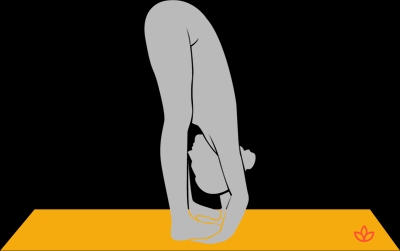
3) Hastapadasana / Standing forward bend :
While breathing out, bend forward from gbe waist but remember to keep the spine intact. After exhaling completely, bring your hands down and place them next to your feet.
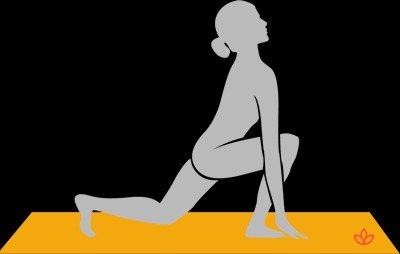
4) Ashwa Sanchalanasana / Equestrian pose :
Push your right leg back but make sure to push it as far as you can and bring the right knee to the floor and look up but also keep in mind that the left foot is in between your palms.
5) Chaturanga Dandasana / Stick pose :
in and take the left leg back and bring the whole body to make a straight line.

6) Ashtanga Namaskara / Salute with eight joints :
Exhale while bringing your knees down to the floor, take your hips slightly back and slide forward. Make sure your two hands, two feet, two knees, chest and chin are on the floor.

7) Bhujangasana / Cobra pose :
For this pose, slide forward and raise your chest up to form a cobra pose. It’s advisable to keep your elbows bent and keep your shoulders away from your ears and look up the ceiling.

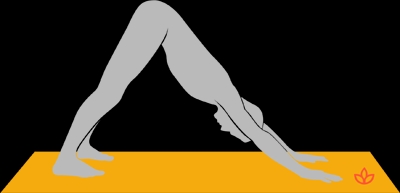
8) Adho Mukha Svanasana / Downward facing dog pose :
The inverted ‘V’ pose. Breathe out and lift your hips and the tailbone to make an inverted ‘V’. If it’s possible, try keeping your heels on the ground.
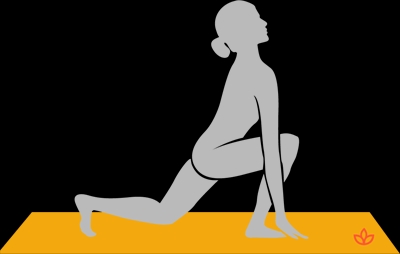
9) Ashwa Sanchalanasana / Equestrian pose :
Push your right leg back but make sure to push it as far as you can and bring the right knee to the floor and look up but also keep in mind that the left foot is in between your palms.
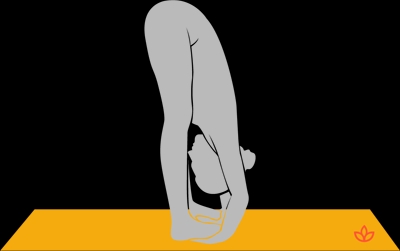
10) Hastapadasana / Standing forward bend :
While breathing out, bend forward from the waist but remember to keep the spine intact. After exhaling completely, bring your hands down and place them next to your feet.
11) Hastauttanasana / Raised arms pose :
The main purpose of this pose is to stretch your entire body so to do that you must breathe in, lift your arms up and then take it back while keeping your biceps close to the ears.

12) Tadasana / Mountain pose :
While exhaling, straighten your body and bring your arms down. Observing the sensations taking place in your body is the key point to master this pose.
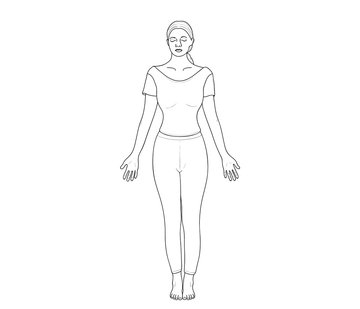
Therefore, this completes Set 1. While doing Surya Namaskar, make sure to do 2 sets. For the second set, start with the left leg and bring the right foot forward in step 10.
The main purpose of doing yoga is to make sure you relax and enjoy this form of exercise. Always give yourself and your body enough time to adapt to this method and never rush into anything.
11th July is celebrated as THE WORLD POPULATION DAY every year. This day is devoted to focusing on the relevance of population issues. World Population Day was rooted by the Governing Council of the United National Development Programme in 1989, as an outgrowth of the interest generated by the Day of Five Billion, which was observed on 11 July 1987.
The theme for 2021 is rights and choices.
The total number of children a woman bears is inversely proportional to the following:
It’s been proved that as the above-mentioned factors rise, the total fertility decreases.
The total number of children a woman bears is directly proportional to the following:
It’s been proved that as the above-mentioned factors rise, the total fertility rises too.
Our population is growing but at a decreasing rate. It is not an explosion. The total fertility rate, i.e. the average number of children a woman beers, has significantly decreased from 5 to 2.2-2.3 in the last 50 years. The replacement fertility rate, i.e. the number of children a woman needs to have so that the population replaces itself from one generation to another generation is 2.1. Approximately 20 states and UTs in India are very close to it.
Well, the rate of growth in the number of human beings is greater than the growth of resources. This means the more the population grows, the difficult it gets to sustain everyone.
As the number of people grows, more resources and places to live are required to destroy natural habitat. This leads to the loss of animal habitat and they’re seen wandering around in human civilization.
An increase in the number of people, increases the demand for jobs to sustain oneself and we as a nation have failed to provide jobs.
A direct relation between poverty and population has been proved by researchers. This means as poverty rises, so does population and vice versa. Along with these, overpopulation brings:
Implementing such a policy is punishing someone for having kids in the form of banning them from elected offices, eliminating them from government schemes and subsidies, government jobs, and even snatching their food by excluding them from PDS. What do you think are the probable effects of these?
A population reduction? NAH. This coercion will lead to even more poverty in the nation which is in the first place one of the root causes of a high population. Furthermore, this may lead to a poor sex ratio as in the case of China which saw sex-selective abortions, foeticides, and even bride price practice which is in simple words buying a bride and might even lead to people bringing girls from poor nations to marry them.
Sanjay Gandhi and Indira Gandhi led one of the Forced sterilization drives, which is never the answer. Because it violates the choice of the couple, and the right to reproduce which is a basic human right. Even if it doesn’t violate a right, it is unethical to the very roots. Approximately 10 million men were sterilized during that drive and it had no substantial effect on the population growth but had various side effects like deaths and the spread of diseases.
How many times have you heard the statement that Muslims give birth to more children so that one day they can outnumber the Hindu population, or even politicians asking their Hindu following to have more and more children to just come in way of Muslims outnumbering them? Well India’s last census, conducted in 2011, revealed that Hindus make up 79.8% of the population, while Muslims make up 14.2%. and Muslims have more children because of their developmental and literacy levels. Because in states with a higher development, the total fertility rate of Muslims is less too, and the fall in the total fertility rate of Muslims is less than the fall in the total fertility rate of Hindus. All politicians are doing is find a shortcut to avoid tackling the matter with sincerity and propose these stupid ideas.
Forced population control measures are a problem, the solution lies in the development.
The need of the hour is to plan instead of punishing, utilizing the asset it’s blessed with instead of declaring it a disaster and blaming everything on it and stabilization of population instead of trying to control it. And lastly, having a government that owns up to its responsibilities.
references
https://www.macrotrends.net/countries/IND/india/population
https://www.statista.com/statistics/263766/total-population-of-india/

Reality shows have now become the latest end. Their initial popularity with the masses, helped in the number of such shows produced today. Reality shows take the form of various competitions and challenges where celebrities or the common man participate. There is or essentially no script involved and the interest of the show lies inherently in the personality of the audiences and the tasks. Many of these competitions are judged by eminent personalities within the field. There was a need for a change in the television industry from the onslaught of the various soaps that were telecasted.
However, the question that emerges today is…how real are these reality shows? May critics believe that there isn’t even a modicum of reality in any of these shows. They are often scripted and only aim at high TRP’s. The shows have a planned course and the masses are simply captivated. Though they provide raw drama and an undisputable display of anger, love, guilt and jealousy, these are often tactics used to keep the audiences fastened rather than a genuine display of emotion. There are many others, who are loyal supporters of reality shows and believe that they have indeed provided a platform for the common man to exhibit his talent and gain success. Various dance and singing reality shows as well as quiz shows for children and adults provide them with a means through which provide, they can showcase their talent and intelligence Through these shows they often gain various opportunities to prove their courage. But sadly, one cannot deny that the USP of many of these shows is emotion and melodrama and as a result the purpose of the show is often side-lined. The recent crop of reality shows have come up with themes that tends to belittle important social institutions. In spite of the fact that it has its own pros and cons various channels and producers are misusing the originality of these shows by introducing new themes and shows to keep the masses entertained. Some of the most popular Indian reality shows include ‘Kaun Banega Crorepati’, ‘Big Boss’ and ‘Indian Idol’. Many movie icons are also willingly accepting the task of anchoring these shows so as to connect with people and exploit the scope of T.V as a medium of maintaining one’s popularity.
However, there is a need to ensure that this genre does not deteriorate like the previous trends. The shows must always be well researched and fresh in its approach rather than look at reality T.V as a formula and launching shows that have little creativity and uniqueness.
 Eduindex
You must be logged in to post a comment.