Why should I choose an engineering stream?

<!–
/* Style Definitions */
p.MsoNormal, li.MsoNormal, div.MsoNormal
{mso-style-unhide:no;
mso-style-qformat:yes;
mso-style-parent:””;
margin-top:0cm;
margin-right:0cm;
margin-bottom:10.0pt;
margin-left:0cm;
line-height:115%;
mso-pagination:widow-orphan;
font-size:11.0pt;
font-family:”Calibri”,sans-serif;
mso-ascii-font-family:Calibri;
mso-ascii-theme-font:minor-latin;
mso-fareast-font-family:Calibri;
mso-fareast-theme-font:minor-latin;
mso-hansi-font-family:Calibri;
mso-hansi-theme-font:minor-latin;
mso-bidi-font-family:”Times New Roman”;
mso-bidi-theme-font:minor-bidi;
mso-ansi-language:EN-US;
mso-fareast-language:EN-US;}
p
{mso-style-priority:99;
mso-margin-top-alt:auto;
margin-right:0cm;
mso-margin-bottom-alt:auto;
margin-left:0cm;
mso-pagination:widow-orphan;
font-size:12.0pt;
font-family:”Times New Roman”,serif;
mso-fareast-font-family:”Times New Roman”;
mso-ansi-language:EN-US;
mso-fareast-language:EN-US;}
p.MsoListParagraph, li.MsoListParagraph, div.MsoListParagraph
{mso-style-priority:34;
mso-style-unhide:no;
mso-style-qformat:yes;
margin-top:0cm;
margin-right:0cm;
margin-bottom:10.0pt;
margin-left:36.0pt;
mso-add-space:auto;
line-height:115%;
mso-pagination:widow-orphan;
font-size:11.0pt;
font-family:”Calibri”,sans-serif;
mso-ascii-font-family:Calibri;
mso-ascii-theme-font:minor-latin;
mso-fareast-font-family:Calibri;
mso-fareast-theme-font:minor-latin;
mso-hansi-font-family:Calibri;
mso-hansi-theme-font:minor-latin;
mso-bidi-font-family:”Times New Roman”;
mso-bidi-theme-font:minor-bidi;
mso-ansi-language:EN-US;
mso-fareast-language:EN-US;}
p.MsoListParagraphCxSpFirst, li.MsoListParagraphCxSpFirst, div.MsoListParagraphCxSpFirst
{mso-style-priority:34;
mso-style-unhide:no;
mso-style-qformat:yes;
mso-style-type:export-only;
margin-top:0cm;
margin-right:0cm;
margin-bottom:0cm;
margin-left:36.0pt;
mso-add-space:auto;
line-height:115%;
mso-pagination:widow-orphan;
font-size:11.0pt;
font-family:”Calibri”,sans-serif;
mso-ascii-font-family:Calibri;
mso-ascii-theme-font:minor-latin;
mso-fareast-font-family:Calibri;
mso-fareast-theme-font:minor-latin;
mso-hansi-font-family:Calibri;
mso-hansi-theme-font:minor-latin;
mso-bidi-font-family:”Times New Roman”;
mso-bidi-theme-font:minor-bidi;
mso-ansi-language:EN-US;
mso-fareast-language:EN-US;}
p.MsoListParagraphCxSpMiddle, li.MsoListParagraphCxSpMiddle, div.MsoListParagraphCxSpMiddle
{mso-style-priority:34;
mso-style-unhide:no;
mso-style-qformat:yes;
mso-style-type:export-only;
margin-top:0cm;
margin-right:0cm;
margin-bottom:0cm;
margin-left:36.0pt;
mso-add-space:auto;
line-height:115%;
mso-pagination:widow-orphan;
font-size:11.0pt;
font-family:”Calibri”,sans-serif;
mso-ascii-font-family:Calibri;
mso-ascii-theme-font:minor-latin;
mso-fareast-font-family:Calibri;
mso-fareast-theme-font:minor-latin;
mso-hansi-font-family:Calibri;
mso-hansi-theme-font:minor-latin;
mso-bidi-font-family:”Times New Roman”;
mso-bidi-theme-font:minor-bidi;
mso-ansi-language:EN-US;
mso-fareast-language:EN-US;}
p.MsoListParagraphCxSpLast, li.MsoListParagraphCxSpLast, div.MsoListParagraphCxSpLast
{mso-style-priority:34;
mso-style-unhide:no;
mso-style-qformat:yes;
mso-style-type:export-only;
margin-top:0cm;
margin-right:0cm;
margin-bottom:10.0pt;
margin-left:36.0pt;
mso-add-space:auto;
line-height:115%;
mso-pagination:widow-orphan;
font-size:11.0pt;
font-family:”Calibri”,sans-serif;
mso-ascii-font-family:Calibri;
mso-ascii-theme-font:minor-latin;
mso-fareast-font-family:Calibri;
mso-fareast-theme-font:minor-latin;
mso-hansi-font-family:Calibri;
mso-hansi-theme-font:minor-latin;
mso-bidi-font-family:”Times New Roman”;
mso-bidi-theme-font:minor-bidi;
mso-ansi-language:EN-US;
mso-fareast-language:EN-US;}
.MsoChpDefault
{mso-style-type:export-only;
mso-default-props:yes;
font-size:11.0pt;
mso-ansi-font-size:11.0pt;
mso-bidi-font-size:11.0pt;
font-family:”Calibri”,sans-serif;
mso-ascii-font-family:Calibri;
mso-ascii-theme-font:minor-latin;
mso-fareast-font-family:Calibri;
mso-fareast-theme-font:minor-latin;
mso-hansi-font-family:Calibri;
mso-hansi-theme-font:minor-latin;
mso-bidi-font-family:”Times New Roman”;
mso-bidi-theme-font:minor-bidi;
mso-ansi-language:EN-US;
mso-fareast-language:EN-US;}
.MsoPapDefault
{mso-style-type:export-only;
margin-bottom:10.0pt;
line-height:115%;}
@page WordSection1
{size:612.0pt 792.0pt;
margin:72.0pt 72.0pt 72.0pt 72.0pt;
mso-header-margin:36.0pt;
mso-footer-margin:36.0pt;
mso-paper-source:0;}
div.WordSection1
{page:WordSection1;}
/* List Definitions */
@list l0
{mso-list-id:1025138763;
mso-list-type:hybrid;
mso-list-template-ids:-710637844 67698697 67698691 67698693 67698689 67698691 67698693 67698689 67698691 67698693;}
@list l0:level1
{mso-level-number-format:bullet;
mso-level-text:;
mso-level-tab-stop:none;
mso-level-number-position:left;
margin-left:39.75pt;
text-indent:-18.0pt;
font-family:Wingdings;}
@list l0:level2
{mso-level-number-format:bullet;
mso-level-text:o;
mso-level-tab-stop:none;
mso-level-number-position:left;
margin-left:75.75pt;
text-indent:-18.0pt;
font-family:”Courier New”;}
@list l0:level3
{mso-level-number-format:bullet;
mso-level-text:;
mso-level-tab-stop:none;
mso-level-number-position:left;
margin-left:111.75pt;
text-indent:-18.0pt;
font-family:Wingdings;}
@list l0:level4
{mso-level-number-format:bullet;
mso-level-text:;
mso-level-tab-stop:none;
mso-level-number-position:left;
margin-left:147.75pt;
text-indent:-18.0pt;
font-family:Symbol;}
@list l0:level5
{mso-level-number-format:bullet;
mso-level-text:o;
mso-level-tab-stop:none;
mso-level-number-position:left;
margin-left:183.75pt;
text-indent:-18.0pt;
font-family:”Courier New”;}
@list l0:level6
{mso-level-number-format:bullet;
mso-level-text:;
mso-level-tab-stop:none;
mso-level-number-position:left;
margin-left:219.75pt;
text-indent:-18.0pt;
font-family:Wingdings;}
@list l0:level7
{mso-level-number-format:bullet;
mso-level-text:;
mso-level-tab-stop:none;
mso-level-number-position:left;
margin-left:255.75pt;
text-indent:-18.0pt;
font-family:Symbol;}
@list l0:level8
{mso-level-number-format:bullet;
mso-level-text:o;
mso-level-tab-stop:none;
mso-level-number-position:left;
margin-left:291.75pt;
text-indent:-18.0pt;
font-family:”Courier New”;}
@list l0:level9
{mso-level-number-format:bullet;
mso-level-text:;
mso-level-tab-stop:none;
mso-level-number-position:left;
margin-left:327.75pt;
text-indent:-18.0pt;
font-family:Wingdings;}
@list l1
{mso-list-id:1418016799;
mso-list-type:hybrid;
mso-list-template-ids:-1155604928 67698699 67698691 67698693 67698689 67698691 67698693 67698689 67698691 67698693;}
@list l1:level1
{mso-level-number-format:bullet;
mso-level-text:;
mso-level-tab-stop:none;
mso-level-number-position:left;
margin-left:44.75pt;
text-indent:-18.0pt;
font-family:Wingdings;}
@list l1:level2
{mso-level-number-format:bullet;
mso-level-text:o;
mso-level-tab-stop:none;
mso-level-number-position:left;
margin-left:80.75pt;
text-indent:-18.0pt;
font-family:”Courier New”;}
@list l1:level3
{mso-level-number-format:bullet;
mso-level-text:;
mso-level-tab-stop:none;
mso-level-number-position:left;
margin-left:116.75pt;
text-indent:-18.0pt;
font-family:Wingdings;}
@list l1:level4
{mso-level-number-format:bullet;
mso-level-text:;
mso-level-tab-stop:none;
mso-level-number-position:left;
margin-left:152.75pt;
text-indent:-18.0pt;
font-family:Symbol;}
@list l1:level5
{mso-level-number-format:bullet;
mso-level-text:o;
mso-level-tab-stop:none;
mso-level-number-position:left;
margin-left:188.75pt;
text-indent:-18.0pt;
font-family:”Courier New”;}
@list l1:level6
{mso-level-number-format:bullet;
mso-level-text:;
mso-level-tab-stop:none;
mso-level-number-position:left;
margin-left:224.75pt;
text-indent:-18.0pt;
font-family:Wingdings;}
@list l1:level7
{mso-level-number-format:bullet;
mso-level-text:;
mso-level-tab-stop:none;
mso-level-number-position:left;
margin-left:260.75pt;
text-indent:-18.0pt;
font-family:Symbol;}
@list l1:level8
{mso-level-number-format:bullet;
mso-level-text:o;
mso-level-tab-stop:none;
mso-level-number-position:left;
margin-left:296.75pt;
text-indent:-18.0pt;
font-family:”Courier New”;}
@list l1:level9
{mso-level-number-format:bullet;
mso-level-text:;
mso-level-tab-stop:none;
mso-level-number-position:left;
margin-left:332.75pt;
text-indent:-18.0pt;
font-family:Wingdings;}

–>

Engineering is a popular and one of the most sought after courses for students who have completed Class 12, especially for students from the Science stream
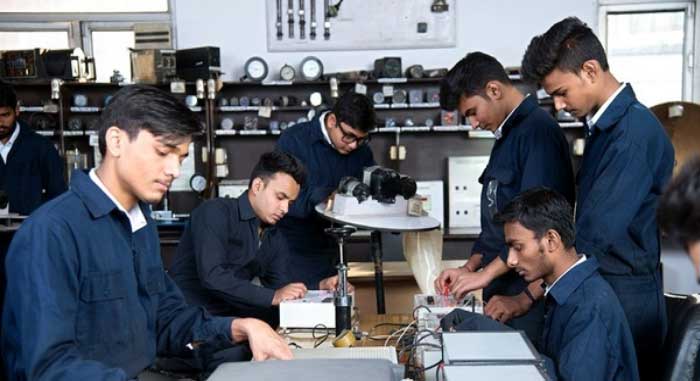
 

  The various streams of engineering can be broadly classified into 6 major branches, namely: Mechanical, Chemical, Civil, Electrical, Management, and Geotechnical.

What is the role of engineering in society?

                  Engineers are in every field. There is an engineer behind every beautiful and wonderful building. The technology we are using today, automobiles, machines, spaceships, communication system and many are built by an engineer. Engineers make human day to day life easier and efficient. An engineer is someone who solve problem and continue learning and help many people.

              Engineering gives skills you can apply everywhere. If you’re an engineer you can work for an MNC or an IT company or you can start a business, or to be consultant in a legal company. It gives an option to switch a career if you want to. 


vSome of the points to look in an engineering college before joining a engineering college             

Ø Infrastructure of the college: – check the basic need like classrooms, labs playground, etc.

Ø Choosing a right stream as per your interest: – There are different types of stream like Mechanical, civil, Chemical, etc.  Choose a right stream as your taste.

Ø Placements and Internships provided by college: – Before joining engineering colleges check whether college provides internships /placements.  It is important to start doing internships since the beginning of college. This gives practical learning along with theoretical learning.  

Ø Fee structure: the fee structure depends on the college whether its government, private or semi government. You should also look whether the college provides scholarships.

Ø Extra- curricular activities: – look whether the college has extra-curricular activities. Extra-curricular activities like indoor or outdoor game which are good for mental and physical health.

Ø Entrance exam:-Check whether the college conducts any entrance exam.

Also look minimum marks to join the college. 
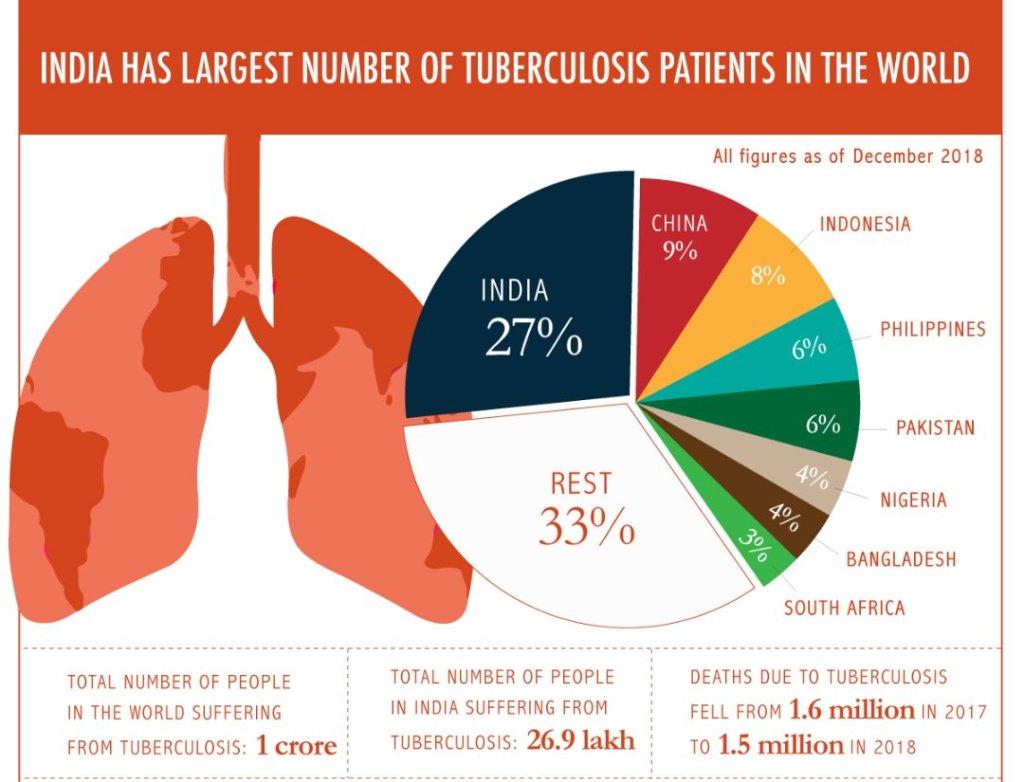
Tuberculosis in New self reliant India 2020

Source: World Health Organization

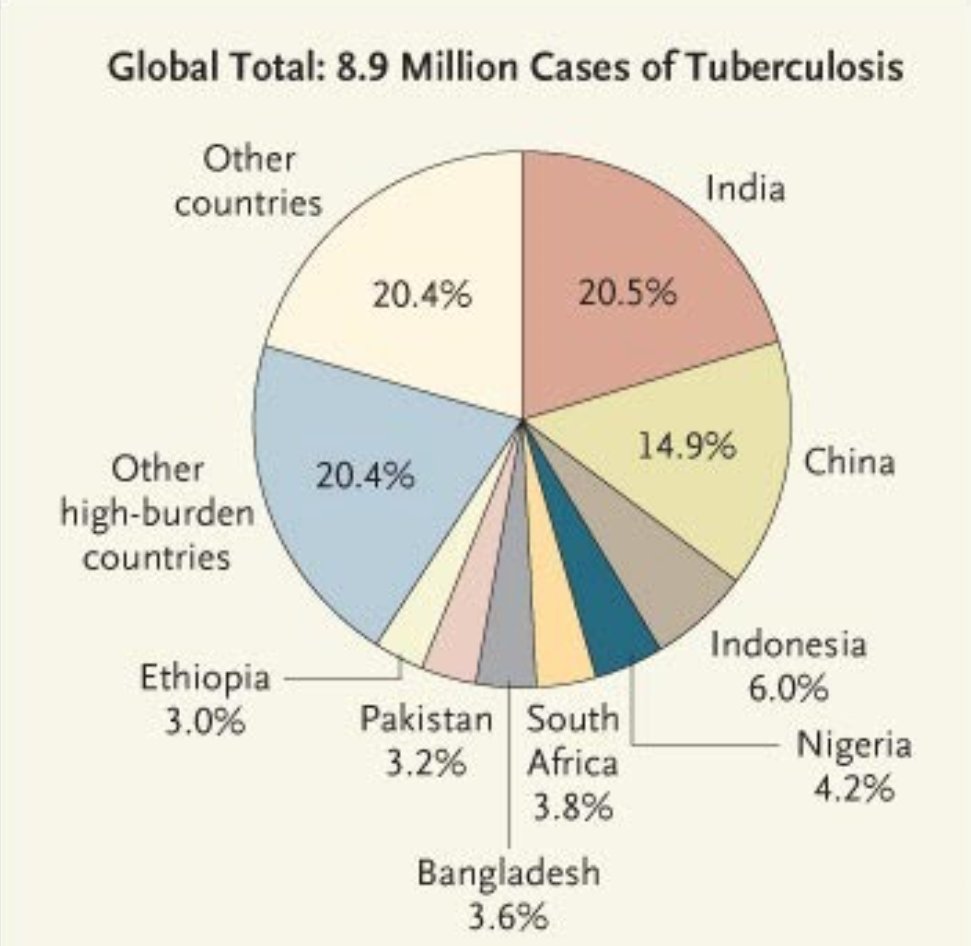
Tuberculosis is a pandemic globally become significant health threat in many countries. India top the list of having most tuberculosis patients. TB is airborne disease. Every year, India estimated TB patient is 28 lakhs, which is 27 per cent of the global total, almost 1200 TB patient die everyday, 10 every 3 minutes. In 2017, 204 TB cases per 1,00,000 encountered. India has the highest number of multi drug resistant TB (MDR-TB) cases in the world. Largest number of people living with multi resistance TB which normal dosage of Isoniziad and INH will not work on patient or first line drug of TB will not work on you.

Source: The New England Journal of Medicine NEJM

According to Health Ministry & Welfare data explain, only 63 per cent of the patients infected with airborne disease and currently under treatment. Further, 1,47,000 patients are resistant to first and second line TB medicines. World Health Organization (WHO) reported India had 2.7 million new cases and 440,000 deaths due to TB in 2018 – the highest in the world. Despite such conditions India has not implemented goal measures effectively to control the spread of TB. Imagine if we are not capable to control TB then can we measure Coronavirus? when we have paucity of hospital, less number of health workers and doctors.

HISTORY OF TUBERCULOSIS IN INDIA

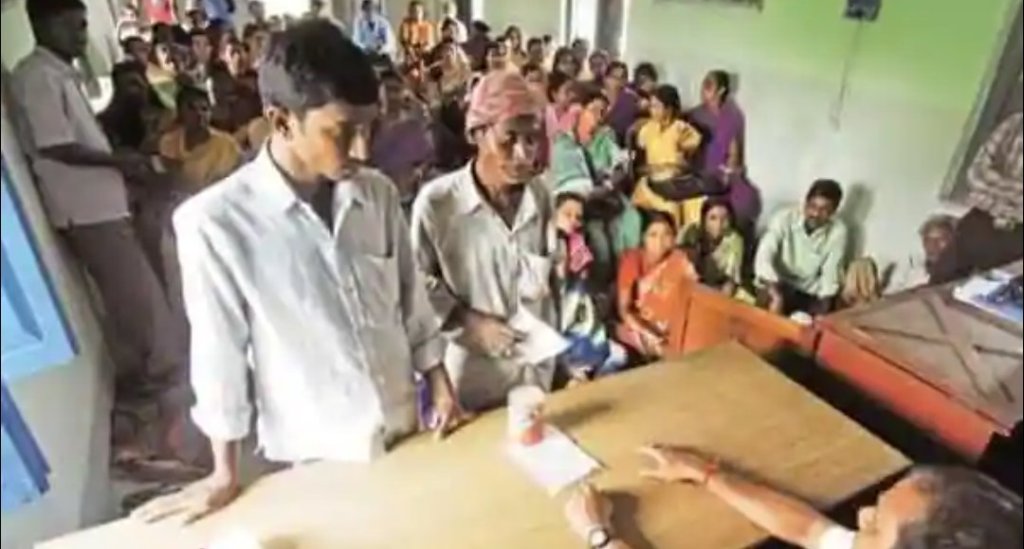
Credit: Mint (Tuberculosis Patients at a Govt hospital)

For TB patients first open air isolation institution and treatment of TB patients was started in Ajmer & almore 1906. The anti TB movement in the country gained momentum with TB association of India which was established in 1939.

The Bhore committee report issued in 1946 estimated that about 2.5 million patients required treatment in the country with 6,000 beds available. National Tuberculosis Control programme (NTP) was formulated in 1962. NTP was not implemented properly then revised into National TB Control Programme (RNTCP) was developed. Sir Joseph Bhore recommended re – modelling the health services integrate curative & preventive medicine at all levels. Bhore committee was not able to reach the plan , recognizing the lack of access to basic healthcare in rural areas, National Health Policy 1993 emphasized on primary care, commitment to provide “Health to all” by the year 2000. By 2000 India still not achieved most of the goals of the national health policy.

National Health Policy by 2010 & to increase public investment from 0.9% to between 20% which is 3% of GDP. National Rural Health Mission 2005 – 2012 was launched to provide Healthcare to rural population. Special focus on 18 states who has weak Healthcare system.

MEASURES TAKEN BY GOVERNMENT
Indian government launched the TB free India campaign, Target of elimination of TB in the country by 2025. DOTS – Directory observed Treatment ,it is a strategy to diagnose the TB through sputum testing.
CBNAAT – Catridge based Nuclei acid amplification test, this test help two ways to detect TB that whether person diagnose with TB, if it is TB is it MDR or the other one first line drug. First time central TB Division (CTD) introduced a quarterly ranking of TB elimination efforts by all the states and UTs. TB preventive Therepy (TPT) give financial expenditure which include in the assessment. Saksham project provide psycho – social counseling to TB patients.

Nikshay poshan yojana (NPY) scheme made to give financial support to TB patients for their nutritional diet. The Nikshay Ecosystem is the National TB information System which is one – stop solution to collected information of patients and manage program activity & evaluate through out the country.TB Harega Desh Jeetega – This strategy launched in September 2019 for fight against TB.

ARE GOVERNMENT MEASURES GOING WELL ON GROUND LEVEL

After implementing most of the best policies are not capable to eliminate TB. India known for the fact that “poor quality of Healthcare”. There is shortage of testing centres, DOT centres, and other facilities to identify and treatment of new TB patients. GOI has set a target of zero – tuberculosis deaths by the 2025 rather should focus on zero – tuberculosis patients till 2030.

Despite all the notable measures taken by the government still needs to robust efforts to improve the early diagnose for the appropriate treatment which is significant for ending of TB. We need to expand both laboratory network as well as diagnostic facilities to cover the whole nation under the umbrella of one program National TB Elimination Programme. Private sector plays crucial role in terms of providing mandatory tuberculosis treatment quality care.

The UN sustainable development Goals (SDGs) include ending the TB epidemic by 2030 under the Goal 3. India set target to eliminate TB by 2025 ( which is five years ahead of SDGs) appears ‘unrealistic’ , ‘unattainable’ as seeing today’s condition of India which requires high quality of care to each person. We need to increase TB services for those who are not able to reach the TB centres , increase the engagement of private sector facilities and support system of universal access to drug susceptibility testing and second line TB drugs.

GOI said that new tools resulting from greater tuberculosis research & development (R&D) which is important to prevent Economic losses. 30 per cent of Indian population infected with tuberculosis. Consequently, we need accurate level of care which helps for detecting tuberculosis infection. India need close coordination between Ministry of Science & Technology , Ministry of Health and Research oriented pharmaceutical companies together to reach target to fight against the Tuberculosis. India strictly implement the strategy of finding the TB cases rather waiting for patient with TB to reach to the hospital.Under the make in India program, development of a first line anti – TB drug was proposed in public sector.

Awareness about TB and its prevention among masses is important. Media campaigns must planned under the program to promote TB preventive measures swasth E – gurukul is one such initiative of WHO.

Union Health Minister , Harsh Vardhan said:

“we as a nation, need to come together to fight against tuberculosis and the stigma surrounding it so that every TB patient seek care with dignity and without discrimination. The community must act as a well spring of support and comfort for a patient”.

Union Health Minister Harshvardhan in press conference talking about social stigma around TB;

We must talk about the social stigma attach with Tuberculosis. Association of HIV with TB estimated 9 per cent of all HIV – TB deaths in the world, the second highest number globally 92,000 HIV – TB patients were accounted on annual basis.

If GOI implement all policies wisely and evaluate them in every 6 months we can reach to attain our goal to eliminate Tuberculosis from India. In rural areas, officers must help to detect TB before it become MDR by making reports of how many people each month diagnose with TB. If we do not take serious measures now it will be difficult to achieve the set target of “elimination of TB in 2025”.

Tuberculosis in New self reliant India 2020

Source: World Health Organization

Tuberculosis is a pandemic globally become significant health threat in many countries. India top the list of having most tuberculosis patients. TB is airborne disease. Every year, India estimated TB patient is 28 lakhs, which is 27 per cent of the global total, almost 1200 TB patient die everyday, 10 every 3 minutes. In 2017, 204 TB cases per 1,00,000 encountered. India has the highest number of multi drug resistant TB (MDR-TB) cases in the world. Largest number of people living with multi resistance TB which normal dosage of Isoniziad and INH will not work on patient or first line drug of TB will not work on you.

Source: The New England Journal of Medicine NEJM

According to Health Ministry & Welfare data explain, only 63 per cent of the patients infected with airborne disease and currently under treatment. Further, 1,47,000 patients are resistant to first and second line TB medicines. World Health Organization (WHO) reported India had 2.7 million new cases and 440,000 deaths due to TB in 2018 – the highest in the world. Despite such conditions India has not implemented goal measures effectively to control the spread of TB. Imagine if we are not capable to control TB then can we measure Coronavirus? when we have paucity of hospital, less number of health workers and doctors.

HISTORY OF TUBERCULOSIS IN INDIA

Credit: Mint (Tuberculosis Patients at a Govt hospital)

For TB patients first open air isolation institution and treatment of TB patients was started in Ajmer & almore 1906. The anti TB movement in the country gained momentum with TB association of India which was established in 1939.

The Bhore committee report issued in 1946 estimated that about 2.5 million patients required treatment in the country with 6,000 beds available. National Tuberculosis Control programme (NTP) was formulated in 1962. NTP was not implemented properly then revised into National TB Control Programme (RNTCP) was developed. Sir Joseph Bhore recommended re – modelling the health services integrate curative & preventive medicine at all levels. Bhore committee was not able to reach the plan , recognizing the lack of access to basic healthcare in rural areas, National Health Policy 1993 emphasized on primary care, commitment to provide “Health to all” by the year 2000. By 2000 India still not achieved most of the goals of the national health policy.

National Health Policy by 2010 & to increase public investment from 0.9% to between 20% which is 3% of GDP. National Rural Health Mission 2005 – 2012 was launched to provide Healthcare to rural population. Special focus on 18 states who has weak Healthcare system.

MEASURES TAKEN BY GOVERNMENT
Indian government launched the TB free India campaign, Target of elimination of TB in the country by 2025. DOTS – Directory observed Treatment ,it is a strategy to diagnose the TB through sputum testing.
CBNAAT – Catridge based Nuclei acid amplification test, this test help two ways to detect TB that whether person diagnose with TB, if it is TB is it MDR or the other one first line drug. First time central TB Division (CTD) introduced a quarterly ranking of TB elimination efforts by all the states and UTs. TB preventive Therepy (TPT) give financial expenditure which include in the assessment. Saksham project provide psycho – social counseling to TB patients.

Nikshay poshan yojana (NPY) scheme made to give financial support to TB patients for their nutritional diet. The Nikshay Ecosystem is the National TB information System which is one – stop solution to collected information of patients and manage program activity & evaluate through out the country.TB Harega Desh Jeetega – This strategy launched in September 2019 for fight against TB.

ARE GOVERNMENT MEASURES GOING WELL ON GROUND LEVEL

After implementing most of the best policies are not capable to eliminate TB. India known for the fact that “poor quality of Healthcare”. There is shortage of testing centres, DOT centres, and other facilities to identify and treatment of new TB patients. GOI has set a target of zero – tuberculosis deaths by the 2025 rather should focus on zero – tuberculosis patients till 2030.

Despite all the notable measures taken by the government still needs to robust efforts to improve the early diagnose for the appropriate treatment which is significant for ending of TB. We need to expand both laboratory network as well as diagnostic facilities to cover the whole nation under the umbrella of one program National TB Elimination Programme. Private sector plays crucial role in terms of providing mandatory tuberculosis treatment quality care.

The UN sustainable development Goals (SDGs) include ending the TB epidemic by 2030 under the Goal 3. India set target to eliminate TB by 2025 ( which is five years ahead of SDGs) appears ‘unrealistic’ , ‘unattainable’ as seeing today’s condition of India which requires high quality of care to each person. We need to increase TB services for those who are not able to reach the TB centres , increase the engagement of private sector facilities and support system of universal access to drug susceptibility testing and second line TB drugs.

GOI said that new tools resulting from greater tuberculosis research & development (R&D) which is important to prevent Economic losses. 30 per cent of Indian population infected with tuberculosis. Consequently, we need accurate level of care which helps for detecting tuberculosis infection. India need close coordination between Ministry of Science & Technology , Ministry of Health and Research oriented pharmaceutical companies together to reach target to fight against the Tuberculosis. India strictly implement the strategy of finding the TB cases rather waiting for patient with TB to reach to the hospital.Under the make in India program, development of a first line anti – TB drug was proposed in public sector.

Awareness about TB and its prevention among masses is important. Media campaigns must planned under the program to promote TB preventive measures swasth E – gurukul is one such initiative of WHO.

Union Health Minister , Harsh Vardhan said:

“we as a nation, need to come together to fight against tuberculosis and the stigma surrounding it so that every TB patient seek care with dignity and without discrimination. The community must act as a well spring of support and comfort for a patient”.

Union Health Minister Harshvardhan in press conference talking about social stigma around TB;

We must talk about the social stigma attach with Tuberculosis. Association of HIV with TB estimated 9 per cent of all HIV – TB deaths in the world, the second highest number globally 92,000 HIV – TB patients were accounted on annual basis.

If GOI implement all policies wisely and evaluate them in every 6 months we can reach to attain our goal to eliminate Tuberculosis from India. In rural areas, officers must help to detect TB before it become MDR by making reports of how many people each month diagnose with TB. If we do not take serious measures now it will be difficult to achieve the set target of “elimination of TB in 2025”.

Role of Technology in Primary Health Care

CREDIT: SHUTTERSTOCK

PRIMARY HEALTH CARE

Primary health care is a broad term that means providing affordable and quality health care facilities to the whole society necessary to maintain good health by prioritizing those in need. It aims to recognize the needs of the people and then provide the health care facilities accordingly.

Primary health care has three pillars. These are primary care and essential public health functions, multisectoral policy and action, and empowered people and communities.

TECHNOLOGY’S IMPACT ON PRIMARY HEALTH CARE

Day by day integration of technology in primary care is increasing. There was a time when technology was in its naive stage, and its penetration into human life was minimum. The complexity, cost, and limitation to use it in improving primary health were also nil. Technologies like mobile phones, tablets, computers, and laptops are very common to us now but were alien concepts long before. However, by 1990, the advent of revolutionary technologies, especially the internet, had impacted the health care sector vastly.

TECHNOLOGY’S IMPACT ON PRIMARY HEALTH CARE

Day by day integration of technology in primary care is increasing. There was a time when technology was in its naive stage, and its penetration into human life was minimum. The complexity, cost, and limitation to use it in improving primary health were also nil. Technologies like mobile phones, tablets, computers, and laptops are very common to us now but were alien concepts long before. However, by 1990, the advent of revolutionary technologies, especially the internet, had impacted the health care sector vastly.

PRIMARY CARE AND ESSENTIAL PUBLIC HEALTH FUNCTIONS

The usage of technology has increased since then, and now we can see its presence in bringing secondary and tertiary health facilities to the home of the people. Now people can check their blood pressure, sugar, etc., at home through telemedicine, remote care, and mobile health. Technology is increasing the protection of patients by monitoring their health in day-to-day life. Electronic sensors can help inform the risk related to the health issue within time by monitoring and measuring required signs and symptoms. It is common to see technology tracking the stock of medicines and drugs, searching for information related to health, facilitating clinical support, monitoring and mapping transmissible diseases, and monitoring care facilities.

MULTISECTORAL POLICY AND ACTIONS

Gathering, analyzing, and managing the information related to the health sector has become digitally equipped. Handling data accurately and timely is possible now. Data collected and shared can improve the monitoring and surveillance of diseases.
The recorded data will increase the chances of better dealing with emergencies. Doctors can also access patients’ medical history through digitally recorded data within a few seconds, making diagnosing and treating easier and more time-efficient.
Partnering with other sectors like the information and communication sectors and the innovation sector can help disseminate the innovations to those in need. Those located in low-resource settings can also benefit from this partnership with the different sectors. Innovations like hand-held ultrasound and pulse oximeters will provide a quick diagnosis to the primary health care centers. Dissemination of the word about these technologies will be easier with the help of the information and communication department.

EMPOWERING PEOPLE AND ENGAGING COMMUNITIES

No matter how far a patient is, he can connect with the doctor online. Not only that, connecting and forming a community of patients and discussing and emotionally connecting with them has become easy. Accessing high-quality health information has become relatively effortless with the help of the internet. Technology aids transparency, and the process of feedback giving of the experience of health care is available one click away from the patients.

CHALLENGES

The Healthcare sector deals with the sensitive and confidential data of patients that need a proper set of security. Handling the data of every patient with utmost security is a necessity. A proper algorithm needs to be there for encryption, transmission, and decryption.
Technology is making its way in the healthcare sector, but understanding technology is also necessary for healthcare professionals and patients. In many studies, researchers discovered that doctors are reluctant to adopt this technology or have no time to learn this technology.
Further, patients also do not find it necessary to learn and adopt these technologies in their lives. Another problem lies in the cost of the technology, which is higher than we expect it to be. Many hospitals are reluctant to purchase these technologies; only because they find them costlier. To utilize technologies, we need stable and secure internet services in our country; that are unavailable in many parts of our country.

CONCLUSION


The inclusion of technology has opened tons of opportunities for improving primary health care facilities. They have changed the way of diagnosing and treating patients. They have created new patterns of communication, empowerment, and engagement. The government’s commitment to improving primary health care and protecting its commitment to inclusive and equitable growth promises a lot of development soon.

REFERENCES

https://healthadministrationdegree.usc.edu/blog/3-challenges-of-technology-implementation-in-healthcare/

https://www.who.int/news-room/fact-sheets/detail/primary-health-care

Role of Technology in Primary Health Care

CREDIT: SHUTTERSTOCK

PRIMARY HEALTH CARE

Primary health care is a broad term that means providing affordable and quality health care facilities to the whole society necessary to maintain good health by prioritizing those in need. It aims to recognize the needs of the people and then provide the health care facilities accordingly.

Primary health care has three pillars. These are primary care and essential public health functions, multisectoral policy and action, and empowered people and communities.

TECHNOLOGY’S IMPACT ON PRIMARY HEALTH CARE

Day by day integration of technology in primary care is increasing. There was a time when technology was in its naive stage, and its penetration into human life was minimum. The complexity, cost, and limitation to use it in improving primary health were also nil. Technologies like mobile phones, tablets, computers, and laptops are very common to us now but were alien concepts long before. However, by 1990, the advent of revolutionary technologies, especially the internet, had impacted the health care sector vastly.

TECHNOLOGY’S IMPACT ON PRIMARY HEALTH CARE

Day by day integration of technology in primary care is increasing. There was a time when technology was in its naive stage, and its penetration into human life was minimum. The complexity, cost, and limitation to use it in improving primary health were also nil. Technologies like mobile phones, tablets, computers, and laptops are very common to us now but were alien concepts long before. However, by 1990, the advent of revolutionary technologies, especially the internet, had impacted the health care sector vastly.

PRIMARY CARE AND ESSENTIAL PUBLIC HEALTH FUNCTIONS

The usage of technology has increased since then, and now we can see its presence in bringing secondary and tertiary health facilities to the home of the people. Now people can check their blood pressure, sugar, etc., at home through telemedicine, remote care, and mobile health. Technology is increasing the protection of patients by monitoring their health in day-to-day life. Electronic sensors can help inform the risk related to the health issue within time by monitoring and measuring required signs and symptoms. It is common to see technology tracking the stock of medicines and drugs, searching for information related to health, facilitating clinical support, monitoring and mapping transmissible diseases, and monitoring care facilities.

MULTISECTORAL POLICY AND ACTIONS

Gathering, analyzing, and managing the information related to the health sector has become digitally equipped. Handling data accurately and timely is possible now. Data collected and shared can improve the monitoring and surveillance of diseases.
The recorded data will increase the chances of better dealing with emergencies. Doctors can also access patients’ medical history through digitally recorded data within a few seconds, making diagnosing and treating easier and more time-efficient.
Partnering with other sectors like the information and communication sectors and the innovation sector can help disseminate the innovations to those in need. Those located in low-resource settings can also benefit from this partnership with the different sectors. Innovations like hand-held ultrasound and pulse oximeters will provide a quick diagnosis to the primary health care centers. Dissemination of the word about these technologies will be easier with the help of the information and communication department.

EMPOWERING PEOPLE AND ENGAGING COMMUNITIES

No matter how far a patient is, he can connect with the doctor online. Not only that, connecting and forming a community of patients and discussing and emotionally connecting with them has become easy. Accessing high-quality health information has become relatively effortless with the help of the internet. Technology aids transparency, and the process of feedback giving of the experience of health care is available one click away from the patients.

CHALLENGES

The Healthcare sector deals with the sensitive and confidential data of patients that need a proper set of security. Handling the data of every patient with utmost security is a necessity. A proper algorithm needs to be there for encryption, transmission, and decryption.
Technology is making its way in the healthcare sector, but understanding technology is also necessary for healthcare professionals and patients. In many studies, researchers discovered that doctors are reluctant to adopt this technology or have no time to learn this technology.
Further, patients also do not find it necessary to learn and adopt these technologies in their lives. Another problem lies in the cost of the technology, which is higher than we expect it to be. Many hospitals are reluctant to purchase these technologies; only because they find them costlier. To utilize technologies, we need stable and secure internet services in our country; that are unavailable in many parts of our country.

CONCLUSION

The inclusion of technology has opened tons of opportunities for improving primary health care facilities. They have changed the way of diagnosing and treating patients. They have created new patterns of communication, empowerment, and engagement. The government’s commitment to improving primary health care and protecting its commitment to inclusive and equitable growth promises a lot of development soon.

REFERENCES

https://healthadministrationdegree.usc.edu/blog/3-challenges-of-technology-implementation-in-healthcare/

https://www.who.int/news-room/fact-sheets/detail/primary-health-care