HUSTLE CULTURE A TREND OR TRENDING PROBLEM FOR THE YOUTH?

Image courtesy : thesolmag.com
http://thesolmag.com

The youth are more affected by this culture & it’s making their life miserable and the most important thing is they just don’t know how to stop worrying enough about it. 

The Orthodox or popular opinion of becoming successful and achieving it all very fast ; the ultimate respect status that comes with being the all achiever is Hustle culture, driven by the desire for more. 

We are compelled to believe that time is running out and that we must do more, achieve more in less time. The most essential goal in your life should be to prioritise achievement over anything else. It shouldn’t be a big deal to sacrifice your mental and physical health for your life satisfaction. As a consequence, the youth begins to believe. We are constantly seeking more from ourselves, others, and our life. Hustle culture arose from this constant desire for more. It’s also on the upswing.

Now wanting more isn’t necessarily a bad thing, but when it becomes excessive, it’s time to act.

Signs that you are a hustler :

1. You never stop overthinking –
Overanalyzing your life and ambitions lead you to constantly put self-limiting beliefs on yourself. Resulting in dread of the judgement, and assumption of the consequences which makes it worse.


2. You want to accomplish everything in one day – Being impatient with your goals and believing that completing more tasks more quickly than others will give you greater recognition and popularity.

3.You want to attain long-term goals in the short term- You focus on making the big leap instead of comprehending that it takes time, patience, and efforts to accomplish anything. Trying to skip the intermediate phases but fail and are left feeling unmotivated.


4. Trying to do all and more at once – You multitask all the time and put your work and aspirations before your needs for rest, sleep, and self-care.


5. Validation is what matters most to you – when people appreciate your achievements and proficiencies, your desire is stoked, but when it doesn’t, you spiral into self-doubt.

6.You are a materialistic life seeker – Quality of life and ideas don’t interest you & latest trends do. You are leading a typical life because you don’t know how to live otherwise

7.You feel guilty for not being productive enough– Often you feel terrible for putting comfort before your goals. Exhausting yourself completely is part of the process towards success.

8. Being ignorant about you mental health– As you pursue a career-oriented lifestyle, believing that this is the only way to gain respect and prestige, you start comparing yourself to others who are ahead of you and the seeds of self-doubt begin to grown in you.

9.You don’t put your health first – Your health is your most valuable asset and should always be prioritised above all else. Unfortunately, people frequently disregard this and endanger it in pursuit of mediocre accomplishments.

If you think you’re hustler, it’s time to take a moment and reflect. Hope you found this helpful.
CHALLENGES OF CORRUPTION

Corruption is a global phenomenon and it’s everywhere. Corruption has increased progressively and is now spreading more and more in our society. Corruption around the world is believed to be endemic and is universal and is a important contributor to slow economic growth, to restrain investment, to inhibit the provision of public services and to increase inequality to such an extent that international organisations like the World Bank have identified corruption as ‘The single greatest obstacle to economic and social development’. Theorists believe that ”corruption is most prevalent during the most intense phase of modernization of a country and tends to decline with institutionalisation of advanced democracy”. Basically, Corruption is offence on the part of an authority or powerful party through means that are not legitimate, immoral, or not compatible with ethical standards.

In a broader sense, Corruption is not just the bad behaviour of government officials stealing off money for their own benefit. It also includes cases where the systems do not work efficiently , and ordinary people are left in a dilemma, needing to give a bribe to get a work done. The economy of the state also plays an important role in increasing corruption. Inequality of wealth distribution, exploitation by employers, and low wages and salaries provide ideal breeding ground for corruption. Corruption also violates human rights, challenges the rule of law, distorts the development process, and dis-empowers the Indian state. Corruption is a hindrance in the process of fulfilling civil, political, economic, social and cultural rights.

FORMS OF CORRUPTION

  • Embezzlement: The theft of resources by people itself who are put to administer it. It happens When unfaithful employees steal from their employers. This is a serious offence where a public officials is misappropriating public resources, when a state official steals from the public institution in which he or she is employed and from resources he is supposed to administer on behalf of the public.
  • Nepotism: Nepotism is typical favouritism, in which an officer prefers his proper kinfolk and family members. Many unrestricted presidents have tried to secure their power position by nominating family members to key political, economic and military/security positions in the state apparatus.
  • Favouritism: Favouritism is a tool of power abuse implying “privatisation” and a highly improper distribution of state resources, no matter how these resources have been accumulated in the first place. Favouritism is the natural human tendency to favour friends, family. Favouritism is closely related to corruption so far as it implies a corrupted distribution of resources. It can be said that this is the other side of the coin where corruption is the accumulation of resources.
  • Fraud: Fraud is a financial crime that involves some kind of deception or deceit. Fraud involves a manipulation or distortion of information, facts and expertise, by public officials positioned between politicians and inhabitants, who seek to draw a private profit. Fraud is when a public official, who is responsible for carrying out the orders or tasks assigned by his superiors , manipulates the flow of information to his private profit.
  • Bribery: This form of corruption is the payment that is given or taken in a corrupt relationship. A bribe is a fixed sum, a certain percentage of a contract, or any other favour in money of kind, usually paid to a state official who can make contracts on behalf of the state or otherwise distribute benefits to companies or individuals, businessmen and clients.

Characteristics of Corruption

  1. It is a gap between group and their individual interest.
  2. It is between two or more parties since one can hardly be corrupt with one’s own self.
  3. Consenting adults that have a common understanding.
  4. It is Beneficial in future.
  5. The Existence of power that could be grabbed, entrusted or otherwise available.
  6. The misuse of the power that often drives a wedge between intended and stated positions, for benefits that is unintended.

Corruption in India is a consequence of the nexus between bureaucracy, politics and criminals. It has been observed that in cities and villages throughout India, there is “mafia raj” consisting of municipal and government officials, elected politicians, judicial officers, real estate developers and law enforcement officials, who acquire, develop and sell land in illegal ways. Many state-funded construction activities in India, such as constructing roads, flyovers, are dominated by the construction mafia, which are groupings of corrupt public works officials, materials suppliers, politicians and construction contractors.

It is now well recognized that the State is mainly responsible for both formulating and enforcing policies relating to good governance and human rights. Good governance is a key factor. The good governance agenda includes protection and promotion of human rights and rule of law. Both these functions will not be fully accomplished if corruption is widespread in government. Major challenge is that Corruption is a strong violator of human rights, particularly the economic and social rights of individuals as well as those of the State. It not only weakens development and growth, it also hinders efforts aimed at poverty eradication, socio-economic transformation and creation of an egalitarian society in accordance with the Directive Principles of the State Policy.

CAPITALISM

Capitalism is a political and economic system where a country’s trade and industry are controlled by private owners and not by the state. It is basically a system where there is private ownership of property. Capitalistic ownership means owners control the factors of production and derive their income from their ownership. That gives them the ability to operate their companies efficiently. It works for profit maximisation rather than public benefit. Capitalism needs a free market to work efficiently and succeed.   In a capitalist society, the distribution of goods and services is according to the laws of demand and supply. According to the law of demand, when the demand for a particular product increases then it also leads to an increase in its price. In a capitalist society there are a number of competitors. When these competitors realise that they can make a higher profit since the demand is high then, they increase production . The greater supply reduces prices to a level where only the best competitors remain.

EMERGENCE OF CAPITALISM

Capitalism emerged during the 16th century and expanded during the Industrial Revolution, pushed forward by colonialism, the nascent factory system, and the Atlantic Slave Trade. This system generated wealth and prestige for owners, but also exploited people who had very little or no power like the workers in the factory and people indigenous to Africa and the Americas. The expansion of Capitalism in America in the 19th-century relied on economic growth and was generated through the labour of enslaved people on land that were forcefully taken from Native Americans.

The United States is one example of capitalism. The other examples of capitalist countries are: Singapore, New Zealand, Australia, Switzerland, Ireland , United Kingdom, Canada, Denmark etc.

HOW CAPITALISM WORKS

In a capitalist society the owner of supply competes against each other to earn the highest profit by selling the goods at the highest possible price while keeping their costs as low as possible. Competition keeps prices moderate and production efficient, although it can also lead to worker exploitation and poor labour conditions. As there are a number of options for the consumer in the market due to competition then the consumer has a lot of choices.

Another component of capitalism is the free operation of the capital markets. The laws of supply and demand set fair prices for stocks, bonds, derivatives, currency, and commodities. Capital markets also  allow the companies to raise funds to expand.

According to the  economic theory Laissez- faire it argues that the government should take a hands-off approach to capitalism and should only intervene to maintain a level playing field. The government’s role is to protect the free market. It should prevent the unfair advantages obtained by monopolies or oligarchies. It ought to prevent the manipulation of information, making sure it is distributed equitably.

ADVANTAGES OF CAPITALISM

  • It creates healthy competition in the market.
  • Due to the number of companies and products in the market consumers have more choices.
  • Since the consumer’s demands are high and they will pay more for what they want, Capitalism results in the best products for the best prices.
  • It results in efficient production. In a capitalist system, firms have incentives to be productively efficient by cutting costs to improve competitiveness and productivity. If firms don’t remain productive and efficient they will run out of business.
  • Capitalism encourages trade between different nations and different people which is a mechanism for overcoming discrimination and bringing people together.
  • It raises the standard of living.
  • As the capitalist economy is dependent on the push factor of individuals, there is no limit to the level of wealth an individual can accumulate through progression within the economy.
  • Through capitalism, firms and companies are inclined to produce with greater efficiency, by cutting cost and improving efficiency. This is done with an aim to prevent losses in an industry where competition is high, bettering the economy as a whole.

DISADVANTAGES OF CAPITALISM

  • Private ownership of capital enables firms to gain a monopoly power in product and labour markets. Firms with monopoly power can exploit their position to charge higher prices.
  • Social benefit is ignored, as the owner cares about profit maximisation, public good is ignored, the poor people who cannot afford expensive products have no option.
  • A capitalist society argues it is good if people can earn more leading to income and wealth inequality. However, this ignores the diminishing marginal utility of wealth.
  • In a capitalist system where the means of production and distribution of goods and services are owned by just a few members of the society, the wealth of an entire nation could be controlled by just a few wealthy individuals and families and hence there is unequal distribution of wealth.
  • Due to the market being profit and demand driven, negative externalities such as pollution are generally ignored until they become a serious issue within the economy.
  • Socialists and communists are people who do not support capitalism. They say it hurts workers, because businesses make more money by selling things than they pay the workers who make the things. Business owners become rich while workers remain poor and exploited. 

Source: https://www.thebalance.com/capitalism-characteristics-examples

Indian captain Rohit Sharma has tested positive for covid 19

Indian captain Rohit Sharma has been found positive for Covid-19 on the Rapid Antigen Test (RAT) and has been placed in quarantine ahead of the “fifth test” against England. This was announced by the Board of Control for Cricket in India (BCCI) on Sunday. The test match begins July 1 in Birmingham and if Rohit remains in quarantine for six days, fast bowler Jasprit Bumrah or wicket-keeper batsman Rishabh Pant may be asked to lead the team. When Bumrah becomes captain, a record is also added to him.He would become India’s first Test captain as a fast bowler in Test cricket in 35 years.BCCI Secretary Jay Shah said: “Rohit was found positive for Covid-19 in the Rapid Antigen Test (RAT) conducted on Saturday.He is currently in quarantine at the team hotel and is being cared for by the BCCI medical team.On Sunday, an RT-PCR test will be performed to determine the CT value.Rohit continued to bat on day one of the warm-up against Leicestershire but did not appear on the field on day two.It was expected to debut and now their representation in this game will depend on the result of the RT-PCR test and their recovery.off-spinner Ravichandran Ashwin also joined the England team late as he tested positive for COVID-19 before the team embarked on the UK tour.No bio-bubble (a safe environment for players to protect against Covid) has been prepared for these games in England.Also India had not prepared a biobubble to house So uth Africa recently.

Integration of Indian States of Independent India.

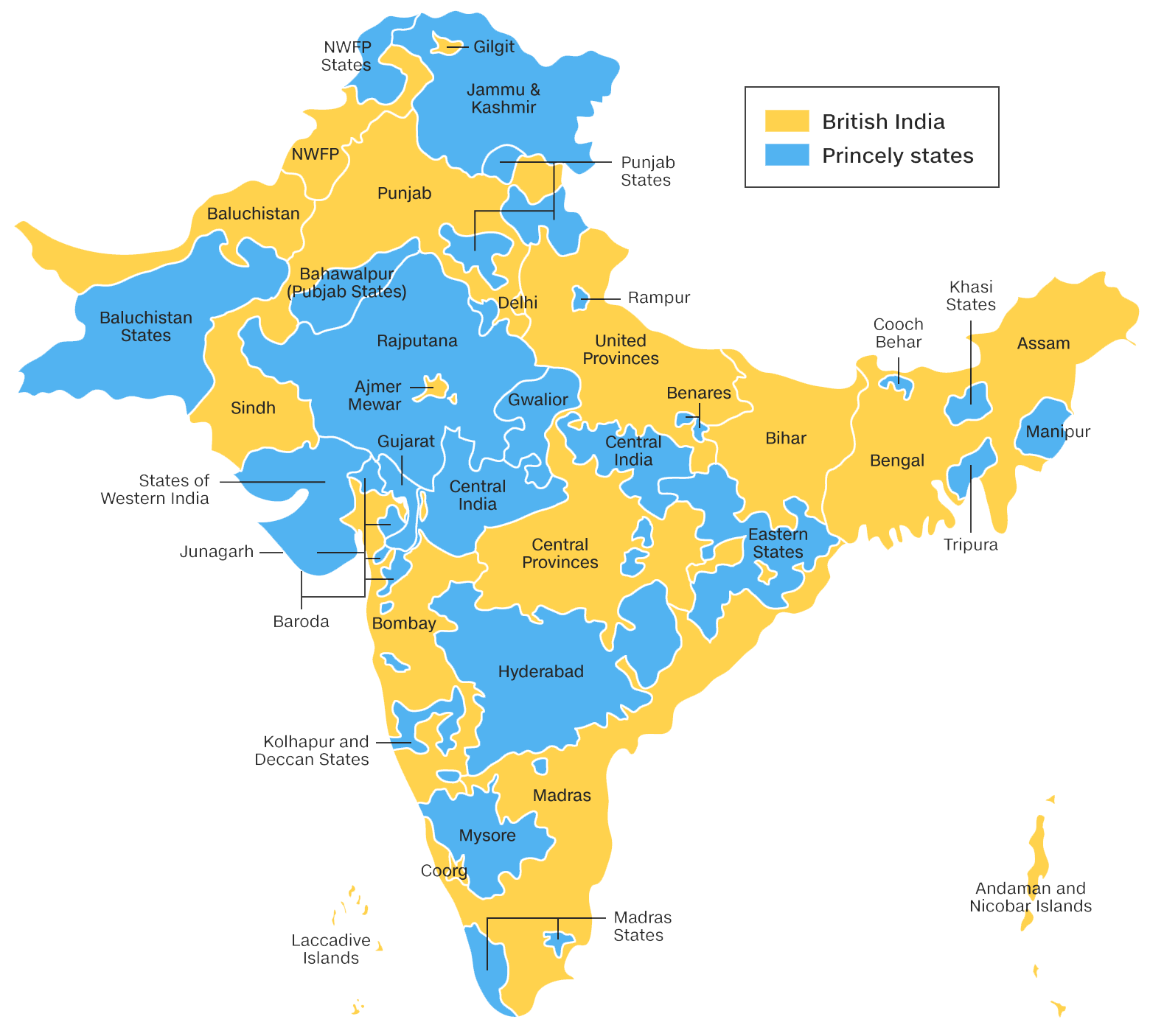
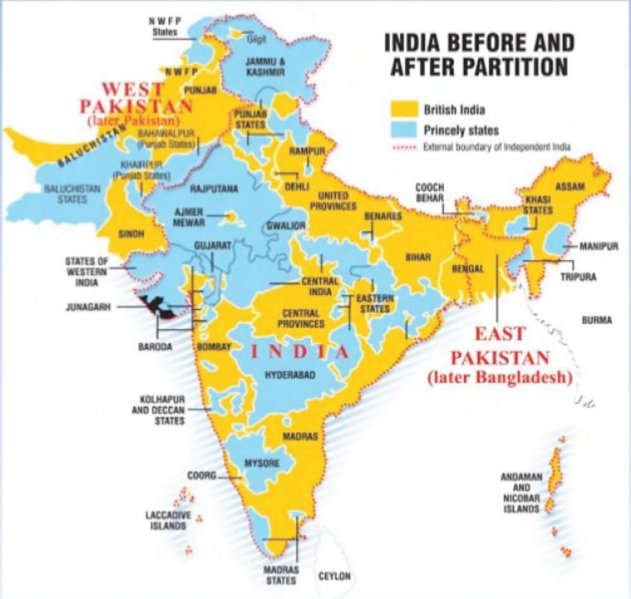
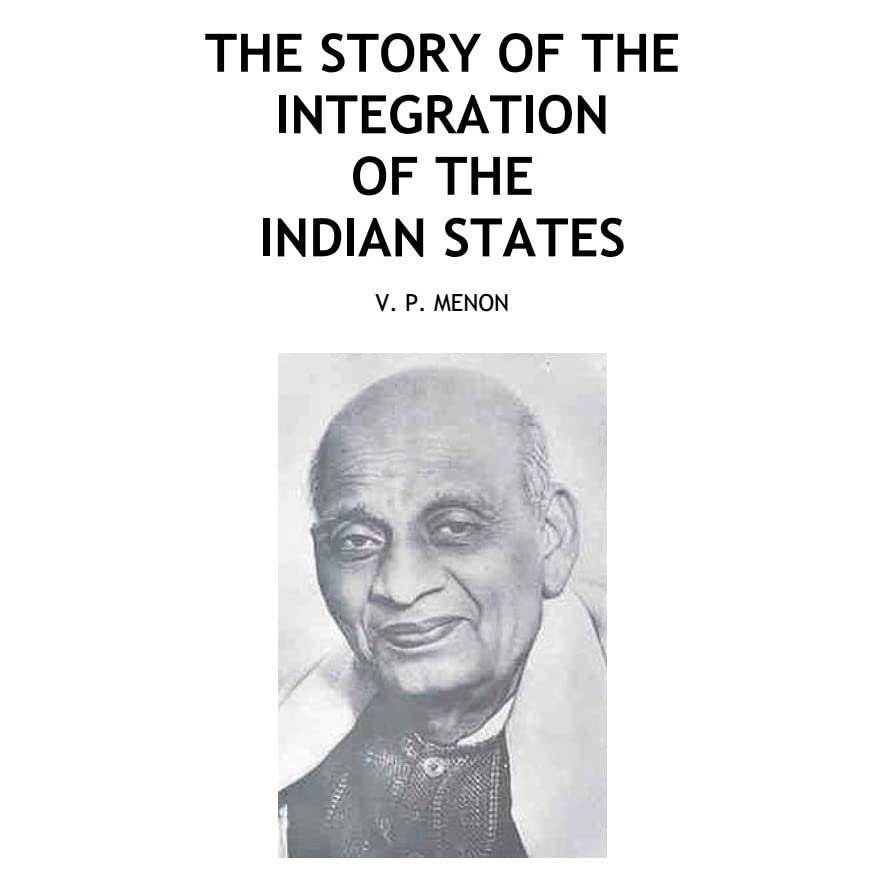
Sardar Vallabhbhai Patel played an important role in the integration of the princely state into the Dominion of India. This achievement laid the foundation for Patel’s popularity in the post-independence era. He is still remembered as the man who united India today. In this respect he is compared to Otto von Bismarck, who united many German states in 1871. The June 3 plan gave more than 565 princely states the option of joining India or Pakistan or choosing independence. Most Indian nationalists and the masses were afraid that most people and territories would be fragmented without the participation of these states. Parliament and British officials considered Patel to be the best man on a mission to secure the conquest of the princely state from Indian rule. According to Gandhi only Patel could solve this problem. Patel had practical insight and determination to accomplish monumental work. Patel asked V.P. Menon, a senior official involved in the division of India, to become his right-hand man as Principal Secretary of State. Patel used a social gathering and informal setting to involve most monarchs and invite them to their home in Delhi for lunch and tea. At these meetings, Patel stated that there was no essential conflict between Congress and the prince’s order. Patel aroused the patriotism of the Indian monarchs and urged them to embrace the independence of their country and act as responsible rulers who care for their people’s future. He persuaded the rulers of 565 states about the impossibility of independence from the Republic of India, especially in the face of rising opposition from their subject. He proposed favorable conditions for the merger, including the creation of a secret purse for the descendants of the ruler. Patel encouraged the rulers to act patrioticly, and to thought about his states people and their futur, but he did not rule out violence. He emphasized the need for the princes to join India in good faith and gave them to sign the membership certificate until August 15, 1947. All but three states were willing to join the Indian Union. Only Jammu and Kashmir, Junagad and Hyderabad were States which were tough to brought under Indian Dominion.


Junagadh being situated in Gujrat it was very important for Patel to bring it under Indian’s dominion. This was also important because there was the super-rich Somnath Temple (a temple where different stones were their including emeralds, diamonds, and gold which were looted by Mohd. Ghazni) in the Kathiawar district. Bieng under the pressure from Sir Shah Nawas Bhutto, a Nawab who joined Pakistan. However, it was far from Pakistan, with 80% of its state population being Hindus.Patel combining diplomacy and power, Pakistan invalidated Pakistan’s accession and demanded that Nawab join India. Patel sent troops to occupy the three principalities of Junagadh to show his determination. After widespread protests and the formation of the civilian government, or Aarzi Hukumat, both Bhutto and Nawab fled to Karachi, and under Patel’s orders, Indian troops and police forces invaded the state. A later organized referendum resulted in 99.5% of the votes in favor of the merger with India. After taking over, Patel, who spoke at the University of Bahauddin in Junagad, emphasized his sense of urgency regarding Hyderabad. He believes this is more important to India than Kashmir.


Hyderabad was the largest of the princely states and which included States parts of which are now Telangana, Arndra Pradesh, Karnataka and Maharashtra. Its ruler, Nizam Osman Ali Khan, was Muslim, but more than 80% of the population of state was Hindu. Nizam called for independence or accession to Pakistan. Under Kasim Razvi, an army of Nizam-faithful Islamic troops called Razakar urged Nizam to confront India and at the same time organize an attack on the people of India’s soil. The standstill agreement was signed by Lord Mountbatten’s in desperate efforts to avoid the war, but Nizam refused to trade and changed his position. At a cabinet meeting in September 1948, Patel emphasized that India should stop speaking and reconciled Nehru and Governor Chakravarti Rajgoparachari with military action. After preparation, Patel ordered the Indian troops to invade Hyderabad (in his position on behalf of the Prime Minister) when Nehru traveled to Europe. This action, called Operation Polo, in which thousands of Razakar troops were killed , but Hyderabad was secured and integrated into the Republic of India. Mountbatten and Nehru’s main goal was to avoid forced annexation to prevent the outbreak of Hindu and Muslim violence. Patel argued that if Hyderabad was allowed to survive as an independent state surrounded by India, the government’s fame would decline and neither Hindus nor Muslims would feel reassured in their empire. After defeating the Nizam, Patel held him as the head of state of the ritual and met with him. India had 562 princely states after addition of Junagarh, Heydrabad and Jammu& Kashmir.

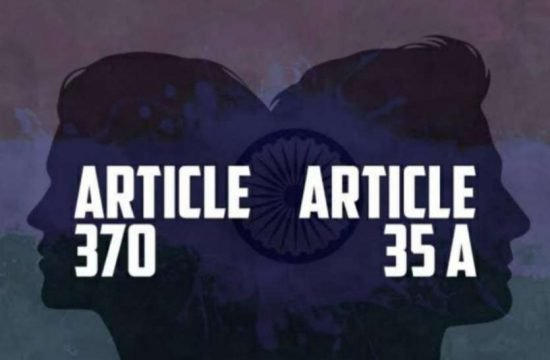
Article 370 & Article 35A

Article 370
The first accession of Jammu and Kashmir, like all other princely states, involved three issues: defense, diplomacy, and communications. All princely states were invited to send representatives to the Constitutional Parliament, which drafted the Constitution across India. They were also encouraged to establish a constituent parliament for their own state. Most states were unable to establish a parliament in time, but some states, especially Saurashtra Union, Travancore-Cochin, and Mysore. The State Department had drafted a model state constitution, but on May 19, 1949, the governors and Chief ministers of each state met in the presence of the State Department and agreed that no separate state constitution was needed. They accepted the Indian Constitution as their own constitution. The state in which the elected constituent council proposed some changes that were accepted. Therefore, the status of all states has been placed on par with the status of ordinary Indian states. In particular, this meant that the subjects available for legislation by central and state governments were consistent and same throughout India.

In the case of Jammu and Kashmir, state politicians have decided to establish a separate constitutional council for the state. Representatives of the Indian Constitutional Assembly applied only the provisions of the Indian Constitution corresponding to the original accession documents to the state, and demanded that the state Constitutional Assembly decide on other matters. The Government of India agreed to the request shortly before its meeting with the other states on 19 May. Therefore, Article 370 was included in the Constitution of India, which provided that other provisions of the Constitution empowering the central government would apply to Jammu and Kashmir only with the approval of the State Constitutional Assembly.This was a “provisional provision” because it was applicable until the State Constitution was enacted and adopted. However, the State Constitutional Assembly was dissolved on January 25, 1957, and did not recommend the abolition or amendment of Article 370. This article was considered an integral part of the Indian Constitution, as confirmed by various recent April 2018 rulings by the Supreme Court of India and the Supreme Court of Jammu & Kashmir.

Article 35A
Article 35A of the Constitution of India was a provision authorized by state to define the “permanent residents” of Jammu and Kashmir State and to give them special rights and privileges. It was added to the Constitution by an Executive Order, the 1954 Constitutional Order (application to Jammu and Kashmir). It was issued by the President of India under Article 370. Jammu & Kashmir has these privileges, the ability to acquire land and real estate, vote and participate in elections, pursue government employment, and receive the benefits of other governments such as higher education and medical expenses. Defined to include. Non-permanent residents of the state were not eligible for these “privileges”, even if they were Indian citizens.

A piece of mind

Photo by Miguel u00c1. Padriu00f1u00e1n on Pexels.com

Your mind is a garden, your thoughts are the seeds, the harvest can either be flowers or be weeds.

– William Wordsworth

Mind, as psychology defines is broadly, all intellectual and psychological phenomena of an organism, encompassing motivational, affective, behavioral, perceptual, and cognitive systems; that is, the organized totality of an organism’s mental and psychic processes and the structural and functional cognitive components on which they depend. In simple words, our mind is what we are and what we perceive. All of our actions and reactions are the result of what our mind thinks is the best to do being in a particular situation. Our mind is no doubt an indispensable part of our body and no human being on the face of earth can function properly without being in the “correct/ right state of mind”, as said by many.

Every single person present on the surface of the earth has a mind of his own. People think differently, talk differently, react to a same thing differently and so on. Everything we do differs from the other person. It is all because we have different minds. For example, some people like to listen slow songs whereas some prefer upbeat songs, some like to watch football whereas others watch cricket and the list goes on. Even while being in the midst of a discussion, we find many different opinions and ideas from the people present in the discussion. This is how different and varied our thoughts or our minds are. It is not that we are not aware of this fact that all people have a mind of their own and it is hard for any two people to be totally alike in their thoughts and perceptions, but still here we are fighting for the superiority of our thoughts and beliefs.

This blog is not about staying quiet even if you see something very wrong happening or someone with wrong beliefs imposing himself on you/ others. This blog is about what actually we should fight for. These days it is very clear from the ongoing scenarios that how fragile our minds have become and how we live in the constant fear that someone might come at us telling that our thoughts are wrong, because we all believe that our beliefs are free from any flaws. We get angered by small disruptions in our thoughts and vent in out on anyone who differs with our opinion. These all may seem very complicated to understand and anyone reading it must feel this to be some sort of rubbish. But all I ask of you is to take a moment and sit quietly for a moment, put our egos aside and retrospect what we are fighting for. Let’s put ourselves in the place of the other person and think why he/she feels that they are correct and what would we have done being in their place. It is very easy to point fingers at others and do our level best in proving someone wrong just to get the euphoria of being correct but it is very difficult to get to the mind of the other person and understand his thoughts and beliefs. I am not saying this justifies the crimes committed by a criminal or it justifies the actions of any violent protester burning the vehicles in road just to prove that what they believe in is true in all forms and there should be no debate about it. What I want to convey with this is know what you are fighting for, ask yourselves whether it is worth arguing others, ask yourselves what you will gain from proving yourselves correct and try to understand the other’s point of view before jumping into an argument. I know it I not easy to understand someone, but what I know is being patient will help a lot in this regard. It will take a lot of time to be able to actually put ourselves in someone’s shoes. But it is not impossible to do. Although it will take some time, I hope we all grow up from the constraints of our thoughts and be the one in command of our mind.

Photo by Arthur Brognoli on Pexels.com

What is Bajaj Card EMI and how to make it

This article is about Bajaj Card EMI, in which we will tell you today what is Bajaj EMI and why it is made and what are the benefits you can get by making it, today we are going to give you information about all these. That you too can get your EMI card made very easily.

Today, all the youth of India can apply for it and it also gives you many different benefits, due to which millions of people use it today and the biggest advantage of Bajaj Card is that you can do any stuff very much. One can easily buy on EMI and repay the number of goods in instalments, this allows all the people to buy expensive goods.

What is Bajaj Card EMI

Bajaj Card EMI


Bajaj EMI is a pre-approved loan, through this you can buy any type of product like electronics, mobile, appliances, furniture, gym membership, clothes etc. in many different types of items in easy instalments, instalments are 3, 6, 9, Lasts up to 12 months.

Many people do not have enough money to buy any expensive goods so people can buy those goods by paying so much money at once, so if you have a Bajaj card then you can buy that item on Bajaj EMI and this will give you money together. You do not have to pay money for that goods, you can repay the amount in easy instalments and you do not have to pay any kind of interest on it.

On Bajaj EMI, you can buy goods both online and offline, its instalment amount is deducted directly from your bank account on the 2nd of every month, if you are not able to pay the EMI on time, then the company takes charge of making its late payment.

What are the types of Bajaj EMI Card?


Many people are not aware of how many types of EMI cards are there in Bajaj, so let us tell you about these two types of cards.

Gold Card – To make this you have to pay Rs 412.

Titanium Card – You have to pay 884 rupees to make this.


Eligibility for making Bajaj EMI Card


If you want to make your Bajaj EMI card, then for this you need to have some documents, only then you can make your EMI card.

  • The minimum age limit to apply for this is 18 years.
  • You must have an aadhar card and a pan card.
  • It is important to have an account in your bank from which you also do transactions.
  • It is important to have a good CIBIL Score Record.
  • You must have a cancelled check.
  • You must have your latest passport size photograph.

How to make Bajaj Finserv EMI Card


If you want to make a new Bajaj card, then you can make it very easily, for this you can apply it in two different ways, we are telling you about applying both the methods.

Apply for a Bajaj card online


The online application can be done only by Bajaj users who have already applied for a Bajaj card or have purchased any goods on Bajaj, those people can apply for it online, for this, you have to pay 399 and after that, you have to pay 2 weeks. I get a Bajaj card.

Apply for a Bajaj card offline


Due to having about 950+ cities and their 43000+ branches in India today, you can now very easily apply for this, you can get information from any electronic goods seller (who gives goods on Bajaj EMI) there you can find any goods. To buy, after that you have to take the goods on Bajaj card, for this, you have to show the above-mentioned documents to that seller, after that he gives you a Bajaj card.

Benefits of making a Bajaj card


If you make a Bajaj card, then it gives you many different types of benefits, about which we are telling you.

  • With this, you can buy any type of goods on EMI.
  • With this, you can buy any expensive item in very easy instalments.
  • You do not have to pay any kind of interest on this.
  • Through this, you can also get a personal loan.
  • With this, you can also take a travel loan.
  • Apart from this, if you make a Bajaj card, then it gives you many different types of benefits.

Conclusion – In this article, we have given you information about how to make Bajaj Card EMI and what are its benefits. So you can also comment on us and if you find the information useful, then definitely share it with your friends.

ISSUES RELATING TO POVERTY AND HUNGER

India is a country which suffers a lot due to hunger and poverty. Hunger is very closely related to poverty as poverty is one of the main reasons for hunger. 

Indian economist and philosopher Amartya Sen said that lack of ability to pay for food is obviously caused by poverty.

POVERTY

Poverty is a condition caused due to lack of basic needs of life such as water, health care, food, unemployment etc. It is described as the low income level of people which leads them to poor standard of living. Poverty means that the income level from employment is so low that even the basic human needs are not fulfilled. The impact of poverty on children is substantial. Children who grow up in poverty typically suffer from severe and frequent health problems; infants born into poverty have an increased chance of low birth weight, which can lead to physical and mental disabilities. Poverty is a difficult cycle to break and often passes from one generation to the next. Typical consequences of poverty include alcohol and substance abuse, limited access to education, poor housing and living conditions, and increased levels of disease. 

Hunger and food insecurity are the most serious forms of extreme poverty. To eradicate these issues from society is the prime concern of international organizations.

HUNGER

Hunger is a global problem and a lot of countries are facing this problem. Hunger is a condition where both the adults as well as children do not have access to food and there is a constant decrease in food intake, nutrients, no proper diet is there and some days are even gone without food which eventually leads to their death.

Climate change is also one of the reasons for world hunger. The amount of rain determines the production of crops. Droughts also affects agricultural production and extreme rain also causes flooding that leads to destruction of crops . Use of outdated products, not using better quality seeds also leads to shortage of food and those who are capable and have money buys food even at higher prices, the ones who have to suffer are poor people. They do not have money to buy food and hence they remain hungry. Hunger has a lot of serious problems such as insufficient economic systems, climate changes, misinformation but the most serious problem of all is poverty. Many poor nations such as Kenya, Uganda etc. are in desperate need of food. The growing population is one of the major causes of rising hunger and poverty. In Indian scenario Hunger and malnutrition are closely related. The main outcome of poverty is hunger. India is a home to the largest undernourished population in the world, 14℅ of our population is undernourished, 20℅ of children under 5 are underweight, 34.7℅ of children are stunned, 51.4℅ of women in the in the reproductive age i.e. 15-49 are anemic.

DIFFERENT ISSUES RELATING TO HUNGER AND POVERTY

Overpopulation is a major issue of rising poverty. There are not enough resources to satisfy your need. Demand is more and resources are limited and this leads to no proper distribution of resources and a large amount of people are left with no food. India is a country with a large population, and hence everyone’s demand is not full and people remain hungry.

Poor health service– the health sector of India is not as efficient as compared to other developed Nations, which leads to less access to good health and sanitization and hence causes ill health and maintains poverty.

Malnutrition- It is a phenomena that occurs in a human body when it receives little or no nutrition as a result of it people easily get sick and it causes death. it is responsible for the death of people, especially young children.

Insufficient education and lack of training- due to Rising poverty children are not able to get basic education and again since they are not educated, they don’t get employed and this vicious cycle of poverty is continued. Lack of money is reason for them not attending proper School and they have to indulge in labour to provide for a minimal living also causes rise for child labour. Parents send their children to work at a very young age.

Inequality– different gender, ethnic, group and social classes face inequality due to poverty. Low rate of economic development, If a country is poor then its development is also very slow.

Rise in crime – Often due to poverty and hunger, people indulge in criminal activities. To fill their empty stomach many young children opt for wrong ways and indulge in theft and loot and its disturbance in the society.

Way Forward

To eradicate poverty and hunger from the society, there is a need for the government to implement schemes and methods. The government should spend more in health, nutrition, and education. The government should invest more in agriculture and provide the farmers with better quality seeds and advanced machineries and modern techniques for more agricultural production, Also it is necessary to decrease rural poverty. Subsidies address only short-term issues. There is a need to develop technologies, with the help of which farmers can practice all-weather agriculture. Government should focus on increasing employment opportunities creating jobs in modern sectors and promote labor-intensive industries. Reduction in corruption will lead to an overall development of the economy. A country with low poverty level will only develop in a better manner.

Sources: civilservicesindia.com

The joint family system of India

Photo by Yan Krukov on Pexels.com

The family is the most primary group in society. It is the most simplest and elementary form of society. A family usually consists of various combinations and permutations of two primary links of kinship- parenthood and siblings. The family as an institution is universal. It is the most permanent and the most pervasive of all social institutions. Family is the biological social unit composed of husband, wife and children.

The joint family is also known as ‘undivided family’ and sometimes as ‘extended family’. It normally consists of members who at least belong to three generations: husband and wife, their married and unmarried children; and their married as well as unmarried grandchildren.

Definitions of joint family:

  1. K. M. Kapadia defines joint family as a group formed not only of a couple and their children but also other relations either from father’s side or from mother’s side depending on whether the joint family is patrilineal or matrilineal.
  2. I. P. Desai holds, “We call that household joint family which has greater generation depth than the nuclear family and the members of which are related to one another by property, income and mutual rights and obligations.”
  3. According to Dr. Mamodia, “The fundamental principle of the Hindu joint family is the tie of sapinda without which it is impossible to form a joint family.”
  4. Dr. Chandrashekhar says that “joint family is simply the common ownership of the means of production and the common enjoyment of the fruits of labour.”

Characteristics of Joint family:

  1. Common Habitation: Members of the joint family normally reside together under the same household. This comprises of father, mother, son, son’s wife and children etc. Traditionally, a joint family comprised of some separate family units who had a common habitation.
  2. Joint kitchen: The food for all members of a joint family is cooked in common kitchen. The self of joint family begins with separation of the kitchen.
  3. Joint property: In a joint family the property is held in common in respect of the ownership, production and consumption of wealth. The head of the family acts like a trustee. He manages the joint property.
  4. Kindred relationship: The members of the joint family are bound together through kinship tie. Parents and grandchildren, who are all blood related persons, live together in one house. The joint family comprises of persons belonging to at least three generations. Many a time it may be supplements by other relatives.
  5. Common worship: The members of the joint family also cherish common faith, beliefs, and hence participate in common worship. The functions of the family were mostly religious even in the Vedic times.
  6. Ritual Bonds: The performance of ‘Shraddha’ ceremony and the offering of ‘Pinda’ are propriated by the senior male member of the joint family. He performs the function on behalf of all the members of the joint family.
  7. Mutual obligations: In the joint family the members are well aware of one another’s rights and duties. Each member of the family performs certain duties which benefits the other members as well as the family as a whole.
  8. Authority of the Head: The head of the family appears to have absolute authority and control over the family property and members. Since the Hindu family is a patrilocal, patrilineal and patriarchal type, the father exercises authority over all members and family property.

Merits of joint family:

  1. The common right on the joint property is productive from the point of view of agricultural productions.
  2. In the joint family system, all the earnings are pooled into a common fund.
  3. The joint family provides social security to all the members despite their inability to earn or to work to supplement the common fund.
  4. The offsprings undergo the process of socialization in a broader family setting.
  5. All the members of a joint family share joint responsibility.
  6. Work is divided among the members in a joint family.
  7. The joint family exercises an informal type of social control over the harmful tendencies of its young members in an effective manner.
  8. Family traditions and customs are maintained in the joint family system.

Demerits of joint family system:

  1. The joint family can be centred as a source of litigations, quarrels and conflicts due to many reasons.
  2. Since collective responsibility is bestowed on all the members of family the concept ‘everybody’s business, nobody business’ prevails. It makes some members lazy because they know it pretty well that their idleness will not debar them from consuming equal share.
  3. There is a absence of privacy for the married couples.
  4. Joint family hinders social mobility.
  5. The condition of women worsen I the joint family. The woman enjoys a lower status in the joint family.
  6. The incidence of child marriage is quite high in the joint family.

The traditional joint system of Hindi has undergone vast changes. These changes have not destroyed the system as such. They have definitely affected its structure and functions and also its stability. Some of the causative factors are: education, industrialization, urbanization, change in the institution of marriage, specially in the age of marriage and the legislative measures.

Gamma Ray Bursts

Gamma ray bursts are the most energetic and luminous electromagnetic events since the Big Bang. It can release more energy in 10 seconds than the Sun can emit in its entire 10 billion years of expected lifetime. They are the most powerful events in the universe, detectable across billions of light-years. They are high energy explosion that occurs in space atleast once everyday. They can last from milliseconds to a minute. It isn’t possible to predict the exact time and location of its occurrences.

What are Gamma Rays ?

Gamma rays are ionizing electromagnetic radiation, obtained by the decay of an atomic nucleus. Gamma rays are  penetrating form of electromagnetic radiations and can damage living cells to a great extent. They have the smallest wavelengths and the most energy of any wave in the EV spectrum. They are produced by the hottest and most energetic objects in the universe such as neutron stars and , supernova explosions and regions around black holes. On Earth , gamma rays are generated by nuclear explosions,lightning and the less dramatic activity of radioactive decay.

Gamma ray detectors :

Gamma rays can’t be captured and reflected by mirrors like optical light and x-rays. Its wavelength is too short to pass through the space.
Gamma ray detectors contain densely packed crystal blocks. As Gamma rays pass through,  they collide with electrons in the crystal.
This process is called Compton Scattering where a gamma ray strikes an electron and loses energy. These collisions create charged particles that can be detected by the sensor.

Type of Gamma Ray Bursts :

1. Long GRBs :
• They observe long bursts in association with the demise of massive stars.
• When a star much more massive than the Sun runs out of fuel, its core suddenly collapses and forms a black hole.
• Black hole refers to a point in space where matter is so compressed as to create a gravity field from which even light cannot escape.
• As matter swirls toward the black hole, some of it escapes in the form of two powerful jets that rush outward at almost the speed of light in opposite directions.
• Astronomers only detect a GRB when one of these jets happens to point almost directly toward Earth.
• Following the burst, the disrupted star then rapidly expands as a supernova.

2. Short GRBs :
• Short GRB forms when pairs of compact objects – such as neutron stars, which also form during stellar collapse – spiral inward over billions of years and collide.
• A Neutron star comprises one of the possible evolutionary end-points of high mass stars.

GRB 200826A :

• NASA’s Fermi spotted a very short, powerful Gamma-Ray Bursts (GRBs) that lasted for about a second. It was named GRB 200826A after the date it occurred, which is 26th August 2020. It was a sharp blast of high-energy emission lasting just 0.65 seconds.
• After traveling for a very long period of time through the expanding universe, the signal had stretched out to about one-second-long when it was detected by Fermi’s Gamma-ray Burst Monitor.
• It had been racing toward Earth for nearly half the present age of the universe.
• It is considered to be the the shortest GRB till now and it is caused by the death of a massive star.
• It emitted 14 million times the energy released by entire milky way galaxy over the same amount of time , making it one of  the most energetic short duration GRBs ever seen.

Significance of GRB 200826A :
It has helped to resolve the long-standing issues related to gamma-ray bursts. Also, this study triggers to re-analyse all such known events to constrain number densities better.

Sources : PIB and Dristi IAS

ROLE OF FAMILY,SOCIETY AND EDUCATIONAL INSTITUTIONS IN INCULCATIONG VALUES

Family, society, and educational institutions play a very major role in building one’s character or personality. These institutions impart value to an individual and help them become a better person in society. One learns what one listens. Young children very much learn what they see around them. If they see good they learn good and if they see bad they will learn that as well. The role of family is important because an individual lives there and learns from there, society influences an individual’s behaviour and educational institutions are where an individual learns. Now we’ll see how these factors help in inculcating values in an individual.

ROLE OF FAMILY

Family is a place where one grows, and learns the most. Just like the saying charity begins at home similarly an individual’s education starts from home. It is like a foundation where values are built. Values like respecting elders, honesty, justice, respect for both genders all taught at home. If within a family there are differences or if the home environment is not healthy then this also affects the individual. The values practised by the other members of the family also shapes the child’s attitude towards other people or towards the society. Values like love, care, protection all these start from family. If a child experiences love, care, comfort then he/she will have a positive attitude toward others and will behave the same with others and will inspire others as well. Family’s environment will help a child to socialise and progress in the society.

The system of joint family that is the presence of elder family members also has a great influence on an individual. It helps in developing social and moral values. They learn human values and respecting elders and this will help in eradicating negative mental tendencies when they are among elders. In a family an individual not only learns about values but also about their customs and culture and enhancing one’s culture proudly is also a very good value. The attitude of one family member towards another also affects individual behaviour. For example if child see his father not respecting his mother then he may feel that this is how it is supposed to be and he may also do the same thing with his wife but if he sees his father respecting her mother, giving her importance which she deserves the he will also treat his wife in respective manner so it is very important for a family to not just inculcate good values to the younger generation but they themselves should have good value so the future generation could learn from them.

The values that are taught in the family helps a child to learn, grow and progress in the society. Family values enhance a child’s personality and character and help them in becoming a better human being.

ROLE OF SOCIETY

When we grow older our social world also expands, now not only family but we become a part of society. Society also plays an important role in inculcating values. When a child grows it goes outside to make friends and share each other’s thoughts. Society also shapes an individual’s character. Societies follow certain traditions and customs and being a part of the society, we are also a part of these customs and traditions. These customs and traditions are being followed from generations and these are based on values such as loyalty, courage, love and brotherhood. We celebrate different festivals together which portray love and happiness and we not only celebrate festivals of one tradition or religion, but being part of such a diverse country we get to enjoy festivals and customs of different religions which shows mutual respect towards each other and toward different individuals in a society. Religion is a very important social institution in our Indian society and these religions are embedded with cultural values. Society creates social order, the diversity present in our society teaches mutual love, respect and inculcates a variety of values and holistic development of individuals. The social influence and the urge to become an inspiring personality in a society helps in developing good values in an individual. The great inspiring personalities, influencer leaders and celebrities also have a great influence in society. Young individuals learn and get inspired by them so it is also an important job for these powerful personalities to set a good example for the younger generation.

ROLE OF EDUCATIONAL INSTITUTIONS

Apart from home, a child spends most of his/her time at school. The first formal place of socialisation and the first and foremost important value that it teaches is discipline. The educational institutions have a proper disciplined environment. In an educational institution, the day starts with the prayer which teaches gratitude. Different school activities inculcate different values such as teamwork, sportsmanship spirit, competitiveness, etc. Different programs of Community work help in inculcating values like empathy, care, unity, etc. Peer groups also play an important role, students often get feedback about their behaviour from their fellow classmates or friends. Teachers also act as role models for the students, when a teacher asks students to behave in a certain manner then they tend to take it more seriously as compared to any family member or friend. The reward and punishment system also helps as children behave in a good manner for rewards and to protect their self esteem from getting punished. Every school or educational institution has their philosophy or motto and these help in inculcation of good values.

“Intelligence plus character, that is the true goal of education”. – Martin Luther King

Value is something that is not restricted to a certain age or gender or place. It is something which is lifelong, it can be learned at any age and be practiced throughout one’s life. Good values build one character and make an individual a better human being . A man with good values is respected everywhere in the society so it is very important to inculcate good values in life. There are different characters in an individual life that add to his/her character and personality. The influence of family, society and educational institutions have the strongest influence upon an individual and thus it affects in developing an individual personality whether positively or negatively.  

Sources: diyethics.forumias.com

Story of a fierce Queen, Rani Karnavati.

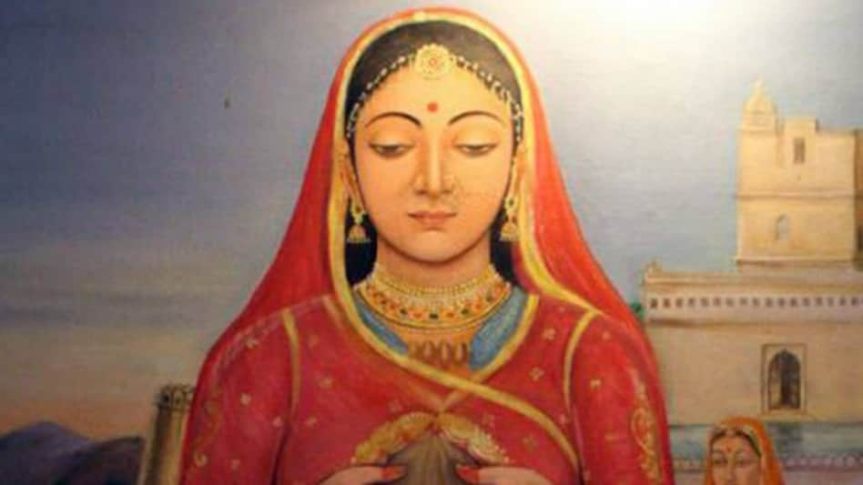
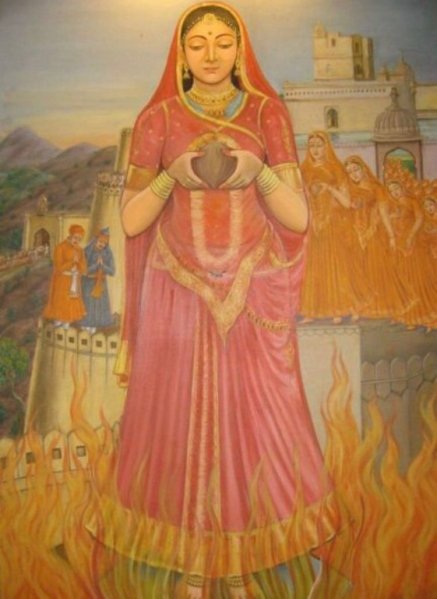
Rani Karnavati was a princess and temporary ruler from Bundi, India. She married Rana Sanga of Mewar in Chittorgarh, the capital of the Kingdom of Mewar. She was the mother of Rana Vikramaditya and Rana Uday Singh, and the grandmother of the legendary Maharana Pratap. During 1527 to 1533 the minority years of her sons she served as a regent for Mewar. She died on 8th March 1535.

After Babur seized the throne of Delhi in 1526, Rana Sanga of Mewar led a coalition of Rajput Kings against Babur to seize the throne of Delhi. In the starting Rana Sanga was able to defeat Babul in the Battle of Bayana, but in the Battle of Kanua, he was defeated because of Babur’s excellent tactics, guns, and artillery.Rani Karnavati took over as regent on behalf of his eldest son Vikramaditya who was a minor at that time. Meanwhile, Mewar was attacked a second time by Gujarat’s ruler Bahadur Shah against whom Vikramaditya had previously been defeated. It was very important issue for Rani Karnavati.

The nobles of Mewar Kingdom did not want to fight for Vikramaditya, and as the upcoming battle will certainly be another stain in the history of Sisodias. Rani Karnavati was able to persuade nobles to fight for Mewar and honor of Sisodias . Their only condition was that Vikramaditya and Uday Singh should go to Boondi for their personal security during the war. In some legends some also said, that Rani Karnavati also sent Rakhi to Emperor Humayun of Mugals calling him his brother and asking for help. Therefore, her name was irreparably linked to the Raksha Bandhan Festival. However, this is not supported by modern writers, and modern historians such as Satish Kumar consider it a fable rather than a historical fact.

Rani Karnavati agreed to send her sons to Bundi ,while knowing the situation being very critical and which can be dangerous for her two sons and send her trusted maid Panna Dai to accompany them and take care of them. Panna hesitated, but she left for Bundi with Vikramaditya and Uday Singh and accept the Queen’s wishes.

The Sisodias dynasty fought bravely, but the army of Mewar was outnumbered by Bahadur Shah army and they were defeated. Bahadur Shah entered Chittorgarh and it was his second attack on Chittor. The male nobles donned with saffron cloths fought with the enemy till thier death and commited Saka.Karnavati and other noble court women realized that defeat was imminent and to save their honour they committed suicide on March 8, 1534, in a fire called Jauhar. This was the second of the three Jauhar to take place in Chittor.

AGNIPATH SCHEME

On 14 June 2022, the central government launched the Agnipath scheme which is a recruitment of soldiers below the rank of commissioned officers into the three services of the armed forces. With this scheme, the central government hopes to fulfill the dream of an individual to join the armed forces and serve the nation. Various other reasons for the government to start this scheme were to reduce salaries and defence pension bill, to increase employment opportunities and higher skilled work force and to provide a youthful profile to the armed forces. One of the important reasons was also to have a large number of military trained and disciplined people in the society. The soldiers recruited through this scheme will be known as ‘AGNIVEERS’.

Under this scheme 45,000 to 50,000 youth aged between 17.5 to 21 years will be recruited annually for 4 years in the Navy, Air force & Armed forces. Enrollment will be based on an ‘All India All Class’ basis. The enrolment of the Agniveers to all the three services will be through a centralized online system, with special rallies and campus interviews at recognized technical institutes such as the National skills Qualifications framework, Industrial Training Institutes. In each batch, 25% of Engineers will be chosen for the permanent cadre in the armed services. The remaining 75% of Agniveers will receive an amount of Rs. 11.71 lakh as Seva Nidhi Package.

The salary per month of the Agniveers is Rs. 30,000 in 1st year, Rs. 33,00 in 2nd year, Rs. 36,500 in 3rd year and Rs. 40,000 in 4th year but the Agniveers contribution to Seva Nidhi will be 30% which means 30% will be deducted from the initial salary which means in hand they will receive 21,000 in first year, 23,100 in second year, 25,580 in third year and 28,000 in fourth year.

The Agniveers will also receive a non-contributory insurance cover of Rs. 48 lakh during the period.

Every demolished AGNIVEER will have a 10% reservation in CAPFs, Assam Rifle recruitment. They are also provided with the Upper age relaxation beyond the prescribed age limit for AGNIVEERS in CAPF & Assam Rifles. Other benefits include:

  • Priority in bank loan schemes in case they want to be entrepreneurs.
  • Many other states including Uttar Pradesh and Madhya Pradesh have stated that agniveers will be given priority in the recruitment of state police officers.
  • Some major companies and sectors like IT, Engineering Security, etc. have also announced that they will prefer hiring skilled, trained, and disciplined Agniveers.
  • It also stated that all those wishing to study further class 12 equivalent certificate and Bridging Course of choice for further studies.

The Upper age limit for recruitment has also increased only for 2022 under the Agnipath scheme to 23 years from 21 years for the first year of the scheme for enrolment of soldiers into the Army, Navy and Air Force.

AIM OF THE SCHEME

  • One of the important aims of the scheme is to make the army a future-ready fighting force with the youth of the nation capable of meeting multiple challenges.
  • To strengthen the national security
  • To provide the youth of the nation to serve the country.
  • To cut down salary and pension bills.
  • To harness the youth potential and make them future ready soldiers.
  • They will be provided with certificates and bridge courses that will help in creating future entrepreneurs.

CRITICISM OF THE SCHEMES

After the announcement of this scheme, there were several protests held throughout the country in several states. Students from throughout the country held riots, burned trains, and caused severe damage to the public as well as private properties. This scheme is criticized on a number of basis such as:

  • The service period that is 4 years is very less and it will provide employment for just 4 years. T
  • he real skills cannot be acquired in such a short period and what about those who want to serve the nation for longer terms.
  • only 25% of the candidates will be taken permanently and the rest 75% will again be unemployed.
  • No pension will be given to these candidates that will be appointed during this scheme.
  • The candidates that will be selected will only be selected for non-commissioned ranks like Naik, Sepoy, and Lance Naik.
  • The recruitment is only for candidates of 17.5 – 23 years of age.
  • After 4 years is over, there will be no job security.
  • Unlike other governments’ jobs no extra basic benefits will be provided to the candidates.
  • The salary will also be deducted for the Seva Nidhi contribution.

With the provided advantages and disadvantages of this AGNIPATH scheme it is way forward for a reform in the Defence policy. This schemes aims to increase employment opportunities with skills and training, to give a better opportunity to the youth who choose to serve the nation and it hopes to have a positive impact on the human resouces management of armed forces and for the country’s development.

Sources: https://byjus.com/free-ias-prep/agnipath-defence-policy-reforms/

GOVERNMENT BUDGET

Government is required to undertake various economic, social, and other activities in every country. It is like to pursue various policies to achieve certain objectives like economic development, reduction of inequalities of income and wealth. The government has to incur expenditure in performing these activities and in pursuing its policies. For instance, the government has to incur expenditure in maintaining law and order and in undertaking various developmental activities. As such, government has to raise necessary revenue to finance these expenditures.

Accordingly, the government has to draw a financial plan corresponding to various activities it wants to undertake during the coming year . Such a financial plan is known as the budget of the government. “Budget of the government is an annual financial statement describing in detail the estimated receipts and proposed expenditures and disbursements of the government under various heads for the financial or fiscal year. The budget is the indicator of government functioning. It also gives the actual financial accounts for the previous year and the revised estimates for the current ye . In other democratic countries ,the government budget is a constitutional obligation in India. Under Article 112 of the constitution, a statement of estimated receipts and proposed expenditures of the Central Government has to be prepared for every financial or fiscal year and has to be placed before the parliament. It is titled Budget of the central government.

Government budget is a subject of immense importance for a variety of reasons.

  • Planned approach to government’s activities: The importance of government budget arises because of the fact that the activities of the government have increased tremendously. This calls for mobilization of large resources to meet the expenditure required to undertake these activities. There has to be a definite planning with regard to the estimated revenue and proposed expenditure for the proper conduct of the government activities.
  • Integrated Approach to Fiscal Operations: All these decisions and policies are interconnected and they must form a part of the overall set of objectives which the government wants to pursue. Government’s fiscal policy as reflected in the budget is an essential part of its overall economic and social policy.
  • Public Accountability: Budget proposals are discussed in the parliament. A popular debate also takes place in the media about the budget proposals. Parliament also exercises control over the government expenditure through various committees – Public Accounts Committee, the Estimates Committee and the Committee on Public Undertakings. Thus, Budget serves as a powerful weapon of financial control in respect of both collection of revenues and their disbursement.

STRUCTURE OF THE GOVERNMENT BUDGET

Constitution of the country demands that the budget must distinguish expenditure on revenue account from the expenditure on capital account. Revenue account covers those items which are recurring nature, while capital account covers those items which are of the nature of creating or reducing the capital assets. Budget is necessarily presented in two parts:

  • REVENUE BUDGET
  • CAPITAL BUDGET

Revenue budget shows revenue receipts of the government and the expenditures met from these revenue receipts. It consists of revenue receipts and revenue expenditure. Revenue receipts of the government are all those receipts which are non-redeemable. They create no liabilities or involve no sale or reduction in the assets of the government. Revenue expenditures relate to expenditures incurred by the government on day to day normal functioning of the government and interest payment on government debts. These expenditures neither create any physical or financial assets nor reduce any liability of the government .

Capital Budget comprises capital receipts and capital expenditure of the government. It shows capital requirements of the government and financing of these expenditures. Capital receipts are the receipts of the government which create liabilities or reduce assets of the government. The main component is to borrowing of all kinds from the public, RBI and repayment of loans to the central government by state government and public sector enterprises. Capital expenditures are those expenditures of the government which lead to creation of physical and financial assets or reduction of financial liabilities.

BUDGET DEFICITS

An important issue which is raked up every year during the budget in India is the issue of budget deficit. In the past two to three decades, government spending has increased more than its receipts. As a result , budget deficits and the government borrowings have increased sharply. Although politicians regularly make fine speeches about the need to reduce deficit, cutting down spending or raising taxes so as to reduce deficit are not politically popular. In every budget , the government has been setting the target of reducing the budget deficit, but reaching the target of reducing budget deficit has been rather difficult.

Budget deficit is financed by increasing the money supply and by borrowing from public and from other countries. This involves burden both on present as well as the future generations. The present generation has to shoulder the burden of budget deficits in terms of inflationary rise in prices. Higher debt also means that interest payments eat away a large part of government expenditure, which could otherwise be used for providing various economic and social services to the public. This deficit is a liability for future generations as well. Taxes will have to be increased in future to pay interest on the debt and to repay the debt. This is the burden of the debt on future generations.

SOME FACTS ABOUT INDIAN BUDGET OVER THE YEARS

  • The budget system was introduced in India on 7 April,1860.
  • James Wilson, the first Indian Finance member, delivered the budget speech
  • The first budget after independence was presented on 26 November, 1947 by R.K.S. Chetty.
  • Yashwant Sinha, the then finance minister, moved the budget to 11a.m. in 1999, instead of 5 P.M. as was the practice till then.
  • Arun Jaitley, the present Finance minister, has advanced the presentation of the budget to 1st February from the 2017-18 Budget. He has presented 4 regular budgets till date.
  • 24 people have presented budget in independent India.
  • Morarji Desai holds the record for the most budget presented in independent India with 8 full budgets and 2 interim budgets.
  • P Chidambaram has matched Morarji Desai’s record of presenting 8 full budgets.
  • All the three Prime Ministers from the Nehru family- Jawaharlal Nehru, Indira Gandhi and Rajiv Gandhi have presented one budget each.

Sources: Frank ISC Economics Class XII