EFFECTS OF GLOBALIZATION ON INDIAN SOCIETY

Globalization has many meaning depending on the circumstance and on the individual who is talking about. There is one of the term of Globalization is a process of the “reconfiguration of geography, so that social space is not entirely mapped in terms of territorial distance, territorial places and territorial borders.” The simple term of globalization refers to the integration of economies of the world through uninhibited trade and financial flows, as also through mutual exchange of technology and knowledge. Ideally, it also contains free inter country movement of labor.

Indian society drastically changes after urbanization and globalization. The economic policies has direct influence in forming the basic framework of the Indian economy. The government shaped administrative policies which aim to promote business opportunities in every country, generate employment and attract global investment. In which the Indian economy witnessed an impact on its culture and introduction to other societies and their norms brought various changes to the culture of this country as well. The developed countries have been trying to pursue developing countries to liberalize the trade and allow more flexibility in business policies to provide equal opportunities to multinational firms in their domestic market. The International Monetary Fund (IMF) and World Bank helped them in this endeavor. Liberalization began to hold its foot on barren lands of developing countries like India by means of reduction in excise duties on electronic goods in a fixed time Frame.

Globalization has several aspects and can be political, cultural, social, and economic, out of Financial integration is the most common aspect. India is one of the fastest-growing economies in the world and has been predicted to reach the top three in the next decade. India’s massive economic growth is largely due to globalization which was a transformation that didn’t occur until the 1990s. Since then, the country’s gross domestic product (GDP) has grown at an exponential rate.

Indian government did the same and liberalized the trade and investment due to the pressure from the World Trade Organization. Import duties were cut down phase-wise to allow MNC’s operate in India on an equal basis. As a result globalization has brought to India new technologies, new products and also the economic opportunities.

Despite bureaucracy, lack of infrastructure and an ambiguous policy framework that adversely impact MNCs operating in India, MNCs are looking at India in a big way, and are making huge investments to set up R&D centres in the country. India has made a lead over other growing economies for IT, business processing, and R&D investments. There have been both positive and negative impacts of globalisation on social and cultural values in India.

Economic Impact:

1. Greater Number of Jobs: The advent of foreign companies led to the growth in the economy which led to creating job opportunities. However, these jobs are concentrated in the various services sectors and led to rapid growth of the service sector creating problems for individuals with low levels of education. The last decade came to be known for its jobless growth as job creation was not proportionate to the level of economic growth.

2. More choice to consumers: Globalisation has led to having more choices in the consumer products market. There is a range of choices in selecting goods unlike the times where there were just a couple of manufacturers.

3. Higher Disposable Incomes: People in cities working in high paying jobs have greater income to spend on lifestyle goods. There’s been an increase in the demand for products like meat, egg, pulses, organic food as a result. It has also led to protein inflation.

Protein food inflation contributes a large part to the food inflation in India. It is evident from the rising prices of pulses and animal proteins in the form of eggs, milk and meat. With an improvement standard of living and rising income level, the food habits of people changed. People tend toward taking more protein intensive foods. This shift in dietary pattern, along with rising population results in an overwhelming demand for protein rich food, which the supply side could not meet. Thus resulting in a demand supply mismatch thereby, causing inflation.

In India, the Green Revolution and other technological advancements have primarily focused on enhancing cereals productivity and pulses and oilseeds have traditionally been neglected.

Shrinking Agricultural Sector: Agriculture now contributes only about 15% to GDP. The international norms imposed by WTO and other multilateral organizations have reduced government support for agriculture. Greater integration of global commodities markets leads to constant fluctuation in prices.

• This has increased the vulnerability of Indian farmers. Farmers are also increasingly dependent on seeds and fertilisers sold by the MNCs.

Globalization does not have any positive impact on agriculture. On the contrary, it has few detrimental effects as the government is always willing to import food grains, sugar etc. Whenever there is a price increase of these commodities.

• Government never thinks to pay more to farmers so that they produce more food grains but resorts to imports. On the other hand, subsidies are declining so the cost of production is increasing. Even farms producing fertilizers have to suffer due to imports. There are also threats like introduction of GM crops, herbicide resistant crops etc.

Increasing Health-Care costs: Greater interconnections of the world have also led to the increasing susceptibility to diseases. Whether it is the bird-flu virus or Ebola, the diseases have taken a global turn, spreading far and wide. This results in greater investment in the healthcare system to fight such diseases.

Child Labor: Despite prohibition of child labors by the Indian constitution, over 60 to a 115 million children in India work. While most rural child workers are agricultural laborer’s, urban children work in manufacturing, processing, servicing and repairs. Globalization most directly exploits an estimated 300,000 Indian children who work in India’s hand-knotted carpet industry, which exports over $300 million worth of goods a year. The many effects of globalization of Indian society and has immense multiple aspects on Indian trade, finance, and cultural system. Globalization is associated with rapid changes and significant human societies. The movement of people from rural to urban areas has accelerated, and the growth of cities in the developing world especially is linked to substandard living for many.

Sources: https://www.clearias.com/effects-globalization-indian-society/

How to start Solar Panel Business in India?

In today’s time, we can earn money sitting at home in many ways, one of which is by doing business of solar energy plate / solar panel, we can earn very good money, through this we can earn lakhs of rupees a month. And we do not have to work too hard in this, so let’s know in today’s article how we can earn lakhs of rupees from the business of solar panel sitting at home, I will tell you the complete way about How to start Solar Panel Business in India, please read our information till the last.

In today’s time, if we want to do any business, then we are getting a lot of help from the government for that because our Indian government also wants that the citizens of India should now become self-reliant. And India is also cooperating a lot in this mission, many businesses have been started in India in the last year 2021, such as ration shops, small medical shops were opened and many companies were also opened and most importantly online. Many such things are taking India towards a new direction, we should also give our support in this and start a new business in India so that India gets a new direction towards progress.

How to start Solar Panel Business


How to start Solar Panel Business


If you are thinking of doing business in India and want to do business inside India, then the best business in today’s time is the business of solar energy plate / solar panels, you do not have to invest much in this business. And from here you also get good returns, so let’s know how we can start this business, what are the things we will need for this business and who can do this business.
In today’s time, the demand for Solar Panel is increasing inside India and in today’s time it is being used everywhere, it is being used to make free electricity nowadays and as we know that electricity Every house, factory, school, college, hospital and shop is needed, so from this you can imagine how much it is going to be used in future.

Solar Panels What are Solar Panels

Solar panels convert the sun’s energy into electric energy and it is used to use all the electrical equipment, these solar panels are made of solar cells and all the solar panels of today’s time are mostly silicon solar. are made which is much more profitable and by this, its life increases even more

There are mainly four types of solar panels

There are many business opportunities in the solar industry, if you start this business then you can earn up to ₹ 100000 per month and for this, you will need very little investment and your business can be very successful.

Solar Panel Dealership

If you are one of those people who want to earn more profit with less investment then you can choose this business, here you need to invest very little and you can start your business here when your If business starts running then you can start your business at your home or by taking a shop, this is a very good way for you to start a business in less money.

Solar Power Distributor

If you people are already in any business then you must know about it, then whenever you want to come in this business, you can work as a Distributor and move the company’s goods from here to there. In this too you have full potential to make a lot of profit and profit and if you do it with all your heart then I can say that you can earn more than 50,000 rupees in 1 month from this

Solar Panel Installer

Whenever a customer wants to buy any kind of solar panel from the company, then the company needs a mechanic to fit it at the customer’s house and the company does this work through private people. So if you have some people who know such work then you can form your team and join this company whenever any order comes to this company and they can get solar panels (solar panels) anywhere. If you want to install Solar Panel, then you will tell it to the people and if you people will get its money, then you can start it too, in this you do not need any kind of investment.

Solar Energy Project Manager

This is also a very good job if you guys know how to make a project and you have a little knowledge of how solar panels are set up and how to make them sit in a structure, then you guys can do this job.

In this job, you have to give complete information about which rate to apply to the solar plate at any customer’s house, what will be their structure and which plate will be installed where you can earn very good money.

How to buy more solar panels


If you are thinking of starting your own business in which you want to buy solar panels but you are in a lot of confusion as to where to buy solar panels and from where you will have to get a license for this, then you should not worry at all. I will give you the complete information in this article today, please I request that you must read this information of mine till the end, if you do not understand my information till the end, then you will not be able to understand my complete information.

If you want to buy solar panels on a large scale, then first you have to get a license from the company, after the license is approved, you will have to sign an agreement whenever you deal with any company for solar panels, that company will be with you. Will make an agreement, after that, you will have to pay some money to the company, this money may vary from company to company, so I will not be able to give you complete information about it.

When you get a license to sell solar panels from that company, then you will first need a shop, if you want, you can start it from your home, but I think that you guys start with a shop. If we do then it will come to the mind of people that this is a new shop, we should take goods on it.

Where to put solar panels


Many people think that if they have a house, then where should they put the solar panels, then friends, you do not need a separate place to install solar panels, if you have a house and If that house has a roof, then you can get solar panels installed on that roof itself, there is no problem in it and if you want to install solar panels on a large scale, then you can install solar panels in your farm or around you. Vacant land is lying, you can get it planted among yourself, but I am of your opinion that if you want to get it planted in your field, then this will be the best way.

How to make a small powerhouse with solar panels


If you want to be free from electricity bills, then you can build a small solar plant at your home. For this, our state government also comes out with a lot of special offers from time to time, in this, we get a very good discount, the government also supports us to build a solar plant and in today’s time, the Indian government is giving a lot of help. has been

You can install a solar plant in your house or your vacant land, and with this, you can easily make electricity from 500 kW to 5000 kW, in this you will not have any problem, but friends, if you have 1000 kW. If you want to build a plant of more than this, then you have to take permission from the government for this, which is also available very easily.

Loan facility for solar panels


If you want to start your own solar power business, then you do not need much money for this because the government has taken care of it a lot and a subsidy is also being given by the government on its behalf whenever you start solar power. If the house will be set up and started, then the details of all the money you will spend during the project will go to the Government of India through banks and you will be given a loan by the Government of India in very few forms, apart from this you will get a lot of money. All the subsidies will be told in which you can get a discount of 200000 to 300000.

License and Certification

For this many types of certification will be required. You must qualify to obtain these licenses and certificates, which include the following certificates.

TIN

The Article of Association

An article of Memorandum

An Article of Commentary (Certificate of Commencement)

If the authority gets wrong information in any way, it will not give a license to you, two main certificates and documents named Article of Association and Article of Memorandum will be strictly required to start a business.

How much will it cost to install a 5-kilowatt solar panel


We have many farmer brothers who have to install 5-kilowatt solar panels so that their water can be replenished easily, so let me tell you that in India at present, the cost of a 1-kilowatt solar panel is around 22000 to ₹ 24000. So you can estimate accordingly that if we want a 5-kilowatt solar panel, then its cost will be between ₹ 100000 to ₹ 140000.

Apart from this, friends, there are many different expenses, this is what I have told you, it is only the cost of solar panels.

conclusion


So friends, in today’s article, I told you how you can start a solar panel business, how much will it cost you to start a solar panel business and how much money you can earn from this business. If you want to install solar panels in your house, then what are the things you should keep in mind, I have told you about all these things in it.

I hope you liked the information about How to start Solar Panel Business in India given by me, if you liked this information, then you can comment to us and if you want to give any suggestion or opinion to us, then you can tell us in the comment box.

The Ashrama Vyavastha

The Hindu Sastra- Karas advocated that man’s life and conduct is set in accordance to the attainment of the ultimate goal of life, that is, “moksha” and is influenced by four factors such as ‘desa’, ‘Kala’, ‘srama’ and ‘guna’. The Hindu sages were univocal on the presumption that any scheme of social organization which aims at the best functioning, must, in the first instance, take account of human beings from two aspects. First, the scheme must consider him as a social being with reference to his training and development in the ultimate goal of his existence; and secondly, tho has to be co- ordinated with another scheme which visualizes man with reference to his natural disposition and attitudes. The first of these is undertaken under the scheme of “ashrama“.

The word “Ashrama” comes from a Sanskrit word “srama” meaning “to exert oneself”. The word ashrama literally means a resting or halting place. According to the Hindu Vedas, there are four ashramas, that are regarded as resting places during one’s journey on the way to final liberation. Each ‘ashrama’ is a step in the long journey towards the ultimate goal. Therefore, Vedavyasa has described in the Mahabharata that ‘ashramas’ are the four rungs of ladder which takes man in the direction of Brahma. The four ashramas are:

  1. The Brahmacharyashrama
  2. The Grihasthashrama
  3. The Vanaprasthashrama
  4. The Sanyasashrama

The Brahmacharyashrama

The first stage of life of an individual is the Brahmacharyashrama. This is marked by the initiation rotes or upanayan ceremony. Brahmacharya literally means the leading of life according to Brahma. In this stage, a person acquires knowledge, achieves discipline and moulds his character. He acquires knowledge of the Vedas, shastras (weapons), tatva (theoretical knowledge) and vyavahar (practical knowledge). The student stays at the teacher’s house, ‘Gurukula’, which marked the beginning of schooling in the Vedic texts. The student not only performs his study, but also performs the tasks assigned to hin by his teacher. When the teacher is convinced that the student had evinced a real desire for study, he unfolds the Vedas to him. The student follows some strict rules and learns to restrict and have control over his senses. The individual has to surrender his life of sense, mind and intellectual to the handling and moulding by the teacher.

The Grihasthashrama

After the completion of prescribed education in Brahmacharyashrama, in the first twenty five years of life, the youth enters the Grihasthashrama, that is the time when he is fit to marry with certain aims. In enters this stage with aims of ‘Dhrama’ meaning religiousity, ‘Praja’ meaning procreation and ‘Rati’ meaning satisfaction of sexual urges. The major aim of Hindu marriage is ‘dharma’. To fulfil his ‘dharma’ the married man performs five mahayajnas or the five great sacrifices along with his wife or ‘ardhangini’ or ‘dharmapatni’. These great sacrifices were offered to Gods (Daiva Yajna), Saints or Brahmans (Rishi Yajna), Parents (Pitri Yajna), Ancestors (Bhuta Yajna) and the men (Atithi Yajna). The Grihasthashrama is given a high place of honour. It is also the responsibility of the householder to take care of all those who are in the other three ashramas.

The Vanaprasthashrama

After the completion of the householder’s duty and at fifty years of age, man entered into the third stage of life, the Vanaprasthashrama. At this stage the individual lives as a recluse and resides in the forest. He must satisfy his hunger by eating roots or fruits available in the forest. The hermit must maintain celibacy, sleep on the floor, residing under a tree without any attachment to where he happens to reside.The qualities and virtues he needed to cultivate as a hermit were self restraint, friendliness, charity and compassionate attitude towards all creates. The presence of wife along with him was optional. It is a life devoted to meditation and contemplation, a life of enquiry and searching.

The Sanyasashrama

In the last stage, after twenty five years of conditioning in the Vanaprasthashrama, the man enters the Sanyasashrama, that is, life of an ascetic, casting off all attachment with the world. At the time of entering this ashrama, a person takes the vow that ” I have completely, from tho day, bidden farewell to AL the desires and anxieties regarding son, wealth and the world.” As regards the practice he should beg once in a day without any desired to get large quantity of alms. By restraint of his senses, destruction of love and hatred and by abstention from injuring creatures, he becomes fit for immortality. By passing through this stage, all the sins of man are washed away and destroyed. The man at this stage was mainly concerned with his own realization of spirituality.

It can be concluded that the ashramas are, as a school of life at various phases of human existence, devised and organized, towards the attainment of “moksha” in accordance with the theory of the ultimate nature of human beings.

Black box : The flight data recorder

Black box first came into widespread use on commercial aircraft after World War 2. It was invented by Australian scientist Dr David Warren in 1958. In 1960, Australia was the 1st country to make Black box mandatory for all commercial aircraft. A black box, technically known as an Electronic Flight Data Recorder, is an orange-coloured heavily protected recording device placed in a flight. Any commercial aircraft is required to be equipped with a Cockpit Voice Recorder(CVR) and a Flight Data Recorder(FDR). It is these two items which we commonly refer to as a Black box. While they do nothing to help the plane when it’s in the air ,it is vitally important if the plane crashes as it helps crash investigators to find out crucial events that led to the crash. They are usually kept at the tail of an aircraft which is likely to survive a crash. It usually takes at least 10-15 days to analyse the data recovered from the black boxes. Black boxes are also used in vehicles other than planes like railways, cars etc.

Parts of the black box :
1. Flight Data Recorder – It keeps the track of every instruction made by the pilots and records things like airspeed, altitude, vertical acceleration and fuel flow.
2.  Cockpit Voice Recorder – It records the conversations in the cockpit and general noises in their vicinity such as audible warnings.

The federal Aviation Audio (FAA) requires them to be able to record 2 hours of audio. The previous requirement was 30 minutes but investigators found that they sometimes needed details from longer period before the crash.

Technology:

• Older black boxes used magnetic tape, a technology that was first introduced in the 1960s. Magnetic tape works like any tape recorder but is no longer in making as it leaves a bit of data on the tape and as airlines begin a full transition to solid-state technology.
• These days, black boxes use solid-state memory boards, which came along in the 1990s. Solid state memory boards are much more reliable than memory tapes as they use stacked arrays of memory chips so they don’t have moving parts. With no moving parts, there are fewer maintenance issues and a decreased chance of something breaking during a crash., and are stronger.
• Data from both the CVR and FDR is stored on stacked memory boards inside Crash-Survivable Memory Units (CSMUs) which are engineered to withstand extreme heat, jarring crashes and tons of pressure.
• To make black boxes discoverable in situations where they are under water, they are equipped with locator Beacons. These broadcast their location by sending out ultrasound signals for upto 30 days even when submerged as deep as 6,000 meters (20,000 feet).

Airplanes are equipped with sensors that gather data. There are sensors that detect acceleration, airspeed, altitude, flap settings, outside temperature, cabin temperature and pressure, engine performance and more. Magnetic-tape recorders can track about 100 parameters, while solid-state recorders can track more than 700 parameters in larger aircraft. All of the data collected by the airplane’s sensors is sent to the flight-data acquisition unit (FDAU) at the front of the aircraft. This device often is found in the electronic equipment bay under the cockpit. The flight-data acquisition unit is the middle manager of the entire data-recording process. It takes the information from the sensors and sends it on to the black boxes.

Black boxes are painted in a bright shade of orange. This coloring makes them far easier to locate amid the potentially considerable devastation of an aircraft’s crash site. It has reflective surfaces to increase their visibility. But their are certain cases like the Malaysian Airlines MH370 flight where they are not found. And they still lack video recording capabilities.

It is being tried to stream all of their essential data directly to a ground-based station in realtime which would eliminate the desperate search for a box that may have been destroyed in a crash, and will be more dependable.

Sources : http://www.iasa.com.au and Dristi IAS.

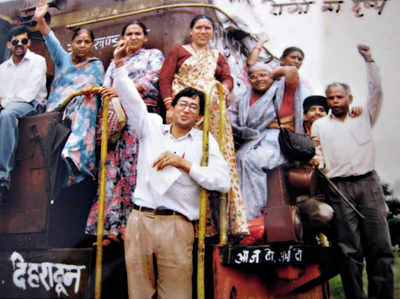
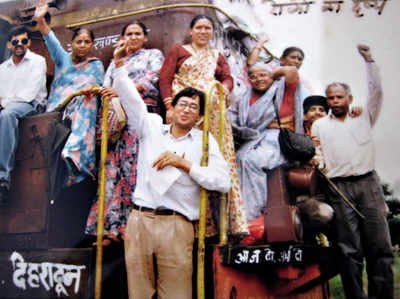
A Struggle of many people to make Uttarakhand a state.

Uttarakhand became a state on November 9, 2000. The establishment of Uttarakhand was achieved after a lot of hard work and sacrifice. The voice for Uttarakhand to become a state was first raised in a special session of the Indian National Congress in Srinagar, May 5-6, 1938. In 1994, after a series of events, demand gradually increased for another state eventually which took the form of a mass movement, leading to the formation of India’s 27th state by 2000.

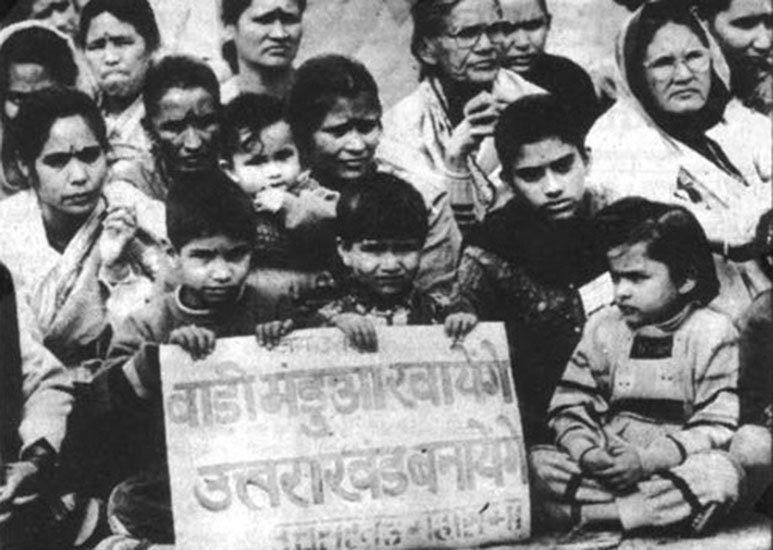
In March 1994, Uttar Pradesh Chief Minister Mulayam Singh Yadav recommended the Mandal Commission to secure 27% of government positions and places in schools and universities for socially and economically weaker classes,which was later on carried on. The Hill region OBC population was very small at 2.5% and reserving OBC seats meant that all government seats would go to the plains of Uttar Pradesh. This led to intensified protests against the nation.

In 1994, the students throughout the region participated in separate state and group movements for reservations. The Uttarakhand movement was further intensified locally by the anti-Uttarakhand statement by then-Chief Minister of Uttar Pradesh, Mulayam Singh Yadav. Uttarakhand leaders continued to support their call for another state until their death. State officials went on strike for three months, and the Uttarakhand movement was exacerbated by the blockade and confrontation with police. Uttarakhand activists in Mussoorie and Khatima were shot dead by police. On October 2, 1994, in Delhi, the capital of the country, a large-scale demonstration and protest was held in support of the state under the support of Samyukta Morcha. Uttarakhand activists marched to Delhi to participate in the struggle. Activists who participated in peaceful demonstrations near Ranpur Tiraha Junction in Muzaffarnagar were tortured and shot dead openly without warning. Police officers were also charged with obscene behavior and rape with female activists. Satya Pokhriyal was a leader who led all people out of misery and other Andolankari helped others and showed courage. Several people were killed and many were injured. These incidents has fueled the Uttarakhand movement. The next day, October 3, the destruction of gunfights across the region and protests over multiple deaths broke up.

On October 7, 1994, a female activists died after police brutally attacked her in Dehradun while she protested against the shooting at Rampur Tiraha and many activists attacked the police station in return. A curfew was imposed in Dehradun on October 15, and one activists was also killed on the same day. On October 27, 1994, then Indian Minister of Home Affairs Rajesh Pilot met with state activists. Meanwhile, a brutal police attack in Srinagar’s Sriyantra Tapu killed several activists while they were protesting.


On August 15, 1996, then Prime Minister H.D. Deve Gowda announced at the Red Fort of Delhi the forming of a new state Uttarakhand.

In 1998, the BJP-led coalition government at the centre sent the “Uttarakhand Bill” through the President of India to the Uttar Pradesh state government . The Uttar Pradesh State Assembly passed , the Uttarakhand bill with 26 amendments and sent back to the central government. On July 27, 2000, the central government submitted the 2000 Uttar Pradesh Reorganization Bill to the Parliament of India. Lok Sabha passed the bill on August 1, 2000, and Rajya Sabha passed the bill on August 10, 2000. The Uttar Pradesh Reorganization Act was approved by then President of India, K.R. Narayana on August 28, 2000 and on November 9, 2000, the new state of Uttaranchal was established as the 27th state of India, now known as Uttarakhand.

Samsung Could Start Beta Testing Android 13 On The Galaxy S22 Soon.

A beta firmware update seems to show testing for Android 13 could begin soon for the Samsung Galaxy S22.The test could start in some parts of the world in July 2022.The beta will also include Samsung’s latest One UI 5.0 skin.

Android 13 is currently in its third beta version for Google’s Pixel phones. However, there’s word that a beta for the OS could soon be made available for the Samsung Galaxy S22 family of smartphones.

Read more: Android 13 schedule – When will it launch?

According to Tizenhelp, it has spotted beta firmware for the Galaxy S22 series in South Korea. The firmware beta, with the user number of S906NKSU2ZVF6 is for the Android 13 beta, which is also for the company’s own One UI 5.0 skin. The story says that the firmware’s appearance could mean that beta testing for the Galaxy S22 Android 13 update could begin in South Korea, and perhaps other parts of the world, as soon as July 2022.

While many of Android 13’s new additions and improvements have been revealed, there hasn’t been much in the way of news for Samsung’s One UI 5.0. Hopefully, we will get some concrete info about that phone skin’s new features soon as well.  While the Galaxy S22 phones will get first crack at the Android 13 beta, it’s expected that other high end Samsung phones will be allowed to enter the beta testing program in the weeks and months to come.

Comments.

Samsung Could Start Beta Testing Android 13 On The Galaxy S22 Soon.

A beta firmware update seems to show testing for Android 13 could begin soon for the Samsung Galaxy S22.The test could start in some parts of the world in July 2022.The beta will also include Samsung’s latest One UI 5.0 skin.

Android 13 is currently in its third beta version for Google’s Pixel phones. However, there’s word that a beta for the OS could soon be made available for the Samsung Galaxy S22 family of smartphones.

Read more: Android 13 schedule – When will it launch?

According to Tizenhelp, it has spotted beta firmware for the Galaxy S22 series in South Korea. The firmware beta, with the user number of S906NKSU2ZVF6 is for the Android 13 beta, which is also for the company’s own One UI 5.0 skin. The story says that the firmware’s appearance could mean that beta testing for the Galaxy S22 Android 13 update could begin in South Korea, and perhaps other parts of the world, as soon as July 2022.

While many of Android 13’s new additions and improvements have been revealed, there hasn’t been much in the way of news for Samsung’s One UI 5.0. Hopefully, we will get some concrete info about that phone skin’s new features soon as well.  While the Galaxy S22 phones will get first crack at the Android 13 beta, it’s expected that other high end Samsung phones will be allowed to enter the beta testing program in the weeks and months to come.

Comments.

History of Television in India.

Television was founded by John Baird. The first television service was started in 1936 by British Broadcasting Corporation (BBC) of Britain . In 1939, television broadcasts began in the United States. In 1953 the first successful programme in colour was transmitted by Columbia Broadcasting System (CBS) in USA. In today՚s world, television has become one of the most powerful means of mass communication . It can impart education, information and entertainment . Television has end up becoming an necessary a part of our lives.


HISTORY
India’s first television station was established on October 24, 1951, in the Department of Electronics and telecommunications at Government Engineering College in Jabalpur. Television began in India as an experiment on September 15, 1959. It was first started as two hours programmes a week under the authority of AIR. Early programs of these experimental broadcasts were generally educational programs for children and farmers. By 1975, only seven Indian cities were using television services. The Satellite Instructional Television Experiment (SITE) was an important step by India for the use of television for the development of people and the country. Initially, the show was mainly produced by Doordarshan (DD), who was part of AIR at the time. Transmissions were made twice a day, morning and evening. In addition to information on agriculture, health and family planning, other important topics covered in these programs were audience education and awareness raising. Entertainment was also included in the form of dance, music and cinema. In 1976 Television services were separated from radio . Color television was introduced to the Indian market in 1982.

In the late 1980s, more and more people began to own televisions. There was only one channel, but the TV show was saturated. Therefore, the government opened another channel, partly broadcasting nationally and locally. This channel was called DD2 and was later renamed to DD Metro. Both channels were broadcast on the ground. In 1997, Prasar Bharati, was established.Doordarshan, along with AIR, was incorporated into a state-owned enterprise under Prasar Bharati. Transponders of the American satellites PAS-1 and PAS-4 assisted in the transmission and broadcasting of shows on DD. An international channel called DD International was launched in 1995 and broadcasts programs abroad 19 hours a day to Europe, Asia and Africa via PAS-4 and to North America via PAS-1.The 1980s were the prime time for DD, with shows like comedies such as Hum Log (1984-1985), Wagle Ki Duniya (1988), Buniyaad (1986-1987). Epics like Ramayan (1987–1988) and Mahabharat (1989–1990) brought millions to Doordarshan and later on Chandrakanta (1994–1996). Song-based programs for Hindi movies such as Chitrahaar and Rangoli, and crime thrillers such as Karamchand and Byomkesh Bakshi. Children’s shows such as Tenali Rama ,Vikram Betal and Malgudi Days .


Private Channels influence:
The introduction of communication channels was a revolutionary move to reach so many people. It became an opening for Private and Commercial broadcasters in our country. The emergence of private channels began in India in the 1990s after CNN aired the Gulf War. Hong Kong-based STAR (Satellite Telivision Asia Region ) enterned in a contract between an Indian company and Zee TV. It became the first Private Indian Hindi satellite channel. During this time, several local stations have emerged. Apart from local ones various international channels such as Channel, CNN, BBC, Discovery, etc were also available for Indian TV viewers. Their were various categories of channels available for viewers,such as the 24-hour news channel, Religious channels, cartoon channels, movie channels, something for everyone .


Changes and Evolution:
A significant change that has occurred is the use of different methods of delivering television programming. Just a while ago their were satellite-based antennas, but now the mode has converted to dishes. Other shipping methods are are delivery via cable network and direct satellite transmission. Now you can watch TV shows on your mobile phone , the technology behind it is called Internet Protocol Television. The emergence and spread of televisions and computers and the access to content anytime, anywhere, everyone has brought revolutionary change and access to the world of entertainment.

“I always say film is art, theater is life and television is furniture .”

Kenny Leon

Community: meaning and characteristics

Photo by Keith Wako on Pexels.com

The term ‘community’ is given different interpretations and used in different ways to mean different things. People often use the term community to refer to a racial community, or a religious community, or a national community, etc. It is used in various contexts.

Some definitions of community:

1. Bogardus defined community as “a social group with some degree of ‘we-feeling’ and living in a given area”.

2. Talcott Parsons said “Community is the aspect of all social units.”

3. Lundberg defined community as “a human population living in a limited geographical area and carrying on a common interdependent life”.

4. MacIver said “Community is an area of social living marked by some degree of social coherence”.

5. According to Duncan Mitchell, “community denotes the collectivity of people who occupied a geographical area, are engaged in economic and political activities and constitute a self- governing social unit.

A community is essentially an area of social living. It is marked by some sorts of social coherence. ‘Community’ is an all-inclusive term. It includes all our social relationships. Elements of community: The main bases of community are: 1. Locality and 2. Community sentiment.

1. LOCALITY: A community is a territorial group. It always occupies some geographical area. Locality is the physical basis of community. In contrast to a society, a community is more or less locally limited. Even the wandering tribe or nomad community, for example, has a locality, though changing habitation. A group of people forms community only when it begins to reside definite locality. For example, caste is not a community since it is not necessary that all the members belonging to a certain cast live together in a definite location, whereas a village and a city can be called a community under certain conditions. Living together facilitates people to develop social contacts, gives protection, safety and security. It helps the members to promote and fulfil their common interests.

2. COMMUNITY SENTIMENT: Locality alone cannot make a group, a community. There are cases where people do live together but do not have any contacts or communications. These cannot be placed under community. For example, in a city there can be different localities. The members of these locality need not be sharing any common interests or may not have common outlook. A community is essentially an area of common living with a feeling of belonginess. ‘Community sentiment’ means a feeling of belonging together. The members must be aware of their staying together and sharing common interests. The members develop a sense of ‘we-feeling’. Without a sense of identification, a sense of awareness, a sense of living and sharing some common interests in life, there cannot be a community.

Other Aspects of Community:

1. Stability: A community is not a temporary group like a crowd or a mob. It is relatively stable. It includes a permanent group life in a definite place.

2. Naturalness: Communities are not created deliberately. They are not created by an act of will or by planned efforts. Individuals become its members by birth itself. Membership, hence, is not voluntary. This does not mean that caste is a community.

3. Size of the community: A community can be big or small. A small community can be included in a bigger community. For example, a city and a village may be included in a wider community called district. Thus, the term community is used in a relative sense.

4. Regulation of relations: System of traditions, customs, morals as well as set of rules and regulations are there to regulate the relation between its members.

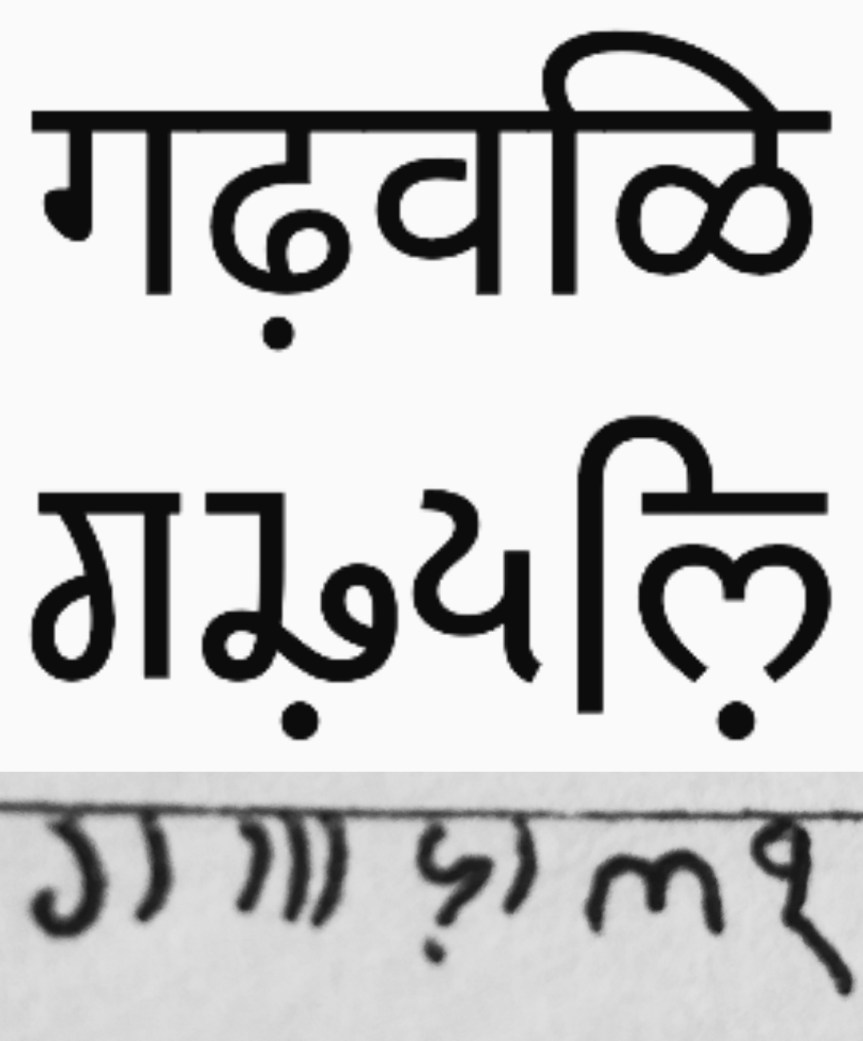
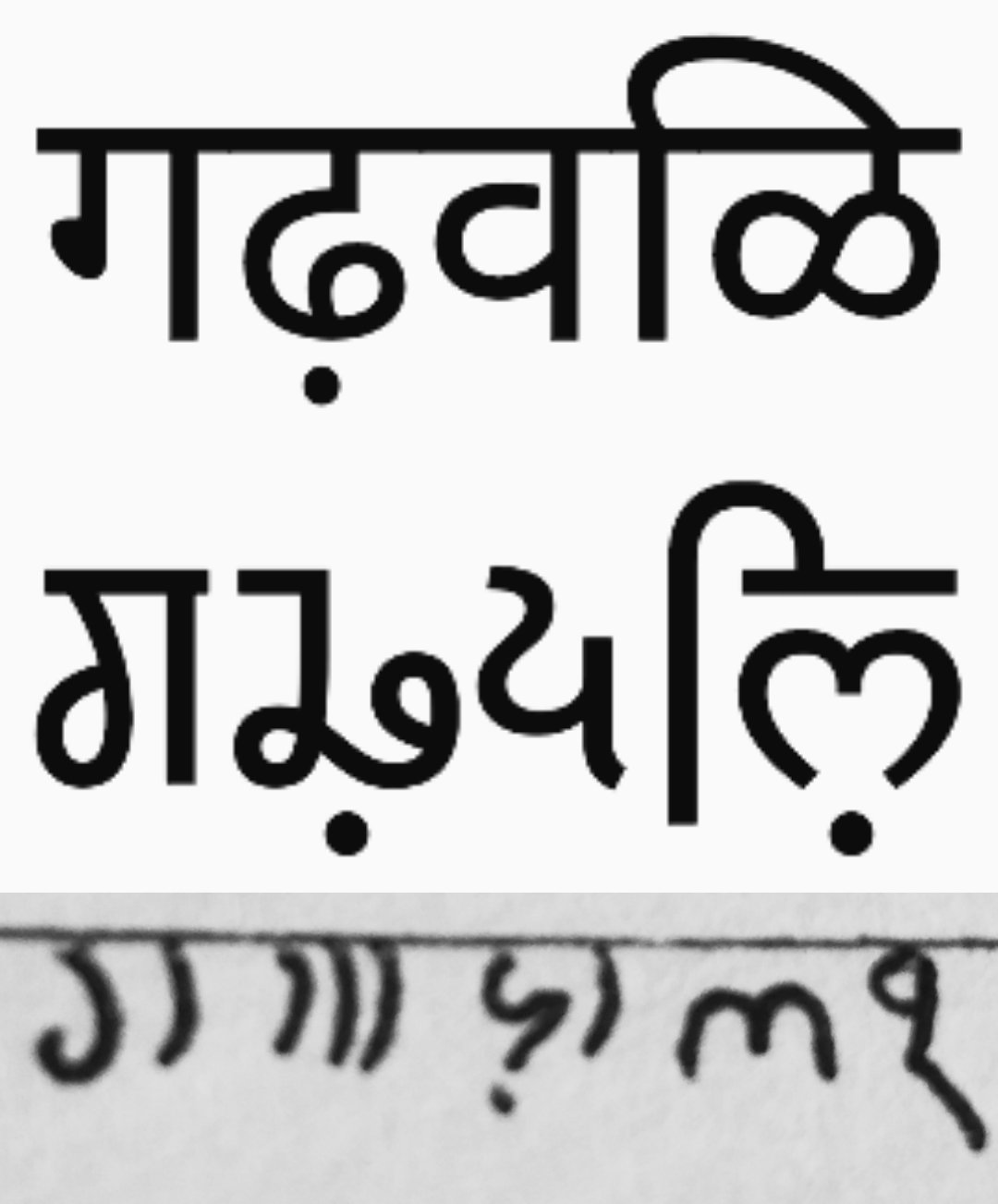
Garhwali Language it’s time to save it from getting fade.

Garhwali is the Indo-Aryan language of the Central Pahari Region which is mainly spoken by more than 2.5 million people in the Garhwal region of Uttarakhand, northern India, in the Himalayas of India, Uttarakhand. Garhwali is also spoken by Garhwali people living in other parts of India, such as Himachal Pradesh, Delhi, Hariyana, Punjab and Uttar Pradesh. According to various estimates, at least 3.5 million Garhwali migrants live in Delhi and other cities.


HISTORY
During the Middle Indo-Aryan era, there were various languages called Prakrit. Of which, Khas Prakrit language is believed to be the source of Garhwali language.The earliest forms of Garhwali can be traced back to the 10th century and can be found in temple stones, including numismatics, royal seals, copper plate inscriptions, royal orders and grants. An example is the inscription of King Jagatpal’s Temple Grant in Dev Prayag in 1335 AD. Most Garhwali literature survives in vernacular form and is transmitted verbally. But since the 18th century, Garhwali has developed a literary tradition.


LITERETURE & WRITERS
Among the famous Garhwali writers in hiastory of literature are Sudarsan Shah, Kumdanand Bahguna, Hari Dutt Sharma (Nautiyal), Hari Krishna Daurga Dutti Rudra, Urvi Dutt Shastri ,Mahidhar Dangwal, etc. , Satyasaran Raturi, Atma Ram Gairola, Devendra Dutt Raturi, Suradutt Saklani and more. Among historians are Mola Ram, Miya Prem Singh, Hari Dutt Shastri, Hari Krishna Raturi and Vijaya Ram Raturi.
Garhwali literature is thriving despite the ignorance of the government. Today, newspapers like Uttarakhand Khabarsar and Rant Raibaar are published entirely in Garhwali. Magazines such as Baduli, Hilaans, Chitti-patri and Dhaad have contributed to the development of GarhwaliGarhwali language.

Some Notable works of Gharwali writers:
•)Abodh Bandhu Bahuguna – (1927–2004) Garhwali writer. Some nitable writings include Gaad, Myateki Ganga, and Bhumyal.
•)Bachan Singh Negi – “Garhwali translation of Mahabharata and Ramayana”.
•)Lalit Mohan Thapalyal – “Achhryun ku taal”
•)Leeladhar Jagudi – (1944) Writer and novelist. PadmaShri
•)Lokesh Nawani – “Phanchi”
•)Madan Mohan Duklaan – “Aandi-jaandi saans”
•)Chandramohan Raturi – “Phyunli”
•)Chinmay Sayar – “Aunar”
•)Dr. Narendra Gauniyal – “Dheet”
•)Durga Prasad Ghildiyal – “Bwari”, “Mwari” and “Gaari”
•)Gireesh Juyal ‘Kutaj’ – “Khigtaat”.

Struggle of Official RecogItion:
Since the establishment of Uttarakhand in 2000, the state governments have made slow progress in promoting and developing the regional language of Uttarakhand. Like other languages in Uttarakhand, Garhwali, the most widely spoken language, is not officially recognized. In 2010, Hindi became the official language and Sanskrit became the second official language of Uttarakhand. In 2014, after making Garhwali the official language of Uttarakhand and demanding that it be taught at schools and universities for many years, the Uttarakhand State Government established Kumaoni and Garhwali departments at Kumaoni and Garhwali universities, respectively, to study the regional languages. At the national level, Garhwali is always required to be included in the 8th schedule of the Indian Constitution in order to be one of India’s schedule languages. In July 2010, Parliamentary member Satpal Maharaj of Pauli Garhwal submitted a legislative bill to Lok Sabha to include the languages of Garhwali and Kumaoni in the eighth schedule of the Constitution. Like most private citizen bills, the bill has not been discussed in Parliament and has since expired.

SpaceX Claims 5G Plan Could ‘render Starlink Unusable For Most Americans’

SpaceX has said its U.S.-based Starlink customers will see their broadband service badly disrupted if Dish Network is allowed to use the 12GHz band for its 5G cellular network.

The decision is in the hands of the Federal Communications Commission (FCC) as Dish Network and others such as New York-based RS Access lobby the agency to let them use the 12GHz band. But SpaceX isn’t happy.

“If Dish’s lobbying efforts succeed, our study shows that Starlink customers will experience harmful interference more than 77% of the time and total outage of service 74% of the time, rendering Starlink unusable for most Americans,” the company said in a message posted on its website on Tuesday, June 21.

The long-running dispute involves a number of companies that are trying to gain access to the 12GHz band that SpaceX already uses for its internet-from-space Starlink service.

Dish has previously published data suggesting that ground-based 5G networks could comfortably share the frequency with low-Earth orbit satellite networks operated by the likes of SpaceX for its Starlink service.

But this week, SpaceX said that technical studies “dating back as far as 2016” suggest that opening up the band to ground-based 5G networks could adversely impact its Starlink service, and it even accused Dish of attempting to “mislead the FCC with faulty analysis in hopes of obscuring the truth.”

The company led by billionaire entrepreneur Elon Musk also shared a 12-page technical analysis explaining how mobile services envisioned by Dish would “cause massive disruptions to users of next-generation satellite services,” such as Starlink.

It explained that a high-gain antenna, like the SpaceX user terminal, is “designed with sufficient sensitivity to receive very weak signals coming from a desired transmitter,” adding that “such antennas do not, however, ‘reject’ interference coming from other directions.” The result is that interference would “completely wipe out the desired signal.”

In widely reported comments, a Dish spokesperson said its “expert engineers are evaluating SpaceX’s claims.”

Dish announced last week that it has launched commercial 5G services in more than 100 U.S. Cities — covering around 20% of the nation’s population — by using frequencies in other spectrum bands. But whether it can access the 12GHz band as part of its 5G rollout remains to be seen.

SpaceX has launched more than 2,500 Starlink satellites into orbit for its broadband service, which currently serves more than 400,000 customers in 34 countries.

SpaceX Claims 5G Plan Could ‘render Starlink Unusable For Most Americans’

SpaceX has said its U.S.-based Starlink customers will see their broadband service badly disrupted if Dish Network is allowed to use the 12GHz band for its 5G cellular network.

The decision is in the hands of the Federal Communications Commission (FCC) as Dish Network and others such as New York-based RS Access lobby the agency to let them use the 12GHz band. But SpaceX isn’t happy.

“If Dish’s lobbying efforts succeed, our study shows that Starlink customers will experience harmful interference more than 77% of the time and total outage of service 74% of the time, rendering Starlink unusable for most Americans,” the company said in a message posted on its website on Tuesday, June 21.

The long-running dispute involves a number of companies that are trying to gain access to the 12GHz band that SpaceX already uses for its internet-from-space Starlink service.

Dish has previously published data suggesting that ground-based 5G networks could comfortably share the frequency with low-Earth orbit satellite networks operated by the likes of SpaceX for its Starlink service.

But this week, SpaceX said that technical studies “dating back as far as 2016” suggest that opening up the band to ground-based 5G networks could adversely impact its Starlink service, and it even accused Dish of attempting to “mislead the FCC with faulty analysis in hopes of obscuring the truth.”

The company led by billionaire entrepreneur Elon Musk also shared a 12-page technical analysis explaining how mobile services envisioned by Dish would “cause massive disruptions to users of next-generation satellite services,” such as Starlink.

It explained that a high-gain antenna, like the SpaceX user terminal, is “designed with sufficient sensitivity to receive very weak signals coming from a desired transmitter,” adding that “such antennas do not, however, ‘reject’ interference coming from other directions.” The result is that interference would “completely wipe out the desired signal.”

In widely reported comments, a Dish spokesperson said its “expert engineers are evaluating SpaceX’s claims.”

Dish announced last week that it has launched commercial 5G services in more than 100 U.S. Cities — covering around 20% of the nation’s population — by using frequencies in other spectrum bands. But whether it can access the 12GHz band as part of its 5G rollout remains to be seen.

SpaceX has launched more than 2,500 Starlink satellites into orbit for its broadband service, which currently serves more than 400,000 customers in 34 countries.

Preamble : The introductory part of the Constitution

The term Preamble refers to the introduction or preface to the Constitution. It explains the constitution’s philosophy and objectives and the core values and principle of the nation. Preamble to Indian Constitution is based on the Objective Resolution drafted by Jawaharlal Nehru and adopted by the framers of the Constitution.

The preamble basically gives idea of the following things :

• Source of the authority of the constitution – It derives it authority from the people of India.
• Nature of Indian State – It declares India to be sovereign,socialistic, secular, democratic and republican state.
• Statement of its objectives – It specifies justice, liberty, equality to all citizens and fraternity to maintain unity and integrity of the nation as the objectives.
• Date of its adoption – It was adopted on November 26, 1949.

Key terms in Preamble :

1. We, the people of India – It indicates that the power to run the government of India lies in the hands of the people of India. Their views are represented by the members of legislature elected by them.
2. Sovereign – The term refers to India is not governed or controlled by any external power. It has its own independent authority.
3. Socialist –  It refers to mixed economy where both Public and Private sector co-exist side by side. Indian style of socialism is a democratic socialism where both public and private enterprises is encouraged.
4. Secular –  The term implies that there is not a single religion for every indian. They have freedom to follow any religion. All the religions in India get equal respect, protection and support from the state.
5. Democratic – The term implies that the Constitution of India has an established form of Constitution which gets its authority from the will of the people expressed in an election.
6. Republic – It explains that the head of the country, President, is (indirectly) elected by the people.

Objectives of Indian Constitution :

The Constitution is the supreme law and it helps to maintain integrity in the society and to promote unity among the citizens to build a great nation.The main objective of the Indian Constitution is to promote harmony throughout the nation.
The factors which help in achieving this objective are:
• Justice: It is necessary to maintain order in society that is promised through various provisions of Fundamental Rights and Directive Principles of State Policy provided by the Constitution of India. It comprises three elements, which is social, economic, and political.
1. Social Justice – Social justice means that the Constitution wants to create a society without discrimination on any grounds like caste, creed, gender, religion, etc.
2. Economic Justice – Economic Justice means no discrimination can be caused by people on the basis of their wealth, income, and economic status. Every person must be paid equally for an equal position and all people must get opportunities to earn for their living.
3. Political Justice – Political Justice means all the people have an equal, free and fair right without any discrimination to participate in political opportunities.
• Equality: This term refers to no section of society has any special privileges and all the people have given equal opportunities for everything without any discriminations. Everyone is equal before the law.
• Liberty: This term means freedom for the people to choose their way of life, have political views and behavior in society. Liberty does not mean freedom to do anything, a person can do anything but in the limit set by the law.
• Fraternity: It means a feeling of brotherhood and an emotional attachment with the country and all the people. Fraternity helps to promote dignity and unity in the nation.

The Preamble of the Constitution is considered as part of the Constitution. The Preamble is not the supreme power or source of any restriction or prohibition but it plays an important role in the interpretation of statutes and provisions of the Constitution. So, it can be concluded that preamble is part of the introductory part of the Constitution but is not directly enforceable in a court of justice in India.
Amendment of the Preamble :
The preamble is only amended once through the 42nd Amendment Act, 1976. The term ‘Socialist’, ‘Secular’, and ‘Integrity’ were added to the preamble through 42nd Amendment Act, 1976.As a part of the Constitution, Preamble can be amended under Article 368 of the Constitution, but the basic structure of the preamble can not be amended.

Sources : The Hindu, Insights on India and Dristi IAS

Preamble is the soul of our constitution, which lays down the pattern of our political society. It contains a solemn resolve, which nothing but a revolution can alter’- Former Chief Justice of India, M Hidayatullah

The Jallianwala Bagh massacre

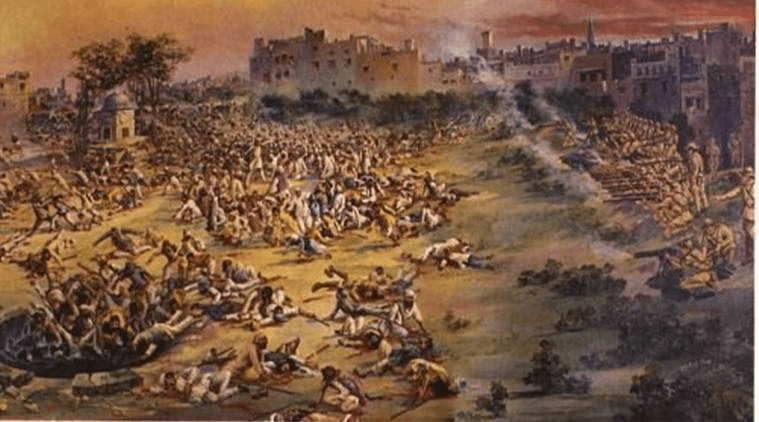
Jallianwala Bagh tragedy- a large peaceful crowd gathered at the Jallianwala Bagh, Amritsar on april 13, 1919 to protest against the arrest of leaders like Dr. Saifuddin kitchlu and Dr. Satya pal. jallianwala bagh had only one exit, it’s other three sides was enclosed with buildings.

General Dyer- the military commander of Amritsar, surrounded the Bagh(which means garden) with his soldiers. after closing the exit with his troops, he ordered them to shoot at the crowd. the troops kept on firing till their ammunition was exhausted.

Jallianwala Bagh Massacre took the lives of as many as 379 people, as Colonel Reginald Dyer ordered to open fire on them. Around 1200 people were injured during the firing.

People from the Sikh community gathered on the occasion of the Baisakhi festival near the Golden Temple.

As many as 90 British Indian Army soldiers, commanded by Colonel Reginald Dyer, opened fire on over 20,000 unarmed men, women, and children without any warning or order to disperse.

During the inquiry, Dyer said that it was a necessary measure as Punjab, along with Bengal, was the hub of anti-British rebels and anti-empire movements and that the firing was “not to disperse the meeting but to punish the Indians for disobedience.”

Such a heinous incident triggered a nationwide uproar. Rabindranath Tagore rejected his knighthood, Gandhi called for nationwide protests and generations awakened to the tune of independence. Even the British nationals were furious about the massacre. Colonel Dyer was dropped from the House of Commons.

After the massacre, the British government made a half hearted attempt at constitutional reform. But, it also made it clear that it had no intention of parting with political power or sharing it with indians. Also, the british government refused to annul the Rowlett Act and make amends for the atrocities in Punjab.

Jallianwala Bagh massacre happened 103 years ago, however, the day is registered in the heart of every Indian.

The first Indian university!!

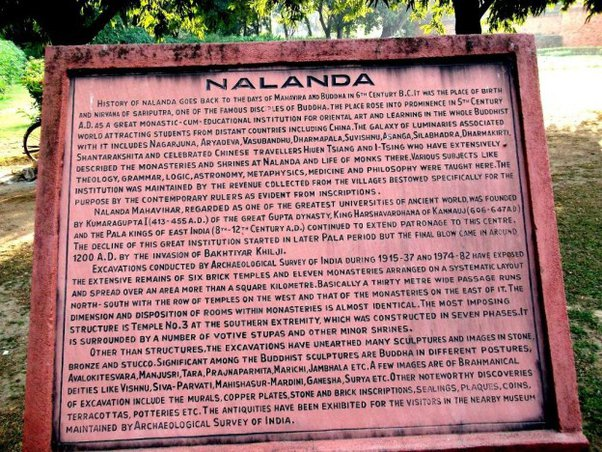
One of the most prehistoric Universities in the country that was established in the Gupta Dynasty era is the renowned and ancient Nalanda University. Located in the primeval Magadha region (modern Rajgirh), which is about 90 kilometers from Patna towards the Southeast, it is the world’s oldest residential university i.e. the students and scholars who came from all around the world, received On-campus facilities.

The university used to run in its prime state between 427 and 1197 CE. The patrons of this university consisted of many Indians and Japanese people, irrespective of them being Buddhists or not. Over 750 years, thousands of travelers, pilgrims, scholars, and students from Korea, China, Tibet have visited Nalanda University and cited their experience here in their very own literary documentation. Although sacked and destroyed to the ground by Bakhtiyar Khilji, the university was later restored.

At a time when Europe was mired in the Dark Ages, one lamp of learning shone brightly in the East, illuminating generations upon generations of minds. Nalanda University, an ancient seat of Buddhist learning and one of India’s lost glories, was founded in the fifth century and earned a reputation for intellectual excellence long before Oxford or Cambridge universities were built.

In the 12th century, that light went out. Muslim invaders rampaged through Bihar, in the northeast of India, sacking Nalanda. Legend has it that the multi-storey library and its great towers, bejewelled and gilded to reflect the rays of the sun, was so vast it took weeks to burn. Persian historian Minhaj-i-Siraj narrated how “smoke from the burning manuscripts hung for days like a dark pall over the low hills”.

They destroyed what many say was the world’s first university. Its name and reputation were known across Asia, even as far away as Greece. For 800 years, it was a centre of knowledge not only for Buddhist studies but for philosophy, medicine, astronomy and mathematics. Nalanda ceased to exist just when other universities were opening in Bologna, Italy, Paris, France, and Oxford, England.

This learning center was built by Buddhist monks during the reign of King Kumaragupta in 426 AD. The study of Buddhism, the practice of religion was the main. But besides, Hindu philosophy, Vedas, theology, logic, medical science, grammar, linguistics, science and many other subjects were taught. The cost of the university was in favor of the king. Merit and the only merit was the key to enter this university. Even in the case of members of the royal family, there was no room for bias. Students did not have to pay any salary for studying. On the contrary, they used to get nutritious food like milk, ghee, rice and butter from 200 grams.

Nalanda Burning

Nalanda also housed a library which held innumerable manuscripts and texts not only of Budhdhism but also of various literature and sciences like astronomy and medicine. It was said that the collection of texts were so huge in number, that the library burnt for three months when Bhaktiyar Khilji destroyed it.

One of the pride of this university was its library. The name was ‘Dharmaganj’. Here were three gigantic multi-storey buildings. The names of the buildings were ‘Ratnasagar’ (meaning ocean of gems), ‘Ratnodadhi’ (meaning sea of ​​gems) and ‘Ratnaranjak’ (meaning jeweled). It is unknown at this time what he will do after leaving the post. It is said that the authentic manuscripts of some parts of the Upanishads were here. There were also scriptures like Prajnaparamita Sutra and Guhya Samaj. How much! And those invaluable resources were finally swallowed up by the mad fire