Tuberculosis: a global emergency

Tuberculosis is a specific infectious disease caused by myobacterium tuberculosis. The pathogen primarily affects lungs and causes pulmonary tuberculosis. It can also affect the intestine, bones, joints, lymph gland, skin and other tissues of the body. Tuberculosis remains a worldwide public health problem. There are 15-20 million cases of infectious tuberculosis in the world. Eight million new victims and 2.9 million deaths are known to occur every year. The disease is credited with killing over one million women and nearly 1,70,000 children every year. WHO has declared TB as a global emergency.

FACTORS CAUSING TUBERCULOSIS:

  1. Agent Factors: Tuberculosis is caused by a facultative intracellular parasite myobacterium tuberculosis. The most common source of infection is the affected human himself whereas the milk of the bovine (affected cattle) is also an active source of spreading the disease. Patients remain infected as long as they remain untreated. Effective antimicrobial treatment reduces infectivity up to 90% within 48hours.
  2. Host factors: Tuberculosis affects people of all age groups. It is more prevalent in males than the females. It is not a hereditary disease but inherited susceptibility is an important risk factor. Man has no inherited immunity against tuberculosis. It is acquired as a result of natural infection or BCG vaccination.
  3. Social factors: Social factors include many non- medical factors such as poor housing, poor quality of life, overcrowding, population explosion, malnutrition, lack of education, etc.

Tuberculosis is transmitted mainly by droplet infection which is generated by sputum positive patients with Pulmonary tuberculosis. In most cases the bacteria affects the lungs. Pulmonary tuberculosis destroys the lung tissue, rupturing blood vessels in the process.

CONTROL OF TUBERCULOSIS:

The control measures consists of two components, namely:

  • Curative component
  • Peventive component

CURATIVE COMPONENTS include case find in and chemotherapy whereas PREVENTIVE COMPONENTS include vaccination. The first step in tuberculosis control is early detection of sputum positive cases followed by chemotherapy.

To tackle this global emergency, the National Tuberculosis Program me was initiated in 1962. The long term goal of the programme is to “reduce the problem of tuberculosis in the community sufficiently and quickly to the level where it ceases to be a public health hazard.”

Despite effective case finding and therapeutic tools and declined mortality, tuberculosis still remains to be a serious communicable disease worldwide.

World Test Championship: Pakistan had a huge advantage by losing the Indian team, do you know why that happened?

Even after losing the final game of the five-game series, the Indian team suffered a setback when the team was fined for slow speed. Not only was the Indian team fined 40 percent of the match fee, but two points were also reduced, which directly benefited the Pakistan cricket team. With two points down, the Pakistani team has now overtaken the Indian team in the World Test Championship points table, which can be seen as a major blow to India. ICC Elite Panel Match Referee David Boon handed out this fine to the Indian team, who is 2 overs behind. According to Article 2.22 of the ICC Code of Conduct, 20 percent of the gaming fee will be charged to the players due to the minimum overrun. This penalty is based on the number of overs reduced per over. The Indian team was 2 overs behind in the allotted time in the Edgbaston test, leaving the team to bear the brunt. According to Article 16.11.2 of the ICC Code of Conduct, 1 point will be deducted per team points per over. After that, the Pakistani team overtook them in percentage terms in the World Test Championship points table. The Indian team has now slipped to fourth place with 75 points, while the Pakistani team has risen to third place. Speaking of points percentage, the Pakistan team is 52.38 compared to India’s 52.8. India captain Jasprit Bumrah has admitted his mistake, meaning there will be no further hearing about it.

World Test Championship: Pakistan had a huge advantage by losing the Indian team, do you know why that happened?

Even after losing the final game of the five-game series, the Indian team suffered a setback when the team was fined for slow speed. Not only was the Indian team fined 40 percent of the match fee, but two points were also reduced, which directly benefited the Pakistan cricket team. With two points down, the Pakistani team has now overtaken the Indian team in the World Test Championship points table, which can be seen as a major blow to India. ICC Elite Panel Match Referee David Boon handed out this fine to the Indian team, who is 2 overs behind. According to Article 2.22 of the ICC Code of Conduct, 20 percent of the gaming fee will be charged to the players due to the minimum overrun. This penalty is based on the number of overs reduced per over. The Indian team was 2 overs behind in the allotted time in the Edgbaston test, leaving the team to bear the brunt. According to Article 16.11.2 of the ICC Code of Conduct, 1 point will be deducted per team points per over. After that, the Pakistani team overtook them in percentage terms in the World Test Championship points table. The Indian team has now slipped to fourth place with 75 points, while the Pakistani team has risen to third place. Speaking of points percentage, the Pakistan team is 52.38 compared to India’s 52.8. India captain Jasprit Bumrah has admitted his mistake, meaning there will be no further hearing about it.

VARIOUS SECURITY FORCES AND AGENCIES AND THEIR MANDATE IN INDIA

There are external and internal threats to India’s security and various specialized Indian forces deal with these threats. External threats are typically handled by the armed forces of the Department of Defense, while internal threats are handled by the Department of Home affairs .

Security forces

1.Indian Armed Forces

2.Central Armed Police Force

Indian Armed Force

The defense forces are divided into four sub-heads.

  1. Indian Army Personnel.
  2. Indian Air Force Personnel.
  3. Indian Navy Personnel.
  4. Indian Coast Guard Personnel.

The Supreme Commander of the Indian Armed Forces is the President of India. All three of these services are under the Department of Defense.

Indian Army

The Indian Army is the land component of the armed forces. It evolved from the armed forces of the East India Company, eventually transforming into the British Indian Army and the Indian Army after independence.
It is commanded by the Chief of Staff of the Army (COAS). It is considered the second largest active army in the world. The mission of the Indian Army is to ensure national security and protect India’s sovereignty, territorial integrity and harmony against foreign aggression and threats. This also includes providing humanitarian assistance and aid to civilians during natural disasters and unexpected times.

Indian Navy

India has a coastline of 7516.6 km. The Indian Navy secures India’s maritime borders and interests. It also protected Indian merchant ships by fighting pirates on the high seas, and at the same time, it aided civilians in disasters. It is commanded by the Chief of Naval Staff, an Admiral. The Indian Navy is deployed under three commands: Eastern Naval Command – Vishakhapatnam is the headquarters. Western Naval Command – Mumbai is the headquarters The Southern Naval Command – Kochi is the headquarters. The navy is used to support foreign policy goals, build “bridges of friendship” and strengthen international cooperation.

Indian Air Force

The Indian Air Force was officially established on 8 October 1932. The force was known as the Royal Indian Air Force in recognition of its service during the Second World War. . After Independence, the term “Royal” was dropped. It is considered the 4th largest air force in the world. The primary responsibility of the Indian Air Force is to secure Indian airspace and conduct air wars in times of conflict. In addition to the wars of independence for India and humanitarian action, she has participated in many UN peacekeeping missions. An Air Marshal is the commander of the air forces in India. The Air Force Network (AFNet), launched September 14, 2010, is a digital information network that enables rapid and accurate response to threats. It is a fiber-based network.

Security Forces Dealing with Internal Threats

There are many divisions of Central Armed Police Force, which deal with internal threats.

Central Armed Police Force (CAPF)

  1. Assam Rifles (AR)
  2. Border Security Force (BSF)
  3. Central Industrial Security Force (CISF)
  4. Central Reserve Police Force (CRPF)
  5. Indo Tibetan Border Police (ITBP)
  6. National Security Guard (NSG)
  7. Sashastra Seema Bal (SSB)

Duties of various security forces and agencies The Ministry of Home Affairs (MHA) has many responsibilities, the most important of which are internal security, management of paramilitary forces, border management, center-state relations, administration of territories. of the Union, disaster management, etc. Article 355 of the Constitution ordered the Union to defend each State against external aggression and internal disturbances and to ensure that each State’s government was carried out in accordance with the provisions of the Constitution.

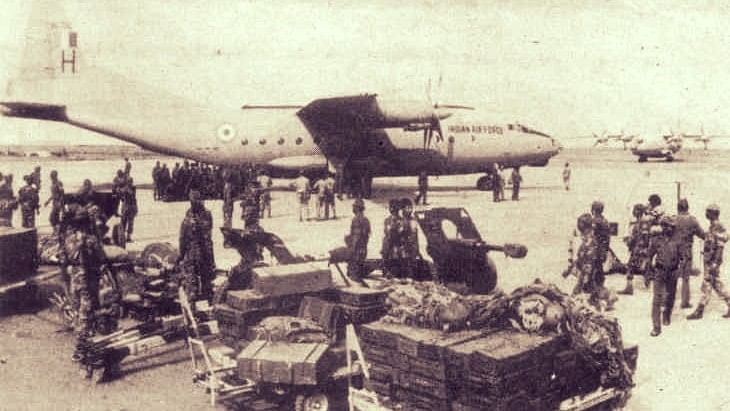
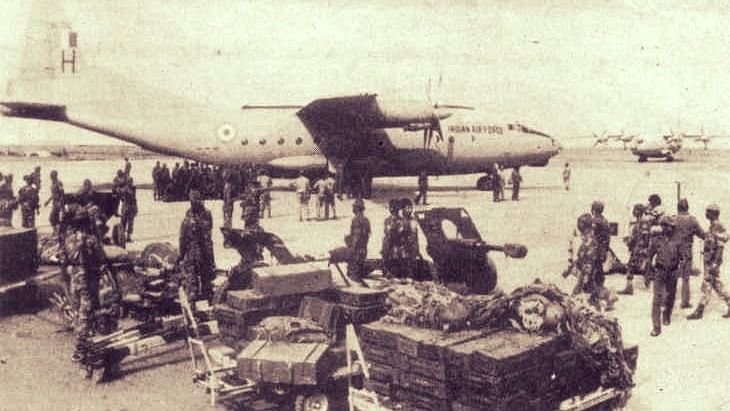
Operation Cactus by Indian Armed Forces which saved Maldives freedom.

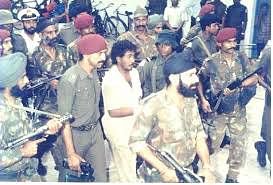
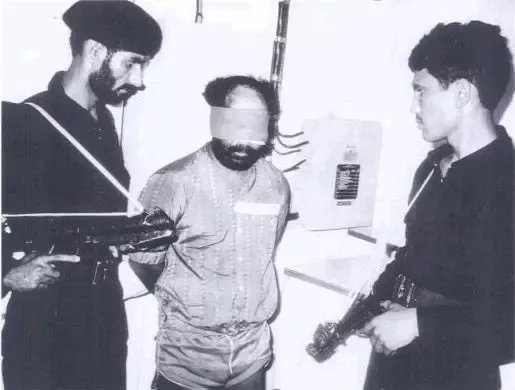
Operation Cactus, led by the Indian Armed Forces in 1988, to stop a group of Maldives mercenaries led by businessman Abdullah Rutufi, and armed mercenaries of the Tamil Elam People’s Liberation Organization (PLOTE), a separatist Tamil organization in Sri Lanka. It’s strategy was to overthrow the government in the Maldivian island republic.

Thier were two coup attempr done before 1988.The 1980 and 1983 coup attempts against President Maumoon Abdul Game were not considered serious, but the third coup attempt in November 1988 surprised the international community. About 80 armed PLOTE mercenaries boarded a speedboat from a Sri Lankan cargo ship hijacked in the capital Male before dawn. A similar number has previously invaded Male in the guise of a visitor. The mercenaries soon gained control of the capital. This includes major government buildings, airports, ports, television and radio stations. The mercenaries then marched to the presidential residence, where President Gayoom lived with his family. However, before they arrived at the presidential residence, President Gayoom was escorted to the Defense Minister’s house by a Maldivian national security forces. The Secretary of Defense then took the president to a safe home.

Meanwhile, the mercenaries occupied the presidential residence and managed to take the Maldivian Minister of Education hostage. President Gayoom called on Sri Lanka and Pakistan government to intervene in the military, but both refused to help because of lack of military power. The president then demanded Singapore’s intervention, but Singapore refused for the same reason. He then contacted the United States and was told that it would take a couple of days for the US military to reach the Maldives from the nearest military base in Diego Garcia, which was almost 1000 km away. The president then contacted Britain and who advised them to seek help from India. After that, President Gayoom sought help from the Indian government. India soon accepted their request and an emergency meeting was convened at the Secretariat Building in New Delhi. Within 16 hours of SOS, India was ready for thier missions.

Rejaul Karim Laskar, a member of India’s then ruling party, the Indian National Congress, said that intervention of India in coup d’etat was necessary because without India’s intervention, outsiders powers were tempted to intervene and establish base in the Maldives. . Therefore, India intervened through “Operation Cactus”. On the night of November 3, 1988, the Ilyushin Il-76 aircraft of the Indian Air Force took elements of the 50th Independent Parachute Regiment, the 6th Parachute Regiment Battalion, and the 17th Parachute Field Paratrooper Regiment under Brigadier General Farsala from Agra Air. He flew non-stop for over 2,000 kilometers (1,240 miles) and landed at Male International Airport on Hulhule Island. Indian Army paratroopers arrived in Hulhule nine hours after President Gayoom proceedings.

Indian paratroopers quickly secured an airfield and sailed to Male on a confiscated boat to rescue President Gayoom . Paratroopers handed over control of the capital to President Gayoom ‘s government within hours. Some of the mercenaries fled to Sri Lanka on a hijacked cargo ship. Those who could not arrive at the ship in time were immediately rounded up and handed over to the Maldivian armed Forces and government. According to reports, 19 people died in battle, most of them mercenaries. The dead included two hostages killed by mercenaries. And Operation Cactus took 18 hours for Indian Armed Forces from start to finish. Indian Navy frigate Godavari and Betwa intercepted a cargo ship off Sri Lanka and captured mercenaries. The swift intervention and accurate intelligence of the Indian Army was able to successfully subdue the coup attempted in the island nation.

Conservation, environmental pollution and degradation, environmental impact assessment

CONSERVATION

Environmental conservation is an activity that paves the way for the protection of the environment and natural resources at the individual, organizational and governmental levels. Various basic environmental problems are weighing on people’s lives. From overpopulation to hydrological problems, including ozone depletion, global warming, deforestation, desertification, and pollution, all these problems seriously threaten the existence of mankind. Unless environmental conservation becomes an effective mass movement, it is futile to expect positive growth, especially in an age of digital media that has the potential to bring about a revolution. revolution to save our destroying planet.

It has become important for the conservation of the environment in modern times. The following guidelines explain the essential need to protect the environment from further degradation:

To reduce pollution of air, water and soil,

Facilitating the conservation of natural resources for our future generations

To ensure the protection of biodiversity

To realize sustainable development To restore ecological balance

To save our planet from the harmful effects of global warming

ENVIRONMENTAL POLLUTION AND DEGRADATION

Environmental degradation is the decomposition or degradation of the environment due to the consumption of assets, such as air, water and soil; the destruction of the environment and the extinction of animals. It is characterized by any alteration or exacerbation of a natural territory that is considered cruel or undesirable. Ecosystem effects or degradation produced by the amalgamation of a substantial and effectively expanding human population, expanding monetary development or wealth per capita, and applying technologies that cause depletion and pollution.

It occurs when the earth’s natural resources are depleted, and the environment is compromised in the form of extinction of species, pollution in the air, water and soil, and rapid growth in population.

Environmental degradation is one of the biggest threats currently under consideration in the world. The United Nations International Strategy for Disaster Mitigation describes environmental degradation as the shrinking of the earth’s limits to meet social and environmental needs and destinations. Environmental degradation can occur in many ways. The moment the environment is destroyed or depleted of commons, the environment is considered broken and damaged. There are a number of different techniques used to prevent this, including environmental resource protection and general conservation efforts. There are number of types of environmental degradation- Land and soil degradation, Water degradation, air pollution, noise pollution etc.

ENVIRONMENT IMPACT ASSESMENT

Environmental Impact Assessment (EIA) is a process of assessing the possible environmental impacts of a proposed project or development, taking into account the socio-economic, cultural and environmental impacts of the project. and human health are associated with both benefits and negatives. UNEP defines an Environmental Impact Assessment (EIA) as a tool used to determine the environmental, social and economic impacts of a project before making a decision. It aims to predict environmental impacts at an early stage of project planning and design, seek to reduce negative impacts, shape projects to the local environment, present projects reporting and options for decision makers. Environmental impact assessment in India is legally supported by the Environmental Protection Act 1986, which contains different provisions on EIA methods and procedures.

The Environment Impact Assessment includes the steps mentioned below.

The EIA process is cyclical with interactions between different phases. Review: The project plan is reviewed based on the size of the investment, location and type of development, and whether the project requires statutory approval. Scope: Potential project impacts, impact areas, mitigation possibilities, and monitoring needs. Baseline data collection: Baseline data is the environmental condition of the study area. Impact prediction: Positive and negative impacts, reversible and irreversible, temporary and permanent impacts must be anticipated, assuming the rating agency has a good understanding of the project. Mitigation Measures and EIA Report: The EIA report should include actions and steps to prevent, minimize or ignore impacts or compensation for possible damage or loss to with the environment. Public Hearing: Once the EIA report is completed, community and habitat groups near the project site may be notified and consulted. Decision making: the impact assessment authority and experts consult with the project manager and consultant to make the final decision, keeping in mind the EIA and EMP (plan Environmental Management). Monitoring and implementation of the environmental management plan: The different phases of the project implementation are monitored. Evaluation of alternatives, identification of mitigation measures and EIA report: For each project, possible alternatives should be identified and environmental attributes compared . Alternatives must include both project location and process technology. After the alternatives have been considered, a mitigation plan must be developed for the selected alternative and supplemented by an environmental management plan (EMP) to guide the proponent towards improvement. environment friendly. Risk assessment: Inventory analysis and probabilistic and risk metrics are also part of the EIA procedure.

Science and Technology- developments and their applications and effects in everyday life.

Science and technology are widely recognized as important tool to promote and enhance the country’s socio-economic development. India has made considerable progress in various fields of science and technology over the years and can now boast of having a strong network of Science & Technology institutions, skilled manpower and infrastructure. innovative knowledge. Given the rapid pace of globalization, the rapid depletion of raw materials, the increasing competition between countries and the growing need for intellectual property protection, the importance of strengthening the knowledge base becomes even more important. Agenda is to enhance application-oriented research and development to create technology; promote human resource development, including encouraging bright students to pursue scientific careers; encouraging research and application of science and technology for forecasting, prevention and mitigation of natural disasters; integrate the development of science and technology into all areas of national activities; and exploiting science and technology to improve livelihoods and create jobs; environmental protection and ecological security. Science and technology is of great importance for economic growth at the macro level and for enhancing the competitiveness of enterprises at the micro level. Globalization and liberalization have created great opportunities and some challenges for Science and technology.

DEVELOPMENTS

In India, the role of science and technology in national development has been recognized by the government. The second five-year plan emphasizes that “the most important factor to promote economic development is the will of the community to apply modern science and technology”. In 1971, the Department of Science and Technology (DST) was established to promote new fields of science and technology. Similarly, State Councils of Science and Technology have also been established at the state level. As part of national policy, the government promotes various research and development programs to encourage scientific activities. Thus, we see that modern scientific and technological knowledge has had an impact on almost all fields such as agriculture, industry, nuclear energy, space technology, electronics, medicine and science. Development of Health Sciences. In addition to these key areas, India has also made progress in several other areas. These include the activities of the Petroleum and Natural Gas Commission in oil exploration and refining and the National Environmental Planning Commission in environmental protection and solar power generation. A Central Ganges Administration has been established to control Ganga pollution using wastewater treatment plants, etc. Currently, the country has a solid foundation in modern technology. It also has the third largest science and engineering workforce in the world. India has become a major destination for outsourced R&D activities. We currently have more than 1,100 R&D centers established by multinational enterprises (MNCs) such as IBM, Google, Microsoft, Intel, Lupin, Wockhardt, etc. These R&D centers cover areas such as information and communication technology, biotechnology, aerospace, automotive, chemical and materials technology. India’s relatively strong intellectual property regime will enable the country to emerge as a major R&D hub. Indian scientists are at the forefront of some of the world’s ground-breaking works. Recent contributions by Indian scientists to cutting-edge research and technology have been encouraging. For example, 37 Indian scientists from 9 Indian institutions who played a key role in the discovery of gravitational waves received the 2017 Nobel Prize in Physics. Indian scientists also contributed. on the discovery of neutron star mergers at the Laser Interferometer Gravitational-Wave Observatory (LIGO), USA. The development of Brahmos, advanced supersonic anti-aircraft interceptors, various types of missiles and missile systems, remote control vehicles, light combat aircraft, etc. are examples. highlights India’s advances in strategic and defense technology. India currently ranks among the few countries with reliable space technology capabilities. The upgrade of SLV to ASLV and PSLV to GSLV, the first lunar orbiter project Chandrayan-1, the Mars Orbiter Mission and the recent simultaneous launch of 104 satellites are remarkable achievements of India. India is currently the third largest country in terms of number of startups. This number is predicted to grow exponentially in the coming years. The government has established the Atal Innovation Mission (AIM) to completely transform the country’s innovation, entrepreneurship and startup ecosystem.


Applications and Effects in Everyday Life

Science and technology affect us all, every day of the year, as soon as we wake up, day and night. Our digital alarm clocks, the weather, the vehicles we drive, the buses we take, our decision to eat a baked potato instead of fries, our cell phones. me, antibiotics for your sore throat, clean water and all the lights have brought us the contributions of science. It affects socialization and productivity. The power of the Internet has made it easier for global communities to form and share ideas and resources. The modern world would not be modern at all without the knowledge and technology created by science. The influence of science on people’s lives is growing. Although the recent benefits to humanity are unprecedented in human history, in some cases harmful or long-term effects raise serious concerns. Today, the public distrust of science and fear of technology is a significant metric. This is partly due to the belief of some individuals and communities that they will be the ones to bear the indirect negative consequences of technical innovations introduced for the benefit of a special minority. permission. The power of science to bring about change forces scientists to proceed with caution in what they do and what they say. Scientists should reflect on the social consequences of technology applications or partial disclosures about their work and explain to the public and policymakers the degree of uncertainty. or the scientific incompleteness of their findings. At the same time, however, the exploitation of the full predictive power of qualified science should not be avoided to help humans cope with environmental change, especially in the face of direct threats such as natural disasters. or water shortage. Science and Technology offers simple and affordable science-based solutions that help individuals save time, energy and increase income. Technology adds value to handicraft products, playing an important role in enhancing their competitiveness. In general, S&T can play an important role in extending informatics to the most remote areas of the country by emphasizing computer literacy, making it accessible to those without formal education. Information Technology. Thus, “problem populations” can be transformed into valuable “human resources” through activity-oriented training and skill upgrading, which develop entrepreneurship and facilitate for independent employment through the use of new technologies. S&T provides solutions to long-term problems such as drought, disease, lack of domestic water, nutrition, sanitation, health, housing, etc. and other everyday issues, including the transition to unconventional energy sources and product packaging. Knowledge of science and technology helps to find ways for people to have the habit of using natural resources more wisely such as wood, bamboo, medicinal plants, etc. through the application of environmentally friendly technologies.

INVESTMENT MODELS

Before starting with investment models we must understand what investment is. Investing is the exchange of money for profitable assets. The same profit is used to invest in other assets. Investment is important for a country’s economic well-being, as it contributes to growth and development. When a government invests in a business, agriculture, manufacturing, or support industry, it can create employment opportunities for its people. However, a strong investment scenario is when the government and the private sector work together to create investment opportunities. Also, we make an investment and choose a proxy for a investment model, we should keep in mind that the following factors are involved: Savings rate. National tax rate. (Net profit after tax). inflation. Bank interest rates. Potential rate of return on investment. Availability of other factors of production (cheap land, labor, etc.) and the infrastructure that underpins them-transportation, energy, telecommunications. Market size and stability.

TYPES OF INVESTMENT MODELS

The following are the main investment models Public investment models: In public investment models, the government makes investments in specific goods and services through the central or state government or with support from the public sector using the revenue generated from this activity. . Private Investment Model: As is the case with India, there are times when public sector revenues are not sufficient to cover some of the revenue shortfalls that may arise. Therefore, the government invites private members to invest in some of its companies. This investment can be domestic or foreign. Foreign direct investment (FDI) can improve existing infrastructure and create jobs in the process. This model is one of the most sought-after in terms of outside investment. Public-private partnership model: A public-private partnership (PPP, 3P, or P3) is a partnership agreement between two or more public and private sectors, usually on a long-term basis. The following sectors in India already have projects based on the PPP model: Health, Power industry, Railways, Urban housing.

There are also other investment models. They are as follows: Country investment model: can be public company or PPP Foreign investment model: can be mostly foreign or a mixture of foreign – domestic Sector-specific investment models: where investments are made in special economic zones or other related sectors Cluster investment models: Investment in manufacturing industries is an example.

INVESTMENT MODELS USED IN INDIA

The following investment models are used:

Harrod-Domar model: This model is biased towards an industry model in which the driver of economic growth depends on policies that increase saving and technological progress.

The Solow Swan Model: This is an extension of the Harrod-Domar model, with a particular focus on productivity growth.

Feldman – Mahalanobis Model: This model focuses on improving the domestic consumer goods sector, where there is sufficient capital sector commodity capacity. It then evolved into the four-zone pattern also known as the Nehru-Mahalanobis model.

Rao ManMohan Model: Named after Narasimha Rao and Dr. Manmohan Singh, this model applies the policy of economic liberalization and FDI inflows in 1999. Lewis model of economic development through supply unlimited labor.

Sources: https://www.insightsonindia.com/indian-economy-3/investment-models/

INCLUSIVE GROWTH AND ISSUES ARISING FROM IT

Inclusive growth means economic growth that creates job opportunities and contributes to poverty alleviation. This means that the poor have access to basic education and health services. This involves ensuring equal opportunities for all, as well as empowering everyone through education and skills development. For rapid and sustainable poverty reduction, everyone must be able to both contribute to and benefit from economic progress. Rapid growth is necessary for poverty alleviation, but it must be widespread across all sectors and include a large portion of the country’s workforce to be sustainable in the long term.

FEATURES OF INCLUSIVE GROWTH

About Overcoming the constraints of excluded and marginalized people. Participation of all segments of society, Reduce the disparity in per capita income between: Different sectors of the economy, Different segments of society Rural and urban areas different genres

No – discrimination Poverty reduction potential is higher Ensure people have access to basic infrastructure and basic services/capabilities such as health and basic education. This approach should include not only the quantity but also the quality of these basic services. Includes poor and lagging socio-economic groups and lagging regions, as well as partners in this growth.

ELEMENTS OF INCLUSIVE GROWTH

The elements of inclusive growth are Skills development. Harnessing the demographic dividend will depend on the employability of the working-age population, their health, education, vocational training and skills. Skills development plays an important role here. India faces a dual challenge in skills development: Firstly, there is a shortage of skilled labor Second, there is no employment of conventionally trained young people.

UNICEF 2019 reports statistics that at least 47% of young Indians do not have the education and skills necessary to get a job by 2030. Financial inclusion Financial inclusion is the process of ensuring access to financial services at a reasonable cost to vulnerable groups. Financial inclusion is necessary for inclusive growth because it leads to a culture of thrift, creating a virtuous circle of economic development. Technological Advancement The world is moving towards the era of industrial revolution 4.0. These technological advances have the potential to reduce or increase inequality depending on how they are used. Several initiatives have been taken by the government, e.g. Digital India Mission, so that a digitally literate population can leverage technology for endless possibilities. Technology can also help address other challenges, for example: Agriculture – Modern technology can make the agricultural value chain from farmer to consumer more efficient and competitive. Production – Technology can solve financial problems, provide raw materials, land and link with the user market. GST is only possible with the help of solid technology. Education – Advanced digital technologies can create new forms of adaptive and peer-to-peer learning, increase access to faculty and mentors, and deliver actionable data in real time. Health technologies can transform the delivery of public health services – expanding care through telemedicine services Governance – Technology can reduce delays, corruption and inefficiencies in public service delivery Economic growth India is one of the fastest growing major economies in the world. However, the Indian economy is currently facing a slowdown due to both cyclical and structural challenges. However, the goal of becoming a $5 trillion economy by 2024-25 could enable India to reduce inequality, increase social spending and provide jobs for all. Social development This means empowering all marginalized sections of the population such as SC/ST/OBC/Minorities, Women and Transgenders. Empowerment can be accomplished by improving the institutions of the social structure, i.e. hospitals, especially primary care in rural areas, schools, universities, etc. Investing in social structures will not only promote growth , but also create a healthy and capable generation. for future work management.

INDIA’S NEED FOR INCLUSIVE GROWTH

Many thinkers and government officials have emphasized the importance of inclusive growth for long-term prosperity and fair income distribution. Comprehensive growth is a difficult task in India. In a democratic country like India, the vast majority of people live in rural areas, and integration into society is a major concern. The Government of India faces the daunting task of spreading progress across all sections of society and across the country. The best way to achieve inclusive growth is to empower people. Government officials argue that progress requires a multifaceted approach to education and skills development. Public-private partnerships can help solve the problem of lack of skills. Since independence, India’s economic and social growth has improved significantly, enabling India to prosper in the 21st century.

The factors listed below allow India to focus on inclusive growth.

Poverty

Unemployment

Agricultural backwardness

Regional disparities

Issues relating to social development

GOVERNMENT MEASURES FOR INCLUSIVE GROWTH

  1. Pradhan Mantri Jan Dhan Yojana
  2. MUDRA (Micro Units Development and Refinance Agency)Bank
  3. SETU(Self Employment and Talent Utilization)
  4. Skill India
  5. Mahatma Gandhi National Rural Employment Guarantee Act (MGNREGA)
  6. Kisan Card
  7. Pradhan Mantri Krishi Sinchayee Yojana (PMKSY)
  8. National Agriculture Market (NAM)
  9. Pradhan Mantri Jeevan Jyoti Beema Yojana
  10. Pradhan Mantri Jeevan Suraksha Yojana
  11. Atal Pension Yojana(Social Security Schemes)
  12. Digital India programme

All these measures and policies will help in achieving inclusive growth and hence will help in developing country.

ROLE OF CIVIL SERVICES IN A DEMOCRACY

In a democracy, the civil services play an significant role in the administration, policy formulation and implementation, and in taking the country forward towards progress and development. Democracy is an egalitarian principle in which the people elect the people who govern over them. There are three pillars of modern democracy: Legislature Executive Judiciary.

The civil services form a part of the executive. While the ministers, who are part of the executive, are temporary and are reelected or replaced by the people by their will (through elections), the civil servants are the permanent part of the executive. The civil servants are accountable to the political executive, the ministers. The civil service is therefore a part of the government. Civil service officers are permanent employees of various government services. Basically, they are professional administrators. They are sometimes called bureaucracy or public service.

IMPORTANCE OF CIVIL SERVICES

The Importance of Civil Services

The Civil Service is present all over India and is therefore highly binding. It plays an important role in developing effective policies and regulations. It offers non- partisan advice to the country’s political leaders, even amid political turmoil. This service ensures effective coordination between different governing bodies, as well as between different departments, agencies, etc. It provides service delivery and leadership at different levels of governance.

FUNCTIONS

On the basis of government: There can be no government without an administrative apparatus. Law and policy enforcement: Public services are responsible for implementing laws and implementing policies set forth by the government. Policy formulation: The civil service is also primarily responsible for policy formulation. Civil service officers advise ministers on the matter and also provide them with facts and ideas.

In the context of political instability, public service brings stability and long-term. Although governments and ministers may come and go, civil service is a permanent fixture that gives the administrative organization a sense of stability and continuity. Tools for social change and economic development: Successful policy implementation will lead to positive changes in the lives of ordinary people. Only when the promised goods and services reach the intended recipients can the government call any program a success. The task of updating programs and policies rests with public service agents. Welfare services: Services that provide various social assistance regimes such as social security, benefits for the disadvantaged and vulnerable sections of society, pensions for the elderly, and hunger eradication. poverty reduction, etc. Development function: The service performs various development functions such as promoting modern technology in agriculture, promoting industry, commerce, banking function, bridging the digital divide, etc. Administrative Arbitration: Public services also provide quasi-judicial services by resolving disputes between the state and citizens, in the form of courts, etc.

CONSTITUTIONAL PROVISIONS RELATING TO CIVIL SERVICES

According to Articles 53 and 154, executive power of the Union and the Cantons rests with the President or the Governor directly or through his subordinate officers. These officers constitute the permanent civilian body and are governed by Part XIV of the Constitution (Services of the Union and the States (Articles 308-323)). Government of India Rules: The manner in which officers are required to assist the President or Governor in the performance of their executive functions is governed by the Rules. this. Article 311 – Dismissal, dismissal or dismissal of persons performing civil functions subordinate to the Union or a State. Section 312 – All India Services.

CONCLUSION

The civil servants are accountable to the Ministers of the agencies they serve. Ministers are accountable to the people through Parliament or state legislatures, and public servants are accountable to ministers. Ideally, they should serve the elected government of the day, as government policies are a function of public services. However, an impartial official is also responsible for the Constitution of India to which he has taken an oath allegiance.

Issues relating to development and management of Social Sector/Services relating to Health, Education, Human Resources.

For inclusive growth and employment, spending on social services as a share of GDP and investment in social infrastructure are of prime importance. The social sector pursues economic and social goals and is involved in providing social services to disadvantaged groups and communities, whether in urban or rural areas. Recent Economic Research focuses on social services including education, sport, arts and culture; public health and medical, family welfare; water supply and drainage and environmental sanitation; hotel; Urban Development; SC, ST and OBC welfare, labor and labor benefits; social security and welfare, nutrition, disaster relief, etc.

As education and health are two major areas of concern in the context of social sector development and human development achievements, this article explores their situation in India.

ISSUES REGARDING DEVELOPMENT AND MANAGEMENT OF SOCIAL SECTORS

In this regard, issues related to the development and management of social sectors/services are as follows:

1) Fundamental changes in the design of policies/programs needed to approach all segments of society.

2) Expand outreach equitably through people participation, outreach, use of technology, and direct transfer of benefits.

3) Access to education at all levels in rural and urban areas with necessary reforms of the education system to encourage career development.

4) Intensify efforts to impart skills needed to face the 4th industrial revolution, which is a fusion of the physical, digital and biological worlds.

5) An increase in total formal employment in the economy.

6) Challenges of providing both access to health care and access to quality health care nationally.

7) Construction rate of pucca structure housing in rural and urban areas.

EDUCATION

The liberalization of India’s economy has had a major impact on the country’s Gross Domestic Product (GDP) growth, with its economic growth accelerating f. The literacy rate has increased from 77.7% in 2020, while primary education universalization has largely been achieved and the dropout rate has decreased. However, despite significant progress, strong exclusions and disparities exist. Combining accessible affordability and quality assurance with good governance and adequate funding is always a concern.

HEALTH

Significant progress has also been made on the medical side, some diseases have been eradicated or are on the verge of eradication. There have been significant declines in the Index of Fertility (ISF) and the Infant Mortality Rate (IMR), and life expectancy has fallen from 36.7 years in 1951 to 69.66 In 2019. These achievements are impressive, but at the same time, our failures are more prominent. As such, this volume brings together the contributions of leading Indian scholars on a wide range of social issues, including the link between growth, poverty, and the social sector; efficiency of social sector spending in India; disparities in health status; Protecting IPRs in Health Innovations; pollution and health; universal primary education; problems encountered at higher education levels; and child labor issues.

ROLE OF CONSTITUTION IN ENSURING ECONOMIC AND SOCIAL JUSTICE

The right to health is not directly included as a fundamental right in the Constitution of India. The maker of the Constitution placed this obligation on the State to ensure economic and social justice. The fourth part of the Indian constitution is the Directive Principles of State Policy which has imposed obligations on the states. If we just look at these terms, we see that some of them are directly or indirectly related to public health. The Indian constitution does not stipulate the right to health care as a fundamental right. The Constitution orders the State to take measures to improve the health care conditions of the people. Thus, the preamble of the Constitution of India, among other things, aims to ensure social and economic justice for all its citizens. It provides a framework for achieving the goals set out in the introduction. The preamble is amplified and developed in the Guiding Principles of State Policy.

Article 38 of the Indian Constitution places on the state the responsibility that states must ensure social order to promote the welfare of the people, but without public health we cannot achieve this. this. This means that without public health, everyone’s happiness is impossible. Article 39(e) concerned workers to protect their health. Article 41 imposes on the State the obligation to provide public assistance mainly to the sick and disabled. Article 42 provides for the protection of the health of children and mothers through the maternity regime. In India, the guiding principle of state policy under Article 47 states that the primary duty of the state is to improve public health, ensure justice, the human condition at work, and prolong time sickness, old age, disability and maternity benefits are also being considered. In addition, state duties include the prohibition of intoxication and drugs harmful to health. Section 48A ensures that the state strives to protect and enforce a pollution-free environment for good health.

COMPARISION OF THE INDIAN CONSTITUTIONAL SCHEME WITH THAT OF OTHER COUNTRIES

The Constitution is a national rulebook that codifies the rule of law. It establishes the various institutions of government, namely the administrative, legislative and judicial frameworks and their main functions. It also establishes relationships between the government and those known as citizenship. The architects of the Indian Constitution passed all the major constitutions of the world that existed at the time before making their own drafts. The Indian Constitution is often referred to as a “bag of borrowings” because it is voluntarily drawn from another country. The Constitution is a national rulebook that codifies the rule of law.

INDIAN CONSTITUTION AS A BAG OF BORROWINGS

The Constitution of India provides for a parliamentary government, which has a federal structure with certain unified characteristics. The composition is written in part, by convention, and by judicial interpretation. Derived from various sources. Mainly from the Government of India Act 1935.

From Ireland: Directive Principles of state Policy, Representative of ability in Rajya sabha, Electoral System of the President of India, How to Nominate Members of Rajya sabha.

From the United States: Fundamental Rights;

From England: Parliamentary form of government.

From Germany: Emergency provision;

From South Africa: Amendment procedures for a majority of two-thirds in parliament, and elections for Rajya Sabha members.

Therefore, the Constitution of India is one of the longest known constitutions in the world due to the above characteristics.

COMARISIONS WITH OTHER COUNTRIES

INDIA AND FRANCE

SIMILARITY

Written Constitutions: India and France, however, have a written constitution; France has changed its constitution quite often due to instability. Currently, it is the 5th constitution in the history of France.

Government Type: Both countries elect leaders for their respective terms.

Amendment Process: The French Constitution can be amended with a 60% majority similar to the Indian amendment process. Republic: Both countries are Republics with elected Heads of State.

Ideas: India borrowed the ideas of freedom, equality and brotherhood from the Preamble of the French Constitution. Emergency provisions: Both countries have the right to emergency provisions.

DIFFERENCES

Political model: France adopts a semi-presidential system with the president having more power than the prime minister while India adopts a parliamentary form of government with more powers vested in the prime minister. Term of Head of Government: Prime Minister of India has a term of 5 years while the President of France has a term of 7 years. Philosophical Aspects: There are no provisions relating to due process or fair trial in the French Constitution. France has adopted complete separation of state and religion, while India has more distance in principle but not total separation. France operates under a unitary model, not federalism like in India. Judicial structure: The judiciary plays no role in conducting elections in India while in France the judiciary plays an important role. The French courts are divided into two divisions namely judicial courts and administrative courts, but in India there is no such structure.

INDIA AND CANADA

SIMILARITIES

Unitary / Federal: Both have a federal structure. Like India, Canada has residual powers at the center.

Appointment of Governors: The central government appoints governors for the states and provinces. Composition of the Executive Board: Members are elected the first past the post system. Both have governments that are jointly accountable to the lower house.

Judicial structure: The appointment and advisory jurisdiction of the Supreme Court is the same as in India.

Legislative structure: Laws promulgated by Parliament apply to the whole country.

DIFFERENCES

Written/Unwritten Constitution: Canada is guided by both written and unwritten laws, while India is guided by its written Constitution. Political Setup: Canada has a monarchy while India has a president as head of state. Executive Configuration: The Governor-General is appointed by the monarch on the advice of the prime minister, while in India the president is indirectly elected. Nationality: There is a dual citizenship provision in Canada while India does not grant dual citizenship. Judicial structure: The country has several legal systems while India does not.

INDIA AND GERMANY

SIMILARITIES

Republic: Both countries are Republics with elected Heads of State. Political Structure: Both have a parliamentary form of government in which the prime minister/prime minister is the head of government and the president has mainly ceremonial and supervisory functions. India borrowed on emergency provisions from Germany. Both have federal systems. Both are characterized by fundamental rights.

DIFFERENCES

Germany has a rigid Constitution while India has a flexible and rigid Constitution. Nationality: Dual citizenship is allowed under certain circumstances

INDIA AND JAPAN

SIMILARITIES

Both have written constitutions. Legislative structure: Both have Parliament as the supreme legislative body. Both have two houses in Parliament, with the lower house having more power than the upper house. As in India, the no-confidence movement led to the dissolution of the Lok Sabha.

Philosophical Aspects: Constitutional supremacy and judicial review. Both countries have a statutory procedure. Executive Configuration: Similar to India, the Prime Minister in Japan can belong to either House. The Council of Ministers is accountable to the House of Commons, as in India. Judicial configuration: The appointment, dismissal and fixed retirement age of judges in Japan is similar to that in India.

DIFFERENCES

Japan has a rigid Constitution while India has a flexible and rigid Constitution. The Japanese constitution provides for a unified state. Executive structure: ministers are appointed by the prime minister, but in the case of India, it is appointed by the president on the advice of the prime minister. In Japan, their parliament elects the Prime Minister from the majority party, while in India this is not the case. Political Structure: Japan is a constitutional monarchy while India is a republic. In Japan, all international treaties must be ratified by the Diet, which is not the case in India. Judicial structure: judges are appointed by the Diet, but in India Parliament has no role.

INDIA AND AUSTRALIA

SIMILARITIES

Both have written Constitution. India and Australia have federal parliamentary states with states and territories. Legislative Configuration: There is a provision to read a second time and forward it to a committee that can propose similar recommendations for India. India borrowed the concurrent list from Australia. The two countries have scheduled a joint session to resolve the deadlock between the two houses. Judicial structure: The Supreme Court is the court of last resort in Australia for all cases, as well as in India. Both countries have independent judiciary and emphasize separation of powers. The procedure for appointing and removing judges in Australia is the same as in India.

DIFFERENCES

Unlike India, emergency laws are different in each Australian state. There is a dual citizenship provision in Australia, which was added on 4 April 2002. Political structure: In Australia, the head of government in the Queen’s Commonwealth is represented. by a Governor-General. Legislative structure: The Australian Constitution can only be amended with voter approval through a national referendum in which all adult electors must vote. The Senate is elected by list system while in India it is elected by a single transferable vote. House legislators are elected for 3 years in Australia while in India they are elected for 5 years.

INDIA AND THE USA

SIMILARITIES

The two countries have a written Constitution. Both countries have the concept of fundamental rights. Both countries have a preamble as an introduction. Both countries have vice president offices. Legislative setting: Both countries have state representation in the legislature. Both countries have planned for the removal of the president, that is, the impeachment process. Philosophical Aspects: The concept of judicial review in India is borrowed from the United States. The procedural concept established by law in India was borrowed from the United States. There is a separation of powers between the different organs of government. There is a federal system in the United States similar to India. The United States has constitutional supremacy similar to that of India.

DIFFERENCES

USA has a rigid constitution while India has a rigid and flexible constitution. Political Setup: USA has a presidential form of government while India has a parliamentary form of government. Composition of the executive: In the United States the president is elected directly by the people while in India the president is elected indirectly. Amendment : The US Constitution has only been amended 27 times in 200 years. The remaining power belongs to the States while in India it belongs to the Union. Judicial structure: In India, judges reach retirement age while in the US judges can hold office until they are in good health. Each state has its own Constitution and its own Supreme Court, India’s case absent. USA offers dual citizenship which is not available in case of India.

INDIA AND UK

SIMILARITIES

Type of Government: Both have a parliamentary form of government. India adopted the rule of law from Britain. Executive Configuration: Both countries have a Cabinet System presence. Both countries have two heads of government present. Both countries have multi-party representation in Parliament. Possibility of Amendment: British law can be passed, amended and repealed by a simple majority as in India. Judicial configuration: The Removal of judges is the same as in India.

DIFFERENCES

The United Kingdom has an unwritten constitution, only a fraction of which is mentioned in a written document while India has a written constitution. The UK has a flexible constitution and it is a unified state. Political Structure: The United Kingdom is a constitutional monarchy while India is a republic. Offers dual citizenship in the UK. In the UK, the prime minister must be elected to the lower house, while in India he can be in either house of parliament. Legislative setup : In the UK there is a convention that once a president is always president, so a former president has no political party whereas in India the president is always a member of the party . Parliament has supremacy in the UK while the Indian Constitution has supremacy.

INDIA AND RUSSIA

SIMILARITIES

Executive structure: In both countries, the Prime Minister is appointed by the President. Legislative configuration: The lower house is more powerful, like in India. Both have provisions for fundamental rights.

DIFFERENCES

Political model: Russia has a semi-presidential system of government while India has a parliamentary form of government. Executive Configuration: Russia The Prime Minister performs the duties of the President in the event of resignation or resignation, while the same responsibility rests with the Vice President in the case of India. In Russia, the president cannot serve more than two consecutive terms, but in India there is no such limit. President is more powerful in Russia while prime minister enjoys more power in case of India. The term of the President of Russia is 6 years while the President of India is 5 years. Legislative setup: members of the House of Representatives in Russia are selected according to the proportional representation system while in India they are selected according to a back-and-forth system. Judicial structure: There is no single integrated justice system in Russia as in India.

CONCLUSION

Although many of India’s constitutional features have been adopted by other countries, it is an attempt to ensure that the government is efficient, fair, and accountable. It makes sure that the government follows the law. It establishes a system of checks and balances to ensure that when laws are enacted or amended, the government follows the appropriate legislative process.


REGIONALISM

Regionalism can be explained as an ‘insider-outsider’ thought process where the loyalties are tied to the region of origin. Regional movements fall under the category of “identity movements,” and they often call for special rights or self-government. People get united in their desire to establish their regional identity strongly and see it as the answer to the state’s unfavourable policies against them in the face of prolonged hardship or neglect (actual or imagined).

AIM OF REGIONALISM

Those who believe in regionalism and its ideology are interested in increasing the political power and influence of the inhabitants of a particular region. Their demands include, but are not limited to, sovereignty, separatism, separatism, and independence. Regionalists favour a coalition of deficit nations rather than a unified nation-state with a strong central government. At that time, they tended to embrace an alternative form of federalism.

For those who believe in regionalism, strengthening the governing body and political power in the region benefits the local people as it improves the regional economy through better resource allocation, regional development, and better implementation of regional policies, Claims to bring. Of course, this comes at the expense of weakening the central government and reducing its role in governance.

REGIONALISM IN INDIA

Although there is an essential sense of pan-Indian identity, various foreign sociologists / scholars focus on caste, tribes, languages, and adherence to the community. The counterargument is that India’s regionalism has led to the deepening of multi-party politics and federalism. Regionalism is not necessarily “anti-state” or even “anti-people”, but it has both functional and dysfunctional aspects to consider. It can be traced back to the colonial divide and rule policy sowed in India. Over the last 100 years, there have been many regional movements in India, and demand falls into the following broad categories:

Demand for Withdrawal-Extreme Form-Extremist / Fundamentalist Group-A New Country Separate from India Separatist Demand-We need to form a new state that can better serve the linguistic / ethnic minorities of the region.

Full State System – Over the years, some Union Territories of India have been granted full state system. Autonomy – Demands more power over political interference from the central government.

CAUSES OF REGIONALISM IN INDIA

  • Language.
  • Religion.
  • Regional Culture.
  • Economic Backwardness.
  • Rise of Political Parties with a regionalist agenda

It is difficult to contain regionalism in a large and diverse country like India. However, to mitigate some of the worst effects, we can do the following:

1. Elimination of regional imbalances

2. Economic development in underdeveloped regions

3. Rebuilding society to promote unity

4. Cultural awareness

We have seen how regionalism is good or bad for a country or a group of countries. Article 19 of the Constitution of India gives all citizens the fundamental right to move freely and settle in peace anywhere in the country. And as an Indian citizen, everyone should respect this basic human right and avoid conflicts . The need for hours is to develop all parts of India by delegating power to local governments and allowing people to participate in decision making. State-level governments need to explore alternative energy sources, sources of local employment, governance, planning, and the use of technology in agricultural development. The 12th Five-Year Goal for “Faster, Sustainable and Comprehensive Growth”, the Key to Balanced Regional Growth. In the future, by further integrating the different regions of each country, we will be able to respect and emphasise their needs. 

Heat waves and their management

Photo by Merlin Lightpainting on Pexels.com

Heat wave is a prolonged period of excessive heat often accompanied by excessive humidity. Heat waves occur when there are a number of consecutive days with above average temperature that the body cannot tolerate. This unusual and uncomfortable hot weather can impact on both humans as well as animals health. Heat wave is one of the major disaster for many countries. It develops slowly and kills and injures many animals and people more than any other disaster. Apart from death, everyday more and more people get admitted to hospitals suffering from sunstroke, severe dehydration, vomiting and high fever.

The symptoms heat related illness include sunburn, pale skin, heat cramps, heat stroke, weakness, fainting, nausea, headache, dizziness, rapid pulse and drowsiness. Elderly persons, outdoor workers, children and military are the ones at higher risk of getting affected by the heat wave.

Like human beings, animals also suffer from heat wave. Domestic animals and poultry birds are particularly vulnerable to heat wave. When there is unavailability of enough water or shade for animals a change is seen in their behaviors. Heat waves also damage plants, crops and vegetables. When shearing winds blow and the temperature rises to around 45°C, exotic plants perish. In the grazing field not a single blade of grass is available for the cattle.

During hot summer, water consumption also increases drastically, often causing shortage of drinking water. Lack of water in most of the wells and other water bodies during hot summer seasons has an adverse effect on human beings as well as the animal population. Occurrence of drought conditions and wildfires are often the result of heat waves.

Prevention during heat wave:

  • Control the temperature at home.
  • Avoid direct sunlight while being out of the house/ in the street.
  • Take care of pets and other animals by avoiding direct exposure to sun.
  • Keep the rooms cool by using shade cloth.
  • Limit doing any physical activity at the hottest hour of the day.
  • Drink a lot of water, about 3-4 liters per day.
  • Avoid heavy protein foods like meat, dairy products, etc.