

In a digital world where students, creators, and young professionals communicate through short-form content, presentations, online profiles, and visual notes, even small design choices can make a noticeable difference. One of the easiest ways to make ordinary text look more distinctive is by using stylish fonts, symbols, and decorative characters. A simple tool such as cutefontgen can help transform plain words into visually interesting text that can be used in social media bios, project headings, captions, digital study notes, and creative assignments without requiring advanced graphic-design skills.
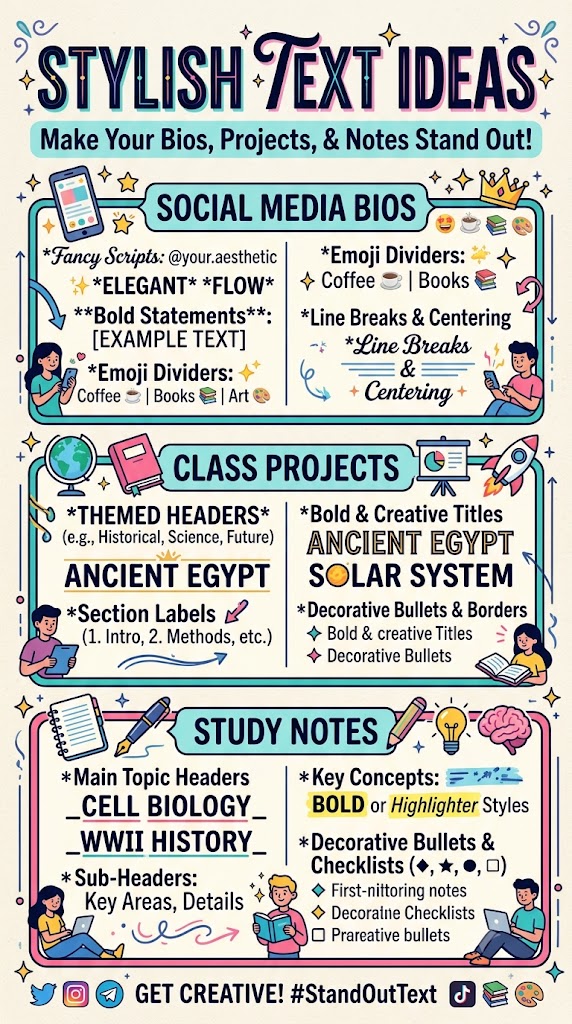
Stylish text is especially useful because digital communication is increasingly visual. People often scan content rather than reading every word carefully. A well-formatted heading, distinctive username, attractive section title, or creative phrase can immediately attract attention and help important information stand out. For students and creators, this can be particularly valuable when trying to organize information or present work in a more engaging way.
Improving Social Media Bios
A social media bio is often one of the first things people notice when visiting a profile. Whether the profile belongs to a student, content creator, photographer, researcher, artist, freelancer, or small business owner, the bio provides a quick introduction.
Using stylish text selectively can make certain elements easier to notice. For example, a student might highlight a course name, university, area of interest, or personal motto. A creator might emphasize a niche such as photography, travel, education, technology, or design.
The key is moderation. Stylish text should improve readability rather than overwhelm the profile. Using decorative characters for every sentence can make the bio difficult to read, while using them for one or two important phrases can create a more polished appearance.
Making Class Projects More Attractive
Presentation is an important part of many academic projects. Even when the research and content are strong, a poorly organized project can appear less engaging.
Stylish text can be used for headings, cover pages, section titles, poster captions, presentation slides, and creative assignments. For example, students preparing a digital poster about climate change could use a distinctive heading while keeping the main explanatory text in a simple and readable font.
Similarly, architecture, design, media, business, and humanities students may use decorative text to establish a visual hierarchy within presentations. A visually prominent heading helps readers understand where a new section begins.
However, students should always follow institutional formatting requirements. Formal reports, dissertations, research papers, and academic submissions usually require standard fonts and specified formatting. Decorative text is more appropriate for posters, introductory slides, social media projects, portfolios, and creative educational materials.
Organizing Digital Study Notes
Students increasingly use tablets, laptops, and note-taking applications to organize study materials. Stylish text can make digital notes more structured and visually memorable.
For instance, different text styles can be used to distinguish:
- chapter headings,
- important definitions,
- formulas,
- revision topics,
- keywords,
- examination reminders, and
- summary sections.
Good formatting can help create a clear visual hierarchy. Instead of seeing a large block of similar text, students can quickly identify the most important parts of their notes.
Still, decorative styles should be used carefully. Study notes are most useful when they remain easy to scan and revise. Too many symbols, unusual characters, or complicated fonts can become distracting.
Helping Content Creators Build a Distinctive Style
Creators regularly compete for attention on platforms where thousands of new posts are uploaded every minute. Small visual details can contribute to a recognizable content style.
Stylish text can be incorporated into captions, profile descriptions, story headings, video titles, channel descriptions, digital posters, and announcement graphics. When used consistently, a particular text style can become part of a creator’s visual identity.
For example, a travel creator might use decorative text for destination headings, while an education creator might use distinctive lettering for recurring series such as “Study Tips,” “Exam Preparation,” or “Research Advice.”
Consistency is more important than complexity. Using a small number of recognizable styles generally produces a cleaner result than changing the design frequently.
Accessibility and Readability Still Matter
Although stylish text can improve visual appeal, readability should always remain the priority. Some decorative Unicode characters may not display correctly on every device or application. They may also be difficult for screen readers and accessibility tools to interpret.
For important information such as instructions, deadlines, contact details, URLs, academic content, or safety information, standard text is usually preferable.
A useful approach is to use decorative text only for short headings or creative elements while keeping essential information in normal characters.
Final Thoughts
Stylish text provides students and creators with a simple way to add personality and visual structure to everyday digital content. It can make a social media bio more distinctive, improve the presentation of class projects, organize study notes, and support a consistent creative identity.
The most effective approach is not to decorate every word but to use styling strategically. When readability, consistency, and purpose remain the priority, even small text changes can make digital content feel more professional, organized, and memorable.
Whether someone is preparing a student project, updating a creator profile, designing revision notes, or improving a social media bio, experimenting with different text styles can be a simple and enjoyable way to make ordinary words stand out.


